SB 1083: California oil spill contingency plan.
- Session Year: 2015-2016
- House: Senate
- Latest Version Date: 2016-04-28
The Lempert-Keene-Seastrand Oil Spill Prevention and Response Act generally requires the administrator for oil spill response, acting at the direction of the Governor, to implement activities relating to oil spill response, including emergency drills and preparedness, and oil spill containment and cleanup, and to represent the state in any coordinated response efforts with the federal government. Existing law directs the Governor to require the administrator to amend, not in conflict with the National Contingency Plan, the California oil spill contingency plan to provide for the best achievable protection of waters of the state and to include specified elements.
This bill would require a communications element, as specified, to be developed by the administrator and included in the California oil spill contingency plan.
The Governor shall require the administrator, not in conflict with the National Contingency Plan, to amend the California oil spill contingency plan to provide for the best achievable protection of waters of the state. Administrator for purposes of this section means the administrator appointed by the Governor pursuant to Section 8670.4. The plan shall consist of all of the following elements:
(a)A state response element that specifies the hierarchy for state and local agency response to an oil spill. The element shall define the necessary tasks for the oversight and control of cleanup and removal activities associated with an oil spill and shall specify each agencys particular responsibility in carrying out these tasks. The element shall also include an organizational chart of the state oil spill response organization and a definition of the resources, capabilities, and response assignments of each agency involved in cleanup and removal actions in an oil spill.
(b)A regional and local planning element that shall provide the framework for the involvement of regional and local agencies in the state effort to respond to an oil spill and shall ensure the effective and efficient use of regional and local resources, as appropriate, in all of the following:
(1)Traffic and crowd control.
(2)Firefighting.
(3)Boating traffic control.
(4)Radio and communications control and the provision of access to equipment.
(5)Identification and use of available local and regional equipment or other resources suitable for use in cleanup and removal actions.
(6)Identification of private and volunteer resources or personnel with special or unique capabilities relating to oil spill cleanup and removal actions.
(7)Provision of medical emergency services.
(8)Consideration of the identification and use of private working craft and mariners, including commercial fishing vessels and licensed commercial fishing men and women, in containment, cleanup, and removal actions.
(c)A coastal protection element that establishes the state standards for coastline protection. The administrator, in consultation with the Coast Guard and Navy and the shipping industry, shall develop criteria for coastline protection. If appropriate, the administrator shall consult with representatives from the States of Alaska, Washington, and Oregon; the Province of British Columbia in Canada; and the Republic of Mexico. The criteria shall designate at least all of the following:
(1)Appropriate shipping lanes and navigational aids for tankers, barges, and other commercial vessels to reduce the likelihood of collisions between tankers, barges, and other commercial vessels. Designated shipping lanes shall be located off the coastline at a distance sufficient to significantly reduce the likelihood that disabled vessels will run aground along the coast of the state.
(2)Ship position reporting and communications requirements.
(3)Required predeployment of protective equipment for sensitive environmental areas along the coastline.
(4)Required emergency response vessels that are capable of preventing disabled tankers from running aground.
(5)Required emergency response vessels that are capable of commencing oil cleanup operations before spilled oil can reach the shoreline.
(6)An expedited decisionmaking process for dispersant use in coastal waters. Prior to adoption of the process, the administrator shall ensure that a comprehensive testing program is carried out for any dispersant proposed for use in California marine waters. The testing program shall evaluate the toxicity and effectiveness of the dispersants.
(7)Required rehabilitation facilities for wildlife injured by spilled oil.
(8)An assessment of how activities that usually require a permit from a state or local agency may be expedited or issued by the administrator in the event of an oil spill.
(d)An environmentally and ecologically sensitive areas element that shall provide the framework for prioritizing and ensuring the protection of environmentally and ecologically sensitive areas. The environmentally and ecologically sensitive areas element shall be developed by the administrator, in conjunction with appropriate local agencies, and shall include all of the following:
(1)Identification and prioritization of environmentally and ecologically sensitive areas in state waters and along the coast. The identification and prioritization of environmentally and ecologically sensitive areas shall not prevent or excuse the use of all reasonably available containment and cleanup resources from being used to protect every environmentally and ecologically sensitive area possible. Environmentally and ecologically sensitive areas shall be prioritized through the evaluation of criteria, including, but not limited to, all of the following:
(A)Risk of contamination by oil after a spill.
(B)Environmental, ecological, recreational, and economic importance.
(C)Risk of public exposure should the area be contaminated.
(2)Regional maps depicting environmentally and ecologically sensitive areas in state waters or along the coast that shall be distributed to facilities and local and state agencies. The maps shall designate those areas that have a particularly high priority for protection against oil spills.
(3)A plan for protection actions required to be taken in the event of an oil spill for each of the environmentally and ecologically sensitive areas and protection priorities for the first 24 to 48 hours after an oil spill shall be specified.
(4)The location of available response equipment and the availability of trained personnel to deploy the equipment to protect the priority environmentally and ecologically sensitive areas.
(5)A program for systemically testing and revising, if necessary, protection strategies for each of the priority environmentally and ecologically sensitive areas.
(6)Any recommendations for action that cannot be financed or implemented pursuant to existing authority of the administrator. Those recommendations shall also be reported to the Legislature along with recommendations for financing those actions.
(e)A reporting element that requires the reporting of spills of any amount of oil in or on state waters.
(f)(1)A communications element that shall provide the framework for efficient and timely communications within the unified command; between local, state, and federal agencies; and with the public. This element shall be developed by the administrator, with the administrator requesting input from local agencies, and shall include all of the following:
(A)A process for developing and maintaining a database of local public information officers in each coastal county.
(B)A process to ensure timely and accurate information is provided to the news media and social media consistent with both of the following:
(i)The administrator, for incidents where the administrator has the authority to do so, may appoint a lead public information officer or joint information center manager, who shall be state personnel.
(ii)The administrator, for incidents where the administrator has the authority to do so, shall retain final approval authority for news releases or other material created on behalf of the unified command for the purpose of communicating with the public.
(C)
(B)A mechanism to ensure critical information from local agencies or local nongovernmental organizations can be shared with relevant members of the unified command.
(D)
(C)A process for early community outreach in affected areas that ensures the public has up-to-date and timely information on the oil spill, including a protocol for informing each community, city, county, and city and county of the name of the responsible party and of the right of affected parties to file claims against the responsible party.
(2)The administrator shall incorporate this element within the California oil spill contingency planning framework established by federal and state law and regulation, to the extent feasible.
The Governor shall require the administrator, not in conflict with the National Contingency Plan, to amend the California oil spill contingency plan to provide for the best achievable protection of waters of the state. Administrator for purposes of this section means the administrator appointed by the Governor pursuant to Section 8670.4. The plan shall consist of all of the following elements:
(a)A state response element that specifies the hierarchy for state and local agency response to an oil spill. The element shall define the necessary tasks for the oversight and control of cleanup and removal activities associated with an oil spill and shall specify each agencys particular responsibility in carrying out these tasks. The element shall also include an organizational chart of the state oil spill response organization and a definition of the resources, capabilities, and response assignments of each agency involved in cleanup and removal actions in an oil spill.
(b)A regional and local planning element that shall provide the framework for the involvement of regional and local agencies in the state effort to respond to an oil spill and shall ensure the effective and efficient use of regional and local resources, as appropriate, in all of the following:
(1)Traffic and crowd control.
(2)Firefighting.
(3)Boating traffic control.
(4)Radio and communications control and the provision of access to equipment.
(5)Identification and use of available local and regional equipment or other resources suitable for use in cleanup and removal actions.
(6)Identification of private and volunteer resources or personnel with special or unique capabilities relating to oil spill cleanup and removal actions.
(7)Provision of medical emergency services.
(8)Consideration of the identification and use of private working craft and mariners, including commercial fishing vessels and licensed commercial fishing men and women, in containment, cleanup, and removal actions.
(c)A coastal protection element that establishes the state standards for coastline protection. The administrator, in consultation with the Coast Guard and Navy and the shipping industry, shall develop criteria for coastline protection. If appropriate, the administrator shall consult with representatives from the States of Alaska, Washington, and Oregon; the Province of British Columbia in Canada; and the Republic of Mexico. The criteria shall designate at least all of the following:
(1)Appropriate shipping lanes and navigational aids for tankers, barges, and other commercial vessels to reduce the likelihood of collisions between tankers, barges, and other commercial vessels. Designated shipping lanes shall be located off the coastline at a distance sufficient to significantly reduce the likelihood that disabled vessels will run aground along the coast of the state.
(2)Ship position reporting and communications requirements.
(3)Required predeployment of protective equipment for sensitive environmental areas along the coastline.
(4)Required emergency response vessels that are capable of preventing disabled tankers from running aground.
(5)Required emergency response vessels that are capable of commencing oil cleanup operations before spilled oil can reach the shoreline.
(6)An expedited decisionmaking process for dispersant use in coastal waters. Prior to adoption of the process, the administrator shall ensure that a comprehensive testing program is carried out for any dispersant proposed for use in California marine waters. The testing program shall evaluate the toxicity and effectiveness of the dispersants.
(7)Required rehabilitation facilities for wildlife injured by spilled oil.
(8)An assessment of how activities that usually require a permit from a state or local agency may be expedited or issued by the administrator in the event of an oil spill.
(d)An environmentally and ecologically sensitive areas element that shall provide the framework for prioritizing and ensuring the protection of environmentally and ecologically sensitive areas. The environmentally and ecologically sensitive areas element shall be developed by the administrator, in conjunction with appropriate local agencies, and shall include all of the following:
(1)Identification and prioritization of environmentally and ecologically sensitive areas in state waters and along the coast. The identification and prioritization of environmentally and ecologically sensitive areas shall not prevent or excuse the use of all reasonably available containment and cleanup resources from being used to protect every environmentally and ecologically sensitive area possible. Environmentally and ecologically sensitive areas shall be prioritized through the evaluation of criteria, including, but not limited to, all of the following:
(A)Risk of contamination by oil after a spill.
(B)Environmental, ecological, recreational, and economic importance.
(C)Risk of public exposure should the area be contaminated.
(2)Regional maps depicting environmentally and ecologically sensitive areas in state waters or along the coast that shall be distributed to facilities and local and state agencies. The maps shall designate those areas that have a particularly high priority for protection against oil spills.
(3)A plan for protection actions required to be taken in the event of an oil spill for each of the environmentally and ecologically sensitive areas and protection priorities for the first 24 to 48 hours after an oil spill shall be specified.
(4)The location of available response equipment and the availability of trained personnel to deploy the equipment to protect the priority environmentally and ecologically sensitive areas.
(5)A program for systemically testing and revising, if necessary, protection strategies for each of the priority environmentally and ecologically sensitive areas.
(6)Any recommendations for action that cannot be financed or implemented pursuant to existing authority of the administrator. Those recommendations shall also be reported to the Legislature along with recommendations for financing those actions.
(e)A reporting element that requires the reporting of spills of any amount of oil in or on state waters.
(f)(1)A communications element that shall provide the framework for efficient and timely communications within the unified command; between local, state, and federal agencies; and with the public. This element shall be developed by the administrator with feedback administrator, with the administrator requesting input from local agencies agencies, and shall establish include all of the following:
(1)
(A)A process for developing and maintaining a database of local public information officers in each coastal county.
(2)
(B)A process to ensure timely and accurate information is provided to the news media and social media consistent with both of the following:
(A)For incidents in which a unified command structure is put in place and for which a joint information center is established, personnel from the responsible party shall not serve as the initial information officer, the lead public information officer, or the joint information center manager.
(B)Personnel from the responsible party shall not have a role in the development, review, or approval of draft news releases or other material created on behalf of the unified command for the purpose of communicating with the public.
(i)The administrator, for incidents where the administrator has the authority to do so, may appoint a lead public information officer or joint information center manager, who shall be state personnel.
(ii)The administrator, for incidents where the administrator has the authority to do so, shall retain final approval authority for news releases or other material created on behalf of the unified command for the purpose of communicating with the public.
(3)
(C)A mechanism to ensure critical information from local agencies or local nongovernmental organizations can be shared with relevant members of the unified command.
(4)
(D)A process for early community outreach in affected areas that ensures the public has up-to-date and timely information on the oil spill, including a protocol for informing each community, city, county, and city and county of the name of the responsible party and of the right of affected parties to file claims against the responsible party.
(2)The administrator shall incorporate this element within the California oil spill contingency planning framework established by federal and state law and regulation, to the extent feasible.
The Governor shall require the administrator, not in conflict with the National Contingency Plan, to amend the California oil spill contingency plan to provide for the best achievable protection of waters of the state. Administrator for purposes of this section means the administrator appointed by the Governor pursuant to Section 8670.4. The plan shall consist of all of the following elements:
(a)A state response element that specifies the hierarchy for state and local agency response to an oil spill. The element shall define the necessary tasks for the oversight and control of cleanup and removal activities associated with an oil spill and shall specify each agencys particular responsibility in carrying out these tasks. The element shall also include an organizational chart of the state oil spill response organization and a definition of the resources, capabilities, and response assignments of each agency involved in cleanup and removal actions in an oil spill.
(b)A regional and local planning element that shall provide the framework for the involvement of regional and local agencies in the state effort to respond to an oil spill, spill and shall ensure the effective and efficient use of regional and local resources, as appropriate, in all of the following:
(1)Traffic and crowd control.
(2)Firefighting.
(3)Boating traffic control.
(4)Radio and communications control and the provision of access to equipment.
(5)Identification and use of available local and regional equipment or other resources suitable for use in cleanup and removal actions.
(6)Identification of private and volunteer resources or personnel with special or unique capabilities relating to oil spill cleanup and removal actions.
(7)Provision of medical emergency services.
(8)Consideration of the identification and use of private working craft and mariners, including commercial fishing vessels and licensed commercial fishing men and women, in containment, cleanup, and removal actions.
(c)A coastal protection element that establishes the state standards for coastline protection. The administrator, in consultation with the Coast Guard and Navy and the shipping industry, shall develop criteria for coastline protection. If appropriate, the administrator shall consult with representatives from the States of Alaska, Washington, and Oregon, Oregon; the Province of British Columbia in Canada, Canada; and the Republic of Mexico. The criteria shall designate at least all of the following:
(1)Appropriate shipping lanes and navigational aids for tankers, barges, and other commercial vessels to reduce the likelihood of collisions between tankers, barges, and other commercial vessels. Designated shipping lanes shall be located off the coastline at a distance sufficient to significantly reduce the likelihood that disabled vessels will run aground along the coast of the state.
(2)Ship position reporting and communications requirements.
(3)Required predeployment of protective equipment for sensitive environmental areas along the coastline.
(4)Required emergency response vessels that are capable of preventing disabled tankers from running aground.
(5)Required emergency response vessels that are capable of commencing oil cleanup operations before spilled oil can reach the shoreline.
(6)An expedited decisionmaking process for dispersant use in coastal waters. Prior to adoption of the process, the administrator shall ensure that a comprehensive testing program is carried out for any dispersant proposed for use in California marine waters. The testing program shall evaluate the toxicity and effectiveness of the dispersants.
(7)Required rehabilitation facilities for wildlife injured by spilled oil.
(8)An assessment of how activities that usually require a permit from a state or local agency may be expedited or issued by the administrator in the event of an oil spill.
(d)An environmentally and ecologically sensitive areas element that shall provide the framework for prioritizing and ensuring the protection of environmentally and ecologically sensitive areas. The environmentally and ecologically sensitive areas element shall be developed by the administrator, in conjunction with appropriate local agencies, and shall include all of the following:
(1)Identification and prioritization of environmentally and ecologically sensitive areas in state waters and along the coast. Identification The identification and prioritization of environmentally and ecologically sensitive areas shall not prevent or excuse the use of all reasonably available containment and cleanup resources from being used to protect every environmentally and ecologically sensitive area possible. Environmentally and ecologically sensitive areas shall be prioritized through the evaluation of criteria, including, but not limited to, all of the following:
(A)Risk of contamination by oil after a spill.
(B)Environmental, ecological, recreational, and economic importance.
(C)Risk of public exposure should the area be contaminated.
(2)Regional maps depicting environmentally and ecologically sensitive areas in state waters or along the coast that shall be distributed to facilities and local and state agencies. The maps shall designate those areas that have a particularly high priority for protection against oil spills.
(3)A plan for protection actions required to be taken in the event of an oil spill for each of the environmentally and ecologically sensitive areas and protection priorities for the first 24 to 48 hours after an oil spill shall be specified.
(4)The location of available response equipment and the availability of trained personnel to deploy the equipment to protect the priority environmentally and ecologically sensitive areas.
(5)A program for systemically testing and revising, if necessary, protection strategies for each of the priority environmentally and ecologically sensitive areas.
(6)Any recommendations for action that cannot be financed or implemented pursuant to existing authority of the administrator, which administrator. Those recommendations shall also be reported to the Legislature along with recommendations for financing those actions.
(e)A reporting element that requires the reporting of spills of any amount of oil in or on state waters.
(f)A communications element that shall provide the framework for efficient and timely communications within the unified command; between local, state, and federal agencies; and with the public. This element shall be developed by the administrator with feedback from local agencies and shall establish all of the following:
(1)A process for developing and maintaining a database of local public information officers in each coastal county.
(2)A process to ensure timely and accurate information is provided to the news media and social media consistent with both of the following:
(A)For incidents in which a unified command structure is put in place and for which a joint information center is established, personnel from the responsible party shall not serve as the initial information officer, the lead public information officer, or the joint information center manager.
(B)Personnel from the responsible party shall not have a role in the development, review, or approval of draft news releases or other material created on behalf of the unified command for the purpose of communicating with the public.
(3)A mechanism to ensure critical information from local agencies or local nongovernmental organizations can be shared with relevant members of the unified command.
(4)A process for early community outreach in affected areas that ensures the public has up-to-date and timely information on the oil spill, including a protocol for informing each community, city, county, and city and county of the name of the responsible party and of the right of affected parties to file claims against the responsible party.
|
Date
|
Status
|
|---|---|
| Feb 17, 2016 | Introduced. Read first time. To Com. on RLS. for assignment. To print. |
| Feb 18, 2016 | From printer. May be acted upon on or after March 19. |
| Feb 25, 2016 | Referred to Coms. on N.R. & W. and E.Q. |
| Mar 9, 2016 | Set for hearing March 29. |
| Mar 30, 2016 | From committee: Do pass as amended and re-refer to Com. on E.Q. (Ayes 7. Noes 2. Page 3312.) (March 29). |
| Mar 30, 2016 | From committee: Do pass as amended and re-refer to Com. on E.Q. (Ayes 7. Noes 2.) (March 29). |
| Mar 31, 2016 | Read second time and amended. Re-referred to Com. on E.Q. |
| Apr 21, 2016 | From committee: Do pass and re-refer to Com. on APPR. (Ayes 5. Noes 2. Page 3642.) (April 20). Re-referred to Com. on APPR. |
| Apr 21, 2016 | From committee: Do pass and re-refer to Com. on APPR. (Ayes 5. Noes 2.) (April 20). Re-referred to Com. on APPR. |
| Apr 28, 2016 | From committee with author's amendments. Read second time and amended. Re-referred to Com. on APPR. |
| May 6, 2016 | Set for hearing May 16. |
| May 16, 2016 | May 16 hearing: Placed on APPR. suspense file. (Ayes 7. Noes 0.) |
| May 20, 2016 | Set for hearing May 27. |
| May 27, 2016 | May 27 hearing: Held in committee and under submission. |
|
Date
|
Description
|
Location
|
Votes
|
|
|---|---|---|---|---|
| May 16, 2016 | Placed on suspense file | Senate Standing Committee on Appropriations |
Passed |
|
| Apr 20, 2016 | Do pass, but first be re-referred to the Committee on [Appropriations] | Senate Standing Committee on Environmental Quality |
Passed |
|
| Mar 29, 2016 | Do pass as amended, but first amend, and re-refer to the Committee on [Environmental Quality] | Senate Standing Committee on Natural Resources and Water |
Passed |
This list shows positions taken on this bill by organizations on the date displayed, which is linked to the original source.
Positions by individuals are not included.
|
Organization
|
Position
|
Date
|
|---|---|---|
| California Chamber Of Commerce | ** Against | Mar 29, 2016 |
| California Coastal Protection Network | * Support | Mar 29, 2016 |
| California Coastal Protection Network | * Indeterminate | Mar 29, 2016 |
| California Independent Petroleum Association | * Against | Mar 29, 2016 |
| California Independent Petroleum Association (Cipa) | * Indeterminate | Mar 29, 2016 |
| California Manufacturers And Technology Association | * Indeterminate | Mar 29, 2016 |
| Defenders Of Wildlife | * Support | Mar 29, 2016 |
| Defenders Of Wildlife | * Indeterminate | Mar 29, 2016 |
| Pacific Merchant Shipping Association | * Indeterminate | Mar 29, 2016 |
| Sierra Club California | ** Support | Mar 29, 2016 |
| Western States Petroleum Association | ** Against | Mar 29, 2016 |
SENATE COMMITTEE ON
Senator Ricardo Lara, Chair
2015 - 2016 Regular Session
SB 1083 (Allen) - California oil spill contingency plan
Version: | Policy Vote: |
Urgency: | Mandate: |
Hearing Date: | Consultant: |
This bill meets the criteria for referral to the Suspense File.
Summary: SB 1083 requires the communications element to be developed by the administrator and included in the California oil spill contingency plan.
Fiscal Impact:
- Unknown, but potentially significant costs to the Department of Fish and Wildlife’s Office of Oil Spill Prevention and Response (OSPR).
- Minor costs to the Office of Emergency Services (OES).
Background:
Existing federal law, under the Clean Water Act:
- Prohibits the discharge of any pollutant from a point source into navigable waters, unless a permit was obtained.
- Requires the United States Environmental Protection Agency (US EPA) to regulate discharges of pollutants into the waters of the United States and regulating quality standards for surface waters by implementing pollution control programs such as setting wastewater standards and setting water quality standards for all contaminants in surface waters.
- Establishes the National Oil and Hazardous Substances Pollution Contingency Plan (Title 40, Code of Federal Regulations, Part 300 (40 CFR §300)) as the planning and response framework for oil spills, including the establishment of regional and area contingency plans, establishing a system that brings together the functions of the federal government, the state (and local) government, and the responsible party to achieve “an effective and efficient response, where the on-scene coordinator maintains authority.” This is the “unified command” and no single agency has sole jurisdictional authority to direct all aspects of a major emergency.
Existing California law, under the Lempert-Keene-Seastrand Oil Spill Prevention and Response Act:
- Establishes the Office of Oil Spill Prevention and Response (OSPR) in the California Department of Fish and Wildlife.
- Requires the OSPR administrator to implement activities relating to oil spill response and to represent the state in any coordinated response efforts with the federal government.
Contingency Plans. The national contingency plan establishes a response management structure that brings together the functions of the federal government, the state (and local) government, and the responsible party. This is the “unified command” and no single agency has sole jurisdictional authority to direct all aspects of a major emergency.
For large oil spills, the unified command includes a federal on-scene coordinator (the US Coast Guard for marine spills), a state on-scene coordinator (identified below) and the responsible party (for the spill). If federal assistance is not required, incident command may be composed of members from state and local government and the responsible party. The on-scene coordinator in charge, generally the federal coordinator, retains ultimate authority for decisions related to oil spill response.
In the event of an oil spill, the on-scene coordinator is directed to collect pertinent facts about the release, the nature, amount and location of the amount released and other relevant factors (see 40 CFR §300.135). The on-scene coordinator is also required to ensure that all appropriate public and private interests are kept informed and that their concerns are considered throughout a response, to the extent practicable.
Incidents may have their own incident-specific team, and who is in charge and the number of personnel involved will vary depending upon the circumstances. With limited exception, responsible parties can hold many jobs within incident command.
The regional contingency plan for California includes neighboring states. Within California, designated locations for area contingency planning include the ports of Los Angeles/Long Beach and the nearby vicinity. The area contingency planning process is open to all stakeholders and includes agencies from all levels of government, industry and environmental groups.
Precipitating Event. On May 19, 2015 a pipeline owned by Plains All American Pipeline (Line 901) ruptured spilling a then-reported 101,000 gallons of heavy crude oil along the Gaviota coast in Santa Barbara County. An estimated 21,000 gallons of oil from the pipe ended up in the water at Refugio Beach. Oil from the spill ended up dispersing along the coast of Southern California. Approximately one week after the initial spill, tar balls started washing up on Manhattan Beach, more than 100 miles south. An eight-mile stretch from El Segundo to Torrance Beach was closed. The composition of these tar balls matched the oil from the Refugio Beach spill.
The Office of Pipeline Safety in the Pipeline and Hazardous Materials Safety Administration (PHMSA) of the US Department of Transportation released a “Preliminary Factual Report” on the Line 901 failure in February 2016. While noting that PHMSA continues to investigate the May 19, 2015 failure, preliminary findings “indicate that the root cause of the Line 901 failure was external corrosion”. The total amount of the spill appears to remain uncertain. Initial estimates were 2,400 barrels (about 100,800 gallons) but the operator later reported to PHMSA that it was 2,960 (about 124,320 gallons) (without documentation). A final report is expected in spring 2016.
Both OSPR and the US Coast Guard are expected to release Refugio Beach response evaluations later this spring.
Communication barriers are not isolated to this incident. Issues with local public communication were also an identified issue in the response to the M/V Cosco Busan incident in San Francisco Bay. While each incident’s circumstances are unique, the reports reviewing response noted that improvements were recommended in information sharing with local governments, for example, and that local stakeholders need to be familiar with the area contingency plan. Apparently not all local governments had been actively participating in the area contingency planning process.
Purpose of Bill. According to the author, “SB 1083 will strengthen oil spill contingency planning by requiring the Office of Spill Prevention and Response to add a communications element to the State’s Oil Spill Contingency plan in an effort to ensure local communities have more timely and accurate information in the wake of an oil spill.”
Proposed Law:
This bill:
- Requires the communications element provide the framework for efficient and timely communications with the unified command across all levels of government and with the public, as specified. The communications element:
- Establishes a process for developing and maintaining a database of local public information officers in each coastal county.
- Establishes a process to ensure timely and accurate information is provided to news and social media consistent with the following:
- When the OSPR administrator has the authority to do so,
- Must appoint a lead public information officer or joint information center manager who is state personnel.
- Must retain final approval authority for news releases or other material created on behalf of the unified command for the purpose of communicating with the public.
- When the OSPR administrator has the authority to do so,
- Establishes a mechanism to ensure critical information is shared from the local level to the unified command, as specified.
- Establishes a process for early community outreach in spill affected areas that ensures the public has up-to-date and timely information on the spill including information on the responsible party and the right of affected parties to file claims against the responsible party.
- Requires that this element be incorporated within the California oil spill contingency planning framework established by federal and state law and regulation to the extent feasible.
Staff Comments:
>
Proposed Author Amendments:
>
Recommended Amendments:
>
-- END --
SENATE COMMITTEE ON ENVIRONMENTAL QUALITY
Senator Wieckowski, Chair
2015 - 2016 Regular
Bill No: SB 1083
Author: | Allen | ||
Version: | 3/31/2016 | Hearing Date: | 4/20/2016 |
Urgency: | No | Fiscal: | Yes |
Consultant: | Rachel Machi Wagoner | ||
SUBJECT: California oil spill contingency plan
ANALYSIS:
Existing federal law, under the Clean Water Act:
- Prohibits the discharge of any pollutant from a point source into navigable waters, unless a permit was obtained.
- Requires the United States Environmental Protection Agency (US EPA) to regulate discharges of pollutants into the waters of the United States and regulating quality standards for surface waters by implementing pollution control programs such as setting wastewater standards and setting water quality standards for all contaminants in surface waters.
- Establishes the National Oil and Hazardous Substances Pollution Contingency Plan (Title 40, Code of Federal Regulations, Part 300 (40 CFR §300)) as the planning and response framework for oil spills, including the establishment of regional and area contingency plans, establishing a system that brings together the functions of the federal government, the state (and local) government, and the responsible party to achieve “an effective and efficient response, where the on-scene coordinator maintains authority.” This is the “unified command” and no single agency has sole jurisdictional authority to direct all aspects of a major emergency.
Existing California law, under the Lempert-Keene-Seastrand Oil Spill Prevention and Response Act:
- Establishes the Office of Oil Spill Prevention and Response (OSPR) in the California Department of Fish and Wildlife.
- Requires the OSPR administrator to implement activities relating to oil spill response and to represent the state in any coordinated response efforts with the federal government.
This bill: requires a communications element to be developed by the administrator and included in the California oil spill contingency plan.
Specifically:
- Requires the communications element provide the framework for efficient and timely communications with the unified command across all levels of government and with the public, as specified. The communications element:
- Establishes a process for developing and maintaining a database of local public information officers in each coastal county.
- Establishes a process to ensure timely and accurate information is provided to news and social media consistent with the following:
- When the OSPR administrator has the authority to do so,
- Shall appoint a lead public information officer or joint information center manager who is state personnel.
- Shall retain final approval authority for news releases or other material created on behalf of the unified command for the purpose of communicating with the public.
- When the OSPR administrator has the authority to do so,
- Establishes a mechanism to ensure critical information is shared from the local level to the unified command, as specified.
- Establishes a process for early community outreach in spill affected areas that ensures the public has up-to-date and timely information on the spill including information on the responsible party and the right of affected parties to file claims against the responsible party.
- Requires that this element be incorporated within the California oil spill contingency planning framework established by federal and state law and regulation to the extent feasible.
Background
- Contingency Plans. The national contingency plan establishes a response management structure that brings together the functions of the federal government, the state (and local) government, and the responsible party. This is the “unified command” and no single agency has sole jurisdictional authority to direct all aspects of a major emergency.
For large oil spills, the unified command includes a federal on-scene coordinator (the US Coast Guard for marine spills), a state on-scene coordinator (identified below) and the responsible party (for the spill). If federal assistance is not required, incident command may be composed of members from state and local government and the responsible party. The on-scene coordinator in charge, generally the federal coordinator, retains ultimate authority for decisions related to oil spill response.
In the event of an oil spill, the on-scene coordinator is directed to collect pertinent facts about the release, the nature, amount and location of the amount released and other relevant factors (see 40 CFR §300.135). The on-scene coordinator is also required to ensure that all appropriate public and private interests are kept informed and that their concerns are considered throughout a response, to the extent practicable.
Incidents may have their own incident-specific team, and who is in charge and the number of personnel involved will vary depending upon the circumstances. With limited exception, responsible parties can hold many jobs within incident command.
The regional contingency plan for California includes neighboring states. Within California, designated locations for area contingency planning include the ports of Los Angeles/Long Beach and the nearby vicinity. The area contingency planning process is open to all stakeholders and includes agencies from all levels of government, industry and environmental groups.
- Precipitating Event. On May 19, 2015 a pipeline owned by Plains All American Pipeline (Line 901) ruptured spilling a then-reported 101,000 gallons of heavy crude oil along the Gaviota coast in Santa Barbara County. An estimated 21,000 gallons of oil from the pipe ended up in the water at Refugio Beach. Oil from the spill ended up dispersing along the coast of Southern California. Approximately one week after the initial spill, tar balls started washing up on Manhattan Beach, more than 100 miles south. An eight-mile stretch from El Segundo to Torrance Beach was closed. The composition of these tar balls matched the oil from the Refugio Beach spill.
The Office of Pipeline Safety in the Pipeline and Hazardous Materials Safety Administration (PHMSA) of the US Department of Transportation released a “Preliminary Factual Report” on the Line 901 failure in February 2016. While noting that PHMSA continues to investigate the May 19, 2015 failure, preliminary findings “indicate that the root cause of the Line 901 failure was external corrosion”. The total amount of the spill appears to remain uncertain. Initial estimates were 2,400 barrels (about 100,800 gallons) but the operator later reported to PHMSA that it was 2,960 (about 124,320 gallons) (without documentation). A final report is expected in spring 2016. Both OSPR and the US Coast Guard are expected to release Refugio Beach response evaluations later this spring.
- Communication barriers are not isolated to this incident. Issues with local public communication were also an identified issue in the response to the M/V Cosco Busan incident in San Francisco Bay. While each incident’s circumstances are unique, the reports reviewing response noted that improvements were recommended in information sharing with local governments, for example, and that local stakeholders need to be familiar with the area contingency plan. Apparently not all local governments had been actively participating in the area contingency planning process.
Comments
- Purpose of Bill. According to the author, “SB 1083 will strengthen oil spill contingency planning by requiring the Office of Spill Prevention and Response to add a communications element to the State’s Oil Spill Contingency plan in an effort to ensure local communities have more timely and accurate information in the wake of an oil spill.”
The author notes that OSPR responded promptly when tar balls hit Manhattan Beach, but notes that “the South Bay communities impacted by the tar balls lacked critical information to ensure their impacts were addressed in a timely fashion.”
“When local residents obtained modelling data showing oil from the leak would likely land on South Bay beaches, they lacked a means to effectively communicate with state responders before the tar balls landed. Community leaders also struggled to ensure volunteers had the necessary information to ensure they could safely assist in the cleanup. Local business leaders who were economically impacted by the spill were not even made aware that the tar balls were a result of the spill and they could file a claim for damages.”
DOUBLE REFERRAL:
This measure was heard in Senate Natural Resources and Water Committee on
March 29, 2016, and passed out of committee with a vote of 7-2.
SOURCE:
Author
SUPPORT:
California Coastal Protection Network
Defenders of Wildlife
Sierra Club California
OPPOSITION:
California Chamber of Commerce
California Independent Petroleum Association
California Manufacturers & Technology Association
Pacific Merchant Shipping Association
Western States Petroleum Association
ARGUMENTS IN OPPOSITION:
The opposition argues that “it’s unclear what problem SB 1083 is attempting address. The bill is unnecessary would compromise federal laws that are designed to ensure a coordinated response between RPs and the appropriate agencies. It’s important for operators and vessels, if they become an RP, to work closely with federal, state and local entities to effectively carry out the response plan in a timely and coordinated fashion. SB 1083 goes against that very coordination that is needed among federal, state and local entities….”
-- END --
SENATE COMMITTEE ON NATURAL RESOURCES AND WATER
Senator Fran Pavley, Chair
2015 - 2016 Regular
Bill No: SB 1083 Hearing Date: March 29, 2016
Author: | |||
Version: |
| ||
Urgency: | Fiscal: | ||
Consultant: | |||
Subject: California oil spill contingency plan
BACKGROUND AND EXISTING LAW
In response to the significant 1989 oil spill from the Exxon Valdez that fouled the waters of Prince William Sound, a series of federal laws were established or amended including the Oil Pollution Act of 1990, the Clean Water Act and others. These laws established a national framework for addressing oil (and other hazardous waste) spills within the United States and its waters.
Federal regulations implementing these laws include those for the National Oil and Hazardous Substances Pollution Contingency Plan (national contingency plan, see Title 40, Code of Federal Regulations, Part 300 (40 CFR §300)). The national contingency plan established a structured planning and response framework for oil spills including the establishment of regional and area contingency plans. The regional contingency plan for California includes neighboring states. Within California, designated locations for area contingency planning include the ports of Los Angeles/Long Beach and the nearby vicinity. The area contingency planning process is open to all stakeholders and includes agencies from all levels of government, industry and environmental groups.
The national contingency plan establishes that the basic framework for the response management structure is a system that brings together the functions of the federal government, the state (and local) government, and the responsible party to achieve “an effective and efficient response, where the on-scene coordinator maintains authority.” (see 40 CFR §300.105 and 40 CFR §300.135). This is the “unified command” and no single agency has sole jurisdictional authority to direct all aspects of a major emergency.
For large oil spills, the unified command includes a federal on-scene coordinator (the US Coast Guard for marine spills), a state on-scene coordinator (identified below) and the responsible party (for the spill). If federal assistance is not required, incident command may be composed of members from state and local government and the responsible party. The on-scene coordinator in charge, generally the federal coordinator, retains ultimate authority for decisions related to oil spill response.
In the event of an oil spill, the on-scene coordinator is directed to collect pertinent facts about the release, the nature, amount and location of the amount released and other relevant factors (see 40 CFR §300.135). The on-scene coordinator is also required to ensure that all appropriate public and private interests are kept informed and that their concerns are considered throughout a response, to the extent practicable, as specified (see 40 CFR §300.135, 40 CFR §300.155, among others).
Incidents may have their own incident-specific team and who is in charge and the number of personnel involved will vary depending upon the circumstances. With limited exception, responsible parties can hold many jobs within incident command.
At the state level, the Lempert-Keene-Seastrand Oil Spill Prevention and Response Act (act) established the Office of Oil Spill Prevention and Response (OSPR) in the California Department of Fish and Wildlife. This act helps to fulfill the state’s responsibilities for oil spill prevention and response as established at the federal level. Existing law generally requires the OSPR administrator to implement activities relating to oil spill response and to represent the state in any coordinated response efforts with the federal government.
Federal and state law and regulations also require that vessels, pipelines and other potential responsible parties have oil spill contingency plans in place specific to their operations (see, for example, 33 CFR §155.1035).
Oil spill contingency plans generally all recognize the necessity of providing information to the public. National, regional, area and state contingency plans include provisions for public information officers as part of the unified command structure and provide, as needed, for the establishment of a joint information center to facilitate communications with the media and the public.
On May 19, 2015 a pipeline owned by Plains All American Pipeline (Line 901) ruptured spilling a then-reported 101,000 gallons of heavy crude oil along the Gaviota coast in Santa Barbara County. An estimated 21,000 gallons of oil from the pipe ended up in the water at Refugio Beach. Oil from the spill ended up dispersing along the coast of Southern California. Approximately one week after the initial spill, tar balls started washing up on Manhattan Beach, more than 100 miles south. An eight-mile stretch from El Segundo to Torrance Bean was closed. The composition of these tar balls matched the oil from the Refugio Beach spill.
PROPOSED LAW
This bill would require a communications element to be developed by the administrator and included in the California oil spill contingency plan.
Specifically, the bill would:
- Require the communications element provide the framework for efficient and timely communications with the unified command across all levels of government and with the public, as specified. The communications element would be required to:
- Establish a process for developing and maintaining a database of local public information officers in each coastal county
- Establish a process to ensure timely and accurate information is provided to news and social media providing that personnel from the responsible party for the spill shall not serve as a unified command information officer or joint information center manager, as specified, or be involved in the drafting or approval of news releases or other materials developed for public communication.
- Establish a mechanism to ensure critical information is shared from the local level to the unified command, as specified, and
- Establish a process for early community outreach in spill affected areas that ensures the public has up-to-date and timely information on the spill including information on the responsible party and the right of affected parties to file claims against the responsible party.
ARGUMENTS IN SUPPORT
According to the author, “SB 1083 will strengthen oil spill contingency planning by requiring the Office of Spill Prevention and Response to add a communications element to the State’s Oil Spill Contingency plan in an effort to ensure local communities have more timely and accurate information in the wake of an oil spill.”
The author notes that OSPR responded promptly when tar balls hit Manhattan Beach, but notes that “the South Bay communities impacted by the tar balls lacked critical information to ensure their impacts were addressed in a timely fashion.”
“When local residents obtained modelling data showing oil from the leak would likely land on South Bay beaches, the lacked a means to effectively communicate with state responders before the tar balls landed. Community leaders also struggled to ensure volunteers had the necessary information to ensure they could safely assist in the cleanup. Local business leaders who were economically impacted by the spill were not even made aware that the tar balls were a result of the spill and they could file a claim for damages.”
ARGUMENTS IN OPPOSITION
In a joint sign-on letter in opposition, the Western State Petroleum Association writes that SB 1083 “conflict[s] with federal and state laws by prohibiting personnel from a responsible party from participating in various activities required of the unified command in the event of an oil spill.”
They continue, “the bill would compromise federal and state laws that are designed to ensure a coordinated response between the responsible parties and the appropriate agencies. Companies that transport oil and petroleum products prepare risk management and spill prevention and response plans for a specific reason – to minimize potential risks and to prepare for a spill if one occurs. If an operator becomes a responsible party, it’s important that they work closely with federal, state and local entities to effectively carry out the response plan in a timely and coordinated fashion.”
COMMENTS
Double-referral. This bill is double-referred to both this Committee and the Senate Environmental Quality Committee (Senate EQ). Information presented here within Senate EQ’s jurisdiction is for context and completeness only.
The responsible party cannot be barred from participating in incident public communications. Federal regulations implementing the contingency planning process and the unified command clearly include the responsible party as an active participant, when identified, in oil spill response efforts. The California oil spill contingency plan indicates that this can be a sensitive issue, however, and it states that “[t]he regional response team IX prefers that in the case of oil spills, the responsible party not fill the lead information officer position, regardless of whether the spiller is private industry or another government agency. However, the [unified command] holds the discretion to fill the position with whomever they choose.” A federal on-scene coordinator’s authority cannot be trumped by state law. Additionally at the start of a spill, the responsible party may be the only source of readily-available information critical to spill response. In some instances, the responsible party may also be represented by a contractor. Given these limitations, the Committee may wish to amend the bill to remove the sections contrary to existing federal regulation with respect to the responsible parties while still incorporating the author’s intent to improve public communications in the event of an oil spill. [Amendment 1]
Public communication strategies are addressed to some degree in existing contingency plans. Similar elements – the designation of a public information officer, the description of the officer’s duties and responsibilities – are found in the national, regional, area, state and vessel contingency plans reviewed as well as in the US Coast Guard’s Incident Management Handbook. This bill’s communication requirements generally appear to build upon existing requirements (for example, it does not appear that a database, as specified, is part of an existing statutory planning element for oil spills). Social media is generally not mentioned in the contingency plans, although the US Coast Guard’s handbook includes requirements for a social media strategy. The state oil spill contingency plan already calls for press releases to include information about 3rd party claim numbers (when available) and additional resources available to the public. The Committee may wish to amend the bill to allow the proposed communication element to be incorporated, as feasible, into existing plans. [Amendment 2]
Issues with local public communication was also an identified issue in the response to the M/V Cosco Busan incident in San Francisco Bay. While each incident’s circumstances are unique, the reports reviewing response noted that improvements were recommended in information sharing with local governments, for example, and that local stakeholders need to be familiar with the area contingency plan. Apparently not all local governments had been actively participating in the area contingency planning process.
Preliminary Factual Report on the Refugio Beach spill issued. The Office of Pipeline Safety in the Pipeline and Hazardous Materials Safety Administration (PHMSA) of the US Department of Transportation released a “Preliminary Factual Report” on the Line 901 failure in February 2016. While noting that PHMSA continues to investigate the May 19, 2015 failure, preliminary findings “indicate that the root cause of the Line 901 failure was external corrosion”. The total amount of the spill appears to remain uncertain. Initial estimates were 2400 barrels (about 100,800 gallons) but the operator later reported to PHMSA that it was 2960 (about 124,320 gallons)(without documentation). A final report is expected in Spring 2016. Both OSPR and the US Coast Guard are expected to release Refugio Beach response evaluations later this spring.
OSPR leads the response to oil spills in California. The Governor’s Office of Emergency Services is generally involved in coordinating and monitoring emergency response for spills other than oil through the emergency response structures and systems established in federal and state law and regulation. For oil spills, the Office of Emergency Services’ role is limited compared to OSPR’s role.
SUGGESTED AMENDMENTS
AMENDMENT 1
Revise proposed communication element to be consistent with the administrator’s authority and federal regulations requiring participation and consideration of the responsible party in the unified command.
AMENDMENT 2
Incorporate the proposed communication element into the existing federal and state contingency planning process already established.
SUPPORT
California Coastal Protection Network
Defenders of Wildlife
Sierra Club California
OPPOSITION
California Chamber of Commerce
California Independent Petroleum Association
California Manufacturers & Technology Association
Western States Petroleum Association
-- END --
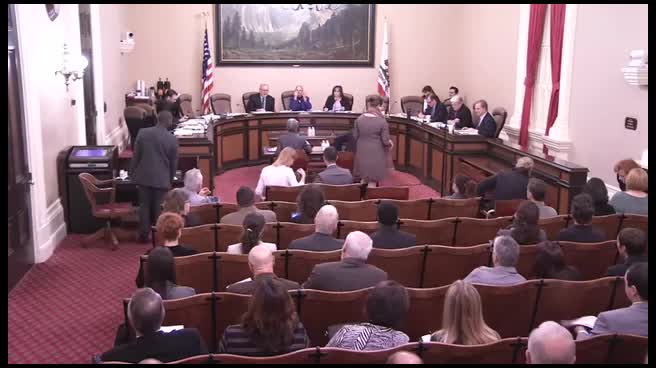
Discussed in Hearing
 17MIN
Senate Standing Committee on Natural Resources and Water
Bill Author

Bill Co-Author(s):
