SB 224: Elderly Parole Program.
- Session Year: 2015-2016
- House: Senate
- Latest Version Date: 2015-06-02
Existing law requires the Board of Parole Hearings to meet with an inmate during the 6th year prior to the inmates minimum eligible parole release date to document the inmates activities and conduct pertinent to parole eligibility. Existing law, the Victims Bill of Rights Act of 2008: Marsys Law, as added by Proposition 9 at the November 4, 2008, statewide general election, requires the panel, or the board if sitting en banc, to set a release date at the meeting, unless it determines that consideration of the public and victims safety requires a more lengthy period of incarceration, and that a parole date cannot be fixed at the meeting. Existing law requires the board to schedule the next parole consideration hearing 15, 10, 7, 5, or 3 years after any hearing at which parole is denied. Existing law allows the board to advance a hearing set pursuant to these provisions to an earlier date when a change in circumstances or new information establishes a reasonable likelihood that consideration of the public and victims safety does not require an additional period of incarceration.
Existing law, as added by Proposition 184, adopted November 8, 1994, and amended by Proposition 36, adopted November 6, 2012, commonly known as the Three Strikes Law, imposes increased penalties for certain recidivist offenders. In particular, it requires that, in addition to any other enhancement or penalty provisions that may apply, if a defendant has 2 or more prior felony convictions, the term for the current felony conviction shall be an indeterminate term of imprisonment in the state prison for life with a minimum term of the greatest of 3 times the term otherwise provided as punishment for each current felony conviction subsequent to the 2 or more prior felony convictions, imprisonment in the state prison for 25 years, or the term determined by the court for the underlying conviction, including any applicable enhancement or punishment provisions. The initiative measure enacting the Three Strikes Law prohibits the Legislature from amending the act except by a statute passed by a 2/3 vote or by a statute that becomes effective only when approved by the electors.
This bill would establish the Elderly Parole Program, for prisoners who are 50 60 years of age or older and who have served 15 a minimum of 25 years of their sentence. When considering the release of an inmate who meets this criteria, the bill would require the board to consider whether age, time served, and diminished physical condition, if any, have reduced the elderly prisoners risk for future violence. The bill would also require the Board of Parole Hearings to consider whether a prisoner will qualify for the program when determining the prisoners next parole suitability hearing. If the prisoner is found suitable for parole under the Elderly Parole Program, the bill would require the board to release the individual on parole, as specified.
Existing law requires the Board of Parole Hearings to meet with an inmate during the 6th year prior to the inmates minimum eligible parole release date to document the inmates activities and conduct pertinent to parole eligibility. Existing law, the Victims Bill of Rights Act of 2008: Marsys Law, as added by Proposition 9 at the November 4, 2008, statewide general election, requires the panel, or the board if sitting en banc, to set a release date at the meeting, unless it determines that consideration of the public and victims safety requires a more lengthy period of incarceration, and that a parole date cannot be fixed at the meeting. Existing law requires the board to schedule the next parole consideration hearing 15, 10, 7, 5, or 3 years after any hearing at which parole is denied. Existing law allows the board to advance a hearing set pursuant to these provisions to an earlier date when a change in circumstances or new information establishes a reasonable likelihood that consideration of the public and victims safety does not require an additional period of incarceration.
This bill would establish the Elderly Parole Program, for prisoners who are 50 years of age or older, older and who have served 15 years of their sentence, and who have a reentry plan identifying residential, financial, and social integration plans. sentence. When considering the release of an inmate who meets this criteria, the bill would require the board to consider whether age, time served, and diminished physical condition, if any, have reduced the elderly prisoners risk for future violence. The bill would also require the Board of Parole Hearings to consider whether a prisoner will qualify for the program when determining the prisoners next parole suitability hearing.
Existing law requires the Board of Parole Hearings to meet with an inmate during the 6th year prior to the inmates minimum eligible parole release date to document the inmates activities and conduct pertinent to parole eligibility. Existing law, the Victims Bill of Rights Act of 2008: Marsys Law, as added by Proposition 9 at the November 4, 2008, statewide general election, requires the panel, or the board if sitting en banc, to set a release date at the meeting, unless it determines that consideration of the public and victims safety requires a more lengthy period of incarceration, and that a parole date cannot be fixed at the meeting. Existing law requires the board to schedule the next parole consideration hearing 15, 10, 7, 5, or 3 years after any hearing at which parole is denied. Existing law allows the board to advance a hearing set pursuant to these provisions to an earlier date when a change in circumstances or new information establishes a reasonable likelihood that consideration of the public and victims safety does not require an additional period of incarceration.
This bill would establish the Elderly Parole Program, for prisoners who are 50 years of age or older, who have served 15 years of their sentence, and who have a reentry plan identifying residential, financial, and social integration plans. When considering the release of an inmate who meets this criteria, the bill would require the board to consider whether age, time served, and diminished physical condition, if any, have reduced the elderly prisoners risk for future violence. The bill would also require the Board of Parole Hearings to consider whether a prisoner will qualify for the program when determining the prisoners next parole suitability hearing.
The Legislature finds and declares all of the following:
(a)On February 10, 2014, the three-judge court overseeing the California prison overcrowding class action case (Coleman v. Brown (2013) 952 F.Supp.2d 901) issued an order that, among other things, requires the state to implement an Elderly Parole Program so that prisoners who are 60 years of age or older and who have been incarcerated at least 25 years on their current sentence will be referred to the Board of Parole Hearings (BPH) to determine suitability for parole. The BPH implemented this Elderly Parole Program on October 1, 2014.
(b)Under the existing Elderly Parole Program hearings, prisoners who are 60 years of age or older and who have been incarcerated 25 years or more on their current sentence serving either a determinate or indeterminate sentence, and who have not yet had an initial parole suitability hearing are referred by the California Department of Corrections and Rehabilitation (CDCR) to the BPH and scheduled for an Elderly Parole Program Suitability hearing.
(c)Under the existing Elderly Parole Program hearings, prisoners who are 60 years of age or older and who have been incarcerated 25 years or more on their current term and who have already been denied parole at the initial sustainability suitability hearing are considered for a new hearing under the Elderly Parole Program.
(d)The BPH currently reviews all three-year denials annually to determine if a more prompt parole consideration hearing should be considered. Under the existing Elderly Parole Program, the BPH includes within that annual review whether any prisoner meets the elder parole eligibility criteria, and if so whether to schedule a hearing.
(e)Under the existing Elderly Parole Program, prisoners who have lengthier denial periods can file petitions with the BPH asking that their hearing be advanced because they meet the eligibility criteria for elder parole.
(f)The BPH may deny parole if an elderly prisoners release would pose an unreasonable risk of danger to public safety. Parole suitability hearing decisions for elderly parole inmates are reviewed in the same manner as all other parolees under eligibility consideration, pursuant to criteria specified by Section 2281 of Title 15 of the California Code of Regulations. However, for all Elderly Parole Program hearings, the BPH risk assessments consider whether age, time served, and diminished physical condition, if any, reduce elderly prisoners risk for future violence.
(g)The number of elderly prisoners in California state prisons will continue to increase exponentially. In 2013, the CDCR reported a population of prisoners 50 years of age and older as 27,580 and the population of prisoners 55 years of age and older as 14,856.
(h)Costs associated with geriatric medical needs begin to accumulate at age 50, given that there is an overwhelming consensus that the age of 50 constitutes a point when prisoners are considered elderly. In 2010, the LAO estimated from other state projections that incarcerating elderly offenders costs two to three times more than for the general prison population. In 2010, the average cost of incarcerating an inmate was approximately $51,000.
(i)Older persons have significantly low arrest rates. In 2001, the federal arrest rate for persons 40 to 44, inclusive, years of age was 0.73 percent. The rate decreases by about one-half every five years, dropping to 0.46 percent for persons 45 to 49, inclusive, years of age and 0.26 percent for persons 50 to 54, inclusive, years of age. For persons 50 to 59, inclusive, years of age, the arrest rate plummets to 0.14 percent.
(j)There is a lower risk of recidivism among elderly prisoners, according to CDCR statistics. In 2013, CDCR reported that only 33.8 percent of persons who were 60 years of age and older, returned to prison after one year from being released from prison. Recidivism rates for persons 50 to 54, inclusive, years of age and 55 to 59, inclusive, years of age after one year from being released from prison were 39.9 and 38.3 percent, respectively.
SEC. 2.Section 3055 is added to the Penal Code, to read:3055.(a)The Elderly Parole Program is hereby established, to be administered by the Board of Parole Hearings.
(b)A prisoner shall be considered for parole under the Elderly Parole Program if he or she meets both of the following conditions:
(1)The prisoner is 50 60 years of age or older.
(2)The prisoner has served 15 a minimum of 25 years of continued incarceration on his or her current sentence, including time served prior to sentencing. serving either a determinate or indeterminate sentence.
(c)When considering the release of a prisoner specified by subdivision (b) pursuant to Section 3041, the board shall give special consideration to whether age, time served, and diminished physical condition, if any, have reduced the elderly prisoners risk for future violence.
(d)When scheduling a parole suitability hearing date pursuant to subdivision (b) of Section 3041.5 or when considering a request for an advance hearing pursuant to subdivision (d) of Section 3041.5, the board shall consider whether the prisoner meets or will meet the criteria specified in subdivision (b).
(e)If the prisoner is found suitable for parole under the Elderly Parole Program, the board shall release the individual on parole as provided in Section 3041.
(e)
(f)This section does not apply to prisoners sentenced to death or to imprisonment for life without the possibility of parole.
The Legislature finds and declares all of the following:
(a)On February 10, 2014, the three-judge court overseeing the California prison overcrowding class action case (Coleman v. Brown (2013) 952 F.Supp.2d 901) issued an order that, among other things, requires the state to implement an Elderly Parole Program so that prisoners who are 60 years of age or older and who have been incarcerated at least 25 years on their current sentence will be referred to the Board of Parole Hearings (BPH) to determine suitability for parole. The BPH implemented this Elderly Parole Program on October 1, 2014.
(b)Under the existing Elderly Parole Program hearings, prisoners who are 60 years of age or older and who have been incarcerated 25 years or more on their current sentence serving either a determinate or indeterminate sentence, and who have not yet had an initial parole suitability hearing are referred by the California Department of Corrections and Rehabilitation (CDCR) to the BPH and scheduled for an Elderly Parole Program Suitability hearing.
(c)Under the existing Elderly Parole Program hearings, prisoners who are 60 years of age or older and who have been incarcerated 25 years or more on their current term and who have already been denied parole at the initial sustainability hearing are considered for a new hearing under the Elderly Parole Program.
(d)The BPH currently reviews all three-year denials annually to determine if a more prompt parole consideration hearing should be considered. Under the existing Elderly Parole Program, the BPH includes within that annual review whether any prisoner meets the elder parole eligibility criteria, and if so whether to schedule a hearing.
(e)Under the existing Elderly Parole Program, prisoners who have lengthier denial periods can file petitions with the BPH asking that their hearing be advanced because they meet the eligibility criteria for elder parole.
(f)BPH may deny parole if an elderly prisoners release would pose an unreasonable risk of danger to public safety. Parole suitability hearing decisions for elderly parole inmates are reviewed in the same manner as all other parolees under eligibility consideration, pursuant to criteria specified by Section 2281 of Title 15 of the California Code of Regulations. However, for all Elderly Parole Program hearings, the BPH risk assessments consider whether age, time served, and diminished physical condition, if any, reduce elderly prisoners risk for future violence.
(g)The number of elderly prisoners in California state prisons will continue to increase exponentially. In 2013, the CDCR reported a population of prisoners 50 years of age and older as 27,580 and the population of prisoners 55 years of age and older as 14,856.
(h)Costs associated with geriatric medical needs begin to accumulate at age 50, given that there is an overwhelming consensus that the age of 50 constitutes a point when prisoners are considered elderly. In 2010, the LAO estimated from other state projections that incarcerating elderly offenders costs two to three times more than for the general prison population. In 2010, the average cost of incarcerating an inmate was approximately $51,000.
(i)Older persons have significantly low arrest rates. In 2001, the federal arrest rate for persons 40 to 44, inclusive, years of age was 0.73 percent. The rate decreases by about one-half every five years, dropping to 0.46 percent for persons 45 to 49, inclusive, years of age and 0.26 percent for persons 50 to 54, inclusive, years of age. For persons 50 to 59, inclusive, years of age, the arrest rate plummets to 0.14 percent.
(j)There is a lower risk of recidivism among elderly prisoners, according to CDCR statistics. In 2013, CDCR reported that only 33.8 percent of persons who were 60 years of age and older, returned to prison after one year from being released from prison. Recidivism rates for persons 50 to 54, inclusive, years of age and 55 to 59, inclusive, years of age after one year from being released from prison were 39.9 and 38.3 percent, respectively.
SEC. 2.Section 3055 is added to the Penal Code, to read:3055.(a)The Elderly Parole Program is hereby established, to be administered by the Board of Parole Hearings.
(b)A prisoner shall be considered for parole under the Elderly Parole Program if he or she meets all both of the following conditions:
(1)The prisoner is 50 years of age or older.
(2)The prisoner has served 15 years of continued incarceration on his or her sentence, including time served prior to sentencing.
(3)The prisoner has a reentry plan identifying residential, financial, and social integration plans.
(c)When considering the release of a prisoner specified by subdivision (b) pursuant to Section 3041, the board shall give special consideration to whether age, time served, and diminished physical condition, if any, have reduced the elderly prisoners risk for future violence.
(d)When scheduling a parole suitability hearing date pursuant to subdivision (b) of Section 3041.5 or when considering a request for an advance hearing pursuant to subdivision (d) of Section 3041.5, the board shall consider whether the prisoner meets or will meet the criteria specified in subdivision (b).
(e)This section does not apply to prisoners sentenced to death or to imprisonment for life without the possibility of parole.
The Legislature finds and declares all of the following:
(a)On February 10, 2014, the three-judge court overseeing the California prison overcrowding class action case (Coleman v. Brown (2013) 952 F.Supp.2d 901) issued an order that, among other things, requires the state to implement an Elderly Parole Program so that prisoners who are 60 years of age or older and who have been incarcerated at least 25 years on their current sentence will be referred to the Board of Parole Hearings (BPH) to determine suitability for parole. The BPH implemented this Elderly Parole Program on October 1, 2014.
(b)Under the existing Elderly Parole Program hearings, prisoners who are 60 years of age or older and who have been incarcerated 25 years or more on their current sentence serving either a determinate or indeterminate sentence, and who have not yet had an initial parole suitability hearing are referred by the California Department of Corrections and Rehabilitation (CDCR) to the BPH and scheduled for an Elderly Parole Program Suitability hearing.
(c)Under the existing Elderly Parole Program hearings, prisoners who are 60 years of age or older and who have been incarcerated 25 years or more on their current term and who have already been denied parole at the initial sustainability hearing are considered for a new hearing under the Elderly Parole Program.
(d)The BPH currently reviews all three-year denials annually to determine if a more prompt parole consideration hearing should be considered. Under the existing Elderly Parole Program, the BPH includes within that annual review whether any prisoner meets the elder parole eligibility criteria, and if so whether to schedule a hearing.
(e)Under the existing Elderly Parole Program, prisoners who have lengthier denial periods can file petitions with the BPH asking that their hearing be advanced because they meet the eligibility criteria for elder parole.
(f)BPH may deny parole if an elderly prisoners release would pose an unreasonable risk of danger to public safety. Parole suitability hearing decisions for elderly parole inmates are reviewed in the same manner as all other parolees under eligibility consideration, pursuant to criteria specified by Section 2281 of Title 15 of the California Code of Regulations. However, for all Elderly Parole Program hearings, the BPH risk assessments consider whether age, time served, and diminished physical condition, if any, reduce elderly prisoners risk for future violence.
(g)The number of elderly prisoners in California state prisons will continue to increase exponentially. In 2013, the CDCR reported a population of prisoners 50 years of age and older as 27,580 and the population of prisoners 55 years of age and older as 14,856.
(h)Costs associated with geriatric medical needs begin to accumulate at age 50, given that there is an overwhelming consensus that the age of 50 constitutes a point when prisoners are considered elderly. In 2010, the LAO estimated from other state projections that incarcerating elderly offenders costs two to three times more than for the general prison population. In 2010, the average cost of incarcerating an inmate was approximately $51,000.
(i)Older persons have significantly low arrest rates. In 2001, the federal arrest rate for persons 40 to 44, inclusive, years of age was 0.73 percent. The rate decreases by about one-half every five years, dropping to 0.46 percent for persons 45 to 49, inclusive, years of age and 0.26 percent for persons 50 to 54, inclusive, years of age. For persons 50 to 59, inclusive, years of age, the arrest rate plummets to 0.14 percent.
(j)There is a lower risk of recidivism among elderly prisoners, according to CDCR statistics. In 2013, CDCR reported that only 33.8 percent of persons who were 60 years of age and older, returned to prison after one year from being released from prison. Recidivism rates for persons 50 to 54, inclusive, years of age and 55 to 59, inclusive, years of age after one year from being released from prison were 39.9 and 38.3 percent, respectively.
SEC. 2.Section 3055 is added to the Penal Code, to read:3055.(a)The Elderly Parole Program is hereby established, to be administered by the Board of Parole Hearings.
(b)A prisoner shall be considered for parole under the Elderly Parole Program if he or she meets all of the following conditions:
(1)The prisoner is 50 years of age or older.
(2)The prisoner has served 15 years of his or her sentence.
(3)The prisoner has a reentry plan identifying residential, financial, and social integration plans.
(c)When considering the release of a prisoner specified by subdivision (b) pursuant to Section 3041, the board shall give special consideration to whether age, time served, and diminished physical condition, if any, have reduced the elderly prisoners risk for future violence.
(d)When scheduling a parole suitability hearing date pursuant to subdivision (b) of Section 3041.5 or when considering a request for an advance hearing pursuant to subdivision (d) of Section 3041.5, the board shall consider whether the prisoner meets or will meet the criteria specified in subdivision (b).
|
Date
|
Status
|
|---|---|
| Feb 13, 2015 | Introduced. Read first time. To Com. on RLS. for assignment. To print. |
| Feb 17, 2015 | From printer. May be acted upon on or after March 19. |
| Feb 26, 2015 | Referred to Com. on PUB. S. |
| Mar 10, 2015 | Set for hearing April 7. |
| Mar 19, 2015 | From committee with author's amendments. Read second time and amended. Re-referred to Com. on PUB. S. |
| Apr 7, 2015 | From committee: Do pass and re-refer to Com. on APPR. (Ayes 5. Noes 2. Page 507.) (April 7). Re-referred to Com. on APPR. |
| Apr 10, 2015 | Set for hearing April 20. |
| Apr 20, 2015 | April 20 hearing: Placed on APPR. suspense file. |
| May 23, 2015 | Set for hearing May 28. |
| Jun 1, 2015 | From committee: Do pass as amended. (Ayes 5. Noes 2. Page 1149.) (May 28). |
| Jun 1, 2015 | From committee: Do pass as amended. (Ayes 5. Noes 2.) (May 28). |
| Jun 2, 2015 | Read second time and amended. Ordered to third reading. |
| Jun 4, 2015 | Ordered to inactive file on request of Senator Liu. |
| Feb 1, 2016 | Died on file pursuant to Joint Rule 56. |
|
Date
|
Description
|
Location
|
Votes
|
|
|---|---|---|---|---|
| May 28, 2015 | Do pass as amended | Senate Standing Committee on Appropriations |
Passed |
|
| Apr 20, 2015 | Placed on suspense file | Senate Standing Committee on Appropriations |
Passed |
|
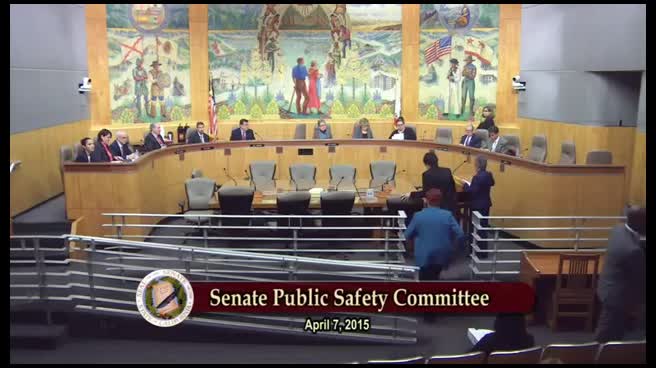
| Apr 7, 2015 | Do pass, but first be re-referred to the Committee on [Appropriations] | Senate Standing Committee on Public Safety |
Passed |
This list shows positions taken on this bill by organizations on the date displayed, which is linked to the original source.
Positions by individuals are not included.
|
Organization
|
Position
|
Date
|
|---|---|---|
| America Friends Service Committee | * Support | Apr 7, 2015 |
| American Association of University Women in California | * Support | Jul 3, 2018 |
| California District Attorneys Association | * Against | Apr 7, 2015 |
| California Employment Lawyers Association | * Support | Jul 3, 2018 |
| California Faculty Association | * Support | Jul 3, 2018 |
| California Families Against Solitary Confinement | * Support | Apr 7, 2015 |
| California Partnership | * Support | Apr 7, 2015 |
| California Public Defenders Association | * Support | Apr 7, 2015 |
| California Teamsters | * Support | Jul 3, 2018 |
| Californians for Safety and Justice | * Support | Apr 7, 2015 |
| Californians United for a Responsible Budget | * Support | Apr 7, 2015 |
| Center for Human Rights | * Support | Apr 7, 2015 |
| Center on Juvenile and Criminal Justice | * Support | Apr 7, 2015 |
| Consumer Attorneys Of California | * Support | Jul 3, 2018 |
| Equal Rights Advocates | * Support | Jul 3, 2018 |
| Friends Committee on Legislation in California | * Support | Apr 7, 2015 |
| Justice Now | * Support | Apr 7, 2015 |
| Legal Services for Prisoners with Children | * Support | Apr 7, 2015 |
| Life Support Alliance | * Support | Apr 7, 2015 |
| Sacramento District Attorney's Office | * Against | Apr 7, 2015 |
SB 224
Page 6
|
Office of Senate Floor Analyses (916) 651-1520 Fax: (916) 327-4478 |
THIRD READING
Bill No: SB 224
Amended: 6/2/15
SENATE PUBLIC SAFETY COMMITTEE: 5-2, 4/7/15
AYES: Hancock, Leno, Liu, McGuire, Monning
NOES: Anderson, Stone
SENATE APPROPRIATIONS COMMITTEE: 5-2, 5/28/15
AYES: Lara, Beall, Hill, Leyva, Mendoza
NOES: Bates, Nielsen
SUBJECT: Elderly Parole Program
DIGEST: This bill codifies court-ordered elderly parole.
Existing law:
Provides that in the case of any inmate sentenced to an indeterminate sentence the Board of Parole Hearings (Board) shall meet with each inmate during the sixth year prior to the inmate’s eligible parole release date for the purposes of reviewing and documenting the inmates activities and conduct pertinent to both parole eligibility and to the granting and withholding of postconviction credit. (Penal Code § 3041(a))
Provides that one year prior to the inmates minimum eligible parole release date a panel of two or more commissioners or deputy commissioners shall meet with the inmate and shall normally set a parole release date. (Penal Code § 3041(a))
Provides that the release date shall be set in a manner that will provide uniform terms for offenses of similar gravity and magnitude with respect to their threat to the public, and that will comply with the sentencing rules that the Judicial Council may issue and any sentencing information relevant to the setting of the parole release dates. The Board shall establish criteria for the setting of parole release dates and in doing so shall consider the number of victims of crime for which the inmate was sentenced and other factors in mitigation or aggravation of the crime. (Penal Code § 3041 (a))
Provides that one year prior to the inmate’s minimum eligible parole release date a panel of two or more commissioners or deputy commissioners shall again meet with the inmate and, except as provided, normally set a parole release date as provided in Section 3041.5. (Penal Code § 3041(a))
According to the Three-Judge Court Order filed February 10, 2014, the California Department of Corrections and Rehabilitation (CDCR) must “[f]inalize and implement a new parole process whereby inmates who are 60 years of age or older and have served a minimum of twenty-five years of their sentence will be referred to the Board of Parole Hearings to determine suitability for parole.” (February 10, 2014 Order, 2:90-cv-0520 LKK DAD PC, 3-Judge Court, Coleman v. Brown, Plata v. Brown)
This bill:
Provides that a prisoner shall be considered for parole under the Elderly Parole Program if she or she meets both of the following conditions:
The prisoner is 60 years of age or older; and,
The prisoner has served 25 years of continued incarcerations on his or her sentence including time served prior to sentencing.
Provides that when considering the release of a prisoner under elderly parole the Board shall give special consideration to whether age, time served, and diminished physical condition, if any have reduced the elderly prisoner’s risk for future violence.
Provides that if the prisoner is found suitable for parole under the Elderly Parole Program the Board shall release the individual.
Provides that elderly parole does not apply to prisoners sentenced to death or to imprisonment for life without the possibility of parole.
Background
In Coleman v. Brown, Plata v. Brown in which the plaintiffs are seeking a reduction in the California prison population, the Three-Judge Court Order of February 10, 2014, required CDCR to create an “elderly parole” program in which prisoners who have reached the age of 60 and served 25 years will be considered for parole. The elderly parole hearings began on October 1, 2014. CDCR’s February 2015 status report in response to the February 10, 2014 court order states the progress of the elderly parole program stating:
Parole process for inmates 60 years of age or older having served at least 25 years: The Board continues to schedule eligible inmates for hearings who were not already in the Board’s hearing cycle, including inmates sentenced to determinate terms. The Board has scheduled 549 hearings for inmates eligible for elderly parole, resulting in 115 grants, 247 denials, and 26 stipulations to unsuitability. The remaining 159 scheduled cases were waived by the inmate, postponed, continued, or cancelled. .”(Defendants’ February 2015 Status Report In Response to February 10, 2014 Order, 2:90-cv-00520 KJM DAD PC, 3-Judge Court, Coleman v. Brown, Plata v. Brown).
The age 60 was determined because there is a significant reduction in crimes committed by those over 60. According to felony arrest and CDCR admissions data by age:
In California, individuals age 60 or over were responsible for the lowest percentage of all felony arrests of all age groups in 2012, with the exception of children under the age of 10. Individuals age 60 or over were responsible for 1.9% of all felony arrests.
While the data shows that there are still 32,980 felony arrests of people 50-59 years of age those numbers drop 7,454 at age 60. (http://www.cdcr.ca.gov/BOPH/docs/Policy/2012_California_Arrest_and_CDCR_Admissions_Data_by_Age_Final.pdf)
This bill codifies the current “elderly parole” program.
FISCAL EFFECT: Appropriation: No Fiscal Com.: Yes Local: No
According to the Senate Appropriations Committee, no near-term fiscal impact, as the provisions of this bill codify existing practice. To the extent the CDCR would otherwise not continue to administer the program once federal receivership is lifted, could potentially result in significant ongoing future operational costs and offsetting cost savings for releases to parole.
ACLU
AllCare Alliance
American Friends Service Committee
A New PATH (Parents for Addiction Treatment and Healing)
A New Way of Life Re-Entry Project
California Attorneys for Criminal Justice
California Catholic Conference, Inc.
California Coalition for Women Prisoners
California
Commission on Aging
California Families Against Solitary
Confinement
California Prison Watch
California Public Defenders Association
Californians for Safety and Justice
Californians United for a Responsible Budget
Center on Juvenile and Criminal Justice
Communities United for Restorative Youth Justice
Community United Against Violence
Courage Campaign
Dignity and Power Now
Drug Policy Alliance
Ella Baker Center for Human Rights
Facts Education and Projects
Fair Chance Project
Forward Together
Friends Committee on Legislation of California
Hunger Action Los Angeles
Inland Congregations United for Change
JFK Democratic Club of Sacramento
Justice Not Jails
Justice Now
Legal Services for Prisoners with Children
Life Support Alliance
Los Angeles Community Action Network
Los Angeles Regional Reentry Partnership
Match Two, Prisoner Outreach Ministry
National Association of Social Workers, California Chapter
Older Women’s League
Prison Law Office
Prison Policy Initiative
Root & Rebound
Senior and Disability Action
Sisters of St. Joseph of Carondelet
Starting Over, Inc.
Time for Change Foundation
U.S. Law Enforcement Chaplains Corps
Western Regional Advocacy Project
Women’s Council of the CA Chapter of the National Association of Social
Workers
Youth Justice Coalition
Numerous individuals
Alameda County District Attorney
Association for Los Angeles Deputy Sheriffs
Association of Deputy District Attorneys
California College and University Police Chiefs Association
California Correctional Supervisors Organization
California District Attorneys Association
California Narcotic Officers Association
California Police Chiefs Association
California State Sheriffs’ Association
Crime Victims United
Los Angeles Police Protective League
Riverside Sheriffs’ Association
Sacramento County District Attorney
San Diego County District Attorney
Prepared by: Mary Kennedy / PUB. S. /
6/2/15 22:33:50
**** END ****
SB 224 (Liu) Page 3 of 3
SENATE COMMITTEE ON APPROPRIATIONS
Senator Ricardo Lara, Chair
2015 - 2016 Regular
SB 224 (Liu) - Elderly Parole Program
|
|
Version: March 19, 2015 |
Policy Vote: PUB. S. 5 - 2 |
Urgency: No |
Mandate: No |
Hearing Date: May 28, 2015 |
Consultant: Jolie Onodera |
SUSPENSE FILE. AS AMENDED.
Bill Summary:
SB 224 would codify the court-ordered Elderly Parole Program, to be administered by the Board of Parole Hearings (BPH). This bill would expand inmate eligibility for the existing program by reducing the minimum age requirement from 60 years to 50 years of age or older and time served from at least 25 years to 15 years of continued incarceration, as specified.
Fiscal Impact (as approved May 28, 2015):
No near-term fiscal impact, as the provisions of this bill codify existing practice. To the extent the CDCR would otherwise not continue to administer the program once federal receivership is lifted, could potentially result in significant ongoing future operational costs and offsetting cost savings for releases to parole.
Background:
The Three-Judge Court, in its February 10, 2014, order granting a two-year extension to reduce the in-state adult inmate population to 137.5 percent of design capacity, ordered the CDCR to implement several population reduction measures, including finalizing and implementing an Elderly Parole Program, whereby inmates who are 60 years of age or older and have served at least 25 years on their current sentence will be referred to the BPH to determine suitability for parole. The BPH implemented the program on October 1, 2014.
According to the CDCR report, April 2015 Status and Benchmark Report to the Three-Judge Court, “The Board continues to schedule eligible inmates for hearings who were not already in the Board’s hearing cycle, including inmates sentenced to determinate terms. From February 11, 2014 through March 31, 2015, the Board has held 577 hearings for inmates eligible for elderly parole, resulting in 166 grants, 371 denials, 38 stipulations to unsuitability, and 2 split votes that required referral to the full Board. An additional 211 hearings were scheduled during this time period but were waived, postponed, continued, or cancelled.”
Proposed Law:
This bill would establish the Elderly Parole Program, to be administered by the BPH. To be considered for parole, an inmate must be 50 years of age or older and have served 15 years of continued incarceration on his or her sentence including time served prior to sentencing. In addition, this bill:
Requires the BPH, when considering the release of a prisoner, to give special consideration to whether age, time served, and diminished physical condition, if any, have reduced the elderly prisoner’s risk for future violence.
Requires the BPH to consider whether the prisoner meets or will meet the criteria for elderly parole eligibility when scheduling a parole suitability hearing or when considering a request for an advance hearing.
Specifies the Elderly Parole Program does not apply to prisoners sentenced to death or to imprisonment for life without the possibility of parole.
Specifies numerous uncodified legislative findings and declarations.
Related Legislation:
None applicable.
Staff Comments:
The CDCR has indicated the provisions of this bill would have a significant fiscal impact on the BPH. It is estimated that more than 6,100 inmates would immediately be eligible for a parole suitability hearing if the expanded criteria of this bill are applied to the existing Elderly Parole hearing process.
In calendar year 2014, the BPH scheduled slightly more than 4,700 parole suitability hearings and was budgeted approximately $4 million for costs associated with transcripts and inmate counsel for those hearings. Based on the average cost of $850 per hearing, the transcript and attorney costs alone for the additional 6,100 hearings would be $5.2 million (General Fund), assuming the existing parole suitability procedures would apply. These costs would be incurred over the period in which the hearings are conducted.
While the increase in eligible inmates would create an immediate backlog for hearings, the CDCR has indicated it would also create a continued need for more hearings prospectively, resulting in a potential need for additional BPH staff, Commissioners, and Deputy Commissioners. If risk assessments are required for these additional hearings, as are currently required for parole consideration hearings, the BPH would potentially need to increase the number of clinical forensic psychologists and senior psychologists that it currently employs, also at significant cost. Staff notes the level of need for additional staffing would be dependent on the rate at which the BPH schedules and conducts the suitability hearings for eligible inmates. In the absence of prescribed timeframes within which the hearings must be scheduled and held, resource needs could vary widely.
The CDCR would also generally incur additional costs related to preparing for the hearings, including additional workload for case records staff, correctional counselors, and custody staff to facilitate a variety of necessary functions associated with parole consideration hearings, such as audits of inmate records to confirm eligibility, security at hearings, review of the inmate’s central file by the inmate, his or her counsel, and district attorneys prior to the hearing, arranging inmate/attorney visits, and interviews by the BPH’s forensic clinical psychologists. While the CDCR is currently working on a more detailed analysis of the resources that would potentially be required under the provisions of this bill, the CDCR estimates that total costs associated with this bill could exceed $10 million. As noted previously, the level of resources required to address the workload generated by the expanded population of inmates would be dependent on the rate at which the CDCR and BPH schedule and conduct the hearings.
To the extent the expanded Elderly Parole program results in additional inmates being released earlier to parole would result in potentially significant future cost savings in reduced incarceration, including medical, dental, and mental health cost savings, offset in small part by an increase in parole costs. The magnitude of cost savings would be dependent on the number of inmates released to parole, the net cost to otherwise incarcerate and provide healthcare to the inmates, and the terms the inmates would have otherwise served. While the number of inmates impacted on an annual basis cannot be estimated with certainty, for every 50 inmates released to parole, first-year net cost savings could range from a minimum of $300,000 to over $1.5 million (General Fund), depending on the facility in which the inmates would have otherwise been incarcerated (state prison or in-state contract bed). Cumulative savings after three years could range from $950,000 to $4.6 million, assuming the inmates would have otherwise served that term in prison.
Relatedly, to the extent a greater number of inmates are released earlier to parole under the provisions of this bill would potentially result in additional individuals being newly eligible or reinstated for Medi-Cal program benefits. Increases in Medi-Cal program costs would be funded with both General Fund and federal funds. While the federal share of costs for childless adults is currently 100 percent, this reimbursement rate is temporary, and the ongoing federal share of Medi-Cal program costs would range from 50 percent to 90 percent.
Committee amendments (as adopted May 28, 2015): Revise program eligibility to 60 years of age or older and at least 25 years served, as specified.
-- END --
SB 224 (Liu) Page 3 of 3
SENATE COMMITTEE ON APPROPRIATIONS
Senator Ricardo Lara, Chair
2015 - 2016 Regular
SB 224 (Liu) - Elderly Parole Program
|
|
Version: March 19, 2015 |
Policy Vote: PUB. S. 5 - 2 |
Urgency: No |
Mandate: No |
Hearing Date: April 20, 2015 |
Consultant: Jolie Onodera |
This bill meets the criteria for referral to the Suspense File.
Bill Summary:
SB 224 would codify the court-ordered Elderly Parole Program, to be administered by the Board of Parole Hearings (BPH). This bill would expand inmate eligibility for the existing program by reducing the minimum age requirement from 60 years to 50 years of age or older and time served from at least 25 years to 15 years of continued incarceration, as specified.
Fiscal Impact:
BPH hearings: major costs in excess of $5 million (General Fund) for parole suitability hearings for over 6,100 inmates who would be immediately eligible for parole consideration under the specified criteria. Costs would be incurred over the period in which the hearings are conducted. Increased ongoing future costs for additional hearings as current/future inmates meet the age and time served criteria.
BPH/CDCR staffing and workload: potentially significant increase in staffing costs (General Fund) associated with the expanded population of inmates eligible for parole consideration, both initially and ongoing. Annual costs would be dependent on the rate at which the additional hearings are scheduled and conducted.
Releases to parole: potentially major future cost savings (General Fund) to the extent additional inmates are released to parole. Annual cost savings would be dependent on the number of releases to parole, which is unknown, the net cost savings due to transfer from incarceration (including medical costs) to parole for each inmate, and the term each inmate would have otherwise served in prison. For every 50 inmates released to parole, first-year net cost savings could range from a minimum of $300,000 to over $1.5 million (General Fund), depending on the facility in which the inmates would have otherwise been placed. Cumulative savings after three years could range from $950,000 to $4.6 million, assuming the inmates would have otherwise served that period in prison.
Medi-Cal impact: potential increase in the number of individuals newly eligible or reinstated for Medi-Cal program benefits (Federal Fund/General Fund) due to earlier releases to parole.
Background:
The Three-Judge Court, in its February 10, 2014, order granting a two-year extension to reduce the in-state adult inmate population to 137.5 percent of design capacity, ordered the CDCR to implement several population reduction measures, including finalizing and implementing an Elderly Parole Program, whereby inmates who are 60 years of age or older and have served at least 25 years on their current sentence will be referred to the BPH to determine suitability for parole. The BPH implemented the program on October 1, 2014.
According to the CDCR report, April 2015 Status and Benchmark Report to the Three-Judge Court, “The Board continues to schedule eligible inmates for hearings who were not already in the Board’s hearing cycle, including inmates sentenced to determinate terms. From February 11, 2014 through March 31, 2015, the Board has held 577 hearings for inmates eligible for elderly parole, resulting in 166 grants, 371 denials, 38 stipulations to unsuitability, and 2 split votes that required referral to the full Board. An additional 211 hearings were scheduled during this time period but were waived, postponed, continued, or cancelled.”
Proposed Law:
This bill would establish the Elderly Parole Program, to be administered by the BPH. To be considered for parole, an inmate must be 50 years of age or older and have served 15 years of continued incarceration on his or her sentence including time served prior to sentencing. In addition, this bill:
Requires the BPH, when considering the release of a prisoner, to give special consideration to whether age, time served, and diminished physical condition, if any, have reduced the elderly prisoner’s risk for future violence.
Requires the BPH to consider whether the prisoner meets or will meet the criteria for elderly parole eligibility when scheduling a parole suitability hearing or when considering a request for an advance hearing.
Specifies the Elderly Parole Program does not apply to prisoners sentenced to death or to imprisonment for life without the possibility of parole.
Specifies numerous uncodified legislative findings and declarations.
Related Legislation:
None applicable.
Staff Comments:
The CDCR has indicated the provisions of this bill would have a significant fiscal impact on the BPH. It is estimated that more than 6,100 inmates would immediately be eligible for a parole suitability hearing if the expanded criteria of this bill are applied to the existing Elderly Parole hearing process.
In calendar year 2014, the BPH scheduled slightly more than 4,700 parole suitability hearings and was budgeted approximately $4 million for costs associated with transcripts and inmate counsel for those hearings. Based on the average cost of $850 per hearing, the transcript and attorney costs alone for the additional 6,100 hearings would be $5.2 million (General Fund), assuming the existing parole suitability procedures would apply. These costs would be incurred over the period in which the hearings are conducted.
While the increase in eligible inmates would create an immediate backlog for hearings, the CDCR has indicated it would also create a continued need for more hearings prospectively, resulting in a potential need for additional BPH staff, Commissioners, and Deputy Commissioners. If risk assessments are required for these additional hearings, as are currently required for parole consideration hearings, the BPH would potentially need to increase the number of clinical forensic psychologists and senior psychologists that it currently employs, also at significant cost. Staff notes the level of need for additional staffing would be dependent on the rate at which the BPH schedules and conducts the suitability hearings for eligible inmates. In the absence of prescribed timeframes within which the hearings must be scheduled and held, resource needs could vary widely.
The CDCR would also generally incur additional costs related to preparing for the hearings, including additional workload for case records staff, correctional counselors, and custody staff to facilitate a variety of necessary functions associated with parole consideration hearings, such as audits of inmate records to confirm eligibility, security at hearings, review of the inmate’s central file by the inmate, his or her counsel, and district attorneys prior to the hearing, arranging inmate/attorney visits, and interviews by the BPH’s forensic clinical psychologists. While the CDCR is currently working on a more detailed analysis of the resources that would potentially be required under the provisions of this bill, the CDCR estimates that total costs associated with this bill could exceed $10 million. As noted previously, the level of resources required to address the workload generated by the expanded population of inmates would be dependent on the rate at which the CDCR and BPH schedule and conduct the hearings.
To the extent the expanded Elderly Parole program results in additional inmates being released earlier to parole would result in potentially significant future cost savings in reduced incarceration, including medical, dental, and mental health cost savings, offset in small part by an increase in parole costs. The magnitude of cost savings would be dependent on the number of inmates released to parole, the net cost to otherwise incarcerate and provide healthcare to the inmates, and the terms the inmates would have otherwise served. While the number of inmates impacted on an annual basis cannot be estimated with certainty, for every 50 inmates released to parole, first-year net cost savings could range from a minimum of $300,000 to over $1.5 million (General Fund), depending on the facility in which the inmates would have otherwise been incarcerated (state prison or in-state contract bed). Cumulative savings after three years could range from $950,000 to $4.6 million, assuming the inmates would have otherwise served that term in prison.
Relatedly, to the extent a greater number of inmates are released earlier to parole under the provisions of this bill would potentially result in additional individuals being newly eligible or reinstated for Medi-Cal program benefits. Increases in Medi-Cal program costs would be funded with both General Fund and federal funds. While the federal share of costs for childless adults is currently 100 percent, this reimbursement rate is temporary, and the ongoing federal share of Medi-Cal program costs would range from 50 percent to 90 percent.
-- END --
SB 224 (Liu ) Page 6 of 6
SENATE COMMITTEE ON PUBLIC SAFETY
Senator Loni Hancock, Chair
2015 - 2016 Regular
Bill No: SB 224 Hearing Date: April 7, 2015
Author: |
Liu |
||
Version: |
March 19, 2015 |
||
Urgency: |
No |
Fiscal: |
Yes |
Consultant: |
MK |
||
Subject: Elderly Parole Program
HISTORY
Source: Californians United for a Responsible Budget; Legal Services for Prisoners with Children
Prior Legislation: None applicable
Support: A New PATH; AllCare Alliance; American Civil Liberties Union; American Friends Service Committee; California Attorneys for Criminal Justice; California Catholic Conference; California Partnership; California Public Defenders Association; Californians for Safety and Justice; Center on Juvenile and Criminal Justice; Communities United for Restorative Youth Justice; Courage Campaign; Ella Baker Center for Human Rights; FACTS EDUCATION and PROJECTS; Fair Chance Project; Friends Committee on Legislation of California; Justice Now; Life Support Alliance; Los Angeles Community Action Network; Prison Law Office; Prison Policy Initiative; Sisters of St. Joseph of Carondelet; Western Regional Advocacy Project; several individuals
Opposition: California District Attorneys Association; California State Sheriffs’ Association
PURPOSE
The purpose of this bill is to codify court-ordered elderly parole by reducing the age from 60 to 50 and the time that must be served in prison from 25 to 15 years.
Existing law provides that in the case of any inmate sentenced to an indeterminate sentence the Board of Parole Hearings (the Board) shall meet with each inmate during the sixth year prior to the inmate’s eligible parole release date for the purposes of reviewing and documenting the inmates activities and conduct pertinent to both parole eligibility and to the granting and withholding of postconviction credit. (Penal Code § 3041(a))
Existing law provides that one year prior to the inmates minimum eligible parole release date a panel of two or more commissioners or deputy commissioners shall meet with the inmate and shall normally set a parole release date. (Penal Code § 3041(a))
Existing law provides that the release date shall be sent in a manner that will provide uniform terms for offenses of similar gravity and magnitude with respect to their threat to the public, and that will comply with the sentencing rules that the Judicial Council may issue and any sentencing information relevant to the setting of the parole release dates. The Board shall establish criteria for the setting of parole release dates and in doing so shall consider the number of victims of crime for which the inmate was sentenced and other factors in mitigation or aggravation of the crime. (Penal Code § 3041 (a))
Existing law provides that one year prior to the inmate’s minimum eligible parole release date a panel of two or more commissioners or deputy commissioners shall again meet with the inmate, hall except as provided, normally set a parole release date as provided in Section 3041.5. (Penal Code § 3041(a))
According to the Three-judge Court order filed February 10, 2014 the CDCR must “[f]inalize and implement a new parole process whereby inmates who are 60 years of age or older and have served a minimum of twenty-five years of their sentence will be referred to the Board of Parole Hearings to determine suitability for parole.” (February 10, 2014 Order, 2:90-cv-0520 LKK DAD PC, 3-Judge Court, Coleman v. Brown, Plata v. Brown)
This bill provides that a prisoner shall be considered for parole under the Elderly Parole Program if she or she meets both of the following conditions:
The prisoner is 50 years of age or older; and,
The prisoner has served 15 years of continued incarcerations on his or her sentence including time served prior to sentencing.
This bill provides that when considering the release of a prisoner under elderly parole the board shall give special consideration to whether age, time served, and diminished physical condition, if any have reduced the elderly prisoner’s risk for future violence.
This bill provides that elderly parole does not apply to prisoners sentenced to death or to imprisonment for life without the possibility of parole.
This bill contains uncodified legislative findings.
RECEIVERSHIP/OVERCROWDING CRISIS AGGRAVATION
For the past eight years, this Committee has scrutinized legislation referred to its jurisdiction for any potential impact on prison overcrowding. Mindful of the United States Supreme Court ruling and federal court orders relating to the state’s ability to provide a constitutional level of health care to its inmate population and the related issue of prison overcrowding, this Committee has applied its “ROCA” policy as a content-neutral, provisional measure necessary to ensure that the Legislature does not erode progress in reducing prison overcrowding.
On February 10, 2014, the federal court ordered California to reduce its in-state adult institution population to 137.5% of design capacity by February 28, 2016, as follows:
143% of design bed capacity by June 30, 2014;
141.5% of design bed capacity by February 28, 2015; and,
137.5% of design bed capacity by February 28, 2016.
In February of this year the administration reported that as “of February 11, 2015, 112,993 inmates were housed in the State’s 34 adult institutions, which amounts to 136.6% of design bed capacity, and 8,828 inmates were housed in out-of-state facilities. This current population is now below the court-ordered reduction to 137.5% of design bed capacity.”( Defendants’ February 2015 Status Report In Response To February 10, 2014 Order, 2:90-cv-00520 KJM DAD PC, 3-Judge Court, Coleman v. Brown, Plata v. Brown (fn. omitted).
While significant gains have been made in reducing the prison population, the state now must stabilize these advances and demonstrate to the federal court that California has in place the “durable solution” to prison overcrowding “consistently demanded” by the court. (Opinion Re: Order Granting in Part and Denying in Part Defendants’ Request For Extension of December 31, 2013 Deadline, NO. 2:90-cv-0520 LKK DAD (PC), 3-Judge Court, Coleman v. Brown, Plata v. Brown (2-10-14). The Committee’s consideration of bills that may impact the prison population therefore will be informed by the following questions:
Whether a proposal erodes a measure which has contributed to reducing the prison population;
Whether a proposal addresses a major area of public safety or criminal activity for which there is no other reasonable, appropriate remedy;
Whether a proposal addresses a crime which is directly dangerous to the physical safety of others for which there is no other reasonably appropriate sanction;
Whether a proposal corrects a constitutional problem or legislative drafting error; and
Whether a proposal proposes penalties which are proportionate, and cannot be achieved through any other reasonably appropriate remedy.
COMMENTS
1. Need for This Bill
According to the author:
SB 224 seeks to codify the existing Elderly Parole Program, implemented by the Brown Administration following the three-judge panel decision in Coleman v. Brown (2013). This program could be eliminated at any time at CDCR’s discretion. The bill also expands the eligibility criteria for inmates to be considered for parole from age 60 years and older and having served 25 years on their current sentence, to age 50 years and older and having served 15 years on their current sentence.
According to a 2012 ACLU report, there is a long-standing consensus among correctional experts and criminologists that “50 years of age is the appropriate point marking when a prisoner becomes “aging” or “elderly.”1 The National Institute of Corrections (NIC) has also used this cutoff in determining what age constitutes “elderly” prisoners.
The human and financial cost of incarcerating elders is astronomical. Incarcerating elderly prisoners ages 50 years and older each year in the United States costs approximately twice as much compared to other age groups.2 California alone spends approximately $55,000 a year for every inmate that is incarcerated.3 And in 2014, health care costs comprised the second largest area of prison spending in California; approximately 29% of the state’s prison budget (LAO, 2014).4 Additionally, due to the accumulative impact of day-to-day conditions in prisons, such as high levels of stress, less access to nutritional food, and increased exposure to chronic illness, studies have shown that incarcerated people are roughly ten to fifteen years older physiologically than they are chronologically.5 Consequently, these individuals can be expected to suffer from more advanced diseases than their non-incarcerated peers, with treatment and health care costs projected in the millions for elderly prisoners.
The elderly inmate population tends to have lower recidivism rates as compared to the general prison population. According to CDCR, in 2012 felony arrests in California for individuals ages 50 and older were among the lowest percentage of all felony arrests for all age groups (for ages 50-59, 7.67% and for ages 60-69, 1.73%). Parolees ages 50 years and older who were re-incarcerated for parole violations was significantly lower, as compared to other age groups: 8.0% for ages 50-59 and 1.0% for ages 60-69.
States across the nation are dealing with growing and aging prison populations and the accompanying budget impacts. At least 15 states and the District of Columbia have defined a process for releasing older persons from prison. SB 224 allows California to follow this national trend by modeling Maryland’s Geriatric Parole Program, which requires prisoners to have served 15 years until they can be eligible for the parole. (Md. Code Ann., Crim. Law § 14-101(g)).
Codifying the current elder parole process and expanding it to reach incarcerated elders ages 50 years and older who have served 15 consecutive years in prison is a reasonable step towards reducing the cost and overcrowding issues associated with California’s prisons. SB 224 furthers the narrative of treating our aging population humanely and compassionately in addition to relieving the burden of imprisonment on taxpayers and the families of older prisoners
2. Elderly Parole
In Coleman v. Brown, Plata v. Brown in which the plaintiffs are seeking a reduction in the California prison population, the Three-Judge Court Order of February 10, 2014 required CDCR to create an “elderly parole” program in which prisoners who have reached the age of 60 and served 25 years will be considered for parole. The elderly parole hearings began on October 1, 2014. CDCR’s February 2015 status report in response to the February 10, 2014 court order states the progress of the elderly parole program stating:
Parole process for inmates 60 years of age or older having served at least 25 years: The Board continues to schedule eligible inmates for hearings who were not already in the Board’s hearing cycle, including inmates sentenced to determinate terms. The Board has scheduled 549 hearings for inmates eligible for elderly parole, resulting in 115 grants, 247 denials, and 26 stipulations to unsuitability. The remaining 159 scheduled cases were waived by the inmate, postponed, continued, or cancelled. .”(Defendants’ February 2015 Status Report In Response To February 10, 2014 Order, 2:90-cv-00520 KJM DAD PC, 3-Judge Court, Coleman v. Brown, Plata v. Brown).
The age 60 was determined because there is a significant reduction in crimes committed by those over 60. According to felony arrest and CDCR admissions data by age:
In California, individuals age 60 or over were responsible for the lowest percentage of all felony arrests of all age groups in 2012, with the exception of children under the age of 10. Individuals age 60 or over were responsible for 1.9% of all felony arrests.
While the data shows that there are still 32,980 felony arrests of people 50-59 years of age those numbers drop 7,454 at age 60. (http://www.cdcr.ca.gov/BOPH/docs/Policy/2012_California_Arrest_and_CDCR_Admissions_Data_by_Age_Final.pdf)
3. Codification of Elderly Parole
As noted by the author, currently the elderly parole program is in response to the court order and could be stopped by CDCR at any time after the order is lifted. This bill would codify an elderly parole program for persons who have reached the age of 50 and have served 15 years in prison.
The sponsor, Legal Services for Prisoners with Children point to a report by the National Institute of Corrections which defines elderly prisoners as those 50 years of age and older as the rationale for lowering the age to 50 years old. (US Department of Justice, National Institute of Corrections An Administrative Overview of the Older Inmate, August 1992) Prison Law Office, and other supporters also note:
The human and financial cost of incarcerating elders is astronomical. California may spend two to three times more on elder prisoners, with age-related costs beginning to accumulate at 50 years old, with costs as height as $1,000,000 a year per person for acute care. Furthermore, older people have significantly lower arrest rates. In 2001, the federal arrest rate for persons aged 40 to 44 was .73%. This rate decreases by half every five years dropping to .46% for person 45-49. For elders 50-54 years old, the arrest rate plummets to .26%. There is also a lower risk of recidivism for older prisoners age 50 and older.
Along with reducing the age for elderly parole, this bill reduces the time that must be served lowering it from 25 years in the current program to 15 years. The author may wish to consider having the length of time served be 25 years for those who have been sentenced under the three-strikes provisions of the law in order to avoid any potential legal conflicts with that initiative.
4. Opposition
The California Sheriffs’ Association opposes this bill stating:
Preliminarily, it should be noted that the state prison population is below the court-ordered benchmark of 137.5 percent of design capacity. As such, we question whether any additional population reduction measures are warranted at this time. However, we are particularly concerned with your measure as it would undermine the lawfully imposed sentences of those convicted of murder and violent sexual offenses. While we recognize the recidivism rate of criminal offenders drops off significantly as offenders age, the likelihood of reoffending is not the sole basis to consider whether someone should be eligible for parole. We think providing for mandatory parole consideration for all offenders that simply reach the age of 50 will undermine the criminal justice system and negatively impact the lives of victims that will be notified of an offender’s potential release
-- END –
1 https://www.aclu.org/files/assets/elderlyprisonreport_20120613_1.pdf
2 Ibid.
3 CalFacts, December 2014, LAO.
4 CalFacts, December 2014, LAO.
5 https://www.aclu.org/files/assets/elderlyprisonreport_20120613_1.pdf
Discussed in Hearing
 15MIN
Assembly Standing Committee on Judiciary
 23MIN