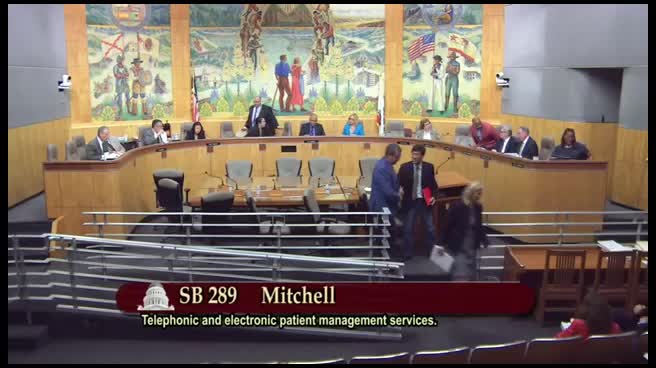
SB 289: Telephonic and electronic patient management services.
- Session Year: 2015-2016
- House: Senate
- Latest Version Date: 2015-05-04
Existing law, the Knox-Keene Health Care Service Plan Act of 1975, provides for the licensure and regulation of health care service plans by the Department of Managed Health Care and makes a willful violation of the act a crime. Existing law also provides for the regulation of health insurers by the Insurance Commissioner. Existing law prohibits a health care service plan or health insurer from requiring in-person contact between a health care provider and a patient before payment is made for covered services appropriately provided through telehealth, which is defined to mean the mode of delivering health care services via information and communication technologies, as specified.
This bill would require a health care service plan or a health insurer, with respect to plan contracts and policies issued, amended, or renewed on or after January 1, 2016, 2017, to cover telephonic and electronic patient management services, as defined, provided by a contracting physician or contracting nonphysician health care provider and reimburse those services based on their complexity and time expenditure. The bill would provide that a health care service plan or a health insurer is not required to reimburse separately for specified telephonic or electronic visits, including a telephonic or electronic visit provided as part of a bundle of services reimbursed in a specified manner. Because a willful violation of the bills requirements by a health care service plan would be a crime, this bill would impose a state-mandated local program.
The California Constitution requires the state to reimburse local agencies and school districts for certain costs mandated by the state. Statutory provisions establish procedures for making that reimbursement.
This bill would provide that no reimbursement is required by this act for a specified reason.
Existing law, the Knox-Keene Health Care Service Plan Act of 1975, provides for the licensure and regulation of health care service plans by the Department of Managed Health Care and makes a willful violation of the act a crime. Existing law also provides for the regulation of health insurers by the Insurance Commissioner. Existing law prohibits a health care service plan or health insurer from requiring in-person contact between a health care provider and a patient before payment is made for covered services appropriately provided through telehealth, which is defined to mean the mode of delivering health care services via information and communication technologies, as specified.
This bill would require a health care service plan or a health insurer, with respect to plan contracts and policies issued, amended, or renewed on or after January 1, 2016, to cover telephonic and electronic patient management services, as defined, provided by a physician or nonphysician health care provider and reimburse those services based on their complexity and time expenditure. The bill would provide that a health care service plan or a health insurer is not required to reimburse separately for specified telephonic or electronic visits, including a telephonic or electronic visit provided as part of a bundle of services reimbursed in a specified manner. Because a willful violation of the bills requirements by a health care service plan would be a crime, this bill would impose a state-mandated local program.
The California Constitution requires the state to reimburse local agencies and school districts for certain costs mandated by the state. Statutory provisions establish procedures for making that reimbursement.
This bill would provide that no reimbursement is required by this act for a specified reason.
Existing law, the Knox-Keene Health Care Service Plan Act of 1975, provides for the licensure and regulation of health care service plans by the Department of Managed Health Care and makes a willful violation of the act a crime. Existing law also provides for the regulation of health insurers by the Insurance Commissioner. Existing law prohibits a health care service plan or health insurer from requiring in-person contact between a health care provider and a patient before payment is made for covered services appropriately provided through telehealth, which is defined to mean the mode of delivering health care services via information and communication technologies, as specified.
This bill would require a health care service plan or a health insurer, with respect to plan contracts and policies issued, amended, or renewed on or after January 1, 2016, to cover telephonic and electronic patient management services, as defined, provided by a physician or nonphysician health care provider and reimburse those services based on their complexity and time expenditure. The bill would provide that a health care service plan or a health insurer is not required to reimburse separately for specified telephonic or electronic visits, including a telephonic or electronic visit provided as part of a bundle of services reimbursed in a specified manner. Because a willful violation of the bills requirements by a health care service plan would be a crime, this bill would impose a state-mandated local program.
The California Constitution requires the state to reimburse local agencies and school districts for certain costs mandated by the state. Statutory provisions establish procedures for making that reimbursement.
This bill would provide that no reimbursement is required by this act for a specified reason.
(a)A health care service plan shall, with respect to plan contracts issued, amended, or renewed on or after January 1, 2016, 2017, cover telephonic and electronic patient management services provided by a contracting physician or contracting nonphysician health care provider and reimburse those services based on their complexity and time expenditure.
(b)This section shall not be construed to authorize a health care service plan to require the use of telephonic and electronic patient management services when the physician or nonphysician health care provider has determined that those services are not medically appropriate.
(c)This section shall not be construed to alter the scope of practice of a health care provider or authorize the delivery of health care services in a setting, or in a manner, that is not otherwise authorized by law.
(d)All laws regarding the confidentiality of health information and a patients rights to his or her medical information shall apply to telephonic and electronic patient management services.
(e)This section shall not apply to a patient under the jurisdiction of the Department of Corrections and Rehabilitation or any other correctional facility.
(f)Notwithstanding subdivision (a), a health care service plan shall not be required to reimburse separately for any of the following:
(1)A telephonic or electronic visit that is related to a service or procedure provided to an established patient within a reasonable period of time prior to the telephonic or electronic visit, as recognized by the American Medical Association, Current Procedural Terminology codes.
(2)A telephonic or electronic visit that leads to a related service or procedure provided to an established patient within a reasonable period of time, or within an applicable postoperative period, as recognized by the American Medical Association, Current Procedural Terminology codes.
(3)A telephonic or electronic visit provided as part of a bundle of services for which reimbursement is provided for on a prepaid basis, including capitation, or for which reimbursement is provided for using an episode-based payment methodology.
(4)A telephonic or electronic visit that is not initiated by the established patient, or the parents or guardians of a minor who is an established patient, or an established patients legally recognized health care decisionmaker.
(g)Nothing in this section shall be construed to prohibit a health care service plan from requiring documentation reasonably relevant to a telephonic or electronic visit, as recognized by the American Medical Association, Current Procedural Terminology codes.
(h)For purposes of this section, the following definitions apply:
(1)Established patient means a patient who, within three years immediately preceding the telephonic or electronic visit, has received professional services from the provider or another provider of the exact same specialty and subspecialty who belongs to the same group practice.
(2)Nonphysician health care provider means a provider, other than a physician, who is licensed pursuant to Division 2 (commencing with Section 500) of the Business and Professions Code.
(3)Telephonic and electronic patient management services means the use of electronic communication tools to enable treating physicians and nonphysician health care providers to evaluate and manage established patients in a manner that meets all of the following criteria:
(A)Does not require an in-person visit with the physician or nonphysician health care provider.
(B)Are initiated by the established patient, the parents or guardians of a minor who is an established patient, or an established patients legally recognized health care decisionmaker. For purposes of this section, initiated by the established patient excludes a visit for which a provider or staff contacts a patient to initiate a service.
(C)Are recognized by the American Medical Association, Current Procedural Terminology codes.
SEC. 2.Section 10123.855 is added to the Insurance Code, to read:10123.855.(a)A health insurer shall, with respect to health insurance policies issued, amended, or renewed on or after January 1, 2016, 2017, cover telephonic and electronic patient management services provided by a contracting physician or contracting nonphysician health care provider and reimburse those services based on their complexity and time expenditure.
(b)This section shall not be construed to authorize a health insurer to require the use of telephonic and electronic patient management services when the physician or nonphysician health care provider has determined that those services are not medically appropriate.
(c)This section shall not be construed to alter the scope of practice of a health care provider or authorize the delivery of health care services in a setting, or in a manner, that is not otherwise authorized by law.
(d)All laws regarding the confidentiality of health information and a patients rights to his or her medical information shall apply to telephonic and electronic patient management services.
(e)This section shall not apply to a patient under the jurisdiction of the Department of Corrections and Rehabilitation or any other correctional facility.
(f)Notwithstanding subdivision (a), a health insurer shall not be required to reimburse separately for any of the following:
(1)A telephonic or electronic visit that is related to a service or procedure provided to an established patient within a reasonable period of time prior to the telephonic or electronic visit, as recognized by the American Medical Association, Current Procedural Terminology codes.
(2)A telephonic or electronic visit that leads to a related service or procedure provided to an established patient within a reasonable period of time, or within an applicable postoperative period, as recognized by the American Medical Association, Current Procedural Terminology codes.
(3)A telephonic or electronic visit provided as part of a bundle of services for which separate reimbursement is not consistent with the American Medical Association, Current Procedural Terminology codes.
(4)A telephonic or electronic visit that is not initiated by the established patient, the parents or guardians of a minor who is an established patient, or an established patients legally recognized health care decisionmaker.
(g)Nothing in this section shall be construed to prohibit a health insurer from requiring documentation reasonably relevant to a telephonic or electronic visit, as recognized by the American Medical Association, Current Procedural Terminology codes.
(h)For purposes of this section, the following definitions apply:
(1)Established patient means a patient who, within the three years immediately preceding the telephonic or electronic visit, has received professional services from the provider, or another provider of the exact same specialty and subspecialty who belongs to the same group practice.
(2)Nonphysician health care provider means a provider, other than a physician, who is licensed pursuant to Division 2 (commencing with Section 500) of the Business and Professions Code.
(3)Telephonic and electronic patient management services means the use of electronic communication tools to enable treating physicians and nonphysician health care providers to evaluate and manage established patients in a manner that meets all of the following criteria:
(A)Does not require an in-person visit with the physician or nonphysician health care provider.
(B)Are initiated by the established patient, the parents or guardians of a minor who is an established patient, or an established patients legally recognized health care decisionmaker. For purposes of this section, initiated by the established patient excludes a visit for which a provider or staff contacts a patient to initiate a service.
(C)Are recognized by the American Medical Association, Current Procedural Terminology codes.
SEC. 3.No reimbursement is required by this act pursuant to Section 6 of Article XIIIB of the California Constitution because the only costs that may be incurred by a local agency or school district will be incurred because this act creates a new crime or infraction, eliminates a crime or infraction, or changes the penalty for a crime or infraction, within the meaning of Section 17556 of the Government Code, or changes the definition of a crime within the meaning of Section 6 of Article XIIIB of the California Constitution.
(a)A health care service plan shall, with respect to plan contracts issued, amended, or renewed on or after January 1, 2016, cover telephonic and electronic patient management services provided by a physician or nonphysician health care provider and reimburse those services based on their complexity and time expenditure.
(b)This section shall not be construed to authorize a health care service plan to require the use of telephonic and electronic patient management services when the physician or nonphysician health care provider has determined that those services are not medically appropriate.
(c)This section shall not be construed to alter the scope of practice of a health care provider or authorize the delivery of health care services in a setting, or in a manner, that is not otherwise authorized by law.
(d)All laws regarding the confidentiality of health information and a patients rights to his or her medical information shall apply to telephonic and electronic patient management services.
(e)This section shall not apply to a patient under the jurisdiction of the Department of Corrections and Rehabilitation or any other correctional facility.
(f)Notwithstanding subdivision (a), a health care service plan shall not be required to reimburse separately for any of the following:
(1)A telephonic or electronic visit that is related to a service or procedure provided to an established patient within a reasonable period of time prior to the telephonic or electronic visit, as recognized by the American Medical Association, Current Procedural Terminology codes.
(2)A telephonic or electronic visit that leads to a related service or procedure provided to an established patient within a reasonable period of time, or within an applicable postoperative period, as recognized by the American Medical Association, Current Procedural Terminology codes.
(3)A telephonic or electronic visit provided as part of a bundle of services for which reimbursement is provided for on a prepaid basis, including capitation, or for which reimbursement is provided for using an episode-based payment methodology.
(4)A telephonic or electronic visit that is not initiated by the established patient, or the parents or guardians of a minor who is an established patient, or an established patients legally recognized health care decisionmaker.
(g)Nothing in this section shall be construed to prohibit a health care service plan from requiring documentation reasonably relevant to a telephonic or electronic visit, as recognized by the American Medical Association, Current Procedural Terminology codes.
(h)For purposes of this section, the following definitions apply:
(1)Established patient means a patient who, within three years immediately preceding the telephonic or electronic visit, has received professional services from the provider or another provider of the exact same specialty and subspecialty who belongs to the same group practice.
(2)Nonphysician health care provider means a provider, other than a physician, who is licensed pursuant to Division 2 (commencing with Section 500) of the Business and Professions Code.
(3)Telephonic and electronic patient management services means the use of electronic communication tools to enable treating physicians to evaluate and manage established patients in a manner that meets all of the following criteria:
(A)Do Does not require a face-to-face an in-person visit with the physician or nonphysician health care provider.
(B)Are initiated by the established patient, the parents or guardians of a minor who is an established patient, or an established patients legally recognized health care decisionmaker. For purposes of this section, initiated by the established patient excludes a visit for which a provider or staff contacts a patient to initiate a service.
(C)Are recognized by the American Medical Association, Current Procedural Terminology codes.
SEC. 2.Section 10123.855 is added to the Insurance Code, to read:10123.855.(a)A health insurer shall, with respect to health insurance policies issued, amended, or renewed on or after January 1, 2016, cover telephonic and electronic patient management services provided by a physician or nonphysician health care provider and reimburse those services based on their complexity and time expenditure.
(b)This section shall not be construed to authorize a health insurer to require the use of telephonic and electronic patient management services when the physician or nonphysician health care provider has determined that those services are not medically appropriate.
(c)This section shall not be construed to alter the scope of practice of a health care provider or authorize the delivery of health care services in a setting, or in a manner, that is not otherwise authorized by law.
(d)All laws regarding the confidentiality of health information and a patients rights to his or her medical information shall apply to telephonic and electronic patient management services.
(e)This section shall not apply to a patient under the jurisdiction of the Department of Corrections and Rehabilitation or any other correctional facility.
(f)Notwithstanding subdivision (a), a health insurer shall not be required to reimburse separately for any of the following:
(1)A telephonic or electronic visit that is related to a service or procedure provided to an established patient within a reasonable period of time prior to the telephonic or electronic visit, as recognized by the American Medical Association, Current Procedural Terminology codes.
(2)A telephonic or electronic visit that leads to a related service or procedure provided to an established patient within a reasonable period of time, or within an applicable postoperative period, as recognized by the American Medical Association, Current Procedural Terminology codes.
(3)A telephonic or electronic visit provided as part of a bundle of services for which separate reimbursement is not consistent with the American Medical Association, Current Procedural Terminology codes.
(4)A telephonic or electronic visit that is not initiated by the established patient, the parents or guardians of a minor who is an established patient, or an established patients legally recognized health care decisionmaker.
(g)Nothing in this section shall be construed to prohibit a health insurer from requiring documentation reasonably relevant to a telephonic or electronic visit, as recognized by the American Medical Association, Current Procedural Terminology codes.
(h)For purposes of this section, the following definitions apply:
(1)Established patient means a patient who, within the three years immediately preceding the telephonic or electronic visit, has received professional services from the provider, or another provider of the exact same specialty and subspecialty who belongs to the same group practice.
(2)Nonphysician health care provider means a provider, other than a physician, who is licensed pursuant to Division 2 (commencing with Section 500) of the Business and Professions Code.
(3)Telephonic and electronic patient management services means the use of electronic communication tools to enable treating physicians to evaluate and manage established patients in a manner that meets all of the following criteria:
(A)Do Does not require a face-to-face an in-person visit with the physician or nonphysician health care provider.
(B)Are initiated by the established patient, the parents or guardians of a minor who is an established patient, or an established patients legally recognized health care decisionmaker. For purposes of this section, initiated by the established patient excludes a visit for which a provider or staff contacts a patient to initiate a service.
(C)Are recognized by the American Medical Association, Current Procedural Terminology codes.
SEC. 3.No reimbursement is required by this act pursuant to Section 6 of Article XIIIB of the California Constitution because the only costs that may be incurred by a local agency or school district will be incurred because this act creates a new crime or infraction, eliminates a crime or infraction, or changes the penalty for a crime or infraction, within the meaning of Section 17556 of the Government Code, or changes the definition of a crime within the meaning of Section 6 of Article XIIIB of the California Constitution.
(a)A health care service plan shall, with respect to plan contracts issued, amended, or renewed on or after January 1, 2016, cover telephonic and electronic patient management services provided by a physician or nonphysician health care provider and reimburse those services based on their complexity and time expenditure.
(b)This section shall not be construed to authorize a health care service plan to require the use of telephonic and electronic patient management services when the physician or nonphysician health care provider has determined that those services are not medically appropriate.
(c)This section shall not be construed to alter the scope of practice of a health care provider or authorize the delivery of health care services in a setting, or in a manner, that is not otherwise authorized by law.
(d)All laws regarding the confidentiality of health information and a patients rights to his or her medical information shall apply to telephonic and electronic patient management services.
(e)This section shall not apply to a patient under the jurisdiction of the Department of Corrections and Rehabilitation or any other correctional facility.
(f)Notwithstanding subdivision (a), a health care service plan shall not be required to reimburse separately for any of the following:
(1)A telephonic or electronic visit that is related to a service or procedure provided to an established patient within a reasonable period of time prior to the telephonic or electronic visit, as recognized by the American Medical Association, Current Procedural Terminology codes.
(2)A telephonic or electronic visit that leads to a related service or procedure provided to an established patient within a reasonable period of time, or within an applicable postoperative period, as recognized by the American Medical Association, Current Procedural Terminology codes.
(3)A telephonic or electronic visit provided as part of a bundle of services for which reimbursement is provided for on a prepaid basis, including capitation, or for which reimbursement is provided for using an episode-based payment methodology.
(4)A telephonic or electronic visit that is not initiated by the established patient, or the parents or guardians of a minor who is an established patient, or an established patients legally recognized health care decisionmaker.
(g)Nothing in this section shall be construed to prohibit a health care service plan from requiring documentation reasonably relevant to a telephonic or electronic visit, as recognized by the American Medical Association, Current Procedural Terminology codes.
(h)For purposes of this section, the following definitions apply:
(1)Established patient means a patient who, within three years immediately preceding the telephonic or electronic visit, has received professional services from the provider or another provider of the exact same specialty and subspecialty who belongs to the same group practice.
(2)Nonphysician health care provider means a provider, other than a physician, who is licensed pursuant to Division 2 (commencing with Section 500) of the Business and Professions Code.
(3)Telephonic and electronic patient management services means the use of electronic communication tools to enable treating physicians to evaluate and manage established patients in a manner that meets all of the following criteria:
(A)Do not require a face-to-face visit with the physician or nonphysician health care provider.
(B)Are initiated by the established patient, the parents or guardians of a minor who is an established patient, or an established patients legally recognized health care decisionmaker. For purposes of this section, initiated by the established patient excludes a visit for which a provider or staff contacts a patient to initiate a service.
(C)Are recognized by the American Medical Association, Current Procedural Terminology codes.
SEC. 2.Section 10123.855 is added to the Insurance Code, to read:10123.855.(a)A health insurer shall, with respect to health insurance policies issued, amended, or renewed on or after January 1, 2016, cover telephonic and electronic patient management services provided by a physician or nonphysician health care provider and reimburse those services based on their complexity and time expenditure.
(b)This section shall not be construed to authorize a health insurer to require the use of telephonic and electronic patient management services when the physician or nonphysician health care provider has determined that those services are not medically appropriate.
(c)This section shall not be construed to alter the scope of practice of a health care provider or authorize the delivery of health care services in a setting, or in a manner, that is not otherwise authorized by law.
(d)All laws regarding the confidentiality of health information and a patients rights to his or her medical information shall apply to telephonic and electronic patient management services.
(e)This section shall not apply to a patient under the jurisdiction of the Department of Corrections and Rehabilitation or any other correctional facility.
(f)Notwithstanding subdivision (a), a health insurer shall not be required to reimburse separately for any of the following:
(1)A telephonic or electronic visit that is related to a service or procedure provided to an established patient within a reasonable period of time prior to the telephonic or electronic visit, as recognized by the American Medical Association, Current Procedural Terminology codes.
(2)A telephonic or electronic visit that leads to a related service or procedure provided to an established patient within a reasonable period of time, or within an applicable postoperative period, as recognized by the American Medical Association, Current Procedural Terminology codes.
(3)A telephonic or electronic visit provided as part of a bundle of services for which separate reimbursement is not consistent with the American Medical Association, Current Procedural Terminology codes.
(4)A telephonic or electronic visit that is not initiated by the established patient, the parents or guardians of a minor who is an established patient, or an established patients legally recognized health care decisionmaker.
(g)Nothing in this section shall be construed to prohibit a health insurer from requiring documentation reasonably relevant to a telephonic or electronic visit, as recognized by the American Medical Association, Current Procedural Terminology codes.
(h)For purposes of this section, the following definitions apply:
(1)Established patient means a patient who, within the three years immediately preceding the telephonic or electronic visit, has received professional services from the provider, or another provider of the exact same specialty and subspecialty who belongs to the same group practice.
(2)Nonphysician health care provider means a provider, other than a physician, who is licensed pursuant to Division 2 (commencing with Section 500) of the Business and Professions Code.
(3)Telephonic and electronic patient management services means the use of electronic communication tools to enable treating physicians to evaluate and manage established patients in a manner that meets all of the following criteria:
(A)Do not require a face-to-face visit with the physician or nonphysician health care provider.
(B)Are initiated by the established patient, the parents or guardians of a minor who is an established patient, or an established patients legally recognized health care decisionmaker. For purposes of this section, initiated by the established patient excludes a visit for which a provider or staff contacts a patient to initiate a service.
(C)Are recognized by the American Medical Association, Current Procedural Terminology codes.
SEC. 3.No reimbursement is required by this act pursuant to Section 6 of Article XIIIB of the California Constitution because the only costs that may be incurred by a local agency or school district will be incurred because this act creates a new crime or infraction, eliminates a crime or infraction, or changes the penalty for a crime or infraction, within the meaning of Section 17556 of the Government Code, or changes the definition of a crime within the meaning of Section 6 of Article XIIIB of the California Constitution.
|
Date
|
Status
|
|---|---|
| Feb 23, 2015 | Introduced. Read first time. To Com. on RLS. for assignment. To print. |
| Feb 24, 2015 | From printer. May be acted upon on or after March 26. |
| Mar 5, 2015 | Referred to Com. on HEALTH. |
| Apr 2, 2015 | Set for hearing April 29. |
| Apr 6, 2015 | From committee with author's amendments. Read second time and amended. Re-referred to Com. on HEALTH. |
| Apr 30, 2015 | From committee: Do pass as amended and re-refer to Com. on APPR. (Ayes 6. Noes 0. Page 860.) (April 29). |
| Apr 30, 2015 | From committee: Do pass as amended and re-refer to Com. on APPR. (Ayes 6. Noes 0.) (April 29). |
| May 4, 2015 | Read second time and amended. Re-referred to Com. on APPR. |
| May 8, 2015 | Set for hearing May 18. |
| May 18, 2015 | May 18 hearing: Placed on APPR. suspense file. |
| May 23, 2015 | Set for hearing May 28. |
| May 28, 2015 | May 28 hearing: Held in committee and under submission. |
| Feb 1, 2016 | Returned to Secretary of Senate pursuant to Joint Rule 56. |
|
Date
|
Description
|
Location
|
Votes
|
|
|---|---|---|---|---|
| May 18, 2015 | Placed on suspense file | Senate Standing Committee on Appropriations |
Passed |
|
| Apr 29, 2015 | Do pass as amended, but first amend, and re-refer to the Committee on [Appropriations] | Senate Standing Committee on Health |
Passed |
This list shows positions taken on this bill by organizations on the date displayed, which is linked to the original source.
Positions by individuals are not included.
|
Organization
|
Position
|
Date
|
|---|---|---|
| Association of California Life and Health Insurance | ** Against | Apr 29, 2015 |
| California Academy Of Family Physicians | ** Support | Apr 29, 2015 |
| California Academy of Physician Assistants | * Support | Apr 29, 2015 |
| California Association Of Health Plans | * Against Unless Amend | Apr 29, 2015 |
| California Association Of Physician Groups | ** Support | Apr 29, 2015 |
| California Chronic Care Coalition | ** Support | Apr 29, 2015 |
| California Healthcare Institute | ** Support | Apr 29, 2015 |
| California Healthcare Institute (Chi) | * Against Unless Amend | Apr 29, 2015 |
| California Medical Association, Inc. | ** Support | Apr 29, 2015 |
| California Physical Therapy Association | ** Support | Apr 29, 2015 |
| Center for Connected Health Policy | * Indeterminate | Apr 29, 2015 |
| Occupational Therapy Association Of California | ** Support | Apr 29, 2015 |
SB 289 (Mitchell) Page 3 of 3
SENATE COMMITTEE ON APPROPRIATIONS
Senator Ricardo Lara, Chair
2015 - 2016 Regular Session
SB 289 (Mitchell) - Telephonic and electronic patient management services
|
|
Version: May 4, 2015 |
Policy Vote: HEALTH 6 - 0 |
Urgency: No |
Mandate: Yes |
Hearing Date: May 18, 2015 |
Consultant: Brendan McCarthy |
This bill meets the criteria for referral to the Suspense File.
Bill Summary:
SB 289 would mandate that health insurers and health plans provide coverage for telephonic and electronic patient management services provided by a contracted physician or non-physician health care provider.
Fiscal Impact:
Increased health-care cost to CalPERS between $650,000 and $2.9 million per year due to overall increased utilization of health care services (General fund and special funds). (See below for more detail.)
No anticipated increase in health care costs to the Medi-Cal program (General Fund and federal funds). The California Health Benefits Review Program indicates that the requirement for health plans to pay for telephonic and electronic patient management services would apply to Medi-Cal managed care plans. However, Program staff indicate that they do not believe that Medi-Cal managed care plans would be able to pass those costs along to the state, given the state’s considerable bargaining power in contract negotiations. Rather, Medi-Cal managed care plans are likely to either absorb the costs of the bill or include provisions in their contracts with providers that bundle telephonic and electronic patient management services with other covered services.
Additional costs of $60,000 in 2016-17 and $20,000 per year thereafter for review of plan filings and responding to complaints by the Department of Insurance (Insurance Fund).
Additional costs of $150,000 in 2016-17, $80,000 in 2017-18, and $41,000 per year thereafter to develop regulations, review plan filings, respond to complaints, and take enforcement actions by the Department of Managed Health Care (Managed Care Fund).
Background:
Under current law, health insurers are regulated by the Department of Insurance and health plans are regulated by the Department of Managed Health Care.
Under current law, health insurers and health plans are prohibited from requiring an in-person visit between an enrollee and an health care provider before paying for services that are appropriately provided through telehealth. Similarly, current law prohibits health insurers or health plans from limiting the setting where services are provided through telehealth. Alternatively, current law prohibits health insurers and health plans from requiring the use of telehealth when a health care provider determines that telehealth is not appropriate.
Under current law, individuals purchasing coverage provided through health benefit exchanges (including Covered California) are eligible to receive federal subsidies based on household income. Federal law and regulation requires a state to bear the proportionate share of the cost to provide subsides for any additional benefit mandates the state imposes on qualifying health plans sold through an exchange, if the benefit mandate goes beyond the benefits included in the benchmark plan. (California has selected the 2012 Kaiser Small Group HMO as its benchmark plan. Any benefit mandates that are covered under that plan are “grandfathered” in, and do not require state subsidy.)
Proposed Law:
SB 289 would mandate that health insurers and health plans provide coverage for telephonic and electronic patient management services provided by a contracted physician or non-physician health care provider.
Specific provisions of the bill would:
Beginning on January 1, 2017, require a health insurer or health plan to cover telephonic and electronic patient management services provided by a contracted physician or non-physician health care provider;
Prohibit a health insurer or health plan from requiring telephonic or electronic patient management services when a health care provider determines it is not appropriate;
Exclude patients in correctional facilities;
Limit the required reimbursement for services when the telephonic or electronic patient management service is related to another service or procedure provided to the patient, when the telephonic or electronic patient management service leads to a related service or visit, when the health care provider receives a bundled or capitated payment, or when the telephonic or electronic patient management service is not initiated by the patient.
Related Legislation:
AB 1771 (V.M. Perez, 2014) would have required health insurers and health plans to provide coverage for telephone visits provided by a contracted physician or contracted non-physician health care provider. That bill was held on this committee’s Suspense File.
Staff Comments: As is described in the analysis of the bill provided by the California Health Benefits Review Program, there is a good deal of uncertainty about how the behavior of patients and providers will change under the bill. By requiring reimbursement to providers for telephonic and electronic patient management services, the bill is very likely to increase providers’ willingness to use such services with their patients, increasing utilization. Some of the increased utilization of telephonic and electronic patient management services will reduce in person visits with providers. For example, a patient may find it more convenient to call or email a provider with a question about an ongoing health issue, rather than making an in person appointment. In that case, the bill will not reduce overall utilization of services: it will result in a substitute visit. On the other hand, the ability to communicate with a provider on the phone or through electronic means will also result in supplemental visits (i.e. more utilization than would occur under current law). For example, a patient with a minor question or who is experiencing a minor illness that would not necessarily lead to an in person visit with a provider would be more likely to make a phone call or use an electronic means to communicate with a provider. In those cases, the bill will result in an increase in overall utilization of health care services.
The California Health Benefits Review Program modelled a variety of scenarios for utilization. Under all scenarios, there is both substitution and supplementation of in person visits. In all scenarios, however, the supplementation results in an overall increase of utilization of services and therefore an increase of health care costs. The overall increase in health care costs, statewide, is projected to be between $47 million per year and $207 million per year. Those costs are covered by a variety of public and private payers and includes additional patient costs due to copayments and coinsurance paid by patients.
Because the bill does not expand essential health benefits, as defined in the Affordable Care Act and mandated in state law, the bill is not expected to result in costs to the state to subsidize health care coverage through Covered California.
The only costs that may be incurred by a local agency under the bill relate to crimes and infractions. Under the California Constitution, such costs are not reimbursable by the state.
-- END --
SB 289 (Mitchell) Page 7 of 7
SENATE COMMITTEE ON HEALTH
Senator Ed Hernandez, O.D., Chair
BILL NO: SB 289
AUTHOR: |
Mitchell |
||
VERSION: |
April 6, 2015 |
||
HEARING DATE: |
April 29, 2015 |
|
|
CONSULTANT: |
Teri Boughton |
||
SUBJECT: Telephonic and electronic patient management services
SUMMARY:
Requires a health plan or health
insurer to cover telephonic and electronic patient management
services provided by a physician or non-physician health care
provider and reimburse those services based on their complexity and
time expenditure, as specified.
Existing law:
States legislative intent to recognize the practice of telehealth as a legitimate means by which an individual may receive health care services from a health care provider without in-person contact with the health care provider.
Prohibits a health plan or health insurer from requiring in-person contact between a health care provider and a patient before payment is made for the covered services appropriately provided through telehealth, subject to the terms and conditions of the contract entered into between the enrollee or subscriber and the health plan or the insured and health insurer, and between the health plan or health insurer and its participating providers or provider groups.
Prohibits a health plan or health insurer from limiting the type of setting where services are provided for the patient or by the health care provider before payment is made for the covered services appropriately provided through telehealth, subject to the terms and conditions of the contract entered into between the enrollee or subscriber and the health plan or the insured and the health insurer, and between the health plan or health insurer and its participating providers or provider groups.
Applies 2) and 3) above to health care and Medi-Cal managed care plan contracts with the State Department of Health Care Services (DHCS).
Prohibits existing law from being interpreted to authorize a health plan or health insurer to require the use of telehealth when the health care provider has determined that it is not appropriate.
Establishes the Department of Managed Health Care (DMHC) to regulate health plans and the California Department of Insurance (CDI) to regulate health insurers, and other insurance carriers and insurance agents.
Defines “Telehealth” as the mode of delivering health care services and public health via information and communication technologies to facilitate the diagnosis, consultation, treatment, education, care management, and self-management of a patient’s health care while the patient is at the originating site and the health care provider is at a distant site. Telehealth facilitates patient self-management and caregiver support for patients and includes synchronous (real time) interactions and asynchronous store and forward transfers.
This bill:
Requires a health plan or health insurer, with respect to plan contracts or insurance policies issued, amended or renewed on or after January 1, 2016, to cover telephonic and electronic patient management services provided by a physician or non-physician health care provider and reimburse those services based on their complexity and time expenditure.
Requires all laws regarding the confidentiality of health information and a patient’s rights to his or her medical information to apply to telephonic and electronic patient management services.
Prohibits a plan or insurer from requiring the use of telephonic and electronic patient management services when those services are not medically appropriate, and, the altering of the scope of practice of a health care provider, or, authorizing the delivery of services in a setting, or in a manner, that is not otherwise authorized by law.
Excludes a patient under the jurisdiction of the Department of Corrections and Rehabilitation or any other correctional facility.
Excludes from 1) above separate reimbursement for a telephonic or electronic visit:
That is related to a service or procedure provided to an established patient within a reasonable period of time prior to the telephonic or electronic visit, as recognized by the American Medical Association (AMA), Current Procedural Terminology (CPT) codes;
That leads to a related service or procedure provided to an established patient within a reasonable period of time, or within an applicable postoperative period, as recognized by the AMA, CPT codes;
Provided as part of a bundle of services for which reimbursement is provided for on a prepaid basis, including capitation, or for which reimbursement is provided for using an episode-based payment methodology; and,
That is not initiated by the established patient, or the parents or guardians of a minor who is an established patient, or an established patient’s legally recognized health care decision-maker.
Permits a health plan or health insurer to require documentation reasonably relevant to a telephonic or electronic visit, as recognized by the AMA, CPT codes.
Defines “established patient” as a patient who, within three years immediately preceding the telephonic or electronic visit, has received professional services from the provider or another provider of the exact same specialty and subspecialty who belongs to the same group practice.
Defines “telephonic and electronic patient management services” as the use of electronic communication tools to enable treating physicians to evaluate and manage established patients in a manner that does not require an in-person visit with the physician or non-physician health care provider; are initiated by the established patient, the parents or guardians of a minor who is an established patient, or an established patient’s legally recognized health care decision-maker; and, are recognized by the AMA CPT codes.
Excludes a visit for which a provider or staff contacts a patient to initiate services.
FISCAL EFFECT:
This bill has not been analyzed by a fiscal committee.
COMMENTS:
Author’s statement. According to the author, while all states define telehealth differently, 40 states mandate some kind of Medicaid telehealth coverage and 21 states mandate telehealth coverage by private payors. California has limited allowances for telehealth coverage within Medi-Cal, but it does not mandate coverage for private payors. Is it important that payors recognize that they may not deny coverage simply on the basis that the serviced was provided via telehealth, if it would have been covered if provided through an in-person consultation. This bill will require health insurance companies licensed in California to reimburse physicians for telephone and electronic patient management telehealth services. This bill also clarifies that insurance companies must reimburse physicians for telephone and electronic patient management telehealth services and ensures that all patients can receive the care they need in an accessible and efficient way.
California Health Benefits Review Program (CHBRP) analysis. AB 1996 (Thomson), Chapter 795, Statutes of 2002, requests the University of California to assess legislation proposing a mandated benefit or service and prepare a written analysis with relevant data on the medical, economic, and public health impacts of proposed health plan and health insurance benefit mandate legislation. CHBRP was created in response to AB 1996. As indicated in its report of SB 289, CHBRP assumes that coverage and reimbursement would apply to four telehealth modalities: Telephone, email, live videoconferencing, and store-and-forward technology (capture and storage of medical information such as x-ray, photograph, sound that is forwarded for evaluation).
Medical effectiveness. CHBRP indicates there is insufficient evidence to determine whether services provided via telephone or e-mail is as effective as medical care provided in person. Furthermore, it is unknown whether diagnoses made using these technologies are as accurate as diagnoses made during in-person visits. The studies of the effect of telephone consultations or email communication on subsequent utilization are inconsistent. However, in diabetes, there is a preponderance of evidence from moderately strong studies that email communication within a multifaceted web portal is associated with better glycemic control. For the disease and conditions studied, there is a preponderance of evidence that medical care provided by live videoconferencing and store-and-forward is at least as effective as medical care provided in-person for both physical and mental health conditions. In particular, there is clear and convincing evidence that live videoconferencing is equivalent to in person care in psychiatric health outcomes. The evidence suggests that store-and-forward technology reduces wait times for specialty outpatient care.
Benefit coverage. Approximately 48 percent of California’s 24.6 million enrollees with state-regulated health insurance currently have some form of benefit coverage for telephone and email evaluation and management visits, while 78 percent have benefit coverage for live videoconferencing and store-and-forward evaluation and management visits. Post mandate all 24.6 million enrollees will have coverage. California’s Medi-Cal managed care plans include coverage for live videoconferencing and store-and-forward but do not reimburse separately for telephone and e-mail encounters.
Capacity and access. CHBRP finds limited evidence that this bill would increase the capacity of physicians and non-physicians to see additional patients because the bill limits coverage and reimbursement to encounters with similar complexity and time expenditure as in-person visits, and physicians and non-physicians who are part of a practice with an existing relationship with the patient.
Utilization and cost. CHBRP estimates overall encounters would increase between 4.5 percent and 20 percent. Telehealth, as a share of all visits would range between 7.4 percent to 29.2 percent, while in-person visits would decrease by .9 percent to 15 percent. CHBRP estimates that in-person visits would decline slightly in all scenarios modeled, but overall patient-provider encounters would increase. In the low take up scenario 40 percent of the increase is substitution of telehealth services for in-person visit and 60 percent of the increase is supplemental. In the low-enhanced take up scenario, CHBRP assumes that of the seven percent increase in year one, 90 percent of the increase is supplemental. CHBRP indicates average costs per visit are as follows: Telephone: $67.62 ($0-$10 copayment), E-mail: $57.71 ($0-$10 copayment), Live Videoconferencing: $101.66 ($0-$20 copayment), Store-and-Forward: $82.75 ($0-$20 copayment).
Impact on expenditures. According to CHBRP, depending upon the scenario, total expenditures are estimated to increase by $46.7 million to $207.3 million. The percent change of premium expenditures by payer ranges from a low of .03 percent ($16 million for private employers for group insurance) based on low take up to a high of .13 percent ($75 million for private employers for group insurance) for high take up. Enrollees for individual purchased insurance would have a percent change of premium expenditure of between .07 percent ($15 million based on low take up) to .32 percent ($69 million based on high take up). Enrollee out-of-pocket expenses for covered benefits are expected to increase .05 percent ($7.5 million) to .21 percent ($33.1 million). The estimated increases in expenditures under the low take up scenario equate to per member per month premium (pmpm) increases ranging from a low of $0 for Medi-Cal managed care to a high of $.40 for CDI regulated individual and small group market. The estimated increases in expenditures under the high take up scenario equate to pmpm premium increases ranging from a low of $0 Medi-Cal managed care pmpm to a high of $1.77 for CDI regulated individual and small group market.
Public health impacts. CHBRP estimates that positive mental health and dermatologic outcomes could occur for some newly covered enrollees with these conditions. CHBRP estimates patient experience would improve as physicians increase their email and telephone responses to patient-initiated inquiries. The improvement is partly attributable to increasing the overall convenience for patients, such as reducing wait times for some visits. CHBRP also estimates travel costs and loss of productivity for some enrollees would decrease but is unable to quantify the impact.
Interaction with EHB. CHBRP indicates that this bill does not appear to exceed EHBs. This bill does not add services health insurers must cover, but affects the setting in which already covered services are provided.
CPT Codes. CPT codes are used to report episodes of patient care initiated by an established patient or guardian of an established patient. If the telephone service ends with a decision to see the patient within 24 hours or next available urgent visit appointment, the code is not reported; rather the encounter is considered part of the pre-service work of the subsequent evaluation and management service, procedure, and visit. If the telephone call refers to an evaluation and management service reported within the previous seven days or within the postoperative period of the previously completed procedure, then the services is not reported. There are also CPT codes for telephone services provided by a qualified non-physician who may report telephone assessment and management services with similar criteria as described above. CHBRP included any billable services that do not require a physical examination by a physician or non-physician and are considered either evaluation or management of established patients. CHBRP included CPT codes for evaluation and management services performed at hospitals, nursing facilities, custodial care facilities, assisted living facilities, or at home, and specifically excluded CPT codes that require a physical exam.
Telehealth complaints. CHBRP contacted DMCH and CDI and identified that there have been 55 complaints since 2009 against health plans and insurers denials of claims related to telehealth. Most cases relate to coverage for remote patient monitoring (not addressed in this bill). However, in 2010, one complaint was filed related to speech therapy via interactive videoconferencing, and in 2014 two complaints were related to telephonic treatment with non-physicians: a nutritionist and mental health professional.
Other states, Medicare and Medicaid. Approximately half of states require reimbursement of live videoconferencing, and half a dozen states require reimbursement of store-and-forward. Telephone and email reimbursement is only required in Oregon, but only in cases where live videoconferencing is unavailable. According to the CHBRP analysis, with a few exceptions, the Centers for Medicare and Medicaid Services (CMS) do not reimburse for telephone and email communications. Medicare will reimburse for live videoconferencing in all 50 states if patients are in a rural Health Professional Shortage Area or in an area with a shortage of health professionals; and physically located in a physician office, rural health clinic, or hospital while receiving live videoconferencing services. Medicare covers store-and-forward for demonstrations in Alaska and Hawaii, or teleradiology and remote EKG applications. Most commercial insurance carriers follow CMS reimbursement decisions. Forty-five states recognize either live videoconferencing and/or store-and-forward in their Medicaid programs, primarily reimbursing for live videoconferencing. Only two state Medicaid programs require reimbursement for telephone interactions: Nevada for crisis interactions and Oregon if live videoconferencing is not available.
Prior legislation. AB 1771 (Perez), of 2014, would have required health plans and health insurers, with respect to plan contracts and insurance policies issued, amended, or renewed on or after January 1, 2016, to cover telephone visits provided by a physician. AB 1771 was held in the Senate Appropriations Committee.
AB 415 (Logue), Chapter 547,
Statutes of 2011, among other provisions, prohibits DHCS from
requiring that a health care provider document a barrier to an
in-person visit prior to paying for services provided via telehealth
to a Medi-Cal beneficiary. Repeals the prohibition of paying for a
service provided by telephone or facsimile and would instead prohibit
DHCS from limiting the type of setting where services are provided
for the patient. Prohibits health plans and insurers from requiring
that in-person contact occur between a health care provider and a
patient before payment is made for the services appropriately
provided through telehealth, subject to the terms of the relevant
contract. Repeals
the prohibition for paying for a service provided by telephone or
facsimile and would instead prohibit health plans and insurers from
limiting the type of setting where services are provided for the
patient or by the health care provider.
SB 1665 (Thompson), Chapter 864,
Statutes of 1996, established the Telemedicine Development Act (TDA)
to set standards for the use of telemedicine by health care
practitioners and insurers. TDA specifies, in part, that
face-to-face contact between a health care provider and a patient
shall not be required under the Medi-Cal Program for services
appropriately provided through telemedicine, when those services are
otherwise covered by the Medi-Cal program, and requires a health care
practitioner to obtain verbal and written consent prior to providing
services through telemedicine.
Support. According to the California Medical Association (CMA) payors in the state vary in reimbursing for these telehealth services and often deny provider requests for coverage of this time spent providing substantive medical advice, depriving patients of a reasonable alternative to in-person provider evaluations. Telephone and electronic patient management services include a provider giving medical advice in response to a patient communication, potentially making a new diagnosis, or providing self-care or patient education information for a new health problem. These services are intended to facilitate the diagnosis, consultation, treatment, education, care management and self-management of the patient’s health care and caregiver support. These services ensure better continuity of care, faster and more convenient treatment, as well as reduce lost work time. The Occupational Therapy Association of California supports this bill because it will allow OTs to utilize telephone interaction for patient services where appropriate. The California Association of Physician Groups (CAPG ) writes that this bill clarifies that coverage is provided for these services because some health plans have not kept up with physician group’s technological capabilities to provide patient visits through electronic means, even when conducted within capitated payment models, at no additional cost to the health plan. CAPG groups have experienced problems with health plans using telephonic and telehealth systems to provide care access to their enrollees through out-of-state physicians that are not part of the health plan’s contracted network. The California Chronic Care Coalition writes that electronic services are especially convenient in rural and remote areas as they allow a patient the ability to avoid long and unnecessary trips to the medical provider’s office.
Opposition unless amended. The California Association of Health Plans and the Association of California Life and Health Insurance Companies (ACLHIC) request amendments that patients be notified at the time of the phone call or electronic monitoring that the service is subject to any share of cost that would otherwise apply for an office visit, allow a health plan to request prior authorization for the services that qualify as a separately billable service, permit an adjustment of the Medi-Cal managed care rate, amend the Insurance code to exempt a carrier from making a separate payment to a provider for telephone calls if the carrier pays the provider according to a negotiated rate, and clarification on what is considered “electronic patient management services.” ACLHIC also requests the bill include a delayed effective date of January 1, 2017.
Opposition. The California Chamber of Commerce writes that all coverage mandates, even ones that can improve outcomes or efficiencies for some patients are less valuable for others, and most are apt to increase the cost of premiums. For some, a lower premium might allow better access to care than the availability of video teleconferencing. The Chamber also indicates that they are opposed to the imposition of new mandates on health care coverage beyond what is required under the ACA, particularly since the growth of health care costs has started to pick up again and many are struggling to afford coverage and growing out-of-pocket costs.
Amendments.
The definition of “telephonic and electronic patient management services” needs to be amended to enable treating physicians “and non-physician providers” to evaluate and manage established patients…
Subdivision (a) needs to be amended to ensure that telephonic and electronic patient management services that are covered under this bill are provided by a “contracted” physician or “contracted” non-physician health care provider…
SUPPORT AND OPPOSITION:
Support: California Medical Association (sponsor)
California Academy of Family Physicians
California Association of Physician Groups
California Chronic Care Coalition
California Healthcare Institute
California Physical Therapy Association
Occupational Therapy Association of California
Oppose: Association of California Life and Health Insurance Companies (unless amended)
California Association of Health Plans (unless amended)
California Chamber of Commerce
-- END --
Bill Author

Bill Co-Author(s):