SB 298: Money laundering: interception of electronic communications.
- Session Year: 2015-2016
- House: Senate
- Latest Version Date: 2015-02-23
Existing law, until January 1, 2020, requires an application for an order authorizing the interception of a wire, oral, or other specified electronic communication to be made in writing upon the personal oath or affirmation of the Attorney General, Chief Deputy Attorney General, or Chief Assistant Attorney General, Criminal Law Division, or of a district attorney. Existing law, until January 1, 2020, authorizes the court to issue an order authorizing interception of those communications if the judge finds, among other things, that there is probable cause to believe that an individual is committing, has committed, or is about to commit, one of several offenses, including, among others, possession for sale of certain controlled substances, murder, and certain felonies involving destructive devices.
This bill would add money laundering to the list of offenses for which interception of electronic communication may be ordered pursuant to those provisions if certain requirements are met, as specified.
Upon application made under Section 629.50, the judge may enter an ex parte order, as requested or modified, authorizing interception of wire or electronic communications initially intercepted within the territorial jurisdiction of the court in which the judge is sitting, if the judge determines, on the basis of the facts submitted by the applicant, all of the following:
(a)There is probable cause to believe that an individual is committing, has committed, or is about to commit, one of the following offenses:
(1)Importation, possession for sale, transportation, manufacture, or sale of controlled substances in violation of Section 11351, 11351.5, 11352, 11370.6, 11378, 11378.5, 11379, 11379.5, or 11379.6 of the Health and Safety Code with respect to a substance containing heroin, cocaine, PCP, methamphetamine, or their precursors or analogs where the substance exceeds 10 gallons by liquid volume or three pounds of solid substance by weight.
(2)Murder, solicitation to commit murder, a violation of Section 209, or the commission of a felony involving a destructive device in violation of Section 18710, 18715, 18720, 18725, 18730, 18740, 18745, 18750, or 18755.
(3)A violation of Section 186.10, if committed for the benefit of, at the direction of, or in association with, an ongoing organization, association, or group of three or more persons, whether formal or informal, who collectively engage in or have engaged in a pattern of criminal profiteering activity, as defined in Section 186.2, and if the value of the transaction or transactions exceed fifty thousand dollars ($50,000).
(3)
(4)Any felony violation of Section 186.22.
(4)
(5)Any felony violation of Section 11418, relating to weapons of mass destruction, Section 11418.5, relating to threats to use weapons of mass destruction, or Section 11419, relating to restricted biological agents.
(5)
(6)Any violation of Section 236.1.
(6)
(7)An attempt or conspiracy to commit any of the above-mentioned crimes.
(b)There is probable cause to believe that particular communications concerning the illegal activities will be obtained through that interception, including, but not limited to, communications that may be utilized for locating or rescuing a kidnap victim.
(c)There is probable cause to believe that the facilities from which, or the place where, the wire or electronic communications are to be intercepted are being used, or are about to be used, in connection with the commission of the offense, or are leased to, listed in the name of, or commonly used by the person whose communications are to be intercepted.
(d)Normal investigative procedures have been tried and have failed or reasonably appear either to be unlikely to succeed if tried or to be too dangerous.
|
Date
|
Status
|
|---|---|
| Feb 23, 2015 | Introduced. Read first time. To Com. on RLS. for assignment. To print. |
| Feb 24, 2015 | From printer. May be acted upon on or after March 26. |
| Mar 5, 2015 | Referred to Com. on PUB. S. |
| Mar 17, 2015 | Set for hearing April 14. |
| Apr 15, 2015 | From committee: Do pass and re-refer to Com. on APPR. (Ayes 6. Noes 0. Page 595.) (April 14). Re-referred to Com. on APPR. |
| Apr 17, 2015 | Set for hearing April 27. |
| Apr 27, 2015 | April 27 hearing: Placed on APPR. suspense file. |
| May 23, 2015 | Set for hearing May 28. |
| May 28, 2015 | May 28 hearing: Held in committee and under submission. |
| Feb 1, 2016 | Returned to Secretary of Senate pursuant to Joint Rule 56. |
|
Date
|
Description
|
Location
|
Votes
|
|
|---|---|---|---|---|
| Apr 27, 2015 | Placed on suspense file | Senate Standing Committee on Appropriations |
Passed |
|
| Apr 14, 2015 | Do pass, but first be re-referred to the Committee on [Appropriations] | Senate Standing Committee on Public Safety |
Passed |
This list shows positions taken on this bill by organizations on the date displayed, which is linked to the original source.
Positions by individuals are not included.
SB 298 (Block ) Page 7 of 7
SENATE COMMITTEE ON PUBLIC SAFETY
Senator Loni Hancock, Chair
2015 - 2016 Regular
Bill No: SB 298 Hearing Date: April 14, 2015
Author: |
Block |
||
Version: |
February 23, 2015 |
||
Urgency: |
No |
Fiscal: |
Yes |
Consultant: |
MK |
||
Subject: Money Laundering: Interception of Electronic Communications
HISTORY
Source: California Attorney General
Prior Legislation: SB 955 (Mitchell) Ch.712, Stats. 2014
SB 61 (Pavley) Ch. 663, Stats. 2011
SB 1428 (Pavley) – Ch. 707 Stats. 2010
AB 569 (Portantino) – Ch. 307, Stats. 2007
AB 74 (Washington) – Ch. 605, Stats. 2002
Proposition 21 – approved March 7, 2000
SB 1016 (Boatwright) – Ch. 971, Stats. 1995
SB 800 (Presley) – Ch. 548, Stats. 1993
SB 1120 (Presley) – 1991
SB 83 – amended out in part and chaptered in part as SB 1499 (1988)
SB 1499 – Ch. 111, Stats. 1988
Support: Alameda County District Attorney; California Police Chiefs Association; California State Sheriffs’ Association; California Statewide Law Enforcement Association; Peace Officers Research Association of California; San Diego County District Attorney
Opposition: American Civil Liberties Union; California Public Defenders Association
PURPOSE
The purpose of this bill is to add money laundering for criminal profiteering to the crimes for which a wiretap may be sought.
Existing law authorizes the Attorney General, chief deputy attorney general, chief assistant attorney general, district attorney or the district attorney’s designee to apply to the presiding judge of the superior court for an order authorizing the interception of wire or electronic communications under specified circumstances. (Penal Code §§ 629.50 et. seq.)
Existing law provides that the court may grant oral approval for an emergency interception of wire, electronic pager or electronic cellular telephone communications without an order as specified. Approval for an oral interception shall be conditioned upon filing with the court, within 48 hours of the oral approval, a written application for an order. Approval of the ex parte order shall be conditioned upon filing with the judge within 48 hours of the oral approval. (Penal Code § 629.56.)
Existing law provides that no order entered under this chapter shall authorize the interception of any wire, electronic pager or electronic cellular telephone or electronic communication for any period longer than is necessary to achieve the objective of the authorization, nor in any event longer than 30 days. (Penal Code §629.58.)
Existing law requires that written reports showing what progress has been made toward the achievement of the authorized objective, including the number of intercepted communications, be submitted at least every 10 days to the judge who issued the order allowing the interception. (Penal Code § 629.60.)
Existing law requires the Attorney General to prepare and submit an annual report to the Legislature, the Judicial Council and the Director of the Administrative Office of the United States Court on interceptions conducted under the authority of the wiretap provisions and specifies what the report shall include. (Penal Code § 629.62.)
Existing law provides that applications made and orders granted shall be sealed by the judge. Custody of the applications and orders shall be where the judge orders. The applications and orders shall be disclosed only upon a showing of good cause before a judge and shall not be destroyed except on order of the issuing or denying judge, and in any event shall be kept for 10 years. (Penal Code § 629.66.)
Existing law provides that a defendant shall be notified that he or she was identified as the result of an interception prior to the entry of a plea of guilty or nolo contendere, or at least 10 days, prior to any trial, hearing or proceedings in the case other than an arraignment or grand jury proceeding. Within 10 days prior to trial, hearing or proceeding the prosecution shall provide to the defendant a copy of all recorded interceptions from which evidence against the defendant was derived, including a copy of the court order, accompanying application and monitory logs. (Penal Code § 629.70.)
Existing law provides that any person may move to suppress intercepted communications on the basis that the contents or evidence were obtained in violation of the Fourth Amendment to the United States Constitution or of California electronic surveillance provisions. (Penal Code § 629.72.)
Existing law provides that the Attorney General, any deputy attorney general, district attorney or deputy district attorney or any peace officer who, by any means authorized by this chapter has obtained knowledge of the contents of any wire, electronic pager, or electronic communication or evidence derived therefrom, may disclose the contents to one of the individuals referred to in this section and to any investigative or law enforcement officer as defined in subdivision (7) of Section 2510 of Title 18 of the United State Code to the extent that the disclosure is permitted pursuant to Section 629.82 and is appropriate to the proper performance of the official duties of the individual making or receiving the disclosure. No other disclosure, except to a grand jury, of intercepted information is permitted prior to a public court hearing by any person regardless of how the person may have come into possession thereof.. (Penal Code § 629.74.)
Existing law provides that if a law enforcement officer overhears a communication relating to a crime that is not specified in the wiretap order, but is a crime for which a wiretap order could have been issued, the officer may only disclose the information and thereafter use the evidence, if, as soon as practical, he or she applies to the court for permission to use the information.
If an officer overhears a communication relating to a crime that is not specified in the order, and not one for which a wiretap order could have been issued or any violent felony, the information may not be disclosed or used except to prevent the commission of a crime. No evidence derived from the wiretap can be used unless the officers can establish that the evidence was obtained through an independent source or inevitably would have been discovered. In all instances, the court may only authorize use of the information if it reviews the procedures used and determines that the interception was in accordance with state wiretap laws. (Penal Code § 629.82 (b).)
Existing law specifies the crimes for which an interception order may be sought: murder, kidnapping, bombing, criminal gangs, and possession for sale, sale, transportation, or manufacturing of more than three pounds of cocaine, heroin, PCP, methamphetamine or its precursors, possession of a destructive device, weapons of mass destruction or restricted biological agents, human trafficking. (Penal Code § 629.52.)
This bill adds to the list of crimes for which a wiretap may be sought money laundering for the benefit of or in association with an ongoing organization that has engaged in criminal profiteering and if the values of the transactions exceed $50,000.
RECEIVERSHIP/OVERCROWDING CRISIS AGGRAVATION
For the past eight years, this Committee has scrutinized legislation referred to its jurisdiction for any potential impact on prison overcrowding. Mindful of the United States Supreme Court ruling and federal court orders relating to the state’s ability to provide a constitutional level of health care to its inmate population and the related issue of prison overcrowding, this Committee has applied its “ROCA” policy as a content-neutral, provisional measure necessary to ensure that the Legislature does not erode progress in reducing prison overcrowding.
On February 10, 2014, the federal court ordered California to reduce its in-state adult institution population to 137.5% of design capacity by February 28, 2016, as follows:
143% of design bed capacity by June 30, 2014;
141.5% of design bed capacity by February 28, 2015; and,
137.5% of design bed capacity by February 28, 2016.
In February of this year the administration reported that as “of February 11, 2015, 112,993 inmates were housed in the State’s 34 adult institutions, which amounts to 136.6% of design bed capacity, and 8,828 inmates were housed in out-of-state facilities. This current population is now below the court-ordered reduction to 137.5% of design bed capacity.”( Defendants’ February 2015 Status Report In Response To February 10, 2014 Order, 2:90-cv-00520 KJM DAD PC, 3-Judge Court, Coleman v. Brown, Plata v. Brown (fn. omitted).
While significant gains have been made in reducing the prison population, the state now must stabilize these advances and demonstrate to the federal court that California has in place the “durable solution” to prison overcrowding “consistently demanded” by the court. (Opinion Re: Order Granting in Part and Denying in Part Defendants’ Request For Extension of December 31, 2013 Deadline, NO. 2:90-cv-0520 LKK DAD (PC), 3-Judge Court, Coleman v. Brown, Plata v. Brown (2-10-14). The Committee’s consideration of bills that may impact the prison population therefore will be informed by the following questions:
Whether a proposal erodes a measure which has contributed to reducing the prison population;
Whether a proposal addresses a major area of public safety or criminal activity for which there is no other reasonable, appropriate remedy;
Whether a proposal addresses a crime which is directly dangerous to the physical safety of others for which there is no other reasonably appropriate sanction;
Whether a proposal corrects a constitutional problem or legislative drafting error; and
Whether a proposal proposes penalties which are proportionate, and cannot be achieved through any other reasonably appropriate remedy.
COMMENTS
1. Need for This Bill
According to the author:
Transnational criminal organizations situated outside the country, such as Mexican drug cartels, are able to thrive only when they can access the proceeds of their illicit activities. By helping them hide and transport illicit proceeds across state lines undetected, money laundering permits these organizations to reap the lucrative rewards of trafficking humans, drugs, and weapons.
As an international hub at the center of global commerce, California is an epicenter of money laundering activities. According to the El Paso Intelligence Center, a federal clearinghouse of data on currency and narcotics seizures, California is one of the top two states through which drug money flows and in which such money is seized.1 In 2012, as much as $40 billion—or 2 percent of California’s gross domestic product—may have been laundered in the state.2 These funds not only fuel the ongoing operations of criminal organizations around the world, but also supply those organizations with the means to expand and extend their global influence.
To shut off this unprecedented flow of illicit funds into and out of California, state and local law enforcement urgently need the kind of tools that law enforcement at the federal level3 and in other states (such as Hawaii,4 New York,5 and Oregon6) have. One such tool that law enforcement in California currently lack is authority to use wiretaps to investigate large-scale money laundering activities.
While the existing wiretap statute, Penal Code section 629.52, authorizes wiretaps to investigate trafficking activities and street gang felonies, it fails to address the sophisticated money laundering operations that often go along with these crimes. SB 298 would offer state and local law enforcement a strictly regulated avenue for using wiretaps to investigate large-scale money laundering activities, and thereby directly target the financial pipeline that sustains transnational organized crime. In particular, SB 298 would add money laundering by organized crime groups to the list of predicate offenses for which wiretaps may be authorized. This new authority would be limited only to cases where the value of the money laundered exceeds $50,000.
2. Federal Wiretapping Law
a. The Fourth Amendment Protects Telephone Communications
The United States Supreme Court ruled in Katz v. United States (1967) 389 U.S. 347, 88 S.CT. 507, 19 L.ED.2D 576, that telephone conversations were protected by the Fourth Amendment to the United States Constitution. Intercepting a conversation is a search and seizure similar to the search of a citizen’s home. Thus, law enforcement is constitutionally required to obtain a warrant based on probable cause and to give notice and inventory of the search.
b. Title III Allows Wiretapping Under Strict Conditions
In 1968, Congress authorized wiretapping by enacting Title III of the Omnibus Crime Control and Safe Streets Act. (See 18 USC Section 2510 et seq.) Out of concern that telephonic interceptions do not limit the search and seizure to only the party named in the warrant, federal law prohibits electronic surveillance except under carefully defined circumstances. The procedural steps provided in the Act require “strict adherence.” (United States v. Kalustian, 529 F.2d 585, 588 (9th Cir. 1976)), and “utmost scrutiny must be exercised to determine whether wiretap orders conform to Title III.”) Several of the relevant statutory requirements may be summarized as follows:
i. Unlawfully intercepted communications or non-conformity with the order of authorization may result in the suppression of evidence.
ii. Civil and criminal penalties for statutory violations.
iii. Wiretapping is limited to enumerated serious felonies.
iv. Only the highest ranking prosecutor may apply for a wiretap order.
v. Notice and inventory of a wiretap shall be served on specified persons within a reasonable time but not later than 90 days after the expiration of the order or denial of the application.
vi. Judges are required to report each individual interception. Prosecutors are required to report interceptions and statistics to allow public monitoring of government wiretapping.
c. The Necessity Requirement – Have Other Investigative Techniques Been Tried Before Applying to the Court for a Wiretap Order?
3. Wire or Electronic Communication
Under existing law, the Attorney General or a district attorney may make an application to a judge of the superior court for an application authorizing the interception of a wire, electronic pager or electronic cellular telephone. The law regulates the issuance, duration and monitoring of these orders and imposes safeguards to protect the public from unreasonable interceptions. The law also limits the crimes for which an interception may be sought to the following:
Importation, possession for sale, transportation or sale of controlled substances;
Murder or solicitation of murder or commission of a felony involving a destructive device;
A felony in violation of prohibitions on criminal street gangs;
Possession or use of a weapon of mass destruction;
Human trafficking; or
An attempt or conspiracy to commit any of the above.
4. Money Laundering
This bill would add money laundering in support of criminal profiteering activity in an amount greater than $50,000 to the crimes for which a wiretap may be sought. The sponsor believes this bill is necessary to assist in the prosecution of transnational criminal organizations.
5. Are These Activities Already Covered?
It is unclear that the expansion of the wiretap provisions to money laundering is necessary since many of the crimes associated with organizations that also launder money are covered and many of the offenses are international and thus would be prosecuted by the Federal government. The Office of the Attorney General’s report Gangs beyond Borders: California and the Fight Against Transnational Organized Crime (Mar 2014) investigated the harm done by transnational organizations in California. In the report the money laundering seems to be mostly associated with transnational gangs that also import drugs and/or participate in human trafficking, both crimes of which a search warrant can already be sought. Since these are international crimes, if federal law enforcement officials are involved they have the ability to get a wiretap if an organization is solely involved in money laundering with no other related offenses.
6. Opposition
The ACLU opposes this bill stating:
The ACLU of California has consistently opposed expansion of the state’s wiretap law. Our objections are based on our ongoing concern that wiretapping violates basic privacy rights. Because it picks up both sides of all conversations of all calls made by or to all persons using the telephone under surveillance, a wiretap by definition constitutes a general search—committed not only against the person under suspicion but against countless other callers connected with the suspect, often only remotely or not at all.
California’s current wiretap statute already grants broad parents to law enforcement to intercept wire or electronic communications of individuals they suspect of committing money laundering as part of a pattern of a criminal profiteering, thus exposing countless individuals to privacy invasions described above. [footnotes admitted] Given law enforcement’s current wiretap capabilities, further expansion of the statute is unnecessary, and will only needlessly expose additional innocent parties to the inevitable privacy violations that come with this practice.
-- END –
1 Money Laundering Threat Assessment Working Group, U.S. Money Laundering Threat Assessment (Dec. 2005), p. 38 (Tables 8 & 9), accessible at http://www.treasury.gov/resource-center/terrorist-illicit-finance/Documents/mlta.pdf.
2 Office of the Attorney General, Gangs Beyond Borders: California and the Fight Against Transnational Organized Crime (Mar. 2014), p. 24.
3 18 U.S.C. § 2516(c).
4 Haw. Rev. Stat. § 803-44.
5 N.Y. CPL § 700.05(8)(o).
6 Or. Rev. Stat. §§ 133.74, 166.720.
SB 298 (Block) Page 3 of 3
SENATE COMMITTEE ON APPROPRIATIONS
Senator Ricardo Lara, Chair
2015 - 2016 Regular Session
SB 298 (Block) - Money laundering: interception of electronic communications
|
|
Version: February 23, 2015 |
Policy Vote: PUB. S. 6 - 0 |
Urgency: No |
Mandate: No |
Hearing Date: April 27, 2015 |
Consultant: Jolie Onodera |
This bill meets the criteria for referral to the Suspense File.
Bill Summary:
SB 298 would add money laundering for criminal profiteering to the list of offenses for which interception of electronic communications may be ordered, as specified.
Fiscal Impact:
Potential future increase in state costs (General Fund) to the extent expanding the authorization for electronic interceptions to the offense of money laundering leads to additional state prison commitments. Although data from the CDCR indicates fewer than five individuals per year are committed to state prison under the money laundering provisions of law, the cumulative future cost of even one additional commitment per year, assuming an average length of stay in excess of one year, would exceed $50,000 (General Fund).
Potential increase in non-reimbursable local costs (Local) to the extent expanding the authorization for electronic interceptions to the offense of money laundering leads to additional felony jail terms.
Non-reimbursable local law enforcement costs (Local) for additional electronic interception authorizations ordered, potentially offset to a degree by related savings as a result of more efficient law enforcement practices.
Minor ongoing costs (General Fund) to the DOJ to include additional data in its detailed annual report on electronic interceptions.
Background:
State wiretap law was originally enacted in 1989 and granted law enforcement officers the right to use wiretapping while investigating specific types of crimes. SB 1428 (Pavley) Chapter 707/2010 expanded the use of wiretapping to include the interception of modern types of electronic communications.
The number of electronic interception orders in California averaged approximately 700 from 2011 to 2013, with an increase of 44 percent in 2014 as reported by the DOJ. According to the DOJ 2013 California Electronic Interceptions Report, 674 interception orders were authorized in 22 counties, leading to 799 arrests and 85 convictions. The DOJ 2014 California Electronic Interceptions Report indicates 971 interception orders were authorized in 23 counties, leading to 482 arrests. The majority of these arrests are currently pending prosecution, with 41 convictions reported to date. The crimes for which arrests were made vary, but charges were largely narcotics- (73 percent) or gang- (23 percent) related.
Electronic interceptions are used as an investigative tool, one of many at law enforcement’s disposal. As one example of the significant impact of electronic intercepts and their importance as a tool for law enforcement agencies to use in investigating crimes involving narcotics transactions, criminal street gangs, and violence, the DOJ 2012 report cites the seizure of over $1.3 million, 799 pounds of methamphetamine, and 65 kilograms of cocaine in Imperial County due to the assistance of 15 electronic intercept orders.
Current law authorizes the Attorney General or the district attorney to apply to the Superior Court for an order authorizing interception of a wire or electronic communication under specified circumstances. The crimes for which an electronic interception order may be sought include murder, solicitation to commit murder, bombing, use or threat to use weapons of mass destruction, criminal gang activity, human trafficking, and importation, possession for sale, transportation, manufacture or sale of heroin, cocaine, PCP, or methamphetamine. Written reports must be submitted at the discretion of the court, but at least every 10 days, to the judge who issues the order.
Current law requires the Attorney General to prepare and submit a detailed annual report to the Legislature, the Judicial Council, and the Director of the Administrative Office of the Courts on electronic interceptions conducted during the preceding year. Information for this report is to be provided to the Attorney General by any prosecutorial agency seeking an electronic interception order.
Proposed Law:
This bill would add money laundering to the list of offenses for which interception of electronic communications may be ordered, subject to both of the following circumstances:
The offense is committed for the benefit of, at the direction of, or in association with, an ongoing organization, association, or group of three or more persons, whether formal or informal, who collectively engage in or have engaged in a pattern of criminal profiteering activity, as specified.
The value of the transaction or transactions exceeds $50,000.
Prior Legislation:
SB 955 (Mitchell) Chapter 712/2014 added human trafficking to the list of offenses for which interception of electronic communications may be ordered.
SB 35 (Pavley) Chapter 745/2014 extends the provisions authorizing the use of electronic interceptions from January 1, 2015, to January 1, 2020.
AB 569 (Portantino) Chapter 391/2007 extended the provisions authorizing the use of wiretaps by law enforcement to January 1, 2012.
SB 1428 (Pavley) Chapter 707/2010 expanded the scope of wiretapping provisions to include the interception of modern types of electronic communications. This bill also proposed to extend the sunset on wiretap provisions to January 1, 2014, however, the provision was amended out of the chaptered version of the bill.
SB 61 (Pavley) Chapter 663/2011 extended the sunset on wiretap provisions to January 1, 2015.
Staff Comments:
It is unknown how many additional electronic interception orders would be authorized under the offense of money laundering for criminal profiteering, or how many arrests, convictions, and jail or prison commitments would result directly from their use.
In order to obtain intercept authority, law enforcement must already be investigating specific criminal activity, with electronic interceptions to be used after all other normal investigative procedures have been exhausted. It is unclear how many investigations could have led to successful convictions even in the absence of electronic interceptions. Moreover, electronic interception evidence makes it more difficult to prove a defendant’s innocence and could ultimately result in an indeterminable level of reduced trial and incarceration costs to the extent that a defendant is more likely to plea bargain due to the existence of electronic interception evidence of his or her guilt. Nonetheless, if even one or two additional defendants are sentenced to state prison directly attributable to an electronic interception ordered under the expanded authority provided by this bill, the annual costs would exceed the threshold for referral to the Suspense File.
Because sentence lengths for money laundering offenses are dependent on the value of the transactions involved, it is also unknown how long each additional commitment to jail or prison would remain incarcerated. Money laundering is punishable by imprisonment in a county jail for not more than one year, or in county jail/state prison for 16 months, two or three years (PC § 1170(h)), by a fine of not more than $250,000 or twice the value of the property transacted, whichever is greater, or by both that imprisonment and fine. Each individual transaction in excess of $5,000, each series of transactions conducted within a seven-day period that total in excess of $5,000, or each series of transactions conducted within a 30-day period that total in excess of $25,000, constitute a separate, punishable offense.
A person punished under PC § 1170(h) is also subject to an additional term of imprisonment based on the value of the transactions, with additional terms ranging from one year to four years in addition to and consecutive to the felony punishment otherwise imposed.
-- END --
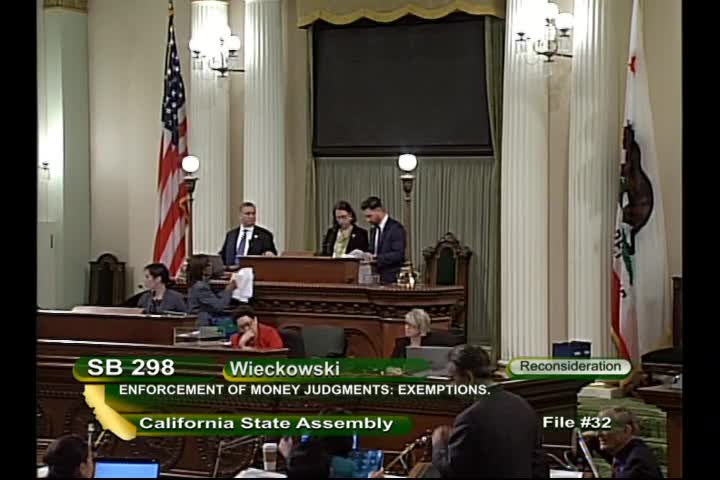
Bill Author
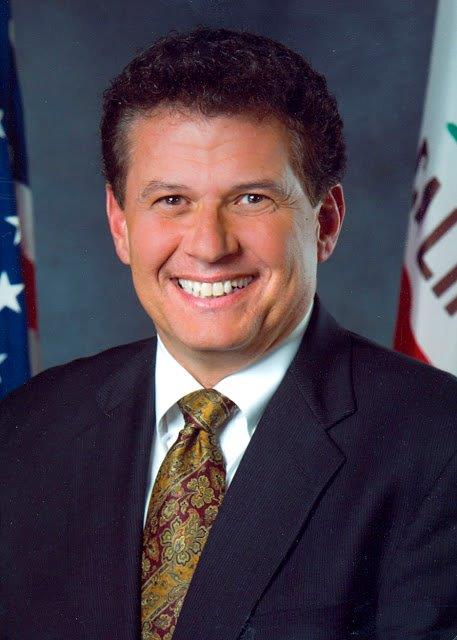
Bill Co-Author(s):