SB 54: Sex offenders: residency restriction: petition for relief.
- Session Year: 2015-2016
- House: Senate
- Latest Version Date: 2015-06-19
Existing law, as amended by Proposition 83 of the November 7, 2006, statewide general election, prohibits any person who is required to register pursuant to the Sex Offender Registration Act from residing within 2,000 feet of any public or private school, or park where children regularly gather.
This bill would require that the 2,000-foot residency restriction be measured by the shortest practical pedestrian or vehicle path. The bill would limit the residency restriction to persons convicted of specified offenses. The bill would permit a person who is subject to the residency restriction to petition the superior court of the county within which he or she resides for relief from the requirement. The bill would provide that original jurisdiction for the petition would lie with the appellate division of the superior court in which the petition is filed. The bill would require the petitioner to establish by clear and convincing a preponderance of the evidence that there is a pervasive lack of compliant housing in the county and that a majority of sex offenders are unable to comply despite good faith efforts. The bill would require, if relief is granted, that the relief be narrowly crafted in order to substantially comply with the intent of the people in approving the residency restriction. The bill would prohibit a subsequent petition from being heard if relief is granted or denied, unless the petitioner establishes in the petition, to the satisfaction of the court, that circumstances regarding compliant housing have changed, as provided.
Proposition 83 permits the Legislature, by a vote of 2/3 of the membership of each house and in accordance with specified procedures, to amend the provisions of the act.
By amending Proposition 83, this bill would require a 2/3 vote.
This bill would declare that it is to take effect immediately as an urgency statute.
Existing law, as amended by Proposition 83 of the November 7, 2006, statewide general election, prohibits any person who is required to register pursuant to the Sex Offender Registration Act from residing within 2,000 feet of any public or private school, or park where children regularly gather.
This bill would require that the 2,000-foot residency restriction be measured by the shortest practical pedestrian or vehicle path. The bill would limit the residency restriction to persons convicted of specified offenses. The bill would permit a person who is subject to the residency restriction to petition the superior court of the county within which he or she resides for relief from the requirement. The bill would provide that original jurisdiction for the petition would lie with the appellate division of the superior court in which the petition is filed. The bill would require the petitioner to establish by clear and convincing evidence that there is a pervasive lack of compliant housing in the county and that a majority of sex offenders are unable to comply despite good faith efforts. The bill would require, if relief is granted, that the relief be narrowly crafted in order to substantially comply with the intent of the people in approving the residency restriction. The bill would prohibit a subsequent petition from being heard if relief is granted or denied, unless the petitioner establishes in the petition, to the satisfaction of the court, that circumstances regarding compliant housing have changed, as provided.
Proposition 83 permits the Legislature, by a vote of 2/3 of the membership of each house and in accordance with specified procedures, to amend the provisions of the act.
By amending Proposition 83, this bill would require a 2/3 vote.
This bill would declare that it is to take effect immediately as an urgency statute.
Existing law establishes the California Community Colleges, under the administration of the Board of Governors of the California Community Colleges, as one of the segments of public postsecondary education in this state.
This bill would make nonsubstantive changes to those provisions.
Existing law establishes the California Community Colleges, under the administration of the Board of Governors of the California Community Colleges, as one of the segments of public postsecondary education in this state.
This bill would make nonsubstantive changes to those provisions.
(a)Notwithstanding any other law, when a person is released on parole after having served a term of imprisonment in state prison for any offense for which registration is required pursuant to Section 290, that person may not, during the period of parole, reside in any single-family dwelling with any other person also required to register pursuant to Section 290, unless those persons are legally related by blood, marriage, or adoption. For purposes of this section, single-family dwelling shall not include a residential facility that serves six or fewer persons.
(b)(1)Notwithstanding any other law, it is unlawful for any person convicted of any of the offenses enumerated in Section 667.61 and for whom registration is required pursuant to Section 290 to reside within 2,000 feet of any public or private school, or park where children regularly gather. The 2,000-foot residency restriction shall be measured by the shortest practical pedestrian or vehicle path.
(2)Any person subject to the residency restriction imposed pursuant to paragraph (1) may, if compliance is not reasonably possible within his or her county, seek relief pursuant to Section 3003.51.
(c)Nothing in this section shall prohibit municipal jurisdictions from enacting local ordinances that further restrict the residency of any person for whom registration is required pursuant to Section 290.
SEC. 2.Section 3003.51 is added to the Penal Code, to read:3003.51.(a)Any person prohibited pursuant to Section 3003.5 from living within 2,000 feet of any public or private school, or park where children regularly gather, may seek relief from those restrictions if he or she cannot comply with the restriction because of the unavailability of compliant housing within his or her county of domicile.
(b)Any person seeking relief under this section may file a petition with the superior court of the county in which he or she resides. Notice of the petition shall be timely served on the state parole authority or other entity enforcing the subject sex offender residency restrictions.
(c)Notwithstanding any other law, original jurisdiction for any petition filed pursuant to this section shall lie with the appellate division of the superior court in which the petition is filed. The court may consolidate all pending petitions.
(d)The appellate division of the superior court in which the petition is filed pursuant to this section may grant the petition if the petitioner establishes by clear and convincing a preponderance of the evidence, and the court finds, both of the following:
(1)There is a pervasive lack of compliant housing within the petitioners county of domicile.
(2)As a result of the pervasive lack of compliant housing, a majority of sex offenders subject to the 2,000-foot residency restriction have, despite good faith efforts, been unable to find compliant housing within the county.
(e)Relief granted pursuant to this section shall apply uniformly to all sex offenders convicted of any of the offenses enumerated in Section 667.61 and for whom registration is required pursuant to Section 290 in all communities within the county that are subject to the 2,000-foot residency restriction and shall, therefore, be narrowly crafted in order to substantially comply with the intent of the people in approving the residency requirements of Section 3003.5.
(f)If relief is granted or denied pursuant to this section, no subsequent petition shall be heard, unless the petitioner or petitioners establish in the petition, to the satisfaction of the court, both of the following:
(1)There has been a change of circumstances based upon a substantial decline in the availability of compliant housing.
(2)There has been a corresponding increase in the percentage of sex offenders who are unable to comply with the residency restriction due to the change of circumstances described in paragraph (1) since the court ruling on the prior petition.
SEC. 3.This act is an urgency statute necessary for the immediate preservation of the public peace, health, or safety within the meaning of Article IV of the Constitution and shall go into immediate effect. The facts constituting the necessity are:
In order to protect the public at the earliest possible time, it is necessary that this act take effect immediately.
(a)Notwithstanding any other provision of law, when a person is released on parole after having served a term of imprisonment in state prison for any offense for which registration is required pursuant to Section 290, that person may not, during the period of parole, reside in any single family single-family dwelling with any other person also required to register pursuant to Section 290, unless those persons are legally related by blood, marriage, or adoption. For purposes of this section, single family single-family dwelling shall not include a residential facility which that serves six or fewer persons.
(b) (1) Notwithstanding any other provision of law, it is unlawful for any person convicted of any of the offenses enumerated in Section 667.61 and for whom registration is required pursuant to Section 290 to reside within 2000 2,000 feet of any public or private school, or park where children regularly gather. The 2,000-foot residency restriction shall be measured by the shortest practical pedestrian or vehicle path.
(2)Any person subject to the residency restriction imposed pursuant to paragraph (1) may, if compliance is not reasonably possible within his or her county, seek relief pursuant to Section 3003.51.
(c)Nothing in this section shall prohibit municipal jurisdictions from enacting local ordinances that further restrict the residency of any person for whom registration is required pursuant to Section 290.
SEC. 2.Section 3003.51 is added to the Penal Code, to read:3003.51.(a)Any person prohibited pursuant to Section 3003.5 from living within 2,000 feet of any public or private school, or park where children regularly gather, may seek relief from those restrictions if he or she cannot comply with the restriction because of the unavailability of compliant housing within his or her county of domicile.
(b)Any person seeking relief under this section may file a petition with the superior court of the county in which he or she resides. Notice of the petition shall be timely served on the state parole authority or other entity enforcing the subject sex offender residency restrictions.
(c)Notwithstanding any other law, original jurisdiction for any petition filed pursuant to this section shall lie with the appellate division of the superior court in which the petition is filed.
(d)The appellate division of the superior court in which the petition is filed pursuant to this section may grant the petition if the petitioner establishes by clear and convincing evidence, and the court finds, both of the following:
(1)There is a pervasive lack of compliant housing within the petitioners county of domicile.
(2)As a result of the pervasive lack of compliant housing, a majority of sex offenders subject to the 2,000-foot residency restriction have, despite good faith efforts, been unable to find compliant housing within the county.
(e)Relief granted pursuant to this section shall apply uniformly to all sex offenders convicted of any of the offenses enumerated in Section 667.61 and for whom registration is required pursuant to Section 290 in all communities within the county that are subject to the 2,000-foot residency restriction and shall, therefore, be narrowly crafted in order to substantially comply with the intent of the people in approving the residency requirements of Section 3003.5.
(f)If relief is granted or denied pursuant to this section, no subsequent petition shall be heard, unless the petitioner or petitioners establish in the petition, to the satisfaction of the court, both of the following:
(1)There has been a change of circumstances based upon a substantial decline in the availability of compliant housing.
(2)There has been a corresponding increase in the percentage of sex offenders who are unable to comply with the residency restriction due to the change of circumstances described in paragraph (1) since the court ruling on the prior petition.
SEC. 3.This act is an urgency statute necessary for the immediate preservation of the public peace, health, or safety within the meaning of Article IV of the Constitution and shall go into immediate effect. The facts constituting the necessity are:
In order to protect the public at the earliest possible time, it is necessary that this act take effect immediately.
SECTION 1.Section 70900 of the Education Code is amended to read:70900.There is hereby established the California Community Colleges, a postsecondary education system consisting of community college districts established pursuant to law and the Board of Governors of the California Community Colleges. The board of governors shall carry out the functions specified in Section 70901, and local districts shall carry out the functions specified in Section 70902.
There is hereby created established the California Community Colleges, a postsecondary education system consisting of community college districts heretofore and hereafter established pursuant to law and the Board of Governors of the California Community Colleges. The board of governors shall carry out the functions specified in Section 70901 70901, and local districts shall carry out the functions specified in Section 70902.
|
Date
|
Status
|
|---|---|
| Dec 19, 2014 | Introduced. To Com. on RLS. for assignment. To print. |
| Dec 22, 2014 | From printer. May be acted upon on or after January 21. |
| Jan 5, 2015 | Read first time. |
| Jan 15, 2015 | Referred to Com. on RLS. |
| May 21, 2015 | From committee with author's amendments. Read second time and amended. Re-referred to Com. on RLS. |
| May 28, 2015 | Re-referred to Com. on PUB. S. |
| Jun 11, 2015 | Set for hearing June 30. |
| Jun 19, 2015 | From committee with author's amendments. Read second time and amended. Re-referred to Com. on PUB. S. |
| Jun 30, 2015 | June 30 set for first hearing. Failed passage in committee. Reconsideration granted. |
| Jun 30, 2015 | June 30 set for first hearing. Failed passage in committee. (Ayes 2. Noes 3. Page 1706.) Reconsideration granted. |
| Feb 1, 2016 | Returned to Secretary of Senate pursuant to Joint Rule 56. |
|
Date
|
Description
|
Location
|
Votes
|
|
|---|---|---|---|---|
| Jun 30, 2015 | [First] hearing set for [06-30-2015]: Failed passage in Committee. Reconsideration granted | Senate Standing Committee on Public Safety |
Passed |
|
| Jun 30, 2015 | Do pass, but first be re-referred to the Committee on [Rules] | Senate Standing Committee on Public Safety |
Failed |
This list shows positions taken on this bill by organizations on the date displayed, which is linked to the original source.
Positions by individuals are not included.
|
Organization
|
Position
|
Date
|
|---|---|---|
| ACLU of California | * Against | Jun 30, 2015 |
| All of Us or None | * Against | Jun 30, 2015 |
| California Attorneys For Criminal Justice | * Against | Jun 30, 2015 |
| California Public Defenders Association | * Against | Jun 30, 2015 |
| California Reform Sex Offender Laws Organization | * Against | Jun 30, 2015 |
| California Sex Offender Management Board | * Against | Jun 30, 2015 |
| Crime Victims United | * Indeterminate | Jun 30, 2015 |
| Crime Victims United Of California | * Support | Jun 30, 2015 |
| Housing California | * Against | Jun 30, 2015 |
| Legal Services for Prisoners with Children | * Against | Jun 30, 2015 |
| Orange County Of | * Against | Jun 30, 2015 |
| Pleasant Hill | * Against | Jun 30, 2015 |
| Sacramento | * Against | Jun 30, 2015 |
| Senator Runner's Staff | * Support | Jun 30, 2015 |
SB 54 (Runner ) Page 9 of 9
SENATE COMMITTEE ON PUBLIC SAFETY
Senator Loni Hancock, Chair
2015 - 2016 Regular
Bill No: SB 54 Hearing Date: June 30, 2015
Author: |
Runner |
||
Version: |
June 19, 2015 |
||
Urgency: |
Yes |
Fiscal: |
No |
Consultant: |
ALA |
||
Subject: Sex Offenders: Residency Restrictions
HISTORY
Source: Author
Prior Legislation: SB 54 (Runner) – 2011, failed passage Senate Public Safety
Support: Crime Victims United of California
Opposition: ACLU; California Attorneys for Criminal Justice; California Reform Sex Offender Laws; California Public Defenders Association; California Sex Offender Management Board
PURPOSE
The purpose of this bill is to make the following changes to the residency restrictions pertaining to registered sex offenders now in statute: 1) limit these restrictions to persons convicted of specified sex crimes; 2) provide that the residency restriction of 2,000 feet of any public or private school or park where children regularly gather shall be measured by the shortest practical pedestrian or vehicle path; and 3) provide a statutory judicial process whereby registered sex offenders could be relieved of this restriction, as specified.
Current law generally requires persons convicted of enumerated sex offenses to register within five working days of coming into a city or county, with specified law enforcement officials in the city, county or city and county where he or she is domiciled, as specified.1 (Penal Code § 290.) Registration generally must be updated annually, within five working days of a registrant’s birthday. (Penal Code § 290.012(a).) In some instances, registration must be updated once every 30 or 90 days, as specified. (Penal Code §§ 290.011, 290.012.)
Residency Restrictions for Sex Offenders: Measuring “2,000 Feet”
Existing statute provides it “is unlawful for any person for whom registration is required pursuant to the Sex Offender Registration Act to reside within 2,000 feet of any public or private school, or areas of a park where children regularly gather.” (Pen. Code § 3003.5 (b).)
Existing statute explicitly authorizes municipal jurisdictions to enact local ordinances that further restrict the residency of any person required to register as a sex offender. (Penal Code § 3003.5(c).)
Existing case law provides that the residency restrictions contained in subdivision (b) of Penal Code section 3003.5 “are unconstitutional as applied across the board to petitioners and similarly situated registered sex offenders on parole in San Diego County.” (In Re Taylor [2015] 60 Cal. 4th 1019.)
This bill would narrow the application of this provision to persons convicted of any of the offenses enumerated in Section 667.61.
This bill would provide that the “2,000 feet shall be measured by the shortest practical pedestrian or vehicle path.”
This bill additionally would provide that any person subject to the residency restriction imposed pursuant to the provisions of this section “may, if compliance is not reasonably possible within his or her county, seek relief,” as would be provided in this bill (see below).
This bill also would make a purely technical change to this section.
Residency Restrictions for Sex Offenders: Process for Relief
This bill would provide a judicial process through which registered sex offenders subject to the residency restrictions noted above with the following features and requirements:
Applicability
This bill would provide that any registered sex offender prohibited by current statute, as specified, from living within 2,000 feet of any public or private school, or park where children regularly gather, “may seek relief from those restrictions if he or she cannot comply with the restriction because of the unavailability of compliant housing within his or her county of domicile.”
Process
This bill would provide that any person seeking relief “may file a petition with the superior court of the county in which he or she resides. Notice of the petition shall be timely served on the state parole authority or other entity enforcing the subject sex offender residency restrictions.”
This bill would provide that, “(n)otwithstanding any other law, original jurisdiction for any petition filed pursuant to this section shall lie with the appellate division of the superior court in which the petition is filed.”
This bill would authorize the court to consolidate all pending petitions.
Elements Required to Grant Relief; Standard for Review
This bill would authorize the appellate division of the superior court in which the petition is filed to “grant the petition if the petitioner establishes by a preponderance of the evidence, and the court finds, both of the following:
There is a pervasive lack of compliant housing within the petitioner’s county of domicile.
As a result of the pervasive lack of compliant housing, a majority of sex offenders subject to the 2,000-foot residency restriction have, despite good faith efforts, been unable to find compliant housing within the county.
Scope of Relief Granted
This bill would provide that if relief is granted, it “shall apply uniformly to all sex offenders convicted of any of the offenses enumerated in Section 667.61 and for whom registration is required pursuant to Section 290 in all communities within the county that are subject to the 2,000-foot residency restriction and shall, therefore, be narrowly crafted in order to substantially comply with the intent of the people in approving the residency requirements of Section 3003.5.”
Limitations on Subsequent Petitions
This bill would provide that if “relief is granted or denied . . . , no subsequent petition shall be heard, unless the petitioner or petitioners establish in the petition, to the satisfaction of the court, both of the following:
There has been a change of circumstances based upon a substantial decline in the availability of compliant housing.
There has been a corresponding increase in the percentage of sex offenders who are unable to comply with the residency restrictions due to the change of circumstances described in paragraph (1) since the court ruling on the prior petition.”
RECEIVERSHIP/OVERCROWDING CRISIS AGGRAVATION
For the past eight years, this Committee has scrutinized legislation referred to its jurisdiction for any potential impact on prison overcrowding. Mindful of the United States Supreme Court ruling and federal court orders relating to the state’s ability to provide a constitutional level of health care to its inmate population and the related issue of prison overcrowding, this Committee has applied its “ROCA” policy as a content-neutral, provisional measure necessary to ensure that the Legislature does not erode progress in reducing prison overcrowding.
On February 10, 2014, the federal court ordered California to reduce its in-state adult institution population to 137.5% of design capacity by February 28, 2016, as follows:
143% of design bed capacity by June 30, 2014;
141.5% of design bed capacity by February 28, 2015; and,
137.5% of design bed capacity by February 28, 2016.
In February of this year the administration reported that as “of February 11, 2015, 112,993 inmates were housed in the State’s 34 adult institutions, which amounts to 136.6% of design bed capacity, and 8,828 inmates were housed in out-of-state facilities. This current population is now below the court-ordered reduction to 137.5% of design bed capacity.”( Defendants’ February 2015 Status Report In Response To February 10, 2014 Order, 2:90-cv-00520 KJM DAD PC, 3-Judge Court, Coleman v. Brown, Plata v. Brown (fn. omitted).
While significant gains have been made in reducing the prison population, the state now must stabilize these advances and demonstrate to the federal court that California has in place the “durable solution” to prison overcrowding “consistently demanded” by the court. (Opinion Re: Order Granting in Part and Denying in Part Defendants’ Request For Extension of December 31, 2013 Deadline, NO. 2:90-cv-0520 LKK DAD (PC), 3-Judge Court, Coleman v. Brown, Plata v. Brown (2-10-14). The Committee’s consideration of bills that may impact the prison population therefore will be informed by the following questions:
Whether a proposal erodes a measure which has contributed to reducing the prison population;
Whether a proposal addresses a major area of public safety or criminal activity for which there is no other reasonable, appropriate remedy;
Whether a proposal addresses a crime which is directly dangerous to the physical safety of others for which there is no other reasonably appropriate sanction;
Whether a proposal corrects a constitutional problem or legislative drafting error; and
Whether a proposal proposes penalties which are proportionate, and cannot be achieved through any other reasonably appropriate remedy.
COMMENTS
Stated Need for This Bill
The author states in part:
SB 54 is designed to make sex-offender residency restrictions more workable and to provide relief in jurisdictions where a majority of sex offenders cannot find compliant housing. The bill provides that the Appellate Division of the Superior Court of each county would have primary jurisdiction to consolidate and hear petitions challenging the 2000 foot residency restriction which precluded registered sex offenders from residing near schools or parks. The Court would grant relief if it was established that there was a pervasive lack of compliant housing in the subject county.
Supreme Court Ruling on Residency Restrictions
In March of this year, the California Supreme Court unanimously ruled that the provisions in state law prohibiting sex offenders from living within 2,000 feet of schools or parks, as applied in San Diego County, are unconstitutional and bear "no rational relationship to advancing the state's legitimate goal of protecting children from sexual predators." (In Re Taylor [2015] 60 Cal. 4th 1019). In that case, petitioners pursued habeas corpus relief “by challenging the constitutionality of the residency restrictions as applied to them and other similarly situated registered sex offenders on supervised parole in San Diego County, based on evidence adduced at an eight-day evidentiary hearing ordered by this court.” (Id. at 1038-39, citation omitted.)
The Court stated in part:
In this case, however, we need not decide whether rational basis or heightened strict scrutiny review should be invoked in scrutinizing petitioners' constitutional challenges to section 3003.5(b). As we next explain, we are persuaded that blanket enforcement of the mandatory residency restrictions of Jessica's Law, as applied to registered sex offenders on parole in San Diego County, cannot survive even the more deferential rational basis standard of constitutional review. Such enforcement has imposed harsh and severe restrictions and disabilities on the affected parolees' liberty and privacy rights, however limited, while producing conditions that hamper, rather than foster, efforts to monitor, supervise, and rehabilitate these persons. Accordingly, it bears no rational relationship to advancing the state's legitimate goal of protecting children from sexual predators, and has infringed the affected parolees' basic constitutional right to be free of official action that is unreasonable, arbitrary, and oppressive. (In Re Taylor, supra, 60 Cal.4th at 1038. (emphasis added)
Considerations in Light of In Re Taylor
As explained in detail above, this bill would provide a judicial process whereby registered sex offenders could be relieved of the residency restrictions enacted by Jessica’s Law in 2006. These provisions are nearly identical to a bill introduced in 2011 (SB 54 [Runner]). As noted above, in the meantime the Supreme Court has addressed some constitutional issues regarding residency restrictions.
Members may wish to discuss, in light of the decision in the Taylor case, the viability of this bill’s provisions and how they might work. The Taylor decision states in part:
. . . (W)e agree that section 3003.5(b)'s residency restrictions are unconstitutional as applied across the board to petitioners and similarly situated registered sex offenders on parole in San Diego County. Blanket enforcement of the residency restrictions against these parolees has severely restricted their ability to find housing in compliance with the statute, greatly increased the incidence of homelessness among them, and hindered their access to medical treatment, drug and alcohol dependency services, psychological counseling and other rehabilitative social services available to all parolees, while further hampering the efforts of parole authorities and law enforcement officials to monitor, supervise, and rehabilitate them in the interests of public safety. It thus has infringed their liberty and privacy interests, however limited, while bearing no rational relationship to advancing the state's legitimate goal of protecting children from sexual predators, and has violated their basic constitutional right to be free of unreasonable, arbitrary, and oppressive official action.
Nonetheless, as the lower courts made clear, CDCR retains the statutory authority, under provisions in the Penal Code separate from those found in section 3003.5(b), to impose special restrictions on registered sex offenders in the form of discretionary parole conditions, including residency restrictions that may be more or less restrictive than those found in section 3003.5(b), as long as they are based on, and supported by, the particularized circumstances of each individual parolee. (In re Taylor, supra, 60 Cal.4th at 1023.)
It appears that the reasoning of Taylor now would apply in any jurisdiction seeking to apply a blanket residency restriction on registered sex offenders. As enumerated by the Court, the trial court made a number of findings of fact in the San Diego case:
(1) Despite certain imprecisions, the map book prepared by (the) San Diego County crime analyst . . . is the most accurate assessment of housing that is reasonably available to registered sex offender parolees in San Diego County.
(2) Registered sex offender parolees are unlikely candidates to rent single-family homes; they are most likely to be housed in apartments or low-cost residential hotels.
(3) By virtue of the residency restrictions alone, registered sex offender parolees are effectively barred from access to approximately 97 percent of the existing rental property that would otherwise be available to them.
(4) The remaining 3 percent of multifamily rental housing outside the exclusion areas is not necessarily available to registered sex offender parolees for a variety of reasons, including San Diego County's low vacancy rate, high rents, and the unwillingness of some landlords to rent to such persons.
(5) In addition to CDCR's policy prohibiting parole agents from supplying registered sex offender parolees with specific information about the location of compliant housing, parole authorities in San Diego County have taken affirmative steps to prevent parole agents from helping parolees find compliant housing.
(6) Rigid application of the residency restrictions results in large groups of registered sex offender parolees having to sleep in alleys and riverbeds, a circumstance that did not exist prior to Jessica's Law.
(7) The residency restrictions place burdens on registered sex offender parolees that are disruptive in a way that hinders their treatment, jeopardizes their health and undercuts their ability to find and maintain employment, significantly undermining any effort at rehabilitation. (Id. at 1034.)
This bill would provide a process for challenging a local residency ordinance under which the appellate division of the superior court in which the petition is filed pursuant to this section may grant the petition if the petitioner establishes by a preponderance of the evidence, and the court finds, both of the following:
There is a pervasive lack of compliant housing within the petitioner’s county of domicile.
As a result of the pervasive lack of compliant housing, a majority of sex offenders subject to the 2,000-foot residency restriction have, despite good faith efforts, been unable to find compliant housing within the county.
The author submits that “(r)ather than waiting for multiple habeas petitions and appeals to wind their way through our appellate courts, SB 54 seeks to create a more orderly and efficient process for those seeking relief from the 2000 foot residency restrictions as applied in particular counties.”
The two criteria proposed by this bill as the basis upon which a court may grant relief from a residency restriction are narrower than the evidentiary examination performed in the Taylor case. In addition, the standards proposed by this bill appear to be vague. Members may wish to consider how possible it would be for a petitioner under this bill to 1) demonstrate a “pervasive” 2 lack of compliant housing; 2) demonstrate that as result of a “pervasive lack of compliant housing” a “majority” of sex offenders have been unable to find compliant housing; and 3) demonstrate that a majority of these other sex offenders had used “good faith efforts” to find compliant housing.
Currently, these cases are being taken up as writs of habeas corpus. The Court in Taylor notes that in the related case of In Re E.J., 47 Cal.4th 1258, it remanded the cases for evidentiary hearings in the trials courts. This bill would provide that the appellate division of the superior court would have jurisdiction over the petition process this bill would enact. Members may wish to discuss the effect of the process proposed by this bill compared to a habeas writ, and whether the evidentiary hearing process would be different under this bill.
COULD A PETITIONER REASONABLY PREVAIL UNDER THE CRITERIA THAT WOULD BE ESTABLISHED BY THIS BILL?
WOULD THIS BILL LIMIT THE CONSTITUTIONAL EXAMINATION EMPLOYED BY THE COURT IN TAYLOR?
WOULD THE PROCESS ENACTED BY THIS BILL BE CONSTITUTIONAL?
WOULD THIS BILL PROMOTE PUBLIC SAFETY?
Measuring 2,000 Feet for Purposes of the Residency Restriction
In its January 2008 initial report, the California Sex Offender Management Board noted that some of the terms in the existing residency restrictions are not defined by the initiative, and are not clear:
Proposition 83 added Section (b) to Penal Code Section 3003.5 which makes it unlawful for any person required to register pursuant to Penal Code Section 290 to live within 2,000 feet of any “public or private school, or park where children regularly gather.”
The term “park where children regularly gather” is not defined by the initiative.
It is unclear if this term refers to the entire grounds of a park (sizeable portions in which children may not routinely gather) or the portion (such as location where a play structure is located) where children are intended to be present.
It is unclear how often children need to be present at a park to meet the threshold of the phrase “regularly gather.”
• Proposition 83 does not prescribe a method for determining how to measure the 2,000 residency restriction.
It is unclear what physical point on a site should be used to begin measurement. For example, some localities measure from the center-point of a property and some measure from the border edges of the property.
It is unclear how the 2,000 foot distance should be measured. Should practitioners determine the distance by roads or routes a car would travel? Should the distance be determined using straight lines or ‘as the crow flies’?
This bill would provide that the 2,000 feet “shall be measured by the closest practical pedestrian or vehicle path.” This language would appear to provide clarity in terms of how to identify restricted areas. This standard arguably might reduce the reach of the existing restriction to the extent it employs pathways and thoroughfares instead of a simple circumference drawn around the prohibited area. For example, a residence may be sited directly behind a fenced school campus but not be within 2,000 feet – less than half a mile – of the school as measured by the road or pathway.
WOULD THIS BILL ADD CLARITY TO THE APPLICATION OF CURRENT LAW, AS ENACTED BY JESSICA’S LAW?
COULD THIS PROVISION MATERIALLY REDUCE THE SCOPE OF THE RESIDENCY RESTRICTIONS OF JESSICA’S LAW?
WOULD THIS PROVISION IMPROVE THE PRACTICAL APPLICATION AND ENFORCEMENT OF JESSICA’S LAW?
WOULD THIS PROVISION IMPROVE STATE LAW WITH RESPECT TO MONITORING SEX OFFENDERS AND PREVENTING SEX CRIMES?
Opposition
The California Sex Offender Management Board, which opposes this bill, submits in part:
The blanket imposition of residence restrictions on sex offenders is, in fact, not based on or in accord with any available science, knowledge, research or other solid foundation. CASOMB strongly believes that policies should be evidence-based whenever such evidence is available, as it clearly is regarding residence restrictions.
. . . Residence restrictions policies, both in general and as now proposed in SB 54, appear to be built on a foundation of false assumptions and discredited myths. Among these are mistaken beliefs about who commits sex offenses (“stranger danger”), where they are committed and what has and what has not been proven effective in reducing recidivism.
. . . The recommendations of a number of authoritative expert resources oppose the application of residence restrictions because their review of the research consistently finds absolutely no scientific support for such policies. These experts and authorities include a Task Group of experts (SOMAPI) convened by the US Department of Justice’s SMART Office, the National Council of State Governments and the Association for the Treatment of Sexual Abusers (ATSA). The ATSA review concluded: “Policies emphasizing residential proximity to schools and parks . . . ignore the empirical reality of sexual abuse patterns, specifically that residence restrictions do not reduce recidivism or increase community safety.” . . .
A number of additional concerns about SB 54 have been identified by CASOMB, including the likelihood of a number of serious unintended consequences, the certainty of significant costs in implementation, and vagueness in the bill’s language. . . . (emphasis in original)
-- END –
1 Penal Code section 290(b) provides: “Every person described in subdivision (c) for the rest of his or her life while residing in, or, if he or she has no residence, while located within California, or while attending school or working in California, as described in section 290.002 and 290.01, shall be required to register with the chief of police of the city in which he or she is residing, or if he or she has no residence, is located, or the sheriff of the county if he or she is residing, or if he or she has no residence, is located, in an unincorporated area or city that has no police department, and, additionally, with the chief of police of a campus of the University of California, the California State University, or community college if he or she is residing, or if he or she has no residence, is located upon the campus or in any of its facilities, within five working days of coming into, or changing his or her residence or location within, any city, county, or city and county, or campus in which he or she temporarily resides, or, if he or she has no residence, is located.”
2 A word search for the word “pervasive” by Committee staff resulted in no usage in the Penal Code.
Discussed in Hearing
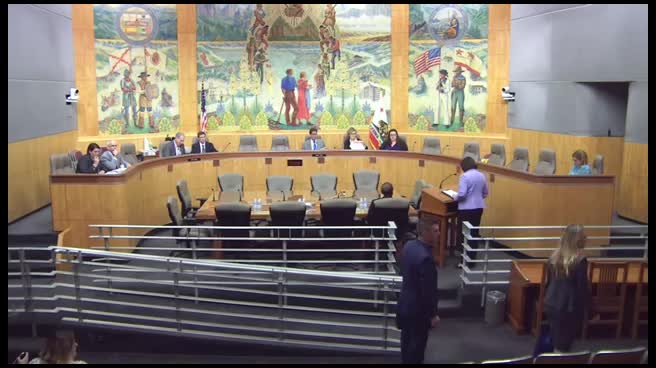 47MIN
Senate Standing Committee on Public Safety
Bill Author

Bill Co-Author(s):