SB 603: Defendant: acting as his or her own attorney (in pro per).
- Session Year: 2015-2016
- House: Senate
- Latest Version Date: 2016-01-04
The California Constitution provides that a victim of crime is entitled to be treated with fairness and respect for his or her privacy and dignity throughout the criminal justice process. Existing law also provides that in a criminal action the defendant is entitled to appear and defend in person and with counsel, except as specified, and to confront the witnesses against him or her.
Existing law makes it a crime for a person to practice law in this state unless he or she is a member of the State Bar.
This bill would require a court to conduct a hearing to determine whether intermediary standby counsel or another person shall be appointed, at county expense, for the limited purpose of presenting the defendants examination of the victim, upon a motion by the prosecutor, prosecutor or at the request of a victim, or upon the courts own motion, if a defendant is acting as his or her own attorney in the proceeding and if the victims testimony will involve a recitation of the facts of one of specified alleged felony offenses committed against the victim, including any felony offenses offense for which a convicted defendant is required to register as a sex offender. The bill would require the hearing on the motion to be conducted outside the presence of the jury and would provide that the hearing shall not require the testimony of the victim. The bill would authorize the court to appoint intermediary standby counsel or, if intermediary counsel is not available, to conduct the examination or to appoint any individual the court deems fit to conduct the examination, if the court makes specified findings, including that the denial of the defendants personal examination of the victim, and the use of another person or the court to present the defendants examination of the victim, is necessary to protect the victim from trauma, as specified. The bill would also exempt the appointed intermediary standby counsel from sanctions and from liability in an action for malpractice brought by the defendant against that counsel for his or her service in that capacity, as specified. The bill would also exempt a person from criminal prosecution for the unlawful practice of law for engaging in activities he or she is authorized to perform pursuant to these provisions. By imposing a higher level of service on counties, the bill would impose a state-mandated local program. The bill would also include legislative findings and declarations and a statement of legislative intent.
The California Constitution requires the state to reimburse local agencies and school districts for certain costs mandated by the state. Statutory provisions establish procedures for making that reimbursement.
This bill would provide that, if the Commission on State Mandates determines that the bill contains costs mandated by the state, reimbursement for those costs shall be made pursuant to these statutory provisions.
The California Constitution provides that a victim of crime is entitled to be treated with fairness and respect for his or her privacy and dignity throughout the criminal justice process. Existing law also provides that in a criminal action the defendant is entitled to appear and defend in person and with counsel, except as specified, and to confront the witnesses against him or her.
Existing law makes it a crime for a person to practice law in this state unless he or she is a member of the State Bar.
This bill would require a court to conduct a hearing to determine whether intermediary standby counsel or another person shall be appointed, at county expense, for the limited purpose of presenting the defendants examination of the victim, upon a motion by the prosecutor, at the request of a victim, or upon the courts own motion, if a defendant is acting as his or her own attorney in the proceeding and if the victims testimony will involve a recitation of the facts of one of specified alleged felony offenses committed against the victim, including violent felonies and felony offenses for which a convicted defendant is required to register as a sex offender. The bill would require the hearing on the motion to be conducted outside the presence of the jury and would provide that the hearing shall not require the testimony of the victim. The bill would authorize the court to appoint intermediary standby counsel or, if intermediary counsel is not available, to conduct the examination or to appoint any individual the court deems fit to conduct the examination, if the court makes specified findings, including that the denial of the defendants personal examination of the victim, and the use of intermediary standby counsel another person or the court to present the defendants examination of the victim, is necessary to protect the victim from trauma, as specified. The bill would also exempt the appointed intermediary standby counsel from sanctions and from liability in an action for malpractice brought by the defendant against that counsel for his or her service in that capacity, as specified. The bill would also exempt a person from criminal prosecution for the unlawful practice of law for engaging in activities he or she is authorized to perform pursuant to these provisions. By imposing a higher level of service on counties, the bill would impose a state-mandated local program. The bill would also include legislative findings and declarations and a statement of legislative intent.
The California Constitution requires the state to reimburse local agencies and school districts for certain costs mandated by the state. Statutory provisions establish procedures for making that reimbursement.
This bill would provide that, if the Commission on State Mandates determines that the bill contains costs mandated by the state, reimbursement for those costs shall be made pursuant to these statutory provisions.
The California Constitution provides that a victim of crime is entitled to be treated with fairness and respect for his or her privacy and dignity throughout the criminal justice process. Existing law also provides that in a criminal action the defendant is entitled to appear and defend in person and with counsel, except as specified, and to confront the witnesses against him or her.
This bill would require a court to conduct a hearing to determine whether intermediary standby counsel shall be appointed, at county expense, for the limited purpose of presenting the defendants examination of the victim, upon a motion by the prosecutor, at the request of a victim, or upon the courts own motion, if a defendant is acting as his or her own attorney in the proceeding and if the victims testimony will involve a recitation of the facts of one of specified alleged felony offenses committed against the victim, including violent felonies and felony offenses for which a convicted defendant is required to register as a sex offender. The bill would require the hearing on the motion to be conducted outside the presence of the jury and would provide that the hearing shall not require the testimony of the victim. The bill would authorize the court to appoint intermediary standby counsel if the court makes specified findings, including that the denial of the defendants personal examination of the victim, and the use of intermediary standby counsel to present the defendants examination of the victim, is necessary to protect the victim from trauma, as specified. The bill would also exempt the appointed intermediary standby counsel from sanctions and from liability in an action for malpractice brought by the defendant against that counsel for his or her service in that capacity, as specified. By imposing a higher level of service on counties, the bill would impose a state-mandated local program. The bill would also include legislative findings and declarations and a statement of legislative intent.
The California Constitution requires the state to reimburse local agencies and school districts for certain costs mandated by the state. Statutory provisions establish procedures for making that reimbursement.
This bill would provide that, if the Commission on State Mandates determines that the bill contains costs mandated by the state, reimbursement for those costs shall be made pursuant to these statutory provisions.
(a)The Legislature hereby finds and declares all of the following:
(1)Sexual abuse, child abuse, stalking, and violent abuse crimes are some of the most difficult crimes to detect and prosecute, in large part because there are often no witnesses except the victim, because of the victims reluctance to report, and because of the extreme psychological harm to the victims. Victims of sex crimes, child abuse, stalking, and other violent sexual abuse crimes have a right to be protected from further victimization by the alleged perpetrator of the crime. These victims have constitutional rights, as enumerated in Marsys Law, to be treated with fairness and respect for their dignity, to be free from intimidation, harassment, and abuse throughout the criminal justice process, and to be reasonably protected from the defendant.
(2)A defendant generally has the right to represent himself or herself in a criminal proceeding, and the right to confront his or her accusers in court. However, courts have held that this right is not absolute, and where the reliability of the testimony is otherwise ensured, the defendants rights may be outweighed by important public policy concerns.
(3)Courts are entitled to control the mode of witness interrogation, so as to more effectively ascertain the truth and protect the witness from harassment or further trauma. Courts have held that a states interest in the physical and psychological well-being of victims and witnesses may be sufficiently important to outweigh, in some cases, a defendants right to face his or her accuser or accusers in court.
(4)The state has a compelling interest in protecting the physical and psychological well-being of victims of sex offenses, child abuse, stalking, and other violent crimes. offenses.
(b)It is the intent of the Legislature in enacting this section to provide the court with authority discretion to employ alternative court procedures to protect the rights of victims of an alleged sexual assault, child abuse, stalking, and other crimes assault, as described in subdivision (c), so the victims are able to participate truthfully and effectively in criminal proceedings when the alleged perpetrator is acting as his or her own attorney, which is also referred to as acting in pro per. In exercising its authority, the court shall balance the rights of the defendant against the need to protect victims of those crimes and to preserve the integrity of the courts truthfinding function. This authority is intended to be used selectively when the facts and circumstances in the individual case present compelling evidence of the need to use these alternative procedures.
(c)Notwithstanding any other law, if the defendant is acting as his or her own attorney, the court, upon a motion by the prosecutor, prosecutor or at the request of a victim, or upon the courts own motion, shall conduct a hearing to determine whether intermediary standby counsel, shall be appointed, at county expense, for the limited purpose of presenting the defendants examination of the victim.If intermediary standby counsel is not available, the court may appoint any individual the court deems fit to conduct the examination, or the court may conduct the examination. The court may order intermediary standby counsel or the appointed individual to conduct the examination, or the court may conduct to present the examination, if the court makes all of the following findings:
(1)The victims testimony will involve a recitation of the facts of any of the following alleged offenses committed against the victim:
(A)A felony offense that is subject to sex offender registration pursuant to Section 290.
(B)Felony stalking pursuant to Section 646.9.
(C)Felony elder abuse pursuant to Section 368.
(D)Felony domestic violence pursuant to Section 273.5.
(E)Felony child abuse pursuant to Section 273a, 273ab, or 273d.
(1)The victims testimony will involve a recitation of the facts of any felony offense that is subject to sex offender registration pursuant to Section 290.
(2)The prospect of the defendant personally presenting the examination of the victim creates an emotionally traumatic situation for the victim that is more than de minimis. would substantially impair the victims ability to communicate.
(3)The denial of the defendants personal examination, and the use of intermediary standby counsel to present the defendants examination of the victim, is necessary to protect the victim from that trauma.
(d)The hearing on the motion pursuant to subdivision (c) shall be conducted outside the presence of the jury and shall not require the testimony of the victim. The courts findings pursuant to subdivision (c) may be established by evidence of the facts of the underlying incident, the defendants subsequent behavior, and through witnesses including, but not limited to, the victim, victim advocate, therapist, counselor, parent, or family member.
(e)If the victim testifies at the hearing brought pursuant to subdivision (c), the questioning of the victim shall be conducted by the court. The prosecutor and defendant shall be permitted to submit proposed questions to the court prior to the hearing.
(f)
(e)When the court orders intermediary standby counsel or the appointed individual to present the examination of the victim pursuant to this section, or when the court presents the examination, the court shall do all of the following: make a brief statement on the record, outside the presence of the jury, of the reasons in support of its order. The reasons shall be set forth with sufficient specificity to permit meaningful review and to demonstrate that discretion was exercised in a careful, reasonable, and equitable manner.
(1)Make a brief statement on the record, outside the presence of the jury, of the reasons in support of its order. The reasons shall be set forth with sufficient specificity to permit meaningful review and to demonstrate that discretion was exercised in a careful, reasonable, and equitable manner.
(2)Instruct the jury that although another person, or the court, is presenting the defendants questions of that witness, the defendant is continuing to represent himself or herself, and that the jury is to draw no negative inferences against the defendant from the use of another person or the court to facilitate the examination of that particular witness or to speculate as to the reasons for another persons or the courts participation.
(g)
(f)When the court orders the examination of the victim be presented by another person, or when the court conducts the examination, the intermediary standby counsel, the defendant shall submit the entire line of questioning to the other person or the court, including any followup questions, and intermediary standby counsel, with sufficient time for counsel to prepare any followup questions, and shall have the right to contemporaneously direct the other person or the court intermediary standby counsel during the examination to ensure the defendant maintains control of his or her defense. The defendant shall remain personally subject to court procedures and the rules of evidence.
(h)The appointed intermediary standby counsel who performs merely as the presenter of the defendants proposed examination of the victim pursuant to this section shall not be subject to sanctions imposed by a court or by the State Bar for presenting the defendants proposed examination. The appointed intermediary standby counsel shall not be subject to liability for malpractice for presenting the defendants proposed examination in an action brought by the defendant against that counsel for his or her service in that capacity. A person who is appointed pursuant to this section shall not be subject to criminal prosecution pursuant to Section 6126 of the Business and Professions Code for engaging in activities he or she is authorized to perform pursuant to this section.
SEC. 2.If the Commission on State Mandates determines that this act contains costs mandated by the state, reimbursement to local agencies and school districts for those costs shall be made pursuant to Part 7 (commencing with Section 17500) of Division 4 of Title 2 of the Government Code.
(a)The Legislature hereby finds and declares all of the following:
(1)Sexual abuse, child abuse, stalking stalking, and violent crimes are some of the most difficult crimes to detect and prosecute, in large part because there are often no witnesses except the victim, and because of the extreme psychological harm to the victims. Victims of sex crimes, child abuse, stalking stalking, and other violent crimes have a right to be protected from further victimization by the alleged perpetrator of the crime. These victims have constitutional rights, as enumerated in Marsys Law, to be treated with fairness and respect for their dignity, to be free from intimidation, harassment, and abuse throughout the criminal justice process, and to be reasonably protected from the defendant.
(2)A defendant generally has the right to represent himself or herself in a criminal proceeding, and the right to confront his or her accusers in court. However, courts have held that this right is not absolute, and where the reliability of the testimony is otherwise ensured, the defendants rights may be outweighed by important public policy concerns.
(3)Courts are entitled to control the mode of witness interrogation, so as to more effectively ascertain the truth and protect the witness from harassment or further trauma. Courts have held that a states interest in the physical and psychological well-being of victims and witnesses may be sufficiently important to outweigh, in some cases, a defendants right to face his or her accuser or accusers in court.
(4)The state has a compelling interest in protecting the physical and psychological well-being of victims of sex offenses, child abuse, stalking stalking, and other violent crimes.
(b)It is the intent of the Legislature in enacting this section to provide the court with authority to employ alternative court procedures to protect the rights of victims of an alleged sexual assault, child abuse, stalking stalking, and other crimes described in subdivision (c), so the victims are able to participate truthfully and effectively in criminal proceedings when the alleged perpetrator is acting as his or her own attorney, which is also referred to as acting in pro per. In exercising its authority, the court shall balance the rights of the defendant against the need to protect victims of those crimes and to preserve the integrity of the courts truthfinding function. This authority is intended to be used selectively when the facts and circumstances in the individual case present compelling evidence of the need to use these alternative procedures.
(c)Notwithstanding any other law, if the defendant is acting as his or her own attorney, the court, upon a motion by the prosecutor, at the request of a victim, or upon the courts own motion, shall conduct a hearing to determine whether intermediary standby counsel, shall be appointed, at county expense, for the limited purpose of presenting the defendants examination of the victim. If intermediary standby counsel is not available, the court may appoint any individual the court deems fit to conduct the examination, or the court may conduct the examination. The court may order intermediary standby counsel or the appointed individual to conduct the examination, or the court may conduct the examination, if the court makes all of the following findings:
(1)The victims testimony will involve a recitation of the facts of any of the following alleged offenses committed against the victim:
(A)A felony offense that is subject to sex offender registration pursuant to Section 290.
(B)A violent felony, as defined in subdivision (c) of Section 667.5.
(C)
(B)Felony stalking pursuant to Section 646.9.
(D)
(C)Felony elder abuse pursuant to Section 368.
(E)
(D)Felony domestic violence pursuant to Section 273.5.
(F)
(E)Felony child abuse pursuant to Section 273a, 273ab 273ab, or 273d.
(2)The prospect of the defendant personally presenting the examination of the victim creates an emotionally traumatic situation for the victim that is more than de minimis.
(3)The denial of the defendants personal examination, and the use of intermediary standby counsel to present the defendants examination of the victim, is necessary to protect the victim from that trauma.
(d)The hearing on the motion pursuant to subdivision (c) shall be conducted outside the presence of the jury and shall not require the testimony of the victim. The courts findings pursuant to subdivision (c) may be established by evidence of the facts of the underlying incident, the defendants subsequent behavior, and through witnesses including, but not limited to, the victim, victim advocate, therapist, counselor, parent, or family member.
(e)If the victim testifies at the hearing brought pursuant to subdivision (c), the questioning of the victim shall be conducted by the court. The prosecutor and defendant shall be permitted to submit proposed questions to the court prior to the hearing.
(f)When the court orders intermediary standby counsel or the appointed individual to present the examination of the victim pursuant to this section, or when the court presents the examination, the court shall do all of the following:
(1)Make a brief statement on the record, outside the presence of the jury, of the reasons in support of its order. The reasons shall be set forth with sufficient specificity to permit meaningful review and to demonstrate that discretion was exercised in a careful, reasonable, and equitable manner.
(2)Instruct the jury that although intermediary standby counsel another person, or the court, is presenting the defendants questions of that witness, the defendant is continuing to represent himself or herself, and that the jury is to draw no negative inferences against the defendant from the use of intermediary standby counsel another person or the court to facilitate the examination of that particular witness or to speculate as to the reasons for intermediary standby counsels another persons or the courts participation.
(g)When the court orders the examination of the victim be presented by intermediary standby counsel, another person, or when the court conducts the examination, the defendant shall submit the entire line of questioning to intermediary standby counsel, the other person or the court, including any followup questions, and have the right to contemporaneously direct intermediary standby counsel the other person or the court during the examination to ensure the defendant maintains control of his or her defense. The defendant shall remain personally subject to court procedures and the rules of evidence.
(h)The appointed intermediary standby counsel who performs merely as the presenter of the defendants proposed examination of the victim pursuant to this section shall not be subject to sanctions imposed by a court or by the State Bar for presenting the defendants proposed examination. The appointed intermediary standby counsel shall not be subject to liability for malpractice for presenting the defendants proposed examination in an action brought by the defendant against that counsel for his or her service in that capacity. A person who is appointed pursuant to this section shall not be subject to criminal prosecution pursuant to Section 6126 of the Business and Professions Code for engaging in activities he or she is authorized to perform pursuant to this section.
SEC. 2.If the Commission on State Mandates determines that this act contains costs mandated by the state, reimbursement to local agencies and school districts for those costs shall be made pursuant to Part 7 (commencing with Section 17500) of Division 4 of Title 2 of the Government Code.
(a)The Legislature hereby finds and declares all of the following:
(1)Sexual abuse, child abuse, stalking and violent crimes are some of the most difficult crimes to detect and prosecute, in large part because there are often no witnesses except the victim, and because of the extreme psychological harm to the victims. Victims of sex crimes, child abuse, stalking and other violent crimes have a right to be protected from further victimization by the alleged perpetrator of the crime. These victims have constitutional rights, as enumerated in Marsys Law, to be treated with fairness and respect for their dignity, to be free from intimidation, harassment, and abuse throughout the criminal justice process, and to be reasonably protected from the defendant.
(2)A defendant generally has the right to represent himself or herself in a criminal proceeding, and the right to confront his or her accusers in court. However, courts have held that this right is not absolute, and where the reliability of the testimony is otherwise ensured, the defendants rights may be outweighed by important public policy concerns.
(3)Courts are entitled to control the mode of witness interrogation, so as to more effectively ascertain the truth and protect the witness from harassment or further trauma. Courts have held that a states interest in the physical and psychological well-being of victims and witnesses may be sufficiently important to outweigh, in some cases, a defendants right to face his or her accuser or accusers in court.
(4)The state has a compelling interest in protecting the physical and psychological well-being of victims of sex offenses, child abuse, stalking and other violent crimes.
(b)It is the intent of the Legislature in enacting this section to provide the court with authority to employ alternative court procedures to protect the rights of victims of an alleged sexual assault, child abuse, stalking and other crimes described in subdivision (c), so the victims are able to participate truthfully and effectively in criminal proceedings when the alleged perpetrator is acting as his or her own attorney, which is also referred to as acting in pro per. In exercising its authority, the court shall balance the rights of the defendant against the need to protect victims of those crimes and to preserve the integrity of the courts truth-finding function. This authority is intended to be used selectively when the facts and circumstances in the individual case present compelling evidence of the need to use these alternative procedures.
(c)Notwithstanding any other law, if the defendant is acting as his or her own attorney, the court, upon a motion by the prosecutor, at the request of a victim, or upon the courts own motion, shall conduct a hearing to determine whether intermediary standby counsel, shall be appointed, at county expense, for the limited purpose of presenting the defendants examination of the victim. The court may order intermediary standby counsel if the court makes all of the following findings:
(1)The victims testimony will involve a recitation of the facts of any of the following alleged offenses committed against the victim:
(A)A felony offense that is subject to sex offender registration pursuant to Section 290.
(B)A violent felony, as defined in subdivision (c) of Section 667.5.
(C)Felony stalking pursuant to Section 646.9.
(D)Felony elder abuse pursuant to Section 368.
(E)Felony domestic violence pursuant to Section 273.5.
(F)Felony child abuse pursuant to Section 273a, 273ab or 273d.
(2)The prospect of the defendant personally presenting the examination of the victim creates an emotionally traumatic situation for the victim that is more than de minimis.
(3)The denial of the defendants personal examination, and the use of intermediary standby counsel to present the defendants examination of the victim, is necessary to protect the victim from that trauma.
(d)The hearing on the motion pursuant to subdivision (c) shall be conducted outside the presence of the jury and shall not require the testimony of the victim. The courts findings pursuant to subdivision (c) may be established by evidence of the facts of the underlying incident, the defendants subsequent behavior, and through witnesses including, but not limited to, the victim, victim advocate, therapist, counselor, parent, or family member.
(e)If the victim testifies at the hearing brought pursuant to subdivision (c), the questioning of the victim shall be conducted by the court. The prosecutor and defendant shall be permitted to submit proposed questions to the court prior to the hearing.
(f)When the court orders intermediary standby counsel to present the examination of the victim pursuant to this section, the court shall do all of the following:
(1)Make a brief statement on the record, outside the presence of the jury, of the reasons in support of its order. The reasons shall be set forth with sufficient specificity to permit meaningful review and to demonstrate that discretion was exercised in a careful, reasonable, and equitable manner.
(2)Instruct the jury that although intermediary standby counsel is presenting the defendants questions of that witness, the defendant is continuing to represent himself or herself, and that the jury is to draw no negative inferences against the defendant from the use of intermediary standby counsel to facilitate the examination of that particular witness or to speculate as to the reasons for intermediary standby counsels participation.
(g)When the court orders the examination of the victim be presented by intermediary standby counsel, the defendant shall submit the entire line of questioning to intermediary standby counsel, including any follow-up questions, and have the right to contemporaneously direct intermediary standby counsel during the examination to ensure the defendant maintains control of his or her defense. The defendant shall remain personally subject to court procedures and the rules of evidence.
(h)The appointed intermediary standby counsel who performs merely as the presenter of the defendants proposed examination of the victim pursuant to this section shall not be subject to sanctions for presenting the defendants proposed examination. The appointed intermediary standby counsel shall not be subject to liability for malpractice for presenting the defendants proposed examination in an action brought by the defendant against that counsel for his or her service in that capacity.
SEC. 2.If the Commission on State Mandates determines that this act contains costs mandated by the state, reimbursement to local agencies and school districts for those costs shall be made pursuant to Part 7 (commencing with Section 17500) of Division 4 of Title 2 of the Government Code.
|
Date
|
Status
|
|---|---|
| Feb 27, 2015 | Introduced. To Com. on RLS. for assignment. To print. |
| Mar 2, 2015 | From printer. May be acted upon on or after April 1. |
| Mar 2, 2015 | Read first time. |
| Mar 12, 2015 | Referred to Com. on PUB. S. |
| Mar 20, 2015 | Set for hearing April 21. |
| Apr 30, 2015 | From committee: Do pass as amended and re-refer to Com. on APPR. (Ayes 6. Noes 0. Page 730.) (April 21). |
| Apr 30, 2015 | From committee: Do pass as amended and re-refer to Com. on APPR. (Ayes 6. Noes 0.) (April 21). |
| May 4, 2015 | Read second time and amended. Re-referred to Com. on APPR. |
| May 8, 2015 | Set for hearing May 18. |
| May 18, 2015 | May 18 hearing: Placed on APPR. suspense file. |
| May 23, 2015 | Set for hearing May 28. |
| May 28, 2015 | May 28 hearing: Held in committee and under submission. |
| Jan 4, 2016 | From committee with author's amendments. Read second time and amended. Re-referred to Com. on APPR. |
| Jan 16, 2016 | Set for hearing January 21. |
| Jan 21, 2016 | January 21 hearing: Held in committee and under submission. |
| Feb 1, 2016 | Returned to Secretary of Senate pursuant to Joint Rule 56. |
|
Date
|
Description
|
Location
|
Votes
|
|
|---|---|---|---|---|
| May 18, 2015 | Placed on suspense file | Senate Standing Committee on Appropriations |
Passed |
|
| Apr 21, 2015 | Do pass as amended, but first amend, and re-refer to the Committee on [Appropriations] | Senate Standing Committee on Public Safety |
Passed |
This list shows positions taken on this bill by organizations on the date displayed, which is linked to the original source.
Positions by individuals are not included.
|
Organization
|
Position
|
Date
|
|---|---|---|
| American Civil Liberties Union of California | * Against | Apr 22, 2015 |
| California District Attorneys Association | * Support | Apr 22, 2015 |
| Crime Victims United Of California | * Support | Apr 22, 2015 |
| District Attorney's Office, Sacramento County | * Support | Apr 22, 2015 |
| San Diego District Attorney's Office | * Support | Apr 22, 2015 |
| San Francisco Public Defenders Association | * Against | Apr 22, 2015 |
SB 603 (Hueso) Page 3 of 3
SENATE COMMITTEE ON APPROPRIATIONS
Senator Ricardo Lara, Chair
2015 - 2016 Regular Session
SB 603 (Hueso) - Defendant: acting as his or her own attorney (in pro per)
|
|
Version: May 4, 2015 |
Policy Vote: PUB. S. 6 - 0 |
Urgency: No |
Mandate: Yes |
Hearing Date: May 18, 2015 |
Consultant: Jolie Onodera |
This bill meets the criteria for referral to the Suspense File.
Bill Summary:
SB 603 would require a court to conduct a hearing, upon a specified motion or request, to determine whether intermediary standby counsel or another person is to be appointed for the limited purpose of presenting the defendant’s examination of the victim in cases where a defendant is acting as his or her own attorney, as specified.
Fiscal Impact:
Potential increase in court workload to process motions and potentially hold separate hearings. For every 100 motions filed (less than two motions per county per year), costs could exceed $50,000 (General Fund*) statewide assuming one additional hour of court time per case.
Potential increase in county costs for court-appointed intermediary standby counsel to conduct the examination of the victim. To the extent the increase in county expenses qualifies as a reimbursable state mandate, counties could submit claims for reimbursement of those costs (General Fund). Alternatively, to the extent the court conducts the examination, additional workload for court staff would be incurred.
*Trial Court Trust Fund
Background:
Existing law provides that in all criminal prosecutions, the accused has the right to be confronted by the witnesses against him or her. Existing law also provides under the Sixth Amendment of the U.S. Constitution the right of a person accused of a crime to represent him or herself.
This bill seeks to protect victims from further trauma when the defendant charged with specified offenses is acting in pro per. This bill would authorize a court to order standby counsel or another person the court deems fit, after a hearing is conducted to make this determination, to question the victim on behalf of the defendant. The court will have to find that the defendant examining the victim will create an emotionally traumatic situation for the victim and that appointing the stand by counsel will protect the victim from that trauma. The offenses about which the victim is testifying must be a registerable sex offense, felony stalking, felony elder abuse, felony domestic violence, or felony child abuse.
Proposed Law:
This bill would provide, under codified legislative findings and declarations, that if the defendant is acting as his or her own attorney (in pro per), the court, upon a motion by the prosecutor, at the request of a victim, or upon the court’s own motion, shall conduct a hearing to determine whether intermediary standby counsel shall be appointed, at county expense, for the limited purpose of presenting the defendant’s examination of the victim. This bill:
Provides that if intermediary standby counsel is not available, the court may appoint any individual the court deems fit to conduct the examination, or the court may conduct the examination, subject to specified court findings, including but not limited to that the alleged offense against the victim was a felony offense subject to sex offender registration, felony stalking, felony elder abuse, felony domestic violence, or felony child abuse.
Provides that when the court orders intermediary standby counsel or the appointed individual to present the examination of the victim, or when the court presents the examination, the court shall do all of the following:
Make a brief statement on the record, outside the presence of the jury, of the reasons in support of its order. The reasons shall be set forth with sufficient specificity to permit meaningful review and to demonstrate that discretion was exercised in a careful, reasonable, and equitable manner.
Instruct the jury that although another person, or the court, is presenting the defendant’s questions of that witness, the defendant is continuing to represent himself or herself, and that the jury is to draw no negative inferences against the defendant from the use of another person or the court to facilitate the examination of that particular witness or to speculate as to the reasons for another person’s or the court’s participation.
Provide that when the court orders the examination of the victim be presented by another person, or when the court conducts the examination, the defendant shall submit the entire line of questioning to the other person or the court, including any follow-up questions, and have the right to contemporaneously direct the other person or the court during the examination to ensure the defendant maintains control of his or her defense. The defendant shall remain personally subject to court procedures and the rules of evidence.
Provides that a person who is appointed shall not be subject to criminal prosecution for the unlawful practice of law for engaging in activities he or she is authorized to perform pursuant to this section, as specified.
Related Legislation:
None applicable.
Staff Comments:
This bill creates a new process, potentially requiring a hearing, for consideration of the appointment of intermediary standby counsel. For those motions approved and that require a hearing, an additional hour of court time is estimated. Based on an estimated cost of $4,000 for an eight-hour court day, an additional one hour of court time is estimated to cost of $500 per case.
It cannot be known with certainty how many motions will be filed in these cases in any one year statewide, and of the motions filed, which motions will require a separate hearing. It is assumed the number of cases in which a defendant is acting in pro per is infrequent, therefore, for every 100 motions filed (less than two motions per court per year), annual costs could reach $50,000 annually. To the extent the actual number of motions filed in these cases is greater or less than 100, costs would be commensurately higher or lower.
This bill could result in a potential increase in county costs for court-appointed intermediary standby counsel to conduct the examination of the victim. To the extent the increase in county expenses qualifies as a reimbursable state mandate, counties could submit claims for reimbursement of those costs (General Fund). Alternatively, to the extent the court conducts the examination, additional workload for court staff would be incurred.
-- END --
SB 603 (Hueso ) Page 9 of 9
SENATE COMMITTEE ON PUBLIC SAFETY
Senator Loni Hancock, Chair
2015 - 2016 Regular
Bill No: SB 603 Hearing Date: April 21, 2015
Author: |
Hueso |
||
Version: |
February 27, 2015 |
||
Urgency: |
No |
Fiscal: |
Yes |
Consultant: |
MK |
||
Subject: Defendant: Acting As His or Her Own Attorney (in pro per)
HISTORY
Source: San Diego District Attorney’s Office
Prior Legislation: None
Support: California District Attorneys Association; Alliance for Hope; San Diego VOICES; Partnership to End Domestic Violence; Crime Victims United; a number of individuals; Crime Victims Action Alliance; 2 individuals
Opposition: ACLU; California Public Defenders Association
PURPOSE
The purpose of this bill is in cases where a defendant who is charged with specified offenses is acting in pro per, to allow the court to appoint intermediary standby counsel for the limited purpose of presenting the defendant’s examination of the victim.
Existing law provides that in all criminal prosecutions, the accused shall enjoy the right ... to be confronted by the witnesses against him … (U.S. Constitution, Amendment VI.)
Existing law provides that the Sixth Amendment of the U.S. Constitution guarantees the right accused of a crime to represent him or herself. (Faretta v. California (1975) 422 U.S. 806)
Existing law provides that when a defendant is charged with specified sex offenses, child abuse, lewd and lascivious acts on a child, and the victim either is a person 15 years of age or less or is developmentally disabled as a result of an intellectual disability, as specified, the people may apply for an order that the victim's testimony at the preliminary hearing, in addition to being steno graphically recorded, be recorded and preserved on videotape. (Penal Code, § 1346(a).)
Existing law states that at the time of trial, if the court finds that further testimony in any of the qualifying cases would cause the victim emotional trauma so that the victim is medically unavailable or otherwise unavailable within the statutory definition of unavailability, the court may admit the videotape of the victim's testimony at the preliminary hearing, as specified. (Penal Code, § 1346(d).)
Existing law establishes that a videotape prepared for court testimony is subject to a protective order of the court to protect the privacy of the victim and must be made available to the prosecuting attorney, the defendant, and his/her attorney for viewing during business hours. The videotape is to be destroyed five years from the date of judgment, unless an appeal is filed. (Penal Code, § 1346(e), (f), and (g).)
Existing law provides that when a defendant is charged with spousal rape or infliction of corporal injury resulting in a traumatic injury to a spouse, former spouse, or domestic partner, the people may apply for an order that the victim's testimony at the preliminary hearing, in addition to being steno graphically recorded, be recorded and preserved on videotape. If the victim’s testimony at the preliminary hearing is admissible, the videotape recording may be introduced as evidence at trial (Penal Code, § 1346.1(a) and (d).)
Existing law allows, in cases where a minor, 13 years or younger, will testify that a sexual offense was committed against or with the minor, or that the minor was a victim of a violent felony, as defined, that the minor may testify by way of contemporaneous examination and cross examination in another location and communicated to the courtroom by closed-circuit television if the court finds that the impact on the minor of one or more of the following is shown by clear and convincing evidence to make the minor unavailable as a witness unless closed-circuit television is used:
Testimony by the minor in the presence of the defendant would result in the child suffering serious emotional distress so that the child would be unavailable as a witness;
The defendant used a deadly weapon in the commission of the offense;
Threats of serious bodily injury to be inflicted on the minor or a family member, of incarceration or deportation of the minor or a family member, or of removal of the minor from the family or dissolution of the family in order to prevent or dissuade the minor from attending or giving testimony at any trial or court proceeding or to prevent the minor from reporting the alleged sexual offense or from assisting in the prosecution;
The defendant inflicted great bodily injury upon the child in the commission of the offense; or,
The defendant or his or her counsel behaved during the hearing or trial in a way that caused the minor to be unable to continue his or her testimony. (Penal Code § 1347(b).)
This bill provides that if the defendant is acting as his or her own attorney, the court, upon a motion by the prosecutor, at the request of a victim, or upon the court’s own motion, shall conduct a hearing to determine whether intermediary standby counsel, shall be appointed, at county expense, for the limited purpose of presenting the defendant’s examination of the victim.
This bill provides the court may order intermediary standby counsel if the court makes the following findings:
The victim’s testimony will involve the recitation of facts on any of the following offenses.
A registerable sex offense.
A violent felony.
Felony stalking.
Felony elder abuse.
Felony domestic violence.
Felony child abuse.
The prospect of the defendant personally presenting the examination of the victim creates an emotionally traumatic situation for the victim that is more than de minimis.
The denial of the defendant’s personal examination, and the use of intermediary standby counsel to present the defendant’s examination of the victim, is necessary to protect the victim from that trauma.
This bill provides that the hearing on the motion to have standby counsel pursuant to this bill shall take place outside the presence of the jury and shall not require the testimony of the victim. If the victim does testify at the hearing the questioning of the victim shall be conducted by the court.
This bill provides that if the court orders intermediary standby counsel to present the examination of the victim the court shall do all of the following:
Make a brief statement on the record of the reasons in support of its order. The reasons shall be set forth with sufficient specificity to permit meaningful review and to demonstrate that discretion was exercised in a careful, reasonable and equitable manner.
Instruct the jury that although intermediary standby counsel is presenting the defendant’s questions of that witness, the defendant is continuing to represent himself or herself, and that the jury is to draw no negative interferences against the defendant from the sue of intermediary standby counsel to facilitate the examination of that particular witness or to speculate as to the reasons for intermediary standby counsel’s participation.
This bill provides that when the court orders the examination of the victim be presented by intermediary standby counsel, the defendant shall submit the entire line of questioning to the intermediary standby counsel, including any follow- up questions, and have the right to contemporaneously direct intermediary standby counsel during the examination to ensure the defendant maintains control of his or her defense. The defendant shall remain personally subject to court procedures and the rules of evidence.
This bill provides that the appointed intermediary standby counsel who performs merely as the presenter of the defendant’s proposed examination of the victim pursuant to this section shall not be subject to sanctions for presenting the defendant’s proposed examination. The appointed intermediary standby counsel shall not be subject to liability for malpractice for presenting the defendant’s proposed examination in an action brought by the defendant against his own counsel for his or her service in that capacity.
This bill contains codified legislative intent.
RECEIVERSHIP/OVERCROWDING CRISIS AGGRAVATION
For the past eight years, this Committee has scrutinized legislation referred to its jurisdiction for any potential impact on prison overcrowding. Mindful of the United States Supreme Court ruling and federal court orders relating to the state’s ability to provide a constitutional level of health care to its inmate population and the related issue of prison overcrowding, this Committee has applied its “ROCA” policy as a content-neutral, provisional measure necessary to ensure that the Legislature does not erode progress in reducing prison overcrowding.
On February 10, 2014, the federal court ordered California to reduce its in-state adult institution population to 137.5% of design capacity by February 28, 2016, as follows:
143% of design bed capacity by June 30, 2014;
141.5% of design bed capacity by February 28, 2015; and,
137.5% of design bed capacity by February 28, 2016.
In February of this year the administration reported that as “of February 11, 2015, 112,993 inmates were housed in the State’s 34 adult institutions, which amounts to 136.6% of design bed capacity, and 8,828 inmates were housed in out-of-state facilities. This current population is now below the court-ordered reduction to 137.5% of design bed capacity.”( Defendants’ February 2015 Status Report In Response To February 10, 2014 Order, 2:90-cv-00520 KJM DAD PC, 3-Judge Court, Coleman v. Brown, Plata v. Brown (fn. omitted).
While significant gains have been made in reducing the prison population, the state now must stabilize these advances and demonstrate to the federal court that California has in place the “durable solution” to prison overcrowding “consistently demanded” by the court. (Opinion Re: Order Granting in Part and Denying in Part Defendants’ Request For Extension of December 31, 2013 Deadline, NO. 2:90-cv-0520 LKK DAD (PC), 3-Judge Court, Coleman v. Brown, Plata v. Brown (2-10-14). The Committee’s consideration of bills that may impact the prison population therefore will be informed by the following questions:
Whether a proposal erodes a measure which has contributed to reducing the prison population;
Whether a proposal addresses a major area of public safety or criminal activity for which there is no other reasonable, appropriate remedy;
Whether a proposal addresses a crime which is directly dangerous to the physical safety of others for which there is no other reasonably appropriate sanction;
Whether a proposal corrects a constitutional problem or legislative drafting error; and
Whether a proposal proposes penalties which are proportionate, and cannot be achieved through any other reasonably appropriate remedy.
COMMENTS
1. Need For The Bill
According to the author:
SB 603 would set up a legal framework to prevent further trauma to specified victims when their accused attacker is acting in pro per. This bill applies when a defendant is representing himself or herself in a criminal case involving a sex crime, stalking, elder abuse, child abuse, domestic violence, or a violent felony. If a judge finds that direct questioning by the accused would create an emotionally traumatic situation for that victim, the judge may appoint stand-by counsel to ask the questions as prepared by the defendant.
Numerous courts across the country have restricted pro per defendants’ ability to personally cross-examine their victims, particularly in cases involving sexual abuse. For example, in 1995, the Fourth Circuit Court of Appeals in Fields v. Murray, affirmed a lower court’s decision to appoint stand-by counsel to read the defendant’s questions as prepared by the defendant in a case involving child molestation. The Court found it was not a violation of the defendant’s rights, he still maintained control of his defense, and the state had an important interest in protecting the child victims from further trauma. This ruling applies to the states of Maryland, Virginia, West Virginia, North Carolina, and South Carolina. Similar decisions were reached by the Supreme Court of Kentucky in the cases of Partin and Applegate, and the Washington Appellate Court case of Estabrook.
California’s public policy to protect the physical and psychological well-being of victims during the criminal justice process is clear. Particularly in cases of sexual assault, secondary victimization can cause even more harm than the initial criminal act, with the trial often being referred to as “the second rape.” A rape victim should be afforded protection from the trauma of being personally questioned by the accused rapist. A stalking victim should be afforded another option than have to suffer the trauma from direct questioning by the person who has harassed, threatened, and tormented her. By having a procedure in which stand-by counsel is appointed to read a pro per defendant’s questions, victims of violent crime will be able to avoid another direct assault by their attackers during the trial. At the same time, this bill protects defendants’ rights to still maintain control of their case and direct their trial.
2. Use of Standby Counsel For Victim Cross-Examination
The U.S. Constitution guarantees the right of a person accused of a crime to represent himself or herself (in pro per). A defendant acting in pro per has the right to control the organization of the defense, make motions, argue points of law, participate in voir dire, question witnesses and address the court and jury. (McKaskle v. Wiggins (1984) 465 U.S. 168, 174)
This bill would provide that in specified cases when a defendant is acting in pro per a court can order standby counsel to question the victim on behalf of the defendant. The court will have to find that the defendant examining the victim will create an emotionally traumatic situation for the victim and that appointing the stand by counsel will protect the victim from that trauma. The offenses about which the victim is testifying must be one of the following: a registerable sex offense; a violent felony; felony stalking; felony elder abuse; felony domestic violence; or, felony child abuse.
In support of this bill the sponsor states:
In a recent San Diego case, a woman was violently raped while walking from a store to a trolley station. During the course of the criminal case, the defendant eventually chose to act as his own attorney. The rape victim in the case had not alternative by to face her rapist during the trial and answer he questions directly about the violent sexual assault, despite having suffered panic attacks prior to trial, out of increased anxiety of being directly questioned by her rapist.
Victims of sex crimes and other violent crimes already suffer physical trauma, fear, and an assault on their privacy and dignity. To require those victimized to have to suffer re-traumatization by answering questions personally posed by their alleged attacker, without an alternative, is indefensible considering the vulnerable state of these victims. Through a loophole in the law, rapists can victimize their victims-once during the rape and then again by re-traumatizing them through direct question about the crime perpetrated. The fact that our laws allow victims of violent sex crimes to endure this line of question when there is an alternative is reprehensible.
3. Offenses For Which Standby Counsel Can Be Appointed
The offenses for which standby counsel can be appointed to cross-examine the victim are:
A registerable sex offense;
A violent felony;
Felony stalking;
Felony elder abuse;
Felony domestic violence;
Felony child abuse;
The list of violent felonies includes twenty-three offenses including murder and sex offenses but also including any robbery and any first degree burglary where another was present. Any robbery could be purse snatch when the person holds on to the purse too long and a person present at a first degree burglary can be a burglary downstairs while people sleep unknowing upstairs. Both events are traumatic but are they the type of crimes for which a person’s constitutional right to self-representation should be infringed?
4. How Will The Questioning Work And Does The Process Protect The Defendant’s Right To Confrontation?
The bill states that the pro per defendant will submit the entire line of questioning, including follow-up questions to the standby counsel. It is not clear how this work. The examination or cross-examination of a witness is an organic process. Follow up questions are just that, follow-up questions based on the answers, how does a person submit follow up questions prior to the examination? Does the standby counsel have to stop after every answer and ask the defendant if they have a question? Even an experienced attorney will not know all the questions that they are going to ask on an examination until the question starts, how is an in pro per defendant supposed to submit the questions before? Does the standby counsel continue to ask questions even if they don’t make sense based on how the witness is answering?
In opposition the ACLU states:
It is simply not possible for an attorney to step in and act as an effective mouth piece for the accused during cross-examination. Cross-examination is an art. The litigator must respond, in real time, to the actual answers from the witness, constantly adjusting course. The timing of the questions is critical. Requiring standby counsel to read a list of prepared questions does not constitute a “full opportunity for contemporaneous cross-examination.” (Ibid.) Nor is this problem cured by having the standby attorney consult with the accused during cross-examine. This prevents rapid response to answers and destroys the ability to develop effective timing.
Two cases in which appellate courts reversed the trial courts for using the procedure proposed in SB 603 demonstrate this point. In State v. Folk (Idaho 2011) 256 P.3d 735, the court observed:
Requiring Defendant to write out questions to be asked by someone else in order to cross-examine Child is a significant impairment of the right of confrontation. […]
As anyone who has conducted cross-examination would know, one must be able to listen to the answer and then, especially with young child, be able to reword the question or come up with another question based upon the answer. Cross-examination is often a fluid process, and the person forming the questions must be able to concentrate on the answers and what further questions are necessary to elicit the desired information.
(Id. At 745.)
In Commonwealth v. Conefrey (Mass. 1991) 570 N.E.2d 1384, the court described the events at trial as follows:
Cross-examination of the complainant proceeded in the form directed by the judge, with the defendant writing out questions and giving them to standby counsel to ask of the complainant. During the course of the questioning, however, standby counsel protested to the judge that he felt awkward with this method of examination, and that he could not adjust his questions quickly enough to respond to the complainant’s answers without constantly conferring with the defendant.
(Id. At 1389.) The court then held:
We conclude that the restriction denied the defendant a fair chance to present his case his own way because it literally required standby counsel to speak in his place, thereby hindering the defendant’s ability to conduct an effective cross-examination of a witness on whose credibility the Commonwealth’s case depended. As a result, the defendant’s constitutional right of self-representation has been violated and a new trial is necessary.
(Id. At 1391.)
One state appellate court has upheld the use of the procedure proposed in SB 603. (State v. Eastabrook (Wash. 1993) 842 P.2d 1001.). This court, however, failed to analyze the Sixth Amendment Confrontation Clause issues raised by these procedures. While other courts have approved preventing the defendant from personally cross-examining the complaining witness, in all of those cases the defendant was in fact represented by counsel. (See Fields v. Murray (1995) 49 F.3d 1024 [where defendant was acting as “co-counsel” to court appointed attorney, it was acceptable to require the court appointed attorney conduct the cross-exam]; Partin v. Commonwealth (Kentucky 2005) 168 S.W. 3d 23 [same]; State v. Taylor (RI 1989) 562 A.2d 445 [accused represented by an attorney].)
As the cases from Idaho and Massachusetts demonstrate, implementing the procedure proposed in SB 603 will lead to the infringement of the constitutional rights of the accused, leading to reversals and the need to retry these cases years later.
5. Will The Court Be Able To Find Standby Counsel?
This bill provides that the standby counsel cannot be sanctioned or subject to malpractice liability for presenting the defendant. Sanctioned by whom? Should it be clear that the counsel cannot be sanctioned by the State Bar or the Court?
Even without potential liability, will any defense attorney feel comfortable asking questions on behalf of the pro per defendant without having an ability to use their knowledge and skill to follow-up? If the court orders a defense attorney to be a standby counsel and the attorney refuses can the attorney be found in contempt for that? Will attorneys who are solo practitioners feel they have to agree for fear they will lose appointed cases in the future? If the attorney goes off the script and asks a question on his or her own are they still protected from liability?
6. Are There Other Options For The Court?
As the ACLU notes, there are other ways a court can deal with a pro per defendant who is being abusive so as to protect the witness:
Fortunately, California trial courts already have many tools to protect witnesses. Trial courts can control the mode of cross-examination by any person to protect the witness from undue harassment and embarrassment. (See Cal. Evid. Code, § 765.) California law provides for the use of closed-circuit television to question certain child witnesses and witnesses with disabilities. (Pen. Code sec. 1347, 1347.5.) The courts can require that a pro se litigant stay seated while cross-examining the witness or maintain a certain distance from the witness. If a pro se litigant is disruptive or threatening, the judge can have him or her restrained or removed from the courtroom. See Illinois v. Allen (1970) 397 U.S. 337. If a pro se litigant engages in witness intimidation or in any way subverts “the core concept of a trial,” the court can even terminate the accused’s right to represent himself or herself. (People v. Carson (2005) 35 Cal.4th 1, 9.)
Trial courts, thus, are already vested with broad discretion to prevent the kind of harm that SB 603 guards against.
Are courts using the options available to them in order to protect victims and maintain the defendant’s Constitutional right to represent himself for herself?
7. Support
The supporters believe that this bill will help victims in reducing their trauma at trial. Specifically, the California Partnership to End Domestic Violence states in support:
The criminal process can be extremely traumatic for survivors of domestic violence, sexual assault, stalking and other violent crimes. Many survivors are reluctant to participate and fearful of confronting their abusers. By allowing an appointed stand-by counsel to question the survivor in these specific cases we can help reduce the possibility for emotional harm and increased trauma to the survivor. A survivor should be afforded protection from trauma of being personally questioned by their accused. By having a procedure in which stand-by counsel is appointed to read a pro per defendant’s questions, survivors of violent crime will be able to avoid another attack during the trial.
-- END –
Discussed in Hearing
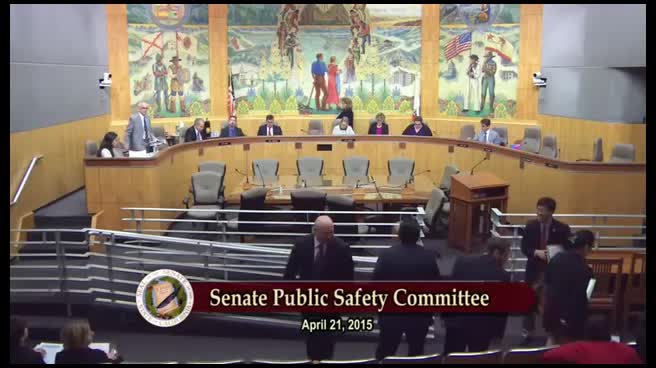 29MIN
Senate Standing Committee on Public Safety
Bill Author

Bill Co-Author(s):