SB 753: Criminal Justice Reinvestment Assessment Grant Program of 2015.
- Session Year: 2015-2016
- House: Senate
- Latest Version Date: 2015-02-27
Existing law requires the Board of State and Community Corrections to collect and maintain available information and data about state and community correctional policies, practices, capacities, and needs, as specified. Existing law requires the board, in consultation with certain individuals, including a county supervisor or county administrative officer, a county sheriff, and the Secretary of the Department of Corrections and Rehabilitation, to develop definitions of specified key terms in order to facilitate consistency in local data collection, evaluation, and implementation of evidence-based programs.
This bill would enact the Criminal Justice Reinvestment Assessment Grant Program of 2015. The bill would require the grant program to be administered by the Board of State and Community Corrections for the purpose of establishing and implementing reporting systems to identify and expand programs that provide proven, evidence-based, local programming opportunities for the successful reintegration of offenders into society.
The bill would authorize the board to award grants to assist counties with the creation or expansion of infrastructure that allows each county to consistently collect and report specified criminal justice information. The bill would require each local community corrections partnership, on or before June 1, 2015, to report to the board on the countys capacity to collect and report the data required. The bill requires the board to review each assessment and to prioritize and award grants to the counties.
The bill would require each county to report specified data to the board, on or before January 1, 2016, and annually thereafter, pertaining to offenders sentenced as felons to serve in local correctional facilities and felons released from prison to community supervision. The bill would require the board to summarize these data and report the summaries to the Governor and the Legislature, on or before May 15, 2016, and annually thereafter.
By imposing data collection and reporting duties on local governments, this bill would impose a state-mandated local program.
The bill would appropriate an undetermined sum to the board for purposes of funding the grants. The bill would state findings and declarations of the Legislature regarding criminal justice realignment.
The California Constitution requires the state to reimburse local agencies and school districts for certain costs mandated by the state. Statutory provisions establish procedures for making that reimbursement.
This bill would provide that, if the Commission on State Mandates determines that the bill contains costs mandated by the state, reimbursement for those costs shall be made pursuant to these statutory provisions.
The bill would declare that it is to take effect immediately as an urgency statute.
This article shall be known, and may be cited, as the Criminal Justice Reinvestment Assessment Grant Program of 2015.
6033.2.The Legislature finds and declares all of the following:
(a)The Legislature is committed to reducing recidivism among criminal offenders, ensuring that local governments have adequate funding to achieve this goal, and facilitating the responsible implementation of the criminal justice policies contained in the 2011 Realignment Legislation addressing public safety.
(b)By enacting the 2011 Realignment Legislation addressing public safety, the Legislature affirmed its commitment to justice reinvestment and stated that the purpose of justice reinvestment is to manage criminal justice populations more cost effectively, generating savings that can be reinvested in evidence-based strategies that increase public safety while holding offenders accountable.
(c)The 2011 Realignment Legislation addressing public safety represents a significant shift of responsibilities. However, the quick and unanticipated nature of the passage of this legislation, in combination with broad county discretion in its implementation, offers a unique opportunity to identify best practices in community corrections and the impacts of correctional decentralization.
(d)The 2011 Realignment Legislation addressing public safety did not require counties to collect data on outcome measures, nor did it provide specific resources for data collection that if adequately funded and properly implemented would allow policymakers, researchers, stakeholders, and counties to take advantage of the historic opportunity to study and evaluate the changing felon population and the strategies and interventions that counties employ to reduce recidivism.
(e)The Bureau of State Audits September 2013 High Risk report identified the 2011 realignment of criminal justice responsibilities between the state and counties as a high-risk policy, citing a lack of reliable and meaningful realignment data to ensure [the states] ability to effectively monitor progress toward achieving intended realignment goals.
6033.4.(a)The Criminal Justice Reinvestment Assessment Grant Program of 2015, which is hereby established, shall be administered by the Board of State and Community Corrections for the purpose of establishing and implementing reporting systems to identify and expand programs that provide proven, evidence-based, local programming opportunities for the successful reintegration of offenders into society. The board shall award grants to assist counties with the creation or expansion of infrastructure that allows each county to consistently collect and report criminal justice information as required by Sections 6033.10 and 6033.12.
(b)For purposes of this article, board means the Board of State and Community Corrections.
6033.6.(a)On or before June 1, 2015, each local community corrections partnership established pursuant to Section 1230 shall report to the board on the countys capacity to collect and report the data required by Sections 6033.10 and 6033.12. The report shall include a local plan that identifies the additional resources necessary for that county to consistently collect and report criminal justice information as required by Sections 6033.10 and 6033.12.
(b)The board shall review each assessment submitted pursuant to subdivision (a) and shall prioritize and award grants pursuant to Section 6033.8. Funding shall be used to supplement, rather than supplant, existing programs. Grant funds shall be used for programs that are identified in the local plan submitted pursuant to subdivision (a).
(c)The board shall submit to the Legislature on or before June 15, 2015, a report detailing the estimated need, cost, and schedule for each county to consistently collect and report criminal justice information as required by Sections 6033.10 and 6033.12. The report shall be submitted in compliance with Section 9795 of the Government Code.
6033.8.(a)The board shall establish minimum standards, funding schedules, and procedures for awarding grants, which shall take into consideration, but not be limited to, all of the following:
(1)Size of the county.
(2)Demonstrated efforts to report data prior to January 1, 2017.
(3)Demonstrated ability to report data prior to January 1, 2017.
(b)The board shall give preference to counties that have demonstrated efforts to independently collect data on a countywide basis.
6033.10.(a)On or before January 1, 2016, and annually each year thereafter, each county shall report specified data to the board in a format prescribed by the board. The board shall specify and define minimum required reporting which shall include, but not be limited to, the following for each individual sentenced pursuant to subdivision (h) of Section 1170:
(1)Individual identifiers.
(2)County identifiers.
(3)Date of birth.
(4)Gender.
(5)Race or ethnicity.
(6)Age at first arrest.
(7)Conviction offense.
(8)Sanction or sentence received.
(9)Total jail time served.
(10)Release status.
(11)Violations of probation.
(12)Rearrests.
(13)Reconvictions.
(14)Any other return to custody.
(15)Use of flash incarceration.
(16)Assessed risk level.
(17)Participation in pretrial programs.
(18)Participation in specialty court.
(19)Participation in day reporting release programs.
(20)Participation in electronic monitoring programs.
(21)Participation in community service release programs.
(22)Participation in work release programs.
(23)Participation in intensive probation supervision.
(24)Needs assessment.
(25)Any reentry programming provided.
(26)Participation in cognitive behavioral therapy.
(27)Participation in mental health treatment.
(28)Participation in substance abuse treatment.
(29)Participation in gender-specific programming.
(30)Participation in family programming.
(31)Any health care assistance provided.
(32)Any housing assistance provided.
(33)Any income support provided.
(34)Any employment assistance provided.
(35)Any vocational training assistance provided.
(36)Any educational enrollment assistance provided.
(37)Any mentoring programming provided.
(38)Any peer support programming provided.
(b)The board shall compile the local reports and, by May 15, 2016, and, notwithstanding Section 10231.5 of the Government Code, by May 15 of each year thereafter, make a report to the Governor and the Legislature that summarizes the data reported by the counties pursuant to subdivision (a). The report submitted to the Legislature shall be submitted in compliance with Section 9795 of the Government Code.
6033.12.(a)On or before January 1, 2016, and annually each year thereafter, each county shall provide specified data to the board in a format prescribed by the board. The board shall specify and define minimum required reporting which shall include, but not be limited to, the following for each individual supervised pursuant to Section 3451:
(1)Violations of postrelease community supervision.
(2)Rearrests.
(3)Reconvictions.
(4)Any other return to custody.
(5)Use of flash incarceration.
(6)Participation in intensive probation supervision.
(7)Any reentry programming provided.
(8)Participation in cognitive behavioral therapy and whether the individual has completed or failed to complete the therapys requirements.
(9)Participation in mental health treatment and whether the individual has completed or failed to complete the treatments requirements.
(10)Participation in substance abuse treatment and whether the individual has completed or failed to complete the treatments requirements.
(11)Participation in gender-specific programming.
(12)Participation in family programming.
(13)Any health care assistance provided.
(14)Any housing assistance provided.
(15)Any income support provided.
(16)Any employment assistance provided.
(17)Any vocational training assistance provided.
(18)Any educational enrollment assistance provided.
(19)Any mentoring programming provided.
(20)Any peer support programming provided.
(b)The board shall compile the local reports and, by May 15, 2016, and, notwithstanding Section 10231.5 of the Government Code, by May 15 of each year thereafter, make a report to the Governor and the Legislature that summarizes the data reported by the counties pursuant to subdivision (a). The report submitted to the Legislature shall be submitted in compliance with Section 9795 of the Government Code.
6033.14.(a)The amount of ____ dollars ($____) is hereby appropriated from the General Fund to the board for the 201516 fiscal year for the purpose of implementing this article.
(b)The board may award up to the amount of the appropriation, less the boards administrative costs, not to exceed 5 percent of the total grant funding awarded statewide, as individual grants not exceeding ____to counties to assist in establishing data reporting systems that will allow a county to consistently collect and report criminal justice information as required by Sections 6033.10 and 6033.12.
SEC. 2.If the Commission on State Mandates determines that this act contains costs mandated by the state, reimbursement to local agencies and school districts for those costs shall be made pursuant to Part 7 (commencing with Section 17500) of Division 4 of Title 2 of the Government Code.
SEC. 3.This act is an urgency statute necessary for the immediate preservation of the public peace, health, or safety within the meaning of Article IV of the Constitution and shall go into immediate effect. The facts constituting the necessity are:
In order to ensure that relevant data pertaining to the 2011 Realignment Legislation addressing public safety are collected and reported as soon as possible to allow stakeholders to measure the effectiveness of this landmark change in public safety policy, it is necessary that this bill go into immediate effect.
|
Date
|
Status
|
|---|---|
| Feb 27, 2015 | Introduced. To Com. on RLS. for assignment. To print. |
| Mar 2, 2015 | From printer. May be acted upon on or after April 1. |
| Mar 2, 2015 | Read first time. |
| Mar 19, 2015 | Referred to Com. on PUB. S. |
| Mar 24, 2015 | Set for hearing April 21. |
| Apr 22, 2015 | From committee: Do pass and re-refer to Com. on APPR. (Ayes 7. Noes 0. Page 731.) (April 21). Re-referred to Com. on APPR. |
| Apr 24, 2015 | Set for hearing May 4. |
| May 4, 2015 | May 4 hearing: Placed on APPR. suspense file. |
| May 23, 2015 | Set for hearing May 28. |
| May 28, 2015 | May 28 hearing: Held in committee and under submission. |
| Feb 1, 2016 | Returned to Secretary of Senate pursuant to Joint Rule 56. |
|
Date
|
Description
|
Location
|
Votes
|
|
|---|---|---|---|---|
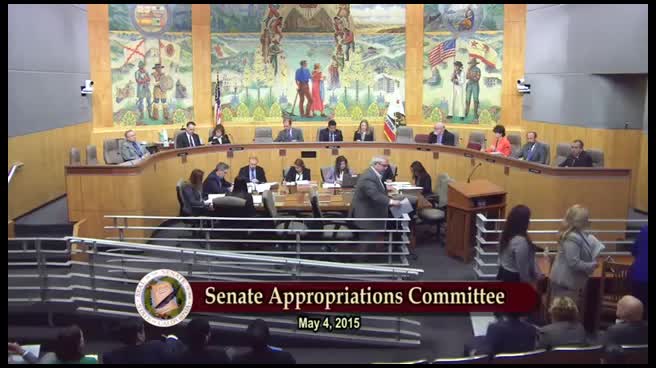
| May 4, 2015 | Placed on suspense file | Senate Standing Committee on Appropriations |
Passed |
|
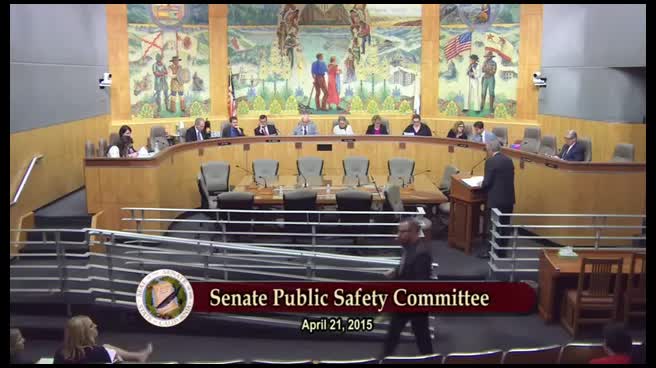
| Apr 21, 2015 | Do pass, but first be re-referred to the Committee on [Appropriations] | Senate Standing Committee on Public Safety |
Passed |
This list shows positions taken on this bill by organizations on the date displayed, which is linked to the original source.
Positions by individuals are not included.
|
Organization
|
Position
|
Date
|
|---|---|---|
| Aaron Read & Associates | * Indeterminate | Apr 22, 2015 |
| California Public Defenders Association | * Indeterminate | Apr 22, 2015 |
| Peace Officers Research Association Of California | * Indeterminate | Apr 22, 2015 |
SB 753 (Nielsen) Page 5 of 5
SENATE COMMITTEE ON APPROPRIATIONS
Senator Ricardo Lara, Chair
2015 - 2016 Regular Session
SB 753 (Nielsen) - Criminal Justice Reinvestment Assessment Grant Program of 2015
|
|
Version: February 27, 2015 |
Policy Vote: PUB. S. 7 - 0 |
Urgency: Yes |
Mandate: Yes |
Hearing Date: May 4, 2015 |
Consultant: Jolie Onodera |
This bill meets the criteria for referral to the Suspense File.
Bill Summary:
SB 753, an urgency measure, would establish a grant program, and appropriate an unspecified sum from the General Fund, to be administered by the Board of State and Community Corrections (BSCC), for the purpose of establishing and implementing data reporting systems to be used by the counties for criminal offenders who were impacted by 2011 Realignment, as specified.
Fiscal Impact:
Grant program implementation: One-time appropriation in 2015-16 from the General Fund of an unspecified amount to establish and implement the grant program. Initial costs would include funding to assist counties in creating or expanding existing infrastructure in order to consistently collect and report specified information. Potential costs to meet the actual need across counties to successfully establish and implement a system of uniform reporting are unknown but would likely be in the hundreds of millions of dollars.
Grant program ongoing: To the extent the initial appropriation to “assist” counties to create/expand infrastructure is insufficient to meet the data collection and reporting mandates in the bill, the remaining costs to enable counties to comply with the provisions of the bill would either 1) require an additional subvention of funds (General Fund) if applicable to Proposition 30 provisions, or, 2) could result in significant state-reimbursable costs (General Fund).
Data reporting: Major ongoing General Fund costs, both direct and/or state-reimbursable, potentially in excess of tens of millions of dollars (General Fund) for counties to continually collect and report the specified data. For example, costs to comply with specified data reporting points such as “assessed risk level” could be substantial.
BSCC administration: Resource costs in the range of $700,000 (General Fund) annually to BSCC to review local CCP plans, administer the grants, compile the county-level data, and submit the annual report.
Background:
The Public Policy Institute of California (PPIC) noted in its recent report, Corrections Realignment and Data Collection in California (April 2014):
Realignment legislation did not dedicate funds for an evaluation of the effects of realignment subsequent to its implementation, nor did it provide counties with specific funds for assessing the success rates of their local correctional strategies. This was a missed opportunity. Through realignment, the state effectively created 58 county-level policy laboratories. The variation across counties in correctional practices creates an ideal opportunity to identify cost-effective strategies and to disseminate these best practices across the state. Yet, without a consistent framework for data collection and evaluation, weeding out failing strategies and identifying successful ones will be a haphazard process.
Acquisition of the data necessary to identify effective practices is a goal that is within reach. However, it will require counties to make improvements in four areas: capturing data, linking data across systems, standardizing definitions, and upgrading technology to facilitate extraction of data for multiple purposes. Addressing these obstacles will require leadership and a directed use of available resources. But, if counties can make these adjustments, there will be significant benefits, including an improved ability to identify the most effective strategies and target resources toward those correctional interventions, an expanded base of evidence to support difficult policy choices, and an increased ability to share successful interventions. For the state as a whole, increasing the capacity for data-driven practices at the county level will result in a more efficient, effective, and sustainable corrections system. It will also enable the state to better track the overall results of realignment and to more easily implement incentive-based funding in the future.
This bill seeks to establish a framework and initial funding for data collection and reporting systems across all counties and enable the BSCC to compile and evaluate the statewide effects of realignment on recidivism and overall public safety.
Proposed Law:
This bill would establish the “Criminal Justice Reinvestment Assessment Grant Program of 2015,” as specified:
BSCC Duties/Responsibilities
Requires the grant program to be administered by the BSCC to award grants to assist counties with the creation or expansion of infrastructure that allows each county to consistently collect and report criminal justice information, as specified.
Requires BSCC to review each county’s assessment of existing capacity to collect/report data and each community corrections partnership's local plan identifying additional resources needed to comply with the mandated data reporting requirements.
On or before June 15, 2015, BSCC must submit a report to the Legislature detailing the estimated need, cost, and schedule for each county to consistently collect and report the data as required in the bill.
Requires BSCC to establish minimum standards, funding schedules, and procedures for awarding grants, which shall take into consideration the size of the county, and its demonstrated efforts and ability to report data prior to January 1, 2017.
Requires the BSCC to give preference to counties that have demonstrated efforts to independently collect data on a countywide basis.
Requires BSCC to specify and define minimum required data to be reported on felons “realigned” to the counties under PC §1170(h) and felons released on postrelease community supervision (PRCS), and prescribe the format in which the data is to be reported.
Requires BSCC to compile the local reports by May 15th of each year, beginning in 2016, and submit a report to the Legislature and Governor summarizing the data reported by the counties.
Appropriates an unspecified sum from the General Fund to the BSCC in 2015-16 for the purpose of implementing the grant program.
Authorizes BSCC to retain up to 5 percent of the appropriation amount for administrative costs.
Local Reporting Responsibilities
Requires each local CCP to report to BSCC by June 1, 2015, on the county’s capacity to collect and report the data required by the bill. Each report is to include a local plan that identifies the additional resources necessary for that county to consistently collect and report the required data.
On or before January 1, 2016, and annually thereafter, requires counties to report, at a minimum: 1) 38 data points for each individual sentenced as a jail felon pursuant to PC § 1170(h), and, 2) 20 data points for each individual released from state prison who is subject to local supervision (PRCS).
Other Provisions
Contains codified legislative findings and declarations generally concerning the Legislature’s commitment to reducing recidivism among criminal offenders.
Contains an urgency clause stating: “In order to ensure that relevant data pertaining to the 2011 Realignment Legislation addressing public safety are collected and reported as soon as possible to allow stakeholders to measure the effectiveness of this landmark change in public safety policy, it is necessary that this bill go into immediate effect.”
Prior Legislation:
SB 1097 (Nielsen) 2014 was substantially similar to this measure. This bill was held on the Suspense File of this Committee.
Staff Comments:
This bill requires a one-time appropriation in 2015-16 from the General Fund of an unspecified amount to establish and implement the grant program. Initial costs would include funding to assist counties in creating or expanding existing infrastructure in order to consistently collect and report specified information. While the appropriation amount is unspecified, the potential costs required to establish and implement a uniform data reporting system in which counties report data consistently would likely be in the hundreds of millions of dollars. In order to link data across systems, the costs could be significantly higher.
To the extent the initial appropriation to “assist” counties to create or expand existing infrastructure is insufficient to meet the data collection and reporting mandates in the bill, the remaining costs to enable counties to comply with the bill’s provisions would result in either: 1) an additional subvention of funds (General Fund) if the new costs to the counties would be applicable under Proposition 30 provisions, or 2) significant state-reimbursable costs (General Fund) to counties for the costs above what was granted through the initial appropriation to establish the infrastructure needed.
Once the reporting system is established and operating, the state would also incur significant ongoing annual General Fund costs, both direct and/or state-reimbursable, potentially in excess of tens of millions of dollars for the increased duties on counties to continually collect and report the specified data. The requirement to report the data point “assessed risk level” alone could incur substantial costs. The PPIC report noted the following with respect to risk and needs assessments, “Despite the importance of these data, practitioners do not always gather or draw on these assessments. Although widely used across probation departments, their use still varies across sheriff’s departments.” (PPIC, Corrections Realignment and Data Collection in California, April 2014, p. 12) Even for probation departments that currently utilize risk assessments, the cost of performing the risk assessments could potentially be determined to be state-reimbursable by virtue of the mandated reporting requirement of that assessment.
The BSCC is authorized to retain 5 percent of the total appropriation for administrative costs. The BSCC has indicated costs of $700,000 (General Fund) annually to administer the grant program.
Proposition 30 (2012) provides that legislation enacted after September 30, 2012, that has an overall effect of increasing the costs already borne by a local agency for programs or levels of service mandated by the 2011 Realignment Legislation shall apply to local agencies only to the extent that the state provides annual funding for the cost increase. Local agencies shall not be obligated to provide programs or levels of service required by legislation described in this paragraph above the level for which funding has been provided. Any costs in excess of the initial grants provided to local agencies to cover the costs of infrastructure upgrades/development and data reporting would potentially require a subvention of funds, or alternatively, could potentially be eligible for state reimbursement through the mandate process. The ongoing costs to local agencies to continue collecting and reporting data, would likewise potentially be the responsibility of the state.
To the extent the data collection and reporting efforts are successful would facilitate a more efficient and effective use of the state and local investment in realignment as well as positive outcomes through reduced recidivism and efficient use of state funds.
Recommended Amendments: This bill contains codified findings and declarations. In the interest of code clarity and efficiency, staff recommends this bill be amended to place the findings and declarations in an uncodified section of the bill.
Staff recommends specifying an appropriation amount in the bill. Staff also recommends an amendment to authorize the use of federal funds to support the efforts of establishing or enhancing the data reporting systems. As noted in the PPIC report, the federal Edward Byrne Memorial Justice Assistance Grant (JAG) program includes a funding category for “Planning, evaluation, and technological improvements,” that could potentially be pursued.
Staff notes that the due dates specified in the bill are ambitious and likely cannot be met. The bill requires each local CCP to report to the BSCC before June 1, 2015, with an assessment of its needs, and requires the BSCC to submit to the Legislature by June 15, 2015 (two weeks), a report on the estimated need, cost, and schedule for each county in order to meet the collection and reporting requirements of this bill. Additionally, each county is required to collect and report all the data commencing on or before January 1, 2016, which would be less than six months after the initial report to the Legislature. For a county that requires extensive infrastructure changes or development, this timeline will likely not be met. The author may wish to consider revising the dates specified in the bill to address this issue.
-- END --
SB 753 (Nielsen ) Page 12 of 12
SENATE COMMITTEE ON PUBLIC SAFETY
Senator Loni Hancock, Chair
2015 - 2016 Regular
Bill No: SB 753 Hearing Date: April 21, 2015
Author: |
Nielsen |
||
Version: |
February 27, 2015 |
||
Urgency: |
Yes |
Fiscal: |
Yes |
Consultant: |
AA |
||
Subject: Criminal Justice Reinvestment Assessment Grant Program of 2015
HISTORY
Source: Author
Prior Legislation: SB 1097 (Nielsen) – 2014, died in Senate Appropriations
Support: Unknown
Opposition: None Known
PURPOSE
The purpose of this bill is to establish funding and a framework, established through the Board of State and Community Corrections, for collecting and compiling data concerning criminal offenders who were “realigned” pursuant to AB 109 in 2011, as specified.
Under current law, "crimes and public offenses" include felonies, misdemeanors, and infractions. (Penal Code § 16). Under current law, a felony is a crime punishable by death, by imprisonment in state prison, or by imprisonment in county jail, as specified. (See Penal Code §§ 190 et seq.; 1170); every other crime or public offense is a misdemeanor "except those offenses that are classified as infractions." (Penal Code § 17(a).)
Current law provides that the Attorney General is the head of the Department of Justice (“DOJ”). (Government Code § 12510.)
Current law requires DOJ “present to the Governor, on or before July 1st, an annual report containing the criminal statistics of the preceding calendar year and to present at other times as the Attorney General may approve reports on special aspects of criminal statistics. A sufficient number of copies of all reports shall be prepared to enable the Attorney General to send a copy to all public officials in the state dealing with criminals and to distribute them generally in channels where they will add to the public enlightenment.” (Penal Code § 13010(g).)
Current law requires this report to contain statistics showing all of the following:
The amount and the types of offenses known to the public authorities;
The personal and social characteristics of criminals and delinquents;
The administrative actions taken by law enforcement, judicial, penal, and correctional agencies or institutions, including those in the juvenile justice system, in dealing with criminals or delinquents;
The administrative actions taken by law enforcement, prosecutorial, judicial, penal, and correctional agencies, including those in the juvenile justice system, in dealing with minors who are the subject of a petition or hearing in the juvenile court to transfer their case to the jurisdiction of an adult criminal court or whose cases are directly filed or otherwise initiated in an adult criminal court; and
The number of citizens’ complaints received by law enforcement agencies under Section 832.5. These statistics shall indicate the total number of these complaints, the number alleging criminal conduct of either a felony or misdemeanor, and the number sustained in each category. The report shall not contain a reference to any individual agency but shall be by gross numbers only.
It shall be the duty of the DOJ to give adequate interpretation of the statistics and so to present the information that it may be of value in guiding the policies of the Legislature and of those in charge of the apprehension, prosecution, and treatment of the criminals and delinquents, or concerned with the prevention of crime and delinquency. The report shall also include statistics which are comparable with national uniform criminal statistics published by federal bureaus or departments heretofore mentioned. (Penal Code § 13012.)
Current law establishes the “Board of State and Community Corrections” (“BSCC”), with the following mission:
The mission of the board shall include providing statewide leadership, coordination, and technical assistance to promote effective state and local efforts and partnerships in California's adult and juvenile criminal justice system, including addressing gang problems. This mission shall reflect the principle of aligning fiscal policy and correctional practices, including, but not limited to prevention, intervention, suppression, supervision, and incapacitation, to promote a justice investment strategy that fits each county and is consistent with the integrated statewide goal of improved public safety through cost-effective, promising, and evidence-based strategies for managing criminal justice populations. (Penal Code § 6024(b).)
Current law enumerates the duties of the BSCC, including the following with respect to data collection and analysis:
“Collect and maintain available information and data about state and community correctional policies, practices, capacities, and needs, including, but not limited to, prevention, intervention, suppression, supervision, and incapacitation, as they relate to both adult corrections, juvenile justice, and gang problems. “The board shall seek to collect and make publicly available up-to-date data and information reflecting the impact of state and community correctional, juvenile justice, and gang-related policies and practices enacted in the state, as well as information and data concerning promising and evidence-based practices from other jurisdictions;”
Develop recommendations for the improvement of criminal justice and delinquency and gang prevention activity throughout the state;
Identify, promote, and provide technical assistance relating to evidence-based programs, practices, and promising and innovative projects consistent with the mission of the board;
Develop definitions of key terms, including, but not limited to, “recidivism,” “average daily population,” “treatment program completion rates,” and any other terms deemed relevant in order to facilitate consistency in local data collection, evaluation, and implementation of evidence-based practices, promising evidence-based practices, and evidence-based programs, as specified;
Cooperate with and render technical assistance to the Legislature, state agencies, units of general local government, combinations of those units, or other public or private agencies, organizations, or institutions in matters relating to criminal justice and delinquency prevention;
Conduct evaluation studies of the programs and activities assisted by the federal acts;
Identify and evaluate state, local, and federal gang and youth violence suppression, intervention, and prevention programs and strategies, along with funding for those efforts, as specified;
Collect county realignment plans, as specified, and analyze and report on “available data regarding the implementation of the local plans and other outcome-based measures,” as specified; and,
Support the development and implementation of first phase baseline and ongoing data collection instruments to reflect the local impact of realignment, specifically related to dispositions for felony offenders and postrelease community supervision, including making any data collected in this regard available on the BSCC Web site, as specified. (Penal Code § 6027(a) and (b).)
Current law additionally authorizes the BSCC to:
Collect, evaluate, publish, and disseminate statistics and other information on the condition and progress of criminal justice in the state; and
Perform other functions and duties as required by federal acts, rules, regulations, or guidelines in acting as the administrative office of the state planning agency for distribution of federal grants. (Penal Code § 6027(c).)
This bill would establish the “Criminal Justice Reinvestment Assessment Grant Program of 2015” (“Program”), with specified purposes, requirements and features described below.
Administration and Purpose
This bill would require that the program be administered by BSCC.
This bill would provide that the purpose of the program is to establish and implement “reporting systems to identify and expand programs that provide proven, evidence-based, local programming opportunities for the successful reintegration of offenders into society.”
This bill would require BSCC to “award grants to assist counties with the creation or expansion of infrastructure that allows each county to consistently collect and report criminal justice information” enumerated by this bill.
Local Information Collection and Reporting Requirements
This bill would require that, on or before June 1, 2015, each local community corrections partnership1 shall report to BSCC on the county’s capacity to collect and report the data required by this bill, as enumerated below.
This bill would require that this report “include a local plan that identifies the additional resources necessary for that county to consistently collect and report criminal justice information” required by this bill.
BSCC Review and Granting Authority
This bill would require BSCC to review each county’s capacity assessment, and “prioritize and award grants” pursuant to the standards described below.
This bill would require BSCC to “establish minimum standards, funding schedules, and procedures for awarding grants, which shall take into consideration, but not be limited to, all of the following:
(a) Size of the county.
(b) Demonstrated efforts to report data prior to January 1, 2017.
(c) Demonstrated ability to report data prior to January 1, 2017.”
This bill would require BSCC to “give preference to counties that have demonstrated efforts to independently collect data on a countywide basis.”
This bill would require that funding “shall be used to supplement, rather than supplant, existing programs. Grant funds shall be used for programs that are identified in the local plan . . . .”
BSCC Reporting
This bill would require BSCC to “submit to the Legislature on or before June 15, 2016, a report detailing the estimated need, cost, and schedule for each county to consistently collect and report criminal justice information as required by (this bill) . . . . ”
This bill would require BSCC to compile the local reports of the data specified below concerning persons convicted of jail felonies and, by May 15, 2016, and by May 15 of each year thereafter, make a report to the Governor and the Legislature that summarizes the data reported by the counties.
This bill would require BSCC to compile the local reports of the data specified below concerning persons released from prison and subject to Post release Community Supervision and, by May 15, 2016, and by May 15 of each year thereafter, make a report to the Governor and the Legislature that summarizes the data reported by the counties pursuant to subdivision (a).
Data To Be Reported
This bill would require that on or before January 1, 2016, and annually each year thereafter, each county shall report specified data to BSCC in a format prescribed by BSCC.
This bill would require BSCC to “specify and define minimum required reporting which shall include, but not be limited to, the following for each individual sentenced” as a jail felon (specifically, sentenced pursuant to Penal Code section 1170(h)):
(1) Individual identifiers;
(2) County identifiers;
(3) Date of birth;
(4) Gender;
(5) Race or ethnicity;
(6) Age at first arrest;
(7) Conviction offense;
(8) Sanction or sentence received;
(9) Total jail time served;
(10) Release status;
(11) Violations of probation;
(12) Rearrests;
(13) Reconvictions;
(14) Any other return to custody;
(15) Use of flash incarceration;
(16) Assessed risk level;
(17) Participation in pretrial programs;
(18) Participation in specialty court;
(19) Participation in day reporting release programs;
(20) Participation in electronic monitoring programs;
(21) Participation in community service release programs;
(22) Participation in work release programs;
(23) Participation in intensive probation supervision;
(24) Needs assessment;
(25) Any reentry programming provided;
(26) Participation in cognitive behavioral therapy and whether the individual has completed or failed to complete the therapy’s requirements;
(27) Participation in mental health treatment and whether the individual has completed or failed to complete the treatment’s requirements;
(28) Participation in substance abuse treatment and whether the individual has completed or failed to complete the treatment’s requirements;
(29) Participation in gender-specific programming;
(30) Participation in family programming;
(31) Any health care assistance provided;
(32) Any housing assistance provided;
(33) Any income support provided;
(34) Any employment assistance provided;
(35) Any vocational training assistance provided;
(36) Any educational enrollment assistance provided;
(37) Any mentoring programming provided; and,
(38) Any peer support programming provided.
This bill would require that, on or before January 1, 2016, and annually each year thereafter, each county shall provide specified data to BSCC in a format prescribed by BSCC. This bill would require BSCC to specify and define minimum required reporting which shall include, but not be limited to, the following for each individual released from prison who is subject to local supervision (specifically, “Postrelease Community Supervision,” pursuant to Penal Code Section 3451):
(1) Violations of postrelease community supervision;
(2) Rearrests;
(3) Reconvictions;
(4) Any other return to custody;
(5) Use of flash incarceration;
(6) Participation in intensive probation supervision;
(7) Any reentry programming provided;
(8) Participation in cognitive behavioral therapy and whether the individual has completed or failed to complete the therapy’s requirements;
(9) Participation in mental health treatment and whether the individual has completed or failed to complete the treatment’s requirements;
(10) Participation in substance abuse treatment and whether the individual has completed or failed to complete the treatment’s requirements;
(11) Participation in gender-specific programming;
(12) Participation in family programming;
(13) Any health care assistance provided;
(14) Any housing assistance provided;
(15) Any income support provided;
(16) Any employment assistance provided;
(17) Any vocational training assistance provided;
(18) Any educational enrollment assistance provided;
(19) Any mentoring programming provided; and,
(20) Any peer support programming provided.
Appropriation, Local Mandate and Local Planning Grants
This bill contains an unspecified General Fund appropriation to BSCC for the 2015-16 fiscal year for the purposes of implementing its provisions.
This bill would authorize BSCC to award up to the amount of the appropriation, less BSCC’s “administrative costs, not to exceed 5 percent of the total grant funding awarded statewide, as individual grants not exceeding ____to counties to assist in establishing data reporting systems that will allow a county to consistently collect and report criminal justice information as required by (this bill) . . .”
Legislative Findings and Declarations
This bill contains legislative findings and declarations generally concerning the Legislature’s commitment to reducing recidivism among criminal offenders and the 2011 criminal justice realignment (AB 109), as specified.
This bill is an urgency bill, citing the following “facts constituting the necessity”:
In order to ensure that relevant data pertaining to the 2011 Realignment Legislation addressing public safety are collected and reported as soon as possible to allow stakeholders to measure the effectiveness of this landmark change in public safety policy, it is necessary that this bill go into immediate effect.
RECEIVERSHIP/OVERCROWDING CRISIS AGGRAVATION
For the past eight years, this Committee has scrutinized legislation referred to its jurisdiction for any potential impact on prison overcrowding. Mindful of the United States Supreme Court ruling and federal court orders relating to the state’s ability to provide a constitutional level of health care to its inmate population and the related issue of prison overcrowding, this Committee has applied its “ROCA” policy as a content-neutral, provisional measure necessary to ensure that the Legislature does not erode progress in reducing prison overcrowding.
On February 10, 2014, the federal court ordered California to reduce its in-state adult institution population to 137.5% of design capacity by February 28, 2016, as follows:
143% of design bed capacity by June 30, 2014;
141.5% of design bed capacity by February 28, 2015; and,
137.5% of design bed capacity by February 28, 2016.
In February of this year the administration reported that as “of February 11, 2015, 112,993 inmates were housed in the State’s 34 adult institutions, which amounts to 136.6% of design bed capacity, and 8,828 inmates were housed in out-of-state facilities. This current population is now below the court-ordered reduction to 137.5% of design bed capacity.”( Defendants’ February 2015 Status Report In Response To February 10, 2014 Order, 2:90-cv-00520 KJM DAD PC, 3-Judge Court, Coleman v. Brown, Plata v. Brown (fn. omitted).
While significant gains have been made in reducing the prison population, the state now must stabilize these advances and demonstrate to the federal court that California has in place the “durable solution” to prison overcrowding “consistently demanded” by the court. (Opinion Re: Order Granting in Part and Denying in Part Defendants’ Request For Extension of December 31, 2013 Deadline, NO. 2:90-cv-0520 LKK DAD (PC), 3-Judge Court, Coleman v. Brown, Plata v. Brown (2-10-14). The Committee’s consideration of bills that may impact the prison population therefore will be informed by the following questions:
Whether a proposal erodes a measure which has contributed to reducing the prison population;
Whether a proposal addresses a major area of public safety or criminal activity for which there is no other reasonable, appropriate remedy;
Whether a proposal addresses a crime which is directly dangerous to the physical safety of others for which there is no other reasonably appropriate sanction;
Whether a proposal corrects a constitutional problem or legislative drafting error; and
Whether a proposal proposes penalties which are proportionate, and cannot be achieved through any other reasonably appropriate remedy.
COMMENTS
Stated Need for This Bill
The author states:
This bill would enact the Criminal Justice Reinvestment Assessment Grant Program of 2015, which would enable counties to collect various pieces of data, as specified, in order to track the progress and impacts of the Criminal Justice Realignment Act of 2011 (AB 109) at the local level. These data would be available to the public and be useful to non-profit, non-partisan organizations for asking complex policy questions in order to empirically analyze the intended progress of Realignment in California.
The Bureau of State Audits (BSA) identified AB 109 as a high-risk issue in California given the pressures it places on local jail populations with virtually no way to empirically evaluate the effectiveness of realignment programs. “The State does not currently have access to reliable and meaningful realignment data to ensure its ability to effectively monitor progress toward achieving intended realignment goals”. (BSA 2013-601 report).
Similarly, the Public Policy Institute of California (PPIC) has pointed to the failure to establish a clear framework by which to evaluate realignment: “Because AB 109 establishes no incentives, resources, or standards for counties to measure outcomes, it will be difficult to assess what California’s most significant justice reform in decades has achieved” (PPIC Jan 2014 “California’s Future: Corrections” report). Without uniform reporting of a wide set of crime data across California, neither policymakers nor the public are able to accurately analyze and track the development of Realignment policies
AB 109 was passed in 2011 as part of the Budget Act with the intention of cutting costs and creating budgetary savings by largely realigning much the responsibilities for state inmates to the local county level. Counties and local governments are faced with various challenges in complying with AB 109 while also staying committed to both public safety and the rehabilitative goals for offenders.
Currently, there exists no uniform, statewide set of metrics being collected by all 58 counties in order to track and assess the progress being made with regards to Realignment in California. While counties do report limited criminal data to the Department of Justice, SB 1097 would call for various other important data elements critical to the assessment of Realignment at the local level.
SB 753 seeks to provide for the collection and reporting of a broad spectrum of offender and program data, as specified, which will help ensure best practices are developed at the local level to promote public safety, reduce recidivism, and address offenders’ rehabilitative needs.
Furthermore, the data collected by SB 753 will determine if available rehabilitative programs are being utilized to their full effectiveness by determining participant’s program completion or non-completion statistics.
What This Bill Would Do
As explained in detail above, this bill would enact a framework, established through the BSCC, for collecting information concerning criminal offenders who were “realigned” pursuant to AB 109 in 2011 – specifically, persons who have been convicted of jail felonies and persons who have been released from prison and are subject to local supervision (probation), not parole. The bill enumerates specific data to be included. With respect to jail felons, the data generally pertains to information about the offender, the conviction offense, the sentence, what happened to the person after sentencing, such as jail time, programming and violation behavior. For persons coming out of prison on postrelease community supervision (probation, not parole, supervision), the data generally concerns arrests, violation behavior, sanctions for violations, and programming.
The bill proposes state grants, from a total General Fund amount not specified in the bill, “to assist counties with the creation or expansion of infrastructure that allows each county to consistently collect and report criminal justice information” required by this bill. In addition, this bill would require counties to report to BSCC the data described above. The bill also requires the BSCC to compile local data and make annual reports.
Focus of this Bill: The 2011 Criminal Justice Realignment
This bill pertains to data about two specific subgroups of felony offenders – subclasses created by the “2011 Realignment Legislation Addressing Public Safety” (AB 109)2. These two subgroups are: 1) felony offenders who, because of their conviction offense and criminal history, are subject to serving their terms in jail instead of prison (“jail” felonies); and 2) felony offenders who, because of their conviction offense and other factors, are subject to local supervision instead of state supervision (essentially, probation instead of parole) upon release from prison (“postrelease community supervision”).
As noted by the Legislative Analyst’s Office last year:
When including all types of criminal cases—felony, misdemeanor, traffic infractions, and juvenile delinquency—there were over 8 million filings in California trial courts in 2009-10. Only a few hundred thousand of these are for felony cases each year. Of adult felony cases brought by the district attorney, 80 percent result in a guilty verdict, and most of these offenders are sentenced to a combination of jail and probation.3
During this same period, 58,700 felons were admitted to prison.4 While the data supporting this snapshot predates realignment, it illustrates a felony population broader than what this bill would reach. There are other felons who are handled locally, such as felons who are put on felony probation, and those subject to parole supervision but affected locally by court parole violation and detention decisions, who are not included in this bill. Members and the author may wish to discuss whether felony offenders and what happens to them should be tracked and analyzed more fully, not just the subsets of felony offenders created by realignment.
Data Collection
The BSCC currently has responsibilities relating to data collection. As explained in the BSCC’s 4th Quarterly Report from 2013:
The BSCC has the broad responsibility to collect and maintain available information and data about state and community correctional policies, practices, capacities, and needs, including but not limited to prevention, intervention, suppression, supervision, and incapacitation as they relate to both adult corrections, juvenile justice, and gang problems. The BSCC is also required to collect data and complete reports related to public safety realignment, including the development of first phase baseline and ongoing data collection instruments and an annual report on the implementation of local community corrections plans.
HOW DOES THIS BILL COMPARE TO THE CURRENT DATA-RELATED ACTIVITIES AND FUTURE PLANS OF THE BSCC?
-- END –
1 Specifically, established pursuant to Penal Code Section 1230.
2 AB 109 (Committee on Budget) (Ch. 15, Stats. 2011) is the principal measure establishing the 2011 public safety realignment. Subsequent measures have revised AB 109 and enacted additional provisions relating to certain aspects of realignment.
3 California’s Criminal Justice System: A Primer (Jan. 2013) Legislative Analyst’s Office.
4 Id.
Discussed in Hearing
 4MIN
Senate Standing Committee on Appropriations
 4MIN
Senate Standing Committee on Public Safety
Bill Author

Bill Co-Author(s):