SB 821: Crimes: criminal threats.
- Session Year: 2015-2016
- House: Senate
- Latest Version Date: 2016-04-14
Existing law requires that a person who willfully threatens to commit a crime that will result in death or great bodily injury to another person, with the specific intent that the statement, made verbally, in writing, or by means of an electronic communication device, is to be taken as a threat, even if there is no intent of actually carrying it out, which, on its face and under the circumstances in which it is made, is so unequivocal, unconditional, immediate, and specific as to convey to the person threatened, a gravity of purpose and an immediate prospect of execution of the threat, and thereby causes that person reasonably to be in sustained fear for his or her own safety or for his or her immediate familys safety, be punished by imprisonment in a county jail not to exceed one year, or by imprisonment in the state prison.
This bill would instead require that any person who willfully threatens to commit a crime against another person or at a location or event that will result in death or great bodily injury to another person, with the specific intent that the statement, made verbally, in writing, or by means of an electronic communication device, is to be taken as a threat, even if there is no intent of actually carrying it out, be punished by imprisonment in a county jail not to exceed one year, or by imprisonment in the state prison. The bill would provide that a person threatens to commit a crime against another person if, on its face and under the circumstances in which a threat is made, the threat is so unequivocal, unconditional, immediate, and specific as to convey to the person threatened, a gravity of purpose and an immediate prospect of execution of the threat, and thereby causes that person reasonably to be in sustained fear for his or her own safety or for his or her immediate familys safety. The bill would also provide that a person threatens to commit a crime at a location or event, whether a public or private location event, if, on its face and under the circumstances in which a threat is made, the threat is so unequivocal, unconditional, immediate, and specific as to convey to a reasonable person perceiving the threat a gravity of purpose and an immediate prospect of execution of the threat, and thereby causes such that the evacuation, lockdown, or closure of a campus, location, or the cancellation, evacuation, lockdown, or closure of an event. event appears to be reasonably necessary for the protection of the public. By expanding the scope of a crime, the bill would impose a state-mandated local program.
The California Constitution requires the state to reimburse local agencies and school districts for certain costs mandated by the state. Statutory provisions establish procedures for making that reimbursement.
This bill would provide that no reimbursement is required by this act for a specified reason.
Existing law requires that a person who willfully threatens to commit a crime which that will result in death or great bodily injury to another person, with the specific intent that the statement, made verbally, in writing, or by means of an electronic communication device, is to be taken as a threat, even if there is no intent of actually carrying it out, which, on its face and under the circumstances in which it is made, is so unequivocal, unconditional, immediate, and specific as to convey to the person threatened, a gravity of purpose and an immediate prospect of execution of the threat, and thereby causes that person reasonably to be in sustained fear for his or her own safety or for his or her immediate familys safety, be punished by imprisonment in the a county jail not to exceed one year, or by imprisonment in the state prison.
This bill would instead require that any person who willfully threatens to commit a crime against another person or at a location or event which that will result in death or great bodily injury to another person, with the specific intent that the statement, made verbally, in writing, or by means of an electronic communication device, is to be taken as a threat, even if there is no intent of actually carrying it out, be punished by imprisonment in the a county jail not to exceed one year, or by imprisonment in the state prison. The bill would provide that a person threatens to commit a crime against another person if, on its face and under the circumstances in which a threat is made, the threat is so unequivocal, unconditional, immediate, and specific as to convey to the person threatened, a gravity of purpose and an immediate prospect of execution of the threat, and thereby causes that person reasonably to be in sustained fear for his or her own safety or for his or her immediate familys safety. The bill would also provide that a person threatens to commit a crime at a location or event, whether a public or private location event, if the threat is made under circumstances where the person making the threat knew or should have known that the threat would elicit precautionary measures. if, on its face and under the circumstances in which a threat is made, the threat is so unequivocal, unconditional, immediate, and specific as to convey to a person perceiving the threat a gravity of purpose and an immediate prospect of execution of the threat, and thereby causes the evacuation, lockdown, or closure of a campus, or the cancellation, evacuation, lockdown, or closure of an event. By expanding the scope of a crime, the bill would impose a state-mandated local program.
The California Constitution requires the state to reimburse local agencies and school districts for certain costs mandated by the state. Statutory provisions establish procedures for making that reimbursement.
This bill would provide that no reimbursement is required by this act for a specified reason.
Existing law requires that a person who willfully threatens to commit a crime which will result in death or great bodily injury to another person, with the specific intent that the statement, made verbally, in writing, or by means of an electronic communication device, is to be taken as a threat, even if there is no intent of actually carrying it out, which, on its face and under the circumstances in which it is made, is so unequivocal, unconditional, immediate, and specific as to convey to the person threatened, a gravity of purpose and an immediate prospect of execution of the threat, and thereby causes that person reasonably to be in sustained fear for his or her own safety or for his or her immediate familys safety, be punished by imprisonment in the county jail not to exceed one year, or by imprisonment in the state prison.
This bill would instead require that any person who willfully threatens to commit a crime against another person or at a location or event which will result in death or great bodily injury to another person, with the specific intent that the statement, made verbally, in writing, or by means of an electronic communication device, is to be taken as a threat, even if there is no intent of actually carrying it out, be punished by imprisonment in the county jail not to exceed one year, or by imprisonment in the state prison. The bill would provide that a person threatens another person if, on its face and under the circumstances in which a threat is made, the threat is so unequivocal, unconditional, immediate, and specific as to convey to the person threatened, a gravity of purpose and an immediate prospect of execution of the threat, and thereby causes that person reasonably to be in sustained fear for his or her own safety or for his or her immediate familys safety. The bill would also provide that a person threatens to commit a crime at a location or event, whether a public or private location event, if the threat is made under circumstances where the person making the threat knew or should have known that the threat would elicit precautionary measures. By expanding the scope of a crime, the bill would impose a state-mandated local program.
The California Constitution requires the state to reimburse local agencies and school districts for certain costs mandated by the state. Statutory provisions establish procedures for making that reimbursement.
This bill would provide that no reimbursement is required by this act for a specified reason.
(a)(1)Any person who willfully threatens to commit a crime against another person or at a location or event that will result in death or great bodily injury to another person, with the specific intent that the statement, made verbally, in writing, or by means of an electronic communication device, is to be taken as a threat, even if there is no intent of actually carrying it out, shall be punished by imprisonment in a county jail not to exceed one year, or by imprisonment in the state prison.
(2)For purposes of this section, a person threatens to commit a crime against another person if, on its face and under the circumstances in which a threat is made, the threat is so unequivocal, unconditional, immediate, and specific as to convey to the person threatened, a gravity of purpose and an immediate prospect of execution of the threat, and thereby causes that person reasonably to be in sustained fear for his or her own safety or for his or her immediate familys safety.
(3)For purposes of this section, a person threatens to commit a crime at a location or event, whether a public or private location or event, if, on its face and under the circumstances in which a threat is made, the threat is so unequivocal, unconditional, immediate, and specific as to convey to a reasonable person perceiving the threat a gravity of purpose and an immediate prospect of execution of the threat, and thereby causes such that the evacuation, lockdown, or closure of a campus, location, or the cancellation, evacuation, lockdown, or closure of an event. event appears to be reasonably necessary for the protection of the public.
(b)For purposes of this section, immediate family means any spouse, whether by marriage or not, parent, child, any person related by consanguinity or affinity within the second degree, or any other person who regularly resides in the household, or who, within the prior six months, regularly resided in the household.
(c)Electronic communication device includes, but is not limited to, telephones, cellular telephones, computers, video recorders, fax machines, or pagers. Electronic communication has the same meaning as the term defined in Subsection 12 of Section 2510 of Title 18 of the United States Code.
SEC. 2.No reimbursement is required by this act pursuant to Section 6 of Article XIIIB of the California Constitution because the only costs that may be incurred by a local agency or school district will be incurred because this act creates a new crime or infraction, eliminates a crime or infraction, or changes the penalty for a crime or infraction, within the meaning of Section 17556 of the Government Code, or changes the definition of a crime within the meaning of Section 6 of Article XIIIB of the California Constitution.
(a)(1)Any person who willfully threatens to commit a crime against another person or at a location or event which that will result in death or great bodily injury to another person, with the specific intent that the statement, made verbally, in writing, or by means of an electronic communication device, is to be taken as a threat, even if there is no intent of actually carrying it out, shall be punished by imprisonment in the a county jail not to exceed one year, or by imprisonment in the state prison.
(2)For purposes of this section, a person threatens to commit a crime against another person if, on its face and under the circumstances in which a threat is made, the threat is so unequivocal, unconditional, immediate, and specific as to convey to the person threatened, a gravity of purpose and an immediate prospect of execution of the threat, and thereby causes that person reasonably to be in sustained fear for his or her own safety or for his or her immediate familys safety.
(3)For purposes of this section, a person threatens to commit a crime at a location or event, whether a public or private location or event, if the threat is made under circumstances where the person making the threat knew or should have known that the threat would elicit precautionary measures. if, on its face and under the circumstances in which a threat is made, the threat is so unequivocal, unconditional, immediate, and specific as to convey to a person perceiving the threat a gravity of purpose and an immediate prospect of execution of the threat, and thereby causes the evacuation, lockdown, or closure of a campus, or the cancellation, evacuation, lockdown, or closure of an event.
(b)For purposes of this section, immediate family means any spouse, whether by marriage or not, parent, child, any person related by consanguinity or affinity within the second degree, or any other person who regularly resides in the household, or who, within the prior six months, regularly resided in the household.
(c)Electronic communication device includes, but is not limited to, telephones, cellular telephones, computers, video recorders, fax machines, or pagers. Electronic communication has the same meaning as the term defined in Subsection 12 of Section 2510 of Title 18 of the United States Code.
SEC. 2.No reimbursement is required by this act pursuant to Section 6 of Article XIIIB of the California Constitution because the only costs that may be incurred by a local agency or school district will be incurred because this act creates a new crime or infraction, eliminates a crime or infraction, or changes the penalty for a crime or infraction, within the meaning of Section 17556 of the Government Code, or changes the definition of a crime within the meaning of Section 6 of Article XIIIB of the California Constitution.
(a)(1)Any person who willfully threatens to commit a crime against another person or at a location or event which will result in death or great bodily injury to another person, with the specific intent that the statement, made verbally, in writing, or by means of an electronic communication device, is to be taken as a threat, even if there is no intent of actually carrying it out, which, on its face and under the circumstances in which it is made, is so unequivocal, unconditional, immediate, and specific as to convey to the person threatened, a gravity of purpose and an immediate prospect of execution of the threat, and thereby causes that person reasonably to be in sustained fear for his or her own safety or for his or her immediate familys safety, shall be punished by imprisonment in the county jail not to exceed one year, or by imprisonment in the state prison.
(2)For purposes of this section, a person threatens another person if, on its face and under the circumstances in which a threat is made, the threat is so unequivocal, unconditional, immediate, and specific as to convey to the person threatened, a gravity of purpose and an immediate prospect of execution of the threat, and thereby causes that person reasonably to be in sustained fear for his or her own safety or for his or her immediate familys safety.
(3)For purposes of this section, a person threatens to commit a crime at a location or event, whether a public or private location or event, if the threat is made under circumstances where the person making the threat knew or should have known that the threat would elicit precautionary measures.
(b)For purposes of this section, immediate family means any spouse, whether by marriage or not, parent, child, any person related by consanguinity or affinity within the second degree, or any other person who regularly resides in the household, or who, within the prior six months, regularly resided in the household.
(c)Electronic communication device includes, but is not limited to, telephones, cellular telephones, computers, video recorders, fax machines, or pagers. Electronic communication has the same meaning as the term defined in Subsection 12 of Section 2510 of Title 18 of the United States Code.
SEC. 2.No reimbursement is required by this act pursuant to Section 6 of Article XIIIB of the California Constitution because the only costs that may be incurred by a local agency or school district will be incurred because this act creates a new crime or infraction, eliminates a crime or infraction, or changes the penalty for a crime or infraction, within the meaning of Section 17556 of the Government Code, or changes the definition of a crime within the meaning of Section 6 of Article XIIIB of the California Constitution.
|
Date
|
Status
|
|---|---|
| Jan 5, 2016 | Introduced. Read first time. To Com. on RLS. for assignment. To print. |
| Jan 6, 2016 | From printer. May be acted upon on or after February 5. |
| Jan 28, 2016 | Referred to Com. on PUB. S. |
| Mar 8, 2016 | From committee with author's amendments. Read second time and amended. Re-referred to Com. on PUB. S. |
| Mar 15, 2016 | Set for hearing April 5. |
| Apr 13, 2016 | From committee: Do pass as amended and re-refer to Com. on APPR. (Ayes 7. Noes 0. Page 3394.) (April 5). |
| Apr 13, 2016 | From committee: Do pass as amended and re-refer to Com. on APPR. (Ayes 7. Noes 0.) (April 5). |
| Apr 14, 2016 | Read second time and amended. Re-referred to Com. on APPR. |
| Apr 22, 2016 | Set for hearing May 2. |
| May 2, 2016 | May 2 hearing: Placed on APPR. suspense file. |
| May 20, 2016 | Set for hearing May 27. |
| May 27, 2016 | May 27 hearing: Held in committee and under submission. |
|
Date
|
Description
|
Location
|
Votes
|
|
|---|---|---|---|---|
| May 2, 2016 | Placed on suspense file | Senate Standing Committee on Appropriations |
Passed |
|
| Apr 5, 2016 | Do pass as amended, but first amend, and re-refer to the Committee on [Appropriations] | Senate Standing Committee on Public Safety |
Passed |
This list shows positions taken on this bill by organizations on the date displayed, which is linked to the original source.
Positions by individuals are not included.
|
Organization
|
Position
|
Date
|
|---|---|---|
| California Brady Campaign to Prevent Gun Violence | * Support | Apr 5, 2016 |
| California District Attorneys Association | * Support | Apr 5, 2016 |
| Law Center to Prevent Gun Violence | * Support | Apr 5, 2016 |
| Sacramento Chapter of Physicians for Social Responsibility | * Support | Apr 5, 2016 |
SENATE COMMITTEE ON APPROPRIATIONS
Senator Ricardo Lara, Chair
2015 - 2016 Regular Session
SB 821 (Block) - Crimes: criminal threats
Version: April 14, 2016 | Policy Vote: PUB. S. 7 - 0 |
Urgency: No | Mandate: Yes |
Hearing Date: May 2, 2016 | Consultant: Jolie Onodera |
This bill meets the criteria for referral to the Suspense File.
Bill Summary:
SB 821 would expand the scope of the existing criminal threat statute to include threats to commit a crime at a location or event that will result in death or great bodily injury to another person, as specified. This bill would provide that such a threat is an alternate felony-misdemeanor punishable by imprisonment in county jail for up to one year, or by imprisonment in state prison for 16 months, two years, or three years.
Fiscal Impact:
- State prisons: Potential increase in state costs (General Fund) for new commitments to state prison. For this offense, DOJ statistics indicate over 4,600 felony arrests in 2015, and CDCR admitted over 1,000 new commitments to prison. While the impact cannot be projected with certainty, for every 1 percent increase in annual commitments (10 commitments/year), state costs of $435,000 per year are estimated based on the average length of stay of 18 months for this offense.
- County jails: Potentially significant increase in non-reimbursable local costs (Local Funds) for enforcement and incarceration for additional misdemeanor convictions, offset to a degree by fine revenue. DOJ statistics indicate over 1,100 misdemeanor convictions for this offense in 2015.
- Targeted events/locations: Potentially significant cost savings to public/private entities, as well as law enforcement agencies, to the extent the provisions of this bill reduce the committal of such threats, thereby reducing the costs associated with delays, cancellations, lockdowns, evacuations, or closures.
Background:
Existing law provides that “any person who willfully threatens to commit a crime which will result in death or great bodily injury to another person, with the specific intent that the statement, … is to be taken as a threat, even if there is no intent of actually carrying it out, which … is so unequivocal, unconditional, immediate, and specific as to convey to the person threatened, a gravity of purpose and an immediate prospect of execution of the threat, and thereby causes that person reasonably to be in sustained fear for his or her own safety or for his or her immediate family’s safety,” is guilty of an alternate felony-misdemeanor, punishable by imprisonment in county jail for up to one year, a fine of up to $1,000, or both, or by imprisonment in the state prison for 16 months, two years, or three years. (Penal Code § 422.)
Existing law prohibits threats to commit a crime directed at a specific person, and the person suffers sustained fear as a result of the threat. However, an individual who communicates a threat to commit a crime at a location or event that is not targeting a specific individual may not necessarily be subject to criminal penalties under the existing criminal threat statute.
A threat to commit a crime at a school campus made through the use of social media is one such example of a threat that this bill seeks to address. A 2015 study from the National School Safety and Security Services found that threats made toward school campuses have been increasing, with the majority of the violent threats being shooting and/or bomb threats. Of the 812 threats that occurred nationally (California had the second most of any state, with 60 threats) between August-December 2014, 37 percent of threats were made electronically, with 28 percent of the electronically delivered threats conducted through social media. The study also indicated that 30 percent of the threats resulted in the evacuations of schools. Of note, at least 320 arrests were made as of the time of the study, the vast majority of which were children between the ages of 8 and 18.
Proposed Law:
This bill would provide that any person who willfully threatens to commit a crime at a location or event that will result in death or great bodily injury to another person, with the specific intent that the statement, made verbally, in writing, or by means of an electronic communication device, is to be taken as a threat, even if there is no intent of actually carrying it out, shall be punished by imprisonment in a county jail not to exceed one year, or by imprisonment in the state prison.
This bill provides that for purposes of this section, a person threatens to commit a crime at a location or event, whether a public or private location or event, if, on its face and under the circumstances in which a threat is made, the threat is so unequivocal, unconditional, immediate, and specific as to convey to a reasonable person perceiving the threat a gravity of purpose and an immediate prospect of execution of the threat, such that the evacuation, lockdown, or closure of a location, or the cancellation, evacuation, lockdown, or closure of an event appears to be reasonably necessary for the protection of the public.
Related Legislation:
SB 110 (Fuller) 2015 would have enacted a new misdemeanor for threatening unlawful violence to another person on a school campus or at a school-sponsored event, as specified. SB 110 was vetoed by the Governor.
SB 456 (Block) 2015 would have enacted a new misdemeanor prohibiting persons from threatening to discharge a firearm at a school or at a location where a school-sponsored event is or will be taking place, as specified. SB 456 was vetoed by the Governor.
Both SB 110 and SB 456 received the following veto message from the Governor:
No one could be anything but intolerant of threats to cause great bodily injury, especially on school grounds. Certainly not legislators, who voted nearly unanimously for this bill.
While I'm sympathetic and utterly committed to ensuring maximum safety for California's school children, the offensive conduct covered by this bill is already illegal.
In recent decades, California has created an unprecedented number of new and detailed criminal laws. Before we keep enacting more, I think we should pause and reflect on the fact that our bulging criminal code now contains in excess of 5,000 separate provisions, covering almost every conceivable form of human misbehavior.
Staff Comments:
By expanding the scope of the crime of willfully threatening to commit a crime that will result in death or great bodily injury to another person, the provisions of this bill could result in increased state and local costs for incarceration. The penalty for this offense as an alternate felony-misdemeanor ranges from up to one year in county jail to a state prison sentence of 16 months, two years or three years.
Statistics from the Department of Justice (DOJ) indicate over 4,600 felony arrests pursuant to PC § 422. Additionally, CDCR data indicates over 1,000 commitments to state prison in 2015 under the criminal threat statute. The impact to the state prison population cannot be estimated with certainty given the numerous factors involved in charging and sentencing, including but not limited to judicial and prosecutorial discretion, the prior criminal history of the defendant, and the elements specific to each case. However, for every one percent increase (10 commitments per year) to the number of commitments to state prison each year resulting from the provisions of this bill, state incarceration costs would increase by $435,000 (General Fund) on an annualized basis utilizing the average length of stay of 18 months for this offense.
The Three-Judge Court ordered the State to reduce its prison population to 137.5 percent of the prison system’s design capacity by February 28, 2016. Pursuant to its February 10, 2014 order, the Court has ordered the CDCR to implement several population reduction measures, prohibited an increase in the population of inmates housed in out-of-state facilities, and indicated that the Court will maintain jurisdiction over the State for as long as necessary to ensure that the State’s compliance with the 137.5 percent final benchmark is durable, and that such durability is firmly established. Any future increases to the State's prison population challenge the ability of the State to reach and maintain such a “durable solution,” and could require the State to pursue one of several options, including contracting-out for additional bed space or releasing current inmates earlier onto parole.
-- END --
SENATE COMMITTEE ON PUBLIC SAFETY
Senator Loni Hancock, Chair
2015 - 2016 Regular
Bill No: SB 821 Hearing Date: April 5, 2016
Author: | Block | ||
Version: | March 8, 2016 | ||
Urgency: | No | Fiscal: | Yes |
Consultant: | JM | ||
Subject: Crimes: Criminal Threats
HISTORY
Source: San Diego County District Attorney
Prior Legislation: SB 110 (Fuller) 2015 - Vetoed
SB 456 (Block) 2015 - Vetoed
Support: Association of California School Administrators; Association of Deputy District Attorneys; Association for Los Angeles County Deputy Sheriffs; Brady Campaign, California Chapter; California District Attorneys Association; California State Sheriffs’ Association; Los Angeles Police Protective League; Peace Officers Research Association of California; Riverside Sheriffs Association
Opposition: California Attorneys for Criminal Justice; California Public Defenders Association; Legal Services for Prisoners with Children; Pacific Juvenile Defender Center
PURPOSE
The purpose of this bill is to provide that a threat to cause death or great bodily injury at a location or event is a crime if the threat is made under circumstances where a person perceiving the threat believes it to be unequivocal, unconditional and immediate, thereby causing the evacuation, lockdown or closure of a campus or event, or the cancellation of an event.
Existing law provides that “any person who willfully threatens to commit a crime which will result in death or great bodily injury to another person, with the specific intent that the statement, … is to be taken as a threat, even if there is no intent of actually carrying it out, which … is so unequivocal, unconditional, immediate, and specific as to convey to the person threatened, a gravity of purpose and an immediate prospect of execution of the threat, and thereby causes that person reasonably to be in sustained fear for his or her own safety or for his or her immediate family’s safety,” is guilty of an alternate felony-misdemeanor, punishable by jail term of up to one year, a fine of up to $1,000, or both, or by imprisonment in the state prison for 16 months, two years or three years. (Pen. Code § 422)
This bill expands the criminal threats statute to cover circumstances where the perpetrator makes a threat to commit a crime that will result in death or great bodily injury “at a location or event.”
This bill provides that a criminal threat to cause death or great bodily at a public or private location or event must “convey to a person perceiving the threat a gravity of purpose and an immediate prospect of execution of the threat, thereby caus[ing] the evacuation, lockdown, or closure of a campus, or the cancellation, evacuation, lockdown, or closure of an event.”
RECEIVERSHIP/OVERCROWDING CRISIS AGGRAVATION
For the past several years this Committee has scrutinized legislation referred to its jurisdiction for any potential impact on prison overcrowding. Mindful of the United States Supreme Court ruling and federal court orders relating to the state’s ability to provide a constitutional level of health care to its inmate population and the related issue of prison overcrowding, this Committee has applied its “ROCA” policy as a content-neutral, provisional measure necessary to ensure that the Legislature does not erode progress in reducing prison overcrowding.
On February 10, 2014, the federal court ordered California to reduce its in-state adult institution population to 137.5% of design capacity by February 28, 2016, as follows:
- 143% of design bed capacity by June 30, 2014;
- 141.5% of design bed capacity by February 28, 2015; and,
- 137.5% of design bed capacity by February 28, 2016.
In December of 2015 the administration reported that as “of December 9, 2015, 112,510 inmates were housed in the State’s 34 adult institutions, which amounts to 136.0% of design bed capacity, and 5,264 inmates were housed in out-of-state facilities. The current population is 1,212 inmates below the final court-ordered population benchmark of 137.5% of design bed capacity, and has been under that benchmark since February 2015.” (Defendants’ December 2015 Status Report in Response to February 10, 2014 Order, 2:90-cv-00520 KJM DAD PC, 3-Judge Court, Coleman v. Brown, Plata v. Brown (fn. omitted).) One year ago, 115,826 inmates were housed in the State’s 34 adult institutions, which amounted to 140.0% of design bed capacity, and 8,864 inmates were housed in out-of-state facilities. (Defendants’ December 2014 Status Report in Response to February 10, 2014 Order, 2:90-cv-00520 KJM DAD PC, 3-Judge Court, Coleman v. Brown, Plata v. Brown (fn. omitted).)
While significant gains have been made in reducing the prison population, the state must stabilize these advances and demonstrate to the federal court that California has in place the “durable solution” to prison overcrowding “consistently demanded” by the court. (Opinion Re: Order Granting in Part and Denying in Part Defendants’ Request For Extension of December 31, 2013 Deadline, NO. 2:90-cv-0520 LKK DAD (PC), 3-Judge Court, Coleman v. Brown, Plata v. Brown (2-10-14). The Committee’s consideration of bills that may impact the prison population therefore will be informed by the following questions:
- Whether a proposal erodes a measure which has contributed to reducing the prison population;
- Whether a proposal addresses a major area of public safety or criminal activity for which there is no other reasonable, appropriate remedy;
- Whether a proposal addresses a crime which is directly dangerous to the physical safety of others for which there is no other reasonably appropriate sanction;
- Whether a proposal corrects a constitutional problem or legislative drafting error; and
- Whether a proposal proposes penalties which are proportionate, and cannot be achieved through any other reasonably appropriate remedy.
COMMENTS
1. Need for This Bill
According to the author:
Currently Penal Code Section 422 prohibits a threat to commit a crime that will result in great bodily injury, which is directed at a specific person, and the person suffers sustained fear as a result of the threat. With the increasing availability of software that grants a user’s anonymity, there have been [increasing] threats made against locations (i.e. schools and colleges) versus against specific individuals. These threats, together with an increase in actual incidents of mass shootings at events, such as at a work holiday party in San Bernardino, at movie theaters, and at schools throughout the country, instill terror in the public and require that threats directed at locations and events be taken seriously.
While some threats may not be credible, many are and have resulted in precautionary measures to ensure that the community remains safe, burdening law enforcement and the entities threatened. A recent study from the National School Safety and Security Services found that threats made toward a school campus have increased 158% between August and December of 2014; of this increase, 37% of them are being sent electronically. Approximately 30% of school threats led to the evacuation of the school, while 10% resulted in a campus closure on the day that the threat. The study found that California ranked second nationally, with 60 threats made in the first half of the 2014-2015 school year.
In March 2015, officers responded to threats at ten schools in the San Diego Unified School District, with at least four involving a threat of a shooting. There have been 12 district school shooting threats from July 2015 to January 2016. In December 2015, after members of the LA Board of Education received threats that mentioned explosive devices, assault rifles, and machine pistols, Los Angeles Unified School District closed all 900 campuses, impacting more than 640,000 students and their families. Superintendent of Public Instruction, Tom Torlakson noted the possibility that the LAUSD might not receive nearly $29 million in average daily attendance funding due to the shut-down.
A person who communicates a threat such as the one that shut-down all LAUSD schools cannot be charged under current law (Pen. Code§ 422), since the threat did not target a specific individual. SB 821 amends Section 422 to ensure that a violation is not limited to proof of a specifically targeted individual, or a demonstration of a sustained fear by any one particular person, but can include a threat to commit a crime made against a location or event which will result in death or great bodily harm of a person or persons. This change reflects the present-day nature of criminal threats. The harm caused by a threat to the public at a location or event is often greater than the harm caused by a threat to an individual.
2. The New Crime Defined by this Bill Would not Require Proof That the Threat Recipient or Perceiver Reasonably Believed the Threat
The existing criminal threats statute prohibits threats to cause great bodily injury or death made to a specific person that are so credible that person to whom the threat is made reasonably believes that the threat will be carried out, placing the victim in sustained fear. Under this bill, while the person who received or perceived the threat might find it credible, a reasonable person might find the threat to be spurious. Arguably, where a person can be subject to criminal penalties for making a threat, the decision to evacuate a school or cancel an event should be reasonable, not an over-reaction to a threat of dubious validity. Further, the persons at apparent risk could be placed in serious fear because of the conduct of the authorities who ordered the evacuation or cancellation, not the nature or credibility of the threat.
Concerns may be expressed that because authorities cannot afford to take chances with public safety, a reasonableness standard would be too restrictive. However, a history or pattern of executed threats in the area where the threat was made, or executed threats that occurred in similar circumstances, would establish that the reaction of authorities was reasonable
SHOULD THE DECISION TO EVACUATE A PLACE OR CANCEL AN EVENT IN RESPONSE TO A THREAT BE REASONABLE BEFORE THE THREAT MAKER CAN BE CHARGED WITH A CRIME?
3. The Crime Defined by this Bill Does not Require that the Persons Under Threat be Aware of the Threat
This bill neither requires that the person or persons who would be injured or killed by the threatened action receive the threat, nor even be aware of the threat. Essentially, the bill does not require that any person actually be placed in fear by the threat. In many cases, students at a school or attendees of an event will become aware of the threat when a location is evacuated or an event cancelled. In many cases, the persons who would be harmed by the threatened action would experience serious and sustained fear. However, there may be numerous cases where the persons at apparent risk would neither be aware of the threat or placed in fear.
It may be argued that a major harm caused by a threat to cause injury at a location or event is the substantial disruption, inconvenience and costs experienced by those affected by the threat. Disruptions could include closure of a school or cancellation of a large event. However, that is a different kind of harm than the sustained fear suffered by a victim of a crime under the existing threat statute.
SHOULD THIS BILL REQUIRE THAT THE PERSONS AT A LOCATION OR EVENT WHO ARE SUBJECT TO A CRIMINAL THREAT BE AWARE THE THREAT WAS MADE?
4. First Amendment Issues - Free Speech and Limits on Threatening Speech
Courts have long held that speech concerning public issues is entitled to great protection under the First Amendment. (Burson v. Freeman (1992) 504 U.S. 191.) The California Constitution also protects free speech. (Cal. Const. Art. I, § 2.) “[T]he government may not prohibit the expression of an idea simply because society finds the idea itself offensive or disagreeable.” (Texas v. Johnson (1989) 491 U.S. 397, 414.)
However, the First Amendment is not absolute. Speech or expressive conduct intended to intimidate is not protected by the First Amendment. (Virginia v. Black (2003) 538 U.S. 343.) “True threats” are a specific form of unprotected, intimidating speech. Alleged threats should be considered in light of their entire factual context, including the surrounding events and reactions of the listeners. … A threat made such that “a reasonable person would foresee that the listener will believe he will be subjected to physical violence… is unprotected by the First Amendment.” (Planned Parenthood of the Columbia/Willamette v. American Coalition of Life Activists (2002) 290 F.3rd 1058, 1077.)
5. Federal Court Decisions in Threats Cases – Unresolved Issues
The United States Supreme Court in Elonis v. United States (2015) 135 S.Ct. 2001, reversed a federal conviction in a case where the defendant placed threatening statements and misogynist rants on his Facebook page, largely in the form of rap lyrics. The targets were his ex-wife, co-workers, a kindergarten class and law enforcement officials. Although the defendant wrote some notes that the lyrics were artistic expressions, the threats were often very detailed and specific.
It was widely believed that the Court in Elonis would decide whether or not a true threat must include an intent to carry out the threat. However, the Supreme Court sidestepped the intent issue and reversed Elonis’ conviction on grounds that he could have been convicted under a negligence standard, while a criminal conviction requires a more culpable and knowing state of mind. Commentators have argued that the decision raises more issues than it settles. It appears that the Court did not specifically rule what mental state is required for a true threats conviction. Justice Alito’s opinion argued that recklessness would suffice, but no other justice agreed.
Federal District Court decisions appear to hold that federal threat statutes do not require that a threat be made directly to the threatened person. However, it is not clear what level of connection between the maker and the target of the threat would constitute a criminal threat under federal law. In one case, the defendant’s statements to his insurance adjuster that he wanted to kill a congressman “were held not to be threats because the statements were not made directly to the intended victim, with absolutely no connection between the recipient [insurance adjuster] and the intended victim.” (U.S. v. Schuelier (2015) 2015 U.S. Dist. Lexis 138768, citing and explaining U.S. v. Fenton (W.D. Pa 1998) 30 F.Supp. 2d 520, 526.) Other federal cases have focused on the explicit and certain nature of a threat – not whether it was communicated to the intended victim. A federal threat conviction will be upheld if the defendant called upon a specific person to take action against the target of the threat. (U.S. v. Wheeler (10th Cir. 2015) 776 F.3d 736, 746.) Finally, the court in Schuelier stated that the U.S. Supreme Court has not extended special First Amendment protection to threats that arise out of personal disputes, rather than matters of politics and other public interests. (See, Watts v. U.S. (1969 394 U.S. 705, 708.)
It is likely that a conviction under this bill, especially for a felony, may be challenged on due process and First Amendment grounds. The applicable decisional law is not nearly so clear as to suggest the outcome of such litigation.
-- END –
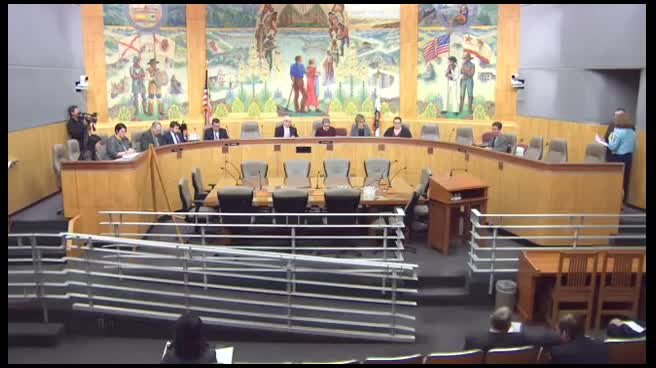
Discussed in Hearing
 11MIN
Senate Standing Committee on Public Safety
Bill Author

Bill Co-Author(s):