AB 1016: Limited liability companies: annual tax: proration.
- Session Year: 2017-2018
- House: Assembly
- Latest Version Date: 2017-05-16
Existing law imposes an annual minimum franchise tax, except as provided, on every corporation incorporated in this state, qualified to transact intrastate business in this state, or doing business in this state. Existing law imposes an annual tax in an amount equal to the minimum franchise tax on every limited liability company doing business in this state.
This bill, upon appropriation of specified funds by the Legislature, for taxable years beginning on or after January 1, 2018, and before January 1, 2023, would prorate that annual tax for a new limited liability company, as defined, depending upon the quarter in which the companys articles of organization are filed, as provided.
This bill would take effect immediately as a tax levy.
Existing law imposes an annual minimum franchise tax, except as provided, on every corporation incorporated in this state, qualified to transact intrastate business in this state, or doing business in this state. Existing law imposes an annual tax in an amount equal to the minimum franchise tax on every limited liability company doing business in this state.
This bill, for taxable years beginning on or after January 1, 2018, would prorate that annual tax for a new limited liability company, as defined, depending upon the quarter in which the companys articles of organization are filed, as provided.
This bill would take effect immediately as a tax levy.
Under existing law, a corporation may sell, lease, convey, exchange, transfer, or otherwise dispose of all or substantially all of its assets when the principal terms are approved by the corporations board of directors and, unless the transaction is in the usual and regular course of its business, approved by the outstanding shares, either before or after approval by the board and before or after the transaction.This bill would make nonsubstantive changes to these provisions.Under existing law, a corporation may sell, lease, convey, exchange, transfer, or otherwise dispose of all or substantially all of its assets when the principal terms are approved by the corporations board of directors and, unless the transaction is in the usual and regular course of its business, approved by the outstanding shares, either before or after approval by the board and before or after the transaction.
This bill would make nonsubstantive changes to these provisions.
(a)For each taxable year beginning on or after January 1, 1997, a limited liability company doing business in this state (as defined in Section 23101) shall pay annually to this state a tax for the privilege of doing business in this state in an amount equal to the applicable amount specified in paragraph (1) of subdivision (d) of Section 23153 for the taxable year.
(b)(1)In addition to any limited liability company that is doing business in this state and is therefore subject to the tax imposed by subdivision (a), for each taxable year beginning on or after January 1, 1997, a limited liability company shall pay annually the tax prescribed in subdivision (a) if articles of organization have been accepted, or a certificate of registration has been issued, by the office of the Secretary of State. The tax shall be paid for each taxable year, or part thereof, until a certificate of cancellation of registration or of articles of organization is filed on behalf of the limited liability company with the office of the Secretary of State.
(2)If a taxpayer files a return with the Franchise Tax Board that is designated as its final return, the Franchise Tax Board shall notify the taxpayer that the annual tax shall continue to be due annually until a certificate of dissolution is filed with the Secretary of State pursuant to Section 17707.08 of the Corporations Code or a certificate of cancellation is filed with the Secretary of State pursuant to Section 17708.06 of the Corporations Code.
(c)The tax assessed under this section shall be due and payable on or before the 15th day of the fourth month of the taxable year.
(d)For purposes of this section, limited liability company means an organization, other than a limited liability company that is exempt from the tax and fees imposed under this chapter pursuant to Section 23701h or 23701x, that is formed by one or more persons under the law of this state, any other country, or any other state, as a limited liability company and that is not taxable as a corporation for California tax purposes.
(e)Notwithstanding anything in this section to the contrary, if the office of the Secretary of State files a certificate of cancellation pursuant to Section 17707.02 of the Corporations Code for any limited liability company, then paragraph (1) of subdivision (f) of Section 23153 shall apply to that limited liability company as if the limited liability company were properly treated as a corporation for that limited purpose only, and paragraph (2) of subdivision (f) of Section 23153 shall not apply. Nothing in this subdivision entitles a limited liability company to receive a reimbursement for any annual taxes or fees already paid.
(f)(1)Notwithstanding any provision of this section to the contrary, a limited liability company that is a small business solely owned by a deployed member of the United States Armed Forces shall not be subject to the tax imposed under this section for any taxable year the owner is deployed and the limited liability company operates at a loss or ceases operation.
(2)The Franchise Tax Board may promulgate regulations as necessary or appropriate to carry out the purposes of this subdivision, including a definition for ceases operation.
(3)For the purposes of this subdivision, all of the following definitions apply:
(A)Deployed means being called to active duty or active service during a period when a Presidential Executive order specifies that the United States is engaged in combat or homeland defense. Deployed does not include either of the following:
(i)Temporary duty for the sole purpose of training or processing.
(ii)A permanent change of station.
(B)Operates at a loss means a limited liability companys expenses exceed its receipts.
(C)Small business means a limited liability company with total income from all sources derived from, or attributable, to the state of two hundred fifty thousand dollars ($250,000) or less.
(4)This subdivision shall become inoperative for taxable years beginning on or after January 1, 2018.
(g)(1)Notwithstanding any provision of this section to the contrary, for taxable years beginning on or after January 1, 2018, and before January 1, 2023, every new limited liability company shall pay to the state an annual tax as follows:
(A)For a new limited liability company that files its articles of organization in the first quarter of the calendar year, eight hundred dollars ($800).
(B)For a new limited liability company that files its articles of organization in the second quarter of the calendar year, six hundred dollars ($600).
(C)For a new limited liability company that files its articles of organization in the third quarter of the calendar year, four hundred dollars ($400).
(D)For a new limited liability company that files its articles of organization in the fourth quarter of the calendar year, two hundred dollars ($200).
(2)New limited liability company means a limited liability company that on or after January 1, 2018, is organized under the laws of this state or has qualified to transact intrastate business in this state that begins business operations at or after the time of its organization. organization and files a short-period return on a calendar year basis for the calendar year in which the limited liability company is organized. New limited liability company does not include any limited liability company that began business operations as, or acquired its business operations from, a sole proprietorship, a limited liability company, or any other form of business entity prior to its organization.
(3)A new limited liability company that pays a prorated annual tax pursuant to this subdivision shall notify the Franchise Tax Board, in a manner prescribed by the Franchise Tax Board, that the new limited liability company is paying a prorated annual tax pursuant to this subdivision.
(4)This subdivision shall become operative on the effective date of any budget measure specifically appropriating funds to the Franchise Tax Board for its costs of administering this subdivision.
(5)This subdivision shall become inoperative for taxable years beginning on or after January 1, 2023.
SEC. 2.This act provides for a tax levy within the meaning of Article IV of the California Constitution and shall go into immediate effect.
(a)For each taxable year beginning on or after January 1, 1997, a limited liability company doing business in this state (as defined in Section 23101) shall pay annually to this state a tax for the privilege of doing business in this state in an amount equal to the applicable amount specified in paragraph (1) of subdivision (d) of Section 23153 for the taxable year.
(b)(1)In addition to any limited liability company that is doing business in this state and is therefore subject to the tax imposed by subdivision (a), for each taxable year beginning on or after January 1, 1997, a limited liability company shall pay annually the tax prescribed in subdivision (a) if articles of organization have been accepted, or a certificate of registration has been issued, by the office of the Secretary of State. The tax shall be paid for each taxable year, or part thereof, until a certificate of cancellation of registration or of articles of organization is filed on behalf of the limited liability company with the office of the Secretary of State.
(2)If a taxpayer files a return with the Franchise Tax Board that is designated as its final return, the Franchise Tax Board shall notify the taxpayer that the annual tax shall continue to be due annually until a certificate of dissolution is filed with the Secretary of State pursuant to Section 17707.08 of the Corporations Code or a certificate of cancellation is filed with the Secretary of State pursuant to Section 17708.06 of the Corporations Code.
(c)The tax assessed under this section shall be due and payable on or before the 15th day of the fourth month of the taxable year.
(d)For purposes of this section, limited liability company means an organization, other than a limited liability company that is exempt from the tax and fees imposed under this chapter pursuant to Section 23701h or Section 23701x, that is formed by one or more persons under the law of this state, any other country, or any other state, as a limited liability company and that is not taxable as a corporation for California tax purposes.
(e)Notwithstanding anything in this section to the contrary, if the office of the Secretary of State files a certificate of cancellation pursuant to Section 17707.02 of the Corporations Code for any limited liability company, then paragraph (1) of subdivision (f) of Section 23153 shall apply to that limited liability company as if the limited liability company were properly treated as a corporation for that limited purpose only, and paragraph (2) of subdivision (f) of Section 23153 shall not apply. Nothing in this subdivision entitles a limited liability company to receive a reimbursement for any annual taxes or fees already paid.
(f)(1)Notwithstanding any provision of this section to the contrary, a limited liability company that is a small business solely owned by a deployed member of the United States Armed Forces shall not be subject to the tax imposed under this section for any taxable year the owner is deployed and the limited liability company operates at a loss or ceases operation.
(2)The Franchise Tax Board may promulgate regulations as necessary or appropriate to carry out the purposes of this subdivision, including a definition for ceases operation.
(3)For the purposes of this subdivision, all of the following definitions apply:
(A)Deployed means being called to active duty or active service during a period when a Presidential Executive order specifies that the United States is engaged in combat or homeland defense. Deployed does not include either of the following:
(i)Temporary duty for the sole purpose of training or processing.
(ii)A permanent change of station.
(B)Operates at a loss means a limited liability companys expenses exceed its receipts.
(C)Small business means a limited liability company with total income from all sources derived from, or attributable, to the state of two hundred fifty thousand dollars ($250,000) or less.
(4)This subdivision shall become inoperative for taxable years beginning on or after January 1, 2018.
(g)(1)Notwithstanding any provision of this section to the contrary, for taxable years beginning on or after January 1, 2018, every new limited liability company shall pay to the state an annual tax as follows:
(A)For a new limited liability company that files its articles of organization in the first quarter of the calendar year, eight hundred dollars ($800).
(B)For a new limited liability company that files its articles of organization in the second quarter of the calendar year, six hundred dollars ($600).
(C)For a new limited liability company that files its articles of organization in the third quarter of the calendar year, four hundred dollars ($400).
(D)For a new limited liability company that files its articles of organization in the fourth quarter of the calendar year, two hundred dollars ($200).
(2)New limited liability company means a limited liability company that on or after January 1, 2018, is organized under the laws of this state or has qualified to transact intrastate business in this state that begins business operations at or after the time of its organization. New limited liability company does not include any limited liability company that began business operations as, or acquired its business operations from, a sole proprietorship, a limited liability company, or any other form of business entity prior to its organization.
SEC. 2.This act provides for a tax levy within the meaning of Article IV of the California Constitution and shall go into immediate effect.
SECTION 1.Section 1001 of the Corporations Code is amended to read:1001.(a)A corporation may sell, lease, convey, exchange, transfer, or otherwise dispose of all or substantially all of its assets when the principal terms are approved by the board, and, unless the transaction is in the usual and regular course of its business, approved by the outstanding shares (Section 152), either before or after approval by the board and before or after the transaction. A transaction constituting a reorganization (Section 181) is subject to Chapter 12 (commencing with Section 1200) and not this section (other than subdivision (d)). A transaction constituting a conversion (Section 161.9) is subject to Chapter 11.5 (commencing with Section 1150) and not this section.(b)Notwithstanding approval of the outstanding shares (Section 152), the board may abandon the proposed transaction without further action by the shareholders, subject to the contractual rights, if any, of third parties.(c)The sale, lease, conveyance, exchange, transfer or other disposition may be made upon those terms and conditions and for that consideration as the board may deem in the best interests of the corporation. The consideration may be money, securities, or other property.(d)If the acquiring party in a transaction pursuant to subdivision (a) of this section or subdivision (g) of Section 2001 is in control of, or under common control with, the disposing corporation, the principal terms of the sale must be approved by at least 90 percent of the voting power of the disposing corporation, unless the disposition is to a domestic or foreign corporation or other business entity in consideration of the nonredeemable common shares or nonredeemable equity securities of the acquiring party or its parent.(e)Subdivision (d) does not apply to any transaction if the Commissioner of Corporations, the Commissioner of Financial Institutions, the Insurance Commissioner, or the Public Utilities Commission has approved the terms and conditions of the transaction and the fairness of those terms and conditions pursuant to Section 25142, Section 1209 of the Financial Code, Section 838.5 of the Insurance Code, or Section 822 of the Public Utilities Code.(a)A corporation may sell, lease, convey, exchange, transfer, or otherwise dispose of all or substantially all of its assets when the principal terms are approved by the board, and, unless the transaction is in the usual and regular course of its business, approved by the outstanding shares (Section 152), either before or after approval by the board and before or after the transaction. A transaction constituting a reorganization (Section 181) is subject to the provisions of Chapter 12 (commencing with Section 1200) and not this section (other than subdivision (d)). A transaction constituting a conversion (Section 161.9) is subject to the provisions of Chapter 11.5 (commencing with Section 1150) and not this section.
(b)Notwithstanding approval of the outstanding shares (Section 152), the board may abandon the proposed transaction without further action by the shareholders, subject to the contractual rights, if any, of third parties.
(c)The sale, lease, conveyance, exchange, transfer or other disposition may be made upon those terms and conditions and for that consideration as the board may deem in the best interests of the corporation. The consideration may be money, securities, or other property.
(d)If the acquiring party in a transaction pursuant to subdivision (a) of this section or subdivision (g) of Section 2001 is in control of, or under common control with, the disposing corporation, the principal terms of the sale must be approved by at least 90 percent of the voting power of the disposing corporation, unless the disposition is to a domestic or foreign corporation or other business entity in consideration of the nonredeemable common shares or nonredeemable equity securities of the acquiring party or its parent.
(e)Subdivision (d) does not apply to any transaction if the Commissioner of Corporations, the Commissioner of Financial Institutions, the Insurance Commissioner Commissioner, or the Public Utilities Commission has approved the terms and conditions of the transaction and the fairness of those terms and conditions pursuant to Section 25142, Section 696.5 1209 of the Financial Code, Section 838.5 of the Insurance Code, or Section 822 of the Public Utilities Code.
|
Date
|
Status
|
|---|---|
| Feb 1, 2018 | From committee: Filed with the Chief Clerk pursuant to Joint Rule 56. |
| Jan 31, 2018 | Died pursuant to Art. IV, Sec. 10(c) of the Constitution. |
| May 26, 2017 | In committee: Held under submission. |
| May 24, 2017 | In committee: Set, first hearing. Referred to APPR. suspense file. |
| May 17, 2017 | Re-referred to Com. on APPR. |
| May 16, 2017 | Read second time and amended. |
| May 15, 2017 | From committee: Amend, and do pass as amended and re-refer to Com. on APPR. (Ayes 9. Noes 0.) (May 8). |
| Mar 30, 2017 | Re-referred to Com. on REV. & TAX. |
| Mar 29, 2017 | From committee chair, with author's amendments: Amend, and re-refer to Com. on REV. & TAX. Read second time and amended. |
| Mar 27, 2017 | Referred to Com. on REV. & TAX. |
| Feb 17, 2017 | From printer. May be heard in committee March 19. |
| Feb 16, 2017 | Read first time. To print. |
|
Date
|
Description
|
Location
|
Votes
|
|
|---|---|---|---|---|
| May 8, 2017 | Do pass as amended and be re-referred to the Committee on [Appropriations] | Assembly Standing Committee on Revenue and Taxation |
Passed |
This list shows positions taken on this bill by organizations on the date displayed, which is linked to the original source.
Positions by individuals are not included.
Date of Hearing: May 24, 2017
ASSEMBLY COMMITTEE ON APPROPRIATIONS
Lorena Gonzalez Fletcher, Chair
ABPCA Bill Id:AB 1016
Author:(Steinorth) – As Amended Ver:May 16, 2017
Policy Committee: | Revenue and Taxation | Vote: | 9 - 0 |
|
| ||
|
|
Urgency: Yes State Mandated Local Program: No Reimbursable: No
SUMMARY:
This bill, for taxable years 2018 through 2022, prorates the annual tax for a new limited liability company (LLC) depending on the quarter in which the articles of organization are filed. The annual tax, under this bill, is $800 if the LLC files articles of organization in the first quarter of the calendar year, $600 in the second quarter, $400 in the third quarter, and $200 in the fourth quarter. These prorated options are contingent upon an appropriation to the Franchise Tax Board (FTB) to administer them.
FISCAL EFFECT:
General Fund (GF) cost pressures of approximately $7.5 million in 2017-18, $14 million in 2018-19, and $15 million in 2019-20. These cost pressures reflect the potential GF revenue loss if the proposed prorated payment options become available once FTB receives an appropriation to administer this new policy.
COMMENTS:
- Purpose. According to the author, AB 1016 will encourage new California businesses to begin operations as soon as possible, while simplifying the administrative process of filing this tax for both the business and the Franchise Tax Board.
- Background on the annual tax. Existing law imposes a franchise tax on all corporations doing business in California equal to 8.84% of its taxable income. The minimum franchise tax (MFT) is $800, no matter what the taxable income is. Existing law also requires a limited partnership (LP), a limited liability partnership (LLP), or a limited liability company (LLC) to pay an annual tax equal to the minimum franchise tax for the privilege of doing business in California. These entities (known as “pass-through entities”) are not subject to any tax based on taxable income because income is passed through to the owners.
The annual tax, along with the MFT, were enacted to ensure that all corporations, LPs, LLPs, and LLCs pay at least a minimum amount of tax for the privilege of conducting business in California, regardless of the business’s income or losses. Thus, these taxes are not an income tax but rather a tax on the right to exercise the powers granted to those conducting business in California. Even when a business earns no income, it still receives the benefits of its corporate status, including limited liability protection under this state.
- Related Legislation. AB 1085 (Calderon), which provides an LLC and corporations installment plan options for paying either the annual tax of the MFT, and AB 1432 (Melendez), which requires the California State University (CSU) to study the impact of the MFT and annual tax on California businesses, are both pending on this committee’s Suspense file. In addition, AB 1256 (Brough) which reduces the MFT and LLC for new businesses, as defined, is also being heard today.
- Recent legislation. AB 1016 aims to provide relief to new LLCs by prorating the annual tax. Since the 2009-10 Legislative Session, there have been a significant number of bills that aimed to reduce the MFT and the annual tax or to create an exception for certain kinds of businesses. Specifically:
In the 2015-16 Legislative Session, AB 612 (Patterson), which would have reduced the MFT to $400 for certain businesses, and SB 328 (Grove), which would have exempted certain businesses from the MFT, died in the Assembly Committee on Revenue and Taxation.
In the 2013-14 Legislative Session, AB 2428 (Patterson), which would have exempted businesses from the MFT for the first five years, AB 2495 (Melendez), which also would have exempted businesses from the MFT for the first five years, and AB 1769 (Debabneh), which would have exempted some businesses from the MFT for the first two years, died in the Assembly Committee on Revenue and Taxation. Moreover, AB 2466 (Nestande), which would have exempted certain types of businesses from the MFT, was held on this committee’s Suspense File, and SB 641 (Anderson), which would have eliminated the MFT for certain new corporations, was held on the Suspense File of the Senate Appropriations Committee. Finally, AB 1889 (Hagman), Chapter 700, Statutes of 2014, exempts certain small businesses entities from the MFT for up to the first two taxable years.
In the 2011-12 Legislative Session, AB 166 (Cook), which would have eliminated the MFT altogether, AB 368 (Morrell), which would have reduced the MFT to $400 for certain businesses, AB 821 (Garrick), which would have reduced the MFT to $100 for small business in the first ten years of operation, and AB 1605 (Garrick), which would have reduced the MFT for some business to $99, died in the Assembly Committee on Revenue and Taxation.
In the 2009-10 Legislative Session, AB 327 (Garrick) which would have reduced the MFT to $100, and AB 2126 (Garrick), which would have also reduced the MFT to $100, died in the Assembly Committee on Revenue and Taxation.
Analysis Prepared by: Luke Reidenbach / APPR. / (916) 319-2081
Date of Hearing: May 8, 2017
ASSEMBLY COMMITTEE ON REVENUE AND TAXATION
Sebastian Ridley-Thomas, Chair
ABPCA Bill Id:AB 1016 (
Author:Steinorth) – As Amended Ver:March 29, 2017
Majority vote. Tax levy. Fiscal committee.
SUBJECT: Limited liability companies: annual tax: proration
SUMMARY: Prorates the annual tax for a new limited liability company (LLC) depending on the quarter in which the articles of organization are filed. Specifically, this bill:
- Requires, upon filing articles of organization, a new LLC to pay the following:
- $800 in the first quarter of the calendar year;
- $600 in the second quarter of the calendar year;
- $400 in the third quarter of the calendar year; and,
- $200 in the fourth quarter of the calendar year.
- Applies to taxable years beginning on or after January 1, 2018.
- Defines a "new LLC" as an LLC that on or after January 1, 2018, is organized under the laws of this state or has qualified to transact intrastate business in this state that begins business operations at or after the time of its organization. A "new LLC" does not include any LLC that began business operations as, or acquired its business operations from, a sole proprietorship, a limited liability company, or any other form of business entity prior to its organization.
- Takes effect immediately as a tax levy.
EXISTING LAW:
- Imposes a franchise tax on all corporations doing business in California equal to 8.84% of the taxable income attributable to California. A minimum franchise tax of $800 is imposed on all corporations that are incorporated under the laws of California, qualified to transact intrastate business in California, or are doing business in California.[1] Taxpayers must pay the minimum franchise tax only if it is more than their regular franchise tax liability.
- Provides exceptions with respect to imposition of the minimum franchise tax. For instance, credit unions and nonprofit organizations are not subject to the minimum franchise tax and a corporation is not subject to the minimum franchise tax for its first taxable year. However, even though a corporation is not subject to the minimum tax in its first taxable year, it will be subject to franchise tax in its first taxable year based on its taxable income.
- Provides that limited partnerships, limited liability partnerships, and LLCs that are doing business in California, registered or qualified to do business in California, or formed in this state, are subject to annual tax in an amount equal to the minimum franchise tax, currently set at $800. These entities (known as 'pass-through entities') are not subject to any tax based on taxable income. Rather, the items of income, gain, loss, deduction and credit are passed-through to the owners and reported on their respective income or franchise tax returns.
- The annual LLC tax is due and payable by the 15th day of the 4th month after the beginning of the LLC’s taxable year (fiscal year) or April 15th of the calendar year.
- Defines "doing business" as actively engaging in any transaction for the purpose of financial or pecuniary gain or profit. A taxpayer will also be considered to be "doing business" in California if the taxpayer is organized or commercially domiciled in California.
- Provides that LLCs and certain small corporations, solely owned by a deployed member of the United States (U.S.) Armed Forces, are exempted until January 1, 2018, from the $800 annual tax and minimum franchise tax.
FISCAL EFFECT: The Franchise Tax Board estimates annual General Fund revenue losses of $7.5 million in fiscal year (FY) 2017-18, $14 million in FY 2018-19, and $15 million in FY 2019-20.
COMMENTS:
- The author has provided the following in support of this bill:
The minimum tax is the amount an LLC must pay the first quarter of each accounting period whether the corporation is active, operates at a loss, or does not do business. Every corporation that does business in California or received income sourced from California is taxed on its net income at a rate of 8.84%. The current minimum tax is $800 annually. AB 1016 would encourage new California businesses to begin operations as soon as possible, while simplifying the administrative process of filing this tax for both the business and the Franchise Tax Board.
- Committee staff comments:
- Minimum Tax: The minimum franchise tax, the annual tax, and annual fee, were enacted to ensure that all corporations and LLCs pay at least a minimum amount of tax for the privilege of doing business in this state, regardless of the businesses income or loss. Thus, the minimum tax is not an "income tax", but rather it is a tax on the right to exercise the powers granted to a corporation doing business in California. Even when a business earns no income, it still receives the benefits of its corporate status, including the limited liability protection under the laws of this state.
The creation of LLCs in particular extended the privileges of corporate power and limited liability without the more complicated tax status and governance requirements of a full corporation. The corporate veil is critical to capital formation in businesses large and small, and provides protection to owners and creditors from liability in tort and insolvency situations. In exchange for protecting business owners and creditors, the state requires these entities to pay an annual tax of $800.
- When are taxes due? Under existing law, the annual tax is due by the 15th day of the 4th month after the beginning of the LLC's taxable year. The taxable year begins on the date the LLC begins “doing business,” which includes its formation date. As an example, if an LLC begins its taxable year on July 1, 2017, the annual LLC tax would be due by October 15, 2017. If the LLC files based on a FY[2], the LLC’s annual tax payment for the following taxable year would be due, again, by October 15, 2018. Under this scenario, the LLC would have received limited liability protection for the full year. However, if an LLC elects to file based on a calendar year, the LLC's next annual tax will be due by April 15, 2018. Under this scenario, the LLC would have received the limited liability protection for only six months of 2017. Because of this, many individuals choose to start an LLC on January 1st, other individuals choose to file based on fiscal years, and still others elect to be treated as corporations, which are not subject to the minimum franchise tax in the first year.
- What does this bill do? As stated by the author, this bill would "encourage new California businesses to begin operations as soon as possible" by allowing LLCs to pay a prorated amount for the first year, depending on the quarter in which the articles of organization are filed. Assuming the provisions of this bill were to be enacted as intended by the author, an LLC whose taxable year begins on July 1st would only pay $400 for the second half of the year if the LLC files based on a calendar year. However, as currently drafted, this bill presents a number of implementation concerns.
As explained above, the annual tax will be due on the 15th day of the fourth month after the beginning of the taxable year. Taxable years include both calendar years and fiscal years. The language specifically prorates the annual tax based on the quarter of the calendar year in which the LLC files articles of organization. It is unclear if the prorated amounts outlined in this bill only apply to LLCs filing under a calendar year or both calendar and FY filers. The language in this bill could be interpreted to mean that if an LLC files anywhere between April 1st and June 30th (second quarter of the calendar year), that the amount paid will be $600, irrespective of whether the LLC elects to file based on a FY or calendar year. If this is not the goal, the author may wish to amend this bill so that the tax paid corresponds to the number of quarters that the LLC has been doing business rather than the quarter in which the articles of organization are filed.
Finally, there is no provision in this bill that requires an LLC to provide information to FTB specifying why a payment of less than $800 is being provided. Without some notification, FTB may simply assume that the LLC is remitting less than the required $800 annual tax. As such, it may be administratively necessary for the LLC to notify the FTB that it plans on filing a short year return and that the payment corresponds to the number of quarters the LLC has been in business.
REGISTERED SUPPORT / OPPOSITION:
Support
None on file
Opposition
None on file
Analysis Prepared by: Carlos Anguiano / REV. & TAX. / (916) 319-2098
According to the FTB, for taxable years beginning on or after January 1, 1997, only a taxpayer with a net income less than approximately $9,040 pays the minimum franchise tax because the amount of measured tax owed would be less than $800 ($9,039 x 8.84% = $799). ↑
A FY is generally considered an accounting period of 12 months or less ending on the last day of any month other than December. ↑
Discussed in Hearing
 1H
Assembly Standing Committee on Appropriations
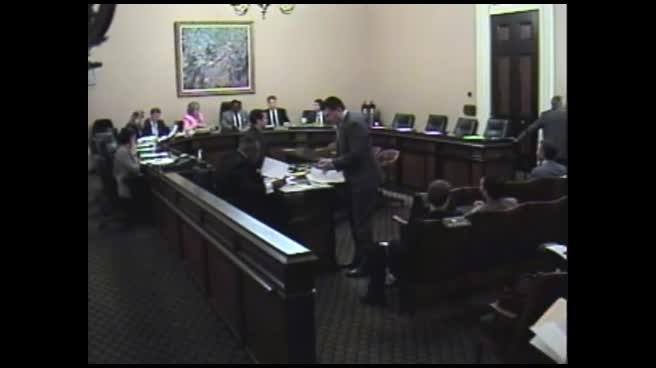 2MIN
Assembly Standing Committee on Revenue and Taxation
Bill Author

Bill Co-Author(s):