AB 1060: Enhanced infrastructure financing districts.
- Session Year: 2017-2018
- House: Assembly
- Latest Version Date: 2017-04-24
Existing law authorizes the legislative body of a city or a county to establish an enhanced infrastructure financing district to finance public capital facilities or other specified projects of communitywide significance, including, but not limited to, the acquisition, construction, or rehabilitation of housing for persons of low and moderate income for rent or purchase.
This bill would authorize the Los Angeles County Metropolitan Transportation Authority City of Inglewood to create an enhanced infrastructure financing district. district to finance infrastructure and transit-oriented development within one mile of the Inglewood Station area. The bill would require the City of Inglewood, in consultation with the Los Angeles Metropolitan Transportation Authority, to develop an infrastructure financing plan pursuant to these provisions. The bill would provide that for these purposes, the Los Angeles Metropolitan Transportation Authority is an affected taxing entity as that term is defined. The bill would authorize a district created pursuant to these provisions to receive funding from the Greenhouse Gas Reduction Fund, and the Affordable Housing and Sustainable Communities Program, in addition to any other authorized funding.
This bill would make legislative findings and declarations as to the necessity of a special statute for the Los Angeles County Metropolitan Transportation Authority. City of Inglewood.
Existing law authorizes the legislative body of a city or a county to establish an enhanced infrastructure financing district to finance public capital facilities or other specified projects of communitywide significance, including, but not limited to, the acquisition, construction, or rehabilitation of housing for persons of low and moderate income for rent or purchase.
This bill would authorize the Los Angeles County Metropolitan Transportation Authority to create an enhanced infrastructure financing district.
This bill would make legislative findings and declarations as to the necessity of a special statute for the Los Angeles County Metropolitan Transportation Authority.
(a)In addition to any other power specified in this chapter, the City of Inglewood may create a district using the procedures specified in this chapter to finance infrastructure and transit-oriented development within one mile of the Inglewood Station area.
(b)To create the district, the City of Inglewood, in consultation with the Los Angeles Metropolitan Transportation Authority, shall develop the infrastructure financing plan pursuant to Article 2 (commencing with Section 53398.59).
(c)For purposes of this chapter, the Los Angeles Metropolitan Transportation Authority shall be considered an affected taxing agency as that term is defined in subdivision (a) of Section 53398.51.
(d)In addition to any revenues listed in Section 53398.75, a district created pursuant to this section may also receive funding from the Greenhouse Gas Reduction Fund created pursuant to Section 16428.8, and the Affordable Housing and Sustainable Communities Program created by Part 1 (commencing with Section 75200) of Division 44 of the Public Resources Code , should the district be awarded those funds.
SECTION 1.Section 53398.51.05 is added to the Government Code, to read:53398.51.05.Notwithstanding any other law, the Los Angeles County Metropolitan Transportation Authority may create an enhanced infrastructure financing district pursuant to this chapter. For these purposes, any reference to a city or county shall be deemed to include the Los Angeles County Metropolitan Transportation Authority and any reference to the legislative body shall be deemed to include the board of directors of the Los Angeles County Metropolitan Transportation Authority.SEC. 2.The Legislature finds and declares that a special statute is necessary and that a general statute cannot be made applicable within the meaning of Section 16 of Article IV of the California Constitution because of the unique and extensive responsibilities and infrastructure needs of the Los Angeles County Metropolitan Transportation Authority. City of Inglewood.
Notwithstanding any other law, the Los Angeles County Metropolitan Transportation Authority may create an enhanced infrastructure financing district pursuant to this chapter. For these purposes, any reference to a city or county shall be deemed to include the Los Angeles County Metropolitan Transportation Authority and any reference to the legislative body shall be deemed to include the board of directors of the Los Angeles County Metropolitan Transportation Authority.
SEC. 2.The Legislature finds and declares that a special statute is necessary and that a general statute cannot be made applicable within the meaning of Section 16 of Article IV of the California Constitution because of the unique and extensive responsibilities and infrastructure needs of the Los Angeles County Metropolitan Transportation Authority.
|
Date
|
Status
|
|---|---|
| Feb 1, 2018 | From committee: Filed with the Chief Clerk pursuant to Joint Rule 56. |
| Jan 31, 2018 | Died pursuant to Art. IV, Sec. 10(c) of the Constitution. |
| May 8, 2017 | In committee: Set, first hearing. Hearing canceled at the request of author. |
| Apr 25, 2017 | Re-referred to Com. on TRANS. |
| Apr 24, 2017 | Read second time and amended. |
| Apr 20, 2017 | From committee: Amend, and do pass as amended and re-refer to Com. on TRANS. (Ayes 8. Noes 1.) (April 19). |
| Mar 6, 2017 | Referred to Coms. on L. GOV. and TRANS. |
| Feb 17, 2017 | From printer. May be heard in committee March 19. |
| Feb 16, 2017 | Read first time. To print. |
|
Date
|
Description
|
Location
|
Votes
|
|
|---|---|---|---|---|
| Apr 19, 2017 | Do pass as amended and be re-referred to the Committee on [Transportation] | Assembly Standing Committee on Local Government |
Passed |
This list shows positions taken on this bill by organizations on the date displayed, which is linked to the original source.
Positions by individuals are not included.
|
Organization
|
Position
|
Date
|
|---|---|---|
| LA Metro | ** Support | Apr 18, 2017 |
Date of Hearing: April 19, 2017
ASSEMBLY COMMITTEE ON LOCAL GOVERNMENT
Cecilia Aguiar-Curry, Chair
ABPCA Bill Id:AB 1060 (
Author:Burke) – As Introduced Ver:February 16, 2017
SUBJECT: Enhanced infrastructure financing districts.
SUMMARY: Authorizes the Los Angeles County Metropolitan Transportation Authority (LA Metro) to create an enhanced infrastructure financing district (EIFD). Specifically, this bill:
- Allows LA Metro to create an EIFD pursuant to EIFD law.
- Specifies that any reference to “city and county” contained in EIFD law shall be deemed to include LA Metro, and any reference to the “legislative body” shall be deemed to include the board of directors of LA Metro.
- Finds and declares that a special statute is necessary and that a general statute cannot be made applicable within the meaning of Section 16 of Article IV of the California Constitution because of the unique and extensive responsibilities and infrastructure needs of LA Metro.
EXISTING LAW:
- Allows a legislative body of a city or county to designate one or more proposed EIFDs pursuant to EIFD law, and requires the establishment of a district to be instituted by the adoption of a resolution of intention to establish the proposed district, and include the following:
- State that an EIFD is proposed and describe the boundaries of the proposed district, as specified;
- State the type of public facilities and development proposed to be financed or assisted by the EIFD in accordance with existing EIFD law;
- State the need for the EIFD and the goals the district proposes to achieve;
- State the incremental property tax revenue from the city or county and some or all affected taxing entities within the EIFD, if approved by resolution of the affected agencies, may be used to finance these activities; and,
- Fix a time and place for a public hearing on the proposal.
- Requires, after the resolution of intention to establish a district, the designated official to prepare a proposed infrastructure financing plan, which shall be consistent with the general plan of the city or county within which the district is located. Requires the plan to include a financing section, containing the following information:
- A specification of the maximum portion of the incremental tax revenue of the city or county and of each affected taxing entity proposed to be committed to the district for each year during which the district will receive incremental tax revenue, as specified;
- A projection of the amount of tax revenues expected to be received by the district for each year during which the district will receive incremental tax revenues, including an estimate of the amount of tax revenues attributable to each affected taxing entity for each year;
- A plan for financing the public facilities to be assisted by the district, including a detailed description of any intention to incur debt;
- A limit on the total number of tax dollars that may be allocated in the district pursuant to the plan; and,
- A date on which the district will cease to exist, by which time all tax allocation to the district will end. Requires the date to not be more than 45 years from the date on which the issuance of bonds is approved or the issuance of a loan is approved by the governing board of a local agency.
- Requires the infrastructure financing plan to be sent to each owner of land within the proposed district and to each affected taxing entity together with any report required by CEQA.
- Allows the legislative body of the city or county forming the district to choose to dedicate any portion of its net available revenue to the district through the financing plan.
- Provides, in EIFD law, that provisions shall not be construed to prevent a district from utilizing revenues from the following sources to support its activities that the applicable voter approval has been obtained, and the infrastructure financing plan has been approved, as specified:
- The Improvement Act of 1911 (Division 7 (commencing with Section 5000) of the Streets and Highways Code);
- The Municipal Improvement Act of 1913 (Division 12 (commencing with Section 10000) of the Streets and Highways Code);
- The Improvement Bond Act of 1915 (Division 10 (commencing with Section 8500) of the Streets and Highways Code);
- The Landscaping and Lighting Act of 1972 (Part 2 (commencing with Section 22500) of Division 15 of the Streets and Highways Code);
- The Vehicle Parking District Law of 1943 (Part 1 (commencing with Section 31500) of Division 18 of the Streets and Highways Code);
- The Parking District Law of 1951 (Part 4 (commencing with Section 35100) of Division 18 of the Streets and Highways Code);
- The Park and Playground Act of 1909 (Chapter 7 (commencing with Section 38000) of Part 2 of Division 3 of Title 4 of this code);
- The Mello-Roos Community Facilities Act of 1982 (Chapter 2.5 (commencing with Section 53311) of Part 1 of Division 2 of this title);
- The Benefit Assessment Act of 1982 (Chapter 6.4 (commencing with Section 54703) of Part 1 of Division 2 of this title); and,
- The so-called facilities benefit assessment levied by the charter city of San Diego or any substantially similar assessment levied for the same purpose by any other charter city pursuant to any ordinance or charter provision.
FISCAL EFFECT: None
COMMENTS:
- Bill Summary. This bill allows LA Metro to create an EIFD pursuant to existing EIFD law, and specifies that references in EIFD law to a “city or county” and “legislative body” shall be deemed to include, respectively, LA Metro, and the board of directors of LA Metro. This bill is sponsored by LA Metro.
- Author’s Statement. According to the author, “With AB 1060, LA Metro would have the authority to create EIFDs to work in partnership with the City of Inglewood to create first-mile/last-mile solutions, and transportation management plans, while creating tax incentives to develop and invest in the Inglewood Station area.”
- Background on EIFDs. After the dissolution of redevelopment agencies in 2011, the Legislature worked on the creation of several new tools to help cities and counties finance infrastructure improvements, including the creation of EIFDs. SB 628 (Beall), Chapter 785, Statutes of 2014, authorizes the legislative body of a city or county to establish an EIFD to capture property tax increment, adopt an infrastructure financing plan, and issue bonds upon approval by 55% of the voters, in order to finance public capital facilities or other specified projects of communitywide significance, including, but not limited to, brownfield restoration and other environmental mitigation, the development of projects on a former military base, transit priority projects, and projects to implement a sustainable communities strategy.
SB 628 also allowed other affected taxing entities to participate in the EIFD by contributing their property tax increment revenues to the EIFD, and provided the method for this division and allocation of taxes. Provisions in SB 628 specify that the allocation of tax increment revenues to an EIFD must not be construed to prevent an EIFD from using revenues authorized by other specified statutes, subject to applicable voter approval requirements.
- Policy Considerations: The Committee may wish to consider the following:
- The Legislature granted authority of EIFD creation to cities and counties only. Provisions added to law by SB 628 (Beall) specifically find and declare that “with the dissolution of redevelopment agencies, public benefits will accrue if local agencies, excluding schools, are provided a means to finance the reuse and revitalization of former military bases, fund the creation of transit priority projects and the implementation of sustainable communities plans, construct and rehabilitate affordable housing units, and construct facilities to house providers of consumer goods and services in the communities served by these efforts.” SB 628 allows the legislative body – the city council or county board of supervisors – to adopt a resolution of intention to establish the EIFD. Because the authority to create an EIFD was not granted to any other public agencies except for cities and counties, the provisions of EIFD law are specific to the process that a city or county would undertake to form an EIFD.
The Committee may wish to consider whether it is appropriate to allow another form of local agency – in this case LA Metro – to form an EIFD when that is contrary to the legislative history of EIFDs. The Committee may wish to consider whether this bill also sets a precedent of allowing other agencies access to a financing tool meant specifically for cities and counties.
- EIFDs are primarily funded by property tax increment. One reason a city or county may wish to create an EIFD is because the EIFD can capture property tax increment, which, if voters approve with 55% vote, can then be used to bond against for projects.
The Committee may wish to consider that LA Metro does not receive property tax increment and therefore allowing LA Metro to create an EIFD does not seem appropriate.
- Other local options. The author’s stated goal is to “allow LA Metro to work in conjunction with the City of Inglewood to create first-mile/last-mile solutions, transportation management plans, while creating tax incentives to develop and invest in the Inglewood Station area.” The Committee may wish to ask the author the following questions:
- The City of Inglewood has the authority to create an EIFD under existing EIFD law. Is Inglewood moving forward on creation of an EIFD, thus removing the need for a bill?
- Another option is for the City of Inglewood and LA Metro to form a joint powers authority (JPA) at the local level, under the provisions of the Joint Exercise of Powers Act, in order to specifically collaborate on their mutual interests. This approach could also be done locally without legislation.
- Other local options. The author’s stated goal is to “allow LA Metro to work in conjunction with the City of Inglewood to create first-mile/last-mile solutions, transportation management plans, while creating tax incentives to develop and invest in the Inglewood Station area.” The Committee may wish to ask the author the following questions:
- Committee Amendments. The Committee may wish to consider amending the bill as follows, to address the policy considerations raised above:
Strike existing contents of the bill and instead add:
(1)(a) In addition to the other powers specified in this Chapter, the City of Inglewood may form an enhanced infrastructure financing district using the procedures specified in this chapter to finance infrastructure and transit-oriented development within one mile of the Inglewood Station area.
(b) To create the enhanced infrastructure financing district, the City of Inglewood, in consultation with the Los Angeles Metropolitan Transportation Authority, shall develop the infrastructure financing plan required by this chapter.
(c) For purposes of this Chapter, the Los Angeles Metropolitan Transportation Authority shall be included in the definition of “affected taxing agency.”
(d)In addition to revenues listed in Section 53398.75, the EIFD may also receive funding from the Greenhouse Gas Reduction Fund, and the Affordable Housing and Sustainable Communities, should it be awarded such monies.
- Arguments in Support. LA Metro believes this new tool will help to finance a potential transit link between the Crenshaw Rail Line and the future NFL Stadium in the City of Inglewood.
- Arguments in Opposition. None on file.
- Double-Referral. This bill is double-referred to the Transportation Committee, where it will be heard next, should this bill pass this Committee.
REGISTERED SUPPORT / OPPOSITION:
Support
LA Metro
Opposition
None on file
Analysis Prepared by: Debbie Michel / L. GOV. / (916) 319-3958
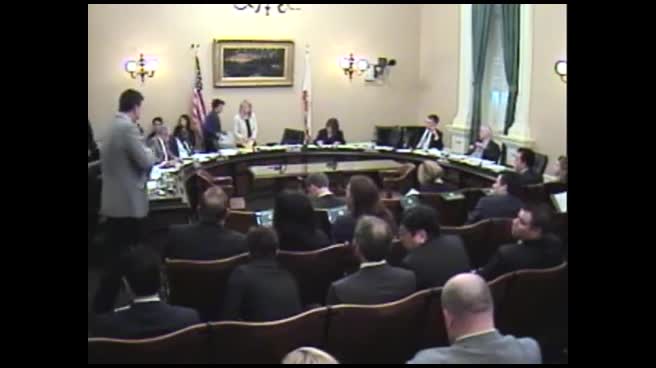
Discussed in Hearing
 4MIN
Assembly Standing Committee on Local Government
Bill Author

Bill Co-Author(s):