AB 1589: Pharmacy: pharmacist supervision: technicians.
- Session Year: 2017-2018
- House: Assembly
- Latest Version Date: 2017-05-09
The Pharmacy Law provides for the licensure and regulation of pharmacists by the California State Board of Pharmacy, which is within the Department of Consumer Affairs. Existing law authorizes a pharmacy technician to perform certain tasks under the direct supervision and control of a pharmacist. Existing law prohibits a pharmacy with one pharmacist from having more than one pharmacy technician and prohibits the ratio of pharmacy technicians to any additional pharmacists from exceeding 2:1, 2 to 1, except as specified.
This bill would require the board to review that ratio on a biennial basis and would require the board to provide a report to the Legislature with legislative recommendations if the board decides a change is necessary. would raise the limit on the number of pharmacy technicians a pharmacy with one pharmacist may have to 4 and would raise the limit on the ratio of pharmacy technicians to any additional pharmacists to 4 to 1.
The Pharmacy Law provides for the licensure and regulation of pharmacists by the California State Board of Pharmacy, which is within the Department of Consumer Affairs. Existing law authorizes a pharmacy technician to perform certain tasks under the direct supervision and control of a pharmacist. Existing law prohibits a pharmacy with one pharmacist from having more than one pharmacy technician and prohibits the ratio of pharmacy technicians to any additional pharmacists from exceeding 2:1, except as specified.
This bill would require the board to review that ratio on a biennial basis and would require the board to provide a report to the Legislature with legislative recommendations if the board decides a change is necessary.
(a)A pharmacy technician may perform packaging, manipulative, repetitive, or other nondiscretionary tasks only while assisting, and while under the direct supervision and control of, a pharmacist. The pharmacist shall be responsible for the duties performed under his or her supervision by a technician.
(b)This section does not authorize the performance of any tasks specified in subdivision (a) by a pharmacy technician without a pharmacist on duty.
(c)This section does not authorize a pharmacy technician to perform any act requiring the exercise of professional judgment by a pharmacist.
(d)The board shall adopt regulations to specify tasks pursuant to subdivision (a) that a pharmacy technician may perform under the supervision of a pharmacist. Any pharmacy that employs a pharmacy technician shall do so in conformity with the regulations adopted by the board.
(e)A person shall not act as a pharmacy technician without first being licensed by the board as a pharmacy technician.
(f)(1)A pharmacy with only one pharmacist shall have no more than one four pharmacy technician technicians performing the tasks specified in subdivision (a). The ratio of pharmacy technicians performing the tasks specified in subdivision (a) to any additional pharmacist shall not exceed 2:1, 4 to 1, except that this ratio shall not apply to personnel performing clerical functions pursuant to Section 4116 or 4117. This ratio is applicable to all practice settings, except for an inpatient of a licensed health facility, a patient of a licensed home health agency, as specified in paragraph (2), an inmate of a correctional facility of the Department of Corrections and Rehabilitation, and for a person receiving treatment in a facility operated by the State Department of State Hospitals, the State Department of Developmental Services, or the Department of Veterans Affairs.
(2)The board may adopt regulations establishing the ratio of pharmacy technicians performing the tasks specified in subdivision (a) to pharmacists applicable to the filling of prescriptions of an inpatient of a licensed health facility and for a patient of a licensed home health agency. Any ratio established by the board pursuant to this subdivision shall allow, at a minimum, at least one pharmacy technician for a single pharmacist in a pharmacy and two pharmacy technicians for each additional pharmacist, except that this ratio shall not apply to personnel performing clerical functions pursuant to Section 4116 or 4117.
(3)A pharmacist scheduled to supervise a second pharmacy technician may refuse to supervise a second pharmacy technician if the pharmacist determines, in the exercise of his or her professional judgment, that permitting the second pharmacy technician to be on duty would interfere with the effective performance of the pharmacists responsibilities under this chapter. A pharmacist assigned to supervise a second pharmacy technician shall notify the pharmacist in charge in writing of his or her determination, specifying the circumstances of concern with respect to the pharmacy or the pharmacy technician that have led to the determination, within a reasonable period, but not to exceed 24 hours, after the posting of the relevant schedule. An entity employing a pharmacist shall not discharge, discipline, or otherwise discriminate against any pharmacist in the terms and conditions of employment for exercising or attempting to exercise in good faith the right established pursuant to this paragraph.
(g)Notwithstanding subdivisions (a) and (b), the board shall by regulation establish conditions to permit the temporary absence of a pharmacist for breaks and lunch periods pursuant to Section 512 of the Labor Code and the orders of the Industrial Welfare Commission without closing the pharmacy. During these temporary absences, a pharmacy technician may, at the discretion of the pharmacist, remain in the pharmacy but may only perform nondiscretionary tasks. The pharmacist shall be responsible for a pharmacy technician and shall review any task performed by a pharmacy technician during the pharmacists temporary absence. This subdivision shall not be construed to authorize a pharmacist to supervise pharmacy technicians in greater ratios than those described in subdivision (f).
(h)Notwithstanding Section 10231.5 of the Government Code, the board shall review the ratio of pharmacy technicians described in subdivision (f) on a biennial basis and provide a report to the Legislature, as set forth in Section 9795 of the Government Code, with legislative recommendations if the board decides a change in the ratio is necessary.(i)(h)The pharmacist on duty shall be directly responsible for the conduct of a pharmacy technician supervised by that pharmacist.
(j)(i)In a health care facility licensed under subdivision (a) of Section 1250 of the Health and Safety Code, a pharmacy technicians duties may include any of the following:
(1)Packaging emergency supplies for use in the health care facility and the hospitals emergency medical system or as authorized under Section 4119.
(2)Sealing emergency containers for use in the health care facility.
(3)Performing monthly checks of the drug supplies stored throughout the health care facility. Irregularities shall be reported within 24 hours to the pharmacist in charge and the director or chief executive officer of the health care facility in accordance with the health care facilitys policies and procedures.
(a)A pharmacy technician may perform packaging, manipulative, repetitive, or other nondiscretionary tasks only while assisting, and while under the direct supervision and control of, a pharmacist. The pharmacist shall be responsible for the duties performed under his or her supervision by a technician.
(b)This section does not authorize the performance of any tasks specified in subdivision (a) by a pharmacy technician without a pharmacist on duty.
(c)This section does not authorize a pharmacy technician to perform any act requiring the exercise of professional judgment by a pharmacist.
(d)The board shall adopt regulations to specify tasks pursuant to subdivision (a) that a pharmacy technician may perform under the supervision of a pharmacist. Any pharmacy that employs a pharmacy technician shall do so in conformity with the regulations adopted by the board.
(e)A person shall not act as a pharmacy technician without first being licensed by the board as a pharmacy technician.
(f)(1)A pharmacy with only one pharmacist shall have no more than one pharmacy technician performing the tasks specified in subdivision (a). The ratio of pharmacy technicians performing the tasks specified in subdivision (a) to any additional pharmacist shall not exceed 2:1, except that this ratio shall not apply to personnel performing clerical functions pursuant to Section 4116 or 4117. This ratio is applicable to all practice settings, except for an inpatient of a licensed health facility, a patient of a licensed home health agency, as specified in paragraph (2), an inmate of a correctional facility of the Department of Corrections and Rehabilitation, and for a person receiving treatment in a facility operated by the State Department of State Hospitals, the State Department of Developmental Services, or the Department of Veterans Affairs.
(2)The board may adopt regulations establishing the ratio of pharmacy technicians performing the tasks specified in subdivision (a) to pharmacists applicable to the filling of prescriptions of an inpatient of a licensed health facility and for a patient of a licensed home health agency. Any ratio established by the board pursuant to this subdivision shall allow, at a minimum, at least one pharmacy technician for a single pharmacist in a pharmacy and two pharmacy technicians for each additional pharmacist, except that this ratio shall not apply to personnel performing clerical functions pursuant to Section 4116 or 4117.
(3)A pharmacist scheduled to supervise a second pharmacy technician may refuse to supervise a second pharmacy technician if the pharmacist determines, in the exercise of his or her professional judgment, that permitting the second pharmacy technician to be on duty would interfere with the effective performance of the pharmacists responsibilities under this chapter. A pharmacist assigned to supervise a second pharmacy technician shall notify the pharmacist in charge in writing of his or her determination, specifying the circumstances of concern with respect to the pharmacy or the pharmacy technician that have led to the determination, within a reasonable period, but not to exceed 24 hours, after the posting of the relevant schedule. An entity employing a pharmacist shall not discharge, discipline, or otherwise discriminate against any pharmacist in the terms and conditions of employment for exercising or attempting to exercise in good faith the right established pursuant to this paragraph.
(g)Notwithstanding subdivisions (a) and (b), the board shall by regulation establish conditions to permit the temporary absence of a pharmacist for breaks and lunch periods pursuant to Section 512 of the Labor Code and the orders of the Industrial Welfare Commission without closing the pharmacy. During these temporary absences, a pharmacy technician may, at the discretion of the pharmacist, remain in the pharmacy but may only perform nondiscretionary tasks. The pharmacist shall be responsible for a pharmacy technician and shall review any task performed by a pharmacy technician during the pharmacists temporary absence. This subdivision shall not be construed to authorize a pharmacist to supervise pharmacy technicians in greater ratios than those described in subdivision (f).
(h)Notwithstanding Section 10231.5 of the Government Code, the board shall review the ratio of pharmacy technicians described in subdivision (f) on a biennial basis and provide a report to the Legislature, as set forth in Section 9795 of the Government Code, with legislative recommendations if the board decides a change in the ratio is necessary.
(h)(i)The pharmacist on duty shall be directly responsible for the conduct of a pharmacy technician supervised by that pharmacist.
(i)(j)In a health care facility licensed under subdivision (a) of Section 1250 of the Health and Safety Code, a pharmacy technicians duties may include any of the following:
(1)Packaging emergency supplies for use in the health care facility and the hospitals emergency medical system or as authorized under Section 4119.
(2)Sealing emergency containers for use in the health care facility.
(3)Performing monthly checks of the drug supplies stored throughout the health care facility. Irregularities shall be reported within 24 hours to the pharmacist in charge and the director or chief executive officer of the health care facility in accordance with the health care facilitys policies and procedures.
|
Date
|
Status
|
|---|---|
| Feb 1, 2018 | From committee: Filed with the Chief Clerk pursuant to Joint Rule 56. |
| Jan 31, 2018 | Died pursuant to Art. IV, Sec. 10(c) of the Constitution. |
| May 24, 2017 | In committee: Set, second hearing. Hearing canceled at the request of author. |
| May 10, 2017 | Re-referred to Com. on APPR. |
| May 9, 2017 | From committee chair, with author's amendments: Amend, and re-refer to Com. on APPR. Read second time and amended. |
| May 3, 2017 | In committee: Set, first hearing. Hearing canceled at the request of author. |
| Apr 26, 2017 | From committee: Do pass and re-refer to Com. on APPR. (Ayes 16. Noes 0.) (April 25). Re-referred to Com. on APPR. |
| Mar 16, 2017 | Referred to Com. on B. & P. |
| Feb 19, 2017 | From printer. May be heard in committee March 21. |
| Feb 17, 2017 | Read first time. To print. |
|
Date
|
Description
|
Location
|
Votes
|
|
|---|---|---|---|---|
| Apr 25, 2017 | Do pass and be re-referred to the Committee on [Appropriations] | Assembly Standing Committee on Business and Professions |
Passed |
This list shows positions taken on this bill by organizations on the date displayed, which is linked to the original source.
Positions by individuals are not included.
Date of Hearing:
ASSEMBLY COMMITTEE ON BUSINESS AND PROFESSIONS
Evan Low, Chair
ABPCA Bill Id:AB 1589
Author:(Salas) – As Introduced Ver:February 17, 2017
SUBJECT: Pharmacy: pharmacist supervision: technicians.
SUMMARY: Directs the Board of Pharmacy (Board) to biennially review the ratio of pharmacy technicians to pharmacists and report to the Legislature any recommended changes to the ratio.
EXISTING LAW:
- Prescribes standards for the conduct and scope of pharmacy technicians, including requirements for supervision and licensing. (Business and Professions Code (BPC) Section 4115 (a-e))
- Dictates the ratio for technicians to pharmacists as 1:1 unless additional pharmacists are present, in which case any pharmacist after the first may supervise two technicians at a ratio of 2:1. Also states that a pharmacist may refuse to supervise a second technician if doing so would substantively interfere with the fulfillment of their duties (BPC Section 4115 (f)(1-3))
THIS BILL:
- Directs the Board to review the ratio of pharmacy technicians, as specified, every two years.
- Directs the Board to provide a report on pharmacy technician ratios to the Legislature if the board decides a change in the ratio is necessary.
FISCAL EFFECT: Unknown. This bill is keyed fiscal by the Legislative Counsel.
COMMENTS:
Purpose. This bill is sponsored by the California Retailers Association. According to the author, “In California, pharmacists are empowered to provide a broad swath of clinical and health services in addition to their traditional dispensing and counseling duties. However, the demands of running a business and supervising the filling of prescriptions can limit opportunities to provide these valuable services to communities throughout the state. While pharmacies can employ pharmacy technicians to help with some of the more rudimentary pharmacy duties, the existing supervising ratio of 1:1 constrains the ability of the supervising pharmacist to offer services other than the filling of prescriptions. Altering the existing ratio would allow greater flexibility and support pharmacists that wish to engage in the more clinical duties within their scope of practice. To ensure that the ratio is changed in a way that is supported by data and the unique variables present in California, the Board would be directed to conduct a study and advise the legislature of necessary changes to the ratio, potentially benefiting patients and health care practitioners alike.”
Background. This bill would require the Board to review the existing ratio for pharmacy technicians every two years and to notify the legislature of any need to shift the existing ratio of 1 pharmacy technician to 1 supervising pharmacist and 2 technicians each to any additional supervising pharmacists.
Under current law, applicants for licensure as a pharmacy technician must have a high-school diploma or general educational development certificate and also meet one of four requirements: 1) possess an associate’s degree in pharmacy technology; 2) have completed a course of training specified by the Board; 3) have graduated from a school of pharmacy; or, 4) be certified by the Pharmacy Technician Certification Board. When the current licensing requirements were adopted, the Pharmacy Technician Certification Board was the only national certification program. Today, the National Healthcareer Association also offers certification for pharmacy technicians. Pharmacy technicians are licensed by the Board to perform nondiscretionary tasks under the direct supervision of a pharmacist. The Board allows four pathways to become a pharmacy technician, one of which is to take the Pharmacy Technician Certification Exam (PTCE) to become certified.
In 2013, SB 493 (Hernández), Chapter 469, Statutes of 2013 allowed pharmacists to provide the following clinical services:
- Furnish self-administered hormonal contraceptives, nicotine replacement products, and prescription medications not requiring a diagnosis that are recommended for international travelers;
- Order and interpret tests for the purpose of monitoring and managing the efficacy and toxicity of drug therapies;
- Order and administer routine vaccinations; and,
- Provide consultation on drug therapy, disease management, and prevention
Additionally, SB 493 established Board recognition of advanced practice pharmacists, who are allowed to conduct patient assessments, refer patients to other health care providers, change drug therapies pursuant to a physician’s order, and engage in the evaluation and management of patient’s health outcomes.
In response to the growing opioid crisis in 2014, AB 1535 (Bloom), Chapter 326, Statutes of 2014, authorized pharmacists to furnish naloxone hydrochloride, a drug that can stop a fatal opioid overdose.
The role of the pharmacist has been dramatically altered since the initial authorization of the pharmacy technicians in 1991. While these expansions of scope allow pharmacists to more effectively serve patients and their communities, they also add additional duties to the workload that may interfere with or limit the ability to dispense medication.
California has the most restrictive ratio in the United States and is the only state that maintains the 1:1 ratio. The most prevalent ratio nationwide is 3:1, the highest is 6:1 in Idaho and Ohio, and 18 states have an unspecified ratio.
While this bill does not define a new ratio for California, national ratio trends suggest that it may be time to reevaluate the standard in the state. The study conducted by the Board and its subsequent recommendations will help establish a set of guidelines and provide data for a reasoned possible adjustment in the future.
Prior Related Legislation. AB 1535 (Bloom), Chapter 326, Statutes of 2014, authorized pharmacists to furnish the anti-overdose drug, naloxone.
SB 493 (Hernández), Chapter 469, Statutes of 2013, allowed pharmacists to provide the following clinical services:
- Furnish self-administered hormonal contraceptives, nicotine replacement products, and prescription medications not requiring a diagnosis that are recommended for international travelers;
- Order and interpret tests for the purpose of monitoring and managing the efficacy and toxicity of drug therapies;
- Order and administer routine vaccinations; and,
- Provide consultation on drug therapy, disease management, and prevention.
ARGUMENTS IN SUPPORT:
The California Retailers Association (CRA) and the National Association of Chain
Drugs Stores (NACDS) are pleased to support AB 1589, which requires the CA Board
of Pharmacy to review the pharmacy technician ratio and report to the Legislature if
any changes are necessary.
ARGUMENTS IN OPPOSITION:
None on file
POLICY ISSUES FOR CONSIDERATION:
The Board has not taken a formal position on revising the ratio. The Legislature should carefully consider the input of the Board when determining whether to shift the ratios in the future and examine the utility of reviewing the ratios every two years versus a longer review cycle.
REGISTERED SUPPORT:
California Retailers Association
National Association of Chain Drugs Stores
REGISTERED OPPOSITION:
None on file
Analysis Prepared by: Jimmy Fremgen / B. & P. / 916-319-3301
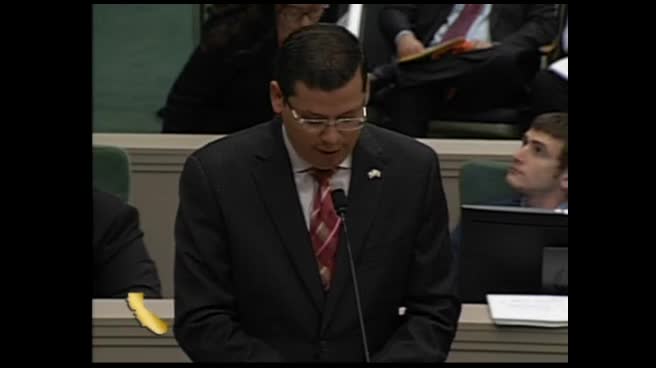
Discussed in Hearing
 3MIN
Assembly Standing Committee on Business and Professions

Bill Co-Author(s):