AB 160: CalWORKs: eligibility.
- Session Year: 2017-2018
- House: Assembly
- Latest Version Date: 2017-01-12
Existing federal law provides for the allocation of federal funds through the federal Temporary Assistance for Needy Families (TANF) block grant program to eligible states. Existing law provides for the California Work Opportunity and Responsibility to Kids (CalWORKs) program under which, through a combination of state and county funds and federal funds received through the TANF program, each county provides cash assistance and other benefits to qualified low-income families. Existing law provides that a parent or caretaker relative shall not be eligible for CalWORKs aid when he or she has received aid for a cumulative total of 48 months. Under existing law, certain amounts are exempt from the calculation of income of the family for purposes of determining the amount of a grant under the CalWORKs program, including specified amounts of disability-based unearned income and earned income.
This bill would instead provide that a parent or caretaker relative shall not be eligible for CalWORKs aid when he or she has received aid for a cumulative total of 60 months. This bill would increase the amount of exempted disability-based unearned income and other earned income, as specified. The bill would also make other, conforming changes. By increasing county administrative duties relating to the CalWORKs program, the bill would impose a state-mandated local program.
The California Constitution requires the state to reimburse local agencies and school districts for certain costs mandated by the state. Statutory provisions establish procedures for making that reimbursement.
This bill would provide that, if the Commission on State Mandates determines that the bill contains costs mandated by the state, reimbursement for those costs shall be made pursuant to the statutory provisions noted above.
Existing law continuously appropriates moneys from the General Fund to defray a portion of county costs under the CalWORKs program.
This bill would instead provide that the continuous appropriation would not be made for purposes of implementing the bill.
(a)The grant amount a recipient shall be entitled to receive for each month of the semiannual reporting period shall be prospectively determined as provided by this section. If a recipient reports that he or she does not anticipate any changes in income during the upcoming semiannual period, compared to the income the recipient reported actually receiving on the semiannual report form or the annual certificate of eligibility required pursuant to Section 11265, the grant shall be calculated using the actual income received. If a recipient reports that he or she anticipates a change in income in one or more months of the upcoming semiannual period, the county shall determine whether the recipients income is reasonably anticipated. The grant shall be calculated using the income that the county determines is reasonably anticipated for the upcoming semiannual period.
(b)For the purposes of the semiannual reporting, prospective budgeting system, income shall be considered to be reasonably anticipated if the county is reasonably certain of the amount of income and that the income will be received during the semiannual reporting period. The county shall determine what income is reasonably anticipated based on information provided by the recipient and any other available information.
(c)If a recipient reports that his or her income in the upcoming semiannual period will be different each month and the county needs additional information to determine a recipients reasonably anticipated income for the following semiannual period, the county may require the recipient to provide information about income for each month of the prior semiannual period.
(d)Grant calculations pursuant to subdivision (a) may not be revised to adjust the grant amount during the semiannual reporting period, except as provided in Section 11265.3 and subdivisions (e), (f), (g), and (h), and as otherwise established by the department.
(e)Notwithstanding subdivision (d), statutes and regulations relating to (1) the 48-month 60-month time limit, (2) age limitations for children under Section 11253, and (3) sanctions and financial penalties affecting eligibility or grant amount shall be applicable as provided in those statutes and regulations. Eligibility and grant amount shall be adjusted during the semiannual reporting period pursuant to those statutes and regulations effective with the first monthly grant after timely and adequate notice is provided.
(f)Notwithstanding Section 11056, if an applicant applies for assistance for a child who is currently aided in another assistance unit, and the county determines that the applicant has care and control of the child, as specified by the department, and is otherwise eligible, the county shall discontinue aid to the child in the existing assistance unit and shall aid the child in the applicants assistance unit effective as of the first of the month following the discontinuance of the child from the existing assistance unit.
(g)If the county is notified that a child for whom CalWORKs assistance is currently being paid has been placed in a foster care home, the county shall discontinue aid to the child at the end of the month of placement. The county shall discontinue the case if the remaining assistance unit members are not otherwise eligible.
(h)If the county determines that a recipient is no longer a California resident, pursuant to Section 11100, the recipient shall be discontinued with timely and adequate notice. The county shall discontinue the case if the remaining assistance unit members are not otherwise eligible.
(i)(1)This section shall become operative on April 1, 2013. A county shall implement the semiannual reporting requirements in accordance with the act that added this section no later than October 1, 2013.
(2)Upon implementation described in paragraph (1), each county shall provide a certificate to the director certifying that semiannual reporting has been implemented in the county.
(3)Upon filing the certificate described in paragraph (2), a county shall comply with the semiannual reporting provisions of this section.
SEC. 2.Section 11265.45 of the Welfare and Institutions Code is amended to read:11265.45.(a)Notwithstanding Sections 11265.1, 11265.2, and 11265.3, a CalWORKs assistance unit that does not include an eligible adult shall not be subject to periodic reporting requirements other than the annual redetermination required in Section 11265. This subdivision shall not apply to a CalWORKs assistance unit in which the only eligible adult is under sanction in accordance with Section 11327.5.
(b)For an assistance unit described in subdivision (a), grant calculations may not be revised to adjust the grant amount during the year except as provided in subdivisions (c), (d), (e), and (f), Section 11265.47 and as otherwise established by the department by regulation.
(c)Notwithstanding subdivision (b), statutes and regulations relating to the 48-month 60-month time limit, age limitations for children under Section 11253, and sanctions and financial penalties affecting eligibility or grant amount shall be applicable as provided in those statutes and regulations.
(d)If the county is notified that a child for whom assistance is currently being paid has been placed in a foster care home, the county shall discontinue aid to the child at the end of the month of placement. The county shall discontinue the case if the remaining assistance unit members are not otherwise eligible.
(e)If the county determines that a recipient is no longer a California resident, pursuant to Section 11100, the recipient shall be discontinued with timely and adequate notice. The county shall discontinue the case if the remaining assistance unit members are not otherwise eligible.
(f)If an overpayment has occurred, the county shall commence any applicable grant adjustment in accordance with Section 11004 as of the first monthly grant after timely and adequate notice is provided.
(g)This section shall become operative on the first day of the first month following 90 days after the effective date of the act that added this section, or October 1, 2012, whichever is later.
SEC. 3.Section 11320.15 of the Welfare and Institutions Code is amended to read:11320.15.(a)After a participant has been removed from the assistance unit under subdivision (a) of Section 11454, additional welfare-to-work services may be provided to the recipient, at the option of the county. If the county provides services to the recipient after the 48-month 60-month limit has been reached, the recipient shall participate in community service or subsidized employment, as described in Section 11322.64.
(b)This section shall become operative on July 1, 2016.
SEC. 4.Section 11320.3 of the Welfare and Institutions Code is amended to read:11320.3.(a)(1)Except as provided in subdivision (b) or if otherwise exempt, every individual, as a condition of eligibility for aid under this chapter, shall participate in welfare-to-work activities under this article.
(2)Individuals eligible under Section 11331.5 shall be required to participate in the Cal-Learn Program under Article 3.5 (commencing with Section 11331) during the time that article is operative, in lieu of the welfare-to-work requirements, and subdivision (b) shall not apply to that individual.
(b)The following individuals shall not be required to participate for so long as the condition continues to exist:
(1)An individual under 16 years of age.
(2)(A)A child attending an elementary, secondary, vocational, or technical school on a full-time basis.
(B)A person who is 16 or 17 years of age, or a person described in subdivision (d) who loses this exemption, shall not requalify for the exemption by attending school as a required activity under this article.
(C)Notwithstanding subparagraph (B), a person who is 16 or 17 years of age who has obtained a high school diploma or its equivalent and is enrolled or is planning to enroll in a postsecondary education, vocational, or technical school training program shall also not be required to participate for so long as the condition continues to exist.
(D)For purposes of subparagraph (C), a person shall be deemed to be planning to enroll in a postsecondary education, vocational, or technical school training program if he or she, or his or her parent, acting on his or her behalf, submits a written statement expressing his or her intent to enroll in such a program for the following term. The exemption from participation shall not continue beyond the beginning of the term, unless verification of enrollment is provided or obtained by the county.
(3)An individual who meets either of the following conditions:
(A)The individual is disabled as determined by a doctors verification that the disability is expected to last at least 30 days and that it significantly impairs the recipients ability to be regularly employed or participate in welfare-to-work activities, provided that the individual is actively seeking appropriate medical treatment.
(B)The individual is of advanced age.
(4)A nonparent caretaker relative who has primary responsibility for providing care for a child and is either caring for a child who is a dependent or ward of the court or caring for a child in a case in which a county determines the child is at risk of placement in foster care, and the county determines that the caretaking responsibilities are beyond those considered normal day-to-day parenting responsibilities such that they impair the caretaker relatives ability to be regularly employed or to participate in welfare-to-work activities.
(5)An individual whose presence in the home is required because of illness or incapacity of another member of the household and whose caretaking responsibilities impair the recipients ability to be regularly employed or to participate in welfare-to-work activities.
(6)A parent or other relative who meets the criteria in subparagraph (A) or (B).
(A)(i)The parent or other relative has primary responsibility for personally providing care to a child six months of age or under, except that, on a case-by-case basis, and based on criteria developed by the county, this period may be reduced to the first 12 weeks after the birth or adoption of the child, or increased to the first 12 months after the birth or adoption of the child. An individual may be exempt only once under this clause.
(ii)An individual who received an exemption pursuant to clause (i) shall be exempt for a period of 12 weeks, upon the birth or adoption of any subsequent children, except that this period may be extended on a case-by-case basis to six months, based on criteria developed by the county.
(iii)In making the determination to extend the period of exception under clause (i) or (ii), the following may be considered:
(I)The availability of child care.
(II)Local labor market conditions.
(III)Other factors determined by the county.
(iv)Effective January 1, 2013, the parent or other relative has primary responsibility for personally providing care to one child from birth to 23 months, inclusive. The exemption provided for under this clause shall be available in addition to any other exemption provided for under this subparagraph. An individual may be exempt only once under this clause.
(B)In a family eligible for aid under this chapter due to the unemployment of the principal wage earner, the exemption criteria contained in subparagraph (A) shall be applied to only one parent.
(7)A parent or other relative who has primary responsibility for personally providing care to one child who is from 12 to 23 months of age, inclusive, or two or more children who are under six years of age.
(8)A woman who is pregnant and for whom it has been medically verified that the pregnancy impairs her ability to be regularly employed or participate in welfare-to-work activities or the county has determined that, at that time, participation will not readily lead to employment or that a training activity is not appropriate. If a pregnant woman is unable to secure this medical verification, but is otherwise eligible for an exemption from welfare-to-work requirements under this section, including good cause for temporary illness related to the pregnancy, she shall be exempt from participation.
(c)Any individual not required to participate may choose to participate voluntarily under this article, and end that participation at any time without loss of eligibility for aid under this chapter, if his or her status has not changed in a way that would require participation.
(d)(1)Notwithstanding subdivision (a), a custodial parent who is under 20 years of age and who has not earned a high school diploma or its equivalent, and who is not exempt or whose only basis for exemption is paragraph (1), (2), (5), (6), (7), or (8) of subdivision (b), shall be required to participate solely for the purpose of earning a high school diploma or its equivalent. During the time that Article 3.5 (commencing with Section 11331) is operative, this subdivision shall only apply to a custodial parent who is 19 years of age.
(2)Section 11325.25 shall apply to a custodial parent who is 18 or 19 years of age and who is required to participate under this article.
(e)Notwithstanding paragraph (1) of subdivision (d), the county may determine that participation in education activities for the purpose of earning a high school diploma or equivalent is inappropriate for an 18 or 19 year old custodial parent only if that parent is reassigned pursuant to an evaluation under Section 11325.25, or, at appraisal is already in an educational or vocational training program that is approvable as a self-initiated program as specified in Section 11325.23. If that determination is made, the parent shall be allowed to continue participation in the self-initiated program subject to Section 11325.23. During the time that Article 3.5 (commencing with Section 11331) is operative, this subdivision shall only apply to a custodial parent who is 19 years of age.
(f)A recipient shall be excused from participation for good cause when the county has determined there is a condition or other circumstance that temporarily prevents or significantly impairs the recipients ability to be regularly employed or to participate in welfare-to-work activities. The county welfare department shall review the good cause determination for its continuing appropriateness in accordance with the projected length of the condition, or circumstance, but not less than every three months. The recipient shall cooperate with the county welfare department and provide information, including written documentation, as required to complete the review. Conditions that may be considered good cause include, but are not limited to, the following:
(1)Lack of necessary supportive services.
(2)In accordance with Article 7.5 (commencing with Section 11495), the applicant or recipient is a victim of domestic violence, but only if participation under this article is detrimental to or unfairly penalizes that individual or his or her family.
(3)Licensed or license-exempt child care for a child 10 years of age or younger is not reasonably available during the individuals hours of training or employment including commuting time, or arrangements for child care have broken down or have been interrupted, or child care is needed for a child who meets the criteria of subparagraph (C) of paragraph (1) of subdivision (a) of Section 11323.2, but who is not included in the assistance unit. For purposes of this paragraph, reasonable availability means child care that is commonly available in the recipients community to a person who is not receiving aid and that is in conformity with the requirements of Public Law 104-193. The choices of child care shall meet either licensing requirements or the requirements of Section 11324. This good cause criterion shall include the unavailability of suitable special needs child care for children with identified special needs, including, but not limited to, disabilities or chronic illnesses.
(g)(1)Paragraph (7) of subdivision (b) shall be implemented notwithstanding Sections 11322.4, 11322.7, 11325.6, and 11327, and shall become inoperative on January 1, 2013.
(2)The State Department of Social Services, in consultation with the County Welfare Directors Association of California, and advocates, shall develop a process to assist clients with reengagement in welfare-to-work activities, pursuant to subdivision (h). Reengagement activities may include notifying clients of the expiration of exemptions, reassessments, and identifying necessary supportive services.
(h)(1) A recipient who was not required to participate in welfare-to-work activities on December 31, 2012, because, in accordance with paragraph (7) of subdivision (b), he or she is a parent or other relative who has primary responsibility for personally providing care to one child who is from 12 to 23 months of age, inclusive, or two or more children who are under six years of age shall not be required to participate until the county welfare department reengages the recipient in welfare-to-work activities.
(2)For purposes of this subdivision, reengagement in welfare-to-work activities shall include the development of a welfare-to-work plan in accordance with Section 11325.21 and the provision of necessary supportive services pursuant to Section 11323.2.
(3)County welfare departments shall reengage all recipients described in paragraph (1) by January 1, 2015, unless the recipient is otherwise eligible for an exemption under subdivision (b).
(4)A recipient reengaged in accordance with this subdivision who has received assistance under this chapter, or from any state pursuant to the Temporary Assistance for Needy Families program (Part A (commencing with Section 401) of Title IV of the federal Social Security Act (42 U.S.C. Sec. 601 et seq.)), may continue in a welfare-to-work plan that meets the requirements of Section 11322.6 for a cumulative period of 24 months commencing the first day of the first month after he or she is reengaged, unless or until he or she exceeds the 48-month 60-month time limitation described in Section 11454.
(5)All months of assistance described in paragraph (4) prior to the reengagement of the recipient shall not be applied to the 24-month limitation described in paragraph (1) of subdivision (a) of Section 11322.85.
SEC. 5.Section 11322.85 of the Welfare and Institutions Code is amended to read:11322.85.(a)Unless otherwise exempt, an applicant or recipient shall participate in welfare-to-work activities.
(1)For 24 cumulative months during a recipients lifetime, these activities may include the activities listed in Section 11322.6 that are consistent with the assessment performed in accordance with Section 11325.4 and that are included in the individuals welfare-to-work plan, as described in Section 11325.21, to meet the hours required in Section 11322.8. These 24 months need not be consecutive.
(2)Any month in which the recipient meets the requirements of Section 11322.8, through participation in an activity or activities described in paragraph (3), shall not count as a month of activities for purposes of the 24-month time limit described in paragraph (1).
(3)After a total of 24 months of participation in welfare-to-work activities pursuant to paragraph (1), an aided adult shall participate in one or more of the following welfare-to-work activities, in accordance with Section 607(c) and (d) of Title 42 of the United States Code as of the operative date of this section, that are consistent with the assessment performed in accordance with Section 11325.4, and included in the individuals welfare-to-work plan, described in Section 11325.21:
(A)Unsubsidized employment.
(B)Subsidized private sector employment.
(C)Subsidized public sector employment.
(D)Work experience, including work associated with the refurbishing of publicly assisted housing, if sufficient private sector employment is not available.
(E)On-the-job training.
(F)Job search and job readiness assistance.
(G)Community service programs.
(H)Vocational educational training (not to exceed 12 months with respect to any individual).
(I)Job skills training directly related to employment.
(J)Education directly related to employment, in the case of a recipient who has not received a high school diploma or a certificate of high school equivalency.
(K)Satisfactory attendance at a secondary school or in a course of study leading to a certificate of general equivalence, in the case of a recipient who has not completed secondary school or received such a certificate.
(L)The provision of child care services to an individual who is participating in a community service program.
(b)Any month in which any of the following conditions exists shall not be counted as one of the 24 months of participation allowed under paragraph (1) of subdivision (a):
(1)The recipient is participating in job search in accordance with Section 11325.22, assessment pursuant to Section 11325.4, is in the process of appraisal as described in Section 11325.2, or is participating in the development of a welfare-to-work plan as described in Section 11325.21.
(2)The recipient is no longer receiving aid, pursuant to Sections 11327.4 and 11327.5.
(3)The recipient has been excused from participation for good cause, pursuant to Section 11320.3.
(4)The recipient is exempt from participation pursuant to subdivision (b) of Section 11320.3.
(5)The recipient is only required to participate in accordance with subdivision (d) of Section 11320.3.
(6)The recipient is participating in family stabilization pursuant to Section 11325.24, and the recipient would meet the criteria for good cause pursuant to Section 11320.3. This paragraph may apply to a recipient for no more than six cumulative months.
(c)County welfare departments shall provide each recipient who is subject to the requirements of paragraph (3) of subdivision (a) written notice describing the 24-month time limitation described in that paragraph and the process by which recipients may claim exemptions from, and extensions to, those requirements.
(d)The notice described in subdivision (c) shall be provided at the time the individual applies for aid, during the recipients annual redetermination, and at least once after the individual has participated for a total of 18 months, and prior to the end of the 21st month, that count toward the 24-month time limit.
(e)The notice described in this section shall include, but shall not be limited to, all of the following:
(1)The number of remaining months the adult recipient may be eligible to receive aid.
(2)The requirements that the recipient must meet in accordance with paragraph (3) of subdivision (a) and the action that the county will take if the adult recipient does not meet those requirements.
(3)The manner in which the recipient may dispute the number of months counted toward the 24-month time limit.
(4)The opportunity for the recipient to modify his or her welfare-to-work plan to meet the requirements of paragraph (3) of subdivision (a).
(5)The opportunity for an exemption to, or extension of, the 24-month time limitation.
(f)For an individual subject to the requirements of paragraph (3) of subdivision (a), who is not exempt or granted an extension, and who does not meet those requirements, the provisions of Sections 11327.4, 11327.5, 11327.9, and 11328.2 shall apply to the extent consistent with the requirements of this section. For purposes of this section, the procedures referenced in this subdivision shall not be described as sanctions.
(g)(1)The department, in consultation with stakeholders, shall convene a workgroup to determine further details of the noticing and engagement requirements for the 24-month time limit, and shall instruct counties via an all-county letter, followed by regulations, no later than 18 months after the effective date of the act that added this section.
(2)The workgroup described in paragraph (1) may also make recommendations to refine or differentiate the procedures and due process requirements applicable to individuals as described in subdivision (f).
(h)(1)Notwithstanding paragraph (3) of subdivision (a) or any other law, an assistance unit that contains an eligible adult who has received assistance under this chapter, or from any state pursuant to the Temporary Assistance for Needy Families program (Part A (commencing with Section 401) of Title IV of the federal Social Security Act (42 U.S.C. Sec. 601 et seq.)) prior to January 1, 2013, may continue in a welfare-to-work plan that meets the requirements of Section 11322.6 for a cumulative period of 24 months commencing January 1, 2013, unless or until he or she exceeds the 48-month 60-month time limitation described in Section 11454.
(2)All months of assistance described in paragraph (1) prior to January 1, 2013, shall not be applied to the 24-month limitation described in paragraph (1) of subdivision (a).
(i)This section shall become operative on January 1, 2014.
SEC. 6.Section 11322.86 of the Welfare and Institutions Code is amended to read:11322.86.(a)(1) Each county may provide an extension of time during which a recipient may participate in activities described in paragraph (1) of subdivision (a) of Section 11322.85 for recipients who are unlikely to meet the requirements of paragraph (3) of subdivision (a) of Section 11322.85 upon the expiration of the 24-month time limitation described in Section 11322.85.
(2)A county may grant extensions pursuant to paragraph (1) for a number of assistance units equal to no more than 20 percent of the assistance units in the county in which all adult members have been provided aid under this chapter for at least 24 months, in accordance with paragraph (1) of subdivision (a) of Section 11322.85, but not more than 48 60 months, in accordance with Section 11454.
(b)Counties are required to report information regarding the number and percentage of these extensions they have granted to the state.
(c)After consultation with stakeholders, the department shall issue an all-county letter by November 1, 2013, to define the process for implementing the extensions described in this section and the methodology for calculating the 20 percent limitation in paragraph (2) of subdivision (a).
(d)It is the intent of the Legislature that the state shall work with counties and other stakeholders to ensure that the extension process pursuant to subdivision (a) is implemented with minimal disruption to the impending completion of the welfare-to-work plans for recipients.
(e)This section shall become operative on January 1, 2013.
SEC. 7.Section 11451.5 of the Welfare and Institutions Code is amended to read:11451.5.(a)The following income shall be exempt from the calculation of the income of the family for purposes of subdivision (a) of Section 11450:
(1)If disability-based unearned income does not exceed two four hundred twenty-five fifty dollars ($225), ($450), both of the following amounts:
(A)All disability-based unearned income, plus any amount of not otherwise exempt earned income equal to the amount of the difference between the amount of disability-based unearned income and two four hundred twenty-five fifty dollars ($225). ($450).
(B)Fifty Seventy percent of all not otherwise exempt earned income in excess of the amount applied to meet the differential applied in subparagraph (A).
(2)If disability-based unearned income exceeds two four hundred twenty-five fifty dollars ($225), ($450) both of the following amounts:
(A)All of the first two four hundred twenty-five fifty dollars ($225) ($450) in disability-based unearned income.
(B)Fifty Seventy percent of all earned income.
(b)For purposes of this section:
(1)Earned income means gross income received as wages, salary, employer-provided sick leave benefits, commissions, or profits from activities such as a business enterprise or farming in which the recipient is engaged as a self-employed individual or as an employee.
(2)Disability-based unearned income means state disability insurance benefits, private disability insurance benefits, temporary workers compensation benefits, social security disability benefits, and any veterans disability compensation.
(3)Unearned income means any income not described in paragraph (1) or (2).
(c)This section shall become operative on October 1, 2013.
SEC. 8.Section 11454 of the Welfare and Institutions Code is amended to read:11454.(a)A parent or caretaker relative shall not be eligible for aid under this chapter when he or she has received aid under this chapter or from any state under the Temporary Assistance for Needy Families program (Part A (commencing with Section 401) of Title IV of the federal Social Security Act (42 U.S.C. Sec. 601 et seq.)) for a cumulative total of 48 60 months.
(b)(1)Except as otherwise specified in subdivision (c), Section 11454.5, or other provisions of law, all months of aid received under this chapter from January 1, 1998, to the operative date of this section, inclusive, shall be applied to the 48-month 60-month time limit described in subdivision (a).
(2)All months of aid received from January 1, 1998, to the operative date of this section, inclusive, in any state pursuant to the Temporary Assistance for Needy Families program (Part A (commencing with Section 401) of Title IV of the federal Social Security Act (42 U.S.C. Sec. 601 et seq.)), shall be applied to the 48-month 60-month time limit described in subdivision (a).
(c)Subdivision (a) and paragraph (1) of subdivision (b) shall not be applicable when all parents or caretaker relatives of the aided child who are living in the home of the child meet any of the following requirements:
(1)They are 60 years of age or older.
(2)They meet one of the conditions specified in paragraph (4) or (5) of subdivision (b) of Section 11320.3.
(3)They are not included in the assistance unit.
(4)They are receiving benefits under Section 12200 or Section 12300, State Disability Insurance benefits or Workers Compensation Temporary Disability Insurance, if the disability significantly impairs the recipients ability to be regularly employed or participate in welfare-to-work activities.
(5)They are incapable of maintaining employment or participating in welfare-to-work activities, as determined by the county, based on the assessment of the individual and the individual has a history of participation and full cooperation in welfare-to-work activities.
SEC. 9.Section 11454.2 of the Welfare and Institutions Code is amended to read:11454.2.For purposes of making the transition to the requirements of the act that added this section, county welfare departments shall provide any assistance unit that includes a member who will reach the 48-month 60-month time limit described in subdivision (a) of Section 11454 before January 1, 2012, a notice of action 30 days prior to the date upon which the grant of the assistance unit will be reduced. This notice shall include a statement of the rights granted pursuant to Chapter 7 (commencing with Section 10950) of Part 2.
SEC. 10.Section 17021 of the Welfare and Institutions Code is amended to read:17021.(a)Any individual who is not eligible for aid under Chapter 2 (commencing with Section 11200) of Part 3 as a result of the 48-month 60-month limitation specified in subdivision (a) of Section 11454 shall not be eligible for aid or assistance under this part until all of the children of the individual on whose behalf aid was received, whether or not currently living in the home with the individual, are 18 years of age or older.
(b)Any individual who is receiving aid under Chapter 2 (commencing with Section 11200) of Part 3 on behalf of an eligible child, but who is either ineligible for aid or whose needs are not otherwise taken into account in determining the amount of aid to the family pursuant to Section 11450 due to the imposition of a sanction or penalty, shall not be eligible for aid or assistance under this part.
(c)This section shall not apply to health care benefits provided under this part.
SEC. 11.If the Commission on State Mandates determines that this act contains costs mandated by the state, reimbursement to local agencies and school districts for those costs shall be made pursuant to Part 7 (commencing with Section 17500) of Division 4 of Title 2 of the Government Code.
SEC. 12.No appropriation pursuant to Section 15200 of the Welfare and Institutions Code shall be made for purposes of implementing this act.
|
Date
|
Status
|
|---|---|
| Feb 1, 2018 | From committee: Filed with the Chief Clerk pursuant to Joint Rule 56. |
| Jan 31, 2018 | Died pursuant to Art. IV, Sec. 10(c) of the Constitution. |
| May 26, 2017 | In committee: Held under submission. |
| Apr 5, 2017 | In committee: Set, first hearing. Referred to APPR. suspense file. |
| Mar 8, 2017 | From committee: Do pass and re-refer to Com. on APPR. (Ayes 7. Noes 0.) (March 7). Re-referred to Com. on APPR. |
| Jan 30, 2017 | Referred to Com. on HUM. S. |
| Jan 13, 2017 | From printer. May be heard in committee February 12. |
| Jan 12, 2017 | Read first time. To print. |
|
Date
|
Description
|
Location
|
Votes
|
|
|---|---|---|---|---|
| Mar 7, 2017 | Do pass and be re-referred to the Committee on [Appropriations] | Assembly Standing Committee on Human Services |
Passed |
This list shows positions taken on this bill by organizations on the date displayed, which is linked to the original source.
Positions by individuals are not included.
|
Organization
|
Position
|
Date
|
|---|---|---|
| AFSCME Local 3930 | ** Support | Mar 3, 2017 |
| American Federation of State, County and Municipal Employees | ** Support | Mar 3, 2017 |
| California Alternative Payment Program Association | * Support | Mar 7, 2017 |
| California Association Of Food Banks | ** Support | Mar 3, 2017 |
| Center for Law and Social Policy | ** Support | Mar 3, 2017 |
| Children'S Defense Fund | ** Support | Mar 3, 2017 |
| ChildrenS Defense Fund | ** Support | Mar 3, 2017 |
| Coalition of California Welfare Rights Organizations | ** Support | Mar 3, 2017 |
| County Welfare Directors Association of California | ** Support | Mar 3, 2017 |
| Courage Campaign | ** Support | Mar 3, 2017 |
| San Francisco Living Wage Coalition | ** Support | Mar 3, 2017 |
| Santa Clara County Board of Supervisors | ** Support | Mar 3, 2017 |
| The Friends Committee on Legislation of CA | ** Support | Mar 3, 2017 |
| Western Law Center on Law and Poverty | * Support | Mar 7, 2017 |
Date of Hearing: April 5, 2017
ASSEMBLY COMMITTEE ON APPROPRIATIONS
Lorena Gonzalez Fletcher, Chair
ABPCA Bill Id:AB 160
Author:(Mark Stone) – As Introduced Ver:January 12, 2017
Policy Committee: | Human Services | Vote: | 7 - 0 |
Urgency: No State Mandated Local Program: Yes Reimbursable: Yes
SUMMARY: This bill increases the time limit for cash aid to adults in the California Work Opportunity and Responsibility to Kids (CalWORKs) program from 48 months to 60 months and increases the CalWORKs earned income disregard (EID). Specifically, this bill:
- Increases the time limit on aid for CalWORKs recipient parents and caretaker relatives from a cumulative total of 48 months to 60 months, thereby aligning with federal time limits for the federal Temporary Assistance for Needy Families (TANF) program.
- Increases the amount of income disregarded when calculating CalWORKs eligibility and aid amounts from $225 plus 50% of the remaining earned income to $450 and 70% of the remaining earned income, as specified.
FISCAL EFFECT:
- Estimated total cost of approximately $250 million (federal funds/GF) in FY 2017-18 and $500 million (federal funds/GF) on-going, due to increased caseload and associated grant and supportive service costs. DSS estimates approximately $280 million of the on-going cost is due to increasing the EID limits.
- Automation costs of approximately $1 million to the Department of Social Services (DSS) for automation changes to the Statewide Automated Welfare System.
COMMENTS:
- Purpose. The author states: “According to the Federal Supplemental Poverty Measure, nearly a quarter of Californians live in poverty…Poverty, particularly childhood poverty, results in a variety of negative short- and long-term outcomes for families. It is in the state’s interest to pursue a multi-pronged approach to reduce poverty amongst Californians. A restoration of the CalWORKs lifetime limit to its pre-recession level and an EID increase are necessary strategies to pursue in the fight against poverty.”
- Background. The CalWORKs program provides monthly income assistance and employment-related services for qualified families. The 2016-17 average monthly cash grant is $533.67, and the maximum monthly grant amount for a family of three (one parent and two children) is $714. According to DSS, approximately 490,000 families rely on CalWORKs, including nearly one million children.
- Eligibility Timeline. Under the federal TANF program, an adult may receive aid for 60 months in a lifetime, but the program provides flexibility to states in implementing their respective programs, including the ability to establish truncated time limits. In 1997, when the federal TANF program was created, California adopted the 60-month lifetime limit. However, in 2011, the Legislature enacted a number of cuts to the state’s safety net programs, including CalWORKs grant reductions. The 2011 Human Services Budget Trailer Bill, SB 72 (Chapter 8, Statutes of 2011), limited adult CalWORKs recipients to 48-months of lifetime aid effective January 1, 2013.
- Earned Income Disregard (EID). The EID is the amount subtracted from a CalWORKs recipients’ income to determine eligibility for assistance and monthly grant amounts. By allowing a certain amount of income to be excluded from grant calculations, the EID is intended to facilitate and encourage paid employment. Under current law, the first $225 of an adult recipient’s gross earned income is disregarded from CalWORKs grant calculations, then 50% of the remaining income is disregarded, with the other 50% directly reducing the grant amount the recipient would otherwise receive. For example, a recipient with a monthly income of $700 will have the first $225 disregarded, leaving $475 from which another 50% will be disregarded. This will leave $237.50 in income that will be counted toward reducing the family’s grant amount.
SB 72 also included reductions in the EID from $225 to $112, but a year later, SB 1041 (Committee on Budget and Fiscal Review) Chapter 47, Statutes of 2012, restored the EID to the first $225 and 50% of remaining income.
When the CalWORKs program was created, and the EID was established at $225 plus the first 50% of earnings, the state minimum wage was $5 an hour. Today, the minimum wage is twice that and by 2023, the minimum wage will be three times the original amount for all employees, regardless of the size of employer. In 2013, approximately 4.7 percent of the CalWORKs caseload left aid due to exceeding the CalWORKs EID limit and would have remained eligible due to the increase in EID.
This bill seeks to restore the 60-month lifetime aid limit and to further increase the EID to reflect increases in the minimum wage and cost of living.
- Prior Legislation.
- AB 1742 (Stone), of the 2015-16 Legislative Session, was nearly identical to this bill. It was held on the Senate Appropriations Committee's Suspense File.
- SB 3 (Leno), Chapter 4, Statutes of 2016, increased the state’s minimum wage year-over-year reaching $15 per hour in 2023.
- AB 1542 (Ducheny), Chapter 270, Statutes of 1997, created the CalWORKs program as California’s implementation of federal welfare reform which included, among many elements, establishing an EID of the first $225 plus 50% of additional earnings.
Analysis Prepared by: Jennifer Swenson / APPR. / (916) 319-2081
Date of Hearing: March 7, 2017
ASSEMBLY COMMITTEE ON HUMAN SERVICES
Blanca Rubio, Chair
ABPCA Bill Id:AB 160 (
Author:Mark Stone) – As Introduced Ver:January 12, 2017
SUBJECT: CalWORKs: eligibility
SUMMARY: Increases the time limit for cash aid to adults through the California Work Opportunity and Responsibility to Kids (CalWORKs) program from 48 months to 60 months and increases the CalWORKs earned income disregard to support employment.
Specifically, this bill:
- Increases the time limit on aid for CalWORKs recipient parents and caretaker relatives from a cumulative total of 48 months to 60 months, thereby aligning with federal time limits for the federal Temporary Assistance for Needy Families (TANF) program.
- Increases the amount of income disregarded when calculating CalWORKs eligibility and aid amounts from $225 plus 50% of the remaining earned income to $450 and 70% of the remaining earned income, as specified.
- Makes conforming changes to other statutory provisions that include the current 48-month CalWORKs time limit and provides that no continuous appropriation, as specified, shall be made to implement the provisions of this bill.
EXISTING LAW:
- Establishes under federal law the Temporary Assistance for Needy Families (TANF) program to provide aid and welfare-to-work services to eligible families and, in California, provides that TANF funds for welfare-to-work services are administered through the CalWORKs program. (42 U.S.C. 601 et seq., WIC 11200 et seq.)
- Establishes income, asset, and real property limits used to determine eligibility for the CalWORKs program, including net income below the Maximum Aid Payment (MAP), based on family size and county of residence, which is around 40% of the Federal Poverty Level. (WIC 11150 to 11160, 11450 et seq.)
- Establishes a 48-month lifetime limit on CalWORKs benefits for eligible adults, including a period beyond the “24 month clock” during which a recipient must meet federal work requirements in order to retain eligibility. (WIC 11454, 11322.85)
- Requires all individuals 16 years of age or older, unless they are otherwise exempt, to participate in welfare-to-work activities as a condition of eligibility for CalWORKs. (WIC 11320.3, 11322.6)
- Establishes the number of weekly hours of welfare-to-work participation necessary to remain eligible for aid, including requirements for an unemployed parent in a two-parent assistance unit, as specified. (WIC 11322.8)
- Defines disability-based unearned income, within the CalWORKs program, as state disability insurance benefits, private disability insurance benefits, temporary workers’ compensation benefits, social security disability benefits, and any veteran’s disability compensation. (WIC 11451.5)
- Defines earned income as gross income received as wages, salary, employer-provided sick leave benefits, commissions, or profits from activities such as a business enterprise or farming in which the recipient is engaged as a self-employed individual or as an employee. (WIC 11451.5)
- Exempts the following when calculating a family’s income for the purpose of determining CalWORKs eligibility:
If the family’s disability-based unearned income does not exceed $225
- All disability-based unearned income, plus any amount of not otherwise exempt earned income equal to the amount of the difference between the amount of disability-based unearned income and $225.
- Fifty percent of all not otherwise exempt earned income in excess of the amount applied to the difference between the amount of disability-based income and $225.
If the family’s disability-based unearned income exceeds $225
- All of the first $225 in disability-based unearned income.
- Fifty percent of all earned income. (WIC 11451.5)
FISCAL EFFECT: Unknown.
COMMENTS:
CalWORKs: The CalWORKs program provides monthly income assistance and employment-related services aimed at moving children out of poverty and helping families meet basic needs. Federal funding for CalWORKs comes from the TANF block grant. The average 2016-17 monthly CalWORKs cash grant is $533.67 per household, and the maximum monthly grant amount for a family of three, if the family has no other income and lives in a high-cost county, is currently $714. According to recent data from the Department of Social Services (DSS), over 508,000 families rely on CalWORKs, including close to one million children.
Maximum grant amounts in high-cost counties of $714 per month for a family of three with no other income means about $23.80 per day, per family, or $7.93 per family member, per day to meet basic needs, including rent, clothing, utility bills, food, and anything else a family needs to ensure children can be cared for at home and safely remain with their families. This grant amount puts the annual household income at $8,568 per year, or 42% of the poverty level. Federal Poverty Guidelines for 2017 indicate that the poverty threshold for a family of three is $20,420 per year.
Welfare-to-Work requirements: Welfare-to-work activities within the CalWORKs program include public or private sector subsidized or unsubsidized employment; on-the-job training; community service; secondary school, adult basic education and vocational education and training when the education is needed for the recipient to become employed; specific mental health, substance abuse, or domestic violence services if they are necessary to obtain or retain employment; and a number of other activities necessary to assist a recipient in obtaining unsubsidized employment.
Unless they are exempt, single parent adults with a child under the age of 6 must participate for 20 hours per week in welfare-to-work activities, single parent adults with no children under 6 years old must participate for at least 30 hours per week in welfare-to-work activities, and the minimum participation requirement for two-parent families is 35 hours per week. After receiving aid for up to a maximum of 24 months, adults without an exemption must meet federal work requirements, with more restrictive employment settings and allowable employment activities. If a CalWORKs recipient who is not exempt from participation does not meet his or her welfare-to-work requirements, the recipient is sanctioned for noncompliance, and that recipient’s portion of the family’s grant is subtracted from the amount provided to the family to meet basic needs.
CalWORKs time limits: Passage of the Personal Responsibility and Work Opportunity Reconciliation Act of 1996 (PRWORA) marked the end of the previous Aid to Families with Dependent Children (AFDC) program and the beginning of the block-granted TANF program, under which CalWORKs was established in California state law. Among the numerous programmatic changes included within the TANF program was a requirement that eligible parents work or participate in work training or other activities that lead to employment. The TANF program provides a great deal of flexibility in how states implement their respective programs, including the ability for states to establish more truncated time limits than the 60-month lifetime limit on aid for adult recipients authorized within it. As of 2011, California has limited aid to adult CalWORKs recipients to a lifetime limit of 48 months.
Earned Income Disregard: The Earned Income Disregard (EID) is the amount of earnings (and/or disability-based unearned income) that are subtracted from a household’s income when determining eligibility and grant levels for CalWORKs. The rationale behind the EID is that, as a family’s income from employment increases, their cash assistance is gradually tapered off until they attain a certain threshold level of income, after which they no longer qualify for aid.
Currently, for earned wages, the EID is used to calculate grant amounts as follows: the first $225 of total monthly income is disregarded, alongside 50 cents on every dollar earned above that $225 in a month. The author offers this example: if a family makes $325 per month in “earned income,” the family will have a full $225 disregarded in its grant calculation, and $50 of the $100 that is left will be subtracted from its total CalWORKs grant.
The EID as currently calculated (the first $225 plus 50% of additional earnings) was first established in 1997, when CalWORKs was created as California’s implementation of federal welfare reform. The 2011-12 State Budget Act – SB 72 (Senate Budget and Fiscal Review Committee), Chapter 8, Statutes of 2011 – reduced the EID to the first $112 plus 50% of additional earnings; it was restored back to the original $225 plus 50% of additional earnings by SB 1041 (Senate Budget and Fiscal Review Committee), Chapter 47, Statutes of 2012.
Need for this bill: When the CalWORKs program was created, and the EID established at $225 plus the first 50% of earnings, the state minimum wage was $5 an hour. Today, the minimum wage is twice that (and over twice that – $10.50/hour – for individuals working for employers with 26 or more employees). By 2023, the minimum wage will be three times that amount for all employees, regardless of the size of employer. Increasing the EID to reflect increases in the minimum wage and cost of living could help maintain the original intent of the income disregard: to encourage work and allow for a tapered phase-out of benefits as CalWORKs participants increase their earnings.
Writing in support of the bill, the County Welfare Directors Association of California (CWDA) states that, “The interaction of the benefits cliff plus the 48-month time limit jeopardize the ability of California’s low-income families to achieve self-sufficiency. [This bill] attempts to address both issues by increasing the earned income disregard and allowing a family to maintain eligibility for up to 60 months. These two important changes will help offset the high cost of living in California and enable more working, yet struggling, families to achieve self-sufficiency over time without suddenly losing needed assistance.”
The author states that:
“According to the Federal Supplemental Poverty Measure, nearly a quarter of Californians live in poverty.
While California as a whole has recovered from the Great Recession, the recovery has been uneven, and many impoverished Californians continue to struggle. According to the Public Policy Institute of California, the 2014 post-recession poverty rate in the state was 16.4%, a 4% increase from the prerecession levels of 2007. Poverty, particularly childhood poverty, results in a variety of negative short- and long-term outcomes for families. It is in the state’s interest to pursue a multi-pronged approach to reduce poverty amongst Californians. A restoration of the CalWORKs lifetime limit to its pre-recession level and an EID increase are necessary strategies to pursue in the fight against poverty.
In 2015, the Legislature demonstrated its commitment to lifting working California families out of poverty through its passage of the state Earned Income Tax Credit (EITC) in the state budget. This bill builds upon that priority by allowing impoverished, working families to keep more earned income while receiving critical benefits, helping them transition to full employment.
From 2009 to 2011, CalWORKs recipients endured severe cuts to critical services as a result of the budget crisis caused by the Great Recession. These cuts included a reduction in the amount of time that a family could receive CalWORKs cash benefits, as well as a decrease in funding for program work incentives. As poverty rates rose, the amount of support available to poor families fell.
In addition, [this bill] would improve the existing work incentive by increasing the Earned Income Disregard (EID) threshold from $225 to $450 and increasing the disregard percentage from 50% to 70%. This helps families receiving CalWORKs benefits to build financial stability as they participate in education programs and transition to work.
[This bill] is a critical component to help reduce poverty in California.”
PRIOR LEGISLATION:
AB 1742 (Stone), 2016, was identical to this bill. It died in the Senate Appropriations Committee.
SB 1041 (Senate Budget and Fiscal Review Committee), Chapter 47, Statutes of 2012, among other things, restored the EID back to the first $225 plus 50% of additional earnings.
SB 72 (Senate Budget and Fiscal Review Committee), Chapter 8, Statutes of 2011, among other things, reduced the amount of time parents or caregiver relatives could receive CalWORKs aid from 60 to 48 months and reduced the EID from the first $225 plus 50% of additional earnings to the first $112 plus 50% of additional earnings.
AB 1542 (Ducheny), Chapter 270, Statutes of 1997, created the CalWORKs program as California’s implementation of federal welfare reform which included, among many elements, establishing an EID of the first $225 plus 50% of additional earnings.
REGISTERED SUPPORT / OPPOSITION:
Support
American Federation of State, County and Municipal Employees (AFSCME)
California Alternative Payment Program Association (CAPPA)
California Association of Food Banks
Center for Law and Social Policy (CLASP)
Children’s Defense Fund (CDF-CA)
Coalition of California Welfare Rights Organizations (sponsor)
County Welfare Directors Association of California (CWDA)
Courage Campaign
San Francisco Living Wage Coalition
Santa Clara County Board of Supervisors
The Friends Committee on Legislation of CA (FCLCA)
UDW/AFSCME Local 3930
Western Center on Law and Poverty (sponsor)
Opposition
None on file.
Analysis Prepared by: Daphne Hunt / HUM. S. / (916) 319-2089
Discussed in Hearing
 1H
Assembly Standing Committee on Appropriations
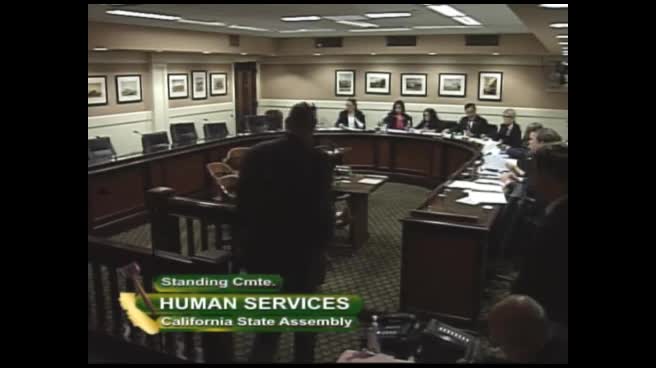 6MIN
Assembly Standing Committee on Human Services
Bill Author

Bill Co-Author(s):