AB 1631: Shorthand reporters: shorthand reporting service corporation.
- Session Year: 2017-2018
- House: Assembly
- Latest Version Date: 2017-04-18
Existing law provides for the certification and regulation of shorthand reporters and for the regulation of shorthand reporting corporations by the Court Reporters Board of California within the Department of Consumer Affairs. Under existing law, a violation of the laws governing the practice of shorthand reporting and shorthand reporting corporations is a crime.
This bill would additionally define a shorthand reporting service corporation as a corporation that renders back office support services to shorthand reporting corporations and certified shorthand reporters, as specified. This bill would prohibit a shorthand reporting service corporation or its owners, managers, or employees person or entity employing shorthand reporters, or contracting with shorthand reporters for services, from giving or otherwise providing cash or cash equivalents, including gift cards, for marketing purposes. This bill would prohibit its provisions from being construed to limit a shorthand reporting service corporation from entering into long-term or multi-case contracts with attorneys, law firms, or 3rd parties, as specified. This bill would require its provisions to be enforced by the Attorney General. Because this bill would expand the scope of an existing crime, it would create a state-mandated local program.
The California Constitution requires the state to reimburse local agencies and school districts for certain costs mandated by the state. Statutory provisions establish procedures for making that reimbursement.
This bill would provide that no reimbursement is required by this act for a specified reason.
Existing law provides for the certification and regulation of shorthand reporters and for the regulation of shorthand reporting corporations by the Court Reporters Board of California within the Department of Consumer Affairs. Under existing law, a violation of the laws governing the practice of shorthand reporting and shorthand reporting corporations is a crime.
This bill would additionally define a shorthand reporting service corporation as a corporation that renders back office support services to shorthand reporting corporations and certified shorthand reporters, as specified. This bill would prohibit a shorthand reporting service corporation or its owners, managers, or employees from giving or otherwise providing cash or cash equivalents, including gift cards, for marketing purposes. This bill would prohibit its provisions from being construed to limit a shorthand reporting service corporation from entering into long-term or multi-case contracts with attorneys, law firms, or 3rd parties, as specified. This bill would require its provisions to be enforced by the Attorney General. Because this bill would expand the scope of an existing crime, it would create a state-mandated local program.
The California Constitution requires the state to reimburse local agencies and school districts for certain costs mandated by the state. Statutory provisions establish procedures for making that reimbursement.
This bill would provide that no reimbursement is required by this act for a specified reason.
Existing law, the Moscone-Knox Professional Corporation Act, prohibits a professional corporation from rendering professional services, as defined, in this state without a currently effective certificate of registration issued by the governmental agency regulating the profession in which the corporation is or proposes to be engaged and excepts any professional corporation rendering professional services by persons duly licensed by specified state entities from that requirement. Existing law authorizes specified healing arts practitioners to be shareholders, officers, directors, or professional employees of a designated professional corporation, subject to certain limitations relating to ownership of shares. Under existing law establishing the licensing laws for various of those healing arts practitioners, there exist provisions governing professional corporations, which correspond to the Moscone-Knox Professional Corporation Act.This bill would add the definition of professional services contained in the Moscone-Knox Professional Corporation Act to the Business and Professions Code.Existing law, the Moscone-Knox Professional Corporation Act, prohibits a professional corporation from rendering professional services, as defined, in this state without a currently effective certificate of registration issued by the governmental agency regulating the profession in which the corporation is or proposes to be engaged and excepts any professional corporation rendering professional services by persons duly licensed by specified state entities from that requirement. Existing law authorizes specified healing arts practitioners to be shareholders, officers, directors, or professional employees of a designated professional corporation, subject to certain limitations relating to ownership of shares.
Under existing law establishing the licensing laws for various of those healing arts practitioners, there exist provisions governing professional corporations, which correspond to the Moscone-Knox Professional Corporation Act.
This bill would add the definition of professional services contained in the Moscone-Knox Professional Corporation Act to the Business and Professions Code.
(a)A person or entity employing shorthand reporters, or contracting with shorthand reporters for services, shall not give or otherwise provide cash or cash equivalents of any amount, including gift cards, for marketing purposes. As used in this section, gift card means a card or gift certificate, stored value card, or similar instrument purchased for monetary consideration when the card, certificate, or similar instrument is redeemable for merchandise, food, or services. Nothing contained in this subdivision shall otherwise prohibit customary and reasonable entertainment and marketing expenses.
(c)(b)Nothing contained in this section, article, Section 13401 of the Corporations Code, or any other law, shall be construed to limit a shorthand reporting service corporation person or entity from entering into long-term or multi-case contracts with attorneys, law firms, or third parties that are financing all or part of the action.
(d)(c)The provisions of this section shall be enforced by the Attorney General.
SEC. 3.SEC. 2.No reimbursement is required by this act pursuant to Section 6 of Article XIIIB of the California Constitution because the only costs that may be incurred by a local agency or school district will be incurred because this act creates a new crime or infraction, eliminates a crime or infraction, or changes the penalty for a crime or infraction, within the meaning of Section 17556 of the Government Code, or changes the definition of a crime within the meaning of Section 6 of Article XIIIB of the California Constitution.
(a)A shorthand reporting service corporation is a corporation that renders back office support services to shorthand reporting corporations and certified shorthand reporters, including, but not limited to, copying, indexing, labeling, binding, storing records, accounting, billing, delivery, and retrieval.
(b)A shorthand reporting service corporation or its owners, managers, or employees shall not give or otherwise provide cash or cash equivalents of any amount, including gift cards, for marketing purposes. As used in this section, gift card means a card or gift certificate, stored value card, or similar instrument purchased for monetary consideration when the card, certificate, or similar instrument is redeemable for merchandise, food, or services. Nothing contained in this subdivision shall otherwise prohibit customary and reasonable entertainment and marketing expenses.
(c)Nothing contained in this section, article, Section 13401 of the Corporations Code, or any other law, shall be construed to limit a shorthand reporting service corporation from entering into long-term or multi-case contracts with attorneys, law firms, or third parties that are financing all or part of the action.
(d)The provisions of this section shall be enforced by the Attorney General.
SEC. 3.No reimbursement is required by this act pursuant to Section 6 of Article XIIIB of the California Constitution because the only costs that may be incurred by a local agency or school district will be incurred because this act creates a new crime or infraction, eliminates a crime or infraction, or changes the penalty for a crime or infraction, within the meaning of Section 17556 of the Government Code, or changes the definition of a crime within the meaning of Section 6 of Article XIIIB of the California Constitution.
SECTION 1.Section 23.4 is added to the Business and Professions Code, to read:23.4.Except where the context suggests otherwise, consistent with Section 13401.1 of the Corporations Code, professional services means any type of professional services that may be lawfully rendered only pursuant to a license, certification, or registration authorized by the Business and Professions Code, the Chiropractic Act, or the Osteopathic Act.Except where the context suggests otherwise, consistent with Section 13401.1 of the Corporations Code, professional services means any type of professional services that may be lawfully rendered only pursuant to a license, certification, or registration authorized by the Business and Professions Code, the Chiropractic Act, or the Osteopathic Act.
|
Date
|
Status
|
|---|---|
| Feb 1, 2018 | From committee: Without further action pursuant to Joint Rule 62(a). |
| Apr 25, 2017 | In committee: Set, first hearing. Failed passage. |
| Apr 19, 2017 | Re-referred to Com. on B. & P. |
| Apr 18, 2017 | From committee chair, with author's amendments: Amend, and re-refer to Com. on B. & P. Read second time and amended. |
| Mar 21, 2017 | Re-referred to Com. on B. & P. |
| Mar 20, 2017 | From committee chair, with author's amendments: Amend, and re-refer to Com. on B. & P. Read second time and amended. |
| Mar 16, 2017 | Referred to Com. on B. & P. |
| Feb 19, 2017 | From printer. May be heard in committee March 21. |
| Feb 17, 2017 | Read first time. To print. |
|
Date
|
Description
|
Location
|
Votes
|
|
|---|---|---|---|---|
| Apr 25, 2017 | Do pass and be re-referred to the Committee on [Appropriations] | Assembly Standing Committee on Business and Professions |
Failed |
This list shows positions taken on this bill by organizations on the date displayed, which is linked to the original source.
Positions by individuals are not included.
|
Organization
|
Position
|
Date
|
|---|---|---|
| Coalition of Deposition Service Firms | * Support | Apr 25, 2017 |
Date of Hearing:
ASSEMBLY COMMITTEE ON BUSINESS AND PROFESSIONS
Evan Low, Chair
ABPCA Bill Id:AB 1631
Author:(Salas) – As Amended Ver:April 18, 2017
SUBJECT: Shorthand reporters: shorthand reporting service corporation.
SUMMARY: Prohibits a person or entity employing shorthand reporters or contracting with shorthand reporters for services from providing cash or cash equivalents of any amount for marketing purposes, as specified; and, states that nothing in existing law limits a person or entity from entering into long-term or multi-case contracts with attorneys, law firms, or third parties that are financing all or part of the action, as specified, and requires the Attorney General (AG) to enforce the provisions of the bill.
EXISTING LAW:
- Establishes the Court Reporters Board (CRB) under the jurisdiction of the Department of Consumer Affairs (DCA) for the licensure and regulation of certified shorthand reporters. (Business and Professions Code (BPC) Section 8000 et seq.)
- Prohibits a person from engaging in the practice of shorthand reporting, as defined, unless that person holds a certificate issued by the CRB and is not a salaried, full-time employee of any department or agency of the state who is employed as a hearing reporter. (BPC Section 8016)
- Defines the "practice of shorthand reporting" as the making, by means of written symbols or abbreviations in shorthand or machine shorthand writing, of a verbatim record or any oral court proceeding, deposition, court ordered hearing or arbitration, or proceeding before any grand jury, referee, or court commissioner and the accurate transcription thereof. (BPC Section 8017)
- Defines a "shorthand reporting corporation" as a corporation which is authorized to render professional services, as defined in Section 13401 if the Corporations Code, as long as that corporation and all of its shareholders, officers, directors, and employees rendering professional services who are certified shorthand reporters are in compliance with the Moscone-Knox Professional Corporations Act, as specified. (BPC Section 8040)
- States that a shorthand reporting corporation cannot do or fail to do any act the doing of which or the failure to do which would constitute unprofessional conduct under any statute, rule or regulation now or hereafter in effect which pertains to shorthand reporters or shorthand reporting, and in conducting its practice it must observe and be bound by such statutes, rules, and regulations to the same extent as a person holding a license. (BPC Section 8046)
- Defines "professional services" to mean any type of professional service that may be lawfully rendered only pursuant to a license, certification, or registration authorized by the BPC, the Chiropractic Act, or the Osteopathic Act. (CORP Section 13401(a))
THIS BILL:
- Prohibits a person or entity employing shorthand reporters or contracting with shorthand reporters for services from giving or otherwise providing cash or cash equivalents, of any amount, including gift cards for marketing purposes, but does not prohibit customary and reasonable entertainment and marketing expenses.
- Defines a "gift card" to mean a card or gift certificate, stored value card, or similar instrument purchased for monetary consideration when the card, certificate or similar instrument is redeemable for merchandise, food, or services.
- States that nothing in any law limits a person or entity from entering into long-term or multi-case contracts with attorneys, law firms, or third parties that are financing all or part of the action.
- Requires the Attorney General (AG) to enforce the provisions of this bill.
- Provides that no reimbursement is required by this bill pursuant to Section 6 of Article XIIB of the California Constitution because the only costs that may be incurred by a local agency or school district will be incurred because this act creates a new crime or infraction, eliminates a crime or infraction, or changes the penalty for a crime or infraction.
FISCAL EFFECT: Unknown. This bill is keyed fiscal by the Legislative Counsel.
COMMENTS:
Purpose. This bill is sponsored by the author. No author statement was provided.
Background. The CRB is responsible for licensing and disciplining certified shorthand reporters. Certified shorthand reporters are responsible for reporting depositions in legal cases as well as court proceedings. Since 1972, the CRB has permitted the certification of individuals and at one time, the registration of shorthand reporting corporations. Currently, the CRB oversees approximately 7,000 certified shorthand reporters. The CRB establishes the educational requirements for certification including authorizing the minimal educational standards and approving schools. In order to qualify for licensure as a certified shorthand reporter, an individual must have a high school education, twelve months (or 1,400 hours) of full-time work experience related to making records of hearings, obtain a passing score on the California State Hearing Reporters Examination, and complete a course from an approved court-reporting school. Currently, certified shorthand reporters in California work in two separate capacities: 1) as an "official reporter" who works as a court reporter employed by a state court or 2) as a "freelance reporter" who is hired privately by court reporting businesses, firms, or attorneys to report depositions. Both official and freelance reporters are required to meet the same educational and examination qualifications. Currently, the CRB does not separately license or register court reporting corporations.
Shorthand Reporting Corporations. BPC Section 8044 specifies that each director, shareholder, and officer of a shorthand reporting corporation must be a licensed shorthand reporter. Business models for shorthand reporting corporations and other service providers vary throughout the state. While there are a number of licensee-owned corporations in California, there are a number of businesses that provide litigation services but are not currently under the jurisdiction of the CRB. The CRB does not register or certify corporations in California, BPC Sections 8044 and 8046 provide the CRB with the explicit authority over licensee owned shorthand reporting corporations incorporated in California
Professional Standards of Practice. Title 16 California Code of Regulations (CCR) Section 2475 provides the professional standards of practice for licensed shorthand reporters. The regulations clarify the CRB's enforcement authority against licensees for violations of the professional standards and require licensees to comply with the standards including making truthful and accurate statements, maintaining confidentiality, complying with legal or agree-upon delivery dates, acting without bias toward, or prejudice against any party or their attorney, and other than the receipt of compensation for reporting services, neither directly or indirectly give nor receive any gift, incentive, reward, or anything of value from any person or entity associated with a proceeding being reported if it valued at $100 or more. This bill proposes to prohibit any person or entity that contracts with or employs shorthand reporters from giving or providing cash or cash equivalents of any amount for marketing purposes. Licensed shorthand reporters are currently prohibited from this practice. This bill defines gift cards to include a card or gift certificate, stored value card or similar instrument purchased for monetary consideration. However, as currently drafted this bill would not limit gifts of goods and services or other tangible gifts of value.
Current Related Legislation. AB 1660 (Kalra) of the current legislative session, 1) authorizes an entity to engage in the business of providing or arranging for the court reporters for the transcription of court proceedings if specified conditions are met including: be a licensed court reporter, be a shorthand reporting corporation, or be a registered with the CRB as a court reporter provider; requires a court reporter provider to adhere to the same laws and regulations applicable to licensees and 2) prohibits an entity from engaging in the services of a shorthand provider corporation unless that corporation is registered with the CRB. STATUS: This bill is currently pending in the Assembly Committee on Business and Professions.
SB 484 (Roth) of the current legislative session, makes it unlawful for a person who is employed by or who independently contracts with an entity that arranges for deposition officers to give or receive any gift, incentive, reward, or anything of value as inducement or compensation in connection with the provision of services by a deposition officer. Although these practices are already prohibited under California regulatory law for covered persons and entities, this bill would empower the Attorney General, a district attorney, or a city attorney to enforce this professional standard of conduct against all specified persons engaging in this conduct. STATUS: This bill is currently pending on the Senate Floor.
Prior Related Legislation. SB 270 (Mendoza) of 2015, would have provided the CRB with broad powers of enforcement, as specified, over foreign or domestic corporations that offer or arrange for shorthand reporting services, as specified, in California, and clarified that the provisions of the bill do not regulate the setting of negotiated transcript fees and reasonable fees for non-contracting parties. STATUS: This bill was held in the Assembly Committee on Business and Professions.
AB 1461 (Ruskin) of 2009, would have prohibited a firm, partnership, sole proprietorship, or other business entity providing or arranging for shorthand reporting services, from doing or failing to do any act that constitutes unprofessional conduct under any statute, rule or regulation pertaining to shorthand reporters or shorthand reporting. Status: This bill was held in the Assembly Committee on Appropriations.
ARGUMENTS IN SUPPORT:
Esquire Deposition Services, LLC, Magna Legal Services, U.S. Legal Support, Inc., and Veritext Corporation writes in support, "The provisions of [this bill] address the issue of gifts to users of deposition services in a fair way which prohibits gifts of cash or gift cards while balancing the ability to conduct commerce."
ARGUMENTS IN OPPOSITION:
The Deposition Reporters Association of California, Inc. writes in opposition, The Deposition Reporters Association of California (CalDRA) respectfully opposes [this bill], as amended. CalDRA is the only California trade association whose board and membership is entirely comprised of freelance deposition reporters and freelance licensed deposition firm owners affected by this measure. The importance of the licensed profession of court reporting to the reasoned and credible administration of justice is hard to overstate. This was judicially confirmed in California in 2011 in Serrano v. Stefan Merli Plastering Co. (2011) 52 Cal.4th 1018, 1021 where the Supreme Court held that freelance court reporters who take depositions are “ministerial officers of the court,” meaning officers charged with non-discretionary, inherently judicial duties. For this reason, freelance court reporters’ impartiality, competence, and integrity are strictly regulated by numerous statutes in the Code of Civil Procedure and [BPC]."
The California Court Reporters Association writes in opposition, "Unfortunately, this bill could be used to weaken California's robust ethical rules and laws pertaining to deposition proceedings and the handling of the deposition transcripts. Our state's ethical rules and laws are designed to preserve the impartiality and fairness of deposition proceedings, to ensure that parties to litigation are not subjected to unfair treatment, and transcripts are held to the highest professional standard. For these reasons CCRA must oppose this measure."
POLICY ISSUES FOR CONSIDERATION:
As currently drafted, it is unclear how this bill and AB 1660 (Kalra) of the current legislative session will interact if both bills were to be chaptered. AB 1660 would require specified corporations to register with the CRB and abide by all of the current laws and professional standards of practice for licensed shorthand reporters and would provide the CRB with broad enforcement authority, while this bill would require entities to comply with only one provision of the professional standards of practice and would require the AG to enforce the provisions of this bill.
IMPLEMENTATION ISSUES:
As currently drafted, this bill states that noting in this bill, Section 13401 of the Corporations Code, or any other law, shall limit a person or entity from entering into long-term or multi-case contract with attorneys, law firms, or third parties that are financing all or part of the action. This provision is an attempt to ensure that current contracting practices, under existing law, may continue. However, the reference to "any other law" may provide confusion. The author may wish to amend the bill to strike the reference to "any other law".
AMENDMENTS:
On page 3, line 5, after Code, strike "or any other law"
REGISTERED SUPPORT:
Esquire Deposition Services, LLC
Magna Legal Services
U.S. Legal Support, Inc.
Veritext Corp.
REGISTERED OPPOSITION:
California Court Reporters Association (03/20/17 version)
Deposition Reporters Association of California, Inc.
Analysis Prepared by: Elissa Silva / B. & P. / 916-319-3301
Discussed in Hearing
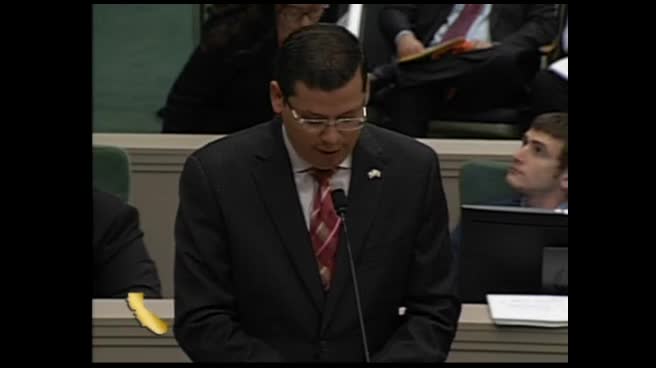 8MIN
Assembly Standing Committee on Business and Professions
Bill Author

Bill Co-Author(s):