AB 2100: California Victim Compensation Board: victim restitution: violence peer counseling.
- Session Year: 2017-2018
- House: Assembly
- Latest Version Date: 2018-02-08
Existing law provides for the indemnification of victims of crime and commits the administration of these provisions to the California Victim Compensation Board. Existing law provides for the payment of victims compensation from the Restitution Fund and provides that moneys in the fund are continuously appropriated, as specified.
Existing law allows the board, until January 1, 2019, to grant reimbursement for outpatient psychiatric, psychological, or other mental health counseling-related expenses incurred by the victim or derivative victim, including peer counseling services provided by violence peer counseling services provided by a service organization for the victims of violent crimes. Under existing law, a violence peer counselor for purposes of these provisions must meet specified criteria, including that he or she has completed a training program aimed at preparing an individual who was once a mental health services consumer to use his or her life experience with mental health treatment, to promote the mental health recovery of other mental health services consumers. Existing law requires a licensed marriage and family therapist, a licensed educational psychologist, a licensed clinical social worker, or licensed professional clinical counselor supervising peer violence counseling services to be employed by the same service organization as the violence peer counselor.
This bill would continue these provisions indefinitely. By extending the use of continuously appropriated funds, this bill would make an appropriation. The bill would delete the requirement that a violence peer counselor complete a training program requiring him or her to have once been a mental health services consumer. The bill would delete the requirement that the supervising licensed mental health professional be employed by the same service organization as the violence peer counselor.
Existing law prohibits payments for peer counseling services provided by a rape crisis center from exceeding $15 for each hour of services provided and limits in-person counseling for a period not to exceed 10 weeks.
This bill would instead require the board to provide reimbursement for peer counseling services provided by a rape crisis center or a violence peer counseling organization and would require the rate to be no less than one-half of the reimbursement rate set by the board for individual or family counseling services provided by mental health interns. By expanding the amounts for which a continuously appropriated fund may be spent, the bill would make an appropriation.
Existing law prohibits a person who is convicted of a violent felony, as defined, from being granted compensation until he or she has been discharged from probation or has been released from a correctional institution and has been discharged from parole, postrelease community supervision, or mandatory supervision.
This bill would, notwithstanding the above provision, make a person who has been the victim of a violent crime eligible to receive reimbursement for mental health treatment, including violence peer counseling services, before he or she has been discharged from parole, postrelease community supervision, or mandatory supervision. By expanding the purposes for which a continuously appropriated fund may be spent, the bill would make an appropriation.
Notwithstanding Section 13955, a person shall not be eligible for compensation under the following conditions:
(a)An application may be denied, in whole or in part, if the board finds that denial is appropriate because of the nature of the victims or other applicants involvement in the events leading to the crime, or the involvement of the person whose injury or death gives rise to the application.
(1)Factors that may be considered in determining whether the victim or derivative victim was involved in the events leading to the qualifying crime include, but are not limited to:
(A)The victim or derivative victim initiated the qualifying crime, or provoked or aggravated the suspect into initiating the qualifying crime.
(B)The qualifying crime was a reasonably foreseeable consequence of the conduct of the victim or derivative victim.
(C)The victim or derivative victim was committing a crime that could be charged as a felony and reasonably lead to him or her being victimized. However, committing a crime shall not be considered involvement if the victims injury or death occurred as a direct result of a crime committed in violation of Section 261, 262, or 273.5 of, or for a crime of unlawful sexual intercourse with a minor in violation of subdivision (d) of Section 261.5 of, the Penal Code.
(2)If the victim is determined to have been involved in the events leading to the qualifying crime, factors that may be considered to mitigate or overcome involvement include, but are not limited to:
(A)The victims injuries were significantly more serious than reasonably could have been expected based on the victims level of involvement.
(B)A third party interfered in a manner not reasonably foreseeable by the victim or derivative victim.
(C)The board shall consider the victims age, physical condition, and psychological state, as well as any compelling health and safety concerns, in determining whether the application should be denied pursuant to this section. The application of a derivative victim of domestic violence under 18 years of age or derivative victim of trafficking under 18 years of age shall not be denied on the basis of the denial of the victims application under this subdivision.
(b)(1)An application shall be denied if the board finds that the victim or, if compensation is sought by, or on behalf of, a derivative victim, either the victim or derivative victim failed to cooperate reasonably with a law enforcement agency in the apprehension and conviction of a criminal committing the crime. In determining whether cooperation has been reasonable, the board shall consider the victims or derivative victims age, physical condition, and psychological state, cultural or linguistic barriers, any compelling health and safety concerns, including, but not limited to, a reasonable fear of retaliation or harm that would jeopardize the well-being of the victim or the victims family or the derivative victim or the derivative victims family, and giving due consideration to the degree of cooperation of which the victim or derivative victim is capable in light of the presence of any of these factors. A victim of domestic violence shall not be determined to have failed to cooperate based on his or her conduct with law enforcement at the scene of the crime. Lack of cooperation shall also not be found solely because a victim of sexual assault, domestic violence, or human trafficking delayed reporting the qualifying crime.
(2)An application for a claim based on domestic violence shall not be denied solely because a police report was not made by the victim. The board shall adopt guidelines that allow the board to consider and approve applications for assistance based on domestic violence relying upon evidence other than a police report to establish that a domestic violence crime has occurred. Factors evidencing that a domestic violence crime has occurred may include, but are not limited to, medical records documenting injuries consistent with allegations of domestic violence, mental health records, or that the victim has obtained a permanent restraining order.
(3)An application for a claim based on a sexual assault shall not be denied solely because a police report was not made by the victim. The board shall adopt guidelines that allow it to consider and approve applications for assistance based on a sexual assault relying upon evidence other than a police report to establish that a sexual assault crime has occurred. Factors evidencing that a sexual assault crime has occurred may include, but are not limited to, medical records documenting injuries consistent with allegations of sexual assault, mental health records, or that the victim received a sexual assault examination.
(4)An application for a claim based on human trafficking as defined in Section 236.1 of the Penal Code shall not be denied solely because no police report was made by the victim. The board shall adopt guidelines that allow the board to consider and approve applications for assistance based on human trafficking relying upon evidence other than a police report to establish that a human trafficking crime as defined in Section 236.1 of the Penal Code has occurred. That evidence may include any reliable corroborating information approved by the board, including, but not limited to, the following:
(A)A Law Enforcement Agency Endorsement issued pursuant to Section 236.2 of the Penal Code.
(B)A human trafficking caseworker, as identified in Section 1038.2 of the Evidence Code, has attested by affidavit that the individual was a victim of human trafficking.
(5)(A)An application for a claim by a military personnel victim based on a sexual assault by another military personnel shall not be denied solely because it was not reported to a superior officer or law enforcement at the time of the crime.
(B)Factors that the board shall consider for purposes of determining if a claim qualifies for compensation include, but are not limited to, the evidence of the following:
(i)Restricted or unrestricted reports to a military victim advocate, sexual assault response coordinator, chaplain, attorney, or other military personnel.
(ii)Medical or physical evidence consistent with sexual assault.
(iii)A written or oral report from military law enforcement or a civilian law enforcement agency concluding that a sexual assault crime was committed against the victim.
(iv)A letter or other written statement from a sexual assault counselor, as defined in Section 1035.2 of the Evidence Code, licensed therapist, or mental health counselor, stating that the victim is seeking services related to the allegation of sexual assault.
(v)A credible witness to whom the victim disclosed the details that a sexual assault crime occurred.
(vi)A restraining order from a military or civilian court against the perpetrator of the sexual assault.
(vii)Other behavior by the victim consistent with sexual assault.
(C)For purposes of this subdivision, the sexual assault at issue shall have occurred during military service, including deployment.
(D)For purposes of this subdivision, the sexual assault may have been committed off base.
(E)For purposes of this subdivision, a perpetrator means an individual who is any of the following at the time of the sexual assault:
(i)An active duty military personnel from the United States Army, Navy, Marine Corps, Air Force, or Coast Guard.
(ii)A civilian employee of any military branch specified in clause (i), military base, or military deployment.
(iii)A contractor or agent of a private military or private security company.
(iv)A member of the California National Guard.
(F)For purposes of this subdivision, sexual assault means an offense included in Section 261, 262, 264.1, 286, 288a, or 289 of the Penal Code, as of the date the act that added this paragraph was enacted.
(c)(1)Notwithstanding Section 13955, no except as provided in paragraph (3), a person who is convicted of a violent felony listed in subdivision (c) of Section 667.5 of the Penal Code may not be granted compensation until that person has been discharged from probation or has been released from a correctional institution and has been discharged from parole, or has been discharged from postrelease community supervision or mandatory supervision, if any, for that violent crime. In no case shall compensation Compensation shall not be granted in any case to an applicant pursuant to this chapter during any period of time the applicant is held in a correctional institution, or while an applicant is required to register as a sex offender pursuant to Section 290 of the Penal Code.
(2)A person who has been convicted of a violent felony listed in subdivision (c) of Section 667.5 of the Penal Code may apply for compensation pursuant to this chapter at any time, but the award of that compensation may not be considered until the applicant meets the requirements for compensation set forth in paragraph (1).
(3)Notwithstanding paragraphs (1) and (2), a person who has been a victim of a violent crime is eligible to receive reimbursement for mental health treatment, including violence peer counseling services, in accordance with Section 13957.9, before he or she has been discharged from parole, postrelease community supervision, or mandatory supervision, unless the board determines that a denial is appropriate because of the nature of the victims or other applicants involvement in the events leading to the crime, or the involvement of the person whose injury or death gives rise to the application.
SEC. 2.Section 13957.7 of the Government Code is amended to read:13957.7.(a)No reimbursement may Reimbursement may not be made for any expense that is submitted more than three years after it is incurred by the victim or derivative victim. However, reimbursement may be made for an expense submitted more than three years after the date it is incurred if the victim or derivative victim has affirmed the debt and is liable for the debt at the time the expense is submitted for reimbursement, or has paid the expense as a direct result of a crime for which a timely application has been filed or has paid the expense as a direct result of a crime for which an application has been filed and approved.
(b)Compensation made pursuant to this chapter may be on a one-time or periodic basis. If periodic, the board may increase, reduce, or terminate the amount of compensation according to the applicants need, subject to the maximum limits provided in this chapter.
(c)(1)The board may authorize direct payment to a provider of services that are reimbursable pursuant to this chapter and may make those payments prior to verification. However, the board may not, without good cause, authorize a direct payment to a provider over the objection of the victim or derivative victim.
(2)Reimbursement on the initial claim for any psychological, psychiatric, or mental health counseling services shall, if the application has been approved, be paid by the board within 90 days of the date of receipt of the claim for payment, with subsequent payments to be made to the provider within one month of the receipt of a claim for payment.
(d)Payments The board shall provide reimbursement for peer counseling services provided by a rape crisis center may not exceed fifteen dollars ($15) for each hour of services provided. or violence peer counseling organization at a rate that is not less than one-half of the reimbursement rate set by the board for individual or family counseling services provided by mental health interns. Those services shall be limited to in-person counseling for a period not to exceed 10 20 weeks plus one series of facilitated support group counseling sessions. The board shall also provide reimbursement for services provided by a peer counselors supervising licensed mental health professional, as described in subparagraph (D) of paragraph (3) of subdivision (c) of Section 13957.9.
(e)The board shall develop procedures to ensure that a victim is using compensation for job retraining or relocation only for its intended purposes. The procedures may include, but need not be limited to, requiring copies of receipts, agreements, or other documents as requested, or developing a method for direct payment.
(f)Compensation granted pursuant to this chapter shall not disqualify an otherwise eligible applicant from participation in any other public assistance program.
(g)The board shall pay attorneys fees representing the reasonable value of legal services rendered to the applicant, in an amount equal to 10 percent of the amount of the award, or five hundred dollars ($500), whichever is less, for each victim and each derivative victim. The board may request that an attorney provide verification of legal services provided to an applicant and the board may contact an applicant to verify that legal services were provided. An attorney receiving fees from another source may waive the right to receive fees under this subdivision. Payments under this subdivision shall be in addition to any amount authorized or ordered under subdivision (b) of Section 13960. An attorney may not charge, demand, receive, or collect any amount for services rendered in connection with any proceedings under this chapter except as awarded under this chapter.
(h)A private nonprofit agency shall be reimbursed for its services at the level of the normal and customary fee charged by the private nonprofit agency to clients with adequate means of payment for its services, except that this reimbursement may not exceed the maximum reimbursement rates set by the board and may be made only to the extent that the victim otherwise qualifies for compensation under this chapter and that other reimbursement or direct subsidies are not available to serve the victim.
SEC. 3.Section 13957.9 of the Government Code is amended to read:13957.9.(a)In addition to the authorization provided in Section 13957 and subject to the limitations set forth in Section 13957.2, the board may grant for pecuniary loss, when the board determines it will best aid the person seeking compensation, reimbursement of the amount of outpatient psychiatric, psychological, or other mental health counseling-related expenses incurred by the victim or derivative victim, including peer counseling services provided by violence peer counseling services provided by a service organization for victims of violent crime, and including family psychiatric, psychological, or mental health counseling for the successful treatment of the victim provided to family members of the victim in the presence of the victim, whether or not the family member relationship existed at the time of the crime, that became necessary as a direct result of the crime, subject to the following conditions:
(1)The following persons may be reimbursed for the expense of their outpatient mental health counseling in an amount not to exceed ten thousand dollars ($10,000):
(A)A victim.
(B)A derivative victim who is the surviving parent, sibling, child, spouse, fiance, or fiancee of a victim of a crime that directly resulted in the death of the victim.
(C)A derivative victim, as described in paragraphs (1) to (4), inclusive, of subdivision (c) of Section 13955, who is the primary caretaker of a minor victim whose claim is not denied or reduced pursuant to Section 13956 in a total amount not to exceed ten thousand dollars ($10,000) for not more than two derivative victims.
(2)The following persons may be reimbursed for the expense of their outpatient mental health counseling in an amount not to exceed five thousand dollars ($5,000):
(A)A derivative victim not eligible for reimbursement pursuant to paragraph (1), provided that mental health counseling of a derivative victim described in paragraph (5) of subdivision (c) of Section 13955, shall be reimbursed only if that counseling is necessary for the treatment of the victim.
(B)A victim of a crime of unlawful sexual intercourse with a minor committed in violation of subdivision (d) of Section 261.5 of the Penal Code. A derivative victim of a crime committed in violation of subdivision (d) of Section 261.5 of the Penal Code shall not be eligible for reimbursement of mental health counseling expenses.
(C)A minor who suffers emotional injury as a direct result of witnessing a violent crime and who is not eligible for reimbursement of the costs of outpatient mental health counseling under any other provision of this chapter. To be eligible for reimbursement under this clause, the minor must have been in close proximity to the victim when he or she witnessed the crime.
(3)The board may reimburse a victim or derivative victim for outpatient mental health counseling in excess of that authorized by paragraph (1) or (2) or for inpatient psychiatric, psychological, or other mental health counseling if the claim is based on dire or exceptional circumstances that require more extensive treatment, as approved by the board.
(4)Expenses for psychiatric, psychological, or other mental health counseling-related services may be reimbursed only if the services were provided by either of the following individuals:
(A)A person who would have been authorized to provide those services pursuant to former Article 1 (commencing with Section 13959) as it read on January 1, 2002.
(B)A person who is licensed by the state to provide those services, or who is properly supervised by a person who is so licensed, subject to the boards approval and subject to the limitations and restrictions the board may impose.
(b)The total award to or on behalf of each victim or derivative victim may not exceed thirty-five thousand dollars ($35,000), except that this amount may be increased to seventy thousand dollars ($70,000) if federal funds for that increase are available.
(c)For the purposes of this section, the following definitions shall apply:
(1)Service organization for victims of violent crime means a nonprofit and charitable organization that meets both of the following criteria:
(A)Its primary mission is to provide services to victims of violent crime.
(B)It provides programs or services to victims of violent crime and their families, and other programs, whether or not a similar program exists in an agency that provides additional services.
(2)Violence peer counseling services means counseling by a violence peer counselor for the purpose of rendering advice or assistance for victims of violent crime and their families. Any violence peer counseling services that fall under the scope of practice of the Licensed Marriage and Family Therapist Act (Chapter 13 (commencing with Section 4980) of Division 2 of the Business and Professions Code), the Educational Psychologist Practice Act (Chapter 13.5 (commencing with Section 4989.10) of Division 2 of the Business and Professions Code), the Clinical Social Worker Practice Act (Chapter 14 (commencing with Section 4991) of Division 2 of the Business and Professions Code), and the Licensed Professional Clinical Counselor Act (Chapter 16 (commencing with Section 4999.10) of Division 2 of the Business and Professions Code), which are not performed in an exempt setting as defined in Sections 4980.01, 4996.14, and 4999.22 of the Business and Professions Code, shall only be performed by a licensee or a registrant of the Board of Behavioral Sciences or other appropriately licensed professional, such as a licensed psychologist or board certified psychiatrist.
(3)Violence peer counselor means a provider of supportive and nonpsychotherapeutic peer counseling services who is employed by a service organization for victims of violent crime, whether financially compensated or not, and who meets all of the following requirements:
(A)Possesses at least six months of full-time equivalent experience in providing peer support services acquired through employment, volunteer work, or as part of an internship experience.
(B)Completed a training program aimed at preparing an individual who was once a mental health services consumer to use his or her life experience with mental health treatment, combined with other strengths and skills, to promote the mental health recovery of other mental health services consumers who are in need of peer-based services relating to recovery as a victim of a violent crime.
(C)Possesses 40 hours of training on all of the following:
(i)The profound neurological, biological, psychological, and social effects of trauma and violence.
(ii)Peace-building and violence prevention strategies, including, but not limited to, conflict mediation and retaliation prevention related to gangs and gang-related violence.
(iii)Post-traumatic stress disorder and vicarious trauma, especially as related to gangs and gang-related violence.
(iv)Case management practices, including, but not limited to, ethics and victim compensation advocacy.
(D)When providing violence peer counseling services, is supervised by a marriage and family therapist licensed pursuant to Chapter 13 (commencing with Section 4980) of Division 2 of the Business and Professions Code, a licensed educational psychologist licensed pursuant to Chapter 13.5 (commencing with Section 4989.10) of Division 2 of the Business and Professions Code, a clinical social worker licensed pursuant to Chapter 14 (commencing with Section 4991) of Division 2 of the Business and Professions Code, or a licensed professional clinical counselor licensed pursuant to Chapter 16 (commencing with Section 4999.10) of Division 2 of the Business and Professions Code. For the purposes of this subparagraph, a licensed marriage and family therapist, licensed educational psychologist, licensed clinical social worker, or licensed professional clinical counselor shall be employed by the same service organization as the violence peer counselor.
(d)This section shall remain in effect only until January 1, 2019, and as of that date is repealed, unless a later enacted statute, that is enacted before January 1, 2019, deletes or extends that date.|
Date
|
Status
|
|---|---|
| May 25, 2018 | In committee: Held under submission. |
| Apr 4, 2018 | In committee: Set, first hearing. Referred to suspense file. |
| Mar 21, 2018 | From committee: Do pass and re-refer to Com. on APPR. (Ayes 7. Noes 0.) (March 20). Re-referred to Com. on APPR. |
| Feb 22, 2018 | Referred to Com. on PUB. S. |
| Feb 9, 2018 | From printer. May be heard in committee March 11. |
| Feb 8, 2018 | Read first time. To print. |
|
Date
|
Description
|
Location
|
Votes
|
|
|---|---|---|---|---|
| Mar 20, 2018 | Do pass and be re-referred to the Committee on [Appropriations] | Assembly Standing Committee on Public Safety |
Passed |
This list shows positions taken on this bill by organizations on the date displayed, which is linked to the original source.
Positions by individuals are not included.
|
Organization
|
Position
|
Date
|
|---|---|---|
| ACLU California | * Support | Mar 20, 2018 |
| California Chapters of The Brady Campaign to Prevent Gun Violence | * Support | Mar 20, 2018 |
| CURYJ for Positive Youth Justice | * Support | Mar 20, 2018 |
| Giffords Law Center | * Support | Mar 20, 2018 |
| Sacramento Violence Intervention Program | * Support | Mar 20, 2018 |
| Wellspace Health | * Support | Mar 20, 2018 |
| Youth ALIVE! | * Support | Mar 20, 2018 |
Date of Hearing: April 4, 2018
ASSEMBLY COMMITTEE ON APPROPRIATIONS
Lorena Gonzalez Fletcher, Chair
ABPCA Bill Id:AB 2100
Author:(Bonta) – As Introduced Ver:February 8, 2018
Policy Committee: | Public Safety | Vote: | 7 - 0 |
|
| ||
|
|
Urgency: No State Mandated Local Program: No Reimbursable: No
SUMMARY:
This bill makes permanent a peer counseling pilot program at the California Victims Compensation Board (CalVCB) and makes various changes to the victim compensation program. Specifically, this bill:
- Requires CalVCB to provide reimbursement for expenses related to rape and violence peer counseling services at a rate not less than one-half of the rate set by CalVCB for individual or family counseling services provided by mental health interns.
- Allows for 20 weeks of peer counseling services, instead of the current level of 10 weeks.
- Removes several requirements for peer counselors, such as that a peer counselor’s licensed supervisor must be employed by the same organization as the peer counselor.
- Allows a person currently on probation, parole, or post-release community supervision (PRCS) to receive reimbursement from CalVCB for mental health treatment, including violence peer counseling services.
FISCAL EFFECT:
- Unknown, potentially significant costs (Restitution Fund) for CalVCB to pay higher reimbursement rates for peer counseling services. Currently, few victims utilize peer counseling services funded through CalVCB. If there is not an increase in victims receiving peer counseling then costs of this bill related to peer counseling will be minor. However, it is possible that peer counseling services funded through CalVCB are not heavily used by victims because the low reimbursement rate makes it unlikely that many organizations can afford to offer peer counseling. The extent to which peer counseling services will be expanded and more heavily utilized under the provisions of this bill is unknown.
- Unknown, potentially significant costs (Restitution Fund) for CalVCB to provide victim compensation for individuals on probation, parole, or PRCS. These costs will be a one-time increase, to the extent that compensation is paid sooner (while the person is still on community supervision) than it otherwise would have been if the person waited to apply for compensation until the end of their community supervision.
- Unknown potential savings by allowing individuals on probation, parole, and PRCS to access victim compensation sooner to the extent the victim services received help the individual to avoid recidivating.
COMMENTS:
- Background. CalVCB is a state entity that administers the Victim Compensation Program. CalVCB provides reimbursement for crime-related expenses to eligible victims of violent crime, including crime scene clean up, funeral and burial expenses, home or vehicle modifications for victims who became disabled, income loss, medical and dental treatment, mental health services, relocation, and residential security. CalVCB pays for only expenses related to the crime and is a payer of last resort. CalVCB funding comes from restitution paid by criminal offenders through fines, orders, penalty assessments, and from federal Victims of Crime Act funds.
- Purpose. According to the author:
AB 2100 is necessary to reauthorize a promising pilot program and to improve its effectiveness by removing unnecessary administrative barriers and increasing the very low rate of reimbursement existing law provides to violence prevention professionals' counseling services. Without this bill, this program will be terminated and California’s victim compensation program will no longer reimburse violently injured crime victims for the cost of violence peer counseling services.
- Restitution Fund experiencing shortfall. The Restitution Fund receives funding from restitution funds, fees, and penalties paid by criminal offenders. Similar to many funds supported by criminal fines and fees, the Restitution Fund has experienced declining revenues in recent years. In 2015-16, the Restitution Fund developed a structural shortfall—a situation where expenditures from the account exceed revenues. This shortfall has persisted since that time and is projected to continue into the future. If the operating shortfall continues the Restitution Fund will face insolvency in the coming years, which will require either increased revenues or reduced expenditures.
Analysis Prepared by: Jessica Peters / APPR. / (916) 319-2081
Date of Hearing:
Counsel: Liah Burnley
ASSEMBLY COMMITTEE ON PUBLIC SAFETY
Reginald Byron Jones-Sawyer, Sr., Chair
ABPCA Bill Id:AB 2100
Author:(Bonta) – As Introduced Ver:February 8, 2018
SUMMARY:
Amends various provisions relating to the California Victims Compensation Board (CalVCB) and violence peer counseling services. Specifically, this bill:
- Requires CalVCB to provide reimbursement for expenses related to rape and violence peer counseling services at a rate not less than one-half of the rate set by CalVCB for individual or family counseling services provided by a licensed clinical social worker.
- Extends the limitation on reimbursement for peer counseling services from10 weeks of counseling services to 26 weeks of counseling service.
- Removes the requirement that a peer counselor must have previously been a mental health services consumer.
- Removes the requirement that a peer counselor’s licensed supervisor must be employed by the same organization as the peer counselor.
- Deletes the sunset provision that would repeal CalVCB’s authority to reimburse outpatient mental health counseling related expenses, including peer-counseling services for victims of violent crime and their families.
- Allows a person currently on probation, parole, or post-release community supervision to be eligible to receive reimbursement from CalVCB for mental health treatment, including violence peer counseling services.
EXISTING LAW:
- States that CalVCB may authorize direct payment to a provider of victim’s services. (Gov. Code, § 13957.7 subd. (c)(1).)
- States that CalVCB may provide payments for peer counseling services provided by a rape counseling center and that the payments may not exceed $15 for each hour of service provided. (Gov. Code, § 13957.7, subd. (c)(2).)
- States that reimbursement for peer counseling services provided by a rape counseling center shall be limited to in-person counseling for a period of not to exceed 10 weeks plus one series of facilitated support group counseling sessions. (Gov. Code, § 13957.7, subd. (c)(2).)
- States that CalVCB may grant compensation for pecuniary losses for outpatient psychiatric, psychological, or other mental health counseling-related expenses incurred by the victim or derivative victim, including violence peer counseling services provided by a service organization for victims of violent crime and their families, that became necessary as a direct result of the crime. (Gov. Code, § 13957.9, subd. (a).)
- Provides that expenses for mental health counseling related-services may only be reimbursed if the services were provided by a person licensed by the state to provide such services, or is properly supervised by a person who is so licensed. (Gov. Code, § 13957.9, subd. (a)(4).)
- Defines “service organization for victims of crime” as “a nonprofit and charitable organization that provides services to victims of violent crime.” (Gov. Code, § 13957.9, subd. (c)(1).)
- Defines “violence peer counseling services” as “counseling by a violence peer counselor for the purpose of rendering advice or assistance to victims of violent crime and their families.” (Gov. Code, § 13957.9, subd. (c)(2).)
- Defines “violence peer counselor” as a provider of supported and nonpsychotherapeutic peer counseling services who is employed by a service organization for victims of violent crime. (Gov. Code, § 13957.9, subd. (c)(3).)
- States that a violence peer counselor must:
- Possess at least six months of full-time experience in providing peer support services;
- Complete a training program aimed at preparing an individual to use his or her life experience to promote mental health recovery of mental health consumers who are in need of peer-based services relating to recovery as a victim of violent crime;
- Have once been a mental health services consumer; and
- Possess 40 hours of training on the effects of trauma and violence, peace building and violence prevention strategies, post-traumatic stress disorder, case management practices including ethics and victims compensation advocacy. (Gov. Code, § 13957.9, subd. (c)(3).)
- Possess at least six months of full-time experience in providing peer support services;
- Requires violence peer counselors, when providing services to be supervised by a licensed marriage and family therapist, licensed educational psychologist, licensed clinical social worker or a licensed professional clinical counselor. (Gov. Code, § 13957.9, subd. (c)(3)(D).)
- Requires a licensed violence peer counselor supervisor to be employed by the same organization as the violence peer counselor. (Gov. Code, § 13957.9, subd. (c)(3)(D).)
- Sunsets the provisions authorizing CalVCB to compensate outpatient mental health-related services including violence peer counseling. (Gov. Code, § 13957.9, subd. (d).)
- States that a person is not eligible for compensation if:
- CalVCB finds that denial is appropriate because of the nature of the applicant’s involvement in the events leading to the crime;
- CalVCB finds that the victim failed to cooperate reasonably with law enforcement in the apprehension and conviction of a criminal committing the crime;
- The applicant has a violent felony conviction listed in subdivision (c) of Section 667.5 and is currently incarcerated or on parole, post release community supervision , or mandatory supervision for that violent felony; and
- The applicant is required to register as a sex offender pursuant to Section 290. (Gov. Code, § 13956.)
- Provides that a person who has been convicted of a violent felony listed in subdivision (c) of Section 667.5 may apply for compensation at any time, but the award of that compensation may not be considered until the person is released from incarceration and is discharged from parole, post release community supervision, or mandatory supervision for that violent felony. (Gov. Code, § 13956, subd. (c)(2).)
FISCAL EFFECT:
Unknown
COMMENTS:
- Author’s Statement: According to the author, “AB 2100 is necessary to reauthorize a promising pilot program and to improve its effectiveness by removing unnecessary administrative barriers and increasing the very low rate of reimbursement existing law provides to violence prevention professionals' counseling services. Without this bill, this program will be terminated and California’s victim compensation program will no longer reimburse violently injured crime victims for the cost of violence peer counseling services.
“Victim’s Compensation funds are intended to be available for vulnerable individuals, especially people who experience violence. One way to address the shortcomings of CalVCB is to ensure that programs providing culturally appropriate peer counseling to victims of violent crime are able to request reimbursement. This bill supports physical and emotional recovery for Californians injured by gun or other violence, through the Crime Victims Compensation Fund, to include services provided by community violence peer counselors, sometimes called Intervention Specialists or Violence Prevention Professionals. The Victim’s Compensation Program is the largest source of victim’s benefits in California. The California Victim Compensation Board (CalVCB) offers benefits to a wide range of victims and AB 2100 strengthens the system.”
- California Victims Compensation Board: CalVCB is a state program housed under the Government Operation Agency that administers the Victim Compensation Program. CalVCB provides reimbursement for crime-related expenses to eligible victims of violent crime, including crime scene clean up, funeral and burial expenses, home or vehicle modifications for victims who became disabled, income loss, medical and dental treatment, mental health services, relocation, and residential security. CalVCB does not pay for any expense not related to the crime. CalVCB funding comes from restitution paid by criminal offenders through fines, orders, penalty assessments, and is supplemented by federal funds. (https://victims.ca.gov/board/)
- Violence Peer Counseling Services: The Victim Compensation Program covers individual, family, and group therapy necessary as a direct result of the qualifying crime. There are both monetary and service limitations for mental health services set by CalVCB. A victim can obtain services from different types of mental health providers, including: licensed psychiatrists, licensed or registered psychologists, licensed clinical social workers, marriage family therapists, psychological assistants, licensed professional clinical counselors, peer counselors, psychiatric mental-health nurses, clinical nurse specialists, and certain types of interns. Peer counseling services provide advice and assistance only to victims of rape and violent crime, and their families. (https://victims.ca.gov/providers/mental.aspx#reimbursableproviders.)
A peer counselor is someone with the lived experience of recovery from a mental health condition. They provide support to others experiencing similar challenges. Peer counseling complements, but does not duplicate or replace the roles of therapists, case managers, and other members of a mental health treatment team. Research shows that peer counseling is effective for recovery from behavioral health conditions. Benefits of peer counseling include increased self-esteem and confidence, increased sense of control and ability to bring about changes in their lives, increased engagement in self-care and wellness, increased social support and social functioning, decreased psychotic symptoms, and decreased substance abuse and depression. (https://www.samhsa.gov/sites/default/files/programs_campaigns/brss_tacs/value-of-peers-2017.pdf.)
In 2014, the Legislature enacted AB 1629, which authorized CalVCB to reimburse crime victims and victims service providers for outpatient mental health counseling related-expenses, including costs for violence peer counseling services provided by a service organization for victims of violent crime. (Assem. Bill No. 1629 (2013-2014 Reg. Sess.) as amended Aug. 21, 2014.) These service organizations can bill CalVCB directly for providing violence peer counseling. (Id.) To be eligible for compensation, violence peer counselors, among other requirements, must previously have been a mental health services consumer. (Gov. Code, § 13957.9, subd. (c)(3)(B).) When providing peer counseling services, violence peer counselors must be supervised by a marriage and family therapist, licensed educational psychologist, licensed clinical social worker, or licensed professional clinical counselor who is employed by the same organization as the violence peer counselor. (Gov. Code, § 13957.9, subd. (c)(3)(D).)
AB 1629 included a sunset provision. (Assem. Bill No. 1629 (2013-2014 Reg. Sess.) § 1.) In 2016, the Legislature extended the program’s sunset date to January 1, 2019. (Sen. Bill No. 1324 (2015-2016 Reg. Sess.) as amended 2016.) As such, these provisions will expire unless a statute is enacted that deletes or extends this date. (Id.)
This bill seeks to repeal the sunset date on reimbursements for peer counseling which will allow CalVCB to continue to provide reimbursements for violence peer counseling services. This bill would also remove the requirement that an individual must have once been a mental health services consumer to provide peer-based services to victims of violent crime. This bill retains the requirement that violence peer counselors must be supervised by a licensed professional, but removes the requirement that the licensed supervisor be employed by the same organization as the violence peer counselor.
- CalVCB Reimbursement Rate: CalVCB directly reimburses victims and victim service providers for services including mental health counseling. Reimbursement payments are restricted to expenses that were necessary as a direct result of a qualifying crime. All reimbursements are subject to rates and limitations set by the CalVCB. (Gov. Code, § 13957.2.)
Currently, reimbursement payments for peer counseling services provided by a rape crises center may not exceed $15 per each hour of service and payment is limited to a period not exceeding 10 weeks of in-person counseling. (Gov. Code, § 13957.7, subd. (d).) The rate of payment for individual and family counseling services provided by licensed clinical social workers is $81 per one session hour. The total dollar limit on reimbursement payments for mental health treatment is $10,000 for direct victims, $5,000 for derivative victims, and $5,000 for minor witnesses. (https://victims.ca.gov/providers/mental.aspx#quickfacts)
This bill would require CalVCB to reimburse victims for expenses relating to peer counseling provided by rape crisis centers and peer counseling organizations at a rate not less than one-half of the rate set by CalVCB for individual or family counseling services provided by licensed clinical social workers. This would raise the current reimbursement rate from $15 to $40.50 per each hour of peer counseling. This bill also extends reimbursement for these services from 10 weeks to 26 weeks of in-person counseling and requires CalVCB to pay reimbursement for services provided by a peer counselor’s supervising licensed mental health professional.
- Reimbursement for Victims of Violent Crime with Felony Convictions: Under existing law, CalVCB may not grant compensation to a person convicted of a violent felony listed in Section 667.5 subdivision (c) until the person is released from a correctional institution and has been discharged from probation, parole, post release community supervision, or mandatory supervision. (Gov. Code, § 13956, subd. (c).) According to CalVCB, it cannot pay any expenses for applicants that are “on parole, probation or post-release community supervision for a violent felony, incarcerated or required by law to register as a sex offender during the time the expenses were incurred.” (https://victims.ca.gov/victims/coverage.aspx)
Although a person convicted of a violent felony may be eligible for reimbursement, CalVCB does not grant reimbursement to a person who has been convicted of a violent felony to compensate a loss sustained after the person was convicted of the violent felony and before the person has been released or discharged from supervision. (2 C.C.R. § 649.4 subd. (b)(1).) The loss does “not become reimbursable … upon the person’s discharge from probation or release from a correctional institution and discharge from parole.” (2 C.C.R. § 649.4 subd. (b)(3).) CalVCB only grants reimbursement to a person otherwise eligible for compensation but has been convicted of a violent felony for losses incurred after discharge from probation, parole, or post-release community supervision. (2 C.C.R. § 649.4 subd. (b)(2 ).) In sum, individuals who are incarcerated or on supervision for a violent felony, and are victims of a violent crime, are barred from receiving reimbursement from CalVCB for any loss stained during a period of supervision or incarceration.
This bill would make individuals who are victims of violent crime eligible to receive reimbursement for mental health treatment, including violence peer counseling, before being discharged from probation, parole, post release community supervision, or mandatory supervision. Notably, victims cannot receive reimbursement for a loss sustained during incarceration and an application for reimbursement for mental health treatment may be denied if CalVCB determines that the applicant was involved in the events leading to the crime.
- Argument in Support: According to Giffords Law Center to Prevent Gun Violence, “This legislation reflected an important recognition that trained and trauma-informed peer counselors can play an important role in improving patient outcomes. This is particularly important for communities where entrenched cultural stigma keeps many crime victims from utilizing victim compensation funds for traditional forms of mental health treatment…
“This legislation would also address a number of statutory and regulatory obstacles that have made it unreasonably difficult for many service providers and crime victims to take advantage of this program.
“The most significant obstacle for this pilot program has been the very low reimbursement rates set by CalVCB for violence prevention professionals. Though current law authorizes CalVCB to directly reimburse mental health professionals for up to $10,000 of outpatient counseling expenses, CalVCB has capped reimbursements to violence peer counselors at $15 per session for a maximum of 10 counseling sessions, or just $150 per violently injured patient.
“CalVCB has previously ‘indicated the [$15 per session] reimbursement rates are outdated and rarely used’ for other counselors, such as rape crisis peer counselors, who are generally reimbursed through other sources such as Violence Against Women Act funds. But the Board continues to rely on these “outdated” rates for violence prevention professionals, and reimburses them at rates far below unlicensed mental health interns, unlicensed associate social workers, and psychology assistants (all of whom bill CalVCB at $75 per hour for an unlimited number of sessions). AB 2100 would lift the reimbursement rate for both violence peer counselors and rape crisis peer counselors, to treat these trained and certified counselors like the effective and valued professionals they are.”
- Related Legislation:
- AB 900 (Gonzalez Fletcher), of the 2017-2018 Legislative Session, would authorize CalVCB to provide compensation equal to loss of income or support that a victim of human trafficking incurs as a direct result of the victim’s deprivation of liberty, in an amount not exceeding the value of the victim’s labor as guaranteed under California law for up to 40 hours per week. AB 900 is pending referral in Senate Rules Committee.
- AB 1865, (Lackey), of the 2017-2018 Legislative Session, would authorize a disabled person to apply for compensation CalVCB for medical and medical-related expenses, and loss of wages or income as a direct result of the death of, any guide, signal, or service dog, in an amount not to exceed $10,000. AB 1865 is pending in Assembly Public Safety Committee
- AB 2701 (Rubio), of the 2017-2018 Legislative Session, would require CalVCB to administer a program to evaluate applications and award grants to school-based trauma recovery centers. AB 2701 is pending in Assembly Public Safety Committee.
- AB 2226 (Patterson), of the 2017-2018 Legislative Session, would authorize restitution for home security costs related to any crime and increase the maximum reimbursement for residential security to $5000. AB 2226 is pending in Assembly Public Safety Committee.
- SB 1005 (Atkins), of the 2017-2018 Legislative Session, would authorize CalVCB to compensate expenses incurred in relocating to include a pet deposit and additional rent required if the victim has a pet. SB 1005 is pending in Senate Public Safety Committee.
- SB 1232 (Bradford), of the 2017-2018 Legislative Session, would require an application for victims compensation to be filed within three years after the victim attains age 21, instead of age 18. SB 1232 is pending in Senate Public Safety Committee.
- Prior Legislation:
- AB 1629 (Bonta) Chapter 535, Statues of 2014, authorized CalVCB to reimburse a crime victim or a derivative victim for outpatient violence peer counseling expenses incurred.
- SB 1324 (Hancock) Chapter 730, Statutes of 2016, extended CalVCB’s authority to grant reimbursement for outpatient psychiatric, psychological, or other mental health counseling-related expense, including violence peer counseling services, until January 1, 2019.
- AB 1061 (Gloria), of the 2017-2018 Legislative Session, would have expanded the number of crimes for which a victim or derivative victim may be granted compensation for emotional injury; broadened the circumstances of which, psychological, and mental health counseling may be reimbursed for derivative victims; and increased the limits on amounts that may be reimbursed for residential security, relocating, and cleaning the scene of a crime. AB 1061 died in the Assembly Appropriations Committee.
- AB 1629 (Bonta) Chapter 535, Statues of 2014, authorized CalVCB to reimburse a crime victim or a derivative victim for outpatient violence peer counseling expenses incurred.
REGISTERED SUPPORT / OPPOSITION:
Support
American Civil Liberties Union of California
Communities United for Restorative Justice
Giffords Law Center to Prevent Gun Violence
Youth ALIVE!
Opposition
None
Analysis Prepared by:
Liah Burnley / PUB. S. / (916) 319-3744
Discussed in Hearing
 10MIN
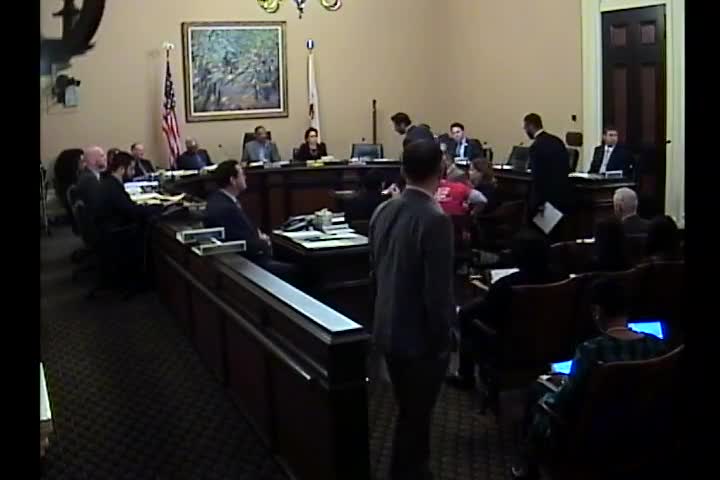
Assembly Standing Committee on Public Safety
Bill Author

Bill Co-Author(s):