AB 216: Vote by mail ballots: identification envelopes: prepaid postage.
- Session Year: 2017-2018
- House: Assembly
- Latest Version Date: 2018-07-18
Existing law provides for the procedures by which a voter may apply for and receive a vote by mail ballot. Existing law requires the elections official to deliver to each qualified applicant the ballot for the precinct in which the applicant resides and all supplies necessary for the use and return of the ballot. Existing law prescribes the contents of an identification envelope and requires a voter to return his or her vote by mail ballot in the identification envelope, as specified.
This bill would clarify that the elections official is required to deliver to each qualified applicant an identification envelope for the return of the vote by mail ballot and would require the identification envelope to have prepaid postage.
By imposing additional duties on local elections officials, this bill would impose a state-mandated local program.
The California Constitution requires the state to reimburse local agencies and school districts for certain costs mandated by the state. Statutory provisions establish procedures for making that reimbursement.
This bill would provide that, if the Commission on State Mandates determines that the bill contains costs mandated by the state, reimbursement for those costs shall be made pursuant to the statutory provisions noted above.
(a)The elections official shall deliver all of the following to each qualified applicant:
(1)The ballot for the precinct in which the voter resides. In primary elections, this shall also be accompanied by the ballot for the central committee of the party for which the voter has disclosed a preference, if any.
(2)All supplies necessary for the use and return of the ballot, including an identification envelope with prepaid postage for the return of the vote by mail ballot.
(b)An officer of this state shall not make a charge for services rendered to a voter under this chapter.
SEC. 2.If the Commission on State Mandates determines that this act contains costs mandated by the state, reimbursement to local agencies and school districts for those costs shall be made pursuant to Part 7 (commencing with Section 17500) of Division 4 of Title 2 of the Government Code.
(a)The elections official shall deliver all of the following to each qualified applicant:
(1)The ballot for the precinct in which the voter resides. In primary elections, this shall also be accompanied by the ballot for the central committee of the party for which the voter has disclosed a preference, if any.
(2)All supplies necessary for the use and return of the ballot, including an identification envelope with prepaid postage for the return of the vote by mail ballot.
(b)An officer of this state shall not make any a charge for services rendered to a voter under this chapter.
SEC. 2.If the Commission on State Mandates determines that this act contains costs mandated by the state, reimbursement to local agencies and school districts for those costs shall be made pursuant to Part 7 (commencing with Section 17500) of Division 4 of Title 2 of the Government Code.
(a)The elections official shall deliver all of the following to each qualified applicant:
(a)(1)The ballot for the precinct in which he or she the voter resides. In primary elections elections, this shall also be accompanied by the ballot for the central committee of the party for which the voter has disclosed a preference, if any.
(b)(2)All supplies necessary for the use and return of the ballot. ballot, including an identification envelope with prepaid postage for the return of the vote by mail ballot.
No (b)An officer of this state may shall not make any charge for services rendered to any a voter under this chapter.
SEC. 2.If the Commission on State Mandates determines that this act contains costs mandated by the state, reimbursement to local agencies and school districts for those costs shall be made pursuant to Part 7 (commencing with Section 17500) of Division 4 of Title 2 of the Government Code.
|
Date
|
Status
|
|---|---|
| Jul 18, 2018 | Chaptered by Secretary of State - Chapter 120, Statutes of 2018. |
| Jul 18, 2018 | Approved by the Governor. |
| Jul 6, 2018 | Enrolled and presented to the Governor at 10:15 a.m. |
| Jul 2, 2018 | Senate amendments concurred in. To Engrossing and Enrolling. |
| Jun 21, 2018 | In Assembly. Concurrence in Senate amendments pending. May be considered on or after June 23 pursuant to Assembly Rule 77. |
| Jun 21, 2018 | Read third time. Passed. Ordered to the Assembly. |
| May 29, 2018 | Read second time. Ordered to third reading. |
| May 25, 2018 | From inactive file. |
| Sep 15, 2017 | Ordered to inactive file at the request of Senator Monning. |
| Sep 5, 2017 | Read second time. Ordered to third reading. |
| Sep 1, 2017 | From committee: Amend, and do pass as amended. (Ayes 5. Noes 2.) (September 1). |
| Aug 21, 2017 | In committee: Referred to APPR. suspense file. |
| Jul 13, 2017 | From committee: Do pass and re-refer to Com. on APPR. (Ayes 5. Noes 0.) (July 12). Re-referred to Com. on APPR. |
| Jun 14, 2017 | Referred to Com. on E. & C.A. |
| Jun 1, 2017 | In Senate. Read first time. To Com. on RLS. for assignment. |
| May 31, 2017 | Read third time. Passed. Ordered to the Senate. (Ayes 61. Noes 10. Page 1904.) |
| May 30, 2017 | Read second time. Ordered to third reading. |
| May 26, 2017 | From committee: Do pass. (Ayes 12. Noes 5.) (May 26). |
| Apr 5, 2017 | In committee: Set, first hearing. Referred to APPR. suspense file. |
| Mar 22, 2017 | From committee: Do pass and re-refer to Com. on APPR. (Ayes 5. Noes 2.) (March 22). Re-referred to Com. on APPR. |
| Feb 6, 2017 | Referred to Com. on E. & R. |
| Jan 25, 2017 | From printer. May be heard in committee February 24. |
| Jan 24, 2017 | Read first time. To print. |
|
Date
|
Description
|
Location
|
Votes
|
|
|---|---|---|---|---|
| Jul 2, 2018 | AB 216 GONZALEZ FLETCHER Concurrence in Senate Amendments | Assembly Floor |
Passed |
|
| Jun 21, 2018 | Assembly 3rd Reading AB216 Gonzalez Fletcher By Lara | Senate Floor |
Passed |
|
| Sep 1, 2017 | Do pass as amended | Senate Standing Committee on Appropriations |
Passed |
|
| Aug 21, 2017 | Placed on suspense file | Senate Standing Committee on Appropriations |
Passed |
|
| Jul 12, 2017 | Do pass, but first be re-referred to the Committee on [Appropriations] | Senate Standing Committee on Elections and Constitutional Amendments |
Passed |
|
| May 31, 2017 | AB 216 GONZALEZ FLETCHER Assembly Third Reading | Assembly Floor |
Passed |
|
| May 26, 2017 | Do pass. | Assembly Standing Committee on Appropriations |
Passed |
|
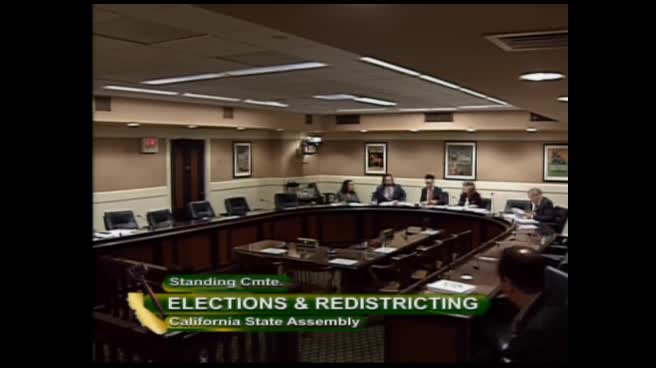
| Mar 22, 2017 | Do pass and be re-referred to the Committee on [Appropriations] | Assembly Standing Committee on Elections and Redistricting |
Passed |
This list shows positions taken on this bill by organizations on the date displayed, which is linked to the original source.
Positions by individuals are not included.
|
Organization
|
Position
|
Date
|
|---|---|---|
| Advancement Project | ** Support | Sep 5, 2017 |
| Advancement Project California | ** Support | May 29, 2018 |
| American Civil Liberties Union of California | ** Support | May 29, 2018 |
| California Association Of Nonprofits | ** Support | May 29, 2018 |
| California Calls | ** Support | May 29, 2018 |
| California Immigrant Policy Center | ** Support | May 29, 2018 |
| California Labor Federation | ** Support | May 29, 2018 |
| California League Of Conservation Voters | ** Support | May 29, 2018 |
| California Professional Firefighters | ** Support | May 29, 2018 |
| California State Association Of Counties | ** Against | May 29, 2018 |
| California State Association of Letter Carriers | ** Support | May 29, 2018 |
| California Teachers Association | ** Support | May 29, 2018 |
| California Voter Foundation | ** Support | May 29, 2018 |
| California Young Democrats | ** Support | May 29, 2018 |
| Disability Rights California | ** Support | May 29, 2018 |
| Equal Justice Society | ** Support | May 29, 2018 |
| Equality California | ** Support | May 29, 2018 |
| Japanese American Citizens League, Northern California-Western Nevada-Pacific District | ** Support | May 29, 2018 |
| League Of Women Voters Of California | ** Support | May 29, 2018 |
| Nevada-Pacific District | ** Support | Jul 10, 2017 |
| Service Employees International Union | ** Support | May 29, 2018 |
| The Arc and United Cerebral Palsy California Collaboration | ** Support | May 29, 2018 |
| University Of California Student Association | ** Support | May 29, 2018 |
CONCURRENCE IN SENATE AMENDMENTS
CSA1 Bill Id:AB 216
Author:(Gonzalez Fletcher and Low)
As Amended Ver:September 1, 2017
Majority vote
ASSEMBLY: | 61-10 | (May 31, 2017) | SENATE: | 29-8 | (June 21, 2018) |
Original Committee Reference: E. & R.
SUMMARY: Requires an elections official, when delivering a vote by mail (VBM) ballot to a voter, to include a return envelope with postage prepaid.
The Senate amendments make a technical change and add a co-author.
EXISTING LAW requires an elections official to deliver all of the following to each qualified applicant for a VBM ballot:
- The ballot for the precinct in which the voter resides and, in the case of a presidential primary election, the ballot for the central committee of the party for which the voter has declared a preference, if any; and,
- All supplies necessary for the use and return of the ballot.
FISCAL EFFECT: According to the Senate Appropriations Committee, by requiring VBM ballots to have prepaid postage, this bill creates a state-mandated local program. To the extent the Commission on State Mandates determines the provisions of this bill create a new program or impose a higher level of service on local agencies, local agencies could claim reimbursement of those costs (General Fund). If 8.4 million voters (the number of VBM voters in the 2016 General Election) voted by mail at an average cost of $.65 per envelope, the cost of prepaid postage would be about $5.5 million. State mandate costs for future local elections would be unknown, also potentially in the millions of dollars.
COMMENTS: AB 1520 (Shelley), Chapter 922, Statutes of 2001, allowed any voter to become a permanent VBM voter. Since that time, the percentage of voters in California who choose to receive a VBM ballot has increased significantly. A majority of California voters now choose to vote using a VBM ballot, either by returning that ballot through the mail or by dropping off their VBM ballot in person. In 2016, about 58% of votes in the primary election and about 59% of votes in the general election were cast using VBM ballots.
Since existing law does not require the return postage on VBM ballots to be prepaid, in most counties, a VBM voter must affix the correct amount of postage on the return envelope of their ballot. The amount of postage required can vary depending on the size of the ballot, potentially causing confusion for voters.
AB 216 will standardize this process by requiring postage on mail ballots to be prepaid, ensuring that voting is free for all California voters. This bill, as amended in the Senate, is generally consistent with Assembly actions.
Analysis Prepared by: Bish Paul / E. & R. / (916) 319-2094 FN: 0001923
Office of Senate Floor Analyses (916) 651-1520 Fax: (916) 327-4478 | AB |
THIRD READING
Bill No: AB 216
Amended: 9/1/17 in Senate
SENATE ELECTIONS & C.A. COMMITTEE: 5-0, 7/12/17
AYES: Stern, Anderson, Allen, Hertzberg, Leyva
SENATE APPROPRIATIONS COMMITTEE: 5-2, 9/1/17
AYES: Lara, Beall, Bradford, Hill, Wiener
NOES: Bates, Nielsen
ASSEMBLY FLOOR: 61-10, 5/31/17 - See last page for vote
DIGEST:
This bill requires the postage on return envelopes for vote by mail (VBM) ballots to be prepaid.
ANALYSIS: Existing law requires an elections official to deliver to each qualified applicant for a VBM ballot the ballot for the precinct in which the voter resides and all supplies necessary for the use and return of the ballot, including a return envelope, as specified.
This bill requires an elections official, when delivering a VBM ballot to a voter, to include a return envelope with postage prepaid.
Background
Rates of VBM Voting. AB 1520 (Shelley, Chapter 922, Statutes of 2001) allowed any voter to become a permanent VBM voter. Since that time, the percentage of voters in California who choose to receive a VBM ballot has increased significantly. A majority of California voters now choose to vote using a VBM ballot, either by returning that ballot through the mail or by dropping off their VBM ballot in person. In 2016, about 58% of votes in the primary election and about 59% of votes in the general election were cast using VBM ballots. In 2014, when voter turnout was lower, an even larger percentage of votes were cast on VBM ballots: over 60% of the general election votes and nearly 70% of the votes in the primary election were cast using VBM ballots.
VBM postage. Since existing law does not require the return postage on VBM ballots to be prepaid, in most counties, a VBM voter must affix the correct amount of postage on the return envelope of their ballot. The amount of postage required can vary depending on the size of the ballot, potentially causing confusion for voters. Some jurisdictions in California already prepay return postage on their VBM ballots even though it is not currently required by state law.
According to California Common Cause, the variations in postage requirements that currently exist between counties and even within elections in the same county add an unreasonable degree of confusion and uncertainty for voters.
Although California has one of the highest mail ballot rejection rates in the country, it does not appear that insufficient postage is a significant factor in the rejection of mail ballots. In a statewide survey of the 58 county elections offices conducted in 2014, the California Civic Engagement Project (CCEP) found that the top reasons for rejection of VBM ballots were ballots not arriving on time (50%), or having issues with signatures (37%) including ballots not being signed, or because the signatures could not be verified. CCEP research also found that every California county that responded to their survey (54 of the state's 58 counties sent a response) reported that the county covered the cost of insufficient postage for VBM ballots.
Furthermore, in order to protect against the inadvertent disenfranchisement of voters, it is the policy of the United States Postal Service (Postal Service) that VBM ballots with insufficient postage "must not be detained or treated as unpaid mail." Instead, under Postal Service policy, postal workers are supposed to deliver the ballot to the appropriate elections official, and to seek to recover the postage due from the elections official. Notwithstanding this policy, ballots nonetheless are occasionally returned to voters for insufficient postage.
Could prepaid return postage delay ballots? One of the most common methods of providing prepaid postage is by using Business Reply Mail. The advantage of using Business Reply Mail is that postage is paid only on the pieces that are sent back to the county. The disadvantage however, is that Business Reply Mail can increase processing time and delay the delivery of ballots to the elections official.
A 2014 California Voter Foundation study of the VBM process in three California counties cautioned about possible delays when counties use Business Reply Mail to prepay the return postage on VBM ballots. The study found that in Sacramento County, the ballots that had prepaid postage through the use of Business Reply Mail could be delayed at the post office, because those ballots had to be processed through the business reply unit of the post office in order to be charged against the county's business reply account. The study noted that "[w]hen only one person works in the business reply unit, mail can be delayed if that person is out of the office or if there is a surge of business reply mail from other sources, possibly disenfranchising a voter who waited until close to the election to return his or her ballot." While the report did not recommend against providing prepaid return postage for VBM ballots, it cautioned that "[w]hile some have suggested providing postage-paid envelopes to all VBM voters (and not just those overseas or living in an all vote-by-mail precinct as current law provides), doing so can actually delay VBM ballot processing since postage paid mail is typically sent business class, not first class."
Additionally, the restructuring of the Postal Service in recent years has closed many smaller processing plants across the country, adversely impacting the speed of processing. The Bipartisan Policy Center’s report New Realities of Voting by Mail cautions “without realizing that voting by mail in 2016 is very different than in years past, voters are more likely to unwittingly disenfranchise themselves.”
Business Reply Mail takes longer to reach recipients since “The Postal Service of 2016 does not operate under the same service standards as it did even one or two presidential cycles ago. Mail volume is down, and the USPS has adjusted its infrastructure accordingly. Delivery standards have also changed.” This is problematic especially during the lead up to Election Day when a higher volume of ballots are expected.
Under SB 29 (Correa, Chapter 618, Statutes of 2014), ballots that are postmarked by Election Day are able to be counted if they are received by the elections official by the third day after the election. While SB 29 may help protect against voters being inadvertently disenfranchised if ballots are delayed due to the use of Business Reply Mail under this bill, if delays in the return of VBM ballots nonetheless persist, the timeframe for ballots to be received that was established in SB 29 may need to be revisited to ensure that voters are not inadvertently disenfranchised.
Impact of SB 450 vote center model. SB 450 (Allen, Chapter 832, Statutes of 2016) permits specified counties beginning in 2018, and all other counties beginning in 2020, to conduct elections in which every voter is mailed a ballot and vote centers and ballot drop-off locations are available prior to and on election day, in lieu of operating polling places for the election, subject to certain conditions. Counties in California that opt to conduct elections in accordance with SB 450 generally will be required to send VBM ballots to all registered voters 28 days before election day. As counties implement SB 450, the number of voters who receive a ballot in the mail will increase, which may also increase the number of VBM ballots that are returned by mail. On the other hand, because SB 450 requires participating counties to make ballot drop-off locations available, an increasing number of voters may choose to return VBM ballots in person, rather than through the mail. In any case, SB 450 likely will increase the involvement of the postal system in elections conducted in the state, but SB 450 did not require the return postage on VBM ballots to be prepaid.
Comments
- According to the author, voting by mail is becoming more popular both for individual voters and for conducting entire elections. Since 2012, between 50 percent and 60 percent of ballots cast in California statewide elections have been by mail. As of June 2016, 52.3 percent of registered voters in California were registered as permanent vote by mail (PVBM) voters.
Furthermore, counties are increasingly turning to mail ballot elections for their potential to increase efficiency, increase turnout, and reduce costs. Limited pilot programs for mail ballot elections have previously been established in Monterey, Sacramento, San Mateo, Yolo and San Diego counties. Most recently, SB 450 (Allen, 2015) authorized counties in California to conduct any election as a mail ballot election provided certain conditions, such as the establishment of required vote centers and ballot drop off locations, are met. Some counties will be eligible to begin implementing this starting in 2018.
With a stamp currently costing 47 cents each and a lengthy ballot for most voters this past November, this meant some voters ended up paying almost a dollar in order to vote, while others had the cost of their mail ballot covered or were able to vote at no cost in person -- even within the same precinct. For voters’ who do not regularly carry stamps, voting can be even more costly, as some retailers only sell stamps in books of 20, which cost nearly $10. These inequities and confusing patchwork of rules will only increase as counties begin opting into the all-mail ballot elections established by SB 450 in 2018, and affect more voters for whom a stamp becomes an obstacle to voting.
AB 216 will standardize this process by requiring postage on mail ballots to be prepaid, ensuring that voting is free for all California voters. As more and more voters use mail ballots, either through individual choice or the decision by counties, it is important to ensure that the process of voting is as equitable as possible. Unfortunately, the current system of returning a mail ballot is not.
In some counties -- such as San Francisco, Santa Clara, Alpine, and Sierra Counties -- the postage is pre-paid for mail ballots. In other counties, such as Yolo, registered PVBM voters in mail-only precincts receive return envelopes with the postage prepaid, but those in the same mail-only precinct who are not PVBM have to provide their own stamps when mailing back their ballot, as do PVBM voters in precincts with polling stations. For the all-mailed ballot pilot program options in San Diego, San Mateo, Yolo and Monterey Counties, postage is required to be prepaid.
- Unpaid state mandates. The last six state budgets have suspended various state mandates as a mechanism for cost savings. Among the mandates that were suspended were all existing elections-related mandates, including VBM programs. All the existing elections-related mandates have been proposed for suspension again by the Governor in his budget for the 2017-18 fiscal year. This bill adds another elections-related mandate by requiring local elections official to prepay the return postage for VBM ballots.
Related/Prior Legislation
This bill is similar to AB 800 (Gomez, 2015), AB 1519 (De La Torre, 2009), and SB 117 (Murray, 2005), which were all held on the Assembly Appropriations Committee's suspense file, and to SB 1062 (Block, 2014), which was held on the Senate Appropriations Committee's suspense file.
FISCAL EFFECT: Appropriation: Fiscal Com.: Local:
According to the Senate Appropriation Committee, by requiring VBM ballots to have prepaid postage, this bill creates a state-mandated local program. To the extent the Commission on State Mandates determines the provisions of this bill create a new program or impose a higher level of service on local agencies, local agencies could claim reimbursement of those costs (General Fund). If 8.4 million voters (the number of VBM voters in the 2016 General Election) voted by mail at an average cost of $.65 per envelope, the cost of prepaid postage would be about $5.5 million. State mandate costs for future local elections would be unknown, also potentially in the millions of dollars.
Advancement Project California
American Civil Liberties Union of California
California Association of Nonprofits
California Calls
California Immigrant Policy Center
California Labor Federation
California League of Conservation Voters
California Professional Firefighters
California State Association of Letter Carriers
California Teachers Association
California Voter Foundation
California Young Democrats
Disability Rights California
Equal Justice Society
Equality California
Japanese American Citizens League, Northern California-Western Nevada-Pacific District
League of Women Voters of California
Service Employees International Union
The Arc and United Cerebral Palsy California Collaboration
University of California Student Association
OPPOSITION: (Verified 5/29/18)
California State Association of Counties
ASSEMBLY FLOOR: 61-10, 5/31/17
AYES: Acosta, Aguiar-Curry, Arambula, Berman, Bigelow, Bloom, Bocanegra, Bonta, Burke, Caballero, Calderon, Cervantes, Chau, Chávez, Chiu, Chu, Cooley, Cooper, Dababneh, Daly, Frazier, Friedman, Cristina Garcia, Eduardo Garcia, Gipson, Gloria, Gomez, Gonzalez Fletcher, Gray, Grayson, Holden, Irwin, Jones-Sawyer, Kalra, Kiley, Lackey, Levine, Limón, Low, Maienschein, McCarty, Medina, Mullin, Muratsuchi, Nazarian, O'Donnell, Quirk, Quirk-Silva, Reyes, Ridley-Thomas, Rodriguez, Rubio, Salas, Santiago, Steinorth, Mark Stone, Thurmond, Ting, Weber, Wood, Rendon
NOES: Travis Allen, Baker, Brough, Cunningham, Dahle, Harper, Mathis, Obernolte, Patterson, Waldron
NO VOTE RECORDED: Chen, Choi, Eggman, Flora, Fong, Gallagher, Mayes, Melendez, Voepel
5/29/18 11:53:43
**** END ****
SENATE COMMITTEE ON
Senator Ricardo Lara, Chair
2017 - 2018 Regular Session
AB 216 (Gonzalez Fletcher) - Vote by mail ballots: identification envelopes: prepaid postage
Version: | Policy Vote: |
Urgency: | Mandate: |
Hearing Date: | Consultant: |
*********** ANALYSIS ADDENDUM – SUSPENSE FILE ***********
The following information is revised to reflect amendments
adopted by the committee on September 1, 2017
Bill Summary:
AB 216 would require the postage on return envelopes for vote-by-mail (VBM) ballots to be prepaid.
Fiscal Impact:
By requiring VBM ballots to have prepaid postage, this bill creates a state-mandated local program. To the extent the Commission on State Mandates determines the provisions of this bill create a new program or impose a higher level of service on local agencies, local agencies could claim reimbursement of those costs (General Fund). If 8.4 million voters (the number of VBM voters in the 2016 General Election) voted by mail at an average cost of $.65 per envelope, the cost of prepaid postage would be about $5.5 million. State mandate costs for future local elections would be unknown, also potentially in the millions of dollars.
Author Amendments:
Add a coauthor.
-- END --
SENATE COMMITTEE ON APPROPRIATIONS
Senator Ricardo Lara, Chair
2017 - 2018 Regular Session
AB 216 (Gonzalez Fletcher) - Vote by mail ballots: identification envelopes: prepaid postage
Version: January 24, 2017 | Policy Vote: E. & C.A. 5 - 0 |
Urgency: No | Mandate: Yes |
Hearing Date: August 21, 2017 | Consultant: Robert Ingenito |
This bill meets the criteria for referral to the Suspense File.
Bill Summary:
AB 216 would require the postage on return envelopes for vote-by-mail (VBM) ballots to be prepaid.
Fiscal Impact:
By requiring VBM ballots to have prepaid postage, this bill creates a state-mandated local program. To the extent the Commission on State Mandates determines the provisions of this bill create a new program or impose a higher level of service on local agencies, local agencies could claim reimbursement of those costs (General Fund). If 8.4 million voters (the number of VBM voters in the 2016 General Election) voted by mail at an average cost of $.65 per envelope, the cost of prepaid postage would be about $5.5 million. State mandate costs for future local elections would be unknown, also potentially in the millions of dollars.
Background:
Existing law allows any voter to become a permanent VBM voter whereby he or she can cast their ballot by mail. The voter, however, is currently responsible for placing the correct amount of postage on the return envelope, which can vary depending on the size of the ballot. VBM voting has been on the increase since 2000 and now more than half of California’s eligible voters cast their ballot by mail instead of going to the polls on elections day.
Proposed Law:
This bill would require an elections official, when delivering a VBM ballot to a voter, to include a return envelope with postage prepaid.
Related Legislation:
This bill is similar to SB 1062 (Block, 2014), which was held on the Senate Appropriations Committee's suspense file, and to AB 800 (Gomez, 2015), AB 1519 (De La Torre, 2009), and SB 117 (Murray, 2005), which were all held on the Assembly Appropriations Committee's suspense file.
Staff Comments:
Under the provisions of the bill, the counties would pay for the postage costs and then submit a claim to the Commission on State Mandates for reimbursement from the General Fund.
Some counties already provide postage paid return envelopes, including Alpine, San Francisco, Santa Clara and Sierra. Additionally, the counties of Glenn, Kern, and Tuolumne offer prepaid postage for mandatory VBM ballot voters who do not have a designated polling location provided by the county. Although some counties are already providing postage paid return envelopes, under the state mandates provisions, these costs would now be borne by the General Fund.
Staff notes that this bill will apply to state and local elections, and while counties currently pay the costs for the expenses associated to local elections, this bill could result in the State paying the postage costs for all ballots related to local elections.
The last seven state budgets have suspended various state mandates as a mechanism for cost savings. Among the mandates that were suspended were all existing elections-related mandates, including VBM programs. This bill would add another elections-related mandate by requiring local elections official to prepay the return postage for VBM ballots.
-- END --
SENATE COMMITTEE ON
ELECTIONS AND CONSTITUTIONAL AMENDMENTS
Senator Henry Stern, Chair
2017 - 2018 Regular
Bill No: AB Hearing Date: 7/12/17
Author: | |||
Version: | 1/24/17 | ||
Urgency: | No | Fiscal: | Yes |
Consultant: | Darren Chesin | ||
Subject: Vote by mail ballots: identification envelopes: prepaid postage
DIGEST
This bill requires the postage on return envelopes for vote by mail (VBM) ballots to be prepaid.
ANALYSIS
Existing law:
- Requires an elections official to deliver to each qualified applicant for a VBM ballot the ballot for the precinct in which the voter resides and all supplies necessary for the use and return of the ballot, including a return envelope, as specified.
This bill:
- Requires an elections official, when delivering a VBM ballot to a voter, to include a return envelope with postage prepaid.
BACKGROUND
Rates of VBM Voting. AB 1520 (Shelley, Ch. 922, Statutes of 2001), allowed any voter to become a permanent VBM voter. Since that time, the percentage of voters in California who choose to receive a VBM ballot has increased significantly. A majority of California voters now choose to vote using a VBM ballot, either by returning that ballot through the mail or by dropping off their VBM ballot in person. In 2016, about 58% of votes in the primary election and about 59% of votes in the general election were cast using VBM ballots. In 2014, when voter turnout was lower, an even larger percentage of votes were cast on VBM ballots: over 60% of the general election votes and nearly 70% of the votes in the primary election were cast using VBM ballots.
VBM Postage. Since existing law does not require the return postage on VBM ballots to be prepaid, in most counties, a VBM voter must affix the correct amount of postage on the return envelope of their ballot. The amount of postage required can vary depending on the size of the ballot, potentially causing confusion for voters. Some jurisdictions in California already prepay return postage on their VBM ballots even though it is not currently required by state law.
According to California Common Cause, the variations in postage requirements that currently exist between counties and even within elections in the same county add an unreasonable degree of confusion and uncertainty for voters.
Although California has one of the highest mail ballot rejection rates in the country, it does not appear that insufficient postage is a significant factor in the rejection of mail ballots. In a statewide survey of the 58 county elections offices conducted in 2014, the California Civic Engagement Project (CCEP) found that the top reasons for rejection of VBM ballots were ballots not arriving on time (50%), or having issues with signatures (37%) including ballots not being signed, or because the signatures could not be verified. CCEP research also found that every California county that responded to their survey (54 of the state's 58 counties sent a response) reported that the county covered the cost of insufficient postage for VBM ballots.
Furthermore, in order to protect against the inadvertent disenfranchisement of voters, it is the policy of the United States Postal Service (Postal Service) that VBM ballots with insufficient postage "must not be detained or treated as unpaid mail." Instead, under Postal Service policy, postal workers are supposed to deliver the ballot to the appropriate elections official, and to seek to recover the postage due from the elections official. Notwithstanding this policy, ballots nonetheless are occasionally returned to voters for insufficient postage.
Could Prepaid Return Postage Delay Ballots? One of the most common methods of providing prepaid postage is by using Business Reply Mail. The advantage of using Business Reply Mail is that postage is paid only on the pieces that are sent back to the county. The disadvantage however, is that Business Reply Mail can increase processing time and delay the delivery of ballots to the elections official.
A 2014 California Voter Foundation study of the VBM process in three California counties cautioned about possible delays when counties use Business Reply Mail to prepay the return postage on VBM ballots. The study found that in Sacramento County, the ballots that had prepaid postage through the use of Business Reply Mail could be delayed at the post office, because those ballots had to be processed through the business reply unit of the post office in order to be charged against the county's business reply account. The study noted that "[w]hen only one person works in the business reply unit, mail can be delayed if that person is out of the office or if there is a surge of business reply mail from other sources, possibly disenfranchising a voter who waited until close to the election to return his or her ballot." While the report did not recommend against providing prepaid return postage for VBM ballots, it cautioned that "[w]hile some have suggested providing postage-paid envelopes to all VBM voters (and not just those overseas or living in an all vote-by-mail precinct as current law provides), doing so can actually delay VBM ballot processing since postage paid mail is typically sent business class, not first class."
Additionally, the restructuring of the Postal Service in recent years has closed many smaller processing plants across the country, adversely impacting the speed of processing. The Bipartisan Policy Center’s report New Realities of Voting by Mail
cautions “without realizing that voting by mail in 2016 is very different than in years past, voters are more likely to unwittingly disenfranchise themselves.”
Business Reply Mail takes longer to reach recipients since “The Postal Service of 2016 does not operate under the same service standards as it did even one or two presidential cycles ago. Mail volume is down, and the USPS has adjusted its infrastructure accordingly. Delivery standards have also changed.” This is problematic especially during the lead up to Election Day when a higher volume of ballots are expected.
Under SB 29 (Correa, Ch. 618, Statutes of 2014), ballots that are postmarked by Election Day are able to be counted if they are received by the elections official by the third day after the election. While SB 29 may help protect against voters being inadvertently disenfranchised if ballots are delayed due to the use of Business Reply Mail under this bill, if delays in the return of VBM ballots nonetheless persist, the timeframe for ballots to be received that was established in SB 29 may need to be revisited to ensure that voters are not inadvertently disenfranchised.
Impact of SB 450 Vote Center Model. SB 450 (Allen, Ch. 832, Statutes of 2016), permits specified counties beginning in 2018, and all other counties beginning in 2020, to conduct elections in which every voter is mailed a ballot and vote centers and ballot drop-off locations are available prior to and on election day, in lieu of operating polling places for the election, subject to certain conditions. Counties in California that opt to conduct elections in accordance with SB 450 generally will be required to send VBM ballots to all registered voters 28 days before election day. As counties implement SB 450, the number of voters who receive a ballot in the mail will increase, which may also increase the number of VBM ballots that are returned by mail. On the other hand, because SB 450 requires participating counties to make ballot drop-off locations available, an increasing number of voters may choose to return VBM ballots in person, rather than through the mail. In any case, SB 450 likely will increase the involvement of the postal system in elections conducted in the state, but SB 450 did not require the return postage on VBM ballots to be prepaid.
COMMENTS
- According to the author: Voting by mail is becoming more popular both for individual voters and for conducting entire elections. Since 2012, between 50 percent and 60 percent of ballots cast in California statewide elections have been by mail. As of June 2016, 52.3 percent of registered voters in California were registered as permanent vote by mail (PVBM) voters.
Furthermore, counties are increasingly turning to mail ballot elections for their potential to increase efficiency, increase turnout, and reduce costs. Limited pilot programs for mail ballot elections have previously been established in Monterey, Sacramento, San Mateo, Yolo and San Diego counties. Most recently, Senate Bill 450 (Allen, 2015) authorized counties in California to conduct any election as a mail ballot election provided certain conditions, such as the establishment of required vote centers and ballot drop off locations, are met. Some counties will be eligible to begin implementing this starting in 2018.
With a stamp currently costing 47 cents each and a lengthy ballot for most voters this past November, this meant some voters ended up paying almost a dollar in order to vote, while others had the cost of their mail ballot covered or were able to vote at no cost in person -- even within the same precinct. For voters’ who do not regularly carry stamps, voting can be even more costly, as some retailers only sell stamps in books of 20, which cost nearly $10. These inequities and confusing patchwork of rules will only increase as counties begin opting into the all-mail ballot elections established by SB 450 in 2018, and affect more voters for whom a stamp becomes an obstacle to voting.
AB 216 will standardize this process by requiring postage on mail ballots to be prepaid, ensuring that voting is free for all California voters. As more and more voters use mail ballots, either through individual choice or the decision by counties, it is important to ensure that the process of voting is as equitable as possible. Unfortunately, the current system of returning a mail ballot is not.
In some counties -- such as San Francisco, Santa Clara, Alpine, and Sierra Counties -- the postage is pre-paid for mail ballots. In other counties, such as Yolo, registered PVBM voters in mail-only precincts receive return envelopes with the postage prepaid, but those in the same mail-only precinct who are not PVBM have to provide their own stamps when mailing back their ballot, as do PVBM voters in precincts with polling stations. For the all-mailed ballot pilot program options in San Diego, San Mateo, Yolo and Monterey Counties, postage is required to be prepaid.
- Fiscal Effect. According to the Assembly Appropriations Committee, General Fund costs in the low millions of dollars each statewide election, and less for local elections, for potentially reimbursable state mandate to provide prepaid postage on ballot return envelopes for VBM voters.
For example, if 5.8 million voters (the same that voted by mail in the November 2016 election) returned a ballot by mail at an average cost of $0.65 per envelope, the cost for prepaid postage would be almost $3.8 million per election. - Unpaid State Mandates. The last six state budgets have suspended various state mandates as a mechanism for cost savings. Among the mandates that were suspended were all existing elections-related mandates, including VBM programs. All the existing elections-related mandates have been proposed for suspension again by the Governor in his budget for the 2017-18 fiscal year. This bill adds another elections-related mandate by requiring local elections official to prepay the return postage for VBM ballots.
RELATED/PRIOR LEGISLATION
This bill is similar to AB 800 (Gomez of 2015), AB 1519 (De La Torre of 2009), and SB 117 (Murray of 2005), which were all held on the Assembly Appropriations Committee's suspense file, and to SB 1062 (Block of 2014), which was held on the Senate Appropriations Committee's suspense file.
PRIOR ACTION
Assembly Floor: | |
Assembly Appropriations Committee: | |
Assembly Elections and Redistricting Committee: |
|
POSITIONS
Sponsor: Author
Support: Advancement Project California
American Civil Liberties Union of California
California Association of Nonprofits
California Immigrant Policy Center
California Labor Federation
California League of Conservation Voters
California Professional Firefighters
California State Association of Letter Carriers
California Teachers Association
California Voter Foundation
California Young Democrats
Disability Rights California
Equality California
Equal Justice Society
Japanese American Citizens League, Northern California-Western
Nevada-Pacific District
League of Women Voters of California
Service Employees International Union
Oppose: None received
-- END –
ASSEMBLY THIRD READING
ATR Bill Id:AB 216
Author:(Gonzalez Fletcher and Low)
As Introduced Ver:January 24, 2017
Majority vote
Committee | Votes | Ayes | Noes |
Elections | 5-2 | Low, Berman, Calderon, Mullin, Weber | Harper, Cunningham |
Appropriations | 12-5 | Gonzalez Fletcher, Bloom, Bocanegra, Bonta, Calderon, McCarty, Quirk, Friedman, Eduardo Garcia, Gray, Muratsuchi, Reyes | Bigelow, Brough, Fong, Gallagher, Obernolte |
SUMMARY: Requires the postage on return envelopes for vote by mail (VBM) ballots to be prepaid. Specifically, this bill requires an elections official, when delivering a VBM ballot to a voter, to include a return envelope with postage prepaid.
FISCAL EFFECT: According to the Assembly Appropriations Committee, General Fund costs in the low millions of dollars each statewide election, and less for local elections, for a potentially reimbursable state mandate to provide prepaid postage on ballot return envelopes for VBM voters.
For example, if 5.8 million voters (the same that voted by mail in the November 2016 election) returned a ballot by mail at an average cost of $0.65 per envelope, the cost for prepaid postage would be almost $3.8 million per election.
COMMENTS: According to the author, "Voting by mail is becoming more popular both for individual voters and for conducting entire elections. Since 2012, between 50 and 60% of ballots cast in California statewide elections have been by mail. As of June 2016, 52.3% of registered voters in California were registered as permanent vote by mail (PVBM) voters…As more and more voters use mail ballots, either through individual choice or the decision by counties, it is important to ensure that the process of voting is as equitable as possible. Unfortunately, the current system of returning a mail ballot is not. In some counties― such as San Francisco, Santa Clara, Alpine, and Sierra Counties ― the postage is pre-paid for mail ballots…With a stamp currently costing 0.47$ each and a lengthy ballot for most voters this past November, this meant some voters ended up paying almost a dollar in order to vote, while others had the cost of their mail ballot covered or were able to vote at no cost in person― even within the same precinct. For voters who do not regularly carry stamps, voting can be even more costly, as some retailers only sell stamps in books of 20, which cost nearly $10…AB 216 will standardize this process by requiring postage on mail ballots to be prepaid, ensuring that voting is free for all California voters."
AB 1520 (Shelley), Chapter 922, Statutes of 2001, allowed any voter to become a permanent VBM voter. Since that time, the percentage of voters in California who choose to receive a VBM ballot has increased significantly. A majority of California voters now choose to vote using a VBM ballot, either by returning that ballot through the mail or by dropping off their VBM ballot in person. In 2016, about 58% of votes in the primary election and about 59% of votes in the general election were cast using VBM ballots.
Since existing law does not require the return postage on VBM ballots to be prepaid, in most counties, a VBM voter must affix the correct amount of postage on the return envelope of their ballot. The amount of postage required can vary depending on the size of the ballot, potentially causing confusion for voters. Some jurisdictions in California already prepay return postage on their VBM ballots even though it is not currently required by state law. By requiring that an envelope with prepaid postage be included with every VBM ballot in the state of California, this bill could help reduce voter confusion. The provisions outlined in this bill would apply to both state and local elections.
SB 450 (Allen), Chapter 832, Statutes of 2016, permits specified counties beginning in 2018, and all other counties beginning in 2020, to conduct elections in which every voter is mailed a ballot and vote centers and ballot drop-off locations are available prior to and on election day, in lieu of operating polling places for the election, subject to certain conditions. SB 450 likely will increase the involvement of the postal system in elections conducted in the state, but SB 450 did not require the return postage on VBM ballots to be prepaid. AB 216 will help address this by providing prepaid envelopes to voters so they can return their ballots.
The last six state budgets have suspended various state mandates as a mechanism for cost savings. Among the mandates that were suspended were all existing elections-related mandates, including VBM programs. All the existing elections-related mandates have been proposed for suspension again by the Governor in his budget for the 2017-18 fiscal year. This bill adds another elections-related mandate by requiring local elections official to prepay the return postage for VBM ballots.
This bill is similar to AB 800 (Gomez) of 2015, AB 1519 (De La Torre) of 2009, and SB 117 (Murray) of 2005, which were all held on the Assembly Appropriations Committee's suspense file, and to SB 1062 (Block) of 2014, which was held on the Senate Appropriations Committee's suspense file.
Please see the policy committee analysis for a full discussion of this bill.
Analysis Prepared by: Bish Paul / E. & R. / (916) 319-2094 FN: 0000632
Date of Hearing: April 5, 2017
ASSEMBLY COMMITTEE ON APPROPRIATIONS
Lorena Gonzalez Fletcher, Chair
ABPCA Bill Id:AB 216
Author:(Gonzalez Fletcher) – As Introduced Ver:January 24, 2017
Policy Committee: | Elections and Redistricting | Vote: | 5 - 2 |
|
|
Urgency: No State Mandated Local Program: Yes Reimbursable: Yes
SUMMARY:
This bill requires return envelopes for vote by mail (VBM) ballots to include prepaid postage.
FISCAL EFFECT:
GF costs in the low millions of dollars each statewide election, and less for local elections, for potentially reimbursable state mandate to provide prepaid postage on ballot return envelopes for VBM voters.
For example, if 5.8 million voters (the same that voted by mail in the November 2016 election) returned a ballot by mail at an average cost of $0.65 per envelope, the cost for prepaid postage would be almost $3.8 million per election.
COMMENTS:
- Background. Existing law requires an elections official to deliver to a voter requesting a VBM ballot: (1) the ballot for the precinct in which the voter resides and, in the case of a presidential primary election, the ballot for the central committee of the party for which the voter has declared a preference, if any, and (2) all supplies necessary for the use and return of the ballot. Some counties, including San Francisco, Santa Clara, Santa Cruz, Alpine, and Sierra include prepaid postage on all return envelopes for VBM ballots.
- Purpose. This bill would require all counties to include prepaid postage on the return envelopes provided to VBM voters. According to the author, “as more and more voters use mail ballots, either through individual choice or the decision by counties, it is important to ensure that the process of voting is as equitable as possible. Unfortunately, the current system of returning a mail ballot is not. In some counties― such as San Francisco, Santa Clara, Alpine, and Sierra Counties ― the postage is pre-paid for mail ballots.”
The author also states, “with a stamp currently costing 47 cents each and a lengthy ballot for most voters this past November, this meant some voters ended up paying almost a dollar in order to vote, while others had the cost of their mail ballot covered or were able to vote at no cost in person― even within the same precinct. AB 216 will require that the return envelope provided to vote-by-mail voters by elections officials have pre-paid postage, ensuring that voting is free for all California voters.”
- Staff Comments. Under SB 450 (Allen), Chapter 832, Statutes of 2016, counties are allowed to opt-in to an all VBM election where all voters receive a ballot in the mail. For SB 450 opt-in counties, these mailed ballots can be returned by mail or dropped off at various specified locations, such as a vote center. Some counties are likely to opt-in to SB 450 mail election and vote center model, which will likely increase the number of VBM voters in future elections. Thus, it is likely that the costs of providing prepaid postage for the return envelope for ballots would increase in the future. However, counties that opt-in to SB 450 are likely to experience long-term savings.
Analysis Prepared by: Jessica Peters / APPR. / (916) 319-2081
Date of Hearing: March 22, 2017
ASSEMBLY COMMITTEE ON ELECTIONS AND REDISTRICTING
Evan Low, Chair
ABPCA Bill Id:AB 216 (
Author:Gonzalez Fletcher) – As Introduced Ver:January 24, 2017
SUBJECT: Vote by mail ballots: identification envelopes: prepaid postage.
SUMMARY: Requires the postage on return envelopes for vote by mail (VBM) ballots to be prepaid. Specifically, this bill requires an elections official, when delivering a VBM ballot to a voter, to include a return envelope with postage prepaid.
EXISTING LAW requires an elections official to deliver all of the following to each qualified applicant for a VBM ballot:
- The ballot for the precinct in which the voter resides and, in the case of a presidential primary election, the ballot for the central committee of the party for which the voter has declared a preference, if any; and,
- All supplies necessary for the use and return of the ballot.
FISCAL EFFECT: Unknown. State-mandated local program; contains reimbursement direction.
COMMENTS:
- Purpose of the Bill: According to the author:
Voting by mail is becoming more popular both for individual voters and for conducting entire elections.
Since 2012, between 50 and 60 percent of ballots cast in California statewide elections have been by mail. As of June 2016, 52.3 percent of registered voters in California were registered as permanent vote by mail (PVBM) voters….
As more and more voters use mail ballots, either through individual choice or the decision by counties, it is important to ensure that the process of voting is as equitable as possible. Unfortunately, the current system of returning a mail ballot is not.
In some counties― such as San Francisco, Santa Clara, Alpine, and Sierra Counties ― the postage is pre-paid for mail ballots…
With a stamp currently costing 47 cents each and a lengthy ballot for most voters this past November, this meant some voters ended up paying almost a dollar in order to vote, while others had the cost of their mail ballot covered or were able to vote at no cost in person― even within the same precinct. For voters who do not regularly carry stamps, voting can be even more costly, as some retailers only sell stamps in books of 20, which cost nearly $10…
AB 216 will standardize this process by requiring postage on mail ballots to be prepaid, ensuring that voting is free for all California voters.
- Rates of Vote by Mail Voting: AB 1520 (Shelley), Chapter 922, Statutes of 2001, allowed any voter to become a permanent VBM voter. Since that time, the percentage of voters in California who choose to receive a VBM ballot has increased significantly. A majority of California voters now choose to vote using a VBM ballot, either by returning that ballot through the mail or by dropping off their VBM ballot in person. In 2016, about 58% of votes in the primary election and about 59% of votes in the general election were cast using VBM ballots. In 2014, when voter turnout was lower, an even larger percentage of votes were cast on VBM ballots: over 60% of the general election votes and nearly 70% of the votes in the primary election were cast using VBM ballots.
- VBM Postage Rules and Voter Confusion: Since existing law does not require the return postage on VBM ballots to be prepaid, in most counties, a VBM voter must affix the correct amount of postage on the return envelope of their ballot. The amount of postage required can vary depending on the size of the ballot, potentially causing confusion for voters. Some jurisdictions in California already prepay return postage on their VBM ballots even though it is not currently required by state law.
According to California Common Cause, the variations in postage requirements that currently exist between counties and even within elections in the same county add an unreasonable degree of confusion and uncertainty for voters.
By requiring that an envelope with prepaid postage be included with every VBM ballot in the state of California, this bill could help reduce voter confusion. The provisions outlined in this bill would apply to both state and local elections.
- Insufficient Postage and VBM Ballot Rejection: Although California has one of the highest mail ballot rejection rates in the country, it does not appear that insufficient postage is a significant factor in the rejection of mail ballots. In a statewide survey of the 58 county elections offices conducted in 2014, the California Civic Engagement Project (CCEP) found that the top reasons for rejection of VBM ballots were ballots not arriving on time (50%), or having issues with signatures (37%) including ballots not being signed, or because the signatures could not be verified. CCEP research also found that every California county that responded to their survey (54 of the state's 58 counties sent a response) reported that the county covered the cost of insufficient postage for VBM ballots.
Furthermore, in order to protect against the inadvertent disenfranchisement of voters, it is the policy of the United States Postal Service (Postal Service) that VBM ballots with insufficient postage "must not be detained or treated as unpaid mail." Instead, under Postal Service policy, postal workers are supposed to deliver the ballot to the appropriate elections official, and to seek to recover the postage due from the elections official. Notwithstanding this policy, ballots nonetheless are occasionally returned to voters for insufficient postage.
- Prepaid Return Postage Could Delay Ballots: One of the most common methods of providing prepaid postage is by using Business Reply Mail. The advantage of using Business Reply Mail is that postage is paid only on the pieces that are sent back to the county. The disadvantage however, is that Business Reply Mail can increase processing time and delay the delivery of ballots to the elections official.
A 2014 California Voter Foundation study of the VBM process in three California counties cautioned about possible delays when counties use Business Reply Mail to prepay the return postage on VBM ballots. The study found that in Sacramento County, the ballots that had prepaid postage through the use of Business Reply Mail could be delayed at the post office, because those ballots had to be processed through the business reply unit of the post office in order to be charged against the county's business reply account. The study noted that "[w]hen only one person works in the business reply unit, mail can be delayed if that person is out of the office or if there is a surge of business reply mail from other sources, possibly disenfranchising a voter who waited until close to the election to return his or her ballot." While the report did not recommend against providing prepaid return postage for VBM ballots, it cautioned that "[w]hile some have suggested providing postage-paid envelopes to all VBM voters (and not just those overseas or living in an all vote-by-mail precinct as current law provides), doing so can actually delay VBM ballot processing since postage paid mail is typically sent business class, not first class."
Additionally, the restructuring of the Postal Service in recent years called network rationalization has closed many smaller processing plants across the country, adversely impacting the speed of processing. The Bipartisan Policy Center’s report New Realities of Voting by Mail cautions “without realizing that voting by mail in 2016 is very different than in years past, voters are more likely to unwittingly disenfranchise themselves.”
Business Reply Mail takes longer to reach recipients since “The Postal Service of 2016 does not operate under the same service standards as it did even one or two presidential cycles ago. Mail volume is down, and the USPS has adjusted its infrastructure accordingly. Delivery standards have also changed.” This is problematic especially during the lead up to election day when a higher volume of ballots are expected.
Under SB 29 (Correa), Chapter 618, Statutes of 2014, ballots that are mailed by election day are able to be counted if they are received by the elections official by the third day after the election. While SB 29 may help protect against voters being inadvertently disenfranchised if ballots are delayed due to the use of Business Reply Mail under this bill, if delays in the return of VBM ballots nonetheless persist, the timeframe for ballots to be received that was established in SB 29 may need to be revisited to ensure that voters are not inadvertently disenfranchised.
- Impact of SB 450 Vote Center Model: SB 450 (Allen), Chapter 832, Statutes of 2016, permits specified counties beginning in 2018, and all other counties beginning in 2020, to conduct elections in which every voter is mailed a ballot and vote centers and ballot drop-off locations are available prior to and on election day, in lieu of operating polling places for the election, subject to certain conditions. Counties in California that opt to conduct elections in accordance with SB 450 generally will be required to send VBM ballots to all registered voters 28 days before election day. As counties implement SB 450, the number of voters who receive a ballot in the mail will increase, which may also increase the number of VBM ballots that are returned by mail. On the other hand, because SB 450 requires participating counties to make ballot drop-off locations available, an increasing number of voters may choose to return VBM ballots in person, rather than through the mail. In any case, SB 450 likely will increase the involvement of the postal system in elections conducted in the state, but SB 450 did not require the return postage on VBM ballots to be prepaid. AB 216 will help address this by providing prepaid envelopes to voters so they can return their ballots.
- State Mandates: The last six state budgets have suspended various state mandates as a mechanism for cost savings. Among the mandates that were suspended were all existing elections-related mandates, including VBM programs. All the existing elections-related mandates have been proposed for suspension again by the Governor in his budget for the 2017-18 fiscal year. This bill adds another elections-related mandate by requiring local elections official to prepay the return postage for VBM ballots.
- Previous Legislation: This bill is similar to AB 800 (Gomez) of 2015, AB 1519 (De La Torre) of 2009, and SB 117 (Murray) of 2005, which were all held on the Assembly Appropriations Committee's suspense file, and to SB 1062 (Block) of 2014, which was held on the Senate Appropriations Committee's suspense file.
REGISTERED SUPPORT / OPPOSITION:
Support
Advancement Project
American Civil Liberties Union of California
California Labor Federation
California League of Conservation Voters
California Professional Firefighters
California State Association of Letter Carriers
California Voter Foundation
Disability Rights California
Equal Justice Society
Service Employees International Union, California State Council
Opposition
None on file.
Analysis Prepared by: Bish Paul / E. & R. / (916) 319-2094
Discussed in Hearing
 1MIN
Assembly Floor
 3MIN
Senate Floor
 1H
Senate Standing Committee on Appropriations
 6MIN
Senate Standing Committee on Elections and Constitutional Amendments
 1MIN
Assembly Floor
 1H
Assembly Standing Committee on Appropriations
 21MIN

















