AB 2438: Automatic withdrawal of plea.
- Session Year: 2017-2018
- House: Assembly
- Latest Version Date: 2018-02-14
Existing law allows a defendant to petition to withdraw his or her plea of guilty or nolo contendere and enter a plea of not guilty in any case in which he or she has fulfilled the conditions of probation and is not then serving a sentence for any offense, on probation for any offense, or charged with the commission of any offense. If granting relief, existing law requires the court to dismiss the accusation or information against the defendant and release him or her from all penalties and disabilities resulting from the offense, except as provided. Existing law requires a defendant who petitions for a change of plea or setting aside of a verdict to reimburse the court by paying a fee, as specified. These provisions apply to applications for relief filed on or after November 23, 1970.
This bill would instead require the court to automatically withdraw the plea of guilty or nolo contendere and enter a plea of not guilty when the defendant has fulfilled the conditions of probation. The bill would make conforming changes, including deleting the authority to charge the fee for making a petition. The bill would apply these provisions to defendants who have completed probation on or after November 23, 1970.
Existing law allows a defendant convicted of a misdemeanor and not granted probation, and a defendant convicted of an infraction, at any time after the lapse of one year from the date of pronouncement of judgment, if he or she has fully complied with and performed the sentence of the court, is not then serving a sentence for any offense and is not under charge of commission of any crime, and has, since the pronouncement of judgment, lived an honest and upright life and has conformed to and obeyed the laws of the land, to petition to withdraw his or her plea of guilty or nolo contendere and enter a plea of not guilty. If granting relief, existing law requires the court to dismiss the accusation against the defendant and release him or her from all penalties and disabilities resulting from the offense, except as provided. Existing law requires a defendant who petitions for a change of plea or setting aside of a verdict to reimburse the court by paying a fee, as specified.
This bill would instead require the court to automatically withdraw the plea of guilty or nolo contendere and enter a plea of not guilty when the defendant has fulfilled the specified conditions. The bill would make conforming changes, including deleting the authority to charge the fee for making a petition.
(a)(1)In any case in which a defendant has fulfilled the conditions of probation for the entire period of probation, or has been discharged prior to the termination of the period of probation, or in any other case in which a court, in its discretion and the interests of justice, determines that a defendant should be granted the relief available under this section, the defendant court shall, at any time after the termination of the period of probation, if he or she the defendant is not then serving a sentence for any offense, on probation for any offense, or charged with the commission of any offense, be permitted by the court to withdraw have his or her plea of guilty or plea of nolo contendere automatically withdrawn by the court and enter have entered a plea of not guilty; or, if he or she has been convicted after a plea of not guilty, the court shall set aside the verdict of guilty; and, in either case, the court shall thereupon dismiss the accusations or information against the defendant and except as noted below, he or she shall thereafter be released from all penalties and disabilities resulting from the offense of which he or she has been convicted, except as provided in Section 13555 of the Vehicle Code. The probationer shall be informed, in his or her probation papers, of this right and privilege and his or her right, if any, to petition for a certificate of rehabilitation and pardon. The probationer may make the application and change of plea in person or by attorney, or by the probation officer authorized in writing. However, in any subsequent prosecution of the defendant for any other offense, the prior conviction may be pleaded and proved and shall have the same effect as if probation had not been granted or the accusation or information dismissed. The order shall state, and the probationer shall be informed, that the order does not relieve him or her of the obligation to disclose the conviction in response to any direct question contained in any questionnaire or application for public office, for licensure by any state or local agency, or for contracting with the California State Lottery Commission.
(2)Dismissal Automatic dismissal of an accusation or information pursuant to this section does not permit a person to own, possess, or have in his or her custody or control any firearm or prevent his or her conviction under Chapter 2 (commencing with Section 29800) of Division 9 of Title 4 of Part 6.
(3)Dismissal Automatic dismissal of an accusation or information underlying a conviction pursuant to this section does not permit a person prohibited from holding public office as a result of that conviction to hold public office.
(4)This subdivision shall apply to all applications for relief under this section which are filed convictions of which the defendant completed probation on or after November 23, 1970.
(b)Subdivision (a) of this section does not apply to any misdemeanor that is within the provisions of Section 42002.1 of the Vehicle Code, to any violation of subdivision (c) of Section 286, Section 288, subdivision (c) of Section 288a, Section 288.5, subdivision (j) of Section 289, Section 311.1, 311.2, 311.3, or 311.11, or any felony conviction pursuant to subdivision (d) of Section 261.5, or to any infraction.
(c)(1)Except as provided in paragraph (2), subdivision Subdivision (a) does not apply to a person who receives a notice to appear or is otherwise charged with a violation of an offense described in subdivisions (a) to (e), inclusive, of Section 12810 of the Vehicle Code.
(2)If a defendant who was convicted of a violation listed in paragraph (1) petitions the court, the court in its discretion and in the interests of justice, may order the relief provided pursuant to subdivision (a) to that defendant.(d)A person who petitions for a change of plea or setting aside of a verdict under this section may be required to reimburse the court for the actual costs of services rendered, whether or not the petition is granted and the records are sealed or expunged, at a rate to be determined by the court not to exceed one hundred fifty dollars ($150), and to reimburse the county for the actual costs of services rendered, whether or not the petition is granted and the records are sealed or expunged, at a rate to be determined by the county board of supervisors not to exceed one hundred fifty dollars ($150), and to reimburse any city for the actual costs of services rendered, whether or not the petition is granted and the records are sealed or expunged, at a rate to be determined by the city council not to exceed one hundred fifty dollars ($150). Ability to make this reimbursement shall be determined by the court using the standards set forth in paragraph (2) of subdivision (g) of Section 987.8 and shall not be a prerequisite to a persons eligibility under this section. The court may order reimbursement in any case in which the petitioner appears to have the ability to pay, without undue hardship, all or any portion of the costs for services established pursuant to this subdivision.(e)(1)Relief shall not be granted under this section unless the prosecuting attorney has been given 15 days notice of the petition for relief. The probation officer shall notify the prosecuting attorney when a petition is filed, pursuant to this section.(2)It shall be presumed that the prosecuting attorney has received notice if proof of service is filed with the court.(f)If, after receiving notice pursuant to subdivision (e), the prosecuting attorney fails to appear and object to a petition for dismissal, the prosecuting attorney may not move to set aside or otherwise appeal the grant of that petition.(g)(d)Notwithstanding the above provisions or any other provision of law, the Governor shall have the right to pardon a person convicted of a violation of subdivision (c) of Section 286, Section 288, subdivision (c) of Section 288a, Section 288.5, or subdivision (j) of Section 289, if there are extraordinary circumstances.
SEC. 2.Section 1203.4a of the Penal Code is amended to read:1203.4a.(a)Every For every defendant convicted of a misdemeanor and not granted probation, and for every defendant convicted of an infraction shall, at any time infraction, after the lapse of one year from the date of pronouncement of judgment, if he or she has fully complied with and performed the sentence of the court, is not then serving a sentence for any offense and is not under charge of commission of any crime, and has, since the pronouncement of judgment, lived an honest and upright life and has conformed to and obeyed the laws of the land, be permitted by the court to withdraw his or her plea of guilty or nolo contendere and enter a plea of not guilty; or if he or she has been convicted after a plea of not guilty, the court shall set aside the verdict of guilty; and in either case the court shall thereupon the court shall withdraw the plea of guilty or nolo contendere and enter a plea of not guilty, or if the defendant has been convicted after a plea of not guilty, the court shall set aside the verdict of guilty and dismiss the accusatory pleading against the defendant, who shall thereafter be released from all penalties and disabilities resulting from the offense of which he or she has been convicted, except as provided in Chapter 3 (commencing with Section 29900) of Division 9 of Title 4 of Part 6 of this code or Section 13555 of the Vehicle Code.
(b)If a defendant does not satisfy all the requirements of subdivision (a), after a lapse of one year from the date of pronouncement of judgment, a court, in its discretion and in the interests of justice, may grant the relief available pursuant to subdivision (a) to a defendant convicted of an infraction, or of a misdemeanor and not granted probation, or both, if he or she has fully complied with and performed the sentence of the court, is not then serving a sentence for any offense, and is not under charge of commission of any crime.
(c)(1)The defendant shall be informed of the provisions of this section, either orally or in writing, at the time he or she is sentenced. The defendant may make an application and change of plea in person or by attorney, or by the probation officer authorized in writing, provided that, in any subsequent prosecution of the defendant for any other offense, the prior conviction may be pleaded and proved and shall have the same effect as if relief had not been granted pursuant to this section.
(2)Dismissal Automatic dismissal of an accusatory pleading pursuant to this section does not permit a person to own, possess, or have in his or her custody or control any firearm or prevent his or her conviction under Chapter 2 (commencing with Section 29800) of Division 9 of Title 4 of Part 6.
(3)Dismissal Automatic dismissal of an accusatory pleading underlying a conviction pursuant to this section does not permit a person prohibited from holding public office as a result of that conviction to hold public office.
(d) This section applies to any conviction specified in subdivision (a) or (b) that occurred before, as well as those occurring after, the effective date of this section, except that this section does not apply to the following:
(1)A misdemeanor violation of subdivision (c) of Section 288.
(2)Any misdemeanor falling within the provisions of Section 42002.1 of the Vehicle Code.
(3)Any infraction falling within the provisions of Section 42001 of the Vehicle Code.
(e)A person who petitions for a dismissal of a charge under this section may be required to reimburse the county and the court for the cost of services rendered at a rate to be determined by the county board of supervisors for the county and by the court for the court, not to exceed sixty dollars ($60), and to reimburse any city for the cost of services rendered at a rate to be determined by the city council not to exceed sixty dollars ($60). Ability to make this reimbursement shall be determined by the court using the standards set forth in paragraph (2) of subdivision (g) of Section 987.8 and shall not be a prerequisite to a persons eligibility under this section. The court may order reimbursement in any case in which the petitioner appears to have the ability to pay, without undue hardship, all or any portion of the cost for services established pursuant to this subdivision.(f)A petition for dismissal of an infraction pursuant to this section shall be by written declaration, except upon a showing of compelling need. Dismissal of an infraction shall not be granted under this section unless the prosecuting attorney has been given at least 15 days notice of the petition for dismissal. It shall be presumed that the prosecuting attorney has received notice if proof of service is filed with the court.(g)Any determination of amount made by a court under this section shall be valid only if either (1) made under procedures adopted by the Judicial Council or (2) approved by the Judicial Council.|
Date
|
Status
|
|---|---|
| May 25, 2018 | In committee: Held under submission. |
| Apr 18, 2018 | In committee: Set, first hearing. Referred to APPR. suspense file. |
| Apr 4, 2018 | From committee: Do pass and re-refer to Com. on APPR. (Ayes 5. Noes 2.) (April 3). Re-referred to Com. on APPR. |
| Mar 5, 2018 | Referred to Com. on PUB. S. |
| Feb 15, 2018 | From printer. May be heard in committee March 17. |
| Feb 14, 2018 | Read first time. To print. |
|
Date
|
Description
|
Location
|
Votes
|
|
|---|---|---|---|---|
| Apr 3, 2018 | Do pass and be re-referred to the Committee on [Appropriations] | Assembly Standing Committee on Public Safety |
Passed |
This list shows positions taken on this bill by organizations on the date displayed, which is linked to the original source.
Positions by individuals are not included.
|
Organization
|
Position
|
Date
|
|---|---|---|
| ACLU | * Indeterminate | Apr 3, 2018 |
| Alliance for Boys and Men of Color | * Support | Apr 3, 2018 |
| Building Opportunities For Self Sufficiency | ** Support | Apr 2, 2018 |
| California Civil Liberties Advocacy | * Support | Apr 3, 2018 |
| California District Attorney's Association | * Against | Apr 3, 2018 |
| Californians for Safety and Justice | * Support | Apr 3, 2018 |
| Center on Juvenile and Criminal Justice | ** Support | Apr 2, 2018 |
| Checkr | * Support | Apr 3, 2018 |
| Chief Probation Officers Of California | * Against | Apr 3, 2018 |
| Crime Survivors for Safety and Justice | * Support | Apr 3, 2018 |
| Drug Policy Alliance | * Support | Apr 3, 2018 |
| East Bay Community Law Center | * Support | Apr 3, 2018 |
| Ella Baker Center For Human Rights | * Support | Apr 3, 2018 |
| Ex-Offender Action Network | ** Support | Apr 2, 2018 |
| LA Voice | ** Support | Apr 2, 2018 |
| Los Angeles Metropolitan Churches | ** Support | Apr 2, 2018 |
| Los Angeles Regional Reentry Partnership | ** Support | Apr 2, 2018 |
| Mayor Michael Tubbs, City Of Stockton | ** Support | Apr 2, 2018 |
| Motivating Individual Leadership for Public Advancement | ** Support | Apr 2, 2018 |
| Reentry Solutions Group | ** Support | Apr 2, 2018 |
| Root & Rebound Reentry Advocates | ** Support | Apr 2, 2018 |
| Safe Return Project | ** Support | Apr 2, 2018 |
| Saint Mark United Methodist Church | ** Support | Apr 2, 2018 |
| San Joaquin Pride Center | ** Support | Apr 2, 2018 |
| SEIU | * Support | Apr 3, 2018 |
Date of Hearing: April 18, 2018
ASSEMBLY COMMITTEE ON APPROPRIATIONS
Lorena Gonzalez Fletcher, Chair
ABPCA Bill Id:AB 2438
Author:(Ting) – As Introduced Ver:February 14, 2018
Policy Committee: | Public Safety | Vote: | 5 - 2 |
|
| ||
|
|
Urgency: No State Mandated Local Program: No Reimbursable: Yes
SUMMARY:
This bill requires the court to automatically expunge a conviction after a defendant has completed probation and fully complied with the sentence of the court. Specifically, this bill:
- Requires the court to automatically expunge the convictions of defendants who have fulfilled the conditions of probation, after the termination of probation, if the defendant is not serving a sentence for any offense, is not charged with the commission of any crime, and has lived an honest upright life and has conformed to and obeyed the laws of the land.
- Deletes the requirement that a defendant make an application for expungement in person, by an attorney, or by a probation officer authorized in writing.
- States that automatic expungement, as required by this bill, will apply retroactively and prospectively to all convictions of which the defendant completed probation on or after November 23, 1970.
- Requires the court to automatically expunge the convictions of defendants convicted of an infraction or a misdemeanor and not granted probation after one year from the date of the pronouncement of judgement, if the defendant has fully complied with and performed the sentence of the court, is not serving a sentence for any offense, is not charged with the commission of any crime, and has lived an honest upright life and has conformed to and obeyed the laws of the land.
- Deletes the provisions requiring individuals who petition for expungement relief to reimburse the court, county, or city for the administrative costs expunging the person’s record.
- Specifies other details of how the provisions of this bill will be implemented.
FISCAL EFFECT:
- Unknown, significant one-time GF costs to courts, likely in the hundreds of millions of dollars, to retroactively expunge records dating back to 1970. This is because the workload for the courts to review and expunge decades of old records is significant and this workload must be completed by staff, such as court clerks, who are appropriately trained and cleared to handle confidential documents.
- Unknown, significant ongoing GF costs to courts, likely in the millions to tens of millions of dollars annually to expunge records prospectively. Costs will depend on how this bill is implemented and the division of responsibilities between the courts and probation departments.
- Revenue loss to the courts of $2.5 million to $3.5 million annually from the elimination of fees related to the existing expungement process.
- Unknown, significant GF costs, likely in the millions of dollars, for a potential reimbursable state mandate for county probation departments to work with the courts to expunge records. Costs will depend on how this bill is implemented and the division of responsibilities between the courts and probation departments. While this bill is not keyed as a mandate, it is likely that it will be a mandate as the details of the bill are further specified given county probation departments’ role in expunging records.
COMMENTS:
- Background. Expungement relief was initially available to defendants placed on probation. However, expungement relief has been extended to other categories of cases, including people convicted of misdemeanors and infractions who were not granted probation and persons sentenced for a realigned felony who served their sentence in county jail. To expunge a conviction, a person must obtain a copy of his or her criminal records, complete a petition for each conviction, file each petition with the clerk of the superior court in the county of conviction, serve additional copies of each petition with the district attorney’s office in the county of conviction, include supportive materials such as letters of support, school diplomas, or transcripts, and travel to the court in the county of conviction to attend a hearing. In determining whether to grant expungement, the court must review records and the District Attorney who prosecuted the case has the ability to provide information for the court to consider. In addition, a person who petitions for expungement relief may be required to reimburse the court, the county, or both for the costs—even if expungement is not granted.
- Purpose. According to the author:
Each year, California spends $11 billion on prisons and there are an estimated eight million individuals with a criminal conviction record. Californians with criminal records face additional barriers in gaining employment, making it more likely that they might reoffend. This bill would help prevent individuals from reoffending by expediting the process of clearing a record after a defendant’s successful completion of probation.
Analysis Prepared by: Jessica Peters / APPR. / (916) 319-2081
Date of Hearing: April 3, 2018
Counsel: Liah Burnley
ASSEMBLY COMMITTEE ON
Reginald Byron Jones-Sawyer, Sr., Chair
ABPCA Bill Id:
Author:() – As Ver:
SUMMARY:
Requires the court to automatically expunge a conviction after a defendant has completed probation and fully complied with the sentence of the court. Specifically, this bill:
- Requires the court to automatically expunge the convictions of defendants who have fulfilled the conditions of probation, after the termination of probation, if the defendant is not serving a sentence for any offense, is not charged with the commission of any crime, and has lived an honest upright life and has conformed to and obeyed the laws of the land.
- Deletes the requirement that a defendant make an application for expungement in person, by an attorney, or by a probation officer authorized in writing.
- Requires the expungement order to state that the expungement does not relieve the defendant of the obligation to disclose the conviction in an application of public office or licensure by any state or local agency.
- States that automatic expungement of the above-mentioned convictions shall apply retroactively and prospectively to all convictions of which the defendant completed probation on or after November 23, 1970.
- Requires the court to automatically expunge the convictions of defendants convicted of an infraction or a misdemeanor and not granted probation, after one year from the date of the pronouncement of judgement, if the defendant has fully complied with and performed the sentence of the court, is not serving a sentence for any offense, is not charged with the commission of any crime, and has lived an honest upright life and has conformed to and obeyed the laws of the land.
- Allows a court, in its discretion, to grant expungement to a defendant convicted of an infraction or a misdemeanor and not granted probation, but does not satisfy the above-mentioned requirements, if the defendant complied with and performed the sentence of the court, is not then serving a sentence for any offence and not currently charged with a crime.
- Deletes the requirement that a petition for expungement of an infraction must be by written declaration.
- Requires a defendant convicted of an infraction or a misdemeanor and not granted probation, to be informed that their conviction may be automatically expunged, either orally or in writing, at the time of sentencing.
- States that automatic expungement of the above-mentioned convictions shall apply retroactively and prospectively.
- States that automatic expungement does not permit a person to own, posses, or have in his or her custody or control any firearm.
- States that automatic expungement does not permit a person prohibited from holding public office as a result of that conviction to hold public office.
- States that automatic expungement does not apply to any misdemeanor convictions for specified violations of the Vehicle Code, specified sex offenses, or any infractions.
- States that automatic expungement does not apply to a person who receives a notice to appear or is otherwise charged with a violation of specified provisions of the Vehicle Code.
- Deletes the provisions requiring individuals who petition for expungement relief to reimburse the court for the costs of services rendered, whether or not the petition is granted, at a rate determined by the court.
- Deletes the provisions requiring individuals who petition for expungement relief to reimburse the county for the costs of services rendered, whether or not the petition is granted, at a rate determined by the county board of supervisors.
- Deletes the provisions requiring individuals who petition for expungement relief to reimburse the city for the costs of services rendered, whether or not the petition is granted, at a rate determined by the city council.
EXISTING LAW:
- Requires a court to grant expungement relief, with specified exceptions, for a misdemeanor or felony conviction for which the sentence included a period of probation if the petitioner is not serving a sentence for, on probation for, or charged with the commission of any offense. (Pen. Code, § 1203.4, subd. (a).)
- Requires a court to grant expungement relief, with specified exceptions, for a misdemeanor conviction for which the sentence did not include a period of probation, or for an infraction conviction, if the petitioner is not serving a sentence for, on probation for, or charged with the commission of any offense. (Pen. Code, § 1203.4a subd. (a).)
- Allows the court to grant expungement relief for a conviction of a petitioner sentenced to county jail pursuant to criminal justice realignment if specified conditions are satisfied. (Pen. Code, § 1203.41.)
- Allows the court to grant expungement relief for a conviction of a petitioner sentenced to prison for a felony that, if committed after enactment of Criminal Justice Realignment legislation in 2011, would have been eligible for county-jail sentencing to obtain an expungement. (Pen. Code, § 1203.42.)
- Allows the court to grant expungement relief for a conviction of solicitation or prostitution, if the petitioner can establish by clear and convincing evidence that the conviction was a result of his or her status as a victim of human trafficking. (Pen. Code, § 1203.49.)
FISCAL EFFECT:
Unknown
COMMENTS:
- Authors Statement: According to the author, “Each year, California spends $11 billion on prisons and there are an estimated 8 million individuals with a criminal conviction record. Californians with criminal records face additional barriers in gaining employment, making it more likely that they might reoffend. This bill would help prevent individuals from reoffending by expediting the process of clearing a record after a defendant’s successful completion of probation.”
- Expungement Relief in General: Originally, expungement relief was available to defendants placed on probation. However, expungement relief has been extended to other categories of cases, including people convicted of misdemeanors and infractions who were not granted probation. (Pen. Code, § 1203.4a.) Then, after the enactment of Realignment, expungement was extended to persons sentenced for a realigned felony who served their sentence in county jail. (Pen. Code, § 1203.41.) In 2017, expungement relief was extended to those who were convicted of the same crimes eligible for expungement under Penal Code section 1203.41, but who served their sentence in state prison instead of county jail because they were sentenced before the enactment of Realignment.
Expungement relieves a person “shall be released from all penalties and disabilities resulting from the offense.” (). However, in California, expungement does not completely wipe away a person’s record of conviction. When expungement relief is granted, the conviction is set aside and the charging document is dismissed. This neither erases nor seals the record of conviction. Despite the dismissal order, the conviction record remains a public document. (People v. Field (1995) 31 Cal.App.4th 1778, 1787.) In fact, a person who is eligible to have their record expunged still faces many of the consequences of a criminal conviction, such as the inability to have a firearm or hold public office, if the conviction is one that prevents a person from holding such a position. An expunged conviction has the same effects in subsequent criminal cases as convictions that are not expunged. Applicants applying for employment do not have to disclose the conviction on an application for employment, but must disclose the conviction on an application for licensure by any state or local agency.
- Obtaining Expungement Relief: To expunge a conviction, a person must first obtain their criminal records. This can be accomplished this by requesting criminal history records from the Department of Justice, paying the $25 application fee, and the LiveScan fingerprint fee. (http://www.courts.ca.gov/1070.htm) Next, an individual seeking expungement must complete a petition for each conviction, file each petition with the clerk of the superior court in the county of conviction, serve additional copies of each petition with the district attorney’s office in the county of conviction, include supportive materials such as letters of support, school diplomas, or transcripts, and travel to the court in the county of conviction to attend a hearing, dressed in appropriate court attire. (Id.) A person who petitions for expungement relief may be required to reimburse the court, the county, or both for the costs—even if expungement is not granted. If a petition is denied, a person may contact the court clerk to determine the problem, and repeat this process. (Id.)
A report by Californians for Safety and Justice, the sponsor of the bill, states “Public defenders offices, self-help centers and nonprofit legal service providers assist individuals applying for these remedies. These are often called “clean slate” programs. For roughly $400,000 per year, for example, the Contra Costa Public Defender’s Office’s clean slate program is staffed by one public defender, two legal assistants and three clerks. With that investment, the program processed about 1,100 expungements last year in addition to assisting with other clean slate relief like applications to terminate probation early. Without ‘clean slate’ services, the majority of people with convictions are not aware of, or able to access, legal remedies to reduce the barriers they face in reentry. These critical services are available in a very limited fashion. They are not in every county and they are not scaled up to meet the needs of people re-entering from the justice system. They are also not evenly dispersed geographically or available to the majority of people living with convictions.” (https://safeandjust.org/wp-content/uploads/CSJSafeSound-Dec4-online_2.pdf)
- Feasibility of Automatic Expungements: Under current law, the courts are required to grant expungement relief, for eligible petitioners who complete probation, and for eligible petitioners convicted of infractions and misdemeanors but not sentenced to probation that complete their sentence. Notably, the court has discretion to grant expungement relief for petitioners convicted of a realignment felony. This bill aims to streamline the non-discretionary expungements by removing the requirement that a person file a petition, attend a court hearing, and pay the applicable fees. Doing so could relieve court clerks of the administrative burden of processing expungement petitions, fee waivers, and calendaring expungement hearings, and would relieve district attorneys of their responsibility to review this category of expungement petitions.
However, this bill applies both retrospectively and prospectively, requiring courts to automatically expunge the convictions of every defendant that completed probation on or after November 23, 1970, and for every defendant convicted of an infraction, and every defendant convicted of a misdemeanor and not granted probation, provided that the defendant is not currently on probation, charged with a crime, or serving the sentence for a crime. Retroactive application would require the courts, presumably in collaboration with county probation departments and the Department of Justice, to sift through numerous criminal records and determine the identity of each of the defendants in order to determine whether the defendant is currently on probation, facing criminal charges, or serving a sentence for a crime. The Legislature should consider whether the rehabilitative benefits of retroactive application outweigh the administrative workload and costs.
- Examples from other states: In New York, deferred adjudications include automatic expungement upon completion unless a District Attorney demonstrates that the interests of justice require otherwise. (N.Y. Crim. Proc. Law §§ 160.58, 216.00 et seq.) In South Dakota, arrest and convictions for misdemeanors, municipal violations, and petty offenses are automatically removed from public record after 10 years. (S.D. Codified Laws § 23A-3-34.) The Director of the Bureau of Criminal Statistics in South Dakota may authorize destruction of records of misdemeanors ten years after discharge, and records of persons seventy-five years of age or older who have been crime-free for at least 10 years. (S.D. Codified Laws § 23-6-8.1.)
- Argument in Support: According to SEIU California, “A criminal conviction exposes individuals to thousands of collateral consequences that will follow them long after the successful completion of their sentence. These collateral consequences serve as substantial, lifelong barriers to stability and safety for the 8 million Californians who are living with a criminal record. The Survey of California Victims and Populations Affected by Mental Health, Substance Issues, and Convictions found that 76 percent of individuals with a criminal conviction report instability in finding a job or housing, obtaining a license, paying for fines or fees, and having health issues.
“California law currently provides for a process through which certain people who have completed probation sentences or misdemeanor and infraction sentences can apply to have the underlying convictions expunged for limited purposes. Unfortunately, too many people who are already eligible for this process, and are working hard to rebuild their lives, are either unable to navigate it for lack of legal expertise or lack of funds, or are too daunted by the process to even attempt it.
“This bill streamlines that process by allowing for a limited clearing of records that would occur automatically if they have successfully completed probation or have completed misdemeanor and infraction sentences and waited one year, and if that individual is not serving any sentence, are not on probation for any offense, and are not charged with any offense. This is the same population that current law has already deemed eligible for the existing process.
“AB 2438 would help thousands of Californians who have already paid their debt to society to better rebuild their lives through increased access to employment, education, housing, and other key preconditions for safety and stability.”
- Argument in Opposition: Writing in opposition, the Chief Probation Officers state that “There are operational challenges as to how to address persons wo subsequently come back into the system and whether they would be eligible for this relief multiple times as well as what information remains accessible to probation and other law enforcement regarding the persons criminal history.
“Lastly, probation supervises 350,000 adult felons in the criminal justice system. Requiring probation to automatically expunge each of these records would come at a great cost and workload to county probation departments.”
- Related Legislation: AB 1793 (Bonta), of the 2017-2018 Legislative Session, would allow automatic expungement or reduction of a cannabis conviction, as specified. AB 1793 is pending in Assembly Public Safety Committee.
- Prior Legislation:
- AB 1384 (Bradford), Chapter 284, Statutes of 2011, allows a court to grant expungement relief to a defendant who has been convicted of an infraction or misdemeanor but not granted probation.
- AB 651 (Bradford), Chapter 787, Statutes of 2013, allows a court to grant expungement relief for a conviction of a petitioner sentenced to county jail pursuant to criminal justice realignment, as specified.
- AB 1115 (Jones-Sawyer), Chapter 207, Statutes of 2017, allows a court to grant expungement relief to a defendant sentenced to state prison for a felony that, if committed prior to criminal justice realignment, would have been eligible for sentencing to a county jail, as specified.
- AB 1384 (Bradford), Chapter 284, Statutes of 2011, allows a court to grant expungement relief to a defendant who has been convicted of an infraction or misdemeanor but not granted probation.
REGISTERED SUPPORT / OPPOSITION:
Support
Building Opportunities for Self Sufficiency
Center on Juvenile and Criminal Justice
Drug Policy Alliance
East Bay Community Law Center
Ex-Offender Action Network
LA Voice
Los Angeles Metropolitan Churches
Los Angeles Regional Reentry Partnership
Motivating Individual Leadership for Public Advancement
Mayor Michael Tubbs, City of Stockton
National Institute for Criminal Justice Reform
Pillars of the Community
Reentry Solutions Group
Root & Rebound Reentry Advocates
Safe Return Project
Saint Mark United Methodist Church
San Joaquin Pride Center
SEIU California
Opposition
Chief Probation Officers
California District Attorneys Association
Analysis Prepared by:
Discussed in Hearing
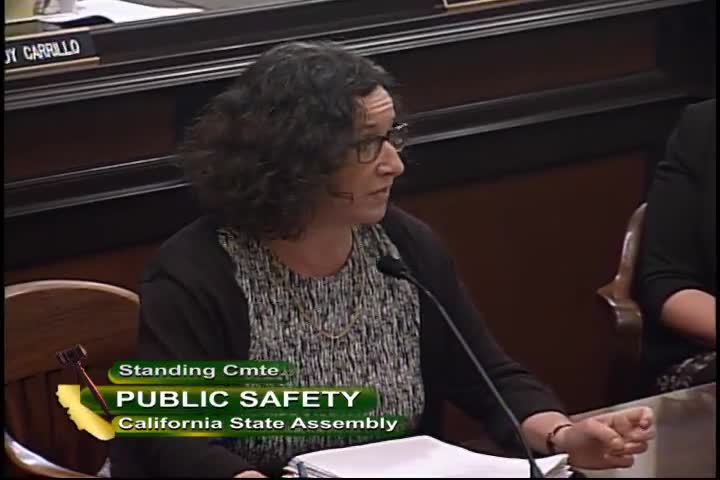 32MIN
Assembly Standing Committee on Public Safety
Bill Author

Bill Co-Author(s):