AB 2462: Bail: domestic violence.
- Session Year: 2017-2018
- House: Assembly
- Latest Version Date: 2018-02-14
Existing law requires a judge or magistrate, in setting, reducing, or denying bail, to take into consideration the protection of the public, the seriousness of the offense charged, the previous criminal record of the defendant, and the probability of his or her appearing at trial or at a hearing of the case. Existing law requires that public safety be the primary consideration. In considering the seriousness of the offense charged, existing law requires a judge or magistrate to include consideration of, among other things, the alleged injury to the victim and the alleged use of a firearm or other deadly weapon in the commission of the crime charged.
This bill, for purposes of a defendant charged with domestic violence, as defined, would require a judge or magistrate to take into consideration whether the victim was allegedly strangled or suffocated, as defined, by the defendant.
(a)(1)In setting, reducing, or denying bail, a judge or magistrate shall take into consideration the protection of the public, the seriousness of the offense charged, the previous criminal record of the defendant, and the probability of his or her appearing at trial or at a hearing of the case. The public safety shall be the primary consideration. In setting bail, a judge or magistrate may consider factors such as the information included in a report prepared in accordance with Section 1318.1.
(2)In considering the seriousness of the offense charged, a judge or magistrate shall include consideration of the alleged injury to the victim, and alleged threats to the victim or a witness to the crime charged, the alleged use of a firearm or other deadly weapon in the commission of the crime charged, and the alleged use or possession of controlled substances by the defendant.
(3)For purposes of a defendant charged with domestic violence, as defined in Section 13700 of this code or in Section 6211 of the Family Code, a judge or magistrate shall, in setting, reducing, or denying bail, take into consideration whether the victim was allegedly strangled or suffocated, as defined in Section 273.5, by the defendant.
(b)In considering offenses wherein a violation of Chapter 6 (commencing with Section 11350) of Division 10 of the Health and Safety Code is alleged, a judge or magistrate shall consider the following: (1) the alleged amounts of controlled substances involved in the commission of the offense, and (2) whether the defendant is currently released on bail for an alleged violation of Chapter 6 (commencing with Section 11350) of Division 10 of the Health and Safety Code.
(c)Before a court reduces bail to below the amount established by the bail schedule approved for the county, in accordance with subdivisions (b) and (c) of Section 1269b, for a person charged with a serious felony, as defined in subdivision (c) of Section 1192.7, or a violent felony, as defined in subdivision (c) of Section 667.5, the court shall make a finding of unusual circumstances and shall set forth those facts on the record. For purposes of this subdivision, unusual circumstances does not include the fact that the defendant has made all prior court appearances or has not committed any new offenses.
|
Date
|
Status
|
|---|---|
| Apr 26, 2018 | From committee: Without further action pursuant to Joint Rule 62(a). |
| Apr 24, 2018 | In committee: Set, final hearing. Failed passage. |
| Apr 10, 2018 | In committee: Set, second hearing. Failed passage. Reconsideration granted. |
| Apr 3, 2018 | In committee: Set, first hearing. Hearing canceled at the request of author. |
| Mar 5, 2018 | Referred to Com. on PUB. S. |
| Feb 15, 2018 | From printer. May be heard in committee March 17. |
| Feb 14, 2018 | Read first time. To print. |
|
Date
|
Description
|
Location
|
Votes
|
|
|---|---|---|---|---|
| Apr 24, 2018 | Do pass. | Assembly Standing Committee on Public Safety |
Failed |
|
| Apr 10, 2018 | Reconsideration. | Assembly Standing Committee on Public Safety |
Passed |
|
| Apr 10, 2018 | Do pass. | Assembly Standing Committee on Public Safety |
Failed |
This list shows positions taken on this bill by organizations on the date displayed, which is linked to the original source.
Positions by individuals are not included.
|
Organization
|
Position
|
Date
|
|---|---|---|
| Alliance For Hope | ** Support | Apr 23, 2018 |
| California Public Defenders Association | ** Against | Apr 23, 2018 |
| Catherine L. Speckmann Psychotherapist, Llc | ** Support | Apr 23, 2018 |
| Contra Costa Family Justice Center | ** Support | Apr 23, 2018 |
| end violence against women international | ** Support | Apr 23, 2018 |
| One private individual | ** Support | Apr 23, 2018 |
| Orange County District Attorney | ** Support | Apr 23, 2018 |
| San Diego County District Attorney | ** Support | Apr 23, 2018 |
Date of Hearing: April 24, 2018
Counsel: Sandra Uribe
ASSEMBLY COMMITTEE ON
Reginald Byron Jones-Sawyer, Sr., Chair
ABPCA Bill Id:
Author:() – As Ver:
VOTE ONLY
SUMMARY:
Requires a judge to consider whether the victim was strangled or suffocated when setting bail in domestic violence cases. Specifically, this bill: States that in cases in which a defendant is charged with domestic violence, as specified, a judge or magistrate shall, in setting, reducing, or denying bail, take into consideration whether the victim was allegedly strangled or suffocated.
EXISTING LAW:
- Prohibits excessive bail. (U.S. Const., 8th Amend. & Cal. Const., art. I, sec. 12.)
- States that a person shall be granted release on bail except for the following crimes when the facts are evident or the presumption great:
- Capital crimes;
- Felonies involving violence or sexual assault if the court finds by clear and convincing evidence that there is a substantial likelihood the person's release would result in great bodily harm to others; and,
- Felonies where the court finds by clear and convincing evidence that the person has threatened another with great bodily harm and that there is a substantial likelihood that the person would carry out the threat if released. (Cal. Const., art. I, sec. 12.)
- Capital crimes;
- Lists several factors that the court must consider in setting, reducing, or denying bail: the protection of the public; the seriousness of the charged offense; the defendant's prior criminal record; and, the probability of his or her appearing at trial or hearing of the case. Public safety is the primary consideration. (Pen. Code, § 1275, subd. (a).)
- States that in considering the seriousness of the offense charged, the judge or magistrate shall include consideration of the alleged injury to the victim, and alleged threats to the victim or a witness to the crime charged, the alleged use of a firearm or other deadly weapon in the commission of the crime charged, and the alleged use or possession of controlled substances by the defendant. (Pen. Code, § 1275, subd. (a).)
- Requires the court to consider the safety of the victim and the victim's family in setting bail and release conditions for a defendant. (Cal. Const., art. I, sec. 28, subd. (b)(3).)
- Requires the superior court judges in each county to prepare, adopt, and annually revise a uniform, countywide bail schedule. (Pen. Code, § 1269b, subd. (c).)
- Requires the countywide bail schedule to contain a list of the offenses and the amounts of bail applicable for each. If the schedule does not list all offenses specifically, then the bail schedule shall contain a general clause for designated amounts of bail for the offenses not specifically listed. (Pen. Code, § 1269b, subd. (f).)
- Provides that at the time of issuing an arrest warrant, the magistrate shall fix the amount of bail which, in the magistrate’s judgment, will be reasonable and sufficient for the defendant to appear, if the offense is bailable. (Pen. Code, § 815a.)
- Provides that an arrested person must be taken before the magistrate with 48 hours of arrest, excluding Sundays and holidays. (Pen. Code, 825, subd. (a).)
- Authorizes the officer in charge of a jail, or the clerk of the superior court to approve and accept bail in the amount fixed by the arrest warrant, the bail schedule, or an order admitting to bail in case or surety bond, and to issue and sign an order for the release of the arrested person, and to set a time and place for the person’s appearance in court. (Pen. Code, 1269b, subd. (a).)
- Authorizes a court to release a person who has been arrested for, or charged with, any offense other than a capital offense, on his or her own recognizance (OR). (Pen. Code, § 1270.)
- Prohibits the release of a defendant on his or her OR for any violent felony until a hearing is held in open court and the prosecuting attorney is given notice and an opportunity to be heard on the matter. (Pen. Code, § 1319.)
- Specifies conditions for a defendant's release on his or her own recognizance (OR). (Pen. Code, § 1318.)
- Authorizes a court, with the concurrence of the board of supervisors, to employ an investigative staff for the purpose of recommending whether a defendant should be released on OR. (Pen. Code, § 1318.1, subd. (a).)
- States that whenever a court has employed investigative staff for the purpose of recommending whether a defendant should be released on OR, an investigative report shall be prepared in all cases involved in a violent felony listed in Penal Code Section 667.5(c), or a felony violation of driving under the influence and causing bodily injury to another person, recommending whether the defendant should be released on OR. The report shall include all of the following:
- Written verification of any outstanding warrants against the defendant;
- Written verification of any prior incidents where the defendant has failed to make a court appearance;
- Written verification of the criminal record of the defendant; and,
- Written verification of the residence of the defendant during the past year. (Pen. Code, § 1318.1(b).)
- Written verification of any outstanding warrants against the defendant;
- Provides that a defendant released on bail for a felony who willfully fails to appear in court, as specified, is guilty of a crime. (Pen. Code, § 1320.5.)
- Specifies that if an on-bail defendant fails to appear for any scheduled court appearance, the bail is forfeited unless the clerk of the court fails to give proper notice to the surety or depositor within 30 days, or the defendant is brought before the court within 180 days. (Pen. Code, § 1305, subds. (a) & (b).)
FISCAL EFFECT:
Unknown
COMMENTS:
- Author's Statement: According to the author, “AB 2462 is needed to provide victims of strangulation and suffocation with the time they need to gather their belongings, seek physical and psychological support, and distance themselves from their abuser before they are able to post bail. Without this crucial period of time, victims are at a higher risk of being trapped in the same agonizing cycle of domestic violence all over again.”
- Setting Bail: In California, bail is a constitutional right except when the defendant is charged with: (1) a capital crime; (2) a felony involving violence or sex and the court finds that the person’s release would result in great bodily harm to another; or (3) when the defendant has threatened another and the court finds it likely that the defendant might carry out that threat. The constitution also allows for an arrestee to be released upon a written promise to appear, known as release on own recognizance. The constitution prohibits excessive bail. (Cal. Const. art. I, § 12.)
Courts require many defendants to deposit monetary bail in order to be released from custody. Bail is intended to act as a financial guarantee to the court that the defendant will appear for all required court hearings. An arrestee may post bail with his or her own cash, or may post bail using a bail bond.
Currently, each county sets a bail schedule based exclusively on the charged offense. The bail schedule is used by the arresting officer to allow an arrestee to post bail before his or her court appearance. Once a defendant is brought before the court, there must be an individualized determination of the appropriate amount of bail.
Penal Code section 1275 lists a number of factors that the court must consider in setting, reducing, or denying bail. These include protection of the public, the seriousness of the charged offense, the defendant’s prior criminal record, and the probability that the defendant will appear in court. (Pen. Code, § 1275, subd. (a)(1).) As to the seriousness of the offense, the statute also specifies that the court must consider the alleged injury to the victim, any alleged threats to the victim or witnesses, whether a firearm or other deadly weapon was used, and whether the defendant used or possessed controlled substances. (Pen. Code, § 1275, subd. (a)(2).)
Most crimes do not have special rules attached when setting bail. One exception is when the defendant is charged with specified drug offenses. (Pen. Code, § 1275, subd. (b).) In those cases, the statute specifies that additional factors which must be considered by the court are (1) the alleged amount of controlled substances involved and (2) whether the defendant was already released on bail for an alleged controlled substance offense. (Ibid.)
This bill would create an additional exception for when a defendant is convicted of domestic violence offenses. In such cases, this bill would require the court to consider whether the victim was alleged strangled or suffocated.
However, as noted above, current law already requires the court to consider the seriousness of the offense, and more specifically, the alleged injury to the victim. Thus, the court is already required to take these facts into account.
- Argument in Support: According to the Orange County District Attorney, “Currently in California, a judge in setting, reducing, or denying bail, is required to take into consideration: the protection and safety of the public, the seriousness of the offense charged, and the previous criminal history of the defendant. When taking into account the seriousness of the offense, a judge considers both the injury to the victim and the alleged use of a firearm or other deadly weapon in the commission of the crime charged. When perpetrators of strangulation and suffocation are able to post bail without going before a judge first, victims do not have enough time to devise a safety plan, file a protective order, obtain medical and psychological support, or pack their valuables before their aggressor is released. Without this crucial period of time, victims are at a higher risk of being trapped in the same agonizing cycle of domestic violence all over again.
“AB 2464 would provide the criminal justice system with an additional tool for protecting victims of domestic violence.” - Argument in Opposition: According to the California Public Defenders Association (CPDA), “CPDA opposes this bill for several reasons. First and foremost, the amendment is unnecessary in that the courts are already required, by statute, to consider the alleged injury to the victim of the charged offense in setting, reducing, or denying bail. (Penal Code Section 1275(a)(2).) Accordingly, a prosecutor advocating for a bail amount (or for no bail) already has the statutory ability to bring the nature of the alleged injuries to the attention of the court. By singling out one isolated type of alleged injury (strangulation or suffocation), to the exclusion of all others, this amendment would require the court, without further guidelines, to adopt a confusing ranking of injuries in the setting of bail. Moreover, given the current state of uncertainty surrounding the current bail scheme, now is not a prudent time to be adding further layers of complexity to the existing bail statutes.”
- Related Legislation:
- SB 10 (Hertzberg) revises the pretrial release system by limiting pretrial detention to specified persons, eliminating the use of bail schedules, and establishing pretrial services agencies tasked with conducting risk assessments on arrested person and preparing reports with recommendations for conditions of release. SB 10 is pending in the Assembly Appropriations Committee.
- AB 3125 (Mayes) places restrictions on a court in setting bail where a defendant is charged with multiple offenses. AB 3125 is pending hearing in this committee.
- SB 10 (Hertzberg) revises the pretrial release system by limiting pretrial detention to specified persons, eliminating the use of bail schedules, and establishing pretrial services agencies tasked with conducting risk assessments on arrested person and preparing reports with recommendations for conditions of release. SB 10 is pending in the Assembly Appropriations Committee.
- Prior Legislation:
- AB 42 (Bonta) was substantially similar SB 10 (Hertzberg). AB 42 failed passage on the Assembly Floor.
- SB 40 (Roth), Chapter 331, Statutes of 2017, requires law enforcement agencies and the Attorney General to include the number of domestic violence incidents involving strangulation or suffocation in their existing reporting requirements on domestic-violence related calls for assistance.
- SB 870 (Roth), of the 2015-2016 Legislative Session, would have established a separate offense of domestic violence by means of strangulation or suffocation. The hearing on SB 870 in this committee was canceled at the request of author.
- AB 805 (Jones-Sawyer), Chapter 17, Statutes of 2013, provides that in setting bail, a judge or magistrate may consider factors such as the report prepared by investigative staff for the purpose of recommending whether a defendant should be released on his/her own recognizance.
- SB 430 (Kehoe) Chapter 129, Statutes of 2011, specifies that for purposes of felony domestic violence statute, "traumatic condition" includes an injury as a result of strangulation or suffocation.
- AB 42 (Bonta) was substantially similar SB 10 (Hertzberg). AB 42 failed passage on the Assembly Floor.
REGISTERED SUPPORT / OPPOSITION:
Support
Alliance for Hope
Catherine L. Speckmann Psychotherapist, LLC
Contra Costa Family Justice Center
End Violence Against Women International
Orange County District Attorney
San Diego County District Attorney
One Private Individual
Opposition
California Public Defenders Association
Analysis Prepared by:
Date of Hearing: April 10, 2018
Counsel: Sandra Uribe
ASSEMBLY COMMITTEE ON
Reginald Byron Jones-Sawyer, Sr., Chair
ABPCA Bill Id:
Author:() – As Ver:
SUMMARY:
Requires a judge to consider whether the victim was strangled or suffocated when setting bail in domestic violence cases. Specifically, this bill: States that in cases in which a defendant is charged with domestic violence, as specified, a judge or magistrate shall, in setting, reducing, or denying bail, take into consideration whether the victim was allegedly strangled or suffocated.
EXISTING LAW:
- Prohibits excessive bail. (U.S. Const., 8th Amend. & Cal. Const., art. I, sec. 12.)
- States that a person shall be granted release on bail except for the following crimes when the facts are evident or the presumption great:
- Capital crimes;
- Felonies involving violence or sexual assault if the court finds by clear and convincing evidence that there is a substantial likelihood the person's release would result in great bodily harm to others; and,
- Felonies where the court finds by clear and convincing evidence that the person has threatened another with great bodily harm and that there is a substantial likelihood that the person would carry out the threat if released. (Cal. Const., art. I, sec. 12.)
- Capital crimes;
- Lists several factors that the court must consider in setting, reducing, or denying bail: the protection of the public; the seriousness of the charged offense; the defendant's prior criminal record; and, the probability of his or her appearing at trial or hearing of the case. Public safety is the primary consideration. (Pen. Code, § 1275, subd. (a).)
- States that in considering the seriousness of the offense charged, the judge or magistrate shall include consideration of the alleged injury to the victim, and alleged threats to the victim or a witness to the crime charged, the alleged use of a firearm or other deadly weapon in the commission of the crime charged, and the alleged use or possession of controlled substances by the defendant. (Pen. Code, § 1275, subd. (a).)
- Requires the court to consider the safety of the victim and the victim's family in setting bail and release conditions for a defendant. (Cal. Const., art. I, sec. 28, subd. (b)(3).)
- Requires the superior court judges in each county to prepare, adopt, and annually revise a uniform, countywide bail schedule. (Pen. Code, § 1269b, subd. (c).)
- Requires the countywide bail schedule to contain a list of the offenses and the amounts of bail applicable for each. If the schedule does not list all offenses specifically, then the bail schedule shall contain a general clause for designated amounts of bail for the offenses not specifically listed. (Pen. Code, § 1269b, subd. (f).)
- Provides that at the time of issuing an arrest warrant, the magistrate shall fix the amount of bail which, in the magistrate’s judgment, will be reasonable and sufficient for the defendant to appear, if the offense is bailable. (Pen. Code, § 815a.)
- Provides that an arrested person must be taken before the magistrate with 48 hours of arrest, excluding Sundays and holidays. (Pen. Code, 825, subd. (a).)
- Authorizes the officer in charge of a jail, or the clerk of the superior court to approve and accept bail in the amount fixed by the arrest warrant, the bail schedule, or an order admitting to bail in case or surety bond, and to issue and sign an order for the release of the arrested person, and to set a time and place for the person’s appearance in court. (Pen. Code, 1269b, subd. (a).)
- Authorizes a court to release a person who has been arrested for, or charged with, any offense other than a capital offense, on his or her own recognizance (OR). (Pen. Code, § 1270.)
- Prohibits the release of a defendant on his or her OR for any violent felony until a hearing is held in open court and the prosecuting attorney is given notice and an opportunity to be heard on the matter. (Pen. Code, § 1319.)
- Specifies conditions for a defendant's release on his or her own recognizance (OR). (Pen. Code, § 1318.)
- Authorizes a court, with the concurrence of the board of supervisors, to employ an investigative staff for the purpose of recommending whether a defendant should be released on OR. (Pen. Code, § 1318.1, subd. (a).)
- States that whenever a court has employed investigative staff for the purpose of recommending whether a defendant should be released on OR, an investigative report shall be prepared in all cases involved in a violent felony listed in Penal Code Section 667.5(c), or a felony violation of driving under the influence and causing bodily injury to another person, recommending whether the defendant should be released on OR. The report shall include all of the following:
- Written verification of any outstanding warrants against the defendant;
- Written verification of any prior incidents where the defendant has failed to make a court appearance;
- Written verification of the criminal record of the defendant; and,
- Written verification of the residence of the defendant during the past year. (Pen. Code, § 1318.1(b).)
- Written verification of any outstanding warrants against the defendant;
- Provides that a defendant released on bail for a felony who willfully fails to appear in court, as specified, is guilty of a crime. (Pen. Code, § 1320.5.)
- Specifies that if an on-bail defendant fails to appear for any scheduled court appearance, the bail is forfeited unless the clerk of the court fails to give proper notice to the surety or depositor within 30 days, or the defendant is brought before the court within 180 days. (Pen. Code, § 1305, subds. (a) & (b).)
FISCAL EFFECT:
Unknown
COMMENTS:
- Author's Statement: According to the author, “AB 2462 is needed to provide victims of strangulation and suffocation with the time they need to gather their belongings, seek physical and psychological support, and distance themselves from their abuser before they are able to post bail. Without this crucial period of time, victims are at a higher risk of being trapped in the same agonizing cycle of domestic violence all over again.”
- Setting Bail: In California, bail is a constitutional right except when the defendant is charged with: (1) a capital crime; (2) a felony involving violence or sex and the court finds that the person’s release would result in great bodily harm to another; or (3) when the defendant has threatened another and the court finds it likely that the defendant might carry out that threat. The constitution also allows for an arrestee to be released upon a written promise to appear, known as release on own recognizance. The constitution prohibits excessive bail. (Cal. Const. art. I, § 12.)
Courts require many defendants to deposit monetary bail in order to be released from custody. Bail is intended to act as a financial guarantee to the court that the defendant will appear for all required court hearings. An arrestee may post bail with his or her own cash, or may post bail using a bail bond.
Currently, each county sets a bail schedule based exclusively on the charged offense. The bail schedule is used by the arresting officer to allow an arrestee to post bail before his or her court appearance. Once a defendant is brought before the court, there must be an individualized determination of the appropriate amount of bail.
Penal Code section 1275 lists a number of factors that the court must consider in setting, reducing, or denying bail. These include protection of the public, the seriousness of the charged offense, the defendant’s prior criminal record, and the probability that the defendant will appear in court. (Pen. Code, § 1275, subd. (a)(1).) As to the seriousness of the offense, the statute also specifies that the court must consider the alleged injury to the victim, any alleged threats to the victim or witnesses, whether a firearm or other deadly weapon was used, and whether the defendant used or possessed controlled substances. (Pen. Code, § 1275, subd. (a)(2).)
Most crimes do not have special rules attached when setting bail. One exception is when the defendant is charged with specified drug offenses. (Pen. Code, § 1275, subd. (b).) In those cases, the statute specifies that additional factors which must be considered by the court are (1) the alleged amount of controlled substances involved and (2) whether the defendant was already released on bail for an alleged controlled substance offense. (Ibid.)
This bill would create an additional exception for when a defendant is convicted of domestic violence offenses. In such cases, this bill would require the court to consider whether the victim was alleged strangled or suffocated.
However, as noted above, current law already requires the court to consider the seriousness of the offense, and more specifically, the alleged injury to the victim. Thus, the court is already required to take these facts into account.
- Argument in Support: According to the Orange County District Attorney, “Currently in California, a judge in setting, reducing, or denying bail, is required to take into consideration: the protection and safety of the public, the seriousness of the offense charged, and the previous criminal history of the defendant. When taking into account the seriousness of the offense, a judge considers both the injury to the victim and the alleged use of a firearm or other deadly weapon in the commission of the crime charged. When perpetrators of strangulation and suffocation are able to post bail without going before a judge first, victims do not have enough time to devise a safety plan, file a protective order, obtain medical and psychological support, or pack their valuables before their aggressor is released. Without this crucial period of time, victims are at a higher risk of being trapped in the same agonizing cycle of domestic violence all over again.
“AB 2464 would provide the criminal justice system with an additional tool for protecting victims of domestic violence.” - Argument in Opposition: According to the California Public Defenders Association (CPDA), “CPDA opposes this bill for several reasons. First and foremost, the amendment is unnecessary in that the courts are already required, by statute, to consider the alleged injury to the victim of the charged offense in setting, reducing, or denying bail. (Penal Code Section 1275(a)(2).) Accordingly, a prosecutor advocating for a bail amount (or for no bail) already has the statutory ability to bring the nature of the alleged injuries to the attention of the court. By singling out one isolated type of alleged injury (strangulation or suffocation), to the exclusion of all others, this amendment would require the court, without further guidelines, to adopt a confusing ranking of injuries in the setting of bail. Moreover, given the current state of uncertainty surrounding the current bail scheme, now is not a prudent time to be adding further layers of complexity to the existing bail statutes.”
- Related Legislation:
- SB 10 (Hertzberg) revises the pretrial release system by limiting pretrial detention to specified persons, eliminating the use of bail schedules, and establishing pretrial services agencies tasked with conducting risk assessments on arrested person and preparing reports with recommendations for conditions of release. SB 10 is pending in the Assembly Appropriations Committee.
- AB 3125 (Mayes) places restrictions on a court in setting bail where a defendant is charged with multiple offenses. AB 3125 is pending hearing in this committee.
- SB 10 (Hertzberg) revises the pretrial release system by limiting pretrial detention to specified persons, eliminating the use of bail schedules, and establishing pretrial services agencies tasked with conducting risk assessments on arrested person and preparing reports with recommendations for conditions of release. SB 10 is pending in the Assembly Appropriations Committee.
- Prior Legislation:
- AB 42 (Bonta) was substantially similar SB 10 (Hertzberg). AB 42 failed passage on the Assembly Floor.
- SB 40 (Roth), Chapter 331, Statutes of 2017, requires law enforcement agencies and the Attorney General to include the number of domestic violence incidents involving strangulation or suffocation in their existing reporting requirements on domestic-violence related calls for assistance.
- SB 870 (Roth), of the 2015-2016 Legislative Session, would have established a separate offense of domestic violence by means of strangulation or suffocation. The hearing on SB 870 in this committee was canceled at the request of author.
- AB 805 (Jones-Sawyer), Chapter 17, Statutes of 2013, provides that in setting bail, a judge or magistrate may consider factors such as the report prepared by investigative staff for the purpose of recommending whether a defendant should be released on his/her own recognizance.
- SB 430 (Kehoe) Chapter 129, Statutes of 2011, specifies that for purposes of felony domestic violence statute, "traumatic condition" includes an injury as a result of strangulation or suffocation.
- AB 42 (Bonta) was substantially similar SB 10 (Hertzberg). AB 42 failed passage on the Assembly Floor.
REGISTERED SUPPORT / OPPOSITION:
Support
Alliance for Hope
Contra Costa Family Justice Center
End Violence Against Women International
Orange County District Attorney
San Diego County District Attorney
One Private Individual
Opposition
California Public Defenders Association
Analysis Prepared by:
Discussed in Hearing
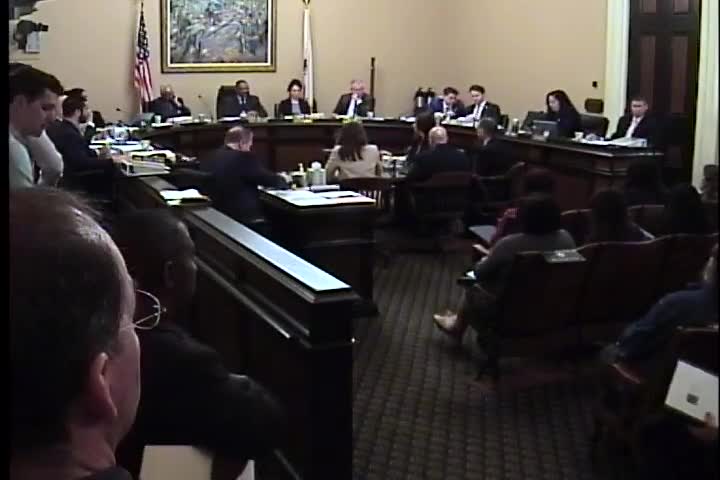 15MIN
Assembly Standing Committee on Public Safety
Bill Author

Bill Co-Author(s):
