AB 2711: Property tax revenue allocations: County of Orange: county equity amount.
- Session Year: 2017-2018
- House: Assembly
- Latest Version Date: 2018-03-20
Existing property tax law requires the county auditor, in each fiscal year, to allocate property tax revenue to local jurisdictions in accordance with specified formulas and procedures, and generally requires that each jurisdiction be allocated an amount equal to the total of the amount of revenue allocated to that jurisdiction in the prior fiscal year, subject to certain modifications, and that jurisdictions portion of the annual tax increment, as defined. Existing property tax law also reduces the amounts of ad valorem property tax revenue that would otherwise be annually allocated to the county, cities, and special districts pursuant to these general allocation requirements by requiring, for purposes of determining property tax revenue allocations in each county for the 199293 and 199394 fiscal years, that the amounts of property tax revenue deemed allocated in the prior fiscal year to the county, cities, and special districts be reduced in accordance with certain formulas. Existing property tax law requires that the revenues not allocated to the county, cities, and special districts as a result of these reductions be transferred to the Educational Revenue Augmentation Fund in that county for allocation to school districts, community college districts, and the county office of education.
This bill, for the 201920 fiscal year and each fiscal year thereafter, would require the auditor of the County of Orange to increase the total amount of ad valorem property tax revenue that is otherwise required to be allocated to the county by the county equity amount, as defined, and to commensurately decrease the amount of ad valorem property tax revenue that is otherwise required to be allocated to the county Educational Revenue Augmentation Fund and, if necessary, the amount of those revenue otherwise required to be allocated to school districts.
By imposing new duties upon local officials in the allocation of ad valorem property tax revenues, this bill would impose a state-mandated local program.
This bill would make legislative findings and declarations as to the necessity of a special statute for the County of Orange.
The California Constitution requires the state to reimburse local agencies and school districts for certain costs mandated by the state. Statutory provisions establish procedures for making that reimbursement.
This bill would provide that, if the Commission on State Mandates determines that the bill contains costs mandated by the state, reimbursement for those costs shall be made pursuant to the statutory provisions noted above.
The California Constitution generally limits ad valorem taxes on real property to 1% of the full cash value of that property. For purposes of this limitation, existing property tax law defines full cash value as the assessors fair market value valuation of real property as shown on the 197576 tax bill under full cash value or, thereafter, the appraised value of that real property when purchased, newly constructed, or a change in ownership has occurred. Existing property tax law generally defines this full cash value of property as the propertys fair market value, and defines these terms to mean the amount of cash or its equivalent that property would bring if exposed for sale in the open market, as provided.This bill would make a nonsubstantive change to that latter definition.The California Constitution generally limits ad valorem taxes on real property to 1% of the full cash value of that property. For purposes of this limitation, existing property tax law defines full cash value as the assessors fair market value valuation of real property as shown on the 197576 tax bill under full cash value or, thereafter, the appraised value of that real property when purchased, newly constructed, or a change in ownership has occurred. Existing property tax law generally defines this full cash value of property as the propertys fair market value, and defines these terms to mean the amount of cash or its equivalent that property would bring if exposed for sale in the open market, as provided.
This bill would make a nonsubstantive change to that latter definition.
(a)Notwithstanding any other law, for the 201920 fiscal year and for each fiscal year thereafter, the auditor of the County of Orange shall do both of the following:
(1)Increase the total amount of ad valorem property tax revenue that is otherwise required to be allocated to the county by the county equity amount.
(2)(A)Decrease the total amount of ad valorem property tax revenue that is otherwise required to be allocated to the countys Educational Revenue Augmentation Fund by the county equity amount.
(B)If, for any fiscal year, there is not enough ad valorem property tax revenue that is otherwise required to be allocated to a county Educational Revenue Augmentation Fund for the auditor to complete the allocation reduction required by subparagraph (A), the auditor shall additionally reduce the total amount of ad valorem property tax revenue that is otherwise required to be allocated to all school districts in the county for that fiscal year by an amount equal to the difference between the county equity amount and the amount of ad valorem property tax revenue that is otherwise required to be allocated to the county Educational Revenue Augmentation Fund for that fiscal year. This reduction for each school district in the county shall be the percentage share of the total reduction that is equal to the proportion that the total amount of ad valorem property tax revenue that is otherwise required to be allocated to the school district bears to the total amount of ad valorem property tax revenue that is otherwise required to be allocated to all school districts in a county. For purposes of this subparagraph, school districts do not include any districts that are excess tax school entities, as defined in Section 95.
(C)Any reduction in the amount of ad valorem property tax revenues deposited in the countys Educational Revenue Augmentation Fund as a result of subparagraph (A) shall be applied exclusively to reduce the amounts that are allocated from that fund to school districts and county offices of education, and shall not be applied to reduce the amounts of ad valorem property tax revenues that are otherwise required to be allocated from that fund to community college districts.
(b)For purposes of this section:
(1)For the 201920 fiscal year, county equity amount means one percent of the total amount of property tax revenue otherwise required to be allocated to the county Educational Revenue Augmentation Fund.
(2)For the 202021 fiscal year, and each fiscal year thereafter, county equity amount means the sum of the following three amounts:
(A)The county equity amount for the prior fiscal year.
(B)The product of the two following amounts:
(i)The amount described in subparagraph (A).
(ii)The percentage change from the prior fiscal year to the current fiscal year in gross taxable assessed valuation within the jurisdiction of the County of Orange, as reflected in the equalized assessment roll for those fiscal years.
(C)If the county property tax threshold amount is less than 12 percent of countywide ad valorem property tax revenues and the percentage change from the prior fiscal year to the current fiscal year in gross taxable assessed valuation within the jurisdiction of the County of Orange, as reflected in the equalized assessment roll for those fiscal years, is greater than three percent, then the product of the following two amounts:
(i)The total amount of property tax revenue otherwise required to be allocated to the county Educational Revenue Augmentation Fund.
(ii)The percentage change from the prior fiscal year to the current fiscal year in gross taxable assessed valuation within the jurisdiction of the County of Orange, as reflected in the equalized assessment roll for those fiscal years, minus 3 percent.
(3)County property tax threshold amount equals the sum of the following two amounts:
(A)County of Oranges allocation of countywide ad valorem property tax revenues, which are not subject to Section 6503.1 of the Government Code.
(B)The county equity amount for the prior year.
(c)For the 201920 fiscal year and each fiscal year thereafter, ad valorem property tax revenue allocations made pursuant to Sections 96.1 and 96.5, or any successor to either of those provisions, shall not incorporate the allocation adjustments made by this section.
SEC. 2.The Legislature finds and declares that a special statute is necessary and that a general statute cannot be made applicable within the meaning of Section 16 of Article IV of the California Constitution because of the unique inequities experienced from fiscal year to fiscal year by the County of Orange that, of all the counties in the state, was allocated the lowest percentage of countywide ad valorem property tax revenues as determined by the State Board of Equalization in its Annual Report for the 201516 fiscal year.
SEC. 3.If the Commission on State Mandates determines that this act contains costs mandated by the state, reimbursement to local agencies and school districts for those costs shall be made pursuant to Part 7 (commencing with Section 17500) of Division 4 of Title 2 of the Government Code.
SECTION 1.Section 110 of the Revenue and Taxation Code is amended to read:110.(a)Except as otherwise provided in Section 110.1, full cash value or fair market value means the amount of cash or its equivalent that property would bring if exposed for sale in the open market under conditions in which neither buyer nor seller could take advantage of the exigencies of the other, and both the buyer and the seller have knowledge of all of the uses and purposes to which the property is adapted and for which it is capable of being used, and of the enforceable restrictions upon those uses and purposes.(b)For purposes of determining the full cash value or fair market value of real property, other than possessory interests, being appraised upon a purchase, full cash value or fair market value is the purchase price paid in the transaction unless it is established by a preponderance of the evidence that the real property would not have transferred for that purchase price in an open market transaction. The purchase price shall, however, be rebuttably presumed to be the full cash value or fair market value if the terms of the transaction were negotiated at arms length between a knowledgeable transferor and transferee neither of which could take advantage of the exigencies of the other. Purchase price, as used in this section, means the total consideration provided by the purchaser or on the purchasers behalf, valued in money, whether paid in money or otherwise. There is a rebuttable presumption that the value of improvements financed by the proceeds of an assessment resulting in a lien imposed on the property by a public entity is reflected in the total consideration, exclusive of that lien amount, involved in the transaction. This presumption may be overcome if the assessor establishes by a preponderance of the evidence that all or a portion of the value of those improvements is not reflected in that consideration. If a single transaction results in a change in ownership of more than one parcel of real property, the purchase price shall be allocated among those parcels and other assets, if any, transferred based on the relative fair market value of each.(c)For real property, other than possessory interests, the change of ownership statement required pursuant to Section 480, 480.1, or 480.2, or the preliminary change of ownership statement required pursuant to Section 480.4, shall give any information as the board shall prescribe relative to whether the terms of the transaction were negotiated at arms length. In the event that the transaction includes property other than real property, the change in ownership statement shall give information as the board shall prescribe disclosing the portion of the purchase price that is allocable to all elements of the transaction. If the taxpayer fails to provide the prescribed information, the rebuttable presumption provided by subdivision (b) shall not apply.(d)Except as provided in subdivision (e), for purposes of determining the full cash value or fair market value of any taxable property, all of the following shall apply:(1)The value of intangible assets and rights relating to the going concern value of a business using taxable property shall not enhance or be reflected in the value of the taxable property.(2)If the principle of unit valuation is used to value properties that are operated as a unit and the unit includes intangible assets and rights, then the fair market value of the taxable property contained within the unit shall be determined by removing from the value of the unit the fair market value of the intangible assets and rights contained within the unit.(3)The exclusive nature of a concession, franchise, or similar agreement, whether de jure or de facto, is an intangible asset that shall not enhance the value of taxable property, including real property.(e)Taxable property may be assessed and valued by assuming the presence of intangible assets or rights necessary to put the taxable property to beneficial or productive use.(f)For purposes of determining the full cash value or fair market value of real property, intangible attributes of real property shall be reflected in the value of the real property. These intangible attributes of real property include zoning, location, and other attributes that relate directly to the real property involved.(a)Except as is otherwise provided in Section 110.1, full cash value or fair market value means the amount of cash or its equivalent that property would bring if exposed for sale in the open market under conditions in which neither buyer nor seller could take advantage of the exigencies of the other, and both the buyer and the seller have knowledge of all of the uses and purposes to which the property is adapted and for which it is capable of being used, and of the enforceable restrictions upon those uses and purposes.
(b)For purposes of determining the full cash value or fair market value of real property, other than possessory interests, being appraised upon a purchase, full cash value or fair market value is the purchase price paid in the transaction unless it is established by a preponderance of the evidence that the real property would not have transferred for that purchase price in an open market transaction. The purchase price shall, however, be rebuttably presumed to be the full cash value or fair market value if the terms of the transaction were negotiated at arms length between a knowledgeable transferor and transferee neither of which could take advantage of the exigencies of the other. Purchase price, as used in this section, means the total consideration provided by the purchaser or on the purchasers behalf, valued in money, whether paid in money or otherwise. There is a rebuttable presumption that the value of improvements financed by the proceeds of an assessment resulting in a lien imposed on the property by a public entity is reflected in the total consideration, exclusive of that lien amount, involved in the transaction. This presumption may be overcome if the assessor establishes by a preponderance of the evidence that all or a portion of the value of those improvements is not reflected in that consideration. If a single transaction results in a change in ownership of more than one parcel of real property, the purchase price shall be allocated among those parcels and other assets, if any, transferred based on the relative fair market value of each.
(c)For real property, other than possessory interests, the change of ownership statement required pursuant to Section 480, 480.1, or 480.2, or the preliminary change of ownership statement required pursuant to Section 480.4, shall give any information as the board shall prescribe relative to whether the terms of the transaction were negotiated at arms length. In the event that the transaction includes property other than real property, the change in ownership statement shall give information as the board shall prescribe disclosing the portion of the purchase price that is allocable to all elements of the transaction. If the taxpayer fails to provide the prescribed information, the rebuttable presumption provided by subdivision (b) shall not apply.
(d)Except as provided in subdivision (e), for purposes of determining the full cash value or fair market value of any taxable property, all of the following shall apply:
(1)The value of intangible assets and rights relating to the going concern value of a business using taxable property shall not enhance or be reflected in the value of the taxable property.
(2)If the principle of unit valuation is used to value properties that are operated as a unit and the unit includes intangible assets and rights, then the fair market value of the taxable property contained within the unit shall be determined by removing from the value of the unit the fair market value of the intangible assets and rights contained within the unit.
(3)The exclusive nature of a concession, franchise, or similar agreement, whether de jure or de facto, is an intangible asset that shall not enhance the value of taxable property, including real property.
(e)Taxable property may be assessed and valued by assuming the presence of intangible assets or rights necessary to put the taxable property to beneficial or productive use.
(f)For purposes of determining the full cash value or fair market value of real property, intangible attributes of real property shall be reflected in the value of the real property. These intangible attributes of real property include zoning, location, and other attributes that relate directly to the real property involved.
|
Date
|
Status
|
|---|---|
| May 25, 2018 | In committee: Held under submission. |
| May 2, 2018 | In committee: Set, first hearing. Referred to APPR. suspense file. |
| Apr 19, 2018 | From committee: Do pass and re-refer to Com. on APPR. (Ayes 5. Noes 2.) (April 18). Re-referred to Com. on APPR. |
| Mar 21, 2018 | Re-referred to Com. on L. GOV. |
| Mar 20, 2018 | From committee chair, with author's amendments: Amend, and re-refer to Com. on L. GOV. Read second time and amended. |
| Mar 19, 2018 | Referred to Com. on L. GOV. |
| Feb 16, 2018 | From printer. May be heard in committee March 18. |
| Feb 15, 2018 | Read first time. To print. |
|
Date
|
Description
|
Location
|
Votes
|
|
|---|---|---|---|---|
| Apr 18, 2018 | Do pass and be re-referred to the Committee on [Appropriations] | Assembly Standing Committee on Local Government |
Passed |
This list shows positions taken on this bill by organizations on the date displayed, which is linked to the original source.
Positions by individuals are not included.
|
Organization
|
Position
|
Date
|
|---|---|---|
| Orange County Board of Supervisors | * Support | Apr 18, 2018 |
| Orange County Business Council | ** Support | Apr 17, 2018 |
| Orange County [Sponsor] | ** Support | Apr 17, 2018 |
Date of Hearing: May 2, 2018
ASSEMBLY COMMITTEE ON APPROPRIATIONS
Lorena Gonzalez Fletcher, Chair
ABPCA Bill Id:AB 2711
Author:(Chen) – As Amended Ver:March 20, 2018
Policy Committee: | Local Government | Vote: | 5 - 2 |
|
| ||
|
|
Urgency: No State Mandated Local Program: Yes Reimbursable: Yes
SUMMARY:
This bill increases Orange County’s share of ad valorem property taxes over time to a maximum of 12% by shifting property taxes from the Educational Revenue Augmentation Fund (ERAF) to the county.
FISCAL EFFECT:
Annual ongoing state costs in the range of $10 million to $20 million (GF), higher in years when the county’s assessed valuation growth exceeds 3%. This amount would increase each year thereafter at the property tax growth rate. The GF would generally replace with GF revenues (‘backfill”) the reductions to Educational Revenue Augmentation Fund (ERAF) that would otherwise go to schools pursuant to Proposition 98 minimum funding guarantees.
COMMENTS:
- Purpose. This bill seeks to provide Orange County with property tax revenues equivalent to the property tax revenues of other counties. Orange County would use the revenue to fund critical serves. According to the author:
Orange County receives the lowest percentage of property tax revenue of any county in California – about six cents on the dollar, in part because the formula for distributing local property taxes has not changed since the allocation system, commonly referred to as AB 8, was first implemented in 1979. Orange County receives 11% less than the 17% average for the 15 largest California counties.
- Background. Prior to voters’ approval of Proposition 13 (1978), local governments set their own property tax rates. Proposition 13 capped the rate of ad valorem taxes on real property at one percent, cutting statewide property tax revenues by 57%. Proposition 13 also gave the Legislature the power to allocate the property tax revenues.
In 1979, the Legislature used what is known as the “AB 8” formula to implement the uniform 1% ad valorem property tax rate imposed by Proposition 13. The formula allocated to each local agency its average share of the overall property tax revenues generated within the county during the three years prior to Proposition 13.
Prior to Proposition 13, some counties, particularly Orange, had a lower share of property tax revenues because it relied on special districts to provide municipal services normally provided by city and county governments. In addition, some county governments had cut their property tax rates to provide tax relief. Both of these situations resulted in some counties receiving a low share of the uniform 1% property tax rate under the AB 8 formula.
In general, the AB 8 formula resulted in significant variation in counties’ shares of property tax revenues. This variation persists. For example, in FY 2014-15, Alpine County received 62% of property tax revenue collected in the county and Orange County received only 6% of such revenue collected in Orange County.
This bill takes a modest approach to increasing Orange County’s property tax revenue share by adjusting the base year and then shifting an additional portion of the state’s share (ERAF) of the property tax to the county in years when the county’s growth in assessed value is greater than 3%. This continues until the county share of property tax revenues reaches 12%, likely a 20-year or longer process. In 2017, Orange County received just over $300 million in property tax revenues and just over $800 million went to ERAF.
- Prior Legislation. Several previous bills have unsuccessfully attempted to address these disparities by modifying counties' share of property taxes. Among the most relevant:
AB 1033 (Daucher), of the 2005-06 Legislative Session, increased property tax allocations to certain county governments that received less than the statewide average percentage of property tax revenues allocated to each county for FY 2002-03 by transferring property tax revenues from ERAF in each qualifying county. That bill was held on this committee’s Suspense File.
SB 1909 (Machado), of the 2003-04 Legislative Session, established an 11% floor for property tax allocations to county governments. That bill was vetoed by the governor.
AB 1568 (Correa), of the 2003-04 Legislative Session, specified that counties would receive a minimum of 15.5% of property taxes collected. That bill was held on this committee’s Suspense File.
Analysis Prepared by: Jennifer Swenson / APPR. / (916) 319-2081
Date of Hearing: April 18, 2018
ASSEMBLY COMMITTEE ON LOCAL GOVERNMENT
Cecilia Aguiar-Curry, Chair
ABPCA Bill Id:AB 2711 (
Author:Chen) – As Amended Ver:March 20, 2018
SUBJECT: Property tax revenue allocations: County of Orange: county equity amount.
SUMMARY: Increases Orange County’s share of ad valorem property taxes over time to a maximum of 12%. Specifically, this bill:
- Defines “county equity amount” for the 2019-20 fiscal year (FY) as one percent of the total amount of property tax revenues required to be allocated to the county Educational Revenue Augmentation Fund (ERAF).
- Defines “county equity amount” for FY 2020-21, and each FY thereafter, as the sum of the following three amounts:
- The county equity amount for the prior FY;
- The county equity amount for the prior FY times the percentage change from the prior FY to the current FY in gross taxable assessed calculation within Orange County, as reflected in the equalized assessment roll for those FYs; and,
- If the county property tax threshold is less than 12% of the countywide ad valorem property tax revenues and the percentage change from the prior FY to the current FY
in gross taxable assessed valuation within Orange County, as reflected in the equalized assessment roll for those FYs, is greater than 3%, the total amount of property tax revenue required to be allocated to the county ERAF times the percentage change from the prior FY to the current FY in gross taxable assessed valuation within Orange County minus 3%.
- Defines the “county property tax threshold amount” as Orange County’s countywide ad valorem property tax revenue, excluding the ad valorem property taxes dedicated for fire protection purposes, plus the county equity amount for the prior year.
- Requires the Orange County auditor to increase the total amount of ad valorem property tax revenue allocated to the county by the county equity amount and decrease the amount of ad valorem property tax revenue that is otherwise required to be allocated to the county’s ERAF by the county equity amount.
- Specifies that if, for any FY, there is not enough ad valorem property tax revenue that is otherwise required to be allocated to the county ERAF for the auditor to complete the allocation reduction, the auditor must additionally reduce the total amount of ad valorem property tax to all school districts in the county for that FY by an amount equal to the difference between the county equity amount and the amount of ad valorem property tax revenue required to be allocated to the county ERAF for that FY. School districts do not include any districts that are excess tax school entities.
- Specifies that the allocation adjustments made by this bill do not affect the allocation of ad valorem property taxes to the other local agencies within Orange County.
- Provides that, if the Commission on State Mandates determines that this bill contains costs mandated by the state, reimbursement to local agencies and school districts for those costs shall be made pursuant to current law governing state mandated local costs.
- Contains findings and declarations.
EXISTING LAW:
- Makes the state responsible for the allocation of property taxes pursuant to Proposition 13.
- Specifies a property tax allocation system (the AB 8 formula) in response to voter approval of Proposition 13.
- Adjusts tax allocation by shifting property taxes from cities, counties, and special districts to an ERAF in each county, which in turn provides funds to public schools within the county.
- Requires, pursuant to Proposition 98, that schools must remain whole.
FISCAL EFFECT: This bill is keyed fiscal and contains a state-mandated local program.
COMMENTS:
- Ad Valorem Property Taxes. Prior to voters’ approval of Proposition 13 (1978), local governments set their own property tax rates. Proposition 13 capped the rate of ad valorem taxes on real property at one percent, cutting statewide property tax revenues by 57%. The power to allocate the remaining property tax revenues became the Legislature’s duty.
The Legislature responded by allocating property tax revenues to counties, cities, special districts, and school districts based on each agency’s pro rata share of the property taxes collected within a county in the three FYs prior to 1978-79 (SB 154, Rodda, 1978). For example, a county government that had a low property tax rate before Proposition 13 received a small share of the remaining property tax revenues. In 1979, the Legislature permanently restructured the allocation of property taxes (AB 8, L. Greene, 1979). AB 8 used SB 154’s property tax allocations as a base and then, in place of block grants, shifted some of the schools' property tax revenues to local agencies and replaced the schools' losses with increased subventions from the State General Fund.
Two changes to property tax allocations in the nearly four decades since AB 8 created the property tax allocation system have significantly affected local governments. In the mid-1980s, Legislators ordered counties to shift some of their property tax revenues to cities that either never levied a property tax before Proposition 13 or levied only low property tax rates. In response to state budget deficits in the early 1990s, the Legislature reduced State General Fund spending on education by shifting property taxes from counties, cities, and special districts, to schools (the so-called ERAF shifts).
California's property tax allocation system is excessively complex. After over 25 years of voter initiatives, legislative reactions, and local adjustments, the state/local fiscal relationship is nearly incomprehensible. It is lacking in equity as there is significant variation in local governments’ shares of property tax revenues. For example, Alpine County received 62% and Orange County received only 6% of the total property tax within their respective jurisdictions in FY 2015-16. It should be noted that Alpine County has comparatively fewer taxing entities competing for property tax revenue (for example there are no cities in Alpine County). The County of San Francisco receives 58%, but similarly, as the city and county are the same and many of the services provided in San Francisco are departments of the county, there are fewer taxing entities competing.
- Bill Summary. This bill attempts to solve a complex problem by providing a mechanism
for property tax relief to Orange County starting in FY 2019-2020. Essentially, this measure would increase Orange County’s share of ad valorem property tax in years where assessed property value grows by 3% over the previous year. The property taxes would be shifted from the County’s ERAF to the County over time until the County is guaranteed 12% of all ad valorem property taxes within its jurisdiction. AB 2711 is sponsored by Orange County. - Author’s Statement. According to the author, “Property tax revenue is Orange County’s largest source of funding for essential program that provide critical services to a diverse and dynamic population. Orange County receives the lowest percentage of property tax revenue of any county in California – about six cents on the dollar, in part because the formula for distributing local property taxes has not changed since the allocation system, commonly referred to as AB 8, was first implemented in 1979. Over the years, some local governments, including Orange County, have become increasingly critical of the state’s property tax allocation system because it is an outdated formula that does not allocate revenue in a way that reflects current needs and creates significant funding inequities between counties. For instance, Orange County receives 11% less than the 17% average for the 15 largest California counties. AB 2711 seeks to provide Orange County a measure of parity with the other counties in terms of its property tax revenues.
“Since the property tax allocation was locked in, Orange County’s population has nearly doubled and service needs have drastically increased. Orange County contributes more and receives less than other counties, leaving them at a disadvantage in serving their needy populations. This structural inequity disadvantages county residents who rely on the County to provide critical services. If the County received an equitable share if property tax that correlated more closely with local government service responsibilities, they could spend more on homeless services, crisis treatment, public safety, and addressing the needs of at-risk youth.
“AB 2711 gradually achieves a measure of property tax equity for the County of Orange by increasing the County’s share of property tax revenues over time until it reaches twelve percent. Orange County’s share of property taxes only increases during years where assessed property value growth is greater than three percent in order to phase in this bill. Once the County’s share reaches twelve percent, the County’s share no longer increases and will remain constant.”
- Zero-Sum Game. Allocating property tax revenues is a zero-sum game; every reallocation creates winners and losers. AB 2711 makes a winner out of Orange County. This bill would shift property taxes from the County’s ERAF to the County. In some years, the fiscal loser will be the state General Fund, which must backfill the property tax revenues that schools will not receive from ERAF. The annual loss to the state General Fund will grow in the future in accordance with property tax revenues.
- Prior and Related Legislation. Several previous bills attempted to modify counties' share of property taxes: AB 2682 (Daucher) and AB 405 (Duvall), which were held in Assembly Appropriations Committee in 2006 and 2007 respectively, required tax increment to be directed to the county upon expiration of a redevelopment agency if the county is a low wealth county; AB 1033 (Daucher), which was held in Assembly Appropriations Committee in 2005, increased the property tax allocations to certain county governments that received less than the statewide average percentage of property tax revenues allocated to each county for FY 2002-03 by transferring property tax revenues from ERAF in each qualifying county; SB 1909 (Machado), which was vetoed by the Governor in 2004, established an 11% floor for property tax allocations to county governments; SB 1047 (Committee on Budget and Fiscal Review ), a budget trailer bill that was nearly identical to SB 1909, died on the Senate Floor in 2003; AB 1568 (Correa), which specified that counties would receive a minimum of 15.5% of property taxes collected, was held in the Assembly Appropriations Committee in 2003; AB 1880 (Brewer), nearly identical to AB 1568, died in the Assembly Appropriations Committee in 2000; AB 2471 (Brewer) died in the Assembly Appropriations Committee in 1998; AB 661 (Brewer) died in the Assembly Local Government Committee in 1997; and AB 3334 (Brewer) died in the Assembly Local Government Committee in 1996.
- Arguments in Support. Supporters argue that Orange County receives an unfair share
of the ad valorem property tax revenue that is collected within its jurisdiction. Orange County needs this escalation in revenue to properly fund critical serves, and as the County’s population continues to rise, providing these services becomes increasingly difficult. - Arguments in Opposition. None on file.
REGISTERED SUPPORT / OPPOSITION:
Support
Orange County [SPONSOR]
Orange County Business Council
Opposition
None on file
Analysis Prepared by: Jimmy MacDonald / L. GOV. / (916) 319-3958
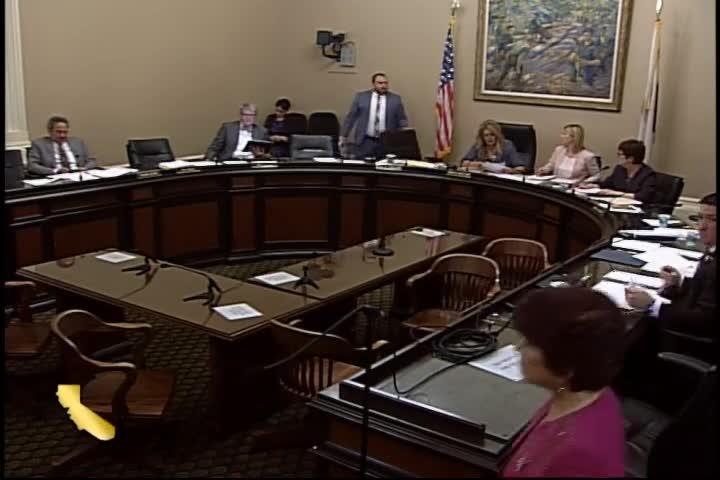
Discussed in Hearing
 12MIN
Assembly Standing Committee on Local Government
Bill Author

Bill Co-Author(s):