AB 2842: Wood products.
- Session Year: 2017-2018
- House: Assembly
- Latest Version Date: 2018-05-01
(1)Existing law establishes the Department of Forestry and Fire Protection in the Natural Resources Agency. Existing law provides that a thriving in-state forest products sector provides public benefits, including employment opportunities in both rural and urban areas, and economic development for rural communities.
This bill would require the department to develop the California Wood Innovations Small Grants Program to provide grants and low-interest loans or loan guarantees, upon appropriation by the Legislature for these purposes, to entities that expand the use of wood products and increase in-state wood product processing and manufacturing, manufacturing for projects to improve forest health and reduce greenhouse gas emissions, as provided.
(2)The California Global Warming Solutions Act of 2006 designates the State Air Resources Board as the state agency charged with monitoring and regulating sources of emissions of greenhouse gases. The act authorizes the state board to include the use of market-based compliance mechanisms in regulating greenhouse gas emissions. Existing law requires all moneys, except for fines and penalties, collected by the state board from the auction or sale of allowances as part of a market-based compliance mechanism to be deposited in the Greenhouse Gas Reduction Fund. Existing law establishes the Governors Office of Business and Economic Development, also known as GO-Biz, in state government within the Governors office. Existing law requires GO-Biz to serve the Governor as the lead entity for economic strategy and the marketing of California on issues relating to business development, private sector investment, and economic growth.
This bill would appropriate provide that up to $20,000,000 may be available, upon appropriation, to GO-Biz for purposes of providing grants, loans, and loan guarantees for projects projects, approved by the department and the State Air Resources Board, that add mobile or stationary sawmill capacity for the in-state processing and production of wood products from forest and vegetation management projects activities that are intended to reduce the risk and intensity of wildfires.
(1)Existing law establishes the Department of Forestry and Fire Protection in the Natural Resources Agency. Existing law provides that a thriving in-state forest products sector provides public benefits, including employment opportunities in both rural and urban areas, and economic development for rural communities.
This bill would require the department to develop the California Wood Innovations Small Grants Program to provide grants and low-interest loans or loan guarantees, upon appropriation by the Legislature for these purposes, to entities that expand the use of wood products and increase in-state wood product processing and manufacturing, as provided.
(4)(2)The California Global Warming Solutions Act of 2006 designates the State Air Resources Board as the state agency charged with monitoring and regulating sources of emissions of greenhouse gases. The act authorizes the state board to include the use of market-based compliance mechanisms in regulating greenhouse gas emissions. Existing law requires all moneys, except for fines and penalties, collected by the state board from the auction or sale of allowances as part of a market-based compliance mechanism to be deposited in the Greenhouse Gas Reduction Fund. Existing law establishes the Governors Office of Business and Economic Development, also known as GO-Biz, in state government within the Governors office. Existing law requires GO-Biz to serve the Governor as the lead entity for economic strategy and the marketing of California on issues relating to business development, private sector investment, and economic growth.
This bill would appropriate $20,000,000 to the Governors Office of Business and Economic Development GO-Biz for purposes of providing grants, loans, and loan guarantees for projects that add mobile or stationary sawmill capacity for the in-state processing and production of wood products from forest and vegetation management projects that are intended to reduce the risk and intensity of wildfires.
(1)Existing law establishes the Governors Office of Business and Economic Development, also known as GO-Biz, in state government within the Governors office. Existing law requires GO-Biz to serve the Governor as the lead entity for economic strategy and the marketing of California on issues relating to business development, private sector investment, and economic growth.
This bill would require GO-Biz to work with state academic institutions and certification organizations to perform additional product testing that accelerates the development, use, or commercialization of new wood products, as provided.
(2)Existing law establishes the California Building Standards Commission within the Department of General Services. Existing law requires the commission to approve or adopt any building standard adopted or proposed by state agencies prior to codification.
This bill would require the commission to work with local planning offices, developers, and architects to consider the feasibility of expanding the use of wood and mass timber in California buildings. The bill would require the commission to identify additional seismic, fire, or other testing of mass timber that is necessary for the use of mass timber in building construction.
(3)Existing law establishes the Department of Forestry and Fire Protection in the Natural Resources Agency. Existing law provides that a thriving in-state forest products sector provides public benefits, including employment opportunities in both rural and urban areas, and economic development for rural communities.
This bill would require the department to develop the California Wood Innovations Small Grants Program to provide grants and low-interest loans or loan guarantees, upon appropriation by the Legislature for these purposes, to entities that expand the use of wood products and increase in-state wood product processing and manufacturing, as provided.
(4)The California Global Warming Solutions Act of 2006 designates the State Air Resources Board as the state agency charged with monitoring and regulating sources of emissions of greenhouse gases. The act authorizes the state board to include the use of market-based compliance mechanisms. Existing law requires all moneys, except for fines and penalties, collected by the state board from the auction or sale of allowances as part of a market-based compliance mechanism to be deposited in the Greenhouse Gas Reduction Fund.
This bill would appropriate $20,000,000 to the Governors Office of Business and Economic Development for purposes of providing grants, loans, and loan guarantees for projects that add mobile or stationary sawmill capacity for the in-state processing and production of wood products from forest and vegetation management projects that are intended to reduce the risk and intensity of wildfires.
The Legislature hereby finds and declares that the state lacks adequate sawmill and manufacturing capacity to process timber from tree mortality and forest management projects into wood products and that increasing the capacity for in-state processing and manufacturing of timber into wood products will help reduce the risk and intensity of wildfires, create additional jobs, and reduce greenhouse gas emissions associated with shipping timber out of state for further processing.
SECTION 1.SEC. 2.Article 10 (commencing with Section 4630) is added to Chapter 8 of Part 2 of Division 4 of the Public Resources Code, to read:10.California Wood Innovations Small Grants Program4630.(a)The department shall develop the California Wood Innovations Small Grants Program to provide grants and low-interest loans or loan guarantees, upon appropriation by the Legislature for these purposes, to entities that expand the use of wood products and increase in-state wood product processing and manufacturing. manufacturing for projects to improve forest health and reduce greenhouse gas emissions.
(b)Up to twenty million dollars ($20,000,000) may be available, upon appropriation, from the Greenhouse Gas Reduction Fund, created pursuant to Section 16428.8 of the Government Code, to the Governors Office of Business and Economic Development, for purposes of reducing greenhouse gas emissions by providing grants, loans, and loan guarantees for projects, approved by the department and the State Air Resources Board, that add capacity for the in-state processing and production of wood products from forest and vegetation management activities that are intended to reduce the risk and intensity of wildfires.
(b)(c)Projects eligible for grant funding pursuant to this section include, but are not limited to, research, development, and demonstration projects.
(c)(d)Projects eligible for low-interest loans and loan guarantees pursuant to this section include, but are not limited to, facility creation or expansion and equipment procurement projects.
SEC. 2.(a)The Legislature hereby finds and declares that the state lacks adequate sawmill and manufacturing capacity to process timber from tree mortality and forest management projects into wood products and that increasing the capacity for in-state processing and manufacturing of timber into wood products will help reduce the risk and intensity of wildfires, create additional jobs, and reduce greenhouse gas emissions associated with shipping timber out of state for further processing.(b)The sum of twenty million dollars ($20,000,000) is hereby appropriated from the Greenhouse Gas Reduction Fund, created pursuant to Section 16428.8 of the Government Code, to the Governors Office of Business and Economic Development, for purposes of reducing greenhouse gas emissions by providing grants, loans, and loan guarantees for projects that add mobile or stationary sawmill capacity for the in-state processing and production of wood products from forest and vegetation management projects that are intended to reduce the risk and intensity of wildfires.(a)The department shall develop the California Wood Innovations Small Grants Program to provide grants and low-interest loans or loan guarantees, upon appropriation by the Legislature for these purposes, to entities that expand the use of wood products and increase in-state wood product processing and manufacturing.
(b)Projects eligible for grant funding pursuant to this section include, but are not limited to, research, development, and demonstration projects.
(c)Projects eligible for low-interest loans and loan guarantees pursuant to this section include, but are not limited to, facility creation or expansion and equipment procurement projects.
SEC. 4.SEC. 2.(a)The Legislature hereby finds and declares that the state lacks adequate sawmill and manufacturing capacity to process timber from tree mortality and forest management projects into wood products and that increasing the capacity for in-state processing and manufacturing of timber into wood products will help reduce the risk and intensity of wildfires, create additional jobs, and reduce greenhouse gas emissions associated with shipping timber out of state for further processing.
(b)The sum of twenty million dollars ($20,000,000) is hereby appropriated from the Greenhouse Gas Reduction Fund, created pursuant to Section 16428.8 of the Government Code, to the Governors Office of Business and Economic Development, for purposes of reducing greenhouse gas emissions by providing grants, loans, and loan guarantees for projects that add mobile or stationary sawmill capacity for the in-state processing and production of wood products from forest and vegetation management projects that are intended to reduce the risk and intensity of wildfires.
The office shall work with state academic institutions and certification organizations to perform additional product testing that accelerates the development, use, or commercialization of new wood products, including any testing identified as necessary by the California Building Standards Commission pursuant to Section 18934.6 of the Health and Safety Code.
SEC. 2.Section 18934.6 is added to the Health and Safety Code, to read:18934.6.(a)The commission shall work with local planning offices, developers, and architects to consider the feasibility of expanding the use of wood and mass timber in California buildings.
(b)The commission shall identify additional seismic, fire, or other testing of mass timber that is necessary for the use of mass timber in building construction.
SEC. 3.Article 10 (commencing with Section 4630) is added to Chapter 8 of Part 2 of Division 4 of the Public Resources Code, to read:10.California Wood Innovations Small Grants Program4630.(a)The department shall develop the California Wood Innovations Small Grants Program to provide grants and low-interest loans or loan guarantees, upon appropriation by the Legislature for these purposes, to entities that expand the use of wood products and increase in-state wood product processing and manufacturing.
(b)Projects eligible for grant funding pursuant to this section include, but are not limited to, research, development, and demonstration projects.
(c)Projects eligible for low-interest loans and loan guarantees pursuant to this section include, but are not limited to, facility creation or expansion and equipment procurement projects.
SEC. 4.(a)The Legislature hereby finds and declares that the state lacks adequate sawmill and manufacturing capacity to process timber from tree mortality and forest management projects into wood products and that increasing the capacity for in-state processing and manufacturing of timber into wood products will help reduce the risk and intensity of wildfires, create additional jobs, and reduce greenhouse gas emissions associated with shipping timber out of state for further processing.
(b)The sum of twenty million dollars ($20,000,000) is hereby appropriated from the Greenhouse Gas Reduction Fund, created pursuant to Section 16428.8 of the Government Code, to the Governors Office of Business and Economic Development, for purposes of reducing greenhouse gas emissions by providing grants, loans, and loan guarantees for projects that add mobile or stationary sawmill capacity for the in-state processing and production of wood products from forest and vegetation management projects that are intended to reduce the risk and intensity of wildfires.
|
Date
|
Status
|
|---|---|
| May 25, 2018 | In committee: Held under submission. |
| May 16, 2018 | In committee: Set, first hearing. Referred to APPR. suspense file. |
| May 2, 2018 | Re-referred to Com. on APPR. |
| May 1, 2018 | Read second time and amended. |
| Apr 30, 2018 | From committee: Amend, and do pass as amended and re-refer to Com. on APPR. (Ayes 10. Noes 0.) (April 23). |
| Apr 9, 2018 | Re-referred to Com. on NAT. RES. |
| Apr 5, 2018 | From committee chair, with author's amendments: Amend, and re-refer to Com. on NAT. RES. Read second time and amended. |
| Mar 15, 2018 | Referred to Com. on NAT. RES. |
| Feb 17, 2018 | From printer. May be heard in committee March 19. |
| Feb 16, 2018 | Read first time. To print. |
|
Date
|
Description
|
Location
|
Votes
|
|
|---|---|---|---|---|
| Apr 23, 2018 | Do pass as amended and be re-referred to the Committee on [Appropriations] | Assembly Standing Committee on Natural Resources |
Passed |
This list shows positions taken on this bill by organizations on the date displayed, which is linked to the original source.
Positions by individuals are not included.
|
Organization
|
Position
|
Date
|
|---|---|---|
| California Building Industry Association | * Support | Apr 23, 2018 |
| California Construction Industrial Materials Association | * Against | Apr 23, 2018 |
| California Forestry Association | * Support | Apr 23, 2018 |
| California Nevada Cement Association | * Against | Apr 23, 2018 |
| County of Madera Board of Supervisors | ** Support | Apr 20, 2018 |
| National Ready Mixed Concrete Association | ** Against | Apr 20, 2018 |
| Rural County Representatives of California | ** Support | Apr 20, 2018 |
| Sierra Business Council | * Support | Apr 23, 2018 |
Date of Hearing: May 16, 2018
ASSEMBLY COMMITTEE ON APPROPRIATIONS
Lorena Gonzalez Fletcher, Chair
ABPCA Bill Id:AB 2842
Author:(Bigelow) – As Amended Ver:May 1, 2018
Policy Committee: | Natural Resources | Vote: | 10 - 0 |
|
| ||
|
|
Urgency: No State Mandated Local Program: No Reimbursable: No
SUMMARY:
This bill requires CAL FIRE to develop the California Wood Innovations Small Grants Program to provide grants and low-interest loans or loan guarantees, upon appropriation by the Legislature, to entities that expand the use of wood products and increase in-state wood product processing and manufacturing, as provided.
This bill provides up to $20 million from the Greenhouse Gas Reduction Fund (GGRF) (cap-and-trade auction revenue) to Go-Biz (California Governor’s Office of Business and Economic Development) to provide grants, loans, and loan guarantees for projects approved by CAL FIRE and the California Air Resources Board (ARB) for projects that expand the use of wood products and increase in-state wood product processing and manufacturing and vegetative management activities intended to reduce the risk and intensity of wildfires.
FISCAL EFFECT:
- Up to $20 million (GGRF) for Go-Biz to provide grants, loans, and loan guarantees. Admin costs for grant and loan programs are typically 3% to 5% of the overall total available.
- Increased ARB costs of between $150,000 and $300,000 (GGRF) to provide tracking and reporting as required for all GGRF expenditures.
- CAL FIRE costs are absorbable.
COMMENTS:
- Background. SB 859 (Committee on Budget and Fiscal Review) of the 2015-16 Legislative Session directed the Natural Resources Agency to establish a working group on expanding wood product markets to utilize woody biomass, especially biomass removed from high hazard zones identified through the state’s Tree Mortality Task Force. It also directed the agency to submit recommendations to the Legislature on actions to encourage the development of wood product markets, including identification of potential pilot projects.
The SB 859 Working Group, also known as the Wood Products Working Group, includes representatives of the Natural Resources Agency, California Department of Forestry and Fire Protection, California Governor’s Office of Business and Economic Development, California Department of Resources Recycling and Recovery, Sierra Nevada Conservancy, California Department of Finance, the U.S. Forest Service, and others.
The working group issued a report in October 2017, outlining actions, policies, and pilot programs to increase demand for California forest products and to expand knowledge and skills needed to develop and manufacture them.
The report’s findings focus on three main goals: 1) utilizing material removed from High Hazard Zones; 2) promoting forest health and carbon sequestration; and 3) promoting rural economic development. To accomplish the goals, the report recommends three core strategies: 1) remove barriers to market and create pathways for success; 2) promote innovation; and 3) invest in human capital.
- Purpose. According to the author:
This legislation is an opportunity to remove excess biomass from our forests, helping reduce carbon emissions and unnecessary fuel for fires. This program will provide grants and other financial assistance. It will create new jobs and cheaper in-state materials for housing and buildings.
Analysis Prepared by: Jennifer Galehouse / APPR. / (916) 319-2081
Date of Hearing: April 23, 2018
ASSEMBLY COMMITTEE ON NATURAL RESOURCES
Al Muratsuchi, Acting Chair
ABPCA Bill Id:AB 2842 (
Author:Bigelow) – As Amended Ver:April 5, 2018
SUBJECT: Wood products
SUMMARY: Requires the Department of Forestry and Fire Protection (CAL FIRE) to develop the California Wood Innovations Small Grants Program to provide grants and low-interest loans or loan guarantees, upon appropriation by the Legislature, to entities that expand the use of wood products and increase in-state wood product processing and manufacturing, as provided. Appropriates $20 million from the Greenhouse Gas Reduction Fund (GGRF) to add in-state mobile or stationary sawmill capacity.
EXISTING LAW:
- Executive Order 10-30-2015 (extended by Executive Order B-42-17) declared a state emergency around dead and dying trees in the state and directed CAL FIRE, the Natural Resources Agency (NRA), the Department of Transportation, and the California Energy Commission to designate certain areas of the state as High Hazard Zones due to dead and dying trees and the hazards this tree mortality presents.
- Executive Order B-42-17 authorizes any individual who holds a timber operator license to perform tree removal that would otherwise require a tree service contractor’s license, where such removal is performed on dead or dying trees in high hazard zones.
- Establishes the Z'Berg-Nejedly Forest Practice Act of 1973 to regulate the harvest of timber in a manner consistent with the protection of fish, wildlife, forests, and streams, which includes the following provisions:
- Prohibits timber operations unless a timber harvest plan (THP) has been prepared by a registered professional forester and approved by CAL FIRE.
- Requires a THP to contain a description of the location of the planned harvest, the harvest method, measures to avoid excessive erosion, timeframe of operations, and other information required by forest practice rules adopted by the Board of Forestry and Fire Protection (Board).
- Establishes the Timber Regulation and Forest Restoration Fund (Fund) to fund the state's forest practice program.
- Authorizes the Director of CAL FIRE to enter into agreements on behalf of eligible landowners for the purposes of preparing program timberland environmental impact reports for projects that demonstrate the potential to increase carbon sequestration, decrease atmospheric carbon levels, and reduce the potential for large wildland fires.
- Establishes the Forest Resources Improvement Act (Act), which declares, among other findings, the importance of forest health management, reforestation, the potential for new wood products to meet expanding timber demands, and the importance of private land management. The Act includes the following provisions:
- Specifies the types of activities eligible for loans.
- Directs the director of CAL FIRE to select projects with the greatest public benefit.
- Authorizes the director to provide grants to eligible groups for forest health projects.
- Establishes the Greenhouse Gas Reduction Fund (GGRF) and requires all moneys, except for fines and penalties, collected by the Air Resources Board (ARB) from the auction or sale of allowances pursuant to a market-based compliance mechanism (i.e., the Cap-and-Trade Program adopted by the state Air Resources Board (ARB) under AB 32 [(Nunez), Chapter 488, Statutes of 2006] to be deposited in the GGRF and available for appropriation by the Legislature.
- Establishes the GGRF Investment Plan and Communities Revitalization Act (Act) to set procedures for the investment of GHG allowance auction revenues. Authorizes a range of GHG reduction investments and establishes several policy objectives including:
- Maximizing economic, environmental, and public health benefits;
- Fostering job creation;
- Providing opportunities for businesses, public agencies, nonprofits, and other community institutions to participate in and benefit from statewide efforts to reduce GHG emissions; and,
- Lessening the impacts and effects of climate change on the state's communities, economy, and environment.
- Establishes the Governor’s Office of Business and Economic Development, also known as “GO-Biz” and requires GO-Biz to serve the Governor as the lead entity for economic strategy and the marketing for California on issues relating to business development, private sector investment, and economic growth.
FISCAL EFFECT: Unknown
THIS BILL:
- Requires CAL FIRE to develop the California Wood Innovations Small Grants Program (program) to provide grants and low-interest loans or loan guarantees, to entities that expand the use of wood products and increase in-state wood product processing and manufacturing.
- Specifies that projects eligible for grant funding pursuant to this bill include, but are not limited to, research, development, demonstration projects, facility creation or expansion, and equipment procurement projects.
- Appropriates $20,000,000 from the GGRF to provide grants, loans, and loan guarantees for projects that add mobile or stationary sawmill capacity for the in-state processing and production of wood products from forest and vegetation management projects that are intended to reduce the risk and intensity of wildfires.
COMMENTS:
- Author’s Statement:
AB 2842 would expand the state’s capacity to process and manufacture wood products through, among other things, a new California Wood Innovations Small Grants Program.
Senate Bill 859 (Committee on Budget and Fiscal Review) Chapter 368 Statutes of 2016, required the Secretary of the Natural Resources Agency to create a working group to expand the wood products markets in California in order to better utilize woody biomass removed from areas at high risk of wildfire. The Wood Products Working Group looked specifically into the benefits of developing products from woody biomass, in particular from High Hazard Zones. California has a severe tree mortality crisis, exasperated by the drought and the western bark beetle. The Working Group identified an urgent need for forest management and provided a plan to address the 129 million dead and dying trees in California. AB 2842 implements many of the Working Group’s suggestions and is an important component to tackling this pervasive issue. The challenges of disposing the dead trees littering our forests can be lightened with expanding the market for wood products. In addition to providing a more cost-effective product for building materials, this Program will help advance the state’s objectives regarding healthy forests and carbon goals.
This legislation is an opportunity to remove excess biomass from our forests, helping reduce carbon emissions and unnecessary fuel for fires. This program will provide grants and other financial assistance to entities that expand California’s market for in-state wood products. The bill appropriates $20 million to help the state develop the infrastructure necessary to process timber from vegetation management projects that is currently sent out-of-state to be made into wood products. It will create new jobs and cheaper in-state materials for housing and buildings.
- Wildfire in California. California’s forests are currently in a state of high fire risk. “Fire on the Mountain,” a Little Hoover Commission (Commission) report published in February of 2018, highlights the challenges related to forest management and fire in California. Over a century of fire suppression has led to an overabundance of small diameter trees and other woody materials that increase surface fuels that feed fires. These conditions require increased investment in forest health management to mitigate fire risk. This issue is a high priority for the Commission, as evidenced by the statement that it “...typically does not recommend increasing financial and human resources to fix problems, but here it recognizes the savings that ultimately will result from such investment.” Among other approaches, the Commission recommends increasing the pace and scale of forest restoration and developing a long-term plan for forest materials management.
Brush, dead trees, high densities of small diameter trees, and forest detritus, known as duff, are some of the primary contributors to high-intensity fires. Manual removal and processing of these materials has the potential to create useful end products, but the process is hampered by cost, as market demand does not incentivize the removal of this low-value material.
GHG Emissions from wildfires in the state have the potential to significantly impact the emissions targets set by AB 32 (Nuñez), Chapter 488, Statutes of 2006, but ARB does not currently track wildfire carbon emissions as part of the state’s overall carbon emissions accounting. However, the US Forest Service estimates that forest fires in 2013 alone released over 22 million metric tons of carbon dioxide into the atmosphere, compared to reductions of 3.89 million metric tons across the state’s economy under programs mandated by AB 32. According to the Union of Concerned Scientists, the average number of major fires per year across the western United States was 140 between 1980 and 1989, 160 between 1990 and 1999, and 250 between 2000 and 2012. Rising temperatures, earlier snow melt, and drier forest conditions are all projected outcomes of climate change that are likely to increase fire risk in coming decades.
- Sawmills and hazardous biomass utilization. Since 2010, it is estimated that over 129 million trees have died throughout the state, largely due to drought and bark beetle infestation. These dead trees contribute substantially to fire risk. Markets for utilizing these trees are a key aspect of incentivizing their removal and lowering fire risk, but dead trees are often not suitable for structural and appearance-grade lumber, dead logs can be damaged so as to preclude milling, and often have a shorter shelf life because they are prone to fungal and insect infestation.
In October of 2015, Governor Brown issued Executive Order 10-30-2015 (extended by Executive Order B-42-17 in September of 2017) that led to the creation of the Tree Mortality Task Force (TMTF), led by the Governor’s Office, CAL FIRE, and the Office of Emergency Services, to address the risks caused by tree mortality across the state. The TMTF commissioned a report from the Beck Group consulting firm to identify the possibilities and barriers for utilizing material from dead and dying trees from High Hazard Zones, which was published in May of 2017. To explore the use of small diameter wood, brush, and other hazardous fire materials, SB 859 (Committee on Budget and Fiscal Review), Chapter 368, Statutes of 2016 required the “Recommendations to Expand Wood Products Markets in California Report” to explore options for expanding wood markets in California. To reduce fire risk through the removal of hazardous forest materials, the report suggests a number of approaches including increasing wood product demand and promoting localized manufacturing of mass timber and other innovative forest products.
A key issue with utilizing dead trees and small diameter woody materials for non-timber uses such as landscape material, soil amendments, and firewood is that these materials are already produced as by-products from conventional sawmill operations. Existing producers have established market and distribution network connections that will make it challenging for new market entrants utilizing hazardous forest materials to effectively build a profitable business. Lastly, these types of materials are produced as sawmill by-products, meaning that they are produced at minimal additional cost to the manufacturer, which puts market entrants processing dead trees for these products alone at a disadvantage.
The Beck Group Report suggests that the development of low cost, simple product mix sawmills is a potentially viable option for developing wood products capacity in the state. To maximize the likelihood of market viability, the report recommends that these facilities focus on lumber products not currently being produced in the state to avoid direct competition with existing sawmill facilities, with a focus on simple products that do not require grading, kiln drying, or planing. The SB 859 report makes a variety of recommendations about potential pathways for developing markets around these products based around using materials from High Hazard Zones, promoting forest health and carbon sequestration, and promoting rural economic development. However, considerable uncertainty exists around the GHG benefits and market feasibility of approaches limited to expanding sawmill capacity to handle dead trees and small diameter woody materials. The committee may wish to shift the scope of the bill to instead fund projects aimed at increasing wood processing capacity that are based directly on the recommendations contained in the Beck Group and SB 859 reports, rather than the current focus on sawmills. This would increase the likelihood that these efforts would align with state goals around forest management and GHG emissions reductions.
- Suggested amendments: The committee may wish to make the following changes: 1) Specify that projects under the proposed California Wood Innovations Small Grants Program improve forest health and reduce GHG emissions; 2) Remove specific dollar amount from GGRF request and specify that up to $20 million may be available, upon appropriation; 3) Require ARB and CAL FIRE approval for proposed projects in the California Wood Innovations Small Grants Program; and, 4) Remove language specifying mobile or stationary sawmill as targets for GGRF funding.
REGISTERED SUPPORT / OPPOSITION:
Support
County of Madera Board of Supervisors
Rural County Representatives of California
Sierra Business Council
Opposition
California Construction and Industrial Materials Association
California Nevada Cement Association
National Ready Mixed Concrete Association
Analysis Prepared by: Dylan Chapple / NAT. RES. /
Discussed in Hearing
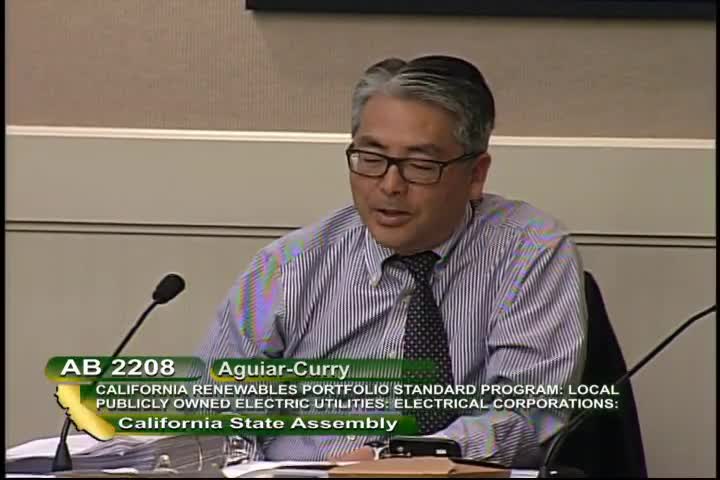 4MIN
Assembly Standing Committee on Natural Resources
Bill Author


