AB 286: Medi-Cal: beneficiary maintenance needs: home upkeep allowances: transitional needs funds.
- Session Year: 2017-2018
- House: Assembly
- Latest Version Date: 2017-03-21
Existing law provides for the Medi-Cal program, which is administered by the State Department of Health Care Services, under which qualified low-income individuals receive health care services. The Medi-Cal program is, in part, governed and funded by federal Medicaid provisions. Qualified individuals under the Medi-Cal program include medically needy persons and medically needy family persons who meet the required eligibility criteria, including applicable income requirements.
Existing law requires the department to establish income levels for maintenance need at the lowest levels that reasonably permit a medically needy individual person to meet his or her basic needs for food, clothing, and shelter, and for which federal financial participation will still be provided under applicable federal law. In calculating the income of a medically needy individual person in a medical institution or nursing facility, or a person receiving institutional or noninstitutional services from a Program of All-Inclusive Care for the Elderly organization, the required monthly maintenance amount includes, among other things, an amount providing for the upkeep and maintenance of the individuals persons home. This amount is also referred to as the home upkeep allowance.
Existing law requires that the maintenance of need amount provide for personal and incidental needs in an amount not less than $35 for a person in a medical institution or nursing facility, or for a person receiving institutional or noninstitutional services from a Program of All-Inclusive Care for the Elderly organization.
Existing law authorizes the Director of Health Care Services to adopt, amend, or repeal reasonable rules and regulations to carry out the purposes and intent of the Medi-Cal program, that are not inconsistent with any state statute. The department has adopted regulatory requirements relating to the determination of the home upkeep allowance described above.
This bill would establish eligibility and other requirements for providing the home upkeep allowance or a transitional personal needs fund to Medi-Cal patients residing in a long-term care facility, as specified. The bill would prescribe general requirements as well as specific requirements both for facility residents who intend to leave the facility and return to an existing home, who would receive the home upkeep allowance, and for residents who do not have a home but intend to leave the facility and establish a new home, who would establish a transitional personal needs fund, as part of the personal needs allowance provided to the resident. The could establish a transitional needs fund for the purpose of meeting the transitional costs of establishing a home.
This bill would require the department to adopt implementing regulations and to advise implement, interpret, or make specific these provisions by means of all-county letters, plan letters, plan or provider bulletins, or similar instructions, to adopt regulations within 5 years of implementation of these provisions, and to provide a status report to the Legislature on a semiannual basis until regulations have been adopted. The bill would require the department to inform appropriate long-term care facility residents and other notify specified personnel and health care facilities of the existence and availability of the home upkeep allowance and the transitional personal needs fund. The bill would require the department, on or before July 1, 2018, to seek federal approval to implement these provisions, and would require these provisions to be implemented only if, and to the extent that, federal financial participation is available and any necessary federal approvals have been obtained. Because
Because counties are required to make Medi-Cal eligibility determinations, and this bill would impose new eligibility requirements for purposes of these allowances, this bill would impose a state-mandated local program.
The California Constitution requires the state to reimburse local agencies and school districts for certain costs mandated by the state. Statutory provisions establish procedures for making that reimbursement.
This bill would provide that, if the Commission on State Mandates determines that the bill contains costs mandated by the state, reimbursement for those costs shall be made pursuant to the statutory provisions noted above.
Existing law provides for the Medi-Cal program, which is administered by the State Department of Health Care Services, under which qualified low-income individuals receive health care services. The Medi-Cal program is, in part, governed and funded by federal Medicaid provisions. Qualified individuals under the Medi-Cal program include medically needy persons and medically needy family persons who meet the required eligibility criteria, including applicable income requirements.
Existing law requires the department to establish income levels for maintenance need at the lowest levels that reasonably permit a medically needy individual to meet his or her basic needs for food, clothing, and shelter, and for which federal financial participation will still be provided under applicable federal law. In calculating the income of a medically needy individual in a medical institution or nursing facility, or a person receiving institutional or noninstitutional services from a Program of All-Inclusive Care for the Elderly organization, the required monthly maintenance amount includes, among other things, an amount providing for the upkeep and maintenance of the individuals home. This amount is also referred to as the home upkeep allowance.
Existing law requires that the maintenance of need amount provide for personal and incidental needs in an amount not less than $35 for a person in a medical institution or nursing facility, or for a person receiving institutional or noninstitutional services from a Program of All-Inclusive Care for the Elderly organization.
Existing law authorizes the Director of Health Care Services to adopt, amend, or repeal reasonable rules and regulations to carry out the purposes and intent of the Medi-Cal program, that are not inconsistent with any state statute. The department has adopted regulatory requirements relating to the determination of the home upkeep allowance described above.
This bill would establish eligibility and other requirements for providing the home upkeep allowance or transitional personal needs fund to Medi-Cal patients residing in a long-term care facility, as specified. The bill would prescribe general requirements as well as specific requirements both for facility residents who intend to leave the facility and return to an existing home, who would receive the home upkeep allowance, and for residents who intend to leave the facility and establish a new home, who would establish a transitional personal needs fund, as part of the personal needs allowance provided to the resident. The bill would require the department to adopt implementing regulations and to advise appropriate long-term care facility residents and other specified personnel and health care facilities of the existence and availability of the home upkeep allowance and transitional personal needs fund. The bill would require the department, on or before July 1, 2018, to seek federal approval to implement these provisions, and would require these provisions to be implemented only if, and to the extent that, federal financial participation is available and any necessary federal approvals have been obtained. Because counties are required to make Medi-Cal eligibility determinations, and this bill would impose new eligibility requirements for purposes of these allowances, this bill would impose a state-mandated local program.
The California Constitution requires the state to reimburse local agencies and school districts for certain costs mandated by the state. Statutory provisions establish procedures for making that reimbursement.
This bill would provide that, if the Commission on State Mandates determines that the bill contains costs mandated by the state, reimbursement for those costs shall be made pursuant to the statutory provisions noted above.
(a)(1)For purposes of this section, home upkeep allowance means the allowance for home maintenance described in Section 435.725 (d) of Title 42 of the Code of Federal Regulations and the amount for the upkeep and maintenance of the home, described in paragraph (2) of subdivision (d) of Section 14005.12.
(2)The home upkeep allowance shall be available to long-term care facility residents who are Medi-Cal recipients and meet the requirements of this section.
(3)A long-term care facility resident who intends to leave the facility and return to his or her existing home shall be provided with a home upkeep allowance as follows:
(A)The allowance shall be set aside from the income that otherwise would be applied toward the residents Medi-Cal share of cost for residing in the facility.
(B)The allowance shall be based on the actual minimum cost of maintaining the residents home, including, but not limited to, mortgage or rent, property taxes, and required insurance. insurance, but shall not exceed the monthly amount of 100 percent of the federal poverty level for one person.
(C)The allowance shall be an exempt resource for purposes of determining eligibility for the Medi-Cal program.
(D)The allowance shall be deducted for not more than six months and shall be available only if a physician has certified that the resident is likely to return to his or her home within six months.
(4)On or before July 1, 2018, the department shall seek federal approval to implement the requirements of this subdivision. This subdivision shall be implemented only if, and to the extent that, federal financial participation is available and any necessary federal approvals have been obtained.
(b)(1)In accordance with Section 435.725 (c)(1) of Title 42 of the Code of Federal Regulations and paragraph (1) of subdivision (d) of Section 14005.12, a transitional personal A transitional needs fund shall be available to long-term care facility residents described in this section.
(2)If a long-term care facility resident does not have a home, but intends to leave the facility and establish a home in the community, the transitional costs of establishing a home shall be included in his or her personal needs allowance. The resident may establish a transitional personal needs fund for this purpose, the purpose of meeting the transitional costs of establishing a home, as follows:
(A)The fund shall be set aside from the income that otherwise would be applied toward the residents Medi-Cal share of cost for residing in the facility.
(B)The total amount of the fund shall not exceed seven thousand five hundred dollars ($7,500). residents transitional needs fund shall not exceed the monthly amount of 100 percent of the federal poverty level for one person for a total of six months.
(C)The fund shall be an exempt resource for purposes of determining eligibility for the Medi-Cal program.
(D)The fund shall be used to cover the costs of securing a home for the individual, including, but not limited to, rent, security and utility deposits, accessibility modifications necessary to meet the needs of the individual, and essential furnishings, including, but not limited to, stoves, refrigerators, beds, towels, and bed linens. furnishings.
(E)If the resident is unable to secure a home within four months after the transitional personal needs fund has reached the maximum amount specified in this subdivision, the fund shall revert to the state to defray the costs of the residents care in the facility.(E)The allowance shall be deducted for not more than six months and shall be available only if a physician has certified that the resident is likely to return to his or her community within six months.
(3)On or before July 1, 2018, the department shall seek federal approval to implement the requirements of this subdivision. This subdivision shall be implemented only if, and to the extent that, federal financial participation is available and any necessary federal approvals have been obtained.
(c)(1)The six-month period described in subparagraph (D) of paragraph (3) of subdivision (a) and subparagraph (E) of paragraph (2) of subdivision (b) is cumulative. An allowance under subdivision (a) or (b) shall not be approved if the resident has received a home upkeep allowance for a full six-month period or a transitional needs fund for a full six-month period during a continuous period of institutionalization.
(2)If the resident receives either a home upkeep allowance or a transitional needs fund for fewer than six months during the same continuous period of institutionalization, a home upkeep allowance or a transitional needs fund may be approved for any remaining portion of the maximum six-month period.
(c)(d)In implementing this section, the department shall undertake all of the following information and outreach activities:
(1)Inform residents in all Medi-Cal funded long-term care facilities of the existence and availability of the home upkeep allowance and the transitional needs personal needs fund.
(2)Include information on the existence and availability of the home upkeep allowance and the transitional personal needs fund in the Notice Regarding Standards for Medi-Cal Eligibility provided for in Section 14006.4.
(3)Notify all Medi-Cal branches, eligibility workers, long-term care facilities, hospital discharge planners, and organizations receiving state funds to assist nursing home residents of the existence and availability of the home upkeep allowance and the transitional personal needs fund.
(d)The department shall adopt, revise, or repeal regulations as necessary to implement this section, including, but not limited to, Section 50605 of Title 22 of the California Code of Regulations. To the extent Section 50605 of Title 22 of the California Code of Regulations is inconsistent with this section, those regulations shall be inoperative until the department makes the regulatory changes required by this subdivision.(e)(1)Notwithstanding Chapter 3.5 (commencing with Section 11340) of Part 1 of Division 3 of Title 2 of the Government Code, the department, without taking any further regulatory action, shall implement, interpret, or make specific this section by means of all-county letters, plan letters, plan or provider bulletins, or similar instructions until the time regulations are adopted.
(2)The department shall adopt regulations within five years of implementation of this section, in accordance with the requirements of Chapter 3.5 (commencing with Section 11340) of Part 1 of Division 3 of Title 2 of the Government Code.
(3)Beginning six months after the effective date of this section, notwithstanding Section 10231.5 of the Government Code, the department shall provide a status report to the Legislature on a semiannual basis, in compliance with Section 9795 of the Government Code, until regulations have been adopted.
SEC. 2.If the Commission on State Mandates determines that this act contains costs mandated by the state, reimbursement to local agencies and school districts for those costs shall be made pursuant to Part 7 (commencing with Section 17500) of Division 4 of Title 2 of the Government Code.
(a)(1)For purposes of this section, home upkeep allowance means the allowance for home maintenance described in Section 435.725 (d) of Title 42 of the Code of Federal Regulations and the amount for the upkeep and maintenance of the home, described in paragraph (2) of subdivision (d) of Section 14005.12.
(2)The home upkeep allowance shall be available to long-term care facility residents who are Medi-Cal recipients and meet the requirements of this section.
(3)A long-term care facility resident who intends to leave the facility and return to his or her existing home shall be provided with a home upkeep allowance as follows:
(A)The allowance shall be set aside from the income that otherwise would be applied toward the residents Medi-Cal share of cost for residing in the facility.
(B)The allowance shall be based on the actual minimum cost of maintaining the residents home, including, but not limited to, mortgage or rent, property taxes, and required insurance.
(C)The allowance shall be an exempt resource for purposes of determining eligibility for the Medi-Cal program.
(D)The allowance shall be available only if a physician has certified that the resident is likely to return to his or her home within six months.
(4)On or before July 1, 2018, the department shall seek federal approval to implement the requirements of this subdivision. This subdivision shall be implemented only if, and to the extent that, federal financial participation is available and any necessary federal approvals have been obtained.
(b)(1)In accordance with Section 435.725 (c)(1) of Title 42 of the Code of Federal Regulations and paragraph (1) of subdivision (d) of Section 14005.12, a transitional personal needs fund shall be available to long-term care facility residents described in this section.
(2)If a long-term care facility resident does not have a home, but intends to leave the facility and establish a home in the community, the transitional costs of establishing a home shall be included in his or her personal needs allowance. The resident may establish a transitional personal needs fund for this purpose, as follows:
(A)The fund shall be set aside from the income that otherwise would be applied toward the residents Medi-Cal share of cost for residing in the facility.
(B)The total amount of the fund shall not exceed seven thousand five hundred dollars ($7,500).
(C)The fund shall be an exempt resource for purposes of determining eligibility for the Medi-Cal program.
(D)The fund shall be used to cover the costs of securing a home for the individual, including, but not limited to, rent, security and utility deposits, accessibility modifications necessary to meet the needs of the individual, and essential furnishings, including, but not limited to, stoves, refrigerators, beds, towels, and bed linens.
(E)If the resident is unable to secure a home within four months after the transitional personal needs fund has reached the maximum amount specified in this subdivision, the fund shall revert to the state to defray the costs of the residents care in the facility.
(3)On or before July 1, 2018, the department shall seek federal approval to implement the requirements of this subdivision. This subdivision shall be implemented only if, and to the extent that, federal financial participation is available and any necessary federal approvals have been obtained.
(c)In implementing this section, the department shall undertake all of the following information and outreach activities:
(1)Inform residents in all Medi-Cal funded long-term care facilities of the existence and availability of the home upkeep allowance and the transitional needs personal needs fund.
(2)Include information on the existence and availability of the home upkeep allowance and the transitional personal needs fund in the Notice Regarding Standards for Medi-Cal Eligibility provided for in Section 14006.4.
(3)Notify all Medi-Cal branches, eligibility workers, long-term care facilities, hospital discharge planners, and organizations receiving state funds to assist nursing home residents of the existence and availability of the home upkeep allowance and the transitional personal needs fund.
(d)The department shall adopt, revise, or repeal regulations as necessary to implement this section, including, but not limited to, Section 50605 of Title 22 of the California Code of Regulations. To the extent Section 50605 of Title 22 of the California Code of Regulations is inconsistent with this section, those regulations shall be inoperative until the department makes the regulatory changes required by this subdivision.
SEC. 2.If the Commission on State Mandates determines that this act contains costs mandated by the state, reimbursement to local agencies and school districts for those costs shall be made pursuant to Part 7 (commencing with Section 17500) of Division 4 of Title 2 of the Government Code.
|
Date
|
Status
|
|---|---|
| Feb 1, 2018 | From committee: Filed with the Chief Clerk pursuant to Joint Rule 56. |
| Jan 31, 2018 | Died pursuant to Art. IV, Sec. 10(c) of the Constitution. |
| May 26, 2017 | In committee: Held under submission. |
| Apr 26, 2017 | In committee: Set, first hearing. Referred to APPR. suspense file. |
| Apr 5, 2017 | From committee: Do pass and re-refer to Com. on APPR. (Ayes 14. Noes 0.) (April 4). Re-referred to Com. on APPR. |
| Mar 28, 2017 | In committee: Hearing postponed by committee. |
| Mar 22, 2017 | Re-referred to Com. on HEALTH. |
| Mar 21, 2017 | From committee chair, with author's amendments: Amend, and re-refer to Com. on HEALTH. Read second time and amended. |
| Feb 13, 2017 | Referred to Com. on HEALTH. |
| Feb 3, 2017 | From printer. May be heard in committee March 5. |
| Feb 2, 2017 | Read first time. To print. |
|
Date
|
Description
|
Location
|
Votes
|
|
|---|---|---|---|---|
| Apr 4, 2017 | Do pass and be re-referred to the Committee on [Appropriations] | Assembly Standing Committee on Health |
Passed |
This list shows positions taken on this bill by organizations on the date displayed, which is linked to the original source.
Positions by individuals are not included.
|
Organization
|
Position
|
Date
|
|---|---|---|
| California Advocates for Nursing Home Reform | ** Support | Mar 31, 2017 |
| California Association Of Public Authorities For Ihss | ** Support | Mar 31, 2017 |
| California Long-Term Care Ombudsman Association | ** Support | Mar 31, 2017 |
| Disability Rights California | * Support | Apr 4, 2017 |
| Numerous individuals | ** Support | Mar 31, 2017 |
| Personal Assistance Services Council | ** Support | Mar 31, 2017 |
| Wise and Healthy Aging | ** Support | Mar 31, 2017 |
Date of Hearing: April 26, 2017
ASSEMBLY COMMITTEE ON APPROPRIATIONS
Lorena Gonzalez Fletcher, Chair
ABPCA Bill Id:AB 286
Author:(Gipson) – As Amended Ver:March 21, 2017
Policy Committee: | Health | Vote: | 14 - 0 |
|
|
Urgency: No State Mandated Local Program: Yes Reimbursable: No
SUMMARY:
This bill establishes the home upkeep allowance (HUA) and a "transitional personal needs fund" (transitional fund) for certain Medi-Cal eligible long-term care facility residents, and sets requirements for the allowance and fund, as specified. Specifically, this bill:
- Requires a HUA to be available to certain long-term care facility residents to use for the maintenance of a home, and a transitional fund to be used for establishment of a residence following discharge from a facility.
- Establishes eligibility requirements for individuals to receive the HUA or transitional fund, and specifies maximum value of approximately $6,000, indexed to changes in the federal poverty level, over a period of a maximum of six months.
- Requires the Department of Health Care Services (DHCS) to perform specified outreach regarding the HUA and transitional fund.
FISCAL EFFECT:
Any additional money the state allows individuals to keep as a HUA or a transitional fund results in a commensurate increase in Medi-Cal costs. It increases costs because it reduces the amount an individual enrolled in the "Share of Cost" (SOC) Medi-Cal program would otherwise pay as their share of cost. This bill would allow an individual to exclude an additional $4,800 of income over 6 months.
The HUA would be available only to a portion of the 42,000 SOC Medi-Cal enrollees in long-term care in any given month. Federal law restricts the HUA to situations there is not a spouse or family member living in the individual's home. Costs are estimated as follows:
- For every 1,000 Medi-Cal enrollees in long-term care (LTC) facilities that make use of the expanded HUA or transitional fund per month, and assuming the additional amount excluded is 80% of the maximum allowable, the increased cost will be about $9 million annually (50% GF, 50% federal). Data is not available on what percentage of Medi-Cal enrollees would be both eligible to use and would use the HUA, but it would likely be a small portion of total discharges given the restrictions on eligibility explained above.
- Unknown, significant costs associated with increased usage as a result of outreach related to the availability of the HUA (GF/federal). According to organizations familiar with advocacy for long-term care residents, utilization and knowledge of the current program is quite low. According to DHCS, only $607,000 statewide was set aside for HUAs under existing rules.
- Unknown, likely significant costs associated with a higher number of persons who could become eligible for full scope Medi-Cal due to the higher income exclusion (GF/federal). The bill excludes income that would otherwise be counted when determining program eligibility. In some cases, applying the exclusion would make an applicants' income low enough to qualify for full-scope Medi-Cal, and the applicant would no longer share in the cost of their care. In those cases, the state would pay the full cost of their care.
- Unknown, significant cost savings, to the extent this higher HUA allows individuals, who otherwise would have difficulty maintaining or establishing a home in the community in the absence of this higher HUA, to be discharged from institutional care. Because the HUA is restricted to individuals with no spouse or family, allowing these individuals to maintain a home would likely allow them to be discharged more readily.
COMMENTS:
- Purpose. The author states many individuals stay in nursing facilities indefinitely in part because the current HUA is insufficient to sustain the cost of basic living needs. The author explains that the HUA is underutilized due to the high cost of living in California, as compared to other states, and the lack of affordable housing programs. The author concludes that with the increase in the HUA, this bill will improve the quality of life for Medi-Cal recipients in nursing homes and provide greater opportunities for individuals to transfer back into the community.
- Background. The HUA is a Medi-Cal deduction for qualifying Medi-Cal beneficiaries who are living in, or will be living in, a nursing home or other medical facility. The HUA currently allows beneficiaries to keep $209 per month of their monthly income for maintenance and upkeep of their homes while they are temporarily residing in the nursing home or other medical facility. The HUA can be allowed for up to a six-month period from the date the beneficiary enters the nursing home. Because the HUA is not a payment from the state, but instead reduces the share-of-cost an individual would otherwise have to incur before Medi-Cal pays on the individual's behalf, the HUA only applies to individuals with incomes that are high enough to allow for exclusion of a portion of the income for an HUA. For example, individuals solely reliant on Supplemental Security Income (SSI) have income too low to qualify for the HUA. To qualify for the HUA, a beneficiary must also meet all of the following requirements:
- Intend to leave the nursing facility and to return home within six months of the date the individual begins living in the nursing home.
- Obtain a written medical statement from the individual’s doctor certifying that he or she will be able to return home within six months.
- The spouse or family of the individual must not live in the home.
- The home must be maintained for the individual’s return.
A transitional personal needs allowance would allow someone without a home to set aside income to establish a home while residing in the LTC facility.
- Prior Legislation. AB 1235 (Gipson), of the 2015-16 Legislative Session, was similar to this bill and was held on the Suspense File of the Senate Appropriations Committee.
Analysis Prepared by: Lisa Murawski / APPR. / (916) 319-2081
Date of Hearing: April 4, 2017
ASSEMBLY COMMITTEE ON HEALTH
Jim Wood, Chair
ABPCA Bill Id:AB 286
Author:Gipson – As Amended Ver:March 21, 2017
SUBJECT: Medi-Cal: beneficiary maintenance needs: home upkeep allowances: transitional needs funds.
SUMMARY: Provides for a home upkeep allowance (HUA) and a transitional needs fund (TNF) for up to six months for a long-term care (LTC) facility resident who intends to leave the facility and return or establish a home in a community. Specifically, this bill:
- Requires a LTC facility resident who intends to leave the facility and return to his or her existing home to be provided a HUA as follows:
- The allowance shall be set aside from the income that otherwise would be applied toward the resident’s Medi-Cal share of cost for residing in the facility;
- The allowance shall be based on the actual minimum cost of maintaining the resident’s home, including, but not limited to, mortgage or rent, property taxes, and required insurance, but shall not exceed the monthly amount of 100% of the federal poverty level for one person;
- The allowance is an exempt resource for purposes of determining eligibility for the Medi-Cal program;
- The allowance to be deducted is limited to no more than six months and available only if a physician has certified that the resident is likely to return to his or her home within six months.
- Defines a HUA as the allowance for home maintenance, as specified, and the amount of upkeep and maintenance of the home, as specified.
- Requires the HUA to be available to LTC facility residents who are Medi-Cal recipients and meet specified requirements.
- Requires the availability of a TNF to LTC facility residents.
- Provides that if a LTC facility resident does not have a home, but intends to leave the facility and establish a home in the community, the resident may establish a TNF for the purpose of meeting the transitional costs of establishing a home as follows:
- The TNF is to be set aside from the income that otherwise would be applied toward the resident’s Medi-Cal share of cost for residing in the facility;
- The total amount of the resident’s TNF cannot exceed the monthly amount of 100% of the federal poverty level for one person for a total of six months;
- The TNF is to be an exempt resource for purposes of determining eligibility for the Medi-Cal program;
- The TNF is to be used to cover the costs of securing a home for the individual, including, but not limited to, rent, security and utility deposits, accessibility modifications necessary to meet the needs of the individual, and essential furnishings; and,
- The allowance to be deducted is limited to no more than six months and will be made available only if a physician has certified that the resident is likely to return to his or her community within six months.
- Provides that the six-month period described in 1) d) and 5) e) above is cumulative, and will not be approved if the resident has received a HUA for a full six-month period or a TNF for a full six-month period during a continuous period of institutionalization. States that if the resident receives either a HUA or a TNF for fewer than six months during the same continuous period of institutionalization, a HUA or TNF may be approved for any remaining portion of the maximum six-month period.
- Requires DHCS to do the following:
- Inform residents in all Medi-Cal funded LTC facilities of the existence and availability of the HUA and the TNF;
- Include information on the existence and availability of the HUA and the TNF in the “Notice Regarding Standards for Medi-Cal Eligibility,” as specified;
- Notify all Medi-Cal branches, eligibility workers, LTC facilities, hospital discharge planners, and organizations receiving state funds to assist nursing home residents of the existence and availability of the HUA and the TNF;
- Implement, interpret, or make specific this bill by means of all-county letters, plan letters, plan or provider bulletins, or similar instructions until regulations are adopted;
- Adopt regulations within five years of implementation of this bill; and,
- Provide a status report to the Legislature six months after the effective date of this bill.
- Requires DHCS, on or before July 1, 2018, to seek federal approval to implement the HUA and TNF provisions of this bill. Requires implementation only if, and to the extent that federal financial participation is available, and any necessary approvals have been obtained.
EXISTING LAW:
- Establishes the Medicaid program (Medi-Cal in California) to provide comprehensive health benefits to low-income individuals who meet specified eligibility criteria.
- Requires DHCS to establish the income levels for maintenance need at the lowest levels that reasonably permit medically needy persons to meet their basic needs for food, clothing, and shelter and for which federal financial participation will still be provided under Title XIX of the federal Social Security Act.
FISCAL EFFECT: This bill has not yet been analyzed by a fiscal committee.
COMMENTS:
- PURPOSE OF THIS BILL. According to the author, this bill is necessary to increase the HUA for Medi-Cal recipients in nursing facilities to have greater opportunity to transfer back into their homes and communities from a nursing facility. The current allowance of just over $200 is not enough to sustain a rent/mortgage and utilities, and results in many people staying in nursing facility indefinitely because they are unable to transition back into their homes or prior community. In 2009, the California Health and Human Services Agency commissioned an independent study to identify ways that California could improve its aging and LTC infrastructure and support services and the report recommended an increase in the HUA as a critical way to improve lives and save money for the state.
- BACKGROUND.
- Long-term care in California. According to the U.S. Census Bureau, in 2015 California was home to over 5 million persons age 65 and older, representing 13.3% of the population, an almost 2% increase from 2010. According to a report by the Public Policy Institute of California, California’s over-65 population is expected to be 87% higher in 2030 than in 2012, an increase of more than four million people. Because of this faster growth, there will be fewer adults of prime working age relative to the senior population. As a result, a greater share of the state’s human and economic resources will be used to provide LTC and other types of support for this group.
LTC services generally address an individual’s health, social, and personal needs, and are provided in institutional care settings (for example, skilled nursing facilities) and through community-based providers ranging from nonmedical residential care facilities to services such as transportation and meals to help individuals remain in their homes instead of being placed in an facility. LTC services are provided not only to the elderly (age 65 and older), but also to younger persons with developmental, mental, and/or physical disabilities. Many of the persons eligible for LTC services use multiple services provided by a variety of programs operated by many state departments. Within California, DHCS and the Departments of Aging, Health Care Services, Social Services, Developmental Services, Mental Health, Rehabilitation, and Veterans Affairs directly administer LTC programs.
- Current standards of the HUA. Maintaining or establishing a home in the community is a major obstacle for Medi-Cal beneficiaries who want to return home after admission to an institution. Medicaid eligibility rules give states the flexibility to support this goal and allow states to exempt income to maintain a home. The HUA is a Medi-Cal deduction for qualifying Medi-Cal beneficiaries who are living in, or will be living in, a nursing home or other medical facility. The HUA currently allows beneficiaries to keep $209 per month of their monthly income for maintenance and upkeep of their homes while they are temporarily residing in the nursing home other medical facility. The HUA can be allowed for up to a six month period from the date the beneficiary enters the nursing home. To qualify for the HUA, a beneficiary must meet all of the following requirements:
- Intend to leave the nursing facility and to return home within six months of the date the individual begins living in the nursing home;
- Obtain a written medical statement from the individual’s doctor certifying that he or she will be able to return home within six months;
- The spouse or family of the individual must not live in the home; and,
- The home must be maintained for the individual’s return.
- Current standards of the HUA. Maintaining or establishing a home in the community is a major obstacle for Medi-Cal beneficiaries who want to return home after admission to an institution. Medicaid eligibility rules give states the flexibility to support this goal and allow states to exempt income to maintain a home. The HUA is a Medi-Cal deduction for qualifying Medi-Cal beneficiaries who are living in, or will be living in, a nursing home or other medical facility. The HUA currently allows beneficiaries to keep $209 per month of their monthly income for maintenance and upkeep of their homes while they are temporarily residing in the nursing home other medical facility. The HUA can be allowed for up to a six month period from the date the beneficiary enters the nursing home. To qualify for the HUA, a beneficiary must meet all of the following requirements:
- SUPPORT. Disability Rights California states that the $209 HUA has been in place since the 1970’s, the availability of the allowance is widely unknown, and the HUA does not help people who have lost their homes while in a facility but want to find a new home and leave the facility. The benefits of this bill will far outweigh the costs as people are able to leave facilities and use community-based services.
The California Advocates for Nursing Home Reform (CANHR) writes that this bill would tie the HUA to the actual amount nursing home residents need to maintain their homes. According to CANHR, many skilled nursing home residents end up losing their home because they must use all but $35 of their monthly income to pay their Medi-Cal share of cost, leaving no money to pay their rent, mortgage, or property taxes, even when a doctor has certified that they can return home within six months. The Personal Assistance Services Council states that the HUA has been $209 for about 30 years and almost nobody knows about it or uses it, and of all the other states which use HUA, none have a limit as low as California. - PREVIOUS LEGISLATION.
- AB 1235 (Gipson) of 2015 was similar to the HUA provisions of this bill and would have required the HUA to be based on the actual cost to maintain the beneficiary’s home, and would have established a transitional needs fund to set aside up to $7,500 for the purpose of securing a home. AB 1235 was held in the Senate Appropriations suspense file.
- AB 1319 (Dababneh) of 2015, would have increased the personal and incidental needs deduction for Medi-Cal beneficiaries residing in a licensed community care facility from $20 to $50 per month. AB 1319 was held in the Senate Appropriations suspense file.
REGISTERED SUPPORT / OPPOSITION:
Support
Disability Rights California (sponsor)
California Advocates for Nursing Home Reform
California Association of Public Authorities for IHSS
California Long-Term Care Ombudsman Association
Personal Assistance Services Council
Planning and Service Area 2 Area Agency on Aging
Wise and Healthy Aging
Numerous individuals
Opposition
None on file.
Analysis Prepared by: Rosielyn Pulmano / HEALTH / (916) 319-2097
Discussed in Hearing
 1H
Assembly Standing Committee on Appropriations
 10MIN
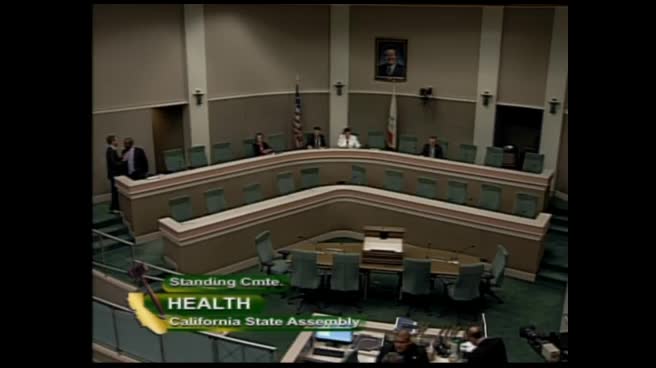
Assembly Standing Committee on Health
Bill Author

Bill Co-Author(s):