AB 2860: Firearms: unsafe handguns.
- Session Year: 2017-2018
- House: Assembly
- Latest Version Date: 2018-02-16
Existing law, subject to exceptions, generally makes it an offense to manufacture or sell a handgun that is not safe. Existing law establishes criteria for determining if a handgun is unsafe. Existing law generally requires manufacturers to submit samples of new handgun models for testing to determine if they are unsafe or may be approved for sale, as specified. Existing law requires the Department of Justice to compile a roster listing all of the handguns that have been tested and determined not to be unsafe.
This bill would repeal all of these provisions.
|
Date
|
Status
|
|---|---|
| May 31, 2018 | From committee: Without further action pursuant to Joint Rule 62(a). |
| Apr 17, 2018 | In committee: Set, final hearing. Failed passage. |
| Apr 10, 2018 | In committee: Set, second hearing. Hearing canceled at the request of author. |
| Apr 3, 2018 | In committee: Set, first hearing. Hearing canceled at the request of author. |
| Mar 8, 2018 | Referred to Com. on PUB. S. |
| Feb 17, 2018 | From printer. May be heard in committee March 19. |
| Feb 16, 2018 | Read first time. To print. |
|
Date
|
Description
|
Location
|
Votes
|
|
|---|---|---|---|---|
| Apr 17, 2018 | Do pass and be re-referred to the Committee on [Appropriations] | Assembly Standing Committee on Public Safety |
Failed |
This list shows positions taken on this bill by organizations on the date displayed, which is linked to the original source.
Positions by individuals are not included.
|
Organization
|
Position
|
Date
|
|---|---|---|
| American Academy of Pediatrics | ** Against | Apr 16, 2018 |
| California Chapters of The Brady Campaign to Prevent Gun Violence | * Against | Apr 17, 2018 |
| Firearms Policy Coalition | ** Support | Apr 16, 2018 |
| Giffords Law Center | * Against | Apr 17, 2018 |
| Gun Owners of California | ** Support | Apr 16, 2018 |
| National Rifle Association | ** Support | Apr 16, 2018 |
| National Shooting Sports Foundation | ** Support | Apr 16, 2018 |
Date of Hearing:
Chief Counsel: Gregory Pagan
ASSEMBLY COMMITTEE ON PUBLIC SAFETY
Reginald Byron Jones-Sawyer, Sr., Chair
ABPCA Bill Id:AB 2860
Author:(Travis Allen) – As Introduced Ver:February 16, 2018
SUMMARY:
Repeals California's "Unsafe Handgun" Law which generally makes it an offense to manufacture or sell a handgun that is not safe.
EXISTING LAW:
- Requires commencing January 1, 2001, that any person in California who manufactures or causes to be manufactured, imports into the state for sale, keeps for sale, offers or exposes for sale, gives, or lends any unsafe handgun shall be punished by imprisonment in a county jail not exceeding one year. (Pen. Code, § 32000, subd. (a).) Specifies that this section shall not apply to any of the following:
- The manufacture in California, or importation into this state, of any prototype pistol, revolver, or other firearm capable of being concealed upon the person when the manufacture or importation is for the sole purpose of allowing an independent laboratory certified by the Department of Justice (DOJ) to conduct an independent test to determine whether that pistol, revolver, or other firearm capable of being concealed upon the person is prohibited, inclusive, and, if not, allowing the department to add the firearm to the roster of pistols, revolvers, and other firearms capable of being concealed upon the person that may be sold in this;
- The importation or lending of a pistol, revolver, or other firearm capable of being concealed upon the person by employees or authorized agents of entities determining whether the weapon is prohibited by this section;
- Firearms listed as curios or relics, as defined in federal law; and
- The sale or purchase of any pistol, revolver, or other firearm capable of being concealed upon the person, if the pistol, revolver, or other firearm is sold to, or purchased by, the Department of Justice, any police department, any sheriff's official, any marshal's office, the Youth and Adult Correctional Agency, the California Highway Patrol, any district attorney's office, or the military or naval forces of this state or of the United States for use in the discharge of their official duties. Nor shall anything in this section prohibit the sale to, or purchase by, sworn members of these agencies of any pistol, revolver, or other firearm capable of being concealed upon the person. (Pen. Code, § 32000, subd. (b).)
- The manufacture in California, or importation into this state, of any prototype pistol, revolver, or other firearm capable of being concealed upon the person when the manufacture or importation is for the sole purpose of allowing an independent laboratory certified by the Department of Justice (DOJ) to conduct an independent test to determine whether that pistol, revolver, or other firearm capable of being concealed upon the person is prohibited, inclusive, and, if not, allowing the department to add the firearm to the roster of pistols, revolvers, and other firearms capable of being concealed upon the person that may be sold in this;
- Specifies that violations of the unsafe handgun provisions are cumulative with respect to each handgun and shall not be construed as restricting the application of any other law.
(Pen. Code, § 32000, subd. (c).) - Defines "unsafe handgun" as any pistol, revolver, or other firearm capable of being concealed upon the person, as specified, which lacks various safety mechanisms, as specified. (Pen. Code, § 31910.)
- Requires any concealable firearm manufactured in California, imported for sale, kept for sale, or offered for sale to be tested within a reasonable period of time by an independent laboratory, certified by the state Department of Justice (DOJ), to determine whether it meets required safety standards, as specified. (Pen. Code, § 32010, subd. (a).)
- Requires DOJ, on and after January 1, 2001, to compile, publish, and thereafter maintain a roster listing all of the pistols, revolvers, and other firearms capable of being concealed upon the person that have been tested by a certified testing laboratory, have been determined not to be unsafe handguns, and may be sold in this state, as specified. The roster shall list, for each firearm, the manufacturer, model number, and model name. (Pen. Code, § 32015, subd. (a).)
- Provides that DOJ may charge every person in California who is licensed as a manufacturer of firearms, as specified, and any person in California who manufactures or causes to be manufactured, imports into California for sale, keeps for sale, or offers or exposes for sale any pistol, revolver, or other firearm capable of being concealed upon the person in California, an annual fee not exceeding the costs of preparing, publishing, and maintaining the roster of firearms determined not be unsafe, and the costs of research and development, report analysis, firearms storage, and other program infrastructure costs, as specified. (Pen. Code § 32015, subd. (b)(1).)
- Provides that the Attorney General (AG) may annually test up to 5 percent of the handgun models listed on the roster that have been found to be not unsafe. (Pen. Code, § 30020, subd. (a).)
- States that a handgun removed from the roster for failing the above retesting may be reinstated to the roster if all of the following are met:
- The manufacturer petitions the AG for reinstatement of the handgun model;
- The manufacturer pays the DOJ for all the costs related to the reinstatement testing of the handgun model, including purchase of the handgun, prior to reinstatement testing;
- The reinstatement testing of the handguns shall be in accordance with specified retesting procedures;
- The three handguns samples shall only be tested once. If the sample fails it may not be retested;
- If the handgun model successfully passes testing for reinstatement, as specified, the AG shall reinstate the handgun model on the roster of not unsafe handguns;
- Requires the handgun manufacturer to provide the AG with the complete testing history for the handgun model; and,
- Allows the AG, at any time, to further retest any handgun model that has been reinstated to the roster. (Pen. Code, § 32025, subds. (a)-(g).)
- The manufacturer petitions the AG for reinstatement of the handgun model;
- Provides that a firearm may be deemed to be listed on the roster of not unsafe handguns if a firearm made by the same manufacturer is already listed and the unlisted firearm differs from the listed firearm in one or more of the following features:
- Finish, including, but not limited to bluing, chrome plating or engraving;
- The material from which the grips are made;
- The shape or texture of the grips, so long as the difference in grip shape or texture that does not in any way alter the dimensions, material, linkage, or functioning of the magazine well, the barrel, the chamber, or any of the components of the firing mechanism of the firearm; and,
- Any other purely cosmetic feature that does not in any way alter the dimensions, material, linkage, or functioning of the magazine well, the barrel, the chamber, or any of the components of the firing mechanism of the firearm. (Pen Code, § 32030, subd. (a).)
- Finish, including, but not limited to bluing, chrome plating or engraving;
- Requires any manufacturer seeking to have a firearm listed as being similar to an already listed firearm to provide the DOJ with the following:
- The model designation of the listed firearm; and
- The model designation of each firearm that the manufacturer seeks to have listed on the roster of not unsafe handguns;
- Requires a manufacturer to make a statement under oath that each unlisted firearm for which listing is sought differs from the listed firearm in only one or more specified ways, and is otherwise identical to the listed firearm. (Pen Code, § 32030, subd. (b).)
- The model designation of the listed firearm; and
FISCAL EFFECT:
Unknown
COMMENTS:
- Author's Statement: According to the author, "AB 2680 will eliminate the gun roster and allow for the sale of guns with updated technology and safety features while upholding Californian's 2nd Amendment rights guaranteed by the United States Constitution.
- Argument in Support: According to the National Rifle Association, "Since January 1, 2001, California's so called ‘unsafe handgun’ law has mandated that before a handgun can be sold in California it must be listed on the Roster of handguns Certified for Sale (the 'Roster'’). Originally, handguns needed to pass a drop test and other performance tests to be listed. In 2006 the law was amended to require center fire semi-automatic pistols to have a loaded chamber indicator, and a magazine disconnect safety by January 1, 2007. Firearms that pass the tests and have the required features. Pistols on the Roster before these requirements were added are '’grandfathered,'’ meaning they do no need to meet the new requirements to stay on the Roster.
“In 2007, the law was further amended to require new handguns sold in California be equipped with microstamping technology with the passage of AB 1471 (Feuer).
“Implementation of the microstamping requirement was postponed subject to the required certification by the California Attorney General that the microstamping process technology was available to manufacturers and was not encumbered by a patent. On May 17, 2013 Attorney General Kamala Harris certified that microstamping was available. Again, pistols that were already on the Roster were ''grandfathered'' and did not need to meet the microstamping requirement. Since this option was issued no new model handguns have been certified for sale in California.
“Firearms that are not on the roster are not inherently unsafe. In fact law enforcement is generally exempt from being limited by the roster on what firearms they use. Instead the roster seeks to arbitrarily limit the number of handguns that are for sale in California by requiring various requirements that do not make the firearms inherently safer but instead arbitrarily inflate costs as manufacturers have to continue to produce older model firearms are include California specific requirements. By removing the roster requirements Californian's will have increased options when it comes to exercising their Second Amendment rights. ''
- Argument in Opposition: According to the California Chapters of the Brady Campaign to Prevent Gun Violence, "California Brady Chapter members worked hard for many years to get the original Unsafe Handgun Act (SB 15) signed into law in 1999. Chapter members were also instrumental in the enactment of additions to the Act in 2003 and 2007. This Act is very personal to the Brady members - chapter leaders have lost children whose lives might have been saved were the laws in effect.
“The original intent of SB 15 was to rid our streets of the plague of ''junk'' guns or cheap handguns that were widely available and commonly used in crime. In the intervening years the results have been stunningly successful. From 2010 to 2014, the rate of accidental shooting deaths in California fell by more than 50% according to CDC data. The national rate also fell over this period, but California's rate fell twice as much and is only one-third the national average.
“Under SB 15, no handgun may be manufactured, imported, sold or transferred unless that handgun model has passed firing, safety, and drop tests and is certified for sale in California by the Department of Justice. Requirements for a chamber land indicator and magazine disconnect, which help prevent accidental shootings, and micro-stamping features, which allows law enforcement to positively link used cartridge casings recovered at crime scenes to the crime gun, were later added for new models under the Act. In protest, the gun industry has refused to submit new models for testing and certification in California and claims that microstamping cannot be done. We believe otherwise.
“The intent of the added provisions to the Unsafe Handgun Act was to use new technologies to further prevent accidental shootings and to solve gun crime. The legislature and two governors agreed with these goals and enacted the chamber load indicator, magazine disconnect and microstamping feature requirements. In fact, sixty-five individual chiefs and sheriffs as well as the California Police Chiefs Association and Police Officers Research Association of CA supported AB 1471 (microstamping) in 2007.''
- Related Legislation:
- AB 2733 (Harper) deleted the requirement that newly manufactured firearms be manufactured with micro-stamping technology that leaves an imprint on each cartridge when fired in order to be list DOJ roster of not "unsafe" handguns. AB 2733 failed passage in the Assembly Public Safety Committee.
- AB 1872 (Voepel) exempts peace officers of a harbor or port district who have satisfactorily completed the Commission on Peace Officer Standards and Training (POST) firearms training course, from the prohibition against the purchase or sale of an "unsafe" handgun. AB 1872 is pending policy committee referral from the Senate Rules Committee.
- AB 2733 (Harper) deleted the requirement that newly manufactured firearms be manufactured with micro-stamping technology that leaves an imprint on each cartridge when fired in order to be list DOJ roster of not "unsafe" handguns. AB 2733 failed passage in the Assembly Public Safety Committee.
- Prior Legislation:
- AB 2165 (Bonta), Chapter 640, Statutes of 2016 exempted specified peace officer who have satisfactorily completed the Commission on Peace Officer Standards and Training (POST) firearms training course, from the prohibition against the purchase or sale of an "unsafe" handgun.
- AB 2508 (Mathis) of the 2015-2016 Legislative Session provided that a handgun model removed from the roster of not "unsafe" handguns for any reason other than failing handgun safety testing, including, but not limited to, a failure to pay the annual fee, may be reinstated on the roster, as specified. AB 2508 failed passage in this Committee.
- AB 2165 (Bonta), Chapter 640, Statutes of 2016 exempted specified peace officer who have satisfactorily completed the Commission on Peace Officer Standards and Training (POST) firearms training course, from the prohibition against the purchase or sale of an "unsafe" handgun.
REGISTERED SUPPORT / OPPOSITION:
Support
Firearms Policy Coalition
Gun Owners of California
National Rifle Association
National Shooting Sports Foundation
Opposition
American Academy of Pediatrics
California Chapters of the Brady Campaign to Prevent Gun Violence
Giffords Law Center to Prevent Gun Violence
Analysis Prepared by:
Gregory Pagan / PUB. S. / (916) 319-3744
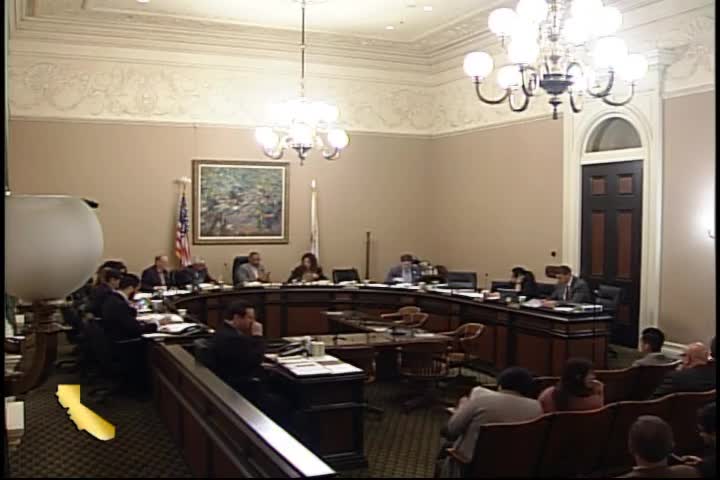
Discussed in Hearing
 8MIN
Assembly Standing Committee on Public Safety
Bill Author

Bill Co-Author(s):