AB 379: California Kickstart My Future Loan Forgiveness Program.
- Session Year: 2017-2018
- House: Assembly
- Latest Version Date: 2017-04-04
Existing law establishes the Student Aid Commission as the primary state agency for the administration of state-authorized student financial aid programs available to students attending all segments of postsecondary education. Under existing law, the commission, among other things, administers the Cal Grant Program, the Student Opportunity and Access Program, the Assumption Program of Loans for Education, the Graduate Assumption Program of Loans for Education, the Public Interest Attorney Loan Repayment Program, and the California State Work-Study Program.
This bill would establish the California Kickstart My Future Loan Forgiveness Program, under the administration of the commission, to provide student loan forgiveness awards for the purpose of alleviating the burden of federal student loan debt for recent graduates meeting specified requirements. The bill would, subject to an available and sufficient appropriation, authorize an eligible applicant to receive a student loan forgiveness award equal to 100% of his or her monthly federal income-driven repayment plan payments for 24 months of repayment under the federal program. The bill would require a recipient, who no longer meets the specified requirements at the time any payment is made under this program, to refund those payments to the state, and would authorize the commission Franchise Tax Board to recover the payments owed.
Existing law establishes the Student Aid Commission as the primary state agency for the administration of state-authorized student financial aid programs available to students attending all segments of postsecondary education. Under existing law, the commission, among other things, administers the Cal Grant Program, the Student Opportunity and Access Program, the Assumption Program of Loans for Education, the Graduate Assumption Program of Loans for Education, the Public Interest Attorney Loan Repayment Program, and the California State Work-Study Program.
This bill would establish the California Kickstart My Future Loan Forgiveness Program, under the administration of the commission, to provide student loan forgiveness awards for the purpose of alleviating the burden of federal student loan debt for recent graduates meeting specified requirements. The bill would, subject to an available and sufficient appropriation, authorize an eligible applicant to receive a student loan forgiveness award equal to 100% of his or her monthly federal income-driven repayment plan payments for 24 months of repayment under the federal program. The bill would require a recipient, who no longer meets the specified requirements at the time any payment is made under this program, to refund those payments to the state, and would authorize the commission to recover the payments owed.
(a)The California Kickstart My Future Loan Forgiveness Program is hereby established under the administration of the Student Aid Commission.
(b)The purpose of the program is to provide grants to eligible applicants to help alleviate the burden of federal student loan debt for recent California state college graduates.
(c)The commission shall develop an application process with criteria consistent with requirements of this article, and may adopt rules and regulations for the implementation of the program consistent with this article.
69821.For purposes of this article, the following terms have the following meaning:
(a)Commission means the Student Aid Commission.
(b)Eligible applicant means an applicant who meets the requirements of Section 69822.
(c)Income means the total adjusted gross income of the applicant and the applicants spouse, if applicable.
(d)Program means the California Kickstart My Future Loan Forgiveness Program.
69822.In order to be eligible for an award described in Section 69823, an applicant shall meet all of the following requirements:
(a)Be a California resident or meet the requirements of Section 68130.5.
(b)Have graduated and obtained an undergraduate degree from a college or university with its headquarters located in California in or after the 201617 academic year.
(c)Applied for this program within two years of obtaining the degree described in subdivision (b).
(d)Be a participant in a federal income-driven repayment plan whose payment amount is generally 10 percent of discretionary income.
(e)Have income of less than fifty thousand dollars ($50,000).
(f)Work in California, if employed.
(g)Is not in default in the repayment of any state or federal student loan.
(h)Has not failed to comply with the terms of any service or repayment condition imposed by an award made pursuant to this chapter.
69823.(a)Subject to an available and sufficient appropriation, an eligible applicant shall be eligible for a student loan forgiveness award equal to 100 percent of his or her monthly federal income-driven repayment plan payments for 24 months of repayment under the federal program.
(b)(1)An award granted under this section shall be deferred for a recipient who has been granted a deferment or forbearance under the federal income-driven repayment plan.
(2)Upon the completion of the deferment or forbearance period, the recipient shall be eligible to receive an award for the remaining time period under this section.
(c)(1)A recipient who no longer meets the requirements of Section 69822 at the time any payment is made under this program shall be required to refund those payments to the state.
(2)The commission Franchise Tax Board may recover payments owed pursuant to paragraph (1) in accordance with rules and regulation regulations adopted by the commission.
(a)The California Kickstart My Future Loan Forgiveness Program is hereby established under the administration of the Student Aid Commission.
(b)The purpose of the program is to provide grants to eligible applicants to help alleviate the burden of federal student loan debt for recent California state college graduates.
(c)The commission shall develop an application process with criteria consistent with requirements of this article, and may adopt rules and regulations for the implementation of the program consistent with this article.
69821.For purposes of this article, the following terms have the following meaning:
(a)Commission means the Student Aid Commission.
(b)Eligible applicant means an applicant who meets the requirements of Section 69822.
(c)Income means the total adjusted gross income of the applicant and the applicants spouse, if applicable.
(d)Program means the California Kickstart My Future Loan Forgiveness Program.
69822.In order to be eligible for an award described in Section 69823, an applicant shall meet all of the following requirements:
(a)Be a California resident or meet the requirements of Section 68130.5.
(b)Have graduated and obtained an undergraduate degree from a college or university with its headquarters located in California in or after the 201617 academic year.
(c)Applied for this program within two years of obtaining the degree described in subdivision (b).
(d)Be a participant in a federal income-driven repayment plan whose payment amount is generally 10 percent of discretionary income.
(e)Have income of less than fifty thousand dollars ($50,000).
(f)Work in California, if employed.
(g)Is not in default in the repayment of any state or federal student loan.
(h)Has not failed to comply with the terms of any service or repayment condition imposed by an award made pursuant to this chapter.
69823.(a)Subject to an available and sufficient appropriation, an eligible applicant shall be eligible for a student loan forgiveness award equal to 100 percent of his or her monthly federal income-driven repayment plan payments for 24 months of repayment under the federal program.
(b)(1)An award granted under this section shall be deferred for a recipient who has been granted a deferment or forbearance under the federal income-driven repayment plan.
(2)Upon the completion of the deferment or forbearance period, the recipient shall be eligible to receive an award for the remaining time period under this section.
(c)(1)A recipient who no longer meets the requirements of Section 69822 at the time any payment is made under this program shall be required to refund those payments to the state.
(2)The commission may recover payments owed pursuant to paragraph (1) in accordance with rules and regulation adopted by the commission.
|
Date
|
Status
|
|---|---|
| Feb 1, 2018 | From committee: Filed with the Chief Clerk pursuant to Joint Rule 56. |
| Jan 31, 2018 | Died pursuant to Art. IV, Sec. 10(c) of the Constitution. |
| May 26, 2017 | In committee: Held under submission. |
| May 17, 2017 | In committee: Set, first hearing. Referred to APPR. suspense file. |
| Apr 19, 2017 | From committee: Do pass and re-refer to Com. on APPR. (Ayes 9. Noes 4.) (April 18). Re-referred to Com. on APPR. |
| Apr 5, 2017 | Re-referred to Com. on HIGHER ED. |
| Apr 4, 2017 | From committee chair, with author's amendments: Amend, and re-refer to Com. on HIGHER ED. Read second time and amended. |
| Mar 28, 2017 | In committee: Hearing postponed by committee. |
| Feb 21, 2017 | Referred to Com. on HIGHER ED. |
| Feb 10, 2017 | From printer. May be heard in committee March 12. |
| Feb 9, 2017 | Read first time. To print. |
|
Date
|
Description
|
Location
|
Votes
|
|
|---|---|---|---|---|
| Apr 18, 2017 | Do pass and be re-referred to the Committee on [Appropriations] | Assembly Standing Committee on Higher Education |
Passed |
This list shows positions taken on this bill by organizations on the date displayed, which is linked to the original source.
Positions by individuals are not included.
|
Organization
|
Position
|
Date
|
|---|---|---|
| National Association of Social Workers | ** Support | Apr 17, 2017 |
| National Association Of Social Workers, California Chapter | * Support | Apr 18, 2017 |
Date of Hearing: May 17, 2017
ASSEMBLY COMMITTEE ON APPROPRIATIONS
Lorena Gonzalez Fletcher, Chair
ABPCA Bill Id:AB 379
Author:(Gomez) – As Amended Ver:April 4, 2017
Policy Committee: | Higher Education | Vote: | 9 - 4 |
|
| ||
|
|
Urgency: No State Mandated Local Program: No Reimbursable: No
SUMMARY:
This bill establishes the California Kickstart My Future Loan Forgiveness Program, to be administered by the California Student Aid Commission (CSAC). Specifically, this bill:
- Specifies the program is to provide grants to eligible applicants in order to assist in alleviating the burden of federal student loan debt for recent California residents who, among other requirements; a) obtained an undergraduate degree from a college or university with its headquarters located in California on or after the 2016-17 academic year; b) have an income of less than $50,000; and c) work in California, if employed.
- Makes the grant program subject to an available and sufficient appropriation, and awards an eligible applicant student loan forgiveness equal to 100 percent of his or her monthly federal income-driven repayment plan payments for 24 months of repayment under the federal program.
- Requires a recipient who no longer meets program requirements to refund those payments to the state and authorizes the California Franchise Tax Board (FTB) to recover payments owed in accordance with rules and regulations adopted by CSAC.
FISCAL EFFECT:
- Approximately $840 million General Fund (GF) for one year of grants or up to $1.6 billion GF for two years. While this bill makes funding subject to an available and sufficient appropriation, according to the United States Department of Education approximately 560,000 Californians are using federal loan repayment programs. Assuming only 280,000 participants qualify for the full 24 months of the program given their graduation, income and employment status, and receive an average monthly grant payment of $250, this program could cost $1.6 billion for 24 months.
- $500,000 GF in on-going administrative costs to CSAC. To administer a program of this size, CSAC would require additional staff to develop regulations and rules, a new application system, verify eligibility, and process grants.
- Unknown cost to the FTB. As the number of recipients who may no longer meet the requirements of the program, the costs to FTB are unknown.
COMMENTS:
- Background and Purpose. Based on new data released by the U. S. Department of Education, there were more than 1.1 million federal loan defaults through 2016. Additionally, as of the end of 2016, 42.4 million Americans owed $1.3 trillion in federal student loans. To note, these figures exclude borrowing through private student loans, credit cards, and home equity loans to finance the growing costs of college.
Existing law establishes CSAC for the purpose of administering specified student financial aid programs. State law also stablishes the California Educational Facilities Authority (CEFA) to administer programs that provide tax-exempt, low-cost financing to private, non-profit higher educational facilities. Under the administration of CEFA, the California Student Loan Refinancing Program (CSLRP) is authorized to help eligible college graduates refinance student loan debt at favorable rates by creating a revolving fund so that additional refinancing may occur to help more qualified borrowers, as defined, through the creation of a loss reserve account. Under the program, CEFA is authorized to contract with any financial institution for the purposes of participation in the program. CEFA also has various powers relative to student loans, including the authority to hold or invest in student loans, create pools of student loans, and sell bonds bearing interest on a taxable or tax-exempt basis or other interests backed by pools of student loans.
According to the author, most loans come with a six-month grace period, following graduation before loan payments must commence. The author contends that six months is not a sufficient amount of time for a recent graduate to, "plan to buy a home, to explore their options for their career, or plan any major life event." The author states that, "Most graduates will be concerned about making their loan repayments and take the opportunity to work any job, even if it means working out of their area of study." The author argues that, "AB 379 is needed because we need to invest in our graduates and ensure they are on the right path to achieve their next goal after graduation and not be burdened with debt."
- Related legislation. SB 674 (Allen), which is pending a hearing in the Senate Appropriations Committee, in part, modifies CSLRP and establishes the California Student Loan Refinancing Fund for purposes of administering the program and makes an appropriation to that fund.
Analysis Prepared by: Daisy Gonzales / APPR. / (916) 319-2081
Date of Hearing: April 18, 2017
ASSEMBLY COMMITTEE ON HIGHER EDUCATION
Jose Medina, Chair
ABPCA Bill Id:AB 379 (
Author:Gomez) – As Amended Ver:April 4, 2017
SUBJECT: California Kickstart My Future Loan Forgiveness Program.
SUMMARY: Establishes the California Kickstart My Future Loan Forgiveness Program. Specifically, this bill:
- Authorizes the California Student Aid Commission (CSAC) to administer the California Kickstart My Future Loan Forgiveness Program, as established in this measure.
- Specifies the program is to provide grants to eligible applicants in order to assist in alleviating the burden of federal student loan debt for recent California state college graduates.
- Requires CSAC to develop an application process for the program and authorizes CSAC to adopt rules and regulations for the implementation of the program.
- Specifies that subject to an available and sufficient appropriation, an eligible applicant shall be eligible for a student loan forgiveness award equal to 100 percent of his or her monthly federal income-driven repayment plan payments for 24 months of repayment under the federal program.
- Requires that an award granted shall be deferred for a recipient who has been granted a deferment or forbearance under the federal income-driven repayment plan; and, specifies that upon completion of the deferment or forbearance period, the recipient shall be eligible to receive an award for the remaining time period, as specified.
- Requires, as condition of eligibility, an applicant meet all of the following requirements:
- Be a California resident, as specified;
- Have graduated and obtained an undergraduate degree from a college or university with its headquarters located in California on or after the 2016-17 academic year;
- Applied to the program within two years of obtaining a degree;
- Be a participant in a federal income-driven repayment plan whose payment amount is generally 10 percent of discretionary income;
- Have income of less than $50,000;
- Work in California, if employed;
- Is not in default in the repayment of any state or federal loan; and,
- Has not failed to comply with the terms of any service or repayment condition by an award made, as specified.
- Requires a recipient who no longer meets program requirements at the time any payment is made to refund those payments to the state.
- Authorizes the California Franchise Tax Board to recover payments owed in accordance with rules and regulations adopted by CSAC.
- Defines the following terms for purposes of this measure:
- "Commission" means the CSAC;
- "Eligible applicant" means one who meets the requirements as specified;
- "Income" means the total adjusted gross income of the applicant and the applicant's spouse, if applicable; and,
- "Program" means the California Kickstart My Future Loan Forgiveness Program.
EXISTING LAW:
- Establishes the CSAC for the purpose of administering specified student financial aid programs (Education Code (EC) Section 69510, et seq.).
- Establishes the California Educational Facilities Authority (CEFA) to administer programs that provide tax-exempt, low-cost financing to private, non-profit higher educational facilities. Outlines the following purposes of the CEFA: a) to provide private institutions of higher education within the state an additional means by which to finance and refinance existing higher education facilities; b) to provide private and public institutions of higher education with an additional means to assist students in financing their costs of attendance; c) to develop student, faculty and staff housing on or near institutions of higher education; and, d) to make grants to private institutions of higher education to assist students in preparation for an entrance to higher education.
- Establishes the California Student Loan Refinancing Program (CSLRP) under the administration CEFA, with the goal of helping eligible college graduates refinance student loan debt at favorable rates by creating a revolving fund so that additional refinancing may occur to help more qualified borrowers, as defined, through the creation of a loss reserve account. Under the program, CEFA is authorized to contract with any financial institution for the purpose participation in the program.
- Grants the CEFA various powers relative to student loans, including the authority to hold or invest in student loans, create pools of student loans, and sell bonds bearing interest on a taxable or tax-exempt basis or other interests backed by pools of student loans (Education Code Sections 94100-94163).
FISCAL EFFECT: Unknown.
COMMENTS: Current loan debt averages of California students. According to The Institute for College Access and Success (TICAS) October 2016 report, "Student Debt and the Class of 2015, 68 percent of seniors who graduated from public and nonprofit colleges in 2015 had student loan debt, with an average nationally of $30,100 per borrower. TICAS found that the share of graduates with debt rose modestly over the last decade (from 65 percent to 69 percent). Additionally, TICAS found that average debt in California is $22,191 at public and private non-profit colleges and that about 54 percent of students graduate with debt, ranking California 48th and 42nd nationally, respectively.
To note, TICAS found that better data on student loan debt is urgently needed. The total debt at graduation – including both federal and private loans – remains unavailable for every college. Additionally, the debt for each type of credential offered by a given school also remains unavailable.
Need for this measure. According to the author, most loans come with a six-month grace period, following graduation before loan payments must commence. The author contends that six months is not a sufficient amount of time for a recent graduate to, "plan to buy a home, to explore their options for their career, or plan any major life event." The author states that, "Most graduates will be concerned about making their loan repayments and take the opportunity to work any job, even if it means working out of their area of study."
The author argues that, "AB 379 is needed because we need to invest in our graduates and ensure they are on the right path to achieve their next goal after graduation and not be burdened with debt."
Student loan defaults. Based on new data released by the U. S. Department of Education, there were more than 1.1 million federal loan defaults through 2016. Additionally, as of the end of 2016, 42.4 million Americans owed $1.3 trillion in federal student loans. To note, these figures exclude borrowing through private student loans, credit cards, and home equity loans to finance the growing costs of college. The Federal Reserve System places total outstanding student loans at $1.4 trillion, which includes federal and private loans, but excludes other loans used to finance higher education.
Student loan servicers, which are the companies paid to collect loan payments, are responsible for enrolling borrowers in repayment plans to help borrowers avoid default.
Federal income-driven repayment plans. If a federal student loan payment is high compared to a graduate's income, one may decide to repay the loan(s) under an income-driven repayment plan. Most federal student loans are eligible for at least one such plan.
An income-driven repayment plan sets a monthly student loan payment at an amount that is meant to be affordable based on income and family size. The chart below lists the four types of these plans and each amount associated:
Income-Driven Repayment Plan | Payment Amount |
Revised Pay-As-You Earn Repayment Plan | Generally 10 percent of discretionary income |
Pay As-You-Earn Repayment Plan | Generally 10 percent of discretionary income, but never more than the 10-year Standard Repayment Plan amount |
Income-Based Repayment Plan | Generally 10 percent of discretionary income if one is a new borrower on or after July 1, 2014, if the borrower had no outstanding balance on a William D. Ford Federal Direct Loan Program loan or a Federal Family Education Loan Program loan |
Income-Contingent Repayment Plan | The lesser of the following:
|
Get on Your Feet Loan Forgiveness Program. The loan forgiveness program, called "Get on Your Feet" established by the New York State administration, aims to assist recent college graduates in paying their loans, based on eligibility. Recent graduates are eligible if they meet certain requirements, including, but limited to, the following: a) be a legal resident of the state and have resided in the state for 12 continuous months; b) be a U. S. citizen or eligible non-citizen; c) have graduated from a New York State high school or received a state high school equivalency diploma; d) have earned an undergraduate degree from a college or university located in the state on or after December 2014; and, e) be enrolled in a federal income based repayment plan at 10 percent discretionary income.
Policy considerations. Committee staff understands that CSAC has been trying to track down and compile data on graduates that presumably would meet the eligibility requirements as outlined in this measure. However, to date, Committee staff understands that confusion exists as to how exactly to ascertain the data on potentially eligible graduates.
Moving forward, Committee staff recommends that the author continue to work with CSAC in determining the appropriate scope of potential eligible borrowers and how best to ascertain said data.
Additionally, Committee staff understands that CSAC continues to move forward with its new Grant Delivery System Modernization Project; this new delivery system, which will not be operational for three years, will allow CSAC access to other agencies and pertinent student data, such as that which would be needed for this program.
While the need may exist for the state to assist recent graduates in paying their loans, as noted above, it is presently unclear as to how CSAC will obtain relevant data. Committee staff understands that CSAC's new grant delivery system more than likely will have the capabilities of obtaining the data as called for in this measure.
The Committee may wish to determine whether it should align the establishment of new programs to be administered by CSAC, with CSAC's ability to implement such programs when its new delivery system is fully in place.
Committee staff recommends this measure be amended: to specify that the provisions of this bill will not go into effect until after CSAC certifies that its new Grant Delivery System Modernization Project is fully operational.
Related legislation. SB 647 (Allen), which is pending a hearing in the Senate Banking and Financial Institutions Committee, in part, modifies CSLRP and establishes the California Student Loan Refinancing Fund for purposes of administering the program and makes an appropriation to that fund.
REGISTERED SUPPORT / OPPOSITION:
Support
National Association of Social Workers
Opposition
None on file
Analysis Prepared by: Jeanice Warden / HIGHER ED. / (916) 319-3960
Discussed in Hearing
 1H
Assembly Standing Committee on Appropriations
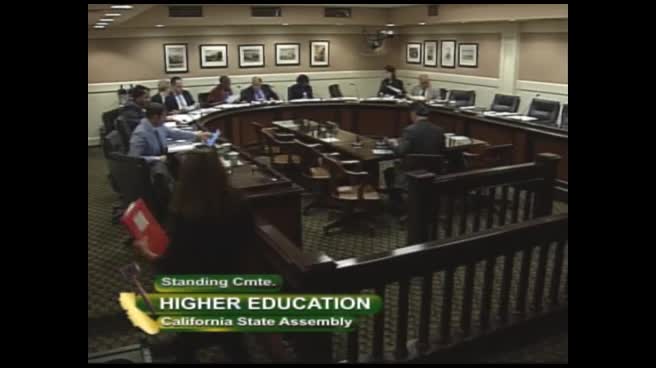 10MIN
Assembly Standing Committee on Higher Education
Bill Author

Bill Co-Author(s):