AB 43: Taxation: prison contracts: goods and services.
- Session Year: 2017-2018
- House: Assembly
- Latest Version Date: 2017-05-10
Existing law imposes various taxes, including taxes on the privilege of engaging in certain activities. The Fee Collection Procedures Law, the violation of which is a crime, provides procedures for the collection of certain fees and surcharges.
This bill, for the privilege of contracting with a state prison, the Department of Corrections and Rehabilitation, or the Department of General Services to provide a state prison with goods, services, or both, would impose a tax on specified taxpayers vendors, as defined, at the rate equal to 10% of the final contract price price, as defined, for contracts entered into on or after January 1, 2018. The bill would require all amounts paid, less refunds, to be deposited into the State Incarceration Prevention Fund, which this bill would establish in the State Treasury, and would continuously appropriate those moneys to the State Department of Education for preschool and after school programs for the purposes of providing services to prevent people from being incarcerated and providing early intervention programs, less the amount needed to reimburse the State Board of Equalization and the Attorney General for costs incurred in administering these provisions. The bill would prohibit this tax from being passed through to the state by way of higher prices for the goods or services in the contract, and would require the taxpayer a vendor to certify under penalty of perjury that this tax was not passed through to the state. The bill would require the taxpayer a vendor to pay a penalty if it fails to comply with these provisions. The bill would require the Attorney General to enforce this prohibition and would authorize the Attorney General to monitor and investigate taxpayers to ensure that they are not passing this tax through to the state, and monitor and, if necessary, investigate any instance where a vendor has passed or attempted to pass the tax through to the state. The bill would require the State Board of Equalization to administer assess and collect the tax imposed by this part pursuant to the Fee Collection Procedures Law. Law and would provide an appeals process for a person from whom the state incarceration prevention tax is determined to be due, as provided.
By expanding the application of the Fee Collection Procedures Law, the violation of which is a crime, and by expanding the scope of the crime of perjury, this bill imposes a state-mandated local program.
The California Constitution requires the state to reimburse local agencies and school districts for certain costs mandated by the state. Statutory provisions establish procedures for making that reimbursement.
This bill would provide that no reimbursement is required by this act for a specified reason.
This bill would declare that it is to take effect immediately as an urgency statute.
Existing law imposes various taxes, including taxes on the privilege of engaging in certain activities. The Fee Collection Procedures Law, the violation of which is a crime, provides procedures for the collection of certain fees and surcharges.
This bill, for the privilege of contracting with a state prison, the Department of Corrections and Rehabilitation, or the Department of General Services to provide a state prison with goods, services, or both, would impose a tax on specified taxpayers in the amount of at the rate equal to 10% of the final contract price for contracts entered into on or after January 1, 2018. The bill would require all amounts paid, less refunds, to be deposited into the State Incarceration Prevention Fund, which this bill would establish in the State Treasury, and would continuously appropriate those moneys to the State Department of Education for preschool and after school programs for the purposes of providing services to prevent people from being incarcerated and providing early intervention programs, less the amount needed to reimburse the State Board of Equalization and the Attorney General for costs incurred in administering these provisions. The bill would prohibit this tax from being passed through to the state by way of higher prices for the goods or services in the contract, and would require the taxpayer to certify under penalty of perjury that this tax was not passed through to the state. The bill would require the taxpayer to pay a penalty if it fails to comply with these provisions. The bill would authorize the Attorney General to monitor and investigate taxpayers to ensure that they are not passing this tax through to the state, and would require the State Board of Equalization to administer the tax imposed by this part pursuant to the Fee Collection Procedures Law.
By expanding the application of the Fee Collection Procedures Law, the violation of which is a crime, and by expanding the scope of the crime of perjury, this bill imposes a state-mandated local program.
The California Constitution requires the state to reimburse local agencies and school districts for certain costs mandated by the state. Statutory provisions establish procedures for making that reimbursement.
This bill would provide that no reimbursement is required by this act for a specified reason.
This bill would declare that it is to take effect immediately as an urgency statute.
Existing law imposes various taxes, including taxes on the privilege of engaging in certain activities. The Fee Collection Procedures Law, the violation of which is a crime, provides procedures for the collection of certain fees and surcharges.
This bill would impose a tax on bill, for the privilege of contracting with a state prison, the Department of Corrections and Rehabilitation, or the Department of General Services to provide a state prison with goods and services goods, services, or both, would impose a tax on specified taxpayers in the amount of __ percent 10% of the final contract price for contracts entered into on or after January 1, 2018. The bill would require all amounts paid, less refunds, to be deposited into the State Incarceration Prevention Fund, which this bill would establish in the State Treasury, and would continuously appropriate those moneys to the State Department of Education for preschool and after school programs for the purposes of providing services to prevent people from being incarcerated and providing early intervention programs, less the amount needed to reimburse the State Board of Equalization and the Attorney General for costs incurred in administering these provisions. The bill would prohibit these taxes this tax from being passed through to the state by way of higher prices for the goods or services in the contract, and would require the taxpayer to certify under penalty of perjury that they have not passed on this tax was not passed through to the state. The bill would require the taxpayer to pay a penalty if it fails to comply with these provisions. The bill would authorize the Attorney General to monitor and investigate taxpayers to ensure that they are not passing this tax through to the state, and would require the State Board of Equalization to administer the tax imposed by this part pursuant to the Fee Collection Procedures Law.
By expanding the application of the Fee Collection Procedures Law, the violation of which is a crime, and by expanding the scope of the crime of perjury, this bill imposes a state-mandated local program.
The California Constitution requires the state to reimburse local agencies and school districts for certain costs mandated by the state. Statutory provisions establish procedures for making that reimbursement.
This bill would provide that no reimbursement is required by this act for a specified reason.
Existing law imposes various taxes, including taxes on the privilege of engaging in certain activities. The Fee Collection Procedures Law, the violation of which is a crime, provides procedures for the collection of certain fees and surcharges.
This bill would impose a tax on the privilege of contracting with a state prison, the Department of Corrections and Rehabilitation, or the Department of General Services to provide a state prison with goods and services in the amount of __ percent of the final contract price for contracts entered into on or after January 1, 2018. The bill would require all amounts paid, less refunds, to be deposited into the State Incarceration Prevention Fund, which this bill would establish in the State Treasury, and would continuously appropriate those moneys for the purposes of providing services to prevent people from being incarcerated and providing early intervention programs, less the amount needed to reimburse the State Board of Equalization and the Attorney General for costs incurred in administering these provisions. The bill would prohibit these taxes from being passed through to the state by way of higher prices for the goods or services in the contract, and would require the taxpayer to certify under penalty of perjury that they have not passed on this tax to the state. The bill would require the taxpayer to pay a penalty if it fails to comply with these provisions. The bill would authorize the Attorney General to monitor and investigate taxpayers to ensure that they are not passing this tax through to the state, and would require the State Board of Equalization to administer the tax imposed by this part pursuant to the Fee Collection Procedures Law.
By expanding the application of the Fee Collection Procedures Law, the violation of which is a crime, and by expanding the scope of the crime of perjury, this bill imposes a state-mandated local program.
The California Constitution requires the state to reimburse local agencies and school districts for certain costs mandated by the state. Statutory provisions establish procedures for making that reimbursement.
This bill would provide that no reimbursement is required by this act for a specified reason.
For the purposes of this part, the following terms shall have the following meanings:
(a)Department means a state prison, the Department of Corrections and Rehabilitation, or the Department of General Services.
(b)Final contract price means a mutually agreed upon total amount that a state prison, the Department of Corrections and Rehabilitation, or Department of General Services pays to a vendor on completion of the contract, in accordance with contract terms and conditions and their subsequent modifications, for goods, services, or both.
(c)(1)Except as specified in paragraph (2), person means an individual, trust firm, joint stock company, business concern, corporation, including, but not limited to, a government corporation, partnership, limited liability company, and association.
(2)Person shall not include organizations that are exempt from income tax pursuant to Section 23701 of the Revenue and Taxation Code and state and local agencies.
(d)Vendor means a person who contracts with a department to provide a state prison with goods, services, or both.
53001.53002.For contracts entered into on or after January 1, 2018, for the privilege of contracting with a state prison, the Department of Corrections and Rehabilitation, or the Department of General Services department to provide a state prison with goods, services, or both, a tax is hereby imposed upon all taxpayers vendors at the rate equal to 10 percent of the final contract price.
53002.(a)For the purposes of this part, taxpayer means a person that contracts with a state prison, the Department of Corrections and Rehabilitation, or the Department of General Services to provide a state prison with goods, services, or both.(b)Notwithstanding subdivision (a), there are exempt from the tax imposed pursuant to Section 53001, organizations that are exempt from tax pursuant to Section 23701 of the Revenue and Taxation Code and state and local agencies.53004.(a)(1)The tax imposed pursuant to Section 53002 shall be collected annually by the board pursuant to the Fee Collection Procedures Law (Part 30 (commencing with Section 55001)). For the purposes of this part, the references in the Fee Collection Procedures Law to fee shall include the tax imposed by this part, and references to feepayer shall include any vendor.
(2)Notwithstanding the appeal provisions in the Fee Collection Procedures Law, a determination by the department that a person is required to pay the tax, or a determination by the department regarding the amount of that tax, is subject to review pursuant to Section 53006 and is not subject to a petition for redetermination by the board.
(3)(A)Notwithstanding the refund provisions in the Fee Collection Procedures Law, the board shall not accept any claim for refund that is based on the assertion that a determination by the department improperly or erroneously calculated the amount of the tax, or incorrectly determined that the person is subject to that tax, unless that determination has been set aside by the department or a court reviewing the determination of the department.
(B)If it is determined by the department or a reviewing court that a person is entitled to a refund of all or part of the state incarceration prevention tax, the vendor shall make a claim to the board pursuant to Chapter 5 (commencing with Section 55221) of Part 30 of Division 2 of the Revenue and Taxation Code.
(b)(1)On or before each January 1, the department shall annually transmit to the board the name and address of each person who is liable for the tax and the amount of the tax to be assessed. The department also shall provide the board a department contact telephone number to be printed on the bill to respond to questions about the tax.
(2)The board shall assess and collect the tax annually on or before April 1 of each year.
53005.Chapter 3.5 (commencing with Section 11340) of Part 1 of Division 3 of Title 2 of the Government Code shall not apply to any standard, criterion, procedure, determination, rule, notice, or guideline established or issued by the board or the Attorney General to implement the purposes of this part.
53003.53006.(a)The State Incarceration Prevention Fund is hereby created in the State Treasury.
(b)A state prison, the Department of Corrections and Rehabilitation, or the Department of General Services shall collect the tax imposed pursuant to Section 53001 at the time a payment is made on a contract for goods and services for a state prison, shall remit the amounts collected to the board, and shall file a return with the board on or before the last day of the month following each quarterly calendar period. The board shall transmit the payments, less refunds, to the State Treasury to be deposited into the State Incarceration Prevention Fund.
(c)Notwithstanding Section 13340 of the Government Code, all amounts deposited into the State Incarceration Prevention Fund shall be continuously appropriated without regard to fiscal years to the following:
(1)The board and the Attorney General for reimbursement of their costs for administering this part.
(2)The remainder to the State Department of Education to administer grants for preschool and after school programs for the purposes of providing services to prevent people from being incarcerated and providing early intervention programs.
53004.(a)The board shall administer and collect the tax imposed by this part pursuant to the Fee Collection Procedures Law (Part 30 (commencing with Section 55001)). For the purposes of this part, the references in the Fee Collection Procedures Law to fee shall include the tax imposed by this part, and references to feepayer shall include any taxpayer.(b)Chapter 3.5 (commencing with Section 11340) of Part 1 of Division 3 of Title 2 of the Government Code shall not apply to any standard, criterion, procedure, determination, rule, notice, or guideline established or issued by the board or the Attorney General to implement the purposes of this part.53005.53008.(a)The tax imposed by this part shall not be passed through to the state by way of higher prices for the goods or services in the contract.
(b)A taxpayer vendor shall certify in the contract under penalty of perjury that the tax imposed by this part was not passed through to the state by way of higher prices for the goods and services in the contract.
(c)The Attorney General shall enforce this section and may monitor and, if necessary, investigate any instance where a taxpayer vendor has passed or attempted to pass the tax through to the state.
(d)Any taxpayer vendor that fails to comply with this section shall pay a penalty in an amount not to exceed 1 percent of the final contract price for each instance the taxpayer vendor fails to comply with this section.
2.Appeals Process53010.A person from whom the tax under this part is determined to be due may petition for a redetermination of whether this part applies to that person within 30 days after service upon him or her of a notice of determination. If a petition for redetermination is not filed within the 30-day period, the amount determined to be due becomes final at the expiration of the 30-day period.
53011.A petition for redetermination of the application of this part shall be in writing and be sent to the department or its designee. The petition shall state the specific grounds upon which the petition is founded and include supporting documentation. The petition may be amended to state additional grounds or provide additional documentation at any time prior to the date that the department issues its order or decision with regard to the petition for redetermination.
53012.If a petition for redetermination of the application of this part is filed within the 30-day period, the department shall reconsider whether the tax is due and make its decision in writing. The department may eliminate the imposition of the tax based on its determination that this part does not apply to the person who filed the petition.
53013.If a timely petition for redetermination has been filed pursuant to Section 53010, all action to collect the tax shall be stayed pending the final decision of the department pursuant to Section 53015.
53014.Notice of the decision of the department pursuant to Section 53012 shall be served on the same date to the board and the person who filed the petition.
53015.The order or decision of the department upon a petition for redetermination of the tax shall become final 30 days after service upon the petitioner of notice of its decision.
53016.The tax determined to be due by the department pursuant to this article is due and payable at the time the notice pursuant to Section 53015 becomes final, and if it is not paid when due, the penalty imposed pursuant to Section 55086 shall be applied.
53017.Written notice required by this article shall be served as follows:
(a)The notice shall be placed in a sealed envelope, with postage paid, addressed to the petitioner at his or her address as it appears in the records of the department. The giving of notice shall be deemed complete at the time of the deposit of the notice in a United States Post Office, or a mailbox, sub-post office, substation, mail chute, or other facility regularly maintained or provided by the United States Postal Service without extension of time for any reason.
(b)In lieu of mailing, a notice may be served personally by delivering it to the person to be served and service shall be deemed complete at the time of delivery. Personal service to a corporation may be made by delivery of a notice to any person designated in the Code of Civil Procedure to be served for the corporation with summons and complaint in a civil action.
53018.A dispute regarding the tax imposed by this part shall be resolved pursuant to this article only.
53019.If the department determines that a person is entitled to a refund of all or part of the tax paid pursuant to this part, the person shall make a claim to the board pursuant to Chapter 5 (commencing with Section 55221).
SEC. 2.No reimbursement is required by this act pursuant to Section 6 of Article XIIIB of the California Constitution because the only costs that may be incurred by a local agency or school district will be incurred because this act creates a new crime or infraction, eliminates a crime or infraction, or changes the penalty for a crime or infraction, within the meaning of Section 17556 of the Government Code, or changes the definition of a crime within the meaning of Section 6 of Article XIIIB of the California Constitution.
SEC. 3.This act is an urgency statute necessary for the immediate preservation of the public peace, health, or safety within the meaning of Article IV of the California Constitution and shall go into immediate effect. The facts constituting the necessity are:
In order to begin generating funds for early education programs that will prevent incarceration, it is necessary that this act take effect immediately.
For contracts entered into on or after January 1, 2018, for the privilege of contracting with a state prison, the Department of Corrections and Rehabilitation, or the Department of General Services to provide a state prison with goods, services, or both, a tax is hereby imposed upon all taxpayers at the rate equal to 10 percent of the final contract price.
53002.(a)For the purposes of this part, taxpayer means a person that contracts with a state prison, the Department of Corrections and Rehabilitation, or the Department of General Services to provide a state prison with goods, services, or both.
(b)Notwithstanding subdivision (a), there are exempt from the tax imposed pursuant to Section 53001, organizations that are exempt from tax pursuant to Section 23701 of the Revenue and Taxation Code and state and local agencies.
53003.(a)The State Incarceration Prevention Fund is hereby created in the State Treasury.
(b)A state prison, the Department of Corrections and Rehabilitation, or the Department of General Services shall collect the tax imposed pursuant to Section 53001 at the time a payment is made on a contract for goods and services for a state prison, shall remit the amounts collected to the board, and shall file a return with the board on or before the last day of the month following each quarterly calendar period. The board shall transmit the payments, less refunds, to the State Treasury to be deposited into the State Incarceration Prevention Fund.
(c)Notwithstanding Section 13340 of the Government Code, all amounts deposited into the State Incarceration Prevention Fund shall be continuously appropriated without regard to fiscal years to the following:
(1)The board and the Attorney General for reimbursement of their costs for administering this part.
(2)The remainder to the State Department of Education to administer grants for preschool and after school programs for the purposes of providing services to prevent people from being incarcerated and providing early intervention programs.
53004.(a)The board shall administer and collect the tax imposed by this part pursuant to the Fee Collection Procedures Law (Part 30 (commencing with Section 55001)). For the purposes of this part, the references in the Fee Collection Procedures Law to fee shall include the tax imposed by this part, and references to feepayer shall include any taxpayer.
(b)Chapter 3.5 (commencing with Section 11340) of Part 1 of Division 3 of Title 2 of the Government Code shall not apply to any standard, criterion, procedure, determination, rule, notice, or guideline established or issued by the board or the Attorney General to implement the purposes of this part.
53005.(a)The tax imposed by this part shall not be passed through to the state by way of higher prices for the goods or services in the contract.
(b)A taxpayer shall certify in the contract under penalty of perjury that the tax imposed by this part was not passed through to the state by way of higher prices for the goods and services in the contract.
(c)The Attorney General may monitor and, if necessary, investigate any instance where a taxpayer has passed or attempted to pass the tax through to the state.
(d)Any taxpayer that fails to comply with this section shall pay a penalty in an amount not to exceed 1 percent of the final contract price for each instance the taxpayer fails to comply with this section.
SEC. 2.No reimbursement is required by this act pursuant to Section 6 of Article XIIIB of the California Constitution because the only costs that may be incurred by a local agency or school district will be incurred because this act creates a new crime or infraction, eliminates a crime or infraction, or changes the penalty for a crime or infraction, within the meaning of Section 17556 of the Government Code, or changes the definition of a crime within the meaning of Section 6 of Article XIIIB of the California Constitution.
SEC. 3.This act is an urgency statute necessary for the immediate preservation of the public peace, health, or safety within the meaning of Article IV of the California Constitution and shall go into immediate effect. The facts constituting the necessity are:
In order to begin generating funds for early education programs that will prevent incarceration, it is necessary that this act take effect immediately.
For contracts entered into on or after January 1, 2018, there is hereby imposed a tax on for the privilege of contracting with a state prison, the Department of Corrections and Rehabilitation, or the Department of General Services to provide a state prison with goods and services in the amount of ____ goods, services, or both, a tax is hereby imposed upon all taxpayers at the rate equal to 10 percent of the final contract price.
53002.(a)For the purposes of this part, taxpayer means a person subject to the tax imposed by this part. that contracts with a state prison, the Department of Corrections and Rehabilitation, or the Department of General Services to provide a state prison with goods, services, or both.
(b)Notwithstanding subdivision (a), there are exempt from the tax imposed pursuant to Section 53001, organizations that are exempt from tax pursuant to Section 23701 of the Revenue and Taxation Code and state and local agencies.
53003.(a)The State Incarceration Prevention Fund is hereby created in the State Treasury.
(b)A state prison, the Department of Corrections and Rehabilitation, or the Department of General Services shall collect the taxes tax imposed pursuant to Section 53001 at the time a payment is made on a contract for goods and services for a state prison, shall remit the amounts collected to the board, and shall file a return with the board on or before the last day of the month following each quarterly calendar period. The board shall transmit the payments, less refunds, to the State Treasury to be deposited into the State Incarceration Prevention Fund.
(c)Notwithstanding Section 13340 of the Government Code, all amounts deposited into the State Incarceration Prevention Fund shall be continuously appropriated without regard to fiscal years to the following:
(1)The board and the Attorney General for reimbursement of their costs for administering this part.
(2)The remainder to ____ the State Department of Education to administer grants for preschool and after school programs for the purposes of providing services to prevent people from being incarcerated and providing early intervention programs.
53004.(a)The board shall administer and collect the tax imposed by this part pursuant to the Fee Collection Procedures Law (Part 30 (commencing with Section 55001)). For the purposes of this part, the references in the Fee Collection Procedures Law to fee shall include the tax imposed by this part, and references to feepayer shall include any taxpayer.
(b)Chapter 3.5 (commencing with Section 11340) of Part 1 of Division 3 of Title 2 of the Government Code shall not apply to any standard, criterion, procedure, determination, rule, notice, or guideline established or issued by the board or the Attorney General to implement the purposes of this part.
53005.(a)The tax imposed by this part shall not be passed through to the state by way of higher prices for the goods or services in the contract.
(b)A taxpayer shall certify in the contract under penalty of perjury that the tax imposed by this part was not passed through to the state by way of higher prices for the goods and services in the contract.
(c)The Attorney General may monitor and, if necessary, investigate any instance where a taxpayer has passed or attempted to pass the tax through to the state by using the tax as a pretext to materially raise prices. state.
(d)Any taxpayer that fails to comply with this section shall pay a penalty in an amount not to exceed ____ dollars ($____) 1 percent of the final contract price for each instance the taxpayer fails to comply with this section.
SEC. 2.No reimbursement is required by this act pursuant to Section 6 of Article XIIIB of the California Constitution because the only costs that may be incurred by a local agency or school district will be incurred because this act creates a new crime or infraction, eliminates a crime or infraction, or changes the penalty for a crime or infraction, within the meaning of Section 17556 of the Government Code, or changes the definition of a crime within the meaning of Section 6 of Article XIIIB of the California Constitution.
For contracts entered into on or after January 1, 2018, there is hereby imposed a tax on the privilege of contracting with a state prison, the Department of Corrections and Rehabilitation, or the Department of General Services to provide a state prison with goods and services in the amount of ____ percent of the final contract price.
53002.For the purposes of this part, taxpayer means a person subject to the tax imposed by this part.
53003.(a)The State Incarceration Prevention Fund is hereby created in the State Treasury.
(b)A state prison, the Department of Corrections and Rehabilitation, or the Department of General Services shall collect the taxes imposed pursuant to Section 53001 at the time a payment is made on a contract for goods and services for a state prison, shall remit the amounts collected to the board, and shall file a return with the board on or before the last day of the month following each quarterly calendar period. The board shall transmit the payments, less refunds, to the State Treasury to be deposited into the State Incarceration Prevention Fund.
(c)Notwithstanding Section 13340 of the Government Code, all amounts deposited into the State Incarceration Prevention Fund shall be continuously appropriated without regard to fiscal years to the following:
(1)The board and the Attorney General for reimbursement of their costs for administering this part.
(2)The remainder to ____ for the purposes of providing services to prevent people from being incarcerated and providing early intervention programs.
53004.(a)The board shall administer and collect the tax imposed by this part pursuant to the Fee Collection Procedures Law (Part 30 (commencing with Section 55001)). For the purposes of this part, the references in the Fee Collection Procedures Law to fee shall include the tax imposed by this part, and references to feepayer shall include any taxpayer.
(b)Chapter 3.5 (commencing with Section 11340) of Part 1 of Division 3 of Title 2 of the Government Code shall not apply to any standard, criterion, procedure, determination, rule, notice, or guideline established or issued by the board or the Attorney General to implement the purposes of this part.
53005.(a)The tax imposed by this part shall not be passed through to the state by way of higher prices for the goods or services in the contract.
(b)A taxpayer shall certify under penalty of perjury that the tax imposed by this part was not passed through to the state by way of higher prices for the goods and services in the contract.
(c)The Attorney General may monitor and, if necessary, investigate any instance where a taxpayer has passed or attempted to pass the tax through to the state by using the tax as a pretext to materially raise prices.
(d)Any taxpayer that fails to comply with this section shall pay a penalty in an amount not to exceed ____ dollars ($____) for each instance the taxpayer fails to comply with this section.
SEC. 2.No reimbursement is required by this act pursuant to Section 6 of Article XIIIB of the California Constitution because the only costs that may be incurred by a local agency or school district will be incurred because this act creates a new crime or infraction, eliminates a crime or infraction, or changes the penalty for a crime or infraction, within the meaning of Section 17556 of the Government Code, or changes the definition of a crime within the meaning of Section 6 of Article XIIIB of the California Constitution.
|
Date
|
Status
|
|---|---|
| Feb 1, 2018 | From committee: Filed with the Chief Clerk pursuant to Joint Rule 56. |
| Jan 31, 2018 | Died pursuant to Art. IV, Sec. 10(c) of the Constitution. |
| Jan 18, 2018 | In committee: Held under submission. |
| May 26, 2017 | In committee: Hearing postponed by committee. |
| May 17, 2017 | In committee: Set, first hearing. Referred to APPR. suspense file. |
| May 11, 2017 | Re-referred to Com. on APPR. |
| May 10, 2017 | From committee chair, with author's amendments: Amend, and re-refer to Com. on APPR. Read second time and amended. |
| May 3, 2017 | Re-referred to Com. on APPR. |
| May 2, 2017 | Read second time and amended. |
| May 1, 2017 | From committee: Amend, and do pass as amended and re-refer to Com. on APPR. with recommendation: To Consent Calendar. (Ayes 7. Noes 3.) (April 24). |
| Apr 18, 2017 | Re-referred to Com. on REV. & TAX. |
| Apr 17, 2017 | From committee chair, with author's amendments: Amend, and re-refer to Com. on REV. & TAX. Read second time and amended. |
| Jan 19, 2017 | Referred to Com. on REV. & TAX. |
| Dec 6, 2016 | From printer. May be heard in committee January 5. |
| Dec 5, 2016 | Read first time. To print. |
|
Date
|
Description
|
Location
|
Votes
|
|
|---|---|---|---|---|
| Apr 24, 2017 | Do pass as amended, and be re-referred to the Committee on [Appropriations] with recommendation: To Consent Calendar | Assembly Standing Committee on Revenue and Taxation |
Passed |
This list shows positions taken on this bill by organizations on the date displayed, which is linked to the original source.
Positions by individuals are not included.
|
Organization
|
Position
|
Date
|
|---|---|---|
| Advancement Project | ** Support | Apr 21, 2017 |
| Alliance for Boys and Men of Color | ** Support | Apr 21, 2017 |
| Anti-Recidivism Coalition | ** Support | Apr 21, 2017 |
| California Alternative Payment Program Association | ** Support | Apr 21, 2017 |
| California Chamber Of Commerce | ** Against | Apr 21, 2017 |
| California Federation Of Teachers | ** Support | Apr 21, 2017 |
| California Legislative Black Caucus | ** Support | Apr 21, 2017 |
| California New Car Dealers Association | ** Against | Apr 21, 2017 |
| California Nurses Association | ** Support | Apr 21, 2017 |
| California Teachers Association | ** Support | Apr 21, 2017 |
| Californians for Justice | ** Support | Apr 21, 2017 |
| First Five Association of California | ** Support | Apr 21, 2017 |
| Los Angeles Universal Preschool | ** Support | Apr 21, 2017 |
| National Federation Of Independent Business | ** Against | Apr 21, 2017 |
| National Nurses United | ** Support | Apr 21, 2017 |
| Partnership for Children & Youth | ** Support | Apr 21, 2017 |
| Service Employees International Union | ** Support | Apr 21, 2017 |
Date of Hearing: May 17, 2017
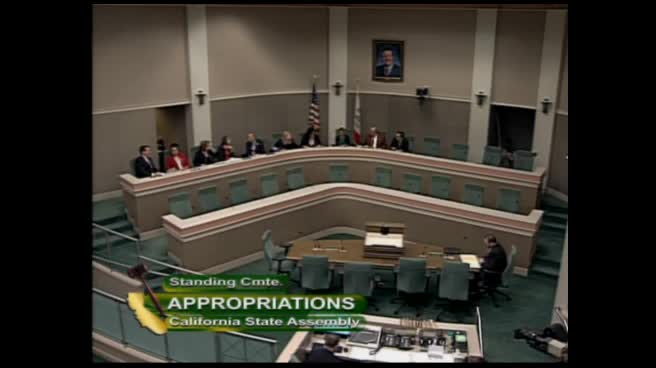
ASSEMBLY COMMITTEE ON APPROPRIATIONS
Lorena Gonzalez Fletcher, Chair
ABPCA Bill Id:AB 43
Author:(Thurmond) – As Amended Ver:May 10, 2017
Policy Committee: | Revenue and Taxation | Vote: | 7 - 3 |
Urgency: Yes State Mandated Local Program: Yes Reimbursable: No
SUMMARY:
This bill imposes a 10% tax on the privilege of contracting with a state prison to provide a state prison with goods or services, and establishes the State Incarceration Prevention Fund (SIPF) for preschool and afterschool programs for purposes of providing services to prevent incarceration. Specifically, this bill:
- Imposes a tax worth 10% of the final contract price on contracts entered into with a state prison, the California Department of Corrections and Rehabilitation (CDCR), or the Department of General Services (DGS). This tax is to be paid by the contractor and applies to contracts entered into or after January 1, 2018.
- Prohibits contractors from passing the costs of the tax onto the state and requires the Attorney General (DOJ) to enforce this provision.
- Requires CDCR and DGS to transmit to the Board of Equalization (BOE) specified information on receipts and contact information of contractors, and requires BOE to assess and collect the tax. BOE must then remit the tax into the SIPF.
- Establishes guidelines for appeals and refunds.
FISCAL EFFECT:
- Increased revenue in the range of $150 million (SIPF) per year as a result of a 10% tax on contacts with a total value of approximately $1.5 billion.
- Significant one-time costs in excess of $200,000 and ongoing costs in excess of $1.1 million for the administration and enforcement of the proposed tax program, including:
- One-time administrative costs of $100,000 and ongoing administrative costs in excess of $250,000 for BOE to develop and operate the proposed tax collection program. Initial years of administration may require a GF loan, but in subsequent years the BOE would be reimbursed from the SIPF.
- One-time administrative costs of $100,000 and ongoing administrative costs of $700,000 for DGS to develop and implement new regulations and to maintain and audit contractor certifications for each contract awarded.
- Unknown one-time administrative costs and ongoing costs in excess of $150,000 for CDCR to develop and implement new processes and to maintain and audit contractor certifications.
- Unknown costs for DOJ to enforce the provision that prohibits vendors from passing the tax onto the state. DOJ would be reimbursed from the SIPF for its enforcement costs.
- Unknown impact on contract prices for CDCR and DGS. While the bill prohibits contractors from passing the tax on to customers, it is unclear how this will be enforced. It can be assumed that there would be some impact on the prices faced by DGS and CDCR, though the extent of those price increases is unknown.
COMMENTS:
- Background. Current law authorizes DGS to contract for various services on behalf of most state agencies. CDCR is authorized to contract for provisions, clothing, medicines, forage, fuel, and all other staple supplies needed for the support of the prisons for any period of time, not exceeding one year. In total, the value of contracts related to state prisons last year was approximately $1.5 billion.
- Purpose. According to the author, AB 43 will tax those who profit off incarceration and therefore provide a reliable revenue stream to support critical programs that can help reduce future incarceration rates. The author notes that while California’s corrections budget is set to increase to $11.3 billion this year, support for pre-school has been insufficient and funding is vulnerable to budget volatility.
- Recent Amendments. This bill proposes a new type of tax program to fund preschool and afterschool programs. As the Assembly Committee on Revenue and Taxation’s analysis notes, this new tax would be the first time in California that a tax is imposed on standalone services, and since the bill’s introduction additional amendments have added clarity and scope. AB 43’s most recent amendments address some core concerns around implementation and enforcement by clarifying that BOE is responsible for the collection of the tax and that DGS and CDCR are responsible for sending relevant information to BOE. Thus, rather than DGS and CDCR becoming, in effect, tax collection agencies, the latest version of this bill aligns tax collection processes with other BOE-run programs.
- Impact on contract prices. One unresolved issue is the extent to which AB 43 will increase prices for state agencies. AB 43’s provision that prohibits contractors from passing costs down onto the state will be difficult to enforced, and it can be assumed that the state will incur some additional costs through increased prices. Therefore, this new tax program may transfer some moneys budgeted for CDCR and DGS to preschool and after-school programs.
Analysis Prepared by: Luke Reidenbach / APPR. / (916) 319-2081
Date of Hearing: April 24, 2017
ASSEMBLY COMMITTEE ON REVENUE AND TAXATION
Sebastian Ridley-Thomas, Chair
ABPCA Bill Id:AB 43 (
Author:Thurmond) – As Amended Ver:April 17, 2017
2/3 vote. Fiscal committee.
SUBJECT: Taxation: prison contracts: goods and services
SUMMARY: Imposes a 10% tax on the privilege of contracting with a state prison to provide a state prison with goods or services, and establishes the State Incarceration Prevention Fund (SIPF) for preschool and after school programs for the purposes of providing services to prevent people from being incarcerated and providing early intervention programs. Specifically, this bill:
- Imposes a 10% tax, on or after January 1, 2018, for the privilege of contracting with a state prison, the Department of Corrections and Rehabilitation (DCR), or the Department of General Services (DGS), to provide a state prison with goods, services, or both.
- Establishes the SIPF in the State Treasury.
- Requires a state prison, DCR, or DGS to collect the tax on a contract for goods and services for a state prison at the time a payment is made. The prison, DCR, or DGS shall remit the amount collected to the State Board of Equalization (BOE), and each entity shall file a return with the BOE on or before the last day of the month following each quarterly calendar period. The BOE shall transmit the payments, less refunds to the Treasury to be deposited into the SIPF.
- Requires that all amounts deposited into the SIPF be continuously appropriated to reimburse the administrative costs of the BOE and the Attorney General. Any remaining funds shall be continuously appropriated to the State Department of Education to administer grants for preschool and after school programs to provide services that prevent people from being incarcerated and for providing early intervention programs.
- Requires the BOE to administer this tax pursuant to the Fee Collection Procedure Law.
- Provides that the tax imposed on contracts shall not be passed on to the state by way of higher prices for the goods or services in the contract. Requires the taxpayer to certify in the contract, under penalty of perjury, that the tax imposed has not been passed through to the state by way of higher prices for the goods and services in the contract.
- Authorizes the attorney general to monitor and, if necessary, investigate any instance where a taxpayer has passed or attempted to pass the tax through to the state. A penalty of 1% of the final contract price shall be imposed for every instance that the taxpayer fails to comply with the provisions of this bill.
- Defines a “taxpayer” as a person that contracts with a state prison, DCR, or DGS to provide a state prison with goods, services, or both. Exempts state and local agencies, and nonprofit organizations from the 10% tax.
EXISTING LAW:
- Imposes a sales tax on retailers for the privilege of selling tangible personal property (TPP), absent a specific exemption. The tax is based upon the retailer's gross receipts from TPP sales in California. Sales tax does apply to a very limited number of services that are closely connected to sales of TPP, such as mandatory service charges at a restaurant.
- Imposes a complementary use tax on the storage, use, or other consumption in this state of TPP purchased from any retailer. The use tax is imposed on the purchaser, and unless the purchaser pays the use tax to a retailer registered to collect the California use tax, the purchaser remains liable for the tax, unless the use is exempted. The use tax is set at the same rate as the state's sales tax and must generally be remitted to the BOE.
FISCAL EFFECT: Unknown.
COMMENTS:
- The author has provided the following statement in support of this bill:
California spends a lot of money to incarcerate prisoners. Indeed the proposed corrections budget this year increases to $11.3 billion which is up from last year’s $10.6 billion. CDCR has approximately $4.5 billion in outstanding contracts with for-profit companies. In comparison, we spend very little on preschool and after-school programs known to decrease incarceration rates. Indeed if we are serious as a state about decreasing our prison population and educating our children, taxing those who profit off their incarceration and reinvesting those funds in educational opportunities is a sensible policy. Finally, this bill has the added benefit of providing a revenue stream for these critical programs that is immune from budget volatility. The proposed pause on the increase in preschool slots shows the importance of a non-budgetary funding source. While we may have paused the preschool slot increase, life did not pause for the more than 3,000 children who will not attend preschool this year and suffer the associated consequences.
- Supporters of this bill state that “California spends large amounts to incarcerate prisoners. In comparison, the state spends relatively little on programs to prevent incarceration. Attempts at heavy investment in these programs have traditionally fallen victim to annual budget concerns. This year alone, a promised increase of over 3,000 preschool slots was cancelled due to budgetary volatility.” Supporters of this bill further state that “AB 43 would re-direct money generated by private companies that profit from the prison industry into a newly-created state fund for the purpose of keeping individuals from being incarcerated in the first place.”
- Opponents state that “agencies rely upon small businesses to provide critical goods and services. In fact, using a small business as a contractor is an often much more cost effective means of conducting state business while creating much-needed jobs. It is in the public interest to spend taxpayer dollars most efficiently, and small businesses provide that benefit. In fact, the Governor has issued an executive order requiring 25% of all state contracts to be awarded to small businesses.” This tax is counterproductive to that goal.
- Committee Staff Comments:
- Who pays the tax? This bill requires that none of the tax imposed on prison contracts be passed on to the state, DCR, or DGS. Unfortunately, the economic incidence of the tax does not depend on who is legally obligated to pay the tax but instead depends on the price elasticity of demand and the price elasticity of supply. “Elasticity” refers to the degree to which individuals, consumers, or producers change their demand or the amount supplied in response to the changes in price or income. Theoretically, the incidence of a tax would fall only on the consumer (i.e., state, DCR, or DGS) if the demand for services and goods was perfectly inelastic meaning that, irrespective of the price, the quantity of services or goods purchased would be exactly the same. However, there is no such thing as a perfectly inelastic or elastic product; all markets fall between these two extremes, and ultimately the economic incidence of the tax is shared by both producers and consumers. It is, therefore, impossible to ensure that the 10% tax imposed by this bill will not be passed on to the state. Assuming that the provisions of this bill become law, some taxpayers that supply services to prisons might cease providing those services for fear of being investigated by the Attorney General. Alternatively, certain taxpayers may choose to pass on the tax to the state and pay the 1% penalty, which would also be shared by the state.
- Future savings: The fact that the tax will inevitably be shared by both the state and the supplier may be an acceptable consequence when one considers the possibility of reducing future incarceration rates. Studies have shown that a number of adult and juvenile justice and prevention programs have resulted in statistically significant reductions in crime and some of those programs may also render significant financial savings[1]. As an example, functional family therapy (FFT)[2] costs, on average, $2,380 per juvenile participant and can be expected to reduce recidivism rates by 18.1%, generating about $52,156 in life-cycle benefits[3]. The net present value of this juvenile justice program is expected to be $49,776 per youth. As another example, cognitive-behavioral programs[4] cost about $107 per offender, are expected to reduce recidivism rates by 6.9%, and generate about $15,469 in life-cycle benefits. The author states that similar results have been founds with preschool and afterschool programs.
- Taxing services: California charges a sales and use tax on a very small set of services - those that are essentially inseparable from sales of TPP or that are closely connected to sales of TPP, such as mandatory service charges at a restaurant. The 10% tax imposed by this bill functions as a sales tax; although the bill does not outline the number of services that are covered by the tax, this could potentially be the first time a tax is imposed on standalone services.
- Earmarked taxes: Revenues generated by this tax are used to pay for preschool and after school programs that prevent people from being incarcerated and providing early intervention programs. If this tax were to work as envisioned, funding for preschool and prevention programs would reduce future incarceration and recidivism rates which, in turn, would further reduce funding for these programs. In a way, this tax functions almost as a Pigouvian tax although it is unclear if the tax is meant to reduce crime, the rate of incarceration, or profits generated by private companies contracting with state prisons. As noted earlier, the penalty provision in this bill may unintentionally prevent all contracts from being executed and prevent revenue from being generated to fund preschool and after school programs.
The modern criteria for tax design are guided by efficiency, equity, and simplicity. These principles tend to favor broad-based taxes in order to minimize economic efficiency costs and maximize simplicity[5]. Narrowly based taxes like the one proposed in this bill are not used very often; but if one is to be enacted, a direct link between the tax source and the expenditure should exist. It is true that private companies profit from contracting with state prisons, but these entities are not necessarily responsible for incarcerating individuals. These private companies do not enact sentencing guidelines nor do they necessarily engage in criminal justice policy. This bill also allocates funds to “preschool and afterschool programs for the purposes of providing services to prevent people from being incarcerated and providing early intervention programs,” but most preschools and afterschool programs are not specifically designed as early intervention programs or to prevent people from being incarcerated. It may be, as the author contends, that individuals who participate in preschool and afterschool programs are less likely to be incarcerated but these programs are not specifically designed with that goal in mind. It is therefore unclear if a nexus exists between the wide range of industries that provide goods and services to prisons and preschool and afterschool programs, whose primary goal is to educate the public.
- Author’s amendment: The author has received approval from the Rules Committee to add an urgency clause to this bill.
REGISTERED SUPPORT / OPPOSITION:
Support
Advancement Project
Alliance for Boys and Men of Color
Anti-Recidivism Coalition
California Alternative Payment Program Association
California Federation of Teachers
California Legislative Black Caucus
California Nurses Association
California Teachers Association (Co-Sponsor)
Californians for Justice
First Five Association of California
Los Angeles Universal Preschool
National Nurses United
Partnership for Children & Youth
Service Employees International Union
Opposition
California Chamber of Commerce
California New Car Dealers Association
National Federation of Independent Business
Analysis Prepared by: Carlos Anguiano / REV. & TAX. / (916) 319-2098
Drake, E.K., Aos, S., & Miller, M.G. Evidence-based public policy options to reduce crime and criminal justice costs: Implications in Washington State. Victims and Offenders, (2009)., Reynolds, A.J., & Temple, J.A., Prevention and cost-effectiveness in early intervention: A 20-year follow-up of a Child-Parent
Center cohort. Minneapolis, McEvoy Lecture Series on Early Childhood and Public Policy, Humphrey Institute of Public Affairs, University of Minnesota. (2006)., Cohen, M.A., & Piquero, A.R. New evidence on the monetary value of saving a high risk youth. Journal of Quantitative Criminology, (2009). ↑
FFT programs involve an FFT-trained therapist working for about three months with a youth in the juvenile justice system and his or her family with the goal of increasing the likelihood that the youth will stay out of future trouble. ↑
Life-cycle benefits are measure in terms of the taxpayer and crime victim costs that are avoided because of the reduced long-run level of criminal activity. ↑
Cognitive behavior programs are a short-term, goal-oriented psychotherapy treatment that takes a hands-on, practical approach to problem-solving with the goal of changing patterns of thinking or behavior that are behind people’s difficulties, and so changing the way they feel. ↑
Rober Carling. Tax Earmarking: Is It Good Practice? The Center for Independent Studies, (2007). ↑
Discussed in Hearing
 21MIN
Assembly Standing Committee on Appropriations
 1H
Assembly Standing Committee on Appropriations
 29MIN
Assembly Standing Committee on Revenue and Taxation
Bill Author

Bill Co-Author(s):