AB 701: Access to judicial and nonjudicial proceedings: hearing impaired.
- Session Year: 2017-2018
- House: Assembly
- Latest Version Date: 2017-03-30
Existing law requires that a participant in any civil or criminal proceeding, court-ordered or court-provided alternative dispute resolution, or administrative hearing of a public agency, who is hearing impaired be provided with a functioning assistive listening system or a computer-aided transcription system, upon his or her request. Existing law requires, if a computer-aided transcription system is requested, sufficient display terminals be provided to allow the hearing impaired individual to read the real-time transcript of the proceeding without difficulty. Existing law requires the Court Reporters Board of California to license and regulate the practice of shorthand reporting, defined to generally mean, among other things, the making of a verbatim record of any oral court proceeding.
This bill would require an operator of a computer-aided transcription system to be certified by a state or national association approved by the Court Reporters Board of California. California, no later than January 1, 2019, to adopt rules and identify standards to certify operators of computer-aided transcription systems, as defined, and, on or before July 1, 2019, would require operators of those systems to be certified pursuant to those rules and standards. The bill would prohibit the official reporter or pro tem reporter assigned by the court to produce the official transcript of the proceeding from acting as the operator of the computer-aided transcription system. The bill also would prohibit a civil or criminal proceeding, court-ordered or court-provided alternative dispute resolution, or administrative hearing of a public agency from commencing until the requested system is in place and functioning and would prohibit the court from requiring the use of a computer-aided transcription system if the participant who is deaf or hard of hearing has expressed a preference to use an interpreter. The bill would require the operator of a computer-aided transcription system to provide the speech-to-text equipment to be used, unless otherwise provided by the court.
Existing law requires that a participant in any civil or criminal proceeding, court-ordered or court-provided alternative dispute resolution, or administrative hearing of a public agency, who is hearing impaired be provided with a functioning assistive listening system or a computer-aided transcription system, upon his or her request. Existing law requires, if a computer-aided transcription system is requested, sufficient display terminals be provided to allow the hearing impaired individual to read the real-time transcript of the proceeding without difficulty. Existing law requires the Court Reporters Board of California to license and regulate the practice of shorthand reporting, defined to generally mean, among other things, the making of a verbatim record of any oral court proceeding.
This bill would require an operator of a computer-aided transcription system to be certified by a state or national association approved by the Court Reporters Board of California.
(a)In any (1)For a civil or criminal proceeding, including, but not limited to, traffic, small claims court, family court proceedings and services, and juvenile court proceedings, in any for a court-ordered or court-provided alternative dispute resolution, including mediation and arbitration, or in any for an administrative hearing of a public agency, where in which a party, witness, attorney, judicial employee, judge, juror, or other participant who is hearing impaired, deaf or hard of hearing, the individual who is hearing impaired, deaf or hard of hearing, upon his or her request, shall be provided with a functioning assistive listening system or the services of an operator of a computer-aided transcription system. Any
(2)An individual requiring this equipment or the services of an operator of a computer-aided transcription system shall give advance notice of his or her need to the appropriate court or agency at the time the hearing is set or not later than five days before the hearing.
(3)If an assistive listening system or the services of an operator of a computer-aided transcription system are requested, the proceeding or administrative hearing described in paragraph (1) shall not commence until the requested system is in place and functioning or the services can be performed.
(b)(1)Assistive listening systems include, but are not limited to, special devices that transmit amplified speech by means of audio-induction loops, radio frequency systems (AM or FM), or infrared transmission. Personal receivers, headphones, and neck loops shall be available upon request by individuals who are hearing impaired. deaf or hard of hearing.
(2)A computer-aided transcription system is a system that provides real-time captioning or other similar technology and that is operated by a person certified pursuant to subdivision (c).
(c)No later than January 1, 2019, the Court Reporters Board of California shall adopt rules and identify standards to certify operators of computer-aided transcription systems. On or before July 1, 2019, an operator of a computer-aided transcription system shall be certified pursuant to the rules and standards established pursuant to this subdivision.
(d)The official reporter or pro tem reporter assigned by the court to produce the official transcript of the proceeding shall not be the operator of a computer-aided transcription system.
(e)The operator of a computer-aided transcription system shall provide the speech-to-text equipment to be used, unless otherwise provided by the court.
(c)(f)If a computer-aided transcription system is requested, sufficient display terminals shall be provided to allow the individual who is hearing impaired to read the real-time transcript captioning of the proceeding without difficulty. An operator of a computer-aided transcription system shall be certified by a state or national association approved by the Court Reporters Board of California.
(d)(g)A sign shall be posted in a prominent place indicating the availability of, and how to request, an assistive listening system and the services of an operator of a computer-aided transcription system. Notice of the availability of the systems shall be posted with notice of trials.
(e)(h)Each superior court shall have at least one portable assistive listening system for use in any court facility within the county. When not in use, the system shall be stored in a location determined by the court.
(f)(i)The Judicial Council shall develop and approve official forms for notice of the availability of assistive listening systems and the services of operators of computer-aided transcription systems for individuals who are hearing impaired. deaf or hard of hearing. The Judicial Council shall also develop and maintain a system to record utilization by the courts of these assistive listening systems and computer-aided transcription systems.
(g)(j)(1)If the individual who is hearing impaired deaf or hard of hearing is a juror, the jury deliberation room shall be equipped with an assistive listening system or a computer-aided transcription system upon the request of the juror.
(h)A court reporter may(2)The operator of a computer-aided transcription system may be present in the jury deliberating room during a jury deliberation if the services of a court reporter for the purpose of operating a computer-aided transcription system of the operator are required for a juror who is hearing impaired. deaf or hard of hearing.
(i)In any of the proceedings referred to in subdivision (a), or in any administrative hearing of a public agency, in which the individual who is hearing impaired is a party, witness, attorney, judicial employee, judge, juror, or other participant, and has requested use of an assistive listening system or computer-aided transcription system, the proceedings shall not commence until the system is in place and functioning.(k)If a witness, attorney, judicial employee, judge, juror, or other participant who is deaf or hard of hearing has expressed a preference to use an interpreter pursuant to Section 754 of the Evidence Code, the court shall not require the use of a computer-aided transcription system in lieu of the interpreter.
(j)(l)As used in this section, individual who is hearing impaired deaf or hard of hearing means an individual with a hearing loss, who, with sufficient amplification or with the services of an operator of a computer-aided transcription system, is able to fully participate in the proceeding.
(k)In no case shall this section(m)This section shall not be construed to prescribe a lesser standard of accessibility or usability than that provided by Title II of the Americans with Disabilities Act of 1990 (Public Law 101-336) and federal regulations adopted pursuant to that act.
(a)In any civil or criminal proceeding, including, but not limited to, traffic, small claims court, family court proceedings and services, and juvenile court proceedings, in any court-ordered or court-provided alternative dispute resolution, including mediation and arbitration, or in any administrative hearing of a public agency, where a party, witness, attorney, judicial employee, judge, juror, or other participant who is hearing impaired, the individual who is hearing impaired, upon his or her request, shall be provided with a functioning assistive listening system or a computer-aided transcription system. Any individual requiring this equipment shall give advance notice of his or her need to the appropriate court or agency at the time the hearing is set or not later than five days before the hearing.
(b)Assistive listening systems include, but are not limited to, special devices which that transmit amplified speech by means of audio-induction loops, radio frequency systems (AM or FM), or infrared transmission. Personal receivers, headphones, and neck loops shall be available upon request by individuals who are hearing impaired.
(c)If a computer-aided transcription system is requested, sufficient display terminals shall be provided to allow the individual who is hearing impaired to read the real-time transcript of the proceeding without difficulty. An operator of a computer-aided transcription system shall be certified by a state or national association approved by the Court Reporters Board of California.
(d)A sign shall be posted in a prominent place indicating the availability of, and how to request, an assistive listening system and a computer-aided transcription system. Notice of the availability of the systems shall be posted with notice of trials.
(e)Each superior court shall have at least one portable assistive listening system for use in any court facility within the county. When not in use, the system shall be stored in a location determined by the court.
(f)The Judicial Council shall develop and approve official forms for notice of the availability of assistive listening systems and computer-aided transcription systems for individuals who are hearing impaired. The Judicial Council shall also develop and maintain a system to record utilization by the courts of these assistive listening systems and computer-aided transcription systems.
(g)If the individual who is hearing impaired is a juror, the jury deliberation room shall be equipped with an assistive listening system or a computer-aided transcription system upon the request of the juror.
(h)A court reporter may be present in the jury deliberating room during a jury deliberation if the services of a court reporter for the purpose of operating a computer-aided transcription system are required for a juror who is hearing impaired.
(i)In any of the proceedings referred to in subdivision (a), or in any administrative hearing of a public agency, in which the individual who is hearing impaired is a party, witness, attorney, judicial employee, judge, juror, or other participant, and has requested use of an assistive listening system or computer-aided transcription system, the proceedings shall not commence until the system is in place and functioning.
(j)As used in this section, individual who is hearing impaired means an individual with a hearing loss, who, with sufficient amplification or a computer-aided transcription system, is able to fully participate in the proceeding.
(k)In no case shall this section be construed to prescribe a lesser standard of accessibility or usability than that provided by Title II of the Americans with Disabilities Act of 1990 (Public Law 101-336) and federal regulations adopted pursuant to that act.
|
Date
|
Status
|
|---|---|
| Feb 1, 2018 | From committee: Filed with the Chief Clerk pursuant to Joint Rule 56. |
| Jan 31, 2018 | Died pursuant to Art. IV, Sec. 10(c) of the Constitution. |
| May 26, 2017 | In committee: Held under submission. |
| Apr 26, 2017 | In committee: Set, first hearing. Referred to APPR. suspense file. |
| Apr 3, 2017 | Re-referred to Com. on APPR. |
| Mar 30, 2017 | Read second time and amended. |
| Mar 29, 2017 | From committee: Amend, and do pass as amended and re-refer to Com. on APPR. (Ayes 11. Noes 0.) (March 28). |
| Mar 16, 2017 | In committee: Set, first hearing. Hearing canceled at the request of author. |
| Mar 2, 2017 | Referred to Com. on JUD. |
| Feb 16, 2017 | From printer. May be heard in committee March 18. |
| Feb 15, 2017 | Read first time. To print. |
|
Date
|
Description
|
Location
|
Votes
|
|
|---|---|---|---|---|
| Mar 28, 2017 | Do pass as amended and be re-referred to the Committee on [Appropriations] | Assembly Standing Committee on Judiciary |
Passed |
This list shows positions taken on this bill by organizations on the date displayed, which is linked to the original source.
Positions by individuals are not included.
|
Organization
|
Position
|
Date
|
|---|---|---|
| California Court Reporters Association | * Support | Mar 28, 2017 |
| Los Angeles County Court Reporters Association | ** Support | Mar 25, 2017 |
| Northern California Court Reporters Association | ** Support | Mar 25, 2017 |
| Sacramento Official Court Reporters Association | ** Support | Mar 25, 2017 |
Date of Hearing: April 26, 2017
ASSEMBLY COMMITTEE ON APPROPRIATIONS
Lorena Gonzalez Fletcher, Chair
ABPCA Bill Id:AB 701
Author:(Gallagher) – As Amended Ver:March 30, 2017
Policy Committee: | Judiciary | Vote: | 11 - 0 |
Urgency: No State Mandated Local Program: No Reimbursable: No
SUMMARY:
This bill requires the Court Reporters Board of California to adopt rules and identify standards to certify operators of computer-aided transcription, commonly known as Communication Access Realtime Translation (CART). This bill also requires that a deaf or hard of hearing individual have access to a CART-captioner in court, if requested. Specifically, this bill:
- Prohibits the operator of a computer-aided transcription system from being the official reporter or pro tem reporter assigned by the court to produce the official transcript of the proceeding.
- Requires the Court Reporters Board of California to adopt rules and to identify standards to certify operators of a computer-aided transcription system no later than January 1, 2019.
- Requires operators of a computer-aided transcription system to be certified pursuant to the rules and standards established by the Court Reporters Board of California by July 1, 2019.
- Clarifies that if a witness, attorney, judicial employee, judge, juror, or other participant who is deaf or hard of hearing has expressed a preference to use an interpreter as provided, the court shall not require the use of a computer-aided transcription system in lieu of the interpreter.
FISCAL EFFECT:
- Unknown GF costs (potentially over $150,000) to courts to provide the required CART-captioners for deaf or hard of hearing individuals. Assuming that the provision of these services cost on average $3,000 for each case and are provided in 50 cases as a result of this bill, the cost would be $150,000.
- Costs of about $40,000 annually from the Court Reporters Fund for a half-time position at the Court Reporters Board to develop rules and certify CART-captioners.
COMMENTS:
- Background. Existing law provides that in any civil, criminal, or administrative proceeding, where there is a party, witness, attorney, judicial employee, judge, juror, or other participant who is hearing impaired, the individual who is hearing impaired, upon his or her request, must be provided with a functioning assistive listening system or a computer-aided transcription system, such as CART. In some courts the official court reporter provides CART services, although transcription provided by court reporters differs from the service provided by a dedicated CART-captioner, such as with the court reporter using shorthand and other notations for the court record that could cause confusion for a deaf or hard of hearing person. In addition, existing law does not specify standards for CART-captioners.
- Purpose. According to the author, AB 701 remedies these problems by requiring that CART-captioners be separate individuals from those transcribing the court report. In addition, the bill would require the Court Reporters Board of California to adopt rules and identify standards to certify CART-captioners.
Analysis Prepared by: Jessica Peters / APPR. / (916) 319-2081
Date of Hearing: March 28, 2017
ASSEMBLY COMMITTEE ON JUDICIARY
Mark Stone, Chair
ABPCA Bill Id:AB 701
Author:(Gallagher) – As Introduced Ver:February 15, 2017
As Proposed to be Amended
SUBJECT: ACCESS TO JUDICIAL AND NONJUDICIAL PROCEEDINGS: DEAF OR HARD OF HEARING
KEY ISSUE: IN ORDER TO PROTECT THE CIVIL RIGHTS OF INDIVIDUALS WHO ARE DEAF OR HARD OF HEARING TO HAVE FULL AND EQUAL ACCESS TO COURT AND ADMINISTRATIVE PROCEEDINGS, SHOULD A PROVIDER OF A COMPUTER-AIDED TRANSCRIPTION SYSTEM BE required to be CERTIFIED UNDER STATE-APPROVED STANDARDS AND BE PROHIBITED FROM BEING THE SAME PERSON AS THE OFFICIAL COURT REPORTER?
SYNOPSIS
To ensure that individuals who are deaf or hard of hearing have full and equal access to our courts, existing federal and state law requires the court to provide translation services either by a qualified interpreter, a functioning assistive listening system (e.g., special devices that amplify speech), or a computer-aided transcription system (e.g., Communication Access Realtime Translation (CART)).
There appears to be evidence that in some instances, the court is not providing CART-services to persons who are in need of them. CART is a speech-to-text program operated by a specialist who provides real-time captioning translation to individuals who are deaf or hard of hearing. According to the author, courts sometimes appoint the official court reporter to provide CART-services, which in all likelihood is not sufficient in ensuring full and equal access under federal and state disability laws. Additionally, there are no state-approved standards for CART-captioners. Thus, the court oftentimes will appoint captioners who are not certified in providing CART-services.
To remedy this problem, this bill, as proposed to be amended, reasonably requires the CART-captioner to be a separate person from the official court reporter, and requires the Court Reporters Board of California to adopt rules and to identify standards to certify CART-operators by January 1, 2019. It also requires CART-operators to be certified by July 1, 2019. This bill is supported by numerous court reporter associations and has no opposition on file.
SUMMARY: Requires the Court Reporters Board of California to adopt rules and identify standards to certify operators of computer-aided transcription and ensures that a deaf or hard of hearing individual has access to a CART-captioner in court. Specifically, this bill:
- Prohibits the operator of a computer-aided transcription system from being the official reporter or pro tem reporter assigned by the court to produce the official transcript of the proceeding.
- Requires the Court Reporters Board of California to adopt rules and to identify standards to certify operators of a computer-aided transcription system no later than January 1, 2019.
- Requires operators of a computer-aided transcription system to be certified pursuant to the rules and standards established by the Court Reporters Board of California by July 1, 2019.
- Clarifies that if a witness, attorney, judicial employee, judge, juror, or other participant who is deaf or hard of hearing has expressed a preference to use an interpreter as provided, the court shall not require the use of a computer-aided transcription system in lieu of the interpreter.
- Strikes the term “hearing impaired” and replaces it with “deaf or hard of hearing”.
- Makes technical and conforming changes, and reorganizes several provisions.
EXISTING LAW:
- Pursuant to federal law, under the Americans with Disabilities Act (ADA), provides that no individual shall be discriminated against on the basis of disability in the full and equal enjoyment of the goods, services, facilities, privileges, advantages, or accommodations of any place of public accommodation by any person who owns, leases, or leases to, or operates a place of public accommodation. (42 U.S.C. 12182.)
- Provides that individuals with disabilities or medical conditions have the same right as the general public to the full and free use of the streets, highways, sidewalks, walkways, public buildings, medical facilities, including hospitals, clinics, and physicians’ offices, public facilities, and other public places. (Civil Code Section 54. Unless otherwise provided, all further statutory references are to the Civil Code.)
- Provides that in any civil, criminal, or administrative proceeding, as provided, where there is a party, witness, attorney, judicial employee, judge, juror, or other participant who is hearing impaired, the individual who is hearing impaired, upon his or her request, shall be provided with a functioning assistive listening system or a computer-aided transcription system. Any individual requiring this equipment shall give advance notice of his or her need to the appropriate court or agency at the time the hearing is set or not later than five days before the hearing. (Section 54.8 (a).)
- Defines assistive listening systems to include, but not limited to, special devices which transmit amplified speech by means of audio-induction loops, radio frequency systems (AM or FM), or infrared transmission. Personal receivers, headphones, and neck loops shall be available upon request by individuals who are hearing impaired. (Section 54.8 (b).)
- Provides that if computer-aided transcription system is requested, sufficient display terminals shall be provided to allow the individual who is hearing impaired to read the real time transcript of the proceeding without difficulty. (Section 54.8 (c).)
- Requires that a sign shall be posted in a prominent place indicating the availability of, and how to request, an assistive listening system and a computer-aided transcription system. Notice of the availability of the systems shall be posted with notice of trials. (Section 54.8 (d).)
- Requires the Judicial Council to develop and approve official forms for notice of the availability of assistive listening systems and computer-aided transcription systems for individuals who are hearing impaired. The Judicial Council shall also develop and maintain a system to record utilization by the courts of these assistive listening systems and computer-aided transcription systems. (Section 54.8 (f).)
- Provides that in those proceedings where the individual as provided has requested use of an assistive listening system or computer-aided transcription system, the proceedings shall not commence until the system is in place and functioning. (Section 54.8 (i).)
- Provides that in no case shall the body of law described above be a lesser standard of accessibility or usability than that provided by Title II of the Americans with Disabilities Act of 1990 (Public Law 101-336) and federal regulations adopted pursuant to that act. (Section 54.8 (k).)
- Provides that in any civil, criminal, or administrative proceeding, as provided, where a party or witness is an individual who is deaf or hard of hearing and the individual who is deaf or hard of hearing is present and participating, the proceeding shall be interpreted in a language that the individual who is deaf or hard of hearing understands by a qualified interpreter appointed by the court or other appointing authority, or as agreed upon. (Evidence Code Section 754.)
FISCAL EFFECT: As currently in print this bill is keyed fiscal.
COMMENTS: Existing federal and state law provides that deaf or hard of hearing individuals in need of translation services in court shall be appointed with a qualified interpreter—typically, an American Sign Language (ASL) interpreter. If the deaf or hard of hearing individual lacks fluency in ASL, or does not want an ASL interpreter, existing also allows the individual to have a functioning assistive listening system (e.g., special devices that amplify speech) or a computer-aided transcription system (e.g., Communication Access Realtime Translation (CART)). CART is a speech-to-text program operated by a specialist who provides real-time captioning translation to individuals who are deaf or hard of hearing.
Author’s intent. In explaining the need for the bill, the author states that deaf or hard of hearing individuals in need of computer-aided translation system services—like CART—are not receiving those services in court. The author states that there have been cases when the court—rather than appointing a CART-operator (or CART-captioner)—will ask the official court reporter to provide a real-time feed of the verbatim transcript to the deaf or hard of hearing individual. Additionally, since there are no state-approved standards for CART-captioners, the court oftentimes will appoint captioners who are not certified in providing CART.
Accordingly, this bill as proposed to be amended, does two things: (1) prohibits the operator of a computer-aided transcription system from being the official reporter or pro tem reporter assigned by the court to produce the official transcript of the proceeding; and (2) requires the Court Reporters Board of California to adopt rules and to identify standards to certify operators of a computer-aided transcription system by January 1, 2019, and requires operators of a computer-aided transcription system to be certified by July 1, 2019.
Providing a real-time feed of the official court reporter’s verbatim transcript in lieu of providing a CART-captioner is unlikely to satisfy the full and equal enjoyment accessibility standard under existing law. If a CART-captioner is not available, a court might ask the official court reporter to provide a real-time feed of the transcript. To do this, the official court reporter would connect the stenographic machine to a display terminal, which would allow the deaf or hard of hearing individual to read the proceedings as the official court reporter typed a transcription of those proceedings.
Some argue that a CART-captioner is not necessary in every courtroom whenever one is requested because a deaf or hard of hearing person can “get by” with reading the court reporter’s transcript that is provided in real time. Afterall, how different could it be to read such a transcript? While this argument might sound reasonable on its face, it relies on a faulty premise.
While the official court reporter and a CART-captioner use the same stenographic equipment and have some common training and experience, the roles and the skills between the two providers of records of court proceedings are quite different. According to the sponsor, a CART-captioner is trained to accurately translate the proceeding for the individual in court, while the official court reporter is required to provide a verbatim record of the proceeding. Moreover, a CART-captioner—unlike the court reporter—will indicate environmental sounds (e.g., cellphone ringing, ambulance howling, courtroom jail yelling) and translate uncommon terms into more common phrases or terms. Importantly, the CART-captioner’s transcript is intended to be read and understood immediately as it is happening, while a court-reporter’s transcript is understood to miss punctuation and grammar in places that are cleaned-up later. Additionally, CART software enables the deaf or hard of hearing person to scroll to previous transcriptions, while an official reporter’s software is limited to only the most current dialogue. Ultimately, the goal of the CART-captioner is to ensure that the hard of hearing individual has full and equal access to the court, while the goal (and duty) of the court reporter is to provide a verbatim record. Given the stark differences in these two functions, it seems unreasonable to expect a real-time feed of a court reporter’s transcript to be sufficient or even accessible.
This bill as proposed to be amended requires the CART-captioner to be a different person than the official court reporter. For the reasons stated above, this bill as proposed to be amended, reasonably prohibits the operator of a computer-aided transcription system from being the same person as the official reporter or pro tem reporter assigned by the court to produce the official transcript of the proceeding.
Judicial Council staff notes that most courts already do this—that is, require the court reporter to be a different person from the CART-captioner. However, Judicial Council staff acknowledges that in some specific matters (in both civil and criminal case types), a court may ask the official court reporter to simultaneously provide CART services because of scheduling conflicts or a lack of available trained court reporters. It appears that this scenario is more common in smaller counties than larger ones.
While this Committee acknowledges the constant concern over the lack of judicial resources, it does not appear that this additional requirement will create a significant burden on the courts. For instance, many counties have ASL interpreters on staff to accommodate individuals who are deaf or hard of hearing. In the event that an ASL interpreter is not available or cannot provide full accessibility to the individual, it would seem that the court could reschedule or move those limited number of cases. Undoubtedly, there will be cases that cannot be pre-scheduled (i.e. many criminal matters) or continued. However, when balancing the important civil rights of a deaf or hard of hearing individual against the relatively small administrative burden on the court, the scales of justice seem to clearly weigh in the favor of the individual.
This bill as proposed to be amended promotes certification of CART-captioners to ensure that deaf and hard of hearing have full access to courts. The author states that when the court appoints a captioner, there are instances when the captioner is not certified. Indeed, existing law provides no standards for what is required of a captioner. Judicial Council staff even acknowledges that there will be instances when the court will appoint a court reporter who is not trained in CART-captioning. While the court always strives to appoint a person trained in CART, Judicial Council staff notes that this is not always possible because of lack of availability.
To ensure that individuals who are deaf or hard of hearing are able to have captioners who are professionally-trained in CART-captioning services, this bill, as proposed to be amended, requires the Court Reporters Board of California to adopt rules and identify standards to certify operators of a computer-aided transcription system no later than January 1, 2019. Additionally, this bill, as proposed to be amended, requires operators of a computer-aided transcription system to be certified pursuant to the rules and standards established by the Court Reporters Board of California no later than July 1, 2019.
While the Court Reporters Board of California (Board) has not officially weighed-in on the bill, staff from the Board wonder whether the timing in the bill, as proposed to be amended, gives the Board sufficient time to adopt rules and to identify standards. Under the Board’s most recent Strategic Plan (2015-2018), the Board is seeking to promote the professional qualifications of those practicing court reporting by establishing examination standards and requirements. Strategic Goal 1.3 provides that the Board will “[r]esearch real-time captioning standards and assess industry practices […] to evaluate the need for consumer protection.” Indeed, the Board plans to meet this goal by September 2018. (Ct. Rptrs. Bd. of Cal., Board Meeting, Agenda Item V: Strategic Plan (May 26, 2016) p. 107-108.) Given that the timing of this bill (January 1, 2019) is after the Board’s initial deadline (September 2018), this bill, as proposed to be amended, does not appear to be inconsistent with the Board’s current timetable. Concededly, the Board may need additional time to accomplish what is required under the bill. However, to ensure that persons who are deaf or hard of hearing have full and equal access to the courts, the delayed timing within the bill appears to be reasonable.
Additionally, this bill, as proposed to be amended, gives the Board some discretion to determine what rules to adopt and what standards to identify. Presumably, the Board could decide to create separate state testing, or determine that the best standards are certifications provided by a national or state association. Ultimately, the rules and standards will likely be consistent with the Board’s mission of advancing consumer protection and this Committee’s previous work in promoting full and equal access within our courts.
This bill clarifies that individuals who are deaf or hard of hearing are not required to use a CART-captioner. Existing law allows individuals who are deaf or hard of hearing to request to use an interpreter, or have a computer-aided transcription system. This bill, as proposed to be amended, importantly clarifies that if an individual who is deaf or hard of hearing has expressed a preference to use an interpreter, the court shall not require the use of a computer-aided transcription system in lieu of the interpreter. This bill also makes important technical changes (including replacing “hearing impaired” with “deaf or hard of hearing”) and reorganizes several provisions. These changes are intended to be technical, and not to change existing law.
ARGUMENTS IN SUPPORT: Several court reporter associations believe that this bill will help to ensure that individuals who are deaf or hard of hearing have meaningful access in court proceedings.
The Sacramento Official Court Reporter Associations writes:
Our courts are failing to provide individuals who are deaf or hard of hearing with meaningful access in court proceedings, often resorting to asking the assigned official reporter to simultaneously provide CART captioning services or having an untrained captioner provide real-time feed of the proceedings. A court reporter should not be asked to provide both services simultaneously. These are two very different jobs that require different skills and have different objectives during a proceeding. The assigned court reporter is focused as they are tasked with recording a verbatim record of the court, while simultaneously a CART captioner is tasked with providing meaningful access to the individual who is deaf or hard-of-hearing. Not only are these tasks and objectives very different, but the equipment, software and functions used to provide these services are very different.
The Los Angeles County Court Reporter Association, in support of the bill, states:
Official reporters hold many certifications, including but not limited to Certified Shorthand Reporter (CSR), Registered Professional Reporter (RPR) and Certified Real-time Reporter (CRR). These certifications require a commitment to excellence in order to achieve certification. A deaf or hard-of-hearing person should be afforded the same level of excellent service by being provided services of a certified CART provider.
REGISTERED SUPPORT / OPPOSITION:
Support
California Court Reporters Association (sponsor)
Los Angeles County Court Reporters Association
Northern California Court Reporters Association
Sacramento Official Court Reporters Association
Opposition
None on file
Analysis Prepared by: Eric Dang / JUD. / (916) 319-2334
Discussed in Hearing
 1H
Assembly Standing Committee on Appropriations
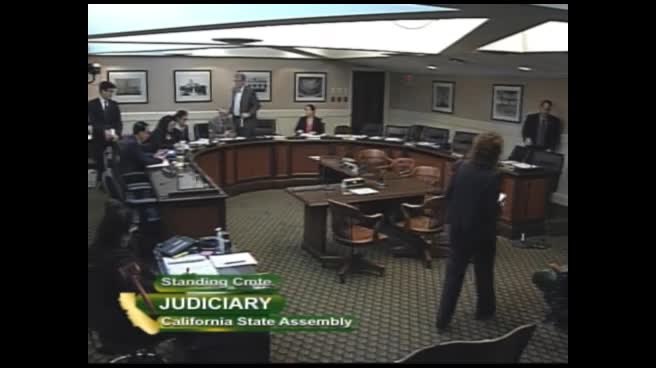 6MIN
Assembly Standing Committee on Judiciary
Bill Author

Bill Co-Author(s):