AB 731: Personal income taxes: deductions: homeowners' association assessments.
- Session Year: 2017-2018
- House: Assembly
- Latest Version Date: 2017-05-01
The Personal Income Tax Law, in modified conformity with federal income tax laws, allows various deductions in computing the income that is subject to the taxes imposed by that law.
This bill, for taxable years beginning on or after January 1, 2017, and before January 1, 2023, 2022, would allow a deduction in computing adjusted gross income for an amount paid or incurred by the qualified taxpayer during the taxable year, not to exceed ($3,000), $1,500, for qualified homeowners association assessments, as defined.
This bill would take effect immediately as a tax levy.
The Personal Income Tax Law, in modified conformity with federal income tax laws, allows various deductions in computing the income that is subject to the taxes imposed by that law.
This bill, for taxable years beginning on or after January 1, 2017, and before January 1, 2023, would allow a deduction in computing adjusted gross income for an amount paid or incurred by the qualified taxpayer during the taxable year, not to exceed $5,000, ($3,000), for qualified homeowners association assessments, as defined.
This bill would take effect immediately as a tax levy.
The Personal Income Tax Law, in modified conformity with federal income tax laws, allows various deductions in computing the income that is subject to the taxes imposed by that law.
This bill, for taxable years beginning on or after January 1, 2017, would allow a deduction in computing adjusted gross income for an amount paid or incurred by the taxpayer during the taxable year, not to exceed $5,000, for qualified homeowners association assessments, as defined.
This bill would take effect immediately as a tax levy.
(a)Section 62 of the Internal Revenue Code, relating to adjusted gross income defined, shall apply, except as otherwise provided.
(b)Section 62(a)(2)(D) of the Internal Revenue Code, relating to certain expenses of elementary and secondary school teachers, shall not apply.
(c)Section 62(a)(21) of the Internal Revenue Code, relating to attorneys fees relating to awards to whistleblowers, shall not apply.
(d)For taxable years beginning on or after January 1, 2017, and before January 1, 2023, 2022, Section 62(a) of the Internal Revenue Code is modified to provide that the deduction allowed under Section 17208 shall be allowed in determining adjusted gross income.
SEC. 2.Section 17208 is added to the Revenue and Taxation Code, to read:17208.(a)For taxable years beginning on or after January 1, 2017, and before January 1, 2023, 2022, a deduction shall be allowed for an amount paid or incurred by the qualified taxpayer during the taxable year, not to exceed three thousand dollars ($3,000), one thousand five hundred dollars ($1,500), for qualified homeowners association assessments.
(b)(1)For purposes of this section, both of the following shall apply:
(A)Homeowners association has the same meaning as the term association as defined by Section 4080 of the Civil Code.
(B)Qualified homeowners association assessments means a regularly occurring, mandatory financial assessment that satisfies all of the following:
(i)Is paid by the taxpayer to a homeowners association with respect to the taxpayers principal place of residence.
(ii)The revenues derived from the imposition of the assessment directly benefit the taxpayers principal place of residence.
(iii)The obligation to pay the assessment arises from the taxpayers mandatory and automatic membership in a homeowners association.
(2)A qualified homeowners association assessment does not include a special assessment.
(c)For purposes of this section, qualified taxpayer means a taxpayer whose gross income for the taxable year does not exceed one the following amounts:
(1)One hundred fifty thousand dollars ($150,000). ($150,000) for qualified taxpayers filing a joint, head of household, or surviving spouse as defined in Section 17046, return.
(2)One hundred thousand dollars ($100,000) for a qualified taxpayer filing a return other than as described in paragraph (1).
(d)This section shall remain in effect only until December 1, 2023, 2022, and as of that date is repealed.
SEC. 3.This act provides for a tax levy within the meaning of Article IV of the California Constitution and shall go into immediate effect.
(a)Section 62 of the Internal Revenue Code, relating to adjusted gross income defined, shall apply, except as otherwise provided.
(b)Section 62(a)(2)(D) of the Internal Revenue Code, relating to certain expenses of elementary and secondary school teachers, shall not apply.
(c)Section 62(a)(21) of the Internal Revenue Code, relating to attorneys fees relating to awards to whistleblowers, shall not apply.
(d)For taxable years beginning on or after January 1, 2017, and before January 1, 2023, Section 62(a) of the Internal Revenue Code is modified to provide that the deduction allowed under Section 17208 shall be allowed in determining adjusted gross income.
SEC. 2.Section 17208 is added to the Revenue and Taxation Code, to read:17208.(a)For taxable years beginning on or after January 1, 2017, and before January 1, 2023, a deduction shall be allowed for an amount paid or incurred by the qualified taxpayer during the taxable year, not to exceed five thousand dollars ($5,000), three thousand dollars ($3,000), for qualified homeowners association assessments.
(b)(1)For purposes of this section, both of the following shall apply:
(A)Homeowners association has the same meaning as the term association as association as defined by Section 4080 of the Civil Code.
(B)Qualified homeowners association assessments means a regularly occurring, mandatory financial assessment that satisfies all of the following:
(i)Is paid by the taxpayer to a homeowners association with respect to the taxpayers principal place of residence.
(ii)The revenues derived from the imposition of the assessment directly benefit the taxpayers principal place of residence.
(iii)The obligation to pay the assessment arises from the taxpayers mandatory and automatic membership in a homeowners association.
(2)A qualified homeowners association assessment does not include a special assessment.
(c)For purposes of this section, qualified taxpayer means a taxpayer whose gross income for the taxable year does not exceed one hundred fifty thousand dollars ($150,000).
(d)This section shall remain in effect only until December 1, 2023, and as of that date is repealed.
SEC. 3.This act provides for a tax levy within the meaning of Article IV of the California Constitution and shall go into immediate effect.
(a)Section 62 of the Internal Revenue Code, relating to adjusted gross income defined, shall apply, except as otherwise provided.
(b)Section 62(a)(2)(D) of the Internal Revenue Code, relating to certain expenses of elementary and secondary school teachers, shall not apply.
(c)Section 62(a)(21) of the Internal Revenue Code, relating to attorneys fees relating to awards to whistleblowers, shall not apply.
(d)For taxable years beginning on or after January 1, 2017, Section 62(a) of the Internal Revenue Code is modified to provide that the deduction allowed under Section 17208 shall be allowed in determining adjusted gross income.
SEC. 2.Section 17208 is added to the Revenue and Taxation Code, to read:17208.(a)For taxable years beginning on or after January 1, 2017, a deduction shall be allowed for an amount paid or incurred by the taxpayer during the taxable year, not to exceed five thousand dollars ($5,000), for qualified homeowners association assessments.
(b)(1)For purposes of this section, both of the following shall apply:
(A)Homeowners association has the same meaning as the term association as defined by Section 4080 of the Civil Code.
(B)Qualified homeowners association assessments means a regularly occurring, mandatory financial assessment that satisfies all of the following:
(i)Is paid by the taxpayer to a homeowners association with respect to the taxpayers principal place of residence.
(ii)The revenues derived from the imposition of the assessment directly benefit the taxpayers principal place of residence.
(iii)The obligation to pay the assessment arises from the taxpayers mandatory and automatic membership in a homeowners association.
(2)A qualified homeowners association assessment does not include a special assessment.
SEC. 3.This act provides for a tax levy within the meaning of Article IV of the California Constitution and shall go into immediate effect.
|
Date
|
Status
|
|---|---|
| Feb 1, 2018 | From committee: Filed with the Chief Clerk pursuant to Joint Rule 56. |
| Jan 31, 2018 | Died pursuant to Art. IV, Sec. 10(c) of the Constitution. |
| May 26, 2017 | In committee: Held under submission. |
| May 17, 2017 | In committee: Set, first hearing. Referred to APPR. suspense file. |
| May 2, 2017 | Re-referred to Com. on APPR. |
| May 1, 2017 | Read second time and amended. |
| Apr 27, 2017 | From committee: Amend, and do pass as amended and re-refer to Com. on APPR. (Ayes 9. Noes 1.) (April 24). |
| Mar 28, 2017 | Re-referred to Com. on REV. & TAX. |
| Mar 27, 2017 | From committee chair, with author's amendments: Amend, and re-refer to Com. on REV. & TAX. Read second time and amended. |
| Mar 20, 2017 | In committee: Set, first hearing. Hearing canceled at the request of author. |
| Mar 2, 2017 | Referred to Com. on REV. & TAX. |
| Feb 16, 2017 | From printer. May be heard in committee March 18. |
| Feb 15, 2017 | Read first time. To print. |
|
Date
|
Description
|
Location
|
Votes
|
|
|---|---|---|---|---|
| Apr 24, 2017 | Do pass as amended and be re-referred to the Committee on [Appropriations] | Assembly Standing Committee on Revenue and Taxation |
Passed |
This list shows positions taken on this bill by organizations on the date displayed, which is linked to the original source.
Positions by individuals are not included.
|
Organization
|
Position
|
Date
|
|---|---|---|
| California Tax Reform Association | ** Against | Apr 21, 2017 |
| Community Associations Institute | * Support | Apr 25, 2017 |
Date of Hearing: May 17, 2017
ASSEMBLY COMMITTEE ON APPROPRIATIONS
Lorena Gonzalez Fletcher, Chair
ABPCA Bill Id:AB 731
Author:(Chen) – As Amended Ver:May 1, 2017
Policy Committee: | Revenue and Taxation | Vote: | 9 - 1 |
|
| ||
|
|
Urgency: No State Mandated Local Program: No Reimbursable: No
SUMMARY:
This bill allows a Personal Income Tax (PIT) deduction for the amount a qualified taxpayer spends on homeowners’ association (HOA) assessments. Specifically, this bill:
- Allows, for taxable years 2017 through 2022, a PIT deduction for amounts paid or incurred by the qualified taxpayer, not to exceed $1,500, on HOA assessments, as defined.
- Defines “qualified taxpayer” as a taxpayer with a gross income of less than $150,000 if filing jointly or as a head of household or surviving spouse, and less than $100,000 if filing separately or as a single filer.
FISCAL EFFECT:
General Fund (GF) revenue loss of $190 million in 2017-18, $200 million in 2018-19, and $200 million in 2019-20.
COMMENTS:
- Background and Purpose. HOA assessments are most commonly imposed on homes in planned communities, condominium complexes, and multi-family residences. HOA assessments are usually charged monthly and go toward maintaining common areas accessible to all community residents such as swimming pools, parking garages, and elevators. As of 2015, there was an estimated 44,900 community associations in California representing over 9 million residents.
According to the author, AB 731 will reduce the monthly costs of owning a home by allowing a tax deduction for community association dues. The Community Associations Institute of California notes that the average homeowner assessments in California can range from $200 to $400 per month.
- Fiscal implications of tax expenditures. Existing law provides various credits, deductions, exclusions, and exemptions for particular taxpayer groups. These features of tax law are referred to as "expenditures" since they are generally enacted to accomplish some governmental purpose and there is a determinable cost associated with each (in the form of foregone revenues). One ongoing concern about tax expenditures is the lack of control over revenue losses, since the number of taxpayers taking advantage of any given tax expenditure can vary each year. This bill enacts a new tax expenditure program, in the form of a PIT deduction, to help families afford their monthly housing payments.
- Above-the-Line Deductions. AB 731 creates an “above-the-line” deduction, which is a deduction that reduces adjusted gross income (AGI) and can be claimed by all taxpayers, regardless of whether or not they itemize their deductions or use the standard deduction. Examples of other above-the-line deductions include deductions for moving expenses, payments to individual retirement accounts, and paid interest on student loans. In contrast, a “below-the-line” deduction allows taxpayers to adjust their taxable income once AGI is calculated. Examples include the standard deduction and itemized deductions such as the mortgage interest deduction.
Analysis Prepared by: Luke Reidenbach / APPR. / (916) 319-2081
Date of Hearing: April 24, 2017
ASSEMBLY COMMITTEE ON REVENUE AND TAXATION
Sebastian Ridley-Thomas, Chair
ABPCA Bill Id:AB 731 (
Author:Chen) – As Amended Ver:March 27, 2017
Majority vote. Tax levy. Fiscal committee.
SUBJECT: Personal income taxes: deductions: homeowners’ association assessments
SUMMARY: Allows an "above-the-line" deduction of up to $3,000 in calculating adjusted gross income (AGI) for qualified homeowners' association (HOA) assessments paid or incurred by a qualified taxpayer during the taxable year. Specifically, this bill:
- Allows, for taxable years beginning on or after January 1, 2017, and before January 1, 2023, an "above-the-line" deduction in calculating AGI for an amount paid or incurred by a taxpayer during the taxable year, not to exceed $3,000, for qualified HOA assessments.
- Defines "homeowners' association" as having the same meaning as the term "association" in Civil Code Section 4080.
- Defines "qualified homeowners' association assessments" as a regularly occurring, mandatory financial assessment that satisfies all of the following:
- Is paid by the taxpayer to a HOA with respect to the taxpayer's principal place of residence;
- The revenues derived from the imposition of the assessment directly benefit the taxpayer's principal place of residence; and,
- The obligation to pay the assessment arises from the taxpayer's mandatory and automatic membership in a HOA.
- Specifies that a qualified HOA assessment does not include a special assessment.
- Defines a "qualified taxpayer" as a taxpayer whose gross income for the taxable year does not exceed $150,000.
- Takes immediate effect as a tax levy.
EXISTING LAW:
- Allows for the deduction of certain expenses when calculating AGI under state and federal law. These above-the-line deductions can be claimed by all taxpayers with specified expenses, such as specified moving expenses, payments to individual retirement accounts, and interest on education loans, regardless of whether the taxpayer itemizes deductions or uses the standard deduction.
- Allows individuals to deduct certain expenses after AGI is calculated to arrive at taxable income under state and federal law. These "below-the-line" deductions include standard deductions, a fixed dollar amount intended to approximate deductible living expenses, and itemized deductions for various specific expenses, such as medical expenses, mortgage interest, and real estate taxes.
- Allows various deductions that may be claimed by homeowners, but does not generally allow a deduction for HOA assessments.
FISCAL EFFECT: The Franchise Tax Board (FTB) estimates General Fund revenue losses of $300 million in fiscal year (FY) 2017-18, $300 million in FY 2018-19, and $300 million in FY 2019-20.
COMMENTS:
- Author's Statement: The author has provided the following statement in support of this bill:
California has the highest housing costs in the nation and a plummeting rate of homeownership. Many Californians simply cannot afford the median home price in their area.
Nearly nine million Californians live in community associations. Average association dues range between $200-$400. As California continues to increase the construction of mixed-use developments to combat urban sprawl, the number of Californians living in community associations will increase. As a result living in a community association will no longer be a choice for buyers looking [to] live [in] the state's urban areas.
AB 731 will reduce the monthly costs of owning a home by allowing for a tax deduction of up to $3,000 for community association dues. This will make the cost of owning a home in California more affordable.
- Arguments in Support: The Community Associations Institute of California states in support that "[n]early a quarter of Californians live in a community association and by reducing the costs of homeownership, the state can help working-class families better afford a home." Additionally, "[t]he average homeowner assessments in California range from $200 to $400 per month. Over the course of thirty years, this could add nearly $150,000 to the cost of owning a home."
- Arguments in Opposition: The California Tax Reform Association states in opposition that "'[w]hen one purchase a home or condo, [HOA] dues or monthly maintenance charges are part of the calculation that a purchaser makes with regard to monthly affordability." Homeowners outside of an HOA "do not get to deduct energy costs, landscaping, pool maintenance, and fees paid to the city for services such as water or garbage. These costs are the normal cost of homeownership, as are [HOA] dues."
- Committee Staff Comments:
- What is a "Tax Expenditure"? Existing law provides various credits, deductions, exclusions, and exemptions for particular taxpayer groups. In the late 1960s, United States Treasury officials began arguing that these features of the tax law should be referred to as "expenditures" since they are generally enacted to accomplish some governmental purpose and there is a determinable cost associated with each of them (in the form of forgone revenues). This bill would enact a new tax expenditure program in the form of a deduction for HOA assessments.
- Tax Expenditure vs. Direct Expenditure: As the Department of Finance notes in its annual Tax Expenditure Report, there are several key differences between tax expenditures and direct expenditures. First, tax expenditures are reviewed less frequently than direct expenditures once they are put in place; this can offer taxpayers greater certainty, but it can also result in tax expenditures remaining part of the tax code without demonstrating any public benefit. Second, there is generally no control over the amount of revenue losses associated with any given tax expenditure. Finally, it should also be noted that, once enacted, it takes a two-thirds vote to rescind an existing tax expenditure absent a sunset date. This bill includes a six year sunset date to allow for proper legislative review of the benefits and costs of this tax expenditure in the future.
- Conformity Issues: California generally conforms to federal law regarding tax deductions. In general, state conformity with federal law promotes greater simplicity and eases administration of complex tax laws. Federal law does not allow a specific deduction for HOA assessments so the deduction proposed by this bill would bring California further out of conformity with federal law.
- HOA Assessments: HOA assessments are most commonly imposed on homes in planned communities, condominium complexes, and multi-family residences. HOA assessments are usually charged monthly and go toward maintaining common areas accessible to all community residents such as swimming pools, parking garages, and elevators. According to an analysis by Zillow based on the U.S. Census Bureau's 2013 American Housing Survey, the median HOA assessment for single-family residence owners ranges from $40 to $49 per month (with 70% paying less than $100 per month), and the median HOA assessment for multifamily residence owners ranges from $300 to $309 per month (with 78% paying more than $200 per month).
According to the Community Associations Institute's (CAI's) National and State Statistical Review for 2015, there are an estimated 44,900 community associations[1] in California representing over nine million residents. CAI's 2016 Homeowner Satisfaction Survey found that 65% of HOA and condominium residents rate their overall community association experience as positive, 55% of residents say their association assessments are "just the right amount" (with 7% saying assessments are "too little"), and 66% of residents say their associations' rules protect and enhance property values. The survey states that "[t]hese findings objectively refute the unfounded and unsubstantiated myth that the community association model of governance is failing to serve the best interests of Americans who choose to live in common-interest communities."
This bill allows qualified taxpayers to annually deduct up to $3,000 in qualified HOA assessments paid. Because this bill allows the deduction for taxable years beginning on or after January 1, 2017, this bill would also provide a tax benefit for taxpayers who chose to live in a community with HOA assessments prior to its enactment. To the extent that the vast majority of homeowners believe that assessments paid provide a commensurate benefit to the value of their property and homeowners knowingly purchase homes in HOAs because of the included amenities, it is unclear what behavior or expenses the tax deduction is attempting to incentivize or offset, respectively.
- What Do You Mean? As noted in the FTB's analysis of this bill, terms used in this bill such as "principal place of residence" and "special assessment" are not clearly defined, which may lead to taxpayer confusion and disputes with the FTB, complicating administration of this bill. For example, this bill requires qualified HOA assessments to be those that directly benefit the taxpayer's principal place of residence; it is unclear whether HOA assessments that benefit shared common areas such as a pool or club house are intended to qualify for the deduction. This bill also does not specify whether the deduction is limited to HOA assessments paid for a principal residence in California.
Although this bill refers to Section 4080 of the Civil Code to define “HOA” in a manner consistent with existing law governing associations created for the purpose of managing common interest developments, it does not draw upon related statutes in its definition of “HOA assessments”. Similarly referencing Chapter 8, Part 5 of the Civil Code relating to Assessments and Assessment Collection in the definition of qualified HOA assessments may help ensure that only properly imposed assessments qualify for the deduction.
- Affording Home Ownership: Although this above-the-line tax deduction would be available to all taxpayers regardless of whether they take the standard deduction or itemized deductions, deductions generally are more valuable for households that fall into higher tax brackets. The value of a deduction to a taxpayer (the amount by which the deduction reduces the taxpayer's tax liability) generally may be estimated by multiplying the deduction by the taxpayer's highest marginal tax rate. For example, the approximate state tax savings to a person in the 9.30% tax bracket who deducts a $100 expense is $9.30, whereas a taxpayer in a lower tax bracket would experience lower savings.
Although this bill restricts the deduction to taxpayers (either filing individually or jointly) with gross income under $150,000, homeowners with incomes on the higher end of that range would experience a greater benefit than those with income on the lower end of that range. Additionally, if the qualified HOA assessments are paid with respect to a principal residence owned by two separate taxpayers, each taxpayer could be allowed the $3,000 deduction, generating a deduction of up to $6,000 in each taxable year associated with the property. Instead of forgoing General Fund revenues in a manner that favors specific homeowners, the Committee may wish to consider whether funds would be better spent on other programs that promote first-time homeownership for middle income or lower income families.
Furthermore, some economists have argued that tax subsidies for homeownership, such as the mortgage interest deduction, are factored into the price of housing and, thus, essentially inflate the prices of homes. This preferential tax treatment may encourage households to over-invest in housing and invest less in business enterprises that might contribute more to the nation's productivity and output. The Committee may wish to consider whether the tax deduction proposed by this bill might have a similar impact on the housing market and simply push home prices higher.
REGISTERED SUPPORT / OPPOSITION:
Support
The Community Associations Institute
Opposition
California Tax Reform Association
Analysis Prepared by: Irene Ho / REV. & TAX. / (916) 319-2098
The report uses the term "community association" in reference to planned communities (e.g., HOAs, condominium communities, and housing cooperatives). ↑
Discussed in Hearing
 1H
Assembly Standing Committee on Appropriations
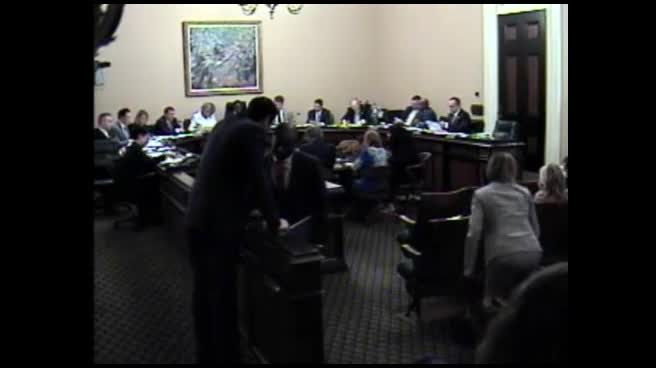 3MIN
Assembly Standing Committee on Revenue and Taxation
Bill Author

Bill Co-Author(s):