AB 745: Commissioners: criminal proceedings in the Counties of Riverside and San Bernardino.
- Session Year: 2017-2018
- House: Assembly
- Latest Version Date: 2017-05-02
Existing law authorizes a presiding judge of a court to direct a commissioner to perform duties and exercise authority relating to certain criminal proceedings, including, among others, conducting arraignment proceedings and issuing and signing bench warrants.
This bill would would, until January 1, 2021, expand the authority of a presiding judge of a superior court located within the County of Riverside or the County of San Bernardino, if certain conditions are met, to direct a commissioner to perform specified duties and exercise authority in criminal proceedings to include, among others, issuing a search warrant, issuing a warrant of commitment, and presiding over peace bond hearings. proceedings. The bill would require the Judicial Council to report to the Governor and Legislature on this expanded authority, as specified. The bill also makes legislative findings and declarations in support of its provisions.
This bill would make legislative findings and declarations as to the necessity of a special statute for the superior courts located within the County of Riverside and the County of San Bernardino.
Existing law authorizes a presiding judge of a court to direct a commissioner to perform duties and exercise authority relating to certain criminal proceedings, including, among others, conducting arraignment proceedings and issuing and signing bench warrants.
This bill would expand the authority of a presiding judge to direct a commissioner to perform duties and exercise authority in criminal proceedings to include, among others, issuing a search warrant, issuing a warrant of commitment, and presiding over peace bond hearings. The bill also makes legislative findings and declarations in support of its provisions.
Existing law establishes the Spousal Abuser Prosecution Program for the purpose of awarding funds to cities and counties in which prosecuting agencies establish spousal abuser prosecution units. Existing law makes findings about the efficacy of specially trained prosecutors in increasing the likelihood of convicting spousal abusers and ensuring appropriate sentences and states the intent of the Legislature to support increased efforts to prosecute spousal abusers.This bill would make a technical, nonsubstantive change to these provisions.Existing law establishes the Spousal Abuser Prosecution Program for the purpose of awarding funds to cities and counties in which prosecuting agencies establish spousal abuser prosecution units. Existing law makes findings about the efficacy of specially trained prosecutors in increasing the likelihood of convicting spousal abusers and ensuring appropriate sentences and states the intent of the Legislature to support increased efforts to prosecute spousal abusers.
This bill would make a technical, nonsubstantive change to these provisions.
(a)The Legislature finds and declares all of the following:
(1)There is a critical shortage of judges relative to the workload needs in Californias trial courts. The Judicial Council has reported to the Legislature and the Governor pursuant to paragraph (1) of subdivision (c) of Section 69614 of the Government Code that based on its 2016 Judicial Needs Assessment, 31 courts need new judgeships, for a total need of 188.5 full-time equivalent judicial positions, known as FTEs. The need estimate does not include judicial vacancies resulting from retirements, elevations, or other vacancies that have not yet been filled.
(2)The publics right to timely access to justice should not be contingent on the resource levels of the county in which they reside or bring their legal disputes.
(3)The purpose of commissioners is to assist an overburdened judiciary with the performance of subordinate judicial duties(Branson v. Martin (1997) 56 Cal.App.4th 300, 305).
(4)Rule 10.462 of the California Rules of Court requires that commissioners receive the same level and rigor of training as trial court judges.
(5)Commissioners are subject to the California Code of Judicial Ethics. Rule 10.763 10.703 of the California Rules of Court requires that if a court disciplines a subordinate judicial officer by written reprimand, suspension, or termination for conduct that, if alleged against a judge, would be within the jurisdiction of the Commission on Judicial Performance under Section 18 of Article VI of the California Constitution, the presiding judge of the court must promptly forward to the commission a copy of the portions of the court file that reasonably reflect the basis of the action taken by the court, including the complaint or allegations of misconduct and the subordinate judicial officers response. Section 18.1 of Article VI of the California Constitution requires the Commission on Judicial Performance to exercise discretionary jurisdiction with regard to the oversight and discipline of commissioners.
(6)Allowing courts to assign commissioners to perform magistrate duties provides greater flexibility in the use of existing judicial and commissioner resources to increase access to justice while equitably addressing judicial workload concerns.
(b)It is the intent of the Legislature that commissioners who are assigned to perform magistrate duties receive the same level of training and oversight required for trial court judges assigned to perform those duties.
SEC. 2.Chapter 3.5 (commencing with Section 811) is added to Title 3 of Part 2 of the Penal Code, to read:3.5.Matters Before Commissioners811.(a)The In a superior court where there are fewer authorized judgeships than the assessed judicial need, the presiding judge of a court may direct a commissioner to perform any of the following duties or exercise any of the following authority of a magistrate:
(1)The authority to issue a warrant for the arrest of a person charged with a public offense pursuant to Section 807. 807 and to fix the amount of bail pursuant to Section 815a.
(2)The authority to order a search warrant pursuant to Section 1524.
(3)The authority to issue and sign a bench warrant pursuant to Section 72190.1 of the Government Code.
(4)The authority to issue a warrant of commitment pursuant to Sections 881 and 1488.
(5)The authority to arraign a defendant and to bind the defendant over for trial or to release the defendant pursuant to Section 72190.1 of the Government Code or Section 858, and to fix the amount of bail pursuant to Section 815a.(6)(5)The authority to preside over peace bond hearings pursuant to Chapter 3 (commencing with Section 701) of Title 1 of Part 2.
(7)(6)Perform other commissioner duties as provided in authorized pursuant to Section 259 of the Code of Civil Procedure, including, but not limited to, acting as a temporary judge upon stipulation of the parties. Procedure and an arraignment, as described in Section 858, and as authorized pursuant to Section 72190.1 of the Government Code.
(b)The presiding judge may direct a commissioner performing duties pursuant to this section to be available on call as a magistrate pursuant to as described in Section 810.
(c)This section is not intended to limit the authority of commissioners established by other provisions of law.
811.5.This chapter shall only apply to superior courts located within the County of Riverside or the County of San Bernardino.
811.10.On or before January 1, 2021, the Judicial Council shall issue a report regarding the authorization provided by this chapter and transmit the report to the Governor and the Legislature. The report shall include the number of instances in which each duty described in this chapter is performed and the specific legal experience of the commissioners appointed. The Judicial Council shall transmit the report to the Legislature in compliance with Section 9795 of the Government Code.
811.15.This chapter shall remain in effect only until January 1, 2021, and as of that date is repealed.
SEC. 3.The Legislature finds and declares that a special statute is necessary and that a general statute cannot be made applicable within the meaning of Section 16 of Article IV of the California Constitution because of the unique circumstances of judicial need in the County of Riverside and the County of San Bernardino, it is necessary to issue special and limited authority to the courts in these counties.
(a)The Legislature finds and declares all of the following:
(1)There is a critical shortage of judges relative to the workload needs in Californias trial courts. The Judicial Council has reported to the Legislature and the Governor pursuant to paragraph (1) of subdivision (c) of Section 69614 of the Government Code that based on its 2016 Judicial Needs Assessment, 31 courts need new judgeships, for a total need of 188.5 full-time equivalent judicial positions, known as FTEs. The need estimate does not include judicial vacancies resulting from retirements, elevations, or other vacancies that have not yet been filled.
(2)The publics right to timely access to justice should not be contingent on the resource levels of the county in which they reside or bring their legal disputes.
(3)The purpose of commissioners is to assist an overburdened judiciary with the performance of subordinate judicial duties(Branson v. Martin (1997) 56 Cal.App.4th 300, 305).
(4)Rule 10.462 of the California Rules of Court requires that commissioners receive the same level and rigor of training as trial court judges.
(5)Commissioners are subject to the California Code of Judicial Ethics. Rule 10.763 of the California Rules of Court requires that if a court disciplines a subordinate judicial officer by written reprimand, suspension, or termination for conduct that, if alleged against a judge, would be within the jurisdiction of the Commission on Judicial Performance under Section 18 of Article VI of the California Constitution, the presiding judge of the court must promptly forward to the commission a copy of the portions of the court file that reasonably reflect the basis of the action taken by the court, including the complaint or allegations of misconduct and the subordinate judicial officers response. Section 18.1 of Article VI of the California Constitution requires the Commission on Judicial Performance to exercise discretionary jurisdiction with regard to the oversight and discipline of commissioners.
(6)Allowing courts to assign commissioners to perform magistrate duties provides greater flexibility in the use of existing judicial and commissioner resources to increase access to justice while equitably addressing judicial workload concerns.
(b)It is the intent of the Legislature that commissioners who are assigned to perform magistrate duties receive the same level of training and oversight required for trial court judges assigned to perform those duties.
SEC. 2.Chapter 3.5 (commencing with Section 811) is added to Title 3 of Part 2 of the Penal Code, to read:3.5.Matters Before Commissioners811.(a)The presiding judge of a court may direct a commissioner to perform any of the following duties or exercise any of the following authority of a magistrate:
(1)The authority to issue a warrant for the arrest of a person charged with a public offense pursuant to Section 807.
(2)The authority to order a search warrant pursuant to Section 1524.
(3)The authority to issue and sign a bench warrant pursuant to Section 72190.1 of the Government Code.
(4)The authority to issue a warrant of commitment pursuant to Sections 881 and 1488.
(5)The authority to arraign a defendant and to bind the defendant over for trial or to release the defendant pursuant to Section 72190.1 of the Government Code or Section 858, and to fix the amount of bail pursuant to Section 815a.
(6)The authority to preside over peace bond hearings pursuant to Chapter 3 (commencing with Section 701) of Title 1 of Part 2.
(7)Perform other duties as provided in Section 259 of the Code of Civil Procedure, including, but not limited to, acting as a temporary judge upon stipulation of the parties.
(b)The presiding judge may direct a commissioner performing duties pursuant to this section to be available on call as a magistrate pursuant to Section 810.
(c)This section is not intended to limit the authority of commissioners established by other provisions of law.
SECTION 1.Section 273.8 of the Penal Code is amended to read:273.8.The Legislature hereby finds that spousal abusers present a clear and present danger to the mental and physical well-being of the citizens of the State of California. The Legislature further finds that the concept of vertical prosecution, in which a specially trained deputy district attorney, deputy city attorney, or prosecution unit is assigned to a case after arraignment and continuing to its completion, is a proven way of demonstrably increasing the likelihood of convicting spousal abusers and ensuring appropriate sentences for those offenders. In enacting this chapter, it is the intent of the Legislature to support increased efforts by district attorneys and city attorneys offices to prosecute spousal abusers through organizational and operational techniques that have already proven their effectiveness in selected cities and counties in this and other states.The Legislature hereby finds that spousal abusers present a clear and present danger to the mental and physical well-being of the citizens of the State of California. The Legislature further finds that the concept of vertical prosecution, in which a specially trained deputy district attorney, deputy city attorney, or prosecution unit is assigned to a case after arraignment and continuing to its completion, is a proven way of demonstrably increasing the likelihood of convicting spousal abusers and ensuring appropriate sentences for those offenders. In enacting this chapter, the Legislature intends it is the intent of the Legislature to support increased efforts by district attorneys and city attorneys offices to prosecute spousal abusers through organizational and operational techniques that have already proven their effectiveness in selected cities and counties in this and other states.
|
Date
|
Status
|
|---|---|
| Feb 1, 2018 | From committee: Filed with the Chief Clerk pursuant to Joint Rule 56. |
| Jan 31, 2018 | Died pursuant to Art. IV, Sec. 10(c) of the Constitution. |
| May 26, 2017 | In committee: Held under submission. |
| May 10, 2017 | In committee: Set, first hearing. Referred to APPR. suspense file. |
| May 3, 2017 | Re-referred to Com. on APPR. |
| May 2, 2017 | Read second time and amended. |
| Apr 24, 2017 | Joint Rule 62(a), file notice suspended. |
| May 1, 2017 | From committee: Amend, and do pass as amended and re-refer to Com. on APPR. (Ayes 11. Noes 0.) (April 27). |
| Apr 24, 2017 | In committee: Hearing postponed by committee. |
| Mar 30, 2017 | From committee chair, with author's amendments: Amend, and re-refer to Com. on JUD. Read second time and amended. |
| Apr 3, 2017 | Re-referred to Com. on JUD. |
| Mar 30, 2017 | Referred to Com. on JUD. |
| Feb 16, 2017 | From printer. May be heard in committee March 18. |
| Feb 15, 2017 | Read first time. To print. |
|
Date
|
Description
|
Location
|
Votes
|
|
|---|---|---|---|---|
| Apr 27, 2017 | Do pass as amended and be re-referred to the Committee on [Appropriations] | Assembly Standing Committee on Judiciary |
Passed |
This list shows positions taken on this bill by organizations on the date displayed, which is linked to the original source.
Positions by individuals are not included.
|
Organization
|
Position
|
Date
|
|---|---|---|
| California Attorneys For Criminal Justice | ** Against | Apr 26, 2017 |
| California Court Commissioners Association | ** Support | Apr 26, 2017 |
| California Judges Association | ** Support | Apr 26, 2017 |
| Judicial Council of California | ** Support | Apr 26, 2017 |
| San Bernardino County Superior Court | ** Support | Apr 26, 2017 |
Date of Hearing: May 10, 2017
ASSEMBLY COMMITTEE ON APPROPRIATIONS
Lorena Gonzalez Fletcher, Chair
ABPCA Bill Id:AB 745
Author:(Reyes) – As Amended Ver:May 2, 2017
Policy Committee: | Judiciary | Vote: | 11 - 0 |
|
| ||
|
|
Urgency: No State Mandated Local Program: No Reimbursable: No
SUMMARY:
This bill authorizes the presiding judges of the counties of Riverside and San Bernardino to allow court commissioners to perform specified criminal magistrate duties until January 1, 2021. Specifically, this bill:
- Allows the presiding judges in Riverside and San Bernardino Counties to direct a commissioner to perform specified duties relating to criminal cases.
- Allows a presiding judge to direct a commissioner to perform duties provided in this bill to be available on call.
- Requires the Judicial Council to issue a report about the authorization provided in this bill and report its results to the Governor and the Legislature by January 1, 2021. The report must include the number of instances in which each duty is performed, and the specific legal experience of the commissioners appointed.
FISCAL EFFECT:
- Costs of up to $10,000 to the Judicial Council to develop the required report.
- Unknown cost pressure to the two courts to either hire more commissioners or backfill commissioners who are redirected from other responsibilities to perform criminal magistrate duties. For example, assuming a cost of $200,000 per commissioner, if each of the two courts hired on additional commissioner as a result of having greater ability to utilize them, the cost would be $400,000. While the courts would likely attempt to reduce other costs to free up the funds necessary to pay additional commissioners, it would create a cost pressure.
- Unknown potential savings from providing more flexibility to the presiding judges to assign and prioritize workload.
COMMENTS:
- Background. Existing law authorizes courts to appoint subordinate judicial officers, such as commissioners, who can perform some of the same duties that might otherwise be performed by judges, known as subordinate judicial duties. In addition, a presiding judge may assign a subordinate judicial officer to sit as a temporary judge where lawful, if the presiding judge determines that, because of a shortage of judges, it is necessary for the effective administration of justice. However, generally, a commissioner cannot perform certain judicial duties related to criminal law, such as signing a warrant.
- Purpose. According to the author, “The proposal would help address the burdens on criminal courts by allowing court commissioners to exercise magistrate powers and perform magistrate duties. As a result AB 745 will promote court efficiency and enhance access to justice.” In addition, according the Judicial Council, the sponsor of the bill, “California continues to suffer from a critical shortage in the number of trial court judges. The ramifications are serious and far-reaching, and include a significant decrease in Californians’ access to the courts, compromised public safety, and backlogs in some courts that inhibit fair, timely, and equitable justice. At the same time recent rulings, legislation, and initiative measures approved by the voters have all increased the workload of criminal courts.”
- Related Legislation/Budget Proposal. AB 414 (Medina) of the 2017-18 Legislative Session suspends four vacant judgeships (suspended judgeships may not be filled by appointment or election) in superior courts that are determined to have more authorized judgeships than assessed need, and allocates the judgeships to superior courts with fewer judgeships than the assessed need. AB 414 would likely result in the four judgeships being allocated to Riverside and San Bernardino counties given the significant judicial need in those counties. AB 414 is pending referral in the Senate.
SB 39 (Roth), which is in the Senate Appropriations Committee, is nearly identical to AB 414. In addition, the Governor’s 2017-18 budget package includes proposed trailer legislation that would reallocate four judgeships by reducing the number of authorized judgeships in Alameda and Santa Clara counties by two each and providing an increase of two judges each to Riverside and San Bernardino counties.
Analysis Prepared by: Jessica Peters / APPR. / (916) 319-2081
Date of Hearing: April 27, 2017
ASSEMBLY COMMITTEE ON JUDICIARY
Mark Stone, Chair
ABPCA Bill Id:AB 745
Author:(Reyes) – As Amended Ver:March 30, 2017
As Proposed to be Amended
SUBJECT: COMMISSIONERS: CRIMINAL PROCEEDINGS
KEY ISSUE: IN ORDER TO PROVIDE EMERGENCY RELIEF TO SEVERAL OVERBURDENED COURTS THAT ARE IN SIGNIFICANT NEED OF JUDGES AND MAGISTRATES, SHOULD THE LEGISLATURE AUTHORIZE THE COUNTIES OF RIVERSIDE AND SAN BERNARDINO to allow court commissioners—ATTORNEYS EMPLOYED BY THE COURT—to perform specified CRIMINAL magistrate duties?
SYNOPSIS
The California Constitution authorizes the Legislature to allow trial courts to appoint officers such as commissioners to perform “subordinate” judicial duties. Court commissioners—a form of subordinate judicial officer (or SJOs)—are attorneys employed by the court who preside over certain cases and matters. A common commissioner duty is to hear claims in traffic court and small claims court. In certain instances, the Legislature has authorized commissioners to perform additional duties that may not appear to be subordinate. For example, as a result of realignment legislation, court commissioners now have the authority to preside over parole release hearings.
California courts don’t have enough judges. According to the Judicial Council's 2016 Update of the Judicial Needs Assessment (adopted by the Judicial Council in October 2016), California currently needs an additional 188.5 judges in 31 courts statewide to meet the court’s workload. The greatest need is in Riverside and San Bernardino. For example, in Riverside County, the court needs 46.8 more judges; in San Bernardino, the court needs 48.1 judges. The Judicial Council—the sponsor of this bill—states that California continues to suffer from a critical shortage in the number of trial court judges. It notes that the lack of judges compromises public safety, and increases the backlog of pending cases, particularly in criminal courts. Accordingly, this bill, as it is currently in print, authorizes presiding judges of superior courts to direct court commissioners to perform specific magistrate duties. Specifically, this bill would authorize a commissioner to do the following duties: issue certain warrants (an arrest warrant (and incident to those warrants, fix bail), a search warrant, a bench warrant, and a warrant of commitment) as proposed to be amended; preside over bond hearings; and to be available on call (after regular business hours) to perform these duties. This bill is supported by the California Judges Association, and the California Court Commissioners Association.
Given the emergency relief that is needed in Riverside and San Bernardino, and the worthy concern that relief is not happening quickly enough, this bill, as proposed to be amended, limits the authorization under this bill to the counties of Riverside and San Bernardino—the counties with the highest assessed judicial need. As proposed to be amended, this authorization will last for three years, in the hope that the “judicial gap” will shrink during this period. To that end, this bill, as proposed to be amended, also requires the Judicial Council to issue a report about the authorization provided under this bill. The report requires information about the number of instances in which each duty is performed, and the specific legal experience of the commissioners appointed. The bill summary and analysis reflect these proposed amendments.
California Attorneys for Criminal Justice (CACJ) oppose this bill, arguing that judges, and not commissioners, should be performing these criminal magistrate functions. CACJ cites a number of reasons, raising concerns about whether commissioners can be truly independent and whether commissioners are properly vetted before being hired.
SUMMARY: Authorizes the presiding judges of the counties of Riverside and San Bernardino to allow court commissioners to perform specified criminal magistrate duties. Specifically, this bill:
- In a superior court where there are fewer authorized judgeships than the assessed judicial need, the presiding judge of a court may direct a commissioner to perform any of the following duties or exercise any of the following authority of a magistrate:
- The authority to issue a warrant for the arrest of a person charged with a public offense and to fix the amount of bail as specified.
- The authority to order a search warrant as specified.
- The authority to issue and sign a bench warrant as specified.
- The authority to issue a warrant of commitment as specified.
- The authority to preside over peace bond hearings as specified.
- Perform other commissioner duties as provided under existing law as provided.
- Allows a presiding judge to direct a commissioner to perform duties provided in this bill to be available on call.
- Specifies that this bill does not intend to limit the authority of commissioners established by other provisions of law.
- Provides that this section applies only to superior courts in the County of Riverside and the County of San Bernardino.
- Requires the Judicial Council to issue a report about the authorization provided in this Section and report its results to the Governor and the Legislature on or before January 1, 2021. The report shall include the number of instances in which each duty is performed, and the specific legal experience of the commissioners appointed.
- Provides that these provisions expire after January 1, 2021.
- Makes several legislative findings and declarations.
EXISTING LAW:
- Provides that the Legislature shall prescribe the number of judges of each superior court. (Cal. Const., art. VI, Section 4.)
- Sets forth the specific number of trial court judges in each county. (Government Code Section 9580 et seq.)
- Specifies the process for electing superior court judges, and for their appointment by the Governor. (Cal. Const., art. VI, Section 16.)
- Provides that the Legislature may allow the trial courts to appoint officers such as commissioners to perform subordinate judicial duties. (Cal. Const., art. VI, Section 22.)
- Authorizes the courts to appoint subordinate judicial officers, and sets forth their duties and titles. (Government Code Section 71622.)
- Provides that a person is ineligible to be a judge of a court of record unless for 10 years immediately preceding selection, the person has been a member of the State Bar or served as a judge of a court of record in this State. (Cal. Const., art. VI, Section 15.)
- Requires the Judicial Council to promulgate rules establishing the minimum qualifications and training requirements for subordinate judicial officers. (Government Code Section 71622 (c).)
- Defines a subordinate judicial officer as a person appointed by the court to perform subordinate judicial duties, as provided, including a commissioner, a referee, and a hearing officer. (Cal. Rules of Court, rule 10.701 (a).)
- Provides that the primary role of subordinate judicial officers is to perform subordinate judicial duties. However, a presiding judge may assign a subordinate judicial officer to sit as a temporary judge where lawful, if the presiding judge determines that, because of a shortage of judges, it is necessary for the effective administration of justice. (Cal. Rules of Court, rule 10.700.)
- Provides that a person is ineligible to be a subordinate judicial officer unless the person is a member of the State Bar and:
- Has been admitted to practice law in California for at least 10 years, or on a finding of good cause by the presiding judge, for at least 5 years; or
- Is serving as a subordinate judicial officer in a trial court as of January 1, 2003. (Cal. Rules of Court, rule 10.701 (b).)
- Requires a subordinate judicial officer to comply with the education requirements of any position to which he or she is assigned, even if it is not his or her principal assignment. (Cal. Rules of Court, rule 10.701 (c).)
- Requires each new trial court judge and subordinate judicial officer to complete new judge education provided by the Judicial Council’s Center for Judicial Education and Research (CJER) (Cal. Rules of Court, rule 10.462 (c).)
- Provides that each judge is expected to and each subordinate judicial officer must complete 30 hours of continuing judicial education every three years, as provided. (Cal. Rules of Court, rule 10.462 (d).)
- Establishes that the Commission on Judicial Performance shall exercise discretionary jurisdiction with regard to the oversight and discipline of subordinate judicial officers, according to the same standards, and subject to review upon petition to the Supreme Court. (Cal. Const., art. VI, Section 18.1.)
- Authorizes every court commissioner to have power to do all of the following:
- Hear and determine ex parte motions for orders and alternative writs and writs of habeas corpus in the superior court for which the court commissioner is appointed.
- Take proof and make and report findings thereon as to any matter of fact upon which information is required by the court, as provided.
- Take and approve any bonds and undertakings in actions or proceedings, and determine objections to the bonds and undertakings.
- Act as temporary judge when otherwise qualified so to act and when appointed for that purpose, on stipulation of the parties litigant. While acting as temporary judge the commissioner shall receive no compensation therefor other than compensation as commissioner.
- Hear and report findings and conclusions to the court for approval, rejection, or change, all preliminary matters including motions or petitions for the custody and support of children, the allowance of temporary spousal support, costs and attorneys’ fees, and issues of fact in contempt proceedings in proceedings for support, dissolution of marriage, nullity of marriage, or legal separation.
- Hear actions to establish paternity and to establish or enforce child and spousal support, as provided.
- Hear, report on, and determine all uncontested actions and proceedings subject to the requirements of d). (Code of Civil Procedure Section 259.)
- Allows a commissioner to conduct arraignment proceedings on a complaint if directed to perform those duties by the presiding judge of the court, including the issuance and signing of bench warrants. (Government Code Section 72190.1.)
- Allows a superior court to appoint a hearing officer as deemed necessary to conduct parole revocation hearings, as provided. A person is eligible to be appointed a hearing officer if he or she was a commissioner, magistrate, referee, or hearing officer authorized to perform the duties of a subordinate judicial officer of a court of record of California within the last five years. (Government Code Section 71622.5.)
FISCAL EFFECT: As currently in print this bill is keyed fiscal.
COMMENTS: This bill, as it is currently in print, authorizes presiding judges of superior courts to direct court commissioners to perform specific magistrate duties. Specifically, this bill would authorize a commissioner to do the following duties: issue certain warrants—an arrest warrant (and incident to those warrants, fix bail), a search warrant, a bench warrant, and a warrant of commitment; preside over bond hearings; and to be available on call (after regular business hours) to perform these duties. As currently in print, the bill would allow all magistrates in the state to perform these duties on a permanent basis.
County-based funding created underfunded courts across the state. Historically, trial courts in California were county entities, funded by the counties. Funding levels varied greatly across the state. While visiting all 58 county courts, then-Chief Justice Ronald George discovered that chronic under-funding of many courts in the county-based court system substantially impaired statewide access to justice, including “woefully inadequate facilities, insufficient staff, unavailable interpreter services, and antiquated information processing systems.” In 1997, after significant problems came to light with the county-based court funding model, the Legislature passed the Lockyer-Isenberg Trial Court Funding Act (the Act), AB 233 (Escutia and Pringle, Chap. 850, Stats. 1997). Under that legislation, the state assumed responsibility for funding the courts and helping ensure equal access to a quality judicial system statewide.
After the state took over funding, the courts in general received significant funding increases and the historically underfunded courts saw even greater increases. However, most of the state funding continued to be distributed based on the courts’ historical allocations, so courts that had been better funded by their counties remained better funded, and courts that had been underfunded by their counties remained underfunded.
The great recession forced cuts for all courts: Unfortunately, the recession forced significant reductions in state’s General Fund support for the courts. While “one-time” fixes, backfills and new revenues spared the court system the full brunt of these General Fund reductions, trial courts nonetheless had their budgets cut and had to take dramatic and painful steps to address those cuts, including (1) closing courthouses and courtrooms, some on selected days and others completely; (2) laying off or furloughing employees; and (3) reducing services, including substantial cuts to self-help and family law facilitator assistance, and providing fewer court reporters and court interpreters. Particularly hard hit have been those courts that were historically underfunded, as well as courts in counties with the largest growth, including courts in Riverside and San Bernardino Counties.
Funding slowly being equalized between trial courts: In 2012, Governor Brown and Chief Justice Cantil-Sakauye jointly created the Trial Court Funding Workgroup (TCFWG) to evaluate the state’s progress in achieving the goals of the Trial Court Funding Act, which included more uniform and equitable funding to the trial courts to help ensure access to justice across the state. In its final report, issued in April 2013, the TCFWG recommended that a new allocation methodology be developed to improve equal access to justice, guided by “the principles of uniformity, equality, accountability, and flexibility.” However the TCFWG recognized that funding alone does not account for all the differences in the courts:
Ensuring that resources are allocated in a more fair and equitable manner based on the trial courts’ respective workloads, though critical, is not the sole answer to equal access to the courts statewide. The Director of the Department of Finance explained . . . that the administration saw some inconsistencies when it examined the judicial branch budget over the past two years. The department asked why some courts were better able to manage the budget reductions than others. Why did some courts have to close courtrooms or courthouses when others were able to continue public services with little or no change or were able to provide salary increases to court employees? . . . Court discretion and management, labor costs, different filing practices and priorities by county law enforcement or other county entities, and other similar factors can make for unequal access even where there is equity in funding. But without equity in funding there is no opportunity for equal access.
As a result, a new funding allocation methodology, known as Workload-based Allocation and Funding Methodology (WAFM), and a process for its implementation was developed. The methodology, which is based on weighted case filings, as well as other factors, such as cost-of-living differentials, is designed to equalize funding between the courts based on actual need. As of this budget year, 50 percent of trial court funding is allocated based on WAFM, while the remaining 50 percent continues to be allocated based on historical funding. Any new money appropriated for the trial courts will be allocated based on the WAFM formula.
Need for additional trial court judges: Beginning in 2005, the Judicial Council began a quest for additional trial court judges to address judicial shortfalls resulting from population growth. According to the Judicial Council, that judicial gap arose because the number of trial court judges did not keep pace with population growth, and the resulting increased demand on the courts. Between 1990 and 2000, for example, California's population grew by over 16 percent; yet, as the Judicial Council noted, the number of new judgeships created by the Legislature during that same period increased by less than three percent.
At that time, the Judicial Council pointed out that its uniform and objective assessment criteria contained in its 2001 and 2004 Judicial Needs Studies identified a statewide need for 355 new trial court judgeships. However, in consideration of the state's ongoing fiscal crisis, the Judicial Council initially suggested a need for 150 new judgeships over that next three years. In response to the need, the Legislature passed SB 56 (Dunn, Chap. 390, Stats. 2006), which authorized, upon appropriation, 50 new trial court judgeships. Funding for those positions was provided in the budget that year.
The next 50 trial court judges were authorized in AB 159 (Jones, Chap. 722, Stats. 2007), but funding for those positions has not yet been appropriated. Authorization for the last 50 judges has been attempted three times – in SB 1150 (Corbett, 2008), AB 377 (Corbett, 2009), and AB 1405 (Judiciary, 2011), but none of those bills made it through the entire legislative process. SB 229 (Roth, 2015), which sought to allocate funds for the judicial positions that had been created, but not yet funded, made it the farthest. It was passed by the Legislature, but vetoed by the Governor, who wrote:
I am aware that the need for judges in many courts is acute—Riverside and San Bernardino are two clear examples. However, before funding any new positions, I intend to work with the Judicial Council to develop a more systemwide approach to balance the workload and the distribution of judgeships around the state.
In his proposed budget for 2016-17, the Governor reiterated his goal of promoting the redistribution of judgeships based on workload need:
[T]he Administration is proposing to work with the Judicial Council to reallocate up to five vacant superior court judgeships and the staffing and security complements needed to support and implement the proposal. This will shift judgeships where the workload is highest without needing to increase the overall number of judges.
Judicial Council biannual Judicial Needs Assessment: Judicial Council is required, biannually, to determine uniform standards for factually determining additional judicial needs for each trial court county based on the following criteria:
- Court filings data averaged over a period of three years;
- Workload standards that represent the average amount of time of bench and nonbench work required to resolve each case type; and
- A ranking methodology that provides consideration for courts that have the greatest need relative to their current complement of judicial officers. (Government Code Section 69614.)
According to the Judicial Council's 2016 Update of the Judicial Needs Assessment (adopted by the Judicial Council in October 2016), California currently needs an additional 188.5 judges in 31 courts statewide to meet the court’s workload. The greatest need is in Riverside and San Bernardino. For example, in Riverside County, the court needs 46.8 more judges; in San Bernardino, the court needs 48.1 judges.
Sponsor’s and author’s statement. This bill seeks to address the shortage of judges and maximize judicial resources. The Judicial Council, the sponsor of this bill, believes it will increase access to justice and equitably address judicial workload concerns:
California continues to suffer from a critical shortage in the number of trial court judges. The ramifications are serious and far-reaching, and include a significant decrease in Californians’ access to the courts, compromised public safety, and backlogs in some courts that inhibit fair, timely, and equitable justice. At the same time recent rulings, legislation, and initiative measures approved by the voters have all increased the workload of criminal courts.
According to the author, “The proposal would help address the burdens on criminal courts by allowing court commissioners to exercise magistrate powers and perform magistrate duties. As a result AB 745 will promote court efficiency and enhance access to justice.”
Recent judicial rulings and legislation have increased the duties on magistrates who perform duties in criminal court. According to the Judicial Council, the sponsor of this bill, recent cases and legislation have increased the court’s workload, specifically in criminal court. For example, in Missouri v. McNeely (2013) 569 U.S. ___ [133 S. Ct. 1552], the United States Supreme Court ruled that search warrants are required for nonconsensual blood testing during driving-under-the-influence investigations. The ruling has increased the number of search warrant requests, particularly off-hours requests, resulting in increased workload demands for judges who serve as on-call magistrates on nights and weekends.
Will this bill reduce the demand for more judges? Maybe. As this Committee is aware, the Judicial Council has recently advanced legislation to increase the number of judges in our courts to address the “judicial gap.” Obviously, it would be premature to predict the result of that pending legislation. However, the Committee may wish to consider whether authorizing subordinate judicial officers to take over certain magistrate duties widens the “judicial gap” or resolves it. Although the bill does not increase judges, it may reduce the demand for judges in our courts, and the momentum to equalize the judges throughout our courts. Not surprisingly, Judicial Council staff disagrees. After all, court commissioners perform “subordinate” judicial duties, and the need for “non-subordinate” judicial duties is still great. However, given that Committee staff does not have subject-matter expertise to assess whether handling criminal magistrate matters like warrants and bond hearings should be “subordinate” duties, the answer to the question above seems unclear.
With that being said, given that this bill is intended to provide emergency relief to several counties, the rest of this analysis explores the differences between a judicial officer and a subordinate one, and the concerns raised about extending authority to the latter.
The difference between a court commissioner and a judge. The California Constitution authorizes the Legislature to allow trial courts to appoint officers such as commissioners to perform subordinate judicial duties. Court commissioners—a form of subordinate judicial officer (or SJOs)—are attorneys employed by the court who preside over certain matters. Under existing rules of court, an SJO must be a member of the bar for at least 10 years (or 5 years upon a finding of good cause), and comply with educational standards set by the Judicial Council. If complaints are made against the SJO, those complaints are reviewed by the Commission on Judicial Performance—the same body that reviews complaints against judges. In contrast, a judge is appointed or elected, and must then be re-elected every 6 years. Similar to a commissioner, a judge must be a member of the bar for at least 10 years. Based on the 2015 fiscal year, there were 288 authorized commissioner full-time equivalent positions in the judicial branch. (2016 Courts Statistics Report: Statewide Caseload Trends, Judicial Council of California (2016).)
Each county has different requirements and procedures for becoming a commissioner. For example, to become a commissioner in Riverside County, a candidate fills out an application, submits to a background check, and interviews with the judges at that court. Once the Commissioner Committee chooses its top three candidates, the entire judicial bench of that county votes on those choices. A similar process is done in other counties. However, given that each county has different procedures and requirements, it is difficult to assess the rigorousness of the qualification process for commissioners in all counties of the state.
“Subordinate” duties? Although commissioners are intended to perform “subordinate” judicial duties, it’s difficult to say whether the duties currently authorized to a court commissioner are actually “subordinate.” For example, commissioners have the authority to hear matters in traffic court and small claims court—which some may argue is “subordinate” or “administrative” work. (Government Code Section 72401.) However, as a result of realignment legislation, court commissioners have the authority to preside over parole release hearings—which some may argue is by no means a subordinate duty. Furthermore, existing law allows a court commissioner to act as a temporary judge upon stipulation of the parties—which could include felony trials. (Government Code Section 71622.5.)
Lack of judicial independence? The California Attorneys for Criminal Justice (CACJ), which represents a statewide association of criminal defense attorneys, argues that since commissioners are at-will employees, commissioners don’t enjoy the same kind of judicial independence as judges. CACJ argues that judicial independence allows a judge to have “intellectual and legal freedom to rule appropriately in all cases without fear of immediate and direct repercussions—critical for judges handling felony cases. Public pressure, political pressure, and other dynamics often swirl around criminal prosecutions, and judges must feel confident that they can make rulings in the interest of justice.” CACJ argues that the at-will status of commissioners may have a chilling effect on their duties. Indeed, “[s]ince they do not enjoy the full protections of a judge, they cannot be expected to handle the full complement of duties.”
In response, the Judicial Council notes that because judges must stand for reelection every six years, judges may be under democratic pressure (e.g., “soft on crime”) so the claim that judges have a lot of judicial independence is not correct. In contrast, commissioners are answerable only to their judges, who respect fair and honest rulings, so commissioners may feel less political pressure, and rule more appropriately.
Arguably, a commissioner may feel more political pressure from the judges who selected them. Although judges may feel general electoral pressure from a county district, it would seem that a commissioner may be more vulnerable to subtle political pressure from a judge in the chambers down the hall. Judicial Council, however, notes that it is unaware of any instance where a presiding judge has terminated a commissioner because the presiding judge felt that the commissioner was being too soft on defendants.
Inadequate vetting? CACJ also raises concerns that commissioners are inadequately vetted. Currently, commissioners are vetted by the judicial bench of the county rather than by the Commission on Judicial Nominees Evaluation [JNE Commission]. CACJ notes that “the Governor’s office does not have an opportunity to review their backgrounds, nor does the public have the right to weigh in through an election process. The local judges are the sole authority over the hiring and firing of the court commissioners.”
In response, the Judicial Council argues that although the vetting process for a commissioner is different, it is nonetheless thorough. In San Bernardino, for example, candidates who apply to become a commissioner must answer significant questions about the candidate’s work history, education, years and type of legal experience, disciplinary issues or citations for breach of ethics or unprofessional conduct (if any), awards, activities, courses taught or publications that the applicant has written or published. A Selection Committee reviews the applicants then submits six candidates to the full bench for interviews and further vetting by the full bench. The candidate must receive a majority of the votes from the bench in order to be selected. It appears that Riverside does something similar.
As proposed to be amended. Given the emergency relief that is needed in Riverside and San Bernardino, and the worthy concern that relief is not happening quickly enough, this bill, as proposed to be amended, limits the authorization under this bill to the counties of Riverside and San Bernardino—the counties with the highest assessed judicial need. This authorization would last for three years, after which time it is hoped that the “judicial gap” will shrink. To that end, this bill, as proposed to be amended, also requires the Judicial Council to issue a report about the use of the new authority provided to court commissioners under this bill. The report would require information about the number of instances in which each duty is performed, and the specific legal experience of the commissioners who are appointed.
PENDING RELATED LEGISLATION: This Committee recently heard and reported out AB 414 (Medina, 2017), which suspends four vacant judgeships from courts with more authorized judgeships than its assessed need, and allocates four judgeships to courts with fewer authorized judgeships than its assessed need. As stated in a prior analysis, one goal of AB 414 is to ensure that each court has the proper number of judicial officers to handle its caseload. Should AB 414 (Medina) become law, it would seem then that based on the 2016 Judicial Needs Assessment, Riverside and San Bernardino—the counties with the greatest judicial need—will be allocated the judgeships, while Alameda and Santa Clara counties—the counties with the greatest “excess” judicial need—will lose vacant judgeships.
REGISTERED SUPPORT / OPPOSITION:
Support
Judicial Council of California (sponsor)
California Court Commissioners Association
California Judges Association
San Bernardino County Superior Court
Opposition
California Attorneys for Criminal Justice
Analysis Prepared by: Eric Dang / JUD. / (916) 319-2334
Discussed in Hearing
 1H
Assembly Standing Committee on Appropriations
 29MIN
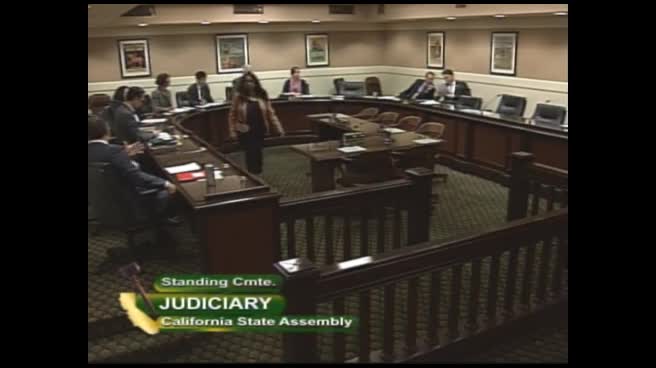
Assembly Standing Committee on Judiciary
Bill Author

Bill Co-Author(s):