AB 875: Petty theft: subsequent convictions.
- Session Year: 2017-2018
- House: Assembly
- Latest Version Date: 2017-04-19
Existing law establishes the penalty for petty theft as a fine not exceeding $1,000, or by imprisonment in the county jail not exceeding 6 months, or by both that fine and imprisonment. Existing law, the Safe Neighborhoods and Schools Act, enacted as an initiative statute by Proposition 47, as approved by the electors at the November 4, 2014, statewide general election, provides that a registered sex offender or a person with a prior conviction for certain serious or violent felonies, such as a sexually violent offense, who commits petty theft, is subject to imprisonment in the county jail for up to one year or in the state prison for 16 months, or 2 or 3 years.
Existing law allows individuals charged with specified crimes to qualify for deferred entry of judgment. Under the existing deferred entry of judgment program, an eligible defendant may have entry of judgment deferred, upon pleading guilty to the offenses charged and entering a drug treatment program for 18 months up to 3 years. If the defendant completes the program, the criminal charges are dismissed.
This bill would expand the enhanced petty theft penalties described above to a person who has a prior conviction for any serious or violent felony, and to any person who has 3 or more prior convictions for crimes such as petty theft or shoplifting, grand theft, and burglary. The bill would also authorize a court to grant deferred entry of judgment, for no less than 18 months and no longer than 3 years, to a defendant who has 3 or more prior convictions for those theft-related crimes, under certain conditions, including that the court is satisfied that the defendant suffers from a drug or alcohol addiction and the court finds that the addiction played a significant role in the commission of the offense. The bill would provide that if the person performs satisfactorily during the period of deferred entry of judgment, the criminal charges would be dismissed. The bill would establish procedures for deferred entry of judgment, including requiring county probation departments to file progress reports as directed by the court. The bill would additionally make conforming changes.
The California Constitution authorizes the Legislature to amend an initiative statute by another statute that becomes effective only when approved by the electors.
This bill would provide that it would become effective only upon approval of the voters, and would provide for the submission of this measure to the voters for approval at the statewide general election.
Existing law authorizes the Secretary of the Department of Corrections and Rehabilitation to establish and operate restitution centers, the purpose of which is to provide a means for those sentenced to prison to pay their victims financial restitution. Existing law establishes, in each county, city, or city and county in which a restitution center is established, a restitution center community advisory board, which is made up of specified members, including either the sheriff or the chief of police of the local jurisdiction and 2 public members chosen by the city council or board of supervisors.This bill would instead require a restitution center community advisory board to include both the sheriff and, if applicable, the chief of police, and 3 public members chosen by the city council or board of supervisors. By imposing additional duties on local governments, this bill would impose a state-mandated local program.The California Constitution requires the state to reimburse local agencies and school districts for certain costs mandated by the state. Statutory provisions establish procedures for making that reimbursement.This bill would provide that, if the Commission on State Mandates determines that the bill contains costs mandated by the state, reimbursement for those costs shall be made pursuant to the statutory provisions noted above.Existing law authorizes the Secretary of the Department of Corrections and Rehabilitation to establish and operate restitution centers, the purpose of which is to provide a means for those sentenced to prison to pay their victims financial restitution. Existing law establishes, in each county, city, or city and county in which a restitution center is established, a restitution center community advisory board, which is made up of specified members, including either the sheriff or the chief of police of the local jurisdiction and 2 public members chosen by the city council or board of supervisors.
This bill would instead require a restitution center community advisory board to include both the sheriff and, if applicable, the chief of police, and 3 public members chosen by the city council or board of supervisors. By imposing additional duties on local governments, this bill would impose a state-mandated local program.
The California Constitution requires the state to reimburse local agencies and school districts for certain costs mandated by the state. Statutory provisions establish procedures for making that reimbursement.
This bill would provide that, if the Commission on State Mandates determines that the bill contains costs mandated by the state, reimbursement for those costs shall be made pursuant to the statutory provisions noted above.
(a)Notwithstanding Section 459, shoplifting is defined as entering a commercial establishment with intent to commit larceny while that establishment is open during regular business hours, where the value of the property that is taken or intended to be taken does not exceed nine hundred fifty dollars ($950). Any other entry into a commercial establishment with intent to commit larceny is burglary. Shoplifting shall be punished as a misdemeanor, misdemeanor, except as provided in subdivisions (a) and (c) of Section 666, and except that a person with one or more prior convictions for an offense specified in clause (iv) of subparagraph (C) of paragraph (2) of subdivision (e) of Section 667 or for an offense requiring registration pursuant to subdivision (c) of Section 290 may be punished pursuant to subdivision (h) of Section 1170.
(b)Any Except as provided in subdivisions (a) and (c) of Section 666, any act of shoplifting as defined in subdivision (a) shall be charged as shoplifting. No person who is charged with shoplifting may also be charged with burglary or theft of the same property.
SEC. 2.Section 490.2 of the Penal Code is amended to read:490.2.(a)Notwithstanding Section 487 or any other provision of law defining grand theft, obtaining any property by theft where the value of the money, labor, or real or personal property taken does not exceed nine hundred fifty dollars ($950) shall be considered petty theft and shall be punished as a misdemeanor, except that such misdemeanor, except as provided in subdivisions (a) and (c) of Section 666, and except that the person may instead be punished pursuant to subdivision (h) of Section 1170 if that person has one or more prior convictions for an offense specified in clause (iv) of subparagraph (C) of paragraph (2) of subdivision (e) of Section 667 or for an offense requiring registration pursuant to subdivision (c) of Section 290.
(b)This section shall not be applicable to any theft that may be charged as an infraction pursuant to any other provision of law.
(c)This section shall not apply to theft of a firearm.
SEC. 3.Section 666 of the Penal Code is amended to read:666.(a)Notwithstanding Section 490, any every person who, having been convicted three or more times of petty theft or shoplifting, grand theft, a conviction pursuant to subdivision (d) or (e) of Section 368, auto theft under Section 10851 of the Vehicle Code, burglary, carjacking, robbery, or a felony violation of Section 496, and having served a term therefor in any penal institution or having been imprisoned therein as a condition of probation for that offense, and who is subsequently convicted of petty theft, is punishable by imprisonment in a county jail not exceeding one year, or imprisonment pursuant to subdivision (h) of Section 1170.
(b)(1)Notwithstanding subdivision (a), the court may grant deferred entry of judgment to a defendant described in subdivision (a) who has pleaded guilty or nolo contendere to, or was convicted of, an offense described in subdivision (a) if he or she meets all of the requirements in paragraph (2). The court may determine the conditions of deferment, including, but not limited to, drug rehabilitation programs and alcohol addiction programs. The period during which deferred entry of judgment is granted shall be for no less than 18 months nor longer than three years. Progress reports shall be filed by the probation department with the court as directed by the court.
(2)Deferred entry of judgment may be granted pursuant to this subdivision if both of the following criteria are met:
(A)The court is satisfied that the defendant suffers from a drug or alcohol addiction and the court finds that the defendants drug or alcohol addiction played a significant role in the commission of the offense.
(B)The court is satisfied that the defendant would benefit from drug or alcohol treatment.
(3)A defendant is not eligible for deferred entry of judgment if the defendant has a prior conviction for a violent felony, as defined in subdivision (c) of Section 667.5, for a serious felony, as defined in subdivision (c) of Section 1192.7, if the defendant is required to register as a sex offender pursuant to Chapter 5.5 (commencing with Section 290) of Title 9, or if the defendant previously participated in a deferment program pursuant to this subdivision within the previous five years.
(4)If it appears to the court that the person is performing unsatisfactorily in the assigned program, is convicted of a criminal offense while on deferment, or that the person is not benefiting from the treatment and services provided pursuant to the deferment program, the court shall, after notice to the person, hold a hearing to determine whether deferment should be terminated and the sentence imposed.
(5)If the person has performed satisfactorily during the period of deferred entry of judgment, at the end of the period of deferment, the criminal charges shall be dismissed. Upon dismissal of the charges, a record shall be filed with the Department of Justice indicating the disposition of the case deferred pursuant to this section. Upon successful completion of a deferment program, the arrest upon which the deferment was based shall be deemed never to have occurred. The person who successfully completes the deferment program may indicate in response to any question concerning his or her criminal record that he or she was not arrested for the offense, except this subdivision does not relieve the person who successfully completes deferment pursuant to this section of his or her obligation to disclose the arrest in a response to any direct question contained in any questionnaire or application for a position as a peace officer, as defined in Section 830.
(c)Notwithstanding Section 490, any person described in subdivision (b) paragraph (1) who, having been convicted of petty theft, shoplifting, grand theft, a conviction pursuant to subdivision (d) or (e) of Section 368, auto theft under Section 10851 of the Vehicle Code, burglary, carjacking, robbery, or a felony violation of Section 496, and having served a term of imprisonment therefor in any penal institution or having been imprisoned therein as a condition of probation for that offense, and who is subsequently convicted of petty theft, is punishable by imprisonment in the county jail not exceeding one year, or in the state prison.
(b)Subdivision (a) shall apply to any person who is required to register pursuant to the Sex Offender Registration Act, or who has a prior violent or serious felony conviction, as specified in clause (iv) of subparagraph (C) of paragraph (2) of subdivision (e) of Section 667, or has a conviction pursuant to subdivision (d) or (e) of Section 368.(1)This subdivision shall apply to any person who is required to register pursuant to the Sex Offender Registration Act, or who has a prior violent or serious felony conviction, as specified in subdivision (c) of Section 667.5 or subdivision (c) of Section 1192.7.
(c)This section shall(2)This subdivision shall not be construed to preclude prosecution or punishment pursuant to subdivisions (b) to (i), inclusive, of Section 667, or Section 1170.12.
SEC. 4.Sections 1, 2, and 3 of this act amend the Safe Neighborhoods and Schools Act, Proposition 47, an initiative statute, and shall become effective only when submitted to and approved by the voters at a statewide election. The Secretary of State shall submit Sections 1, 2, and 3 of this act for approval by the voters at a statewide election in accordance with Section 9040 of the Elections Code.
SECTION 1.Section 6229 of the Penal Code is amended to read:6229.In each county, city, or city and county, in which a restitution center is established, there shall be a restitution center community advisory board to assist the Secretary of the Department of Corrections and Rehabilitation in establishing and promoting the restitution program of the center. The board shall include the sheriff and, if applicable, chief of police of the local jurisdiction, the district attorney, a superior court judge selected by the presiding superior court judge, the chief probation officer, a member of the city council or the board of supervisors of the local jurisdiction, selected by the council or board, and three public members chosen by the city council or board of supervisors. The public member shall serve for two years. All members shall receive only actual expenses approved by the Secretary of the Department of Corrections and Rehabilitation. The expenses shall be paid by the Department of Corrections and Rehabilitation.SEC. 2.If the Commission on State Mandates determines that this act contains costs mandated by the state, reimbursement to local agencies and school districts for those costs shall be made pursuant to Part 7 (commencing with Section 17500) of Division 4 of Title 2 of the Government Code.In each county, city, or city and county, in which a restitution center is established, there shall be a restitution center community advisory board to assist the Director of Corrections Secretary of the Department of Corrections and Rehabilitation in establishing and promoting the restitution program of the center. The board shall include the sheriff or and, if applicable, chief of police of the local jurisdiction, the district attorney, a superior court judge selected by the presiding superior court judge, the chief probation officer, a member of the city council or the board of supervisors of the local jurisdiction, selected by the council or board, and two three public members chosen by the city council or board of supervisors. The public member shall serve for two years. All members shall receive only actual expenses approved by the Director of Corrections. Secretary of the Department of Corrections and Rehabilitation. The expenses shall be paid by the Department of Corrections. Corrections and Rehabilitation.
SEC. 2.If the Commission on State Mandates determines that this act contains costs mandated by the state, reimbursement to local agencies and school districts for those costs shall be made pursuant to Part 7 (commencing with Section 17500) of Division 4 of Title 2 of the Government Code.
|
Date
|
Status
|
|---|---|
| Feb 1, 2018 | From committee: Without further action pursuant to Joint Rule 62(a). |
| Jan 9, 2018 | In committee: Set, final hearing. Held without recommendation. |
| Apr 20, 2017 | Re-referred to Com. on PUB. S. |
| Apr 19, 2017 | From committee chair, with author's amendments: Amend, and re-refer to Com. on PUB. S. Read second time and amended. |
| Apr 4, 2017 | In committee: Set, second hearing. Hearing canceled at the request of author. |
| Mar 28, 2017 | In committee: Set, first hearing. Hearing canceled at the request of author. |
| Mar 2, 2017 | Referred to Com. on PUB. S. |
| Feb 17, 2017 | From printer. May be heard in committee March 19. |
| Feb 16, 2017 | Read first time. To print. |
This list shows positions taken on this bill by organizations on the date displayed, which is linked to the original source.
Positions by individuals are not included.
|
Organization
|
Position
|
Date
|
|---|---|---|
| ACLU California | * Against | Jan 9, 2018 |
| Association Of Orange County Deputy Sheriffs | ** Support | Jan 8, 2018 |
| CA State Law Enforcement Association (CSLEA) PAC | * Support | Jan 9, 2018 |
| California Attorneys For Criminal Justice | ** Against | Jan 8, 2018 |
| California District Attorney's Association | * Support | Jan 9, 2018 |
| California Grocers Association | * Support | Jan 9, 2018 |
| California Peace Officers Association | * Support | Jan 9, 2018 |
| California Police Chiefs Association | ** Support | Jan 8, 2018 |
| California Public Defenders Association | * Against | Jan 9, 2018 |
| Courage Campaign | ** Against | Jan 8, 2018 |
| Fraternal Order of Police | ** Support | Jan 8, 2018 |
| League Of California Cities | * Support | Jan 9, 2018 |
| Long Beach Police Officers Association | ** Support | Jan 8, 2018 |
| Riverside Sheriff's Association | * Support | Jan 9, 2018 |
| sacramento county deputy sheriff's association | ** Support | Jan 8, 2018 |
Date of Hearing:
Counsel: David Billingsley
ASSEMBLY COMMITTEE ON PUBLIC SAFETY
Reginald Byron Jones-Sawyer, Sr., Chair
ABPCA Bill Id:AB 875
Author:(Cooper) – As Amended Ver:April 19, 2017
SUMMARY:
Makes petty theft with a prior conviction as a punishable felony as provided in pre-Proposition 47 provisions, but includes a deferred entry of judgment option for a defendant who has suffered three or more prior theft convictions, is a drug or alcohol addict, and has not suffered a prior serious or violent felony conviction or registerable sex offense. Specifically, this bill:
- Provides that notwithstanding the punishment for petty theft, every person who, having been convicted three or more times of specified theft offenses and having served a term therefor in any penal institution or having been imprisoned therein as a condition of probation for that offense, and who is subsequently convicted of petty theft, is punishable by imprisonment in a county jail not exceeding one year, or imprisonment in the county jail for 16, two or three years, except in the case where a person has suffered a prior strike[1] conviction or registerable sex offense.
- Provides that notwithstanding the punishment for petty theft, any person who has suffered a prior strike conviction or a registerable sex offense, and has been convicted of a specified theft offense and served a term therefor in any penal institution or having been imprisoned therein as a condition of probation for that offense, and who is subsequently convicted of petty theft, is punishable by imprisonment in a county jail not exceeding one year, or in the state prison.
- Adds shoplifting to the list of theft- related offenses which qualify a defendant for enhanced status for the crime of petty theft with a prior.
- Provides a deferred entry of judgment sentencing option for persons who have been convicted three or more times, where the following criteria are met:
- The court is satisfied that the defendant suffers from a drug or alcohol addiction which played a significant role in the commission of the offense;
- The court is satisfied that the defendant would benefit from drug or alcohol treatment; and,
- The defendant has not suffered a prior strike conviction, is not required to register as a sex offender, and has not participated in deferred entry of judgment pursuant to this provision in the previous five years.
- The court is satisfied that the defendant suffers from a drug or alcohol addiction which played a significant role in the commission of the offense;
- Specifies that the deferred entry of judgment period shall be at least 18 months and no longer than three years. The court may determine the conditions of deferment, including, but not limited to, drug rehabilitation programs and alcohol addiction programs.
- States that upon satisfactory completion of deferred entry of judgment, the criminal charges shall be dismissed and the arrest deemed never to have occurred.
EXISTING LAW:
- Divides theft into two degrees, petty theft and grand theft. (Pen. Code, § 486.)
- Defines grand theft as when the money, labor, or real or personal property taken is of a value exceeding $950 dollars, except as specified. (Pen. Code, § 487.)
- Defines petty theft as obtaining any property by theft where the value of the money, labor, real or personal property taken does not exceed $950 and makes it punishable as a misdemeanor, except in the case where a person has a prior super strike or registrable sex conviction. (Pen. Code, § 490.2, subd. (a).) This provision does not apply to theft of a firearm. (Pen. Code, § 490.2, subd. (c).)
- Provides that, notwithstanding the punishment for petty theft, if a person is required to register as a sex offender, has a prior super strike[2] conviction, or has a conviction for a specified theft-related offense against an elder or dependent adult, and also has been convicted of a specified theft-related offense for which he or she was imprisoned, and is subsequently convicted of petty theft, then the person is to receive an enhanced punishment of imprisonment in the county jail not to exceed one year, or in the state prison. (Pen. Code, § 666.)
- Lists the theft- related offenses which qualify a defendant for enhanced status for the crime of petty theft with a prior as:
- Petty theft;
- Grand theft;
- Theft, embezzlement, forgery, fraud, and identity theft committed against an elder or dependent adult;
- Auto theft;
- Burglary;
- Carjacking;
- Robbery; and,
- Receiving stolen property. (Pen. Code, § 666.)
- Petty theft;
- Defines shoplifting as entering a commercial establishment with intent to commit larceny while that establishment is open during regular business hours, where the value of the property that is taken or intended to be taken does not exceed $950 dollars, and makes it punishable as a misdemeanor, except where a person has a prior super strike or registrable sex conviction. Any act of shoplifting must be charged as shoplifting. (Pen. Code, § 459.5, subd. (a).)
- Provides deferred entry of judgment for specified drug offenses. A defendant found eligible for deferred entry of judgment must plead guilty to the crime charged and waive time for entry of judgment. Entry of judgment is suspended pending successful completion of a drug program. If the defendant is denied participation in the program, criminal proceedings resume, and the defendant is sentenced. Following successful completion of the program, criminal charges are dismissed. Deferred entry can be terminated and judgment imposed if a defendant in the program relapses or violates other terms,. (Pen. Code, §§ 1000-1000.6.)
FISCAL EFFECT:
Unknown
COMMENTS:
- Author’s Statement: According to the author, “Since 2014 retail theft has skyrocket in California and increased property losses are in the hundreds of millions. This has affected large, medium and small business owners and communities in which they operate. This dramatic increase in theft is attributed to a change in the law that took away law enforcements ability to adequately deal with repeat offenders. These serial thieves can repeatedly steal up to $949.00 of property for each incident multiple times a day if they wish, and have very little consequence of justice or accountability. AB 875 will rectify this problem by addressing the problem of repeat offenders with sensible, legal consequences, and giving those with drug and alcohol problems some help.”
- Background-Proposition 47 and Petty Theft with a Prior Theft Conviction: Proposition 47, also known as the Safe Neighborhoods and Schools Act, was approved by the voters in November 2014. According to the California Secretary of State’s web site, 59.6 percent of voters approved Proposition 47. (See <http://elections.cdn.sos.ca.gov/sov/2014-general/pdf/2014-complete-sov.pdf> [as of Apr. 6, 2017].)
Proposition 47 reduced the penalties for certain drug and property crimes and directed that the resulting state savings be directed to mental health and substance abuse treatment, truancy and dropout prevention, and victims’ services. Specifically, the initiative reduced the penalties for possession for personal use of most illegal drugs to misdemeanors. The initiative also reduced the penalties for theft valued at $950 or less from felonies to misdemeanors. However, the measure limited the reduced penalties to offenders who do not have designated prior convictions for specified serious or violent felonies (super strikes) and who are not required to register as sex offenders. (See Legislative Analyst's Office analysis of Proposition 47 <http://www.lao.ca.gov/ballot/2014/prop-47-110414.pdf>.)
Among the theft crimes made misdemeanors by Proposition 47, where the value of the property is $950 or less, are forgery (Pen. Code, § 473), making or delivering a check with insufficient funds (Pen. Code, § 476a), petty theft (Pen. Code, § 490.2), and receiving stolen property (Pen. Code, § 496). (See People v. Rivera (2015) 233 Cal.App.4th 1085, 1091.)
As particularly relevant here, the offenses made misdemeanors by Proposition 47 also include: the new offense of commercial burglary where the value of the property taken or intended to be taken is $950 or less (Pen. Code, § 459.5; People v. Sherow (2015) 239 Cal.App.4th 875, 879); and petty theft with a prior theft conviction. (Pen. Code, § 666; People v. Rivera, supra, 233 Cal.App.4th at p. 1091.) Specifically, Proposition 47 eliminated the penalties formerly associated with the “petty theft with a prior” statute except for a narrow category of sex offenders, persons with qualifying “super strikes,” and those persons convicted of theft from elders or dependent adults. Those persons are still eligible for felony punishment in state prison sentence. (Pen. Code, § 666.)
“One of Proposition 47’s primary purposes is to reduce the number of nonviolent offenders in state prisons, thereby saving money and focusing prison on offenders considered more serious under the terms of the initiative.” (Harris v. Superior Court (2016) 1 Cal.5th 984, 992, citing Voter Information Guide, Gen. Elec. (Nov. 4, 2014) text of Prop. 47, § 2, p. 70.) These policies are supported by a liberal construction clause in Proposition 47, sections 15 and 18. (<http://vig.cdn.sos.ca.gov/2014/general/pdf/text-of-proposed-laws1.pdf#prop47>.)
Neither petty theft nor any of the specified prior offenses which would elevate its punishment under this bill qualify as serious or violent felonies. (Pen. Code, §§ 667.5, subd. (c) [violent felonies], 1192.7 [serious felonies].)
This bill seeks to restore the penalties for petty theft with a prior theft conviction to pre-Proposition 47 status. This includes authorizing punishment in state prison for defendants with prior strike convictions, not just the more narrow class of persons with a prior super strike conviction. While this bill includes a deferred entry option for specified repeat offenders, this option does not apply to any person with a prior strike conviction or registerable sex offense.
- Court-Ordered Limits on Prison Overcrowding: In January 2010, a three-judge panel issued a ruling ordering the State of California to reduce its prison population to 137.5% of design capacity because overcrowding was the primary reason that CDCR was unable to provide inmates with constitutionally adequate healthcare. (Coleman/Plata vs. Schwarzenegger (2010) No. Civ S-90-0520 LKK JFM P/NO. C01-1351 THE.) The United States Supreme Court upheld the decision, declaring that “without a reduction in overcrowding, there will be no efficacious remedy for the unconstitutional care of the sick and mentally ill” inmates in California’s prisons. (Brown v. Plata (2011) 131 S.Ct. 1910, 1939; 179 L.Ed.2d 969, 999.)
After continued litigation, on February 10, 2014, the federal court ordered California to reduce its in-state adult institution population to 137.5% of design capacity by February 28, 2016, as follows: 143% of design bed capacity by June 30, 2014; 141.5% of design bed capacity by February 28, 2015; and, 137.5% of design bed capacity by February 28, 2016.
CDCR’s November 2017 monthly report on the prison population provides: “In February and March 2016, CDCR activated 1,584 infill beds and corresponding administrative and health care support facilities at Mule Creek State Prison. In December 2016, CDCR activated an additional 792 infill beds and corresponding administrative and health care support facilities at Richard J. Donovan Correctional Facility. The parties are currently engaged in the Court-
Ordered meet-and-confer process to reach an agreement on how such capacity
should be counted for purposes of determining compliance with the Court’s population reduction order. As of November 8, 2017, the State’s prison population is approximately 135.5% of design capacity if the 2,376infill beds are counted at 137.5% for the compliance calculation. If the 2,376 infill beds are counted at 100% for the compliance calculation, the
population is approximately 136.5% of design capacity. (<http://cdcr.ca.gov/News/docs/3JP-Nov-2017.pdf>)
While CDCR is currently in compliance with the three-judge panel’s order on the prison population, the state needs to maintain a “durable solution” to prison overcrowding “consistently demanded” by the court. (Opinion Re: Order Granting in Part and Denying in Part Defendants’ Request For Extension of December 31, 2013 Deadline, NO. 2:90-cv-0520 LKK DAD (PC), 3-Judge Court, Coleman v. Brown, Plata v. Brown (2-10-14).)
This bill could adversely affect state prison populations because it authorizes state prison terms for repeat petty theft offenders who have a prior strike conviction, rather than limiting it, as Proposition 47 did, to the more narrow class of repeat theft offenders who have a prior super strike conviction. The deferred entry of judgment option included in this bill does not apply to anyone with a strike prior conviction.
- Crime Rates after Proposition 47: “Despite increases in 2015, both violent and property crime rates remain at or below the historically low levels seen in the 1960s.” (California’s Future: Corrections (Jan. 2017) Public Policy Institute <http://www.ppic.org/content/pubs/report/R_117MLR.pdf >[as of April 4, 2017].)
- Repeat Offenders: To the extent this bill is aimed at repeated commercial thefts – shoplifting where the property is valued at $950 or less – there are currently a number of laws that prosecutors can use to charge these crimes and call for increased penalties.
Current law permits aggregation of theft offenses in certain circumstances. Repeated acts of theft can be aggregated and prosecuted as one felony if they are conducted pursuant to one intention, one general impulse, and one plan. (See People v. Bailey (1961) 55 Cal.2d 514, 518-519 (Bailey); see also Californians for Safety and Justice, Legal Options for Charging Chronic Retail Crime in California, pp. 1-3.) The defendant in Bailey made a single fraudulent misrepresentation about her household income that caused her to receive a stream of welfare payments. (Id. at pp. 515–516.) While each individual payment fell below the felony threshold, the aggregated total constituted grand theft. (Id. at p. 518.) The Supreme Court concluded that the payments could be aggregated because “the evidence established that there was only one intention, one general impulse, and one plan.” (Id. at p. 519; see also CALCRIM No. 1802 [Theft: As Part of Overall Plan]; CALJIC No. 14.31 [Grand and Petty Theft--Theft in Installments].)
The California Supreme Court addressed the Bailey rule in People v. Whitmer (2014) 59 Cal.4th 733, and clarified that if the takings were committed pursuant to a single intention, impulse, and plan, then under Bailey they amount to only one theft. (Id. at pp. 740-741; see also p. 748, concur. opn. J. Liu.) The Court found that the Bailey rule did not apply to single scheme grand theft, which may result in multiple convictions. (Ibid.)
Where multiple victims are involved, courts disagree about applying the Bailey rule and cumulating the charges even if a single plan or intent is demonstrated. In People v. Columbia Research Corp. (1980) 103 Cal.App.3d Supp. 33, the court applied Bailey and approved aggregation where the defendant was charged with grand theft based on a series of petty thefts that occurred over a 10-month period, pursuant to a single plan and intent, and involved different victims. (Id. at p. 40.) In People v. Garcia (1990) 224 Cal.App.3d 297, the defendant filed fraudulent bonds at different times involving different victims. The court found multiple convictions proper. (Id. at pp. 308-309.)
Law enforcement can also use aggregation to pursue felony charges when individuals are in possession of stolen items in violation of Penal Code section 496, subdivision (a). Aggregation can be used to charge a felony where multiple items are received on one occasion and the total amount exceeds $950, even in instances where a person possesses items stolen from different stores. (People v. Lyons (1958) 50 Cal.2d 275; see also People v. Roberts (1960) 182 Cal.App.2d 431, 436-437; Californians for Safety and Justice, Legal Options for Charging Chronic Retail Crime in California, p. 3.)
Under current law, prosecutors can also delay filing single misdemeanor theft charges, in order to file multiple misdemeanor charges together. (Californians for Safety and Justice, Legal Options for Charging Chronic Retail Crime in California, pp. 3-4; Pen. Code, § 853.6, subd. (e).) Additionally, current law allows a prosecutor to consolidate similar thefts, after a case has already been filed, where the offenses possess common characteristics or attributes. (Californians for Safety and Justice, Legal Options for Charging Chronic Retail Crime in California, p. 4; Pen. Code, § 954.) In People v. Feigelman (1924) 65 Cal.App. 319, the court upheld the consolidation of two grand thefts, though the first was committed one year before the second. (Id. at p. 320.) “Therefore, if an individual commits a similar theft after a case has already been filed, a prosecutor can consolidate it with the existing charges in order to present the misdemeanor thefts as a series of repeat behavior.” (Californians for Safety and Justice, Legal Options for Charging Chronic Retail Crime in California, p. 4.) Thus, while a defendant’s exposure for one shoplifting might be six months in jail, an individual convicted of multiple shoplifting offenses can face multiple six-month terms in the county jail.
Moreover “[u]nder California law, if two or more persons conspire to commit any crime, even misdemeanor petty theft or shoplifting, they can be charged with a felony for the conspiracy itself. Thus, any time there is more than one person involved in any act of theft, it is can [sic.] be charged as felony conspiracy, regardless of the value of the items stolen.” (Californians for Safety and Justice, Legal Options for Charging Chronic Retail Crime in California, p. 1; Pen. Code, § 182.)
Further, under Penal Code section 186.22, subdivision (d), the Street Terrorism Enforcement and Prevention Act, a gang-related theft of property valued at $950 or less, is punishable as an alternate misdemeanor or felony. (Californians for Safety and Justice, Legal Options for Charging Chronic Retail Crime in California, p. 5.) This provision applies where the theft is committed for the benefit of, at the direction of, or in association with any criminal street gang, with the specific intent to promote, further, or assist in any criminal conduct by gang members. (Pen. Code, § 186.22, subd. (b).)
In sum, while Proposition 47 did reduce certain theft offenses to misdemeanors, there are still legal options for charging repeated retail crime that call for increased penalties.
- Practical Considerations: As currently drafted, this bill calls for increased penalties for petty theft (not shoplifting) with specified prior theft convictions.
- California Constitutional Limitations on Amending a Voter Initiative: Because Proposition 47 was a voter initiative, the Legislature may not amend the statute without subsequent voter approval unless the initiative permits such amendment, and then only upon whatever conditions the voters attached to the Legislature’s amendatory powers. (People v. Superior Court (Pearson) (2010) 48 Cal.4th 564, 568; see also Cal. Const., art. II, § 10, subd. (c).) The California Constitution states, “The Legislature may amend or repeal referendum statutes. It may amend or repeal an initiative statute by another statute that becomes effective only when approved by the electors unless the initiative statute permits amendment or repeal without their approval.” (Cal. Const., art. II, § 10, subd. (c).) Therefore, unless the initiative expressly authorizes the Legislature to amend, only the voters may alter statutes created by initiative.
The purpose of California’s constitutional limitation on the Legislature’s power to amend initiative statutes is to protect the people’s initiative powers by precluding the Legislature from undoing what the people have done, without the electorate’s consent. Courts have a duty to jealously guard the people’s initiative power and, hence, to apply a liberal construction to this power wherever it is challenged in order that the right to resort to the initiative process is not improperly annulled by a legislative body. (Proposition 103 Enforcement Project v. Quackenbush (1998) 64 Cal.App.4th 1473.)
As to the Legislature’s authority to amend the initiative, Proposition 47 states: “This act shall be broadly construed to accomplish its purposes. The provisions of this measure may be amended by a two‑thirds vote of the members of each house of the Legislature and signed by the Governor so long as the amendments are consistent with and further the intent of this act. The Legislature may by majority vote amend, add, or repeal provisions to further reduce the penalties for any of the offenses addressed by this act.” (<http://vig.cdn.sos.ca.gov/2014/general/pdf/text-of-proposed-laws1.pdf#prop47>.)
This bill would increase punishment for repeat offenders of petty theft which was reduced to misdemeanors by Proposition 47. As such, it is inconsistent with the purpose of Proposition 47. Therefore, pursuant to the above-referenced provisions of the California Constitution, only the voters may authorize the provisions.
This bill would provide that it would become effective only upon approval of the voters at the statewide general election. - Argument in Support: According to the California Grocers Association, “In 2014, voters made a number of changes to California’s sentencing laws. Among those changes was more than doubling the misdemeanor threshold for the aforementioned property crimes, from $450 to $950. This change had the unintended consequence of incentivizing career criminals to take advantage of criminal justice reforms meant to prevent low-level offenders from receiving lengthy jail sentences. The result has been an increase in shoplifting and the losses associated with such incidents for our member companies across the state.
“Since these changes to the law, both law enforcement and business have documented a rise in these property crimes. Statewide data collected from over 300 municipal police departments showed California’s property crime rate increased 7.26 percent in 2015 compared with 2014. The rate change for the rest of the U.S., however, decreased 4.77 percent – a difference of over 12 percent.
“California’s grocers have also seen a dramatic rise in both shoplifting incidents and the dollar amount of losses. For example, a smaller Southern California grocery chain has documented a dramatic rise in the value of stolen merchandise recovered from shoplifters in its stores. In 2011, this grocer stopped 370 shoplifters, recovering just shy of $8,500. In 2016, two years after the change in California law, the same grocer stopped 565 shoplifters, recovering over $21,000—a nearly 250 percent increase in the value of merchandise recovered.
“The numbers for larger chains are even more dramatic, with a major grocery company in Southern California documenting 943 incidents valuing $52,560 in 2012. In 2016, two years after the change in the law, there were 2,436 incidents valuing $229,105—a nearly 400 percent increase.
“It should be noted that in both of these examples, the numbers are for apprehensions and recoveries—the ones they were able to stop. The real losses are staggering.
“AB 875 will go a long way towards helping businesses reduce increasing losses due to the brazen theft that they have been dealing with in recent years.” - Argument in Opposition: According to the California Public Defenders Association, “Barely three years ago, November 2014, California voters approved Proposition 47 by a landslide 59.6% to 40.4%. AB 875 Proposes a Legislative Measure to be submitted to the voters, asking them to undo a major portion of Proposition 47. There is no reason to think they are ready to do, and no reason to ask them to.
“Through enactment of a new Penal Code section, and amendment to two others (sections 459.5, 490.2, and 666, respectively), the voters made it plain that shoplifting and many other types of theft of property worth $950 or less is not felonious behavior, but is a misdemeanor only, and even if repeatedly done, is still not felonious behavior, is still misdemeanor behavior.
“AB 875 would ask the voters to partially undo that, and say, instead, that if the person has three or more prior convictions of this misdemeanor behavior, it is now somehow felonious behavior, punishable by long stretches in jail, up to three years.
“AB 875 attempts to temper this reversion by creating deferred entry of judgment program for people who plead guilty (or not contest) to the new charge and admit the three prior theft related convictions, if the person has a drug or alcohol addiction that the court finds
“contributed significantly” to the offense. That diversion program is flawed, however, because it requires a guilty pleas, is discretionary with the court, which must find a “significant contribution. This program should be offered to petty thieves and the like on the first occasion, not withheld until the fourth one.
“There is no reason to think that Californian’s want to do that. Prop. 47 has come in the middle of a long-term trend away from overly harsh sentences and counterproductive punishments. This trend began in 2012 with Proposition 36 (Three Strikes Ref, 69.3% yes, [nonviolent felonies do not merit a life term]), and was reinforced last November 2016 with Proposition 57(Criminal Sentences and Juvenile Offender Proceedings), 64.4% yes [increasing rehabilitative prison programs to shorten sentences; and letting judges, not prosecutors, decide if children should be tried as adults}.
“Not only is there no reason to think that an expensive election campaign will change voters landslide intent, there is also no need for AB 875. According to the California Department of Justice’s book Crimes in California 2016, for the most relevant crime categories, Larceny-Theft, and most relevant subcategory, Shoplifting, while there was an initial rise from 2014-2015, crime is down from 2015-2016 by 2.9% for larceny overall, and 9.3% for shoplifting. So while there may have been concern for a while, it now appears that Prop. 47 is working just fine.”
- Related Legislation: AB 392 (Lackey) would make conspiracy to commit shoplifting punishable as a felony under realignment provisions by 16 months, or two or three years in the county jail, rather than alternatively as a misdemeanor of felony. AB 392 failed passage in this Committee and was granted reconsideration.
- Prior Legislation:
- AB 2369 (Patterson), of the 2015-2016 Legislative Session, would have limited Proposition 47 by making persons convicted of crimes reduced to misdemeanors under the provisions eligible for felony prosecution and sentencing if convicted of those crimes two times within a three-year period. AB 2369 failed passage in this Committee.
- Proposition 47 of the November 2014 general election, the Safe Neighborhoods and Schools Act, reduced the penalties for certain drug and property crimes, including reducing petty theft with a prior theft conviction to a misdemeanor, except in the case where the person has a prior super strike conviction or a conviction for a specified theft-related offense against an elder or dependent adult.
- AB 2444 (Portantino), of the 2011-2012 Legislative Session, would have provided that grand theft occurs where money, labor, or real or personal property in an aggregate amount of $950 is taken as a result of an agreement or prior arrangement to take and the taking is made in concert with one or more other individuals. After referral to this Committee, hearing was canceled at the author’s request.
- AB 1844 (Fletcher), Chapter 219, Statutes of 2010, amended petty theft with a prior to require three prior theft-related convictions.
- AB 2372 (Ammiano), Chapter 693, Statutes of 2010, increased the threshold amount that constitutes grand theft from $400 to $950.
- AB 2705 (Goldberg), of the 2003-2004 Legislative Session, would have increased the threshold for grand theft from $400 to $1,000 and the threshold amount for specified thefts from $100 to $250. AB 2705 was vetoed.
- AB 2369 (Patterson), of the 2015-2016 Legislative Session, would have limited Proposition 47 by making persons convicted of crimes reduced to misdemeanors under the provisions eligible for felony prosecution and sentencing if convicted of those crimes two times within a three-year period. AB 2369 failed passage in this Committee.
REGISTERED SUPPORT / OPPOSITION:
Support
California Grocers Association (Co-Sponsor)
California Police Chiefs Association (Co-Sponsor)
Association of Orange County Deputy Sheriffs
Fraternal Order of Police
Long Beach Police Officers Association
Sacramento County Deputy Sheriff’s Association
Opposition
American Civil Liberties Union
California Attorneys for Criminal Justice
California Public Defenders Association
Courage Campaign
Analysis Prepared by:
David Billingsley / PUB. S. / (916) 319-3744
Strikes are designated violent or serious felony convictions. (Pen. Code, §§ 667.5, subd. (c) & 1192.7, subd. (c).) ↑
A prior conviction of any of the following “serious” or “violent” felonies, now commonly
referred to as “super strikes,” will disqualify a person from receiving any benefit from the
changes brought by Proposition 47: specified sex offenses, homicide, solicitation to commit murder, assault with a machine gun on a peace officer or firefighter, possession of a weapon of mass destruction, and any serious or violent felony punishable by life imprisonment or death. (Pen. Code, § 667, subd. (e)(2)(C)(iv).) ↑
Discussed in Hearing
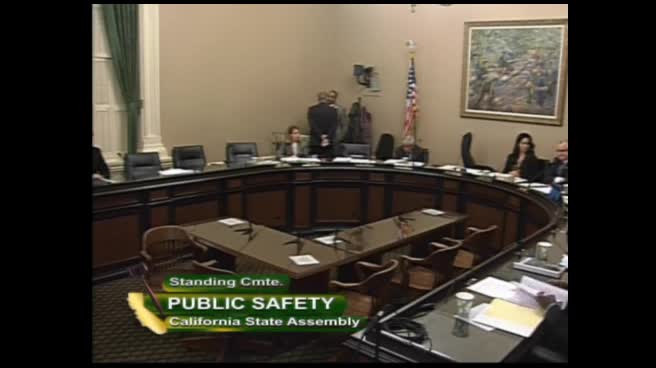 18MIN
Assembly Standing Committee on Public Safety



Bill Co-Author(s):