AB 962: State infrastructure financing for seaports.
- Session Year: 2017-2018
- House: Assembly
- Latest Version Date: 2018-01-11
Existing law authorizes the formation of a seaport infrastructure financing district to finance port or harbor infrastructure projects. Existing law requires that a harbor agency, as defined, prepare an infrastructure financing plan as part of a proposal to form a seaport infrastructure financing district, and requires that the plan meet specified requirements. Existing law authorizes a seaport infrastructure financing district to fund infrastructure projects through tax increment financing, consistent with the infrastructure financing plan and with the agreement of the new seaport infrastructure financing districts affected taxing entities.
Existing law, the Bergeson-Peace Infrastructure and Economic Development Bank Act, establishes the Infrastructure and Economic Development Bank within the Governors Office of Business and Economic Development, and requires the bank to establish criteria, priorities, and guidelines for the selection of projects to receive financial assistance from the bank, including, but not limited to, any combination of grants, loans, and the proceeds of bonds issued by the bank.
This bill would require the bank, after consulting with appropriate state and local agencies, to establish criteria, priorities, and guidelines for the selection of infrastructure development and equipment purchase projects submitted by harbor agencies, as defined, for assistance from the bank, as specified. The bill would require the harbor agency to adopt a resolution that includes specified information, including, among other information, the state fiscal and economic impacts estimated to result from the proposed infrastructure development or equipment purchase project. The bill would require the bank to approve the infrastructure development and equipment purchase project if the bank finds that the project is more likely than not to result in the harbor agencys estimated state fiscal and economic impacts. impacts and would require the bank to adopt a resolution approving funding, as specified. The bill would authorize the bank to require the harbor agency to meet a specified condition prior to providing the moneys appropriated by the Legislature for the infrastructure development and equipment purchase project.
Existing law authorizes the formation of a seaport infrastructure financing district to finance port or harbor infrastructure projects. Existing law requires that a harbor agency, as defined, prepare an infrastructure financing plan as part of a proposal to form a seaport infrastructure financing district, and requires that the plan meet specified requirements. Existing law authorizes a seaport infrastructure financing district to fund infrastructure projects through tax increment financing, consistent with the infrastructure financing plan and with the agreement of the new seaport infrastructure financing districts affected taxing entities.
Existing law, the Bergeson-Peace Infrastructure and Economic Development Bank Act, establishes the Infrastructure and Economic Development Bank within the Governors Office of Business and Economic Development, and requires the bank to establish criteria, priorities, and guidelines for the selection of projects to receive financial assistance from the bank, including, but not limited to, any combination of grants, loans, and the proceeds of bonds issued by the bank.
This bill would require the bank, after consulting with appropriate state and local agencies, to establish criteria, priorities, and guidelines for the selection of infrastructure development and equipment purchase projects submitted by harbor agencies, as defined, for assistance from the bank, as specified. The bill would require the harbor agency to adopt a resolution that includes specified information, including, among other information, the state fiscal and economic impacts estimated to result from the proposed infrastructure development or equipment purchase project. The bill would require the bank to approve the infrastructure development and equipment purchase project if the bank finds that the project is more likely than not to result in the harbor agencys estimated state fiscal and economic impacts. The bill would authorize the bank to require the harbor agency to meet a specified condition prior to providing the moneys appropriated by the Legislature for the infrastructure development and equipment purchase project.
Existing law makes various findings and declarations relating to the states interest in promoting Californias harbors and ports because they provide significant economic benefit to the state, promote business, and provide an important interface between water and land transportation for trade with Pacific Rim countries and other trade.This bill would declare the intent of the Legislature to enact subsequent legislation that would permit and facilitate the creation of public-private partnerships to fund and develop port and harbor facilities in the state.Existing law makes various findings and declarations relating to the states interest in promoting Californias harbors and ports because they provide significant economic benefit to the state, promote business, and provide an important interface between water and land transportation for trade with Pacific Rim countries and other trade.
This bill would declare the intent of the Legislature to enact subsequent legislation that would permit and facilitate the creation of public-private partnerships to fund and develop port and harbor facilities in the state.
The Legislature finds and declares all of the following:
(a)The primary purpose of this act is to encourage the development and growth of, and to encourage and help finance the further investment in, and subsequent increased use of, Californias public port facilities and the introduction of equipment and supporting infrastructure at Californias public port facilities.
(b)The statewide interest in the need to continually invest in Californias public port infrastructure is predicated on the fact that Californias public seaports and the international trade that they facilitate are critical components of the state economy, directly or indirectly employing millions of Californians, contributing billions of dollars in economic activity, and generating significant local and state tax revenues as a result of this activity. As such, our California ports must be given the ability to successfully compete for cargo volume, attract new trade, and continue to grow. grow, even as they lead the state in transitioning to a lower carbon economy.
(c)The development, improvement, expansion, and maintenance of the states public ports and port infrastructure facilities, and the utilization of public port facilities for the export and import of cargo to or from distribution, manufacturing, fabrication, assembly, processing, transloading, and warehousing sites in California, are matters of statewide significance that are essential to the growth of the states economic well-being and the ability of those businesses and workers associated with trade-related industries to continue to compete cost-effectively on a regional, national, and global scale.
(d)In addition to the vast matters of statewide significance in the economic impacts derived from all of Californias public ports, the states interest in the reduction of mobile source emissions from the freight sector and supply chain, including those emissions from sources that operate at ports, are also matters of statewide significance. In consideration of these environmental matters, the state has a paramount interest in creating incentives and mechanisms that will precipitate early investment by the industry in the newest generation of equipment and supporting infrastructure at marine terminals and port facilities. Due to the costs of those investments over and above the use of traditional equipment, this is an infrastructure need that cannot be met by private investment alone, and therefore public financing mechanisms and the implementation of public-private partnerships are required to support this new investment.
SEC. 2.Section 63025.1 of the Government Code is amended to read:63025.1.The bank board may do or delegate the following to the executive director:
(a)Sue and be sued in its own name.
(b)As provided in Chapter 5 (commencing with Section 63070), issue bonds and authorize special purpose trusts to issue bonds, including, at the option of the board, bonds bearing interest that is taxable for the purpose of federal income taxation, or borrow money to pay all or any part of the cost of any project, or to otherwise carry out the purposes of this division.
(c)Engage the services of private consultants to render professional and technical assistance and advice in carrying out the purposes of this division.
(d)Employ attorneys, financial consultants, and other advisers as may, in the banks judgment, be necessary in connection with the issuance and sale, or authorization of special purpose trusts for the issuance and sale, of any bonds, notwithstanding Sections 11042 and 11043. Section 11042.
(e)Contract for engineering, architectural, accounting, or other services of appropriate state agencies as may, in its judgment, be necessary for the successful development of a project.
(f)Pay the reasonable costs of consulting engineers, architects, accountants, and construction, land use, recreation, and environmental experts employed by any sponsor or participating party if, in the banks judgment, those services are necessary for the successful development of a project.
(g)Acquire, take title to, and sell by installment sale or otherwise, lands, structures, real or personal property, rights, rights-of-way, franchises, easements, and other interests in lands that are located within the state, or transition property as the bank may deem necessary or convenient for the financing of the project, upon terms and conditions that it considers to be reasonable.
(h)Receive and accept from any source including, but not limited to, the federal government, the state, or any agency thereof, loans, contributions, or grants, in money, property, labor, or other things of value, for, or in aid of, a project, or any portion thereof.
(i)Make loans to any sponsor or participating party, either directly or by making a loan to a lending institution, in connection with the financing of a project in accordance with an agreement between the bank and the sponsor or a participating party, either as a sole lender or in participation with other lenders. However, no loan shall exceed the total cost of the project as determined by the sponsor or the participating party and approved by the bank.
(j)Make loans to any sponsor or participating party, either directly or by making a loan to a lending institution, in accordance with an agreement between the bank and the sponsor or participating party to refinance indebtedness incurred by the sponsor or participating party in connection with projects undertaken and completed prior to any agreement with the bank or expectation that the bank would provide financing, either as a sole lender or in participation with other lenders.
(k)Mortgage all or any portion of the banks interest in a project and the property on which any project is located, whether owned or thereafter acquired, including the granting of a security interest in any property, tangible or intangible.
(l)Assign or pledge all or any portion of the banks interests in transition property and the revenues therefrom, or assets, things of value, mortgages, deeds of trust, bonds, bond purchase agreements, loan agreements, indentures of mortgage or trust, or similar instruments, notes, and security interests in property, tangible or intangible and the revenues therefrom, of a sponsor or a participating party to which the bank has made loans, and the revenues therefrom, including payment or income from any interest owned or held by the bank, for the benefit of the holders of bonds.
(m)Make, receive, or serve as a conduit for the making of, or otherwise provide for, grants, contributions, guarantees, insurance, credit enhancements or liquidity facilities, or other financial enhancements to a sponsor or a participating party as financial assistance for a project.
(n)Lease the project being financed to a sponsor or a participating party, upon terms and conditions that the bank deems proper but shall not be leased at a loss; charge and collect rents therefor; terminate any lease upon the failure of the lessee to comply with any of the obligations thereof; include in any lease, if desired, provisions that the lessee shall have options to renew the lease for a period or periods, and at rents determined by the bank; purchase any or all of the project; or, upon payment of all the indebtedness incurred by the bank for the financing of the project, the bank may convey any or all of the project to the lessee or lessees.
(o)Charge and equitably apportion among sponsors and participating parties the banks administrative costs and expenses incurred in the exercise of the powers and duties conferred by this division.
(p)Issue, obtain, or aid in obtaining, from any department or agency of the United States, from other agencies of the state, or from any private company, any insurance or guarantee to, or for, the payment or repayment of interest or principal, or both, or any part thereof, on any loan, lease, or obligation or any instrument evidencing or securing the same, made or entered into pursuant to this division.
(q)Notwithstanding any other provision of this division, enter into any agreement, contract, or any other instrument with respect to any insurance or guarantee; accept payment in the manner and form as provided therein in the event of default by a sponsor or a participating party; and issue or assign any insurance or guarantee as security for the banks bonds.
(r)Enter into any agreement or contract, execute any instrument, and perform any act or thing necessary or convenient to, directly or indirectly, secure the banks bonds, the bonds issued by a special purpose trust, or a sponsors obligations to the bank or to a special purpose trust, including, but not limited to, bonds of a sponsor purchased by the bank or a special purpose trust for retention or sale, with funds or moneys that are legally available and that are due or payable to the sponsor by reason of any grant, allocation, apportionment, or appropriation of the state or agencies thereof, to the extent that the Controller shall be the custodian at any time of these funds or moneys, or with funds or moneys that are or will be legally available to the sponsor, the bank, or the state or any agencies thereof by reason of any grant, allocation, apportionment, or appropriation of the federal government or agencies thereof; and in the event of written notice that the sponsor has not paid or is in default on its obligations to the bank or a special purpose trust, direct the Controller to withhold payment of those funds or moneys from the sponsor over which it is or will be custodian and to pay the same to the bank or special purpose trust or their assignee, or direct the state or any agencies thereof to which any grant, allocation, apportionment, or appropriation of the federal government or agencies thereof is or will be legally available to pay the same upon receipt by the bank or special purpose trust or their assignee, until the default has been cured and the amounts then due and unpaid have been paid to the bank or special purpose trust or their assignee, or until arrangements satisfactory to the bank or special purpose trust have been made to cure the default.
(s)Enter into any agreement or contract, execute any instrument, and perform any act or thing necessary, convenient, or appropriate to carry out any power expressly given to the bank by this division, including, but not limited to, agreements for the sale of all or any part, including principal, interest, redemption rights, or any other rights or obligations, of bonds of the bank or of a special purpose trust, liquidity agreements, contracts commonly known as interest rate swap agreements, forward payment conversion agreements, futures or contracts providing for payments based on levels of, or changes in, interest rates or currency exchange rates, or contracts to exchange cashflows or a series of payments, or contracts, including options, puts or calls to hedge payments, rate, spread, currency exchange, or similar exposure, or any other financial instrument commonly known as a structured financial product.
(t)Purchase, with the proceeds of the banks bonds, transition property or bonds issued by, or for the benefit of, any sponsor in connection with a project, pursuant to a bond purchase agreement or otherwise. Bonds or transition property purchased pursuant to this division may be held by the bank, pledged or assigned by the bank, or sold to public or private purchasers at public or negotiated sale, in whole or in part, separately or together with other bonds issued by the bank, and notwithstanding any other provision of law, may be bought by the bank at private sale.
(u)Enter into purchase and sale agreements with all entities, public and private, including state and local government pension funds, with respect to the sale or purchase of bonds or transition property.
(v)Invest any moneys held in reserve or sinking funds, or any moneys not required for immediate use or disbursement, in obligations that are authorized by law for the investment of trust funds in the custody of the Treasurer.
(w)Authorize a special purpose trust or trusts to purchase or retain, with the proceeds of the bonds of a special purpose trust, transition property or bonds issued by, or for the benefit of, any sponsor in connection with a project or issued by the bank or a special purpose trust, pursuant to a bond purchase agreement or otherwise. Bonds or transition property purchased pursuant to this title may be held by a special purpose entity, pledged or assigned by a special purpose entity, or sold to public or private purchasers at public or negotiated sale, in whole or in part, with or without structuring, subordination, or credit enhancement, separately or together with other bonds issued by a special purpose trust, and notwithstanding any other provision of law, may be bought by the bank or by a special purpose trust at private sale.
(x)Approve the issuance of any bonds, notes, or other evidences of indebtedness by the Rural Economic Development Infrastructure Panel, established pursuant to Section 15373.7.
(y)Approve the issuance of rate reduction bonds by an entity other than the bank or a special purpose trust to acquire transition property upon approval of the transaction in a financing order by the Public Utilities Commission, as provided in Article 5.5 (commencing with Section 840) of Chapter 4 of Part 1 of Division 1 of the Public Utilities Code.
(z)Apply for and accept subventions, grants, loans, advances, and contributions from any source of money, property, labor, or other things of value. The sources may include bond proceeds, dedicated taxes, state appropriations, federal appropriations, federal grant and loan funds, public and private sector retirement system funds, and proceeds of loans from the Pooled Money Investment Account.
(aa)Do all things necessary and convenient to carry out its purposes and exercise its powers, provided, however, that nothing herein shall be construed to authorize the bank to engage directly in the business of a manufacturing, industrial, real estate development, or nongovernmental service enterprise. Further, the bank shall not be organized to accept deposits of money for time or demand deposits or to constitute a bank or trust company.
(ab)Do all things necessary and convenient to carry out the banks duties associated with Chapter 4 (commencing with Section 1719.1) of Part 1 of Division 6 of the Harbors and Navigation Code.
SEC. 3.Chapter 4 (commencing with Section 1719.1) is added to Part 1 of Division 6 of the Harbors and Navigation Code, to read:4.State Infrastructure Financing for Seaports1719.1.(a)The Legislature finds and declares all of the following:
(1)(a)It is equitable and in the public interest to provide alternative procedures for financing public works and services needed to support new commercial, environmental, and industrial development in the states seaports and harbors that would generate significant new employment opportunities and economic development, increase state and local tax revenues, enhance seaport competitiveness in the international trade community, reduce congestion and delay in the supply chain, and result in improved environmental quality.
(2)Except as authorized in this part, seaports(b)Seaports and harbors in California generally do not levy or expend any funds generated by local taxes, as most of fund their operations are funded directly through fees, tariffs, leases, and other revenue the seaports and harbors generate from their users and tenants, in addition to the occasional state or federal grant.
(3)(c)There is significant opportunity for development and investment in our states seaports and harbors and in their transition to operations that are characterized by the use of new equipment and supporting infrastructure. However, the state lacks the public infrastructure funding necessary to support all of the new development and investment that is demanded.
(4)(d)In addition to a lack of public infrastructure funding, our states waterfront has infrastructure and environmental needs that cannot be met by private investment alone, and therefore creative public financing mechanisms need to be developed. The absence of practical and equitable methods for state financing of public works, like the development of seaport infrastructure that is a matter of statewide significance, leads to a declining standard of seaport infrastructure, a failure to construct new public structures and facilities needed to support new commercial and industrial development in our seaports and harbors, increased congestion, and a lack of tools to facilitate environmental improvements.
(5)(e)The seaports and harbors of California are valuable public assets of the state that provide special maritime, navigational, recreational, cultural, and historical benefits to the people of the state and the management and development of these seaports and harbors may not be subjugated. This means that the management of the financial health, land use planning, waterfront assets, and environmental infrastructure in all of Californias public ports are matters of statewide significance. This chapter will help to remediate these conditions that will otherwise result in underinvestment in the states seaports and harbors by providing a new financing mechanism, through the use of leveraged future tax increment revenues, mechanism to facilitate matters of statewide importance and further the purposes of the public trust.
(b)The Legislature further finds and declares all of the following:(1)The ability to capture future tax increment revenues to finance needed seaport and harbor infrastructure projects will provide direct benefits to the state. When harbor agencies are better funded to further the objectives of the state, the states seaports and harbors, and the public trust and enjoyment of those trust lands by the people of the state, the states economy and environment will also be improved.(2)A seaport frequently generates large state tax benefits directly and indirectly as a result of the economic activity that is generated from its maritime operations and other economic development efforts.(3)Investments by a seaport and its industry partners in environmental improvements generate long-term state benefits and a reduction in public costs with respect to the reduction of greenhouse gases, criteria pollutants, projected public health impacts, and overall improvements in the quality of life of Californians.(4)The potential for increases in state tax revenues and decreases in costs to the state that will result from the improvement of seaport and harbor infrastructure and investment in environmental improvements should be provided incentives and leveraged through state financing, whenever possible, which supports the states significant interest in the successful operation of its seaports and harbors.1719.2It is the intent of the Legislature that seaport infrastructure financing be developed pursuant to this chapter in a manner that improves public port assets, infrastructure, and operations and achieves the public goals of improving the states waterborne commerce, enhancing economic prosperity, and financing the costs of environmental mitigation and improvement.
1719.3.(a) For purposes of this chapter, the following terms have the following meanings:
(1)Bank means the Infrastructure and Economic Development Bank, as established pursuant to Section 63021 of the Government Code.
(2)Commission means the State Lands Commission.
(3)Department means the Department of Finance.
(4)Proposed project valuation means the economic impact of the proposed infrastructure development or equipment purchase, as demonstrated through an economic impact report, as determined by the requirements of this chapter and the criteria, priorities, and guidelines adopted by the bank.
(5)Project has the same meaning as defined in Section 63010 of the Government Code.
(b)Unless the context otherwise requires, the definitions in this section shall govern the construction of this chapter. The definitions provided in this section shall apply to this chapter only and not to any other part or chapter of this division.
1719.4.(a)After consulting with the appropriate state and local agencies, the bank shall establish criteria, priorities, and guidelines for the selection of projects to receive assistance from the bank. Projects shall comply with the criteria, priorities, and guidelines adopted by the bank.
(b)When the bank establishes or makes changes to the criteria, priorities, and guidelines, the bank shall notify the Governor, the appropriate fiscal and policy committees of the Legislature that exercise oversight of the bank, and the appropriate state and local agencies.
1719.5.The bank may accept applications for a proposed project valuation consistent with the criteria, priorities, and guidelines adopted by the board pursuant to Section 1719.4. At a minimum, the application shall include all of the following information:
(a)The proposed infrastructure development or equipment purchases that are the subject of the proposed project valuation.
(b)(1)(A) If the harbor agency is acting on granted lands, a finding that the project to be financed is consistent with the state tidelands trust and the terms and conditions of any grant of trust lands to the harbor agency. The harbor agency shall forward a copy of this finding to the commission.
(B)Prior to making a finding pursuant to subparagraph (A), the harbor agency shall consult with the commission. The harbor agency shall reimburse the commission for all reasonable expenses resulting from that consultation.
(2)If the harbor agency was formed pursuant to this code, a finding that the project to be financed is consistent with its charter and the statewide interests in the operation of harbors and ports.
(c)The state fiscal and economic impacts estimates required pursuant to Section 1719.6.
1719.6.(a)A harbor agency shall adopt a resolution setting forth estimates of the state fiscal and economic impacts that will result from the proposed project, including, but not limited to, the following:
(1)The total direct and indirect state tax revenues generated by the impact of the infrastructure development or equipment purchase.
(2)The total direct and indirect state General Fund and special fund expenditure savings generated by the impact of the infrastructure development or equipment purchase.
(3)The total local tax and user fee revenues generated by the infrastructure development or equipment purchase.
(4)The total jobs created by the infrastructure development or equipment purchase, including the specific impact of the financing on the employment of residents.
(5)The total direct and indirect public health savings generated by the infrastructure development or equipment purchase.
(b)(1)The estimates of the state fiscal and economic impacts shall be based on an economic impact report that, among other criteria that may be established by the bank, shall be completed by an economist not in the direct employment of the harbor agency and be based on a nationally recognized economic impact methodology.
(2)The economic impact report and the economic methodology required pursuant to paragraph (1) shall be peer-reviewed peer reviewed and evaluated by an independent party who is without any financial association with the economist who completed the economic impact report and developed the economic methodology. The peer review shall evaluate the adequacy of the economic impact report and make specific recommendations regarding the methodologies, which shall be either incorporated into the economic impact report or submitted as additional information in the application to the bank.
(c)Consistent with the criteria, priorities, and guidelines approved by the bank, a harbor agency may adopt guidelines to be used by a tenant, another harbor agency, or other public or private entity for submitting information that may be used in the development of the estimates in the resolution adopted pursuant to subdivision (a) or the economic impact report developed pursuant to subdivision (b).
(d)Participation in the proposed project valuation program established in this chapter is voluntary on the part of a harbor agency and the submission of an application to the bank is a discretionary act.
1719.7.(a)Upon the receipt of a proposed project valuation, the bank shall approve, require a modification of, or deny the proposed project valuation.
(b)When considering the approval of a proposed project valuation submitted pursuant to this chapter, the bank shall do both of the following:
(1)Review the proposed project valuation prepared by the harbor agency.
(2)Review the economic impact report and the economic methodology prepared for or by the harbor agency pursuant to Section 1719.6.
(c)(1)The bank shall approve a proposed project valuation if, after conducting its own evaluation of a harbor agencys application, including the economic impact report and methodology, it can make the finding that the execution of the project is more likely than not to result in the outcomes projected by the harbor agency pursuant to Section 1719.6.
(2)Based on the approved project valuation, the bank shall adopt a resolution approving funding, subject to an appropriation as required in Section 1719.11 of 75 percent of the project valuation or 50 percent of the cost of the project, whichever is less.
(3)The bank shall not approve a proposed project valuation if the commission objects to a finding made by a harbor agency pursuant to paragraph (1) of subdivision (b) of Section 1719.5.
1719.9.The bank shall not approve a proposed project valuation if the commission objects to a finding made by a harbor agency pursuant to paragraph (1) of subdivision (b) of Section 1719.5.1719.10.(a)The bank shall provide notice to the department within 30 days of approving a proposed project valuation. valuation and adoption of the resolution pursuant to the requirements of paragraph (2) of subdivision (c) of Section 1719.7. The notice shall include, at a minimum, the dollar amount of the valuation valuation, the amount of funding approved in the resolution, and any other information requested by the department. The
(b)The department shall either include an amount equal to the approved project valuation funding amount in the appropriation for the California Infrastructure and Economic Development Bank Fund, created pursuant to Section 63050 of the Government Code, in the Governors proposed annual budget. budget or submit a budget change proposal, whichever puts the funding request before the Legislature most expeditiously.
1719.11.(a) The bank shall remit funding to the harbor agency only upon an appropriation by the Legislature of moneys for that purpose.
(b)For the harbor agency to receive the remittance pursuant to subdivision (a), the bank may require the harbor agency to demonstrate it has sufficient resources to complete the infrastructure development project or install the equipment purchase.
(c)The bank shall prepare a report on its activities related to this chapter and post that report on its Internet Web site. That report may be included as part of the banks annual report.
1719.12.The harbor agency shall reimburse the administrative expenses or direct operating expenses that are incurred by the bank as the direct result of the review and processing of the proposed financing of a project pursuant to this chapter.
1719.13.To the extent that any provision of this chapter conflicts with any provision of Chapter 2.99 (commencing with Section 53398.50) of Part 1 of Division 2 of Title 5 of the Government Code with respect to a seaport infrastructure financing district, this chapter shall prevail.
1719.14.(a)All permanent fixtures and capital improvements to the real property of a harbor agency that administers public trust tidelands financed pursuant to this chapter shall be a trust asset of the state once completed. This does not apply to fixtures and improvements otherwise agreed as nonpermanent in a lease between the harbor agency and a private tenant.
(b)Nothing in this chapter shall prohibit a harbor agency from submitting a proposed project valuation for a project on behalf of a tenant or for the purchase of equipment to be owned and operated by a tenant, if the assets are owned, maintained, and used exclusively in California and, upon the cessation of the lease, ownership and control of the assets shall revert to the harbor agency on terms enforceable by contract between the harbor agency and the tenant.
The Legislature finds and declares all of the following:
(a)The primary purpose of this act is to encourage the development and growth of, and to encourage and help finance the further investment in, and subsequent increased use of, Californias public port facilities and the introduction of equipment and supporting infrastructure at Californias public port facilities.
(b)The statewide interest in the need to continually invest in Californias public port infrastructure is predicated on the fact that Californias public seaports and the international trade that they facilitate are critical components of the state economy, directly or indirectly employing millions of Californians, contributing billions of dollars in economic activity, and generating significant local and state tax revenues as a result of this activity. As such, our ports must be given the ability to successfully compete for cargo volume, attract new trade, and continue to grow.
(c)The development, improvement, expansion, and maintenance of the states public ports and port infrastructure facilities, and the utilization of public port facilities for the export and import of cargo to or from distribution, manufacturing, fabrication, assembly, processing, transloading, and warehousing sites in California, are matters of statewide significance that are essential to the growth of the states economic well-being and the ability of those businesses and workers associated with trade-related industries to continue to compete cost-effectively on a regional, national, and global scale.
(d)In addition to the vast matters of statewide significance in the economic impacts derived from all of Californias public ports, the states interest in the reduction of mobile source emissions from the freight sector and supply chain, including those emissions from sources that operate at ports, are also matters of statewide significance. In consideration of these environmental matters, the state has a paramount interest in creating incentives that will precipitate early investment by the industry in the newest generation of equipment and supporting infrastructure at marine terminals and port facilities. Due to the costs of those investments over and above the use of traditional equipment, this is an infrastructure need that cannot be met by private investment alone, and therefore public financing mechanisms and the implementation of public-private partnerships are required to support this new investment.
SEC. 2.Section 63025.1 of the Government Code is amended to read:63025.1.The bank board may do or delegate the following to the executive director:
(a)Sue and be sued in its own name.
(b)As provided in Chapter 5 (commencing with Section 63070), issue bonds and authorize special purpose trusts to issue bonds, including, at the option of the board, bonds bearing interest that is taxable for the purpose of federal income taxation, or borrow money to pay all or any part of the cost of any project, or to otherwise carry out the purposes of this division.
(c)Engage the services of private consultants to render professional and technical assistance and advice in carrying out the purposes of this division.
(d)Employ attorneys, financial consultants, and other advisers as may, in the banks judgment, be necessary in connection with the issuance and sale, or authorization of special purpose trusts for the issuance and sale, of any bonds, notwithstanding Sections 11042 and 11043.
(e)Contract for engineering, architectural, accounting, or other services of appropriate state agencies as may, in its judgment, be necessary for the successful development of a project.
(f)Pay the reasonable costs of consulting engineers, architects, accountants, and construction, land use, recreation, and environmental experts employed by any sponsor or participating party if, in the banks judgment, those services are necessary for the successful development of a project.
(g)Acquire, take title to, and sell by installment sale or otherwise, lands, structures, real or personal property, rights, rights-of-way, franchises, easements, and other interests in lands that are located within the state, or transition property as the bank may deem necessary or convenient for the financing of the project, upon terms and conditions that it considers to be reasonable.
(h)Receive and accept from any source including, but not limited to, the federal government, the state, or any agency thereof, loans, contributions, or grants, in money, property, labor, or other things of value, for, or in aid of, a project, or any portion thereof.
(i)Make loans to any sponsor or participating party, either directly or by making a loan to a lending institution, in connection with the financing of a project in accordance with an agreement between the bank and the sponsor or a participating party, either as a sole lender or in participation with other lenders. However, no loan shall exceed the total cost of the project as determined by the sponsor or the participating party and approved by the bank.
(j)Make loans to any sponsor or participating party, either directly or by making a loan to a lending institution, in accordance with an agreement between the bank and the sponsor or participating party to refinance indebtedness incurred by the sponsor or participating party in connection with projects undertaken and completed prior to any agreement with the bank or expectation that the bank would provide financing, either as a sole lender or in participation with other lenders.
(k)Mortgage all or any portion of the banks interest in a project and the property on which any project is located, whether owned or thereafter acquired, including the granting of a security interest in any property, tangible or intangible.
(l)Assign or pledge all or any portion of the banks interests in transition property and the revenues therefrom, or assets, things of value, mortgages, deeds of trust, bonds, bond purchase agreements, loan agreements, indentures of mortgage or trust, or similar instruments, notes, and security interests in property, tangible or intangible and the revenues therefrom, of a sponsor or a participating party to which the bank has made loans, and the revenues therefrom, including payment or income from any interest owned or held by the bank, for the benefit of the holders of bonds.
(m)Make, receive, or serve as a conduit for the making of, or otherwise provide for, grants, contributions, guarantees, insurance, credit enhancements or liquidity facilities, or other financial enhancements to a sponsor or a participating party as financial assistance for a project.
(n)Lease the project being financed to a sponsor or a participating party, upon terms and conditions that the bank deems proper but shall not be leased at a loss; charge and collect rents therefor; terminate any lease upon the failure of the lessee to comply with any of the obligations thereof; include in any lease, if desired, provisions that the lessee shall have options to renew the lease for a period or periods, and at rents determined by the bank; purchase any or all of the project; or, upon payment of all the indebtedness incurred by the bank for the financing of the project, the bank may convey any or all of the project to the lessee or lessees.
(o)Charge and equitably apportion among sponsors and participating parties the banks administrative costs and expenses incurred in the exercise of the powers and duties conferred by this division.
(p)Issue, obtain, or aid in obtaining, from any department or agency of the United States, from other agencies of the state, or from any private company, any insurance or guarantee to, or for, the payment or repayment of interest or principal, or both, or any part thereof, on any loan, lease, or obligation or any instrument evidencing or securing the same, made or entered into pursuant to this division.
(q)Notwithstanding any other provision of this division, enter into any agreement, contract, or any other instrument with respect to any insurance or guarantee; accept payment in the manner and form as provided therein in the event of default by a sponsor or a participating party; and issue or assign any insurance or guarantee as security for the banks bonds.
(r)Enter into any agreement or contract, execute any instrument, and perform any act or thing necessary or convenient to, directly or indirectly, secure the banks bonds, the bonds issued by a special purpose trust, or a sponsors obligations to the bank or to a special purpose trust, including, but not limited to, bonds of a sponsor purchased by the bank or a special purpose trust for retention or sale, with funds or moneys that are legally available and that are due or payable to the sponsor by reason of any grant, allocation, apportionment apportionment, or appropriation of the state or agencies thereof, to the extent that the Controller shall be the custodian at any time of these funds or moneys, or with funds or moneys that are or will be legally available to the sponsor, the bank, or the state or any agencies thereof by reason of any grant, allocation, apportionment, or appropriation of the federal government or agencies thereof; and in the event of written notice that the sponsor has not paid or is in default on its obligations to the bank or a special purpose trust, direct the Controller to withhold payment of those funds or moneys from the sponsor over which it is or will be custodian and to pay the same to the bank or special purpose trust or their assignee, or direct the state or any agencies thereof to which any grant, allocation, apportionment apportionment, or appropriation of the federal government or agencies thereof is or will be legally available to pay the same upon receipt by the bank or special purpose trust or their assignee, until the default has been cured and the amounts then due and unpaid have been paid to the bank or special purpose trust or their assignee, or until arrangements satisfactory to the bank or special purpose trust have been made to cure the default.
(s)Enter into any agreement or contract, execute any instrument, and perform any act or thing necessary, convenient, or appropriate to carry out any power expressly given to the bank by this division, including, but not limited to, agreements for the sale of all or any part, including principal, interest, redemption rights rights, or any other rights or obligations, of bonds of the bank or of a special purpose trust, liquidity agreements, contracts commonly known as interest rate swap agreements, forward payment conversion agreements, futures or contracts providing for payments based on levels of, or changes in, interest rates or currency exchange rates, or contracts to exchange cash-flows cashflows or a series of payments, or contracts, including options, puts or calls to hedge payments, rate, spread, currency exchange, or similar exposure, or any other financial instrument commonly known as a structured financial product.
(t)Purchase, with the proceeds of the banks bonds, transition property or bonds issued by, or for the benefit of, any sponsor in connection with a project, pursuant to a bond purchase agreement or otherwise. Bonds or transition property purchased pursuant to this division may be held by the bank, pledged or assigned by the bank, or sold to public or private purchasers at public or negotiated sale, in whole or in part, separately or together with other bonds issued by the bank, and notwithstanding any other provision of law, may be bought by the bank at private sale.
(u)Enter into purchase and sale agreements with all entities, public and private, including state and local government pension funds, with respect to the sale or purchase of bonds or transition property.
(v)Invest any moneys held in reserve or sinking funds, or any moneys not required for immediate use or disbursement, in obligations that are authorized by law for the investment of trust funds in the custody of the Treasurer.
(w)Authorize a special purpose trust or trusts to purchase or retain, with the proceeds of the bonds of a special purpose trust, transition property or bonds issued by, or for the benefit of, any sponsor in connection with a project or issued by the bank or a special purpose trust, pursuant to a bond purchase agreement or otherwise. Bonds or transition property purchased pursuant to this title may be held by a special purpose entity, pledged or assigned by a special purpose entity, or sold to public or private purchasers at public or negotiated sale, in whole or in part, with or without structuring, subordination subordination, or credit enhancement, separately or together with other bonds issued by a special purpose trust, and notwithstanding any other provision of law, may be bought by the bank or by a special purpose trust at private sale.
(x)Approve the issuance of any bonds, notes, or other evidences of indebtedness by the Rural Economic Development Infrastructure Panel, established pursuant to Section 15373.7.
(y)Approve the issuance of rate reduction bonds by an entity other than the bank or a special purpose trust to acquire transition property upon approval of the transaction in a financing order by the Public Utilities Commission, as provided in Article 5.5 (commencing with Section 840) of Chapter 4 of Part 1 of Division 1 of the Public Utilities Code.
(z)Apply for and accept subventions, grants, loans, advances, and contributions from any source of money, property, labor, or other things of value. The sources may include bond proceeds, dedicated taxes, state appropriations, federal appropriations, federal grant and loan funds, public and private sector retirement system funds, and proceeds of loans from the Pooled Money Investment Account.
(aa)Do all things necessary and convenient to carry out its purposes and exercise its powers, provided, however, that nothing herein shall be construed to authorize the bank to engage directly in the business of a manufacturing, industrial, real estate development, or nongovernmental service enterprise. Further, the bank shall not be organized to accept deposits of money for time or demand deposits or to constitute a bank or trust company.
(ab)Do all things necessary and convenient to carry out the banks duties associated with Chapter 4 (commencing with Section 1719.1) of Part 1 of Division 6 of the Harbors and Navigation Code.
SEC. 3.Chapter 4 (commencing with Section 1719.1) is added to Part 1 of Division 6 of the Harbors and Navigation Code, to read:4.State Infrastructure Financing for Seaports1719.1.(a)The Legislature finds and declares all of the following:
(1)It is equitable and in the public interest to provide alternative procedures for financing public works and services needed to support new commercial, environmental, and industrial development in the states seaports and harbors that would generate significant new employment opportunities and economic development, increase state and local tax revenues, enhance seaport competitiveness in the international trade community, reduce congestion and delay in the supply chain, and result in improved environmental quality.
(2)Except as authorized in this part, seaports and harbors in California generally do not levy or expend any funds generated by local taxes, as most of their operations are funded directly through fees, tariffs, leases, and other revenue the seaports and harbors generate from their users and tenants, in addition to the occasional state or federal grant.
(3)There is significant opportunity for development and investment in our states seaports and harbors and in their transition to operations that are characterized by the use of new equipment and supporting infrastructure. However, the state lacks the public infrastructure funding necessary to support all of the new development and investment that is demanded.
(4)In addition to a lack of public infrastructure funding, our states waterfront has infrastructure and environmental needs that cannot be met by private investment alone, and therefore creative public financing mechanisms need to be developed. The absence of practical and equitable methods for state financing of public works, like the development of seaport infrastructure that is a matter of statewide significance, leads to a declining standard of seaport infrastructure, a failure to construct new public structures and facilities needed to support new commercial and industrial development in our seaports and harbors, increased congestion, and a lack of tools to facilitate environmental improvements.
(5)The seaports and harbors of California are valuable public assets of the state that provide special maritime, navigational, recreational, cultural, and historical benefits to the people of the state and the management and development of these seaports and harbors may not be subjugated. This means that the management of the financial health, land use planning, waterfront assets, and environmental infrastructure in all of Californias public ports are matters of statewide significance. This chapter will help to remediate these conditions that will otherwise result in underinvestment in the states seaports and harbors by providing a new financing mechanism, through the use of leveraged future tax increment revenues, to facilitate matters of statewide importance and further the purposes of the public trust.
(b)The Legislature further finds and declares all of the following:
(1)The ability to capture future tax increment revenues to finance needed seaport and harbor infrastructure projects will provide direct benefits to the state. When harbor agencies are better funded to further the objectives of the state, the states seaports and harbors, and the public trust and enjoyment of those trust lands by the people of the state, the states economy and environment will also be improved.
(2)A seaport frequently generates large state tax benefits directly and indirectly as a result of the economic activity that is generated from its maritime operations and other economic development efforts.
(3)Investments by a seaport and its industry partners in environmental improvements generate long-term state benefits and a reduction in public costs with respect to the reduction of greenhouse gases, criteria pollutants, projected public health impacts, and overall improvements in the quality of life of Californians.
(4)The potential for increases in state tax revenues and decreases in costs to the state that will result from the improvement of seaport and harbor infrastructure and investment in environmental improvements should be provided incentives and leveraged through state financing, whenever possible, which supports the states significant interest in the successful operation of its seaports and harbors.
1719.2It is the intent of the Legislature that seaport infrastructure financing be developed pursuant to this chapter in a manner that improves public port assets, infrastructure, and operations and achieves the public goals of improving the states waterborne commerce, enhancing economic prosperity, and financing the costs of environmental mitigation and improvement.
1719.3.(a) For purposes of this chapter, the following terms have the following meanings:
(1)Bank means the Infrastructure and Economic Development Bank, as established pursuant to Section 63021 of the Government Code.
(2)Commission means the State Lands Commission.
(3)Department means the Department of Finance.
(4)Proposed project valuation means the economic impact of the proposed infrastructure development or equipment purchase, as demonstrated through an economic impact report, as determined by the requirements of this chapter and the criteria, priorities, and guidelines adopted by the bank.
(5)Project has the same meaning as defined in Section 63010 of the Government Code.
(b)Unless the context otherwise requires, the definitions in this section shall govern the construction of this chapter. The definitions provided in this section shall apply to this chapter only and not to any other part or chapter of this division.
1719.4.(a)After consulting with the appropriate state and local agencies, the bank shall establish criteria, priorities, and guidelines for the selection of projects to receive assistance from the bank. Projects shall comply with the criteria, priorities, and guidelines adopted by the bank.
(b)When the bank establishes or makes changes to the criteria, priorities, and guidelines, the bank shall notify the Governor, the appropriate fiscal and policy committees of the Legislature that exercise oversight of the bank, and the appropriate state and local agencies.
1719.5.The bank may accept applications for a proposed project valuation consistent with the criteria, priorities, and guidelines adopted by the board pursuant to Section 1719.4. At a minimum, the application shall include all of the following information:
(a)The proposed infrastructure development or equipment purchases that are the subject of the proposed project valuation.
(b)(1)(A) If the harbor agency is acting on granted lands, a finding that the project to be financed is consistent with the state tidelands trust and the terms and conditions of any grant of trust lands to the harbor agency. The harbor agency shall forward a copy of this finding to the commission.
(B)Prior to making a finding pursuant to subparagraph (A), the harbor agency shall consult with the commission. The harbor agency shall reimburse the commission for all reasonable expenses resulting from that consultation.
(2)If the harbor agency was formed pursuant to this code, a finding that the project to be financed is consistent with its charter and the statewide interests in the operation of harbors and ports.
(c)The state fiscal and economic impacts estimates required pursuant to Section 1719.6.
1719.6.(a)A harbor agency shall adopt a resolution setting forth estimates of the state fiscal and economic impacts that will result from the proposed project, including, but not limited to, the following:
(1)The total direct and indirect state tax revenues generated by the impact of the infrastructure development or equipment purchase.
(2)The total direct and indirect state General Fund and special fund expenditure savings generated by the impact of the infrastructure development or equipment purchase.
(3)The total local tax and user fee revenues generated by the infrastructure development or equipment purchase.
(4)The total jobs created by the infrastructure development or equipment purchase, including the specific impact of the financing on the employment of residents.
(5)The total direct and indirect public health savings generated by the infrastructure development or equipment purchase.
(b)(1)The estimates of the state fiscal and economic impacts shall be based on an economic impact report that, among other criteria that may be established by the bank, shall be completed by an economist not in the direct employment of the harbor agency and be based on a nationally recognized economic impact methodology.
(2)The economic impact report and the economic methodology required pursuant to paragraph (1) shall be peer-reviewed and evaluated by an independent party who is without any financial association with the economist who completed the economic impact report and developed the economic methodology. The peer review shall evaluate the adequacy of the economic impact report and make specific recommendations regarding the methodologies, which shall be either incorporated into the economic impact report or submitted as additional information in the application to the bank.
(c)Consistent with the criteria, priorities, and guidelines approved by the bank, a harbor agency may adopt guidelines to be used by a tenant, another harbor agency, or other public or private entity for submitting information that may be used in the development of the estimates in the resolution adopted pursuant to subdivision (a) or the economic impact report developed pursuant to subdivision (b).
(d)Participation in the proposed project valuation program established in this chapter is voluntary on the part of a harbor agency and the submission of an application to the bank is a discretionary act.
1719.7.(a)Upon the receipt of a proposed project valuation, the bank shall approve, require a modification of, or deny the proposed project valuation.
(b)When considering the approval of a proposed project valuation submitted pursuant to this chapter, the bank shall do both of the following:
(1)Review the proposed project valuation prepared by the harbor agency.
(2)Review the economic impact report and the economic methodology prepared for or by the harbor agency pursuant to Section 1719.6.
(c)The bank shall approve a proposed project valuation if, after conducting its own evaluation of a harbor agencys application, including the economic impact report and methodology, it can make the finding that the execution of the project is more likely than not to result in the outcomes projected by the harbor agency pursuant to Section 1719.6.
1719.9.The bank shall not approve a proposed project valuation if the commission objects to a finding made by a harbor agency pursuant to paragraph (1) of subdivision (b) of Section 1719.5.
1719.10.The bank shall provide notice to the department within 30 days of approving a proposed project valuation. The notice shall include, at a minimum, the dollar amount of the valuation and any other information requested by the department. The department shall include an amount equal to the approved project valuation in the appropriation for the California Infrastructure and Economic Development Bank Fund, created pursuant to Section 63050 of the Government Code, in the Governors proposed annual budget.
1719.11.(a) The bank shall remit funding to the harbor agency only upon an appropriation by the Legislature of moneys for that purpose.
(b)For the harbor agency to receive the remittance pursuant to subdivision (a), the bank may require the harbor agency to demonstrate it has sufficient resources to complete the infrastructure development project or install the equipment purchase.
(c)The bank shall prepare a report on its activities related to this chapter and post that report on its Internet Web site. That report may be included as part of the banks annual report.
1719.12.The harbor agency shall reimburse the administrative expenses or direct operating expenses that are incurred by the bank as the direct result of the review and processing of the proposed financing of a project pursuant to this chapter.
1719.13.To the extent that any provision of this chapter conflicts with any provision of Chapter 2.99 (commencing with Section 53398.50) of Part 1 of Division 2 of Title 5 of the Government Code with respect to a seaport infrastructure financing district, this chapter shall prevail.
1719.14.(a)All permanent fixtures and capital improvements to the real property of a harbor agency that administers public trust tidelands financed pursuant to this chapter shall be a trust asset of the state once completed. This does not apply to fixtures and improvements otherwise agreed as nonpermanent in a lease between the harbor agency and a private tenant.
(b)Nothing in this chapter shall prohibit a harbor agency from submitting a proposed project valuation for a project on behalf of a tenant or for the purchase of equipment to be owned and operated by a tenant, if the assets are owned, maintained, and used exclusively in California and, upon the cessation of the lease, ownership and control of the assets shall revert to the harbor agency on terms enforceable by contract between the harbor agency and the tenant.
SECTION 1.It is the intent of the Legislature to enact subsequent legislation that would permit and facilitate the creation of public-private partnerships to fund and develop port and harbor facilities in the state.It is the intent of the Legislature to enact subsequent legislation that would permit and facilitate the creation of public-private partnerships to fund and develop port and harbor facilities in the state.
|
Date
|
Status
|
|---|---|
| Feb 1, 2018 | From committee: Filed with the Chief Clerk pursuant to Joint Rule 56. |
| Jan 31, 2018 | Died pursuant to Art. IV, Sec. 10(c) of the Constitution. |
| Jan 18, 2018 | In committee: Held under submission. |
| Jan 12, 2018 | Re-referred to Com. on APPR. |
| Jan 11, 2018 | Read second time and amended. |
| Jan 10, 2018 | From committee: Amend, and do pass as amended and re-refer to Com. on APPR. (Ayes 8. Noes 0.) (January 10). |
| Jan 9, 2018 | From committee: Do pass and re-refer to Com. on L. GOV. (Ayes 6. Noes 0.) (January 9). Re-referred to Com. on L. GOV. |
| Jan 3, 2018 | Re-referred to Coms. on J., E.D., & E. and L. GOV. pursuant to Assembly Rule 96. |
| Mar 29, 2017 | Re-referred to Com. on L. GOV. |
| Mar 28, 2017 | From committee chair, with author's amendments: Amend, and re-refer to Com. on L. GOV. Read second time and amended. |
| Mar 27, 2017 | Referred to Coms. on L. GOV. and J., E.D., & E. |
| Feb 17, 2017 | From printer. May be heard in committee March 19. |
| Feb 16, 2017 | Read first time. To print. |
|
Date
|
Description
|
Location
|
Votes
|
|
|---|---|---|---|---|
| Jan 10, 2018 | Do pass as amended and be re-referred to the Committee on [Appropriations] | Assembly Standing Committee on Local Government |
Passed |
|
| Jan 9, 2018 | Do pass and be re-referred to the Committee on [Local Government] | Assembly Standing Committee on Jobs, Economic Development, and the Economy |
Passed |
This list shows positions taken on this bill by organizations on the date displayed, which is linked to the original source.
Positions by individuals are not included.
|
Organization
|
Position
|
Date
|
|---|---|---|
| Pacific Merchant Shipping Association | * Support | Jan 10, 2018 |
Date of Hearing: January 18, 2018
ASSEMBLY COMMITTEE ON APPROPRIATIONS
Lorena Gonzalez Fletcher, Chair
ABPCA Bill Id:AB 962
Author:(Travis Allen) – As Amended Ver:January 11, 2018
Policy Committee: | Jobs, Economic Development, and the Economy | Vote: | 6 - 0 |
Local Government | 8 - 0 | ||
|
|
Urgency: No State Mandated Local Program: No Reimbursable: No
SUMMARY: This bill creates a process for a harbor agency to receive project valuations from the California Infrastructure and Economic Development Bank (I-Bank), contingent upon an appropriation for this purpose in the budget act. Specifically, this bill:
- Requires the I-Bank, after consulting with the appropriate state and local agencies, to establish guidelines for the selection of projects to receive assistance.
- Allows I-Bank to accept applications for a proposed project valuation consistent with the criteria, priorities, and guidelines adopted by the Board of the harbor agency, and specifies the contents of the application.
- Requires a harbor agency to adopt a resolution setting forth estimates of the state fiscal and economic impacts that will result from the proposed project, as specified.
- Requires the I-Bank, upon receipt of the proposed project valuation, to approve, require a modification of, or deny the proposed project valuation, as specified.
- Requires the I-Bank to provide notice to the Department of Finance (DOF) within 30 days of approving a proposed project valuation, as specified.
- Requires the I-Bank to remit funding to the harbor agency only upon an appropriation by the Legislature of moneys for that purpose.
- Allows the I-Bank to require the harbor agency to demonstrate it has sufficient resources to complete the infrastructure development project or install the equipment purchased.
- Requires the I-Bank to prepare a report on its activities and post that report in its Web site.
- Requires the harbor agency to reimburse the administrative expenses or direct operating expenses incurred by the I-bank for the review and processing of the proposed financing of a project, as specified.
FISCAL EFFECT:
- One-time General Fund (GF) cost pressures of $750,000 to develop a new program within the I-Bank to provide assistance to harbor agencies. The I-Bank would need to develop the criteria, priorities, and guidelines and set up the organizational structure for the program. Ongoing GF cost pressures of $800,000 to manage the new program, including hiring loan officers, a compliance officer and administrative support.
The program established by this bill is contingent upon an appropriation in the budget act. The bill also requires the harbor agency to reimburse the I-Bank for expenses incurred for the review and processing of the proposed financing of a project, but it is likely an initial state investment would be needed.
- Future state cost pressures, likely in the billions of dollars, to provide funding for port investments. Ports anticipate the I-Bank would annually request funds through the budget process based on applications that meet standards developed in the criteria, priorities, and guidelines of the program.
COMMENTS:
- Purpose. According to the text of the bill, the state’s interest in the reduction of mobile source emissions from the freight sector and supply chain, including those emissions from sources that operate at ports, are matters of statewide significance. Due to the costs of those investments over and above the use of traditional equipment, this is an infrastructure need that cannot be met by private investment alone, and therefore public financing mechanisms and the implementation of public-private partnerships are required to support this new investment.
This bill creates a process for a harbor agency to apply for funding through the I-Bank, and gives the I-Bank the authority to establish criteria, priorities, and guidelines for the selection of projects to receive assistance from the I-Bank.
- Background. Seaports and harbors in California generally do not levy or expend any funds generated by local taxes, as most of their operations are funded directly through fees, tariffs, leases, and other revenue the seaports and harbors generate from their users and tenants, in addition to the occasional state or federal grant.
Existing law authorizes the formation of Port Infrastructure and Financing Authorities, which allows two or more local agencies that operate ports or harbors (harbor agencies) to form a joint powers authority to finance specified port and harbor infrastructure projects. These authorities are intended to improve access to ports by allowing for the financing of roads and rail lines, piers, docks, channel improvements, breakwaters, warehouses and storage facilities, parks and recreation facilities, remediation, drainage, wastewater and electric facilities, and other projects. Port or harbor infrastructure projects may be privately operated, but all projects must have a primary or predominant use that is of direct benefit to the port or harbor.
The California Infrastructure and Economic Development Bank (I-Bank) was created to finance public infrastructure and private development that promotes economic growth. I-Bank has a broad authority to issue tax-exempt and taxable revenue bonds, provide financing to public agencies, provide credit enhancements, acquire or lease facilities, and leverage state and federal funds. I-Bank's current programs include the infrastructure state revolving fund, 501(c)(3) tax exempt and taxable revenue bond program, industrial development revenue bond program, exempt facility revenue bond program, governmental bond program and the Clean Energy Finance Center (CEFC) and the Statewide Energy Efficiency Program under the CEFC.
The I-Bank currently does not have any programs that require a general fund appropriation for staff. The I-Bank receives a continuous appropriation and pays for staff via loan fees and interest collected from program users. No General Fund appropriation has been provided for I-Bank for their existing infrastructure programs since 1994.
- Prior Legislation. AB 2841 (Travis Allen) of the 2015 - 2016 Legislative Session was substantially similar to this bill. AB 2841 was held on Suspense in this Committee.
Analysis Prepared by: Jennifer Swenson / APPR. / (916) 319-2081
Date of Hearing: January 10, 2018
ASSEMBLY COMMITTEE ON LOCAL GOVERNMENT
Cecilia Aguiar-Curry, Chair
ABPCA Bill Id:AB 962 (
Author:Travis Allen) – As Amended Ver:March 28, 2017
SUBJECT: State infrastructure financing for seaports.
SUMMARY: Creates a process for a harbor agency to receive funding from the California Infrastructure and Economic Development Bank (I-Bank) for infrastructure development or equipment purchases, upon an appropriation by the Legislature. Specifically, this bill:
- Finds and declares that the primary purpose of this bill is to encourage the development and growth of, and to encourage and help finance the further investment in, and subsequent increased use of, California's public port facilities and the introduction of equipment and supporting infrastructure at California's public port facilities.
- Authorizes the I-Bank to do all things necessary and convenient to carry out its duties associated with the requirements of this bill.
- Requires the I-Bank, after consulting with the appropriate state and local agencies, to establish criteria, priorities, and guidelines for the selection of projects to receive assistance from the I-Bank, as specified, and requires projects to comply with these criteria, priorities, and guidelines.
- Requires the I-Bank to notify the Governor, the appropriate fiscal and policy committees
of the Legislature that exercise oversight of the I-Bank, and the appropriate state and local agencies when it establishes or makes changes to the criteria, priorities, and guidelines specified above. - Allows the I-Bank to accept applications from harbor agencies for a proposed project valuation and outlines the information that the application must contain, as specified.
- Requires a harbor agency to adopt a resolution setting forth estimates of the state fiscal and economic impacts that will result from the proposed project, including, but not limited to, the following:
- The total direct and indirect state tax revenues generated by the impact of the infrastructure development or equipment purchase;
- The total direct and indirect state General Fund and special fund expenditure savings generated by the impact of the infrastructure development or equipment purchase;
- The total local tax and user fee revenues generated by the infrastructure development or equipment purchase;
- The total jobs created by the infrastructure development or equipment purchase, including the specific impact of the financing on the employment of residents; and,
- The total direct and indirect public health savings generated by the infrastructure development or equipment purchase.
- Requires the estimates of the state fiscal and economic impacts to be based on an economic impact report that, among other criteria that may be established by the I-Bank, shall be completed by an economist not in the direct employment of the harbor agency and be based on a nationally recognized economic impact methodology.
- Requires the economic impact report and the methodology specified above to be peer-reviewed and evaluated by an independent party who is without any financial association with the economist who completed the economic impact report and developed the economic methodology.
- Requires the peer review to evaluate the adequacy of the economic impact report and make specific recommendations regarding the methodologies, which shall be either incorporated into the economic impact report or submitted as additional information in the application to the I-Bank.
- Allows a harbor agency, consistent with the criteria, priorities, and guidelines approved by the I-Bank, to adopt guidelines to be used by a tenant, another harbor agency, or other public or private entity for submitting information that may be used in the development of the estimates in the resolution adopted pursuant to this bill or the economic impact report developed pursuant to this bill.
- Provides that participation in the proposed project valuation program established by this bill is voluntary on the part of a harbor agency and the submission of an application to the I-Bank is a discretionary act.
- Requires the I-Bank, upon the receipt of a proposed project valuation, to approve, require a modification of, or deny the proposed project valuation.
- Requires the I-Bank, when considering the approval of a proposed project valuation submitted pursuant to this bill, to do both of the following:
- Review the proposed project valuation prepared by the harbor agency; and,
- Review the economic impact report and the economic methodology prepared for or by the harbor agency pursuant to this bill.
- Requires the I-Bank to approve a proposed project valuation if, after conducting its own evaluation of a harbor agency’s application, including the economic impact report and methodology, it can make the finding that the execution of the project is more likely than not to result in the outcomes projected by the harbor agency pursuant to this bill's requirements.
- Prohibits the I-Bank from approving a proposed project valuation if the State Lands Commission (Commission) objects to a finding made by a harbor agency that the project to be financed is consistent with the state tidelands trust and the terms and conditions of any grant of trust lands to the harbor agency.
- Requires the I-Bank to provide notice to the Department of Finance (DOF) within 30 days
of approving a proposed project valuation, and requires the notice to include, at a minimum, the dollar amount of the valuation and any other information requested by DOF. - Requires DOF to include an amount equal to the approved project valuation in the appropriation for the I-Bank Fund, as specified, in the Governor’s proposed annual budget.
- Requires the I-Bank to remit funding to the harbor agency only upon an appropriation by the Legislature of moneys for that purpose.
- Allows the I-Bank to require the harbor agency to demonstrate it has sufficient resources to complete the infrastructure development project or install the equipment purchase.
- Requires the I-Bank to prepare a report on its activities related to this bill and post that report in its Internet Web site.
- Requires the harbor agency to reimburse the administrative expenses or direct operating expenses incurred by the I-Bank as the direct result of the review and processing of the proposed financing of a project pursuant to this bill.
- Provides that, to the extent that any provision of this bill conflicts with any provision of specified existing law governing Seaport Infrastructure Financing Districts, this bill shall prevail.
- Requires all permanent fixtures and capital improvements to the real property of a harbor agency that administers public trust tidelands financed pursuant to the bill’s provisions to be a trust asset of the state once completed, except for fixtures and improvements otherwise agreed as nonpermanent in a lease between the harbor agency and a private tenant.
- Provides that nothing in this bill shall prohibit a harbor agency from submitting a proposed project valuation for a project on behalf of a tenant or for the purchase of equipment to be owned and operated by a tenant, if the assets are owned, maintained, and used exclusively in California and, upon the cessation of the lease, ownership and control of the assets revert to the harbor agency on terms enforceable by contract between the harbor agency and the tenant.
- Defines applicable terms.
- Makes a number of findings and declarations regarding the economic value and infrastructure needs of California's public ports and the state's interest in: reducing emissions from the freight sector and supply chain; creating incentives for the industry to invest in the newest generation of equipment and supporting infrastructure at marine terminals and port facilities; and, public financing mechanisms and the implementation of public-private partnerships to support this new investment.
EXISTING LAW:
- Authorizes the formation of Port Infrastructure and Financing Authorities, which allow two or more local agencies that operate ports or harbors (harbor agencies) to form a joint powers authority to finance specified port and harbor infrastructure projects.
- Authorizes cities and counties to create infrastructure financing districts (IFDs) and issue bonds to pay for community scale public works and repay the bonds by diverting property tax increment revenues.
- Authorizes cities and counties to create Enhanced Infrastructure Financing Districts (EIFDs), which augment the tax increment financing powers that are available to local governments under the IFD statutes.
- Authorizes cities and counties to establish Seaport Infrastructure Financing Districts, which are similar to an EIFD, for the purpose of financing port or harbor infrastructure.
- Establishes the I-Bank within the Governor's Office of Business and Economic Development and authorizes it to undertake a variety of infrastructure-related financial activities, including, but not limited to, the administration of a revolving loan fund, oversight of the Small Business Finance Center, and the issuance of tax-exempt and taxable revenue bonds.
FISCAL EFFECT: This bill is keyed fiscal.
COMMENTS:
- Bill Summary. This bill authorizes harbor agencies to apply for funding from the I-Bank
for infrastructure development or equipment purchases after completing a specified project valuation process, which requires a harbor agency to submit a peer-reviewed economic impact report to the I-Bank. This bill grants the I-Bank the authority to establish criteria, priorities, and guidelines for the selection of projects to receive assistance from the I-Bank and requires projects to comply with these criteria, priorities, and guidelines.
This bill requires the I-Bank to approve or deny a proposed project valuation submitted by
a harbor agency, or require a modification of the valuation. The I-Bank must approve the valuation if it can make a finding that the project is more likely than not to result in the outcomes projected by the harbor agency in its project valuation application. The I-Bank then must provide notice to DOF, which must include an amount equal to the project valuation in the Governor's proposed annual budget appropriation for the I-Bank Fund. This bill requires the I-Bank to remit this funding to the harbor agency only upon an appropriation by the Legislature. This bill is sponsored by the author.
- Background. The public trust doctrine is common law doctrine that protects the public's right to use California's waterways and waterfronts for commerce, navigation, fishing, boating, natural habitat protection, and other water-oriented activities. In general, the public trust doctrine provides that filled and unfilled tide and submerged lands and the beds of lakes, streams, and other navigable waterways (i.e. public trust lands) are to be held in trust by the state for the benefit of the people of California. The Commission administers public trust lands not granted to local agencies and oversees the activities of local grantees, such as harbor agencies.
California has 11 public ports and one private port, and the Commission administers the activities of seven harbor district grantees. Port and harbor facilities operate pursuant to long-term leases on state lands that are exempt from property taxes. Private use of public property may be taxed if those uses constitute a possessory interest, so harbor and port tenants pay a possessory interest tax in lieu of a property tax.
Seaports and harbors in California generally do not levy or expend any funds generated by local taxes, as most of their operations are funded directly through fees, tariffs, leases, and other revenue the seaports and harbors generate from their users and tenants, in addition to the occasional state or federal grant.
- Local Infrastructure Financing for Ports and Harbors. Existing law authorizes the formation of Port Infrastructure and Financing Authorities, which allow two or more local agencies that operate ports or harbors (harbor agencies) to form a joint powers authority to finance specified port and harbor infrastructure projects. These authorities are intended to improve access to ports by allowing for the financing of roads and rail lines, piers, docks, channel improvements, breakwaters, warehouses and storage facilities, parks and recreation facilities, remediation, drainage, wastewater and electric facilities, and other projects. Port or harbor infrastructure projects may be privately operated, but all projects must have a primary or predominant use that is of direct benefit to the port or harbor.
Existing law also authorizes cities and counties to form IFDs and divert property tax increment revenues from participating local agencies to finance public capital facilities of communitywide significance. IFDs retain property tax increment revenues from participating local taxing agencies to directly finance projects or to pay debt service on bonds issued to finance projects. School district property tax revenues may not be diverted for IFD purposes, and each local agency in the IFD must agree to divert property tax increment to the IFD. Formation of a district and issuance of IFD bonds requires approval by two-thirds of affected voters in an election.
After the dissolution of RDAs, SB 628 (Beall), Chapter 785, Statutes of 2014, was enacted
to allow local officials to create EIFDs. SB 628 removed the voter approval that was required to form an IFD, authorized an EIFD public finance authority to issue bonds upon
the approval of 55 percent of the voters, and expanded the types of projects that could be financed. EIFDs can finance public capital facilities or other specified projects of communitywide significance that provide significant benefits to the district or the surrounding community.
SB 63 (Hall), Chapter 793, Statutes of 2015, authorized cities and counties to establish Seaport Infrastructure Financing Districts and allowed these districts to finance certain port or harbor facilities, including any capital improvement that improves environmental quality
if the improvement’s primary or predominant use directly benefits a port or harbor.
- Author’s Statement. According to the author, "California’s major commercial seaports in Long Beach, Los Angeles, Oakland, Port Hueneme, Richmond, and San Diego are either 'trust grant' ports, meaning that they are operating on state-owned property, which has been granted to a local governmental entity who must manage the property as a trustee for the benefit of the state, or they are special districts set up under the state Harbors & Navigation Code to achieve state purposes. The real property at these ports are publicly owned assets, but are not supported with state or local tax revenues, rather they are operated as enterprises with private revenue streams and their primary form of infrastructure development funding is in the form of revenue bonds backed against future operations or lease revenues.
"In the wake of the elimination of redevelopment and other economic development tools which were not universally believed to be effective, the State revamped its public financing tools to provide for EIFDs (by enacting) SB 628 (Beall), Chapter 785, Statutes of 2014.
SB 63 (Hall), Chapter 793, Statutes of 2015, added seaports to the EIFD statute, and allowed for access to new seaport infrastructure and environmental improvement financing."
- Committee Amendments. This bill contains a number of inadvertent references to tax increment financing in its findings and declarations, which the Committee may wish to ask the author to remove.
- Prior Legislation. AB 2841 (Travis Allen) of 2016 was substantially similar to this bill.
AB 2841 was held in the Assembly Appropriations Committee. - Arguments in Support. None on file.
- Arguments in Opposition. None on file.
- Double-Referral. This bill is double-referred to the Jobs, Economic Development, and the Economy Committee and will be heard on January 9, 2018.
REGISTERED SUPPORT / OPPOSITION:
Support
None on file
Opposition
None on file
Analysis Prepared by: Angela Mapp / L. GOV. / (916) 319-3958
Date of Hearing: January 9, 2018
ASSEMBLY COMMITTEE ON JOBS, ECONOMIC DEVELOPMENT, AND THE ECONOMY
Sharon Quirk-Silva, Chair
ABPCA Bill Id:AB 962 (
Author:Travis Allen) – As Amended Ver:March 28, 2017
SUBJECT: State infrastructure financing for seaports
SUMMARY: Establishes a process by which a harbor agency can monetize the future financial value of installing and operating a port using technology and processes that result in the reduction of mobile source emissions. This valuation is used to establish the amount of a future state appropriation. Specifically, this bill:
- Specifies Purpose: Specifies that the legislative purpose of this bill is to facilitate seaport infrastructure financing in a manner that improves public port assets, infrastructure, and operations and achieves the public goals of improving the state’s waterborne commerce, enhancing economic prosperity, and financing the costs of environmental mitigation and improvement.
- Defines Project and Project Valuation: Defines certain terms and requires that these definitions be used to interpret the requirements of this act. These terms include, but are not limited to:
- “Proposed project valuation” means the economic impact of the proposed infrastructure development or equipment purchase, as demonstrated through an economic impact report, as determined by the requirements of this chapter and the criteria, priorities, and guidelines adopted by the bank; and
- “Project” has the same meaning as used by the IBank, that being the "designing, acquiring, planning, permitting, entitling, constructing, improving, extending, restoring, financing, and generally developing public development facilities or economic development facilities within the state."
- Sets Adoption of Rules and Procedures: Requires the IBank, after consulting with the appropriate state and local agencies, to establish criteria, priorities, and guidelines for the selection of projects to receive assistance under AB 962 provisions. Projects shall comply with the criteria, priorities, and guidelines adopted by the bank. The IBank is required to notify the Governor and related fiscal and policy committees of the Legislature of changes to the criteria, priorities, and guidelines.
- Requires Finding of Consistency with Charter: Requires a harbor agency formed pursuant to the Harbors and Navigation Code, to make a finding that the project is consistent with its charter and the statewide interests in the operation of harbors and ports.
- Outlines Project Valuation Application: Authorizes the IBank to accept applications for a proposed project valuation consistent with IBank adopted criteria, priorities, and guidelines. At a minimum, the application is required to include all of the following information:
- The proposed infrastructure development or equipment purchases that are the subject of the proposed project valuation;
- A copy of the finding adopted by the harbor agency that the project is consistent with state tidelines trust, as specified;
- A copy of the finding adopted by the harbor agency that the project is consistent with its charter, as specified; and
- The state fiscal and economic impacts estimates developed pursuant to the provisions of this bill.
- Sets Economic Basis of the Project Valuation: Requires a harbor agency to adopt a resolution which sets forth estimates of the state fiscal and economic impacts that will result from the project. The resolution is required to be based on an economic impact report which is peer-reviewed and evaluated by an independent party who is without any financial association with the economist who completed the economic impact report and developed the economic methodology. The content of the state fiscal and economic impact resolution is required to include, but not be limited to:
- The total direct and indirect state tax revenues generated by the impact of the infrastructure development or equipment purchase;
- The total direct and indirect state General Fund and special fund expenditure savings generated by the impact of the infrastructure development or equipment purchase;
- The total local tax and user fee revenues generated by the infrastructure development or equipment purchase;
- The total jobs created by the infrastructure development or equipment purchase, including the specific impact on the employment of California residents; and
- The total direct and indirect public health savings generated by the infrastructure development or equipment purchase.
- Formats IBank's Review: Requires the IBank to approve, require a modification of, or deny the proposed project valuation. In considering the approval of a proposed project valuation, the IBank is required to do the following:
- Review the proposed project valuation prepared by the harbor agency;
- Review the economic impact report and the economic methodology prepared for or by the harbor agency; and
- Approve a proposed project valuation if it can make the finding that the execution of the project is more likely than not to result in the outcomes projected by the harbor agency, as specified.
- Defines the Budget Proposal: Specifies a process for the harbor agency to access moneys associated with the approved project valuation.
- The IBank is required to provide notice to the Department of Finance (DOF) within 30 days of approving a proposed project valuation. The notice shall include, at a minimum, the dollar amount of the valuation, and any other information requested by DOF;
- DOF is required to include an amount equal to the approved project valuation in the IBank's budget, as specified;
- Funding to the harbor agency is only available upon an appropriation by the Legislature for this purpose; and
- The IBank may condition remittance upon the harbor agency demonstrating it has sufficient resources to complete the project or install the equipment purchase.
- Mandates Reporting: Requires the IBank to prepare a report on its related-activities and to post that report on its Internet Website. That report may be included as part of the IBank’s annual report.
- Authorizes Tenant Improvements: Provides that nothing in this chapter prohibits a harbor agency from submitting a proposed financing plan for a project on behalf of a tenant or for the purchase of equipment to be owned and operated by a tenant, if the assets are owned, maintained, and used exclusively in California and, upon the cessation of the lease, ownership and control of the assets shall revert to the harbor agency on terms enforceable by contract between the harbor agency and the tenant.
- Gives Commission Veto Power: Prohibits the IBank from approving a proposed project valuation if the commission objects to a harbor agency's finding of consistency with the state tidelands trust and the terms and conditions of any grant of trust lands to the harbor agency.
- States this is a Discretionary Act: Specifies the participation in the proposed project valuation program is voluntary on the part of a harbor agency and the submission of an application to the IBank is a discretionary act.
- Reimburses IBank Costs: Requires the harbor agency to reimburse the administrative expenses or direct operating expenses that are incurred by the IBank as the direct result of the review and processing of the project valuation.
- Overrides Conflicts with Financing Districts: Requires the provisions in this bill to prevail over those in the seaport infrastructure financing district, to the extent that any provision conflicts, as specified.
- Creates Permanent Trust Assets: Requires all permanent fixtures and capital improvements to the real property of a harbor agency, as specified, to be a trust asset of the state once completed. This requirement does not apply to fixtures and improvements otherwise agreed as nonpermanent in a lease between the harbor agency and a private tenant.
- Finding of Consistency with Tidelands Trust: Requires a harbor agency acting on granted lands to make a finding that the project is consistent with the state tidelands trust and the terms and conditions of any grant of trust lands to the harbor agency.
- Prior to making the finding, the harbor agency is required to consult with the commission and reimburse the commission for all reasonable expenses related incurred as a result of this consultation; and
- The harbor agency is required to forward a copy of this finding to the commission.
- Legislative Findings: Provides extensive legislative findings and declaration that include, but are not limited to:
- The primary purpose of this act is to encourage the development and growth of, and to encourage and help finance the further investment in, and subsequent increased use of, California’s public port facilities and the introduction of equipment and supporting infrastructure at California’s public port facilities;
- There is a statewide interest in continually investing in California’s public port infrastructure is predicated on the fact that California’s public seaports and the international trade that they facilitate are critical components of the state economy, directly or indirectly employing millions of Californians, contributing billions of dollars in economic activity, and generating significant local and state tax revenues as a result of this activity. As such, our ports must be given the ability to successfully compete for cargo volume, attract new trade, and continue to grow;
- The development, improvement, expansion, and maintenance of the state’s public ports and port infrastructure facilities, and the utilization of public port facilities for the export and import of cargo to or from distribution, manufacturing, fabrication, assembly, processing, transloading, and warehousing sites in California, are matters of statewide significance that are essential to the growth of the state’s economic well-being and the ability of those businesses and workers associated with trade-related industries to continue to compete cost-effectively on a regional, national, and global scale; and
- In addition to the vast matters of statewide significance in the economic impacts derived from all of California’s public ports, the state’s interest in the reduction of mobile source emissions from the freight sector and supply chain, including those emissions from sources that operate at ports, are also matters of statewide significance. In consideration of these environmental matters, the state has a paramount interest in creating incentives that will precipitate early investment by the industry in the newest generation of equipment and supporting infrastructure at marine terminals and port facilities. Due to the costs of those investments over and above the use of traditional equipment, this is an infrastructure need that cannot be met by private investment alone, and therefore public financing mechanisms and the implementation of public-private partnerships are required to support this new investment.
EXISTING LAW:
- Establishes the IBank within the Governor's Office of Business and Economic Development (GO-Biz) and authorizes it to undertake a variety of infrastructure related financial activities including, but not limited to, the administration of a revolving loan fund to finance infrastructure, oversight of the Small Business Finance Center, and the issuance of tax-exempt and taxable revenue bonds.
- Requires, prior to the submittal of a project to the IBank for consideration, the legislative body of the project sponsor to make specified findings, by resolution, on each of the following:
- The project is consistent with the general plan of both the city and county, or city and county in the case of San Francisco, or only the county for projects in unincorporated areas in which the project is located.
- The proposed financing is appropriate for the specific project.
- The project facilitates effective and efficient use of existing and future public resources so as to promote both economic development and conservation of natural resources. The project develops and enhances public infrastructure in a manner that will attract, create, and sustain long-term employment opportunities.
- The project is consistent with the criteria, priorities, and guidelines for the selection of projects adopted by the I-Bank.
- Authorizes cities and counties to create infrastructure financing districts (IFDs) and issue bonds to pay for community scale public works: highways, transit, water systems, sewer projects, flood control, child care facilities, libraries, parks, and solid waste facilities. To repay the bonds, IFDs can divert property tax increment revenues, which are revenues generated from increases in property values within the IFD above property values in the base-year when the IFD was formed. However, IFDs can’t divert property tax increment revenues from schools
- Authorizes cities and counties to create Enhanced Infrastructure Financing Districts (EIFDs), which augment the tax increment financing powers that are available to local government under the IFD statutes. City or county officials can create an EIFD, which is governed by a public finance authority, to finance public capital facilities or other specified projects of communitywide significance that provide significant benefits to the district or the surrounding community
- Authorizes cities and counties to establish Seaport Infrastructure Financing Districts, which is similar to an EIFD, for the purpose of financing port or harbor infrastructure, including any capital improvement that improves environmental quality, if the improvement’s primary or predominant use directly benefits a port or harbor.
FISCAL EFFECT: Unknown
POLICY ISSUE FRAME: While trade-related industries play a primary role in California's economy, this important source of jobs and state GDP also results in significant environmental impacts. The state is currently in the process of developing a plan to transition the state's logistic and goods movement network to zero and near zero emissions. Research shows that the state's ports and transportation sector have already made substantial progress toward reducing emissions. Achieving this next level of emission reductions, however, will require a reasonable means to finance and deploy clean and zero emission technologies at a much broader scale than today.
This transition is particularly challenging in that it will require operational and technology changes across a wide array of highly interdependent transportation, logistic, manufacturing, and related business and publically-owned enterprises. The timing and technology shifts will need to be coordinated and provide for interoperability or the production and movement of goods will be jeopardized. Public resources, like California's seaports, play a crucial role in this transition and cannot afford to lag in adaption and upgrade of facilities.
This measure provides an innovative method for financing key infrastructure and operational improvements. The analysis includes background on the state's efforts toward a more sustainable freight movement strategy, costs of the proposed actions, mechanics of the economic impact report, and the importance of trade to the California economy. Amendments are discussed in Comment 5.
COMMENTS:
- Moving toward a Sustainable Freight Plan: In July 2015, Governor Brown issued Executive Order B-32-15 which called for the development of an integrated plan to improve freight efficiency, transition to zero-emission technologies, and increase competitiveness of California’s freight system. The mandated new action plan, referred to as the California Sustainable Freight Action Plan, which was issued July 2016 and identifies state policies, programs, and investments that can be made in order to achieve these zero-emission targets.
According to an Air Resources Board (ARB) policy-related document, a key step toward California achieving its air quality, climate, and sustainability goals, is transiting to a zero emission transportation system. While the state's freight transport system serves as an economic engine, it also accounts for about half of toxic diesel particulate matter (diesel PM), 45% of the emissions of nitrogen oxides (NOx) that form ozone and fine particulate matter in the atmosphere, and 6% of the greenhouse gas (GHG) emissions in California.
Addressing these environmental challenges will require policy and financial solutions that include trucks, ships, locomotives, aircraft, harbor craft, and all types of equipment used to move freight at seaports, airports, railyards, warehouses and distribution centers. This more efficient, zero and near zero emission freight system will demand both new equipment and fuels, but also new transportation infrastructure, communications, and industry operating practices. New technologies will also play an important role in increasing system efficiency, including computerized logistics systems and technologies to physically move containers and trucks.
- Funding Options to Meet Demand: The Executive Order directed the state agencies, among other things, to initiate work on corridor-level freight pilot projects that integrate advanced technologies, alternative fuels, freight and fuel infrastructure, and provides local economic development opportunities. Caltrans serves as the lead agency for two of the three pilot project models, including the Advanced Technology for Truck Corridors, Advanced Technology Corridors at Border Ports of Entry, and Air Resources Board’s Dairy Biomethane for Freight Vehicles. Key freight emission targets include:
- A 25% improvement in freight system efficiency by 2030 by increasing the value of goods and serves produced from the freight sector, relative to the amount of carbon produced.
- Deploy 100,000 freight vehicles and equipment capable of zero emission freight operations and maximize near-zero emission freight vehicles and equipment powered by renewable energy by 2030.
Meeting these targets call for substantial new investments in public and private funds, as well as new regulatory and other programs to encourage and mandate zero emission and other clean technology development and deployment. The scale of the currently proposed public funds appears to be nowhere near the anticipated costs. It is also problematic for public and private entities to take on significant new debt or make expenditures for activities that result in no new revenues and potentially result in lower revenues in the short-run.
Chart 1 displays the estimated capital and operational expenditures for the container terminals at the ports of Los Angeles, Long Beach, and Oakland in order to achieve the zero and near zero emission goals. This data is from a technical memorandum prepared by Moffatt and Nichol in 2016, which was developed at the behest of the Pacific Merchant Shipping Association.
Chart 1 - Capital and Operational Costs for Los Angeles, Long Beach, and Oakland Ports Achieving Zero and Near Zero Emissions | ||||
Action | Term | Funding | Increased Funding | |
Zero/Near Zero Emission Technology Capital Cost Comparison | ||||
Replacement of current conventional terminal operating equipment and associated infrastructure in the normal course of business | Over 30 years | $7 billion | -- | |
Replacement of current equipment with zero emission or near zero emission equipment and supporting infrastructure. | Not Set | $23 billion | $16 billion | |
Replacement of current equipment with electrified high-density stacking equipment and supporting infrastructure. | Not Set | $35 billion | $28 billion | |
Zero/Near Emission Technology Operational Expenditure Comparison | ||||
Operational Expenditures to maintain and operate current conventional terminal equipment | Over 30 years | $239 billion | -- | |
Maintenance and operation costs for zero and near zero emission electrification equipment. | Not Set | $284 billion | $45 billion | |
Maintenance and operation costs for zero and near zero emission electrification equipment. | Not set | $260 billion | $21 billion | |
Moffatt and Nichol on behalf of the Pacific Merchant Shipping Association | ||||
State agencies and departments assisting the development of the California Sustainable Freight Action Plan include the: California State Transportation Agency; California Environmental Protection Agency; Natural Resources Agency California Air Resources Board; California Department of Transportation; California Energy Commission; and the Governor’s Office of Business and Economic Development. Meetings and other outreach events are scheduled by the various state entities for this spring.
It will be challenging to develop and successfully implement a California Sustainable Freight Action Plan that can achieve the dual mandates of transitioning to zero-emission technologies, while also increasing competitiveness of California’s freight system. AB 962 could be an innovative tool for front-loading the financing and provide the needed foundation from which other elements of the state's transportation and logistics networks could transition.
- Economic Impact Report: The central feature of the AB 962 process is the development of the economic impact report. This is the document that establishes project valuation. After reviewing the economic impact report, the IBank will be asked to certify the future economic value to the state for the specified development project and/or equipment purchase to be placed into service. This economic value becomes the basis for a state appropriation. Amendments suggested in Comment 5, require the IBank board to adopt a resolution that sets the amount of the appropriation to be 75% of the valuation of 50% of the project cost, whichever is less.
Key elements of the future economic value are based on the amount of direct and indirect:
- State tax revenues generated by the project or equipment upgrade;
- General Fund and Special Fund savings which accrue to the state;
- Local taxes and user fee revenues generated by the project or equipment purchase;
- Jobs created in by the development or through the equipment purchase; and
- Public health savings generated by the project or through the instillation of the equipment.
The bill requires that the economic impact analysis be peer reviewed and based upon a nationally recognized methodology.
- Profile of California's Trade Dominated Economy: California is home to over 39 million people, providing the state with one of the most diverse populations in the world, often comprising the single largest concentration of nationals outside their native country. In 2016, this diverse group of business owners and workers produced $2.6 trillion in goods and services; $163.6 billion of which were exported to over 220 countries around the world.
If California were a country, its 2016 GDP would place it 6th among nations, ranking as follows: United States ($18.56 trillion); China ($11.22 trillion); Japan ($4.94 trillion); Germany ($3.47 trillion); United Kingdom ($2.62 trillion); California ($2.60 trillion); France ($2.46 trillion); India ($2.26 trillion), and Italy ($1.85 trillion). Russia ranks 13th with GDP of $1.28 trillion.
Historically, a number of factors have contributed to California's significant positon within the global marketplace, including its strategic west coast location, the size of its consumer base, the strength of its dominant industry sectors, its economically diverse regional economies, its skilled workforce, and its culture of innovation and entrepreneurship, particularly in the area of technology. California's 29 million working age individuals comprise the single largest workforce in the nation, are comparatively younger, and have an educational achievement level above the national average.
Many policy makers and economists describe California as having not a single economy, but having a highly integrated network of a dozen or so regional economies. While biotech has a comparative advantage in some regions, information technology drives growth in others. This economic diversity contributed to California's ability to aggressively move out of the recession, ranking number two in the nation by Business Insider for fastest growing economy in the nation in August 2014 and being named as having the fourth best overall economy in March 2015.
Chart 1 displays information from the U.S. Census Bureau on California's private industry sectors based on its contribution to the state's GDP. In 2016, the finance and insurance sector provided the largest economic contribution to the state's overall GDP, $565 billion of the $2.6 trillion. Firms in this industry sector include entities that raise funds, pool risk, and facilitate financial transactions including real estate.

Chart 2, on the following page, developed using data provided by the California Employment Development Department, shows California's largest industry sectors based on employment. In 2016, the trade, transportation, and utilities sector was largest, employing nearly 3 million people (18.4% of California jobs). For the purposes of the chart, the trade, transportation and utility sector have been segmented to more clearly illustrate major employment parts. Jobs in this sector also support employment in other industry sectors including Manufacturing (8.1%), Professional Services (15.6%), and Financial Activities (5.0%).

Many of the jobs associated with these major industry sectors are also associated with high wages. Manufacturing is considered the "gold standard" for jobs because of its high wages, inclusion of small businesses within its global supply chains, and having a high multiplier effect on related jobs. The Milken Institute estimates that for every job created in manufacturing, 2.5 jobs are created in other sectors. In some industry sectors, such as electronic computer manufacturing, the multiplier effect is 16:1.
Advances in transportation and communication technologies are encouraging the development of previously undeveloped markets and expanding multinational business opportunities for California firms. Today, four of California's top five exports include component parts, which leave the state to be assembled and/or partially assembled before returning.
These trade related industry sectors comprise a majority of what EDD has designated as the state's "economic base" sectors, which include professional services, manufacturing, and transportation, among others. Employment in these economic base industries represents 36% of the state’s projected growth between 2014 and 2024.
- Suggested Amendments: Committee staff have developed amendments, which due to the House of Origin Deadlines and the double referral of AB 962 to Local Government, are recommended to be taken in the next committee. These proposed amendments:
- Remove supplemental legislative findings and declarations;
- Delete language in legislative findings that refer to provision that are no longer in the bill;
- Modify the funding amount to be 75% of the project valuation of 50% of the project cost, whichever is less; and
- Specify that Department of Finance is required to submit the funding proposal to the Legislature in the most expedient process possible.
- Related Legislation: This bill is substantially identical to AB 2841 (Allen) from the 2015-16 Session, which passed JEDE on a bipartisan, unanimous vote in April 2016, prior to the bill being held on the Suspense File of the Assembly Committee on Appropriations. Below is a list of other the related bills.
- AB 886 (Allen and Ian Calderon) Importer-Exporter Tax Credit: This bill would have authorized a five-year $500 million tax credit program for importers and exporters that increase cargo through in-state airports and seaports, hire additional staff, or incur capital costs at a California cargo facility. Status: Held on the Suspense File of the Assembly Committee on Appropriations, 2013.
- SB 63 (Hall) Seaport Infrastructure Districts: This bill authorizes cities and counties to establish Seaport Infrastructure Financing Districts and allows these districts to finance certain port or harbor facilities, as specified. Status: Signed by the Governor, Chapter 793, Statutes of 2015.
- SB 628 (Beall) Enhanced Infrastructure Financing Districts: This bill authorizes local officials to create Enhanced Infrastructure Financing Districts (EIFDs), which augment the tax increment financing powers that are available to local government under the IFD statutes. City or county officials can create an EIFD, which is governed by a public finance authority, to finance public capital facilities or other specified projects of communitywide significance that provide significant benefits to the district or the surrounding community. Status: Signed by the Governor, Chapter 785, Statutes of 2014.
- SB 308 (Seymour) Infrastructure Financing Districts: This bill authorizes cities and counties to create infrastructure financing districts (IFDs) and issue bonds to pay for community scale public works: highways, transit, water systems, sewer projects, flood control, child care facilities, libraries, parks, and solid waste facilities. To repay the bonds, IFDs can divert property tax increment revenues, which are revenues generated from increases in property values within the IFD above property values in the base-year when the IFD was formed. However, IFDs can’t divert property tax increment revenues from schools. Signed by the Governor, Chapter 1575, Statutes of 1990.
- Double Referral: The Assembly Rules Committee has referred this measure to the Assembly Committee on Local Government (LG) and the Assembly Committee on Jobs, Economic Development and the Economy. In order to expedite the scheduling of hearings between the two committees, JEDE is hearing the measure first, and, if passed, will refer AB 962 to Local Government for further policy review.
REGISTERED SUPPORT / OPPOSITION:
Support
Pacific Merchant Shipping Association
Opposition
None on File
Analysis Prepared by: Toni Symonds / J., E.D., & E. /
Discussed in Hearing
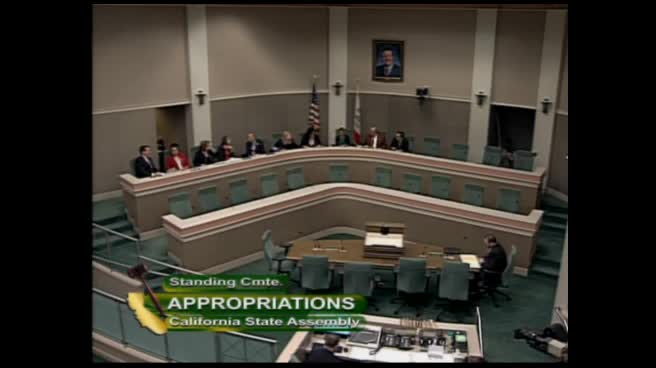 21MIN
Assembly Standing Committee on Appropriations
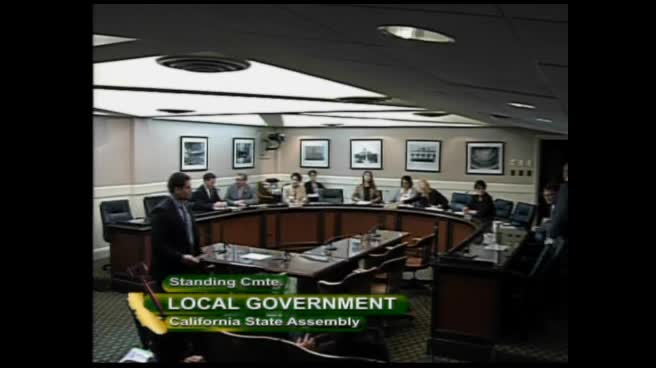 28MIN
Assembly Standing Committee on Local Government


Bill Co-Author(s):