SB 1099: Weapons: possession: demonstrations or protests.
- Session Year: 2017-2018
- House: Senate
- Latest Version Date: 2018-05-01
Existing law makes it a misdemeanor for a person engaged in labor picketing, or other informational activities in a public place relating to a concerted refusal to work, to carry a concealed firearm, loaded firearm, or deadly weapon.
This bill would prohibit a person attending or participating in any demonstration, rally, protest, picket line, or public assembly demonstration or protest from carrying or possessing specified items, including, among other things, firearms, baseball bats, or lengths of wood or lumber exceeding specified dimensions. The bill would make a violation of these provisions a misdemeanor. By creating a new crime, this the bill would create a state-mandated local program.
The California Constitution requires the state to reimburse local agencies and school districts for certain costs mandated by the state. Statutory provisions establish procedures for making that reimbursement.
This bill would provide that no reimbursement is required by this act for a specified reason.
Existing law makes it a misdemeanor for a person engaged in labor picketing, or other informational activities in a public place relating to a concerted refusal to work, to carry a concealed firearm, loaded firearm, or deadly weapon.
This bill would prohibit a person attending or participating in any demonstration, rally, protest, picket line, or public assembly from carrying or possessing specified items, including, among other things, firearms, baseball bats, or lengths of wood or lumber exceeding specified dimensions. The bill would make a violation of these provisions a misdemeanor. By creating a new crime, this bill would create a state-mandated local program.
The California Constitution requires the state to reimburse local agencies and school districts for certain costs mandated by the state. Statutory provisions establish procedures for making that reimbursement.
This bill would provide that no reimbursement is required by this act for a specified reason.
Existing state law creates the Commission on Peace Officer Standards and Training that, among other things, establishes levels of standards and training for peace officers, as specified. Existing law requires the commission to implement courses of training related to various topics applicable to peace officers.This bill would express the intent of the Legislature to enact legislation that would create standard policies for police response to unlawful assemblies.Existing state law creates the Commission on Peace Officer Standards and Training that, among other things, establishes levels of standards and training for peace officers, as specified. Existing law requires the commission to implement courses of training related to various topics applicable to peace officers.
This bill would express the intent of the Legislature to enact legislation that would create standard policies for police response to unlawful assemblies.
(a)A person shall not carry or possess the following items or articles while attending or participating in any demonstration, rally, protest, picket line, or public assembly: demonstration or protest:
(1)Any length of lumber, wood, or wood lath. This paragraph shall not apply if both ends of the lumber, wood, or wood lath are blunt and the object is one-quarter inch or less in thickness and two inches or less in width, or, if not generally rectangular in shape, the object does not exceed three-quarter inches in its thickest dimension.
(2)Any length of metal or plastic pipe, whether hollow or solid. This paragraph shall not apply to hollow plastic piping if both ends of the piping are blunt and the piping does not exceed three-quarter inches in its thickest dimension and does not exceed one-eighth inch in wall thickness, and not filled with any material, liquid, gas, or solid, if used solely to support a sign, banner, placard, puppet or other similar expressive display.
(3)Any signs, posters, banners, plaques, or notices, whether or not mounted on a length of material permitted under paragraphs (1) or (2), unless that sign, poster, banner, plaque, or notice is constructed solely of soft material such as cloth, paper, soft plastic capable of being rolled or folded, or cardboard material no greater than one-quarter of an inch in thickness.(4)(3)Baseball or softball bats, regardless of composition or size. This paragraph shall not apply to items configured of cloth, cardboard, soft plastic, foam, or paper for expressive purposes.
(5)(4)Any aerosol spray, tear gas, mace, pepper spray, or bear repellant.
(6)(5)Any projectile launcher or other device, such as a catapult or wrist rocket, which is commonly used for the purpose of launching, hurling, or throwing any object, liquid, material, or other substance, whether through force of air pressure, spring action, or any other mechanism.
(7)(6)Weapons such as firearms, knives, swords, sabers, or other bladed devices, axes, hatchets, ice picks, razor blades, box cutters, pellet or BB guns, conducted electrical weapons, including, but not limited to, tasers or stun guns, or any chain greater than twenty inches in length or greater than one-quarter inch in diameter, or any toy or replica firearms unless that toy or replica is fluorescent-colored or transparent.
(8)(7)Balloons, bottles, or any other container such as water cannons or super soakers, filled with any flammable, biohazard or other noxious matter which is injurious, or nauseous, sickening, or irritating to any of the senses, with intent to throw, drop, pour, disperse, deposit, release, discharge, or expose the matter in, upon, or about any demonstration, rally, protest, picket line, or public assembly. demonstration or protest.
(9)Glass bottles, regardless of whether they are empty or filled.(10)(8)Open flame torches, lanterns, or other devices that utilize combustible materials such as gasoline, kerosene, propane, or other fuel sources.
(11)Shields made of metal, wood, hard plastic, or any combination thereof.(12)(9)Bricks, rocks, pieces of asphalt, concrete, pellets or ball bearings.
(b)This section shall only apply if the person, after being warned, refuses to dispose of the item or leave the demonstration, rally, protest, picket line, or public assembly. demonstration or protest.
(c)This section does not apply to a cane, walker, or other device necessary for providing mobility so that the person may participate in a public protest, demonstration, rally, picket line, or public assembly. demonstration or protest.
(d)This section does not preclude prosecution under any other law.
(e)A violation of this section shall be punishable as a misdemeanor.
SEC. 2.No reimbursement is required by this act pursuant to Section 6 of Article XIIIB of the California Constitution because the only costs that may be incurred by a local agency or school district will be incurred because this act creates a new crime or infraction, eliminates a crime or infraction, or changes the penalty for a crime or infraction, within the meaning of Section 17556 of the Government Code, or changes the definition of a crime within the meaning of Section 6 of Article XIIIB of the California Constitution.
(a)A person shall not carry or possess the following items or articles while attending or participating in any demonstration, rally, protest, picket line, or public assembly:
(1)Any length of lumber, wood, or wood lath. This paragraph shall not apply if both ends of the lumber, wood, or wood lath are blunt and the object is one-quarter inch or less in thickness and two inches or less in width, or, if not generally rectangular in shape, the object does not exceed three-quarter inches in its thickest dimension.
(2)Any length of metal or plastic pipe, whether hollow or solid. This paragraph shall not apply to hollow plastic piping if both ends of the piping are blunt and the piping does not exceed three-quarter inches in its thickest dimension and does not exceed one-eighth inch in wall thickness, and not filled with any material, liquid, gas, or solid, if used solely to support a sign, banner, placard, puppet or other similar expressive display.
(3)Any signs, posters, banners, plaques, or notices, whether or not mounted on a length of material permitted under paragraphs (1) or (2), unless that sign, poster, banner, plaque, or notice is constructed solely of soft material such as cloth, paper, soft plastic capable of being rolled or folded, or cardboard material no greater than one-quarter of an inch in thickness.
(4)Baseball or softball bats, regardless of composition or size. This paragraph shall not apply to items configured of cloth, cardboard, soft plastic, foam, or paper for expressive purposes.
(5)Any aerosol spray, tear gas, mace, pepper spray, or bear repellant.
(6)Any projectile launcher or other device, such as a catapult or wrist rocket, which is commonly used for the purpose of launching, hurling, or throwing any object, liquid, material, or other substance, whether through force of air pressure, spring action, or any other mechanism.
(7)Weapons such as firearms, knives, swords, sabers, or other bladed devices, axes, hatchets, ice picks, razor blades, box cutters, pellet or BB guns, conducted electrical weapons, including, but not limited to, tasers or stun guns, or any chain greater than twenty inches in length or greater than one-quarter inch in diameter, or any toy or replica firearms unless that toy or replica is fluorescent-colored or transparent.
(8)Balloons, bottles, or any other container such as water cannons or super soakers, filled with any flammable, biohazard or other noxious matter which is injurious, or nauseous, sickening, or irritating to any of the senses, with intent to throw, drop, pour, disperse, deposit, release, discharge, or expose the matter in, upon, or about any demonstration, rally, protest, picket line, or public assembly.
(9)Glass bottles, regardless of whether they are empty or filled.
(10)Open flame torches, lanterns, or other devices that utilize combustible materials such as gasoline, kerosene, propane, or other fuel sources.
(11)Shields made of metal, wood, hard plastic, or any combination thereof.
(12)Bricks, rocks, pieces of asphalt, concrete, pellets or ball bearings.
(b)This section shall only apply if the person, after being warned, refuses to dispose of the item or leave the demonstration, rally, protest, picket line, or public assembly.
(c)This section does not apply to a cane, walker, or other device necessary for providing mobility so that the person may participate in a public protest, demonstration, rally, picket line, or public assembly.
(d)This section does not preclude prosecution under any other law.
(e)A violation of this section shall be punishable as a misdemeanor.
SEC. 2.No reimbursement is required by this act pursuant to Section 6 of Article XIIIB of the California Constitution because the only costs that may be incurred by a local agency or school district will be incurred because this act creates a new crime or infraction, eliminates a crime or infraction, or changes the penalty for a crime or infraction, within the meaning of Section 17556 of the Government Code, or changes the definition of a crime within the meaning of Section 6 of Article XIIIB of the California Constitution.
SECTION 1.It is the intent of the Legislature to enact legislation which creates standard policies for police response to unlawful assemblies.It is the intent of the Legislature to enact legislation which creates standard policies for police response to unlawful assemblies.
|
Date
|
Status
|
|---|---|
| May 25, 2018 | May 25 hearing: Held in committee and under submission. |
| May 18, 2018 | Set for hearing May 25. |
| May 14, 2018 | May 14 hearing: Placed on APPR. suspense file. |
| May 4, 2018 | Set for hearing May 14. |
| May 1, 2018 | Read second time and amended. Re-referred to Com. on APPR. |
| Apr 30, 2018 | From committee: Do pass as amended and re-refer to Com. on APPR. (Ayes 4. Noes 1.) (April 24). |
| Apr 10, 2018 | Set for hearing April 24. |
| Apr 4, 2018 | Re-referred to Com. on PUB. S. |
| Mar 22, 2018 | From committee with author's amendments. Read second time and amended. Re-referred to Com. on RLS. |
| Feb 22, 2018 | Referred to Com. on RLS. |
| Feb 14, 2018 | From printer. May be acted upon on or after March 16. |
| Feb 13, 2018 | Introduced. Read first time. To Com. on RLS. for assignment. To print. |
|
Date
|
Description
|
Location
|
Votes
|
|
|---|---|---|---|---|
| May 14, 2018 | Placed on suspense file | Senate Standing Committee on Appropriations |
Passed |
|
| Apr 24, 2018 | Do pass as amended, but first amend, and re-refer to the Committee on [Appropriations] | Senate Standing Committee on Public Safety |
Passed |
This list shows positions taken on this bill by organizations on the date displayed, which is linked to the original source.
Positions by individuals are not included.
|
Organization
|
Position
|
Date
|
|---|---|---|
| American Civil Liberties Union | * Against | Apr 24, 2018 |
| Need For This Bill | ** Against | Apr 23, 2018 |
| PURPOSE | ** Against | Apr 23, 2018 |
SENATE COMMITTEE ON
Senator Ricardo Lara, Chair
2017 - 2018 Regular Session
SB 1099 (Moorlach) - Weapons: possession: demonstrations or protests
Version: | Policy Vote: |
Urgency: | Mandate: |
Hearing Date: | Consultant: |
This bill meets the criteria for referral to the Suspense File.
Bill Summary:
SB 1099 would punish as a misdemeanor the attendance or participation in a demonstration or protest while carrying specified items, including a firearm, baseball bat, rock, or varying dimensions of lengths of wood, except as specified.
Fiscal Impact:
- Court: Unknown, potentially-significant cost pressures to the court to adjudicate charges brought against defendants who carry specified prohibited items during specified public events as proscribed by this measure. While the superior courts are not funded on a workload basis, an increase in workload could result in delayed court services and would put pressure on the General Fund to fund additional staff and resources. (General Fund*)
- Prosecution & incarceration: Unknown potential increase in non-reimbursable local enforcement and incarceration costs to prosecute and incarcerate those charged with and found guilty of conduct proscribed by this bill. Costs would be offset, to a degree, by fee and assessment revenue. (Local funds)
*Trial Court Trust Fund
Background:
It is a misdemeanor crime for a person, having upon him or herself a deadly weapon, with the intent to assault another person. It also is a misdemeanor crime for a person to engage in labor picketing, or other informational activities in a public place relating to a concerted refusal to work, to carry a concealed firearm, loaded firearm, or deadly weapon. Additionally, existing law generally prohibits the carrying of a loaded firearm in public.
Proposed Law:
This bill would prohibit a person attending or participating in a demonstration or protest from carrying or possessing specified items, including, among other things, firearms, baseball bats, rocks, or lengths of wood or lumber exceeding specified dimensions. The prohibited items enumerated in this bill do not include a cane, walker, or other device necessary for mobility. The crime would occur only after a person, who has been warned, refuses to dispose of the item or leave.
Staff Comments:
The fiscal impact of this bill cannot be known with certainty, as the actual impact will be dependent on numerous factors, including, but not limited to, judicial and prosecutorial discretion, the criminal history of a defendant, and the factors unique to each case. As the crime created by this bill is punishable as a misdemeanor with the potential for incarceration, certain rights to the defendants are attached to the proceedings, including the right to a jury trial and the right to counsel (at public expense if the defendants are unable to afford the costs of representation) which could lead to lengthier and more complex court proceedings. Consequently, to the extent that the court adjudicates a dozen or more of these new crimes, on average, that otherwise would not have been filed or resulted in a criminal action but for the alleged violation of the provisions of SB 1099, court costs of this bill would surpass the Suspense File threshold.
-- END --
SENATE COMMITTEE ON PUBLIC SAFETY
Senator Nancy Skinner, Chair
2017 - 2018 Regular
Bill No: SB 1099 Hearing Date: April 24, 2018
Author: | Moorlach | ||
Version: | March 22, 2018 | ||
Urgency: | No | Fiscal: | Yes |
Consultant: | GC | ||
Subject: Weapons: Possession
HISTORY
Source: Author
Prior Legislation: None known
Support: Unknown
Opposition: American Civil Liberties Union of California; California Public Defenders Association; Firearms Policy Coalition
PURPOSE
The purpose of this bill is to prohibit a people from participating in demonstrations, rallies, protests, picket lines, or public assemblies while carrying specified items, including firearms, baseball bats, specified lengths of wood or lumber, and other weapons and blunt objects.
Existing law provides that every person having upon the person any deadly weapon, with intent to assault another, is guilty of a misdemeanor. (Pen. Code, § 17500.)
Existing law states that any person who is engaged in picketing a public place relating to a refusal to work is guilty of a misdemeanor, if they are: (Pen. Code, § 17510, subd. (a).)
- Carrying a concealed firearm, on their person or in their vehicle.
- Carrying a loaded firearm on their person or within their vehicle.
- Carrying a deadly weapon.
Existing law generally prohibits the carrying of a loaded firearm in public. (Pen. Code, § 25850.)
Existing law generally prohibits the carrying of a concealed firearm in public, absent a concealed carry permit, with specified exemptions for persons such as peace officers. (Pen. Code, § 25400.)
Existing law generally prohibits the open carrying of firearms in public with limited exceptions for specified persons and in limited unincorporated locations. (Pen. Code §§ 26350 & 26400.)
Existing law provides that persons may apply to the sheriff of their county for a concealed carry permit, and grants the sheriff the authority to issue a concealed carry permit if the person meets specified criteria and the sheriff determines that the applicant has good cause to carry a concealed firearm. (Pen. Code, § 26150, et seq.)
Existing law prohibits the concealed possession of specified bladed devices and the possession of specified bladed devices, with specified exceptions for law enforcement. (Pen. Code, § 20200, et seq.)
Existing law prohibits the possession or sale of specified martial arts weapons and metal knuckles. (Pen. Code, §§ 21710 et seq., & 21810 et seq.)
This bill prohibits the possession of the following items at any demonstration, rally, protest, picket line, or public assembly. A violation is punishable as a misdemeanor:
- Any length of lumber, wood, or wood lath unless it is one-quarter inch or less in thickness and two inches or less in width, or if not generally rectangular in shape, it does not exceed three-quarter inches in thickness.
- Any length of metal or plastic pipe, whether hollow or solid unless it is used to solely support a sign or expressive display and it is hollow plastic piping, with blunt ends, and the piping does not exceed thee-quarter inches in thickness, and the walls of the piping do not exceed one-eight inch. Additionally, the piping may not be filled with any material.
- Signs, posters, banners, plaques, notices, which are not constructed solely of soft material such as cloth, paper, soft plastic capable of being rolled or folded, or cardboard material no greater than one-quarter of an inch in thickness.
- Baseball or softball bats, regardless of composition or size unless configured of cloth, cardboard, soft plastic, foam, or paper for expressive purposes.
- Aerosol spray, tear gas, mace, pepper spray, or bear repellant.
- Projectile launchers or similar devices as specified.
- Weapons: including firearms, knives, swords, sabers, other bladed devices, axes, hatchets, ice picks, razor blades, box cutters, pellet or BB guns, conducted electrical weapons, chains greater than twenty inches in length or greater than one-quarter inch in diameter, or any toy or replica firearms unless fluorescent-colored or transparent.
- Balloons, bottles, other containers such as water cannons or super soakers, filled with flammable biohazard or other noxious matter which is injurious, or nauseous, sickening, or irritating to any of the senses, with intent to discharge or expose the matter at the public event.
- Glass bottles, regardless of whether they are empty or filled.
- Open flame torches, lanterns, or other devices that utilize combustible materials such as gasoline, kerosene, propane, or other fuel sources.
- Shields made or metal wood, hard plastic, or any combination thereof.
- Bricks, rocks, pieces of asphalt, concrete, pellets, or ball bearings.
This bill provides that the provisions herein shall only apply to a person who has been warned and refuses to dispose of the item in question, or leave the specified public event.
This bill specifies that canes, walkers, or other devices necessary for providing mobility so that the person may participate in a specified public event.
COMMENTS
- Need for This Bill
According to the author:
The United States Constitution declares that we not only have the right to free speech, but that we have the right to peaceably assemble. These rights are jeopardized when violent protesters overtake peaceful assemblies in the public square. People should have the right to a public assembly without the fear of being physically assaulted.
The Los Angeles City Council recently passed an ordinance restricting various items from being carried during a protest. These items range from metal pipes to tear gas, and heavy lumber capable of being weaponized. SB 1099 mirrors this policy by implementing the same restrictions statewide. Los Angeles worked closely with their police department on these restrictions, and has taken the lead on protecting freedom of assembly.
Additionally, Vlasak v. Superior Court of California ex rel. County of Los Angeles, 329 F.3d 683 (2003) sets a precedent for this type of legislation, and gives us direction as to how to interpret the constitution regarding the 1st amendment.
- Effect of This Bill
Under existing law many weapons are prohibited from being possessed at all, and many are prohibited from being possessed in public. For instance, concealed firearms are prohibited in public unless the carrier of the firearm has a valid concealed-carry permit and the firearm is lawfully registered. Similar restrictions apply to specified bladed weapons. Additionally, under California law persons can no longer openly carry firearms in public places, with exceptions for long guns in specified unincorporated areas. This bill seeks to expand the criminal prohibitions on possession weapons and other items that the author believes could be utilized as weapons at demonstrations, rallies, protests, picket lines, or public assemblies.
Currently, persons seeking to lawfully assemble often have to seek a permit from a local authority (city, county, or state). Under this authority (through either ordinance or permitting process), local jurisdictions can prohibit the possession of specified items that they determine are unsafe so long as they are not interfering with the public’s fundamental rights under the First Amendment to the U.S. Constitution. This bill would apply a baseline standard of what is permitted at these gatherings and what is not. For instance, this bill would preempt local jurisdictions’ authority to permit signs of a thickness greater than one quarter of an inch. Likewise, the exception for concealed-carry permit holders to carry their firearms at public events would preempt the authority of a local jurisdiction to prohibit the possession of all firearms at demonstrations, rallies, protests, picket lines, or public assemblies.
- Vlasak v. Superior Court
The author has cited the 9th Circuit case of Vlasak v. Superior Court (2003) 329 F.3d 683 as the authority that the limitations on possession of items at demonstrations, rallies, protests, picket lines, or public assemblies is permissible under the United States Constitution. In Vlasak a protester was arrested at a protest of a circus because she brought a bull hook, a large piece of wood with a metal hook on the end--as an example of a training device used to gain elephants' obedience. The protester argued that the ordinance was unconstitutional, both on its face and as applied to her, because it infringed on the First Amendment right to freedom of speech. The court of appeals found that with regard to the facial challenge: (1) taken as a whole, the ordinance defined the criminal offense with sufficient definiteness that ordinary people could understand what conduct was prohibited and in a manner that did not encourage arbitrary and discriminatory enforcement; and (2) by its terms, the ordinance applied to all demonstrators, regardless of persuasion, viewpoint, or cause. The ordinance did not deprive the demonstrators of an alternative means of communication.
The Vlasak ordinance banned wooden pieces more than a quarter inch thick and two inches wide, or non-rectangular pieces thicker than three-quarters of an inch. The bull-hook carried by the defendant in Vlasak was in excess of what was permitted in the ordinance. Like the ordinance in Vlasak, this bill seeks to limit the same dimensions of wood. However, this bill seeks to further limit possession of such items as: signs, baseball bats, aerosol spray, projectile launchers, bottles, and shields. It is unclear whether the ruling in Vlasak would cover all of these items under a separate First Amendment analysis.
- State Preemption
Under current law, just as in the Vlasak case cited by the author, local ordinances and permitting procedures are used to determine what an individual may possess at a public gathering. In the case of the Capitol grounds and other state lands it is the CHP who permits any events. Local jurisdictions have the advantage of knowing what items may or may not be acceptable at a particular event and may or may not be acceptable in a particular community.
This bill would preempt local ordinances by establishing a baseline of what must be permitted and what must be prohibited (in terms of the items specified such as piping, signs, glass bottles).
For instance if the Los Angeles Dodgers win the World Series and they wish to have a parade and rally to celebrate the victory in a city park, this bill could prevent them from authorizing the presence of baseball bats fans may want to be signed by the winning team.
The question for the Committee to determine is whether it is better left open to local jurisdictions to make these determinations as to what is safe in their community, or if the provisions of this bill should apply throughout the State of California.
- Argument in Opposition
According to the American Civil Liberties Union of California:
While we wholeheartedly endorse the right to peaceably assemble, we are concerned that this measure will have the opposite effect – criminalizing peaceful and constitutionally protected conduct and exacerbating political tensions and the potential for violence. Indeed, the bill specifically prohibits acts done for expressive purposes that are not prohibited when done for non-expressive purposes.
Despite [the] asserted intention to prevent violent riots and penalize those who attempt to silence opposing views, SB 1099 would make it illegal to carry items to a protest or public demonstration that are both central to the public’s ability to express itself under the First Amendment and legal when carried at other public events. While weapons may be no place in public, many of not most of the items properly characterized as “weapons” – guns, knives, nunchuks, etc. – are already illegal to possess publically, whether at a protest or not. This bill is therefore unnecessary to protect the public from individuals who would use these items to inflict harm at protests or other public demonstrations. Rather, the primary effect of the bill would be to criminalize the possession of signs that not sufficiently “soft,” or commonly-possessed items such as soda bottles.
We have grave concerns about the constitutionality of a law that criminalizes items at rallies or protests that are not regulated at other public gathering and are central to the public’s ability to engage in protected First Amendment expression, such as signage. Despite your good intentions, the inadvertent effect of this ordinance will be to unnecessarily stifle expression that is at the heart of the First Amendment, and unnecessarily criminalize commonplace behavior that individuals will not reasonably know has been contrived by this bill into a public safety violation, such as constructing a protest sign made of cardboard more than one-quarter inch thick. It is hard to imagine a Women’s March or immigrant’s rights rally without many of the items prohibited by this bill in the possession of innocent people who would be unwittingly committing a crime despite having no intent to cause harm.
Moreover, serious immigration consequences could result from a violation of this bill by an immigrant engaged in the peaceful exercise of First Amendment rights. Even for those who do not fear immigration consequences, this bill would impose a painful penalty.
-- END –
Discussed in Hearing
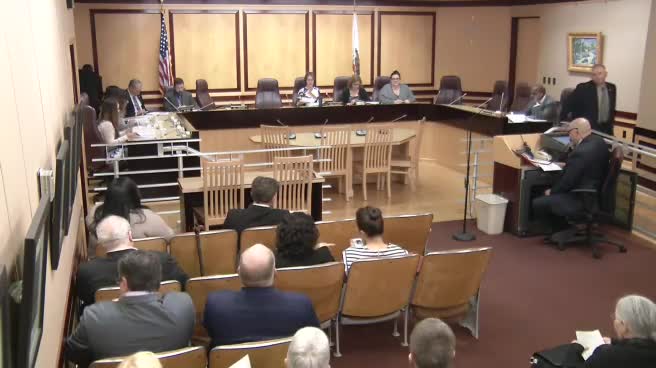 9MIN
Senate Standing Committee on Public Safety
Bill Author

Bill Co-Author(s):