SB 1105: Vehicles: driving offenses: prosecution.
- Session Year: 2017-2018
- House: Senate
- Latest Version Date: 2018-04-03
Existing law prevents a person committed to the custody of the Secretary of the Department of Corrections and Rehabilitation from being subject to prosecution for a misdemeanor nonfelony offense arising out of, among other things, the operation of a motor vehicle, that is pending against him or her at the time of commitment. Similarly, the drivers license of that person is prohibited from being suspended, revoked, or application therefor denied, as a result of a misdemeanor nonfelony offense pending against him or her at the time of commitment that occurred prior to the time of commitment, or as a result of a failure to appear notice received by the Department of Motor Vehicles. Existing law requires Department of Motor Vehicles to remove from its records a failure to appear notice upon receipt of satisfactory evidence that a person was committed to custody.
This bill would additionally extend the above immunity from prosecution and the prohibitions regarding suspending the persons drivers license to a person upon completion of a sentence of 6 months 7 days or longer in a county jail, drug treatment center, work alternative program, or other alternative to incarceration if the persons failure to complete that sentence would result in reincarceration. as a condition of probation. The bill would make these protections applicable to an offense committed while the person is temporarily released from custody, or on parole or postrelease community supervision.
ThisThe bill would make that person immune from to prosecution for an outstanding infraction or failure to appear, or from liability for any unpaid fine or assessments, and from having his or her drivers license affected, under similar circumstances once the person has been incarcerated for 90 or more consecutive days in any once the person has been incarcerated for a cumulative 30 or more days in jail in any consecutive 12-month period subsequent to the date of the violation.
The bill would authorize an incarcerated or previously incarcerated incarcerated, previously incarcerated, or previously convicted person to request the above-described relief directly through the department or the courts, and would prescribe the duties of the department and the courts in that regard.
Existing law prevents a person committed to the custody of the Secretary of the Department of Corrections and Rehabilitation from being subject to prosecution for a misdemeanor offense arising out of, among other things, the operation of a motor vehicle, that is pending against him or her at the time of commitment. Similarly, the drivers license of that person is prohibited from being suspended, revoked, or application therefor denied, as a result of a misdemeanor offense pending against him or her at the time of commitment that occurred prior to the time of commitment, or as a result of a failure to appear notice received by the Department of Motor Vehicles. Existing law requires Department of Motor Vehicles to remove from its records a failure to appear notice upon receipt of satisfactory evidence that a person was committed to custody.
This bill would additionally extend the above immunity from prosecution to a person upon completion of a sentence of 6 months or longer in a county jail, drug treatment center, or other alternative to incarceration if the persons failure to complete that sentence would result in reincarceration.
This bill would make that person immune from to prosecution for an infraction or failure to appear, or his or her drivers license affected, under similar circumstances once the person has been incarcerated for 90 or more consecutive days in any 12-month period subsequent to the date of the violation.
The bill would authorize an incarcerated or previously incarcerated person to request the above-described relief directly through the department or the courts, and would prescribe the duties of the department and the courts in that regard.
(a)A person shall not be subject to prosecution for a misdemeanor nonfelony offense arising out of the operation of a motor vehicle or violation of this code as a pedestrian that is pending against him or her either (1) at the time of his or her commitment to the custody of the Secretary of the Department of Corrections and Rehabilitation, the Division of Juvenile Justice in the Department of Corrections and Rehabilitation, or to a county jail pursuant to subdivision (h) of Section 1170 of the Penal Code, or (2) upon at the completion of a sentence of six months seven days or longer in a county jail, drug treatment center, or other work alternative program, or any alternative to incarceration if the defendants failure to complete the sentence would result in reincarceration. as a condition of probation.
(b)Notwithstanding any other law, a drivers license shall not be suspended or revoked, and the issuance or renewal of a license shall not be refused as a result of a pending misdemeanor nonfelony offense occurring (1) prior to the time a person was committed to the custody of the Secretary of the Department of Corrections and Rehabilitation, the Division of Juvenile Justice of the Department of Corrections and Rehabilitation, or a county jail pursuant to subdivision (h) of Section 1170 of the Penal Code, (2) prior to completion of a sentence of seven days or longer in a county jail, work alternative program, or any alternative to incarceration as a condition of probation, or (3) as a result of a notice received by the department pursuant to subdivision (a) of Section 40509 or subdivision (a) of Section 40509.5 when the offense that gave rise to the notice occurred (A) prior to the time a person was committed to the custody of the Secretary of the Department of Corrections and Rehabilitation or the Division of Juvenile Justice of the Department of Corrections and Rehabilitation. Rehabilitation, or (B) prior to completion of a sentence of seven days or more in a county jail, work alternative program, or any alternative to incarceration as a condition of probation.
(c)The department shall remove from its records notice received by it pursuant to subdivision (a) of Section 40509 or subdivision (a) of Section 40509.5 upon receipt of satisfactory evidence that a person was committed to the custody of the Secretary of the Department of Corrections and Rehabilitation, the Division of Juvenile Justice of the Department of Corrections and Rehabilitation, or a county jail pursuant to subdivision (h) of Section 1170 of the Penal Code, or has completed a sentence of seven days or longer in a county jail, work alternative program, or other alternative to incarceration as a condition of probation, after the offense that gave rise to the notice occurred.
(d)The provisions of this section shall not apply to a nonfelony offense if the department is required by this code to immediately revoke or suspend the privilege of a person to drive a motor vehicle upon receipt of a duly certified abstract of the record of a court showing that the person has been convicted of that nonfelony offense.
(e)The provisions of subdivisions (a), (b), and (c) do not apply to an offense committed by a person while he or she is temporarily released from custody pursuant to law or while he or she is on parole or postrelease community supervision.(f)(e)The provisions of subdivisions (a), (b), and (c) do not apply if the pending offense is a violation of Section 23103, 23152, or 23153.
(g)(f)A qualifying incarcerated or previously incarcerated incarcerated, previously incarcerated, or previously convicted person may request relief under this section, directly through the department or the courts. A court that receives a valid request under this section shall search its computer system for eligible pending matters and dispose of those matters appropriately. Within 15 days following receipt of the request, the court shall notify the department of the request and the department shall remove from its records a notice received by it pursuant to subdivision (a) of Section 40509 or subdivision (a) of Section 40509.5 from any county in the state.
(g)Relief under this section shall remain available at any time that any fine or assessment described in subdivision (a) remains unpaid or as long as the drivers license of any qualifying incarcerated, previously incarcerated, or previously convicted person remains suspended or revoked as a result of a notice received by the department pursuant to subdivision (a) of Section 40509 or subdivision (a) of Section 40509.5.
SEC. 2.Section 41500.5 is added to the Vehicle Code, to read:41500.5.(a)A person shall not be subject to prosecution for any infraction, outstanding infraction or failure to appear, or be liable for any unpaid fine or assessment, arising out of the operation of a motor vehicle or a violation of this code as a pedestrian that is pending against him or her once he or she has been incarcerated for 90 or more consecutive days in a 12-month period subsequent to the date of the infraction or failure to appear. once the person has been incarcerated for a cumulative 30 or more days in jail in any consecutive 12-month period subsequent to the date of the violation.
(b)Notwithstanding any other law, a drivers license shall not be suspended or revoked, nor shall the issuance or renewal of a license be refused as a result of a pending infraction occurring prior to the 90 or more consecutive days of incarceration in a 12-month period the incarceration described in subdivision (a), or as a result of a notice received by the department pursuant to subdivision (a) of Section 40509, 40509, or subdivision (a) of Section 40509.5, if the offense infraction that gave rise to the notice occurred prior to the incarceration period of 90 or more consecutive days in a 12-month period. the incarceration described in subdivision (a).
(c)The department shall remove from its records a notice received by it pursuant to subdivision (a) of Section 40509 or subdivision (a) of Section 40509.5 upon receipt of satisfactory evidence that a person was incarcerated in any correctional institution for a period of 90 or more consecutive days in a 12-month period. as described in subdivision (a).
(d) A qualifying incarcerated or previously incarcerated incarcerated, previously incarcerated, or previously convicted person may request relief under this section, directly through the department and or the courts. A court that receives a valid request under this section shall search its computer system for eligible pending matters and dispose of those matters appropriately. Within 15 days following receipt of the request, the court shall notify the department of the request and the department shall remove from its records a notice received by it pursuant to subdivision (a) of Section 40509 or subdivision (a) of Section 40509.5 from any county in the state.
(e)Relief under this section shall include dismissal of any outstanding assessments levied pursuant to subdivision (a) of Section 1214.1 of the Penal Code.
(f)Relief under this section shall remain available at any time that any fine or assessment described in subdivision (a) remains unpaid or as long as the drivers license of any qualifying incarcerated, previously incarcerated, or previously convicted person remains suspended or revoked as a result of a notice received by the department pursuant to subdivision (a) of Section 40509 or subdivision (a) of Section 40509.5.
(a)A person shall not be subject to prosecution for a nonfelony misdemeanor offense arising out of the operation of a motor vehicle or violation of this code as a pedestrian that is pending against him or her either (1) at the time of his or her commitment to the custody of the Secretary of the Department of Corrections and Rehabilitation, the Division of Juvenile Justice in the Department of Corrections and Rehabilitation, or to a county jail pursuant to subdivision (h) of Section 1170 of the Penal Code. Code, or (2) upon completion of a sentence of six months or longer in a county jail, drug treatment center, or other alternative to incarceration if the defendants failure to complete the sentence would result in reincarceration.
(b)Notwithstanding any other law, a drivers license shall not be suspended or revoked, and the issuance or renewal of a license shall not be refused as a result of a pending nonfelony misdemeanor offense occurring prior to the time a person was committed to the custody of the Secretary of the Department of Corrections and Rehabilitation, the Division of Juvenile Justice of the Department of Corrections and Rehabilitation, or a county jail pursuant to subdivision (h) of Section 1170 of the Penal Code, or as a result of a notice received by the department pursuant to subdivision (a) of Section 40509 when the offense that gave rise to the notice occurred prior to the time a person was committed to the custody of the Secretary of the Department of Corrections and Rehabilitation or the Division of Juvenile Justice of the Department of Corrections and Rehabilitation.
(c)The department shall remove from its records notice received by it pursuant to subdivision (a) of Section 40509 upon receipt of satisfactory evidence that a person was committed to the custody of the Secretary of the Department of Corrections and Rehabilitation, the Division of Juvenile Justice of the Department of Corrections and Rehabilitation, or a county jail pursuant to subdivision (h) of Section 1170 of the Penal Code, after the offense that gave rise to the notice occurred.
(d)The provisions of this section shall not apply to a nonfelony offense if the department is required by this code to immediately revoke or suspend the privilege of a person to drive a motor vehicle upon receipt of a duly certified abstract of the record of a court showing that the person has been convicted of that nonfelony offense.
(e)The provisions of subdivisions (a), (b), and (c) do not apply to an offense committed by a person while he or she is temporarily released from custody pursuant to law or while he or she is on parole or postrelease community supervision.
(f)The provisions of subdivisions (a), (b), and (c) do not apply if the pending offense is a violation of Section 23103, 23152, or 23153.
(g)A qualifying incarcerated or previously incarcerated person may request relief under this section, directly through the department or the courts. A court that receives a valid request under this section shall search its computer system for eligible pending matters and dispose of those matters appropriately. Within 15 days following receipt of the request, the court shall notify the department of the request and the department shall remove from its records a notice received by it pursuant to subdivision (a) of Section 40509 from any county in the state.
SEC. 2.Section 41500.5 is added to the Vehicle Code, to read:41500.5.(a)A person shall not be subject to prosecution for any infraction, or failure to appear, arising out of the operation of a motor vehicle or a violation of this code as a pedestrian that is pending against him or her once he or she has been incarcerated for 90 or more consecutive days in a 12-month period subsequent to the date of the infraction or failure to appear.
(b)Notwithstanding any other law, a drivers license shall not be suspended or revoked, nor shall the issuance or renewal of a license be refused as a result of a pending infraction occurring prior to the 90 or more consecutive days of incarceration in a 12-month period or as a result of a notice received by the department pursuant to subdivision (a) of Section 40509, if the offense that gave rise to the notice occurred prior to the incarceration period of 90 or more consecutive days in a 12-month period.
(c)The department shall remove from its records a notice received by it pursuant to subdivision (a) of Section 40509 upon receipt of satisfactory evidence that a person was incarcerated in any correctional institution for a period of 90 or more consecutive days in a 12-month period.
(d)A qualifying incarcerated or previously incarcerated person may request relief under this section, directly through the department and the courts. A court that receives a valid request under this section shall search its computer system for eligible pending matters and dispose of those matters appropriately. Within 15 days following receipt of the request, the court shall notify the department of the request and the department shall remove from its records a notice received by it pursuant to subdivision (a) of Section 40509 from any county in the state.
|
Date
|
Status
|
|---|---|
| May 25, 2018 | May 25 hearing: Held in committee and under submission. |
| May 18, 2018 | Set for hearing May 25. |
| Apr 23, 2018 | April 23 hearing: Placed on APPR. suspense file. |
| Apr 13, 2018 | Set for hearing April 23. |
| Apr 11, 2018 | From committee: Do pass and re-refer to Com. on APPR. (Ayes 5. Noes 2.) (April 10). Re-referred to Com. on APPR. |
| Apr 3, 2018 | From committee with author's amendments. Read second time and amended. Re-referred to Com. on PUB. S. |
| Mar 29, 2018 | Set for hearing April 10. |
| Feb 22, 2018 | Referred to Com. on PUB. S. |
| Feb 14, 2018 | From printer. May be acted upon on or after March 16. |
| Feb 13, 2018 | Introduced. Read first time. To Com. on RLS. for assignment. To print. |
|
Date
|
Description
|
Location
|
Votes
|
|
|---|---|---|---|---|
| Apr 23, 2018 | Placed on suspense file | Senate Standing Committee on Appropriations |
Passed |
|
| Apr 10, 2018 | Do pass, but first be re-referred to the Committee on [Appropriations] | Senate Standing Committee on Public Safety |
Passed |
This list shows positions taken on this bill by organizations on the date displayed, which is linked to the original source.
Positions by individuals are not included.
|
Organization
|
Position
|
Date
|
|---|---|---|
| 1. Need For This Bill | ** Against | Apr 9, 2018 |
| 2. Financial Impact Of Convictions And Incarceration | ** Against | Apr 9, 2018 |
| 3. Argument In Support | ** Against | Apr 9, 2018 |
| 4. Argument In Opposition | ** Against | Apr 9, 2018 |
| According To The Author Of This Bill: | ** Against | Apr 9, 2018 |
| ACLU of California | * Support | Apr 10, 2018 |
| California District Attorneys Association; California Police Chiefs Association | ** Against | Apr 9, 2018 |
| Legal Services for Prisoners with Children | * Support | Apr 10, 2018 |
| PURPOSE | ** Against | Apr 9, 2018 |
| San Francisco Sheriff's Office | * Support | Apr 10, 2018 |
SENATE COMMITTEE ON APPROPRIATIONS
Senator Ricardo Lara, Chair
2017 - 2018 Regular Session
SB 1105 (Skinner) - Vehicles: driving offenses: prosecution
Version: April 3, 2018 | Policy Vote: PUB. S. 5 - 2 |
Urgency: No | Mandate: No |
Hearing Date: April 23, 2018 | Consultant: Shaun Naidu |
This bill meets the criteria for referral to the Suspense File.
Bill Summary:
SB 1105 would allow for the dismissal of specified non-felony offenses pending against a person who has completed a commitment to county jail, as specified, or alternative program, as specified.
Fiscal Impact:
- Unknown, potentially-significant foregone revenue to the extent that outstanding fines, fees, and assessments are forgiven but would have been collected. (General Fund, various special funds, local funds) Revenue loss to counties would be offset in reduced workload for district attorneys’ offices and public defenders’ offices not having to prosecute and defend against, respectively, the dismissed charges.
For example, Penal Code section 1465.7 imposes a 20 percent surcharge on every base fine resulting from a criminal conviction, with the revenue collected being allocated to the state General Fund. The default misdemeanor punishment includes a maximum base fine of $1,000. If 250 individuals who would have misdemeanor charges that are pending against them dismissed under this measure but otherwise would have been convicted and sentenced to pay the maximum base fine, the state General Fund would incur a loss of $50,000 from that one surcharge alone.
- The Department of Motor Vehicles anticipates programming costs of over $150,000 to implement changes to its IT system to accommodate a six-digit code section to monitor. (Motor Vehicle Account).
- Unknown loss of revenue to the court in the dismissal of civil assessments for a person who fails to pay all or a portion of a fine or fails to appear for a hearing or other proceeding. (Trial Court Trust Fund) This loss in revenue would be offset, in part, by the reduced workload to the court by not having to adjudicate the dismissed charges.
Background:
Under existing law, once a person is committed to incarceration for a felony offense, any prosecution for a misdemeanor or infraction offense arising out of the operation of a vehicle or violation of the Vehicle Code as a pedestrian that is pending against him or her at the time of commitment is dismissed. Similarly, the driver license of that person cannot be suspended, revoked, or application therefor denied, as a result of a non-felony offense pending against him or her at the time of commitment that occurred prior to the time of commitment or as a result of a failure to appear notice received by DMV. The Department of Motor Vehicles is required to remove from its records a failure to appear notice upon receipt of satisfactory evidence that a person was committed to state prison, the Division of Juvenile Justice (DJJ), or county jail pursuant to the 2011 Realignment Legislation.
Proposed Law:
This bill would:
- Extend the above immunity from prosecution and the prohibitions regarding suspending the person’s driver’s license to a person upon completion of a sentence of seven days or longer in a county jail, work alternative program, or other alternative to incarceration as a condition of probation.
- Make the above protections applicable to an offense committed while the person is temporarily released from custody or on parole or post-release community supervision.
- Make a person immune from prosecution for an outstanding infraction or failure to appear, from liability for any unpaid fine or assessments, and from having his or her driver’s license affected, once the person has been incarcerated for a cumulative thirty or more days in jail in any consecutive twelve-month period subsequent to the date of the violation.
- Allow an incarcerated, previously-incarcerated, or previously-convicted person to request the above-described relief directly through DMV or the court and would prescribe the duties of the department and the court in that regard.
Related Legislation:
AB 877 (Skinner, 2011) would have expanded immunity from prosecution for non-felony Vehicle Code violations pending at the time of a person’s commitment to state prison and expanded the prohibition against the suspension or revocation of a driver’s license for a pending non-felony offense or as a result of a notice received for failure to appear that occurred prior to incarceration in state prison, to include an individual who has served ninety days or longer in a consecutive twelve-month period in a county jail or other county correctional facility, court or county rehabilitation facility, or involuntary in-home detention. AB 877 was held on the Suspense File of this Committee.
AB 3569 (Becerra, Ch. 950, Stats. 1992) exempted pending driving-under-the-influence and reckless driving offenses from immunity from prosecution while a person is committed to state prison or what is now known as DJJ.
-- END --
SENATE COMMITTEE ON PUBLIC SAFETY
Senator Nancy Skinner, Chair
2017 - 2018 Regular
Bill No: SB 1105 Hearing Date: April 10, 2018
Author: | Skinner | ||
Version: | April 3, 2018 | ||
Urgency: | No | Fiscal: | Yes |
Consultant: | SC | ||
Subject: Vehicles: Driving Offenses: Prosecution
HISTORY
Source: East Bay Community Law Center
Legal Services for Prisoners with Children
San Francisco Public Defender’s Office
Prior Legislation: AB 1156 (Brown), Ch. 378, Stats. 2015
AB 877 (Skinner), 2011, held Senate Appropriations Comm.
AB 3569 (Becerra), Ch. 950, Stats. 1992
Support: American Civil Liberties Union (ACLU) of California; Asian American Criminal Trial Lawyers Association; Bay Area Legal Aid; California Public Defenders Association; California Reinvestment Coalition; Courage Campaign; Ella Baker Center for Human Rights; Legal Services of Northern California; PolicyLink; Recovery Survival Network; Riverside Temple Beth El; Root & Rebound; Rosen Bien Galvan & Grunfeld, LLP; Rubicon Programs; San Francisco Office of the District Attorney; San Francisco Sheriff’s Office; UC Irvine School of Law; Western Center on Law and Poverty
Opposition: California District Attorneys Association; California Police Chiefs Association
PURPOSE
The purpose of this bill is to extend existing laws relating to the dismissal of Vehicle Code violations pending at the time of a defendant's commitment to state prison or county jail on a jail-eligible felony to provide the same relief to persons sentenced to county jail or other alternatives to incarceration, as specified.
Existing law states that a person shall not be subject to prosecution for a nonfelony offense arising out of a violation of the vehicle code pending against him or her, except pending violations of reckless driving or driving under the influence, at the time of his or her commitment to a state prison, Division of Juvenile Justice (DJJ), or county jail on a jail-eligible felony. (Veh. Code, § 41500, subd. (a) & (f).)
This bill extends the above immunity to persons who have completed a sentence of seven days or longer in a county jail, work alternative program, or any alternative to incarceration as a condition of probation and makes conforming changes to Vehicle Code section 41500.
Existing law states that the immunity from prosecution does not apply to offenses where the DMV is required to immediately revoke or suspend the privilege of a person to drive a motor vehicle upon receipt of a duly certified of the record of a court showing that the person has been convicted of that nonfelony offense. (Veh. Code, § 41500, subd. (d).)
Existing law states that, notwithstanding any other law, a driver’s license shall not be suspended or revoked, and the issuance or renewal of a license shall not be refused as a result of a pending nonfelony offense occurring prior to the time a person was committed to a state prison, DJJ, or county jail on a jail-eligible felony, or as the result of a notice of a failure to appear in court received by the Department of Motor Vehicles (DMV) of a violation that occurred prior to the person’s commitment. (Veh. Code, § 41500, subd. (b).)
Existing law requires DMV to remove from its records notice received by it for a failure to appear in court upon satisfactory evidence that a person was committed to a state prison, DJJ, or county jail on a jail-eligible felony after the offense that gave rise to the notice occurred. (Veh. Code, § 41500, subd. (c).)
Existing law states that a qualifying person may request relief directly through DMV and the courts. (Veh. Code, § 41500, subd. (d).)
Existing law states that immunity from prosecution does not apply to an offense committed by a person while he or she is temporarily released from custody or while he or she is on parole or postrelease community supervision (PRCS). (Veh. Code, § 41500, subd. (e).)
This bill deletes subdivision (e) of Vehicle Code section 41500.
This bill creates a new section that provides that a person shall not be subject to prosecution for any outstanding infraction or failure to appear, or be liable for any unpaid fine or assessment, arising out of a violation of the Vehicle Code if the person is incarcerated for a cumulative of 30 days or more in county jail in any consecutive 12-month period subsequent to the date of the violation.
This bill provides that, notwithstanding any other law, a driver’s license shall not be suspended or revoked, nor shall the issuance or renewal of a license be refused as a result of a pending infraction, as specified, for persons who have been incarcerated for a cumulative of 30 days or more in county jail in any consecutive 12-month period subsequent to the date of the violation.
This bill requires the DMV to remove from its records notices received by it for failures to appear upon receipt of satisfactory evidence that the person has been incarcerated for a cumulative of 30 days or more in county jail in any consecutive 12-month period subsequent to the date of the violation.
This bill authorizes a qualifying incarcerated, or previously incarcerated, or previously convicted person to request relief under the new section directly through DMV or the courts.
This bill requires a court that receives a valid request to search its computer system for eligible pending matters and dispose of those matters appropriately, and within 15 days of receipt of the request, notify DMV of the request, and that DMV shall remove the applicable records.
This bill states that relief under the new section includes dismissal of any outstanding civil assessments levied for failure to appear or failure to pay all or any portion of fines ordered by a court.
This bill specifies that relief under the provisions of this bill shall remain available at any time that any fine or assessment, as described, remains unpaid or as long as the driver’s license of any eligible person remains suspended or revoked as a result of notice to DMV for a failure to appear in court.
COMMENTS
1. Need for this Bill
According to the author of this bill:
For those who are returning home after having served time not being able to obtain a driver’s license or having excessive debt can be the difference between successful and unsuccessful reentry.
California has some of the highest traffic fines in the nation. Many people leaving jail do not have the resources to pay hundreds or thousands of dollars in traffic debt, on top of thousands of dollars in debt from their incarceration-triggering convictions.
Furthermore, suspending a person’s driver’s license often leads to a loss of that individual’s job or to serious difficulties in finding a new one. People coming home from jail or sentenced to a work alternative program already have significant difficulty finding employment because of their conviction histories without this added barrier.
Research shows that even 1 or 2 days of jail time are enough for a person to lose their job, their car, or their home. Spending time in jail can result in the financial destabilization of an entire family.
Under current law, people incarcerated in state prison may use Vehicle Code section 41500 to have their pending traffic non-felonies dismissed and avoid suspension of their driver’s license, thus improving their chances at successful reentry. Unfortunately, this forgiveness does not extend to people who have served time in county jails.
While AB 1156 (Brown) extended relief to a small portion of people in county jails (under the 2011 Public Safety Realignment Act), thousands of former county jail inmates are still burdened by fines they cannot afford or risk losing their license for missing court dates.
SB 1105 simply extends relief that applies to people serving time in state prisons to also cover people in county jails. This bill helps break the cycle of poverty and incarceration for people coming home from California jails or sentenced to work alternative programs and eases the syphoning of resources from some of our state’s most vulnerable families.
2. Financial Impact of Convictions and Incarceration
Vehicle Code section 41500 precludes prosecution for nonfelony offenses when a person is committed to a state prison, DJJ, or county jail on a jail-eligible felony. The statute also prohibits a person’s driver’s license from being suspended, revoked or denied for a failure to appear related to those nonfelony offenses. The purpose of Vehicle Code section 41500 is to ease the burden on defendants who after being incarcerated face obstacles in rehabilitation and reintegrating back into society upon release. (People v. Lopez (2013) 160 Cal.Rptr.3d 678.) The statute originally enacted in 1970 only applied to persons who are committed to state prison. However, the statute has been expanded to apply to persons who are committed to DJJ (Ch. 545, Stats. 1975) and then too persons who are committed to county jail on a jail-eligible felony (AB 1156 (Brown), Ch. 378, Stats. 2015).
This bill further expands the statute to apply to persons sentenced to seven days or longer in a county jail, work alternative program, or any alternative to incarceration as a condition of probation. This bill also creates a new statute that provides a similar preclusion to prosecution for any outstanding infraction or failure to appear, and sates that the person shall not be liable for any unpaid fine or assessment, arising out of a violation of the Vehicle Code once the person has been incarcerated for a cumulative 30 days or more in county jail in any consecutive 12-month period subsequent to the date of the violation.
Not surprisingly, lengthy periods of incarceration will lead to job loss and extreme difficulties finding employment once released due to the fact that people who have been incarcerated have a more tenuous connection to employment and they have a criminal record which employers generally avoid. (Congressional Budget Office, Factors Affecting the Labor Force Participation of People Ages 25 to 54 (Feb. 2018).) However, it has been found that even a short stay in stay in jail can cause a person to lose their job, car, or home. (Decker et al., Criminal Stigma, Race, Gender and Employment: An Expanded Assessment of the Consequences of Imprisonment for Employment (Jan. 2014).)
Convictions, even without incarceration, result in fines and fees that many offenders cannot afford to pay, which is further compounded by the person’s inability to hold or find employment. As described below, criminal debt has negative impacts on a person’s reentry.
Former offenders with debt encounter a number of problems that interfere with successful reintegration. Debt reduces household income and limits their ability to attain housing, employment, and access to credit. It also hobbles existing credit, which makes it even more difficult to get a job, to receive approval to rent an apartment, and to apply for loans. Criminal debt also impedes an ex-offender’s prospects of attaining public health benefits, can result in a driver’s license suspension, and negates their ability to apply for a pardon or criminal record expungement in some states (Vallas and Patel 2012). It also increases the likelihood of continued involvement with the criminal justice system through extended probation or parole, re-arrest, or re-incarceration (Harris, Evans and Beckett 2010). Some states disenfranchise ex-offenders until they have paid off their debt entirely. For example, ex-offenders in Florida are required to fulfill their restitution obligations before they can restore their right to vote, serve jury duty, and obtain certain occupational licenses (Diller 2010). An important consequence of financial burdens is that they increase the likelihood of recidivism, particularly when offenders are unable to pay (Dickman 2009).
(Evans, The Debt Penalty: Exposing the Financial Barriers to Offender Reintegration, John Jay College of Criminal Justice (Aug. 2014), p. 9.)
3. Argument in Support
Western Center on Law and Poverty writes in support of this bill:
SB 1105 addresses a problem that many of our legal service programs have noted over the years. That persons leaving the criminal justice system often have outstanding tickets, owe large amounts of court ordered debt from fines, fees and assessment that have been imposed and have had their license suspended for failure to appear even though they were incarcerated at the time. Without a license it is difficult to rent a home, get a job or obtain needed public benefits.
Under current law, people incarcerated for felonies in prison or jail may use Vehicle Code section 41500 to have their pending traffic infractions dismissed and avoid suspension of their driver’s license. Yet even though people who are incarcerated for misdemeanors, jailed pre-trial, or sentenced to jail alternative programs often suffer similar financial destabilization, this large population of low-income people cannot currently access relief under section 41500. SB 1105 would fix this injustice.
4. Argument in Opposition
The California District Attorneys Association opposes this bill and argues:
The original idea behind VC 41500 was to give persons sentenced to prison the opportunity to come out of custody without having to be concerned about trying to clean up pending traffic tickets they received prior to going in, as well as [failures to appear] FTAs that arose either before or during their time in prison. This makes sense for many reasons, not the least of which is removing potential impediments to parole compliance and the ability to obtain employment.
SB 1105, however, goes too far – especially proposed VC 41500.5. Rather than adhering to the original purpose of VC 41500, which was to give parolees a clean slate and a chance at success, this bill would reward irresponsible traffic offenders (including misdemeanants) who rack up multiple tickets and/or don’t show up for court.
-- END –
SENATE COMMITTEE ON PUBLIC SAFETY
Senator Nancy Skinner, Chair
2017 - 2018 Regular
Bill No: SB 1105 Hearing Date: April 10, 2018
Author: | Skinner | ||
Version: | April 3, 2018 | ||
Urgency: | No | Fiscal: | Yes |
Consultant: | SC | ||
Subject: Vehicles: Driving Offenses: Prosecution
HISTORY
Source: East Bay Community Law Center
Legal Services for Prisoners with Children
San Francisco Public Defender’s Office
Prior Legislation: AB 1156 (Brown), Ch. 378, Stats. 2015
AB 877 (Skinner), 2011, held Senate Appropriations Comm.
AB 3569 (Becerra), Ch. 950, Stats. 1992
Support: American Civil Liberties Union (ACLU) of California; Asian American Criminal Trial Lawyers Association; Bay Area Legal Aid; California Public Defenders Association; California Reinvestment Coalition; Courage Campaign; Ella Baker Center for Human Rights; Legal Services of Northern California; PolicyLink; Recovery Survival Network; Riverside Temple Beth El; Root & Rebound; Rosen Bien Galvan & Grunfeld, LLP; Rubicon Programs; San Francisco Office of the District Attorney; San Francisco Sheriff’s Office; UC Irvine School of Law; Western Center on Law and Poverty
Opposition: California District Attorneys Association; California Police Chiefs Association
PURPOSE
The purpose of this bill is to extend existing laws relating to the dismissal of Vehicle Code violations pending at the time of a defendant's commitment to state prison or county jail on a jail-eligible felony to provide the same relief to persons sentenced to county jail or other alternatives to incarceration, as specified.
Existing law states that a person shall not be subject to prosecution for a nonfelony offense arising out of a violation of the vehicle code pending against him or her, except pending violations of reckless driving or driving under the influence, at the time of his or her commitment to a state prison, Division of Juvenile Justice (DJJ), or county jail on a jail-eligible felony. (Veh. Code, § 41500, subd. (a) & (f).)
This bill extends the above immunity to persons who have completed a sentence of seven days or longer in a county jail, work alternative program, or any alternative to incarceration as a condition of probation and makes conforming changes to Vehicle Code section 41500.
Existing law states that the immunity from prosecution does not apply to offenses where the DMV is required to immediately revoke or suspend the privilege of a person to drive a motor vehicle upon receipt of a duly certified of the record of a court showing that the person has been convicted of that nonfelony offense. (Veh. Code, § 41500, subd. (d).)
Existing law states that, notwithstanding any other law, a driver’s license shall not be suspended or revoked, and the issuance or renewal of a license shall not be refused as a result of a pending nonfelony offense occurring prior to the time a person was committed to a state prison, DJJ, or county jail on a jail-eligible felony, or as the result of a notice of a failure to appear in court received by the Department of Motor Vehicles (DMV) of a violation that occurred prior to the person’s commitment. (Veh. Code, § 41500, subd. (b).)
Existing law requires DMV to remove from its records notice received by it for a failure to appear in court upon satisfactory evidence that a person was committed to a state prison, DJJ, or county jail on a jail-eligible felony after the offense that gave rise to the notice occurred. (Veh. Code, § 41500, subd. (c).)
Existing law states that a qualifying person may request relief directly through DMV and the courts. (Veh. Code, § 41500, subd. (d).)
Existing law states that immunity from prosecution does not apply to an offense committed by a person while he or she is temporarily released from custody or while he or she is on parole or postrelease community supervision (PRCS). (Veh. Code, § 41500, subd. (e).)
This bill deletes subdivision (e) of Vehicle Code section 41500.
This bill creates a new section that provides that a person shall not be subject to prosecution for any outstanding infraction or failure to appear, or be liable for any unpaid fine or assessment, arising out of a violation of the Vehicle Code if the person is incarcerated for a cumulative of 30 days or more in county jail in any consecutive 12-month period subsequent to the date of the violation.
This bill provides that, notwithstanding any other law, a driver’s license shall not be suspended or revoked, nor shall the issuance or renewal of a license be refused as a result of a pending infraction, as specified, for persons who have been incarcerated for a cumulative of 30 days or more in county jail in any consecutive 12-month period subsequent to the date of the violation.
This bill requires the DMV to remove from its records notices received by it for failures to appear upon receipt of satisfactory evidence that the person has been incarcerated for a cumulative of 30 days or more in county jail in any consecutive 12-month period subsequent to the date of the violation.
This bill authorizes a qualifying incarcerated, or previously incarcerated, or previously convicted person to request relief under the new section directly through DMV or the courts.
This bill requires a court that receives a valid request to search its computer system for eligible pending matters and dispose of those matters appropriately, and within 15 days of receipt of the request, notify DMV of the request, and that DMV shall remove the applicable records.
This bill states that relief under the new section includes dismissal of any outstanding civil assessments levied for failure to appear or failure to pay all or any portion of fines ordered by a court.
This bill specifies that relief under the provisions of this bill shall remain available at any time that any fine or assessment, as described, remains unpaid or as long as the driver’s license of any eligible person remains suspended or revoked as a result of notice to DMV for a failure to appear in court.
COMMENTS
1. Need for this Bill
According to the author of this bill:
For those who are returning home after having served time not being able to obtain a driver’s license or having excessive debt can be the difference between successful and unsuccessful reentry.
California has some of the highest traffic fines in the nation. Many people leaving jail do not have the resources to pay hundreds or thousands of dollars in traffic debt, on top of thousands of dollars in debt from their incarceration-triggering convictions.
Furthermore, suspending a person’s driver’s license often leads to a loss of that individual’s job or to serious difficulties in finding a new one. People coming home from jail or sentenced to a work alternative program already have significant difficulty finding employment because of their conviction histories without this added barrier.
Research shows that even 1 or 2 days of jail time are enough for a person to lose their job, their car, or their home. Spending time in jail can result in the financial destabilization of an entire family.
Under current law, people incarcerated in state prison may use Vehicle Code section 41500 to have their pending traffic non-felonies dismissed and avoid suspension of their driver’s license, thus improving their chances at successful reentry. Unfortunately, this forgiveness does not extend to people who have served time in county jails.
While AB 1156 (Brown) extended relief to a small portion of people in county jails (under the 2011 Public Safety Realignment Act), thousands of former county jail inmates are still burdened by fines they cannot afford or risk losing their license for missing court dates.
SB 1105 simply extends relief that applies to people serving time in state prisons to also cover people in county jails. This bill helps break the cycle of poverty and incarceration for people coming home from California jails or sentenced to work alternative programs and eases the syphoning of resources from some of our state’s most vulnerable families.
2. Financial Impact of Convictions and Incarceration
Vehicle Code section 41500 precludes prosecution for nonfelony offenses when a person is committed to a state prison, DJJ, or county jail on a jail-eligible felony. The statute also prohibits a person’s driver’s license from being suspended, revoked or denied for a failure to appear related to those nonfelony offenses. The purpose of Vehicle Code section 41500 is to ease the burden on defendants who after being incarcerated face obstacles in rehabilitation and reintegrating back into society upon release. (People v. Lopez (2013) 160 Cal.Rptr.3d 678.) The statute originally enacted in 1970 only applied to persons who are committed to state prison. However, the statute has been expanded to apply to persons who are committed to DJJ (Ch. 545, Stats. 1975) and then too persons who are committed to county jail on a jail-eligible felony (AB 1156 (Brown), Ch. 378, Stats. 2015).
This bill further expands the statute to apply to persons sentenced to seven days or longer in a county jail, work alternative program, or any alternative to incarceration as a condition of probation. This bill also creates a new statute that provides a similar preclusion to prosecution for any outstanding infraction or failure to appear, and sates that the person shall not be liable for any unpaid fine or assessment, arising out of a violation of the Vehicle Code if either of the following circumstances apply: (1) the person has been sentenced to probation; or, (2) the person is sentenced to, or is incarcerated for, a cumulative 30 days or more in county jail in any consecutive 12-month period subsequent to the date of the violation.
Not surprisingly, lengthy periods of incarceration will lead to job loss and extreme difficulties finding employment once released due to the fact that people who have been incarcerated have a more tenuous connection to employment and they have a criminal record which employers generally avoid. (Congressional Budget Office, Factors Affecting the Labor Force Participation of People Ages 25 to 54 (Feb. 2018).) However, it has been found that even a short stay in stay in jail can cause a person to lose their job, car, or home. (Decker et al., Criminal Stigma, Race, Gender and Employment: An Expanded Assessment of the Consequences of Imprisonment for Employment (Jan. 2014).)
Convictions, even without incarceration, result in fines and fees that many offenders cannot afford to pay, which is further compounded by the person’s inability to hold or find employment. As described below, criminal debt has negative impacts on a person’s reentry.
Former offenders with debt encounter a number of problems that interfere with successful reintegration. Debt reduces household income and limits their ability to attain housing, employment, and access to credit. It also hobbles existing credit, which makes it even more difficult to get a job, to receive approval to rent an apartment, and to apply for loans. Criminal debt also impedes an ex-offender’s prospects of attaining public health benefits, can result in a driver’s license suspension, and negates their ability to apply for a pardon or criminal record expungement in some states (Vallas and Patel 2012). It also increases the likelihood of continued involvement with the criminal justice system through extended probation or parole, re-arrest, or re-incarceration (Harris, Evans and Beckett 2010). Some states disenfranchise ex-offenders until they have paid off their debt entirely. For example, ex-offenders in Florida are required to fulfill their restitution obligations before they can restore their right to vote, serve jury duty, and obtain certain occupational licenses (Diller 2010). An important consequence of financial burdens is that they increase the likelihood of recidivism, particularly when offenders are unable to pay (Dickman 2009).
(Evans, The Debt Penalty: Exposing the Financial Barriers to Offender Reintegration, John Jay College of Criminal Justice (Aug. 2014), p. 9.)
3. Argument in Support
Western Center on Law and Poverty writes in support of this bill:
SB 1105 addresses a problem that many of our legal service programs have noted over the years. That persons leaving the criminal justice system often have outstanding tickets, owe large amounts of court ordered debt from fines, fees and assessment that have been imposed and have had their license suspended for failure to appear even though they were incarcerated at the time. Without a license it is difficult to rent a home, get a job or obtain needed public benefits.
Under current law, people incarcerated for felonies in prison or jail may use Vehicle Code section 41500 to have their pending traffic infractions dismissed and avoid suspension of their driver’s license. Yet even though people who are incarcerated for misdemeanors, jailed pre-trial, or sentenced to jail alternative programs often suffer similar financial destabilization, this large population of low-income people cannot currently access relief under section 41500. SB 1105 would fix this injustice.
4. Argument in Opposition
The California District Attorneys Association opposes this bill and argues:
The original idea behind VC 41500 was to give persons sentenced to prison the opportunity to come out of custody without having to be concerned about trying to clean up pending traffic tickets they received prior to going in, as well as [failures to appear] FTAs that arose either before or during their time in prison. This makes sense for many reasons, not the least of which is removing potential impediments to parole compliance and the ability to obtain employment.
SB 1105, however, goes too far – especially proposed VC 41500.5. Rather than adhering to the original purpose of VC 41500, which was to give parolees a clean slate and a chance at success, this bill would reward irresponsible traffic offenders (including misdemeanants) who rack up multiple tickets and/or don’t show up for court.
-- END –
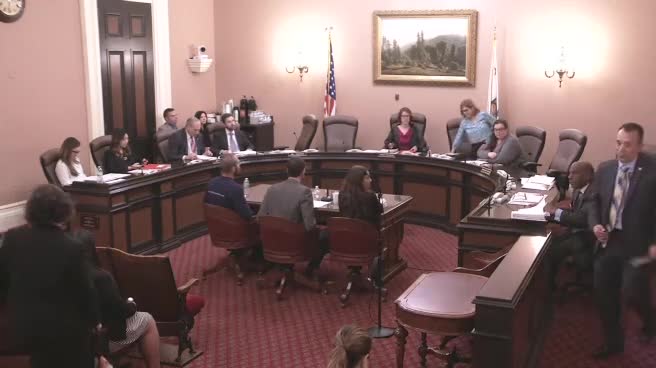
Discussed in Hearing
 14MIN
Senate Standing Committee on Public Safety
Bill Author

Bill Co-Author(s):