SB 1290: Substance abuse disorder treatment.
- Session Year: 2017-2018
- House: Senate
- Latest Version Date: 2018-04-30
Existing law provides for the licensure and regulation of alcoholism or drug abuse recovery or treatment facilities, as defined, by the State Department of Health Care Services. Existing law restricts a licensee from operating an alcoholism or drug abuse recovery or treatment facility beyond the conditions and limitations specified on the license.
This bill would make it unlawful for any licensee, operator, manager, consultant, employee, or patient of an alcoholism or drug abuse recovery or treatment facility, or any other person to, among other things, offer or pay a commission, benefit, bonus, rebate, kickback, or bribe, or engage in any split-fee arrangement to induce the referral of a patient or patronage to or from an alcoholism or drug abuse recovery or treatment facility, or to solicit or receive a commission, benefit, bonus, rebate, kickback, or bribe in return for referring a patient or patronage to or from an alcoholism or drug abuse recovery or treatment facility.
The bill would establish the Commission on Substance Abuse and Recovery to provide comprehensive recommendations to the Legislature to create a coordinated and unified effort among state and local agencies to effectively confront the statewide addiction and substance abuse crisis with appropriate care and consideration of local effects. The bill would also state the intent of the Legislature to encourage public and private sector businesses and organizations providing alcohol or drug abuse substance use disorder treatment and supportive services, including in residential settings, to provide those treatments and services with integrity and to ensure the quality of life for patients and individuals receiving these services.
Existing law provides for the licensure and regulation of alcoholism or drug abuse recovery or treatment facilities serving adults facilities, as defined, by the State Department of Health Care Services. Existing law restricts a licensee from operating an alcoholism or drug abuse recovery or treatment facility beyond the conditions and limitations specified on the license.
This bill would state the intent of the Legislature to enact legislation to ensure the integrity of businesses and organizations that provide substance abuse disorder treatment and supportive services and to ensure the quality of life for individuals receiving substance abuse disorder treatment and supportive services. make it unlawful for any licensee, operator, manager, consultant, employee, or patient of an alcoholism or drug abuse recovery or treatment facility, or any other person to, among other things, offer or pay a commission, benefit, bonus, rebate, kickback, or bribe, or engage in any split-fee arrangement to induce the referral of a patient or patronage to or from an alcoholism or drug abuse recovery or treatment facility, or to solicit or receive a commission, benefit, bonus, rebate, kickback, or bribe in return for referring a patient or patronage to or from an alcoholism or drug abuse recovery or treatment facility.
The bill would establish the Commission on Substance Abuse and Recovery to provide comprehensive recommendations to the Legislature to create a coordinated and unified effort among state and local agencies to effectively confront the statewide addiction and substance abuse crisis with appropriate care and consideration of local effects. The bill would also state the intent of the Legislature to encourage public and private sector businesses and organizations providing alcohol or drug abuse treatment and supportive services, including in residential settings, to provide those treatments and services with integrity and to ensure the quality of life for patients and individuals receiving these services.
Existing law provides for the licensure and regulation of alcoholism or drug abuse recovery or treatment facilities serving adults by the State Department of Health Care Services. Existing law restricts a licensee from operating an alcoholism or drug abuse recovery or treatment facility beyond the conditions and limitations specified on the license.
This bill would state the intent of the Legislature to enact legislation to ensure the integrity of businesses and organizations that provide substance abuse disorder treatment and supportive services and to ensure the quality of life for individuals receiving substance abuse disorder treatment and supportive services.
It is the intent of the Legislature to encourage public and private sector businesses and organizations providing alcohol or drug abuse substance use disorder treatment and supportive services, including in residential settings, to provide those treatments and services with integrity and to ensure the quality of life for patients and individuals receiving these services. Therefore, the Legislature encourages all of the following:
(a)All patients and individuals receiving care for chronic substance abuse addiction substance use disorders are to be treated with honesty, respect, and dignity.
(b)All patients and individuals receiving care are to be fully informed of what to expect from treatment, including the cost and duration of treatment, and the likelihood of success.
(c)All patients and individuals are to receive care directed by clinical professionals licensed and certified by the State of California. from qualified providers as determined by the State Department of Health Care Services.
(d)All patients and individuals are to receive an individualized, outcome-driven treatment plan.
SEC. 2.Article 3 (commencing with Section 11829.5) is added to Chapter 6 of Part 2 of Division 10.5 of the Health and Safety Code, to read:3.Commission on Substance Abuse and Recovery11829.5.(a)The Commission on Substance Abuse and Recovery is hereby established to provide comprehensive recommendations to the Legislature to create a coordinated and unified effort among state and local agencies to effectively confront the statewide addiction and substance abuse crisis with appropriate care and consideration of local effects.
(b)The commission shall review standards of care for patients, including, but not limited to, all of the following:
(1)Known best practices and evidence-based care.
(2)Consumer protections for patients.
(3)How patients are referred for care, including if any are recruited from either outside of the state or nonlocal areas.
(4)The availability of providers, facilities, and residences across the state.
(5)Market and local concentration of care providers, facilities, and residences.
(6)The education, training, qualifications, and efficacy of care providers, including any improvements necessary in the education, training, qualifications, and certification of care providers.
(7)Local use issues.
SEC. 3.Section 11834.19 is added to the Health and Safety Code, to read:11834.19.(a)It is unlawful for any licensee, operator, manager, consultant, employee, or patient of an alcoholism or drug abuse recovery or treatment facility, or any other person to do any of the following:
(1)(a)Offer or pay a commission, benefit, bonus, rebate, kickback, or bribe, directly or indirectly, in cash or in kind, or engage in any split-fee arrangement, in any form whatsoever, to induce the referral of a patient or patronage to or from an alcoholism or drug abuse recovery or treatment facility.
(2)(b)Solicit or receive a commission, benefit, bonus, rebate, kickback, or bribe, directly or indirectly, in cash or in kind, or engage in any split-fee arrangement, in any form whatsoever, in return for referring a patient or patronage to or from an alcoholism or drug abuse recovery or treatment facility.
(3)(c)Solicit or receive a commission, benefit, bonus, rebate, kickback, or bribe, directly or indirectly, in cash or in kind, or engage in any split-fee arrangement, in any form whatsoever, in return for the acceptance or acknowledgment of treatment from an alcoholism or drug abuse recovery or treatment facility.
(4)(d)Aid, abet, advise, broker, steer, or otherwise participate in the conduct prohibited under paragraphs (1) to (3), subdivisions (a) to (c), inclusive.
(b)This section shall not apply to any of the following:(1)A discount, payment, waiver of payment, or payment practice not prohibited by 42 U.S.C. 1320a-7b(b) or regulations promulgated thereunder.(2)A payment, compensation, or financial arrangement within a medical group practice if the payment, compensation, or arrangement is not to or from persons who are not members of the group practice.(3)Payments to an alcoholism or drug abuse recovery or treatment facility for professional consultation services.(4)Commissions, fees, or other remuneration lawfully paid to insurance agents.(5)Payments by a health insurer who reimburses, provides, offers to provide, or administers substance abuse goods or services under a health benefit plan.(6)Payments to or by an alcoholism or drug abuse recovery or treatment facility that has contracted with a health insurer, a health insurance purchasing alliance, or the Medicare or Medicaid programs to provide substance abuse goods or services under a health benefit plan if the payments are for goods or services under the plan.(7)Insurance advertising gifts lawfully permitted.(8)Commissions or fees paid to a nurse registry licensed for referring persons providing substance abuse services to clients of the nurse registry.(9)Payments by an alcoholism or drug abuse recovery or treatment facility to a substance abuse information service that provides information upon request and without charge to consumers about providers of substance abuse goods or services to enable consumers to select an appropriate alcoholism or drug abuse recovery or treatment facility if the information service meets all of the following requirements:(A)Does not attempt through its standard questions for solicitation of consumer criteria or through any other means to steer or lead a consumer to select or consider selection of a particular alcoholism or drug abuse recovery or treatment facility.(B)Does not provide or represent itself as providing diagnostic or counseling services or assessments of illness or injury and does not make any promises of cure or guarantees of treatment.(C)Does not provide or arrange for transportation of a consumer to or from the location of an alcoholism or drug abuse recovery or treatment facility.(D)Charges and collects fees from an alcoholism or drug abuse recovery or treatment facility participating in its services that are set in advance, are consistent with the fair market value for those information services, and are not based on the potential value of a patient or patients to an alcoholism or drug abuse recovery or treatment facility or of the goods or services provided by the alcoholism or drug abuse recovery or treatment facility.It is the intent of the Legislature to encourage public and private sector businesses and organizations providing alcohol or drug abuse treatment and supportive services, including in residential settings, to provide those treatments and services with integrity and to ensure the quality of life for patients and individuals receiving these services. Therefore, the Legislature encourages all of the following:
(a)All patients and individuals receiving care for chronic substance abuse addiction are to be treated with honesty, respect, and dignity.
(b)All patients and individuals receiving care are to be fully informed of what to expect from treatment, including the cost and duration of treatment, and the likelihood of success.
(c)All patients and individuals are to receive care directed by clinical professionals licensed and certified by the State of California.
(d)All patients and individuals are to receive an individualized, outcome-driven treatment plan.
SEC. 2.Article 3 (commencing with Section 11829.5) is added to Chapter 6 of Part 2 of Division 10.5 of the Health and Safety Code, to read:3.Commission on Substance Abuse and Recovery11829.5.(a)The Commission on Substance Abuse and Recovery is hereby established to provide comprehensive recommendations to the Legislature to create a coordinated and unified effort among state and local agencies to effectively confront the statewide addiction and substance abuse crisis with appropriate care and consideration of local effects.
(b)The commission shall review standards of care for patients, including, but not limited to, all of the following:
(1)Known best practices and evidence-based care.
(2)Consumer protections for patients.
(3)How patients are referred for care, including if any are recruited from either outside of the state or nonlocal areas.
(4)The availability of providers, facilities, and residences across the state.
(5)Market and local concentration of care providers, facilities, and residences.
(6)The education, training, qualifications, and efficacy of care providers, including any improvements necessary in the education, training, qualifications, and certification of care providers.
(7)Local use issues.
SEC. 3.Section 11834.19 is added to the Health and Safety Code, to read:11834.19.(a)It is unlawful for any licensee, operator, manager, consultant, employee, or patient of an alcoholism or drug abuse recovery or treatment facility, or any other person to do any of the following:
(1)Offer or pay a commission, benefit, bonus, rebate, kickback, or bribe, directly or indirectly, in cash or in kind, or engage in any split-fee arrangement, in any form whatsoever, to induce the referral of a patient or patronage to or from an alcoholism or drug abuse recovery or treatment facility.
(2)Solicit or receive a commission, benefit, bonus, rebate, kickback, or bribe, directly or indirectly, in cash or in kind, or engage in any split-fee arrangement, in any form whatsoever, in return for referring a patient or patronage to or from an alcoholism or drug abuse recovery or treatment facility.
(3)Solicit or receive a commission, benefit, bonus, rebate, kickback, or bribe, directly or indirectly, in cash or in kind, or engage in any split-fee arrangement, in any form whatsoever, in return for the acceptance or acknowledgment of treatment from an alcoholism or drug abuse recovery or treatment facility.
(4)Aid, abet, advise, broker, steer, or otherwise participate in the conduct prohibited under paragraphs (1) to (3), inclusive.
(b)This section shall not apply to any of the following:
(1)A discount, payment, waiver of payment, or payment practice not prohibited by 42 U.S.C. 1320a-7b(b) or regulations promulgated thereunder.
(2)A payment, compensation, or financial arrangement within a medical group practice if the payment, compensation, or arrangement is not to or from persons who are not members of the group practice.
(3)Payments to an alcoholism or drug abuse recovery or treatment facility for professional consultation services.
(4)Commissions, fees, or other remuneration lawfully paid to insurance agents.
(5)Payments by a health insurer who reimburses, provides, offers to provide, or administers substance abuse goods or services under a health benefit plan.
(6)Payments to or by an alcoholism or drug abuse recovery or treatment facility that has contracted with a health insurer, a health insurance purchasing alliance, or the Medicare or Medicaid programs to provide substance abuse goods or services under a health benefit plan if the payments are for goods or services under the plan.
(7)Insurance advertising gifts lawfully permitted.
(8)Commissions or fees paid to a nurse registry licensed for referring persons providing substance abuse services to clients of the nurse registry.
(9)Payments by an alcoholism or drug abuse recovery or treatment facility to a substance abuse information service that provides information upon request and without charge to consumers about providers of substance abuse goods or services to enable consumers to select an appropriate alcoholism or drug abuse recovery or treatment facility if the information service meets all of the following requirements:
(A)Does not attempt through its standard questions for solicitation of consumer criteria or through any other means to steer or lead a consumer to select or consider selection of a particular alcoholism or drug abuse recovery or treatment facility.
(B)Does not provide or represent itself as providing diagnostic or counseling services or assessments of illness or injury and does not make any promises of cure or guarantees of treatment.
(C)Does not provide or arrange for transportation of a consumer to or from the location of an alcoholism or drug abuse recovery or treatment facility.
(D)Charges and collects fees from an alcoholism or drug abuse recovery or treatment facility participating in its services that are set in advance, are consistent with the fair market value for those information services, and are not based on the potential value of a patient or patients to an alcoholism or drug abuse recovery or treatment facility or of the goods or services provided by the alcoholism or drug abuse recovery or treatment facility.
SECTION 1.It is the intent of the Legislature to enact legislation to ensure the integrity of businesses and organizations that provide substance abuse disorder treatment and supportive services and to ensure the quality of life for individuals receiving substance abuse disorder treatment and supportive services.It is the intent of the Legislature to enact legislation to ensure the integrity of businesses and organizations that provide substance abuse disorder treatment and supportive services and to ensure the quality of life for individuals receiving substance abuse disorder treatment and supportive services.
|
Date
|
Status
|
|---|---|
| May 25, 2018 | May 25 hearing: Held in committee and under submission. |
| May 23, 2018 | Set for hearing May 25. |
| May 22, 2018 | May 22 hearing: Placed on APPR. suspense file. |
| May 14, 2018 | Set for hearing May 22. |
| Apr 30, 2018 | Read second time and amended. Re-referred to Com. on APPR. |
| Apr 26, 2018 | From committee: Do pass as amended and re-refer to Com. on APPR. (Ayes 8. Noes 0.) (April 25). |
| Apr 12, 2018 | Set for hearing April 25. |
| Apr 4, 2018 | Re-referred to Com. on HEALTH. |
| Mar 22, 2018 | From committee with author's amendments. Read second time and amended. Re-referred to Com. on RLS. |
| Mar 1, 2018 | Referred to Com. on RLS. |
| Feb 20, 2018 | From printer. May be acted upon on or after March 22. |
| Feb 16, 2018 | Introduced. Read first time. To Com. on RLS. for assignment. To print. |
|
Date
|
Description
|
Location
|
Votes
|
|
|---|---|---|---|---|
| May 22, 2018 | Placed on suspense file | Senate Standing Committee on Appropriations |
Passed |
|
| Apr 25, 2018 | Do pass as amended, but first amend, and re-refer to the Committee on [Appropriations] | Senate Standing Committee on Health |
Passed |
This list shows positions taken on this bill by organizations on the date displayed, which is linked to the original source.
Positions by individuals are not included.
|
Organization
|
Position
|
Date
|
|---|---|---|
| Advocates for Responsible Treatment | ** Support | Apr 23, 2018 |
| Association of California Cities - Orange County | * Support | Apr 25, 2018 |
| California Behavioral Health Directors Association | * Support | Apr 25, 2018 |
| California Consortium of Addiction Programs and Professionals | * Support | Apr 25, 2018 |
| Palm Beach County Commission on Ethics | * Support | Apr 25, 2018 |
SENATE COMMITTEE ON
Senator Ricardo Lara, Chair
2017 - 2018 Regular Session
SB 1290 (Bates) - Substance abuse disorder treatment
Version: | Policy Vote: |
Urgency: | Mandate: |
Hearing Date: | Consultant: |
This bill meets the criteria for referral to the Suspense File.
Bill Summary:
Senate Bill 1290 establishes the Commission on Substance Abuse and recovery to provide comprehensive recommendations to the Legislature and to review standards of care for patients, as specified. The bill prohibits specified individuals at a licensed alcoholism or drug abuse recovery or treatment facility to benefit financially for referring another individual to substance use disorder treatment services, as specified.
Fiscal Impact:
The Department of Health Care Services estimates total costs for the positions required to implement the bill, for Fiscal Year (FY) 2019-20 to be $1.32 million General Fund, and in FY 2020-21, and ongoing, to be $1.24 million General Fund. For more information about the cost breakdown by personnel and classification, please see staff comments.
Background:
- The Department of Health Care Services (DHCS) to license alcoholism or drug abuse recovery or treatment facilities (RTFs) that provide 24-hour residential non-medical services to adults who are recovering from problems related to alcohol, drug, or alcohol and drug misuse or abuse, and who need alcohol, drug, or alcohol and drug recovery, treatment, or detoxification services. DHCS is also authorized to adopt regulations requiring records and procedures appropriate for the type of service provided. Provides that the records and procedures can include all of the following: admission criteria; intake process; assessments; recovery, treatment, or detoxification planning; referral; documentation of provision of recovery, treatment, or detoxification services; discharge and continuing care planning; or indicators of recovery, treatment, or detoxification outcomes.
Existing law requires RTF licensees to provide at least one of the following nonmedical services: recovery, treatment, or detoxification services.
Proposed Law:
The bill establishes the Commission on Substance Abuse and Recovery is hereby established to provide comprehensive recommendations to the Legislature to create a coordinated and unified effort among state and local agencies to effectively confront the statewide addiction and substance abuse crisis with appropriate care and consideration of local effects.
The bill requires the commission to review standards of care for patients, including, but not limited to, all of the following:
- Known best practices and evidence-based care;
- Consumer protections for patients;
- How patients are referred for care, including if any are recruited from either outside of the state or nonlocal areas;
- The availability of providers, facilities, and residences across the state;
- Market and local concentration of care providers, facilities, and residences;
- The education, training, qualifications, and efficacy of care providers, including any improvements necessary in the education, training, qualifications, and certification of care providers; and
- Local use issues.
The bill makes it unlawful for any licensee, operator, manager, consultant, employee, or patient of an alcoholism or drug abuse recovery or treatment facility, or any other person to do any of the following:
- Offer or pay a commission, benefit, bonus, rebate, kickback, or bribe, directly or indirectly, in cash or in kind, or engage in any split-fee arrangement, in any form whatsoever, to induce the referral of a patient or patronage to or from an alcoholism or drug abuse recovery or treatment facility.
- Solicit or receive a commission, benefit, bonus, rebate, kickback, or bribe, directly or indirectly, in cash or in kind, or engage in any split-fee arrangement, in any form whatsoever, in return for referring a patient or patronage to or from an alcoholism or drug abuse recovery or treatment facility.
- Solicit or receive a commission, benefit, bonus, rebate, kickback, or bribe, directly or indirectly, in cash or in kind, or engage in any split-fee arrangement, in any form whatsoever, in return for the acceptance or acknowledgment of treatment from an alcoholism or drug abuse recovery or treatment facility.
- Aid, abet, advise, broker, steer, or otherwise participate in the prohibited conducted.
Related Legislation:
The Legislature is considering several approaches to alcohol and drug recovery or treatment facilities (RTFs), including the following bills:
- SB 902 (Bates) requires the Department of Health Care Services (DHCS) to conduct a state and federal criminal history background check for specified individuals prior to issuing an initial license for an alcoholism or drug abuse recovery or treatment facility. The bill would also prohibit specified individuals from being issued a license at, or from working at, a recovery or treatment facility. The bill is pending in the Senate Appropriations Suspense File.
- SB 992 (Hernandez) requires DHCS licensed and certified programs to disclose business relationships, as specified, and makes changes to current licensing law to improve client treatment and provide DHCS more oversight authority over licensed RTFs. The bill is pending in the Senate Appropriations Suspense File.
- SB 1268 (Bradford) prohibits certain persons, programs, or entities, including a licensed RTF and persons employed by, or working for, that program, from giving or receiving remuneration or anything of value for the referral of a person who is seeking alcoholism or drug abuse recovery and treatment services, as specified. The bill is pending consideration at the Senate Appropriations Committee May 22 hearing.
- SB 1317 (Portantino) permits a city, county, or city and county to adopt by local ordinance health and safety standards and enforcement mechanisms for structured sober living homes, as specified. The bill is pending consideration at the Senate Appropriations Committee’s May 22 hearing.
- AB 572 (Quirk-Silva) requires DHCS to establish a pilot program, if the City of Costa Mesa elects to participate, whereby DHCS assigns a compliance analyst to investigate complaints against licensed RTFs within the City of Costa Mesa or other local governments within Orange County, as specified. The bill is pending in the Assembly Health Committee.
- AB 2200 (Patterson) requires a person who has responsibility for residents or frequent or routine contact with residents of an RTF to be subject to a criminal record review prior to that person’s involvement in the provision of services, as specified. The bill is pending in the Assembly Appropriations Committee Suspense File.
- AB 2214 (Rodriguez) establishes a voluntary certification process for recover residences, as defined, by an organization approved by DHCS to certify a residence as a recovery residence. The bill is pending in the Assembly Appropriations Committee Suspense File.
- AB 3162 (Friedman) requires DHCS to deny an application for a new RTF license if the proposed location is in proximity to an existing RTF that would result in overconcentration, as specified. The bill also increases penalties for a violation of licensing law and regulations, as specified, among other provisions. The bill is pending in the Assembly Appropriations Committee. \
Previous Legislation.
- SB 636 (Bradford, 2017), which was not heard in Senate Health.
- AB 285 (Melendez, 2017), which was held on suspense in Assembly Appropriations.
- SB 1283 (Bates, 2016) failed passage in Senate Health.
- AB 2255 (Melendez, 2016), held on suspense in Assembly Appropriations 2016
- AB 848 (Stone), Ch. 744, Stats. of 2015
- AB 2491 (Nestande), held on suspense in Senate Appropriations 2014
Staff Comments:
The Department of Health Care Services provided the following: SB 1290 would require DHCS to be responsible for the development and implementation of new regulations, processing and investigating complaints and taking actions against those found to be in violation of the prohibited activities. To complete these activities, DHCS would require additional staff.
- One (1) Staff Services Manager I position: This position would be required to supervise the staff and oversee the DHCS/SUDCD compliance with the requirements of SB 1290. This position would be full time and permanent with a cost of $151,000 for FY 2019-20 and $142,000 for FY 2020-21 and ongoing.
- Five (5) Associate Governmental Program Analyst (AGPA) positions: These positions would be required to establish the various processes required by SB 1290. The AGPAs would review and ensure compliance with the requirements of SB 1290 by processing complaints, conducting investigations and compiling actions. These positions would be full time and permanent with a cost of $696,000 for FY 2019-20 and $651,000 for FY 2020-21 and ongoing.
- One (1) Office Technician (OT) position: This position would be required to provide support duties to the unit and provide the data input and process management required in order to comply with the requirements of this bill. This position would be full time and permanent with a cost of $90,000 for FY 2019-20 and $81,000 for FY 2020-21 and ongoing.
- One (1) Attorney I and one (1) Attorney III position in MHSUDS OLS: These positions would be required to review and provide legal support for complaints, and investigations of those complaints made directly to DHCS, provide legal support, and coordination with the Administrative Litigation team for administrative hearings based on revocations of certification and/or licenses of alcohol and drug treatment programs. These positions would be full time and permanent and have a cost of $379,000 for FY 2019-20 and $361,000 for FY 2020-21 and ongoing.
-- END --
SENATE COMMITTEE ON HEALTH
Senator Ed Hernandez, O.D., Chair
BILL NO: SB 1290
AUTHOR: | Bates | ||
VERSION: | March 22, 2018 | ||
HEARING DATE: | April 25, 2018 | ||
CONSULTANT: | Reyes Diaz | ||
SUBJECT: Substance abuse disorder treatment
SUMMARY:
Deems it unlawful for specified individuals at a licensed alcoholism or drug abuse recovery or treatment facility to benefit financially for referring another individual to substance use disorder treatment services, as specified. Establishes the Commission on Substance Abuse and Recovery to provide comprehensive recommendations to the Legislature to create a coordinated and unified effort among specified entities to confront the statewide addiction and substance abuse crisis, as specified.
Existing federal law: Deems it a felony for any person to knowingly or willfully solicit, receive, offer, or pay any remuneration for referring a person for a service, or arranging for or recommending a service for which a federal health care program pays whole or part, except for certain discounts, payments, and waivers of payment, as specified. [42 USC 1320a-7b (b)]
Existing state law:
- Requires the Department of Health Care Services (DHCS) to license alcoholism or drug abuse recovery or treatment facilities (RTFs) that provide 24-hour residential non-medical services to adults who are recovering from problems related to alcohol, drug, or alcohol and drug misuse or abuse, and who need alcohol, drug, or alcohol and drug recovery, treatment, or detoxification services. [HSC §11834.01 et seq.]
- Requires RTF licensees to provide at least one of the following nonmedical services: recovery, treatment, or detoxification services. Requires DHCS to adopt regulations requiring records and procedures appropriate for the type of service provided. Provides that the records and procedures can include all of the following: admission criteria; intake process; assessments; recovery, treatment, or detoxification planning; referral; documentation of provision of recovery, treatment, or detoxification services; discharge and continuing care planning; or indicators of recovery, treatment, or detoxification outcomes. [HSC §11834.26]
This bill:
- Deems it unlawful for any licensee, operator, manager, consultant, or employee, or patient of an RTF, or any other person, to do any of the following:
- Offer or pay a commission, benefit, bonus, rebate, kickback, or bribe, directly or indirectly, in cash or in kind, or engage in any split-fee arrangement, in any form whatsoever, to induce the referral of a patient or patronage to or from an RTF;
- Solicit or receive a commission, benefit, bonus, rebate, kickback, or bribe, directly or indirectly, in cash or in kind, or engage in any split-fee arrangement, in any form whatsoever, in return for referring a patient or patronage to or from an RTF;
- Solicit or receive a commission, benefit, bonus, rebate, kickback, or bribe, directly or indirectly, in cash or in kind, or engage in any split-fee arrangement, in any form whatsoever, in return for the acceptance or acknowledgment of treatment from an RTF; and,
- Aid, abet, advise, broker, steer, or otherwise participate in the conduct prohibited under a) through c) above.
- Prohibits the provisions in 1) above from applying to any of the following:
- A discount, payment, waiver of payment, or payment practice not prohibited by existing federal law;
- A payment, compensation, or financial arrangement within a medical group practice if the payment compensation, or arrangement is not to or from persons who are not members of the group practice;
- Payments to an RTF for professional consultation services;
- Commissions, fees, or other remuneration lawfully paid to insurance agents;
- Payments by a health insurer who reimburses, provides, offers to provide, or administers substance abuse goods or services under a health plan;
- Payments to or any an RTF that has contracted with a health insurer, a health insurance purchasing alliance, or the Medicare or Medicaid programs to provide substance abuse goods or services under a health benefit plan if the payments are for goods or services under the plan;
- Insurance advertising gifts lawfully permitted;
- Commissions or fees paid to a nurse registry licensed for referring persons providing substance abuse services to clients of the nurse registry;
- Payments by an RTF to a substance abuse information service that provides information upon request and without charge to consumers about providers of substance abuse goods or services to enable consumers to select an appropriate RTF if the information meets all of the following requirements:
- Does not attempt through its standard questions for solicitation of consumer criteria or through any other means steer or lead a consumer to select or consider selection of a particular RTF;
- Does not provide or represent itself as providing diagnostic or counseling services or assessments of illness or injury and does not make any promises of cure or guarantees of treatment;
- Does not provide or arrange for transportation of a consumer to or from the location of an RTF; and,
- Charges and collects fees from an RTF participating in its services that are set in advance, are consistent with the fair market value for those information services, and are not based on the potential value of a patient or patients to an RTF or of the goods or services provided by the RTF.
- Establishes the Commission of Substance Abuse and Recovery (Commission) to provide comprehensive recommendations to the Legislature to create a coordinated and unified effort among state and local agencies to effectively confront the statewide addiction and substance abuse crisis with appropriate care and consideration of local effects.
- Requires the Commission to review standards of care for patients, including, but not limited to, all of the following:
- Known best practices and evidence-based care;
- Consumer protections for patients;
- How patients are referred for care, including if any are recruited from either outside of the state or nonlocal areas;
- The availability of providers, facilities, and residences across the state;
- Market and local concentration of care providers, facilities, and residences;
- The education, training, qualifications, and the efficacy of care providers, including any improvements necessary in the education, training, qualifications, and certification of care providers; and,
- Local use issues.
- States legislative intent to encourage public and private sector businesses and organizations providing alcohol and drug abuse treatment and supportive services, including in residential settings, to provide treatment and services with integrity and to ensure the quality of life for those receiving services; to treat those receiving services with honesty, respect, and dignity; to fully inform individuals about what to expect from treatment services; and to ensure individuals receive care from qualified providers.
FISCAL EFFECT:
This bill has not been analyzed by a fiscal committee.
COMMENTS:
- Author’s statement. According to the author, as the opioid crisis has become critical, addiction has soared and unscrupulous rehab operators have rushed in to take advantage of mandatory mental health treatment coverage required by the Affordable Care Act. In a comprehensive investigation by the Southern California News Group, it found that the state's hands-off approach to regulating the industry makes it easy for these bad operators to take advantage of these vulnerable individuals. SB 1290 addresses the substance abuse crisis by prohibiting patient brokering, creating the Commission on Substance Abuse and Recovery to study and provide comprehensive recommendations to the Legislature to improve California’s response to addiction and recovery efforts, and clarifying the intent of the Legislature to promote public and private sector businesses providing effective treatment services that adhere to standards providing the best patient outcomes. Anti-kickback statutes like the Patient Brokering Act are designed to prevent insurance fraud and abusive practices resulting from provider decisions that are based on self-interest rather than cost, quality of care, or necessity of services.
- RTFs. RTFs licensed by DHCS, based on what is commonly referred to as the social model, provide recovery, treatment, or detoxification services. (The Department of Public Health licenses medical model RTFs known as chemical dependency recovery hospitals.) The services provided by these social model RTFs include group and individual counseling, educational sessions, and alcoholism or drug abuse recovery and treatment planning. Social model RTFs are allowed to provide clients first aid and emergency care, and since the passage of AB 848 (Stone, Chapter 744, Statutes of 2015) RTFs can apply to DHCS for an additional license to provide incidental medical services by a licensed physician and surgeon or other health care practitioner, as specified. DHCS licenses about 1,020 RTFs. As part of their licensing functions, DHCS conducts reviews of licensed RTFs at least once every two years, or as necessary; checks for compliance with statute and regulations to ensure the health and safety of clients; investigates all complaints; and has the authority to suspend or revoke an RTF’s license for a violation of statute or regulations.
- Reports about “patient brokering.” Several news articles (“How Some Southern California drug rehab centers exploit addiction,” Orange County Register, May 21, 2017; “A Choice for Recovering Addicts: Relapse or Homelessness, New York Times, May 30, 2015; “California’s Rehab System is in Crisis … ” CityWatch Los Angeles, June 23, 2016; and “Special Report: Two states with an ocean view, and an ethical cloud,” Addiction Professional, March 18, 2013) highlight the issue of “patient brokering,” whereby unscrupulous individuals (sometimes called “interventionists”) lure clients seeking substance use disorder (SUD) treatment services, buy insurance policies for the clients or offer to pay their deductibles, and “sell” them to facility operators that do not provide any type of treatment services or regular monitoring, all the while billing the insurance plan. Some individuals involved in this practice have been quoted in news articles as acknowledging that the practice may be wrong; however, they also claim that the practice is so ubiquitous in California that they would have no clients at all if they did not engage. As a result, some facility operators keep interventionists on retainer, often for $5,000 to $10,000 a month, regardless of how many clients an interventionist refers to them, in order to remain in business. After clients’ insurance coverage is exhausted, unscrupulous facility operators have been allegedly dumping them in the streets where they continue their addictions. In many news articles, the issue is largely attributed to facilities that do not require state licensure or oversight, including and what New York refers to as “three-quarter houses,” which are New York’s equivalent to California’s sober living homes.
- Senate Health Committee informational hearing. On January 31, 2018, the Senate Health Committee held an informational hearing to examine the SUD treatment system with a focus on treatment and services provided in RTFs; insurance coverage; patient referrals; and the state’s regulation and oversight of the system. The hearing provided an overview of recent issues that have affected the state regarding unscrupulous facility operators, and gave an opportunity for state regulators to highlight efforts they have undertaken to combat the exploitation of the SUD system. The goal of the hearing was to examine the issues and to seek strategies and policies that will prevent unscrupulous individuals from exploiting the various industries that are supposed to help treat those with SUDs, as well as to recognize federal and state protections for those with disabilities, and to ensure that policies are not enacted, either at the local or state level, that will limit the number of treatment options for those who need them.
- Related legislation. SB 992 (Hernandez) requires DHCS licensed and certified programs to disclose business relationships, as specified, and makes changes to current licensing law to improve client treatment and provide DHCS more oversight authority over licensed RTFs. Requires DHCS to develop a program, after stakeholder input, for the voluntary registration of recovery residences, as specified. SB 992 passed out of this Committee by a vote of 9-0 on April 11, 2018.
SB 1228 (Lara) prohibits a licensed RTF or an employee of a licensee from referring a patient to a facility, residence, or dwelling that is not either a licensee or certified, or engaging in patient brokering, as defined. Requires DHCS to establish a program to approve organizations that certify facilities, residences, or dwellings that provide SUD continuum of care, are not licensees, and meet specified requirements that include a ban on patient brokering. SB 1228 passed out of this Committee by a vote of 9-0 on April 18, 2018.
SB 1268 (Bradford) prohibits certain persons, programs, or entities, including a licensed RTF and persons employed by, or working for, that program, from giving or receiving remuneration or anything of value for the referral of a person who is seeking alcoholism or drug abuse recovery and treatment services, as specified. SB 1268 passed out of this Committee by a vote of 9-0 on April 11, 2018.
AB 572 (Quirk-Silva) requires DHCS to establish a pilot program, if the City of Costa Mesa elects to participate, whereby DHCS assigns a compliance analyst to investigate complaints against licensed RTFs within the City of Costa Mesa or other local governments within Orange County, as specified. AB 572 is pending in this Committee.
AB 2214 (Rodriguez) establishes a voluntary certification process for recovery residences, as defined, by an organization approved by DHCS to certify a residence as a recovery residence. AB 2214 is pending in the Assembly Appropriations Committee.
AB 3162 (Friedman) requires DHCS to deny an application for a new RTF license if the proposed location is in proximity to an existing RTF that would result in overconcentration, as specified. Makes other changes to RTF licensing law, including making initial licenses for RTFs provisional, requiring all programs and medical services offered or provided by an RTF to be specified in the license application, and increasing penalties for a violation of licensing law and regulations, as specified. AB 3162 passed out of the Assembly Health Committee by a vote of 15-0 on April 17, 2018.
- Prior legislation. SB 636 (Bradford of 2017) contained provisions substantially similar to SB 1268 and would have prohibited specified entities from using runners, cappers, steerers, or other persons to procure clients, patients, or customers for any form of medical care or treatment provided by an alcohol-related or narcotic-related program, facility, or dispensary. SB 636 was never heard in this Committee.
AB 285 (Melendez of 2017) and AB 2255 (Melendez of 2016) were substantially similar to AB 2214. AB 285 and AB 2255 were held on the Assembly Appropriations Committee suspense file.
AB 2491 (Nestande of 2014) would have required DHCS to administer the licensure and regulation of adult recovery maintenance facilities (or sober living homes), as defined. AB 2491 was held on the Senate Appropriations Committee suspense file.
- Support. The County Behavioral Health Directors Association of California (CBHDAC) states that current law does not prohibit the practice of referring patients to addiction treatment centers that pass kickbacks to the agent making the referral, which has led to unethical or corrupt financial arrangements under the guise of helping individuals in their recovery from an SUD. CBHDAC states that referrals are commonly based upon financial incentives, rather than the health and well-being of the client struggling with an SUD, and that this bill will help put an end to this practice. CBHDAC also states that this bill will hold public and private sector organizations providing SUD treatment accountable to provide services with integrity. The California Consortium of Addiction Programs and Professionals (CCAPP) states that basic treatment rights provided by this bill recognizes the vulnerability that SUD patients and families face. CCAPP states that California would benefit from a careful review of how and why individuals are referred and admitted for care. CCAPP argues that the exclusion for legitimate business activities for making referrals without financial incentive to them is important. Advocates for Responsible Treatment (ART) states this bill will end patient brokering inside of and into the state. ART cites various news articles to highlight the issue of patient brokering and states that brokers may or may not be physically within the state while engaged in practices that may lure addicts over the Internet and ensure they get to California by providing free plane tickets and offer free housing while here. ART states that patient brokering has very real life-or-death consequences for those who are brokered, and creates incentives for everyone around the addict to encourage relapse.
- Policy comment. This bill sets forth broad prohibitions on patient brokering, including the offer, payment, solicitation, or receipt of financial benefit for referring to, inducing the referral to, or accepting or acknowledging treatment from an RTF. However, this bill also provides for exemptions to the prohibition on patient brokering that have an unclear effect, including allowing payments to or by RTFs for providing services, or having clients referred to RTFs by referral agencies. This list of exemptions is inconsistent with other bills previously approved by this Committee, which also set forth broad prohibitions on patient brokering without exemptions. The Committee may wish to request the author remove the list of exemptions contained in this bill to ensure consistency with previously approved policy.
- Technical amendment. The author may wish to consider the following technical amendment:
- In legislative intent language, specify that services are provided by qualified providers as determined by DHCS, and not by licensed professionals, as RTFs are nonmedical facilities.
SUPPORT AND OPPOSITION:
Support: Advocates for Responsible Treatment
Association of California Cities-Orange County
California Consortium of Addiction Programs and Professionals
County Behavioral Health Directors Association of California
Oppose: None received
-- END --
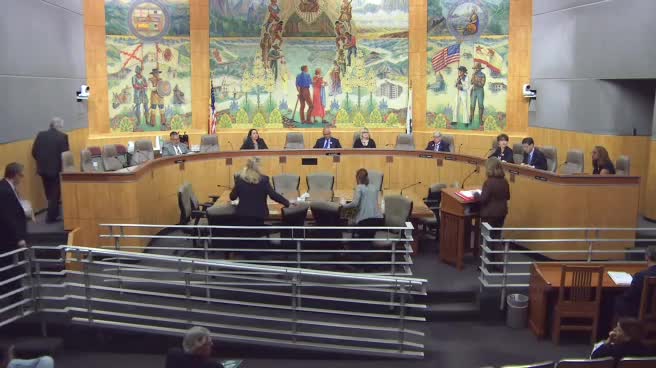
Bill Author

Bill Co-Author(s):