SB 1336: Public health: End of Life Option Act.
- Session Year: 2017-2018
- House: Senate
- Latest Version Date: 2018-04-02
Existing law, the End of Life Option Act, authorizes an adult who meets certain qualifications, and who has been determined by his or her attending physician to be suffering from a terminal disease, as defined, to make a request for an aid-in-dying drug for the purpose of ending his or her life. Prior to prescribing an aid-in-dying drug, existing law requires the attending physician to make certain determinations and verify, immediately before writing the prescription for an aid-in-dying drug, that the qualified individual is making an informed decision. Existing law requires the State Department of Public Health to create a report with information collected from attending physician followup forms and to post that report to its Internet Web site. Existing law requires that information to include, among other things, the underlying illness of the qualified individual. Existing law authorizes the Medical Board of California to update the attending physician checklists and forms required under these provisions.
Prior to prescribing an aid-in-dying drug, this bill would require an attending physician to request that a qualified individual inform the physician orally or in writing as to the motivating reason or reasons for receiving an aid-in-dying drug, as specified. The bill would require that information to be included in the report of the department described above. The bill would further require that report to This bill would require the report described above to further include additional information about each attending physician and the length of time that he or she provided care to a patient, and the areas of practice of each physician who wrote a prescription for an aid-in-dying drug, the motivating reason or reasons behind a patients decision to request the aid-in-dying drug, as specified, and the number of patients who received a mental health specialist assessment. assessment prior to receiving the aid-in-dying drug. The bill would require the Medical Board of California to make any necessary changes to the applicable forms to conform with these requirements.
Existing law, the End of Life Option Act, authorizes an adult who meets certain qualifications, and who has been determined by his or her attending physician to be suffering from a terminal disease, as defined, to make a request for an aid-in-dying drug for the purpose of ending his or her life. Prior to prescribing an aid-in-dying drug, existing law requires the attending physician to make certain determinations and verify, immediately before writing the prescription for an aid-in-dying drug, that the qualified individual is making an informed decision. Existing law requires the State Department of Public Health to create a report with information collected from attending physician followup forms and to post that report to its Internet Web site. Existing law requires that information to include, among other things, the underlying illness of the qualified individual. Existing law authorizes the Medical Board of California to update the attending physician checklists and forms required under these provisions.
Prior to prescribing an aid-in-dying drug, this bill would require an attending physician to request that a qualified individual inform the physician orally or in writing as to the motivating reason or reasons for receiving an aid-in-dying drug, as specified. The bill would require that information to be included in the report of the department described above. The bill would further require that report to include additional information about each attending physician and the length of time that he or she provided care to a patient, and the number of patients who received a mental health specialist assessment. The bill would require the Medical Board of California to make any necessary changes to the applicable forms to conform with these requirements.
(a)The State Department of Public Health shall collect and review the information submitted pursuant to Section 443.9. The information collected shall be confidential and shall be collected in a manner that protects the privacy of the patient, the patients family, and any medical provider or pharmacist involved with the patient under the provisions of this part. The information shall not be disclosed, discoverable, or compelled to be produced in any civil, criminal, administrative, or other proceeding.
(b)On or before July 1, 2017, and each year thereafter, based on the information collected in the previous year, the department shall create a report with the information collected from the attending physician followup form and post that report to its Internet Web site. The report shall include, but not be limited to, all of the following information:
(1)The number of people for whom an aid-in-dying prescription was written.
(2)The number of known individuals who died each year for whom aid-in-dying prescriptions were written, and the cause of death of those individuals.
(3)For the period commencing January 1, 2016, to and including the previous year, cumulatively, the total number of aid-in-dying prescriptions written, the number of people who died due to use of aid-in-dying drugs, and the number of those people who died who were enrolled in hospice or other palliative care programs at the time of death.
(4)The number of known deaths in California from using aid-in-dying drugs per 10,000 deaths in California.
(5)The number of physicians who wrote prescriptions for aid-in-dying drugs, and the specialty or specialties of each physician. drugs and the areas of practice of each physician.
(6)Of people who died due to using an aid-in-dying drug, demographic percentages organized by the following characteristics:
(A)Age at death.
(B)Education level.
(C)Race.
(D)Sex.
(E)Type of insurance, including whether or not they had insurance.
(F)Underlying illness.
(7)The motivating reason or reasons behind a patients decision to request the aid-in-dying drug pursuant to paragraph (9) of subdivision (a) of Section 443.5. the responses given to question 15 of the attending physician followup form described in Section 443.22.
(8)The number of patients who received a mental health specialist assessment prior to receiving the aid-in-dying drug.
(9)The length of time the attending physician has provided care to the patient prior to prescribing the aid-in-dying drug.(c)The State Department of Public Health shall make available the attending physician checklist and compliance form, the consulting physician compliance form, and the attending physician followup form, as described in Section 443.22, by posting them on its Internet Web site.
SEC. 3.SEC. 2.Section 443.22 of the Health and Safety Code is amended to read:443.22.(a)(1)The Medical Board of California may update the attending physician checklist and compliance form, the consulting physician compliance form, and the attending physician followup form, based on those provided in subdivision (b). Upon completion, the State Department of Public Health shall publish the updated forms on its Internet Web site.
(2)The Medical Board of California shall make changes to the forms referenced in paragraph (1) as necessary so the forms capture the information needed to fulfill the reporting requirement in subdivision (b) of Section 443.19.
(b)Unless and until updated by the Medical Board of California pursuant to this section, the attending physician checklist and compliance form, the consulting physician compliance form, and the attending physician followup form shall be in the following form:
PRINTER PLEASE NOTE: TIP-IN MATERIAL TO BE INSERTED(a)Before prescribing an aid-in-dying drug, the attending physician shall do all of the following:
(1)Make the initial determination of all of the following:
(A)(i)Whether the requesting adult has the capacity to make medical decisions.
(ii)If there are indications of a mental disorder, the physician shall refer the individual for a mental health specialist assessment.
(iii)If a mental health specialist assessment referral is made, no aid-in-dying drugs shall be prescribed until the mental health specialist determines that the individual has the capacity to make medical decisions and is not suffering from impaired judgment due to a mental disorder.
(B)Whether the requesting adult has a terminal disease.
(C)Whether the requesting adult has voluntarily made the request for an aid-in-dying drug pursuant to Sections 443.2 and 443.3.
(D)Whether the requesting adult is a qualified individual pursuant to subdivision (o) of Section 443.1.
(2)Confirm that the individual is making an informed decision by discussing with him or her all of the following:
(A)His or her medical diagnosis and prognosis.
(B)The potential risks associated with ingesting the requested aid-in-dying drug.
(C)The probable result of ingesting the aid-in-dying drug.
(D)The possibility that he or she may choose to obtain the aid-in-dying drug but not take it.
(E)The feasible alternatives or additional treatment options, including, but not limited to, comfort care, hospice care, palliative care, and pain control.
(3)Refer the individual to a consulting physician for medical confirmation of the diagnosis and prognosis, and for a determination that the individual has the capacity to make medical decisions and has complied with the provisions of this part.
(4)Confirm that the qualified individuals request does not arise from coercion or undue influence by another person by discussing with the qualified individual, outside of the presence of any other persons, except for an interpreter as required pursuant to this part, whether or not the qualified individual is feeling coerced or unduly influenced by another person.
(5)Counsel the qualified individual about the importance of all of the following:
(A)Having another person present when he or she ingests the aid-in-dying drug prescribed pursuant to this part.
(B)Not ingesting the aid-in-dying drug in a public place.
(C)Notifying the next of kin of his or her request for an aid-in-dying drug. A qualified individual who declines or is unable to notify next of kin shall not have his or her request denied for that reason.
(D)Participating in a hospice program.
(E)Maintaining the aid-in-dying drug in a safe and secure location until the time that the qualified individual will ingest it.
(6)Inform the individual that he or she may withdraw or rescind the request for an aid-in-dying drug at any time and in any manner.
(7)Offer the individual an opportunity to withdraw or rescind the request for an aid-in-dying drug before prescribing the aid-in-dying drug.
(8)Verify, immediately before writing the prescription for an aid-in-dying drug, that the qualified individual is making an informed decision.
(9)For purposes of paragraph (7) of subdivision (b) of Section 443.19, request that the qualified individual inform the physician orally or in writing as to the motivating reason or reasons behind the individuals decision to request the aid-in-dying drug. The question used to gather this information shall allow for the selection of multiple choices pursuant to, at a minimum, the following possible choices:
(A)Pain or the fear of pain.
(B)Concern about being a burden to others.
(C)Loss of autonomy.
(D)Sense of hopelessness.
(9)(10)Confirm that all requirements are met and all appropriate steps are carried out in accordance with this part before writing a prescription for an aid-in-dying drug.
(10)(11)Fulfill the record documentation required under Sections 443.8 and 443.19.
(11)(12)Complete the attending physician checklist and compliance form, as described in Section 443.22, include it and the consulting physician compliance form in the individuals medical record, and submit both forms to the State Department of Public Health.
(12)(13)Give the qualified individual the final attestation form, with the instruction that the form be filled out and executed by the qualified individual within 48 hours prior to the qualified individual choosing to self-administer the aid-in-dying drug.
(b)If the conditions set forth in subdivision (a) are satisfied, the attending physician may deliver the aid-in-dying drug in any of the following ways:
(1)Dispensing the aid-in-dying drug directly, including ancillary medication intended to minimize the qualified individuals discomfort, if the attending physician meets all of the following criteria:
(A)Is authorized to dispense medicine under California law.
(B)Has a current United States Drug Enforcement Administration (USDEA) certificate.
(C)Complies with any applicable administrative rule or regulation.
(2)With the qualified individuals written consent, contacting a pharmacist, informing the pharmacist of the prescriptions, and delivering the written prescriptions personally, by mail, or electronically to the pharmacist, who may dispense the drug to the qualified individual, the attending physician, or a person expressly designated by the qualified individual and with the designation delivered to the pharmacist in writing or verbally.
(c)Delivery of the dispensed drug to the qualified individual, the attending physician, or a person expressly designated by the qualified individual may be made by personal delivery, or, with a signature required on delivery, by United Parcel Service, United States Postal Service, Federal Express, or by messenger service.
(d)An attending physician shall not be precluded from prescribing an aid-in-dying drug pursuant to this part under circumstances in which the qualified individual chooses not to provide an answer to the question asked pursuant to paragraph (9) of subdivision (a).
SEC. 2.Section 443.19 of the Health and Safety Code is amended to read:443.19.(a)The State Department of Public Health shall collect and review the information submitted pursuant to Section 443.9. The information collected shall be confidential and shall be collected in a manner that protects the privacy of the patient, the patients family, and any medical provider or pharmacist involved with the patient under the provisions of this part. The information shall not be disclosed, discoverable, or compelled to be produced in any civil, criminal, administrative, or other proceeding.
(b)On or before July 1, 2017, and each year thereafter, based on the information collected in the previous year, the department shall create a report with the information collected from the attending physician followup form and post that report to its Internet Web site. The report shall include, but not be limited to, all of the following based on the information that is provided to the department and on the departments access to vital statistics: following information:
(1)The number of people for whom an aid-in-dying prescription was written.
(2)The number of known individuals who died each year for whom aid-in-dying prescriptions were written, and the cause of death of those individuals.
(3)For the period commencing January 1, 2016, to and including the previous year, cumulatively, the total number of aid-in-dying prescriptions written, the number of people who died due to use of aid-in-dying drugs, and the number of those people who died who were enrolled in hospice or other palliative care programs at the time of death.
(4)The number of known deaths in California from using aid-in-dying drugs per 10,000 deaths in California.
(5)The number of physicians who wrote prescriptions for aid-in-dying drugs. drugs, and the specialty or specialties of each physician.
(6)Of people who died due to using an aid-in-dying drug, demographic percentages organized by the following characteristics:
(A)Age at death.
(B)Education level.
(C)Race.
(D)Sex.
(E)Type of insurance, including whether or not they had insurance.
(F)Underlying illness.
(7)The motivating reason or reasons behind a patients decision to request the aid-in-dying drug pursuant to paragraph (9) of subdivision (a) of Section 443.5.
(8)The number of patients who received a mental health specialist assessment prior to receiving the aid-in-dying drug.
(9)The length of time the attending physician has provided care to the patient prior to prescribing the aid-in-dying drug.
(c)The State Department of Public Health shall make available the attending physician checklist and compliance form, the consulting physician compliance form, and the attending physician followup form, as described in Section 443.22, by posting them on its Internet Web site.
SEC. 3.Section 443.22 of the Health and Safety Code is amended to read:443.22.(a)(1)The Medical Board of California may update the attending physician checklist and compliance form, the consulting physician compliance form, and the attending physician followup form, based on those provided in subdivision (b). Upon completion, the State Department of Public Health shall publish the updated forms on its Internet Web site.
(2)The Medical Board of California shall make changes to the forms referenced in paragraph (1) as necessary so the forms capture the information needed to fulfill the reporting requirement in subdivision (b) of Section 443.19.
(b)Unless and until updated by the Medical Board of California pursuant to this section, the attending physician checklist and compliance form, the consulting physician compliance form, and the attending physician followup form shall be in the following form:
|
Date
|
Status
|
|---|---|
| Mar 29, 2018 | Set for hearing April 11. |
| Apr 2, 2018 | From committee with author's amendments. Read second time and amended. Re-referred to Com. on HEALTH. |
| Mar 1, 2018 | Referred to Coms. on HEALTH and JUD. |
| Feb 20, 2018 | From printer. May be acted upon on or after March 22. |
| Feb 16, 2018 | Introduced. Read first time. To Com. on RLS. for assignment. To print. |
|
Date
|
Description
|
Location
|
Votes
|
|
|---|---|---|---|---|
| Apr 11, 2018 | Do pass, but first be re-referred to the Committee on [Judiciary] | Senate Standing Committee on Health |
Failed |
This list shows positions taken on this bill by organizations on the date displayed, which is linked to the original source.
Positions by individuals are not included.
|
Organization
|
Position
|
Date
|
|---|---|---|
| Alliance Of Catholic Health Care | * Support | Apr 11, 2018 |
| Compassion & Choices | * Against | Apr 11, 2018 |
| None | * Support | Apr 11, 2018 |
| Paul Ramsey Institute | * Support | Apr 11, 2018 |
SENATE COMMITTEE ON HEALTH
Senator Ed Hernandez, O.D., Chair
BILL NO: SB 1336
AUTHOR: | Morrell | ||
VERSION: | April 2, 2018 | ||
HEARING DATE: | April 11, 2018 | ||
CONSULTANT: | Teri Boughton | ||
SUBJECT: Public health: End of Life Option Act
SUMMARY:
Requires the annual End of Life Option Act report published by the Department of Public Health (DPH) to include areas of practice of each physician who wrote prescriptions for aid-in-dying drugs; the motivating reasons behind a patient’s decision to request the aid-in-dying drug; and, the number of patients who received a mental health specialist assessment prior to receiving the aid-in-dying drug. Eliminates the requirement that the annual report be based upon information that is provided to DPH and on DPH’s access to vital statistics.
Existing law:
- Establishes the End of Life Option Act (Act) which permits a competent, qualified individual who is an adult with a terminal disease to receive a prescription for an aid-in-dying drug if certain conditions are met, such as two oral requests a minimum of 15 days apart, a written request signed by two witnesses is provided to his or her attending physician, the attending physician refers the patient to a consulting physician to confirm diagnosis and capacity to make medical decisions, and the attending physician refers the patient to a mental health specialist, if indicated. [HSC §443-443.22]
- Requires, within 30 calendar days of writing a prescription for an aid-in-dying drug, the attending physician to submit to DPH a copy of the qualifying patient’s written request, the attending physician checklist and compliance form, and the consulting physician compliance form. Requires, within 30 calendar days following the qualified individual’s death from ingesting the aid-in-dying drug, or any other cause, the attending physician to submit the attending physician follow-up form to DPH. [HSC §443.9]
- Requires DPH to collect and review the information submitted pursuant to 2) above. Requires the information to be confidential and collected in a manner that protects the privacy of the patient, the patient’s family, and any medical provider or pharmacist involved, and prohibits the information from being disclosed, discoverable, or compelled to be produced in any civil, criminal or administrative or other proceeding. [HSC §443.19]
- Requires DPH to create a report with the information collected from the attending physician follow up form on or before July 1, 2017 and each year thereafter, and post the report on its Internet Website. Requires the report to include, but not be limited to, all of the following based on the information that is provided to DPH and on DPH’s access to vital statistics:
- The number of people for whom an aid-in-dying prescription was written;
- The number of known individuals who died each year for whom aid-in-dying prescriptions were written, and the cause of death of those individuals;
- For the period commencing January 1, 2016, to and including the previous year, cumulatively, the total number of aid-in-dying prescriptions written the number of people who died due to use of aid-in-dying drugs, and the number of those people who died who were enrolled in hospice or other palliative care programs at the time of death;
- The number of known deaths in California from using aid-in-dying drugs per 10,000 deaths in California;
- The number of physicians who wrote prescriptions for aid-in-dying drugs; and,
- Of people who died due to using aid-in-dying drugs, demographic percentages organized by age at death, education level, race, sex, type of insurance, and underlying illness. [HSC §443.19]
- Sunsets the provisions above on January 1, 2026. [HSC §443.215]
This bill:
- Includes the following as required information in the annual report prepared by DPH:
- Areas of practice of each physician who wrote prescriptions for aid-in-dying drugs;
- The motivating reason or reasons behind a patient’s decision to request the aid-in-dying drug pursuant to the responses given to question 15 of the attending physician follow-up form, as specified; and,
- The number of patients who received a mental health specialist assessment prior to receiving the aid-in-dying drug.
- Eliminates a requirement that the annual report be based upon information that is provided to DPH and on DPH’s access to vital statistics.
- Requires the Medical Board of California to make changes to the physician reporting forms as necessary to capture the information needed to fulfill the reporting requirement.
FISCAL EFFECT:
This bill has not been analyzed by a fiscal committee.
COMMENTS:
- Author’s statement. According to the author, SB 1336 seeks to improve the quality of data gathered and reported regarding the implementation of the Act. The current reporting requirements are limited in scope, and the data currently reported by physicians prescribing the aid-in-dying drug does not paint a complete picture of how the Act is working. This bill would rectify existing deficiencies in reporting requirements by adding several key pieces of information to the mandated DPH annual report. The added information SB 1336 would include is critical in enabling policymakers and researchers to properly assess the performance of the Act.
- Annual report. California’s Act became effective on June 9, 2016. DPH’s first report presents data reported from physicians received between June 9, 2016 and December 31, 2016, and reflects information on individuals who were prescribed aid-in-dying drugs in 2016. For the partial year ending December 31, 2016, 191 individuals received prescriptions under the Act and 111 individuals died following their ingestion of the prescribed drugs. Of the 111 individuals, 87.4% were 60 years of age or older, 96.4% had health insurance and 83.8% were receiving hospice and/or palliative care. Over 250 individuals started the end-of-life option process, 173 unique physicians prescribed 191 individuals the aid-in-dying drugs. While 111 died following ingestion, 21 individuals died without ingestion of the drugs. It was undetermined at the time of the report publication of the outcome of the remaining 59 individuals who were prescribed the drugs. The rate for those who died following ingestion of aid-in-dying drugs was 6.06 per 10,000 total deaths based on 183,265 deaths during the same period. Over 54% who died after ingestion were female, over 72% had some college, a degree, or doctorate, 89.5% were white, the majority were covered by Medicare and/or Medi-Cal, 18.9% had private insurance and 3.6% were uninsured. Over 58% had malignant neoplasms, 18% had a neuromuscular diagnosis and 14.4% had heart or lung respiratory disease.
- The Act at one year. In September of 2017 a convening was held in Sacramento of 100 stakeholders including doctors, nurses, family members, experts in palliative care, ethics, disability rights and others to discuss state implementation of the Act; the experience of patients, caregivers and health care providers; and to identify best practices. Event organizers (Coalition for Compassionate Care, UCSF Medical Center, UCLA health, and others) indicated that a notable aspect of the convening was that parties of all political stripes expressed agreement on the need for DPH to be more transparent in sharing the Act data it collects, and requested data be shared either through an updated or additional report from DPH or de-identified raw data that could be released to independent researchers for analysis. The data elements requested are whether or not the patient informed the family, whether a mental health evaluation was performed, details of drugs prescribed, patient concerns that motivated the request, whether emergency medical system (EMS) was called, whether a physician or trained health care provider was present at the time of ingestion, setting or location of death, time from ingestion to unconsciousness, time from ingestion to death, complications form ingestion, if present, and whether or not the patient informed their family. Two letters have been submitted to DPH from event organizers requesting the release of these data.
- Attending physician follow-up form. The attending physician follow-up form contains 15 questions to be filled out if the patient died from ingesting the aid-in-dying drug. The first ten are to be completed if the physician (or another licensed health care provider) was present at death. These questions include details about where and when the patient ingested the aid-in-dying drug, as well as the time between ingestion and unconsciousness and death, if complications occurred, if EMS was activated, and if the patient was receiving hospice. The remaining five questions include the date that the prescription was written, if the patient was receiving hospice at the time of the initial request, and what type of health coverage the patient had. Question 15 specifically asks the doctor to indicate if the patient expressed concerns about the following that may have contributed to his or her decision to request the prescription: a concern about his or her terminal condition representing a steady loss of autonomy; the decreasing ability to participate in activities that made life enjoyable; the loss of control of bodily functions; persistent and uncontrollable pain and suffering; a loss of dignity. There is a space for indicating any other concerns. The attending physician is to indicate “yes,” “no,” or “I don’t know” in response to each concern.
- Double referral. This bill is double referred. Should it pass out of this committee, it will be referred to the Senate Judiciary Committee.
- Prior legislation. AB 15 2x (Egg man, Chapter 1, Statutes of 2015) establishes the Act.
- Support. The Alliance of Catholic Health Care writes that DPH is responsible for releasing annual reports detailing Act cases, but the information reported is limited and provides an incomplete picture of how the Act is working. The existing reporting requirements include only information regarding the number of prescriptions written, the number of patients who died and their cause of death, along with the age, education level, race, sex, type of insurance and underlying illness of patients. If we are to fully understand how this statute is being implemented, additional data is needed. This bill is a modest measure, which simply seeks to collect information regarding the areas of practice of each physician who wrote a prescription for an aid-in-dying drug, the motivating reason behind a patient’s decision to request the aid-in-dying drug, and the number of patients who received a mental health specialist assessment prior to receiving the aid-in-dying drug. These are basic, relevant data points, which is critical in supporting policymakers to properly assess the performance of the Act. It is important to note that even with the passage of this measure California will still be capturing and sharing less data than the states of Oregon and Washington.
- Opposition. Compassion & Choices writes that this bill will discourage physicians from practicing this compassionate end-of-life option and make it more difficult for dying patients to access the law by creating unnecessary and invasive reporting requirements. California doctors are already stating that the reporting requirements are too burdensome and this would further discourage doctors. Mandating doctors to identify their areas of practice is an overreach into the practice of medicine. This is a clear attempt by opponents of medical aid in dying to make it more difficult for patients to use the Act to deter physicians from participating, and collect data they believe will ultimately help them repeal the Act. During a hearing in January, held by the Assembly Select Committee on End of Life Health Care, there was testimony that revealed the process for terminally ill patients to obtain the medication is too complicated and burdensome. Those looking for medical aid in dying already find it difficult to find a doctor who will prescribe the medication, experience long waiting periods, and deal with a large amount of paperwork. This bill will only exacerbate these hurdles.
SUPPORT AND OPPOSITION:
Support: Alliance of Catholic Health Care
Oppose: Compassion & Choices
-- END --

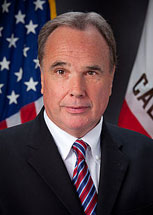
Bill Author
Bill Co-Author(s):