SB 194: Probation: revocation: new period.
- Session Year: 2017-2018
- House: Senate
- Latest Version Date: 2017-04-18
Existing law allows an order revoking probation to be set aside for good cause before judgement judgment has been pronounced. If probation has been revoked after judgment has been pronounced, existing law allows the judgment and the order which revoked the probation to be set aside within 30 days after the court has notice that the execution of the sentence has commenced. If an order setting aside the judgement, judgment, the revocation of probation, or both both, is made after the expiration of the probationary period, existing law allows the court to place the person on probation for that period and with those terms and conditions as it could have done immediately following conviction.
This bill would allow the court to place the person on probation for a new period of probation one additional period of probation, no longer than the shortest amount of time required to meet the rehabilitative goals of the defendant, up to a maximum of that period and with those terms and conditions as it could have done immediately following conviction whether if the order setting aside the judgement, judgment, the revocation of probation, or both both, was made before or after the expiration of the probationary period. By increasing the duties of probation officers, this bill would impose a state-mandated local program.
The California Constitution requires the state to reimburse local agencies and school districts for certain costs mandated by the state. Statutory provisions establish procedures for making that reimbursement.
This bill would provide that, if the Commission on State Mandates determines that the bill contains costs mandated by the state, reimbursement for those costs shall be made pursuant to the statutory provisions noted above.
Existing law allows an order revoking probation to be set aside for good cause before judgement has been pronounced. If probation has been revoked after judgment has been pronounced, existing law allows the judgment and the order which revoked the probation to be set aside within 30 days after the court has notice that the execution of the sentence has commenced. If an order setting aside the judgement, the revocation of probation, or both is made after the expiration of the probationary period, existing law allows the court to place the person on probation for that period and with those terms and conditions as it could have done immediately following conviction.
This bill would allow the court to place the person on probation for a new period of probation with those terms and conditions as it could have done immediately following conviction whether the order setting aside the judgement, the revocation of probation, or both was made before or after the expiration of the probationary period. By increasing the duties of probation officers, this bill would impose a state-mandated local program.
The California Constitution requires the state to reimburse local agencies and school districts for certain costs mandated by the state. Statutory provisions establish procedures for making that reimbursement.
This bill would provide that, if the Commission on State Mandates determines that the bill contains costs mandated by the state, reimbursement for those costs shall be made pursuant to the statutory provisions noted above.
(a)At any time during the period of supervision of a person (1) released on probation under the care of a probation officer pursuant to this chapter, (2) released on conditional sentence or summary probation not under the care of a probation officer, (3) placed on mandatory supervision pursuant to subparagraph (B) of paragraph (5) of subdivision (h) of Section 1170, (4) subject to revocation of postrelease community supervision pursuant to Section 3455, or (5) subject to revocation of parole supervision pursuant to Section 3000.08, if any probation officer, parole officer, or peace officer has probable cause to believe that the supervised person is violating any term or condition of his or her supervision, the officer may, without warrant or other process and at any time until the final disposition of the case, rearrest the supervised person and bring him or her before the court or the court may, in its discretion, issue a warrant for his or her rearrest. Notwithstanding Section 3056, and unless the supervised person is otherwise serving a period of flash incarceration, whenever a supervised person who is subject to this section is arrested, with or without a warrant or the filing of a petition for revocation as described in subdivision (b), the court may order the release of a supervised person from custody under any terms and conditions the court deems appropriate. Upon rearrest, or upon the issuance of a warrant for rearrest, the court may revoke and terminate the supervision of the person if the interests of justice so require and the court, in its judgment, has reason to believe from the report of the probation or parole officer or otherwise that the person has violated any of the conditions of his or her supervision, has become abandoned to improper associates or a vicious life, or has subsequently committed other offenses, regardless of whether he or she has been prosecuted for those offenses. However, the court shall not terminate parole pursuant to this section. Supervision shall not be revoked for failure of a person to make restitution imposed as a condition of supervision unless the court determines that the defendant has willfully failed to pay and has the ability to pay. Restitution shall be consistent with a persons ability to pay. The revocation, summary or otherwise, shall serve to toll the running of the period of supervision.
(b)(1)Upon its own motion or upon the petition of the supervised person, the probation or parole officer, or the district attorney, the court may modify, revoke, or terminate supervision of the person pursuant to this subdivision, except that the court shall not terminate parole pursuant to this section. The court in the county in which the person is supervised has jurisdiction to hear the motion or petition, or for those on parole, either the court in the county of supervision or the court in the county in which the alleged violation of supervision occurred. A person supervised on parole or postrelease community supervision pursuant to Section 3455 may not petition the court pursuant to this section for early release from supervision, and a petition under this section shall not be filed solely for the purpose of modifying parole. This section does not prohibit the court in the county in which the person is supervised or in which the alleged violation of supervision occurred from modifying a persons parole when acting on the courts own motion or a petition to revoke parole. The court shall give notice of its motion, and the probation or parole officer or the district attorney shall give notice of his or her petition to the supervised person, his or her attorney of record, and the district attorney or the probation or parole officer, as the case may be. The supervised person shall give notice of his or her petition to the probation or parole officer and notice of any motion or petition shall be given to the district attorney in all cases. The court shall refer its motion or the petition to the probation or parole officer. After the receipt of a written report from the probation or parole officer, the court shall read and consider the report and either its motion or the petition and may modify, revoke, or terminate the supervision of the supervised person upon the grounds set forth in subdivision (a) if the interests of justice so require.
(2)The notice required by this subdivision may be given to the supervised person upon his or her first court appearance in the proceeding. Upon the agreement by the supervised person in writing to the specific terms of a modification or termination of a specific term of supervision, any requirement that the supervised person make a personal appearance in court for the purpose of a modification or termination shall be waived. Prior to the modification or termination and waiver of appearance, the supervised person shall be informed of his or her right to consult with counsel, and if indigent the right to secure court appointed counsel. If the supervised person waives his or her right to counsel a written waiver shall be required. If the supervised person consults with counsel and thereafter agrees to a modification, revocation, or termination of the term of supervision and waiver of personal appearance, the agreement shall be signed by counsel showing approval for the modification or termination and waiver.
(c)Upon any revocation and termination of probation the court may, if the sentence has been suspended, pronounce judgment for any time within the longest period for which the person might have been sentenced. However, if the judgment has been pronounced and the execution thereof has been suspended, the court may revoke the suspension and order that the judgment shall be in full force and effect. In either case, the person shall be delivered over to the proper officer to serve his or her sentence, less any credits herein provided for.
(d)In any case of revocation and termination of probation, including, but not limited to, cases in which the judgment has been pronounced and the execution thereof has been suspended, upon the revocation and termination, the court may, in lieu of any other sentence, commit the person to the Department of Corrections and Rehabilitation, Division of Juvenile Facilities if he or she is otherwise eligible for that commitment.
(e)If probation has been revoked before the judgment has been pronounced, the order revoking probation may be set aside for good cause upon motion made before pronouncement of judgment. If probation has been revoked after the judgment has been pronounced, the judgment and the order which revoked the probation may be set aside for good cause within 30 days after the court has notice that the execution of the sentence has commenced. If an order setting aside the judgment, the revocation of probation, or both both, is made whether before or after the expiration of the probationary period, the court may again place the person on probation for a new period of probation that period and with those terms and conditions as it could have done immediately following conviction. If an order setting aside the judgment, the revocation of probation, or both, is made before the expiration of the probationary period, the court may again place the person on probation for one additional term, no longer than the shortest amount of time required to meet the rehabilitative goals of the defendant, up to a maximum of that period and with those terms and conditions as it could have done immediately following conviction.
(f)As used in this section, the following definitions shall apply:
(1)Court means a judge, magistrate, or revocation hearing officer described in Section 71622.5 of the Government Code.
(2)Probation officer means a probation officer as described in Section 1203 or an officer of the agency designated by the board of supervisors of a county to implement postrelease community supervision pursuant to Section 3451.
(3)Supervised person means a person who satisfies any of the following:
(A)He or she is released on probation subject to the supervision of a probation officer.
(B)He or she is released on conditional sentence or summary probation not under the care of a probation officer.
(C)He or she is subject to mandatory supervision pursuant to subparagraph (B) of paragraph (5) of subdivision (h) of Section 1170.
(D)He or she is subject to revocation of postrelease community supervision pursuant to Section 3455.
(E)He or she is subject to revocation of parole pursuant to Section 3000.08.
(g)This section does not affect the authority of the supervising agency to impose intermediate sanctions, including flash incarceration, to persons supervised on parole pursuant to Section 3000.8 or postrelease community supervision pursuant to Part 3 (commencing with Section 3450) of Title 2.05.
SEC. 2.If the Commission on State Mandates determines that this act contains costs mandated by the state, reimbursement to local agencies and school districts for those costs shall be made pursuant to Part 7 (commencing with Section 17500) of Division 4 of Title 2 of the Government Code.
(a)At any time during the period of supervision of a person (1) released on probation under the care of a probation officer pursuant to this chapter, (2) released on conditional sentence or summary probation not under the care of a probation officer, (3) placed on mandatory supervision pursuant to subparagraph (B) of paragraph (5) of subdivision (h) of Section 1170, (4) subject to revocation of postrelease community supervision pursuant to Section 3455, or (5) subject to revocation of parole supervision pursuant to Section 3000.08, if any probation officer, parole officer, or peace officer has probable cause to believe that the supervised person is violating any term or condition of his or her supervision, the officer may, without warrant or other process and at any time until the final disposition of the case, rearrest the supervised person and bring him or her before the court or the court may, in its discretion, issue a warrant for his or her rearrest. Notwithstanding Section 3056, and unless the supervised person is otherwise serving a period of flash incarceration, whenever a supervised person who is subject to this section is arrested, with or without a warrant or the filing of a petition for revocation as described in subdivision (b), the court may order the release of a supervised person from custody under any terms and conditions the court deems appropriate. Upon rearrest, or upon the issuance of a warrant for rearrest, the court may revoke and terminate the supervision of the person if the interests of justice so require and the court, in its judgment, has reason to believe from the report of the probation or parole officer or otherwise that the person has violated any of the conditions of his or her supervision, has become abandoned to improper associates or a vicious life, or has subsequently committed other offenses, regardless of whether he or she has been prosecuted for those offenses. However, the court shall not terminate parole pursuant to this section. Supervision shall not be revoked for failure of a person to make restitution imposed as a condition of supervision unless the court determines that the defendant has willfully failed to pay and has the ability to pay. Restitution shall be consistent with a persons ability to pay. The revocation, summary or otherwise, shall serve to toll the running of the period of supervision.
(b)(1)Upon its own motion or upon the petition of the supervised person, the probation or parole officer, or the district attorney, the court may modify, revoke, or terminate supervision of the person pursuant to this subdivision, except that the court shall not terminate parole pursuant to this section. The court in the county in which the person is supervised has jurisdiction to hear the motion or petition, or for those on parole, either the court in the county of supervision or the court in the county in which the alleged violation of supervision occurred. A person supervised on parole or postrelease community supervision pursuant to Section 3455 may not petition the court pursuant to this section for early release from supervision, and a petition under this section shall not be filed solely for the purpose of modifying parole. This section does not prohibit the court in the county in which the person is supervised or in which the alleged violation of supervision occurred from modifying a persons parole when acting on the courts own motion or a petition to revoke parole. The court shall give notice of its motion, and the probation or parole officer or the district attorney shall give notice of his or her petition to the supervised person, his or her attorney of record, and the district attorney or the probation or parole officer, as the case may be. The supervised person shall give notice of his or her petition to the probation or parole officer and notice of any motion or petition shall be given to the district attorney in all cases. The court shall refer its motion or the petition to the probation or parole officer. After the receipt of a written report from the probation or parole officer, the court shall read and consider the report and either its motion or the petition and may modify, revoke, or terminate the supervision of the supervised person upon the grounds set forth in subdivision (a) if the interests of justice so require.
(2)The notice required by this subdivision may be given to the supervised person upon his or her first court appearance in the proceeding. Upon the agreement by the supervised person in writing to the specific terms of a modification or termination of a specific term of supervision, any requirement that the supervised person make a personal appearance in court for the purpose of a modification or termination shall be waived. Prior to the modification or termination and waiver of appearance, the supervised person shall be informed of his or her right to consult with counsel, and if indigent the right to secure court appointed counsel. If the supervised person waives his or her right to counsel a written waiver shall be required. If the supervised person consults with counsel and thereafter agrees to a modification, revocation, or termination of the term of supervision and waiver of personal appearance, the agreement shall be signed by counsel showing approval for the modification or termination and waiver.
(c)Upon any revocation and termination of probation the court may, if the sentence has been suspended, pronounce judgment for any time within the longest period for which the person might have been sentenced. However, if the judgment has been pronounced and the execution thereof has been suspended, the court may revoke the suspension and order that the judgment shall be in full force and effect. In either case, the person shall be delivered over to the proper officer to serve his or her sentence, less any credits herein provided for.
(d)In any case of revocation and termination of probation, including, but not limited to, cases in which the judgment has been pronounced and the execution thereof has been suspended, upon the revocation and termination, the court may, in lieu of any other sentence, commit the person to the Department of Corrections and Rehabilitation, Division of Juvenile Facilities if he or she is otherwise eligible for that commitment.
(e)If probation has been revoked before the judgment has been pronounced, the order revoking probation may be set aside for good cause upon motion made before pronouncement of judgment. If probation has been revoked after the judgment has been pronounced, the judgment and the order which revoked the probation may be set aside for good cause within 30 days after the court has notice that the execution of the sentence has commenced. If an order setting aside the judgment, the revocation of probation, or both is made after whether before or after the expiration of the probationary period, the court may again place the person on probation for that period and a new period of probation with those terms and conditions as it could have done immediately following conviction.
(f)As used in this section, the following definitions shall apply:
(1)Court means a judge, magistrate, or revocation hearing officer described in Section 71622.5 of the Government Code.
(2)Probation officer means a probation officer as described in Section 1203 or an officer of the agency designated by the board of supervisors of a county to implement postrelease community supervision pursuant to Section 3451.
(3)Supervised person means a person who satisfies any of the following:
(A)He or she is released on probation subject to the supervision of a probation officer.
(B)He or she is released on conditional sentence or summary probation not under the care of a probation officer.
(C)He or she is subject to mandatory supervision pursuant to subparagraph (B) of paragraph (5) of subdivision (h) of Section 1170.
(D)He or she is subject to revocation of postrelease community supervision pursuant to Section 3455.
(E)He or she is subject to revocation of parole pursuant to Section 3000.08.
(g)This section does not affect the authority of the supervising agency to impose intermediate sanctions, including flash incarceration, to persons supervised on parole pursuant to Section 3000.8 or postrelease community supervision pursuant to Part 3 (commencing with Section 3450) of Title 2.05.
SEC. 2.If the Commission on State Mandates determines that this act contains costs mandated by the state, reimbursement to local agencies and school districts for those costs shall be made pursuant to Part 7 (commencing with Section 17500) of Division 4 of Title 2 of the Government Code.
|
Date
|
Status
|
|---|---|
| Feb 1, 2018 | Returned to Secretary of Senate pursuant to Joint Rule 56. |
| May 25, 2017 | May 25 hearing: Held in committee and under submission. |
| May 19, 2017 | Set for hearing May 25. |
| May 1, 2017 | May 1 hearing: Placed on APPR. suspense file. |
| Apr 21, 2017 | Set for hearing May 1. |
| Apr 18, 2017 | Read second time and amended. Re-referred to Com. on APPR. |
| Apr 17, 2017 | From committee: Do pass as amended and re-refer to Com. on APPR. (Ayes 6. Noes 0. Page 599.) (April 4). |
| Mar 10, 2017 | Set for hearing April 4. |
| Mar 9, 2017 | March 28 hearing postponed by committee. |
| Mar 9, 2017 | Set for hearing March 28. |
| Feb 9, 2017 | Referred to Com. on PUB. S. |
| Jan 31, 2017 | From printer. May be acted upon on or after March 2. |
| Jan 30, 2017 | Introduced. Read first time. To Com. on RLS. for assignment. To print. |
|
Date
|
Description
|
Location
|
Votes
|
|
|---|---|---|---|---|
| May 1, 2017 | Placed on suspense file | Senate Standing Committee on Appropriations |
Passed |
|
| Apr 4, 2017 | Do pass as amended, but first amend, and re-refer to the Committee on [Appropriations] | Senate Standing Committee on Public Safety |
Passed |
This list shows positions taken on this bill by organizations on the date displayed, which is linked to the original source.
Positions by individuals are not included.
|
Organization
|
Position
|
Date
|
|---|---|---|
| 1. Need For This Bill | ** Against | Apr 3, 2017 |
| According To The Author Of This Bill: | ** Against | Apr 3, 2017 |
| ACLU of California | * Against | Apr 4, 2017 |
| California District Attorney's Association | * Support | Apr 4, 2017 |
| California District Attorneys Association; California Police Chiefs Association | ** Support | Apr 3, 2017 |
| PURPOSE | ** Against | Apr 3, 2017 |
SENATE COMMITTEE ON APPROPRIATIONS
Senator Ricardo Lara, Chair
2017 - 2018 Regular Session
SB 194 (Anderson) - Probation: revocation: new period
Version: April 18, 2017 | Policy Vote: PUB. S. 6 - 0 |
Urgency: No | Mandate: Yes |
Hearing Date: May 1, 2017 | Consultant: Shaun Naidu |
This bill meets the criteria for referral to the Suspense File.
Bill Summary:
SB 194 would allow the court to place a probationer on one additional period of probation, as specified.
Fiscal Impact:
- Probation supervision: Unknown ongoing significant workload costs (local funds/General Fund) for county probation departments for continued supervision of probationers to the extent that courts impose the additional probation term. Local costs could be subject to state reimbursement or, alternatively, could require a subvention of funds from the state pursuant to Proposition 30 in lieu of a mandate reimbursement. See below for more detail.
- State prison: Potential state cost savings (General Fund) to the extent that additional terms of probation results in fewer inmates incarcerated in state prison for realignment-ineligible offenses or people. Conversely, potential increase in state prison incarceration costs (General Fund) for individuals whose probation was summarily revoked during the new probation period and state prison sentences are executed.
- County jail: Potential local cost savings (local funds) to the extent that additional terms of probation results in fewer inmates incarcerated in county jails. Conversely, potential increase in county jail incarceration costs (local funds) for individuals whose probation was summarily revoked during the new probation period and county jail sentences are executed.
Background:
A trial court has the authority to modify, revoke, or terminate probation at any time during the probationary period. This authority includes the power to extend the probationary term; however, "[a] change in circumstances is required before a court has jurisdiction to extend or otherwise modify probation." (People v. Cookson (1991) 54 Cal.3d 1091, 1095.)
The revocation process generally is divided into two parts: the summary revocation and a subsequent formal revocation hearing where a final decision is made whether to reinstate, permanently revoke, or terminate probation. The court may summarily revoke a defendant's probation at any time during the period of probation if it believes the defendant has violated probation. A summary revocation serves to toll the running of the probationary period so that a court may preserve its jurisdiction pending a formal revocation hearing. A violation must have occurred during the initial probationary term even if a summary revocation tolls the running of the term.
The purpose of the formal hearing is not to revoke probation, because this has already occurred as a matter of law with summary revocation. Rather, the purpose is to give the defendant an opportunity to require the prosecution to prove the alleged violation occurred and that it justifies revocation. When a probation violation is established at the formal revocation hearing, the court may modify, revoke, terminate, or reinstate probation.
Proposed Law:
This bill would allow the court, if an order setting aside the judgment, the revocation of probation, or both, is made before the expiration of the probationary period, to place a person on one additional term of probation, no longer than the shortest amount of time required to meet his or her rehabilitative goals, up to a maximum of that period and with those terms and conditions as it could have done immediately following conviction.
Prior Legislation:
AB 2208 (Dodd, 2016) would have overturned case law holding that the court lacks jurisdiction to adjudicate violations of probation occurring after the original term of probation ends. AB 2208 failed passage in the Assembly Committee on Public Safety.
AB 2477 (Patterson, 2016) would have overturned case law holding that the court lacks jurisdiction to modify a restitution order after the defendant's probation expires, thereby extending jurisdiction for restitution indefinitely. AB 2477 failed passage in the Assembly Committee on Public Safety.
AB 2339 (Quirk, 2014) would have required that all the terms and conditions of probation supervision remain in effect during the time period that the running of probation supervision is tolled as a result of a summary revocation by the court. AB 2339 failed passage in the Assembly Committee on Public Safety.
Staff Comments:
Under existing law, a court can extend the period of probation past the statutory maximum only when the probationer was alleged to have violated the terms of probation during the initial probationary period but the hearing and formal order setting aside probation occurs after the original term has ended. This bill would authorize the court to place a probationer on an additional period of probation if the summary revocation and/or the setting aside of the judgment happened before the initial probationary period expires. If the courts decide to extend probation, the probation department must continue supervision of the person for the duration of the new term of probation, leading to additional, new ongoing workload and resource costs. Proposition 30 (2012) exempts the state from mandate reimbursement for realigned responsibilities for “Public Safety Services” including the managing of local jails and the provision of services for and supervision of youth and adult offenders. The constitutional amendment, however, provides that legislation enacted after September 30, 2012 that has an overall effect of increasing the costs already borne by a local agency for public safety services transferred by the 2011 Realignment Legislation apply to local agencies only to the extent that the state provides annual funding for the cost increase. The provisions of Proposition 30 have not been adjudicated by the courts to date, so to the extent the county costs resulting from this measure are determined to be included within the scope of Proposition 30, counties would not be obligated to provide the level of service required by the bill above the level for which funding is provided by the state.
If the court is not allowed to extend the period of probation for a person found to have violated the terms of probation, the court could execute a suspended sentence, potentially resulting in state or local costs depending on if the sentence is to state prison or county jail. Consequently, the ability to add another probation period could result in avoided incarceration costs.
Conversely, the court could chose to terminate supervision and jurisdiction altogether absent the ability to extend a person’s placement on probation. In this situation, a court given the new ability authorized by this bill could instead decide to extend the person’s placement on probation. Should a person on the extended probation period violate its term, it could result in added state or county incarceration costs. To the extent that the court summarily revokes one person placed on an additional period of probation (and who otherwise would have had his term of supervision end after the initial period of probation) and a sentence of state prison is executed, it would result in additional General Fund costs of $75,560 annually to house that person in a state institution.
-- END --
SENATE COMMITTEE ON PUBLIC SAFETY
Senator Nancy Skinner, Chair
2017 - 2018 Regular
Bill No: SB 194 Hearing Date: April 4, 2017
Author: | Anderson | ||
Version: | January 30, 2017 | ||
Urgency: | No | Fiscal: | Yes |
Consultant: | SC | ||
Subject: Probation: Revocation: New Period
HISTORY
Source: San Diego District Attorney’s Office
Prior Legislation: AB 2205 (Dodd), failed passage in Assembly Public Safety (2016)
AB 2477 (Patterson), failed passage in Assembly Public Safety (2016)
SB 517 (Monning), Ch. 61, Stats. of 2015
AB 2339 (Quirk), failed passage in Assembly Public Safety (2014)
Support: California District Attorneys Association; California Police Chiefs Association
Opposition: American Civil Liberties Union of California; California Attorneys from Criminal Justice; California Public Defenders Association
PURPOSE
The purpose of this bill is to authorize a court to place the person on probation for a new period of probation that exceeds the statutory maximum when the order setting aside the judgment, the revocation of probation, or both was made before the expiration of the probationary period, whereas under existing law it is only authorized after the probationary period has expired.
Existing law defines “probation” to mean the suspension of the imposition or execution of a sentence and the order of conditional and revocable release in the community under the supervision of a probation officer. (Pen. Code, § 1203, subd. (a).)
Existing law provides that the court, in granting probation, may suspend the imposing or the execution of the sentence and may direct that the suspension may continue for a period of time not exceeding the maximum possible term of the sentence, except as provided, and upon those terms and conditions as it shall determine. The court may imprison the defendant in county jail as a condition of probation for a period not exceeding the maximum time fixed by law in the case. (Pen. Code, § 1203.1, subd. (a).)
Existing law gives the court discretion in felony cases to grant probation for up to five years, or no longer than the prison term that can be imposed when the prison term exceeds five years. (Pen. Code, § 1203.1, subd. (a).)
Existing law gives the court discretion in misdemeanor cases to generally grant probation for up to three years, or no longer than the consecutive sentence imposed if more than three years. (Pen. Code, § 1203a.)
Existing law provides that the probationary period terminates automatically on the last day. (Pen. Code, § 1203.3, subd. (b)(3).)
Existing law authorizes the court to impose and require any or all reasonable conditions as it may determine are fitting and proper and if the probationer violates any of the terms or conditions imposed by the court, it shall have the authority to modify and change any and all terms and conditions and to reimprison the probationer in county jail within the limitations of specified for the offense. (Pen. Code, § 1203.1, subd. (j).)
Existing law states that upon the defendant being released from the county jail under the terms of probation as originally granted or any modification subsequently made, and in all cases where confinement in a county jail has not been a condition of probation, the court shall place the defendant or probationer in and under the charge of the probation officer for the period or term fixed for probation. (Id.)
Existing law allows a probation officer, parole officer, or peace officer to arrest a person without warrant or other process during the period that a person is released on probation, conditional sentence or summary probation, mandatory supervision, postrelease community supervision, or parole supervision, if the officer has probable cause to believe that the supervised person is violating the terms of his or her supervision. (Pen. Code, § 1203.2, subd. (a).)
Existing law authorizes a court to revoke and terminate the supervision of the person if the interests of justice so require and the court, in its judgment, has reason to believe from the report of the probation or parole officer or otherwise that the person has violated any of the conditions of his or her supervision, has become abandoned to improper associates or a vicious life, or has subsequently committed other offenses, regardless whether he or she has been prosecuted for such offenses. (Id.)
Existing law states that the revocation, summary or otherwise, shall serve to toll the running of the period of supervision. (Id.)
Existing law provides that a court, upon its own motion or upon the petition of the supervised person, the probation or parole officer, or the district attorney, may modify, revoke, or terminate supervision of the person pursuant to this subdivision. (Pen. Code, § 1203.2, subd. (b)(1).)
Existing law states that, upon any revocation and termination of probation the court may, if the sentence has been suspended, pronounce judgment for any time within the longest period for which the person might have been sentenced. On the other hand, if the judgment has been pronounced and its execution suspended, the court may revoke the suspension and order that the judgment be in full force and effect. (Pen. Code, § 1203.2, subd. (c).)
Existing law provides that upon any revocation and termination of probation the court may, if the sentence has been suspended, pronounce judgment for any time within the longest period for which the person might have been sentenced, or if the judgment has been pronounced and the execution thereof has been suspended, the court may revoke the suspension and order that the judgment shall be in full force and effect. (Pen. Code, § 1203.2, subd. (c).)
Existing law states if probation has been revoked before the judgment has been pronounced, the order revoking probation may be set aside for good cause upon motion made before pronouncement of judgment. If probation has been revoked after the judgment has been pronounced, the judgment and the order which revoked the probation may be set aside for good cause within 30 days after the court has notice that the execution of the sentence has commenced. (Pen. Code, § 1203.2, subd. (e).)
Existing law provides that if an order setting aside the judgment, the revocation of probation, or both is made after the expiration of the probationary period, the court may again place the person on probation for that period with those terms and conditions as it could have done immediately following conviction. (Id.)
This bill would allow the court to place the person on probation for a new period of probation with those terms and conditions as it could have done immediately following conviction whether the order setting aside the judgment, the revocation of probation, or both was made before or after the expiration of the probationary period.
COMMENTS
1. Need for This Bill
According to the author of this bill:
Existing law allows a judge to impose a new term of probation beyond the statutory maximum only in such cases where probation is summarily revoked during the term of probation, but the order granting probation beyond the statutory maximum is entered after the original term would have ended.
While case law suggests that the defendant is estopped from complaining if the court extends probation beyond the statutory maximum without objection, or with defendant’s consent, most judges will not do that because it is an act in excess of the court’s jurisdiction.
The result is that if a defendant is picked up on a probation violation a month before his initial term expires, the court has no choice but to either execute sentence, or continue him on probation for only one month. If he is picked up a day after his initial term expires, the court can order a new term of probation up to the statutory maximum but starting over again.
As the purpose of our criminal justice system is now accountability, rehabilitation and restorative justice, it makes sense to fix this anomaly in the law.
This bill would allow the court to place the person on probation for a new period of probation with those terms and conditions as it could have done immediately following conviction whether the order setting aside the judgment, the revocation of probation, or both was made before or after the expiration of the probationary period.
2. Expiration of Supervision
In the absence of an order revoking probation, probation expires by operation of law on the last day of the probationary period. (Pen. Code, § 1203.3, subd. (b)(3).) If no order of modification or revocation is made before the end of the period of probation delineated in the original or any subsequent probation grant, the court has no authority or jurisdiction over the defendant. (In re Griffin (1967) 67 Cal.2d 343, 346; Hilton v. Superior Court (2014) 239 Cal.App.4th 766, 772-773.) If the probationary period has expired after probation was timely revoked, the court may set aside the revocation and again place the person on probation for that period and with those terms and conditions that it could have done immediately following conviction. (Pen. Code, § 1203.2, subd. (e).) This provision authorizes a defendant to be placed on probation for a period of time that exceeds the statutory maximum term only if the original probationary period has expired. (People v. Jackson (2005) 134 Cal. App. 4th 929, 931.)
Another way that the probationary period may be extended beyond the maximum statutory term is through an agreement by defense counsel or the defendant to a probationary period longer than the maximum statutory period estops a claim that probation has expired. (People v. Ford (2015) 61 Cal.4th 282, 286-288; People v. Jackson, supra,134 Cal.App.4th at 933.)
In Ford, supra, defendant appealed an order to pay victim restitution claiming that the court lacked jurisdiction because the hearing to determine restitution was conducted one week after his period of probation expired. The restitution hearing had been scheduled within the period of probation but was later rescheduled with defendant’s consent. The Court of Appeal held that the defendant was estopped from challenging the court’s jurisdiction. “By agreeing to a continuance of the restitution hearing to a date after his probationary term expired, defendant impliedly gave his consent to the court's continued exercise of jurisdiction.” (People v. Ford, supra, 61 Cal.4th at 285.)
3. Parole Revocation
A trial court has the authority to modify, revoke or terminate probation at any time during the probationary period. (Pen. Code, §§ 1203.2, subd. (b)(1); 1203.3, subd. (a).) This power includes the power to extend the probationary term. "A change in circumstances is required before a court has jurisdiction to extend or otherwise modify probation." (People v. Cookson (1991) 54 Cal.3d 1091, 1095.)
The revocation process is generally divided into two components: the summary revocation and a subsequent formal revocation hearing where a final decision is made whether to reinstate, permanently revoke or terminate probation. The court may summarily revoke a defendant's probation at any time during the period of probation if it believes the defendant has violation probation. (Pen. Code, § 1203.2, subd. (a).) A summary revocation serves to toll the running of the probationary period so that a court may preserve its jurisdiction pending a formal revocation hearing. (Id.) A violation must have occurred during the initial probationary term even if a summary revocation tolls the running of the term. (People v. Leiva (2013) 56 Cal.4th 498.)
The purpose of the formal hearing is not to revoke probation, because this has already occurred as a matter of law with summary revocation; rather the purpose is to give the defendant an opportunity to require the prosecution to prove the alleged violation occurred and that it justifies revocation. (People v. Leiva, supra, 56 Cal.4th at 505, citing People v. Clark (1996) 51 Cal.App.4th 575, 581.) When a probation violation is established at the formal revocation hearing, the court may modify, revoke, terminate, or reinstate probation. (Pen. Code, § 1203.2, subd. (b)(1).)
4. Due Process Considerations
Under existing law, the only authority to extend the probationary period beyond the statutory maximum is found in Penal Code section 1203.2, subdivision (e) which states in pertinent part that “if an order setting aside the judgment, the revocation of probation, or both is made after the expiration of the probationary period, the court may again place the person on probation for that period with those terms and conditions as it could have done immediately following conviction.” (Italics added.)
The purpose of this provision is to provide the court with an alternative to sentencing a defendant to imprisonment following revocation of his or her probation. This provision was added to the statute in 1957 in response to a case where a defendant’s probation was revoked during the probationary period, but he was not arrested until 14 years later. Since his probationary period had expired, the court’s only option was to pronounce the judgment. Subdivision (e) was added to give the court the option of imposing probation instead. (People v. Jackson, supra, 134 Cal.App.4th at 937.) While a defendant may benefit from this provision, as well as the change proposed by this bill, because otherwise the court may only have the option to reinstate probation for the remainder of the person’s original probationary term which could be a very short period of time, or to pronounce judgment which may be a term of imprisonment, opponents of the bill are concerned that it would give court’s unlimited authority to grant several new terms for minor or purely technical violations.
In People v. Jackson, supra, the defendant’s probationary term was extended several times under Penal Code section 1203.2, subdivision (e), which resulted in her probationary term lasting 13 years when the statutory maximum is 5 years. Other cases that discussed the same provision had similarly long extensions. (People v. Sem (2014) 229 Cal.App.4th 1176, involved a woman convicted of welfare fraud that the court attempted to keep on probation for more than 11 years to pay restitution. People v. Medeiros (1994) 25 Cal.App.4th 1260, involved a woman convicted of check fraud that the court attempted to keep on probation for more than ten years to pay restitution.) Does allowing a person to be placed on probation for years or decades beyond the maximum period of probation authorized by statute comport with the general requirements of due process?
Should this bill be amended to place limitations on the court’s ability to impose multiple new terms of probation and to provide a general guideline that the new term must be the shortest amount of time required to meet the rehabilitative goals of the defendant?
5. Argument in Support
The San Diego District Attorney’s Office is the sponsor of this bill and writes in support:
Currently, a judge may impose a new term of probation beyond the initial statutory maximum only in such cases where an offender violates probation, resulting in a summary revocation during the initial term of probation, but the hearing a formal order setting aside probation occurs after the original term has ended. This happens, for example, when a probationer has absconded during his probationary term, but he is not caught on the warrant for his arrest for the probation violation until the term otherwise would have expired. In this case, the court has continued jurisdiction to set aside probation, impose a prison term, terminate probation, or grant a new term of probation with terms and conditions that may include treatment. This then gives the offender a new period to engage in rehabilitative efforts.
If, on the other hand, an offender violates probation resulting in a summary revocation, he is picked up on the ensuing warrant, and the hearing and formal order setting aside probation occur before the original term has ended, the only options the court has is to terminate probation, impose a prison term, or maintain the offender on probation until the end of the statutory term, which may only be days, weeks, or months – not enough time for a meaningful opportunity to get the offender back on track. The court is not statutorily authorized to grant a new term of probation.
In other words, if a defendant is picked up on a probation violation a month before his initial term expires, the court has no choice but to either sentence him to State Prison, or continue him on probation for only one month. On the other hand, if he is picked up a day after his initial term expires, the court can order a new term of probation up to the statutory maximum, and start over again.
6. Argument in Opposition
According to the California Public Defenders Association (CPDA):
Existing law, Penal Code section 1203.1, subdivision (a), provides that when the court initially grants probation (either by suspending the imposition of judgment, or by imposing judgment and suspending its execution), this can be “for a period of time not exceeding the maximum possible term of the sentence … [but] where the maximum possible … sentence is five years or less, probation may continue for up to five years.”
Under existing law, if the court revokes probation, and then (usually after a hearing) reinstates it, Penal Code section 1203.2, subdivision (e), provides that the period of probation must be “for that period … as it could have done immediately following conviction.”
An example shows how this works in practice; take the case of a person convicted of felony theft, with a maximum possible term of three years, and who was initially granted probation for a period of five years. If after, say, two years, that person violated probation, perhaps in a minor or technical way, the court could revoke probation, and could then reinstate it. Under current law, the reinstated probation could last for no more than the remaining three years of the initial grant.
This bill, by amending Penal Code section 1203.2, subdivision (e), would permit the court, upon reinstating probation, to impose “a new period.” In other words, the reinstated probation, instead of lasting the three years remaining on the initial grant, can be for a new period of up to five years.
CPDA opposes this bill because it would permit probation to continue for years and years past the original grant, potentially renewing for several new terms, for even minor, even for purely technical, violations. This bill contains no restrictions or conditions limiting the court’s authority to do this.
-- END –
Discussed in Hearing
 48MIN
Senate Standing Committee on Appropriations
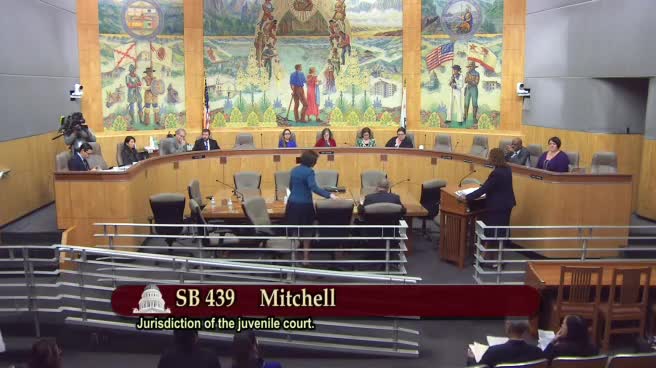 4MIN
Senate Standing Committee on Public Safety
Bill Author

Bill Co-Author(s):