SB 586: Assault and battery of a federal peace officer.
- Session Year: 2017-2018
- House: Senate
- Latest Version Date: 2017-02-17
Existing law makes assault committed against a peace officer, as defined, engaged in the performance of his or her duties when the person committing the offense knows or reasonably should know that the victim is a peace officer engaged in the performance of his or her duties punishable by a fine not exceeding $2,000, or by imprisonment in a county jail not exceeding one year, or by both the fine and imprisonment.
This bill would make assault committed against a federal peace officer engaged in the performance of his or her duties, when the person committing the offense knows or reasonably should know that the victim is a federal peace officer engaged in the performance of his or her duties, punishable by the same penalties described above.
Existing law makes battery committed against a peace officer, as defined, engaged in the performance of his or her duties, as specified, when the person committing the offense knows or reasonably should know that the victim is a peace officer engaged in the performance of his or her duties, and an injury is inflicted on that peace officer, punishable by a fine of not more than $10,000, by imprisonment in a county jail not exceeding one year, or by imprisonment in a county jail for 16 months, or 2 or 3 years, or by both the fine and imprisonment.
This bill would make battery committed against a federal peace officer engaged in the performance of his or her duties, when the person committing the offense knows or reasonably should know that the victim is a federal peace officer engaged in the performance of his or her duties, and an injury is inflicted on that federal peace officer, punishable by the same penalties described above.
By enhancing the punishment for a crime, this bill would impose a state-mandated local program.
The California Constitution requires the state to reimburse local agencies and school districts for certain costs mandated by the state. Statutory provisions establish procedures for making that reimbursement.
This bill would provide that no reimbursement is required by this act for a specified reason.
(a)An assault is punishable by a fine not exceeding one thousand dollars ($1,000), or by imprisonment in the county jail not exceeding six months, or by both the fine and imprisonment.
(b)When an assault is committed against the person of a parking control officer engaged in the performance of his or her duties, and the person committing the offense knows or reasonably should know that the victim is a parking control officer, the assault is punishable by a fine not exceeding two thousand dollars ($2,000), or by imprisonment in the county jail not exceeding six months, or by both the fine and imprisonment.
(c)When an assault is committed against the person of a peace officer, federal peace officer, firefighter, emergency medical technician, mobile intensive care paramedic, lifeguard, process server, traffic officer, code enforcement officer, animal control officer, or search and rescue member engaged in the performance of his or her duties, or a physician or nurse engaged in rendering emergency medical care outside a hospital, clinic, or other health care facility, and the person committing the offense knows or reasonably should know that the victim is a peace officer, federal peace officer, firefighter, emergency medical technician, mobile intensive care paramedic, lifeguard, process server, traffic officer, code enforcement officer, animal control officer, or search and rescue member engaged in the performance of his or her duties, or a physician or nurse engaged in rendering emergency medical care, the assault is punishable by a fine not exceeding two thousand dollars ($2,000), or by imprisonment in a county jail not exceeding one year, or by both the fine and imprisonment.
(d)As used in this section, the following definitions apply:
(1)Peace officer Peace officer means any a person defined in Chapter 4.5 (commencing with Section 830) of Title 3 of Part 2.
(2)Emergency medical technician means a person possessing a valid course completion certificate from a program approved by the State Department of Health Care Services for the medical training and education of ambulance personnel, and who meets the standards of Division 2.5 (commencing with Section 1797) of the Health and Safety Code.
(3)Mobile intensive care paramedic refers to a person who meets the standards set forth in Division 2.5 (commencing with Section 1797) of the Health and Safety Code.
(4)Nurse means a person who meets the standards of Division 2.5 (commencing with Section 1797) of the Health and Safety Code.
(5)Lifeguard means a person who is:
(A)Employed as a lifeguard by the state, a county, or a city, and is designated by local ordinance as a public officer who has a duty and responsibility to enforce local ordinances and misdemeanors through the issuance of citations.
(B)Wearing distinctive clothing which that includes written identification of the persons status as a lifeguard and which that clearly identifies the employing organization.
(6)Process server means any a person who meets the standards or is expressly exempt from the standards set forth in Section 22350 of the Business and Professions Code.
(7)Traffic officer means any a person employed by a county or city to monitor and enforce state laws and local ordinances relating to parking and the operation of vehicles.
(8)Animal control officer means any a person employed by a county or city for purposes of enforcing animal control laws or regulations.
(9)(A)Code enforcement officer means any a person who is not described in Chapter 4.5 (commencing with Section 830) of Title 3 of Part 2 and who is employed by any a governmental subdivision, public or quasi-public corporation, public agency, public service corporation, any a town, city, county, or municipal corporation, whether incorporated or chartered, that has enforcement authority for health, safety, and welfare requirements, and whose duties include enforcement of any statute, rules, regulations, or standards, and who is authorized to issue citations, or file formal complaints.
(B)Code enforcement officer also includes any a person who is employed by the Department of Housing and Community Development who has enforcement authority for health, safety, and welfare requirements pursuant to the Employee Housing Act (Part 1 (commencing with Section 17000) of Division 13 of the Health and Safety Code); the State Housing Law (Part 1.5 (commencing with Section 17910) of Division 13 of the Health and Safety Code); the Manufactured Housing Act of 1980 (Part 2 (commencing with Section 18000) of Division 13 of the Health and Safety Code); the Mobilehome Parks Act (Part 2.1 (commencing with Section 18200) of Division 13 of the Health and Safety Code); and the Special Occupancy Parks Act (Part 2.3 (commencing with Section 18860) of Division 13 of the Health and Safety Code).
(10)Parking control officer means any a person employed by a city, county, or city and county, to monitor and enforce state laws and local ordinances relating to parking.
(11)Search and rescue member means any a person who is part of an organized search and rescue team managed by a governmental agency.
SEC. 2.Section 243 of the Penal Code is amended to read:243.(a)A battery is punishable by a fine not exceeding two thousand dollars ($2,000), or by imprisonment in a county jail not exceeding six months, or by both that fine and imprisonment.
(b)When a battery is committed against the person of a peace officer, federal peace officer, custodial officer, firefighter, emergency medical technician, lifeguard, security officer, custody assistant, process server, traffic officer, code enforcement officer, animal control officer, or search and rescue member engaged in the performance of his or her duties, whether on or off duty, including when the peace officer is in a police uniform and is concurrently performing the duties required of him or her as a peace officer while also employed in a private capacity as a part-time or casual private security guard or patrolman, or a nonsworn employee of a probation department engaged in the performance of his or her duties, whether on or off duty, or a physician or nurse engaged in rendering emergency medical care outside a hospital, clinic, or other health care facility, and the person committing the offense knows or reasonably should know that the victim is a peace officer, federal peace officer, custodial officer, firefighter, emergency medical technician, lifeguard, security officer, custody assistant, process server, traffic officer, code enforcement officer, animal control officer, or search and rescue member engaged in the performance of his or her duties, nonsworn employee of a probation department, or a physician or nurse engaged in rendering emergency medical care, the battery is punishable by a fine not exceeding two thousand dollars ($2,000), or by imprisonment in a county jail not exceeding one year, or by both that fine and imprisonment.
(c)(1)When a battery is committed against a custodial officer, firefighter, emergency medical technician, lifeguard, process server, traffic officer, or animal control officer engaged in the performance of his or her duties, whether on or off duty, or a nonsworn employee of a probation department engaged in the performance of his or her duties, whether on or off duty, or a physician or nurse engaged in rendering emergency medical care outside a hospital, clinic, or other health care facility, and the person committing the offense knows or reasonably should know that the victim is a nonsworn employee of a probation department, custodial officer, firefighter, emergency medical technician, lifeguard, process server, traffic officer, or animal control officer engaged in the performance of his or her duties, or a physician or nurse engaged in rendering emergency medical care, and an injury is inflicted on that victim, the battery is punishable by a fine of not more than two thousand dollars ($2,000), by imprisonment in a county jail not exceeding one year, or by both that fine and imprisonment, or by imprisonment pursuant to subdivision (h) of Section 1170 for 16 months, or two or three years.
(2)When the battery specified in paragraph (1) is committed against a federal peace officer or peace officer engaged in the performance of his or her duties, whether on or off duty, including when the peace officer is in a police uniform and is concurrently performing the duties required of him or her as a peace officer while also employed in a private capacity as a part-time or casual private security guard or patrolman and the person committing the offense knows or reasonably should know that the victim is a peace officer engaged in the performance of his or her duties, the battery is punishable by a fine of not more than ten thousand dollars ($10,000), or by imprisonment in a county jail not exceeding one year or pursuant to subdivision (h) of Section 1170 for 16 months, or two or three years, or by both that fine and imprisonment.
(d)When a battery is committed against any a person and serious bodily injury is inflicted on the person, the battery is punishable by imprisonment in a county jail not exceeding one year or imprisonment pursuant to subdivision (h) of Section 1170 for two, three, or four years.
(e)(1)When a battery is committed against a spouse, a person with whom the defendant is cohabiting, a person who is the parent of the defendants child, former spouse, fiance, or fiancee, or a person with whom the defendant currently has, or has previously had, a dating or engagement relationship, the battery is punishable by a fine not exceeding two thousand dollars ($2,000), or by imprisonment in a county jail for a period of not more than one year, or by both that fine and imprisonment. If probation is granted, or the execution or imposition of the sentence is suspended, it shall be a condition thereof that the defendant participate in, for no less than one year, and successfully complete, a batterers treatment program, as described in Section 1203.097, or if none is available, another appropriate counseling program designated by the court. However, this provision shall not be construed as requiring a city, a county, or a city and county to provide a new program or higher level of service as contemplated by Section 6 of Article XIIIB of the California Constitution.
(2)Upon conviction of a violation of this subdivision, if probation is granted, the conditions of probation may include, in lieu of a fine, one or both of the following requirements:
(A)That the defendant make payments to a battered womens shelter, up to a maximum of five thousand dollars ($5,000).
(B)That the defendant reimburse the victim for reasonable costs of counseling and other reasonable expenses that the court finds are the direct result of the defendants offense.
For any order to pay a fine, make payments to a battered womens shelter, or pay restitution as a condition of probation under this subdivision, the court shall make a determination of the defendants ability to pay. In no event shall any an order to make payments to a battered womens shelter be made if it would impair the ability of the defendant to pay direct restitution to the victim or court-ordered child support. If the injury to a married person is caused in whole or in part by the criminal acts of his or her spouse in violation of this section, the community property shall not be used to discharge the liability of the offending spouse for restitution to the injured spouse, required by Section 1203.04, as operative on or before August 2, 1995, or Section 1202.4, or to a shelter for costs with regard to the injured spouse and dependents, required by this section, until all separate property of the offending spouse is exhausted.
(3)Upon conviction of a violation of this subdivision, if probation is granted or the execution or imposition of the sentence is suspended and the person has been previously convicted of a violation of this subdivision or Section 273.5, the person shall be imprisoned for not less than 48 hours in addition to the conditions in paragraph (1). However, the court, upon a showing of good cause, may elect not to impose the mandatory minimum imprisonment as required by this subdivision and may, under these circumstances, grant probation or order the suspension of the execution or imposition of the sentence.
(4)The Legislature finds and declares that these specified crimes merit special consideration when imposing a sentence so as to display societys condemnation for these crimes of violence upon victims with whom a close relationship has been formed.
(5)If a peace officer makes an arrest for a violation of paragraph (1) of subdivision (e) of this section, the peace officer is not required to inform the victim of his or her right to make a citizens arrest pursuant to subdivision (b) of Section 836.
(f)As used in this section:
(1)Peace officer means any person defined in Chapter 4.5 (commencing with Section 830) of Title 3 of Part 2.
(2)Emergency medical technician means a person who is either an EMT-I, EMT-II, or EMT-P (paramedic), and possesses a valid certificate or license in accordance with the standards of Division 2.5 (commencing with Section 1797) of the Health and Safety Code.
(3)Nurse means a person who meets the standards of Division 2.5 (commencing with Section 1797) of the Health and Safety Code.
(4)Serious bodily injury means a serious impairment of physical condition, including, but not limited to, the following: loss of consciousness; concussion; bone fracture; protracted loss or impairment of function of any bodily member or organ; a wound requiring extensive suturing; and serious disfigurement.
(5)Injury means any a physical injury which that requires professional medical treatment.
(6)Custodial officer means any a person who has the responsibilities and duties described in Section 831 and who is employed by a law enforcement agency of any a city or county or who performs those duties as a volunteer.
(7)Lifeguard means a person defined in paragraph (5) of subdivision (d) of Section 241.
(8)Traffic officer means any a person employed by a city, county, or city and county to monitor and enforce state laws and local ordinances relating to parking and the operation of vehicles.
(9)Animal control officer means any a person employed by a city, county, or city and county for purposes of enforcing animal control laws or regulations.
(10)Dating relationship means frequent, intimate associations primarily characterized by the expectation of affectional or sexual involvement independent of financial considerations.
(11)(A)Code enforcement officer means any a person who is not described in Chapter 4.5 (commencing with Section 830) of Title 3 of Part 2 and who is employed by any a governmental subdivision, public or quasi-public corporation, public agency, public service corporation, any a town, city, county, or municipal corporation, whether incorporated or chartered, who has enforcement authority for health, safety, and welfare requirements, and whose duties include enforcement of any statute, rules, regulations, or standards, and who is authorized to issue citations, or file formal complaints.
(B)Code enforcement officer also includes any a person who is employed by the Department of Housing and Community Development who has enforcement authority for health, safety, and welfare requirements pursuant to the Employee Housing Act (Part 1 (commencing with Section 17000) of Division 13 of the Health and Safety Code); the State Housing Law (Part 1.5 (commencing with Section 17910) of Division 13 of the Health and Safety Code); the Manufactured Housing Act of 1980 (Part 2 (commencing with Section 18000) of Division 13 of the Health and Safety Code); the Mobilehome Parks Act (Part 2.1 (commencing with Section 18200) of Division 13 of the Health and Safety Code); and the Special Occupancy Parks Act (Part 2.3 (commencing with Section 18860) of Division 13 of the Health and Safety Code).
(12)Custody assistant means any a person who has the responsibilities and duties described in Section 831.7 and who is employed by a law enforcement agency of any a city, county, or city and county.
(13)Search and rescue member means any a person who is part of an organized search and rescue team managed by a government agency.
(14)Security officer means any a person who has the responsibilities and duties described in Section 831.4 and who is employed by a law enforcement agency of any city, county, or city and county.
(g)It is the intent of the Legislature by amendments to this section at the 198182 and 198384 Regular Sessions to abrogate the holdings in cases such as People v. Corey, 21 Cal. 3d 738, and Cervantez v. J.C. Penney Co., 24 Cal. 3d 579, and to reinstate prior judicial interpretations of this section as they relate to criminal sanctions for battery on peace officers who are employed, on a part-time or casual basis, while wearing a police uniform as private security guards or patrolmen and to allow the exercise of peace officer powers concurrently with that employment.
SEC. 3.No reimbursement is required by this act pursuant to Section 6 of Article XIIIB of the California Constitution because the only costs that may be incurred by a local agency or school district will be incurred because this act creates a new crime or infraction, eliminates a crime or infraction, or changes the penalty for a crime or infraction, within the meaning of Section 17556 of the Government Code, or changes the definition of a crime within the meaning of Section 6 of Article XIIIB of the California Constitution.
|
Date
|
Status
|
|---|---|
| Feb 1, 2018 | Returned to Secretary of Senate pursuant to Joint Rule 62(a). |
| Apr 19, 2017 | April 18 set for first hearing. Failed passage in committee. (Ayes 2. Noes 5. Page 748.) |
| Mar 16, 2017 | Set for hearing April 18. |
| Mar 2, 2017 | Referred to Com. on PUB. S. |
| Feb 21, 2017 | From printer. May be acted upon on or after March 23. |
| Feb 17, 2017 | Introduced. Read first time. To Com. on RLS. for assignment. To print. |
|
Date
|
Description
|
Location
|
Votes
|
|
|---|---|---|---|---|
| Apr 18, 2017 | Do pass, but first be re-referred to the Committee on [Appropriations] | Senate Standing Committee on Public Safety |
Failed |
This list shows positions taken on this bill by organizations on the date displayed, which is linked to the original source.
Positions by individuals are not included.
|
Organization
|
Position
|
Date
|
|---|---|---|
| ACLU of California | * Against | Apr 18, 2017 |
| Alliance for Boys and Men of Color | * Against | Apr 18, 2017 |
| California Attorney's for Criminal Justice | * Against | Apr 18, 2017 |
| California District Attorney's Association | * Support | Apr 18, 2017 |
| California Imigrant Policy Center | * Against | Apr 18, 2017 |
| California Public Defenders Association | * Against | Apr 18, 2017 |
| California State Sheriff's Association | * Support | Apr 18, 2017 |
| Existing Federal Law Provides That Whoever: | ** Against | Apr 17, 2017 |
| Federal Law Enforcement Officers Association | * Support | Apr 18, 2017 |
| PURPOSE | ** Against | Apr 17, 2017 |
| Youth Justice Coalition | * Against | Apr 18, 2017 |
SENATE COMMITTEE ON PUBLIC SAFETY
Senator Nancy Skinner, Chair
2017 - 2018 Regular
Bill No: SB 586 Hearing Date: April 18, 2017
Author: | Vidak | ||
Version: | February 17, 2017 | ||
Urgency: | No | Fiscal: | Yes |
Consultant: | JRD | ||
Subject: Assault and Battery of a Federal Peace Officer
HISTORY
Source: Constituent
Prior Legislation: AB 172 (Rodriguez) Vetoed by Governor, 2015
SB 390 (La Malfa) Chapter 249, Stats. of 2011
SB 406 (Lieu) Chapter 250, Stats. of 2011
Support: California District Attorneys Association; California State Sheriffs’ Association; Federal Law Enforcement Officers Association; Fresno County District Attorney; Kern County District Attorney; Tulare County District Attorney; Several Individuals
Opposition: American Civil Liberties Union of California; California Attorneys for Criminal Justice; California Public Defenders Association
PURPOSE
The purpose of this legislation it to increase the penalties for assault and battery committed against a federal officer, as specified.
Existing federal law provides that whoever:
- Forcibly assaults, resists, opposes, impedes, intimidates, or interferes with a federal employee or employee, as specified, while engaged in or on account of the performance of official duties; or forcibly assaults or intimidates any person who formerly served as a federal employee or employee, as specified, on account of the performance of official duties during such person's term of service, shall, where the acts in violation of this section constitute only simple assault, be fined under this title or imprisoned not more than one year, or both, and where such acts involve physical contact with the victim of that assault or the intent to commit another felony, be fined under this title or imprisoned not more than 8 years, or both.
- If, in the commission of the acts described above, the person uses a deadly or dangerous weapon (including a weapon intended to cause death or danger but that fails to do so by reason of a defective component) or inflicts bodily injury, that person shall be fined or imprisoned not more than 20 years, or both.
(18 U.S.C. 111.)
Existing law defines “assault” as an unlawful attempt, coupled with a present ability, to commit a violent injury on the person of another. (Penal Code § 240.)
Existing law provides that assault is punishable by a fine not exceeding $1,000, by imprisonment in the county jail not exceeding six months, or by both the fine and imprisonment. (Penal Code § 241(a).)
Existing law states that when an assault is committed against the person of a peace officer, firefighter, emergency medical technician (EMT), mobile intensive care paramedic, lifeguard, process server, traffic officer, code enforcement officer, animal control officer, or a search and rescue member engaged in the performance of his or her duties, or a physician or nurse engaged in rendering emergency medical care outside a hospital, clinic or other health care facility, and the person committing the offense knows or reasonably should know that the victim is a peace officer, firefighter, EMT, mobile intensive care paramedic, lifeguard, process server, traffic officer, code enforcement officer, animal control officer, or a search and rescue member engaged in the performance of his or her duties, or a physician or nurse engaged in rendering emergency medical care, the assault is punishable by a fine not exceeding $2,000, by imprisonment in the county jail not exceeding one year, or by both fine and imprisonment. (Penal Code § 241(c).)
Existing law defines a battery is any willful and unlawful use of force or violence upon the person of another. (Penal Code § 242.)
Existing law makes battery punishable by a fine not exceeding $2,000, by imprisonment in a county jail not exceeding six months, or by both that fine and imprisonment. (Penal Code § 243 (a).)
Existing law states that when a battery is committed against the person of a peace officer, custodial officer, firefighter, emergency medical technician, lifeguard, security officer, custody assistant, process server, traffic officer, code enforcement officer, animal control officer, or search and rescue member engaged in the performance of his or her duties, whether on or off duty, including when the peace officer is in a police uniform and is concurrently performing the duties required of him or her as a peace officer while also employed in a private capacity as a part-time or casual private security guard or patrolman, or a nonsworn employee of a probation department engaged in the performance of his or her duties, whether on or off duty, or a physician or nurse engaged in rendering emergency medical care outside a hospital, clinic, or other health care facility, and the person committing the offense knows or reasonably should know that the victim is a peace officer, custodial officer, firefighter, emergency medical technician, lifeguard, security officer, custody assistant, process server, traffic officer, code enforcement officer, animal control officer, or search and rescue member engaged in the performance of his or her duties, nonsworn employee of a probation department, or a physician or nurse engaged in rendering emergency medical care, the battery is punishable by a fine not exceeding two thousand dollars ($2,000), or by imprisonment in a county jail not exceeding one year, or by both that fine and imprisonment. (Penal Code § 243(b).)
Existing law states that a battery committed against any person and serious bodily injury is inflicted on the person, the battery is punishable by imprisonment in a county jail not exceeding one year or imprisonment for two, three, or four years. (Penal Code § 243(d).)
This bill makes an assault committed against a federal peace officer engaged in the performance of his or her duties when the person committing the offense knows or reasonably should know that the victim is a peace officer engaged in the performance of his or her duties punishable by a fine not exceeding $2,000, or by imprisonment in a county jail not exceeding one year, or by both the fine and imprisonment.
This bill would make battery committed against a federal peace officer engaged in the performance of his or her duties, when the person committing the offense knows or reasonably should know that the victim is a federal peace officer engaged in the performance of his or her duties, and an injury is inflicted on that federal peace officer, punishable by a fine of not more than $10,000, by imprisonment in a county jail not exceeding one year, or by imprisonment in a county jail for 16 months, or 2 or 3 years, or by both the fine and imprisonment.
COMMENTS
1. Need for This Legislation
According to the author:
Current California law does not protect Federal Peace Officers from crimes of violence while they are on duty. If a crime of violence is committed against a federal peace officer working in California, the penalty is often equivalent to that of a simple assault. Many of these federal peace officers have similar responsibilities, work hand-in-hand with state and local law enforcement to protect our communities and have completed equal to or similar training to that of a California Peace Officer. However, if a crime of violence is committed against a federal peace officer, they are not protected by the same laws that protect California Peace Officers.
In 2015, a total of 1,336 federal law enforcement officers were assaulted. Of these officers, 1 was killed and 172 were reported injured. (See tables 123 and 125, attached)
Weapons (See Table 126, attached)
- 543 federal officers were assaulted with personal weapons such as hands, fists, or feet, and 99 of these assaults resulted in injuries to the officers. For 144 of these incidents, the extent of the injuries (if any) was not reported.
- 135 officers were assaulted with blunt instruments, resulting in 1 officer being injured. The extent of injuries (if any) was not reported for 134 officers.
- 97 officers were assaulted with firearms, resulting in 1 officer being killed and 14 officers being injured. The extent of the injuries (if any) was not reported for 19 officers assaulted with firearms.
- 89 federal officers were assaulted with vehicles; of these, 13 officers suffered injuries. For 30 of the officers assaulted with vehicles, the extent of their injuries (if any) was not reported.
- 33 officers were assaulted with knives or other cutting instruments, resulting in 7 officers being injured.
- 439 officers were assaulted with various other types of weapons, resulting in 38 officers being injured. The extent of injuries was not reported for 22 officers.
Type of activity (See Table 130, attached)
- 561 of the federal officers assaulted in 2015 were on patrol or guard duty when they were assaulted.
- 349 officers were assaulted while conducting investigations or searches.
- 293 officers were assaulted while attempting arrests or serving summonses.
- 48 officers were assaulted while maintaining custody of prisoners.
- 20 officers were on protection duty at the time of the assaults.
- 18 officers were assaulted while on court duty.
2. Effect of Legislation
Federal officers are currently protected under federal law. In order for the defendant to be found guilty of assault on a peace officer, the government must prove each of the following elements beyond a reasonable doubt:
First, the defendant forcibly assaulted [name of federal officer or employee]; [and]
Second, the defendant did so while [name of federal officer or employee] was engaged in, or on account of [his] [her] official duties[.] [; and]
[Third, the defendant [made physical contact] [acted with the intent to commit another felony].]
There is a forcible assault when one person intentionally strikes another, or willfully attempts to inflict injury on another, or intentionally threatens another coupled with an apparent ability to inflict injury on another which causes a reasonable apprehension of immediate bodily harm.
(Ninth Circuit Model Jury Instruction 8.3; http://www3.ce9.uscourts.gov/jury-instructions/node/458.)
According to the Uniform Crime Report of 2015, this law is being regularly utilized to prosecute offenders, specifically:
- 832 alleged assailants were identified in connection with the 1,336 attacks on federal officers. (See Table 123.)
- Of the 832 offenders, dispositional information was reported for 445 of them. (See Table 131.)
- At the time of this report, the following dispositional information was available for 445 of the suspects (See Table 131):
- 276 were found guilty, and 6 were found not guilty or the charges were dismissed.
- 95 of the offenders were awaiting trial.
- 48 offenders’ cases were pending prosecutive opinion.
- 12 offenders’ prosecutions were declined.
- 7 offenders are deceased.
- 1 offender remained a fugitive.
(https://ucr.fbi.gov/leoka/2015/federal/federal_topic_page_-2015)
This legislation would increase penalties for assault and battery under California law. Members may wish to consider whether this legislation is necessary given that this is a federal crime.
3. Argument in Opposition
According to the California Public Defenders Association:
Currently, a battery committed against a peace officer, engaged in the performance of his or her duties, as specified, when the person committing the offense knows or reasonably should know that the victim is a peace officer engaged in the performance of his or her duties is a crime. This bill would expand Penal Code sections 241 and 243 to include a federal peace officer engaged in the performance of his or her duties, when the person committing the offense knows or reasonably should know that the victim is a federal peace officer engaged in the performance of his or her duties.
The expansion of these statutes to include federal peace officers is extremely problematic given the rampant well-publicized abuses by Immigration and Customs Enforcement (hereinafter “ICE”). The intimidation tactics employed by ICE agents in courthouses and other public spaces cannot be ignored when evaluating the consequences of expanding the reach of Penal Code sections 241 and 243. This bill would undermine the efforts to empower individuals not to submit to unlawful searches and arrests when confronted by ICE agents. The potential for abuse is real. The expansion of these statutes is likely to result in the prosecution of individuals who simply asserted their right against unlawful searches and unjustified detentions when confronted by ICE agents.
-- END –
Discussed in Hearing
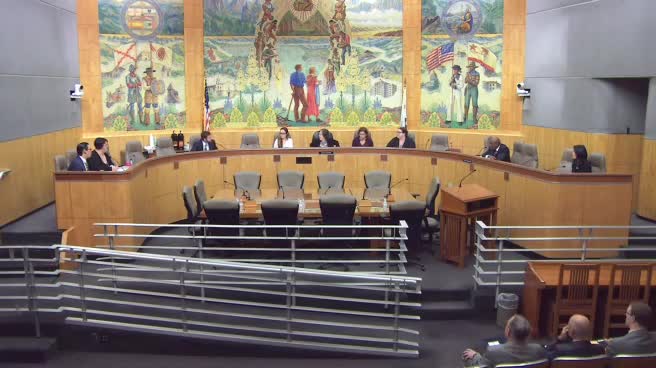 23MIN
Senate Standing Committee on Public Safety
Bill Author

Bill Co-Author(s):