SB 918: Homeless Youth Act of 2018.
- Session Year: 2017-2018
- House: Senate
- Latest Version Date: 2018-09-27
Existing law establishes various programs, including, among others, the Emergency Housing and Assistance Program, homeless youth emergency service pilot projects, and Housing First and the Homeless Coordinating and Financing Council, to provide assistance to homeless persons. Existing law establishes the council to oversee the implementation of the Housing First guidelines and regulations, and, among other things, identify resources, benefits, and services that can be accessed to prevent and end homelessness in California.
This bill would require the council to assume additional responsibilities, including setting specific, measurable goals aimed at preventing and ending homelessness among youth in the state and defining outcome measures and gathering data related to those goals. The bill would also require the council, in order to coordinate a spectrum of funding, policy, and practice efforts related to young people experiencing homelessness, to coordinate with certain stakeholders and, to the extent that funding is made available, provide technical assistance and program development support.
Existing law establishes various programs, including, among others, the Emergency Housing and Assistance Program, homeless youth emergency service pilot projects, and Housing First and the Homeless Coordinating and Financing Council, to provide assistance to homeless persons. Existing law establishes the council to oversee the implementation of the Housing First guidelines and regulations, and, among other things, identify resources, benefits, and services that can be accessed to prevent and end homelessness in California.
This bill would require the council to assume additional responsibilities, including setting specific, measurable goals aimed at preventing and ending homelessness among youth in the state. The bill would require the council to identify funding, policy, and practice gaps across state systems that serve, or hold the potential to serve, young people experiencing homelessness in California, develop specific recommendations and timelines for addressing these gaps, and report to the Legislature, as specified. The bill would require the council to oversee and administer specified grant programs for young people experiencing homelessness and their families, which would be primarily funded from sources including funds appropriated by the Legislature, federal funds, special fund moneys, and gifts and donations, as specified. The bill would specify that the grant funds would be used to supplement existing levels of service and not to supplant any existing funding. The bill would allow no more than 40% of the total funds granted in a given year to be used to establish, expand, or operate shelter programs. state and defining outcome measures and gathering data related to those goals. The bill would also require the council, in order to coordinate a spectrum of funding, policy, and practice efforts related to young people experiencing homelessness, to coordinate with certain stakeholders and, to the extent that funding is made available, provide technical assistance and program development support.
This bill would impose criteria and requirements for agencies eligible for grant funding to operate a homeless youth program or shelter program, and would require preference for funding to be given to agencies with certain characteristics, including those that propose to provide services in geographic areas where no similar services are provided and there is a demonstrated need for those services. The bill would require a grant proposal to identify how it intends to ensure that participating youth receive a continuum of services, including, but not limited to, drug abuse education, treatment, and prevention services, screening, assessment, and treatment or referral for behavioral and physical health care services, and aftercare and followup services. The bill would require a grantee to submit data and annual progress reports to the council and agree to meet quality improvement goals, accept technical assistance, and submit to annual site monitoring visits by the council, as specified.Existing law establishes various programs, including, among others, the Emergency Housing and Assistance Program, homeless youth emergency service pilot projects, and Housing First and the Homeless Coordinating and Financing Council, to provide assistance to homeless persons. Existing law establishes the council to oversee the implementation of the Housing First guidelines and regulations, and, among other things, identify resources, benefits, and services that can be accessed to prevent and end homelessness in California.
This bill would establish the Office of Homeless Youth in the Department of Housing and Community Development. The bill would set forth the duties of the office, including, but not limited to, require the council to assume additional responsibilities, including setting specific, measurable goals aimed at preventing and ending homelessness among youth in the state. The bill would require the office council to identify funding, policy, and practice gaps across state systems that serve, or hold the potential to serve, young people experiencing homelessness in California, develop specific recommendations and timelines for addressing these gaps, and report to the Legislature, as specified. The bill would require the office council to oversee and administer specified grant programs for young people experiencing homelessness and their families, which would be primarily funded by funds provided to the State Department of Health Care Services from the Youth Education, Prevention, Early Intervention, and Treatment Account. The bill would prioritize the various funding sources for grant programs established by the office to support young people experiencing homelessness, as specified. The bill would make an appropriation to the office from the General Fund in the amount of the difference between other specified funding received from the State Department of Social Services for purposes of the grant program and $60,000,000. from sources including funds appropriated by the Legislature, federal funds, special fund moneys, and gifts and donations, as specified. The bill would specify that the grant funds would be used to supplement existing levels of service and not to supplant any existing funding. The bill would allow no more than 40% of the total funds granted in a given year to be used to establish, expand, or operate shelter programs.
This bill would impose criteria and requirements for agencies eligible for grant funding to operate a homeless youth program or shelter program, and would require preference for funding to be given to agencies with certain characteristics, including those that propose to provide services in geographic areas where no similar services are provided and there is a demonstrated need for those services. The bill would require a grant proposal to identify how it intends to ensure that participating youth receive a continuum of services, including, but not limited to, drug abuse education, treatment, and prevention services, screening, assessment, and treatment or referral for behavioral and physical health care services, and aftercare and followup services. The bill would require a grantee to submit data and annual progress reports to the office council and agree to meet quality improvement goals, accept technical assistance, and submit to annual site monitoring visits by the office, council, as specified.
Existing law establishes the Homeless Coordinating and Financing Council to oversee the implementation of the Housing First guidelines and regulations and, among other things, identify resources, benefits, and services that can be accessed to prevent and end homelessness in California. Existing law requires the Governor to appoint up to 15 members to the council, as specified.This bill would require the council membership to also include a representative of the Office of Homeless Youth.Existing law establishes various programs, including, among others, the Emergency Housing and Assistance Program, homeless youth emergency service pilot projects, and Housing First and the Homeless Coordinating and Financing Council, to provide assistance to homeless persons.
This bill would establish the Office of Homeless Youth in the Department of Housing and Community Development. The bill would set forth the duties of the office, including, but not limited to, setting specific, measurable goals aimed at preventing and ending homelessness among youth in the state. The bill would require the office to identify funding, policy, and practice gaps across state systems that serve, or hold the potential to serve, young people experiencing homelessness, homelessness in California, develop specific recommendations and timelines for addressing these gaps, and report to the Legislature, as specified. The bill would require the office to oversee and administer specified grant programs for young people experiencing homelessness and their families, which would be primarily funded by funds provided to the State Department of Health Care Services from the Youth Education, Prevention, Early Intervention, and Treatment Account. The bill would prioritize the various funding sources for grant programs established by the office to support young people experiencing homelessness, as specified. The bill would make an appropriation to the office from the General Fund in the amount of the difference between other specified funding received from the State Department of Social Services for purposes of the grant program and $60,000,000. The bill would specify that the grant funds would be used to supplement existing levels of service and not to supplant any existing funding. The bill would allow no more than 40% of the total funds granted in a given year to be used to establish, expand, or operate shelter programs.
This bill would impose criteria and requirements for agencies eligible for grant funding to operate a homeless youth program or shelter program, and would require preference for funding to be given to agencies with certain characteristics, including those that propose to provide services in geographic areas where no similar services are provided and there is a demonstrated need for those services. The bill would require a grant proposal to identify how it intends to ensure that participating youth receive a continuum of services, including, but not limited to, drug abuse education and prevention services, mental and physical health care, education, treatment, and prevention services, screening, assessment, and treatment or referral for behavioral and physical health care services, and aftercare and follow-up followup services. The bill would require a grantee to submit data and annual progress reports to the office and agree to meet quality improvement goals, accept technical assistance, and submit to annual site monitoring visits by the office, as specified.
Existing law establishes the Homeless Coordinating and Financing Council to oversee the implementation of the Housing First guidelines and regulations and, among other things, identify resources, benefits, and services that can be accessed to prevent and end homelessness in California. Existing law requires the Governor to appoint up to 15 members to the council, as specified.
This bill would require the council membership to also include a representative of the Office of Homeless Youth.
Existing law establishes various programs, including, among others, the Emergency Housing and Assistance Program, homeless youth emergency service pilot projects, and Housing First and the Homeless Coordinating and Financing Council, to provide assistance to homeless persons.
This bill would establish the Office of Homeless Youth in the Department of Housing and Community Development. The bill would set forth the duties of the office, including, but not limited to, setting specific, measurable goals aimed at preventing and ending homelessness among youth in the state. The bill would require the office to identify funding, policy, and practice gaps across state systems that serve, or hold the potential to serve, young people experiencing homelessness, develop specific recommendations and timelines for addressing these gaps, and report to the Legislature, as specified. The bill would require the office to oversee and administer specified grant programs for young people experiencing homelessness and their families, which would be funded by funds provided to the State Department of Health Care Services from the Youth Education, Prevention, Early Intervention, and Treatment Account. The bill would make an appropriation to the office from the General Fund in the amount of the difference between funding received from the State Department of Social Services for purposes of the grant program and $60,000,000. The bill would specify that the grant funds would be used to supplement existing levels of service and not to supplant any existing funding. The bill would allow no more than 40% of the total funds granted in a given year to be used to establish, expand, or operate shelter programs.
This bill would impose criteria and requirements for agencies eligible for grant funding to operate a homeless youth program or shelter program, and would require preference to be given to agencies with certain characteristics, including those that propose to provide services in geographic areas where no similar services are provided and there is a demonstrated need for those services. The bill would require a grant proposal to identify how it intends to ensure that participating youth receive services, including, but not limited to, drug abuse education and prevention services, mental and physical health care, and aftercare and follow-up services. The bill would require a grantee to submit annual progress reports to the office and agree to meet quality improvement goals, accept technical assistance, and submit to annual site monitoring visits by the office, as specified.
Existing law establishes the Homeless Coordinating and Financing Council to oversee the implementation of the Housing First guidelines and regulations and, among other things, identify resources, benefits, and services that can be accessed to prevent and end homelessness in California. Existing law requires the Governor to appoint up to 15 members to the council, as specified.
This bill would require the council membership to also include a representative of the Office of Homeless Youth.
Existing law establishes various programs, including, among others, the Emergency Housing and Assistance Program, homeless youth emergency service pilot projects, and Housing First and the Homeless Coordinating and Financing Council, to provide assistance to homeless persons.
This bill would establish the Office of Homeless Youth in the Department of Housing and Community Development. The bill would set forth the duties of the office, including, but not limited to, setting specific, measurable goals aimed at preventing and ending homelessness among youth in the state. The bill would require the office to identify funding, policy, and practice gaps across state systems that serve, or hold the potential to serve, young people experiencing homelessness, develop specific recommendations and timelines for addressing these gaps, and report to the Legislature, as specified. The bill would require the office to oversee and administer specified grant programs for young people experiencing homelessness and their families, which would be funded by funds provided to the State Department of Health Care Services from the Youth Education, Prevention, Early Intervention, and Treatment Account. The bill would make an appropriation to the office from the General Fund in the amount of the difference between funding received from the State Department of Social Services for purposes of the grant program and $60,000,000. The bill would specify that the grant funds would be used to supplement existing levels of service and not to supplant any existing funding.
This bill would impose criteria and requirements for agencies eligible for grant funding to operate a homeless youth program or shelter program, and would require preference to be given to agencies with certain characteristics, including those that propose to provide services in geographic areas where no similar services are provided and there is a demonstrated need for those services. The bill would require a grant proposal to identify how it intends to ensure that participating youth receive services, including, but not limited to, drug abuse education and prevention services, mental and physical health care, and aftercare and follow-up services. The bill would require a grantee to submit annual progress reports to the office and agree to meet quality improvement goals, accept technical assistance, and submit to annual site monitoring visits by the office, as specified.
Existing law establishes the Homeless Coordinating and Financing Council to oversee the implementation of the Housing First guidelines and regulations and, among other things, identify resources, benefits, and services that can be accessed to prevent and end homelessness in California. Existing law requires the Governor to appoint up to 15 members to the council, as specified.
This bill would require the council membership to also include a representative of the Office of Homeless Youth.
This act shall be known, and may be cited, as the Homeless Youth Act of 2018.
SEC. 2.Section 8257 of the Welfare and Institutions Code is amended to read:8257.(a)Within 180 days of the effective date of the measure adding this chapter, the Governor shall create a Homeless Coordinating and Financing Council.
(b)The council shall have the following goals:
(1)To oversee implementation of this chapter.
(2)To identify mainstream resources, benefits, and services that can be accessed to prevent and end homelessness in California.
(3)To create partnerships among state agencies and departments, local government agencies, participants in the United States Department of Housing and Urban Developments Continuum of Care Program, federal agencies, the United States Interagency Council on Homelessness, nonprofit entities working to end homelessness, homeless services providers, and the private sector, for the purpose of arriving at specific strategies to end homelessness.
(4)To promote systems integration to increase efficiency and effectiveness while focusing on designing systems to address the needs of people experiencing homelessness, including unaccompanied youth under 25 years of age.
(5)To coordinate existing funding and applications for competitive funding. Any action taken pursuant to this paragraph shall not restructure or change any existing allocations or allocation formulas.
(6)To make policy and procedural recommendations to legislators and other governmental entities.
(7)To identify and seek funding opportunities for state entities that have programs to end homelessness, including, but not limited to, federal and philanthropic funding opportunities, and to facilitate and coordinate those state entities efforts to obtain that funding.
(8)To broker agreements between state agencies and departments and between state agencies and departments and local jurisdictions to align and coordinate resources, reduce administrative burdens of accessing existing resources, and foster common applications for services, operating, and capital funding.
(9)To serve as a statewide facilitator, coordinator, and policy development resource on ending homelessness in California.
(10)To report to the Governor, federal Cabinet members, and the Legislature on homelessness and work to reduce homelessness.
(11)To ensure accountability and results in meeting the strategies and goals of the council.
(12)To identify and implement strategies to fight homelessness in small communities and rural areas.
(13)To create a statewide data system or warehouse that collects local data through Homeless Management Information Systems, with the ultimate goal of matching data on homelessness to programs impacting homeless recipients of state programs, such as Medi-Cal (Chapter 7 (commencing with Section 14000) of Part 3 of Division 9 of the Welfare and Institutions Code) and CalWORKs (Chapter 2 (commencing with Section 11200) of Part 3 of Division 9 of the Welfare and Institutions Code).
(14)Setting goals to prevent and end homelessness among Californias youth.
(15)Working to improve the safety, health, and welfare of young people experiencing homelessness in the state.
(16)Increasing system integration and coordinating efforts to prevent homelessness among youth who are currently or formerly involved in the child welfare system or the juvenile justice system.
(17)Leading efforts to coordinate a spectrum of funding, policy, and practice efforts related to young people experiencing homelessness.
(18)Identifying best practices to ensure homeless minors who may have experienced maltreatment, as described in Section 300, are appropriately referred to, or have the ability to self-refer to, the child welfare system.
(c)(1)The Governor shall appoint up to 17 members of the council as follows:
(A)The Secretary of Business, Consumer Services, and Housing, or his or her designee who shall serve as chair of the council.
(B)A representative from the Department of Transportation.
(C)A representative from the Department of Housing and Community Development.
(D)A representative of the State Department of Social Services.
(E)A representative of the California Housing Finance Agency.
(F)A representative of the State Department of Health Care Services.
(G)A representative of the Department of Veterans Affairs.
(H)A representative of the Department of Corrections and Rehabilitation.
(I)A representative from the California Tax Credit Allocation Committee in the Treasurers office.
(J)A representative of the Victim Services Program within the Division of Grants Management within the Office of Emergency Services.
(K)A formerly homeless person who lives in California.
(L)A formerly homeless youth who lives in California.
(M)Two representatives of local agencies or organizations that participate in the United States Department of Housing and Urban Developments Continuum of Care Program.
(N)State advocates or other members of the public or state agencies, according to the Governors discretion.
(2)The Senate Committee on Rules and the Speaker of the Assembly shall each appoint one representative of the council from two different stakeholder organizations.
(3)The council may, at its discretion, invite stakeholders, individuals who have experienced homelessness, members of philanthropic communities, and experts to participate in meetings or provide information to the council.
(d)The council shall hold public meetings at least once every quarter.
(e)The members of the council shall serve at the pleasure of the appointing authority.
(f)Within existing funding, the council may establish working groups, task forces, or other structures from within its membership or with outside members to assist it in its work. Working groups, task forces, or other structures established by the council shall determine their own meeting schedules.
(g)The members of the council shall serve without compensation, except that members of the council who are, or have been, homeless may receive reimbursement for travel, per diem, or other expenses.
(h)The Business, Consumer Services, and Housing Agency shall provide staff for the council.
(i)The members of the council may enter into memoranda of understanding with other members of the council to achieve the goals set forth in this chapter, as necessary, in order to facilitate communication and cooperation between the entities the members of the council represent.
(j)There shall be an executive director of the council under the direction of the Secretary of Business, Consumer Services, and Housing.
(k)The council shall be under the direction of the executive director and staffed by employees of the Business, Consumer Services, and Housing Agency.
SEC. 3.Chapter 7 (commencing with Section 8259) is added to Division 8 of the Welfare and Institutions Code, to read:7.Homeless Youth Act of 20188259.The Legislature finds and declares as follows:
(a)Runaway and homeless youth are young people 12 to 24 years of age, inclusive, who have the least access to essential opportunities and supports.
(b)The prevalence of runaways and homelessness among youth is staggering. Studies suggest that between 1.6 and 2.8 million youth up to 24 years of age in the United States experience homelessness every year. A disproportionate number of young people experiencing homelessness are youth of color, gay, lesbian, bisexual, or transgender.
(c)California has the second highest rate of unsheltered young people experiencing homelessness in the nation, and the number is growing.
(d)Thirty-one percent of all young people experiencing homelessness in the United States live in California, yet two-thirds of the states counties lack basic services for young people experiencing homelessness, including shelter, mental and behavioral services, family maintenance and strengthening, and substance abuse treatment programs.
(e)Research indicates that young people experiencing homelessness are more likely to have used or to begin using drugs and alcohol due to their experiences of trauma and abuse prior to becoming homeless or as a result of homelessness, including commercial sexual exploitation.
(f)With the adoption by the voters of Proposition 64, the Adult Use of Marijuana Act, there is an opportunity for new funding to support various programs and services for young people experiencing homelessness, including those with substance use disorders.
(g)In furthering the goal to prevent youth homelessness, the Legislature has created the Homeless Youth Act of 2018 to improve prevention and early intervention support services, low barrier and diverse housing opportunities, and posthousing and followup services for young people experiencing homelessness, including those with substance use disorders.
8260.The following definitions apply for purposes of this chapter:
(a)Act means the Homeless Youth Act of 2018 enacted by this chapter.
(b)Continuum of care has the same meaning as defined in Section 578.3 of Title 24 of the Code of Federal Regulations.
(c)Council means the Homeless Coordinating and Financing Council as described in Section 8257.
(d)Homeless youth means an unaccompanied youth between 12 and 24 years of age, inclusive, who is experiencing homelessness, as defined in subsection (2) of Section 725 of the federal McKinney-Vento Homeless Assistance Act (42 U.S.C. Sec. 11434a(2)). Homeless youth includes unaccompanied youth who are pregnant or parenting.
8261.(a)The council shall set and measure progress towards goals to prevent and end homelessness among youth in California by doing both of the following:
(1)Setting specific, measurable goals aimed at preventing and ending homelessness among youth in the state. These goals shall include, but not be limited to, the following:
(A)Measurably decreasing the number of young people experiencing homelessness in the state.
(B)Measurably increasing permanency rates among young people experiencing homelessness by decreasing the length and occurrences of young people experiencing homelessness caused by a youths separation from family or a legal guardian.
(C)Decreasing the duration and frequency of experiences of homelessness among Californias youth.
(D)Decreasing barriers to services through promoting cross-systems partnerships to expedite access to services, including social services, child welfare services, regional center services, and mental health services.
(2)Defining outcome measures and gathering data related to the goals.
(A)The council shall develop and collect data on county-level and statewide measures, including, but not limited to, the number of young people experiencing homelessness in California and their dependency status, delinquency status, family reunification status, housing status, program participation, and runaway status.
(B)Data collection and sharing among state and county agencies and service providers shall be a condition upon the receipt of any state funding for programs related to youth homelessness and its prevention. All recipients shall be required to share with the council any relevant data from their Homeless Management Information Systems. Data collection and sharing pursuant to this chapter shall be conducted and maintained in accordance with all applicable state and federal privacy and confidentiality laws and regulations.
(C)The council shall seek data from any and all relevant sources, including the Homeless Management Information System (HMIS), if available, in order to meet the requirements of this section.
(D)Providers of data shall do either of the following:
(i)Redact the names, dates of birth, and addresses of victims of domestic violence, as defined in Section 6211 of the Family Code, prior to reporting data to the council.
(ii)Obtain informed consent from a victim of domestic violence, as defined in Section 6211 of the Family Code and in accordance with all applicable state and federal confidentiality laws, before disclosing confidential information about that individual pursuant to this section.
(b)In order to coordinate a spectrum of funding, policy, and practice efforts related to young people experiencing homelessness, the council shall do both of the following:
(1)Coordinate with young people experiencing homelessness, the State Department of Social Services, other appropriate state and county agencies and departments, the state advisory group established pursuant to Section 1785, and other stakeholders to inform policy, practices, and programs.
(2)To the extent that funding is made available, provide technical assistance and program development support to increase capacity among new and existing service providers to best meet statewide needs, particularly in areas where services for young people experiencing homelessness have not been established, and provide support to service providers in making evidence-informed and data-driven decisions.
This act shall be known, and may be cited, as the Homeless Youth Act of 2018.
SEC. 2.Section 8257 of the Welfare and Institutions Code is amended to read:8257.(a)Within 180 days of the effective date of the measure adding this chapter, the Governor shall create a Homeless Coordinating and Financing Council.
(b)The council shall have the following goals:
(1)To oversee implementation of this chapter.
(2)To identify mainstream resources, benefits, and services that can be accessed to prevent and end homelessness in California.
(3)To create partnerships among state agencies and departments, local government agencies, participants in the United States Department of Housing and Urban Developments Continuum of Care Program, federal agencies, the United States Interagency Council on Homelessness, nonprofit entities working to end homelessness, homeless services providers, and the private sector, for the purpose of arriving at specific strategies to end homelessness.
(4)To promote systems integration to increase efficiency and effectiveness while focusing on designing systems to address the needs of people experiencing homelessness, including unaccompanied youth under 25 years of age.
(5)To coordinate existing funding and applications for competitive funding. Any action taken pursuant to this paragraph shall not restructure or change any existing allocations or allocation formulas.
(6)To make policy and procedural recommendations to legislators and other governmental entities.
(7)To identify and seek funding opportunities for state entities that have programs to end homelessness, including, but not limited to, federal and philanthropic funding opportunities, and to facilitate and coordinate those state entities efforts to obtain that funding.
(8)To broker agreements between state agencies and departments and between state agencies and departments and local jurisdictions to align and coordinate resources, reduce administrative burdens of accessing existing resources, and foster common applications for services, operating, and capital funding.
(9)To serve as a statewide facilitator, coordinator, and policy development resource on ending homelessness in California.
(10)To report to the Governor, federal Cabinet members, and the Legislature on homelessness and work to reduce homelessness.
(11)To ensure accountability and results in meeting the strategies and goals of the council.
(12)To identify and implement strategies to fight homelessness in small communities and rural areas.
(13)To create a statewide data system or warehouse that collects local data through Homeless Management Information Systems, with the ultimate goal of matching data on homelessness to programs impacting homeless recipients of state programs, such as Medi-Cal (Chapter 7 (commencing with Section 14000) of Part 3 of Division 9 of the Welfare and Institutions Code) and CalWORKS (Chapter 2 (commencing with Section 11200) of Part 3 of Division 9 of the Welfare and Institutions Code).
(14)Setting goals to prevent and end homelessness among Californias youth.
(15)Working to improve the safety, health, and welfare of young people experiencing homelessness in the state.
(16)Increasing system integration and coordinating efforts to prevent homelessness among youth who are currently or formerly involved in the child welfare system or the juvenile justice system.
(17)Leading efforts to coordinate a spectrum of funding, policy, and practice efforts related to young people experiencing homelessness.
(18)Identifying best practices to ensure homeless minors who may have experienced maltreatment, as described in Section 300, are appropriately referred to, or have the ability to self-refer to, the child welfare system.
(c)(1)The Governor shall appoint up to 17 members of the council as follows:
(A)The Secretary of Business, Consumer Services, and Housing, or his or her designee who shall serve as chair of the council.
(B)A representative from the Department of Transportation.
(C)A representative from the Department of Housing and Community Development.
(D)A representative of the State Department of Social Services.
(E)A representative of the California Housing Finance Agency.
(F)A representative of the State Department of Health Care Services.
(G)A representative of the Department of Veterans Affairs.
(H)A representative of the Department of Corrections and Rehabilitation.
(I)A representative from the California Tax Credit Allocation Committee in the Treasurers office.
(J)A representative of the Victim Services Program within the Division of Grants Management within the Office of Emergency Services.
(K)A formerly homeless person who lives in California.
(L)A formerly homeless youth who lives in California.
(M)Two representatives of local agencies or organizations that participate in the United States Department of Housing and Urban Developments Continuum of Care Program.
(N)State advocates or other members of the public or state agencies, according to the Governors discretion.
(2)The Senate Committee on Rules and the Speaker of the Assembly shall each appoint one representative of the council from two different stakeholder organizations.
(3)The council may, at its discretion, invite stakeholders, individuals who have experienced homelessness, members of philanthropic communities, and experts to participate in meetings or provide information to the council.
(d)The council shall hold public meetings at least once every quarter.
(e)The members of the council shall serve at the pleasure of the appointing authority.
(f)Within existing funding, the council may establish working groups, task forces, or other structures from within its membership or with outside members to assist it in its work. Working groups, task forces, or other structures established by the council shall determine their own meeting schedules.
(g)The members of the council shall serve without compensation, except that members of the council who are, or have been, homeless may receive reimbursement for travel, per diem, or other expenses.
(h)The Business, Consumer Services, and Housing Agency shall provide staff for the council.
(i)The members of the council may enter into memoranda of understanding with other members of the council to achieve the goals set forth in this chapter, as necessary, in order to facilitate communication and cooperation between the entities the members of the council represent.
(j)There shall be an executive director of the council under the direction of the Secretary of Business, Consumer Services, and Housing.
(k)The council shall be under the direction of the executive director and staffed by employees of the Business, Consumer Services, and Housing Agency.
SEC. 2.Chapter 6.1 (commencing with Section 13725) is added to Part 3 of Division 9 of the Welfare and Institutions Code, to read:6.1.Homeless Youth Act of 201813725.SEC. 3.Chapter 7 (commencing with Section 8259) is added to Division 8 of the Welfare and Institutions Code, to read:7.Homeless Youth Act of 20188259.The Legislature finds and declares as follows:
(a)Runaway and homeless youth are young people 12 to 24 years of age, inclusive, who have the least access to essential opportunities and supports.
(b)The prevalence of runaways and homelessness among youth is staggering. Studies suggest that between 1.6 and 2.8 million youth up to 24 years of age in the United States experience homelessness every year. A disproportionate number of young people experiencing homelessness are youth of color, gay, lesbian, bisexual, or transgender.
(c)California has the second highest rate of unsheltered young people experiencing homelessness in the nation, and the number is growing.
(d)Thirty-one percent of all young people experiencing homelessness in the United States live in California, yet two-thirds of the states counties lack basic services for young people experiencing homelessness, including shelter, mental and behavioral services, family maintenance and strengthening, and substance abuse treatment programs.
(e)Research indicates that young people experiencing homelessness are more likely to have used or to begin using drugs and alcohol due to their experiences of trauma and abuse prior to becoming homeless or as a result of homelessness, including commercial sexual exploitation.
(f)With the adoption by the voters of Proposition 64, the Adult Use of Marijuana Act, there is an opportunity for new funding to support various programs and services for young people experiencing homelessness, including those with substance use disorders.
(g)In furthering the goal to prevent youth homelessness, the Legislature has created the Homeless Youth Act of 2018 to improve prevention and early intervention support services, low barrier and diverse housing opportunities, and posthousing and followup services for young people experiencing homelessness, including those with substance use disorders.
13726.8260.The following definitions apply for purposes of this chapter:
(a)Act means the Homeless Youth Act of 2018 enacted by this chapter.
(b)Continuum of care has the same meaning as defined in Section 578.3 of Title 24 of the Code of Federal Regulations.
(c)Council Council means the Homeless Coordinating and Financing Council as described in Section 8257.
(d)Homeless youth means an unaccompanied youth between 12 and 24 years of age, inclusive, who is experiencing homelessness, as defined in subsection (2) of Section 725 of the federal McKinney-Vento Homeless Assistance Act (42 U.S.C. Sec. 11434a(2)). Homeless youth includes unaccompanied youth who are pregnant or parenting.
(e)Project means a homeless youth housing project.(f)Shelter program means a homeless youth shelter program.13727.(a)It is the intent of the Legislature that the role and responsibilities of the council shall include all of the following:(1)Setting goals to prevent and end homelessness among Californias youth.(2)Improving the safety, health, and welfare of young people experiencing homelessness in the state.(3)Increasing system integration and coordinating efforts to prevent homelessness among youth who are currently or formerly involved in the child welfare services or the juvenile justice system.(4)Leading efforts to coordinate a spectrum of funding, policy, and practice efforts related to young people experiencing homelessness.(5)Ensuring homeless minors who have experienced maltreatment and are eligible to be dependent children under Section 300 have timely access to the child welfare system.(b)In order to coordinate a spectrum of funding, policy, and practice efforts related to young people experiencing homelessness, the council shall do all of the following:(1)Identify funding, policy, and practice gaps across systems that serve, or hold the potential to serve, young people experiencing homelessness in California, and develop specific recommendations and timelines for addressing these gaps. These recommendations and timelines shall be reported to the Legislature by December 31, 2019.(A)Services and programs to be considered in the review and report described in this paragraph shall include, but are not limited to, family support and reunification services, social and emotional wellness and mental health services, street and community outreach programs and drop-in centers, low barrier and diverse housing opportunities, and posthousing and followup services.(B)(i)A report submitted under this paragraph shall be submitted in compliance with Section 9795 of the Government Code.(ii)Pursuant to Section 10231.5 of the Government Code, the requirement to submit a report under this paragraph shall be inoperative on January 1, 2023.(2)Coordinate with young people experiencing homelessness, the State Department of Social Services, other appropriate state and county agencies and departments, the state advisory group established pursuant to Section 1785, and other stakeholders to inform policy, practices, and programs.(3)Provide technical assistance and program development support to increase capacity among new and existing service providers to best meet statewide needs, particularly in areas where services for young people experiencing homelessness have not been established, and provide support to service providers in making evidence-informed and data-driven decisions.(c)8261.(a)The council shall set and measure progress towards goals to prevent and end homelessness among youth in California by doing all both of the following:
(1)Setting specific, measurable goals aimed at preventing and ending homelessness among youth in the state. These goals shall include, but not be limited to, the following:
(A)Measurably decreasing the number of young people experiencing homelessness in the state.
(B)Measurably increasing permanency rates among young people experiencing homelessness by decreasing the length and occurrences of young people experiencing homelessness caused by a youths separation from family or a legal guardian.
(C)Decreasing the duration and frequency of experiences of homelessness among Californias youth.
(D)Decreasing barriers to services through promoting cross-systems partnerships to expedite access to services, including social services, child welfare services, regional center services, and mental health services.
(2)Defining outcome measures and gathering data related to the goals.
(A)The council shall develop and collect data on county-level and statewide measures, including, but not limited to, the number of young people experiencing homelessness in California and their dependency status, delinquency status, family reunification status, housing status, program participation, and runaway status.
(B)Data collection and sharing among state and county agencies and service providers shall be a condition upon the receipt of any state funding for programs related to youth homelessness and its prevention. All grantees recipients shall be required to share with the department council any relevant data from their Homeless Management Information Systems. Data collection and sharing pursuant to this chapter shall be conducted and maintained in accordance with all applicable state and federal privacy and confidentiality laws and regulations.
(C)The council shall seek data from any and all relevant sources, including the Homeless Management Information System (HMIS), if available, in order to meet the requirements of this section.
(3)Submitting an annual report to the Legislature on these goals, measures, and data each year by December 31. A report submitted pursuant to this paragraph shall be submitted in compliance with Section 9795 of the Government Code.(4)(A)The council shall collect data from grantees and utilize HMIS data to the extent possible to ensure that appropriate and high-quality services are being delivered to young people experiencing homelessness. Data collected pursuant to this paragraph shall include, but not be limited to, all of the following:(i)The number of young people served each year by the grantee.(ii)The dependency status, delinquency status, housing status, family reunification status, and runaway status of the young people served each year by the grantee at the time of referral.(iii)The type and number of services utilized by the young people served by the grantee each year, as outlined in subdivision (h) of Section 13728.(iv)The types of housing assistance accessed by the young people served by the grantee each year, as outlined in subdivision (i) of Section 13728.(v)The distribution of the length of time each young person receives services from the grantee.(vi)Any available outcome data for the youth served by the grantee, including, but not limited to, housing stabilization, duration and number of experiences of homelessness prior to, while, and after receiving family reunification services, educational achievement, skills acquisition, and employment.(B)The council shall provide a report to the Legislature on these data by December 31 of each year, commencing in 2019. A report submitted under this subparagraph shall be submitted in compliance with Section 9795 of the Government Code.(d)The council shall develop and administer grant programs to support young people experiencing homelessness and aimed at preventing and ending homelessness among Californias youth contingent upon the availability of funding as described in subdivision (a) of Section 13728.(1)The council shall oversee and administer the grant programs developed pursuant to this chapter, and shall do all of the following:(A)Solicit annual progress reports from each grantee and annually review each program for effectiveness in meeting stated project outcomes and in engaging in continuous quality improvement activities.(B)Conduct monitoring visits to each grantee at least once per year in order to provide technical assistance in areas of identified need for improvement.(C)Collect and report on data pursuant to paragraph (4) of subdivision (c).(2)The council shall also develop grant programs to support families and family reunification services, social and emotional wellness and mental health services, street and community outreach programs and drop-in centers, and posthousing and followup services.(A)The council shall oversee and administer these grant programs using the same requirements established in paragraph (1).(B)The council shall collect and report on data in the same manner outlined in paragraph (4) of subdivision (d).(e)The council shall adopt guidelines and regulations pursuant to Section 8256.(D)Providers of data shall do either of the following:
(i)Redact the names, dates of birth, and addresses of victims of domestic violence, as defined in Section 6211 of the Family Code, prior to reporting data to the council.
(ii)Obtain informed consent from a victim of domestic violence, as defined in Section 6211 of the Family Code and in accordance with all applicable state and federal confidentiality laws, before disclosing confidential information about that individual pursuant to this section.
(b)In order to coordinate a spectrum of funding, policy, and practice efforts related to young people experiencing homelessness, the council shall do both of the following:
(1)Coordinate with young people experiencing homelessness, the State Department of Social Services, other appropriate state and county agencies and departments, the state advisory group established pursuant to Section 1785, and other stakeholders to inform policy, practices, and programs.
(2)To the extent that funding is made available, provide technical assistance and program development support to increase capacity among new and existing service providers to best meet statewide needs, particularly in areas where services for young people experiencing homelessness have not been established, and provide support to service providers in making evidence-informed and data-driven decisions.
13728.(a)The grant programs established under subdivision (e) of Section 13727 shall be administered with funding as described in this section. Grant funds provided under this chapter shall be used to supplement existing levels of service and shall not be used to supplant existing local, state, or federal funding. Grants provided under this chapter shall be awarded in a three-year grant cycle, and funded, subject to the availability of funding, from one or more of the following sources:(1)Funds appropriated by the Legislature in the annual Budget Act.(2)Any federal funding that is made available.(3)Any special fund moneys that are made available.(4)Gifts and donations.(b)An entity eligible to apply for funds under this chapter and to operate a homeless youth program or shelter program shall be either of the following:(1)A private, nonprofit agency with a demonstrated record of success and experience in the delivery of services to young people experiencing homelessness or at-risk youth. The agency shall include in its application a letter from the local continuum of care entity or county that identifies whether the applicant participates in the local planning process for addressing homelessness, if the agency is proposing to serve a geographic area covered by a continuum of care.(2)A continuum of care administrative entity with a demonstrated record of success. The entity may use no more than 5 percent of granted funds for administrative purposes.(c)Preference for funding shall be given to agencies that demonstrate each of the following:(1)Involvement of a network of youth-serving agencies in the delivery of services to young people experiencing homelessness.(2)Participation in a local continuum of care.(3)Utilization of the HMIS.(4)Participation in development of a local, youth-centered coordinated entry system, including diversion.(5)An agreement to work together with other entities to develop a local plan to reduce homelessness among homeless youth.(d)Preference for funding may be given to agencies that propose to provide services in geographic areas where similar services are not provided and there is a demonstrated need for those services.(e)An applicant that intends to serve minors shall be a mandated reporter under the Child Abuse and Neglect Reporting Act (Article 2.5 (commencing with Section 11164) of Chapter 2 of Title 1 of Part 4 of the Penal Code), including an annual training requirement.(f)Receipt of housing or supportive services by a program funded under this chapter does not constitute the provision of support as specified in subdivision (g) of Section 300 and does not prevent a minor from being adjudged a dependent child of the court.(g)Each applicant for funding under this chapter shall demonstrate that services will be provided within the Positive Youth Development framework and demonstrate that policies and procedures address cultural competence, including language appropriateness, cultural sensitivity, and the complex identities related to sex, sexual orientation, gender, gender identity, and gender expression, so that all participants are assured that programs are safe, inclusive, and nonstigmatizing by design and in operation.(h)(1)It is the intent of the Legislature to prevent or reduce the incidence of substance use disorders among homeless youth by providing services in the most efficient and effective way, including housing if appropriate, and to reduce the exposure to trauma as a result of homelessness that has been shown to be a precursor to substance use disorders. A grant proposal shall identify how the services to be provided will address substance use disorders or the risk of substance abuse among the population it intends to serve. A proposal shall identify how it intends to ensure that participating youth receive services that provide education, prevention, early intervention, and timely treatment services for youth. The service provider shall proactively engage homeless youth to offer a wide array of supportive services that are designed to meet the needs of each participant and his or her family, if appropriate, including, but not limited to, those listed in paragraph (2). The service provider shall not prevent a youth from entering housing or discharge or evict a youth from a housing program on the basis of lack of participation in supportive services.(2)The continuum of services shall include, but are not limited to, all of the following:(A)Drug abuse education, prevention, and treatment services.(B)Transitional living plan and services.(C)Access to education and employment assistance, including literacy and vocational training.(D)Independent living skill development, economic stability, and mobility services.(E)Counseling and case management services.(F)Screening, assessment, and treatment or referral of behavioral and physical health care services.(G)Services for pregnant and parenting youth.(H)Legal services.(I)Family support, including family reunification when safe and appropriate and engagement and intervention, when appropriate.(J)Family-finding services to identify appropriate family members.(K)Adequate supervision of minors, and services for all participants.(L)Outreach to young people experiencing homelessness.(M)Aftercare and followup services, including relapse prevention.(N)Housing navigation services.(i)A grantee shall use grant funds to establish or expand programs that assess the housing and services needs of homeless youth or youth at risk of homelessness, establish a plan to meet those needs in collaboration with the participant, and provide evidence-based housing and services models to participants. Projects that may be funded under this project include:(1)Rental assistance.(2)Nontime-limited supportive housing.(3)Transitional housing.(4)Post-transitional housing assistance.(5)Rapid rehousing.(6)Flexible rental subsidies.(7)Host homes.(8)Shelters for homeless minors, pursuant to Section 1502.35 of the Health and Safety Code.(9)Shelters for homeless youth.(j)(1)A shelter program established under this chapter shall provide the services described in Section 13701 and, depending on the individual needs of each participant, shall provide participants with drug abuse education, and prevention and treatment services, as appropriate.(2)A shelter program shall provide outreach to homeless youth, as described in Section 576.101 of Title 24 of the Code of Federal Regulations, and, depending on the individual needs of each participant, shall provide, or refer homeless youth to, drug abuse treatment programs, as appropriate.(3)A shelter program may use subcontractors to fulfill the requirements of paragraphs (1) and (2).(4)No more than 40 percent of the total funds granted in a given year may be used to establish, expand, or operate shelter programs.(k)Each grantee shall submit data and annual progress reports to the council and agree to meet continuous quality improvement goals, accept technical assistance, and submit to annual site monitoring visits by the council.This act shall be known, and may be cited, as the Homeless Youth Act of 2018.
SEC. 2.Section 8257 of the Welfare and Institutions Code is amended to read:8257.(a)Within 180 days of the effective date of the measure adding this chapter, the Governor shall create a Homeless Coordinating and Financing Council.(b)The council shall have the following goals:(1)To oversee implementation of this chapter.(2)To identify mainstream resources, benefits, and services that can be accessed to prevent and end homelessness in California.(3)To create partnerships among state agencies and departments, local government agencies, participants in the United States Department of Housing and Urban Developments Continuum of Care Program, federal agencies, the United States Interagency Council on Homelessness, nonprofit entities working to end homelessness, homeless services providers, and the private sector, for the purpose of arriving at specific strategies to end homelessness.(4)To promote systems integration to increase efficiency and effectiveness while focusing on designing systems to address the needs of people experiencing homelessness, including unaccompanied youth under 25 years of age.(5)To coordinate existing funding and applications for competitive funding. Any action taken pursuant to this paragraph shall not restructure or change any existing allocations or allocation formulas.(6)To make policy and procedural recommendations to legislators and other governmental entities.(7)To identify and seek funding opportunities for state entities that have programs to end homelessness, including, but not limited to, federal and philanthropic funding opportunities, and to facilitate and coordinate those state entities efforts to obtain that funding.(8)To broker agreements between state agencies and departments and between state agencies and departments and local jurisdictions to align and coordinate resources, reduce administrative burdens of accessing existing resources, and foster common applications for services, operating, and capital funding.(9)To serve as a statewide facilitator, coordinator, and policy development resource on ending homelessness in California.(10)To report to the Governor, federal Cabinet members, and the Legislature on homelessness and work to reduce homelessness.(11)To ensure accountability and results in meeting the strategies and goals of the council.(12)To identify and implement strategies to fight homelessness in small communities and rural areas.(13)To create a statewide data system or warehouse that collects local data through Homeless Management Information Systems, with the ultimate goal of matching data on homelessness to programs impacting homeless recipients of state programs, such as Medi-Cal (Chapter 7 (commencing with Section 14000) of Part 3 of Division 9 of the Welfare and Institutions Code) and CalWORKS (Chapter 2 (commencing with Section 11200) of Part 3 of Division 9 of the Welfare and Institutions Code).(c)(1)The Governor shall appoint up to 15 members of the council as follows:(A)A representative from the Department of Housing and Community Development.(B)A representative of the State Department of Social Services.(C)A representative of the California Housing Finance Agency.(D)A representative of the State Department of Health Care Services.(E)A representative of the Department of Veterans Affairs.(F)A representative of the Department of Corrections and Rehabilitation.(G)A representative from the California Tax Credit Allocation Committee in the Treasurers office.(H)A representative of the Victim Services Program within the Division of Grants Management within the Office of Emergency Services.(I)A representative of the Office of Homeless Youth established under Section 13727.(J)A formerly homeless person who lives in California.(K)Two representatives of local agencies or organizations that participate in the United States Department of Housing and Urban Developments Continuum of Care Program.(L)State advocates or other members of the public or state agencies, according to the Governors discretion.(2)The Senate Committee on Rules and the Speaker of the Assembly shall each appoint one representative of the council from two different stakeholder organizations.(3)The council may, at its discretion, invite stakeholders, individuals who have experienced homelessness, members of philanthropic communities, and experts to participate in meetings or provide information to the council.(d)The council shall hold public meetings at least once every quarter.(e)The members of the council shall serve at the pleasure of the Governor.(f)Within existing funding, the council may establish working groups, task forces, or other structures from within its membership or with outside members to assist it in its work. Working groups, task forces, or other structures established by the council shall determine their own meeting schedules.(g)The members of the council shall serve without compensation, except that members of the council who are, or have been, homeless may receive reimbursement for travel, per diem, or other expenses.(h)The Department of Housing and Community Development shall provide staff for the council.(i)The members of the council may enter into memoranda of understanding with other members of the council to achieve the goals set forth in this chapter, as necessary, in order to facilitate communication and cooperation between the entities the members of the council represent.SEC. 3.SEC. 2.Chapter 6.1 (commencing with Section 13725) is added to Part 3 of Division 9 of the Welfare and Institutions Code, to read:6.1.Homeless Youth Act of 201813725.The Legislature finds and declares as follows:
(a)Runaway and homeless youth are young people 12 to 24 years of age, inclusive, who have the least access to essential opportunities and supports.
(b)The prevalence of runaways and homelessness among youth is staggering. Studies suggest that between 1.6 and 2.8 million youth up to 24 years of age in the United States experience homelessness every year. A disproportionate number of young people experiencing homelessness are gay, lesbian, bisexual, or transgender.
(c)California has the second highest rate of unsheltered young people experiencing homelessness in the nation, and the number is growing.
(d)Thirty-one percent of all young people experiencing homelessness in the United States live in California, yet two-thirds of the states counties lack basic services for young people experiencing homelessness, including shelter, mental and behavioral services, family maintenance and strengthening, and substance abuse treatment programs.
(e)Research indicates that young people experiencing homelessness are more likely to have used or to begin using drugs and alcohol due to their experiences of trauma and abuse prior to becoming homeless or as a result of homelessness, including commercial sexual exploitation.
(f)With the adoption by the voters of Proposition 64, the Adult Use of Marijuana Act, there is an opportunity for new funding to support various programs and services for young people experiencing homelessness, including those with substance use disorders.
(g)In furthering the goals of the Youth Education, Prevention, Early Intervention and Treatment Account, goal to prevent youth homelessness, the Legislature has created the Homeless Youth Act of 2018 to improve prevention and early intervention support services, low-barrier low barrier and diverse housing opportunities, and posthousing and follow-up followup services for young people experiencing homelessness, including those with substance use disorders.
13726.The following definitions apply for purposes of this chapter:
(a)Act means the Homeless Youth Act of 2018. 2018 enacted by this chapter.
(b)Continuum of care has the same meaning as defined in Section 578.3 of Title 24 of the Code of Federal Regulations.
(c)Fund means the Youth Education, Prevention, Early Intervention and Treatment Account created in the California Cannabis Tax Fund created pursuant to Part 14.5 (commencing with Section 34010) of the Revenue and Taxation Code.(c)Council means the Homeless Coordinating and Financing Council as described in Section 8257.
(d)Homeless youth means an unaccompanied youth between 12 and 24 years of age, inclusive, who is experiencing homelessness, as defined in subsection (2) of Section 725 of the federal McKinney-Vento Homeless Assistance Act (42 U.S.C. Sec. 11434a(2)). Homeless youth includes unaccompanied youth who are pregnant or parenting.(e) Office means the Office of Homeless Youth established under Section 13727.(f)(e)Project means a homeless youth housing project.
(g)(f)Shelter program means a homeless youth shelter program.
13727.(a)The Office of Homeless Youth is established within the Department of Housing and Community Development. The office shall be headed by the Director of the Office of Homeless Youth, who shall report directly to the Director of Housing and Community Development.(b)It13727.(a)It is the intent of the Legislature that the role and responsibilities of the office council shall include all of the following:
(1)Setting goals to prevent and end homelessness among Californias youth.
(2)Improving the safety, health, and welfare of young people experiencing homelessness in the state.
(3)Increasing system integration and coordinating efforts to prevent homelessness among youth who are currently or formerly involved in the child welfare services or the juvenile justice system.
(4)Leading efforts to coordinate a spectrum of funding, policy, and practice efforts related to young people experiencing homelessness.
(5)Ensuring homeless minors who have experienced maltreatment and are eligible to be dependent children under Section 300 have timely access to the child welfare system.
(c)(b)In order to coordinate a spectrum of funding, policy, and practice efforts related to young people experiencing homelessness, the office council shall do all of the following:
(1)Identify funding, policy, and practice gaps across systems that serve, or hold the potential to serve, young people experiencing homelessness in California, and develop specific recommendations and timelines for addressing these gaps. These recommendations and timelines shall be reported to the Legislature by December 31, 2019.
(A)Services and programs to be considered in the review and report described in this paragraph shall include, but are not limited to, family support and reunification services, social and emotional wellness and mental health services, street and community outreach programs and drop-in centers, low barrier and diverse housing opportunities, and posthousing and follow-up followup services.
(B)(i)A report submitted under this paragraph shall be submitted in compliance with Section 9795 of the Government Code.
(ii)Pursuant to Section 10231.5 of the Government Code, the requirement to submit a report under this paragraph shall be inoperative on January 1, 2023.
(2)Coordinate with young people experiencing homelessness, the State Department of Social Services, other appropriate state and county agencies and departments, the Homeless Coordinating and Financing Council established pursuant to Section 8257, departments, the state advisory group established pursuant to Section 1785, and other stakeholders to inform policy, practices, and programs.
(3)Provide technical assistance and program development support to increase capacity among new and existing service providers to best meet statewide needs, particularly in areas where services for young people experiencing homelessness have not been established, and provide support to service providers in making evidence-informed and data-driven decisions.
(d)(c)The office council shall set and measure progress towards goals to prevent and end homelessness among youth in California by doing all of the following:
(1)Setting specific, measurable goals aimed at preventing and ending homelessness among youth in the state. These goals shall include, but not be limited to, the following:
(A)Measurably decreasing the number of young people experiencing homelessness in the state.
(B)Measurably increasing permanency rates among young people experiencing homelessness by decreasing the length and occurrences of young people experiencing homelessness caused by a youths separation from family or a legal guardian.
(C)Decreasing the duration and frequency of experiences of homelessness among Californias youth.
(2)Defining outcome measures and gathering data related to the goals.
(A)The office council shall develop and collect data on county-level and statewide measures, including, but not limited to, the number of young people experiencing homelessness in California and their dependency status, delinquency status, family reunification status, housing status, program participation, and runaway status.
(B)Data collection and sharing among state and county agencies and service providers shall be a condition upon the receipt of any state funding for programs related to youth homelessness and its prevention. All grantees shall be required to share with the department any relevant data from their Homeless Management Information Systems. Data collection and sharing pursuant to this chapter shall be conducted and maintained in accordance with all applicable state and federal privacy and confidentiality laws and regulations.
(C)The office council shall seek data from any and all relevant sources, including the Homeless Management Information System (HMIS), if available, in order to meet the requirements of this section.
(3)Submitting an annual report to the Legislature on these goals, measures, and data each year by December 31. A report submitted pursuant to this paragraph shall be submitted in compliance with Section 9795 of the Government Code.
(4)(A)The office council shall collect data from grantees and utilize HMIS data to the extent possible to ensure that appropriate and high-quality services are being delivered to young people experiencing homelessness. Data collected pursuant to this paragraph shall include, but not be limited to, all of the following:
(i)The number of young people served each year by the grantee.
(ii)The dependency status, delinquency status, housing status, family reunification status, and runaway status of the young people served each year by the grantee at the time of referral.
(iii)The type and number of services utilized by the young people served by the grantee each year, as outlined in subdivision (h) of Section 13728.
(iv)The types of housing assistance accessed by the young people served by the grantee each year, as outlined in subdivision (i) of Section 13728.
(v)The distribution of the length of time each young person receives services from the grantee.
(vi)Any available outcome data for the youth served by the grantee, including, but not limited to, housing stabilization, duration and number of experiences of homelessness prior to, while, and after receiving family reunification services, educational achievement, skills acquisition, and employment.
(B)The office council shall provide a report to the Legislature on these data by December 31 of each year, commencing in 2019. A report submitted under this subparagraph shall be submitted in compliance with Section 9795 of the Government Code.
(e)(d)The office council shall develop and administer grant programs to support young people experiencing homelessness and aimed at preventing and ending homelessness among Californias youth. youth contingent upon the availability of funding as described in subdivision (a) of Section 13728.
(1)The office council shall oversee and administer the grant programs developed pursuant to this chapter, and shall do all of the following:
(A)Solicit annual progress reports from each grantee and annually review each program for effectiveness in meeting stated project outcomes and in engaging in continuous quality improvement activities.
(B)Conduct monitoring visits to each grantee at least once per year in order to provide technical assistance in areas of identified need for improvement.
(C)Collect and report on data pursuant to paragraph (4) of subdivision (d). (c).
(2)The office council shall also develop grant programs to support families and family reunification services, social and emotional wellness and mental health services, street and community outreach programs and drop-in centers, and posthousing and follow-up followup services.
(A)The office council shall oversee and administer these grant programs using the same requirements established in paragraph (1).
(B)The office council shall collect and report on data in the same manner outlined in paragraph (4) of subdivision (d).
(f)(e)The office council shall collaborate with the Homeless Coordinating and Financing Council to adopt guidelines and regulations pursuant to Section 8256.
13728.(a)The grant programs established under subdivision (e) of Section 13727 shall be administered with funding as described in this section. Grant funds provided under this chapter shall be used to supplement existing levels of service and shall not be used to supplant existing local, state, or federal funding. Grants provided under this chapter shall be awarded in a three-year grant cycle, and funded as follows: funded, subject to the availability of funding, from one or more of the following sources:
(1) Primary funding shall be from any funds received by the office from the Youth Education, Prevention, Early Intervention and Treatment Account established pursuant to subdivision (f) of Section 34019 of the Revenue and Taxation Code, for programs that are determined by the appropriate agency to meet the requirements of that subdivision. Funds received pursuant to this paragraph may not be expended for administrative duties of the office.(2)Secondary funding shall be from funds provided to the office from other funding appropriated by the Legislature for purposes of this chapter.(3)Tertiary funding may be provided by gifts and donations made to the office for purposes of this chapter.(4)If the annual amount provided pursuant to paragraphs (1) to (3), inclusive, is less than sixty million dollars ($60,000,000), funds in the amount of the difference between the amount provided and sixty million dollars ($60,000,000), which is hereby appropriated from the General Fund to the office for purposes of the grant program.(1)Funds appropriated by the Legislature in the annual Budget Act.
(2)Any federal funding that is made available.
(3)Any special fund moneys that are made available.
(4)Gifts and donations.
(b)An entity eligible to apply for funds under this chapter and to operate a homeless youth program or shelter program shall be either of the following:
(1)A private, nonprofit agency with a demonstrated record of success and experience in the delivery of services to young people experiencing homelessness or at-risk youth. The agency shall include in its application a letter from the local continuum of care entity or county that identifies whether the applicant participates in the local planning process for addressing homelessness, if the agency is proposing to serve a geographic area covered by a continuum of care.
(2)A continuum of care administrative entity with a demonstrated record of success. The entity may use no more than 5 percent of granted funds for administrative purposes.
(c)Preference for funding shall be given to agencies that demonstrate each of the following:
(1)Involvement of a network of youth-serving agencies in the delivery of services to young people experiencing homelessness.
(2)Participation in a local continuum of care.
(3)Utilization of the HMIS.
(4)Participation in development of a local, youth-centered coordinated entry system, including diversion.
(5)An agreement to work together with other entities to develop a local plan to reduce homelessness among homeless youth.
(d)Preference for funding may be given to agencies that propose to provide services in geographic areas where similar services are not provided and there is a demonstrated need for those services.
(e)An applicant that intends to serve minors shall be a mandated reporter under the Child Abuse and Neglect Reporting Act (Article 2.5 (commencing with Section 11164) of Chapter 2 of Title 1 of Part 4 of the Penal Code), including an annual training requirement.
(f)Receipt of housing or supportive services by a program funded under this chapter does not constitute the provision of support as specified in subdivision (g) of Section 300 and does not prevent a minor from being adjudged a dependent child of the court.
(g)Each applicant for funding under this chapter shall demonstrate that services will be provided within the Positive Youth Development framework and demonstrate that policies and procedures address cultural competence, including language appropriateness, cultural sensitivity, and the complex identities related to sex, sexual orientation, gender, gender identity, and gender expression, so that all participants are assured that programs are safe, inclusive, and nonstigmatizing by design and in operation.
(h)(1)It is the intent of the Legislature to prevent or reduce the incidence of substance use disorders among homeless youth by providing services in the most efficient and effective way, including housing if appropriate, and to reduce the exposure to trauma as a result of homelessness that has been shown to be a precursor to substance use disorders. A grant proposal shall identify how the services to be provided will address substance use disorders or the risk of substance abuse among the population it intends to serve. A proposal shall identify how it intends to ensure that participating youth receive services that provide education, prevention, early intervention, and timely treatment services for youth. The service provider shall proactively engage homeless youth to offer a wide array of supportive services that are designed to meet the needs of each participant and his or her family, if appropriate, including, but not limited to, those listed in paragraph (2). The service provider shall not prevent a youth from entering housing or discharge or evict a youth from a housing program on the basis of lack of participation in supportive services.
(2)The continuum of services shall include, but are not limited to, all of the following:
(A)Drug abuse education, prevention, and treatment services.
(B)Transitional living plan and services.
(C)Access to education and employment assistance, including literacy and vocational training.
(D)Independent living skill development, economic stability, and mobility services.
(E)Counseling and case management services.
(F)Screening, assessment, and treatment or referral of behavioral and physical health care services.
(G)Services for pregnant and parenting youth.
(H)Legal services.
(I)Family support, including family reunification when safe and appropriate and engagement and intervention, when appropriate.
(J)Family-finding services to identify appropriate family members.
(K)Adequate supervision of minors, and services for all participants.
(L)Outreach to young people experiencing homelessness.
(M)Aftercare and followup services, including relapse prevention.
(N)Housing navigation services.
(i)A grantee shall use grant funds to establish or expand programs that assess the housing and services needs of homeless youth or youth at risk of homelessness, establish a plan to meet those needs in collaboration with the participant, and provide evidence-based housing and services models to participants. Projects that may be funded under this project include:
(1)Rental assistance.
(2)Nontime-limited supportive housing.
(3)Transitional housing.
(4)Post-transitional housing assistance.
(5)Rapid rehousing.
(6)Flexible rental subsidies.
(7)Host homes.
(8)Shelters for homeless minors, pursuant to Section 1502.35 of the Health and Safety Code.
(9)Shelters for homeless youth.
(j)(1)A shelter program established under this chapter shall provide the services described in Section 13701 and, depending on the individual needs of each participant, shall provide participants with drug abuse education, and prevention and treatment services, as appropriate.
(2)A shelter program shall provide outreach to homeless youth, as described in Section 576.101 of Title 24 of the Code of Federal Regulations, and, depending on the individual needs of each participant, shall provide, or refer homeless youth to, drug abuse treatment programs, as appropriate.
(3)A shelter program may use subcontractors to fulfill the requirements of paragraphs (1) and (2).
(4)No more than 40 percent of the total funds granted in a given year may be used to establish, expand, or operate shelter programs.
(k)Each grantee shall submit data and annual progress reports to the office council and agree to meet continuous quality improvement goals, accept technical assistance, and submit to annual site monitoring visits by the office. council.
This act shall be known, and may be cited, as the Homeless Youth Act of 2018.
SEC. 2.Section 8257 of the Welfare and Institutions Code is amended to read:8257.(a)Within 180 days of the effective date of the measure adding this chapter, the Governor shall create a Homeless Coordinating and Financing Council.
(b)The council shall have the following goals:
(1)To oversee implementation of this chapter.
(2)To identify mainstream resources, benefits, and services that can be accessed to prevent and end homelessness in California.
(3)To create partnerships among state agencies and departments, local government agencies, participants in the United States Department of Housing and Urban Developments Continuum of Care Program, federal agencies, the United States Interagency Council on Homelessness, nonprofit entities working to end homelessness, homeless services providers, and the private sector, for the purpose of arriving at specific strategies to end homelessness.
(4)To promote systems integration to increase efficiency and effectiveness while focusing on designing systems to address the needs of people experiencing homelessness, including unaccompanied youth under 25 years of age.
(5)To coordinate existing funding and applications for competitive funding. Any action taken pursuant to this paragraph shall not restructure or change any existing allocations or allocation formulas.
(6)To make policy and procedural recommendations to legislators and other governmental entities.
(7)To identify and seek funding opportunities for state entities that have programs to end homelessness, including, but not limited to, federal and philanthropic funding opportunities, and to facilitate and coordinate those state entities efforts to obtain that funding.
(8)To broker agreements between state agencies and departments and between state agencies and departments and local jurisdictions to align and coordinate resources, reduce administrative burdens of accessing existing resources, and foster common applications for services, operating, and capital funding.
(9)To serve as a statewide facilitator, coordinator, and policy development resource on ending homelessness in California.
(10)To report to the Governor, federal Cabinet members, and the Legislature on homelessness and work to reduce homelessness.
(11)To ensure accountability and results in meeting the strategies and goals of the council.
(12)To identify and implement strategies to fight homelessness in small communities and rural areas.
(13)To create a statewide data system or warehouse that collects local data through Homeless Management Information Systems, with the ultimate goal of matching data on homelessness to programs impacting homeless recipients of state programs, such as Medi-Cal (Chapter 7 (commencing with Section 14000) of Part 3 of Division 9 of the Welfare and Institutions Code) and CalWORKS (Chapter 2 (commencing with Section 11200) of Part 3 of Division 9 of the Welfare and Institutions Code).
(c)(1)The Governor shall appoint up to 15 members of the council as follows:
(A)A representative from the Department of Housing and Community Development.
(B)A representative of the State Department of Social Services.
(C)A representative of the California Housing Finance Agency.
(D)A representative of the State Department of Health Care Services.
(E)A representative of the Department of Veterans Affairs.
(F)A representative of the Department of Corrections and Rehabilitation.
(G)A representative from the California Tax Credit Allocation Committee in the Treasurers office.
(H)A representative of the Victim Services Program within the Division of Grants Management within the Office of Emergency Services.
(I)A representative of the Office of Homeless Youth. Youth established under Section 13727.
(J)A formerly homeless person who lives in California.
(K)Two representatives of local agencies or organizations that participate in the United States Department of Housing and Urban Developments Continuum of Care Program.
(L)State advocates or other members of the public or state agencies, according to the Governors discretion.
(2)The Senate Committee on Rules and the Speaker of the Assembly shall each appoint one representative of the council from two different stakeholder organizations.
(3)The council may, at its discretion, invite stakeholders, individuals who have experienced homelessness, members of philanthropic communities, and experts to participate in meetings or provide information to the council.
(d)The council shall hold public meetings at least once every quarter.
(e)The members of the council shall serve at the pleasure of the Governor.
(f)Within existing funding, the council may establish working groups, task forces, or other structures from within its membership or with outside members to assist it in its work. Working groups, task forces, or other structures established by the council shall determine their own meeting schedules.
(g)The members of the council shall serve without compensation, except that members of the council who are, or have been, homeless may receive reimbursement for travel, per diem, or other expenses.
(h)The Department of Housing and Community Development shall provide staff for the council.
(i)The members of the council may enter into memoranda of understanding with other members of the council to achieve the goals set forth in this chapter, as necessary, in order to facilitate communication and cooperation between the entities the members of the council represent.
SEC. 3.Chapter 6.1 (commencing with Section 13725) is added to Part 3 of Division 9 of the Welfare and Institutions Code, to read:6.1.Homeless Youth Act of 201813725.The Legislature finds and declares as follows:
(a)Runaway and homeless youth are young people 12 to 24 years of age, inclusive, who have the least access to essential opportunities and supports.
(b)The prevalence of runaways and homelessness among youth is staggering. Studies suggest that between 1.6 and 2.8 million youth up to 24 years of age in the United States experience homelessness every year. A disproportionate number of young people experiencing homelessness are gay, lesbian, bisexual, or transgender.
(c)California has the second highest rate of unsheltered young people experiencing homelessness in the nation, and the number is growing.
(d)Thirty-one percent of all young people experiencing homelessness in the United States live in California, yet two-thirds of the states counties lack basic services for young people experiencing homelessness, such as shelter. including shelter, mental and behavioral services, family maintenance and strengthening, and substance abuse treatment programs.
(e)Young Research indicates that young people experiencing homelessness are more likely to have experienced trauma and abuse, used or to begin using drugs and alcohol due to their experiences of trauma and abuse prior to becoming homeless or as a result of homelessness, including commercial sexual exploitation, and to use drugs and alcohol, with consequences that are harmful, dangerous, and often tragic. exploitation.
(f)With the adoption by the voters of Proposition 64, the Adult Use of Marijuana Act, there is an opportunity for new funding to support various programs and services for young people experiencing homelessness, including those with substance use disorders.
(g)In furthering the goals of the Youth Education, Prevention, Early Intervention and Treatment Account, the Legislature has created the Homeless Youth Act of 2018 to improve prevention and early intervention support services, low-barrier and diverse housing opportunities, and posthousing and follow-up services for young people experiencing homelessness, including those with substance use disorders.
13726.The following definitions apply for purposes of this chapter:
(a)Act means the Homeless Youth Act of 2018.
(b)Continuum of care has the same meaning as defined Section 578.3 of Title 24 of the Code of Federal Regulations.
(c)Fund means the Youth Education, Prevention, Early Intervention and Treatment Account created in the California Cannabis Tax Fund created pursuant to Part 14.5 (commencing with Section 34010) of the Revenue and Taxation Code.
(d)Homeless youth has the same meaning means an unaccompanied youth between 12 and 24 years of age, inclusive, who is experiencing homelessness, as defined in subsection (2) of Section 725 of the federal McKinney-Vento Homeless Assistance Act (42 U.S.C. Sec. 11434a(2)). Homeless youth includes unaccompanied youth who are pregnant or parenting.
(e)Office means the Office of Homeless Youth established under Section 13727.
(f)Project means a homeless youth housing project.
(g)Shelter program means a homeless youth shelter program.
13727.(a)The Office of Homeless Youth is established within the Department of Housing and Community Development. The office shall be headed by the Director of the Office of Homeless Youth, who shall report directly to the Director of Housing and Community Development.
(b)It is the intent of the Legislature that the role and responsibilities of the office shall include all of the following:
(1)Setting goals to prevent and end homelessness among Californias youth.
(2)Improving the safety, health, and welfare of young people experiencing homelessness in the state.
(3)Increasing system integration and coordinating efforts to prevent homelessness among youth who are currently or formerly involved in the child welfare services or the juvenile justice system.
(4)Leading efforts to coordinate a spectrum of funding, policy, and practice efforts related to young people experiencing homelessness.
(5)Ensuring homeless minors who have experienced maltreatment and are eligible to be dependent children under Section 300 have timely access to the child welfare system.
(c)In order to coordinate a spectrum of funding, policy, and practice efforts related to young people experiencing homelessness, the office shall do all of the following:
(1)Identify funding, policy, and practice gaps across state systems that serve, or hold the potential to serve, young people experiencing homelessness, homelessness in California, and develop specific recommendations and timelines for addressing these gaps. These recommendations and timelines shall be reported to the Legislature by December 31, 2019.
(A)Services and programs to be considered in the review and report described in this paragraph shall include, but are not limited to, family support and reunification services, social and emotional wellness and mental health services, street and community outreach programs and drop-in centers, low barrier and diverse housing opportunities, and posthousing and follow-up services.
(B)(i)A report submitted under this paragraph shall be submitted in compliance with Section 9795 of the Government Code.
(ii)Pursuant to Section 10231.5 of the Government Code, the requirement to submit a report under this paragraph shall be inoperative on January 1, 2023.
(2)Coordinate with young people experiencing homelessness, the State Department of Social Services, other appropriate state and county agencies and departments, the Homeless Coordinating and Financing Council established pursuant to Section 8257, the state advisory group established pursuant to Section 1785, and other stakeholders to inform policy, practices, and programs.
(3)Provide technical assistance and program development support to increase capacity among new and existing service providers to best meet statewide needs, particularly in areas where services for young people experiencing homelessness have not been established, and provide support to service providers in making evidence-informed and data-driven decisions.
(d)The office shall set and measure progress towards goals to prevent and end homelessness among youth in California by doing all of the following:
(1)Setting specific, measurable goals aimed at preventing and ending homelessness among youth in the state. These goals shall include, but not be limited to, the following:
(A)Measurably decreasing the number of young people experiencing homelessness in the state.
(B)Measurably increasing permanency rates among young people experiencing homelessness by decreasing the length and occurrences of young people experiencing homelessness caused by a youths separation from family or a legal guardian.
(C)Decreasing the duration and frequency of experiences of homelessness among Californias youth.
(2)Defining outcome measures and gathering data related to the goals.
(A)The office shall develop and collect data on county-level and statewide measures, including, but not limited to, the number of young people experiencing homelessness in California and their dependency status, delinquency status, family reunification status, housing status, program participation, and runaway status.
(B)The office shall initiate data-sharing agreements with the appropriate parties as needed to carry out data collection pursuant to this subdivision and in accordance with all applicable state and federal privacy and confidentiality laws and regulations.(B)Data collection and sharing among state and county agencies and service providers shall be a condition upon the receipt of any state funding for programs related to youth homelessness and its prevention. All grantees shall be required to share with the department any relevant data from their Homeless Management Information Systems. Data collection and sharing pursuant to this chapter shall be conducted and maintained in accordance with all applicable state and federal privacy and confidentiality laws and regulations.
(C)The office shall seek data from any and all relevant sources, including the Homeless Management Information System (HMIS), if available, in order to meet the requirements of this section.
(3)Submitting an annual report to the Legislature on these goals, measures, and data each year by December 31. A report submitted pursuant to this paragraph shall be submitted in compliance with Section 9795 of the Government Code.
(4)Collecting and reporting data regarding the grant programs developed pursuant to this chapter by doing all of the following:(A)(4)(A)The office shall collect data from grantees and utilize HMIS data to the extent possible to ensure that appropriate and high-quality services are being delivered to young people experiencing homelessness. Data collected pursuant to this paragraph shall include, but not be limited to, all of the following:
(i)The number of young people served each year by the grantee.
(ii)The dependency status, delinquency status, housing status, family reunification status, and runaway status of the young people served each year by the grantee. grantee at the time of referral.
(iii)The type and number of services utilized by the young people served by the grantee each year, as outlined in subdivision (h) of Section 13728.
(iv)The types of housing assistance accessed by the young people served by the grantee each year, as outlined in subdivision (i) of Section 13728.
(v)The distribution of the length of time each young person receives services from the grantee.
(vi)Any available outcome data for the youth served by the grantee, including, but not limited to, housing stabilization, duration and number of experiences of homelessness prior to, while, and after receiving family reunification services, educational achievement, skills acquisition, and employment.
(B)The office shall provide a report to the Legislature on these data by December 31 of each year, commencing in 2019. A report submitted under this subparagraph shall be submitted in compliance with Section 9795 of the Government Code.
(e)The office shall develop and administer grant programs to support young people experiencing homelessness and aimed at preventing and ending homelessness among Californias youth.
(1)The office shall oversee and administer the grant programs developed pursuant to this chapter, and shall do all of the following:
(A)Solicit annual progress reports from each grantee and annually review each program for effectiveness in meeting stated project outcomes and in engaging in continuous quality improvement activities.
(B)Conduct monitoring visits to each grantee at least once per year in order to provide technical assistance in areas of identified need for improvement.
(C)Collect and report on data pursuant to paragraph (4) of subdivision (d).
(2)The office shall also develop grant programs to support families and family reunification services, social and emotional wellness and mental health services, street and community outreach programs and drop-in centers, and posthousing and follow-up services.
(A)The office shall oversee and administer these grant programs using the same requirements established in paragraph (1).
(B)The office shall collect and report on data in the same manner outlined in paragraph (4) of subdivision (d).
(f)The office shall collaborate with the Homeless Coordinating and Financing Council to adopt guidelines and regulations pursuant to Section 8256.
13728.(a)The homeless youth housing project grant program grant programs established under subdivision (e) of Section 13727 shall be administered with funding as described in this section. Grant funds provided under this chapter shall be used to supplement existing levels of service and shall not be used to supplant existing local, state, or federal funding. Grants provided under this chapter shall be awarded in a three-year grant cycle, and funded as follows:
(1)Funds provided to the office by the State Department of Health Care Services from the amount allocated to that department allocated Primary funding shall be from any funds received by the office from the Youth Education, Prevention, Early Intervention and Treatment Account, Account established pursuant to subdivision (f) of Section 34019 of the Revenue and Taxation Code. Code, for programs that are determined by the appropriate agency to meet the requirements of that subdivision. Funds received pursuant to this paragraph may not be expended for administrative duties of the office.
(2)Secondary funding shall be from funds provided to the office from other funding appropriated by the Legislature for purposes of this chapter.
(3)Tertiary funding may be provided by gifts and donations made to the office for purposes of this chapter.
(2)(4)If the annual amount provided pursuant to paragraph (1) paragraphs (1) to (3), inclusive, is less than sixty million dollars ($60,000,000), funds in the amount of the difference between the amount provided and sixty million dollars ($60,000,000), which is hereby appropriated from the General Fund to the office for purposes of the grant program.
(b)An entity eligible to apply for funds under this chapter and to operate a homeless youth program or shelter program shall be either of the following:
(1)A private, nonprofit agency with a demonstrated record of success and experience in the delivery of services to young people experiencing homelessness or at-risk youth. The agency shall include in its application a letter from the local continuum of care entity or county that identifies whether the applicant participates in the local planning process for addressing homelessness, if the agency is proposing to serve a geographic area covered by a continuum of care.
(2)A continuum of care administrative entity with a demonstrated record of success. The entity may use no more than 5 percent of granted funds for administrative purposes.
(c)Preference for funding shall be given to agencies that demonstrate each of the following:
(1)Involvement of a network of youth-serving agencies in the delivery of services to young people experiencing homelessness.
(2)Participation in a local continuum of care.
(3)Utilization of the HMIS.
(4)Participation in development of a local, youth-centered coordinated entry system, including diversion.
(5)An agreement to work together with other entities to develop a local plan to reduce homelessness among homeless youth.
(d)Preference for funding may be given to agencies that propose to provide services in geographic areas where similar services are not provided and there is a demonstrated need for those services.
(e)An applicant that intends to serve minors shall be subject to the following requirements: a mandated reporter under the Child Abuse and Neglect Reporting Act (Article 2.5 (commencing with Section 11164) of Chapter 2 of Title 1 of Part 4 of the Penal Code), including an annual training requirement.
(1)All minors shall be assessed for maltreatment as a part of the assessment described in subdivision (c) of Section 1502.35 of the Health and Safety Code within 72 hours of admission to the shelter, and if indicated, reported to the county child welfare agency to determine if they fall under the jurisdiction of Section 300.(2) At least once per year, applicant personnel that interact with minors and youth shall be trained on how to identify, screen, and assess child abuse and neglect.(3) At least once per year, applicant personnel that interact with minors and youth shall be trained on how to make a report to child welfare services.(f)Receipt of housing or supportive services by a program funded under this chapter does not constitute the provision of support as specified in subdivision (g) of Section 300 and does not prevent a minor from being adjudged a dependent child of the court.
(g)Each applicant for funding under this chapter shall demonstrate that services will be provided within the Positive Youth Development framework and demonstrate that policies and procedures address cultural competence, including language appropriateness, cultural sensitivity, and the complex identities related to sex, sexual orientation, gender, gender identity, and gender expression, so that all participants are assured that programs are safe, inclusive, and nonstigmatizing by design and in operation.
(h)(1)A grant proposal shall identify how it intends to ensure that participating youth receive services. It is the intent of the Legislature to prevent or reduce the incidence of substance use disorders among homeless youth by providing services in the most efficient and effective way, including housing if appropriate, and to reduce the exposure to trauma as a result of homelessness that has been shown to be a precursor to substance use disorders. A grant proposal shall identify how the services to be provided will address substance use disorders or the risk of substance abuse among the population it intends to serve. A proposal shall identify how it intends to ensure that participating youth receive services that provide education, prevention, early intervention, and timely treatment services for youth. The service provider shall proactively engage homeless youth to offer a wide array of supportive services that are designed to meet the needs of each participant, participant and his or her family, if appropriate, including, but not limited to, those listed in paragraph (2). The service provider shall not prevent a youth from entering housing or discharge or evict a youth from a housing program on the basis of lack of participation in supportive services.
(2)Services The continuum of services shall include, but are not limited to, all of the following:
(A)Drug abuse education and prevention education, prevention, and treatment services.
(B)Transitional living plan and services.
(C)Access to education and employment assistance. assistance, including literacy and vocational training.
(D)Independent living skill development, economic stability, and mobility services.
(E)Counseling and case management services.
(F)Mental and physical health care.(F)Screening, assessment, and treatment or referral of behavioral and physical health care services.
(G)Services for pregnant and parenting youth.
(H)Legal services.
(I)Family support, including family reunification when safe and appropriate and engagement and intervention, when appropriate.
(J)Family-finding services to identify appropriate family members.
(K)Adequate supervision of minors, and services for all participants.
(L)Outreach to young people experiencing homelessness.
(M)Aftercare and follow-up services. followup services, including relapse prevention.
(N)Housing navigation services.
(i)A recipient grantee shall use grant funds to establish or expand programs that assess the housing and services needs of homeless youth, youth or youth at risk of homelessness, establish a plan to meet those needs in collaboration with the participant, and provide evidence-based housing and services models to participants. Projects that may be funded under this project include:
(1)Rental assistance.
(2)Nontime-limited supportive housing.
(3)Transitional housing.
(4)Post-transitional housing assistance.
(5)Rapid rehousing.
(6)Flexible rental subsidies.
(7)Host homes.
(8)Shelters for homeless minors, pursuant to Section 1502.35 of the Health and Safety Code.
(9)Shelters for homeless youth.
(j)(1)A shelter program established under this chapter shall provide the services described in Section 13701 and, depending on the individual needs of each participant, shall provide participants with drug abuse education, and prevention and treatment services, as appropriate.
(2)A shelter program shall provide outreach to homeless youth, as described in Section 576.101 of Title 24 of the Code of Federal Regulations, and, depending on the individual needs of each participant, shall provide, or refer homeless youth to, drug abuse treatment programs, as appropriate.
(3)A shelter program may use subcontractors to fulfill the requirements of paragraphs (1) and (2).
(4)No more than 40 percent of the total funds granted in a given year may be used to establish, expand, or operate shelter programs.
(k)Each grantee shall submit data and annual progress reports to the office and agree to meet continuous quality improvement goals, accept technical assistance, and submit to annual site monitoring visits by the office.
This act shall be known, and may be cited, as the Homeless Youth Act of 2018.
SEC. 2.Section 8257 of the Welfare and Institutions Code is amended to read:8257.(a)Within 180 days of the effective date of the measure adding this chapter, the Governor shall create a Homeless Coordinating and Financing Council.
(b)The council shall have the following goals:
(1)To oversee implementation of this chapter.
(2)To identify mainstream resources, benefits, and services that can be accessed to prevent and end homelessness in California.
(3)To create partnerships among state agencies and departments, local government agencies, participants in the United States Department of Housing and Urban Developments Continuum of Care Program, federal agencies, the United States Interagency Council on Homelessness, nonprofit entities working to end homelessness, homeless services providers, and the private sector, for the purpose of arriving at specific strategies to end homelessness.
(4)To promote systems integration to increase efficiency and effectiveness while focusing on designing systems to address the needs of people experiencing homelessness, including unaccompanied youth under 25 years of age.
(5)To coordinate existing funding and applications for competitive funding. Any action taken pursuant to this paragraph shall not restructure or change any existing allocations or allocation formulas.
(6)To make policy and procedural recommendations to legislators and other governmental entities.
(7)To identify and seek funding opportunities for state entities that have programs to end homelessness, including, but not limited to, federal and philanthropic funding opportunities, and to facilitate and coordinate those state entities efforts to obtain that funding.
(8)To broker agreements between state agencies and departments and between state agencies and departments and local jurisdictions to align and coordinate resources, reduce administrative burdens of accessing existing resources, and foster common applications for services, operating, and capital funding.
(9)To serve as a statewide facilitator, coordinator, and policy development resource on ending homelessness in California.
(10)To report to the Governor, federal Cabinet members, and the Legislature on homelessness and work to reduce homelessness.
(11)To ensure accountability and results in meeting the strategies and goals of the council.
(12)To identify and implement strategies to fight homelessness in small communities and rural areas.
(13)To create a statewide data system or warehouse that collects local data through Homeless Management Information Systems, with the ultimate goal of matching data on homelessness to programs impacting homeless recipients of state programs, such as Medi-Cal (Chapter 7 (commencing with Section 14000) of Part 3 of Division 9 of the Welfare and Institutions Code) and CalWORKS (Chapter 2 (commencing with Section 11200) of Part 3 of Division 9 of the Welfare and Institutions Code).
(c)(1)The Governor shall appoint up to 15 members of the council as follows:
(A)A representative from the Department of Housing and Community Development.
(B)A representative of the State Department of Social Services.
(C)A representative of the California Housing Finance Agency.
(D)A representative of the State Department of Health Care Services.
(E)A representative of the Department of Veterans Affairs.
(F)A representative of the Department of Corrections and Rehabilitation.
(G)A representative from the California Tax Credit Allocation Committee in the Treasurers office.
(H)A representative of the Victim Services Program within the Division of Grants Management within the Office of Emergency Services.
(I)A representative of the Office of Homeless Youth.
(J)A formerly homeless person who lives in California.
(K)Two representatives of local agencies or organizations that participate in the United States Department of Housing and Urban Developments Continuum of Care Program.
(L)State advocates or other members of the public or state agencies, according to the Governors discretion.
(2)The Senate Committee on Rules and the Speaker of the Assembly shall each appoint one representative of the council from two different stakeholder organizations.
(3)The council may, at its discretion, invite stakeholders, individuals who have experienced homelessness, members of philanthropic communities, and experts to participate in meetings or provide information to the council.
(d)The council shall hold public meetings at least once every quarter.
(e)The members of the council shall serve at the pleasure of the Governor.
(f)Within existing funding, the council may establish working groups, task forces, or other structures from within its membership or with outside members to assist it in its work. Working groups, task forces, or other structures established by the council shall determine their own meeting schedules.
(g)The members of the council shall serve without compensation, except that members of the council who are, or have been, homeless may receive reimbursement for travel, per diem, or other expenses.
(h)The Department of Housing and Community Development shall provide staff for the council.
(i)The members of the council may enter into memoranda of understanding with other members of the council to achieve the goals set forth in this chapter, as necessary, in order to facilitate communication and cooperation between the entities the members of the council represent.
SEC. 3.Chapter 6.1 (commencing with Section 13725) is added to Part 3 of Division 9 of the Welfare and Institutions Code, to read:6.1.Homeless Youth Act of 201813725.The Legislature finds and declares as follows:
(a)Runaway and homeless youth are young people 12 to 24 years of age, inclusive, who have the least access to essential opportunities and supports.
(b)The prevalence of runaways and homelessness among youth is staggering. Studies suggest that between 1.6 and 2.8 million youth up to 24 years of age in the United States experience homelessness every year. A disproportionate number of young people experiencing homelessness are gay, lesbian, bisexual, or transgender.
(c)California has the second highest rate of unsheltered young people experiencing homelessness in the nation, and the number is growing.
(d)Thirty-one percent of all young people experiencing homelessness in the United States live in California, yet two-thirds of the states counties lack basic services for young people experiencing homelessness, such as shelter.
(e)Young people experiencing homelessness are more likely to have experienced trauma and abuse, including commercial sexual exploitation, and to use drugs and alcohol, with consequences that are harmful, dangerous, and often tragic.
(f)With the adoption by the voters of Proposition 64, the Adult Use of Marijuana Act, there is an opportunity for new funding to support various programs and services for young people experiencing homelessness, including those with substance use disorders.
(g)In furthering the goals of the Youth Education, Prevention, Early Intervention and Treatment Account, the Legislature has created the Homeless Youth Act of 2018 to improve prevention and early intervention support services, low-barrier and diverse housing opportunities, and posthosting posthousing and follow-up services for young people experiencing homelessness, including those with substance use disorders.
13726.The following definitions apply for purposes of this chapter:
(a)Act means the Homeless Youth Act of 2018.
(b)Continuum of care has the same meaning as defined Section 578.3 of Title 24 of the Code of Federal Regulations.
(c)Fund means the Youth Education, Prevention, Early Intervention and Treatment Account created in the California Cannabis Tax Fund created pursuant to Part 14.5 (commencing with Section 34010) of the Revenue and Taxation Code.
(d)Homeless youth has the same meaning as defined in subsection (2) of Section 725 of the federal McKinney-Vento Homeless Assistance Act (42 U.S.C. Sec. 11434a(2)).
(e)Office means the Office of Homeless Youth established under Section 13727.
(f)Project means a homeless youth housing project.
(g)Shelter program means a homeless youth shelter program.
13727.(a)The Office of Homeless Youth is established within the Department of Housing and Community Development. The office shall be headed by the Director of the Office of Homeless Youth, who shall report directly to the Director of Housing and Community Development.
(b)It is the intent of the Legislature that the role and responsibilities of the office shall include all of the following:
(1)Setting goals to prevent and end homelessness among Californias youth.
(2)Improving the safety, health, and welfare of young people experiencing homelessness in the state.
(3)Increasing system integration and coordinating efforts to prevent homelessness among youth who are currently or formerly involved in the child welfare services or the juvenile justice system.
(4)Leading efforts to coordinate a spectrum of funding, policy, and practice efforts related to young people experiencing homelessness.
(5)Ensuring homeless minors who have experienced maltreatment and are eligible to be dependent children under Section 300 have timely access to the child welfare system.
(c)In order to coordinate a spectrum of funding, policy, and practice efforts related to young people experiencing homelessness, the office shall do all of the following:
(1)Identify funding, policy, and practice gaps across state systems that serve, or hold the potential to serve, young people experiencing homelessness, and develop specific recommendations and timelines for addressing these gaps. These recommendations and timelines shall be reported to the Legislature by December 31, 2019.
(A)Services and programs to be considered in the review and report described in this paragraph shall include, but are not limited to, family support and reunification services, social and emotional wellness and mental health services, street and community outreach programs and drop-in centers, low barrier and diverse housing opportunities, and posthousing and follow-up services.
(B)(i)A report submitted under this paragraph shall be submitted in compliance with Section 9795 of the Government Code.
(ii)Pursuant to Section 10231.5 of the Government Code, the requirement to submit a report under this paragraph shall be inoperative on January 1, 2023.
(2)Coordinate with young people experiencing homelessness, the State Department of Social Services, other appropriate state agencies and departments, the Homeless Coordinating and Financing Council established pursuant to Section 8257, the state advisory group established pursuant to Section 1785, and other stakeholders to inform policy, practices, and programs.
(3)Provide technical assistance and program development support to increase capacity among new and existing service providers to best meet statewide needs, particularly in areas where services for young people experiencing homelessness have not been established, and provide support to service providers in making evidence-informed and data-driven decisions.
(d)The office shall set and measure progress towards goals to prevent and end homelessness among youth in California by doing all of the following:
(1)Setting specific, measurable goals aimed at preventing and ending homelessness among youth in the state. These goals shall include, but not be limited to, the following:
(A)Measurably decreasing the number of young people experiencing homelessness in the state.
(B)Measurably increasing permanency rates among young people experiencing homelessness by decreasing the length and occurrences of young people experiencing homelessness caused by a youths separation from family or a legal guardian.
(C)Decreasing the duration and frequency of experiences of homelessness among Californias youth.
(2)Defining outcome measures and gathering data related to the goals.
(A)The office shall develop and collect data on county-level and statewide measures, including, but not limited to, the number of young people experiencing homelessness and their dependency status, delinquency status, family reunification status, housing status, program participation, and runaway status.
(B)The office shall initiate data-sharing agreements with the appropriate parties as needed to carry out data collection pursuant to this subdivision and in accordance with all applicable state and federal privacy and confidentiality laws and regulations.
(C)The office shall be granted access to statewide and local continuum of care seek data from any and all relevant sources, including the Homeless Management Information System (HMIS) data (HMIS), if available, in order to meet the requirements of this section.
(3)Submitting an annual report to the Legislature on these goals, measures, and data each year by _____. December 31. A report submitted pursuant to this paragraph shall be submitted in compliance with Section 9795 of the Government Code.
(4)Collecting and reporting data regarding the grant programs developed pursuant to this chapter by doing all of the following:
(A)The office shall collect data from grantees and utilize HMIS data to the extent possible to ensure that appropriate and high-quality services are being delivered to young people experiencing homelessness. Data collected pursuant to this paragraph shall include, but not be limited to, all of the following:
(i)The number of young people served each year by the grantee.
(ii)The dependency status, delinquency status, housing status, family reunification status, and runaway status of the young people served each year by the grantee.
(iii)The type and number of services utilized by the young people served by the grantee each year, as outlined in subdivision (h) of Section 13728.
(iv)The types of housing assistance accessed by the young people served by the grantee each year, as outlined in subdivision (i) of Section 13728.
(v)The distribution of the length of time each young person receives services from the grantee.
(vi)Any available outcome data for the youth served by the grantee, including, but not limited to, housing stabilization, duration and number of experiences of homelessness prior to, while, and after receiving family reunification services, educational achievement, skills acquisition, and employment.
(B)The office shall provide a report to the Legislature on these data by December 31 of each year, commencing in 2019. A report submitted under this subparagraph shall be submitted in compliance with Section 9795 of the Government Code.
(e)The office shall develop and administer grant programs to support young people experiencing homelessness and aimed at preventing and ending homelessness among Californias youth.
(1)The office shall oversee and administer the grant programs developed pursuant to this chapter, and shall do all of the following:
(A)Solicit annual progress reports from each grantee and annually review each program for effectiveness in meeting stated project outcomes and in engaging in continuous quality improvement activities.
(B)Conduct monitoring visits to each grantee at least once per year in order to provide technical assistance in areas of identified need for improvement.
(C)Collect and report on data pursuant to paragraph (4) of subdivision (d).
(2)The office shall also develop grant programs to support families and family reunification services, social and emotional wellness and mental health services, street and community outreach programs and drop-in centers, and posthousing and follow-up services.
(A)The office shall oversee and administer these grant programs using the same requirements established in paragraph (1).
(B)The office shall collect and report on data in the same manner outlined in paragraph (4) of subdivision (d).
(f)The office shall collaborate with the Homeless Coordinating and Financing Council to adopt guidelines and regulations pursuant to Section 8256.
13728.(a)The homeless youth housing project grant program shall be administered with funding as described in this section. Grant funds provided under this chapter shall be used to supplement existing levels of service and shall not be used to supplant existing local, state, or federal funding. Grants provided under this chapter shall be awarded in a three-year grant cycle, and funded as follows:
(1)Funds provided to the office by the State Department of Health Care Services from the amount allocated to that department allocated from the Youth Education, Prevention, Early Intervention and Treatment Account, pursuant to subdivision (f) of Section 34019 of the Revenue and Taxation Code.
(2)If the amount provided pursuant to paragraph (1) is less than sixty million dollars ($60,000,000), funds in the amount of the difference between the amount provided and sixty million dollars ($60,000,000), which is hereby appropriated from the General Fund to the office for purposes of the grant program.
(b)An entity eligible to apply for funds under this chapter and to operate a homeless youth program or shelter program shall be either of the following:
(1)A private, nonprofit agency with a demonstrated record of success and experience in the delivery of services to young people experiencing homelessness or at-risk youth.
(2)A continuum of care administrative entity with a demonstrated record of success. The entity may use no more than 5 percent of granted funds for administrative purposes.
(c)Preference shall be given to agencies that demonstrate each of the following:
(1)Involvement of a network of youth-serving agencies in the delivery of services to young people experiencing homelessness.
(2)Participation in a local continuum of care.
(3)Utilization of the HMIS.
(4)Participation in development of a local, youth-centered coordinated entry system, including diversion.
(5)An agreement to work together with other entities to develop a local plan to reduce homelessness among homeless youth.
(d)Preference may be given to agencies that propose to provide services in geographic areas where similar services are not provided and there is a demonstrated need for those services.
(e)An applicant that intends to serve minors shall be subject to the following requirements:
(1)All minors shall be assessed for maltreatment upon application to the program, as a part of the assessment described in subdivision (c) of Section 1502.35 of the Health and Safety Code within 72 hours of admission to the shelter, and if indicated, reported to the county child welfare agency to determine if they fall under the jurisdiction of Section 300.
(2)Applicant At least once per year, applicant personnel that interact with minors and youth shall receive training no less frequently than once per year on identifying, screening, and assessing child abuse and neglect. be trained on how to identify, screen, and assess child abuse and neglect.
(3)Applicant At least once per year, applicant personnel that interact with minors and youth shall receive training no less frequently than once per year on making reports to child welfare services. be trained on how to make a report to child welfare services.
(f)Receipt of housing or supportive services by a program funded under this chapter does not constitute the provision of support as specified in subdivision (g) of Section 300 and does not prevent a minor from being adjudged a dependent child of the court.
(g)Each applicant for funding under this chapter shall demonstrate that services will be provided within the Positive Youth Development framework and demonstrate that policies and procedures address cultural competence, including language appropriateness, cultural sensitivity, and the complex identities related to sex, sexual orientation, gender, gender identity, and gender expression, so that all participants are assured that programs are safe, inclusive, and nonstigmatizing by design and in operation.
(h)(1)A grant proposal shall identify how it intends to ensure that participating youth receive services. The service provider shall proactively engage homeless youth to offer a wide array of supportive services that are designed to meet the needs of each participant, including, but not limited to, those listed in paragraph (2). The service provider shall not prevent a youth from entering housing or discharge or evict a youth from a housing program on the basis of lack of participation in supportive services.
(2)Services include, but are not limited to, all of the following:
(A)Drug abuse education and prevention services.
(B)Transitional living plan and services.
(C)Access to education and employment assistance.
(D)Independent living skill development, economic stability, and mobility services.
(E)Counseling and case management services.
(F)Mental and physical health care.
(G)Services for pregnant and parenting youth.
(H)Legal services.
(I)Family support, including family reunification when safe and appropriate and engagement and intervention, when appropriate.
(J)Family-finding services to identify appropriate family members.
(K)Adequate supervision and services. of minors, and services for all participants.
(L)Outreach to young people experiencing homelessness.
(M)Aftercare and follow-up services.
(N)Housing navigation services.
(i)A recipient shall use grant funds to establish or expand programs that assess the housing and services needs of homeless youth, establish a plan to meet those needs in collaboration with the participant, and provide evidence-based housing and services models to participants. Projects that may be funded under this project include:
(1)Rental assistance.
(2)Nontime-limited supportive housing.
(3)Transitional housing.
(4)Post-transitional housing assistance.
(5)Rapid rehousing.
(6)Flexible rental subsidies.
(7)Host homes.
(8)Shelters for homeless minors, pursuant to Section 1502.35 of the Health and Safety Code.
(9)Shelters for homeless youth.
(j)(1)A shelter program established under this chapter shall provide the services described in Section 13701 and and, depending on the individual needs of each participant, shall provide participants with homelessness prevention and drug abuse education, and prevention and treatment services. services, as appropriate.
(2)A shelter program shall provide outreach to homeless youth, as described in Section 576.101 of Title 24 of the Code of Federal Regulations, and and, depending on the individual needs of each participant, shall provide, or refer homeless youth to, drug abuse treatment programs. programs, as appropriate.
(3)A shelter program may use subcontractors to fulfill the requirements of paragraphs (1) and (2).
(4)No more than 40 percent of the total funds granted in a given year may be used to establish, expand, or operate shelter programs.
(k)Each grantee shall submit annual progress reports to the office and agree to meet continuous quality improvement goals, accept technical assistance, and submit to annual site monitoring visits by the office.
This act shall be known, and may be cited, as the Homeless Youth Act of 2018.
SEC. 2.Section 8257 of the Welfare and Institutions Code is amended to read:8257.(a)Within 180 days of the effective date of the measure adding this chapter, the Governor shall create a Homeless Coordinating and Financing Council.
(b)The council shall have the following goals:
(1)To oversee implementation of this chapter.
(2)To identify mainstream resources, benefits, and services that can be accessed to prevent and end homelessness in California.
(3)To create partnerships among state agencies and departments, local government agencies, participants in the United States Department of Housing and Urban Developments Continuum of Care Program, federal agencies, the United States Interagency Council on Homelessness, nonprofit entities working to end homelessness, homeless services providers, and the private sector, for the purpose of arriving at specific strategies to end homelessness.
(4)To promote systems integration to increase efficiency and effectiveness while focusing on designing systems to address the needs of people experiencing homelessness, including unaccompanied youth under 25 years of age.
(5)To coordinate existing funding and applications for competitive funding. Any action taken pursuant to this paragraph shall not restructure or change any existing allocations or allocation formulas.
(6)To make policy and procedural recommendations to legislators and other governmental entities.
(7)To identify and seek funding opportunities for state entities that have programs to end homelessness, including, but not limited to, federal and philanthropic funding opportunities, and to facilitate and coordinate those state entities efforts to obtain that funding.
(8)To broker agreements between state agencies and departments and between state agencies and departments and local jurisdictions to align and coordinate resources, reduce administrative burdens of accessing existing resources, and foster common applications for services, operating, and capital funding.
(9)To serve as a statewide facilitator, coordinator, and policy development resource on ending homelessness in California.
(10)To report to the Governor, federal Cabinet members, and the Legislature on homelessness and work to reduce homelessness.
(11)To ensure accountability and results in meeting the strategies and goals of the council.
(12)To identify and implement strategies to fight homelessness in small communities and rural areas.
(13)To create a statewide data system or warehouse that collects local data through Homeless Management Information Systems, with the ultimate goal of matching data on homelessness to programs impacting homeless recipients of state programs, such as Medi-Cal (Chapter 7 (commencing with Section 14000) of Part 3 of Division 9 of the Welfare and Institutions Code) and CalWORKS (Chapter 2 (commencing with Section 11200) of Part 3 of Division 9 of the Welfare and Institutions Code).
(c)(1)The Governor shall appoint up to 15 members of the council as follows:
(A)A representative from the Department of Housing and Community Development.
(B)A representative of the State Department of Social Services.
(C)A representative of the California Housing Finance Agency.
(D)A representative of the State Department of Health Care Services.
(E)A representative of the Department of Veterans Affairs.
(F)A representative of the Department of Corrections and Rehabilitation.
(G)A representative from the California Tax Credit Allocation Committee in the Treasurers office.
(H)A representative of the Victim Services Program within the Division of Grants Management within the Office of Emergency Services.
(I)A representative of the Office of Homeless Youth.
(I)(J)A formerly homeless person who lives in California.
(J)(K)Two representatives of local agencies or organizations that participate in the United States Department of Housing and Urban Developments Continuum of Care Program.
(K)(L)State advocates or other members of the public or state agencies, according to the Governors discretion.
(2)The Senate Committee on Rules and the Speaker of the Assembly shall each appoint one representative of the council from two different stakeholder organizations.
(3)The council may, at its discretion, invite stakeholders, individuals who have experienced homelessness, members of philanthropic communities, and experts to participate in meetings or provide information to the council.
(d)The council shall hold public meetings at least once every quarter.
(e)The members of the council shall serve at the pleasure of the Governor.
(f)Within existing funding, the council may establish working groups, task forces, or other structures from within its membership or with outside members to assist it in its work. Working groups, task forces, or other structures established by the council shall determine their own meeting schedules.
(g)The members of the council shall serve without compensation, except that members of the council who are, or have been, homeless may receive reimbursement for travel, per diem, or other expenses.
(h)The Department of Housing and Community Development shall provide staff for the council.
(i)The members of the council may enter into memoranda of understanding with other members of the council to achieve the goals set forth in this chapter, as necessary, in order to facilitate communication and cooperation between the entities the members of the council represent.
SEC. 3.Chapter 6.1 (commencing with Section 13725) is added to Part 3 of Division 9 of the Welfare and Institutions Code, to read:6.1.Homeless Youth Act of 201813725.The Legislature finds and declares as follows:
(a)Runaway and homeless youth are young people 12 to 24 years of age, inclusive, who have the least access to essential opportunities and supports.
(b)The prevalence of runaways and homelessness among youth is staggering. Studies suggest that between 1.6 and 2.8 million youth up to 24 years of age in the United States experience homelessness every year. A disproportionate number of young people experiencing homelessness are gay, lesbian, bisexual, or transgender.
(c)California has the second highest rate of unsheltered young people experiencing homelessness in the nation, and the number is growing.
(d)Thirty-one percent of all young people experiencing homelessness in the United States live in California, yet two-thirds of the states counties lack basic services for young people experiencing homelessness, such as shelter.
(e)Young people experiencing homelessness are more likely to have experienced trauma and abuse, including commercial sexual exploitation, and to use drugs and alcohol, with consequences that are harmful, dangerous, and often tragic.
(f)With the adoption by the voters of Proposition 64, the Adult Use of Marijuana Act, there is an opportunity for new funding to support various programs and services for young people experiencing homelessness, including those with substance use disorders.
(g)In furthering the goals of the Youth Education, Prevention, Early Intervention and Treatment Account, the Legislature has created the Homeless Youth Act of 2018 to improve prevention and early intervention support services, low-barrier and diverse housing opportunities, and posthosting and follow-up services for young people experiencing homelessness, including those with substance use disorders.
13726.The following definitions apply for purposes of this chapter:
(a)Act means the Homeless Youth Act of 2018.
(b)Continuum of care has the same meaning as defined Section 578.3 of Title 24 of the Code of Federal Regulations.
(c)Fund means the Youth Education, Prevention, Early Intervention and Treatment Account created in the California Cannabis Tax Fund created pursuant to Part 14.5 (commencing with Section 34010) of the Revenue and Taxation Code.
(d)Homeless youth has the same meaning as defined in subsection (2) of Section 725 of the federal McKinney-Vento Homeless Assistance Act (42 U.S.C. Sec. 11434a(2)).
(e)Office means the Office of Homeless Youth established under Section 13727.
(f)Project means a homeless youth housing project.
(g)Shelter program means a homeless youth shelter program.
13727.(a)The Office of Homeless Youth is established within the Department of Housing and Community Development. The office shall be headed by the Director of the Office of Homeless Youth, who shall report directly to the Director of Housing and Community Development.
(b)It is the intent of the Legislature that the role and responsibilities of the office shall include all of the following:
(1)Setting goals to prevent and end homelessness among Californias youth.
(2)Improving the safety, health, and welfare of young people experiencing homelessness in the state.
(3)Increasing system integration and coordinating efforts to prevent homelessness among youth who are currently or formerly involved in the child welfare services or the juvenile justice system.
(4)Leading efforts to coordinate a spectrum of funding, policy, and practice efforts related to young people experiencing homelessness.
(5)Ensuring homeless minors who have experienced maltreatment and are eligible to be dependent children under Section 300 have timely access to the child welfare system.
(c)In order to coordinate a spectrum of funding, policy, and practice efforts related to young people experiencing homelessness, the office shall do all of the following:
(1)Identify funding, policy, and practice gaps across state systems that serve, or hold the potential to serve, young people experiencing homelessness, and develop specific recommendations and timelines for addressing these gaps. These recommendations and timelines shall be reported to the Legislature by December 31, 2019.
(A)Services and programs to be considered in the review and report described in this paragraph shall include, but are not limited to, family support and reunification services, social and emotional wellness and mental health services, street and community outreach programs and drop-in centers, low barrier and diverse housing opportunities, and posthousing and follow-up services.
(B)(i)A report submitted under this paragraph shall be submitted in compliance with Section 9795 of the Government Code.
(ii)Pursuant to Section 10231.5 of the Government Code, the requirement to submit a report under this paragraph shall be inoperative on January 1, 2023.
(2)Coordinate with young people experiencing homelessness, the State Department of Social Services, other appropriate state agencies and departments, the Homeless Coordinating and Financing Council established pursuant to Section 8257, the state advisory group established pursuant to Section 1785, and other stakeholders to inform policy, practices, and programs.
(3)Provide technical assistance and program development support to increase capacity among new and existing service providers to best meet statewide needs, particularly in areas where services for young people experiencing homelessness have not been established, and provide support to service providers in making evidence-informed and data-driven decisions.
(d)The office shall set and measure progress towards goals to prevent and end homelessness among youth in California by doing all of the following:
(1)Setting specific, measurable goals aimed at preventing and ending homelessness among youth in the state. These goals shall include, but not be limited to, the following:
(A)Measurably decreasing the number of young people experiencing homelessness in the state.
(B)Measurably increasing permanency rates among young people experiencing homelessness by decreasing the length and occurrences of young people experiencing homelessness caused by a youths separation from family or a legal guardian.
(C)Decreasing the duration and frequency of experiences of homelessness among Californias youth.
(2)Defining outcome measures and gathering data related to the goals.
(A)The office shall develop and collect data on county-level and statewide measures, including, but not limited to, the number of young people experiencing homelessness and their dependency status, delinquency status, family reunification status, housing status, program participation, and runaway status.
(B)The office shall initiate data-sharing agreements with the appropriate parties as needed to carry out data collection pursuant to this subdivision and in accordance with all applicable state and federal privacy and confidentiality laws and regulations.
(C)The office shall be granted access to statewide and local continuum of care Homeless Management Information System (HMIS) data in order to meet the requirements of this section.
(3)Submitting an annual report to the Legislature on these goals, measures, and data each year by _____. A report submitted pursuant to this paragraph shall be submitted in compliance with Section 9795 of the Government Code.
(4)Collecting and reporting data regarding the grant programs developed pursuant to this chapter by doing all of the following:
(A)The office shall collect data from grantees and utilize HMIS data to the extent possible to ensure that appropriate and high-quality services are being delivered to young people experiencing homelessness. Data collected pursuant to this paragraph shall include, but not be limited to, all of the following:
(i)The number of young people served each year by the grantee.
(ii)The dependency status, delinquency status, housing status, family reunification status, and runaway status of the young people served each year by the grantee.
(iii)The type and number of services utilized by the young people served by the grantee each year, as outlined in subdivision (h) of Section 13728.
(iv)The types of housing assistance accessed by the young people served by the grantee each year, as outlined in subdivision (i) of Section 13728.
(v)The distribution of the length of time each young person receives services from the grantee.
(vi)Any available outcome data for the youth served by the grantee, including, but not limited to, housing stabilization, duration and number of experiences of homelessness prior to, while, and after receiving family reunification services, educational achievement, skills acquisition, and employment.
(B)The office shall provide a report to the Legislature on these data by December 31 of each year, commencing in 2019. A report submitted under this subparagraph shall be submitted in compliance with Section 9795 of the Government Code.
(e)The office shall develop and administer grant programs to support young people experiencing homelessness and aimed at preventing and ending homelessness among Californias youth.
(1)The office shall oversee and administer the grant programs developed pursuant to this chapter, and shall do all of the following:
(A)Solicit annual progress reports from each grantee and annually review each program for effectiveness in meeting stated project outcomes and in engaging in continuous quality improvement activities.
(B)Conduct monitoring visits to each grantee at least once per year in order to provide technical assistance in areas of identified need for improvement.
(C)Collect and report on data pursuant to paragraph (4) of subdivision (d).
(2)The office shall also develop grant programs to support families and family reunification services, social and emotional wellness and mental health services, street and community outreach programs and drop-in centers, and posthousing and follow-up services.
(A)The office shall oversee and administer these grant programs using the same requirements established in paragraph (1).
(B)The office shall collect and report on data in the same manner outlined in paragraph (4) of subdivision (d).
(f)The office shall collaborate with the Homeless Coordinating and Financing Council to adopt guidelines and regulations pursuant to Section 8256.
13728.(a)The homeless youth housing project grant program shall be administered with funding as described in this section. Grant funds provided under this chapter shall be used to supplement existing levels of service and shall not be used to supplant existing local, state, or federal funding. Grants provided under this chapter shall be awarded in a three-year grant cycle, and funded as follows:
(1)Funds provided to the office by the State Department of Health Care Services from the amount allocated to that department allocated from the Youth Education, Prevention, Early Intervention and Treatment Account, pursuant to subdivision (f) of Section 34019 of the Revenue and Taxation Code.
(2)If the amount provided pursuant to paragraph (1) is less than sixty million dollars ($60,000,000), funds in the amount of the difference between the amount provided and sixty million dollars ($60,000,000), which is hereby appropriated from the General Fund to the office for purposes of the grant program.
(b)An entity eligible to apply for funds under this chapter and to operate a homeless youth program or shelter program shall be either of the following:
(1)A private, nonprofit agency with a demonstrated record of success and experience in the delivery of services to young people experiencing homelessness or at-risk youth.
(2)A continuum of care administrative entity with a demonstrated record of success. The entity may use no more than 5 percent of granted funds for administrative purposes.
(c)Preference shall be given to agencies that demonstrate each of the following:
(1)Involvement of a network of youth-serving agencies in the delivery of services to young people experiencing homelessness.
(2)Participation in a local continuum of care.
(3)Utilization of the HMIS.
(4)Participation in development of a local, youth-centered coordinated entry system, including diversion.
(5)An agreement to work together with other entities to develop a local plan to reduce homelessness among homeless youth.
(d)Preference may be given to agencies that propose to provide services in geographic areas where similar services are not provided and there is a demonstrated need for those services.
(e)An applicant that intends to serve minors shall be subject to the following requirements:
(1)All minors shall be assessed for maltreatment upon application to the program, and if indicated, reported to the county child welfare agency to determine if they fall under the jurisdiction of Section 300.
(2)Applicant personnel that interact with minors and youth shall receive training no less frequently than once per year on identifying, screening, and assessing child abuse and neglect.
(3)Applicant personnel that interact with minors and youth shall receive training no less frequently than once per year on making reports to child welfare services.
(f)Receipt of housing or supportive services by a program funded under this chapter does not constitute the provision of support as specified in subdivision (g) of Section 300 and does not prevent a minor from being adjudged a dependent child of the court.
(g)Each applicant for funding under this chapter shall demonstrate that services will be provided within the Positive Youth Development framework and demonstrate that policies and procedures address cultural competence, including language appropriateness, cultural sensitivity, and the complex identities related to sex, sexual orientation, gender, gender identity, and gender expression, so that all participants are assured that programs are safe, inclusive, and nonstigmatizing by design and in operation.
(h)(1)A grant proposal shall identify how it intends to ensure that participating youth receive services. The service provider shall proactively engage homeless youth to offer a wide array of supportive services that are designed to meet the needs of each participant, including, but not limited to, those listed in paragraph (2). The service provider shall not prevent a youth from entering housing or discharge or evict a youth from a housing program on the basis of lack of participation in supportive services.
(2)Services include, but are not limited to, all of the following:
(A)Drug abuse education and prevention services.
(B)Transitional living plan and services.
(C)Access to education and employment assistance.
(D)Independent living skill development, economic stability, and mobility services.
(E)Counseling and case management services.
(F)Mental and physical health care.
(G)Services for pregnant and parenting youth.
(H)Legal services.
(I)Family support, including family reunification when safe and appropriate and engagement and intervention, when appropriate.
(J)Family-finding services to identify appropriate family members.
(K)Adequate supervision and services.
(L)Outreach to young people experiencing homelessness.
(M)Aftercare and follow-up services.
(N)Housing navigation services.
(i)A recipient shall use grant funds to establish or expand programs that assess the housing and services needs of homeless youth, establish a plan to meet those needs in collaboration with the participant, and provide evidence-based housing and services models to participants. Projects that may be funded under this project include:
(1)Rental assistance.
(2)Nontime-limited supportive housing.
(3)Transitional housing.
(4)Post-transitional housing assistance.
(5)Rapid rehousing.
(6)Flexible rental subsidies.
(7)Host homes.
(8)Shelters for homeless minors, pursuant to Section 1502.35 of the Health and Safety Code.
(9)Shelters for homeless youth.
(j)(1)A shelter program established under this chapter shall provide the services described in Section 13701 and provide participants with homelessness prevention and drug abuse education, and prevention and treatment services.
(2)A shelter program shall provide outreach to homeless youth, as described in Section 576.101 of Title 24 of the Code of Federal Regulations, and shall provide, or refer homeless youth to, drug abuse treatment programs.
(3)A shelter program may use subcontractors to fulfill the requirements of paragraphs (1) and (2).
(k)Each grantee shall submit annual progress reports to the office and agree to meet continuous quality improvement goals, accept technical assistance, and submit to annual site monitoring visits by the office.
|
Date
|
Status
|
|---|---|
| Sep 27, 2018 | Chaptered by Secretary of State. Chapter 841, Statutes of 2018. |
| Sep 27, 2018 | Approved by the Governor. |
| Sep 11, 2018 | Enrolled and presented to the Governor at 4 p.m. |
| Aug 31, 2018 | Assembly amendments concurred in. (Ayes 39. Noes 0.) Ordered to engrossing and enrolling. |
| Aug 31, 2018 | Ordered to special consent calendar. |
| Aug 30, 2018 | In Senate. Concurrence in Assembly amendments pending. |
| Aug 30, 2018 | Read third time. Passed. Ordered to the Senate. |
| Aug 22, 2018 | Read second time. Ordered to third reading. |
| Aug 21, 2018 | Read second time and amended. Ordered to second reading. |
| Aug 20, 2018 | From committee: Do pass as amended. (Ayes 12. Noes 0.) (August 16). |
| Aug 8, 2018 | August 8 set for first hearing. Placed on suspense file. |
| Jun 27, 2018 | From committee: Do pass and re-refer to Com. on APPR. (Ayes 7. Noes 0.) (June 26). Re-referred to Com. on APPR. |
| Jun 7, 2018 | Referred to Com. on HUM. S. |
| May 31, 2018 | In Assembly. Read first time. Held at Desk. |
| May 30, 2018 | Read third time. Passed. (Ayes 34. Noes 0.) Ordered to the Assembly. |
| May 29, 2018 | Read second time. Ordered to third reading. |
| May 25, 2018 | From committee: Do pass as amended. (Ayes 6. Noes 1.) (May 25). |
| May 18, 2018 | Set for hearing May 25. |
| May 7, 2018 | May 7 hearing: Placed on APPR. suspense file. |
| Apr 27, 2018 | Set for hearing May 7. |
| Apr 25, 2018 | From committee: Do pass and re-refer to Com. on APPR. (Ayes 10. Noes 0.) (April 24). Re-referred to Com. on APPR. |
| Apr 18, 2018 | Set for hearing April 24. |
| Apr 12, 2018 | Read second time and amended. Re-referred to Com. on T. & H. |
| Apr 11, 2018 | From committee: Do pass as amended and re-refer to Com. on T. & H. (Ayes 4. Noes 0.) (April 10). |
| Mar 6, 2018 | From committee with author's amendments. Read second time and amended. Re-referred to Com. on HUMAN S. |
| Feb 6, 2018 | Set for hearing April 10. |
| Feb 1, 2018 | Referred to Coms. on HUMAN S. and T. & H. |
| Jan 23, 2018 | From printer. May be acted upon on or after February 22. |
| Jan 22, 2018 | Introduced. Read first time. To Com. on RLS. for assignment. To print. |
|
Date
|
Description
|
Location
|
Votes
|
|
|---|---|---|---|---|
| Aug 31, 2018 | Unfinished Business SB918 Wiener et al. Concurrence | Senate Floor |
Passed |
|
| Aug 30, 2018 | SB 918 Wiener Senate Third Reading By RUBIO | Assembly Floor |
Passed |
|
| Aug 16, 2018 | Do pass as amended. | Assembly Standing Committee on Appropriations |
Passed |
|
| Jun 26, 2018 | Do pass and be re-referred to the Committee on [Appropriations] | Assembly Standing Committee on Human Services |
Passed |
|
| May 30, 2018 | Senate 3rd Reading SB918 Wiener et al. | Senate Floor |
Passed |
|
| May 25, 2018 | Do pass as amended | Senate Standing Committee on Appropriations |
Passed |
|
| May 7, 2018 | Placed on suspense file | Senate Standing Committee on Appropriations |
Passed |
|
| Apr 24, 2018 | Do pass, but first be re-referred to the Committee on [Appropriations] | Senate Standing Committee on Transportation and Housing |
Passed |
|
| Apr 10, 2018 | Do pass as amended, but first amend, and re-refer to the Committee on [Transportation and Housing] | Senate Standing Committee on Human Services |
Passed |
This list shows positions taken on this bill by organizations on the date displayed, which is linked to the original source.
Positions by individuals are not included.
|
Organization
|
Position
|
Date
|
|---|---|---|
| 1 individual | ** Support | Apr 20, 2018 |
| Alameda County Board of Supervisors | ** Support | Jun 22, 2018 |
| Aldea Children And Family Services | ** Support | Aug 30, 2018 |
| All Saints Church Foster Care Project | ** Support | Aug 30, 2018 |
| Alliance for Children's Rights | ** Support | Jun 22, 2018 |
| America Academy Of Pediatrics | ** Support | Aug 30, 2018 |
| American Planning Association California | ** Support | Aug 30, 2018 |
| Antelope Valley College | ** Support | Aug 30, 2018 |
| Arcata Family Resource Center | ** Support | Aug 30, 2018 |
| ASPIRANET | ** Support | Aug 30, 2018 |
| Aspiranet Foster Family Agency | ** Support | Aug 30, 2018 |
| Barnabas Charity Outreach | ** Support | Apr 20, 2018 |
| Barnabas Charity Outreach, Inc. Bay Area Council | ** Support | Jun 22, 2018 |
| Barnabas Charity Outreach, Inc. Bay Area Youth Center | ** Support | Aug 30, 2018 |
| Beyond Emancipation | ** Support | Aug 30, 2018 |
| Bill Wilson Center | ** Support | Aug 30, 2018 |
| Black Sisters Sharing | ** Support | Aug 30, 2018 |
| Butte | ** Support | Aug 30, 2018 |
| California Academy of Child and Adolescent Psychiatry | ** Support | Aug 30, 2018 |
| California Alliance Of Child And Family Services | ** Support | Aug 30, 2018 |
| California Apartment Association | ** Support | Aug 30, 2018 |
| California Coalition For Youth | ** Support | Aug 30, 2018 |
| California Coalition For Youth, Co-Sponsor | ** Support | Jun 22, 2018 |
| California Medical Association | ** Support | Aug 30, 2018 |
| California Rural Legal Assistance Foundation | * Support | Apr 24, 2018 |
| California State Association Of Counties | ** Support | Aug 30, 2018 |
| California State Student Association | ** Support | Jun 22, 2018 |
| California State University, Bakersfield | ** Support | Jun 22, 2018 |
| Casa De Amparo, | ** Support | Aug 30, 2018 |
| Children'S Hospital Los Angeles | ** Support | Aug 30, 2018 |
| Children'S Law Center Of California | ** Support | Aug 30, 2018 |
| City and County of San Francisco | ** Support | Aug 30, 2018 |
| City of Long Beach | ** Support | Aug 30, 2018 |
| City of San Francisco | * Support | Jun 26, 2018 |
| City of San Jose | ** Support | Apr 20, 2018 |
| City of Santa Monica | ** Support | Aug 30, 2018 |
| City of West Hollywood | ** Support | Aug 30, 2018 |
| College Of The Desert, Eops | ** Support | Aug 30, 2018 |
| Common Sense Kids Action | ** Support | Jun 22, 2018 |
| Compton Unified School District | * Support | Jun 26, 2018 |
| Corporation For Supportive Housing | ** Support | Aug 30, 2018 |
| Corporation For Supportive Housing, Co-Sponsor | ** Support | Jun 22, 2018 |
| County Behavioral Health Directors Association | ** Support | Aug 30, 2018 |
| County Health Executives Association Of California | ** Support | Aug 30, 2018 |
| County Of Mariposa | * Support | Apr 24, 2018 |
| County of San Bernardino | ** Support | Jun 22, 2018 |
| County Welfare Directors Association | ** Support | Aug 30, 2018 |
| David & Margaret Youth and Family Services | ** Support | Aug 30, 2018 |
| Disability Rights California | ** Support | Aug 30, 2018 |
| Doing Good Works | ** Support | Apr 20, 2018 |
| Ea Family Services | ** Support | Aug 30, 2018 |
| Encompass Community Services | ** Support | Aug 30, 2018 |
| Episcopal Community Services | ** Support | Aug 30, 2018 |
| Equality California | ** Support | Aug 30, 2018 |
| Fastenau & Associates | ** Support | Jun 22, 2018 |
| Fastenau And Associates | ** Support | Apr 20, 2018 |
| First Place for Youth | ** Support | Aug 30, 2018 |
| Foster Care Counts | ** Support | Aug 30, 2018 |
| Fred Finch Youth Center | ** Support | Aug 30, 2018 |
| Fresno County Economic Opportunities Commission | ** Support | Jun 22, 2018 |
| Fresno Economic Opportunities Commission | ** Support | Apr 20, 2018 |
| Fresno State Renaissance Scholars Program | ** Support | Aug 30, 2018 |
| Glenn Community College | ** Support | Aug 30, 2018 |
| Hamilton Families | ** Support | Aug 30, 2018 |
| Haven Of Hope | ** Support | Aug 30, 2018 |
| Hillsides | ** Support | Aug 30, 2018 |
| Holly Place | ** Support | Aug 30, 2018 |
| Home Start, Inc. | ** Support | Aug 30, 2018 |
| Housing California | ** Support | Aug 30, 2018 |
| Housing California, Co-Sponsor | ** Support | Jun 22, 2018 |
| Housing in California | * Support | Apr 24, 2018 |
| imperial valley lgbt resource center | ** Support | Aug 30, 2018 |
| Imperial Valley Regional Occupational Program Project ACE | ** Support | Aug 30, 2018 |
| John Burton Advocates for Youth | ** Support | Aug 30, 2018 |
| Jovenes, Inc. | ** Support | Aug 30, 2018 |
| Junior League of California State Public Affairs Committee | ** Support | Aug 30, 2018 |
| Kamali'I Foster Family Agency | ** Support | Aug 30, 2018 |
| Kings | ** Support | Apr 20, 2018 |
| Larkin Street Youth Services | ** Support | Aug 30, 2018 |
| Law Foundation of Silicon Valley | ** Support | Aug 30, 2018 |
| Learning Rights Law Center | ** Support | Aug 30, 2018 |
| Lincoln | ** Support | Aug 30, 2018 |
| Lincoln Families | * Support | Apr 10, 2018 |
| Los Angeles City College | ** Support | Aug 30, 2018 |
| Los Angeles County Office Of Education | ** Support | Aug 30, 2018 |
| Los Angeles Dependency Lawyers, Inc. | ** Support | Jun 22, 2018 |
| los angeles homeless services authority | ** Support | Aug 30, 2018 |
| Los Angeles LGBT Center | ** Support | Apr 20, 2018 |
| Lss Of Northern California | ** Support | Aug 30, 2018 |
| Mercy Housing | ** Support | Aug 30, 2018 |
| National Association for Social Workers, California Chapter | * Support | Apr 10, 2018 |
| National Association of Social Workers | ** Support | Jun 22, 2018 |
| National Association of Social Workers - California Chapter | ** Support | Apr 20, 2018 |
| National Center for Youth Law | ** Support | Aug 30, 2018 |
| National Foster Youth Institute | ** Support | Aug 30, 2018 |
| National Safe Place Network | ** Support | Aug 30, 2018 |
| New Alternatives, Inc. | ** Support | Aug 30, 2018 |
| New Morning Youth & Family Services | ** Support | Apr 20, 2018 |
| Non-Profit Housing Association of Northern California | ** Support | Aug 30, 2018 |
| Nonprofit Housing Association Northern California | * Support | Apr 24, 2018 |
| Oxnard College | ** Support | Aug 30, 2018 |
| Pacific Clinics | ** Support | Aug 30, 2018 |
| Path | ** Support | Apr 20, 2018 |
| Path Scholars At California State University, Chico | ** Support | Aug 30, 2018 |
| Persistence Plus | ** Support | Aug 30, 2018 |
| Public Counsel | ** Support | Aug 30, 2018 |
| Redwood Community Action Agency Youth Services Bureau | ** Support | Aug 30, 2018 |
| Riverside City College | ** Support | Aug 30, 2018 |
| Sacramento City College, Eops | ** Support | Aug 30, 2018 |
| Sacramento County Board of Supervisors | ** Support | Jun 22, 2018 |
| Sacramento LGBT Center | ** Support | Aug 30, 2018 |
| Sacramento LGBT Community Center | ** Support | Apr 20, 2018 |
| Sacramento State University | * Support | Apr 10, 2018 |
| Safe Place For Youth | ** Support | Aug 30, 2018 |
| San Bernardino County Board of Supervisors | * Support | Apr 24, 2018 |
| San Diego LGBT Community Center | ** Support | Aug 30, 2018 |
| San Diego Youth Services | ** Support | Aug 30, 2018 |
| San Francisco Department Of Homelessness & Supportive Housing | ** Support | Jun 22, 2018 |
| san francisco lesbian gay bisexual transgender community center | ** Support | Aug 30, 2018 |
| San Francisco LGBT Community Center | ** Support | Apr 20, 2018 |
| San Francisco Unified School District | ** Support | Aug 30, 2018 |
| Sanctuary of Hope | ** Support | Apr 20, 2018 |
| Santa Clara County Board of Supervisors | * Support | Apr 24, 2018 |
| Santa Rosa Junior College | ** Support | Apr 20, 2018 |
| Sierra College | ** Support | Aug 30, 2018 |
| Skyline College Guardian Scholars Program | ** Support | Aug 30, 2018 |
| Social Advocates for Youth | ** Support | Aug 30, 2018 |
| South Bay Community Services | ** Support | Aug 30, 2018 |
| South County Cal-Soap | ** Support | Aug 30, 2018 |
| St Anne'S Transitional Housing Program | ** Support | Aug 30, 2018 |
| Starvista | ** Support | Aug 30, 2018 |
| Sunny Hills Services | ** Support | Aug 30, 2018 |
| Tahoe Youth And Family Services | ** Support | Aug 30, 2018 |
| Taking It To The Streets | ** Support | Aug 30, 2018 |
| The California State University, Bakersfield | ** Support | Aug 30, 2018 |
| The Children's Partnership | ** Support | Aug 30, 2018 |
| the city and county of san francisco | ** Support | May 28, 2018 |
| The Community College Foundation | ** Support | Aug 30, 2018 |
| The Gfwc California Federation Of Women'S Clubs | ** Support | Aug 30, 2018 |
| The Law Foundation Of Silicone Valley | ** Support | May 28, 2018 |
| The National Foster Youth Institute | ** Support | May 28, 2018 |
| The Western Center on Law and Poverty | * Support | Apr 24, 2018 |
| Thp Plus | ** Support | Apr 20, 2018 |
| Tipping Point | ** Support | Aug 30, 2018 |
| Tipping Point Community | * Support | Apr 10, 2018 |
| Tipping Point, Co-Sponsor | ** Support | Jun 22, 2018 |
| Tlc Child & Family Services | ** Support | Apr 20, 2018 |
| TLC Child and Family Services | ** Support | Aug 30, 2018 |
| Trinity County Office Of Education | ** Support | Aug 30, 2018 |
| Tulare Homeless Alliance | ** Support | Apr 20, 2018 |
| United Friends Of The Children | ** Support | Aug 30, 2018 |
| Unity Care Group | ** Support | Aug 30, 2018 |
| Unity Care Group Inc. | ** Support | Jun 22, 2018 |
| Unity Care Group, Inc. | ** Support | Apr 20, 2018 |
| University of San Diego | ** Support | Aug 30, 2018 |
| Uplift Family Services | ** Support | Aug 30, 2018 |
| Urban Counties of California | ** Support | Aug 30, 2018 |
| Wind Youth Services | * Support | Apr 24, 2018 |
| Wind Youth Services | * Support | Apr 24, 2018 |
| youth for change | ** Support | Apr 20, 2018 |
| Youth Policy and Advisory | * Support | Apr 10, 2018 |
| Youth Policy Institute | ** Support | Aug 30, 2018 |
Office of Senate Floor Analyses (916) 651-1520 Fax: (916) 327-4478 | SB |
UNFINISHED BUSINESS
Bill No: SB 918
:
SENATE HUMAN SERVICES COMMITTEE: 4-0, 4/10/18
AYES: Wiener, Glazer, Leyva, Portantino
NO VOTE RECORDED: Berryhill, McGuire, Nguyen
SENATE TRANS. & HOUSING COMMITTEE: 10-0, 4/24/18
AYES: Beall, Cannella, Allen, Dodd, Gaines, Galgiani, Roth, Skinner, Vidak, Wiener
NO VOTE RECORDED: McGuire, Morrell, Wieckowski
SENATE APPROPRIATIONS COMMITTEE: 6-1, 5/25/18
AYES: Lara, Bates, Beall, Bradford, Hill, Wiener
NOES: Nielsen
SENATE FLOOR: 37-0, 5/30/18
AYES: Allen, Anderson, Atkins, Bates, Beall, Berryhill, Bradford, Cannella, Dodd, Fuller, Gaines, Galgiani, Glazer, Hernandez, Hertzberg, Hill, Hueso, Jackson, Lara, Leyva, McGuire, Mitchell, Monning, Moorlach, Newman, Nguyen, Nielsen, Pan, Portantino, Roth, Skinner, Stern, Stone, Vidak, Wieckowski, Wiener, Wilk
NO VOTE RECORDED: De León, Morrell
ASSEMBLY FLOOR: 80-0, 8/30/18 - See last page for vote
SOURCE: California Coalition for Youth
Corporation for Supportive Housing
Equality California
Housing California
John Burton Advocates for Youth
Tipping Point
DIGEST: This bill establishes the Homeless Youth Act of 2018 to better serve the state’s homeless youth population and requires the Homeless Coordinating and Financing Council (Council) to take on additional related responsibilities that are focused on addressing the needs of youth experiencing homelessness
Assembly Amendments
remove a grant program that would have been focused on youth experiencing homelessness and administered by the Council.
Existing law:
- Defines a continuum of care as the group organized to carry out the responsibilities specified by federal law related to coordinating housing and servcies funding of homeless individuals and families,as provided. (24 Code of Federal Regulations Section 578.3)
- Establishes a state advisory group in order to identify existing programs dealing with runaway and homeless youth, develop a directory of service providers, and compile statistics on runaway and homeless youth, among other duties and responsibilities. (WIC 1785 and 1786, 42 USC 5601 et seq.)
- Establishes the Council to oversee and coordinate the implementation of the Housing First guidelines and regulations in California, and identify resources and services that can be accessed to prevent and end homelessness in Californial, as specified. (WIC 8257)
- Requires the Council to collaborate with agencies and departments administering state programs created on or after July 1, 2017, to adopt guidelines and regulations to incorporate core components of Housing First. (WIC 8256 (a))
This bill:
- Includes among the existing goals of the Council, the following:
- Setting goals to prevent and end homelessness among California’s youth;
- Working to improve the safety, health, and welfare of young people experiencing homelessness in the state;
- Increasing system integration and coordinating efforts to prevent homelessness among youth who are currently or formerly involved in the child welfare services or the juvenile justice systems;
- Leading efforts to coordinate a spectrum of funding, policy, and practice efforts related to young people experiencing homelessness; and
- Identifying best practices to ensure homeless minors who may have experienced maltreatment, as defined in current law, are appropriately referred to, or have the ability to self-refer to, the child welfare system.
- Defines specified terms as they pertain to provision of the bill.
- Tasks the council with setting and measuring progress towards goals to prevent and end homelessness among youth in California by setting specific, measurable goals aimed at preventing and ending homelessness among youth in the state, as specified, and defining outcome measures and gathering data related to those goals, as specified.
- Instructs the council, in order to coordinate a spectrum of funding, policy, and practice efforts related to young people experiencing homeless, to do the following:
- Coordinate with young people experiencing homelessness, the California Department of Social Services (CDSS), appropriate state and county agencies and departments, the state advisory group established pursuant to current law related to runaway and homeless youth, and relevant stakeholders, in order to inform policy, practices, and programs; and
- Provide technical assistance and program development support, to the extent that funding is made available, in order to increase capacity among new and existing service providers to best meet statewide needs, particularly in areas where services to youth experiencing homelessness have not yet been established, and provide support to service providers in making evidence-informed and data-driven decisions.
Background
According to the author, "Youth homelessness is a crisis in California, and we have a moral duty to take care of our young people before they fall into chronic homelessness. The increasing number of homeless youth sets off alarm bells across the state. The overrepresentation of youth of color, those with prior involvement within the child welfare system, and youth who identify as LGBT is especially alarming. [This bill] will help us get young people off the streets and into housing and services, which is how we will save lives and reduce chronic homelessness in the long-term."
Youth Homelessness. A homeless youth is defined by the federal government as a minor younger than 18 or a young adult between 18 and 24 years of age who is living individually without shelter. In January 2017, the point in time (PIT) count conducted by the United States (U.S.) Department of Housing and Urban Development (HUD) determined that there were 15,548 homeless youth under the age of 25 living without shelter in California. This accounts for 38 percent of the nation’s homeless youth population, an increase of 37.8 percent since 2016. The 2016 PIT count determined that there were approximately 11,222 homeless youth living in California, which was a 32 percent increase since 2015.
Youth who identified as the following experience disproportionate levels of homelessness: lesbian, gay, bisexual, transgender, and queer (LGBTQ), current or former foster youth, involved in the juvenile justice system, or minorities. Between five and 10 percent of the general youth population identify as LGBTQ. However, LGBTQ youth comprise between 20 - 40 percent of the homeless youth population, with larger numbers of LGBTQ youth residing in areas that offer LGBTQ-specific supports, such as Los Angeles and San Francisco. Studies demonstrate that between 31 and 46 percent of former foster youth had reported being homeless at least once by age 26.
Additionally, studies by the U.S. Administration on Children, Youth, and Families found that nearly 78 percent of homeless youth had at least one prior interaction with law enforcement, 62 percent of homeless youth had been arrested at least once, and nearly 44 percent had been in a juvenile detention center. The 2017 PIT count also determined that, nationwide, 33.9 percent of all unaccompanied youth are African American, and 25.2 percent are Hispanic, and approximately 61.6 percent of homeless youth are male.
Effects of Youth Homelessness. Youth who experience homelessness are also at a greater risk for poorer health outcomes, such as hepatitis, sexually transmitted infections, diabetes, and dental problems. Due to increased stress levels resulting from life on the streets, homeless youth also experience mental health issues such as post-traumatic stress, depression, anxiety, and psychosis. Studies demonstrate that the presence of psychiatric disorders is twice as high among homeless youth as it is among youth who are stably housed. Research also indicates that alcohol consumption and drug use among homeless youth is prevalent with studies indicating that between 70 - 90 percent of homeless youth engage in substance use.
Youth who are experiencing homelessness are also more vulnerable to violence and exploitation, and there is a significant overlap between homelessness and commercial sexual exploitation. The term "survival sex" refers to trading sexual activity in exchange for shelter and food, and studies indicate that nearly 1 in 5 homeless youth have participated in survival sex activities.
Housing options are limited for youth, with reports of months-long wait lists for shelter or other housing. Providers of services and shelter say youth tend to avoid adult homeless shelters because they are often victimized there, instead believing they are safer in youth encampments, living with relatives or strangers, or in other situations until they can access shelter care.
Experts say it is critical to develop and fund youth homeless services that are developmentally appropriate for young, maturing adults. Services that have proven successful for youth include those that are trauma-informed, teach life skills, and offer educational degrees and job training. A report by Los Angeles Homeless Services Authority found that half of chronically homeless adults were homeless during the ages of 18 to 24. Experts say that this transitional age is a critical window for targeted intervention to help youth become self-sufficient and prevent chronic homelessness.
Joint Informational Hearing. In October 2017, the Assembly and Senate Committees on Human Services conducted a joint informational hearing on the topic of youth homelessness in California. The hearing focused on the increased rates of youth homelessness in California, the unique nature of the population, and the ways in which the federal, state and local governments work to address the needs of youth experiencing homelessness. What emerged from the hearing was an understanding that the issue of youth homelessness does not rest on any one government entity and instead crosses multiple public policy areas. For example, while California’s Department of Housing and Community Development, Office of Emergency Services, Department of Social Services, counties, and cities all work to combat high rates of homelessness, none of these entities is charged with specifically addressing the homeless youth epidemic.
Homeless Coordinating and Financing Council. SB 1380 (Mitchell, Chapter 847, Statutes of 2016) established the Council to serve as a statewide facilitator and coordinator of services for homelessness. SB 1380 directed the council to oversee the implementation of Housing First – which is the practice of quickly moving individuals experiencing homelessness into independent and permanent housing – guidelines and regulations to identify resources, benefits, and services to prevent and end homelessness in California.
This bill tasks the Council with focusing on youth homelessness and the unique needs of this population. Under SB 918, the Council will be required to set specific, measurable goals aimed at preventing and ending youth homelessness. It also tasks the Council with coordinating funding, policy, and practice efforts related to youth homelessness and engaging stakeholder input while developing policy, practices, and programs. Additionally, to the extent that funding is made available, the Council would be charged with providing technical assistance and program development support to increase capacity among new and existing service providers. Per SB 918, the Council would be required to pay particular attention to areas where services to youth experiencing homelessness have not yet been established, and provide support to service providers in making evidence-informed and data-driven decisions.
Related/Prior Legislation
SB 850 (Budget and Fiscal Review Committee, Chapter 48, Statutes of 2018), the Housing trailer bill, among other things, established the Homeless Emergency Aid Program for the purpose of providing localities with one-time flexible block grant funds to address their immediate homeless challenges, and provided that an administrative entity use no less than 5 percent of its total allocation to establish or expand services meeting the needs of homeless youth or youth at risk of homelessness.
SB 1380 (Mitchell, Chapter 847, Statutes of 2016) established the Council to serve as a statewide facilitator, coordinator, and policy development resource on ending homelessness.
FISCAL EFFECT: Appropriation: Fiscal Com.: Local:
According to the Assembly Appropriations Committee on August 8, 2018, the Business, Consumer Services, and Housing Agency (BCSH), which houses the Council, anticipates ongoing costs, likely in the low hundreds of thousands of dollars (General Fund) to carry out the requirements of the bill.
California Coalition for Youth (co-source)
Corporation for Supportive Housing (co-source)
Equality California (co-source)
Housing California (co-source)
John Burton Advocates for Youth (co-source)
Tipping Point (co-source)
Aldea Children and Family Services
All saints Church Foster Care Project
America Academy of Pediatrics
American Planning Association California
Antelope Valley College
Arcata Family Resource Center
Aspiranet
Aspiranet Foster Family Agency
Barnabas Charity Outreach, Inc.
Bay Area Youth Center
Beyond Emancipation
Bill Wilson Center
Black Sisters Sharing
Butte/Glenn Community College
California Academy of Child and Adolescent Psychiatry
California Alliance of Child and Family Services
California State Association of Counties
California Apartment Association
California Medical Association
Casa de Amparo,
Children’s Hospital Los Angeles
Children’s Law Center of California
City and County of San Francisco
City of Long Beach
City of Santa Monica
City of West Hollywood
College of the Desert, EOPS
County Behavioral Health Directors Association
County Health Executives Association of California
County Welfare Directors Association
David & Margaret Youth and Family Services
Disability Rights California
EA Family Services
Encompass Community Services
Episcopal Community Services
First Place for Youth
Foster Care Counts
Fred Finch Youth Center
Fresno State Renaissance Scholars Program
Hamilton Families
Haven of Hope
Hillsides
Holly Place
Home Start, Inc.
Imperial Valley LGBT Resource Center
Imperial Valley Regional Occupational Program Project ACE
Jovenes, Inc.
Junior League of California State Public Affairs Committee
Kamali’i Foster Family Agency
Larkin Street Youth Services
Law Foundation of Silicon Valley
Learning Rights Law Center
Lincoln
Los Angeles City College
Los Angeles County Office of Education
Los Angeles Homeless Services Authority
LSS of Northern California
Mercy Housing
National Center for Youth Law
National Foster Youth Institute
National Safe Place Network
New Alternatives, Inc.
Non-Profit Housing Association of Northern California
Oxnard College
Pacific Clinics
PATH Scholars at California State University, Chico
Persistence Plus
Public Counsel
Redwood Community Action Agency Youth Services Bureau
Riverside City College
Sacramento City College, EOPS
Sacramento LGBT Center
Safe Place for Youth
San Diego LGBT Community Center
San Diego Youth Services
San Francisco Lesbian Gay Bisexual Transgender Community Center
San Francisco Unified School District
Sierra College
Skyline College Guardian Scholars Program
Social Advocates for Youth
South Bay Community Services
South County Cal-SOAP
St Anne’s Transitional Housing Program
StarVista
Sunny Hills Services
Tahoe Youth and Family Services
Taking it to the Streets
The California State University, Bakersfield
The Children’s Partnership
The Community College Foundation
The GFWC California Federation of Women’s Clubs
TLC Child and Family Services
Trinity County Office of Education
United Friends of the Children
Unity Care Group
University of San Diego
Uplift Family Services
Urban Counties of California
Youth Policy Institute
3 individuals
OPPOSITION: (Verified 8/30/18)
None received
ASSEMBLY FLOOR: 80-0, 8/30/18
AYES: Acosta, Aguiar-Curry, Travis Allen, Arambula, Baker, Berman, Bigelow, Bloom, Bonta, Brough, Burke, Caballero, Calderon, Carrillo, Cervantes, Chau, Chávez, Chen, Chiu, Choi, Chu, Cooley, Cooper, Cunningham, Dahle, Daly, Eggman, Flora, Fong, Frazier, Friedman, Gabriel, Gallagher, Cristina Garcia, Eduardo Garcia, Gipson, Gloria, Gonzalez Fletcher, Gray, Grayson, Harper, Holden, Irwin, Jones-Sawyer, Kalra, Kamlager-Dove, Kiley, Lackey, Levine, Limón, Low, Maienschein, Mathis, Mayes, McCarty, Medina, Melendez, Mullin, Muratsuchi, Nazarian, Obernolte, O'Donnell, Patterson, Quirk, Quirk-
Silva, Reyes, Rivas, Rodriguez, Rubio, Salas, Santiago, Steinorth, Mark Stone, Thurmond, Ting, Voepel, Waldron, Weber, Wood, Rendon
8/30/18 20:21:26
**** END ****
SENATE THIRD READING
STR Bill Id:SB 918
Author:(Wiener)
As Amended Ver:August 21, 2018
Majority vote
SENATE VOTE: 37-0
Committee | Votes | Ayes | Noes |
Human Services | 7-0 | Rubio, Choi, Arambula, Maienschein, Reyes, Mark Stone, Thurmond | |
Appropriations | 12-0 | Gonzalez Fletcher, Bloom, Bonta, Calderon, Carrillo, Chau, Eggman, Friedman, Eduardo Garcia, Nazarian, Quirk, Reyes |
|
SUMMARY: Establishes the Homeless Youth Act of 2018 to better serve the state’s homeless youth population and requires the Homeless Coordinating and Financing Council to take on additional related responsibilities, including setting goals to prevent and end homelessness among youth in the state, defining outcome measures, and gathering data related to those goals.
- Makes Legislative findings and declarations related to the prevalence of runaway and homeless youth in California, the disproportionate number of youth experiencing homelessness who are youth of color, gay, lesbian, bisexual, or transgender, the availability of funds generated by Proposition 64, the Adult Use of Marijuana Act, to address the needs of youth experiencing homelessness in California, and the Legislature’s creation of the Homeless Youth Act of 2018, pursuant to the provisions of this bill, to improve prevention and early intervention support services, low barrier and diverse housing opportunities, and post-housing and follow-up services for young people experiencing homelessness, including those with substance use disorders.
- Defines "Act" as the Homeless Youth Act of 2018 as enacted by the provisions of this bill.
- Defines "Continuum of Care" as a group organized to carry out certain responsibilities related to providing services aimed at addressing homelessness, and includes, but is not limited to, nonprofit homeless providers, victim services providers, advocates, and public housing agencies, among other entities, as specified in federal regulations.
- Defines "council" as the Homeless Coordinating and Financing Council, as defined in current law.
- Defines "homeless youth" as an unaccompanied youth between 12 and 24 years of age, inclusive, who is experiencing homelessness, as specified, and includes unaccompanied youth who are pregnant or parenting.
- Includes among the existing goals of the Homeless Coordinating and Financing Council, the following:
- Setting goals to prevent and end homelessness among California’s youth;
- Improving the safety, health, and welfare of young people experiencing homelessness in the state;
- Increasing system integration and coordinating efforts to prevent homelessness among youth who are currently or formerly involved in the child welfare services or the juvenile justice systems;
- Leading efforts to coordinate a spectrum of funding, policy, and practice efforts related to young people experiencing homelessness; and
- Identifying best practices to ensure homeless minors who have experienced maltreatment and are eligible to be dependent children re referred to, or have the ability to self-refer to, the child welfare system, as specified.
- Tasks the council with setting and measuring progress towards goals to prevent and end homelessness among youth in California by setting specific, measurable goals aimed at preventing and ending homelessness among youth in the state, and defining outcome measures and gathering data related to those goals, as specified.
- Instructs the council, in order to coordinate a spectrum of funding, policy, and practice efforts related to young people experiencing homeless, to do the following:
- Coordinate with young people experiencing homelessness, the Department of Social Services (DSS), appropriate state and county agencies and departments, the state advisory group established pursuant to current law related to runaway and homeless youth, and relevant stakeholders, in order to inform policy, practices, and programs; and
- Provide technical assistance and program development support, to the extent that funding is made available, in order to increase capacity among new and existing service providers to best meet statewide needs, particularly in areas where services to youth experiencing homelessness have not yet been established, and provide support to service providers in making evidence-informed and data-driven decisions.
EXISTING LAW:
- Defines a continuum of care as the group organized to carry out the responsibilities specified by federal law related to coordinating housing and servcies funding of homeless individuals and families, and that is comprised of organizations, including nonprofit homeless providers, victim service providers, faith-based organizations, governments, businesses, advocates, public housing agencies, school districts, social services providers, mental health agencies, hospitals, universities, afordable housing developers, law enforcement, organizations that serve homeless and formerly homeless veterans, and homeless and formerly homeless persons, to the extent that these groups are represented within the geographic area and are available to participate. (24 Code of Federal Regulations Section 578.3)
- Defines homeless children and youth as individuals who lack a fixed, regular, and adequate nighttime residence, and includes children and youths who are sharing the housing of other persons; children and youths who have a primary nighttime residence that is a public or private place not designed for or ordinarily used as a regular sleeping accommodation for human beings; children and youths who are living in cars, parks, public spaces, abandoned buildings, substandard housing, bus or train stations, or simiilar settings; and migratory chidlren, as specified, who qualify as homeless because the children are living in certain circumstances. (42 United States Code Section (USC) 11301 et seq.)
- Establishes a state advisory group pursuant to the Juvenile Justice and Delinquency Prevention Act of 1974 in order to identify existing programs dealing with runaway and homeless youth, develop a directory of service providers, and compile statistics on runaway and homeless youth, among other duties and responsibilities. (Welfare and Institutions Code Sections (WIC) 1785 and 1786, 42 USC 5601 et seq.)
- Establishes a Homeless Coordinating and Financing Council with the goal of preventing and ending homelessness in California, and requires appointment of 15 members of the council, each representing identified stakeholders. (WIC 8257)
- Requires the Housing First and Coordinating Council to collaborate with agencies and departments administering state programs created on or after July 1, 2017, to adopt guidelines and regulations to incorporate core components of Housing First. (WIC 8256 (a))
- Establishes a licensure category for runaway and homeless youth shelters to provide 24- hour nonmedical care and services to youth aged 12 to 17 who voluntarily enter the shelter up to a maximum of 21 days, under specified conditions. (HSC 1502.35)
- Requires the State Controller to disburse specified funds from the Cannabis Tax Fund to specified entities related to the regulation of cannabis use and sales, and the evaluation of its impact on various aspects of society. (RTC 34019)
FISCAL EFFECT: According to the Assembly Appropriations Committee on August 8, 2018, the Business, Consumer Services, and Housing Agency (BCSH), which houses the Council, anticipates ongoing costs, likely in the low hundreds of thousands of dollars (General Fund) to carry out the requirements of the bill.
COMMENTS:
Youth homelessness: A homeless youth is defined by the federal government as a minor younger than 18 or a young adult between 18 and 24 years old who is living individually without shelter. In January 2017, the point in time (PIT) count conducted by the United States (U.S.) Department of Housing and Urban Development (HUD) determined that there were 40,799 unaccompanied homeless youth under the age of 25 living without shelter; in California, the count was 15,458 homeless youth, which accounts for 38% of the nation’s homeless youth population, and an increase of 37.8% from 2016. The 2016 count determined that there were approximately 11,222 homeless youth living in California, which is a 32% increase since 2015. While the rates of chronic homelessness are decreasing, the same cannot be said for the rates of homelessness among youth, particularly in California.
The number of homeless youth who identify as lesbian, gay, bisexual, transgender, and queer (LGBTQ), are current or former foster youth, are involved in the juvenile justice system, or are minorities, is disproportionately high. Between 5 and 10 percent of the general youth population identify as LGBTQ, however LGBTQ youth comprise between 20-40% of the homeless youth population, with larger numbers of LGBTQ youth residing in areas that offer LGBTQ-specific supports, such as Los Angeles and San Francisco. Studies demonstrate that between 31 and 46 percent of former foster youth had reported being homeless at least once by age 26, and that the odds of becoming homeless by 19 years old were higher for youth who: had run away more than once while in foster care; were placed in a group care setting; had experienced physical abuse prior to entering the child welfare system; and had engaged in delinquent behaviors.
Additionally, studies by the U.S. Administration on Children, Youth, and Families found that nearly 78% of homeless youth had at least one prior interaction with law enforcement, 62% of homeless youth had been arrested at least once, and nearly 44% had been in a juvenile detention center. The 2017 PIT count also determined that, nationwide, 33.9% of all unaccompanied youth are African American, and 25.2% are Hispanic, and approximately 61.6% of homeless youth are male.
Effects of youth homelessness: Youth who experience homelessness are also at a greater risk for poorer health outcomes, such as influenza, hepatitis, sexually transmitted infections, diabetes, and dental problems, among others; concerns related to confidentiality, lack of health insurance, and fears of police or social services involvement exacerbate these issues for youth experiencing homeless. Due to increased stress levels resulting from life on the streets, homeless youth also experience mental health issues such as post-traumatic stress, depression, anxiety, and psychosis; studies demonstrate that the presence of psychiatric disorders is twice as high among homeless youth as it is among youth who are stably housed. Research also indicates that alcohol consumption and drug use among homeless youth is prevalent; studies indicate that between 70-90% of homeless youth engage in substance use. Youth who are experiencing homelessness are also more vulnerable to violence and exploitation, and there is a significant overlap between homelessness and commercial sexual exploitation. The term "survival sex" refers to trading sexual activity in exchange for shelter and food, and studies indicate that nearly 1 in 5 homeless youth have participated in survival sex activities.
Joint informational hearing: In October 2017, the Assembly and Senate Committees on Human Services conducted a joint informational hearing on the topic of youth homelessness in California. The hearing focused on the increased rates of youth homelessness in California, the unique nature of the population, and the ways in which the federal government and the State of California are working to address the needs of youth experiencing homelessness. What emerged from the hearing was the fact that the issue of youth homelessness does not "belong" to one particular entity; while California’s Department of Housing and Community Development, Office of Emergency Services, Department of Social Services, counties, and cities all work to combat high rates of homelessness, none of these entities is charged with specifically addressing the homeless youth epidemic.
Homeless Coordinating and Financing Council: SB 1380 (Mitchell), Chapter 847, Statutes of 2016, established the Homeless Coordinating and Financing Council to serve as a statewide facilitator and coordinator of services for homelessness. SB 1380 directed the council to oversee the implementation of Housing First – which is the practice of quickly moving individuals experiencing homelessness into independent and permanent housing – guidelines and regulations to identify resources, benefits, and services to prevent and end homelessness in California.
The provisions of this bill task the Homeless Coordinating and Financing Council with identifying funding, policy, and practice gaps across the systems that serve young people experiencing homelessness, setting specific, measurable goals aimed at preventing and ending youth homelessness, and developing and administering grant programs to support youth experiencing homelessness in California, among other responsibilities.
Need for this bill: According to the author, "Youth homelessness is a crisis in California, and we have a moral duty to take care of our young people before they fall into chronic homelessness. The increasing number of homeless youth sets off alarm bells across the state. The overrepresentation of youth of color, those with prior involvement within the child welfare system, and youth who identify as LGBT is especially alarming. [This bill] will help us get young people off the streets and into housing and services, which is how we will save lives and reduce chronic homelessness in the long-term."
PRIOR LEGISLATION:
SB 850 (Budget and Fiscal Review Committee), Chapter 48, Statutes of 2018, the Housing trailer bill, among other things, established the Homeless Emergency Aid Program for the purpose of providing localities with one-time flexible block grant funds to address their immediate homeless challenges, and provided that an administrative entity use no less than 5% of its total allocation to establish or expand services meeting the needs of homeless youth or youth at risk of homelessness.
SB 1380 (Mitchell), Chapter 847, Statutes of 2016, established the Homeless Coordinating and Financing Council to serve as a statewide facilitator, coordinator, and policy development resource on ending homelessness.
AB 998 (Fong) of 2013, would have created the California Interagency Council on Homelessness to perform various duties, including providing a state plan to respond to homelessness. It was held in the Assembly Appropriations Committee.
Analysis Prepared by: Kelsy Castillo / HUM. S. / (916) 319-2089 FN: 0004664
Date of Hearing: August 8, 2018
ASSEMBLY COMMITTEE ON APPROPRIATIONS
Lorena Gonzalez Fletcher, Chair
SBPCA Bill Id:SB 918
Author:(Wiener) – As Amended Ver:May 25, 2018
Policy Committee: | Human Services | Vote: | 7 - 0 |
|
| ||
|
|
Urgency: No State Mandated Local Program: No Reimbursable: No
SUMMARY:
This bill establishes the Homeless Youth Act of 2018 and requires the Homeless Coordinating and Financing Council (Council) to take on additional related responsibilities, including the creation and administration of grant programs to house and serve California’s homeless youth and the collection of and reporting of pertinent data, among other duties.
FISCAL EFFECT:
- The Business, Consumer Services, and Housing Agency (BCSH), which houses the Council, anticipates significant ongoing costs, likely in the hundreds of thousands of dollars (GF), for additional staff to carry out the requirements of the bill.
- Unknown future cost pressures (GF) to fund the grant program required in the bill.
COMMENTS:
- Purpose. This bill seeks to better address youth homelessness. According to the author:
Youth homelessness is a crisis in California, and we have a moral duty to take care of our young people before they fall into chronic homelessness. The increasing number of homeless youth sets off alarm bells across the state. The overrepresentation of youth of color, those with prior involvement within the child welfare system, and youth who identify as LGBT is especially alarming. [This bill] will help us get young people off the streets and into housing and services, which is how we will save lives and reduce chronic homelessness in the long-term.
- Background. In October 2017, the Assembly and Senate committees on human services held a joint informational hearing on youth homelessness in California. The hearing focused on the increased rates of youth homelessness in California, the unique nature of the population, and the ways in which the federal government and the State of California are working to address the needs of youth experiencing homelessness. Among its findings, the hearing revealed that the issue of youth homelessness does not “belong” to one particular entity: while California’s Department of Housing and Community Development, Office of Emergency Services, Department of Social Services, counties, and cities all work to combat high rates of homelessness, none of these entities is charged with specifically addressing youth homelessness.
SB 1380 (Mitchell), Chapter 847, Statutes of 2016, established the Council to serve as a statewide facilitator and coordinator of services for homelessness. SB 1380 directed the Council to oversee the implementation of Housing First – which is the practice of quickly moving individuals experiencing homelessness into independent and permanent housing – guidelines and regulations to identify resources, benefits, and services to prevent and end homelessness in California.
This bill tasks the Council with identifying funding, policy, and practice gaps across the systems that serve young people experiencing homelessness, setting specific, measurable goals aimed at preventing and ending youth homelessness, and developing and administering grant programs to support youth experiencing homelessness in California, among other responsibilities.
- Youth Homelessness. A homeless youth is defined by the federal government as a minor younger than 18 years old or a young adult between 18 and 24 years old who is living individually without shelter. In January 2017, the point-in-time count conducted by the U.S. Department of Housing and Urban Development (HUD) determined there were 15,458 unaccompanied homeless youth under the age of 25 living without shelter in California, which accounts for 38% of the nation’s homeless youth population, and an increase of 37.8% from 2016.
- Related Legislation.
SB 792 (Wilk), of this legislative session, requires the Council, by July 1, 2020, to develop and implement a statewide strategic plan for addressing homelessness in the state, as specified, and to implement strategic plans to assist the HUD Continuum of Care lead agencies to better implement HUD recommended activities and better meet HUD requirements, including implementing Homeless Management Information Systems. That bill is pending with this committee.
AB 2162 (Chiu), of this legislative session, requires the Department of Housing and Community Development to create a statewide homeless integrated data warehouse in coordination with the Council. That bill is pending with the Senate Committee on Appropriations.
Analysis Prepared by: Jennifer Swenson / APPR. / (916) 319-2081
Date of Hearing: June 26, 2018
ASSEMBLY COMMITTEE ON HUMAN SERVICES
Blanca Rubio, Chair
SBPCA Bill Id:SB 918
Author:(Wiener) – As Amended Ver:May 25, 2018
SENATE VOTE: 37-0
SUBJECT: Homeless Youth Act of 2018
SUMMARY: Establishes the Homeless Youth Act of 2018 to better serve the state’s homeless youth population and requires the Homeless Coordinating and Financing Council to take on additional related responsibilities, including the creation and administration of grant programs to house and serve California’s homeless youth and the collection of and reporting of pertinent data, among other duties.
Specifically, this bill:
- Makes Legislative findings and declarations related to the prevalence of runaway and homeless youth in California, the disproportionate number of youth experiencing homelessness who are gay, lesbian, bisexual, or transgender, the availability of funds generated by Proposition 64, the Adult Use of Marijuana Act, to address the needs of youth experiencing homelessness in California, and the Legislature’s creation of the Homeless Youth Act of 2018, pursuant to the provisions of this bill, to improve prevention and early intervention support services, low barrier and diverse housing opportunities, and post-housing and follow-up services for young people experiencing homelessness, including those with substance use disorders.
- Defines “Act” as the Homeless Youth Act of 2018 as enacted by the provisions of this bill.
- Defines “Continuum of Care” as a group organized to carry out certain responsibilities related to providing services aimed at addressing homelessness, and includes, but is not limited to, nonprofit homeless providers, victim services providers, advocates, and public housing agencies, among other entities, as specified in federal regulations.
- Defines “Council” as the Homeless Coordinating and Financing Council, as defined in current law.
- Defines “homeless youth” as an unaccompanied youth between 12 and 24 years of age, inclusive, who is experiencing homelessness, as specified, and includes unaccompanied youth who are pregnant or parenting.
- Defines “project” as a homeless youth housing project.
- Defines “shelter program” as a homeless youth shelter program.
- States Legislative intent that the roles and responsibilities of the Homeless Coordinating and Financing Council (Council) include all of the following:
- Setting goals to prevent and end homelessness among California’s youth;
- Improving the safety, health, and welfare of young people experiencing homelessness in the state;
- Increasing system integration and coordinating efforts to prevent homelessness among youth who are currently or formerly involved in the child welfare services or the juvenile justice systems;
- Leading efforts to coordinate a spectrum of funding, policy, and practice efforts related to young people experiencing homelessness; and
- Ensuring homeless minors who have experienced maltreatment and are eligible to be dependent children have timely access to the child welfare system, as specified.
- Places a number of requirements on the Council including, as specified:
- Identifying funding, policy, and practice gaps across systems that serve or may serve youth experiencing homelessness, and developing and reporting to the Legislature no later than December 31, 2019, recommendations and timelines for addressing these gaps;
- Coordinating with young people experiencing homelessness, the Department of Social Services (DSS), and other stakeholders to inform policy, practices, and programs;
- Providing technical assistance and program development support to increase capacity among service providers to meet statewide needs and providing support to service providers in making evidence-informed and data-driven decisions;
- Setting and measuring progress towards preventing and ending homeless among youth in California by: setting specific, measurable goals aimed at preventing and ending homelessness among youth in the state, defining outcome measures and gathering data related to those goals, and submitting an annual report to the Legislature on the goals, measures, and data each year by December 31;
- Collecting data from grantees and utilizing Homeless Management Information System (HMIS) data to ensure that services are being delivered to young people experiencing homelessness;
- Developing and administering grant programs, contingent upon the availability of funding, in order to support young people experiencing homelessness, and preventing and ending homelessness among California’s youth, and, further: :
- overseeing and administering the grant programs developed by the provisions of this bill;
- soliciting annual progress reports from each grantee and annually review the reports for effectiveness in meeting outcomes and in engaging quality improvement activities;
- conducting monitoring visits to each grantee at least once a year to provide technical assistance; and
- collecting and reporting on data as required by the provisions of this bill;
- Developing grant programs to support families and family reunification services, social and emotional wellness and mental health services, street and community outreach programs and drop-in centers, and post-housing and follow-up services; and
- Adopting guidelines and regulations to incorporate core components of Housing First, as described in current law.
- Requires the grants created by the provisions of this bill to be awarded in a three-year grant cycle, and funded, subject to the availability of funding, from funds appropriated by the Legislature in the annual Budget Act, any federal funding that is made available, any special fund moneys that are made available, and/or gifts and donations.
- Requires grant funds be used to supplement existing levels of services, and prohibits the grant funds from supplanting existing local, state, or federal funding.
- Requires an entity eligible to apply for grants and to operate a homeless youth program or shelter program to be either a private, nonprofit agency with a demonstrated record of success and experience in the delivery of services to young people experiencing homelessness or at-risk youth, or a continuum of care administrative entity with a demonstrated record of success.
- Prohibits a continuum of care administrative entity that is awarded grant funds pursuant to the provisions of this bill from using more than 5% of granted funds for administrative purposes.
- Requires preference for funding be given to agencies that demonstrate participation in a local continuum of care and utilization of the HMIS, among other criteria, as specified.
- Allows preference for funding to be given to agencies that propose to provide services in areas where similar services are not provided and where there is a need for such services.
- Deems an applicant that intends to serve minors a mandated reporter and subject to annual training requirements, as specified.
- Prohibits receipt of housing or supportive services by a program funded by the provisions of this bill from precluding a minor from being adjudged a dependent child of the court, as specified.
- Requires applicants for funding to demonstrate that services will be provided within the Positive Youth Development framework and to demonstrate that policies and procedures address cultural competence, as specified.
- States Legislative intent to prevent or reduce the incidence of substance use disorders among homeless youth and to reduce exposure to trauma as a result of homelessness that has been demonstrated to be a precursor to substance use disorders.
- Requires a grant proposal to identify how services to be provided will address substance use disorders, and how the proposal will ensure that participating youth will receive services that provide education, prevention, and early intervention services for youth, as specified.
- Requires a service provider to proactively engage homeless youth to offer services designed to meet the needs of each participant and his or her family, as specified.
- Prohibits a service provider from preventing a youth from entering housing or from discharging or evicting a youth from a housing program due to lack of participation in supportive services.
- Requires the continuum of services to include drug abuse education, prevention and treatment services, transitional living plan and services, and access to education and employment assistance, among other services, as specified.
- Requires grantees to use funds to establish or expand programs that assess housing and service needs of homeless youth or youth at risk of homelessness, which may include projects related to rental assistance, transitional housing, and rapid rehousing, among others, as specified.
- Requires grantees to establish a plan to meet housing and services needs of homeless youth in collaboration with the participant and to provide evidence-based housing and services models to participants.
- Requires shelter programs established under the provisions of this bill to provide services related to counseling to address immediate emotional crises or problems, screening for basic health needs, and drug abuse education, and provide outreach to homeless youth and provide or refer homeless youth to drug abuse treatment programs, if appropriate, as specified. Further, allows a shelter program to use subcontractors to fulfill these requirements.
- Limits the total funds granted in a given year used to establish, expand, or operate shelter programs to no more than 40%.
- Requires each grantee to submit data and annual progress reports to the Council and agree to meet ongoing quality improvement goals, accept technical assistance, and submit to annual site monitoring visits by the Council.
EXISTING LAW:
- Defines a continuum of care as the group organized to carry out the responsibilities specified by federal law related to coordinating housing and servcies funding of homeless individuals and families, and that is comprised of organizations, including nonprofit homeless providers, victim service providers, faith-based organizations, governments, businesses, advocates, public housing agencies, school districts, social services providers, mental health agencies, hospitals, universities, afordable housing developers, law enforcement, organizations that serve homeless and formerly homeless veterans, and homeless and formerly homeless persons, to the extent that these groups are represented within the geographic area and are available to participate. (24 CFR 578.3)
- Defines homeless children and youth as individuals who lack a fixed, regular, and adequate nighttime residence, and includes children and youths who are sharing the housing of other persons; children and youths who have a primary nighttime residence that is a public or private place not designed for or ordinarily used as a regular sleeping accommodation for human beings; children and youths who are living in cars, parks, public spaces, abandoned buildings, substandard housing, bus or train stations, or simiilar settings; and migratory chidlren, as specified, who qualify as homeless because the children are living in certain circumstances. (42 U.S.C. 11301 et seq.)
- Establishes a state advisory group pursuant to the Juvenile Justice and Delinquency Prevention Act of 1974 in order to identify existing programs dealing with runaway and homeless youth, develop a directory of service providers, and compile statistics on runaway and homeless youth, among other duties and responsibilities. (WIC 1785 and 1786, 42 USC 5601 et seq.)
- Establishes a Homeless Coordinating and Financing Council with the goal of preventing and ending homelessness in California, and requires appointment of 15 members of the council, each representing identified stakeholders. (WIC 8257)
- Requires the Housing First and Coordinating Council to collaborate with agencies and departments administering state programs created on or after July 1, 2017, to adopt guidelines and regulations to incorporate core components of Housing First. (WIC 8256 (a))
- Requires a mandated reporter to make a report to an agency whenever the mandated reporter has knowledge of or observes a child who has been the victim of child abuse or neglect, as specified. (PEN 11166)
- Establishes two homeless youth emergency pilot projects – in the counties of Los Angeles and San Francisco – to examine the conditions of and create a profile of homeless youth in order to provide for their emergency survival needs and to assist them in reunification with their parents or in finding a suitable home. (WIC 13700)
- Requires homeless youth projects to provide services that include, but are not limited to: food and access to an overnight shelter, counseling to address immediate emotional crises or problems, and linkage to other services offered by public and private agencies, among others. (WIC 13701)
- Expands the emergency pilot projects to the counties of San Diego and Santa Clara and requires the Office of Criminal Justice Planning to issue grants to private, nonprofit agencies with a demonstrated record of success in the delivery of services to homeless youth, as specified. (WIC 13703)
- Establishes a licensure category for runaway and homeless youth shelters to provide 24- hour nonmedical care and services to youth aged 12 to 17 who voluntarily enter the shelter up to a maximum of 21 days, under specified conditions. (HSC 1502.35)
- Requires the State Controller to disburse specified funds from the Cannabis Tax Fund to specified entities related to the regulation of cannabis use and sales, and the evaluation of its impact on various aspects of society. (RTC 34019)
- Requires 60% of the balance of funds be deposited into the Youth Education, Prevention, Early Intervention and Treatment Account, and disbursed by the Controller to the State Department of Health Care Services (DHCS) for programs for youth that are designed to educate about and to prevent substance use disorders and to prevent harm from substance use. Requires DHCS to enter into interagency agreements with the State Department of Public Health and the State Department of Education to implement and administer these programs. (RTC 34019 (f))
- Identifies as a priority funding for grants to programs for outreach, education, and treatment for homeless youth and out-of-school youth with substance use disorders, prevention and early intervention services for youth, and youth-focused substance use disorder treatment programs, among others. (RTC 34019 (f)(1))
FISCAL EFFECT: According to the Senate Appropriations Committee on May 25, 2018, this bill may result in the following costs:
- Significant ongoing costs of up to $2 million to HCD for the Council to develop, administer, and monitor the grant program; update and develop a database to assess outcome measurements; and develop and collect data on metrics; and
- Significant costs for funding the grant programs (General Fund, special fund, and federal funds).
COMMENTS:
Youth homelessness: A homeless youth is defined by the federal government as a minor younger than 18 or a young adult between 18 and 24 years old who is living individually without shelter. In January 2017, the point in time (PIT) count conducted by the U.S. Department of Housing and Urban Development (HUD) determined that there were 40,799 unaccompanied homeless youth under the age of 25 living without shelter; in California, the count was 15,458 homeless youth, which accounts for 38% of the nation’s homeless youth population, and an increase of 37.8% from 2016. The 2016 count determined that there were approximately 11,222 homeless youth living in California, which is a 32% increase since 2015. While the rates of chronic homelessness are decreasing, the same cannot be said for the rates of homelessness among youth, particularly in California.
The number of homeless youth who identify as lesbian, gay, bisexual, transgender, and queer (LGBTQ), are current or former foster youth, are involved in the juvenile justice system, or are minorities, is disproportionately high. Between 5 and 10 percent of the general youth population identify as LGBTQ, however LGBTQ youth comprise between 20-40% of the homeless youth population, with larger numbers of LGBTQ youth residing in areas that offer LGBTQ-specific supports, such as Los Angeles and San Francisco. Studies demonstrate that between 31 and 46 percent of former foster youth had reported being homeless at least once by age 26, and that the odds of becoming homeless by 19 years old were higher for youth who: had run away more than once while in foster care; were placed in a group care setting; had experienced physical abuse prior to entering the child welfare system; and had engaged in delinquent behaviors.
Additionally, studies by the U.S. Administration on Children, Youth, and Families found that nearly 78% of homeless youth had at least one prior interaction with law enforcement, 62% of homeless youth had been arrested at least once, and nearly 44% had been in a juvenile detention center. The 2017 PIT count also determined that, nationwide, 33.9% of all unaccompanied youth are African American, and 25.2% are Hispanic, and approximately 61.6% of homeless youth are male.
Effects of youth homelessness: Youth who experience homelessness are also at a greater risk for poorer health outcomes, such as influenza, hepatitis, sexually transmitted infections, diabetes, and dental problems, among others; concerns related to confidentiality, lack of health insurance, and fears of police or social services involvement exacerbate these issues for youth experiencing homeless. Due to increased stress levels resulting from life on the streets, homeless youth also experience mental health issues such as post-traumatic stress, depression, anxiety, and psychosis; studies demonstrate that the presence of psychiatric disorders is twice as high among homeless youth as it is among youth who are stably housed. Research also indicates that alcohol consumption and drug use among homeless youth is prevalent; studies indicate that between 70-90% of homeless youth engage in substance use. Youth who are experiencing homelessness are also more vulnerable to violence and exploitation, and there is a significant overlap between homelessness and commercial sexual exploitation. The term “survival sex” refers to trading sexual activity in exchange for shelter and food, and studies indicate that nearly 1 in 5 homeless youth have participated in survival sex activities.
Joint informational hearing: In October 2017, the Assembly and Senate Committees on Human Services conducted a joint informational hearing on the topic of youth homelessness in California. The hearing focused on the increased rates of youth homelessness in California, the unique nature of the population, and the ways in which the federal government and the State of California are working to address the needs of youth experiencing homelessness. What emerged from the hearing was the fact that the issue of youth homelessness does not “belong” to one particular entity; while California’s Department of Housing and Community Development, Office of Emergency Services, Department of Social Services, counties, and cities all work to combat high rates of homelessness, none of these entities is charged with specifically addressing the homeless youth epidemic.
Homeless Coordinating and Financing Council: SB 1380 (Mitchell), Chapter 847, Statutes of 2016, established the Homeless Coordinating and Financing Council to serve as a statewide facilitator and coordinator of services for homelessness. SB 1380 directed the council to oversee the implementation of Housing First – which is the practice of quickly moving individuals experiencing homelessness into independent and permanent housing – guidelines and regulations to identify resources, benefits, and services to prevent and end homelessness in California.
The provisions of this bill task the Homeless Coordinating and Financing Council with identifying funding, policy, and practice gaps across the systems that serve young people experiencing homelessness, setting specific, measurable goals aimed at preventing and ending youth homelessness, and developing and administering grant programs to support youth experiencing homelessness in California, among other responsibilities.
Need for this bill: According to the author, “Youth homelessness is a crisis in California, and we have a moral duty to take care of our young people before they fall into chronic homelessness. The increasing number of homeless youth sets off alarm bells across the state. The overrepresentation of youth of color, those with prior involvement within the child welfare system, and youth who identify as LGBT is especially alarming. [This bill] will help us get young people off the streets and into housing and services, which is how we will save lives and reduce chronic homelessness in the long-term.”
PRIOR LEGISLATION:
SB 1380 (Mitchell), Chapter 847, Statutes of 2016, established the Homeless Coordinating and Financing Council to serve as a statewide facilitator, coordinator, and policy development resource on ending homelessness.
AB 998 (Fong and Atkins), 2013, would have created the California Interagency Council on Homelessness to perform various duties, including providing a state plan to respond to homelessness. It was held in the Assembly Appropriations Committee.
REGISTERED SUPPORT / OPPOSITION:
Support
Alameda County Board of Supervisors
Alliance for Children’s Rights
All Saints Church Foster Care Project
Aspiranet
Barnabas Charity Outreach, Inc.
Bay Area Council
Bill Wilson Center
California Academy of Child and Adolescent Psychiatry
California Alliance of Child and Family Services
California Apartment Association
California Coalition for Youth, co-sponsor
California Medical Association
California State Association of Counties (CSAC)
California State Student Association
California State University, Bakersfield
Children’s Law Center of California
City of West Hollywood
Common Sense Kids Action
Compton Unified School District
Corporation for Supportive Housing, co-sponsor
County Behavioral Health Directors Association (CBHDA)
County Health Executives Association of CA
County of San Bernardino
County Welfare Directors Association (CWDA)
Episcopal Community Services
Equality California, co-sponsor
Fastenau & Associates
First Place for Youth
Fresno County Economic Opportunities Commission
Home Start, Inc.
Housing California, co-sponsor
John Burton Advocates for Youth, co-sponsor
Jovenes, Inc.
Kamali’i Foster Family Agency
Larkin Street Youth Services
Learning Rights Law Center
Los Angeles County Office of Education
Los Angeles Dependency Lawyers, Inc.
National Association of Social Workers
National Center for Youth Law
New Alternatives, Inc.
Non-Profit Housing Association of No. California
Pacific Clinics
PATH Scholars at California State University, Chico
Public Counsel
Redwood Community Action Agency Youth Services Bureau
Riverside City College
Sacramento County Board of Supervisors
San Francisco Department of Homelessness & Supportive Housing
San Diego Youth Services
San Francisco Unified School District
Social Advocates for Youth
Taking it to the Streets
Tipping Point, co-sponsor
TLC Child and Family Services
Unity Care Group Inc.
University of San Diego
Urban Counties of California (UCC)
Youth Policy Institute
Opposition
None on file.
Analysis Prepared by: Kelsy Castillo / HUM. S. / (916) 319-2089
Office of Senate Floor Analyses (916) 651-1520 Fax: (916) 327-4478 | SB |
THIRD READING
Bill No: SB 918
Amended: 5/25/18
SENATE HUMAN SERVICES COMMITTEE: 4-0, 4/10/18
AYES: Wiener, Glazer, Leyva, Portantino
NO VOTE RECORDED: Berryhill, McGuire, Nguyen
SENATE TRANS. & HOUSING COMMITTEE: 10-0, 4/24/18
AYES: Beall, Cannella, Allen, Dodd, Gaines, Galgiani, Roth, Skinner, Vidak, Wiener
NO VOTE RECORDED: McGuire, Morrell, Wieckowski
SENATE APPROPRIATIONS COMMITTEE: 6-1, 5/25/18
AYES: Lara, Bates, Beall, Bradford, Hill, Wiener
NOES: Nielsen
SOURCE: California Coalition for Youth
Corporation for Supportive Housing
Equality California
Housing California
John Burton Advocates for Youth
Tipping Point
DIGEST:
This bill establishes a grant program to support young people experiencing homelessness and aimed at preventing and ending homelessness among California’s youth contingent upon funding. This bill also requires the Homeless Coordinating and Financing Council to assume additional responsibilities, including administering the youth specific grants, identifying gaps in services statewide, providing data and reports to the Legislature, and setting specific, measurable goals aimed at preventing and ending homelessness among youth in the state.
Existing law:
- Establishes a Homeless Coordinating and Financing Council (Council) to oversee and coordinate the implementation of the Housing First guidelines and regulations in California, and identify resources and services that can be accessed to prevent and end homelessness in California, and requires the Governor to appoint up to 15 members to the council, as specified. (WIC 8257)
- Establishes two homeless youth emergency pilot projects – in the counties of Los Angeles and San Francisco – to examine the conditions of and create a profile of homeless youth in order to provide for their emergency survival needs and to assist them in reunification with their parents or in finding a suitable home. (WIC 13700)
- Expands the emergency pilot projects to the counties of San Diego and Santa Clara and requires the Office of Criminal Justice Planning to issue grants to private, nonprofit agencies with a demonstrated record of success in the delivery of services to homeless youth, as specified. (WIC 13703)
This bill:
- Entitles the bill the Homeless Youth Act of 2018 and makes a series of Legislative findings and declarations regarding youth homelessness.
- Requires the Council to identify funding, policy, and practice gaps across state systems that serve, or hold the potential to serve, young people experiencing homelessness and develop specific recommendations and timelines for addressing these gaps.
- Requires the Council to provide technical assistance and program development support to increase capacity among new and existing service providers to best meet statewide needs; set measurable goals aimed at preventing and ending youth homelessness in the state, as specified; define outcome measures and collect data related to these goals and submit an annual report to the Legislature, as specified.
- Requires the Council to coordinate with young people experiencing homelessness, the California Department of Social Services, other appropriate state agencies, to inform policy, practices, and programs.
- Requires the Council to develop, oversee and administer grant programs to support young people experiencing homelessness, to prevent and end homelessness in California’s youth, contingent upon the availability of funding.
- Requires the Council to solicit annual progress reports from each grantee and annually review each program for effectiveness in meeting stated project outcomes and in engaging in continuous quality improvement activities, and to conduct monitoring visits to each grantee at least once per year in order to provide technical assistance in areas of identified need for improvement. Requires the Council to submit an annual report to the Legislature, as specified.
- Provides that grants provided by this bill shall be awarded subject to the availability of funding, from one or more of the following sources: funds appropriated by the Legislature in the annual Budget Act; any federal funding that is made available; any special fund moneys that are made available; and gifts and donations.
- Requires that the grant funds be awarded in a three-year grant cycle and that they are used to supplement existing levels of service and not to supplant existing local, state, or federal funding. Also, requires that the funds cannot be used for the administrative duties of the Council.
- Defines eligible entities to apply for grant funding to be either:
- A private, nonprofit agency with a demonstrated record of success and experience in the delivery of services to young people experiencing homelessness or at-risk youth. The agency is required to identify whether it participates in the continuum-of-care, if the agency is proposing to serve an area covered by a continuum-of-care.
- A continuum-of-care administrative entity with a demonstrated record of success. The entity may use no more than 5 percent of granted funds for administrative purposes.
- Establishes preferences for grantees to receive funding, as specified.
- Permits preference to be given to agencies that propose to provide services in geographic areas where similar services are not provided, and there is a demonstrated need for those services.
- Clarifies that a grant applicant that intends to serve minors is required to be a mandated reporter, including an annual training requirement.
- Provides that receipt of housing or supportive services by a program funded with grants does not constitute the provision of support, as specified, and does not prevent a minor from being adjudged a dependent child of the court.
- Requires that each grant applicant demonstrate that services will be provided within the Positive Youth Development framework so that all participants are assured that programs are safe, inclusive and non-stigmatizing by design and in operation.
- Requires that each grant proposal identify how the services to be provided will address substance use disorders or the risk of substance abuse and how it intends to ensure that participating youth receive services that provide education, prevention, early intervention, and timely treatment for youth.
- Requires that the service provider proactively engage homeless youth to offer a wide array of services for each participant and his or her family, if appropriate.
- Prohibits a service provider from preventing a youth from entering housing or discharging a youth from a housing program on the basis of lack of participation in supportive services.
- Requires that a grantee use funds to establish or expand programs that assess the housing and services needs of homeless youth or youth at risk of homelessness, establish a plan to meet those needs in collaboration with the participant and provide evidence-based housing and services models to participants.
- Requires that a shelter program established under this program shall provide services, as specified, and depending on the needs of the individual, provide drug abuse education, and prevention and treatment services, as appropriate, and to provide outreach to homeless youth to drug abuse treatment programs, as appropriate.
- Limits grantees to use no more than 40 percent of funds in a given year to establish, expand or operate shelter programs.
Background
According to Housing and Urban Development’s (HUD) most recent Point in Time Count, 15,458 youth were experiencing homelessness in California in 2017, an increase of 26 percent from 2016, and 32 percent since 2015.
“Youth homelessness is a crisis in California, and we have a moral duty to take care of our young people before they fall into chronic homelessness,” the author states. “SB 918 will help us get young people off the streets and into housing and services, which is how we will save lives and reduce chronic homelessness in the long-term.”
More than one-third of the nation’s homeless youth live in California. HUD data that shows 80 percent of California youth who are identified as homeless are unsheltered – meaning they either sleep outside, in warehouses or other places not intended as shelter. Despite the growing need, two-thirds of California’s counties don’t have programs for youth who are experiencing homelessness.
Homelessness is disproportionate
Up to 40 percent of homeless youth identify as lesbian, gay, bisexual, or transgender (LGBT). In addition, youth of color, youth who are currently or formerly in the foster care system and youth who have been in the juvenile justice system have higher rates of homelessness. One in 10 California State University system students and one in 5 students in the Los Angeles Community College District are homeless.
Exact counts vary substantially based on definition and methodology, but reports across various systems show a growing number of homeless unaccompanied youth, a group that often stays hidden from view and may be easily overlooked.
On the street, unaccompanied young people are particularly vulnerable to violence and exploitation. There is a significant overlap between homelessness and commercial sexual exploitation. Studies indicate at least one in five homeless youth have participated in “survival sex” in order to find shelter or food. The likelihood of victimization is even higher for young women and Lesbian, gay, bisexual, transgender or questioning (LGBTQ) youth. A 2012 report by the California Homeless Youth Project described strategies that youth use to stay as safe as possible on unsheltered nights including staying up all night walking the streets, riding public transportation, napping at a fast food restaurant, finding sexual partners who would provide them with shelter, and “hustling up” enough cash for a room.
Unique Service Needs
Housing options are limited for youth, with reports of months-long wait lists for shelter or other housing. Providers of services and shelter say youth tend to avoid adult homeless shelters because they are often victimized there, instead believing they are safer in youth encampments, living with relatives or strangers, or in other situations until they can access shelter care. According to HUD, unaccompanied homeless youth are much more likely to be unsheltered (55 percent) than all people experiencing homelessness (35 percent). California accounted for 58 percent of the nation’s unsheltered and unaccompanied youth in 2017.
Experts say it is critical to develop and fund youth homeless services that are developmentally appropriate for young, maturing adults. Services that have proven successful for youth include those that are trauma-informed, teach life skills, and offer educational degrees and job training. LGBTQ youth, those who were in foster care or involved with the juvenile system, and African American youth are disproportionately represented among the homeless youth population. Family rejection is often cited as a reason for leaving home – including those who flee conflict, and those who have been kicked out of their parents’ homes.
A report by Los Angeles Homeless Services Authority found that half of chronically homeless adults were homeless during the ages of 18 to 24. Experts say that this transitional age is a critical window for targeted intervention to help youth become self-sufficient and prevent chronic homelessness.
Legislative Action on Homelessness
Last year, the Legislature passed and the governor signed a package of 15 housing bills as a comprehensive package. Together, this package provided an ongoing source of funding for affordable housing construction, a $4 billion housing bond to provide an immediate infusion of funds into housing for veterans, and low- and moderate-income families, as well as several streamlining and land use measures designed to facilitate and foster opportunities for increased housing production.
Currently, California’s largest direct funding stream for homeless youth programs comes through the state’s Office of Emergency Services (OES). Prior to 2015, OES provided around $1 million annually for the Homeless Youth and Exploitation program, which was divided among projects in urban areas to provide crisis intervention and stabilization. In 2016, the Legislature provided $10 million to fund Homeless Youth Emergency Services Pilot projects in four counties to provide crisis intervention and stabilization services. An additional $10 million was provided in the 2017 budget to conduct a Homeless Youth Emergency Services and Housing pilot project in four counties, which may include rapid rehousing, rental assistance, transitional housing, and supportive housing.
SB 912 (Beall, 2018) authorizes the Budget Act of 2018 to include funding to address housing and homelessness, as specified.
Related/Prior Legislation
SB 912 (Beall, 2018) authorizes the Budget Act of 2018 to include funding to address housing and homelessness, as specified.
AB 2602 (McCarty, 2018) establishes an additional homeless youth emergency service project in the County of Sacramento. This bill is currently on the Assembly Floor.
AB 1406 (Gloria, 2017) would have established the Homeless Youth Housing Program to award grants to up to 10 recipients, as defined, that demonstrate the ability to contract with service providers capable of providing housing assistance and supportive services to homeless youth with the goal of transitioning youth towards self-sufficiency. This bill did not pass out of Senate Transportation and Housing Committee.
SB 1380 (Mitchell, Chapter 847, Statutes of 2016) established the Homeless Coordinating and Financing Council to oversee implementation of the Housing First regulations and identify resources, benefits, and services to prevent and end homelessness in California.
FISCAL EFFECT: Appropriation: No Fiscal Com.: Local:
According to the Senate Committee on Appropriations:
- Significant ongoing costs of up to $2 million to the Department of Housing and Community Development for the Council to develop, administer, and monitor the grant program; update and develop a database to assess outcome measurements; and develop and collect data on metrics.
- Significant costs for funding the grant programs (GF, special fund, federal funds)
California Coalition for Youth (co-source)
Corporation for Supportive Housing (co-source)
Equality California (co-source)
Housing California (co-source)
John Burton Advocates for Youth (co-source)
Tipping Point (co-source)
Aldea Children and Family Services
All Saints Church Foster Care Project
American Planning Association California
Antelope Valley College
Arcata Family Resource Center
Aspiranet
Aspiranet Foster Family Agency
Barnabas Charity Outreach, Inc.
Bay Area Youth Center
Beyond Emancipation
Bill Wilson Center
Black Sisters Sharing
Butte/Glenn Community College
California Academy of Child and Adolescent Psychiatry
California Apartment Association
California Medical Association
Casa de Amparo,
Children’s Hospital Los Angeles
Children’s Law Center of California
City of Long Beach
City of Santa Monica
City of West Hollywood
College of the Desert, EOPS
David & Margaret Youth and Family Services
Disability Rights California
EA Family Services
Encompass Community Services
Episcopal Community Services
First Place for Youth
Foster Care Counts
Fred Finch Youth Center
Fresno State Renaissance Scholars Program
Hamilton Families
Haven of Hope
Hillsides
Holly Place
Home Start, Inc.
Imperial Valley LGBT Resource Center
Imperial Valley Regional Occupational Program Project ACE
Junior League of California State Public Affairs Committee
Jovenes, Inc.
Kamali’i Foster Family Agency
Larkin Street Youth Services
Lincoln
Los Angeles City College
Los Angeles County Office of Education
Los Angeles Homeless Services Authority
LSS of Northern California
Mercy Housing
National Center for Youth Law
National Safe Place Network
New Alternatives, Inc.
Oxnard College
Pacific Clinics
PATH Scholars at California State University, Chico
Persistence Plus
Public Counsel
Redwood Community Action Agency Youth Services Bureau
Riverside City College
Sacramento City College, EOPS
Sacramento LGBT Center
Safe Place for Youth
San Diego LGBT Community Center
San Diego Youth Services
San Francisco Lesbian Gay Bisexual Transgender Community Center
San Francisco Unified School District
Sierra College
Skyline College Guardian Scholars Program
Social Advocates for Youth
South Bay Community Services
South County Cal-SOAP
St Anne’s Transitional Housing Program
StarVista
Sunny Hills Services
Tahoe Youth and Family Services
Taking it to the Streets
The America Academy of Pediatrics
The California Alliance of Child and Family Services
The California State University, Bakersfield
The Children’s Partnership
The City and County of San Francisco
The Community College Foundation
The Law Foundation of Silicone Valley
The National Foster Youth Institute
The Non-Profit Housing Association of Northern California
TLC Child and Family Services
Trinity County Office of Education
United Friends of the Children
Unity Care Group
University of San Diego
Uplift Family Services
Youth Policy Institute
3 individuals
OPPOSITION: (Verified 5/25/18)
None received
5/28/18 9:19:10
**** END ****
SENATE COMMITTEE ON APPROPRIATIONS
Senator Ricardo Lara, Chair
2017 - 2018 Regular Session
SB 918 (Wiener) - Homeless Youth Act of 2018
Version: April 12, 2018 | Policy Vote: HUMAN S. 4 - 0, T. & H. 10 - 0 |
Urgency: No | Mandate: No |
Hearing Date: May 25, 2018 | Consultant: Debra Cooper |
Bill Summary:
SB 918 would establish $60 million in grant funding and appropriated funds to create or expand programs that alleviate youth homelessness in California. This bill would also create an Office of Homeless Youth in the Department of Housing and Community Development (HCD) to administer the grants, identify gaps in services statewide, provide data and reports to the Legislature, and participate in the state’s Homeless Coordinating and Financing Council.
*********** ANALYSIS ADDENDUM – SUSPENSE FILE ***********
The following information is revised to reflect amendments
adopted by the committee on May 25, 2018
Fiscal Impact:
- Significant ongoing costs of up to $2 million to the Department of Housing and Community Development for the Council to develop, administer, and monitor the grant program; update and develop a database to assess outcome measurements; and develop and collect data on metrics.
- Significant costs for funding the grant programs (GF, special fund, federal funds)
Author Amendments:
Remove the $60 million appropriation and clarify the potential sources of funding. Add a coauthor. Make technical and clarifying changes.
Committee Amendments:
Eliminate the establishment of the Office of Homeless Youth and instead transfer those responsibilities to the Council.
-- END --
SENATE COMMITTEE ON APPROPRIATIONS
Senator Ricardo Lara, Chair
2017 - 2018 Regular Session
SB 918 (Wiener) - Homeless Youth Act of 2018
Version: April 12, 2018 | Policy Vote: HUMAN S. 4 - 0, T. & H. 10 - 0 |
Urgency: No | Mandate: No |
Hearing Date: May 7, 2018 | Consultant: Debra Cooper |
This bill meets the criteria for referral to the Suspense File.
Bill Summary:
SB 918 would establish $60 million in grant funding and appropriated funds to create or expand programs that alleviate youth homelessness in California. This bill would also create an Office of Homeless Youth in the Department of Housing and Community Development (HCD) to administer the grants, identify gaps in services statewide, provide data and reports to the Legislature, and participate in the state’s Homeless Coordinating and Financing Council.
Fiscal Impact:
- Significant ongoing costs of up to $2 million to HCD to operate the Office of Homeless Youth. These costs include developing, administering, and monitoring the associated grant program; updating and developing a database to assess outcome measurements; and developing and collecting data on metrics.
- $60 million for funding grant programs (special fund, GF)
Background:
The US Department of Housing and Urban Development’s (HUD) 2017 homeless count shows the number of homeless youth in California has increased to more than 15,000 youth, a 26% increase from 2016, and 32% increase from 2015. California’s numbers are the highest in the nation. According to the HUD annual count, unaccompanied homeless youth are much more likely to be unsheltered (55%) than all people experiencing homelessness (35%). Despite the growing need, two-thirds of California’s counties don’t have programs for youth who are experiencing homelessness.
Studies indicate that 50-84% of homeless youth may be abusing illicit drugs or alcohol. According to research at the National Institute on Drug Abuse, studies of homeless youth showed much higher rates of substance abuse among youth who were living on the streets compared to those in shelters or at home. In 2016, California voters approved Proposition 64 which legalized marijuana for adults 21 and older. The proposition imposed taxes on marijuana sales; a portion of the cannabis tax will be deposited into a Youth Education, Prevention, Early Intervention, and Treatment account administered by the Department of Health Care Services. Those funds are to be used for youth programs to educate about and to prevent substance use disorders and to prevent harm from substance use.
Currently, California’s largest direct funding stream for homeless youth programs comes through the Office of Emergency Services (OES). Prior to 2015, OES provided around $1 million annually for the Homeless Youth and Exploitation program, which was divided among projects in urban areas to provide crisis intervention and stabilization. In 2016, the Legislature provided $10 million to fund Homeless Youth Emergency Services Pilot projects in four counties to provide crisis intervention and stabilization services. An additional $10 million was provided in the 2017 budget to conduct a Homeless Youth Emergency Services and Housing pilot project in four counties, which may include rapid rehousing, rental assistance, transitional housing, and supportive housing.
Proposed Law:
This bill would:
- Codify various Legislative findings and declarations about the scope of youth homelessness and the need for services specific to this population;
- Establish the Homeless Youth Act of 2018;
- Establish an Office of Homeless Youth within HCD to report directly to the HCD Director;
- Require a representative of the Office of Homeless Youth to be appointed by the Governor to the Homeless Coordinating and Financing Council;
- Define the roles and responsibilities of the office to include:
- Setting goals to prevent and end homelessness among California’s youth;
- Improving the safety, health, and welfare of young people experiencing homelessness in the state;
- Increasing system integration and coordinating efforts to prevent homelessness among youth who are currently or formerly involved in the child welfare services or the juvenile justice system;
- Leading efforts to coordinate a spectrum of funding, policy, and practice efforts related to young people experiencing homelessness;
- Ensuring homeless minors who have experienced maltreatment and are eligible to be dependent children have timely access to the child welfare system;
- Require the office to identify funding, policy, and practice gaps across state systems that serve, or hold the potential to serve, young people experiencing homelessness, and to develop specific recommendations and timelines for addressing these gaps. Require recommendations and timelines to be reported to the Legislature by December 31, 2019 and sunsets the report requirement in 2023. Define those services to be included in the report to be family support and reunification, social and emotional wellness, community and street outreach programs and drop-in centers, low barrier and diverse housing opportunities and post housing and follow up services;
- Require the office to coordinate with young people experiencing homelessness, the State Department of Social Services, other appropriate state agencies and departments, the Homeless Coordinating and Financing Council, and other advisory and stakeholder groups to inform policy, practices, and programs;
- Require the office to provide technical assistance and program development support to increase capacity among new and existing service providers, as specified, particularly in areas where services for young people experiencing homelessness have not been established, and to provide support, as specified;
- Require the office to set specific, measurable goals aimed at preventing and ending homelessness among youth in the state to include, but not be limited to:
- Measurably decreasing the number of young people experiencing homelessness in the state.
- Measurably increasing permanency rates among young people experiencing homelessness by decreasing the length and occurrences of young people experiencing homelessness caused by a youth’s separation from family or a legal guardian.
- Decreasing the duration and frequency of experiences of homelessness among California’s youth.
- Require the office to define outcome measures and gather data related to the goals of preventing and ending homelessness, and to submit an annual report to the Legislature beginning in 2019. Requires the office collect such data by:
- Developing and collecting data on county-level and statewide measures, including, but not limited to, the number of young people experiencing homelessness and their dependency status, delinquency status, family reunification status, housing status, program participation, and runaway status.
- Initiating data-sharing agreements with the appropriate parties as needed to carry out data collection pursuant to this subdivision and in accordance with all applicable state and federal privacy and confidentiality laws and regulations.
- Seeking data from any and all relevant sources, including the Homeless Management Information System (HMIS), if available.
- Require the office to oversee and administer the grant programs, to solicit annual progress reports from each grantee, and annually to review each program for effectiveness and engagement in continuous quality improvement activities, and to conduct monitoring visits to each grantee at least once per year, as specified;
- Require the office to collect and report data regarding grant programs and to submit an annual report to the Legislature by December 31, as specified. Data to be collected from grantees is to ensure that appropriate and high-quality services are being delivered to young people, and shall include, but not be limited to, the following:
- The number of young people served each year by the grantee;
- The dependency status, delinquency status, housing status, family reunification status, and runaway status of the young people served each year by the grantee;
- The type and number of services utilized by the young people served by the grantee each year, as defined;
- The types of housing assistance accessed by the young people served by the grantee each year, as specified;
- The distribution of the length of time each young person receives services from the grantee;
- Any available outcome data for the youth served by the grantee, including, but not limited to, housing stabilization, duration and number of experiences of homelessness prior to, while, and after receiving family reunification services, educational achievement, skills acquisition, and employment;
- Require the office to develop grant programs to support families and family reunification services, social and emotional wellness and mental health services, street and community outreach programs and drop-in centers, and post-housing and follow-up services and to oversee these programs, as specified;
- Require the office to collaborate with the Homeless Coordinating and Financing Council to adopt guidelines and regulations, as specified;
- Require grants to be issued on a three-year cycle from funds allocated from the Youth Education, Prevention, Early Intervention and Treatment Account, as specified, and that if the amount provided is less than $60 million, that the difference be made up by the state General Fund;
- Define eligible entities to apply for grant funding to be either a private, nonprofit agency with a demonstrated record of success and experience in the delivery of services to young people experiencing homelessness or at-risk youth, or a continuum of care administrative entity;
- Prohibit grantees that are continuum of care entities from using more than 5 percent of granted funds for administrative purposes;
- Establish the following preferences for entities to receive grant funding:
- Involvement of a network of youth-serving agencies in the delivery of services to young people experiencing homelessness;
- Participation in a local continuum of care;
- Utilization of the HMIS;
- Participation in development of a local, youth-centered coordinated entry system, including diversion;
- An agreement to work together with other entities to develop a local plan to reduce homelessness among homeless youth;
- Permit preference to be given to agencies that propose to provide services in geographic areas where similar services are not provided, and there is a demonstrated need for those services;
- Clarify that an applicant that serves minors is required to assess minors for maltreatment and to report to county child welfare services if legally appropriate, and requires training for providers about reporting child abuse;
- Require that each applicant for funding demonstrate that services will be provided within a Positive Youth Development framework in a way that addresses cultural competence, gender identity and that all participants are assured that programs are safe, inclusive and nonstigmatizing;
- Require an applicant to identify how it will ensure participating youth receive services, and prohibits a service provider from preventing a youth from entering housing or evicting a youth from a program on the basis of lack of participation in supportive services;
- Require services to include, but not be limited to, drug abuse education and prevention services, transitional living plan and services, access to education and employment assistance, counseling and case management, and others. Further, permits the funding of projects to include rental assistance, non time-limited supportive housing, rapid rehousing, host homes, shelters and others;
- Require a shelter program established by grant funds to provide services, as specified, and depending on the needs of the individual, provide drug abuse education, prevention and treatment services, as appropriate, and to provide or refer homeless youth to drug abuse treatment programs, as appropriate;
- Limit to 40% the total funds granted in a given year to establish, expand or operate shelter programs;
- Require each grantee to submit annual reports, accept technical assistance, to submit to site monitoring and to meet continuous quality improvement goals.
Related Legislation:
AB 2602 (McCarty, 2018) would establish an additional homeless youth emergency service project in the County of Sacramento. This bill is pending in the Assembly Appropriations Committee.
AB 1406 (Gloria, 2017) would establish the Homeless Youth Housing Program to award grants to up to 10 recipients, as defined, that demonstrate the ability to contract with service providers capable of providing housing assistance and supportive services to homeless youth with the goal of transitioning youth towards self-sufficiency. This bill is pending in the Senate Transportation and Housing Committee.
SB 1380 (Mitchell, Chapter 847, Statutes of 2016) established the Homeless Coordinating and Financing Council to oversee implementation of the Housing First regulations and identify resources, benefits, and services to prevent and end homelessness in California.
-- END --
SENATE COMMITTEE ON TRANSPORTATION AND HOUSING
Senator Jim Beall, Chair
2017 - 2018 Regular
Bill No: SB 918 Hearing Date: 4/24/2018
Author: | Wiener | ||
Version: | 4/12/2018 Amended | ||
Urgency: | No | Fiscal: | Yes |
Consultant: | Jeffery Song | ||
SUBJECT: Homeless Youth Act of 2018
DIGEST: This bill establishes $60 million annually in grant funding to create or expand programs that alleviate youth homelessness in California. This bill also creates an Office of Homeless Youth in the Department of Housing and Community Development (HCD) to administer the grants, identify gaps in services statewide, provide data and reports to the Legislature, and participate in the state’s Homeless Coordinating and Financing Council.
ANALYSIS:
Existing law:
- Establishes a Homeless Coordinating and Financing Council to oversee and coordinate the implementation of the Housing First guidelines and regulations in California, and identify resources and services that can be accessed to prevent and end homelessness in California, and requires the Governor to appoint up to 15 members to the council, as specified.
- Establishes HCD to administer a variety of programs to meet a large range of housing needs, including emergency shelters and transitional housing, affordable rental housing, and affordable homeownership.
- Establishes four homeless youth emergency pilot projects – in the counties of Los Angeles, San Francisco, San Diego, and Santa Clara – to examine the conditions of and create a profile for homeless youth, in order to locate these youth, provide for their emergency survival needs and to assist them in reunification with their parents in finding a suitable home. Requires the Office of Criminal Justice Planning to issue grants to private, nonprofit agencies with a demonstrated record of success in the delivery of services to homeless youth, as specified.
- Establishes a cultivation tax on all harvested cannabis that enters the California commercial market and sets specified tax rates and establishes methods for collection and remittance of the tax.
- Requires the State Controller to disburse specified funds from the Cannabis Tax Fund to specified entities related to the regulation of cannabis use and sales and the evaluation of its impact on various aspects of society.
- Requires 60% of the remaining funds be deposited into the Youth Education, Prevention, Early Intervention and Treatment Account, and disbursed by the Controller to the State Department of Health Care Services (DHCS) for programs for youth that are designed to educate about and to prevent substance use disorders and to prevent harm from substance use. Requires DHCS to enter into interagency agreements with the State Department of Public Health and the State Department of Education to implement and administer these programs.
- Identifies as a priority funding for grants to programs for outreach, education, and treatment for homeless youth and out-of-school youth with substance use disorders, among others.
This bill:
- Entitles the bill the Homeless Youth Act of 2018 and establishes an Office of Homeless Youth (Office) within HCD which reports directly to the HCD Director.
- Defines the role and responsibilities of the Office to include:
- Setting goals to prevent and end homelessness among California’s youth.
- Increasing system integration and coordinating efforts to prevent homelessness among youth who are currently or formerly involved in the child welfare services or the juvenile justice system.
- Leading efforts to coordinate a spectrum of funding, policy, and practice efforts related to young people experiencing homelessness.
- Ensuring homeless minors who have experienced maltreatment and are eligible to be dependent children have timely access to the child welfare system.
- Requires the Office to identify funding, policy, and practice gaps across state systems that serve, or hold the potential to serve, young people experiencing homelessness and develop specific recommendations and timelines for addressing these gaps.
- Defines the services and programs under review to include family support and reunification services, social and emotional wellness and mental health services, street and community outreach programs and drop-in centers, low barrier and diverse housing opportunities, and post-housing and follow-up services.
- Requires these recommendations and timelines to be reported to the Legislature by December 31, 2019 and sunsets the report requirement in 2023.
- Requires the Office to provide technical assistance and program development support to increase capacity among new and existing service providers to best meet statewide needs.
- Requires the Office to set measurable goals aimed at preventing and ending youth homelessness in the state, as specified.
- Requires the Office to define outcome measures and collect data related to these goals and submit an annual report to the Legislature by December 31, on these goals, measures and data, starting in 2019, as specified.
- Requires the Office to coordinate with young people experiencing homelessness, the State Department of Social Services, other appropriate state agencies, and the Homeless Coordinating and Financing Council to inform policy, practices, and programs.
- Requires the Homeless Coordinating and Financing Council to include one representative from the Office and requires the Office to collaborate with the Homeless Coordinating and Financing Council to adopt guidelines and regulations, as specified.
- Requires the Office to develop, oversee and administer grant programs to support young people experiencing homelessness, to prevent and end homelessness in California’s youth, and to support families and family reunification services, social and emotional wellness and mental health services, street and community outreach programs and drop-in centers, and post-housing and follow-up services.
- Requires the Office to solicit annual progress reports from each grantee and annually review each program for effectiveness in meeting stated project outcomes and in engaging in continuous quality improvement activities, and to conduct monitoring visits to each grantee at least once per year in order to provide technical assistance in areas of identified need for improvement. Requires the Office to submit an annual report on the grant programs to the Legislature by December 31, as specified, starting in 2019.
- Establishes that the Office receive grant funds from the Youth Education, Prevention, Early Intervention and Treatment Account, as specified, other funding appropriated by the Legislature, and/or gifts and donations to the office. If the annual amount of this funding is less than $60 million, the remaining funds are appropriated from the General Fund.
- Requires that the grant funds be awarded in a three-year grant cycle and that they are used to supplement existing levels of service and not to supplant existing local, state, or federal funding. Also, requires that the funds cannot be used for the administrative duties of the Office.
- Defines eligible entities to apply for grant funding to be either:
- A private, nonprofit agency with a demonstrated record of success and experience in the delivery of services to young people experiencing homelessness or at-risk youth. The agency is required to identify whether it participates in the continuum-of-care, if the agency is proposing to serve an area covered by a continuum-of-care.
- A continuum-of-care administrative entity with a demonstrated record of success. The entity may use no more than 5 percent of granted funds for administrative purposes.
- Establishes the following preferences for grantees to receive funding:
- Involvement of a network of youth-servicing agencies in the delivery of services to young people experiencing homelessness.
- Participation in a local continuum of care.
- Utilization of the HMIS.
- Participation in the development of a local, youth-centered coordinated entry system, including diversion.
- An agreement to work together with other entities to develop a local plan to reduce homelessness among homeless youth
- Permits preference to be given to agencies that propose to provide services in geographic areas where similar services are not provided, and there is a demonstrated need for those services.
- Clarifies that a grant applicant that intends to serve minors is required to be a mandated reporter, including an annual training requirement. Requires that each grant applicant demonstrate that services will be provided within the Positive Youth Development framework so that all participants are assured that programs are safe, inclusive and non-stigmatizing by design and in operation.
- Requires that each grant proposal identify how the services to be provided will address substance use disorders or the risk of substance abuse and how it intends to ensure that participating youth receive services that provide education, prevention, early intervention, and timely treatment for youth.
- Requires that the service provider proactively engage homeless youth to offer a wide array of services for each participant and his or her family, if appropriate. These services can include drug abuse education, prevention and treatment services, access to education and employment assistance, counseling and care management services, and others, as specified.
- Prohibits a service provider from preventing a youth from entering housing or discharging a youth from a housing program on the basis of lack of participation in supportive services.
- Requires that a grantee use funds to establish or expand programs that assess the housing and services needs of homeless youth or youth at risk of homelessness, establish a plan to meet those needs in collaboration with the participant and provide evidence-based housing and services models to participants. These programs can include rental assistance, non-time-limited supportive housing, transitional housing, post-transitional housing assistance, rapid rehousing, flexible rental subsidies, host homes, and shelters for homeless minors and homeless youth.
- Requires that a shelter program established under this program shall provide services, as specified, and depending on the needs of the individual, provide drug abuse education, and prevention and treatment services, as appropriate, and to provide outreach to homeless youth to drug abuse treatment programs, as appropriate.
- Limits grantees to use no more than 40% of funds in a given year to establish, expand or operate shelter programs.
COMMENTS
- Purpose. According to the author, youth homelessness is a crisis in California. This bill will help get young people off the streets and into housing and services, which will save lives and reduce chronic homelessness in the long-term. This bill directs $60 million annually in funding to address the alarming rise of youth homelessness in California and establishes an Office of Homeless Youth within HCD to set goals and map progress toward ending youth homelessness.
- Background. A homeless youth is defined as a minor younger than 18 or a young adult between 18 and 24 years old who is living individually without shelter. According to the Annual Homeless Assessment Reports to Congress, there were more than 15,000 homeless youth in California in 2017, which is a 26% increase from 2016 and a 32% increase from 2015.[1] HUD and local experts indicate that this number is likely a vast undercount.
The homeless youth population is also disproportionately represented: up to 40% of homeless youth identify as lesbian, gay, bisexual, or transgender (LGBT).[2] In addition, youth of color, youth who are currently or formerly in the foster care system and youth who have been in the juvenile justice system have higher rates of homelessness. [3]-[4] Homelessness is also growing among college students. One in 10 California State University system students and one in five students in the Los Angeles Community College District are homeless. [5]-[6]
- Current Legislative Funding. Currently, California’s largest direct funding stream for homeless youth programs comes through the state’s Office of Emergency Services (OES). Prior to 2015, OES provided around $1 million annually for the Homeless Youth and Exploitation program, which was divided among projects in urban areas to provide crisis intervention and stabilization. In 2016, the Legislature provided $10 million to fund Homeless Youth Emergency Services Pilot projects in four counties to provide crisis intervention and stabilization services. An additional $10 million was provided in the 2017 budget to conduct a Homeless Youth Emergency Services and Housing pilot project in four counties, which may include rapid rehousing, rental assistance, transitional housing, and supportive housing.
- Homeless Youth Have Unique Needs. According to the HUD annual count, unaccompanied homeless youth are much more likely to be unsheltered (55%) than all people experiencing homelessness (35%).[7] Youth tend to avoid adult homeless centers because they are often victimized there, and instead choose to live with relatives, strangers, or on the streets in youth encampments where they are difficult to find. On the streets, youth are particularly vulnerable to violence and sexual exploitation. Experiencing homelessness can lead to lifelong trauma and victimization, which can have significant adverse impacts on an adolescent’s biological and social development.
A report by Los Angeles Homeless Services Authority found that half of chronically homeless adults were homeless during the ages of 18 to 24. Experts say that this transitional age is a critical window for targeted intervention to help youth become self-sufficient and prevent chronic homelessness. This bill establishes grant funding for housing, supportive services and shelters specifically for homeless youth.
- Cannabis Tax. In 2016, California voters approved Proposition 64, which legalized marijuana and imposed taxes on the retail sale of cannabis and cannabis products. The Proposition allocates a certain percentage of the generated funds into a Youth Education, Prevention, Early Intervention and Treatment Account to support youth programs on substance use disorder education, prevention, and treatment, and prioritizes programs directed towards homeless youth and out-of-school youth with substance use disorders. In 2016, LAO estimated that the cannabis tax revenues could range from the high hundreds of million to $1 billion annually.[8]
Studies indicate 50-84% of homeless youth may be abusing illicit drugs or alcohol.[9] Also, according to researchers at the National Institute on Drug Abuse, homeless youth who were living on the streets have much higher rates of substance abuse compared with those in shelters or at home.[10] This bill appropriates up to $60 million from this account annually for grant programs to provide housing and supportive services for homeless youth, and requires services related to outreach, education, and treatment for homeless youth with substance abuse disorders. The approach of this bill is that providing housing and shelter is a necessary precondition for providing education, treatment and drug prevention to homeless youth or youth at risk of homelessness.
- Housing First. SB 1380 (Mitchell, Chapter 847, Statutes of 2016) established the Homeless Coordinating and Financing Council to oversee implementation of the Housing First regulations and coordinate resources, benefits, and services to prevent and end homelessness in California. This bill requires that the Office have a designated representative on this council. Housing First is the evidence-based model that uses housing as a tool, rather than a reward, for recovery and that centers on providing or connecting homeless people to permanent housing as quickly as possible. Housing First providers offer services as needed and requested on a voluntary basis and not make housing contingent on participation in services. This bill aligns with the Housing First guidelines required for any state program that provides housing and supportive services to youth experiencing homelessness.
- Housing and Community Development. Last year, the Legislature passed and the governor signed a package of 15 housing bills as a comprehensive package. Together, this package provided an ongoing source of funding for affordable housing construction, a $4 billion housing bond to provide an immediate infusion of funds into housing for veterans, and low- and moderate-income families, as well as several streamlining and land use measures designed to facilitate and foster opportunities for increased housing production. In order to implement that package, the Department of Housing and Community Development is requesting about 81 new staff in this year’s budget, as well as 65 additional staff in the next two budget years. Given the workload HCD is already under, the author moving forward may wish to consider whether the roles of the Office of Homeless Youth, as specified, could be served by another agency, department, or the Homeless Coordinating and Financing Council.
.
Related Legislation:
AB 2602 (McCarty, 2018) — establishes an additional homeless youth emergency service project in the County of Sacramento. This bill is currently in Assembly Appropriations Committee.
AB 1406 (Gloria, 2017) — would establish the Homeless Youth Housing Program to award grants to up to 10 recipients, as defined, that demonstrate the ability to contract with service providers capable of providing housing assistance and supportive services to homeless youth with the goal of transitioning youth towards self-sufficiency. This bill has been held as a two-year bill in Senate Transportation and Housing Committee.
SB 1380 (Mitchell, Chapter 847, Statutes of 2016) — established the Homeless Coordinating and Financing Council to oversee implementation of the Housing First regulations and identify resources, benefits, and services to prevent and end homelessness in California.
FISCAL EFFECT: Appropriation: Yes Fiscal Com.: Yes Local: No
POSITIONS: (Communicated to the committee before noon on Wednesday,
April 18, 2018.)
SUPPORT:
California Coalition for Youth (co-sponsor)
Corporation for Supportive Housing (co-sponsor)
Equality California (co-sponsor)
Housing California (co-sponsor)
John Burton Advocates for Youth (co-sponsor)
Tipping Point (co-sponsor)
Aspiranet
Barnabas Charity Outreach
Bill Wilson Center
Black Sisters Sharing
California Alliance of Child and Family Services
California Apartment Association
California State Association of Counties
California State University, Bakersfield
Casa de Amparo
Children’s Law Center of California
City of Long Beach
City of San Jose
County Behavioral Health Directors Association
County Welfare Directors Association
David & Margaret Youth and Family Services
Doing Good Works
EA Family Services
Fastenau and Associates
First Place for Youth
Foster Care Counts
Fresno Economic Opportunities Commission
Hillsides
Imperial Valley Regional Occupational Program Project ACE
Jovenes, Inc.
Kamali’i Foster Family Agency
Kings/Tulare Homeless Alliance
Larkin Street Youth Services
Learning Rights Law Center
Los Angeles City College
Los Angeles County Office of Education
Los Angeles Dependency Lawyers, Inc.
Los Angeles Homeless Services Authority
Los Angeles LGBT Center
LSS of Northern California
National Association of Social Workers – California Chapter
National Center for Youth Law
National Foster Youth Institute
New Alternatives, Inc.
New Morning Youth & Family Services
Non-Profit Housing Association of Northern California
Oxnard College
PATH
Persistence Plus
Public Counsel
Redwood Community Action Agency’s Youth Service Bureau
Riverside City College
Sacramento County Board of Supervisors
Sacramento LGBT Community Center
Safe Place for Youth
San Diego Youth Services
San Francisco LGBT Community Center
Sanctuary of Hope
Santa Rosa Junior College
Social Advocates for Youth
South County CAL-SOAP
Sunny Hills Services
THP Plus
TLC Child & Family Services
Trinity County Office of Education
United Friends of the Children
Unity Care Group, Inc.
University of San Diego
Urban Counties of California
Youth for Change
Youth Policy Institute
1 individual
OPPOSITION:
None received.
-- END --
https://www.hudexchange.info/resources/documents/2017-AHAR-Part-1.pdf ↑
https://youth.gov/youth-topics/lgbtq-youth/homelessness ↑
Dworsky, Amy, Laura Napolitano, Marc Courtney, “Homelessness During the Transition From Foster Care to Adulthood,” American Journal of Public Health, December 2013. ↑
http://www.csh.org/2017/03/addressing-the-intersections-of-juvenile-justice-involvement-and-youth-homelessness-principles-for-change/ ↑
http://www.wihopelab.com/publications/Wisconsin-HOPE-Lab-LA-CC-District-Report-Survey-Student-Needs.pdf ↑
https://presspage-production-content.s3.amazonaws.com/uploads/1487/cohomelessstudy.pdf?10000 ↑
https://www.hudexchange.info/resources/documents/2017-AHAR-Part-1.pdf ↑
http://www.lao.ca.gov/BallotAnalysis/Proposition?number=64&year=2016 ↑
National Clearinghouse on Families and Youth, “What Substance Abuse Treatments Work for Homeless Youth?” Famiy and Youth Services Bureau, November 2015; “What Can We Do to Reduce Substance Use Among Homeless Youth?” April 2013 ↑
https://archives.drugabuse.gov/news-events/nida-notes/drug-abuse-among-runaway-homeless-youths-calls-focused-outreach-solutions ↑
COMMITTEE ON HUMAN SERVICES
Senator Wiener, Chair
2017 - 2018 Regular
Bill No: SB 918
Author: | Wiener | ||
Version: | March 6, 2018 | Hearing Date: | April 10, 2018 |
Urgency: | No | Fiscal: | Yes |
Consultant: | Mareva Brown | ||
Subject: Homeless Youth Act of 2018
SUMMARY
This bill establishes $60 million in grants to create or expand programs that alleviate youth homelessness and establishes criteria for agencies to be eligible for grant funding. The bill requires funding preference to be given to agencies with certain characteristics, including those that propose to establish services in geographic areas with unmet need, and requires grant proposals to identify how youth will receive specified services. The bill additionally creates an Office of Homeless Youth to administer the grants, identify gaps in services statewide and provide data and reports to the Legislature.
ABSTRACT
Existing law:
- Establishes a Homeless Coordinating and Financing Council with the goal of preventing and ending homelessness in California, and requires appointment of 15 members of the council, each representing identified stakeholders. (WIC 8257)
- Establishes two homeless youth emergency pilot projects – in the counties of Los Angeles and San Francisco – to examine the conditions of and create a profile of homeless youth in order to provide for their emergency survival needs and to assist them in reunification with their parents or in finding a suitable home. (WIC 13700)
- Expands the emergency pilot projects to the counties of San Diego and Santa Clara and requires the Office of Criminal Justice Planning to issue grants to private, nonprofit agencies with a demonstrated record of success in the delivery of services to homeless youth, as specified. (WIC 13703)
- Establishes a licensure category for runaway and homeless youth shelters to provide 24-hour nonmedical care and services to youth aged 12 to 17 who voluntarily enter the shelter up to a maximum of 21 days, under specified conditions. (HSC 1502.35)
- Establishes a cultivation tax on all harvested cannabis that enters the California commercial market and sets specified tax rates and establishes methods for collection and remittance of the tax. (RTC 34012)
- Requires the State Controller to disburse specified funds from the Cannabis Tax Fund to specified entities related to the regulation of cannabis use and sales, and the evaluation of its impact on various aspects of society. (RTC 34019)
- Requires 60 percent of the balance of funds be deposited into the Youth Education, Prevention, Early Intervention and Treatment Account, and disbursed by the Controller to the State Department of Health Care Services (DHCS) for programs for youth that are designed to educate about and to prevent substance use disorders and to prevent harm from substance use. Requires DHCS to enter into interagency agreements with the State Department of Public Health and the State Department of Education to implement and administer these programs. (RTC 34019 (f))
- Identifies as a priority funding for grants to programs for outreach, education, and treatment for homeless youth and out-of-school youth with substance use disorders, among others. (RTC 34019 (f)(1)(C))
- Additionally identifies as priorities:
- Prevention and early intervention services including outreach, risk survey and education to youth, families, caregivers, schools, primary care health providers, behavioral health and substance use disorder service providers, community and faith-based organizations, foster care providers, juvenile and family courts, and others to recognize and reduce risks related to substance use, and the early signs of problematic use and of substance use disorders.
- Youth-focused substance use disorder treatment programs that are culturally and gender competent, trauma-informed, evidence-based and provide a continuum of care that includes screening and assessment (substance use disorder as well as mental health), early intervention, active treatment, family involvement, case management, overdose prevention, prevention of communicable diseases related to substance use, relapse management for substance use and other co-occurring behavioral health disorders, vocational services, literacy services, parenting classes, family therapy and counseling services, medication-assisted treatments, psychiatric medication and psychotherapy. When indicated, referrals must be made to other providers. (RTC 34019 (f)(1)(E))
This bill:
- Makes various findings and declarations about the scope of youth homelessness and the need for services specific to this population, including that 31 percent of all young people experiencing homelessness in the United States live in California, yet two-thirds of the state’s counties lack basic services for young people experiencing homelessness.
- Entitles the bill The Homeless Youth Act of 2018, and establishes an Office of Homeless Youth within the Department of Housing and Community Development (HCD), to report directly to the HCD director.
- Defines the roles and responsibilities of the office to include:
- Setting goals to prevent and end homelessness among California’s youth.
- Improving the safety, health, and welfare of young people experiencing homelessness in the state.
- Increasing system integration and coordinating efforts to prevent homelessness among youth who are currently or formerly involved in the child welfare services or the juvenile justice system.
- Leading efforts to coordinate a spectrum of funding, policy, and practice efforts related to young people experiencing homelessness.
- Ensuring homeless minors who have experienced maltreatment and are eligible to be dependent children have timely access to the child welfare system.
- Requires the office to identify funding, policy, and practice gaps across state systems that serve, or hold the potential to serve, young people experiencing homelessness, and to develop specific recommendations and timelines for addressing these gaps. Requires recommendations and timelines to be reported to the Legislature by December 31, 2019 and sunsets the report requirement in 2023. Defines those services to be included in the report to be family support and reunification, social and emotional wellness, community and street outreach programs and drop-in centers, low barrier and diverse housing opportunities and post housing and follow up services.
- Requires the office to coordinate with young people experiencing homelessness, the State Department of Social Services, other appropriate state agencies and departments, the Homeless Coordinating and Financing Council, and other advisory and stakeholder groups to inform policy, practices, and programs.
- Adds a designated seat to the Homeless Coordinating and Financing Council to represent the Office of Homeless Youth.
- Requires the office to provide technical assistance and program development support to increase capacity among new and existing service providers, as specified, particularly in areas where services for young people experiencing homelessness have not been established, and to provide support, as specified.
- Requires the office to set specific, measurable goals aimed at preventing and ending homelessness among youth in the state to include, but not be limited to:
- Measurably decreasing the number of young people experiencing homelessness in the state.
- Measurably increasing permanency rates among young people experiencing homelessness by decreasing the length and occurrences of young people experiencing homelessness caused by a youth’s separation from family or a legal guardian.
- Decreasing the duration and frequency of experiences of homelessness among California’s youth.
- Requires the office to define outcome measures and gather data related to the goals of preventing and ending homelessness, and to submit an annual report to the Legislature beginning in 2019. Requires the office collect such data by:
- Developing and collecting data on county-level and statewide measures, including, but not limited to, the number of young people experiencing homelessness and their dependency status, delinquency status, family reunification status, housing status, program participation, and runaway status.
- Initiating data-sharing agreements with the appropriate parties as needed to carry out data collection pursuant to this subdivision and in accordance with all applicable state and federal privacy and confidentiality laws and regulations.
- Seeking data from any and all relevant sources, including the Homeless Management Information System (HMIS), if available.
- Requires the office to oversee and administer the grant programs, to solicit annual progress reports from each grantee, and annually to review each program for effectiveness and engagement in continuous quality improvement activities, and to conduct monitoring visits to each grantee at least once per year, as specified.
- Requires the office to collect and report data regarding grant programs and to submit an annual report to the Legislature by December 31, as specified. Data to be collected from grantees is to ensure that appropriate and high-quality services are being delivered to young people, and shall include, but not be limited to, the following:
- The number of young people served each year by the grantee.
- The dependency status, delinquency status, housing status, family reunification status, and runaway status of the young people served each year by the grantee.
- The type and number of services utilized by the young people served by the grantee each year, as defined.
- The types of housing assistance accessed by the young people served by the grantee each year, as specified.
- The distribution of the length of time each young person receives services from the grantee.
- Any available outcome data for the youth served by the grantee, including, but not limited to, housing stabilization, duration and number of experiences of homelessness prior to, while, and after receiving family reunification services, educational achievement, skills acquisition, and employment.
- Requires the office to develop grant programs to support families and family reunification services, social and emotional wellness and mental health services, street and community outreach programs and drop-in centers, and post-housing and follow-up services and to oversee these programs, as specified.
- Requires the office to collaborate with the Homeless Coordinating and Financing Council to adopt guidelines and regulations, as specified.
- Requires grants to be issued on a three-year cycle from funds allocated from the Youth Education, Prevention, Early Intervention and Treatment Account, as specified, and that if the amount provided is less than $60 million, that the difference be made up by the state General Fund.
- Defines eligible entities to apply for grant funding to be either a private, nonprofit agency with a demonstrated record of success and experience in the delivery of services to young people experiencing homelessness or at-risk youth, or a continuum of care administrative entity.
- Prohibits grantees that are continuum of care entities from using more than 5 percent of granted funds for administrative purposes.
- Establishes the following preferences for entities to receive grant funding:
- Involvement of a network of youth-serving agencies in the delivery of services to young people experiencing homelessness.
- Participation in a local continuum of care.
- Utilization of the HMIS.
- Participation in development of a local, youth-centered coordinated entry system, including diversion.
- An agreement to work together with other entities to develop a local plan to reduce homelessness among homeless youth.
- Permits preference to be given to agencies that propose to provide services in geographic areas where similar services are not provided, and there is a demonstrated need for those services.
- Clarifies that an applicant that serves minors is required to assess minors for maltreatment and to report to county child welfare services if legally appropriate, and requires training for providers about reporting child abuse.
- Requires that each applicant for funding demonstrate that services will be provided within a Positive Youth Development framework in a way that addresses cultural competence, gender identity and that all participants are assured that programs are safe, inclusive and nonstigmatizing.
- Requires an applicant to identify how it will ensure participating youth receive services, and prohibits a service provider from preventing a youth from entering housing or evicting a youth from a program on the basis of lack of participation in supportive services.
- Requires services to include, but not be limited to, drug abuse education and prevention services, transitional living plan and services, access to education and employment assistance, counseling and case management, and others. Further, permits the funding of projects to include rental assistance, non time-limited supportive housing, rapid rehousing, host homes, shelters and others.
- Requires a shelter program established by grant funds to provide services, as specified, and depending on the needs of the individual, provide drug abuse education, prevention and treatment services, as appropriate, and to provide or refer homeless youth to drug abuse treatment programs, as appropriate.
- Limits to 40 percent the total funds granted in a given year to establish, expand or operate shelter programs.
- Requires each grantee to submit annual reports, accept technical assistance, to submit to site monitoring and to meet continuous quality improvement goals.
FISCAL IMPACT
This bill has not been analyzed by a fiscal committee.
BACKGROUND AND DISCUSSION
Purpose of the bill:
A study released in November by Chapin Hall at the University of Chicago indicates that 1 in 10 unaccompanied youth aged 18-25, or 3.5 million young adults, experiences some form of homelessness in a year. Another 700,000 unaccompanied teenagers and minors aged 12-17 experiences homelessness, or about 1 in 30 youth.[1]
In California, where more than 135,000 people were identified as being homeless in 2017, one of the most impacted groups is homeless youth. The US Department of Housing and Urban Development’s (HUD) 2017 homeless count shows the number of homeless youth in California has increased to more than 15,000 youth, a 26 percent increase from 2016, and 32 percent increase from 2015. HUD and local experts say this number is likely a vast undercount.
The author points to HUD data that shows 80 percent of California youth who are identified as homeless are unsheltered – meaning they either sleep outside, in warehouses or other places not intended as shelter. Despite the growing need, two-thirds of California’s counties don’t have programs for youth who are experiencing homelessness.
The need for youth-specific homeless services was the subject of an October 2017 joint hearing by the Senate and Assembly Human Services Committees. Experts testified to the unique service needs of youth, including education, job exploration, family finding and other supports. They also discussed the vulnerability of youth to exploitation when they become homeless and the trauma that youth experience while homeless. Providers and experts called for statewide coordination of efforts for homeless youth and funding to provide services across the state.
“Youth homelessness is a crisis in California, and we have a moral duty to take care of our young people before they fall into chronic homelessness,” the author states. “SB 918 will help us get young people off the streets and into housing and services, which is how we will save lives and reduce chronic homelessness in the long-term.”
Youth homelessness
More than one-third of the nation’s homeless youth live in California – 15,458 youth, according to the 2017 Annual Homeless Assessment Report to Congress (AHAR), which is driven by data in the point in time HUD count. This represents an increase of 26 percent in a single year, and 32 percent since 2015. California’s numbers are the highest in the nation – the second highest is in New York with 2,829 homeless youth – or fewer than 20 percent of California’s total.
The federal government defines a homeless youth as a minor younger than 18 or a young adult between 18 and 24 years old who is living individually without shelter. Homelessness is disproportionate: Up to 40 percent of homeless youth identify as lesbian, gay, bisexual, or transgender (LGBT).[2] In addition, youth of color, youth who are currently or formerly in the foster care system[3] and youth who have been in the juvenile justice system have higher rates of homelessness.[4] Homelessness is growing among college students. One in 10 California State University system students[5] and one in 5 students in the Los Angeles Community College District[6] are homeless.
Exact counts vary substantially based on definition and methodology, but reports across various systems show a growing number of homeless unaccompanied youth, a group that often stays hidden from view and may be easily overlooked. Youth are beginning to be recognized as a population needing attention. Prior to 2015, the federal annual count did not break out unaccompanied youth at all. The US Interagency Council on Homelessness in August 2017 noted “an unprecedented increase in collaboration among federal agencies and between the government and locally-driven efforts to end homelessness among unaccompanied youth under age 25.”[7] In one effort, California and other states are participating in a HUD demonstration project to identify best strategies and practices for addressing youth homelessness. At Chapin Hall in Chicago, researchers have embarked upon a project to identify better practices in counting homeless youth, and to identify factors that can be used as flags for intervention prior to a youth becoming homeless.
Unique Service Needs
Housing is limited for youth, with reports of months-long wait lists for shelter or other housing. Providers of services and shelter say youth tend to avoid adult homeless shelters because they are often victimized there, instead believing they are safer in youth encampments, living with relatives or strangers, or in other situations until they can access shelter care. According to the HUD annual count, unaccompanied homeless youth are much more likely to be unsheltered (55 percent) than all people experiencing homelessness (35 percent).[8] California accounted for 58 percent of the nation’s unsheltered and unaccompanied youth in 2017.
Experts say it is critical to develop and fund youth homeless services that are developmentally appropriate for young, maturing adults. Services that have proven successful for youth include those that are trauma-informed, teach life skills, and offer educational degrees and job training. Lesbian, gay, bisexual, transgender or questioning (LGBTQ) youth, those who were in foster care or involved with the juvenile system, and African American youth are disproportionately represented among the homeless youth population. Family rejection is often cited as a reason for leaving home – including those who flee conflict, and those who have been kicked out of their parents’ homes.
Safety
On the street, unaccompanied young people are particularly vulnerable to violence and exploitation. There is a significant overlap between homelessness and commercial sexual exploitation. Studies indicate at least one in five homeless youth have participated in “survival sex” in order to find shelter or food. The likelihood of victimization is even higher for young women and LGBTQ youth. A 2012 report by the California Homeless Youth Project described strategies that youth use to stay as safe as possible on unsheltered nights including staying up all night walking the streets, riding public transportation, napping at a fast food restaurant, finding sexual partners who would provide them with shelter, and “hustling up” enough cash for a room.
A 2015 report by the Los Angeles Homeless Services Authority found that 50 percent of chronically homeless adults experienced homelessness as transitional age youth, between the ages of 18 and 24. Experts say this data indicates that intervention targeted to this population could help prevent chronic homelessness among some adults.
Substance abuse
Studies indicate 50 to 84 percent of homeless youth may be abusing illicit drugs or alcohol. In addition to issues related to the substance abuse, researchers say that drug abuse can interfere with young people’s ability to connect with family, friends, and other positive support systems.[9]
According to researchers at the National Institute on Drug Abuse, studies of homeless youth showed much higher rates of substance abuse among youth who were living on the streets compared with those in shelters or at home. For instance, substantially more street youths than shelter youths used heroin and other injection drugs, methamphetamines, and crack cocaine.[10] Researchers say such high rates of abuse underscore the need for intervention and treatment among the homeless youth population.
The same report cites research from the Children’s Hospital in Los Angeles which found 71 percent of youth surveyed met clinical criteria for an alcohol or drug abuse disorder order. Significantly, the researchers found that the longer young people remained homeless, the more likely they were to have a substance abuse disorder.
Cannabis tax
In 2016, California voters approved Proposition 64, which legalizes marijuana for adults 21 and older. Under the new statute, adults are allowed to possess, cultivate and sell marijuana. The proposition also established state authority to regulate product development standards, establish distribution, testing, packaging and labeling standards. It also imposed taxes on sales.
The cannabis tax will be used partially to fund oversight and regulatory activities at a number of state agencies. Additional funds will be deposited into a Youth Education, Prevention, Early Intervention and Treatment Account administered by DHCS. Funds are to be used for youth programs to educate about and to prevent substance use disorders and to prevent harm from substance use.
Program components include prevention and early intervention services including outreach, risk survey and education to youth, families, caregivers, schools, primary care health providers, behavioral health and substance use disorder service providers, community and faith-based organizations, foster care providers, juvenile and family courts, and others to recognize and reduce risks related to substance use, and the early signs of problematic use and of substance use disorders. The Proposition additionally calls for grants to programs for outreach, education, and treatment for homeless youth and out-of-school youth with substance use disorders.
Related legislation:
AB 1406 (Gloria, 2017) would establish the Homeless Youth Housing Program to award grants to up to 10 recipients, as defined, that demonstrate the ability to contract with service providers capable of providing housing assistance and supportive services to homeless youth with the goal of transitioning youth towards self-sufficiency. This bill has been held as a two-year bill in Senate Transportation and Housing Committee.
COMMENTS
Given high rates of trauma and substance abuse among homeless youth, this bill seeks to focus prevention and intervention efforts for substance use disorder on the homeless youth. The author seeks the following amendments to clarify the intent of the bill.
On page 4, line 29:
(I) A representative of the Office of Homeless Youth, as defined in Section 13727.
On page 6, line 4:
(d) Thirty-one percent of all young people experiencing homelessness in the United States live in California, yet two-thirds of the state’s counties lack basic services for young people experiencing homelessness, such as including shelter, mental and behavioral services, family maintenance and strengthening, and substance abuse treatment programs.
(e) Research indicates that young people experiencing homelessness are more likely to have have used or to begin using drugs and alcohol due to their experiences of experienced trauma and abuse prior to becoming homeless or as a result of homelessness., including commercial sexual exploitation, and to use drugs and alcohol, with consequences that are harmful, dangerous, and often tragic.
On page 4, line 33:
(d) “Homeless youth” has the same meaning as defined in subsection (2) of Section 725 of the federal McKinney-Vento Homeless Assistance Act (42 U.S.C. Sec. 11434a(2)).
(d) “Homeless youth” means an unaccompanied youth, between the ages of 12 and 24 inclusive, who is experiencing homelessness, as defined in subsection (2) of Section 725 of the federal McKinney-Vento Homeless Assistance Act (42 U.S.C. Sec. 11434a(2)). This definition includes unaccompanied youth who are pregnant or parenting.
On page 7, line 24:
(1) Identify funding, policy, and practice gaps across state systems that serve, or hold the potential to serve, young people experiencing homelessness in California, and develop specific recommendations and timelines for addressing these gaps. These recommendations and timelines shall be reported to the Legislature by December 31, 2019.
On page 8, line 4:
(2) Coordinate with young people experiencing homelessness, the State Department of Social Services, other appropriate state and county agencies and departments, the Homeless Coordinating and Financing Council established pursuant to Section 8257, the state advisory group established pursuant to Section 1785, and other stakeholders to inform policy, practices, and programs.
On page 8, line 32:
(A) The office shall develop and collect data on county-level and statewide measures, including, but not limited to, the number of young people in California experiencing homelessness and their dependency status, delinquency status, family reunification status, housing status, program participation, and runaway status.
(B) Data collection and sharing among state and county agencies and service providers shall be a condition upon the receipt of any state funding for programs related to youth homelessness and its prevention. All grantees shall be required to share with the department any relevant data from their Homeless Management Information System. Data collection and sharing The office shall initiate data-sharing agreements with the appropriate parties as needed to carry out data collection pursuant to this subdivision chapter shall be conducted and maintained and in accordance with all applicable state and federal privacy and confidentiality laws and regulations.
On page 9, line 10:
(4) Collecting and reporting data regarding the grant programs developed pursuant to this chapter by doing all of the following:
(A) The office shall collect data from grantees and utilize HMIS data to the extent possible to ensure that appropriate and high-quality services are being delivered to young people experiencing homelessness. Data collected pursuant to this paragraph shall include, but not be limited to, all of the following:
(i) The number of young people served each year by the grantee.
(ii) The dependency status, delinquency status, housing status, family reunification status, and runaway status of the young people served each year by the grantee at the time of referral.
On page 10, line 24:
13728. (a) The homeless youth housing project grant programs established pursuant to subdivision (e) of Section 13727 shall be administered with funding as described in this section.
Grant funds provided under this chapter shall be used to supplement existing levels of service and shall not be used to supplant existing local, state, or federal funding.
Grants provided under this chapter shall be awarded in a three-year grant cycle, and funded as follows:
(1) The first priority of funding shall be from funds provided to the office by the State Department of Health Care Services from the amount allocated appropriated to that department allocated from the Youth Education, Prevention, Early Intervention and Treatment Account, pursuant to subdivision (f) of Section 34019 of the Revenue and Taxation Code. Administrative duties of the Office may not be funded from this account.
(2)Secondly, funds shall be provided to the office from other funding allocated by the Legislature.
(3) Gifts and donations made to the fund for this purpose.
(4) If the annual amount provided pursuant to paragraph (1-3) is less than sixty million dollars ($60,000,000), funds in the amount of the difference between the amount provided and sixty million dollars ($60,000,000), which is hereby appropriated from the General Fund to the office for purposes of the grant program.
(b) An entity eligible to apply for funds under this chapter and to operate a homeless youth program or shelter program shall be either of the following:
- A private, nonprofit agency with a demonstrated record of success and experience in the delivery of services to young people experiencing homelessness or at-risk youth. The agency must include in its application a letter from the local continuum of care entity or county that identifies whether the applicant participates in the local planning process for addressing homelessness, if the agency is proposing to serve a geographic area covered by a continuum of care.
On page 11, line 10:
(c) Preference for funding shall be given to agencies that demonstrate each of the following:
On page 11, line 20:
(d) Preference for funding may be given to agencies that propose to provide services in geographic areas where similar services are not provided and there is a demonstrated need for those services.
(e) An applicant that intends to serve minors shall be subject to the mandated reporter provisions of Article 2.5 of Chapter 2 of Title 1 of Part 4 of the Penal Code (Section 11164 et seq.), including an annual training requirement. be subject to the following requirements:
(1) All minors shall be assessed for maltreatment as a part of the assessment described in subdivision (c) of Section 1502.35 of the Health and Safety Code within 72 hours of admission to the shelter, and if indicated, reported to the county child welfare agency to determine if they fall under the jurisdiction of Section 300.
(2) At least once per year, applicant personnel that interact with minors and youth shall be trained on how to identify, screen, and assess child abuse and neglect.
(3) At least once per year, applicant personnel that interact with minors and youth shall be trained on how to make a report to child welfare services.
On page 12, line 14:
(h) (1) It is the intent of the Legislature to prevent or reduce the incidence of substance use disorder among homeless youth by providing services in the most efficient and effective way, including housing if appropriate, and to reduce the exposure to trauma as a result of homelessness that has been shown to be a precursor to substance use disorder. A grant proposal shall identify how the services to be provided will address substance use disorder or the risk of substance abuse among the population it intends to serve. A proposal shall identify how it intends to ensure that participating youth receive services that provide education, prevention, early intervention and timely treatment services for youth. The service provider shall proactively engage homeless youth to offer a wide array of supportive services that are designed to meet the needs of each participant, and their family, if appropriate, including, but not limited to, those listed in paragraph (2). The service provider shall not prevent a youth from entering housing or discharge or evict a youth from a housing program on the basis of lack of participation in supportive services.
(2) The continuum of services shall include, but are not limited to, all of the following:
(A) Drug abuse education, and prevention and treatment services
(B) Transitional living plan and services.
(C) Access to education and employment assistance, including literacy and vocational training.
(D) Independent living skill development, economic stability, and mobility services.
(E) Counseling and case management services.
(F) Mental and physical health care.
(F) Screening, assessment and treatment or referral of behavioral and physical health care services.
On page 12, line 40:
(M) Aftercare and follow-up services, including relapse prevention.
(N) Housing navigation services.
(i) A recipient grantee shall use grant funds to establish or expand programs that assess the housing and services needs of homeless youth or youth at risk of homelessness, establish a plan to meet those needs in collaboration with the participant, and provide evidence-based housing and services models to participants. Projects that may be funded under this project include:
On page 13, line 33:
(k) Each grantee shall submit data and annual progress reports to the office and agree to meet continuous quality improvement goals, accept technical assistance, and submit to annual site monitoring visits by the office.
POSITIONS
Support:
California Coalition for Youth (Co-Sponsor)
Corporation for Supportive Housing (CSH) (Co-Sponsor)
Equality California (EQCA) (Co-Sponsor)
Housing California (Co-Sponsor)
John Burton Advocates for Youth (Co-Sponsor)
Aldea Children and Family Services
All saints Church Foster Care Project
American Planning Association California
Antelope Valley College
Arcata Family Resource Center
Aspiranet
Aspiranet Foster Family Agency
Barnabas Charity Outreach, Inc.
Bay Area Youth Center
Beyond Emancipation
Bill Wilson Center
Black Sisters Sharing
Butte/Glenn Community College
California Academy of Child and Adolescent Psychiatry
California Apartment Association
California Medical Association
Casa de Amparo,
Children’s Hospital Los Angeles
Children’s Law Center of California
City of Long Beach
City of Santa Monica
City of West Hollywood
College of the Desert, EOPS
David & Margaret Youth and Family Services
Disability Rights California
EA Family Services
Encompass Community Services
Episcopal Community Services
First Place for Youth
Foster Care Counts
Fred Finch Youth Center
Fresno State Renaissance Scholars Program
Hamilton Families
Haven of Hope
Hillsides
Holly Place
Home Start, Inc.
Imperial Valley LGBT Resource Center
Imperial Valley Regional Occupational Program Project ACE
Jovenes, Inc.
Kamali’i Foster Family Agency
Larkin Street Youth Services
Lincoln
Los Angeles City College
Los Angeles County Office of Education
Los Angeles Homeless Services Authority
LSS of Northern California
Mercy Housing
National Center for Youth Law
National Safe Place Network
New Alternatives, Inc.
Oxnard College
Pacific Clinics
PATH Scholars at California State University, Chico
Persistence Plus
Public Counsel
Redwood Community Action Agency Youth Services Bureau
Riverside City College
Sacramento City College, EOPS
Safe Place for Youth
San Diego LGBT Community Center
San Diego Youth Services
San Francisco Lesbian Gay Bisexual Transgender Community Center
Sierra College
Skyline College Guardian Scholars Program
Social Advocates for Youth
South Bay Community Services
South County Cal-SOAP
St Anne’s Transitional Housing Program
StarVista
Sunny Hills Services
Tahoe Youth and Family Services
Taking it to the Streets
The America Academy of Pediatrics
The California Alliance of Child and Family Services
The California State University, Bakersfield
The Children’s Partnership
The City and County of San Francisco
The Community College Foundation
The Law Foundation of Silicone Valley
The National Foster Youth Institute
The Non-Profit Housing Association of Northern California
TLC Child and Family Services
Trinity County Office of Education
United Friends of the Children
Unity Care Group
University of San Diego
Uplift Family Services
Youth Policy Institute
2 individuals
Oppose:
None received
-- END --
http://voicesofyouthcount.org/brief/national-estimates-of-youth-homelessness/ ↑
iv https://youth.gov/youth-topics/lgbtq-youth/homelessness ↑
Dworsky, Amy, Laura Napolitano, Marc Courtney, “Homelessness During the Transition From Foster Care to Adulthood,” American Journal of Public Health, December 2013. ↑
http://www.csh.org/2017/03/addressing-the-intersections-of-juvenile-justice-involvement-and-youth-homelessness-principles-for-change/ ↑
https://presspage-production-content.s3.amazonaws.com/uploads/1487/cohomelessstudy.pdf?10000 ↑
http://www.wihopelab.com/publications/Wisconsin-HOPE-Lab-LA-CC-District-Report-Survey-Student-Needs.pdf ↑
https://www.usich.gov/goals/youth ↑
https://www.hudexchange.info/resources/documents/2017-AHAR-Part-1.pdf ↑
National Clearinghouse on Families and Youth, “What Substance Abuse Treatments Work for Homeless Youth?” Famiy and Youth Services Bureau, November 2015; “What Can We Do to Reduce Substance Use Among Homeless Youth?” April 2013 ↑
https://archives.drugabuse.gov/news-events/nida-notes/drug-abuse-among-runaway-homeless-youths-calls-focused-outreach-solutions ↑
Discussed in Hearing
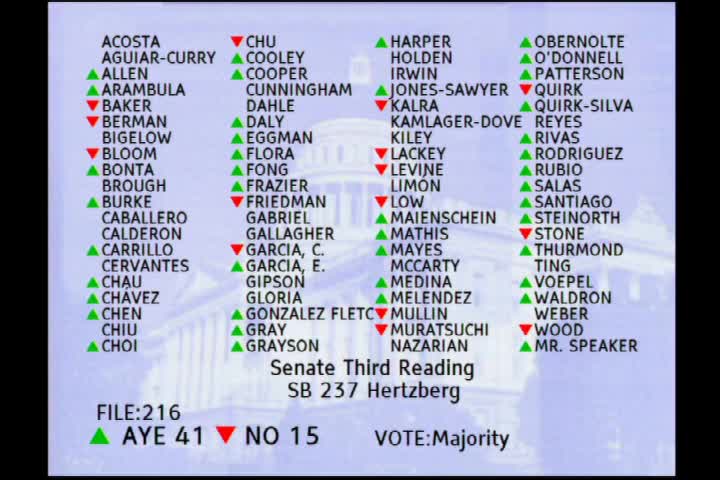 8MIN
Assembly Floor
 1H
Assembly Standing Committee on Appropriations
 12MIN
Assembly Standing Committee on Human Services
 4MIN
Senate Floor
 12MIN
Senate Standing Committee on Transportation and Housing
 13MIN
Senate Standing Committee on Human Services
Bill Author

Bill Co-Author(s):



















