SR 7
- Session Year: 2017-2018
- House: Senate
- Latest Version Date: 2016-12-06
WHEREAS, The United States was founded on the principles of freedom and opportunity, a refuge for the oppressed, the persecuted, and those looking for a better life; and
WHEREAS, Immigrants have always played an integral part in American history; and
WHEREAS, Americas infrastructure and economic viability in its formative years depended largely on the energy of immigrant laborers and immigrants continue today to add to Americas productivity, as well as its culture and economic standing in the world; and
WHEREAS, The contributions of immigrants to the United States prompted former President Lyndon B. Johnson to say: The land flourished because it was fed from so many sourcesbecause it was nourished by so many cultures and traditions and peoples; and
WHEREAS, Despite their undisputed contributions, immigrants continue to be vilified by some segments of our society as well as some politicians who seek to forward their ambitions through divisive and misinformed rhetoric; and
WHEREAS, Having learned the painful lessons from history that racial and ethnic discrimination hurts our residents and undermines our prosperity, California stands unified in rejecting the politics of hatred and exclusion; and
WHEREAS, Nowhere else in the nation has been more enriched by the contributions of immigrants than California, home to more foreign-born residents than anywhere else in the country, where they play a vital role in all sectors of our states economy; and
WHEREAS, Californias diversity is a great source of innovation and industry, making California one of the largest economies in the world and an economic engine for the United States; and
WHEREAS, Immigrants are vital to many of Californias industries such as technology, health care, agriculture, construction, hospitality, and domestic services. Immigrants also represent a large percentage of Californias new small business owners and create economic prosperity and needed jobs for everyone; and
WHEREAS, Approximately one-tenth of Californias workforce is undocumented and contributes $130 billion annually to its gross domestic product; and
WHEREAS, The Institute on Taxation and Economic Policy has reported that undocumented immigrants in California paid $2.2 billion in state and local taxes in 2010, including $1.8 billion in sales taxes, $152.1 million in state income taxes, and $302.8 million in property taxes; and
WHEREAS, California has pushed forward in the absence of federal immigration reform with dramatic steps to better integrate immigrant families into our states fabric by increasing access to health care, reforming our justice system, creating a cleaner environment for our children and our grandchildren, and encouraging civic participation and fair political representation; and
WHEREAS, Contrary to Californias continued push for thoughtful federal immigration reform, the President-elect has announced that he will order the increased deportation of undocumented immigrants and that doing so will be a top priority; now, therefore, be it
Resolved by the Senate of the State of California, That the Senate condemns in the strongest terms bigoted, racist, or misinformed descriptions of the immigrant community that serve only to foment hatred and violence; and be it further
Resolved, That the Senate supports a comprehensive and workable approach to solving our nations historically broken immigration system; and be it further
Resolved, That the Senate implores the President-elect and Congress to develop rational immigration policies that recognize the contributions of immigrants to the nation, protects the economy, and are just and humane to immigrant families and children; and be it further
Resolved, That the Senate urges the President-elect not to pursue mass deportation strategies that needlessly tear families apart or target immigrants for deportation based on vague and unjustified criteria; and be it further
Resolved, That the Senate implores the President-elect to reject any expansion of the expedited removal process that operates without administrative oversight and robs individuals of due process; and be it further
Resolved, That the Senate urges the President-elect to continue President Obamas Deferred Action for Childhood Arrivals program (DACA), which grants Dreamers people who were brought into the country as children by their parents a temporary reprieve from deportation. Nearly one-third of the nations 742,000 Dreamers live in California where they have earned college degrees and found employment. California needs college-educated young men and women to fuel our economy and cannot afford to lose our Dreamers to deportation; and be it further
Resolved, That the Secretary of the Senate transmit copies of this resolution to the President-elect and Vice President-elect of the United States, to the Speaker of the House of Representatives, to the Majority Leader of the Senate, and to each Senator and Representative from California in the Congress of the United States.
WHEREAS, The United States was founded on the principles of freedom and opportunity, a refuge for the oppressed, the persecuted, and those looking for a better life; and
WHEREAS, Immigrants have always played an integral part in American history; and
WHEREAS, Americas infrastructure and economic viability in its formative years depended largely on the energy of immigrant laborers and immigrants continue today to add to Americas productivity, as well as its culture and economic standing in the world; and
WHEREAS, The contributions of immigrants to the United States prompted former President Lyndon B. Johnson to say: The land flourished because it was fed from so many sources because it was nourished by so many cultures and traditions and peoples; and
WHEREAS, Despite their undisputed contributions, immigrants continue to be vilified by some segments of our society as well as some politicians who seek to forward their ambitions through divisive and misinformed rhetoric; and
WHEREAS, Having learned the painful lessons from history that racial and ethnic discrimination hurts our residents and undermines our prosperity, California stands unified in rejecting the politics of hatred and exclusion; and
WHEREAS, Nowhere else in the nation has been more enriched by the contributions of immigrants than California, home to more foreign-born residents than anywhere else in the country, where they play a vital role in all sectors of our states economy; and
WHEREAS, Californias diversity is a great source of innovation and industry, making California one of the largest economies in the world and an economic engine for the United States; and
WHEREAS, Immigrants are vital to many of Californias industries such as technology, healthcare, agriculture, construction, hospitality, and domestic services. Immigrants also represent a large percentage of Californias new small business owners and create economic prosperity and needed jobs for everyone; and
WHEREAS, Approximately one tenth of Californias work force is undocumented and contributes $130 billion annually to its gross domestic product; and
WHEREAS, The Institute on Taxation and Economic Policy has reported that undocumented immigrants in California paid $2.2 billion in state and local taxes in 2010, including $1.8 billion in sales taxes, $152.1 million in state income taxes, and $302.8 million in property taxes; and
WHEREAS, California has pushed forward in the absence of federal immigration reform with dramatic steps to better integrate immigrant families into our states fabric by increasing access to healthcare, reforming our justice system, creating a cleaner environment for our children and our grandchildren, and encouraging civic participation and fair political representation; and
WHEREAS, Contrary to Californias continued push for thoughtful federal immigration reform, the President-elect has announced that he will order the increased deportation of undocumented immigrants and that doing so will be a top priority; now, therefore, be it
Resolved by the Senate of the State of California, that the Senate condemns in the strongest terms bigoted, racist, or misinformed descriptions of the immigrant community that serve only to foment hatred and violence; and be it further
Resolved, that the Senate supports a comprehensive and workable approach to solving our nations historically broken immigration system; and be it further
Resolved, that the Senate implores the President-elect and Congress to develop rational immigration policies that recognize the contributions of immigrants to the nation, protects the economy, and are just and humane to immigrant families and children; and be it further
Resolved, that the Senate urges the President-elect not to pursue mass deportation strategies that needlessly tear families apart or target immigrants for deportation based on vague and unjustified criteria; and be it further
Resolved, that the Senate implores the President-elect to reject any expansion of the expedited removal process that operates without administrative oversight and robs individuals of due process; and be it further
Resolved, that the Senate urges the President-elect to continue President Obamas Deferred Action for Childhood Arrivals program (DACA), which grants Dreamers people who were brought into the country as children by their parents a temporary reprieve from deportation. Nearly one third of the nations 742,000 Dreamers live in California where they have earned college degrees and found employment. California needs college-educated young men and women to fuel our economy and cannot afford to lose our Dreamers to deportation; and be it further
Resolved, that the Secretary of the Senate transmit copies of this resolution to the President-elect and Vice President-elect of the United States, to the Speaker of the House of Representatives, to the Majority Leader of the Senate, and to each Senator and Representative from California in the Congress of the United States.
|
Date
|
Status
|
|---|---|
| Dec 5, 2016 | Senate Rule Suspended. |
| Dec 5, 2016 | Introduced. |
|
Date
|
Description
|
Location
|
Votes
|
|
|---|---|---|---|---|
| Dec 5, 2016 | W/O REF. TO FILE SR7 De León | Senate Floor |
Passed |
This list shows positions taken on this bill by organizations on the date displayed, which is linked to the original source.
Positions by individuals are not included.
|
Organization
|
Position
|
Date
|
|---|---|---|
| Asian Americans Advancing Justice | ** Support | Dec 5, 2016 |
| California Immigrant Policy Center | ** Support | Dec 5, 2016 |
| Coalition for Humane Immigrant Rights of Los Angeles | ** Support | Dec 5, 2016 |
| Legal Aid Society-Employment Law Center | ** Support | Dec 5, 2016 |
| MALDEF | ** Support | Dec 5, 2016 |
Office of Senate Floor Analyses (916) 651-1520 Fax: (916) 327-4478 | SR 7 |
THIRD READING
Bill No: SR 7
Introduced: 12/5/16
DIGEST:
This resolution 1) makes numerous findings regarding California’s support for and reliance on the contributions of immigrants and California’s commitment to the core democratic principles of the United States; 2) urges the President-elect to continue President Obama’s Deferred Action for Childhood Arrivals (DACA) program; 3) condemns bigoted, racist, or misinformed descriptions of the immigrant community that serve only to foment hatred and violence; 4) implores the President-elect not to pursue mass deportation strategies that needlessly tear families apart, target immigrants for deportation based on vague and unjustified criteria, or expand the use of the expedited removal process; 5) declares support for a comprehensive and workable approach to solving our nation’s historically broken immigration system; and 6) implores the President-elect and Congress to develop rational immigration policies that recognize the contributions of immigrants to the nation, protects the economy, and are just and humane to immigrant families and children.
Existing law:
- Provides, under the Fifth Amendment to the U.S. Constitution, that a person shall not be deprived of life, liberty, or property without due process of law. (U.S. Const., 5th Amend.)
- Holds that once an alien enters the country, the legal circumstance changes, for the Due Process Clause applies to all persons within the United States, including aliens, whether their presence here is lawful, unlawful, temporary, or permanent. (Zadvydas v. Davis, 533 U.S. 678 (2001).)
- Prohibits the federal government from returning to their home countries people whose life or freedom would be threatened because of the alien’s race, religion, nationality, membership in a particular social group, or political opinion. (8 U.S.C. Sec. 1231(b)(3).)
- Provides for the protection of people who have fled persecution on account of race, religion, nationality, political opinion, or membership in a particular social group. (UN General Assembly, Universal Declaration of Human Rights, Dec. 10, 1948, 217A(III), Art. 14.)
- Protects all asylum seekers by prohibiting the federal government from returning to their home countries people who have fled persecution on account of race, religion, nationality, political opinion, or membership in a particular social group. (8 U.S.C. Sec. 1101(a)(42)(A).)
- Provides that youth may have temporary protection from deportation and work authorization for two-year periods, as specified. (See Janet Napolitano, June 15, 2012 policy memorandum announcing the DACA program, <https://www.dhs.gov/xlibrary/assets/s1-exercising-prosecutorial-discretion-individuals-who-came-to-us-as-children.pdf [as of Dec. 1, 2016].)
- Provides that victims of certain crimes may obtain immigration relief through a Victim of Crime Visa (U-Visa) and victims of human trafficking may obtain immigration relief through a Victim of Trafficking Visa (T-Visa). (8 U.S.C. Sec. 1101(a)(15)(U); 8 U.S.C. Sec. 1101(a)(15)(T).)
- Provides immigration relief that relies on a State’s interest in the welfare of children by providing for Special Immigrant Juvenile Status where a state determines that reunification with one or both of the immigrant’s parents is not viable due to abuse, neglect, abandonment, or similar basis found under state law and that it would not be in the child’s best interest to return to their home country. (8 U.S.C. Sec. 1101 (a)(27)(J).)
- Holds that immigrant detainees with mental disabilities who are facing deportation and who are unable to adequately represent themselves are entitled to qualified legal representatives provided by the federal government for representation during all phases of their immigration proceedings, including appeals and custody hearings. (Franco-Gonzalez v. Holder, 2015 U.S. Disct. Lexis 179622.)
This resolution makes the following legislative findings:
- The United States was founded on the principles of freedom and opportunity and is a refuge for the oppressed, the persecuted, and those looking for a better life.
- Immigrants have always played an integral part in American history.
- America’s infrastructure and economic viability in its formative years depended largely on the energy of immigrant laborers and immigrants continue to add to America’s productivity today, as well as its culture and economic standing in the world.
- The contributions of immigrants to the United States prompted former President Lyndon B. Johnson to say: “The land flourished because it was fed from so many sources – because it was nourished by so many cultures and traditions and peoples.”
- Despite their undisputed contributions, immigrants continue to be vilified by some segments of our society as well as some politicians who seek to forward their ambitions through divisive and misinformed rhetoric.
- Having learned the painful lessons from history that racial and ethnic discrimination hurts our residents and undermines our prosperity, California stands unified in rejecting the politics of hatred and exclusion.
- Nowhere else in the nation has been more enriched by the contributions of immigrants than California, home to more foreign-born residents than anywhere else in the country, where they play a vital role in all sectors of our state’s economy.
- California’s diversity is a great source of innovation and industry, making California one of the largest economies in the world and an economic engine for the United States.
- Immigrants are vital to many of California’s industries, such as technology, healthcare, agriculture, construction, hospitality, and domestic services, and also represent a large percentage of California’s new small business owners and create economic prosperity and needed jobs for everyone.
- Approximately one-tenth of California’s work force is undocumented and contributes $130 billion annually to its gross domestic product.
- The Institute for Taxation and Economic Policy has reported that undocumented immigrants in California paid $2.2 billion in state and local taxes in 2010, including $1.8 billion in sales taxes, $152.1 million in state income taxes, and $302.8 million in property taxes.
- California has pushed forward in the absence of federal immigration reform with dramatic steps to better integrate immigrant families into our state’s fabric by increasing access to healthcare, reforming our justice system, creating a cleaner environment for our children and our grandchildren, and encouraging civic participation and fair political representation.
- Contrary to California’s continued push for thoughtful federal immigration reform, the President-Elect has announced that he will order the increased deportation of undocumented immigrants and that doing so will be a top priority.
This resolution:
- Urges the President-elect to continue President Obama’s DACA program, which grants “Dreamers” – people who were brought into the country as children by their parents – a temporary reprieve from deportation.
- Acknowledges that nearly one-third of the nation’s 742,000 Dreamers live in California where they have earned college degrees and found employment, and that California needs college-educated young men and women to fuel our economy and cannot afford to lose Dreamers to deportation.
- Declares support for a comprehensive and workable approach to solving our nation’s historically broken immigration system.
- Implores the President-elect and Congress to develop rational immigration policies that recognize the contributions of immigrants to the nation, protects the economy, and are just and humane to immigrant families and children.
- Urges the President-elect not to pursue mass deportation strategies that needlessly tear families apart or target immigrants for deportation based on vague and unjustified criteria.
- Implores the President-elect to reject any expansion of the “expedited removal” process that operates without administrative oversight and robs individuals of due process.
- Condemns, in the strongest terms, bigoted, racist, or misinformed descriptions of the immigrant community that serve only to foment hatred and violence.
Background
During the 2016 presidential campaign, the President-elect vilified immigrants and made campaign promises to deport millions of immigrants. From the outset, the President-elect disparaged Mexicans, by declaring in his announcement to run for the presidency that, “They're bringing drugs. They're bringing crime. They're rapists.” The President-elect villified Muslim Americans by falsely claiming that thousands of Muslim Americans celebrated the September 11th terrorist attacks, making the generalization that “I think Islam hates us,” and vowing a “total and complete shutdown of Muslims entering the United States.” The President-elect has since appointed to the position of Attorney General Alabama Senator, Jeff Sessions, who has been critical of civil rights legislation and remarked of Dominican immigrants: “Fundamentally, almost no one coming from the Dominican Republic to the United States is coming here because they have a provable skill that would benefit us and that would indicate their likely success in our society.” Most recently, on national television, the President-elect promised to immediately deport “probably two million, it could be even three million,” people, who he claimed “have criminal records, [are] gang members, drug dealers,” despite the fact that there are fewer than one million undocumented residents with any criminal record currently in this country.
Undocumented immigrants comprise nearly 10 percent of the state’s workforce – contributing $130 billion annually to its gross domestic product – concentrated in agriculture, food services, construction, textile, and domestic services. According to data from the Institute for Taxation and Economic Policy, undocumented immigrants in California paid $2.2 billion in state and local taxes in 2010, including $1.8 billion in sales taxes, $152.1 million in state income taxes, and $302.8 million in property taxes. Were undocumented immigrants in California to have legal status, they would pay over $2.6 billion in state and local taxes, including $1.9 billion in sales taxes, $384.3 million in state income taxes, and $320.1 million in property taxes.
While Congress has failed to pass comprehensive immigration reform, the California Legislature has taken steps to better protect its undocumented residents, providing avenues into the economic mainstream and out of the shadows. Building on the robust foundation of pro-immigrant legislation California has enacted, last year the Legislature continued California’s legacy of protecting its immigrant residents and providing opportunity for their socioeconomic advancement and equal justice by enacting the Immigrants Shape California legislative package. The Immigrants Shape California legislation was a gesture of gratitude to the contributions of these hardworking Californians and a commitment to protecting their liberty.
This resolution publicly announces and documents that California honors and respects our immigrants, who have proven to be an integral part of California’s communities and essential to California’s economic success. This resolution urges the President-elect to continue the DACA program which protects “Dreamers” who were brought to the United States as children, and condemns any bigoted, racist, or misinformed descriptions of the immigrant community that serve only to foment hatred and violence. This resolution implores the President-elect not to pursue mass deportation strategies that needlessly tear families apart, target immigrants for deportation based on vague and unjustified criteria, or expand the use of the expedited removal process that operates without administrative oversight and robs individuals of due process. This resolution declares support for a comprehensive and workable approach to solving our nation’s historically broken immigration system and implores the President-elect and Congress to develop rational immigration policies that recognize the contributions of immigrants to the nation, protects the economy, and are just and humane to immigrant families and children.
Comments
- Stated need for the bill. The author writes the following:
With more than 10 million immigrants, California’s great diversity is made up of many different ethnicities, cultures, and the unique experiences they bring to our state. This mosaic has been a source of innovation and economic growth. California has benefited by embracing our immigrant community and nurturing its wellbeing.
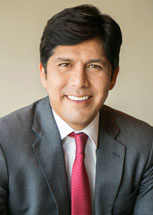
In total contrast to California’s values, the President-elect has laid out a mass deportation strategy, vastly overstating the number of undocumented immigrants in the United States who have committed violent crimes. This runs contrary to California’s values of honoring our immigrants. If implemented, this strategy would adversely affect California’s economy, and tear families apart. Such policies could also lead to violence against those seeking refuge in California and would surely traumatize communities. As leader of the State Senate, I assure the millions of undocumented people who are here pursuing and contributing to the California Dream, that the State of California stands squarely behind them. State leaders will defend your due process rights and aggressively avail ourselves of any and all tools to prevent a clear overreach by a Trump administration in California. Make no mistake about it, California will fight to protect our people and prosperity.
- California Empowers Our Immigrants. California is leading the nation in ensuring that immigrants are treated with dignity and respect. While Congress has failed to pass comprehensive immigration reform, California has exercised its state power to protect immigrants who are caught in limbo due to Washington’s inaction. Just last year, the Legislature passed a historic package of bills to empower immigrants in California—the Immigrants Shape California package.
The newly enacted laws:
- Expand health care for immigrant children regardless of immigration status (SB 4, Lara, Chapter 709, Statutes of 2015);
- Created the position of Statewide Director of Immigrant Integration within the Governor’s office to ensure that California has a comprehensive approach to immigrant integration, including facilitating immigration relief options, naturalization services, and civic engagement efforts (SB 84, Senate Budget and Fiscal Review Committee, Chapter 25, Statutes of 2015). This proposal was originally in SB 10 (Lara, 2015).;
- Protect immigrant workers from unscrupulous employers by stopping unscrupulous employers from misusing the E-Verify system to intimidate workers (AB 622, Roger Hernandez, Chapter 696, Statutes of 2015);
- Protect immigrants from discrimination by making it unlawful for business establishments to discriminate against a person on the basis of their immigration status, citizenship, or language (SB 600, Pan, Chapter 282, Statutes of 2015);
- Protect immigrants from immigration fraud as they seek help applying for immigration relief (AB 60, Gonzalez, Chapter 6, Statutes of 2015);
- Require law enforcement to complete certifications for a victim of crime who was helpful to the criminal investigation so that victims can apply for Victims of Crime immigration visas (SB 674, De León, Chapter 721, Statutes of 2015);
- Protect immigrant children by safeguarding their records from unauthorized disclosure to federal immigration officials that may result in a child’s deportation (AB 899, Levine, Chapter 267, Statutes of 2015);
- Require defense counsel in criminal proceedings to provide accurate and affirmative advice and defense to immigrants to avoid unintended immigration consequences, such as detention, deportation, and loss of citizenship eligibility. (AB 1343, Thurmond, Chapter 705, Statutes of 2015);
- Allow youth aged 18-21 who have escaped violence or terror in his or her country of origin to come under the protection of a guardianship that can also help the youth obtain Special Immigrant Juvenile Status immigration relief (AB 900, Levine, Chapter 694, Statutes of 2015); and
- Prevent unintended immigration consequences for rehabilitated immigrants who successfully complete diversion programs (AB 1352, Eggman, Chapter 646, Statutes of 2015).
These new laws were built on the robust foundation of pro-immigrant legislation California has enacted, including laws that:
- Empower immigrants to obtain driver’s licenses (AB 60, Alejo, Chapter 524, Statutes of 2013);
- Allow all Californians to apply for professional licenses without regard to the immigration status of the applicant (SB 1159, Lara, Chapter 752, Statutes of 2014);
- Empower undocumented students by allowing them to pay in-state tuition at public higher education institutions (AB 540, Firebaugh, Chapter 814, Statutes of 2001), receive financial aid (AB 131, Cedillo, Chapter 604, Statutes of 2011) and scholarships (AB 130, Cedillo, Chapter 93, Statutes of 2011);
- Prohibit law enforcement officials from detaining individuals on the basis of an immigration hold after the individual becomes eligible for release, except in specified circumstances (AB 4, Ammiano, Chapter 570, Statutes of 2013); and
- Require overtime compensation for agricultural employees. (AB 1066, Gonzalez, Chapter 313, Statutes of 2016).
The State of California further supports immigrants by funding legal services for unaccompanied minors and youth and legal services for immigrants seeking naturalization, U-Visas, T-Visas, DACA, and other immigration remedies.
- The President-elect’s plan to immediately deport two to three million people raises concerns about the possible expansion of expedited removal. The President-elect promised to immediately deport “probably two million, it could be even three million,” people, who he claimed “have criminal records, [are] gang members, drug dealers,” despite the fact that there are fewer than one million undocumented residents with any criminal record currently in this country. This characterization of the immigrant as a criminal is wrong. Studies show that immigrants are much less likely to engage in violent or non-violent anti-social behavior. In fact, studies show U.S. born men are incarcerated in California at a rate of more than two and a half times greater than that of foreign-born men. This holds true for every ethnic group, including Mexicans, Salvadorans, and Guatemalans. Nonetheless, the President-elect’s promise to immediately deport millions of people who have never been found guilty of a crime raises the issue of whether he will attempt to deport people, by expanding “expedited removal.”
Expedited removal is a summary removal procedure which deprives an immigrant of the right to appear before a judge and the right to apply for status in the United States. (Immigration and Nationality Act, 8 U.S.C. Sec. 1225(b).) In 1996, Congress established deportation procedures that allow for the deportation of some noncitizens from the United States without a hearing before an immigration judge. Expedited removal allows an immigration officer, usually an officer with the U.S. Customs and Border Protection, to serve as the prosecutor and judge and make all decisions regarding deportation oftentimes within a 24-hour period. Noncitizens have no right to counsel in expedited removal. Through this process, noncitizens are immediately ordered removed without any further hearing, review, or opportunity to apply to stay in the United States unless the person expresses a fear of persecution. If the individual expresses a fear of persecution, the individual is supposed to have an interview, known as a credible fear interview, to determine whether they may seek asylum. Nonetheless, this process is wrought with problems, and there are documented cases where genuine asylum seekers were not provided a credible fear interview.
Expedited removal applies if the immigration officer determines that an individual committed fraud or misrepresented a material fact for purposes of seeking entry to the United States, falsely claimed U.S. citizenship, or is not in possession of a valid visa or other required documentation. U.S. Immigration and Customs Enforcement deported nearly 101,000 people through expedited removal in fiscal year 2013. (U.S. Immigration and Customs Enforcement, FY 2013 ICE Immigration Removals, December 2013, p. 4.) Those who are removed through expedited removal are automatically barred from returning to the United States for five years (or within 20 years in the case of a subsequent removal). A noncitizen is permanently barred from re-entering the country if the expedited removal order is based on a false claim of U.S. citizenship.
Originally, immigration officers applied expedited removal only to people who were seeking entry to the United States and not to those who were already in the country. However, in 2004, the Department of Homeland Security (DHS) expanded the scope of expedited removal by subjecting noncitizens to expedited removal who are encountered within 100 air miles of the southwest border and who have not been present in the United States for the 14 days immediately prior to the date of encounter. (69 Fed. Reg. 4887 (Aug. 11, 2004).) Two years later, DHS expanded the policy to all United States borders. (DHS Press Release, DHS Streamlines Removal Process Along Entire U.S. Border, January 31, 2006.) Under the statute, the Attorney General may apply this provision to anyone who has not been admitted or paroled and has been present in the U.S. for less than two years. Thus, in the future, the federal government could expand the geographic area or extend the amount of time after entry to which expedited removal would apply. Such expansions raise serious due process concerns.
Expedited removal can lead to erroneous deportations of individuals who are not deportable or who would be eligible to apply for lawful status in the United States or to seek prosecutorial discretion if processed through normal immigration court procedures. Accordingly, the Senate, through this resolution, implores the President-elect to reject any expansion of the “expedited removal” process that operates without administrative oversight and robs individuals of due process, and urges the President-elect not to pursue mass deportation strategies that needlessly tear families apart or target immigrants for deportation based on vague and unjustified criteria.
- Deferred Action for Childhood Arrivals (DACA). The DACA program was established through an administrative action in 2012. DACA allows a person to have temporary protection from deportation and work authorization for two-year periods. DACA does not confer legal immigration status, provide for a visa, or a green card. DACA also does not provide a path to citizenship. In order to qualify for DACA, an undocumented youth must have arrived in the United States before their 16th birthday and have continuously resided in the United States from June 15, 2007, through the present. The youth must have been physically present in the United States on June 15, 2012, and under the age of 31 as of the same date. At the time of applying for DACA, the youth must be at least 15 years old and present within the United States.
The youth must also be currently in school or have graduated high school or obtained a GED. Since DACA is based on administrative action rather than on a law passed by Congress, the policy can be modified and even eliminated at any time by DHS when the President-elect takes office. (See Janet Napolitano, June 15, 2012 policy memorandum announcing the DACA program, <https://www.dhs.gov/xlibrary/assets/s1-exercising-prosecutorial-discretion-individuals-who-came-to-us-as-children.pdf [as of Dec. 1, 2016].)
There are 742,000 DACA recipients living in the United States. DACA recipients and others like them are referred to as “Dreamers.” Dreamers are children who were brought into the U.S. as children by their parents. Nearly one-third of the nation’s Dreamers are Californians. California has a strong public policy in favor of supporting its Dreamers. (See, e.g., AB 540, Firebaugh, Chapter 814, Statutes of 2001; AB 131, Cedillo, Chapter 604, Statutes of 2011; and AB 130, Cedillo, Chapter 93, Statutes of 2011.) The President-elect pledged to end DACA when he becomes President. Accordingly, the Senate, through this resolution, urges the President-elect to continue DACA.
FISCAL EFFECT: Appropriation: No Fiscal Com.: No Local: No
Asian Americans Advancing Justice
California Immigrant Policy Center
Coalition for Humane Immigrant Rights of Los Angeles
Legal Aid Society-Employment Law Center
MALDEF
OPPOSITION: (Verified 12/5/16)
None received
Prepared by: Margie Estrada / JUD. / (916) 651-1520
12/5/16 11:26:23
**** END ****

Bill Author






















Bill Co-Author(s):