AB 1546: Pupil health: mental health.
- Session Year: 2019-2020
- House: Assembly
- Latest Version Date: 2019-03-28
|
Date
|
Status
|
|---|---|
| Feb 3, 2020 | From committee: Filed with the Chief Clerk pursuant to Joint Rule 56. |
| Jan 31, 2020 | Died pursuant to Art. IV, Sec. 10(c) of the Constitution. |
| Apr 24, 2019 | From committee: Do pass and re-refer to Com. on APPR. (Ayes 8. Noes 1.) (April 23). Re-referred to Com. on APPR. |
| Apr 1, 2019 | Re-referred to Com. on HEALTH. |
| Mar 28, 2019 | Referred to Com. on HEALTH. |
| Feb 25, 2019 | Read first time. |
| Feb 23, 2019 | From printer. May be heard in committee March 25. |
| Feb 22, 2019 | Introduced. To print. |
|
Date
|
Description
|
Location
|
Votes
|
|
|---|---|---|---|---|
| Apr 23, 2019 | Do pass and be re-referred to the Committee on [Appropriations] | Assembly Standing Committee on Health |
Passed |
This list shows positions taken on this bill by organizations on the date displayed, which is linked to the original source.
Positions by individuals are not included.
Date of Hearing: April 23, 2019
ASSEMBLY COMMITTEE ON HEALTH
Jim Wood, Chair
ABPCA Bill Id:AB 1546
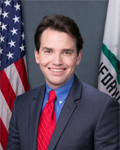
Author:(Kiley and O’Donnell) – As Amended Ver:March 28, 2019
SUBJECT: Pupil health: mental health.
SUMMARY: Permits a county mental health plan (MHP) to contract with a local educational agency (LEA) to provide Early and Periodic Screening, Diagnosis, and Treatment (EPSDT) services to Medi-Cal eligible pupils. Requires the Department of Health Care Services (DHCS), if a LEA does not contract with the MHP, to permit a LEA to make claims for federal financial participation (FFP) directly to DHCS for EPSDT services either directly provided by the LEA or for which the LEA has contracted. Requires the LEA, to FFP, to pay the nonfederal share of EPSDT expenditures and to certify its public expenditures for EPSDT services to DHCS. Specifically, this bill:
- Permits a county MHP to contract with a LEA to provide EPSDT services to Medi-Cal eligible pupils.
- Defines a “LEA” as a school district, a county office of education, a nonprofit charter school participating as a member of a special education local plan area, or a special education local plan area.
- Requires DHCS, if a LEA does not contract with the MHP, to permit a LEA to make claims for FFP directly to DHCS for EPSDT services either directly provided by the LEA or that the LEA has contracted for.
- Requires, unless otherwise precluded by federal law, a LEA to be reimbursed for eligible EPSDT services provided under this bill.
- Requires the LEA, to receive FFP, to pay the nonfederal share of EPSDT expenditures and to certify its public expenditures for EPSDT services to DHCS.
- Requires services that a MHP contracts with a LEA for, or that a LEA can receive FFP, to include, but are not limited to, any of the following:
- Mental health assessments;
- Targeted case management services;
- Behavioral services;
- Mental health, social work, and counseling services;
- Individual and group services;
- Crisis intervention;
- Day treatment;
- Residential treatment; and,
- Medication support services.
- States legislative intent that the Legislature does not intend for this bill to authorize a LEA or a MHP to knowingly provide, or submit a claim for, duplicated EPSDT services.
- Requires DHCS to examine methodologies for increasing LEA participation in the Medi-Cal program to encourage schools to meet the educationally related health care needs of their pupils, which includes simplifying the claiming processes for Medi-Cal billing to the extent possible.
- Requires this bill to be implemented to the extent permitted by federal law.
- Requires DHCS to undertake all necessary activities to obtain FFP for reimbursable services provided by LEAs or contracted for by LEAs under this bill.
- Requires DHCS to seek approval of any state plan amendments or federal waivers necessary to implement this bill. Implements this bill only when all necessary federal approvals have been obtained, and to the extent that federal matching funds are obtained.
- Requires DHCS to utilize the renewal of the California Medi-Cal 2020 waiver as the opportunity to seek necessary federal approval thereby streamlining the federal approval process.
EXISTING LAW:
- Establishes the Medi-Cal program, administered by DHCS, under which qualified low-income individuals receive health care services.
- Makes children age 18 and under with family incomes up to 266% of the federal poverty level eligible for Medi-Cal.
- Requires DHCS to implement managed mental health care for Medi-Cal beneficiaries through contracts with MHPs. Permits MHPs to include individual counties, counties acting jointly, or an organization or nongovernmental entity determined by DHCS to meet MHP standards. Permits a contract to be exclusive and may be awarded on a geographic basis. Requires MHPs to be responsible for providing Specialty Mental Health Services (SMHS) to enrollees.
- Requires county MHPs to be governed by specific guidelines, which include a requirement that MHPs provide specialty mental health services to eligible Medi-Cal beneficiaries, including both adults and children, including EPSDT services to eligible Medi-Cal beneficiaries under the age of 21.
- Establishes a schedule of benefits in the Medi-Cal program, which includes EPSDT for any individual under 21 years of age, consistent with the requirements of a specified EPSDT provision of federal Medicaid law. Requires specified services provided by a LEA are covered Medi-Cal benefits, to the extent FFP is available, and subject to utilization controls and standards adopted by DHCS, and consistent with Medi-Cal requirements for physician prescription, order, and supervision. Refers to this as the LEA Medi-Cal Billing Option Program (BOP).
- Permits DHCS to contract with each participating local governmental agency (LGAs) or each local educational consortia (LECs) to assist with the performance of administrative activities necessary for the proper and efficient administration of the Medi-Cal program. Refers to this activity as the Administrative Claiming process (known as SMAA), under which LGAs and LECs certify to DHCS the total amount the LGA or LEC expended on allowable administrative activities.
- Requires counties, cities, and city and counties to fund Medi-Cal SMHS, including EPSDT, from moneys received from the several realignment accounts (the Behavioral Health Subaccount, the Behavioral Health Growth Special Account, the Mental Health Subaccount, the Mental Health Account), and to the extent permissible under the Mental Health Services Act (established by Proposition 63 from 2004), the Mental Health Services Fund.
FISCAL EFFECT: This bill has not yet been analyzed by a fiscal committee.
COMMENTS:
- PURPOSE OF THIS BILL. According to the author, in conversations with teachers, administrators, and parents in his district, one topic that consistently arises as an area of need is mental health and student wellness in the K-12 educational system. A review of the research on the topic demonstrates why the problem has become so acute:
- Youth suicide rates are rising nearly every year in California and are now at their highest levels since 1996 (currently 7.9 suicides per 100,000 people ages 15-24);
- In rural California, where mental health services are most limited, the suicide rate is often triple the state average; and,
- California’s most recent Healthy Kids Survey found that 34% of 11th graders experience chronic sadness and 16% have seriously contemplated suicide.
Unfortunately, California does not appear to be prepared to respond to these alarming trends. According to Stanford University’s most recent “Getting Down to Facts” brief on mental health in public schools, California ranks at or near the bottom nationally for student access to mental health services.
This bill seeks to help fix this problem by making it easier for school districts to gain access to federal funding for mental health services. It does so by allowing LEAs and Special Education Local Plan Areas (SELPAs) to bill directly for EPSDT funding, rather than having to filter those dollars through county MHPs.
- EPSDT. EPSDT is the children and youth under age 21 health benefit in Medicaid. Under federal Medicaid law, EPSDT services include screening, vision, dental, hearing, and other Medicaid health care, diagnostic services, treatment, and other measures to correct or ameliorate defects and physical and mental illnesses and conditions discovered by the screening services. The purpose of EPSDT is to discover and treat childhood health conditions before they become serious or disabling. States must inform all Medicaid-eligible families about the benefit, screen children at reasonable intervals, diagnose and treat any health problems found, and report certain data regarding EPSDT participation annually to the Centers for Medicare & Medicaid Services. The EPSDT benefit is more robust than the Medi-Cal benefit package provided to adults. For example, services that are optional benefits under federal law for adults in Medi-Cal (such as dental, eyeglasses, physical and occupational therapy and pharmacy) are required goods and services under EPSDT. The EPSDT benefit is designed to ensure that eligible members receive early detection and preventive care in addition to medically necessary treatment services, so that health problems are averted or diagnosed and treated as early as possible.
- COUNTY MENTAL HEALTH PLANS AND MEDI-CAL. Medi-Cal mental health benefits are delivered through two separate systems. MHPs provide a broad range of SMHS to individuals with more severe mental illnesses, while MCMC plans provide non-SMHS. The delivery of SMHS through MHPs is commonly referred to as a “carve out.” A “carve out” is when services covered by the Medi-Cal program are delivered outside of a MCMC plan. Services for physical and behavioral health (which includes mental health and substance use disorders) historically have been financed and delivered under separate systems (the Drug Medi-Cal benefit is also delivered outside of MCMC plans).
MHPs are responsible for providing SMHS to Medi-Cal beneficiaries who meet SMHS medical necessity criteria. SMHS are delivered through 56 county mental health plans (Placer and Sierra Counties and Yuba and Sutter Counties operate two separate dual-county combined MHPs). Medi-Cal beneficiaries that meet medical necessity criteria for SMHS are entitled to receive medically necessary SMHS from their county MHP, regardless of whether or not they are enrolled in a MCMC plan. The following Medi-Cal SMHS are available for children and youth:- Adult Residential Treatment Services (including youth ages 18-20);
- Crisis Intervention;
- Crisis Stabilization;
- Crisis Residential Treatment Services (including youth 18-20);
- Day Rehabilitation;
- Day Treatment Intensive;
- Medication Support Services;
- Psychiatric Health Facility Services;
- Psychiatric Inpatient Hospital Services;
- Targeted Case Management;
- Therapeutic Behavioral Services; and,
- Therapy and Other Service Activities
In 2016-17, according to the DHCS “Performance Outcome System Children and Youth Reports” from 2018, of the 6.3 million children and youth age 20 years or under enrolled in Medi-Cal, only 259,870 received SMHS, for a service penetration rate of 4.1% (the penetration rate is calculated by taking the total number of children and youth who received or more SMHS during a fiscal year dividing that by the total number of Medi-Cal youth for that fiscal year). Of the 259,870 children and youth, 192,686 or 3.1% received five or more SMHS visits (referred to as the engagement rate).
MHPs can contract with LEAs under existing practice. This bill reiterates that existing law authority to make clear there is not a legal barrier to this contracting. The larger policy change this bill makes is to require DHCS, if a LEA does not contract with the MHP, to permit a LEA to make claims directly to DHCS for EPSDT services either directly provided by the LEA, or for which the LEA has contracted. Under this bill, LEAs would be responsible for the non-federal share of EPSDT-funded services provided by the LEA in such a situation. Under current law, EPSDT mental health services are funded by counties through revenue from Realignment and Mental Health Services Act funds and by Medicaid federal financial participation.
- LEA MEDI-CAL FUNDING. LEAs to claim federal Medicaid funds: through SMAA and the LEA BOP.
SMAA allows LEAs to be reimbursed through federal Medicaid matching funds for some of their administrative costs associated with school-based health and outreach activities that are not claimable under the LEA BOP or under Medi-Cal generally. In general, the cost of school-based health and outreach activities reimbursed under SMAA consist of referring students/families for Medi-Cal eligibility determinations, providing health care information and referral, coordinating and monitoring health services, and coordinating services between agencies. LEAs that elect to participate in SMAA must submit claims through a LEC or LGA. A LEC is a group of LEAs located in one of the 11 service regions established by the California County Superintendent Educational Services Association. An LGA is a county, county agency, chartered city, Native American Indian tribe, tribal organization, or subgroup of a Native American Indian tribe or tribal organization.
The LEA BOP provides FFP through Medicaid reimbursement to LEAs (school districts, county offices of education, charter schools, a state special school, community colleges, California State University and University of California) for health-related services provided by qualified medical practitioners to students who are enrolled in Medi-Cal. Any of these entities is authorized to bill for services provided to any student, regardless of age, who is a Medi-Cal recipient. LEAs pay for health-related services and are reimbursed for at least 50% of their costs through Medicaid FFP. LEA services are delivered either through the LEAs (which employ practitioners who provide the services on site) or through local contracted practitioners. LEAs must annually certify that the public funds expended for LEA services provided are eligible for FFP. LEA covered services can include the following:- Health and mental health evaluations and health and mental health education;
- Medical transportation;
- Nursing services;
- Occupational therapy and physical therapy;
- Physician services;
- Mental health and counseling services;
- School health aide services;
- Speech pathology services;
- Audiology services; and,
- Targeted case management services for children regardless of whether the child has an individualized education plan (IEP) or an individualized family service plan (IFSP).
DHCS’ November 2018 Medi-Cal Estimate assumes the LEA BOP will draw down $135.3 million in federal funds, and SMAA will draw down $148 million in 2019-20.
- FEDERAL LAW AND AB 114 OF 2011. The federal government provides grant funding to states to ensure that children with disabilities have access to a free and appropriate public education and has established, through the Individuals with Disabilities Education Act (IDEA), the requirements for the state programs that it funds. These programs include two main components: special education and related services. Special education is specially designed instruction to meet the needs of a student with a disability. Related services, including mental health services, are services that students with disabilities require to benefit from special education. Federal law requires LEAs to evaluate children in all areas of suspected disability to determine their eligibility for special education and related services and the nature of the student’s educational needs. For eligible students, LEAs must develop an individualized education program (IEP). The IEP is a core element of IDEA and, as such, it is integral to the purpose of IDEA. It must describe, among other things, the effects of the student’s disability on educational performance, the educational goals for the student, and the special education and related services the student will receive to assist in his or her educational progress.
In June 2011 the Governor Brown signed into law AB 114 (Committee on Budget), Chapter 43, Statutes of 2011, which transferred the responsibility for providing mental health services included in student IEPs from county mental health departments to LEAs. As a result of AB 114, LEAs were made responsible for conducting student mental health assessments, recommending the mental health services required to help the student benefit from special education, and providing those services to the student. At the time he proposed this shift in responsibility, the Governor stated that the change would lead to greater cost containment and create a stronger connection between services and student educational outcomes.
- SUPPORT. The California Association of School Districts (CALASD) writes in support that this bill allows LEAs to provide mental health services for Medi-Cal-eligible students under the federal EPSDT benefit. Supporters argue that when the state shifted the “responsible agency” for mental health services for students with IEPs from county MHPs to schools, the state did not address the issue of how school districts could access or seek reimbursement directly from Medi-Cal and the federal government for related services under the EPSDT program. This bill would allow LEA to access EPSDT program Medi-Cal reimbursements through county MHPs or by billing DHCS directly. Supporters argue it is critical that LEAs have access to these additional Medi-Cal dollars to help serve the needs of their pupils. Unfortunately, CALASD states there is no state policy or direction on how a LEA can seek direct access to the Medi-Cal funding for the EPSDT program through the county MHP. Instead, it is up to each individual LEA or SELPA to negotiate directly with their county MHP on whether this option would work in their area. The MHP program determines at the local level whether they want the LEA or SELPA to be a contracted provider to provide and bill Medi-Cal. This has created a hurdle for many LEAs/SELPAs across the state. Supporters argue it is important for DHCS to step in and play a managing role in the EPSDT process and help ensure that the families, who are entitled to the services, have the option to contract with a school district or SELPA to provide these critical services. Supporters conclude that this bill would allow school districts access to these EPSDT federal dollars to help serve the mental health needs of school age children and adolescents.
- RELATED LEGISLATION. AB 898 (Wicks) requires the California Health and Human Services Agency to convene the Children’s Behavioral Health Action Team (Action Team) to maximize the Medi-Cal program’s investment in the social, emotional, and developmental health and well-being of children in California who receive their health care through the Medi-Cal program. Specifies the membership of the Action Team, and requires the Action Team to issue an interim and final report with findings and recommendations including related to identifying opportunities for the state to better ensure Medi-Cal eligible children receive behavioral health services through the Medi-Cal program, to maximize the federal, state, and local funding to pay for the benefits and services needed to uphold California’s commitment to the healthy development of all children, and identifying opportunities to maximize the scope of available Medicaid program-funded services and supports available to children and families. Requires, by September 30, 2021, the Action Team to submit a final implementation plan to the Governor, the Legislature, state and local child-serving departments, and the public, detailing implementation strategies related to the recommendations. Requires the implementation strategies, at minimum to include legislative action needed to direct state and local child-serving departments to maximize EPSDT services, Medicaid State Plan amendments and waivers necessary to implement recommendations, and additional legislative appropriations to implement Action Team findings. AB 898 is scheduled for a hearing in the Assembly Health Committee on April 23, 2019.
- PREVIOUS LEGISLATION. AB 2212 (Gray) of 2014 was substantially similar to this bill. AB 2212 was held on the Assembly Appropriations Committee suspense file.
AB 1018 (Cooper) of 2015 as introduced was similar to this bill. AB 1018 was subsequently amended to require DHCS and the Department of Education to convene a joint task force to examine the delivery of mental health services to children eligible for EPSDT services and for services pursuant to the federal IDEA, with the goal of the task force being to ensure children are provided accessible and coordinated care that is compliant with state and federal law, in a way that is maximally cost-effective for the state. AB 1018 was held on the Senate Appropriations Committee suspense file.
- AUTHOR’S AMENDMENT. The author is proposing to delete the requirement in subdivision (c) of this bill that requires DHCS to examine methodologies for increasing LEA participation in the Medi-Cal program to encourage schools to meet the educationally related health care needs of their pupils, including simplifying the claiming processes for Medi-Cal billing.
- POLICY AND DRAFTING ISSUES.
- Current funding for EPSDT mental health services. Under existing law, EPSDT mental health services are delivered through MHPs and funded through realignment revenue, MHSA funds and federal Medicaid matching funds. This bill permits LEAs to receive services directly from DHCS if the LEA is using its own funds to draw down FFP, effectively authorizing a fee-for-service billing mechanism for LEAs outside of the MHP. However, the state is already providing funding directly to counties to provide EPSDT mental health services. If the state were to allow LEAs to use Proposition 98 funding to directly draw down federal reimbursement to provide EPSDT services at the discretion of the LEA and outside of the county MHP structure, the state may be paying for those services through Proposition 98 funding without a decrease in dedicating funding for counties for such services. The net effect would be to reduce the funding available for other (non-EPSDT) Proposition 98 activities, offset in part by the federal Medicaid matching funds the LEA would receive.
- Duplicative services language. This bill contains language that states that the Legislature does not intend for this bill to authorize a LEA or a MHP to knowingly provide, or submit a claim for, duplicated EPSDT services. Is this language sufficient to ensure duplicative EPSDT claims are not submitted?
- Federal approval. This bill requires DHCS to seek approval of any state plan amendments or federal waivers necessary to implement this bill, and requires DHCS to utilize the renewal of the California Medi-Cal 2020 waiver as the opportunity to seek necessary federal approval thereby streamlining the federal approval process. In conversations with the author’s office, this provision is intended to reduce the cost to DHCS by allowing DHCS to submit federal approval for the provisions of this bill as part of another submission to the federal government (as opposed to a specific stand-alone approval request for this bill). Staff recommends the reference to Medi-Cal 2020 be deleted as the SMHS waivers is under a separate waiver authority, and to instead require DHCS to seek federal approval (without specifying whether the approval is a SPA or waiver request) and to permit the approval to be combined with another approval request.
- County MHP authority to contract with LEAs. This bill reiterates county MHP’s authority to contract with LEAs. To clarify that the authorization in this bill does not limit county MHPs existing law authority, the author may wish to adopt clarifying language that this authority does not diminish MHPs existing law contracting authority.
REGISTERED SUPPORT / OPPOSITION:
Support
California Association of Suburban School Districts
California School Nurses Organization
California Teachers Association
Coalition for Adequate Funding for Special Education
Los Angeles Unified School District
Office of the Riverside County Superintendent Of Schools
Riverside County Public K-12 School District Superintendents
SELPA Administrators of California
Opposition
None on file.
Analysis Prepared by: Scott Bain / HEALTH / (916) 319-2097

Bill Co-Author(s):