AB 683: Medi-Cal: eligibility.
- Session Year: 2019-2020
- House: Assembly
- Latest Version Date: 2019-04-09
|
Date
|
Status
|
|---|---|
| Jun 23, 2020 | Referred to Com. on HEALTH. |
| Jan 30, 2020 | In Senate. Read first time. To Com. on RLS. for assignment. |
| Jan 30, 2020 | Read third time. Passed. Ordered to the Senate. (Ayes 75. Noes 0. Page 3935.) |
| Jan 23, 2020 | From committee: Do pass. (Ayes 18. Noes 0.) (January 23). |
| May 16, 2019 | In committee: Hearing postponed by committee. |
| May 16, 2019 | Joint Rule 62(a), file notice suspended. |
| May 13, 2019 | Joint Rule 62(a), file notice suspended. (Page 1609.) |
| May 15, 2019 | In committee: Set, first hearing. Referred to APPR. suspense file. |
| Apr 10, 2019 | Re-referred to Com. on APPR. |
| Apr 9, 2019 | Read second time and amended. |
| Apr 8, 2019 | From committee: Amend, and do pass as amended and re-refer to Com. on APPR. (Ayes 15. Noes 0.) (April 2). |
| Feb 28, 2019 | Referred to Com. on HEALTH. |
| Feb 19, 2019 | From printer. May be heard in committee March 21. |
| Feb 15, 2019 | Read first time. To print. |
|
Date
|
Description
|
Location
|
Votes
|
|
|---|---|---|---|---|
| Jan 30, 2020 | AB 683 Carrillo Assembly Third Reading | Assembly Floor |
Passed |
|
| Jan 23, 2020 | Do pass. | Assembly Standing Committee on Appropriations |
Passed |
|
| Apr 2, 2019 | Do pass as amended and be re-referred to the Committee on [Appropriations] | Assembly Standing Committee on Health |
Passed |
This list shows positions taken on this bill by organizations on the date displayed, which is linked to the original source.
Positions by individuals are not included.
ASSEMBLY THIRD READING
ATR Bill Id:AB 683
Author:(Carrillo)
As Amended Ver:April 9, 2019
Majority vote
SUMMARY:
Increases the Medi-Cal "asset test" from $2,000 for an individual and $3,000 for a couple to instead be $10,000 and $15,000, and requires those amounts to be indexed annually. Prohibits the use of an asset and resource test to make a Medi-Cal eligibility determination for people enrolled in the Medicare Shared Savings Program (the MSSP pays for Medicare premiums and cost-sharing but does not provide Medi-Cal services). Excludes other assets from consideration, and narrows the application of existing asset limits (for example, excludes additional cars from the asset limit). Codifies asset limits in state law which are currently in federal law, state law, state regulation and state guidance.
Major Provisions
COMMENTS:
INCOME AND ASSET RULES IN MEDICAID. Medi-Cal eligibility is complex and is governed by federal law, federal regulation, state law, state regulation, and the Department of Health Care Services (DHCS) and the Centers for Medicare and Medicaid Services guidance. Under federal law, Medi-Cal applicants whose eligibility is not determined based on Modified Adjusted Gross Income (MAGI) are subject to an asset, while MAGI applicants (primarily non-disabled adults under age 65 and children) are not subject to an asset test. If an applicant's property/assets are over the Medi-Cal property limit (the asset limit), the applicant will not be eligible for Medi-Cal unless they lower their property/assets according to the program rules. Medi-Cal defines property as "real property" and "personal property." Real property is land, buildings, mobile home which are taxed as real property, life estates in real property, mortgages, promissory notes, and deeds of trust. Personal property is any kind of liquid or non-liquid asset, (for example, cars, jewelry, stocks, bonds, financial institution accounts, income tax refunds, checking and savings accounts, boats, trucks, trailers, etc.) Property that is not counted in determining a person's eligibility is called "exempt" or "unavailable" property. Countable property (property which is not exempt or unavailable) is included in the applicant or beneficiary's "property reserve" (the formal regulatory definition of the dollar amount of the asset limit). A person's countable property cannot exceed the property reserve limit.
The property reserve (or asset) limits varies by beneficiary non-MAGI eligibility category. For example, the Aged and Disabled Federal Poverty Program Program has an asset limit of $2,000 for an individual and $3,000 for a couple. By contrast, the MSSP has a countable resource limit of $4,000 for an individual and $6,000 for a married couple.
When determining non-MAGI eligibility, a county Medi-Cal eligibility worker looks at the assets an applicant and their family has when determining eligibility. If the applicant or recipient's property/assets are below the limit at any time during that month, the applicant will be Medi-Cal eligible (if otherwise eligible). If a person has more than the limit for a whole month, Medi-Cal benefits will be discontinued. Individuals can reduce their property to the property reserve limit before the end of the month in which they are requesting Medi-Cal. For example, a non-MAGI Medi-Cal applicant whose total non-exempt property consists of a savings account with a balance of $3,300 in a month must reduce the savings account to $2,000 in that month. In this same situation, where there is a couple, the savings must be reduced to $3,000.
According to the Author:
The current Medi-Cal asset limit prevents seniors from having adequate resources to endure a crisis, such as an eviction, a leaking roof or a major vehicle repair. When faced with the choice of receiving Medi-Cal coverage or maintaining additional savings, most seniors rationally spend down their savings. This bill updates the outdated Medi-Cal assets test to allow seniors, particularly those in minority groups, access to much-needed health care services, while maintaining their dignity and financial stability.
Arguments in Support:
This bill is jointly sponsored by Western Center on Law & Poverty and Justice in Aging, who state this bill makes three important changes to the Medi-Cal asset rules: 1) it updates the assets limits for programs serving seniors and persons with disabilities to $10,000 for an individual and an additional $5,000 for each additional household member, with annual indexing; 2) it expands and simplifies the list of items to be excluded from the assets test for those Medi-Cal programs still subject to the assets test; and, 3) it eliminates the assets test entirely for the MSSP.
The sponsors argue the current asset limit prevents seniors and persons with disabilities from having adequate resources to weather a crisis, such as an eviction, a leaking roof, or a major vehicle repair. When faced with the decision of qualifying for Medi-Cal or having additional savings, most seniors rationally spend down their savings as the cost of their health care is more than they have saved. This puts them at risk of further instability or homelessness when financial crises happen. Furthermore, these rules also disproportionately punish seniors of color because they are more likely to have cash savings, instead of an exempt home. For example, a low-income senior who owns an expensive home in the Bay Area can qualify for Medi-Cal, but a renter with the same income would not get Medi-Cal if they had $2,001 in the bank. Significantly raising the Medi-Cal asset limit will increase financial stability so seniors can save for a crisis and decrease racial inequality so seniors of color aren't punished for racial disparities in homeownership. The sponsors continue that California has undertaken other efforts to encourage savings or prevent low-income people from depleting all their resources prior to receiving help. The sponsors conclude California should not as a state tell its residents that they should be saving, while at the same time denying affordable health care to those who have a modest amount of savings to guard against financial emergencies.
Arguments in Opposition:
No opposition on file.
FISCAL COMMENTS:
According to the Assembly Appropriations:
- Ongoing costs of $96 million ($46 million General Fund (GF)), assuming federal approval is granted).
- Minor administrative staff costs to DHCS to update regulations and submit state plan amendments, as necessary (GF/federal).
VOTES:
ASM HEALTH: 15-0-0
YES: Wood, Mayes, Aguiar-Curry, Bigelow, Bonta, Burke, Carrillo, Flora, Limón, McCarty, Nazarian, Ramos, Rodriguez, Santiago, Waldron
ASM APPROPRIATIONS: 18-0-0
YES: Gonzalez, Bigelow, Bloom, Bonta, Brough, Calderon, Carrillo, Chau, Megan Dahle, Diep, Eggman, Fong, Gabriel, Eduardo Garcia, Maienschein, Petrie-Norris, Quirk, Robert Rivas
UPDATED:
VERSION: April 9, 2019
CONSULTANT: Scott Bain / HEALTH / (916) 319-2097 FN: 0002630
Date of Hearing: May 16, 2019
ASSEMBLY COMMITTEE ON APPROPRIATIONS
Lorena Gonzalez, Chair
ABPCA Bill Id:AB 683
Author:(Carrillo) – As Amended Ver:April 9, 2019
Policy Committee: | Health | Vote: | 15 - 0 |
Urgency: No State Mandated Local Program: Yes Reimbursable: Yes
SUMMARY:
This bill modifies the Medi-Cal eligibility “asset test” by increasing the asset limit and excluding more property and resources from the test. Specifically, this bill:
- Prohibits the use of an asset and resource test to make a Medi-Cal eligibility determination for people enrolled in the Medicare Savings Program (MSP). (The MSP pays for Medicare premiums and cost-sharing but does not provide Medi-Cal services.)
- Commencing July 1, 2020:
- Increases the limit from $2,000 for an individual and $3,000 for a couple to instead be $10,000 and $15,000, respectively, and requires those amounts to be indexed annually.
- Excludes other assets from consideration and narrows the application of existing asset limits (for example, excludes additional cars from the asset limit).
- Codifies asset limits in state law that are currently in federal law, state law, state regulation and state guidance.
- Requires the Department of Health Care Services (DHCS) to, by June 1, 2020, issue updated and simplified notices and forms. Requires DHCS to adopt regulations by January 1, 2021.
FISCAL EFFECT:
- If broader exemptions created by this bill create eligibility for tens of thousands more Medi-Cal beneficiaries, costs could be in the tens of millions of dollars or could exceed $100 million (50% General Fund/ 50% federal, assuming federal approval is granted).
There is a high degree of uncertainty about the number of additional cases in Medi-Cal and MSP that would result from the proposed changes and the cost per case. The state cost per case will depend on whether new enrollees are enrolled in Medi-Cal only, in both Medi-Cal and Medicare, or just in Medicare (with premiums and other costs paid through MSP). Average costs will be greater to the extent new enrollees are covered just by Medi-Cal (since Medi-Cal would cover the full cost of services) or use costly services Medicare does not cover, such as long-term care in nursing homes.
- Minor administrative staff costs to DHCS to update regulations and submit state plan amendments, as necessary (GF/federal). Some existing asset limits are specified in regulation; any state plan amendments would need federal approval
COMMENTS:
- Purpose. According to the author, the current Medi-Cal asset limit does not allow Medi-Cal eligible seniors to retain adequate resources to endure a minor personal financial crisis. This bill updates the Medi-Cal asset test to allow seniors to become or remain eligible for the program despite maintaining a slightly higher level of assets.
- Background. Medi-Cal eligibility is complex and is governed by federal law, federal regulation, state law, state regulation, and DHCS and federal guidance. There are multiple pathways to coverage. For adults under 138% of poverty, eligibility is based solely on modified adjusted gross income (MAGI), but seniors age 65 and above must also have limited assets to be able to qualify for Medi-Cal.
For non-MAGI Medi-Cal applicants, if property and assets are over the Medi-Cal property limit, the applicant will not be eligible for Medi-Cal unless they lower their property and assets according to the program rules. Medi-Cal defines property as “real property” and “personal property.” Real property is land, buildings, mobile homes which are taxed as real property, life estates in real property, mortgages, promissory notes and deeds of trust. Personal property is any kind of liquid or non-liquid asset (for example, cars, jewelry, stocks, bonds, financial institution accounts, income tax refunds, checking and savings accounts, boats, trucks, trailers, etc.). Property that is not counted in determining a person’s eligibility is called “exempt” or “unavailable” property. Countable property (property which is not exempt or unavailable) is included in the applicant’s or beneficiary’s asset limit. A person is not eligible for Medi-Care if their property exceeds the asset limit.
The asset limits vary by beneficiary eligibility category. For example, the Aged and Disabled Federal Poverty Level (FPL) Program has an asset limit of $2,000 for an individual and $3,000 for a couple. By contrast, the MSP has a limit of $4,000 for an individual and $6,000 for a married couple.
The proposed changes to asset limits would make more people eligible for these programs, resulting in higher caseloads and additional cost to the state. This would occur as some individuals who currently apply for assistance and are denied because of assets are approved, as some individuals who currently are discontinued from the program because of assets remain enrolled, and as others who are aware that they currently have assets over the limit apply for assistance and are enrolled.
- Support. This bill is co-sponsored by Western Center on Law & Poverty and Justice in Aging, who state this bill makes three important changes to the Medi-Cal asset rules: it updates the assets limits for programs serving seniors and persons with disabilities, expands and simplifies the list of items to be excluded from the assets test, and eliminates the assets test entirely for the MSSP. The sponsors indicate this is consistent with other efforts California has undertaken to encourage savings or prevent low-income people from depleting all their resources prior to receiving help, for instance within the CalFresh program.
- Staff Comment: Technical Amendment Needed. This bill should refer to the “Medicare Savings Program,” which pays Medicare cost-sharing, not the “Medicare Shared Savings Program,” which is a demonstration program to encourage the delivery of high-quality care through accountable care organizations.
Analysis Prepared by: Lisa Murawski / APPR. / (916) 319-2081
Date of Hearing: April 2, 2019
ASSEMBLY COMMITTEE ON HEALTH
Jim Wood, Chair
ABPCA Bill Id:AB 683
Author:(Carrillo) – As Introduced Ver:February 15, 2019
SUBJECT: Medi-Cal: eligibility
SUMMARY: Increases the Medi-Cal “asset test” from $2,000 for an individual and $3,000 for a couple to instead be $10,000 and $15,000, and requires those amounts to be indexed annually. Prohibits the use of an asset and resource test to make a Medi-Cal eligibility determination for people enrolled in the Medicare Shared Savings Program (the MSSP pays for Medicare premiums and cost-sharing but does not provide Medi-Cal services). Excludes other assets from consideration, and narrows the application of existing asset limits (for example, excludes additional cars from the asset limit). Codifies asset limits in state law which are currently in federal law, state law, state regulation and state guidance. Specifically, this bill:
- Requires the Department of Health Care Services (DHCS), commencing January 1, 2020, for a Medi-Cal applicant or beneficiary whose eligibility is determined using non-modified adjusted gross income (non-MAGI) based financial methods, to disregard (not count) the following assets and resources when determining Medi-Cal eligibility:
AB 683 - Exemptions from Asset and Resource Limits in Determining Medi-Cal Eligibility | Change to Existing Law/Regulation/California's Medicaid State Plan (State Plan) or Policy | Existing law, regulation, State Plan Amendment (SPA), or other authority |
One piece of real property. The applicant or beneficiary need not reside on the real property. Money received from the sale of real property shall be exempt for one year if the money from the sale is intended to be used for the purchase of a home, costs of moving, necessary furnishings, and repair or alteration to the principal residence. | Codifies an exemption for property used as a principal residence but broadens the exemption by no longer requiring the applicant or beneficiary to reside on the real property. Extend the duration of exclusion of money received from the sale of real property by exempting it for one year, instead of six months in existing regulation. | Title 22 of the CCR, Sections 50416, 50425, 50426 |
Real property used in business or trade. | Broadens an existing exemption for business property (equipment, inventory, licenses and materials) by no longer limiting the exemption to business property necessary for employment, for self-support, or for an approved plan of rehabilitation or self-care necessary for employment, and by no longer limiting the exemption to capped amounts of business-related cash, motor vehicles and real property. | Title 22 of the CCR, Sections 50485 and 50427, All County Welfare Director Letter (ACWDL) 91-28, OBRA 1989 |
Other real property, mortgages, deeds of trust, or other promissory notes. | Codifies an exemption for other real property, but does not require it to be limited to $6,000 or to be subject to the utilization requirement in existing law. Exempts mortgages and other promissory notes from the asset test (mortgages, notes secured by deeds of trust and other promissory notes which can be sold or discounted are required to be included as assets, except as specified). | Title 22 of the CCR, Section 50441, 50427, 50416 |
Real property that the applicant or beneficiary is attempting to sell, but has been unable to sell at fair market value. | Codifies language from the State Plan. Current law has similar language for the medically needy persons, medically needy family persons, and state-only Medi-Cal persons, but requires the property to be subject to a lien by the state. | SPA Supplement 8b To Attachment 2.6-a. Welfare and Institutions Code Section 14006(a)(5) |
Motor vehicles. | Broadens the motor vehicle exemption in existing regulation, which currently limits an individual or family to one motor vehicle or other vehicle used for transportation (all additional vehicles are subject to the asset limit). | Title 22 of the CCR, Section 50461 |
Personal property used in trade or business. | Broadens an existing exemption for business property (equipment, inventory, licenses and materials) by no longer limiting the exemption to business property necessary for employment, for self-support, or for an approved plan of rehabilitation or self-care necessary for employment, and by no longer limiting the exemption to capped amounts of business-related cash, motor vehicles and real property. | Title 22 of the CCR Section 50485, ACWDL 91-28, OBRA 1989 |
Household item. | Codifies the existing exemption (under existing regulation, all items used to furnish and equip a home are exempt.) | Title 22 of the CCR, Section 50465 |
Personal effects. | Codifies the personal effects exemption for wedding and engagement rings, and heirlooms. Expands the personal effects exemption by eliminating the asset test for any item of jewelry with a net market of value of $100 of more, as determined by a written appraisal of current market value. | Title 22 of the CCR, Section 50467 |
Retirement accounts (IRA, annuity, Keogh, work-related pension, 401(k), 403(b), payroll deduction IRA under Cal Savers Retirement Savings Program. | Codifies the State Plan exemption for employer or individual retirement arrangements authorized under the Internal Revenue Code. Expands the exemption from the asset test for the Cal Savers Retirement Program | SPA Supplement 8b to Attachment 2.6A, ACWDL 90-01, with draft regulation 50458 |
529 Plan and 529A plans. | Includes in this bill the current state law provision excluding the principal and interest of a 529 savings plan from consideration for purposes of any asset or resources test to determine eligibility for Medi-Cal benefits with respect to an applicant or beneficiary whose eligibility is determined using non-MAGI-based financial methods. Expands the asset test exemption to 529A plans to align with Centers for Medicare and Medicaid Services (CMS) guidance. | Welfare and Institutions 14005.38, State Medicaid Director 17-002, dated September 7, 2017 |
Burial funds, plots, trusts or prepaid burial contracts. | Exempts burial insurance generally (instead of exempting burial insurance with no cash surrender value, under existing regulation). Exempts burial funds from the asset limit (current regulation limits the exemption to $1,500). | Title 22 of the CCR, Sections 50476 and 50479, and ACWDL 92-58 |
Musical instruments. | Codifies the musical instrument exemption in current regulation. | Title 22, CCR 50471 |
Recreation items (will be amended to instead be recreational). | Codifies the current exemption for recreational items. Broadens the exemption to include recreational motor vehicles (motor homes, and snowmobiles, boats, campers, and trailers). | Title 22 of the CCR, Section 50469 |
Livestock, poultry, crops or pets. | Eliminates the requirement that livestock and poultry be required to be for personal use in order for an exemption to apply. Exempts crops and pets, which are not currently subject to an asset test in regulation but crops are listed on the General Property Limitations form. | Title 22 of the CCR, Section 50473, Medi-Cal General Property Limitations (Form MC 007), dated 01/16 |
Life insurance policies. | Exempts life insurance policies generally. Current regulation includes as within the asset test term insurance owned by a member of the Medi-Cal Eligibility Family Budget Unit (MFBU) on the life of any individual in the family if the face value is $1,500 or more. Current regulation also requires, if the combined face value of all the policies $1,500, the net cash surrender value of life insurance policies to be included as an asset. | Title 22 of the CCR, Section 50475 |
Long-term care (LTC) insurance policies and the amounts of payments therein. | Requires income received from LTC insurance policies to be exempt. Codifies the exemption for the amount of benefits that been paid for LTC services countable toward the Medi-Cal property exemption on behalf of the Medi-Cal applicant or beneficiary under a certified long-term care insurance policy or certificate certified by the state to provide this exemption. | Title 22 of the CCR, Section 50453.7 |
Reparation or restitution payments, including Japanese reparation payments made by the Canadian or United States government, restitution payments made to Holocaust victims, and federal payments made to Alaska Natives and American Indians. | Codifies the existing exemption in the State Plan and in regulation for current reparation payments and extends the asset test exemption to future reparation payments. | Title 22 of the CCR, Sections 50445 and 50446. State Plan Amendment Supplement 8b To Attachment 2.6-A, Welfare and Institutions Section 11008.20, ACWDL 03-50, 90-96, and 89-112 |
The value of any item that the applicant or beneficiary is making a good faith effort to sell, but is unable to sell at fair market value. | Codifies similar language to the State Plan, which requires the value of resources to be disregarded when there is a bona fide, good faith effort being made to sell or liquidate the resource. | SPA Supplement 8b to Attachment 2.6-a., draft regulation 50402 in ACWDL 90-01 |
Resources intended to be used to pay unpaid medical bills at the time of application (will be amended to be "within the month" instead of "at the time"). | Codifies the resource disregard equal to the amount of incurred medical bills that are unpaid in the month where there are excess resources for the entire month. | SPA Supplement 8b to Attachment 2.6-A, ACWDL 97-41, Principe v. Belshé |
Earned income tax credit (EITC) or tax refunds for up to 12 months. | Codifies and expands the current EITC exemption for EITC but expands it to 12 months, instead of it being exempt in that month. Exempts tax refunds for up to 12 months. | Title 22 of the CCR, Section 50449 |
Disaster and emergency payments. | Codifies the exemption from disaster and emergency assistance payments but does not limit it to payments from the federal, state, or local government agencies, or disaster assistance organizations (thereby permitting insurance settlements or gifts from non-government entities to be an exempt asset). | Title 22 of the CCR, Section 50481 |
Payments made by the California Victim Compensation Board (CVCB) | Codifies and broadens the exemption by requiring payments from CVCB to be exempt, instead of the exemption being limited to the 9-month period beginning after the month in which the payment was received. | Title 22 of the CCR, Section 50448 |
Savings of a child under 21 years of age. | Broadens the existing savings for a child exemption, which is limited to "reasonable amounts saved from a child's exempt earnings for future education or for other future identifiable needs." | Title 22 of the CCR, Section 50453.5 |
Any other resource that is exempt by federal law. | Current state Medi-Cal law prohibits, for a medically needy person, a medically needy family person and a state-only persons resources that are exempt under federal Medicaid law from being considered in determining eligibility. Current state regulation does not contain a "catchall" that automatically exempts any resource that is exempt by federal law. Federal Medicaid law sets Supplemental Social Security Income (SSI) asset limits as the floor. | Welfare and Institutions Section 14006. 42 USC 1396(r)(2) |
$10,000 in nonexempt property for an individual and $5,000 for each additional household member to be indexed annually. | Increases existing asset limits of $2,000 for an individual, $3,000 for a couple, and replaces the additional $150 increment increase for each additional member of the MFBU with a $5,000 increase for each additional household member. Current regulation does not require this amount to be indexed annually. | Title 22 of the CCR, Sections 50419 and 50420 |
Asset or resource tests for applicant or beneficiary for a Medi-Cal eligibility determination for a person who is enrolled in the MSSP. | Repeals the current property limits used to determine MSSP eligibility. For 2018, these amounts are $7,560 for an individual and $11,340 for a couple. Federal law sets the MSSP property limits at three times the SSI property limit plus an annual percentage increase equal to the increase in the Consumer Price Index. | ACWDL 18-04 is the most recent published state guidance. |
- Prohibits DHCS from using an asset or resource test to make Medi-Cal eligibility determinations for an applicant or beneficiary who is enrolled in the MSSP, effective January 1, 2020.
- Requires the DHCS director to seek any necessary federal approvals to implement this bill. Prohibits implementation of this bill until the necessary federal approval is obtained, and only to the extent federal financial participation (FFP) is available.
- Permits DHCS to implement this bill by means of provider bulletins or notices, policy letters, or other similar instructions, without taking regulatory action. Requires DHCS to adopt regulations by July 1, 2020, in accordance with the requirements of the state Administrative Procedure Act.
EXISTING LAW:
- Establishes the Medi-Cal program, administered by DHCS, under which low income individuals are eligible for medical coverage.
- Requires, when determining eligibility for Medi-Cal benefits, an applicant’s or beneficiary’s income and resources to be determined, counted, and valued in accordance with the requirements of a specified provision of federal Medicaid law added by the Patient Protection and Affordable Care Act (ACA), which prohibits the use of an assets or resources test for individuals whose income eligibility is determined based on MAGI.
- Defines “MAGI-based financial methods” as income calculated using the financial methodologies described in a specified provision of federal Medicaid law added by the ACA.
- Requires, for purposes of determining Medi-Cal eligibility for medically needy persons, medically needy family persons, and state-only Medi-Cal persons, resources to be determined, defined, counted, and valued in accordance with federal Medicaid law governing resources. Refers to the eligibility determination rules for these categories as “non-MAGI.”
- Establishes, through state law, regulation and state guidance, and federal Medicaid law, definitions of assets for purposes of Medi-Cal eligibility for non-MAGI individuals, and limits on assets for individuals whose eligibility is determined based on non-MAGI financial methods.
- Establishes, through state regulation, a property reserve limit (known as an “asset limit”) of $2,000 for an individual for an individual and $3,000 for a couple, with higher limits for MSSPs.
FISCAL EFFECT: This bill has not yet been analyzed by a fiscal committee.
COMMENTS:
- PURPOSE OF THIS BILL. According to the author, the current Medi-Cal asset limit prevents seniors from having adequate resources to endure a crisis, such as an eviction, a leaking roof or a major vehicle repair. When faced with the choice of receiving Medi-Cal coverage or maintaining additional savings, most seniors rationally spend down their savings. This bill updates the outdated Medi-Cal assets test to allow seniors, particularly those in minority groups, access to much-needed health care services, while maintaining their dignity and financial stability.
- INCOME AND ASSET RULES IN MEDICAID. Medi-Cal eligibility is complex and is governed by federal law, federal regulation, state law, state regulation, and DHCS and CMS guidance. There are multiple different pathways to coverage. Some individuals are categorically eligible for Medi-Cal, meaning they are enrolled in Medi-Cal on the basis of being enrolled in another program, such as CalWORKS. Other individuals are eligible based on being low-income only (such as pregnant women, children, and adults age 19 to 64 with incomes below 138% of the federal poverty level (FPL)). Other individuals are eligible based on being low-income but also have an asset test, which limits the amount of cash and property they can have for in order to be Medi-Cal eligible. Examples of assets include bank accounts, retirement plans, and cars.
Under the ACA, Medicaid income eligibility was changed for most enrollees. The ACA introduced a new income counting methodology for Medi-Cal and people applying for federal premium tax and cost-sharing subsidies known as MAGI. The MAGI rules apply to the newly eligible adults (“expansion adults” age 19 to 64, primarily adults without minor children), pregnant women, parents and caretaker relatives, and children, including the Children’s Health Insurance Program-funded Targeted Low-Income Children’s Program, advanced premium tax credits and cost-sharing reductions offered through Covered California; and Medi-Cal Access Program for pregnant women. Medicaid eligibility determinations that are based on MAGI standards use federal tax rules for counting income and household size, with narrow exemptions.
The goal of the MAGI income counting rules was to coordinate Medicaid determinations with eligibility determinations for the federal premium and cost-sharing subsidies for coverage available through health insurance exchanges. The MAGI methodology does not consider assets or resources other than income (meaning there is no asset test for MAGI-based eligibility determinations).
If an individual does not qualify for Medi-Cal under the MAGI rules, the individual may nevertheless qualify for Medi-Cal under “non-MAGI Medi-Cal” which has its own income rules. The non-MAGI methodology applies to individuals whose eligibility is determined on the basis of age or disability, those individuals whose eligibility for Medicaid does not require a Medicaid determination of income (such as individuals receiving Supplemental Security Income (SSI) or Title IV-E child welfare assistance; those in need of long-term services and supports; and certain individuals applying for Medicare cost-sharing assistance or medically needy pathways. Most non-MAGI programs that count income have limits on what resources an individual may have besides income to qualify for Medi-Cal (often referred to as an “asset test”).
- ASSET LIMITS IN CALIFORNIA. For non-MAGI Medi-Cal applicants, if property/assets are over the Medi-Cal property limit, the applicant will not be eligible for Medi-Cal unless they lower their property/assets according to the program rules. Medi-Cal defines property as “real property” and “personal property.” Real property is land, buildings, mobile home which are taxed as real property, life estates in real property, mortgages, promissory notes, and deeds of trust. Personal property is any kind of liquid or non-liquid asset, (for example, cars, jewelry, stocks, bonds, financial institution accounts, income tax refunds, checking and savings accounts, boats, trucks, trailers, etc.) Property that is not counted in determining a person’s eligibility is called “exempt” or “unavailable” property. Countable property (property which is not exempt or unavailable) is included in the applicant or beneficiary’s “property reserve” (the formal regulatory definition of the dollar amount of the asset limit). A person’s countable property cannot exceed the property reserve limit.
The property reserve (or asset) limits varies by beneficiary eligibility category. For example, the Aged and Disabled FPL Program has an asset limit of $2,000 for an individual and $3,000 for a couple. By contrast, the MSSP have a countable resource limit of $4,000 for an individual and $6,000 for a married couple.
Any amount over an individual’s property reserve limit makes an individual ineligible for Medi-Cal. A county Medi-Cal eligibility worker looks at how much an applicant and their family has when determining eligibility for non-MAGI Medi-Cal. If the applicant or recipient’s property/assets are below the limit at any time during that month, the applicant will be Medi-Cal eligible (if otherwise eligible). If a person has more than the limit for a whole month, Medi-Cal benefits will be discontinued. Individuals can reduce their property to the property reserve limit before the end of the month in which they are requesting Medi-Cal. For example, a non-MAGI Medi-Cal applicant whose total non-exempt property consists of a savings account with a balance of $3,300 in a month must reduce the savings account to $2,000 in that month. In this same situation, where there is a couple, the savings must be reduced to $3,000. - SUPPORT. This bill is jointly sponsored by Western Center on Law & Poverty and Justice in Aging, who state this bill makes three important changes to the Medi-Cal asset rules: (a) it updates the assets limits for programs serving seniors and persons with disabilities to $10,000 for an individual and an additional $5,000 for each additional household member, with annual indexing; (b) it expands and simplifies the list of items to be excluded from the assets test for those Medi-Cal programs still subject to the assets test; and (c) it eliminates the assets test entirely for the MSSP.
The sponsors argue the current asset limit prevents seniors and persons with disabilities from having adequate resources to weather a crisis, such as an eviction, a leaking roof, or a major vehicle repair. When faced with the decision of qualifying for Medi-Cal or having additional savings, most seniors rationally spend down their savings as the cost of their health care is more than they have saved. This puts them at risk of further instability or homelessness when financial crises happen. Furthermore, these rules also disproportionately punish seniors of color because they are more likely to have cash savings, instead of an exempt home. For example, a low-income senior who owns an expensive home in the Bay Area can qualify for Medi-Cal, but a renter with the same income would not get Medi-Cal if they had $2,001 in the bank. Significantly raising the Medi-Cal asset limit will increase financial stability so seniors can save for a crisis and decrease racial inequality so seniors of color aren’t punished for racial disparities in homeownership.
The sponsors continue that California has undertaken other efforts to encourage savings or prevent low-income people from depleting all their resources prior to receiving help, including in CalFresh, by enacting the California ABLE Act (which allows qualified individuals with disabilities and their families to open tax-free savings accounts without the worry of losing vital government assistance), and by exempting 529 college savings plans from the Medi-Cal assets test. The sponsors conclude California should not as a state tell its residents that they should be saving, while at the same time denying affordable health care to those who have a modest amount of savings to guard against financial emergencies. - CURRENT DOLLAR AMOUNT ASSET LIMITS. The Medi-Cal asset limits in state regulation were last increased in 1989. The current limits are not adjusted for inflation. The asset limits were increased in 1985, 1986, 1987 and 1998 and 1989, by $100 amounts for an individual and $150 amounts for additional person. The current amounts are not indexed, as this bill proposes (to be amended to reflect changes in the Consumer Price Index). The chart below shows the current asset limits and what they would be under this bill.
Asset Limits
# of People
Current law
AB 683
1
2,000
$
10,000
$
2
3,000
$
15,000
$
3
3,150
$
20,000
$
4
3,300
$
25,000
$
5
3,450
$
30,000
$
6
3,600
$
35,000
$
7
3,750
$
40,000
$
8
3,900
$
45,000
$
9
4,050
$
50,000
$
10
4,200
$
55,000
$
- ASSET LIMITS IN OTHER STATES. According to a March 2016 publication by the Kaiser Family Foundation entitled “Medicaid Financial Eligibility for Seniors and People with Disabilities in 2015,” most states have the $2,000 and $3,000 asset limits that California has for the aged, blind and disabled eligibility pathway. Four states have lower limits, and eight states have higher limits, including Arizona, which has no asset limit. For the 32 states plus the District of Columbia that have a medically needy program, one state has a lower limit (Connecticut) and 10 have a higher asset limit. Arizona eliminated its assets test completely to simplify eligibility determinations after finding administrative savings largely offset any increase in enrollment. Six of the 39 states with MSSPs, plus D.C. have no assets test at all for some or all of their MSSP (where Medi-Cal pays for an individual’s Medicare premiums and co-payments).
- RELATED LEGISLATION. AB 715 (Wood) increases income eligibility in the Aged, Blind and Disabled Federal Poverty Level Program from 100% FPL, plus the individual or couple standard disregard, to 138% of the FPL. AB 715 is scheduled for hearing in the Assembly Health Committee on April 2, 2019.
- PREVIOUS LEGISLATION. AB 1785 (Nazarian), Chapter 121, Statutes of 2018, requires the principal and interest of a 529 savings plan to be excluded from consideration for purposes of any asset or resources test to determine eligibility for Medi-Cal benefits for an applicant or beneficiary whose eligibility is determined using non-MAGI based financial methods. Requires the qualified distributions from a 529 savings account to be excluded from consideration for purposes of any income test to determine eligibility for Medi-Cal benefits for an applicant or beneficiary.
AB 1239 (Chan) of 2055 would have required DHCS, commencing January 1, 2006, to permit an individual eligible for Medi-Cal benefits, at the time of application for Medi‑Cal benefits, to certify his or her countable resources by means of a statement made under penalty of perjury, to the extent federal financial participation is available. AB 1239 was held on the Assembly Appropriations Committee suspense file.
AB 1722 (Gallegos) of 2000 would have required DHCS, beginning January 1, 2001, to expand eligibility for Medi-Cal by exempting all resources. If FFP was not available to exempt all resources, then DHCS would have been required to continue to establish the amount of countable resources that individuals or families are allowed to retain at the same amount medically needy individuals and families are allowed to retain, except that a family of one shall be allowed to retain countable resources in the amount of $3,000. AB 1722 was vetoed by Governor Davis.
- POLICY AND DRAFTING ISSUES:
- Complexity of Medi-Cal asset rules. The rules governing assets are contained in state law, regulation, guidance issued by DHCS and federal Medicaid law and are complex, difficult to decipher and modify through state law. This is because, in part, the Medi-Cal eligibility regulations have not been updated and in some instances, have been superseded. This bill codifies in one location exemptions and limitations from the current asset requirements, increases asset limit requirements that are currently in regulation (and eliminates them in the case of MSSP programs), with the intention of over-riding existing state Medi-Cal regulations. Because the language in this bill (and in some case, existing regulation) is general language, additional language may be needed to make this intent clear.
- Proposed amendments. Following discussion between the author, sponsor and staff, amendments will be taken to: i) change “recreation” to “recreational;” ii) to cross-reference the existing statutory exemptions from the asset test; iii) to clarify that the annual index adjustment proposed by this bill to the asset limits is tied to changes in the Consumer Price Index; iv) to require stakeholder consultation in the development of the guidance; v) to modify and simplify the forms; vi) to delay the effective date of the bill and the date by which regulations are due; vii) to clarify the asset limits in this bill do not apply to the asset limits for “community spouses” (where one spouse is in a long-term care facility and the other spouse lives at home) under existing law; and, viii) to clarify that the retirement account exemptions apply whether or not payments are deferred.
REGISTERED SUPPORT / OPPOSITION:
Support
Western Center on Law & Poverty (cosponsor)
Justice in Aging (cosponsor)
AARP
Alliance of Californians for Community Empowerment Action
America's Physician Groups
Asian Americans Advancing Justice - California
Association of California Healthcare Districts, And Affiliated Entity Alpha Fund
Bet Tzedek Legal Services
California Collaborative for Long-Term Services And Supports
California Dental Association
California Health Advocates
California Labor Federation, AFL-CIO
California Long-Term Care Ombudsman Association
California Office of the State Long-Term Care Ombudsman
California Pan-Ethnic Health Network
California School Employees Association
California State Council of Service Employees
California Supported Living Network
CaliforniaHealth+ Advocates
Congress of California Seniors
County Welfare Directors Association of California
Disability Rights Advocates
Disability Rights California
Hand In Hand: The Domestic Employers Network
Health Access California
La Care Health Plan
Legal Aid Society of San Mateo County
Long Term Services & Support Coalition Kern County
Maternal and Child Health Access
National Association of Social Workers, California Chapter
National Health Law Program
On Lok Senior Health Services
Public Interest Law Project
Public Law Center
San Francisco Senior And Disability Action
Stoneman Village
UDW/AFSCME Local 3930
Opposition
None on file.
Analysis Prepared by: Scott Bain / HEALTH / (916) 319-2097
Bill Author
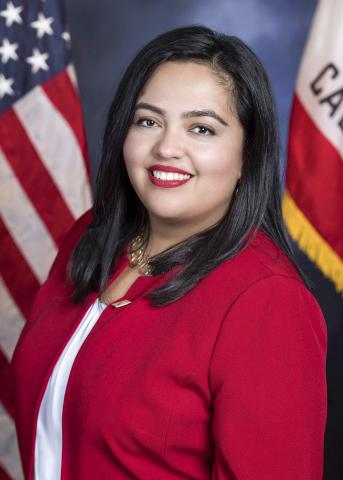
Bill Co-Author(s):