AB 2591: Local government: youth commissions.
- Session Year: 2023-2024
- House: Assembly
- Latest Version Date: 2024-04-09
Current Status:
Failed
(2024-05-16: In committee: Held under submission.)
Introduced
In Committee
First Chamber
In Committee
Second Chamber
Enacted
Existing law requires the governing board of a school district maintaining one or more high schools to include within its membership one or more pupil members if pupils submit a petition for pupil representation to the governing board, as provided. Existing law requires the pupil member to be chosen by the pupils enrolled in the high school or high schools of the school district in accordance with procedures prescribed by the governing board of the school district. Existing law requires the pupil member to have preferential voting rights. Existing law prohibits a pupil member from being included in determining the vote required to carry any measure before the governing board.
This bill would require a city or county, as described, to establish a youth commission in response to petitions from high school pupils enrolled youth 13 to 18 years of age, inclusive, residing in their jurisdiction, as specified. Because the bill would add to the duties of cities and counties to respond to petitions from high school pupils, youth, it would constitute a state-mandated local program.
This bill would require the governing board of the city or county to prescribe the policies and procedures for the selection of members of the youth commissions and the rights and responsibilities of the youth commissions, subject to specified requirements. These requirements would include that, among other things, a youth commission member receive all open meeting materials presented to the regular members at the same time the materials are presented to the regular members, except for materials that pertain to closed session items. The bill would require a youth commission existing before January 1, 2025, to comply with the requirements of this act on or before January 1, 2027. The bill would also require the governing body of the city or county to require at least one governing body member to attend at least one youth commission meeting per month.
The bill would include findings that changes proposed by this bill address a matter of statewide concern rather than a municipal affair and, therefore, apply to all cities, including charter cities.
The California Constitution requires the state to reimburse local agencies and school districts for certain costs mandated by the state. Statutory provisions establish procedures for making that reimbursement.
This bill would provide that, if the Commission on State Mandates determines that the bill contains costs mandated by the state, reimbursement for those costs shall be made pursuant to the statutory provisions noted above.
Existing law requires the governing board of a school district maintaining one or more high schools to include within its membership one or more pupil members if pupils submit a petition for pupil representation to the governing board, as provided. Existing law requires the pupil member to be chosen by the pupils enrolled in the high school or high schools of the school district in accordance with procedures prescribed by the governing board of the school district. Existing law requires the pupil member to have preferential voting rights. Existing law prohibits a pupil member from being included in determining the vote required to carry any measure before the governing board.
This bill would require a city or county maintaining one or more high schools county, as described, to establish a youth council commission in response to petitions from high school pupils enrolled in their jurisdiction, as specified. Because the bill would add to the duties of cities and counties to respond to petitions from high school pupils, it would constitute a state-mandated local program.
This bill would require a youth council member to be chosen by the pupils enrolled in the high school or high schools of the school district in accordance with procedures prescribed by the governing board of the city or county. The bill would authorize the term of a youth council members to be adjusted only in cases where a vacancy occurs or to provide more pupils with an opportunity to serve on the youth council.This bill would require the governing board of the city or county to prescribe the policies and procedures for the selection of members of the youth commissions and the rights and responsibilities of the youth commissions, subject to specified requirements. These requirements would include that, among other things, a youth council commission member receive all open meeting materials presented to the regular members at the same time the materials are presented to the regular members, except for materials that pertain to closed session items. The bill would require a youth commission existing before January 1, 2025, to comply with the requirements of this act on or before January 1, 2027. The bill would also require the governing body of the city or county to require at least one governing body member to attend at least one youth commission meeting per month.
The bill would include findings that changes proposed by this bill address a matter of statewide concern rather than a municipal affair and, therefore, apply to all cities, including charter cities.
The California Constitution requires the state to reimburse local agencies and school districts for certain costs mandated by the state. Statutory provisions establish procedures for making that reimbursement.
This bill would provide that, if the Commission on State Mandates determines that the bill contains costs mandated by the state, reimbursement for those costs shall be made pursuant to the statutory provisions noted above.
Existing law requires the governing board of a school district maintaining one or more high schools to include within its membership one or more pupil members if pupils submit a petition for pupil representation to the governing board, as provided. Existing law requires the pupil member to be chosen by the pupils enrolled in the high school or high schools of the school district in accordance with procedures prescribed by the governing board of the school district. Existing law requires the pupil member to have preferential voting rights. Existing law prohibits a pupil member from being included in determining the vote required to carry any measure before the governing board.
This bill would require a city or county maintaining one or more high schools to establish a youth council in response to petitions from high school pupils enrolled in their jurisdiction, as specified. Because the bill would add to the duties of cities and counties to respond to petitions from high school pupils, it would constitute a state-mandated local program.
This bill would require a youth council member to be chosen by the pupils enrolled in the high school or high schools of the school district in accordance with procedures prescribed by the governing board of the city or county. The bill would authorize the term of a youth council members to be adjusted only in cases where a vacancy occurs or to provide more pupils with an opportunity to serve on the youth council.
This bill would require that, among other things, a youth council member receive all open meeting materials presented to the regular members at the same time the materials are presented to the regular members, except for materials that pertain to closed session items.
The bill would include findings that changes proposed by this bill address a matter of statewide concern rather than a municipal affair and, therefore, apply to all cities, including charter cities.
The California Constitution requires the state to reimburse local agencies and school districts for certain costs mandated by the state. Statutory provisions establish procedures for making that reimbursement.
This bill would provide that, if the Commission on State Mandates determines that the bill contains costs mandated by the state, reimbursement for those costs shall be made pursuant to the statutory provisions noted above.
For purposes of this chapter, the following definitions apply:
(a)Board means the board of supervisors of a county.
(b)City youth commission means a city youth commission established by a city council pursuant to Chapter 1.5 (commencing with Section 36850) of Part 2 of Division 3 of Title 4.
(c)County youth commission means a youth commission, youth council, or other form of youth advisory body established by the board. board pursuant to this article.
25051.(a)There may be submitted to the board of a county with one or more city youth commissions, a pupil youth petition requesting the board to establish a county youth commission of the board pursuant to this chapter. article.
(b)The petition shall contain the signatures of either of the following, whichever is less:
(1)Not less than 500 pupils regularly enrolled in high schools located within the county. youth 13 to 18 years of age, inclusive, who reside in the county.
(2)Not less than 10 percent of the number of pupils regularly enrolled in high schools located within the county. youth 13 to 18 years of age, inclusive, who reside in the county.
(c)Each fiscal year, and within 60 days of receipt of a petition for pupil youth representation, or at its next regularly scheduled meeting if no meeting is held within those 60 days, the board shall order the existence of a county youth commission.
(d)A county youth commission existing before January 1, 2025, shall comply with the requirements of this chapter on or before January 1, 2027.
25052.The board shall prescribe the policies and procedures for the selection of members of the county youth commission, subject to the requirements of this section.
(a)The board may provide for an application, election, nomination, or any other process as decided by the board for the selection of members of the county youth commission.
(b)The county youth commission shall be composed of both of the following:
(1)One representative from each city youth commission within the county, unless a city youth commission chooses to not send a representative.
(2)At least one at-large representative tasked with representing unincorporated areas. This member shall be enrolled in a high school of the county, may be less than 18 years of age, and shall 13 to 18 years of age, inclusive, and reside in an unincorporated area of the county. The board may elect to include more than one at-large representative to represent unincorporated areas.
(c)Except as otherwise provided in subdivision (d), both of the following term requirements apply:
(1)The term of a county youth commission member shall be one year, commencing on August 1 of each year.
(2)A county youth commission member shall not serve more than two terms.
(d)The term of a county youth commission member may be adjusted only in cases where a vacancy occurs.
25053.The board shall prescribe the roles and responsibilities of the county youth commission, subject to the requirements of this section.
(a)A county youth commission member shall have all of the following rights:
(1)Attend all meetings of the board, except closed sessions.
(2)Receive all open meeting materials presented to the regular members at the same time the materials are presented to the regular members, except for materials that pertain to closed session items.
(3)The opportunity to present to the board any of the following:
(A)An update on projects the county youth commission is currently working on.
(B)A request for action by the board.
(C)A proposal for future projects.
(D)Comments or concerns regarding the community.
(b)The county youth commission shall have both of the following responsibilities:
(1)Meet at least two times per month.
(2)Send at least one county youth commission member to attend the meetings of the board, except closed sessions.
(c)A county youth commission member shall not be liable for any acts of the board.
25054.The board shall require at least one board member to attend at least one county youth commission meeting per month.
SEC. 2.Chapter 1.5 (commencing with Section 36850) is added to Part 2 of Division 3 of Title 4 of the Government Code, to read:1.5.City Youth Commission36850.For purposes of this chapter, the following definitions apply:
(a)City youth commission means a youth commission, youth council, or other form of youth advisory body established by the council.
(b)Council means the city council of a city.
36851.(a)There may be submitted to the council maintaining one or more high schools a pupil a youth petition requesting the city to establish a city youth commission of the council pursuant to this chapter.
(b)The petition shall contain the signatures of either of the following, whichever is less:
(1)Not less than 500 pupils regularly enrolled in high schools located within the city. youth 13 to 18 years of age, inclusive, who reside in the county.
(2)Not less than 10 percent of the number of pupils regularly enrolled in high schools located within the city. youth 13 to 18 years of age, inclusive, who reside in the county.
(c)Each fiscal year, and within 60 days of receipt of a petition for pupil youth representation, or at its next regularly scheduled meeting if no meeting is held within those 60 days, the council shall order the existence of a city youth commission.
(d)A city youth commission existing before January 1, 2025, shall comply with the requirements of this chapter on or before January 1, 2027.
36852.The council shall prescribe the policies and procedures for the selection of members of the city youth commission, subject to the requirements of this section.
(a)The council may provide for an application, election, nomination, or any other process as decided by the council for the selection of members of the city youth commission.
(b)A pupil youth selected to serve as a city youth commission member shall be enrolled in a high school of the city, may be less than 18 years of age. 13 to 18 years of age, inclusive, and a resident of the city.
(c)Except as otherwise provided in subdivision (d), both of the following term requirements apply:
(1)The term of a city youth commission member shall be one year, commencing on July 1 of each year.
(2)A city youth commission member shall not serve more than two terms.
(d)The term of a city youth commission member may be adjusted only in cases where a vacancy occurs.
36853.The council shall prescribe the roles and responsibilities of the city youth commission, subject to the requirements of this section.
(a)A city youth commission member shall have all of the following rights:
(1)Attend all meetings of the council, except closed sessions.
(2)Receive all open meeting materials presented to the regular members at the same time the materials are presented to the regular members, except for materials that pertain to closed session items.
(3)The opportunity to present to the council any of the following:
(A)An update on projects the city youth commission is currently working on.
(B)A request for action by the council.
(C)A proposal for future projects.
(D)Comments or concerns regarding the community.
(b)The city youth commission shall have both of the following responsibilities:
(1)Meet at least two times per month.
(2)Send at least one city youth commission member to attend the meetings of the council, except closed sessions.
(c)A city youth commission member shall not be liable for any acts of the council.
36854.The council shall require at least one council member to attend at least one city youth commission meeting per month.
SEC. 3.The Legislature finds and declares that Section 2 of this act adding Section 36850 to the Government Code address a matter of statewide concern rather than a municipal affair as that term is used in Section 5 of Article XI of the California Constitution. Therefore, Section 2 of this act apply to all cities, including charter cities.
SEC. 4.If the Commission on State Mandates determines that this act contains costs mandated by the state, reimbursement to local agencies and school districts for those costs shall be made pursuant to Part 7 (commencing with Section 17500) of Division 4 of Title 2 of the Government Code.
(a)For purposes of this section, chapter, the following definitions apply:
(1)(a)Board means the board of supervisors of a county.
(b)City youth commission means a city youth commission established by a city council pursuant to Chapter 1.5 (commencing with Section 36850) of Part 2 of Division 3 of Title 4.
(2)Youth council(c)County youth commission means a youth council, commission, youth commission, council, or other form of youth advisory body established by the board.
(b)(1)There25051.(a)There may be submitted to the board maintaining one or more high schools of a county with one or more city youth commissions, a pupil petition requesting the board to establish a county youth council commission of the board pursuant to this section. chapter.
(2)(b)The petition shall contain the signatures of either of the following, whichever is less:
(A)(1)Not less than 500 pupils regularly enrolled in high schools located within the county.
(B)(2)Not less than 10 percent of the number of pupils regularly enrolled in high schools located within the county.
(3)(c)Each fiscal year, and within 60 days of receipt of a petition for pupil representation, or at its next regularly scheduled meeting if no meeting is held within those 60 days, the board shall order the existence of a county youth council. commission.
(c)A pupil selected to serve as a member of the youth council of the board shall be enrolled in a high school of the county, may be less than 18 years of age, and shall be chosen by the pupils enrolled in the high school or high schools of the county in accordance with policies and procedures prescribed by the board. The term of a youth council member shall be one year, commencing on July 1 of each year, except that the term of a youth council member may be adjusted only in cases where a vacancy occurs or to provide more pupils with an opportunity to serve on the youth council.(d)A county youth commission existing before January 1, 2025, shall comply with the requirements of this chapter on or before January 1, 2027.
25052.The board shall prescribe the policies and procedures for the selection of members of the county youth commission, subject to the requirements of this section.
(a)The board may provide for an application, election, nomination, or any other process as decided by the board for the selection of members of the county youth commission.
(b)The county youth commission shall be composed of both of the following:
(1)One representative from each city youth commission within the county, unless a city youth commission chooses to not send a representative.
(2)At least one at-large representative tasked with representing unincorporated areas. This member shall be enrolled in a high school of the county, may be less than 18 years of age, and shall reside in an unincorporated area of the county. The board may elect to include more than one at-large representative to represent unincorporated areas.
(c)Except as otherwise provided in subdivision (d), both of the following term requirements apply:
(1)The term of a county youth commission member shall be one year, commencing on August 1 of each year.
(2)A county youth commission member shall not serve more than two terms.
(d)The term of a county youth commission member may be adjusted only in cases where a vacancy occurs.
25053.The board shall prescribe the roles and responsibilities of the county youth commission, subject to the requirements of this section.
(d)(1)A(a)A county youth council commission member shall have the right to attend each and all of the following rights:
(1)Attend all meetings of the board, except closed sessions.
(2)A youth council member shall receive Receive all open meeting materials presented to the regular members at the same time the materials are presented to the regular members, except for materials that pertain to closed session items.(3)The opportunity to present to the board any of the following:
(A)An update on projects the county youth commission is currently working on.
(B)A request for action by the board.
(C)A proposal for future projects.
(D)Comments or concerns regarding the community.
(b)The county youth commission shall have both of the following responsibilities:
(1)Meet at least two times per month.
(2)Send at least one county youth commission member to attend the meetings of the board, except closed sessions.
(3)(c)A county youth council commission member shall not be liable for any acts of the board.
25054.The board shall require at least one board member to attend at least one county youth commission meeting per month.
SEC. 2.Chapter 1.5 (commencing with Section 36850) is added to Part 2 of Division 3 of Title 4 of the Government Code, to read:1.5.City Youth Council Commission36850.(a)For purposes of this section, chapter, the following definitions apply:
(a)City youth commission means a youth commission, youth council, or other form of youth advisory body established by the council.
(1)(b)Council means the city council of a city.
(2)Youth council means a youth council, youth commission, or other form of youth advisory body established by the council.(b)(1)36851.(a)There may be submitted to the council maintaining one or more high schools a pupil petition requesting the city to establish a city youth council commission of the council pursuant to this section. chapter.
(2)(b)The petition shall contain the signatures of either of the following, whichever is less:
(A)(1)Not less than 500 pupils regularly enrolled in high schools located within the city.
(B)(2)Not less than 10 percent of the number of pupils regularly enrolled in high schools located within the city.
(3)(c)Each fiscal year, and within 60 days of receipt of a petition for pupil representation, or at its next regularly scheduled meeting if no meeting is held within those 60 days, the council shall order the existence of a city youth council. commission.
(d)A city youth commission existing before January 1, 2025, shall comply with the requirements of this chapter on or before January 1, 2027.
36852.The council shall prescribe the policies and procedures for the selection of members of the city youth commission, subject to the requirements of this section.
(a)The council may provide for an application, election, nomination, or any other process as decided by the council for the selection of members of the city youth commission.
(c)(b)A pupil selected to serve as a member of the youth council of the council city youth commission member shall be enrolled in a high school of the city, may be less than 18 years of age, and shall be chosen by the pupils enrolled in the high school or high schools of the city in accordance with policies and procedures prescribed by the council. The age.
(c)Except as otherwise provided in subdivision (d), both of the following term requirements apply:
(1)The term of a city youth council commission member shall be one year, commencing on July 1 of each year, except that the year.
(2)A city youth commission member shall not serve more than two terms.
(d)The term of a city youth council commission member may be adjusted only in cases where a vacancy occurs or to provide more pupils with an opportunity to serve on the youth council. occurs.
36853.The council shall prescribe the roles and responsibilities of the city youth commission, subject to the requirements of this section.
(d)(1)(a)A city youth council commission member shall have the right to attend each and all of the following rights:
(1)Attend all meetings of the council, except closed sessions.
(2)A youth council member shall receive Receive all open meeting materials presented to the regular members at the same time the materials are presented to the regular members, except for materials that pertain to closed session items.(3)The opportunity to present to the council any of the following:
(A)An update on projects the city youth commission is currently working on.
(B)A request for action by the council.
(C)A proposal for future projects.
(D)Comments or concerns regarding the community.
(b)The city youth commission shall have both of the following responsibilities:
(1)Meet at least two times per month.
(2)Send at least one city youth commission member to attend the meetings of the council, except closed sessions.
(3)(c)A city youth council commission member shall not be liable for any acts of the council.
36854.The council shall require at least one council member to attend at least one city youth commission meeting per month.
SEC. 3.The Legislature finds and declares that Section 2 of this act adding Section 36850 to the Government Code address a matter of statewide concern rather than a municipal affair as that term is used in Section 5 of Article XI of the California Constitution. Therefore, Section 2 of this act apply to all cities, including charter cities.
SEC. 4.If the Commission on State Mandates determines that this act contains costs mandated by the state, reimbursement to local agencies and school districts for those costs shall be made pursuant to Part 7 (commencing with Section 17500) of Division 4 of Title 2 of the Government Code.
(a)For purposes of this section, the following definitions apply:
(1)Board means the board of supervisors of a county.
(2)Youth council means a youth council, youth commission, or other form of youth advisory body established by the board.
(b)(1)There may be submitted to the board maintaining one or more high schools a pupil petition requesting the board to establish a youth council of the board pursuant to this section.
(2)The petition shall contain the signatures of either of the following, whichever is less:
(A)Not less than 500 pupils regularly enrolled in high schools located within the county.
(B)Not less than 10 percent of the number of pupils regularly enrolled in high schools located within the county.
(3)Each fiscal year, and within 60 days of receipt of a petition for pupil representation, or at its next regularly scheduled meeting if no meeting is held within those 60 days, the board shall order the existence of a youth council.
(c)A pupil selected to serve as a member of the youth council of the board shall be enrolled in a high school of the county, may be less than 18 years of age, and shall be chosen by the pupils enrolled in the high school or high schools of the county in accordance with policies and procedures prescribed by the board. The term of a youth council member shall be one year, commencing on July 1 of each year, except that the term of a youth council member may be adjusted only in cases where a vacancy occurs or to provide more pupils with an opportunity to serve on the youth council.
(d)(1)A youth council member shall have the right to attend each and all meetings of the board, except closed sessions.
(2)A youth council member shall receive all open meeting materials presented to the regular members at the same time the materials are presented to the regular members, except for materials that pertain to closed session items.
(3)A youth council member shall not be liable for any acts of the board.
SEC. 2.Chapter 1.5 (commencing with Section 36850) is added to Part 2 of Division 3 of Title 4 of the Government Code, to read:1.5.Youth Council36850.(a)For purposes of this section, the following definitions apply:
(1)Council means the city council of a city.
(2)Youth council means a youth council, youth commission, or other form of youth advisory body established by the council.
(b)(1)There may be submitted to the council maintaining one or more high schools a pupil petition requesting the city to establish a youth council of the council pursuant to this section.
(2)The petition shall contain the signatures of either of the following, whichever is less:
(A)Not less than 500 pupils regularly enrolled in high schools located within the city.
(B)Not less than 10 percent of the number of pupils regularly enrolled in high schools located within the city.
(3)Each fiscal year, and within 60 days of receipt of a petition for pupil representation, or at its next regularly scheduled meeting if no meeting is held within those 60 days, the council shall order the existence of a youth council.
(c)A pupil selected to serve as a member of the youth council of the council shall be enrolled in a high school of the city, may be less than 18 years of age, and shall be chosen by the pupils enrolled in the high school or high schools of the city in accordance with policies and procedures prescribed by the council. The term of a youth council member shall be one year, commencing on July 1 of each year, except that the term of a youth council member may be adjusted only in cases where a vacancy occurs or to provide more pupils with an opportunity to serve on the youth council.
(d)(1)A youth council member shall have the right to attend each and all meetings of the council, except closed sessions.
(2)A youth council member shall receive all open meeting materials presented to the regular members at the same time the materials are presented to the regular members, except for materials that pertain to closed session items.
(3)A youth council member shall not be liable for any acts of the council.
SEC. 3.The Legislature finds and declares that Section 2 of this act adding Section 36850 to the Government Code address a matter of statewide concern rather than a municipal affair as that term is used in Section 5 of Article XI of the California Constitution. Therefore, Section 2 of this act apply to all cities, including charter cities.
SEC. 4.If the Commission on State Mandates determines that this act contains costs mandated by the state, reimbursement to local agencies and school districts for those costs shall be made pursuant to Part 7 (commencing with Section 17500) of Division 4 of Title 2 of the Government Code.
|
Date
|
Status
|
|---|---|
| May 16, 2024 | In committee: Held under submission. |
| May 1, 2024 | In committee: Set, first hearing. Referred to APPR. suspense file. |
| Apr 18, 2024 | From committee: Do pass and re-refer to Com. on APPR. (Ayes 5. Noes 0.) (April 17). Re-referred to Com. on APPR. |
| Apr 10, 2024 | Re-referred to Com. on L. GOV. |
| Apr 9, 2024 | From committee chair, with author's amendments: Amend, and re-refer to Com. on L. GOV. Read second time and amended. |
| Apr 2, 2024 | Re-referred to Com. on L. GOV. |
| Apr 1, 2024 | From committee chair, with author's amendments: Amend, and re-refer to Com. on L. GOV. Read second time and amended. |
| Mar 11, 2024 | Referred to Coms. on L. GOV. and ED. |
| Feb 15, 2024 | From printer. May be heard in committee March 16. |
| Feb 14, 2024 | Read first time. To print. |
|
Date
|
Description
|
Location
|
Votes
|
|
|---|---|---|---|---|
| Apr 17, 2024 | Do pass and be re-referred to the Committee on [Appropriations] | Assembly Standing Committee on Local Government |
Passed |
This list shows positions taken on this bill by organizations on the date displayed, which is linked to the original source.
Positions by individuals are not included.
|
Organization
|
Position
|
Date
|
|---|---|---|
| American Youth Association | ** Support | |
| American Youth Association | * Support | Apr 17, 2024 |
| American Youth Association | * Support | Apr 17, 2024 |
| American Youth Association | * Support | Apr 17, 2024 |
| California State Association Of Counties | ** Against | |
| League Of California Cities | * Against | Apr 17, 2024 |
| Rural County Representative of California | * Against | Apr 17, 2024 |
| Urban Counties of California | ** Against |
Date of Hearing: May 1, 2024
ASSEMBLY COMMITTEE ON APPROPRIATIONS
Buffy Wicks, Chair
ABPCA Bill Id:AB 2591
Author:(Quirk-Silva) – As Amended Ver:April 9, 2024
Policy Committee: | Local Government | Vote: | 5 - 0 |
|
| ||
|
|
Urgency: No State Mandated Local Program: Yes Reimbursable: Yes
SUMMARY:
This bill requires a county or city to establish a youth commission in response to a petition from youth residing in the county’s or city’s jurisdiction.
Specifically, this bill:
- Provides for the submission of a youth petition requesting the board of a county to establish a county youth commission of the board. The petition must contain the signatures at least 500 youth aged 13 to 18 years who reside in the county, or 10% of the number of youth aged 13 to 18 years who reside in the county, whichever is less.
- If the above petitioning requirements are met, requires the board of a county, to do all of the following:
- Order the existence of a county youth commission, as specified.
- Prescribe policies and procedures for the selection of members of the county youth commission, including term requirements, subject to the requirements of this bill.
- Prescribe the roles and responsibilities of the county youth commission, subject to the requirements of this bill. Among these requirements, the youth commission must meet at least two times per month and send at least one member to attend the meetings of the county board.
- Requires at least one county board member to attend at least one county youth commission meeting per month.
- Requires a county youth commission existing before January 1, 2025, to comply with the requirements of this bill on or before January 1, 2027.
- Provides for the submission of a youth petition, the policies and procedures for the selection of members of the city youth commission, term requirements, and roles and responsibilities for a city youth commission that are substantially similar to those applicable to a county youth commission.
FISCAL EFFECT:
Local costs of an unknown amount, likely in the low- to mid-hundreds of thousands of dollars statewide (local funds, General Fund) for cities, including charter cities, and counties upon sufficient petition of youth residing in their respective jurisdictions, to establish a youth commission per the requirements of the bill and to attend at least one commission meeting per month. Actual costs will depend on the number of successful petitions and expenses necessary to establish and support the activities of a commission, which will vary by jurisdiction. These costs are potentially reimbursable by the state, subject to a determination by the Commission on State Mandates, should a jurisdiction submit a claim.
For context, if 50 cities or counties state-wide each formed a commission and spent 40 hours of staff time, at an average rate of $100 per hour, establishing the policies, procedures, roles, and responsibilities for the commission and its members, statewide costs would be $200,000. Responsibility for administrative support of the commission, including meeting space, equipment, and supplies is not specified in the bill. These costs, as well as costs for local official attendance at commission meetings, if any, would be additional.
COMMENTS:
- Purpose. According to the author:
As a teacher for over three decades, and as a mother of four, I understand how much youth are integral to their local communities. Not only do they shape its culture, these days, they have extensive connections through social media. Research has continuously shown that participating in communities and working together has numerous benefits for youth. It has also shown youth engagement can lead to increased academic performance and improved social-emotional well-being. Youth are our future and we should foster their desire to be involved to assist their communities
- Background. Civic engagement includes not only voting, but also political activism, environmentalism, and community and national service. Data from the Center for Information & Research on Civic Learning and Engagement (CIRCLE) at Tufts University shows, between 2016 and 2020, a 10% increase in voter participation for youth ages 18 to 29, as well as increases in other forms of civic engagement, including volunteering for political campaigns and efforts to convince other young people to vote. Research has consistently shown that participating in communities and being a part of groups working together on an issue has numerous benefits for young people. Participation in civic engagement activities can also help youth become better informed about current events.
AB 46 (Rivas), Chapter 660, Statutes of 2021, created the California Youth Empowerment Act to address, among other issues, the growing need to engage youth directly with policymakers. AB 46 established the California Youth Empowerment Commission in state government. Youth involved with the commission have the opportunity to make meaningful recommendations regarding legislation and policies that impact the lives of young people statewide.
This bill requires cities and counties to create local youth commissions in response to youth petitions in their jurisdictions. These commissions will provide youth with opportunities for civil engagement at the local level.
Analysis Prepared by: Jennifer Swenson / APPR. / (916) 319-2081
Date of Hearing: April 17, 2024
ASSEMBLY COMMITTEE ON LOCAL GOVERNMENT
Juan Carrillo, Chair
ABPCA Bill Id:AB 2591 (
Author:Quirk-Silva) – As Amended Ver:April 9, 2024
SUBJECT: Local government: youth commissions
SUMMARY: Requires counties and cities to establish a youth commission in response to petitions from youth residing in their jurisdiction. Specifically, this bill:
- Defines “county youth commission” to mean a youth commission, youth council, or other form of advisory body established by the county board of supervisors.
- Allows for the submission of a youth petition requesting the board of a county to establish a county youth commission of the board, as follows:
- The petition shall contain the signatures of whichever is less:
- Not less than 500 youth 13 to 18 years of age, inclusive, who reside in the county.
- Not less than 10 percent of the number of youth 13 to 18 years of age, inclusive who reside in the county.
- Each fiscal year, and within 60 days of receipt of a petition for youth representation, or at its next regularly scheduled meeting if no meeting is held within those 60 days, the board shall order the existence of a county youth commission.
- A county youth commission existing before January 1, 2025, shall comply with the requirements of this bill on or before January 1, 2027.
- The petition shall contain the signatures of whichever is less:
- Requires the board to prescribe policies and procedures for the selection of members of the county youth commission, subject to the requirements of this bill.
- The board may provide for an application, election, nomination, or any other process as decided by the board for the selection of members of the county youth commission.
- The county youth commission shall be composed of both the following:
- One representative from each city youth commission within the county, unless a city youth commission chooses not to send a representative.
- At least one at-large representative tasked with representing unincorporated areas. This member shall be 13 to 18 years of age, inclusive, and reside in an unincorporated area of the county. The board may elect to include more than one at-large representative to represent unincorporated areas.
- Provides for the following term requirements:
- The term of a county youth commission member shall be one year, commencing on August 1 of each year.
- A county youth commission member shall not serve more than two terms.
- The term of a county youth commission member may be adjusted on in cases where a vacancy occurs.
- Requires the board to prescribe the roles and responsibilities of the county youth commission, subject to the requirements of this bill, as follows:
- A county youth commission member shall have all of the following rights:
- Attend all meetings of the board, except closed sessions.
- Receive all open meeting materials presented to the regular members at the same time the materials are presented to the regular members, except for materials that pertain to closed session items.
- The opportunity to present to the board any of the following:
- An update on projects the county youth commission is currently working on.
- A request for action by the board.
- A proposal for future projects.
- Comments or concerns regarding the community.
- The county youth commission shall have both of the following responsibilities:
- Meet at least two times per month.
- Send at least one county youth commission member to attend the meetings of the board, except closed sessions.
- A county youth commission member shall not be liable for any acts of the board.
- A county youth commission member shall have all of the following rights:
- Requires the board to have at least one board member to attend at least one county youth commission meeting per month.
- Defines “city youth commission” to mean a youth commission, youth council, or other form of youth advisory body established by the council.
- Provides for the submission of a youth petition, the policies and procedures for the selection of members of the city youth commission, term requirements, and roles and responsibilities for a city youth commission that are substantially similar as those for a county youth commission.
- Requires the city council to require at least one council member to attend at least one city youth commission meeting per month.
- Finds and declares that Section 2 of this bill address a matter of statewide concern rather than a municipal affair as that term is used in Section 5 of Article XI of the California Constitution. Therefore, Section 2 of this bill applies to all cities, including charter cities.
- Provides that, if the Commission on State Mandates determines that this bill contains costs mandated by the state, reimbursement to local agencies and school districts for those costs shall be made pursuant to current law governing state mandated local costs.
EXISTING LAW:
- Establishes the California Youth Empowerment Commission (“CYEC”) in state government for the purpose of providing meaningful civic engagement to improve the quality of life for California’s disconnected and disadvantaged youth. (Gov. Code Sec. 8263, 8269)
- Requires the CYEC to consist of 13 voting commissioners between 14 and 25 years of age, with 11 members appointed by the Governor, one at-large member appointed by the Senate Committee on Rules, and one at-large member appointed by the Speaker of the Assembly, along with several ex officio, nonvoting members from various geographic regions of the state. (Gov. Code Sec. 8263)
- Requires the CYEC conduct regular meetings, examine a long list of policy and fiscal issues affecting the interests, needs, and conditions of the youth of California and issue an annual report with recommendations to the Legislature, the SPI, and the Governor, while also authorizing the CYEC to adopt resolutions, draft model legislation, provide testimony during legislative committee meetings, conduct public hearings, and award prizes or direct grants to organizations.(Gov. Code Sec. 8270, 8272, 8273)
- Requires the Governor to appoint an executive director of the CYEC. (Gov. Code Sec. 8274)
- Authorizes the CYEC to accept gifts and grants in addition to state budget funds but requires that the CYEC move forward only after the Department of Finance determines that sufficient funds are available. (Gov. Code Sec. 8275)
- Repeals the statute authorizing the CYEC effective January 1, 2027. (Gov. Code Sec. 8276)
FISCAL EFFECT: This bill is keyed fiscal and contains a state-mandated local program.
COMMENTS:
- Author’s Statement. According to the author, “As a teacher for over three decades, and as a mother of four, I understand how much youth are integral to their local communities. Not only do they shape its culture, these days, they have extensive connections through social media. Research has continuously shown that participating in communities and working together has numerous benefits for youth. It has also shown youth engagement can lead to increased academic performance and improved social-emotional well-being. Youth are our future and we should foster their desire to be involved to assist their communities.”
- Bill Summary. AB 2591 allows for youth 13 to 18 years of age, residing in their jurisdiction, to petition cities and counties to establish youth commissions, as follows:
- Petition Requirements. In order for a governing body to respond to a youth commission petition, whichever is the lesser of two requirements must be met. The petition signatures must have no less than 500 youth 13 to 18 years of age who reside in the jurisdiction or no less than 10 percent of the number of youth 13 to 18 years of age who reside in the jurisdiction.
- Selection of Youth Commission Members. The governing board of the city or county must prescribe the policies and procedures for the selection of members of the youth commission. The governing body may provide for an application, election, nomination, or any other process as decided by the governing body. A youth selected to serve shall be 13 to 18 years of age and a resident of their jurisdiction. Their term shall be one year, commencing on August 1 for county commission members and July 1 for city commission members. Additionally, a youth commission member is limited to serving two terms and these provisions may only be adjusted in cases where a vacancy occurs.
- Roles and Responsibilities. The governing board of the city or county must prescribe the roles and responsibilities of the youth commission. A youth commission member may attend all meetings of the governing body, except closed sessions, and receive all open meeting materials presented to the regular members at the same time the materials are presented to the regular members. Additionally, the youth commission member shall have the opportunity to present the governing body with an update on projects the commission is currently working on, a request for action by the council, a proposal for future projects, and comments or concerns regarding the community.
The youth commission shall be responsible for meeting at least two times per month and sending at least one member to attend the meetings of the governing body, except closed sessions. The youth commission shall not be liable for any acts of the governing body.
The board or council shall require at least one member of the governing body to attend at least one county or city youth commission meeting per month.
This bill is sponsored by the American Youth Association.
- Youth Civic Engagement. Data from the Center for Information & Research on Civic Learning and Engagement (CIRCLE) at Tufts University found about a 10% increase in voter participation for youth ages 18 to 29 in the 2020 United States presidential and general election compared to the 2016 presidential and general election. Casting a ballot, however, only represents one form of civic engagement. Civic engagement includes political activism, environmentalism, and community and national service. The CIRCLE data also found an increase in other forms of civic engagement including volunteering for political campaigns and trying to convince other young people to vote. Research has consistently shown that participating in communities and being a part of groups working together on an issue has numerous benefits for young people themselves. Participation in civic engagement activities can help youth become better informed about current events.
- California Youth Empowerment Act. In 2021, the Legislature passed and the Governor signed AB 46 (Rivas), Chapter 660, Statutes of 2021, which created the California Youth Empowerment Act to address, among other issues, the growing need to engage youth directly with policymakers. In addition, this bill established the California Youth Empowerment Commission in state government for the main purpose of providing meaningful opportunities for civic engagement to improve the quality of life for California’s disconnected and disadvantaged youth. Furthermore, youths involved with the Commission will make meaningful recommendations regarding legislation and policies that impact their own lives and the lives of millions of other youths in California whose voices often go unheard.
The Commission is required to do all of the following:
- Examine and discuss policy and fiscal issues affecting the interests, needs, and conditions of the youth of California.
- Formally advise and make recommendations to the Legislature, Superintendent of Public Instruction, and Governor on specific legislative issues affecting youth.
- Consult with any existing local-level youth advisory commissions and community-based, grassroots youth-led organizations for input and potential solutions on issues related to youth.
- Publish an internet website to report details relevant to the Commission for the public to view, as specified.
- Publish an annual report detailing the activities, issues, demographics, budget, and outcomes of the commission, as specified.
- Brown Act. The Brown Act was enacted in 1953 and has been amended numerous times since then. The legislative intent of the Brown Act was expressly declared in its original statute, which remains unchanged:
“The Legislature finds and declares that the public commissions, boards and councils and other public agencies in this State exist to aid in the conduct of the people’s business. It is the intent of the law that their actions be taken openly and that their deliberations be conducted openly. The people of this State do not yield their sovereignty to the agencies which serve them. The people, in delegating authority, do not give their public servants the right to decide what is good for the people to know and what is not good for them to know. The people insist on remaining informed so that they may retain control over the instruments they have created.”
The Brown Act generally requires meetings to be noticed in advance, including the posting of an agenda, and generally requires meetings to be open and accessible to the public. The Brown Act also generally requires members of the public to have an opportunity to comment on agenda items, and generally prohibits deliberation or action on items not listed on the agenda.
The Brown Act defines “local agency” to mean a county, city, whether general law or chartered, city and county, town, school district, municipal corporation, district, political subdivision, or any board, commission or agency thereof, or other local public agency.
The Brown Act defines “legislative body” to mean:
- The governing body of a local agency or any other local body created by state or federal statute.
- A commission, committee, board, or other body of a local agency, whether permanent or temporary, decision-making or advisory, created by charter, ordinance, resolution, or formal action of a legislative body. Advisory committees composed solely of the members of the legislative body that are less than a quorum of the legislative body are not legislative bodies. Standing committees of a legislative body, irrespective of their composition, that have a continuing subject matter jurisdiction or a meeting schedule fixed by charter, ordinance, resolution, or formal action of a legislative body are legislative bodies.
- A board, commission, committee, or other multimember body that governs a private corporation, limited liability company, or other entity that either:
- Is created by the elected legislative body in order to exercise authority that may lawfully be delegated by the elected governing body to a private corporation, limited liability company, or other entity.
- Receives funds from a local agency and the membership of whose governing body includes a member of the legislative body of the local agency appointed to that governing body as a full voting member by the legislative body of the local agency.
The Brown Act defines a “meeting” as “any congregation of a majority of the member of a legislative body at the same time and location, including teleconference locations, to hear, discuss, deliberate, or take action on any item that is within the subject matter jurisdiction of the legislative body.”
The Brown Act allows a district attorney or any interested person to seek a judicial determination that an action taken by a local agency’s legislative body violates specified provisions of the Brown Act – including the provisions governing open meeting requirements, teleconferencing, and agendas – and is therefore null and void.
- Previous Legislation. AB 46 (Rivas), Chapter 660, Statutes of 2021, created the California Youth Empowerment Act to address, among other issues, the growing need to engage youth directly with policymakers.
SB 421 (Pan) of 2021 would have established, until January 1, 2025, the Children’s Cabinet of California to serve as an advisory body responsible for improving the collaboration among agencies that provide services to the children and youth of the state. SB 421 was held in the Senate Appropriations Committee.
AB 1858 (Rivas) of 2020 was substantially similar to AB 46. AB 1858 bill was never heard in the Assembly Accountability and Administrative Review Committee.
AB 823 (Dickinson) of 2011 would have established the California Children’s Coordinating Council to serve as an advisory body responsible for improving the collaboration among agencies that provide services to California’s children and youth, to the extent that sufficient federal or private funds were deposited with the state and appropriated by the Legislature. AB 823 was vetoed by the Governor.
AB 2252 (DeSaulnier) of 2008 would have established the California Youth Council to better ensure that the developmental needs of youth in California are met. AB 2252 was vetoed by the Governor.
- Arguments in Support. According to the sponsor of the bill, the American Youth Association (AYA), “Currently local governments and youth alike face a series of challenges in establishing and maintaining youth commissions and representative bodies. AB 2591 establishes support for local communities and students across California by providing guidance to local governments who establish youth commissions following a youth petition.
“AB 2591 would also strengthen existing youth commissions, allowing them to become more effective representative bodies. This bill ensures commissions get the opportunity to create real change in their community while working in close proximity to council members. Lastly, AB 2591 increases youth representation on a county level by allowing students to petition for a county youth commission. This commission will comprise one representative from each city youth commission, along with several at-large members who live in unincorporated areas.
“AB 2591 will provide meaningful pathways for young Californians to contribute to their communities and share their voice on the issues that matter most to our cities and counties. By ensuring that youth commissions are equipped with the resources and tools that they need to make genuine policy change and creating pathways to representation at all levels, California can become a more inclusive and responsive state to the needs of our youth.”
- Arguments in Opposition. The Rural County Representatives of California, the California State Association of Counties, the Urban Counties of California, and the League of California Cities write, “Counties and cities do not take issue with the policy of establishing local youth commissions. Local governments have the authority to create boards and commissions based on local needs, available funding, and staff resources. Local governments frequently use that authority to establish boards, commissions, and advisory bodies to ensure they are informed by the diverse perspectives of their communities. While we appreciate the bill's intent to expand access to civic engagement for youth, as currently drafted, the provisions would create a new mandate that will require significant investment in staff resources without a corresponding allocation of funds.
“As Brown Act-governed bodies, commissions require financial resources to fund the staff time required to respond to the initial petition and create the body, fill vacancies, provide the venue, staff the meetings, and fulfill Brown Act requirements (e.g., agenda preparation, meeting minutes, coordination with commission members). Given the serious fiscal challenges that exist at all levels of government, it is increasingly unlikely that counties and cities would have the necessary resources to meet this new requirement. Furthermore, this bill negates the real and challenging circumstances, primarily in rural jurisdictions, where a county or city cannot seat vacant positions on existing bodies – not for lack of trying, but merely for lack of available or willing volunteers. In addition to the real, direct costs imposed on local governments, the bill creates unnecessary opportunity costs for the time spent on a state-prescribed activity that could have been spent on issues of greater need for that community. Establishing new meeting bodies, which would presumably be funded by redirecting local General Fund dollars from existing programs, must remain a local decision based on local conditions and needs.”
- Double-Referral. This bill is double-referred to the Assembly Education Committee.
REGISTERED SUPPORT / OPPOSITION:
Support
American Youth Association [SPONSOR]
Opposition
California State Association of Counties (CSAC)
League of California Cities
Rural County Representatives of California (RCRC)
Urban Counties of California (UCC)
Analysis Prepared by: Claire Norton / L. GOV. / (916) 319-3958
Discussed in Hearing
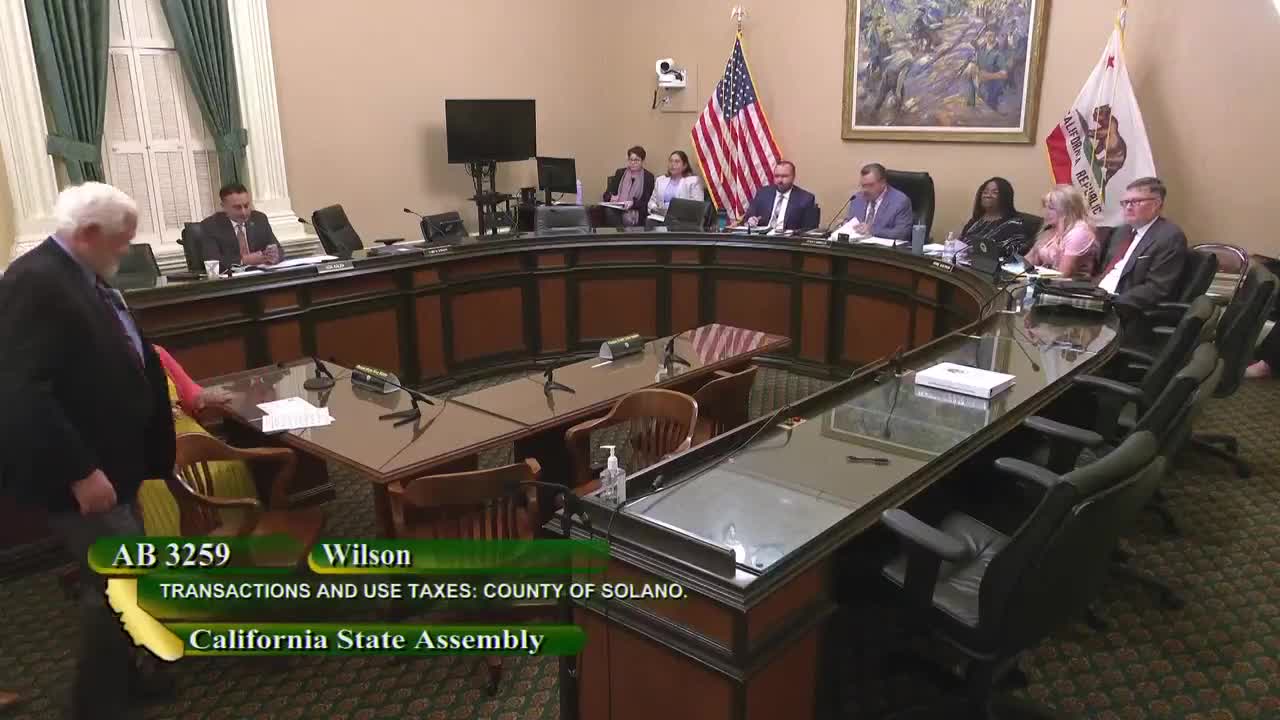 20MIN
Assembly Standing Committee on Local Government
Bill Author

Bill Co-Author(s):