AB 2852: Public postsecondary education: California-Mexico Higher Education Development and Academic Exchange Program.
- Session Year: 2023-2024
- House: Assembly
- Latest Version Date: 2024-04-01
Current Status:
Failed
(2024-05-16: In committee: Held under submission.)
Introduced
In Committee
First Chamber
In Committee
Second Chamber
Enacted
Existing law establishes the California Community Colleges, under the administration of the Board of Governors of the California Community Colleges, the California State University, under the administration of the Trustees of the California State University, and the University of California, under the administration of the Regents of the University of California, as the 3 segments of public postsecondary education in the state.
This bill would establish, until January 1, 2031, the California-Mexico Higher Education Development and Academic Exchange Program for 400 students who attend a campus of the University of California, the California State University, or the California Community Colleges to attend universities in Mexico and for 400 students who attend a university in Mexico to attend a campus of the University of California, the California State University, or the California Community Colleges each year, as provided. The bill would also establish the California-Mexico Higher Education Development and Academic Exchange Program Fund in the State Treasury to fund the program, as provided. The bill would require the program to become operative only upon an appropriation of funds for its purposes.
(a)The Legislature finds and declares all of the following:
(1)The California-Mexico region is composed of 170,000,000 residents and represents the 5th and 12th largest economies of the world, respectively.
(2)There are very few policies or a long-term plan to remain as one of the most productive and competitive megaregions.
(3)A most critical issue is the almost nonexistent higher education exchange of students, faculty, researchers, and policymakers in the California-Mexico megaregion, despite the prime financial relationship that binds them as each others top economic partner.
(b)It is the intent of the Legislature to establish an educational exchange between students from California and Mexico.
99111.(a)For purposes of this section, California public universities means the University of California, the California State University, the California Community Colleges, and their respective campuses.
(b)(1)The California-Mexico Higher Education Development and Academic Exchange Program is hereby established. Commencing with the 202526 school year, each school year, 400 students who attend California public universities shall attend a university in Mexico and 400 students who attend universities in Mexico shall attend a California public university.
(2)The participating students shall may be exchanged between California public universities and universities in Mexico on a one-to-one basis and shall not be charged tuition or fees by the exchanging universities.
(3)Each participating student shall receive up to fifteen thousand dollars ($15,000) for travel and living expenses.
(c)(1)The California-Mexico Higher Education Development and Academic Exchange Program Fund is hereby established in the State Treasury as a regional matching fund. It is the intent of the Legislature that forty million dollars ($40,000,000) of the fund shall be provided by California and twenty million dollars ($20,000,000) of the fund shall be provided by Mexico for a total of sixty million dollars ($60,000,000).
(2)No matching-fund matching fund requirement by Mexico shall be imposed as a condition of implementation of the program. Upon appropriation by the Legislature, moneys in the fund shall be allocated to student exchange programs in California public universities for purposes of the program.
99112.This chapter shall become operative only upon an appropriation of funds for its purposes.
99113.This chapter shall remain in effect only until January 1, 2031, and as of that date is repealed.
(a)The Legislature finds and declares all of the following:
(1)The California-Mexico region is composed of 170,000,000 residents and represents the 5th and 12th largest economies of the world, respectively.
(2)There are very few policies or a long-term plan to remain as one of the most productive and competitive megaregions.
(3)A most critical issue is the almost nonexistent higher education exchange of students, faculty, researchers, and policymakers in the California-Mexico megaregion, despite the prime financial relationship that binds them as each others top economic partner.
(b)It is the intent of the Legislature to establish an educational exchange between students from California and Mexico.
99111.(a)For purposes of this section, California public universities means the University of California, the California State University, the California Community Colleges, and their respective campuses.
(b)(1)The California-Mexico Higher Education Development and Academic Exchange Program is hereby established. Commencing with the 202526 school year, each school year, 400 students who attend California public universities shall attend a university in Mexico and 400 students who attend universities in Mexico shall attend a California public university.
(2)The participating students shall be exchanged between California public universities and universities in Mexico on a one-to-one basis and shall not be charged tuition or fees by the exchanging universities.
(3)Each participating student shall receive up to fifteen thousand dollars ($15,000) for travel and living expenses.
(c)(1)The California-Mexico Higher Education Development and Academic Exchange Program Fund is hereby established in the State Treasury as a regional matching fund. It is the intent of the Legislature that forty million dollars ($40,000,000) of the fund shall be provided by California and twenty million dollars ($20,000,000) of the fund shall be provided by Mexico for a total of sixty million dollars ($60,000,000).
(2)No matching-fund requirement by Mexico shall be imposed as a condition of implementation of the program. Upon appropriation by the Legislature, moneys in the fund shall be allocated to student exchange programs in California public universities for purposes of the program.
99112.This chapter shall become operative only upon an appropriation of funds for its purposes.
99113.This chapter shall remain in effect only until January 1, 2031, and as of that date is repealed.
|
Date
|
Status
|
|---|---|
| May 16, 2024 | In committee: Held under submission. |
| Apr 24, 2024 | In committee: Set, first hearing. Referred to APPR. suspense file. |
| Apr 10, 2024 | From committee: Do pass and re-refer to Com. on APPR. (Ayes 7. Noes 2.) (April 9). Re-referred to Com. on APPR. |
| Apr 2, 2024 | Re-referred to Com. on HIGHER ED. |
| Apr 1, 2024 | From committee chair, with author's amendments: Amend, and re-refer to Com. on HIGHER ED. Read second time and amended. |
| Mar 4, 2024 | Referred to Com. on HIGHER ED. |
| Feb 16, 2024 | From printer. May be heard in committee March 17. |
| Feb 15, 2024 | Read first time. To print. |
|
Date
|
Description
|
Location
|
Votes
|
|
|---|---|---|---|---|
| Apr 9, 2024 | Do pass and be re-referred to the Committee on [Appropriations] | Assembly Standing Committee on Higher Education |
Passed |
This list shows positions taken on this bill by organizations on the date displayed, which is linked to the original source.
Positions by individuals are not included.
|
Organization
|
Position
|
Date
|
|---|---|---|
| Community College League of California | * For If Amend | Apr 9, 2024 |
| Faculty Association Of California Community Colleges | * Support | Apr 9, 2024 |
| Manos Accelerator | * Support | Apr 9, 2024 |
Date of Hearing: April 24, 2024
ASSEMBLY COMMITTEE ON APPROPRIATIONS
Buffy Wicks, Chair
ABPCA Bill Id:AB 2852
Author:(Garcia) – As Amended Ver:April 1, 2024
Policy Committee: | Higher Education | Vote: | 7 - 2 |
|
| ||
|
|
Urgency: No State Mandated Local Program: No Reimbursable: No
SUMMARY:
This bill creates, beginning in the 2025-26 academic year, a student exchange program for 400 students who attend the University of California (UC), the California State University (CSU), or the California Community Colleges (CCC) to attend universities in Mexico and for 400 students who attend a university in Mexico to attend a campus of the UC, CSU, or CCC. The program is to be operative upon appropriation and is to be repealed January 1, 2031.
This bill establishes the California-Mexico Higher Education Development and Academic Exchange Program Fund in the State Treasury and states the intent of the Legislature that $40 million be provided by California and $20 million be provided by Mexico to the fund to support the program. The bill further specifies exchange students are not to be charged tuition or fees by the exchanging universities. In addition, the bill requires each participating student receive up to $15,000 for travel and living expenses.
FISCAL EFFECT:
Ongoing General Fund costs, in the millions to low tens of millions of dollars annually, to support the program.
In addition to potential administrative costs to California colleges and universities to administer the program and costs of up to $12 million annually to provide a stipend of up to $15,000 to 800 students.
According to the Legislative Analyst’s Office, the General Fund faces a structural deficit in the tens of billions of dollars over the next several fiscal years.
The author has submitted a budget request for $2 million General Fund to start the program.
COMMENTS:
- Purpose. According to the author:
AB 2852 would serve as a catalyst to strengthen our bi-national relationship in the higher education sector; allowing for cross-border education partnerships to become formally institutionalized. It is crucial to identify the emerging shared workforces in California and México for the benefit of both regions.”
- Background. According to the author, 47% of CSU’s student population is of Hispanic origin and 23% of UC’s student population is of Hispanic origin. While California’s colleges and universities operate study abroad programs to various countries, including Mexico, relatively few students study abroad in Mexico.
This bill would create a specific exchange program between California public higher education institutions and Mexican institutions.
- Related Legislation. AB 91 (Alvarez), Chapter 796, Statutes of 2023, exempts, from the nonresident tuition fee, a nonresident, low-income student who is a resident of Mexico, registers for lower-division courses at certain CCCs near the California-Mexico border, and has residence within 45 miles of the California-Mexico border, until January 1, 2029.
Analysis Prepared by: Natasha Collins / APPR. / (916) 319-2081
Date of Hearing: April 9, 2024
ASSEMBLY COMMITTEE ON HIGHER EDUCATION
Mike Fong, Chair
ABPCA Bill Id:AB 2852 (
Author:Garcia) – As Amended Ver:April 1, 2024
SUBJECT: Public postsecondary education: California-Mexico Higher Education Development and Academic Exchange Program.
SUMMARY: Establishes, until January 1, 2031, the California-México Higher Education Development and Academic Exchange Program for 400 students who attend a campus of the University of California (UC), the California State University (CSU), or the California Community Colleges (CCC) to attend universities in México and for 400 students who attend a university in México to attend a campus of the UC, CSU, or CCC, each year and establishes the California-México Higher Education Development and Academic Exchange Program Fund to be housed in the California State Treasury. Specifically, this bill:
- Establishes, commencing with the 2025-26 school year, the California-México Higher Education Development and Academic Exchange Program; stipulates that 400 students who attend California public universities will attend a university in México and 400 students who attend universities in México will attend a California public university.
- Establishes the California-México Higher Education Development and Academic Exchange Program Fund housed in the California State Treasury as a regional matching fund.
- Specifies that it is the intent of the Legislature that $40 million of the Fund, as enumerated in (2) above, must be provided by California, and $20 million of the fund, must be provided by México, for a total of $60 million.
- Stipulates that no matching fund requirement by México must be imposed as a condition of implementation of the Program.
- Requires that, upon appropriation by the Legislature, moneys in the Fund must be allocated to student exchange programs in California public universities for purposes of the Program.
- Specifies that the participating students in the Program may be exchanged between California public universities and universities in México on a one-to-one basis and must not be charged tuition or fees by the exchanging universities.
- Stipulates that each participating student must receive up to $15,000 for travel and living expenses.
- Stipulates that the measure becomes operative only upon an appropriation of funds for its purposes.
- Sunsets the provisions of this measure on January 1, 2031.
- States the following findings and declarations of the Legislature:
- The California-México region is composed of 170,000,000 residents and represents the 5th and 12th largest economies of the world, respectively;
- There are very few policies or a long-term plan to remain as one of the most productive and competitive megaregions; and,
- A most critical issue is the almost nonexistent higher education exchange of students, faculty, researchers, and policymakers in the California-México megaregion, despite the prime financial relationship that binds them as each other’s top economic partner.
- Defines “California public universities” as the UC, the CSU, and the CCC, and their respective campuses.
EXISTING LAW: Establishes the Donahoe Higher Education Act and assigns the missions of the CCC, the CSU, and the UC (Education Code Section 66010, et seq.).
FISCAL EFFECT: Unknown
COMMENTS: Purpose of the measure. The author states, “our relations with México encompass extensive cultural, commercial, trade, workforce and educational concerns, in addition to hundreds of thousands of people who cross the border daily. With an estimated $70 billion cross border economy, it is crucial to formalize agreements between California higher education systems and institutions in México.”
The author states that, “nearly 30% of the state’s population is Hispanic and identify as Mexican. It is no surprise then that 47% of the California State University system’s student population are of Hispanic origin. In the UC system, 23% of the student population is of Hispanic origin. Despite this being the case, many students in both the CSU/UC choose to study abroad in other countries as opposed to traveling to México, which is closer in proximity. Therefore, the problem that this bill seeks to address is the fact that there are very few policies or a long-term plan to remain as one of the most productive and competitive megaregions.
According to the author, “AB 2852 would serve as a catalyst to strengthen our bi-national relationship in the higher education sector; allowing for cross-border education partnerships to become formally institutionalized. It is crucial to identify the emerging shared workforces in California and México for the benefit of both regions.”
Current higher education partnerships between California and México (MX). The UC Institute for México and the United States (UC MEXUS), established in 1980, and serves as an academic research institute dedicated to encouraging, securing, and contributing to bi-national and Latinx research and collaborative academic programs and exchanges. The main focus of UC MEXUS is to contribute substantially to improving bi-national scholarly understanding and providing positive contributions to society in both MX and the UC, particularly in the graduate and professional areas.
The UC MEXUS has provided faculty and research grants, graduate student and postdoctoral fellowships since 1997 under the UC-CONACYT Agreement of Cooperation in Higher Education and Research. Since 1998, UC MEXUS-CONACYT Collaborative Grants provide $25,000 in funding support for one year, to a team comprised of one UC researcher and one researcher from a MX partner institution. Each team completes a bi-national project in basic or applied collaborative research, instructional development, or public service and education.
In addition to the overall quality of the proposals, awards are weighted toward collaborative parity, student opportunities in research and training, and the potential for institutional or extramural support beyond the project period. Numerous awardees have used the UC MEXUS collaborative grant to develop projects that are later funded by their own institutions or by other large funding agencies.
Additionally, La Casa de la Universidad de California en México (Casa de California) was established in 1995, and seeks to be an example of academic and intellectual commitment to the promotion and exchange of ideas and knowledge between the diverse campuses of the UC System and México, and to initiatives that can translate the expertise into practical solutions for the benefit of the State of California and MX. Casa is dedicated to promoting understanding and cooperation through its various programs and academic activities. It is a meeting place where scholars, government officials, and practitioners can come together through seminars, conferences and workshops, and courses.
Further, the UC-México Initiative was established by then UC President Janet Napolitano, in 2014, to create a sustained, strategic and equal partnership between the UC and institutions in México, in order to address common issues and educate the next generation of leaders. It was designed to provide an opportunity to think broadly and to develop strategies for a robust and enduring relationship that could encompass student and faculty exchanges, celebration of shared heritage and populations, and research and scholarly activity that solves problems and advances knowledge on issues of mutual importance.
Building upon the long history of strong partnership between the UC and MX, in 2019, Alianza UCMX was formed through the integration of the preexisting UC Systemwide Programs (as discussed above), UC MEXUS, Casa de California, and the UC-MX Initiative. UC Riverside serves as the host campus for Alianza MX, whose mission encompasses the following: (1) Mobilize talent and funding for research teams from the UC and MX that create new knowledge across diverse areas from science, technology, engineering, and mathematics, to the social sciences, the arts, and humanities; (2) Engage with diverse stakeholders in the US and MX in order to promote action research and innovative solutions for resilient and informed public policies on issues relevant for the bi-lateral cooperation agenda; and, (3) Foster a bi-national workforce by supporting the two-way mobility of students and professors, including those of Latinx origin.
Committee comments. While this measure will not become operative until the Legislature funds the Program, Committee Staff understands that the author has submitted a budget request for $2 million from the General Fund. According to the author, the $2 million would be start-up funds for the Program.
Further, this measure appears to align to ongoing efforts of the State in developing and cultivating educational opportunities for students; and also appears to align to various objectives of the Assembly Select Committee on California-México Bi-National Affairs.
However, as currently drafted, while recognizing the potential of tremendous benefits, several policy questions remain unanswered.
Moving forward, the author should add more specificity to this measure, including, but limited to, addressing all of the following:
- How are students made aware of the Program?
- How are students selected to participate in the Program?
- Will there be an even split between CCC, CSU, and UC students to participate?
- Or is it first come first admitted to the Program, regardless of which segment the student represents?
- Who administers the Program?
- Will participation in the Program align to students’ time to degree? That is to say, will students graduate within four to five years of beginning their collegiate journey?
- Will students receive full academic credit for all courses successfully completed while in the Program? Will articulation agreements be in place for all course offerings? Will only specified courses within specified majors be offered and all of those courses articulated?
Committee Staff notes that absent articulation agreements, there will not be a guarantee for students who participate in the Program that the courses taken will be credited to them when they return to their home campus of origin. This could significantly impact students’ time to degree and increase their costs for earning a degree because they would have to repeat courses that they may have taken while abroad.
- What entity ensures participating students receive the $15,000 for travel and living expenses and in what currency is the award provided to students?
- If CCC students participate, will Proposition 98 funds be used?
Committee Staff notes that the Community College League of California expressed concerns around the potential use of Proposition 98 funds; that if Proposition 98 funds are used for this Program, it could negatively impact the educational opportunities of all CCC students.
- The measure has a sunset clause, but no mechanism in order to collect data on the outcomes of the Program. A report on the Program should be included in this measure, and the report should be due to the Legislature at least one year prior to the sunset of the provisions of the measure.
Arguments in support. According to the Faculty Association of California Community Colleges (FACCC), in their support of this measure, “the bill offers students an unparalleled opportunity to broaden their academic horizons and gain international experience. Students can expand their perspectives, become more fluent in another language, and create international networks by studying abroad. These experiences are invaluable for personal development and can increase students' competitiveness in the job market.”
FACCC contends that, “supporting this bill would demonstrate the Legislature's commitment to providing diverse educational opportunities to California students and preparing them for success in an increasingly interconnected world.”
Lastly, FACCC states that, “in addition, the bill creates a fund to sustain the initiative in the hopes of obtaining funding from México and California. This collaborative approach ensures the program's financial viability while also representing the two states' shared commitment to educational cooperation. By investing in this program, California can strengthen its partnership with México and lay the groundwork for future collaborations in a variety of fields, which will benefit both regions in the long term.”
Prior legislation. AB 91 (Alvarez) 2023, Chapter 796, Statutes of 2023, which exempts, from the nonresident tuition fee, a nonresident, low-income student who is a resident of México, registers for lower division courses at specified CCCs near the California-México border, as defined, and has residence within 45 miles of the California-México border, until January 1, 2029.
REGISTERED SUPPORT / OPPOSITION:
Support
Faculty Association of California Community Colleges
Opposition
None on file.
Analysis Prepared by: Jeanice Warden / HIGHER ED. / (916) 319-3960
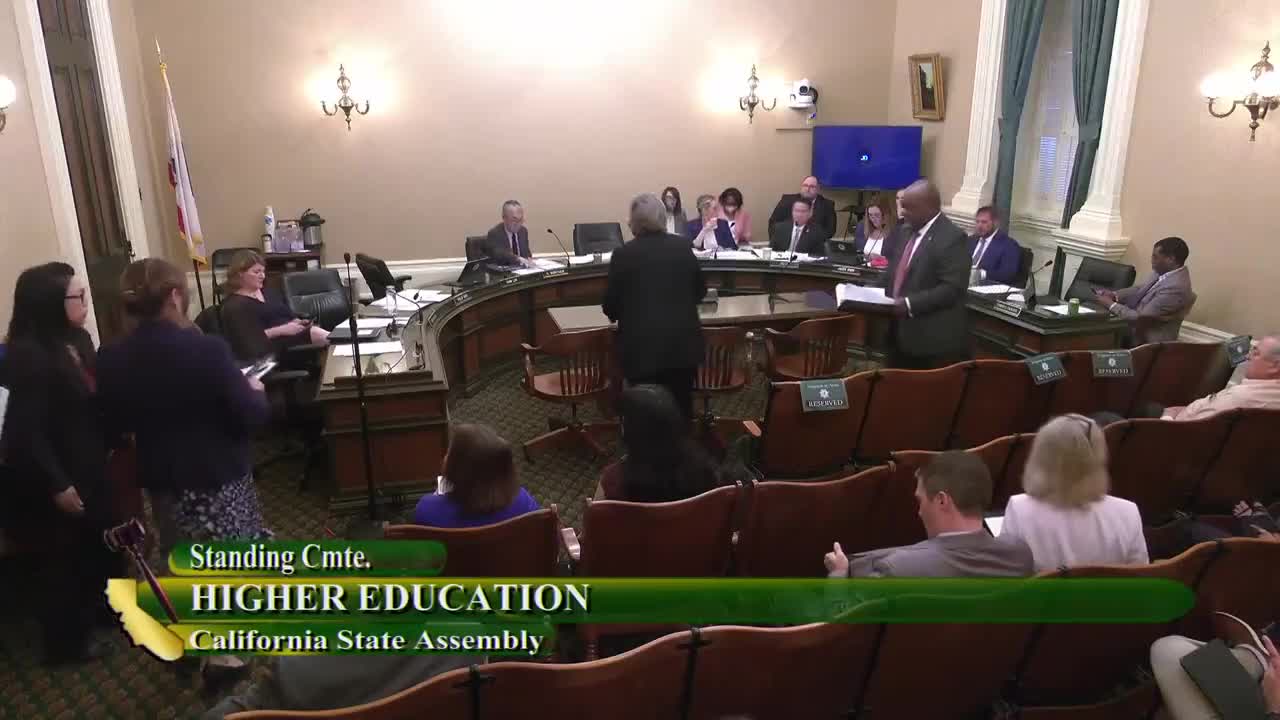
Discussed in Hearing
 15MIN
Assembly Standing Committee on Higher Education
Bill Author

Bill Co-Author(s):