AB 909: Solid Waste Disposal and Codisposal Site Cleanup Program.
- Session Year: 2023-2024
- House: Assembly
- Latest Version Date: 2023-03-30
Current Status:
Failed
(2024-02-01: From committee: Filed with the Chief Clerk pursuant to Joint Rule 56.)
Introduced
In Committee
First Chamber
In Committee
Second Chamber
Enacted
The Solid Waste Disposal and Codisposal Site Cleanup Program, administered by the Department of Resources, Resources Recycling and Recovery, pays for the cleanup of solid waste disposal sites and for the cleanup of solid waste at codisposal sites, as specified.
This bill would require would authorize the department, beginning July 1, 2024, and upon appropriation by the Legislature, to initiate a program to collect and properly manage illegally disposed hazardous waste and household hazardous waste, as defined, regardless of whether they were codisposed with nonhazardous solid waste. The bill would require the department to annually seek up to $500,000 from the Department of Toxic Substances Control in reimbursement for grants awarded and program costs incurred. The bill would also prohibit the department from expending funds from the Integrated Waste Management Fund for purposes of this program in excess of the amount reimbursed by the Department of Toxic Substances Control.
The Solid Waste Disposal and Codisposal Site Cleanup Program, administered by the Department of Resources, Recycling and Recovery, pays for the cleanup of solid waste disposal sites and for the cleanup of solid waste at codisposal sites, as specified.
This bill would require the department, upon appropriation by the Legislature, to initiate a program to collect and properly manage illegally disposed hazardous waste and household hazardous waste, as defined, regardless of whether they were codisposed with nonhazardous solid waste.
(a)For purposes of this article, the following terms have the following meaning: meanings:
(1)Codisposal site means a hazardous substance release site listed pursuant to Article 5 (commencing with Section 78760) of Chapter 4 of Part 2 of Division 45 of the Health and Safety Code, where the disposal of hazardous substances, hazardous waste, and solid waste has occurred.
(2)Hazardous waste has the same meaning as defined in Section 25117 of the Health and Safety Code.
(3)Household hazardous waste has the same meaning as defined in Section 25218.1 of the Health and Safety Code.
(4)Trust fund means the Solid Waste Disposal Site Cleanup Trust Fund created pursuant to Section 48027.
(b)(1)The board department shall, on January 1, 1994, initiate a program for the cleanup of solid waste disposal sites and for the cleanup of solid waste at codisposal sites where the responsible party either cannot be identified or is unable or unwilling to pay for timely remediation, and where cleanup is needed to protect public health and safety or the environment.
(2)The board shall, upon appropriation by the Legislature, initiate a program to (A)Beginning July 1, 2024, the department, upon appropriation by the Legislature, may collect and properly manage illegally disposed hazardous waste and household hazardous waste, under this article, regardless of whether they were codisposed with nonhazardous solid waste. Collection, transportation, and disposal of hazardous waste and household hazardous waste shall be performed in accordance with applicable law.
(B)The department shall annually seek up to five hundred thousand dollars ($500,000) in reimbursement for grants awarded and program costs incurred pursuant to this paragraph from the Department of Toxic Substances Control.
(C)The department shall not expend funds from the Integrated Waste Management Fund for purposes of this paragraph in excess of the amount reimbursed by the Department of Toxic Substances Control.
(c)The board department shall not expend more than 5 percent of the funds appropriated for the purpose of a program initiated pursuant to subdivision (b) by a statute other than the Budget Act to administer that program, unless a different amount is otherwise appropriated to administer the program in the annual Budget Act. If a different amount is appropriated to administer the program in the annual Budget Act, it shall be set forth in a separate line item. All remaining funds appropriated for purposes of the program shall be expended on direct cleanup pursuant to subdivision (b) or emergency actions at solid waste facilities, disposal sites, sites involving solid waste handling, and for solid waste at codisposal sites.
(a)For purposes of this article, the following terms have the following meaning:
(1)Codisposal site means a hazardous substance release site listed pursuant to Article 5 (commencing with Section 78760) of Chapter 4 of Part 2 of Division 45 of the Health and Safety Code, where the disposal of hazardous substances, hazardous waste, and solid waste has occurred.
(2)Hazardous waste has the same meaning as defined in Section 25117 of the Health and Safety Code.
(3)Household hazardous waste has the same meaning as defined in Section 25218.1 of the Health and Safety Code.
(2)(4)Trust fund means the Solid Waste Disposal Site Cleanup Trust Fund created pursuant to Section 48027.
(b)(1)The board shall, on January 1, 1994, initiate a program for the cleanup of solid waste disposal sites and for the cleanup of solid waste at codisposal sites where the responsible party either cannot be identified or is unable or unwilling to pay for timely remediation, and where cleanup is needed to protect public health and safety or the environment.
(2)The board shall, upon appropriation by the Legislature, initiate a program to collect and properly manage illegally disposed hazardous waste and household hazardous waste, regardless of whether they were codisposed with nonhazardous solid waste. Collection, transportation, and disposal of hazardous waste and household hazardous waste shall be performed in accordance with applicable law.
(c)The board shall not expend more than 5 percent of the funds appropriated for the purpose of the a program initiated pursuant to subdivision (b) by a statute other than the Budget Act to administer that program, unless a different amount is otherwise appropriated to administer the program in the annual Budget Act. If a different amount is appropriated to administer the program in the annual Budget Act, it shall be set forth in a separate line item. All remaining funds appropriated for purposes of the program shall be expended on direct cleanup pursuant to subdivision (b) or emergency actions at solid waste facilities, disposal sites, sites involving solid waste handling, and for solid waste at codisposal sites.
|
Date
|
Status
|
|---|---|
| Feb 1, 2024 | From committee: Filed with the Chief Clerk pursuant to Joint Rule 56. |
| Jan 31, 2024 | Died pursuant to Art. IV, Sec. 10(c) of the Constitution. |
| May 18, 2023 | In committee: Held under submission. |
| Apr 19, 2023 | In committee: Set, first hearing. Referred to APPR. suspense file. |
| Apr 3, 2023 | Re-referred to Com. on APPR. |
| Mar 30, 2023 | Read second time and amended. |
| Mar 29, 2023 | From committee: Amend, and do pass as amended and re-refer to Com. on APPR. (Ayes 11. Noes 0.) (March 27). |
| Mar 2, 2023 | Referred to Com. on NAT. RES. |
| Feb 15, 2023 | From printer. May be heard in committee March 17. |
| Feb 14, 2023 | Read first time. To print. |
|
Date
|
Description
|
Location
|
Votes
|
|
|---|---|---|---|---|
| Mar 27, 2023 | Do pass as amended and be re-referred to the Committee on [Appropriations] | Assembly Standing Committee on Natural Resources |
Passed |
This list shows positions taken on this bill by organizations on the date displayed, which is linked to the original source.
Positions by individuals are not included.
|
Organization
|
Position
|
Date
|
|---|---|---|
| Board of Supervisors, Solano County | * Support | Mar 27, 2023 |
| California State Association Of Counties | ** Support | |
| League Of California Cities | ** Support | |
| RCRC | * Support | Mar 27, 2023 |
| Rural County Representatives of California | ** Support |
Date of Hearing: April 19, 2023
ASSEMBLY COMMITTEE ON APPROPRIATIONS
Chris Holden, Chair
ABPCA Bill Id:AB 909
Author:(Hoover) – As Amended Ver:March 30, 2023
Policy Committee: | Natural Resources | Vote: | 11 - 0 |
|
| ||
|
|
Urgency: No State Mandated Local Program: No Reimbursable: No
SUMMARY:
This bill authorizes the California Department of Resources Recycling and Recovery (CalRecycle to clean up hazardous waste and household hazardous waste under CalRecycle’s Solid Waste Disposal and Codisoposal Site Cleanup Program (Program).
Specifically, this bill:
1) Authorizes CalRecycle, beginning July 1, 2024 and upon appropriation, to collect and properly manage illegally disposed hazardous waste and household hazardous waste under the Program, regardless of whether such wastes were codisposed with nonhazardous solid waste.
2) Requires the collection, transportation, and disposal of hazardous waste and household hazardous waste to be performed in accordance with applicable law.
3) Requires CalRecycle to annually seek up to $500,000 in reimbursement from the Department of Toxic Substances Control (DTSC) for grants awarded and program costs incurred pursuant to this bill.
4) Prohibits CalRecycle from expending funds from the Integrated Waste Management Fund (IWMF) for purposes of this bill in excess of the amount reimbursed by DTSC.
FISCAL EFFECT:
1) CalRecycle estimates ongoing annual costs of approximately $587,000 (Solid Waste Disposal Site Cleanup Trust Fund) for contract costs and to hire half an additional permanent position to handle the increased workload with the expansion of the Program. CalRecycle would seek reimbursement from DTSC for these costs.
2) DTSC notes it would require a $500,000 General Fund appropriation to reimburse CalRecycle. Absent additional details and clarity regarding the scope and nature of the proposed cleanups as well as DTSC’s role in the expanded Program, it is not clear if DTSC can use its existing funds (such as the Toxic Substances Control Account, which is funded by a broad‑based tax charged to businesses that contribute to hazardous waste) to reimburse CalRecycle.
COMMENTS:
1) Purpose. According to the author:
This is an important measure that will aid local governments and private landowners in cleaning up their communities and ensuring that hazardous waste is properly disposed of. Specifically, it will expand CalRecycle’s existing Sold Waste Disposal Cleanup Program to help fund proper disposal of illegally dumped hazardous waste and household hazardous waste, including batteries, cleaners, electronic wastes, paints, pesticides, used oil, etc. By providing local governments with proper reimbursement of hazardous waste, this measure will further protect public health and safety in the environment.
2) Background. Illegal dumping is a frequent problem statewide and poses social, environmental, public health, and economic impacts to the communities in which it occurs. The responsibility and cost for cleaning up illegal dump sites lies with local governments, who spend millions cleaning them up. Illegal disposal sites are not limited to solid waste. Most sites contain a mix of wastes and include solid waste, like mattresses, papers, and single-use packaging, and hazardous wastes, like batteries, cleaners, electronics, and pesticides.
The Program was established in 1993 to clean up solid waste sites and solid waste located at codisposal sites where the responsible party (RP) either cannot be identified or is unwilling or unable to pay for the timely remediation of the site, and where cleanup is necessary to protect public health and safety or the environment. The Program provides four types of funding:
a) CalRecycle-managed cleanup: CalRecycle is authorized to spend funds directly to investigate or remediate, or investigate and remediate, sites where the RP is unwilling or willing but does not have the necessary resources or expertise to implement the cleanup in a timely manner.
b) Legacy Disposal Site Abatement Grant: public entities may receive financial assistance from CalRecycle in the form of reimbursement grants of up to $750,000 to assist with remediating old solid waste disposal sites and protecting public health and safety and the environment.
c) Illegal Disposal Site Abatement Grant: public entities may receive financial assistance in the form of reimbursement grants from CalRecycle of up to $500,000 to help accelerate the pace of cleaning up illegal dump sites and restoring the community.
d) Loans to local governments: loans from CalRecycle of up to $1 million per site are available to local governments that demonstrate that site remediation is needed to protect public health and safety and the environment and that the local government has the ability to repay the loan.
The Program is funded via the Solid Waste Disposal Site Cleanup Trust Fund (Fund). The Fund is continuously appropriated without regard to fiscal years, can expend a maximum of $5 million each FY, and cannot have a balance exceeding $30 million. Revenues in the Fund are comprised of funds appropriated by the Legislature from the IWMF to CalRecycle for solid waste disposal or codisposal site cleanup, interest earned from the money in the trust fund, and cost recoveries from responsible parties for solid waste disposal loan repayments. According to CalRecycle, the Program has utilized approximately 85% of its budget for department-managed projects and is oversubscribed for the illegal disposal and site legacy grant projects.
Grants and loans awarded under the Program are limited to the cleanup of solid waste because the IWMF is supported by solid waste tipping fees. However, illegal disposal sites are not limited to solid waste, and local governments working to clean up these areas are often faced with hazardous and household hazardous waste alongside the solid waste.
The author intends this bill to help local governments fund the hazardous waste portion of illegal disposal site cleanups. While funding exists through the Program for solid waste cleanup, there is no parallel program for hazardous waste cleanup. In most instances, the hazardous waste portion has higher costs due to the more stringent testing, handling, and disposal requirements for hazardous wastes. This bill directs CalRecycle to expand the current Program to include the cleanup of illegally disposed hazardous waste disposed either with solid waste or without. However, because the IWMF is funded by solid waste tipping fees and is not an appropriate funding source for this activity, this bill directs CalRecycle to seek $500,000 in annual reimbursement from DTSC for any hazardous waste cleanup costs awarded under the bill.
Analysis Prepared by: Nikita Koraddi / APPR. / (916) 319-2081
Date of Hearing: March 27, 2023
ASSEMBLY COMMITTEE ON NATURAL RESOURCES
Luz Rivas, Chair
ABPCA Bill Id:AB 909 (
Author:Hoover) – As Introduced Ver:February 14, 2023
SUBJECT: Solid Waste Disposal and Codisposal Site Cleanup Program
SUMMARY: Requires the Department of Resources Recycling and Recovery (CalRecycle) to initiate a program to include the cleanup of hazardous waste and household hazardous waste under the Solid Waste Disposal and Codisoposal Site Cleanup Program (Program).
EXISTING LAW:
- Establishes the Program (Public Resources Code § 48020 – 48028), which:
- Requires CalRecycle to develop a program for the cleanup of solid waste disposal and for the cleanup of solid waste at codisposal sites where a responsible party cannot be identified or is unwilling or unable to pay for the remediation, and where cleanup is needed to protect public health and safety or the environment.
- Defines “codisposal site” as a hazardous substance release site where the disposal of hazardous substances, hazardous waste, and solid waste has occurred.
- Establishes the Solid Waste Disposal Site Trust Fund (Trust Fund) comprised of funds appropriated by the Legislature, interest earned, and any cost recovery from responsible parties. The Trust Fund balance at each July 1st may not exceed $30 million.
- Defines “hazardous waste” as a waste that meets the criteria for hazardous waste adopted by the Department of Toxic Substances Control (DTSC). Specifies that the criteria for identifying hazardous waste. (Health and Safety Code § 25117 and 25141)
- Defines “household hazardous waste” as hazardous waste generated incidental to owning or maintaining a place of residence. Specifies that household hazardous waste does not include waste generated in the course of operating a business at a residence. (Health and Safety Code § 25218.1)
THIS BILL:
- Requires CalRecycle to, upon appropriation, initiate a program to collect and properly manage illegally disposed hazardous waste and household hazardous waste, regardless of whether they were codisposed with nonhazardous waste.
- Requires that the collection, transportation, and disposal of hazardous waste and household hazardous waste be performed in accordance with applicable law.
FISCAL EFFECT: Unknown
COMMENTS:
- Author’s statement:
This is an important measure that will aid local governments and private landowners in cleaning up their communities and ensuring that hazardous waste is properly disposed of. Specifically, it will expand CalRecycle’s existing Sold Waste Disposal Cleanup Program to help fund proper disposal of illegally dumped hazardous waste and household hazardous waste, including batteries, cleaners, electronic wastes, paints, pesticides, used oil, etc. By providing local governments with proper reimbursement of hazardous waste, this measure will further protect public health and safety in the environment.
- Illegal dumping. Illegal dumping is a frequent problem statewide. There are generally three types of illegal dumping: littering small amounts of waste left in the open or in public areas; illegal dumping of larger amounts of waste at one location; and, illegal disposal sites on which large amounts of material are dumped on property that does not have a valid solid waste facilities permit. Illegal dumping can grow to an illegal disposal site if left unabated. Illegally disposed waste poses social, environmental, public health, and economic impacts to the communities in which it occurs. The responsibility, and cost, for cleaning up these sites lies with local governments, who spend millions cleaning up illegal dump sites. Preventing future dumping is difficult; signs and fencing are often used to try to discourage future dumping.
Illegal disposal sites are not limited to solid waste. Most sites contain a mix of wastes and include solid waste, like mattresses, papers, and single-use packaging, and hazardous wastes, like batteries, cleaners, electronics, and pesticides. - Solid Waste Disposal and Codisposal Site Program. The Program was established in 1993 to cleanup solid waste sites and solid waste located at codisposal sites where the responsible party either cannot be identified or is unwilling or unable to pay for the timely remediation of the site, and where cleanup is necessary to protect public health and safety or the environment. The Program provides three funding to local governments. The Illegal Disposal Site Abatement Grant Program awards up to $500,000 to local governments for the cleanup of illegal disposal sites. The Legacy Disposal Site Abatement Program provides matching grants up to $750,000 for eligible costs to assist public entities committed to accelerating the pace of cleanup, restoration, and protecting public health and safety at legacy waste disposal sites. Local government loans are also available to public entities for the cleanup of sites to protect public health and safety and the environment, and the ability to repay the loan and costs that exceed the loan amount.
Grants and loans awarded under the Program are limited to the cleanup of solid waste because the funding source for these loans is the Integrated Waste Management Fund (IWMF), which is supported by solid waste tipping fees. Illegal disposal sites are not limited to solid waste, and local governments working to cleanup these areas are often faced with hazardous and household hazardous waste alongside the solid waste.
- This bill. This bill is intended to help local governments fund the hazardous waste portion of illegal disposal site cleanups. Local governments spend millions of dollars annually cleaning up illegally dumped waste. While funding exists through the Program for solid waste cleanup, there is no parallel program for hazardous waste cleanup. In most instances, the hazardous waste portion has higher costs due to the more stringent testing, handling, and disposal requirements for hazardous wastes. This bill directs CalRecycle to expand the current Program to include the cleanup of illegally disposed hazardous waste disposed either with solid waste or without.
- Suggested amendments. In addition to minor and technical amendments, the committee may wish to make the following changes to the bill:
- This bill relies on the IWMF to pay for the cleanup of hazardous waste and household hazardous waste. While these cleanup programs are important, the IWMF is funded by solid waste tipping fees and is not an appropriate funding source for this activity. The committee may wish to amend the bill to require DTSC to reimburse CalRecycle for any hazardous waste cleanup costs awarded under the bill. Additionally, the committee may wish to limit grant awards for this purpose to $500,000 per year.
- The author’s office indicates that the intent of this bill is to incorporate this program into the existing Program at CalRecycle; however, the drafting implies that it is creating a new program. The committee may wish to amend the bill to clarify that this is an addition to the current Program and not a new, separate grant program.
REGISTERED SUPPORT / OPPOSITION:
Support
California State Association of Counties
League of California Cities
Rural County Representatives of California
Opposition
None on file
Analysis Prepared by: Elizabeth MacMillan / NAT. RES. /
Discussed in Hearing
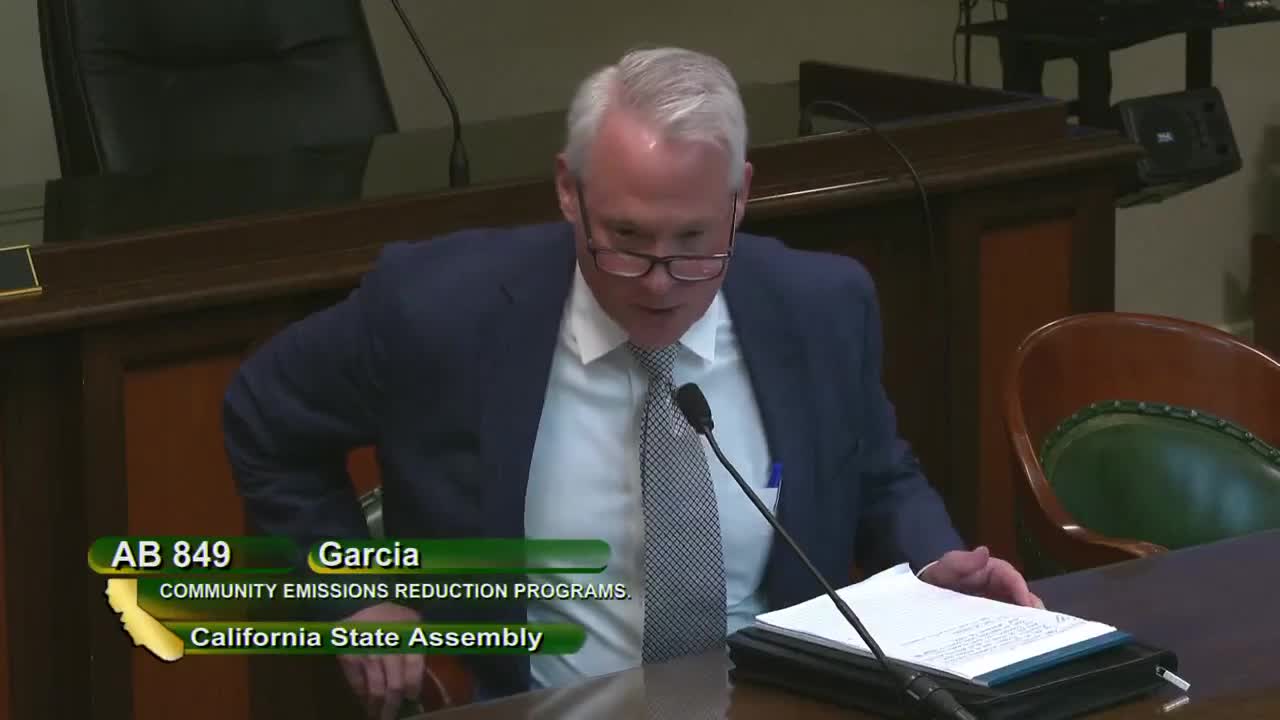 2MIN
Assembly Standing Committee on Natural Resources
Bill Author

Bill Co-Author(s):