SB 1388: Education finance: community colleges: general fund balance.
- Session Year: 2023-2024
- House: Senate
- Latest Version Date: 2024-03-18
Current Status:
Failed
(2024-05-16: May 16 hearing: Held in committee and under submission.)
Introduced
In Committee
First Chamber
In Committee
Second Chamber
Enacted
Existing law establishes the California Community Colleges, under the administration of the Board of Governors of the California Community Colleges, as one of the segments of public postsecondary education in this state. Existing law establishes community college districts throughout the state, and authorizes these districts to provide instruction at the community college campuses they operate and maintain.
This bill would prohibit, commencing with the 202526 fiscal year, a community college districts annual unrestricted general fund balance, as specified, for a fiscal year from exceeding 16.7% of its unrestricted general fund expenditures for that year, unless the community college district meets specified conditions. The bill would prohibit a community college district from transferring unrestricted general funds to another fund if the receiving fund has an existing balance of 33% or more of the community college districts unrestricted general fund expenditures for that fiscal year or if the transfer would cause the receiving fund to have a balance of 33% or more of the community college districts unrestricted general fund expenditures for that fiscal year. For a community college district that violates the above-described prohibitions, the bill would require a community college district to distribute the amount of the annual unrestricted general fund balance that exceeds 16.7% to nonsupervisory and nonmanagement employees of the community college district, as provided. To the extent that the bill would impose new duties on community college districts, the bill would impose a state-mandated local program.
The California Constitution requires the state to reimburse local agencies and school districts for certain costs mandated by the state. Statutory provisions establish procedures for making that reimbursement.
This bill would provide that, if the Commission on State Mandates determines that the bill contains costs mandated by the state, reimbursement for those costs shall be made pursuant to the statutory provisions noted above.
Existing law requires school districts to employ persons for positions not requiring certification qualifications and to classify, as defined, these persons. Under existing law, these employees make up the classified service. Existing law requires that each position in the classified service have, among other things, a specific statement of the duties required to be performed by the employees in each position, and the regular monthly salary ranges for each position. This bill would state the intent of the Legislature to enact subsequent legislation related to salary data collection for school staff.Existing law requires school districts to employ persons for positions not requiring certification qualifications and to classify, as defined, these persons. Under existing law, these employees make up the classified service. Existing law requires that each position in the classified service have, among other things, a specific statement of the duties required to be performed by the employees in each position, and the regular monthly salary ranges for each position.
This bill would state the intent of the Legislature to enact subsequent legislation related to salary data collection for school staff.
(a)Commencing with the 202526 fiscal year, a community college districts annual unrestricted general fund balance for a fiscal year, as reported on its annual report filed in compliance with regulations adopted pursuant to Section 84040, shall not exceed 16.7 percent of its unrestricted general fund expenditures for that year, unless the community college district does all of the following:
(1)Participates in the Part-Time Community College Faculty Health Insurance Program, as described in Article 9 (commencing with Sections 87860) of Chapter 3 of Part 51.
(2)Participates in the Community College Part-Time Faculty Office Hours Program, as described in Article 10 (commencing with Section 87880) of Chapter 3 of Part 51.
(3)Has at least 75 percent of hours of credit instruction taught by full-time instructors, as described in subdivision (a) of Section 87482.6.
(b)A community college district shall not transfer unrestricted general funds to another fund for the purpose of complying with subdivision (a) if either of the following applies:
(1)The receiving fund has an existing balance of 33 percent or more of the community college districts unrestricted general fund expenditures for that fiscal year.
(2)The transfer of the unrestricted general funds would cause the receiving fund to have a balance of 33 percent or more of the community college districts unrestricted general fund expenditures for that fiscal year.
(c)For a community college district that violates subdivision (a) or (b), the amount of the annual unrestricted general fund balance that exceeds 16.7 percent shall be proportionally distributed to the nonsupervisory and nonmanagement employees of the community college district based solely on the number of hours worked by those employees in the preceding fiscal year, as determined by a collective bargaining agreement between those employees and the governing board of the community college district.
SEC. 2.If the Commission on State Mandates determines that this act contains costs mandated by the state, reimbursement to local agencies and school districts for those costs shall be made pursuant to Part 7 (commencing with Section 17500) of Division 4 of Title 2 of the Government Code.
SECTION 1.It is the intent of the Legislature to enact subsequent legislation related to salary data collection for school staff.It is the intent of the Legislature to enact subsequent legislation related to salary data collection for school staff.
|
Date
|
Status
|
|---|---|
| May 16, 2024 | May 16 hearing: Held in committee and under submission. |
| May 10, 2024 | Set for hearing May 16. |
| May 6, 2024 | May 6 hearing: Placed on APPR suspense file. |
| Apr 26, 2024 | Set for hearing May 6. |
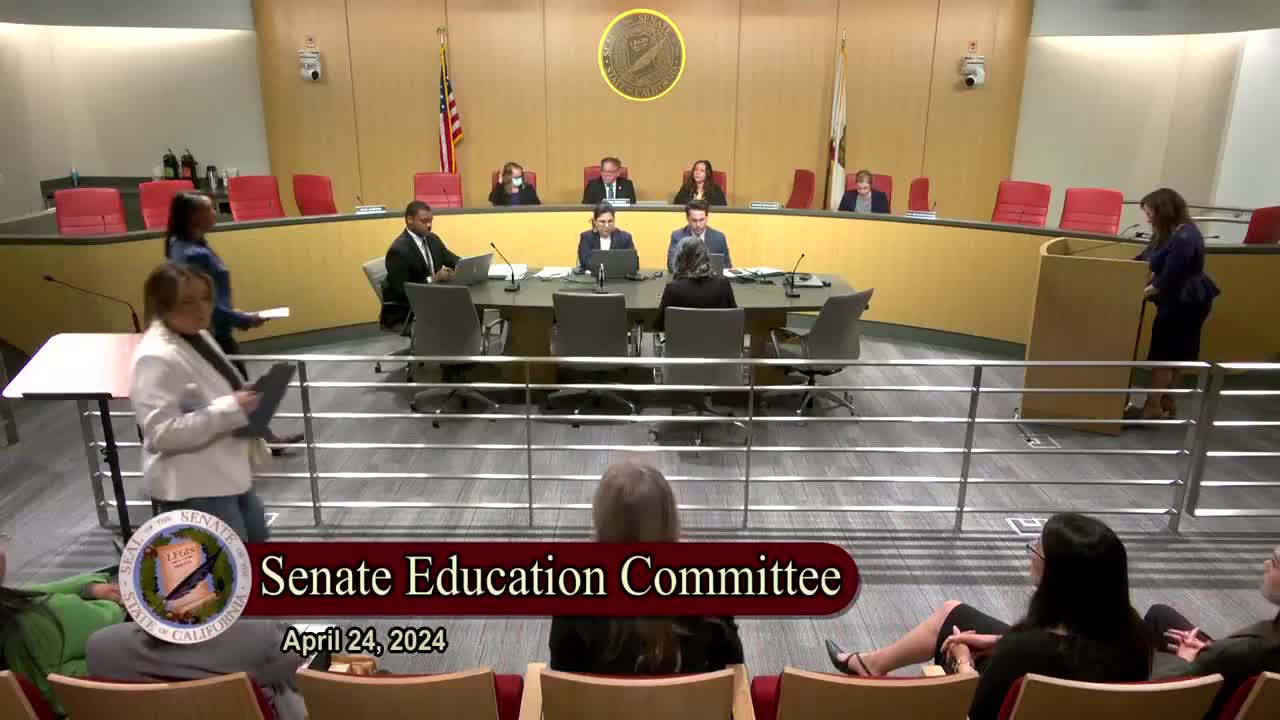
| Apr 24, 2024 | From committee: Do pass and re-refer to Com. on APPR. (Ayes 4. Noes 2. Page 3752.) (April 24). Re-referred to Com. on APPR. |
| Apr 5, 2024 | Set for hearing April 24. |
| Apr 4, 2024 | April 17 hearing postponed by committee. |
| Apr 4, 2024 | Set for hearing April 17. |
| Apr 3, 2024 | Re-referred to Com. on ED. |
| Mar 18, 2024 | From committee with author's amendments. Read second time and amended. Re-referred to Com. on RLS. |
| Feb 29, 2024 | Referred to Com. on RLS. |
| Feb 20, 2024 | From printer. May be acted upon on or after March 18. |
| Feb 16, 2024 | Introduced. Read first time. To Com. on RLS. for assignment. To print. |
|
Date
|
Description
|
Location
|
Votes
|
|
|---|---|---|---|---|
| May 6, 2024 | Placed on suspense file | Senate Standing Committee on Appropriations |
Passed |
|
| Apr 24, 2024 | Do pass, but first be re-referred to the Committee on [Appropriations] | Senate Standing Committee on Education |
Passed |
This list shows positions taken on this bill by organizations on the date displayed, which is linked to the original source.
Positions by individuals are not included.
|
Organization
|
Position
|
Date
|
|---|---|---|
| Allen Hancock Community College | * Against | Apr 24, 2024 |
| Antelope Valley Community College District | ** Against | |
| Association Of California Community College Administrators | ** Against | |
| Association of Chief Business Officials | ** Against | |
| Association of Chief Human Resources Officers | ** Against | |
| Association of the California Community College Administrators | * Against | Apr 24, 2024 |
| Bakersfield College | ** Against | |
| California Community College Independence | * Support | Apr 24, 2024 |
| California Community Colleges Chief Instructional Officers | ** Against | |
| California Faculty Association | * Support | Apr 24, 2024 |
| California Teachers Association | * Support | Apr 24, 2024 |
| Cerro Coso Community College | ** Against | |
| CFT Union of Classified Professionals and Educators | ** Support | Apr 24, 2024 |
| Chabot-Las Positas Community College District | ** Against | |
| Chaffey College | ** Against | |
| Citrus College | ** Against | |
| Coalinga College | ** Against | |
| College of the Canyons | ** Against | |
| College of the Desert | ** Against | |
| College of the Redwoods | ** Against | |
| College of the Sequoias | ** Against | |
| Community College League of California | * Against | Apr 24, 2024 |
| Compton Community College District | ** Against | |
| Contra Costa Community College District | ** Against | |
| Copper Mountain College | ** Against | |
| Crafton Hills College | ** Against | |
| Cuesta College | ** Against | |
| Equal Employment Officers | ** Against | |
| Faculty Association Of California Community Colleges | * Support | Apr 24, 2024 |
| Feather River College | ** Against | |
| Fresno City College | ** Against | |
| Gavilan Joint Community College District | ** Against | |
| Grossmont-Cuyamaca Community College District | ** Against | |
| Kern Community College District | ** Against | |
| Lassen Community College District | ** Against | |
| Lemoore College | ** Against | |
| Madeira Community College | ** Against | |
| Mendocino-Lake Community College District | ** Against | |
| Merced Community College District | ** Against | |
| miracosta community college district | ** Against | |
| Modesto Junior College | ** Against | |
| Mt. San Antonio College | ** Against | |
| Napa Valley Community College District | ** Against | |
| North Orange County Community College District | ** Against | |
| Palo Verde Community College District | ** Against | |
| Peralta Community College District | ** Against | |
| Porterville College | ** Against | |
| Reedley College | ** Against | |
| Riverside Community College District | ** Against | |
| San Bernardino Community College District | ** Against | |
| SAN BERNARDINO VALLEY COLLEGE | ** Against | |
| San Diego City College | * Support | Apr 24, 2024 |
| San Jose Evergreen Community College District | * Against | Apr 24, 2024 |
| Santa Clarita Community College District - College of the Canyons | ** Against | |
| Santa Rosa Junior College | ** Against | |
| Shasta-Tehama-Trinity Joint Community College District | ** Against | |
| Sierra College | ** Against | |
| Sierra Joint Community College District | * Against | Apr 24, 2024 |
| South Orange County Community College District | * Against | Apr 24, 2024 |
| Southwestern Community College District | ** Against | |
| State Center Community College District | ** Against | |
| Taft College | ** Against | |
| Victor Valley College | ** Against | |
| West Hills College Coalinga | ** Against | |
| West Hills College Lemoore | ** Against | |
| West Hills Community College District | ** Against | |
| West Kern Community College District | ** Against | |
| Yuba Community College District | ** Against |
SENATE COMMITTEE ON APPROPRIATIONS
Senator Anna Caballero, Chair
2023 - 2024 Regular Session
SB 1388 (Archuleta) - Education finance: community colleges: general fund balance
Version: March 18, 2024 | Policy Vote: ED. 4 - 2 |
Urgency: No | Mandate: Yes |
Hearing Date: May 6, 2024 | Consultant: Lenin Del Castillo |
Bill Summary:
This bill establishes an annual 16.7 percent reserve cap for a community college district, unless the district participates in specified employee benefit programs and has at least 75 percent of instruction taught by full-time instructors.
Fiscal Impact:
- By imposing an annual 16.7 percent reserve cap for community college districts, this bill could hamper a district’s ability to maintain adequate reserve levels and save for future and unanticipated expenditures, especially in tight fiscal times for the state. The Chancellor’s Office indicates that districts would need to spend down hundreds of millions of dollars statewide to ensure compliance with this measure. Once the reserve cap is met and to the extent that districts begin spending down their remaining reserves, this could lead to a number of challenges, including difficulties with maintaining programs and addressing both current and future financial obligations.
- The Chancellor’s Office estimates that the state would need to increase the amount of funding for the Part-Time Faculty Office Hours Program and Part-Time Faculty Health Insurance Program by hundreds of millions of dollars each year to cover the costs of increased participation. The 2023-24 Budget Act funds Part-Time Faculty Office Hours at $23.6 million; the Part-Time Faculty Health Insurance Program at $200.5 million; and Full-Time Faculty Hiring at $150 million. In addition, because these programs do not necessarily provide 100 percent reimbursement, districts will still need to use local resources to provide compensation.
- The Chancellor’s Office indicates that distributing general fund reserves to non-supervisory and non-management employees would be considered a "bonus" payment beyond the salary they receive for actually doing their work, which may be considered a "gift of public funds” under California’s Constitution. This also violates the Rodda Act which requires collective bargaining for wages and circumvents local boards’ authority. Consequently, the bill could result in additional, significant costs for litigation and legal representation fees.
- The Chancellor’s Office also indicates that to the extent that districts face fiscal instability and insolvency, potentially leading to accreditation loss along with their incapacity to uphold reserves for unforeseen emergencies and tackle fiscal hurdles, the state would incur substantial Proposition 98 costs due to increased financial risks. These expenses could arise from the need for the Chancellor to appoint a special trustee to manage a district's finances. The exact amount would depend on the number of districts facing insolvency risk but as an example, the special trustee overseeing the Compton Community College District currently receives $328,911 each year.
- The Chancellor’s office estimates one-time General Fund workload costs of $32,500 to $53,000 to issue guidance and update its training materials related to fiscal health and resiliency, and ongoing General Fund costs of $445,000 and 3.0 positions to monitor district health and provide technical assistance regarding the bill’s implementation.
Background:
Existing law establishes the Public School System Stabilization Account (Proposition 98 Reserve), a state reserve specifically for school and community college districts.
Existing law establishes a 10 percent reserve cap for a K-12 school district only in years when the amount of moneys in the Proposition 98 Reserve is equal to or exceeds 3 percent of the combined total of General Fund revenues appropriated for school districts and allocated local proceeds of taxes for that fiscal year. The reserve cap requirement does not apply to small school districts or basic aid school districts. Additionally, a county superintendent of schools may grant a school district under its jurisdiction an exemption from the reserve cap for up to two consecutive fiscal years within a three-year period if the school district provides documentation indicating that extraordinary fiscal circumstances, including, but not limited to, multiyear infrastructure or technology projects, substantiate the need for a combined assigned or unassigned ending general fund balance that is in excess of 10 percent.
Existing law establishes the Part-Time Community College Faculty Health Insurance Program to encourage community college districts to offer health insurance for part-time faculty. Community college districts that establish a program must negotiate with the exclusive bargaining representative the share of the premium payments not covered by the state.
Existing law establishes the Community College Part-Time Faculty Office Hours Program to encourage community college districts to compensate part-time faculty who hold office hours related to their teaching load. To establish a program, a district must negotiate with the exclusive bargaining representative or with faculty, if there is no bargaining unit.
Existing law requires the Board of Governors of the California Community Colleges to adopt regulations regarding the percent of credit instruction taught by full-time faculty and authorizes districts with less than 75 percent full-time instructors to apply a portion of their “program improvement” funds toward reaching a 75 percent goal. However, the state has stopped providing program improvement funds and the Board has since required community college districts to provide a portion of their growth funds to hiring more full-time faculty.
Proposed Law:
This bill prohibits a community college district’s annual unrestricted general fund balance for a fiscal year from exceeding 16.7 percent of its unrestricted general fund expenditures for that year, unless the community college district does all of the following:
- Participates in the Part-Time Community College Faculty Health Insurance Program;
- Participates in the Community College Part-Time Faculty Office Hours Program;
- Has at least 75 percent of hours of credit instruction taught by full-time instructors.
This bill prohibits a community college district from transferring unrestricted general funds to another fund for the purpose of complying with this bill if either of the following applies:
- The receiving fund has an existing balance of 33 percent or more of the community college district’s unrestricted general fund expenditures for that fiscal year.
- The transfer of the unrestricted general funds would cause the receiving fund to have a balance of 33 percent or more of the community college district’s unrestricted general fund expenditures for that fiscal year.
This bill specifies that, for a community college district that violates the provisions of this bill, the amount of the annual unrestricted general fund balance that exceeds 16.7 percent shall be proportionally distributed to the nonsupervisory and nonmanagement employees of the community college district based solely on the number of hours worked by those employees in the preceding fiscal year, as determined by a collective bargaining agreement between those employees and the governing board of the community college district.
Staff Comments:
Community college districts primarily receive funding through apportionments based on the state's Student Centered Funding Formula. In 2023-24, districts received 70 percent of their Proposition 98 funding through apportionments, with the rest allocated through over 40 categorical programs. Over the past three years, districts received significant cost of living adjustments and base apportionment increases, leading to record-high per-student funding. Unrestricted reserves have also grown substantially, from $1.8 billion (22 percent of expenditures) in 2018-19 to an estimated $3.1 billion (33 percent of expenditures) in 2022-23.
Local reserves allow community colleges to sustain their operations even if their annual funding drops due to economic recessions. Local reserves also allow them to handle lower-than-budgeted local property tax receipts or unexpected drops in enrollment. Further, local reserves help colleges manage their cash flow and pay their bills while awaiting receipt of funds—which is especially helpful during times when the state is deferring payments, as colleges might not receive their state funding until many months after they have incurred operating costs. Reserves can help cover unexpected costs as well.
-- END --
SENATE COMMITTEE ON EDUCATION
Senator Josh Newman, Chair
2023 - 2024 Regular
Bill No: Hearing Date: April 24, 2024
Author: | Archuleta | ||
Version: |
| ||
Urgency: | Fiscal: | ||
Consultant: | |||
Subject:
SUMMARY
This bill establishes an annual 16.7 percent reserve cap for a community college district, unless the district participates in specified employee benefit programs and has at least 75 percent of instruction taught by full-time instructors.
BACKGROUND
Existing law:
- Establishes the Public School System Stabilization Account (Proposition 98 Reserve), a state reserve specifically for school and community college districts.
- Establishes a 10 percent reserve cap for a K-12 school district only in years when the amount of moneys in the Proposition 98 Reserve is equal to or exceeds 3 percent of the combined total of General Fund revenues appropriated for school districts and allocated local proceeds of taxes for that fiscal year.
- Authorizes a county superintendent of schools to grant a school district under its jurisdiction an exemption from the reserve cap for up to two consecutive fiscal years within a three-year period if the school district provides documentation indicating that extraordinary fiscal circumstances, including, but not limited to, multiyear infrastructure or technology projects, substantiate the need for a general fund reserve that is in excess of 10 percent.
- Exempts basic aid school districts and small school districts from the reserve cap requirement.
- Establishes the Part-Time Community College Faculty Health Insurance Program to encourage community college districts to offer health insurance for part-time faculty. Community college districts that establish a program must negotiate with the exclusive bargaining representative the share of the premium payments not covered by the state.
- Establishes the Community College Part-Time Faculty Office Hours Program to encourage community college districts to compensate part-time faculty who hold office hours related to their teaching load. To establish a program, a district must negotiate with the exclusive bargaining representative or with faculty, if there is no bargaining unit.
- Requires the Board of Governors (BOG) of the California Community Colleges (CCCs) to adopt regulations regarding the percent of credit instruction taught by full-time faculty and authorizes districts with less than 75 percent full-time instructors to apply a portion of their “program improvement” funds toward reaching a 75 percent goal. However, the state has stopped providing program improvement funds and the BOG has since required CCDs to provide a portion of their growth funds to hiring more full-time faculty.
ANALYSIS
This bill:
- Prohibits a community college district’s annual unrestricted general fund balance for a fiscal year from exceeding 16.7 percent of its unrestricted general fund expenditures for that year, unless the community college district does all of the following:
- Participates in the Part-Time Community College Faculty Health Insurance Program;
- Participates in the Community College Part-Time Faculty Office Hours Program;
- Has at least 75 percent of hours of credit instruction taught by full-time instructors.
- Prohibits a community college district from transferring unrestricted general funds to another fund for the purpose of complying with this bill if either of the following applies:
- The receiving fund has an existing balance of 33 percent or more of the community college district’s unrestricted general fund expenditures for that fiscal year.
- The transfer of the unrestricted general funds would cause the receiving fund to have a balance of 33 percent or more of the community college district’s unrestricted general fund expenditures for that fiscal year.
- Specifies that, for a community college district that violates the provisions of this bill, the amount of the annual unrestricted general fund balance that exceeds 16.7 percent shall be proportionally distributed to the nonsupervisory and nonmanagement employees of the community college district based solely on the number of hours worked by those employees in the preceding fiscal year, as determined by a collective bargaining agreement between those employees and the governing board of the community college district.
STAFF COMMENTS
- Need for the bill. According to the author, “SB 1388 states that a community college district cannot hold an unrestricted financial reserve of over 16.7% of its annual operating budget unless the district provides their part time faculty health insurance, pays part time faculty for office hours, and provides that 75% of its teaching hours are taught by full time faculty.
“Over the last decade, California has provided significant financial support for community college districts to provide part-time faculty health insurance, provide compensation to part-time faculty for providing students office hours, and to ensure that most teaching hours are being performed by full time faculty. Unfortunately, the programs that provide community college districts these financial resources or reimbursements are undersubscribed and under-utilized. As a result, many adjunct and part time faculty throughout California do not have access to employer provided health insurance and students do not have access to office hours for their courses.
“At the same time, in the past decade the number of funds that community colleges have not utilized in their budgets has increased. In 2021, several districts had over 70% of their annual budget in reserve. These unused funds, or unrestricted balance, indicate that some community colleges are not fully utilizing their funding to benefit student learning and faculty stability, a determinative component to student success.”
- Recent Funding and Reserve Boosts for Community College Districts. Community college districts primarily receive funding through apportionments based on the state's Student Centered Funding Formula (SCFF), which considers factors like credit and noncredit instruction. In 2023-24, districts got 70 percent of their Proposition 98 funding through apportionments, with the rest allocated through over 40 categorical programs. Over the past three years, districts received significant cost of living adjustments (COLAs) and base apportionment increases, leading to record-high per-student funding. Unrestricted reserves have also grown substantially, from $1.8 billion (22 percent of expenditures) in 2018-19 to an estimated $3.1 billion (33 percent of expenditures) in 2022-23. This increase is due to factors such as increased state funding during the pandemic despite enrollment drops, federal relief funds, and savings from staff reductions and vacancies.
- Balancing the Importance of Local Reserves While Guarding Against Excess. Local reserves allow community colleges (as they do other local agencies) to sustain their operations even if their annual funding drops due to economic recessions. Local reserves also allow colleges to handle lower-than-budgeted local property tax receipts or unexpected drops in enrollment. Additionally, local reserves help colleges manage their cash flow and pay their bills while awaiting receipt of funds—which is especially helpful during times when the state is deferring payments, as colleges might not receive their state funding until many months after they have incurred operating costs. Reserves help too in covering unexpected costs. For example, when campuses moved to remote operations during the pandemic, they incurred higher technology and professional development costs. Though campuses in some cases are reimbursed for certain costs, they might need to cover costs upfront. Colleges also use reserves to pay for large, planned, one-time purchases (such as a large-scale upgrade of instructional equipment).
While maintaining local reserves as a safeguard against financial uncertainties has merit, the concerns that arise when reserves swell are legitimate. Supporters of this bill, understandably, view growing reserves as a sign of financial health and advocate for increased employee benefits or compensation. Striking the right balance between prudent fiscal management and addressing the needs and expectations of employees is difficult and important.
- State Budget Shortfall Signals Need for Community College Reserve Management. The looming state budget deficit underscores the crucial role of local reserves. Initial projections by the Legislative Analyst's Office (LAO) put the shortfall at $58 billion, a figure that has since worsened according to recent revenue data. This translates to a projected $24 billion gap below the Governor’s budget estimates for 2022-23 to 2024-25, indicating a worsening fiscal scenario expected to be revealed in the upcoming May Revision.
Consequently, the Proposition 98 minimum guarantee faces significant downward revisions, with a notable $9.1 billion reduction projected for 2022-23 alone—the largest rollback since the inception of Proposition 98 in 1988. To mitigate these revised estimates, the LAO advises against granting a COLA to community college apportionments or categorical programs in 2024-25. While this adjustment may pose challenges for districts, their healthy local reserves, coupled with recent years of substantial funding increases, could cushion the impact to students of stagnant funding amid rising operational costs.
With the ongoing budgetary strain, the Committee should weigh the consequences of imposing limits on community college reserves against the backdrop of the state’s growing fiscal shortfall. Will local reserve levels be sustainable in the face of potential continued revenue decline and escalating costs?
- Part-Time Faculty Health Insurance and Office Hours Programs: Undersubscribed, Yet Questionable Reserve Cap Triggers. Existing law establishes two programs aimed at supporting part-time faculty in community colleges: the Part-Time Community College Faculty Health Insurance Program and the Part-Time Faculty Office Hours Program. The health insurance program incentivizes districts to offer health coverage for part-time faculty, though it doesn't cover dental or vision premiums. Districts receiving allocations negotiate with bargaining representatives regarding premium payment shares not covered by the state. The 2022 Budget Act allocated $200.5 million for this program, with $23.3 million disbursed to districts and the remaining $177.2 million reverted to the General Fund. The 2023 Budget Act similarly appropriates $200.5 million for the same purpose.
Similarly, the Part-Time Faculty Office Hours Program encourages districts to compensate part-time faculty for office hours related to their teaching load. Compensation negotiations occur either with bargaining representatives or directly with faculty if no bargaining unit exists. Part-time faculty participating in the program must be compensated for a minimum of one office hour per every two classes taught per week or 40 percent of the district-defined full-time load. Additionally, compensation is provided for each 20 percent of the district-defined full-time faculty load. While the 2021 Budget Act provided $90 million in one-time funds for this program, subsequent acts in 2022 and 2023 allocated $23.6 million each. The Chancellor’s Office estimates a total of $105 million available for the program in fiscal year 2023-24.
This bill seeks to mandate community college districts’ participation in these programs, under the threat of a reserve cap.
Staff notes that participation in these programs entails ongoing costs, unlike reserve balances which are one-time in nature. Moreover, the state funding allocated for these programs, which does not reimburse all of the costs to districts, may face uncertainty in the near future amidst the looming budget deficit. Should districts have the autonomy to evaluate their financial priorities and make decisions accordingly, ensuring fiscal sustainability and flexibility in light of changing budgetary circumstances? Would maintaining local bargaining as the forum for considering district participation in these programs make more sense?
- Full-Time Faculty 75 Percent Instructional Goal: Not Being Met, Yet Also a Questionable Reserve Cap Trigger. Since 1988, AB 1725 (Vasconcellos, Chapter 978, Statutes of 1988) has aimed for community colleges to have full-time faculty teach 75 percent of all for-credit class hours, though enforcement of regulations for this goal remained lax. Recent state funding initiatives have infused an additional $450 million into bolstering full-time faculty hiring since 2018, with annual increments of $100 million since fiscal year 2021–22, allocated based on student enrollment to aid districts in reaching the 75 percent target.
Despite these initiatives, districts have grappled with meeting the 75 percent goal. Tracking progress through the percentage of full-time-equivalent faculty, the Chancellor’s Office notes that only 18 districts have hit the 75 percent mark since 1999, with none sustaining this level for more than five years. To address this, last year's budget trailer bill mandated the Chancellor’s Office to compile an annual report on districts' progress towards the goal, with the first report slated for May 30, 2024, and subsequent reports annually thereafter.
Like the part-time faculty programs discussed previously, this bill also seeks to mandate community college districts meet the 75 percent target, under the threat of a reserve cap.
Similarly, staff notes that using the 75 percent goal as a reserve cap trigger is questionable. An ongoing reporting process has been established to address progress towards the 75 percent goal, suggesting that the issue is being actively monitored and managed through channels that are more appropriate than the proposed reserve cap.
- Concerns Regarding the Impact on Community College Fiscal Management. As currently drafted, this bill raises several concerns that could impact the operational flexibility and financial stability of community college districts. First, including the "unrestricted general fund balance" as reserves subject to the cap is broad. Districts rely on these funds for day-to-day operations and to address various financial obligations, such as unfunded retirement liabilities, other post-employment benefits (OPEB) liabilities, capital outlay, deferred maintenance, and IT projects. A more prudent approach would be to only consider the unrestricted general fund balance that has been specifically designated by the district’s governing board as reserves for economic uncertainties. This targeted approach would ensure that essential operational needs are not compromised while still addressing the intent of the bill.
Second, the bill's restriction on transfers of unrestricted general fund dollars could inadvertently hinder the operational capacity of districts acting responsibly. By limiting transfers to receiving funds with existing balances of 33 percent or more of the district's unrestricted general fund expenditures, even when these transfers are transparent and necessary for operational purposes, districts may face unnecessary constraints. This limitation could impede districts from efficiently managing their finances and responding to evolving needs, potentially hindering their ability to provide quality education and support services to students.
Third, allocating any reserves beyond the cap to nonsupervisory and nonmanagement employees based solely on the number of hours worked raises questions about the efficacy and alignment with the overall goals of the district. While employee recognition and retention are important, distributing excess reserves as bonuses may not necessarily address the underlying financial challenges facing the district or further initiatives and investments aimed at improving educational outcomes and institutional effectiveness.
- Existing Reserve Cap for K-12 School Districts. Current law establishes a 10 percent reserve cap for a K-12 school district only in years when the amount of moneys in the Proposition 98 Reserve is equal to or exceeds 3 percent of the combined total of General Fund revenues appropriated for school districts and allocated local proceeds of taxes for that fiscal year. As a result of the balance in the Proposition 98 Reserve, the statutory limitation on school district reserves is in effect for the 2024–25 budget period.
The reserve cap requirement does not apply to small school districts or basic aid school districts. Further, a county superintendent of schools may grant a school district under its jurisdiction an exemption from the reserve cap for up to two consecutive fiscal years within a three-year period if the school district provides documentation indicating that extraordinary fiscal circumstances, including, but not limited to, multiyear infrastructure or technology projects, substantiate the need for a combined assigned or unassigned ending general fund balance that is in excess of 10 percent.
- Promoting Consistency Between School and Community College Reserve Cap Standards. The Legislature's prior adoption of a reserve cap policy for K-12 school districts sets a precedent for how a reserve cap policy for community college districts should be structured. The school and community college district systems share similarities, particularly in their shared reliance on the Proposition 98 Guarantee and the Proposition 98 Reserve. That said, unlike school districts, community college districts lack a continuous appropriation from the state, meaning they must rely on local reserves to cover shortfalls in property taxes, student fees, or other funds. Additionally, community college districts tend to serve a larger proportion of students pursuing Career and Technical Education and licensure programs, whose enrollment tends to be more volatile compared to the compulsory education provided in K-12 settings. Despite these differences, harmonizing the local reserve cap policies would promote consistency across the education sector, ensuring clarity, fairness, and accountability in fiscal management practices.
For community college districts, determining the precise percentage of general fund expenses for a reserve cap presents a complex and subjective challenge. Whereas the school district reserve cap level is 10 percent, community college districts currently operate without a reserve cap, with the Government Finance Officers Association and the Chancellor’s Office recommending a minimum reserve level of 16.7 percent (equivalent to two months) of expenditures. If this bill progresses further, deliberations over the ideal percentage should continue throughout the legislative process, reflecting the nuanced nature of fiscal management in the education sector.
SUPPORT
California Federation of Teachers (co-sponsor)
California Community College Independents (co-sponsor)
California Teachers Association (co-sponsor)
Faculty Association of California's Community Colleges (co-sponsor)
OPPOSITION
Allan Hancock College
Antelope Valley Community College District
Association of California Community College Administrators
Association of Chief Business Officials
Association of Chief Human Resource Officers
Bakersfield College
California Community Colleges Chief Instructional Officers
Cerro Coso Community College
Chabot-Las Positas Community College District
Chaffey College
Citrus College
Coalinga College
College of the Canyons
College of the Desert
College of the Redwoods
College of the Sequoias
Community College League of California
Compton Community College District
Contra Costa Community College District
Copper Mountain College
Crafton Hills College
Cuesta College
Equal Employment Officers
Feather River College
Fresno City College
Gavilan Joint Community College District
Grossmont-Cuyamaca Community College District
Kern Community College District
Lassen Community College District
Lemoore College
Madera Community College
Mendocino-Lake Community College District
Merced Community College District
MiraCosta Community College District
Modesto Junior College
Mt. San Antonio College
Napa Valley Community College District
North Orange County Community College District
Palo Verde Community College District
Peralta Community College District
Porterville College
Reedley College
Riverside Community College District
San Bernardino Community College District
San Bernardino Valley College
San Jose-Evergreen Community College District
Santa Clarita Community College District - College of the Canyons
Santa Rosa Junior College
Shasta-Tehama-Trinity Joint Community College District
Sierra College
Sierra Joint Community College District
Southwestern Community College District
State Center Community College District
Taft College
Victor Valley College
West Hills College Coalinga
West Hills College Lemoore
West Hills Community College District
West Kern Community College District
Yuba Community College District
-- END --
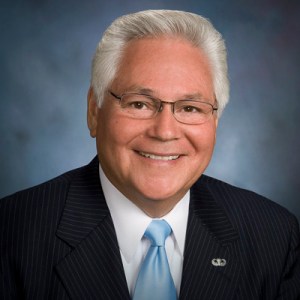
Bill Author
Bill Co-Author(s):