SB 67: Controlled substances: overdose reporting.
- Session Year: 2023-2024
- House: Senate
- Latest Version Date: 2023-10-13
Current Status:
Passed
(2023-10-13: Chaptered by Secretary of State. Chapter 859, Statutes of 2023.)
Introduced
In Committee
First Chamber
In Committee
Second Chamber
Enacted
What does this bill do?
Coroners and medical examiners who determine a death involved an overdose must report the case to the Overdose Detection Mapping Application Program run by the Washington/Baltimore High Intensity Drug Trafficking Area. They must report promptly and may file a preliminary report if toxicology is pending, then update it when the cause is confirmed. Reported overdose data cannot be used in criminal investigations or prosecutions, and people who report in good faith are protected from lawsuits and criminal charges; the Legislature says the data should guide how public health and education resources are allocated.
The summary is provided by generative AI which can make mistakes. For original language, please view the details in the table below.
Existing law requires the coroner to inquire into and determine the manner, circumstances, and cause of all violent, sudden, or unusual deaths. Existing law authorizes a county board of supervisors, by ordinance, to abolish the office of coroner and provide instead for the office of medical examiner, to be appointed by the board and to exercise the powers and perform the duties of the coroner.
This bill would require a coroner or medical examiner who evaluates an individual who died, in the coroner or medical examiners expert opinion, as the result of an overdose to report the data gathered pursuant to the bill to the Overdose Detection Mapping Application Program managed by the Washington/Baltimore High Intensity Drug Trafficking Area program. By imposing new duties on coroners and medical examiners, this bill would impose a state-mandated local program.
The bill would exempt a coroner or medical examiner from civil or criminal liability for making a report in good faith.
The California Constitution provides for the Right to Truth-in-Evidence, which requires a 2/3 vote of the Legislature to exclude any relevant evidence from any criminal proceeding, as specified.
This bill would prohibit overdose information reported by a coroner or medical examiner from being used in a criminal investigation or prosecution, thereby requiring a 2/3 vote.
The California Constitution requires the state to reimburse local agencies and school districts for certain costs mandated by the state. Statutory provisions establish procedures for making that reimbursement.
This bill would provide that, if the Commission on State Mandates determines that the bill contains costs mandated by the state, reimbursement for those costs shall be made pursuant to the statutory provisions noted above.
Existing law requires the coroner to inquire into and determine the manner, circumstances, and cause of all violent, sudden, or unusual deaths. Existing law authorizes a county board of supervisors, by ordinance, to abolish the office of coroner and provide instead for the office of medical examiner, to be appointed by the board and to exercise the powers and perform the duties of the coroner.
This bill would require a coroner or medical examiner who evaluates an individual who died, in the coroner or medical examiners expert opinion, as the result of an overdose to report the data gathered pursuant to the bill to the Overdose Detection Mapping Application Program. Program managed by the Washington/Baltimore High Intensity Drug Trafficking Area program. By imposing new duties on local officers, coroners and medical examiners, this bill would impose a state-mandated local program.
The bill would exempt all the above reporters a coroner or medical examiner from civil or criminal liability for making a report in good faith.
Existing law establishes the State Department of Public Health, within the California Health and Human Services Agency, and vests the department with certain duties, powers, functions, jurisdiction, and responsibilities over specified public health programs.This bill would require, on or before January 1, 2025, the department to report the overdose information reported to the Overdose Detection Mapping Application Program pursuant to this bill, as specified, to the Senate and Assembly Health committees.The California Constitution provides for the Right to Truth-in-Evidence, which requires a 2/3 vote of the Legislature to exclude any relevant evidence from any criminal proceeding, as specified.
This bill would prohibit overdose information reported by an emergency medical services provider or the authority a coroner or medical examiner from being used in a criminal investigation or prosecution, thereby requiring a 2/3 vote.
The California Constitution requires the state to reimburse local agencies and school districts for certain costs mandated by the state. Statutory provisions establish procedures for making that reimbursement.
This bill would provide that, if the Commission on State Mandates determines that the bill contains costs mandated by the state, reimbursement for those costs shall be made pursuant to the statutory provisions noted above.
Existing law establishes the Emergency Medical Services Authority, within the California Health and Human Services Agency, for purposes including the assessment, coordination, and improvement of the states emergency medical services system.
This bill would require an emergency medical services provider who treats and releases or transports an individual to a medical facility who is experiencing a suspected or an actual overdose to report the incident to the authority. The bill requires the authority to report the data gathered pursuant to the bill to the Overdose Detection Mapping Application Program managed by the Washington/Baltimore High Intensity Drug Trafficking Area program.
Existing law requires the coroner to inquire into and determine the manner, circumstances, and cause of all violent, sudden, or unusual deaths. Existing law authorizes a county board of supervisors, by ordinance, to abolish the office of coroner and provide instead for the office of medical examiner, to be appointed by the board and to exercise the powers and perform the duties of the coroner.
This bill would require a peace officer who treats and releases or transports an individual to a medical facility who is experiencing a suspected or an actual overdose, or a coroner or medical examiner who evaluates an individual who died, in the coroner or medical examiners expert opinion, as the result of an overdose to report the data gathered pursuant to the bill to the Overdose Detection Mapping Application Program. By imposing new duties on local officers, this bill would impose a state-mandated local program.
The bill would exempt all the above reporters from civil or criminal liability for making a report in good faith.
Existing law establishes the State Department of Public Health, within the California Health and Human Services Agency, and vests the department with certain duties, powers, functions, jurisdiction, and responsibilities over specified public health programs.
This bill would require, on or before January 1, 2025, the department to report the overdose information reported to the Overdose Detection Mapping Application Program pursuant to this bill, as specified, to the Senate and Assembly Health committees.
The California Constitution provides for the Right to Truth-in-Evidence, which requires a 2/3 vote of the Legislature to exclude any relevant evidence from any criminal proceeding, as specified.
This bill would prohibit overdose information reported by an emergency medical services provider or the authority from being used in a criminal investigation or prosecution, thereby requiring a 2/3 vote.
The California Constitution requires the state to reimburse local agencies and school districts for certain costs mandated by the state. Statutory provisions establish procedures for making that reimbursement.
This bill would provide that, if the Commission on State Mandates determines that the bill contains costs mandated by the state, reimbursement for those costs shall be made pursuant to the statutory provisions noted above.
Existing law establishes the Emergency Medical Services Authority, within the California Health and Human Services Agency, for purposes including the assessment, coordination, and improvement of the states emergency medical services system.
This bill would require an emergency medical services provider who treats and releases or transports an individual to a medical facility who is experiencing a suspected or an actual overdose to report the incident to the authority. The bill requires the authority to report the data gathered pursuant to the bill to the Overdose Detection Mapping Application Program managed by the Washington/Baltimore High Intensity Drug Trafficking Area program.
Existing law requires the coroner to inquire into and determine the manner, circumstances, and cause of all violent, sudden, or unusual deaths. Existing law authorizes a county board of supervisors, by ordinance, to abolish the office of coroner and provide instead for the office of medical examiner, to be appointed by the board and to exercise the powers and perform the duties of the coroner.
This bill would require a peace officer who treats and releases or transports an individual to a medical facility who is experiencing a suspected or an actual overdose, or a coroner or medical examiner who evaluates an individual who died, in the coroner or medical examiners expert opinion, as the result of an overdose to report the data gathered pursuant to the bill to the Overdose Detection Mapping Application Program. By imposing new duties on local officers, this bill would impose a state-mandated local program.
The bill would exempt all the above reporters from civil or criminal liability for making a report in good faith.
Existing law establishes the State Department of Public Health, within the California Health and Human Services Agency, and vests the department with certain duties, powers, functions, jurisdiction, and responsibilities over specified public health programs.
This bill would require, on or before January 1, 2025, the department to report the overdose information reported to the Overdose Detection Mapping Application Program pursuant to this bill, as specified, to the Senate and Assembly Health committees.
The California Constitution provides for the Right to Truth-in-Evidence, which requires a2/3 vote of the Legislature to exclude any relevant evidence from any criminal proceeding, as specified.
This bill would prohibit overdose information reported by an emergency medical services provider or the authority from being used in a criminal investigation or prosecution, thereby requiring a2/3 vote.
The California Constitution requires the state to reimburse local agencies and school districts for certain costs mandated by the state. Statutory provisions establish procedures for making that reimbursement.
This bill would provide that, if the Commission on State Mandates determines that the bill contains costs mandated by the state, reimbursement for those costs shall be made pursuant to the statutory provisions noted above.
It is the intent of the Legislature that the overdose information gathered pursuant to this chapter shall be used for the purpose of making decisions regarding the allocation of public health and educational resources to communities adversely impacted by the use of drugs that lead to overdoses.
SEC. 2.Section 11758.03 of the Health and Safety Code is amended to read:11758.03.For purposes of this chapter, the following terms have the following meanings:
(a)Coroner means a person whose responsibilities include those described in Chapter 10 (commencing with Section 27460) of Part 3 of Division 2 of Title 3 of the Government Code.
(b)Department means the State Department of Public Health.
(c)Medical examiner means a person who exercises the powers and performs the duties of a coroner, as provided for in Section 24010 of the Government Code.
(d)Overdose means a condition, including extreme physical illness, decreased level of consciousness, respiratory depression, coma, or death, resulting from the consumption or use of any controlled dangerous substance that requires medical attention, assistance, or treatment, and clinical suspicion for drug overdose, including respiratory depression, unconsciousness, or altered mental state, without other conditions to explain the clinical condition.
SEC. 3.Section 11758.04 is added to the Health and Safety Code, to read:11758.04.(a)A coroner or medical examiner who evaluates an individual who died, in the coroner or medical examiners expert opinion, as the result of an overdose as a contributing factor, shall report the incident to the Overdose Detection Mapping Application Program managed by the Washington/Baltimore High Intensity Drug Trafficking Area program.
(b)The coroner or medical examiner shall make the report as soon as possible, but not later than 120 hours after examining the individual. If the cause of death is still preliminary and pending toxicology screens, the coroner or medical examiner shall report the overdose as a preliminary report, and shall update the report when the cause of death is confirmed.
(c)Overdose information reported to the Overdose Detection Mapping Application Program by a coroner or medical examiner, or shared with the Overdose Detection Mapping Application Program by the Emergency Medical Services Authority, shall not be used for a criminal investigation or prosecution.
(d)A person who in good faith makes a report under this section shall be immune from civil or criminal liability for making the report.
SEC. 4.Section 11758.06 of the Health and Safety Code is repealed.SEC. 5.If the Commission on State Mandates determines that this act contains costs mandated by the state, reimbursement to local agencies and school districts for those costs shall be made pursuant to Part 7 (commencing with Section 17500) of Division 4 of Title 2 of the Government Code.
It is the intent of the Legislature that the overdose information gathered pursuant to this chapter be used for the purpose of making decisions regarding the allocation of public health and educational resources to communities adversely impacted by the use of drugs that lead to overdoses.
SEC. 2.Section 11758.03 of the Health and Safety Code is amended to read:11758.03.For purposes of this chapter, the following terms have the following meanings:
(a)Coroner means a person whose responsibilities include those described in Chapter 10 (commencing with Section 27460) of Part 3 of Division 2 of Title 3 of the Government Code.
(b)Department means the State Department of Public Health.
(c)Medical examiner means a person who exercises the powers and performs the duties of a coroner, as provided for in Section 24010 of the Government Code.
(d)Overdose means a condition, including extreme physical illness, decreased level of consciousness, respiratory depression, coma, or death, resulting from the consumption or use of any controlled dangerous substance that requires medical attention, assistance, or treatment, and clinical suspicion for drug overdose, including respiratory depression, unconsciousness, or altered mental state, without other conditions to explain the clinical condition.
SEC. 3.Section 11758.04 is added to the Health and Safety Code, to read:11758.04.(a)A coroner or medical examiner who evaluates an individual who died, in the coroner or medical examiners expert opinion, as the result of an overdose as a contributing factor, shall report the incident to the Overdose Detection Mapping Application Program managed by the Washington/Baltimore High Intensity Drug Trafficking Area program.
(b)The coroner or medical examiner shall make the report as soon as possible, but not later than 72 120 hours after examining the individual. If the cause of death is still preliminary and pending toxicology screens, the coroner or medical examiner shall report the overdose as a preliminary report, and shall update the report when the cause of death is confirmed.
(c)Overdose information reported to the Overdose Detection Mapping Application Program by a coroner or medical examiner, or shared with the Overdose Detection Mapping Application Program by the Emergency Medical Services Authority, shall not be used for a criminal investigation or prosecution.
(d)A person who in good faith makes a report under this section shall be immune from civil or criminal liability for making the report.
SEC. 4.Section 11758.06 of the Health and Safety Code is repealed.SEC. 5.If the Commission on State Mandates determines that this act contains costs mandated by the state, reimbursement to local agencies and school districts for those costs shall be made pursuant to Part 7 (commencing with Section 17500) of Division 4 of Title 2 of the Government Code.
It is the intent of the Legislature that the overdose information gathered pursuant to this chapter be used for the purpose of making decisions regarding the allocation of public health and educational resources to communities adversely impacted by the use of drugs that lead to overdoses.
SEC. 2.Section 11758.03 of the Health and Safety Code is amended to read:11758.03.(a)Department For purposes of this chapter, the following terms have the following meanings:
(a)Coroner means a person whose responsibilities include those described in Chapter 10 (commencing with Section 27460) of Part 3 of Division 2 of Title 3 of the Government Code.
(b)Department means the State Department of Public Health.
(b)Authority means the Emergency Medical Services Authority.(c)Emergency medical services provider means a person employed by a local EMS agency or its designee, as described by Chapter 4 (commencing with Section 1797.200) of Division 2.5 of the Healthy and Safety Code, to provide prehospital emergency medical services, transportation, or both.(d)Coroner means a person whose responsibilities include those described in Chapter 10 (commencing with Section 27460) of Part 3 of Division 2 of Title 3 of the Government Code.(e)(c)Medical examiner means a person who exercises the powers and performs the duties of a coroner, as provided for in Section 24010 of the Government Code.
(f)(d)Overdose means a condition, including extreme physical illness, decreased level of consciousness, respiratory depression, coma, or death, resulting from the consumption or use of any controlled dangerous substance that requires medical attention, assistance, or treatment, and clinical suspicion for drug overdose, including respiratory depression, unconsciousness, or altered mental state, without other conditions to explain the clinical condition.
SEC. 3.Section 11758.04 is added to the Health and Safety Code, to read:11758.04.(a)(1)An emergency medical services provider who treats and releases an individual or transports an individual to a medical facility who is experiencing a suspected or an actual overdose shall report the incident to the authority.(2)11758.04.(a)A coroner or medical examiner who evaluates an individual who died, in the coroner or medical examiners expert opinion, as the result of an overdose as a contributing factor, shall report the incident to the Overdose Detection Mapping Application Program managed by the Washington/Baltimore High Intensity Drug Trafficking Area program.
(b)A report of an overdose made under this section shall include the following:(1)The date and time of the overdose.(2)The approximate address where the overdose victim was initially encountered or where the overdose occurred.(3)Whether an opioid overdose reversal drug was administered.(4)Whether the overdose was fatal or nonfatal.(c)If a person reports an overdose under this section, the person making the report(b)The coroner or medical examiner shall make the report as soon as possible, but not later than 72 hours after evaluating, transporting, or providing services to examining the individual. If the cause of death is still preliminary and pending toxicology screens, the coroner or medical examiner shall report the overdose as a preliminary report, and shall update the report when the cause of death is confirmed.
(d) The authority shall submit data gathered pursuant to this section to the Overdose Detection Mapping Application Program.(e)(c)Overdose information reported by an emergency medical services provider under paragraph (1) of subdivision (a) or by the authority under subdivision (d) to the Overdose Detection Mapping Application Program by a coroner or medical examiner, or shared with the Overdose Detection Mapping Application Program by the Emergency Medical Services Authority, shall not be used for a criminal investigation or prosecution.
(f)(d)A person who in good faith makes a report under this section shall be immune from civil or criminal liability for making the report.
SEC. 4.Section 11758.05 is added to the Health and Safety Code, to read:11758.05.(a)On or before January 1, 2025, the department shall provide a report to the Senate Committee on Health and the Assembly Committee on Health regarding the reporting of overdose information to the Overdose Detection Mapping Application Program as required under Section 11758.04.(b)The report required under subdivision (a) of this section shall include information regarding:(1)The number of overdoses reported and the approximate locations where the overdoses occurred, including any clusters of overdoses.(2)Who made the reports.(3)How the reports were used for public health and public safety responses, the outcomes of the public health and public safety interventions, and the impact on affected communities.(c)(1)A report to be submitted pursuant to subdivision (a) shall be submitted in compliance with Section 9795 of the Government Code.(2)Pursuant to Section 10231.5 of the Government Code, this section is repealed on January 1, 2029.SEC. 5.SEC. 4.Section 11758.06 of the Health and Safety Code is repealed.SEC. 6.SEC. 5.If the Commission on State Mandates determines that this act contains costs mandated by the state, reimbursement to local agencies and school districts for those costs shall be made pursuant to Part 7 (commencing with Section 17500) of Division 4 of Title 2 of the Government Code.
It is the intent of the Legislature that the overdose information gathered pursuant to this chapter be used for the purpose of making decisions regarding the allocation of public health and educational resources to communities adversely impacted by the use of drugs that lead to overdoses.
SEC. 2.Section 11758.03 of the Health and Safety Code is amended to read:11758.03.(a)Department means the State Department of Public Health.
(b)Authority means the Emergency Medical Services Authority.
(c)Emergency medical services provider means a person employed by a local EMS agency or its designee, as described by Chapter 4 (commencing with Section 1797.200) of Division 2.5 of the Healthy and Safety Code, to provide prehospital emergency medical services, transportation, or both.
(d)Peace officer means a person defined in Chapter 4.5 (commencing with Section 830) of Title 3 of Part 2 of the Penal Code.(e)
(d)Coroner means a person whose responsibilities include those described in Chapter 10 (commencing with Section 27460) of Part 3 of Division 2 of Title 3 of the Government Code.
(f)
(e)Medical examiner means a person who exercises the powers and performs the duties of a coroner, as provided for in Section 24010 of the Government Code.
(g)
(f)Overdose means a condition, including extreme physical illness, decreased level of consciousness, respiratory depression, coma, or death, resulting from the consumption or use of any controlled dangerous substance that requires medical attention, assistance, or treatment, and clinical suspicion for drug overdose, including respiratory depression, unconsciousness, or altered mental state, without other conditions to explain the clinical condition.
SEC. 3.Section 11758.04 is added to the Health and Safety Code, to read:11758.04.(a)(1)An emergency medical services provider who treats and releases an individual or transports an individual to a medical facility who is experiencing a suspected or an actual overdose shall report the incident to the authority.
(2)Any of the following persons, when dealing with an individual experiencing a suspected or an actual overdose, shall report the incident to the Overdose Detection Mapping Application Program managed by the Washington/Baltimore High Intensity Drug Trafficking Area program:(A)A peace officer who treats and releases the individual or transports the individual to a medical facility.(B)A coroner or medical examiner who evaluates an individual who died, in the coroner or medical examiners expert opinion, as the result of an overdose as a contributing factor.(2)A coroner or medical examiner who evaluates an individual who died, in the coroner or medical examiners expert opinion, as the result of an overdose as a contributing factor, shall report the incident to the Overdose Detection Mapping Application Program managed by the Washington/Baltimore High Intensity Drug Trafficking Area program.
(b)A report of an overdose made under this section shall include the following:
(1)The date and time of the overdose.
(2)The approximate address where the overdose victim was initially encountered or where the overdose occurred.
(3)Whether an opioid overdose reversal drug was administered.
(4)Whether the overdose was fatal or nonfatal.
(c)If a person reports an overdose under this section, the person making the report shall make the report as soon as possible, but not later than 72 hours after evaluating, transporting, or providing services to the individual.
(d)The authority shall submit data gathered pursuant to this section to the Overdose Detection Mapping Application Program.
(e)Overdose information reported by an emergency medical services provider under paragraph (1) of subdivision (a) or by the authority under subdivision (d) shall not be used for a criminal investigation or prosecution.
(f)A person who in good faith makes a report under this section shall be immune from civil or criminal liability for making the report.
SEC. 4.Section 11758.05 is added to the Health and Safety Code, to read:11758.05.(a)On or before January 1, 2025, the department shall provide a report to the Senate Committee on Health and the Assembly Committee on Health regarding the reporting of overdose information to the Overdose Detection Mapping Application Program as required under Section 11758.04.
(b)The report required under subdivision (a) of this section shall include information regarding:
(1)The number of overdoses reported and the approximate locations where the overdoses occurred, including any clusters of overdoses.
(2)Who made the reports.
(3)How the reports were used for public health and public safety responses, the outcomes of the public health and public safety interventions, and the impact on affected communities.
(c)(1)A report to be submitted pursuant to subdivision (a) shall be submitted in compliance with Section 9795 of the Government Code.
(2)Pursuant to Section 10231.5 of the Government Code, this section is repealed on January 1, 2029.
SEC. 5.Section 11758.06 of the Health and Safety Code is repealed.SEC. 6.If the Commission on State Mandates determines that this act contains costs mandated by the state, reimbursement to local agencies and school districts for those costs shall be made pursuant to Part 7 (commencing with Section 17500) of Division 4 of Title 2 of the Government Code.
It is the intent of the Legislature that the overdose information gathered pursuant to this chapter be used for the purpose of making decisions regarding the allocation of public health and educational resources to communities adversely impacted by the use of drugs that lead to overdoses.
SEC. 2.Section 11758.03 of the Health and Safety Code is amended to read:11758.03.(a)Department means the State Department of Health Care Services. Public Health.
(b)Authority means the Emergency Medical Services Authority.
(c)Emergency medical services provider means a person employed by a local EMS agency or its designee, as described by Chapter 4 (commencing with Section 1797.200) of Division 2.5 of the Healthy and Safety Code, to provide prehospital emergency medical services, transportation, or both.
(d)Peace officer means a person defined in Chapter 4.5 (commencing with Section 830) of Title 3 of Part 2 of the Penal Code.
(e)Coroner means a person whose responsibilities include those described in Chapter 10 (commencing with Section 27460) of Part 3 of Division 2 of Title 3 of the Government Code.
(f)Medical examiner means a person who exercises the powers and performs the duties of a coroner, as provided for in Section 24010 of the Government Code.
(g)Overdose means a condition, including extreme physical illness, decreased level of consciousness, respiratory depression, coma, or death, resulting from the consumption or use of any controlled dangerous substance that requires medical attention, assistance, or treatment, and clinical suspicion for drug overdose, including respiratory depression, unconsciousness, or altered mental state, without other conditions to explain the clinical condition.
SEC. 3.Section 11758.04 is added to the Health and Safety Code, to read:11758.04.(a)(1)An emergency medical services provider who treats and releases an individual or transports an individual to a medical facility who is experiencing a suspected or an actual overdose shall report the incident to the authority.
(2)Any of the following persons, when dealing with an individual experiencing a suspected or an actual overdose, shall report the incident to the Overdose Detection Mapping Application Program managed by the Washington/Baltimore High Intensity Drug Trafficking Area program:
(A)A peace officer who treats and releases the individual or transports the individual to a medical facility.
(B)A coroner or medical examiner who evaluates an individual who died, in the coroner or medical examiners expert opinion, as the result of an overdose as a contributing factor.
(b)A report of an overdose made under this section shall include the following:
(1)The date and time of the overdose.
(2)The approximate address where the overdose victim was initially encountered or where the overdose occurred.
(3)Whether an opioid overdose reversal drug was administered.
(4)Whether the overdose was fatal or nonfatal.
(c)If a person reports an overdose under this section, the person making the report shall make the report as soon as possible, but not later than 72 hours after evaluating, transporting, or providing services to the individual.
(d)The authority shall submit data gathered pursuant to this section to the Overdose Detection Mapping Application Program.
(e)Overdose information reported by an emergency medical services provider under paragraph (1) of subdivision (a) or by the authority under subdivision (d) shall not be used for a criminal investigation or prosecution.
(f)A person who in good faith makes a report under this section shall be immune from civil or criminal liability for making the report.
SEC. 4.Section 11758.05 is added to the Health and Safety Code, to read:11758.05.(a)On or before January 1, 2025, the department shall provide a report to the Senate Committee on Health and the Assembly Committee on Health regarding the reporting of overdose information to the Overdose Detection Mapping Application Program as required under Section 11758.04.
(b)The report required under subdivision (a) of this section shall include information regarding:
(1)The number of overdoses reported and the approximate locations where the overdoses occurred, including any clusters of overdoses.
(2)Who made the reports.
(3)How the reports were used for public health and public safety responses, the outcomes of the public health and public safety interventions, and the impact on affected communities.
(c)(1)A report to be submitted pursuant to subdivision (a) shall be submitted in compliance with Section 9795 of the Government Code.
(2)Pursuant to Section 10231.5 of the Government Code, this section is repealed on January 1, 2029.
SEC. 5.Section 11758.06 of the Health and Safety Code is repealed.11758.06.(a)On or before July 1, 2004, and on or before January 1, 2009, as specified in subdivision (c), the department shall place on its Internet Web site information on drug overdose trends in California, including county and state death rates, from existing data, in order to ascertain changes in the causes or rates of fatal and nonfatal drug overdoses for the preceding five years.(b)The information required by subdivision (a) shall include, to the extent available, data on all of the following:(1)Trends in drug overdose death rates by county or city, or both.(2)Suggested improvements in data collection.(3)A description of interventions that may be effective in reducing the rate of fatal or nonfatal drug overdoses.(c)The information required by subdivision (a) to be placed on the departments Internet Web site shall remain on the Internet Web site for a period of not less than six months. The department shall update the information required pursuant to subdivision (a) and shall place the updated information on the Internet Web site on or before January 1, 2009, for a period of not less than six months.(d)This section shall become inoperative on July 1, 2013.SEC. 6.If the Commission on State Mandates determines that this act contains costs mandated by the state, reimbursement to local agencies and school districts for those costs shall be made pursuant to Part 7 (commencing with Section 17500) of Division 4 of Title 2 of the Government Code.
|
Date
|
Status
|
|---|---|
| Oct 13, 2023 | Chaptered by Secretary of State. Chapter 859, Statutes of 2023. |
| Oct 13, 2023 | Approved by the Governor. |
| Sep 20, 2023 | Enrolled and presented to the Governor at 4:30 p.m. |
| Sep 13, 2023 | Assembly amendments concurred in. (Ayes 39. Noes 0. Page 2733.) Ordered to engrossing and enrolling. |
| Sep 11, 2023 | In Senate. Concurrence in Assembly amendments pending. |
| Sep 11, 2023 | Read third time. Passed. (Ayes 80. Noes 0. Page 3151.) Ordered to the Senate. |
| Sep 7, 2023 | Assembly Rule 69 suspended. (Ayes 62. Noes 15. Page 3010.) |
| Sep 7, 2023 | Ordered to third reading. |
| Sep 7, 2023 | Read third time and amended. |
| Sep 6, 2023 | Read third time and amended. |
| Sep 6, 2023 | Ordered to third reading. |
| Sep 5, 2023 | Read second time. Ordered to third reading. |
| Sep 1, 2023 | From committee: Do pass. (Ayes 16. Noes 0.) (September 1). |
| Aug 16, 2023 | August 16 set for first hearing. Placed on suspense file. |
| Jul 12, 2023 | From committee: Do pass and re-refer to Com. on APPR. with recommendation: To consent calendar. (Ayes 15. Noes 0.) (July 11). Re-referred to Com. on APPR. |
| Jun 28, 2023 | From committee: Do pass and re-refer to Com. on HEALTH with recommendation: To consent calendar. (Ayes 8. Noes 0.) (June 27). Re-referred to Com. on HEALTH. |
| Jun 8, 2023 | Referred to Coms. on PUB. S. and HEALTH. |
| May 25, 2023 | In Assembly. Read first time. Held at Desk. |
| May 25, 2023 | Read third time. Passed. (Ayes 40. Noes 0. Page 1296.) Ordered to the Assembly. |
| May 23, 2023 | Ordered to special consent calendar. |
| May 18, 2023 | Read second time. Ordered to third reading. |
| May 18, 2023 | From committee: Do pass. (Ayes 7. Noes 0. Page 1159.) (May 18). |
| May 12, 2023 | Set for hearing May 18. |
| May 8, 2023 | May 8 hearing: Placed on APPR suspense file. |
| May 1, 2023 | Set for hearing May 8. |
| Apr 25, 2023 | Re-referred to Com. on APPR. |
| Apr 25, 2023 | Withdrawn from committee. |
| Apr 24, 2023 | Read second time and amended. Re-referred to Com. on PUB S. |
| Apr 20, 2023 | From committee: Do pass as amended and re-refer to Com. on PUB S. (Ayes 11. Noes 0. Page 831.) (April 19). |
| Apr 13, 2023 | Set for hearing April 19. |
| Apr 12, 2023 | April 12 set for first hearing canceled at the request of author. |
| Mar 28, 2023 | Set for hearing April 12. |
| Feb 13, 2023 | From committee with author's amendments. Read second time and amended. Re-referred to Com. on HEALTH. |
| Jan 18, 2023 | Referred to Coms. on HEALTH and PUB S. |
| Jan 6, 2023 | From printer. May be acted upon on or after February 5. |
| Jan 5, 2023 | Introduced. Read first time. To Com. on RLS. for assignment. To print. |
|
Date
|
Description
|
Location
|
Votes
|
|
|---|---|---|---|---|
| Sep 13, 2023 | Unfinished Business SB67 Seyarto et al. Concurrence | Senate Floor |
Passed |
|
| Sep 11, 2023 | SB 67 Seyarto Senate Third Reading By Waldron | Assembly Floor |
Passed |
|
| Sep 1, 2023 | Do pass. | Assembly Standing Committee on Appropriations |
Passed |
|
| Jul 11, 2023 | Do pass and be re-referred to the Committee on [Appropriations] with recommendation: To Consent Calendar | Assembly Standing Committee on Health |
Passed |
|
| Jun 27, 2023 | Do pass and be re-referred to the Committee on [Health] with recommendation: To Consent Calendar | Assembly Standing Committee on Public Safety |
Passed |
|
| May 25, 2023 | Special Consent SB67 Seyarto | Senate Floor |
Passed |
|
| May 18, 2023 | Do pass | Senate Standing Committee on Appropriations |
Passed |
|
| May 8, 2023 | Placed on suspense file | Senate Standing Committee on Appropriations |
Passed |
|
| Apr 19, 2023 | Do pass as amended, but first amend, and re-refer to the Committee on [Public Safety] | Senate Standing Committee on Health |
Passed |
This list shows positions taken on this bill by organizations on the date displayed, which is linked to the original source.
Positions by individuals are not included.
|
Organization
|
Position
|
Date
|
|---|---|---|
| ARCADIA POLICE OFFICERS ASSOCIATION | ** Support | |
| Burbank Police Officers Association | ** Support | |
| California Chapter of the American College of Emergency Physicians | * Support | Apr 19, 2023 |
| California Coalition of School Safety Professionals | ** Support | |
| California Police Chiefs Association | ** Support | |
| California Reserve Peace Officers Association | ** Support | |
| Chino Valley Chamber of Commerce | ** Support | |
| CLAREMONT POLICE OFFICERS ASSOCIATION | ** Support | |
| Corona Police Officers Association | ** Support | |
| County of Fresno | ** Support | |
| Culver City Police Officers' Association | ** Support | |
| Deputy Sheriffs Association of Monterey County | ** Support | |
| Drug Induced Homicide | ** Support | |
| Fullerton Police Officers' Association | ** Support | |
| los angeles school police officers association | ** Support | |
| Mothers Against Prescription Drug Abuse | ** Support | |
| Murrieta Police Officers' Association | ** Support | |
| Newport Beach Police Association | ** Support | |
| Novato Police Officers Association | ** Support | |
| Oakland Privacy | ** Against | |
| Pain Parents & Addicts in Need | ** Support | |
| Palos Verdes Police Officers Association | ** Support | |
| Parents & Addicts in Need | ** Support | |
| PLACER COUNTY DEPUTY SHERIFFS ASSOCIATION | ** Support | |
| Pomona Police Officers' Association | ** Support | |
| Riverside County Sheriff’s Office | ** Support | |
| RIVERSIDE POLICE OFFICERS ASSOCIATION | ** Support | |
| Riverside Sheriffs' Association | ** Support | |
| Santa Ana Police Officers Association | ** Support | |
| Shasta Substance Use Coalition | ** Support | |
| The Central Valley, California's High Intensity Drug Trafficking Area | * Support | Apr 19, 2023 |
| Upland Police Officers Association | ** Support |
SENATE RULES COMMITTEE Office of Senate Floor Analyses (916) 651-1520 Fax: (916) 327-4478 | SB 67 |
UNFINISHED BUSINESS
Bill No: SB 67
Author: Seyarto (R), et al.
Amended: 9/7/23
Vote: 27
SENATE HEALTH COMMITTEE: 11-0, 4/19/23
AYES: Eggman, Nguyen, Dahle, Glazer, Gonzalez, Limón, Menjivar, Roth, Rubio, Wahab, Wiener
NO VOTE RECORDED: Hurtado
SENATE APPROPRIATIONS COMMITTEE: 7-0, 5/18/23
AYES: Portantino, Jones, Ashby, Bradford, Seyarto, Wahab, Wiener
SENATE FLOOR: 40-0, 5/25/23
AYES: Allen, Alvarado-Gil, Archuleta, Ashby, Atkins, Becker, Blakespear, Bradford, Caballero, Cortese, Dahle, Dodd, Durazo, Eggman, Glazer, Gonzalez, Grove, Hurtado, Jones, Laird, Limón, McGuire, Menjivar, Min, Newman, Nguyen, Niello, Ochoa Bogh, Padilla, Portantino, Roth, Rubio, Seyarto, Skinner, Smallwood-Cuevas, Stern, Umberg, Wahab, Wiener, Wilk
ASSEMBLY FLOOR: 80-0, 9/11/23 - See last page for vote
SUBJECT: Controlled substances: overdose reporting
SOURCE: Author
DIGEST:
This bill requires a coroner or medical examiner to report deaths that are a result of a drug overdose to the Overdose Detection Mapping Application Program managed by the Washington/Baltimore High Intensity Drug Trafficking Area program.
Assembly Amendments
revise the requirement that a coroner or medical examiner report overdose incidents from no later than 72 hours after examining the individual, to instead be no later than 120 days after examining the individual.
ANALYSIS:
Existing law:
- Establishes the Emergency Medical Services System and the Prehospital Emergency Medical Care Personnel Act (EMS Act) to provide for a statewide system for emergency medical services (EMS), and establishes the Emergency Medical Services Authority (EMSA), which is responsible for the coordination and integration of state activities concerning EMS, including the establishment of minimum standards, policies, and procedures. [HSC §1797, et seq.]
- Requires EMSA, utilizing regional and local information, to assess each EMS area or the system’s service area for the purpose of determining the need for additional emergency services, and the coordination and effectiveness of EMS. Requires EMSA to develop planning and implementation guidelines for EMS systems which address specified components, including communications, system organization and management, and data collection and evaluation. [HSC §1797.102 and §1797.103]
- Authorizes counties to develop an EMS program and designate a local EMS agency (LEMSA) responsible for planning and implementing an EMS system, which includes day-to-day EMS system operations. [HSC §1797.200, et seq.]
- Requires an EMS provider to do both of the following when collecting and submitting data to a LEMSA: a) use an electronic health record system that exports data in a format that is compliance with the current versions of the California Emergency Medical Services Information System (CEMSIS) and the National Emergency Medical Services Information System (NEMSIS) standards; and b) ensure that the electronic health record system can be integrated with the LEMSA’s data system. [HSC §1797.227]
- Requires the Attorney General to encourage research on misuse and abuse of controlled substances, and in connection with the research, among other things, to authorize hospital and trauma centers to share information with local law enforcement agencies, EMSA, and LEMSAs about controlled substance overdose trends. Requires the information provided by hospitals and trauma centers to only include the number of overdoses and the substances suspected as the primary cause of the overdose, and requires any information to be shared in a manner that ensures complete patient confidentiality. [HSC §11601]
- Requires a county coroner to inquire into and determine the circumstances, manner, and cause of certain deaths, including all violent, sudden, or unusual deaths, and deaths due to drug addiction, among other types of deaths. [GOV §27491]
- Permits a county Board of Supervisors to abolish the office of coroner and provide instead for the office of medical examiner, as specified, and requires the medical examiner to be a licensed physician and surgeon duly qualified as a specialist in pathology. [GOV §24010]
This bill:
- Requires a coroner or medical examiner who evaluates an individual who died, in the coroner or medical examiner’s expert opinion, as the result of an overdose as a contributing factor, to report the incident to ODMAP managed by the Washington/Baltimore High Intensity Drug Trafficking Area program.
- Defines, for purposes of this bill, “Overdose” as a condition, including extreme physical illness, decreased level of consciousness, respiratory depression, coma, or death, resulting from the consumption or use of any controlled dangerous substance that requires medical attention, assistance, or treatment, and clinic suspicion for drug overdose, including respiratory depression, unconsciousness, or altered mental state, without other conditions to explain the clinical condition.
- Requires the coroner or medical examiner to make the overdose report as soon as possible, but no later than 120 hours after examining the individual. Requires, if the cause of death is still preliminary and pending toxicology screens, the coroner or medical examiner to report the overdose as a preliminary report, and to update the report when the cause of death is confirmed.
- Prohibits overdose information reported to ODMAP by a coroner or medical examiner, or shared with ODMAP by EMSA, from being used for a criminal investigation or prosecution.
- Provides immunity from civil or criminal liability to persons who in good faith make a report under this bill.
- States the intent of the Legislature that the overdose information gathered pursuant to this bill be used for the purpose of making decisions regarding the allocation of public health and educational resources to communities adversely impacted by the use of drugs that lead to overdoses.
Comments
- Author’s statement. According to the author, Californians are falling victim to drug dealers who prey on the potency and availability of illicit drugs and opioids, like fentanyl. While each state, local, and federal departments uses its own program to track and report overdose incidents, currently, there is no uniform sharing of overdoses that include emergency medical services agencies, coroners, and fire departments. Limited to only authorized personnel and eliminating all personal identifiable information, ODMAP provides an essential tool for first responders on the frontlines of the opioid epidemic to effectively track and address live patterns of overdoses.
- Background on EMS. While EMSA is the lead agency and centralized resource to oversee emergency and disaster medical services, day-to-day EMS system management is the responsibility of the local and regional EMS agencies. California has 34 local EMS agency systems that provide EMS for California's 58 counties. Regional systems are usually comprised of small, more rural, less-populated counties and single-county systems generally exist in the larger and more urban counties. The EMS Act comprehensively regulates emergency medical care in California. Enacted in 1980, the EMS Act provides for the creation of emergency medical procedures and protocols, certification of emergency medical personnel, and coordination of emergency responses by fire departments, ambulance services, hospitals, specialty care centers, and other providers within the local EMS system.
- NEMSIS and CEMSIS. NEMSIS was formed in 2001 by the National Association of State EMS Directors, in conjunction with the National Highway Traffic Safety Administration and the Trauma/EMS Systems program of the Health Resources and Services Administration’s Maternal Child Health Bureau, in order to develop a national EMS database. NEMSIS is the national repository that is used to store EMS data from every state in the nation, and was developed to help states collect more standardized elements to allow submission to the national database.
According to EMSA, CEMSIS is a demonstration project for improving EMS data analysis across California. CEMSIS offers a secure, centralized data system for collecting data about individual EMS requests, patients treated at hospitals, and EMS provider organizations. CEMSIS uses the NEMSIS standard for how patient care information resulting from a 911 call for emergency assistance is collected. EMSA states that 33 of California’s 34 LEMSAs currently send a variety of local data collections to CEMSIS, and in return, these local agencies gain access to digital tools for running comprehensive reports on their own data at no cost. Only Los Angeles (LA) County EMS Agency is still in a testing phase, and EMSA states that it expects to start receiving LA County data through CEMSIS beginning on July 1st of this year. According to EMSA, it uses the data to develop and coordinate high quality emergency medical care in California through activities such as healthcare quality programs that monitor patient care outcomes, agency collaboration across jurisdictional boundaries, and public health surveillance. - Background on ODMAP. In 1988, Congress created the High Intensity Drug Trafficking Areas (HIDTA) program to provide assistance to federal, state, local, and tribal law enforcement agencies operating in areas determined to be critical drug-trafficking regions of the United States. There are currently 33 HIDTAs, including four in California: Central Valley, Northern California, LA, and San Diego/Imperial Valley. In January of 2017, the Washington/Baltimore HIDTA launched ODMAP as a response to the lack of a consistent methodology to track overdoses, which limited the ability to understand and mobilize against the crisis. According to the Washington/Baltimore HIDTA, ODMAP is an overdose mapping tool that allows first responders to log an overdose in real time into a centralized database in order to support public safety and public health efforts to mobilize an immediate response to a sudden increase, or spike, in overdose events. ODMAP is only available to government agencies serving the interest of public safety and health, and each agency wishing to use the system must sign a participation agreement designed to rpote3ct the data within the system. The system currently serves more than 3,700 agencies with more than 28,000 users in all 50 states, and has logged 850,000 overdose events. According to the Washington/Baltimore HIDTA, there are seventeen states with statewide implementation strategies, including several with legislation requiring reporting to ODMAP.
- EMSA already sharing data with ODMAP. In July of 2022, EMSA entered into a data sharing agreement with ODMAP, including developing an application programming interface (API) to allow data sharing from the CEMSIS reporting system. According to EMSA, the system allows near real-time data sharing: as soon as an EMS provider closes out a call and completes the electronic record, the data is submitted to CEMSIS and if the incident is coded as an overdose, that information is then shared with ODMAP (though without personally identifiable information such as name, exact birth date, and exact address). Generally speaking, the data sharing happens nearly instantaneously, however, there could be a delay of one to two days, depending on the region of California and internet connectivity. Once the LA County EMS Agency starts reporting via CEMSIS in July of this year, overdose data from all EMS providers will be shared with ODMAP if the incident record is correctly coded as an overdose or suspected overdose. According to EMSA, because the agreement with ODMAP is less than a year old, they are still working out some kinks. For instance, if an EMS provider does not enter the keywords associated with an overdose correctly, the API may not trigger the system to share the overdose information with ODMAP. EMSA states they are continuing to work with LEMSAs to improve the accuracy of the data shared with ODMAP to ensure the overdose reporting is as complete as possible.
- CDPH Overdose Dashboard. As part of CDPH’s Opioid Prevention Initiative, CDPH maintains the California Overdose Surveillance Dashboard (Dashboard). The Dashboard tracks deaths related to any opioid overdose, deaths related specifically to fentanyl, emergency department visits related to any opioid overdose, and the number of prescriptions for opioids. The data for deaths comes from death certificate data from CDPH’s Center for Health Statistics and Informatics, both preliminary quarterly data and the Comprehensive Master Death File that is filed annually. The data for emergency department visits and hospitalizations comes from annual hospital Emergency Care Data Record reports and hospital discharge data reports collected and maintained by the Department of Health Care Access and Information. However, due to the time lag of the source data for this information, the overdose data available on the Dashboard for both deaths and emergency department visits/hospitalizations is only finalized for 2021, with preliminary data available through the second quarter of 2022. According to the Dashboard, there were 7,175 deaths related to opioids, and 21,016 emergency department visits for opioid overdoses, for the year 2021. The preliminary data for the first two quarters of 2022 shows 3,214 deaths, and 10,354 emergency department visits.
Related/Prior Legislation
AB 1129 (Burke, Chapter 377, Statutes of 2015) required an emergency medical care provider, when submitting data to a LEMSA, to use an electronic health record system that is compatible with specified standards, and that includes those data elements that are required by the LEMSA.
AB 503 (Rodriguez, Chapter 362, Statutes of 2015) authorized health facilities to release patient-identifiable medical information to an EMS provider and LEMSA when specific data elements are requested for the purpose of quality assessment and improvement.
FISCAL EFFECT: Appropriation: No Fiscal Com.: Yes Local: Yes
According to the Senate Committee on Appropriations, unknown costs to counties to establish and implement the reporting requirements. Cost to counties for administration would be potentially reimbursable by the state, subject to a determination by the Commission on State Mandates.
SUPPORT: (Verified 9/11/23)
Arcadia Police Officers’ Association
Burbank Police Officers’ Association
California Coalition of School Safety Professionals
California Police Chiefs Association
California Reserve Peace Officers Association
Chino Valley Chamber of Commerce
Claremont Police Officers Association
Corona Police Officers Association
County of Fresno
Culver City Police Officers' Association
Deputy Sheriffs' Association of Monterey County
Drug Induced Homicide
Fullerton Police Officers' Association
Los Angeles School Police Officers Association
Mothers Against Prescription Drug Abuse
Murrieta Police Officers' Association
Newport Beach Police Association
Novato Police Officers Association
Pain Parents & Addicts in Need
Palos Verdes Police Officers Association
Parents & Addicts in Need
Riverside County Sherriff’s Office
Santa Ana Police Officers Association
Shasta Substance Use Coalition
Upland Police Officers Association
OPPOSITION: (Verified 9/11/23)
None received
ARGUMENTS IN SUPPORT: The County of Fresno writes in support that there is currently a web of methods to report overdose incidents that has led to a lack of cohesion in information sharing. Fresno County states that ODMAP draws upon existing systems to auto-populate information in their reports, and has the added feature of being limited to only authorized personnel and scrubbing all personal identifiable information, removing privacy concerns. Chino Valley Chamber of Commerce states this bill will enroll all of California’s emergency departments and agencies who are on the frontlines of the opioid epidemic into this free universal information sharing program. Parents and Addicts in Need (PAIN) makes similar arguments in support. The Shasta Substance Use Coalition states that for the most impact, it is important to know where and when overdoses are occurring as close to real-time as possible.
ASSEMBLY FLOOR: 80-0, 9/11/23
AYES: Addis, Aguiar-Curry, Alanis, Alvarez, Arambula, Bains, Bauer-Kahan, Bennett, Berman, Boerner, Bonta, Bryan, Calderon, Juan Carrillo, Wendy Carrillo, Cervantes, Chen, Connolly, Megan Dahle, Davies, Dixon, Essayli, Flora, Mike Fong, Vince Fong, Friedman, Gabriel, Gallagher, Garcia, Gipson, Grayson, Haney, Hart, Holden, Hoover, Irwin, Jackson, Jones-Sawyer, Kalra, Lackey, Lee, Low, Lowenthal, Maienschein, Mathis, McCarty, McKinnor, Muratsuchi, Stephanie Nguyen, Ortega, Pacheco, Papan, Jim Patterson, Joe Patterson, Pellerin, Petrie-Norris, Quirk-Silva, Ramos, Rendon, Reyes, Luz Rivas, Rodriguez, Blanca Rubio, Sanchez, Santiago, Schiavo, Soria, Ta, Ting, Valencia, Villapudua, Waldron, Wallis, Ward, Weber, Wicks, Wilson, Wood, Zbur, Robert Rivas
Prepared by: Vincent D. Marchand / HEALTH / (916) 651-4111
9/11/23 22:50:36
**** END ****
SENATE THIRD READING
STR Bill Id:SB 67
Author:(Seyarto)
As Amended Ver:September 7, 2023
2/3 vote
SUMMARY
Requires coroners and medical examiners to report actual or suspected overdoses to the Emergency Medical Services Agency (EMSA), which is then required to submit this data to the Overdose Detection Mapping Application Program (ODMAP).
Major Provisions
- Requires a coroner or medical examiner who evaluates an individual who, in their opinion, died as the result of an overdose as a contributing factor, to report the incident to the ODMAP managed by the Washington/Baltimore High Intensity Drug Trafficking Area program.
- Requires the coroner or medical examiner to make the report as soon as possible, but not later than 120 hours after examining the individual who died as the result of an overdose.
- Requires, if the cause of death is still preliminary and pending toxicology screens, the coroner or medical examiner to report the overdose as a preliminary report, and to update the report when the cause of death is confirmed.
- Prohibits overdose information reported to ODMAP by a coroner or medical examiner, or shared with ODMAP by EMSA, from being used for a criminal investigation or prosecution.
- Provides that a person who in good faith makes a report to ODMAP is immune from civil or criminal liability for making the report.
- Defines "overdose" as "a condition, including extreme physical illness, decreased level of consciousness, respiratory depression, coma, or death, resulting from the consumption or use of any controlled dangerous substance that requires medical attention, assistance, or treatment, and clinical suspicion for drug overdose, including respiratory depression, unconsciousness, or altered mental state, without other conditions to explain the clinical condition."
- State legislative intent that the overdose information gathered be used for the purpose of making decisions regarding the allocation of public health and educational resources to communities adversely impacted by the use of drugs that lead to overdoses.
- Make technical, non-substantive changes.
COMMENTS
Background on ODMAP: In 1988, Congress created the High Intensity Drug Trafficking Areas (HIDTA) program to provide assistance to federal, state, local, and tribal law enforcement agencies operating in areas determined to be critical drug-trafficking regions of the United States. There are currently 33 HIDTAs, including four in California: Central Valley, Northern California, Los Angeles, and San Diego/Imperial Valley. In January of 2017, the Washington/Baltimore HIDTA launched ODMAP as a response to the lack of a consistent methodology to track overdoses, which limited the ability to understand and mobilize against the crisis. According to the Washington/Baltimore HIDTA, ODMAP is an overdose mapping tool that allows first responders to log an overdose in real time into a centralized database in order to support public safety and public health efforts to mobilize an immediate response to a sudden increase, or spike, in overdose events. ODMAP is only available to government agencies serving the interest of public safety and health, and each agency wishing to use the system must sign a participation agreement designed to protect the data within the system. The system currently serves more than 3,700 agencies with more than 28,000 users in all 50 states, and has logged 850,000 overdose events. According to the Washington/Baltimore HIDTA, there are seventeen states with statewide implementation strategies, including several with legislation requiring reporting to ODMAP. (https://www.hidta.org/odmap/)
Reporting Drug Overdoses: According to ESMA, in July of 2022, the agency entered into a data sharing agreement with ODMAP, including developing an application programming interface to allow data sharing from the California Emergency Medical Services Information System (CEMSIS) reporting system. According to EMSA, the system allows near real-time data sharing: as soon as an EMS provider closes out a call and completes the electronic record, the data is submitted to CEMSIS and if the incident is coded as an overdose, that information is then shared with ODMAP (though without personally identifiable information such as name, exact birth date, and exact address). Generally speaking, the data sharing happens nearly instantaneously; however, there could be a delay of one to two days, depending on the region of California and internet connectivity. Once the Los Angeles County EMSA starts reporting via CEMSIS in July of this year, overdose data from all EMS providers will be shared with ODMAP if the incident record is correctly coded as an overdose or suspected overdose. According to EMSA, because the agreement with ODMAP is less than a year old, they are still working out some kinks. For instance, if an EMS provider does not enter the keywords associated with an overdose correctly, the application programming interface may not trigger the system to share the overdose information with ODMAP. EMSA states they are continuing to work with local EMSAs to improve the accuracy of the data shared with ODMAP to ensure the overdose reporting is as complete as possible.
To ensure accurate overdose reporting, this bill would require coroners and medical examiners to report actual or suspected overdoses to the EMSA, which is then required to submit this data to ODMAP.
According to the Author
"Californians are falling victim to drug dealers who prey on the potency and availability of illicit drugs and opioids, like fentanyl. While each state, local, and federal departments [sic] uses its own program to track and report overdose incidents, currently, there is no uniform sharing of overdoses that include emergency medical services agencies, coroners, and fire departments. Limited to only authorized personnel and eliminating all personal identifiable information, ODMAP provides an essential tool for first responders on the frontlines of the opioid epidemic to effectively track and address live patterns of overdoses."
Arguments in Support
According to the Fresno County Board of Supervisors, "Currently, there is a web of methods to report overdose incidents that has led to a lack of cohesion in information sharing; as each department and agency, whether state, local, or federal uses their own program to track and report incidents of overdose.
"In 2017, the Federal Government created an application called ODMAP to tie together reporting into one cohesive system. In order to facilitate the cohesion and not add additional work on first-responders, ODMAP draws upon existing systems to auto-populate information in their reports. ODMAP also has the added feature of being limited to only authorized personnel and scrubbing all personal identifiable information, removing privacy concerns.
"SB 67 will enroll all of California's emergency departments and agencies who are on the frontlines of the opioid epidemic into this free universal information sharing program, ODMAP, in order to effectively track and address live patterns of overdoses."
Arguments in Opposition
Not applicable.
FISCAL COMMENTS
According to the Senate Appropriations Committee, costs (local costs, General Fund) of an unknown but potentially significant amount to counties to make the required reports, potentially exceeding $150,000 annually statewide. General Fund costs will depend on whether the duties imposed by this bill constitute a reimbursable state mandate, as determined by the Commission on State Mandates.
VOTES
SENATE FLOOR: 40-0-0
YES: Allen, Alvarado-Gil, Archuleta, Ashby, Atkins, Becker, Blakespear, Bradford, Caballero, Cortese, Dahle, Dodd, Durazo, Eggman, Glazer, Gonzalez, Grove, Hurtado, Jones, Laird, Limón, McGuire, Menjivar, Min, Newman, Nguyen, Niello, Ochoa Bogh, Padilla, Portantino, Roth, Rubio, Seyarto, Skinner, Smallwood-Cuevas, Stern, Umberg, Wahab, Wiener, Wilk
ASM PUBLIC SAFETY: 8-0-0
YES: Jones-Sawyer, Alanis, Bonta, Bryan, Lackey, Ortega, Santiago, Jackson
ASM HEALTH: 15-0-0
YES: Wood, Waldron, Aguiar-Curry, Arambula, Boerner, Wendy Carrillo, Flora, Vince Fong, Maienschein, McCarty, Joe Patterson, Rodriguez, Santiago, Villapudua, Weber
ASM APPROPRIATIONS: 16-0-0
YES: Holden, Megan Dahle, Bryan, Calderon, Wendy Carrillo, Dixon, Mike Fong, Hart, Lowenthal, Mathis, Papan, Pellerin, Sanchez, Soria, Weber, Wilson
UPDATED
VERSION: September 7, 2023
CONSULTANT: Andrew Ironside / PUB. S. / (916) 319-3744 FN: 0001997
SENATE THIRD READING
STR Bill Id:SB 67
Author:(Seyarto)
As Amended Ver:September 6, 2023
2/3 vote
SUMMARY
Requires coroners and medical examiners to report actual or suspected overdoses to the Emergency Medical Services Agency (EMSA), which is then required to submit this data to the Overdose Detection Mapping Application Program (ODMAP).
Major Provisions
- Requires a coroner or medical examiner who evaluates an individual who, in their opinion, died as the result of an overdose as a contributing factor, to report the incident to the ODMAP managed by the Washington/Baltimore High Intensity Drug Trafficking Area program.
- Requires the coroner or medical examiner to make the report as soon as possible, but not later than 120 hours after examining the individual who died as the result of an overdose.
- Requires, if the cause of death is still preliminary and pending toxicology screens, the coroner or medical examiner to report the overdose as a preliminary report, and to update the report when the cause of death is confirmed.
- Prohibits overdose information reported to ODMAP by a coroner or medical examiner, or shared with ODMAP by EMSA, from being used for a criminal investigation or prosecution.
- Provides that a person who in good faith makes a report to ODMAP is immune from civil or criminal liability for making the report.
- Defines "overdose" as "a condition, including extreme physical illness, decreased level of consciousness, respiratory depression, coma, or death, resulting from the consumption or use of any controlled dangerous substance that requires medical attention, assistance, or treatment, and clinical suspicion for drug overdose, including respiratory depression, unconsciousness, or altered mental state, without other conditions to explain the clinical condition."
- Provides that it is the intent of the Legislature that the overdose information gathered be used for the purpose of making decisions regarding the allocation of public health and educational resources to communities adversely impacted by the use of drugs that lead to overdoses.
COMMENTS
Background on ODMAP: In 1988, Congress created the High Intensity Drug Trafficking Areas (HIDTA) program to provide assistance to federal, state, local, and tribal law enforcement agencies operating in areas determined to be critical drug-trafficking regions of the United States. There are currently 33 HIDTAs, including four in California: Central Valley, Northern California, Los Angeles, and San Diego/Imperial Valley. In January of 2017, the Washington/Baltimore HIDTA launched ODMAP as a response to the lack of a consistent methodology to track overdoses, which limited the ability to understand and mobilize against the crisis. According to the Washington/Baltimore HIDTA, ODMAP is an overdose mapping tool that allows first responders to log an overdose in real time into a centralized database in order to support public safety and public health efforts to mobilize an immediate response to a sudden increase, or spike, in overdose events. ODMAP is only available to government agencies serving the interest of public safety and health, and each agency wishing to use the system must sign a participation agreement designed to protect the data within the system. The system currently serves more than 3,700 agencies with more than 28,000 users in all 50 states, and has logged 850,000 overdose events. According to the Washington/Baltimore HIDTA, there are seventeen states with statewide implementation strategies, including several with legislation requiring reporting to ODMAP. (https://www.hidta.org/odmap/)
Reporting Drug Overdoses: According to ESMA, in July of 2022, the agency entered into a data sharing agreement with ODMAP, including developing an application programming interface to allow data sharing from the California Emergency Medical Services Information System (CEMSIS) reporting system. According to EMSA, the system allows near real-time data sharing: as soon as an EMS provider closes out a call and completes the electronic record, the data is submitted to CEMSIS and if the incident is coded as an overdose, that information is then shared with ODMAP (though without personally identifiable information such as name, exact birth date, and exact address). Generally speaking, the data sharing happens nearly instantaneously; however, there could be a delay of one to two days, depending on the region of California and internet connectivity. Once the Los Angeles County EMSA starts reporting via CEMSIS in July of this year, overdose data from all EMS providers will be shared with ODMAP if the incident record is correctly coded as an overdose or suspected overdose. According to EMSA, because the agreement with ODMAP is less than a year old, they are still working out some kinks. For instance, if an EMS provider does not enter the keywords associated with an overdose correctly, the application programming interface may not trigger the system to share the overdose information with ODMAP. EMSA states they are continuing to work with local EMSAs to improve the accuracy of the data shared with ODMAP to ensure the overdose reporting is as complete as possible.
To ensure accurate overdose reporting, this bill would require coroners and medical examiners to report actual or suspected overdoses to the EMSA, which is then required to submit this data to ODMAP.
According to the Author
"Californians are falling victim to drug dealers who prey on the potency and availability of illicit drugs and opioids, like fentanyl. While each state, local, and federal departments [sic] uses its own program to track and report overdose incidents, currently, there is no uniform sharing of overdoses that include emergency medical services agencies, coroners, and fire departments. Limited to only authorized personnel and eliminating all personal identifiable information, ODMAP provides an essential tool for first responders on the frontlines of the opioid epidemic to effectively track and address live patterns of overdoses."
Arguments in Support
According to the Fresno County Board of Supervisors, "Currently, there is a web of methods to report overdose incidents that has led to a lack of cohesion in information sharing; as each department and agency, whether state, local, or federal uses their own program to track and report incidents of overdose.
"In 2017, the Federal Government created an application called ODMAP to tie together reporting into one cohesive system. In order to facilitate the cohesion and not add additional work on first-responders, ODMAP draws upon existing systems to auto-populate information in their reports. ODMAP also has the added feature of being limited to only authorized personnel and scrubbing all personal identifiable information, removing privacy concerns.
"SB 67 will enroll all of California's emergency departments and agencies who are on the frontlines of the opioid epidemic into this free universal information sharing program, ODMAP, in order to effectively track and address live patterns of overdoses."
Arguments in Opposition
Not applicable
FISCAL COMMENTS
According to the Senate Appropriations Committee, costs (local costs, General Fund) of an unknown but potentially significant amount to counties to make the required reports, potentially exceeding $150,000 annually statewide. General Fund costs will depend on whether the duties imposed by this bill constitute a reimbursable state mandate, as determined by the Commission on State Mandates.
VOTES
SENATE FLOOR: 40-0-0
YES: Allen, Alvarado-Gil, Archuleta, Ashby, Atkins, Becker, Blakespear, Bradford, Caballero, Cortese, Dahle, Dodd, Durazo, Eggman, Glazer, Gonzalez, Grove, Hurtado, Jones, Laird, Limón, McGuire, Menjivar, Min, Newman, Nguyen, Niello, Ochoa Bogh, Padilla, Portantino, Roth, Rubio, Seyarto, Skinner, Smallwood-Cuevas, Stern, Umberg, Wahab, Wiener, Wilk
ASM PUBLIC SAFETY: 8-0-0
YES: Jones-Sawyer, Alanis, Bonta, Bryan, Lackey, Ortega, Santiago, Jackson
ASM HEALTH: 15-0-0
YES: Wood, Waldron, Aguiar-Curry, Arambula, Boerner, Wendy Carrillo, Flora, Vince Fong, Maienschein, McCarty, Joe Patterson, Rodriguez, Santiago, Villapudua, Weber
ASM APPROPRIATIONS: 16-0-0
YES: Holden, Megan Dahle, Bryan, Calderon, Wendy Carrillo, Dixon, Mike Fong, Hart, Lowenthal, Mathis, Papan, Pellerin, Sanchez, Soria, Weber, Wilson
UPDATED
VERSION: September 6, 2023
CONSULTANT: Andrew Ironside / PUB. S. / (916) 319-3744 FN: 0001743
SENATE THIRD READING
STR Bill Id:SB 67
Author:(Seyarto)
As Amended Ver:April 24, 2023
2/3 vote
SUMMARY
Requires coroners and medical examiners to report actual or suspected overdoses to the Emergency Medical Services Agency (EMSA), which is then required to submit this data to the Overdose Detection Mapping Application Program (ODMAP).
Major Provisions
- Requires a coroner or medical examiner who evaluates an individual who, in their opinion, died as the result of an overdose as a contributing factor, to report the incident to the ODMAP managed by the Washington/Baltimore High Intensity Drug Trafficking Area program.
- Requires the coroner or medical examiner to make the report as soon as possible, but not later than 72 hours after examining the individual who died as the result of an overdose.
- Requires, if the cause of death is still preliminary and pending toxicology screens, the coroner or medical examiner to report the overdose as a preliminary report, and to update the report when the cause of death is confirmed.
- Prohibits overdose information reported to ODMAP by a coroner or medical examiner, or shared with ODMAP by EMSA, from being used for a criminal investigation or prosecution.
- Provides that a person who in good faith makes a report to ODMAP is immune from civil or criminal liability for making the report.
- Defines "overdose" as "a condition, including extreme physical illness, decreased level of consciousness, respiratory depression, coma, or death, resulting from the consumption or use of any controlled dangerous substance that requires medical attention, assistance, or treatment, and clinical suspicion for drug overdose, including respiratory depression, unconsciousness, or altered mental state, without other conditions to explain the clinical condition."
- Provides that it is the intent of the Legislature that the overdose information gathered be used for the purpose of making decisions regarding the allocation of public health and educational resources to communities adversely impacted by the use of drugs that lead to overdoses.
COMMENTS
Background on ODMAP: In 1988, Congress created the High Intensity Drug Trafficking Areas (HIDTA) program to provide assistance to federal, state, local, and tribal law enforcement agencies operating in areas determined to be critical drug-trafficking regions of the United States. There are currently 33 HIDTAs, including four in California: Central Valley, Northern California, Los Angeles, and San Diego/Imperial Valley. In January of 2017, the Washington/Baltimore HIDTA launched ODMAP as a response to the lack of a consistent methodology to track overdoses, which limited the ability to understand and mobilize against the crisis. According to the Washington/Baltimore HIDTA, ODMAP is an overdose mapping tool that allows first responders to log an overdose in real time into a centralized database in order to support public safety and public health efforts to mobilize an immediate response to a sudden increase, or spike, in overdose events. ODMAP is only available to government agencies serving the interest of public safety and health, and each agency wishing to use the system must sign a participation agreement designed to protect the data within the system. The system currently serves more than 3,700 agencies with more than 28,000 users in all 50 states, and has logged 850,000 overdose events. According to the Washington/Baltimore HIDTA, there are seventeen states with statewide implementation strategies, including several with legislation requiring reporting to ODMAP. (https://www.hidta.org/odmap/)
Reporting Drug Overdoses: According to ESMA, in July of 2022, the agency entered into a data sharing agreement with ODMAP, including developing an application programming interface to allow data sharing from the California Emergency Medical Services Information System (CEMSIS) reporting system. According to EMSA, the system allows near real-time data sharing: as soon as an EMS provider closes out a call and completes the electronic record, the data is submitted to CEMSIS and if the incident is coded as an overdose, that information is then shared with ODMAP (though without personally identifiable information such as name, exact birth date, and exact address). Generally speaking, the data sharing happens nearly instantaneously; however, there could be a delay of one to two days, depending on the region of California and internet connectivity. Once the Los Angeles County EMSA starts reporting via CEMSIS in July of this year, overdose data from all EMS providers will be shared with ODMAP if the incident record is correctly coded as an overdose or suspected overdose. According to EMSA, because the agreement with ODMAP is less than a year old, they are still working out some kinks. For instance, if an EMS provider does not enter the keywords associated with an overdose correctly, the application programming interface may not trigger the system to share the overdose information with ODMAP. EMSA states they are continuing to work with local EMSAs to improve the accuracy of the data shared with ODMAP to ensure the overdose reporting is as complete as possible.
To ensure accurate overdose reporting, this bill would require coroners and medical examiners to report actual or suspected overdoses to the EMSA, which is then required to submit this data to ODMAP.
According to the Author
"Californians are falling victim to drug dealers who prey on the potency and availability of illicit drugs and opioids, like fentanyl. While each state, local, and federal departments [sic] uses its own program to track and report overdose incidents, currently, there is no uniform sharing of overdoses that include emergency medical services agencies, coroners, and fire departments. Limited to only authorized personnel and eliminating all personal identifiable information, ODMAP provides an essential tool for first responders on the frontlines of the opioid epidemic to effectively track and address live patterns of overdoses."
Arguments in Support
According to the Fresno County Board of Supervisors, "Currently, there is a web of methods to report overdose incidents that has led to a lack of cohesion in information sharing; as each department and agency, whether state, local, or federal uses their own program to track and report incidents of overdose.
"In 2017, the Federal Government created an application called ODMAP to tie together reporting into one cohesive system. In order to facilitate the cohesion and not add additional work on first-responders, ODMAP draws upon existing systems to auto-populate information in their reports. ODMAP also has the added feature of being limited to only authorized personnel and scrubbing all personal identifiable information, removing privacy concerns.
"SB 67 will enroll all of California's emergency departments and agencies who are on the frontlines of the opioid epidemic into this free universal information sharing program, ODMAP, in order to effectively track and address live patterns of overdoses."
Arguments in Opposition
Opposition no longer applicable.
FISCAL COMMENTS
According to the Assembly Appropriations Committee, Costs (local costs, General Fund) of an unknown but potentially significant amount to counties to make the required reports, potentially exceeding $150,000 annually statewide. General Fund costs will depend on whether the duties imposed by this bill constitute a reimbursable state mandate, as determined by the Commission on State Mandates.
VOTES
SENATE FLOOR: 40-0-0
YES: Allen, Alvarado-Gil, Archuleta, Ashby, Atkins, Becker, Blakespear, Bradford, Caballero, Cortese, Dahle, Dodd, Durazo, Eggman, Glazer, Gonzalez, Grove, Hurtado, Jones, Laird, Limón, McGuire, Menjivar, Min, Newman, Nguyen, Niello, Ochoa Bogh, Padilla, Portantino, Roth, Rubio, Seyarto, Skinner, Smallwood-Cuevas, Stern, Umberg, Wahab, Wiener, Wilk
ASM PUBLIC SAFETY: 8-0-0
YES: Jones-Sawyer, Alanis, Bonta, Bryan, Lackey, Ortega, Santiago, Jackson
ASM HEALTH: 15-0-0
YES: Wood, Waldron, Aguiar-Curry, Arambula, Boerner, Wendy Carrillo, Flora, Vince Fong, Maienschein, McCarty, Joe Patterson, Rodriguez, Santiago, Villapudua, Weber
ASM APPROPRIATIONS: 16-0-0
YES: Holden, Megan Dahle, Bryan, Calderon, Wendy Carrillo, Dixon, Mike Fong, Hart, Lowenthal, Mathis, Papan, Pellerin, Sanchez, Soria, Weber, Wilson
UPDATED
VERSION: April 24, 2023
CONSULTANT: Andrew Ironside / PUB. S. / (916) 319-3744 FN: 0001488
Date of Hearing: August 16, 2023
ASSEMBLY COMMITTEE ON APPROPRIATIONS
Chris Holden, Chair
SBPCA Bill Id:SB 67
Author:(Seyarto) – As Amended Ver:April 24, 2023
Policy Committee: | Public Safety | Vote: | 8 - 0 |
Health | 15 - 0 | ||
|
|
Urgency: No State Mandated Local Program: Yes Reimbursable: Yes
SUMMARY:
This bill requires a coroner or medical examiner to report an actual or suspected overdose death to the Overdose Detection Mapping Application Program (ODMAP).
Specifically, this bill:
- Requires a coroner or medical examiner who evaluates an individual who, in their opinion, died as the result of an overdose as a contributing factor, to report the incident to the ODMAP managed by the Washington/Baltimore High Intensity Drug Trafficking Area program.
- Requires the coroner or medical examiner to make the report no later than 72 hours after examining a deceased person. If the cause of death is preliminary and pending toxicology screens, the coroner or medical examiner must make a preliminary overdose report, and update the report when the cause of death is confirmed.
- Prohibits reported overdose information from being used for a criminal investigation or prosecution.
- Exempts a coroner or medical examiner from civil or criminal liability for making an overdose report in good faith.
FISCAL EFFECT:
Costs (local costs, General Fund) of an unknown but potentially significant amount to counties to make the required reports, potentially exceeding $150,000 annually statewide. General Fund costs will depend on whether the duties imposed by this bill constitute a reimbursable state mandate, as determined by the Commission on State Mandates.
COMMENTS:
- Purpose. According to the author:
Californians are falling victim to drug dealers who prey on the potency and availability of illicit drugs and opioids, like fentanyl. While each state, local, and federal departments [sic] uses its own program to track and report overdose incidents, currently, there is no uniform sharing of overdoses that include emergency medical services agencies, coroners, and fire departments. Limited to only authorized personnel and eliminating all personal identifiable information, ODMAP provides an essential tool for first responders on the frontlines of the opioid epidemic to effectively track and address live patterns of overdoses.
- Background. Coroners and medical examiners are responsible for conducting inquiries into the manner and cause of a person’s death, including testing to determine whether the deceased person had drugs or alcohol in their system at the time of death. This bill would require a coroner or medical examiner to submit information about each death caused by or involving a drug overdose to ODMAP within 72 hours of the examination of the deceased person. If toxicology or other tests are still pending but an overdose is suspected, the coroner or medical examiner must report their preliminary conclusions to ODMAP and update the report once testing is concluded.
ODMAP is a nationwide mapping tool that collects information from participating government agencies about fatal and nonfatal drug overdoses. The goal of the program is to collect real-time data so governments can track sudden increases in overdoses and make law enforcement and public health decisions accordingly. According to ODMAP, nearly 4,000 government agencies across the country currently use the mapping tool and have reported more than 850,000 overdoses. The California Emergency Medical Services Agency subscribed to ODMAP in 2022. Additionally, some counties and law enforcement agencies in California are already subscribed to the program. Participating entities must sign a data-sharing agreement designed to protect the data entered into the mapping tool and only authorized criminal justice and public health personnel can access the data and data analysis tools.
The Department of Public Health (DPH) maintains the Overdose Surveillance Dashboard, which tracks information about state and local drug overdoses, including deaths, emergency department visits, and hospitalizations. According to the dashboard, there were 7,175 opioid-related overdose deaths in California in 2021. This is the most recent full-year data available on the dashboard, although some preliminary data from 2022 is available on other state public health websites. Supporters of this bill argue that public officials and first responders would benefit from timelier overdose information sharing through ODMAP.
- Related Legislation. AB 1351 (Haney) would have required coroners and medical examiners to make quarterly reports to DPH about each death caused by or involving a drug overdose. AB 1351 was held on this committee’s suspense file.
Analysis Prepared by: Annika Carlson / APPR. / (916) 319-2081
Date of Hearing: July 11, 2023
ASSEMBLY COMMITTEE ON HEALTH
Jim Wood, Chair
SBPCA Bill Id:SB 67
Author:(Seyarto) – As Amended Ver:April 24, 2023
SENATE VOTE: 40-0
SUBJECT: Controlled substances: overdose reporting.
SUMMARY: Requires coroners and medical examiners to report actual or suspected overdoses to the Emergency Medical Services Agency (EMSA), which is then required to submit this data to the Overdose Detection Mapping Application Program (ODMAP). Specifically, this bill:
- Requires a coroner or medical examiner who evaluates an individual who, in their opinion, died as the result of an overdose as a contributing factor, to report the incident to the ODMAP managed by the Washington/Baltimore High Intensity Drug Trafficking Area program.
- Requires the coroner or medical examiner to make the report as soon as possible, but not later than 72 hours after examining the individual who died as the result of an overdose.
- Requires, if the cause of death is still preliminary and pending toxicology screens, the coroner or medical examiner to report the overdose as a preliminary report, and to update the report when the cause of death is confirmed.
- Prohibits overdose information reported to ODMAP by a coroner or medical examiner, or shared with ODMAP by EMSA, from being used for a criminal investigation or prosecution.
- Gives immunity to a person who in good faith makes a report to ODMAP from civil or criminal liability for making the report.
- Defines “overdose” as “a condition, including extreme physical illness, decreased level of consciousness, respiratory depression, coma, or death, resulting from the consumption or use of any controlled dangerous substance that requires medical attention, assistance, or treatment, and clinical suspicion for drug overdose, including respiratory depression, unconsciousness, or altered mental state, without other conditions to explain the clinical condition.”
- Specifies it is the intent of the Legislature that the overdose information gathered is to be used to make decisions regarding the allocation of public health and educational resources to communities adversely impacted by the use of drugs that lead to overdoses.
EXISTING LAW:
- Requires the content of a death certificate to include, among other things, personal data of the decedent, date of death, place of death, disease or conditions leading directly to death and antecedent causes, accident and injury information, and information regarding pregnancy. [Health & Safety Code (HSC) § 102875]
- Allows the medical and health section data and time of death to be filled out in certain circumstances by the physician or surgeon last in attendance or by a supervised licensed physician assistant, unless the coroner is required to certify the medical and health section data. [HSC § 102795]
- Requires a physician and surgeon, physician assistant, funeral director, or other person to notify the coroner when they have knowledge that a death occurred, or if they have charge of a body in which death occurred under any of the following, among others:
- Without medical attendance;
- During continued absence of attending physician and surgeon;
- Where attending physician and surgeon, or physician assistant is unable to state cause of death; and,
- Reasonable suspicion to suspect death was caused by criminal act. [HSC § 102850]
- Requires an attending physician’s certificate to be completed within 15 hours of death, or, if a coroner examined the body, within three days after examination of the body. [HSC § 102800]
- Requires each death to be registered with the local registrar of births and deaths in the district in which the death was found or officially pronounced. [HSC § 102775]
- Requires a funeral director, or person acting in lieu of, to prepare the certificate, other than the medical and health section data, and register it with the local registrar. [HSC §§ 102780 and 102790]
- Requires the local registrar of deaths to carefully examine each certificate before acceptance for registration, and if any incomplete or incorrect certificates are submitted, to require further information as needed to make the certificate consistent with established policies. [HSC § 102305]
- Requires the California Department of Public Health (DPH) to establish an Internet-based electronic death registration system for the creation, storage, and transfer of death registration information. [HSC § 102778]
- Requires the DPH to access data within the electronic death registration system to compile reports on veteran suicide that include information on age, sex, race, county of residence, and method of suicide. [HSC § 102791]
- Requires DPH to track data on pregnancy-related deaths and publish such data at least once every three years, as specified. [HSC § 123630.4]
- Requires coroners to determine the manner, circumstances and cause of death in the following circumstances, among others:
- Violent, sudden or unusual deaths;
- Known or suspected homicide, suicide or accidental poisoning;
- Drowning, fire, hanging, gunshot, stabbing, cutting, exposure, starvation, acute alcoholism, drug addiction, strangulation, aspiration, or sudden infant death syndrome;
- Deaths known or suspected as due to contagious disease and constituting a public hazard;
- Deaths from occupational diseases or occupational hazards; and,
- Deaths reported for inquiry by physicians and other persons having knowledge of the death. [Government (Gov) Code, § 27491]
- Requires the coroner or medical examiner to sign the certificate of death if they perform a mandatory inquiry. [Gov. Code, § 27491(a)]
FISCAL EFFECT: According to the Senate Appropriations Committee, costs to counties to establish and implement the reporting requirements are unknown. Cost to counties for administration would be potentially reimbursable by the state, subject to a determination by the Commission on State Mandates.
COMMENTS:
- PURPOSE OF THIS BILL. According to the author, Californians are falling victim to drug dealers who prey on the potency and availability of illicit drugs and opioids, like fentanyl. While each state, local, and federal department uses its own program to track and report overdose incidents, currently, there is no uniform sharing of overdoses that include emergency medical services agencies, coroners, and fire departments. The author concludes that since ODMAP is limited to only authorized personnel and eliminates all personal identifiable information, it is an essential tool for first responders on the frontlines of the opioid epidemic to effectively track and address live patterns of overdoses
- BACKGROUND. Current law requires a county coroner to inquire into and determine the circumstances, manner, and cause of certain deaths, including all violent, sudden, or unusual deaths, and deaths due to drug addiction, among other types of deaths. A county Board of Supervisors may abolish the office of coroner and provide instead for the office of medical examiner, as specified, and requires the medical examiner to be a licensed physician and surgeon duly qualified as a specialist in pathology.
- High Intensity Drug Trafficking Areas (HIDTA). In 1988, Congress created the HIDTA program to provide assistance to federal, state, local, and tribal law enforcement agencies operating in areas determined to be critical drug-trafficking regions of the United States. There are currently 33 HIDTAs, including four in California. In January 2017, the Washington/Baltimore HIDTA launched ODMAP as a response to the lack of a consistent methodology to track overdoses, which limited the ability to understand and mobilize against the crisis. According to the Washington/Baltimore HIDTA, ODMAP is an overdose mapping tool that allows first responders to log an overdose in real time into a centralized database in order to support public safety and public health efforts to mobilize an immediate response to a sudden increase, or spike, in overdose events. ODMAP is only available to government agencies serving the interest of public safety and health, and each agency wishing to use the system must sign a participation agreement designed to protect the data within the system. In California, EMSA, the lead state agency that oversees emergency and disaster medical services, has entered into a data sharing agreement with ODMAP.
- ODMAP. ODMAP is a free, web-based tool that provides near real-time suspected overdose surveillance data across jurisdictions to support public safety and public health efforts to mobilize an immediate response to a sudden increase, or spike in overdose events. For over five years, ODMAP has been available to government (state, local, federal, or tribal) agencies serving the interests of public safety and health. Each agency wishing to participate signs a data-sharing agreement that is designed to protect the data within the system. Once signed, they can begin uploading data and have access to the National Map feature which allows users to view nationwide data and built-in analytical tools (i.e., filters, pre-built charts, and adding additional data layers). Additionally, once an agency is approved, they can set up county-level spike alerts.
Currently, there are almost 4,000 agencies in all 50 states, the District of Columbia, and Puerto Rico, who are utilizing the tool and, as of January 2022, more than 850,000 overdoses have been entered. Approximately 17 states have a state-wide ODMAP implementation strategy, which includes legislation in Florida, Maryland, and West Virginia that requires reporting to ODMAP. - EMSA ODMAP. In July 2022, EMSA entered into a data sharing agreement with ODMAP, including developing an application programming interface (API) to allow data sharing from the California Emergency Medical Services Information System (CEMSIS) reporting system. According to EMSA, the system allows near real-time data sharing. As soon as an emergency medical services (EMS) provider closes out a call and completes the electronic record, the data is submitted to CEMSIS and if the incident is coded as an overdose, that information is then shared with ODMAP (though without personally identifiable information such as name, exact birth date, and exact address). Generally speaking, the data sharing happens nearly instantaneously, however, there could be a delay of one to two days, depending on the region of California and internet connectivity. Once the Los Angeles County EMSA starts reporting via CEMSIS in July of this year, overdose data from all Emergency Medical Services’ providers will be shared with ODMAP if the incident record is correctly coded as an overdose or suspected overdose. According to EMSA, because the agreement with ODMAP is less than a year old, they are still working out some performance issues. For instance, if an EMS provider does not enter the keywords associated with an overdose correctly, the API may not trigger the system to share the overdose information with ODMAP. EMSA states they are continuing to work with local EMSAs (LEMSAs) to improve the accuracy of the data shared with ODMAP to ensure the overdose reporting is as complete as possible.
- DPH Overdose Dashboard. As part of DPH’s Opioid Prevention Initiative, DPH maintains the California Overdose Surveillance Dashboard (Dashboard). The Dashboard tracks deaths related to any opioid overdose, deaths related specifically to fentanyl, emergency department (ED) visits related to any opioid overdose, and the number of prescriptions issued for opioids in California. The data for deaths comes from death certificate data from DPH’s Center for Health Statistics and Informatics, both preliminary quarterly data and the Comprehensive Master Death File that is filed annually. The data for ED visits and hospitalizations comes from annual hospital Emergency Care Data Record reports and hospital discharge data reports collected and maintained by the Department of Health Care Access and Information. However, due to the time lag of the source data for this information, the overdose data available on the Dashboard for both deaths and ED visits/hospitalizations is only finalized for 2021, with preliminary data available through the second quarter of 2022. According to the Dashboard, there were 7,175 deaths related to opioids (84% involved fentanyl), and 21,016 ED visits for opioid overdoses, for the year 2021. The preliminary data for the first two quarters of 2022 shows 3,214 deaths, and 10,354 ED visits.
- SUPPORT. The California Police Chiefs’ Association (CPCA) states in a support position that continuing to collect accurate and timely data on overdose deaths is essential to creating solutions to the fentanyl national crisis. Reporting required through this bill will go to an overdose mapping tool that allows first responders to log an overdose in real time into a centralized database in order to support public safety and public health efforts to mobilize an immediate response whenever a sudden increase, or spike, in overdose events occurs. In conclusion, CPCA states ODMAP provides an important tool towards deploying safety resources at critical times.
Drug Induced Homicide Foundation (DIHF), a foundation made up of families who have lost loved ones to drug induced homicide, state in a support position that currently there is a web of methods to report overdose incidents that has led to a lack of cohesion in information sharing; as each department and agency, whether state, local, or federal uses their own program to track and report incidents of overdose. In 2017, the Federal Government created an application called ODMAP to tie together reporting into one cohesive system. In order to facilitate the cohesion and not add additional work on first-responders, ODMAP draws upon existing systems to auto-populate information in their reports. ODMAP also has the added features of being limited to authorized personnel and scrubs all personal identifiable information, removing privacy concerns. DIHF concludes that this bill will enroll all of California’s EDs and agencies who are on the frontlines of the opioid epidemic into this free, universal information sharing program in order to effectively track and address live patterns of overdoses. - DOUBLE REFERRAL. This bill is double referred; it passed the Assembly Committee on Public Safety with a 8-0 vote on June 27, 2023.
- RELATED LEGISLATION.
- AB 1351 (Haney) would have required all coroners or medical examiners to submit quarterly reports to the DPH on deaths caused by, or involving, overdoses of any drugs. AB 1351 was held by the Assembly Appropriations Committee.
- AB 1462 (Jim Patterson) requires DPH to access existing data within the electronic death registration system to compile a report on veteran drug overdose deaths in California and to report specified data. AB 1462 is pending a hearing in the Senate Committee on Military and Veterans Affairs.
- SB 234 (Portantino) requires schools, college campuses, stadiums, concern venues, and amusement parts to, at all times, maintain unexpired doses of naloxone hydrochloride or any other opioid antagonist. Requires these entities to ensure that at least two employees are aware of the location of the naloxone or other opioid antagonist. SB 234 is pending a hearing in the Assembly Health Committee.
- PREVIOUS LEGISLATION.
- AB 1129 (Burke), Chapter 377, Statutes of 2015, requires an emergency medical care provider, when submitting data to a LEMSA, to use an electronic health record system that is compatible with specified standards, and that includes those data elements that are required by the LEMSA.
- AB 503 (Rodriguez), Chapter 362, Statutes of 2015, authorizes health facilities to release patient-identifiable medical information to an EMS provider and LEMSA when specific data elements are requested for the purpose of quality assessment and improvement.
- SB 1695 (Escutia), Chapter 678, Statutes of 2002, among other things, requires DPH to create a webpage on drug overdose trends in California, including death rates, in order to ascertain changes in the cause or rate of fatal and nonfatal drug overdoses.
REGISTERED SUPPORT / OPPOSITION:
Support
Arcadia Police Officers' Association
Burbank Police Officers' Association
California Coalition of School Safety Professionals
California Police Chiefs Association
California Reserve Peace Officers Association
Chino Valley Chamber of Commerce
Claremont Police Officers Association
Corona Police Officers Association
County of Fresno
Culver City Police Officers' Association
Deputy Sheriffs' Association of Monterey County
Drug Induced Homicide
Fullerton Police Officers' Association
Los Angeles School Police Officers Association
Murrieta Police Officers' Association
Newport Beach Police Association
Novato Police Officers Association
Pain Parents & Addicts in Need
Palos Verdes Police Officers Association
Placer County Deputy Sheriffs' Association
Pomona Police Officers' Association
Riverside County Sheriff's Office
Riverside Police Officers Association
Riverside Sheriffs' Association
Santa Ana Police Officers Association
Shasta Substance Use Coalition
Upland Police Officers Association
Opposition
None on file.
Analysis Prepared by: Judith Babcock / HEALTH / (916) 319-2097
Date of Hearing: June 27, 2023
Counsel: Andrew Ironside
ASSEMBLY COMMITTEE ON PUBLIC SAFETY
Reginald Byron Jones-Sawyer, Sr., Chair
SBPCA Bill Id:SB 67
Author:(Seyarto) – As Amended Ver:April 24, 2023
SUMMARY: Requires coroners and medical examiners to report actual or suspected overdoses to the Emergency Medical Services Agency (EMSA), which is then required to submit this data to the Overdose Detection Mapping Application Program (ODMAP). Specifically, this bill:
- Requires a coroner or medical examiner who evaluates an individual who, in their opinion, died as the result of an overdose as a contributing factor, to report the incident to the ODMAP managed by the Washington/Baltimore High Intensity Drug Trafficking Area program.
- Requires the coroner or medical examiner to make the report as soon as possible, but not later than 72 hours after examining the individual who died as the result of an overdose.
- Requires, if the cause of death is still preliminary and pending toxicology screens, the coroner or medical examiner to report the overdose as a preliminary report, and to update the report when the cause of death is confirmed.
- Prohibits overdose information reported to ODMAP by a coroner or medical examiner, or shared with ODMAP by EMSA, from being used for a criminal investigation or prosecution.
- Provides that a person who in good faith makes a report to ODMAP is immune from civil or criminal liability for making the report.
- Defines “overdose” as “a condition, including extreme physical illness, decreased level of consciousness, respiratory depression, coma, or death, resulting from the consumption or use of any controlled dangerous substance that requires medical attention, assistance, or treatment, and clinical suspicion for drug overdose, including respiratory depression, unconsciousness, or altered mental state, without other conditions to explain the clinical condition.”
- Provides that it is the intent of the Legislature that the overdose information gathered be used for the purpose of making decisions regarding the allocation of public health and educational resources to communities adversely impacted by the use of drugs that lead to overdoses.
EXISTING LAW:
- Requires coroners to determine the manner, circumstances and cause of death in the following circumstances, among others:
- Violent, sudden or unusual deaths;
- Known or suspected homicide, suicide or accidental poisoning;
- Drowning, fire, hanging, gunshot, stabbing, cutting, exposure, starvation, acute alcoholism, drug addiction, strangulation, aspiration, or sudden infant death syndrome;
- Deaths known or suspected as due to contagious disease and constituting a public hazard;
- Deaths from occupational diseases or occupational hazards; and,
- Deaths reported for inquiry by physicians and other persons having knowledge of the death. (Gov. Code, § 27491.)
- Violent, sudden or unusual deaths;
- Requires the coroner or medical examiner to sign the certificate of death if they perform a mandatory inquiry. (Gov. Code, § 27491, subd. (a).)
- States that the content of a death certificate must include, among other things, personal data of the decedent, date of death, place of death, disease or conditions leading directly to death and antecedent causes, accident and injury information, and information regarding pregnancy. (Health & Saf. Code, § 102875.)
- Allows the medical and health section data and time of death to be filled out in certain circumstances by the physician or surgeon last in attendance or by a supervised licensed physician assistant, unless the coroner is required to certify the medical and health section data. (Health & Saf. Code, § 102795.)
- Requires a physician and surgeon, physician assistant, funeral director, or other person to notify the coroner when they have knowledge that a death occurred, or if they have charge of a body in which death occurred under any of the following, among others:
- Without medical attendance;
- During continued absence of attending physician and surgeon;
- Where attending physician and surgeon, or physician assistant is unable to state cause of death; and,
- Reasonable suspicion to suspect death was caused by criminal act. (Health & Saf. Code, § 102850.)
- Without medical attendance;
- Requires an attending physician’s certificate be completed within 15 hours of death, or, if a coroner examined the body, within three days after examination of the body. (Health & Saf. Code, § 102800.)
- Requires each death to be registered with the local registrar of births and deaths in the district in which the death was found or officially pronounced. (Health & Saf. Code, § 102775.)
- Requires a funeral director, or person acting in lieu thereof, to prepare the certificate, other than the medical and health section data, and register it with the local registrar. (Health & Saf. Code, §§ 102780, 102790.)
- States that the local registrar of deaths must carefully examine each certificate before acceptance for registration, and if any incomplete or incorrect certificates are submitted, to require further information as needed to make the certificate consistent with established policies. (Health & Saf. Code, § 102305.)
- Requires the California Department of Public Health (DPH) to establish an Internet-based electronic death registration system for the creation, storage, and transfer of death registration information. (Health & Saf. Code, § 102778.)
- Requires the DPH to access data within the electronic death registration system to compile reports on veteran suicide that include information on age, sex, race, county of residence, and method of suicide. (Health & Saf. Code, § 102791.)
- Requires DPH to track data on pregnancy-related deaths and publish such data at least once every three years, as specified. (Health & Saf. Code, § 123630.4.)
FISCAL EFFECT: Unknown.
COMMENTS:
- Author's Statement: According to the author, “Californians are falling victim to drug dealers who prey on the potency and availability of illicit drugs and opioids, like fentanyl. While each state, local, and federal departments [sic] uses its own program to track and report overdose incidents, currently, there is no uniform sharing of overdoses that include emergency medical services agencies, coroners, and fire departments. Limited to only authorized personnel and eliminating all personal identifiable information, ODMAP provides an essential tool for first responders on the frontlines of the opioid epidemic to effectively track and address live patterns of overdoses.”
- Background on ODMAP: In 1988, Congress created the High Intensity Drug Trafficking Areas (HIDTA) program to provide assistance to federal, state, local, and tribal law enforcement agencies operating in areas determined to be critical drug-trafficking regions of the United States. There are currently 33 HIDTAs, including four in California: Central Valley, Northern California, Los Angeles, and San Diego/Imperial Valley. In January of 2017, the Washington/Baltimore HIDTA launched ODMAP as a response to the lack of a consistent methodology to track overdoses, which limited the ability to understand and mobilize against the crisis. According to the Washington/Baltimore HIDTA, ODMAP is an overdose mapping tool that allows first responders to log an overdose in real time into a centralized database in order to support public safety and public health efforts to mobilize an immediate response to a sudden increase, or spike, in overdose events. ODMAP is only available to government agencies serving the interest of public safety and health, and each agency wishing to use the system must sign a participation agreement designed to protect the data within the system. The system currently serves more than 3,700 agencies with more than 28,000 users in all 50 states, and has logged 850,000 overdose events. According to the Washington/Baltimore HIDTA, there are seventeen states with statewide implementation strategies, including several with legislation requiring reporting to ODMAP. (https://www.hidta.org/odmap/)
- Reporting Drug Overdoses: California is taking a multi-pronged, collaborative approach to comprehensively address the drug epidemic in the state. (DPH, Overdose Prevention Initiative, (Last updated Dec. 6, 2022) <https://www.cdph.ca.gov/Programs/CCDPHP/DCDIC/SACB/Pages/PrescriptionDrugOverdoseProgram.aspx> [as of June 22, 2023].) California’s Overdose Prevention Initiative (OPI) collects and shares data on fatal and non-fatal drug related overdoses, overdose risk factors, prescriptions, and substance use. (DPH, Overdose Prevention Initiative (last updated June, 2023) <https://www.cdph.ca.gov/Programs/CCDPHP/sapb/Pages/OPI-landing.aspx> [as of June 22, 2023].) The OPI works with local and state partners to address the complex and evolving nature of the drug overdose epidemic by data collection and analysis, prevention programs, public awareness and education campaigns, and safe prescribing and treatment practices. (DPH. Drug Overdose Response Partner Recommendations. (Last updated Feb. 16, 2023].) <https://www.cdph.ca.gov/Programs/CCDPHP/sapb/Pages/Drug-Overdose-Response.aspx> [as of Mar. 22, 2023].) One of the five recommendations it makes to local and statewide partners is to improve rapid identification of drug overdose outbreaks partnering with coroner and medical examiner offices, healthcare facilities, and emergency medical services to obtain overdose data to form a timely response. (Ibid.)
Generally, drug overdose deaths require lengthier investigations that can include forensic toxicology analysis before the data can be used even in a preliminary or provisional manner. (Centers for Disease Control and Prevention (CDC) Vital Statistics Rapid Release: Provisional Drug Overdose Death Counts. (Last reviewed Mar. 15, 2023) <https://www.cdc.gov/nchs/nvss/vsrr/drug-overdose-data.htm#drug_specificity> [as of Mar. 22, 2023].) Provisional data is used to give an approximate, although not completely accurate, depiction of drug overdose deaths. (Ibid.) Provisional counts of drug overdose deaths are underestimated relative to final counts, the degree of which is primarily determined by the percentage of records with the manner of death reported as “pending investigation” and tends to vary by a number of factors. (Ibid.) At the federal level, provisional estimates of drug overdose deaths were traditionally reported 6 months after the date of death, however, due to recent improvements, the 6-month lag was shortened to 4 months. (Ibid.) In California, the latest provisional data that the OPI displays was released on May 31, 2023, and it showed overdose deaths up to January 2023. (OPI. Preliminary Monthly Fatal Drug-Related Overdose Counts. (May 31, 2023) <https://www.cdph.ca.gov/Programs/CCDPHP/sapb/CDPH Document Library/Prelim_Monthly_Death_Data_2023_04_FINAL_ADA.pdf> [as of June 22, 2023].) Recent changes in the way overdose deaths are reported are resulting in quicker, although perhaps more tentative, data.
According to ESMA, in July of 2022, the agency entered into a data sharing agreement with ODMAP, including developing an application programming interface to allow data sharing from the California Emergency Medical Services Information System (CEMSIS) reporting system. According to EMSA, the system allows near real-time data sharing: as soon as an EMS provider closes out a call and completes the electronic record, the data is submitted to CEMSIS and if the incident is coded as an overdose, that information is then shared with ODMAP (though without personally identifiable information such as name, exact birth date, and exact address). Generally speaking, the data sharing happens nearly instantaneously; however, there could be a delay of one to two days, depending on the region of California and internet connectivity. Once the Los Angeles County EMSA starts reporting via CEMSIS in July of this year, overdose data from all EMS providers will be shared with ODMAP if the incident record is correctly coded as an overdose or suspected overdose. According to EMSA, because the agreement with ODMAP is less than a year old, they are still working out some kinks. For instance, if an EMS provider does not enter the keywords associated with an overdose correctly, the application programming interface may not trigger the system to share the overdose information with ODMAP. EMSA states they are continuing to work with local EMSAs to improve the accuracy of the data shared with ODMAP to ensure the overdose reporting is as complete as possible.
To ensure accurate overdose reporting, this bill would require coroners and medical examiners to report actual or suspected overdoses to the EMSA, which is then required to submit this data to ODMAP.
- Related Legislation:
- AB 1351 (Haney), would have required all coroners or medical examiners to submit quarterly reports to the DPH on deaths caused by, or involving, overdoses of any drugs. AB 1351 was held by the Assembly Appropriations Committee.
- AB 1462 (Jim Patterson), would require the DPH to access existing data within the electronic death registration system to compile a report on veteran drug overdose deaths in California and to report specified data. AB 1462 is pending hearing in the Senate Committee on Military and Veterans Affairs.
- AB 1351 (Haney), would have required all coroners or medical examiners to submit quarterly reports to the DPH on deaths caused by, or involving, overdoses of any drugs. AB 1351 was held by the Assembly Appropriations Committee.
- Prior Legislation: SB 1695 (Escutia) Chapter 678, Statutes of 2002, among other things, required DPH to create a webpage on drug overdose trends in California, including death rates, in order to ascertain changes in the cause or rate of fatal and nonfatal drug overdoses.
REGISTERED SUPPORT / OPPOSITION:
Support
Arcadia Police Officers' Association
Burbank Police Officers' Association
California Coalition of School Safety Professionals
California Police Chiefs Association
California Reserve Peace Officers Association
Chino Valley Chamber of Commerce
Claremont Police Officers Association
Corona Police Officers Association
County of Fresno
Culver City Police Officers' Association
Deputy Sheriffs' Association of Monterey County
Drug Induced Homicide
Fullerton Police Officers' Association
Los Angeles School Police Officers Association
Murrieta Police Officers' Association
Newport Beach Police Association
Novato Police Officers Association
Pain Parents & Addicts in Need
Palos Verdes Police Officers Association
Placer County Deputy Sheriffs' Assocation
Pomona Police Officers' Association
Riverside County Sheriff's Office
Riverside Police Officers Association
Riverside Sheriffs' Association
Santa Ana Police Officers Association
Shasta Substance Use Coalition
Upland Police Officers Association
Opposition
None submitted
Analysis Prepared by: Andrew Ironside / PUB. S. / (916) 319-3744
SENATE RULES COMMITTEE Office of Senate Floor Analyses (916) 651-1520 Fax: (916) 327-4478 | SB 67 |
THIRD READING
Bill No: SB 67
Author: Seyarto (R)
Amended: 4/24/23
Vote: 27
SENATE HEALTH COMMITTEE: 11-0, 4/19/23
AYES: Eggman, Nguyen, Dahle, Glazer, Gonzalez, Limón, Menjivar, Roth, Rubio, Wahab, Wiener
NO VOTE RECORDED: Hurtado
SENATE APPROPRIATIONS COMMITTEE: 7-0, 5/18/23
AYES: Portantino, Jones, Ashby, Bradford, Seyarto, Wahab, Wiener
SUBJECT: Controlled substances: overdose reporting
SOURCE: Author
DIGEST:
This bill requires a coroner or medical examiner to report deaths that are a result of a drug overdose to the Overdose Detection Mapping Application Program managed by the Washington/Baltimore High Intensity Drug Trafficking Area program.
ANALYSIS:
Existing law:
- Establishes the Emergency Medical Services System and the Prehospital Emergency Medical Care Personnel Act (EMS Act) to provide for a statewide system for emergency medical services (EMS), and establishes the Emergency Medical Services Authority (EMSA), which is responsible for the coordination and integration of state activities concerning EMS, including the establishment of minimum standards, policies, and procedures. [HSC §1797, et seq.]
- Requires EMSA, utilizing regional and local information, to assess each EMS area or the system’s service area for the purpose of determining the need for additional emergency services, and the coordination and effectiveness of EMS. Requires EMSA to develop planning and implementation guidelines for EMS systems which address specified components, including communications, system organization and management, and data collection and evaluation. [HSC §1797.102 and §1797.103]
- Authorizes counties to develop an EMS program and designate a local EMS agency (LEMSA) responsible for planning and implementing an EMS system, which includes day-to-day EMS system operations. [HSC §1797.200, et seq.]
- Requires an EMS provider to do both of the following when collecting and submitting data to a LEMSA: a) use an electronic health record system that exports data in a format that is compliance with the current versions of the California Emergency Medical Services Information System (CEMSIS) and the National Emergency Medical Services Information System (NEMSIS) standards; and b) ensure that the electronic health record system can be integrated with the LEMSA’s data system. [HSC §1797.227]
- Requires the Attorney General to encourage research on misuse and abuse of controlled substances, and in connection with the research, among other things, to authorize hospital and trauma centers to share information with local law enforcement agencies, EMSA, and LEMSAs about controlled substance overdose trends. Requires the information provided by hospitals and trauma centers to only include the number of overdoses and the substances suspected as the primary cause of the overdose, and requires any information to be shared in a manner that ensures complete patient confidentiality. [HSC §11601]
- Requires a county coroner to inquire into and determine the circumstances, manner, and cause of certain deaths, including all violent, sudden, or unusual deaths, and deaths due to drug addiction, among other types of deaths. [GOV §27491]
- Permits a county Board of Supervisors to abolish the office of coroner and provide instead for the office of medical examiner, as specified, and requires the medical examiner to be a licensed physician and surgeon duly qualified as a specialist in pathology. [GOV §24010]
This bill:
- Requires a coroner or medical examiner who evaluates an individual who died, in the coroner or medical examiner’s expert opinion, as the result of an overdose as a contributing factor, to report the incident to ODMAP managed by the Washington/Baltimore High Intensity Drug Trafficking Area program.
- Defines, for purposes of this bill, “Overdose” as a condition, including extreme physical illness, decreased level of consciousness, respiratory depression, coma, or death, resulting from the consumption or use of any controlled dangerous substance that requires medical attention, assistance, or treatment, and clinic suspicion for drug overdose, including respiratory depression, unconsciousness, or altered mental state, without other conditions to explain the clinical condition.
- Requires the coroner or medical examiner to make the overdose report as soon as possible, but no later than 72 hours after examining the individual. Requires, if the cause of death is still preliminary and pending toxicology screens, the coroner or medical examiner to report the overdose as a preliminary report, and to update the report when the cause of death is confirmed.
- Prohibits overdose information reported to ODMAP by a coroner or medical examiner, or shared with ODMAP by EMSA, from being used for a criminal investigation or prosecution.
- Provides immunity from civil or criminal liability to persons who in good faith make a report under this bill.
- States the intent of the Legislature that the overdose information gathered pursuant to this bill be used for the purpose of making decisions regarding the allocation of public health and educational resources to communities adversely impacted by the use of drugs that lead to overdoses.
Comments
- Author’s statement. According to the author, Californians are falling victim to drug dealers who prey on the potency and availability of illicit drugs and opioids, like fentanyl. While each state, local, and federal departments uses its own program to track and report overdose incidents, currently, there is no uniform sharing of overdoses that include emergency medical services agencies, coroners, and fire departments. Limited to only authorized personnel and eliminating all personal identifiable information, ODMAP provides an essential tool for first responders on the frontlines of the opioid epidemic to effectively track and address live patterns of overdoses.
- Background on EMS. While EMSA is the lead agency and centralized resource to oversee emergency and disaster medical services, day-to-day EMS system management is the responsibility of the local and regional EMS agencies. California has 34 local EMS agency systems that provide EMS for California's 58 counties. Regional systems are usually comprised of small, more rural, less-populated counties and single-county systems generally exist in the larger and more urban counties. The EMS Act comprehensively regulates emergency medical care in California. Enacted in 1980, the EMS Act provides for the creation of emergency medical procedures and protocols, certification of emergency medical personnel, and coordination of emergency responses by fire departments, ambulance services, hospitals, specialty care centers, and other providers within the local EMS system.
- NEMSIS and CEMSIS. NEMSIS was formed in 2001 by the National Association of State EMS Directors, in conjunction with the National Highway Traffic Safety Administration and the Trauma/EMS Systems program of the Health Resources and Services Administration’s Maternal Child Health Bureau, in order to develop a national EMS database. NEMSIS is the national repository that is used to store EMS data from every state in the nation, and was developed to help states collect more standardized elements to allow submission to the national database.
According to EMSA, CEMSIS is a demonstration project for improving EMS data analysis across California. CEMSIS offers a secure, centralized data system for collecting data about individual EMS requests, patients treated at hospitals, and EMS provider organizations. CEMSIS uses the NEMSIS standard for how patient care information resulting from a 911 call for emergency assistance is collected. EMSA states that 33 of California’s 34 LEMSAs currently send a variety of local data collections to CEMSIS, and in return, these local agencies gain access to digital tools for running comprehensive reports on their own data at no cost. Only Los Angeles (LA) County EMS Agency is still in a testing phase, and EMSA states that it expects to start receiving LA County data through CEMSIS beginning on July 1st of this year. According to EMSA, it uses the data to develop and coordinate high quality emergency medical care in California through activities such as healthcare quality programs that monitor patient care outcomes, agency collaboration across jurisdictional boundaries, and public health surveillance. - Background on ODMAP. In 1988, Congress created the High Intensity Drug Trafficking Areas (HIDTA) program to provide assistance to federal, state, local, and tribal law enforcement agencies operating in areas determined to be critical drug-trafficking regions of the United States. There are currently 33 HIDTAs, including four in California: Central Valley, Northern California, LA, and San Diego/Imperial Valley. In January of 2017, the Washington/Baltimore HIDTA launched ODMAP as a response to the lack of a consistent methodology to track overdoses, which limited the ability to understand and mobilize against the crisis. According to the Washington/Baltimore HIDTA, ODMAP is an overdose mapping tool that allows first responders to log an overdose in real time into a centralized database in order to support public safety and public health efforts to mobilize an immediate response to a sudden increase, or spike, in overdose events. ODMAP is only available to government agencies serving the interest of public safety and health, and each agency wishing to use the system must sign a participation agreement designed to rpote3ct the data within the system. The system currently serves more than 3,700 agencies with more than 28,000 users in all 50 states, and has logged 850,000 overdose events. According to the Washington/Baltimore HIDTA, there are seventeen states with statewide implementation strategies, including several with legislation requiring reporting to ODMAP.
- EMSA already sharing data with ODMAP. In July of 2022, EMSA entered into a data sharing agreement with ODMAP, including developing an application programming interface (API) to allow data sharing from the CEMSIS reporting system. According to EMSA, the system allows near real-time data sharing: as soon as an EMS provider closes out a call and completes the electronic record, the data is submitted to CEMSIS and if the incident is coded as an overdose, that information is then shared with ODMAP (though without personally identifiable information such as name, exact birth date, and exact address). Generally speaking, the data sharing happens nearly instantaneously, however, there could be a delay of one to two days, depending on the region of California and internet connectivity. Once the LA County EMS Agency starts reporting via CEMSIS in July of this year, overdose data from all EMS providers will be shared with ODMAP if the incident record is correctly coded as an overdose or suspected overdose. According to EMSA, because the agreement with ODMAP is less than a year old, they are still working out some kinks. For instance, if an EMS provider does not enter the keywords associated with an overdose correctly, the API may not trigger the system to share the overdose information with ODMAP. EMSA states they are continuing to work with LEMSAs to improve the accuracy of the data shared with ODMAP to ensure the overdose reporting is as complete as possible.
- CDPH Overdose Dashboard. As part of CDPH’s Opioid Prevention Initiative, CDPH maintains the California Overdose Surveillance Dashboard (Dashboard). The Dashboard tracks deaths related to any opioid overdose, deaths related specifically to fentanyl, emergency department visits related to any opioid overdose, and the number of prescriptions for opioids. The data for deaths comes from death certificate data from CDPH’s Center for Health Statistics and Informatics, both preliminary quarterly data and the Comprehensive Master Death File that is filed annually. The data for emergency department visits and hospitalizations comes from annual hospital Emergency Care Data Record reports and hospital discharge data reports collected and maintained by the Department of Health Care Access and Information. However, due to the time lag of the source data for this information, the overdose data available on the Dashboard for both deaths and emergency department visits/hospitalizations is only finalized for 2021, with preliminary data available through the second quarter of 2022. According to the Dashboard, there were 7,175 deaths related to opioids, and 21,016 emergency department visits for opioid overdoses, for the year 2021. The preliminary data for the first two quarters of 2022 shows 3,214 deaths, and 10,354 emergency department visits.
Related/Prior Legislation
AB 1129 (Burke, Chapter 377, Statutes of 2015) required an emergency medical care provider, when submitting data to a LEMSA, to use an electronic health record system that is compatible with specified standards, and that includes those data elements that are required by the LEMSA.
AB 503 (Rodriguez, Chapter 362, Statutes of 2015) authorized health facilities to release patient-identifiable medical information to an EMS provider and LEMSA when specific data elements are requested for the purpose of quality assessment and improvement.
FISCAL EFFECT: Appropriation: No Fiscal Com.: Yes Local: Yes
According to the Senate Committee on Appropriations, unknown costs to counties to establish and implement the reporting requirements. Cost to counties for administration would be potentially reimbursable by the state, subject to a determination by the Commission on State Mandates.
SUPPORT: (Verified 5/19/23)
Chino Valley Chamber of Commerce
County of Fresno
Drug Induced Homicide
Mothers Against Prescription Drug Abuse
Parents & Addicts in Need
Riverside County Sherriff’s Office
Shasta Substance Use Coalition
OPPOSITION: (Verified 5/19/23)
None received
ARGUMENTS IN SUPPORT: The County of Fresno writes in support that there is currently a web of methods to report overdose incidents that has led to a lack of cohesion in information sharing. Fresno County states that ODMAP draws upon existing systems to auto-populate information in their reports, and has the added feature of being limited to only authorized personnel and scrubbing all personal identifiable information, removing privacy concerns. Chino Valley Chamber of Commerce states this bill will enroll all of California’s emergency departments and agencies who are on the frontlines of the opioid epidemic into this free universal information sharing program. Parents and Addicts in Need (PAIN) makes similar arguments in support. The Shasta Substance Use Coalition states that for the most impact, it is important to know where and when overdoses are occurring as close to real-time as possible.
Prepared by: Vincent D. Marchand / HEALTH / (916) 651-4111
5/20/23 12:37:50
**** END ****
SENATE COMMITTEE ON
Senator Anthony Portantino, Chair
2023 - 2024 Regular Session
SB 67 (Seyarto) - Controlled substances: overdose reporting
Version: | Policy Vote: |
Urgency: | Mandate: |
Hearing Date: | Consultant: |
Bill Summary:
SB 67 would require a coroner or medical examiner who evaluates an individual who died, in the coroner or medical examiner’s expert opinion, as the result of an overdose as a contributing factor, to report the incident to the Overdose Detection Mapping Application Program (ODMAP) managed by the Washington/Baltimore High Intensity Drug Trafficking Area program.
Fiscal Impact:
Unknown costs to counties to establish and implement the reporting requirements. Cost to counties for administration would be potentially reimbursable by the state, subject to a determination by the Commission on State Mandates.
Background:
Current law requires a county coroner to inquire into and determine the circumstances, manner, and cause of certain deaths, including all violent, sudden, or unusual deaths, and deaths due to drug addiction, among other types of deaths. A county Board of Supervisors may abolish the office of coroner and provide instead for the office of medical examiner, as specified, and requires the medical examiner to be a licensed physician and surgeon duly qualified as a specialist in pathology.
In 1988, Congress created the High Intensity Drug Trafficking Areas (HIDTA) program to provide assistance to federal, state, local, and tribal law enforcement agencies operating in areas determined to be critical drug-trafficking regions of the United States. There are currently 33 HIDTAs, including four in California. In January 2017, the Washington/Baltimore HIDTA launched ODMAP as a response to the lack of a consistent methodology to track overdoses, which limited the ability to understand and mobilize against the crisis. According to the Washington/Baltimore HIDTA, ODMAP is an overdose mapping tool that allows first responders to log an overdose in real time into a centralized database in order to support public safety and public health efforts to mobilize an immediate response to a sudden increase, or spike, in overdose events. ODMAP is only available to government agencies serving the interest of public safety and health, and each agency wishing to use the system must sign a participation agreement designed to protect the data within the system. In California, the Emergency Medical Services Agency (EMSA), the lead state agency that oversees emergency and disaster medical services, has entered into a data sharing agreement with ODMAP.
Proposed Law:
Specific provisions of the bill would:
- Require a coroner or medical examiner who evaluates an individual who died, in the coroner or medical examiner’s expert opinion, as the result of an overdose as a contributing factor, to report the incident to the Overdose Detection Mapping Application Program managed by the Washington/Baltimore High Intensity Drug Trafficking Area program, as specified.
- Require the coroner or medical examiner to make the report as soon as possible, but not later than 72 hours after examining the individual. Require that if the cause of death is still preliminary and pending toxicology screens, the coroner or medical examiner must report the overdose as a preliminary report, and must update the report when the cause of death is confirmed.
- Exempt a coroner or medical examiner from civil or criminal liability for making a report in good faith.
- Prohibit overdose information reported by a coroner or medical examiner from being used in a criminal investigation or prosecution.
-- END --
SENATE COMMITTEE ON HEALTH
Senator Dr. Susan Talamantes Eggman, Chair
BILL NO: SB 67
AUTHOR: | Seyarto | ||
VERSION: | February 13, 2023 | ||
HEARING DATE: | April 19, 2023 | ||
CONSULTANT: | Vincent D. Marchand | ||
SUBJECT: Controlled substances: overdose reporting
SUMMARY:
Requires emergency services providers to report actual or suspected overdoses to the Emergency Medical Services Agency, which is then required to submit this data to the Overdose Detection Mapping Application Program (ODMAP) managed by the Washington/Baltimore High Intensity Drug Trafficking Area program. Requires a coroner or medical examiner to report deaths that are a result of an overdose to ODMAP.
Existing law:
- Establishes the Emergency Medical Services System and the Prehospital Emergency Medical Care Personnel Act (EMS Act) to provide for a statewide system for emergency medical services (EMS), and establishes the Emergency Medical Services Authority (EMSA), which is responsible for the coordination and integration of all state activities concerning EMS, including the establishment of minimum standards, policies, and procedures. [HSC §1797, et seq.]
- Requires EMSA, utilizing regional and local information, to assess each EMS area or the system’s service area for the purpose of determining the need for additional emergency services, and the coordination and effectiveness of EMS. Requires EMSA to develop planning and implementation guidelines for EMS systems which address specified components, including communications, system organization and management, and data collection and evaluation. [HSC §1797.102 and §1797.103]
- Authorizes counties to develop an EMS program and designate a local EMS agency (LEMSA) responsible for planning and implementing an EMS system, which includes day-to-day EMS system operations. [HSC §1797.200, et seq.]
- Requires an EMS provider to do both of the following when collecting and submitting data to a LEMSA: a) use an electronic health record system that exports data in a format that is compliance with the current versions of the California Emergency Medical Services Information System (CEMSIS) and the National Emergency Medical Services Information System (NEMSIS) standards; and b) ensure that the electronic health record system can be integrated with the LEMSA’s data system. [HSC §1797.227]
- Requires the Attorney General to encourage research on misuse and abuse of controlled substances, and in connection with the research, among other things, to authorize hospital and trauma centers to share information with local law enforcement agencies, EMSA, and LEMSAs about controlled substance overdose trends. Requires the information provided by hospitals and trauma centers to only include the number of overdoses and the substances suspected as the primary cause of the overdose, and requires any information to be shared in a manner that ensures complete patient confidentiality. [HSC §11601]
- Requires a county coroner to inquire into and determine the circumstances, manner, and cause of certain deaths, including all violent, sudden, or unusual deaths, and deaths due to drug addiction, among other types of deaths. [GOV §27491]
- Permits a county Board of Supervisors to abolish the office of coroner and provide instead for the office of medical examiner, as specified, and requires the medical examiner to be a licensed physician and surgeon duly qualified as a specialist in pathology. [GOV §24010]
This bill:
- Requires an EMS provider who treats and releases an individual or transports an individual to a medical facility who is experiencing a suspected or an actual overdose to report the incident to EMSA.
- Requires a coroner or medical examiner who evaluates an individual who died, in the coroner or medical examiner’s expert opinion, as the result of an overdose as a contributing factor, to report the incident to ODMAP managed by the Washington/Baltimore High Intensity Drug Trafficking Area program.
- Define various terms for purposes of this bill, including the following:
- “EMS provider” means a person employed by a local EMS agency to provide prehospital EMS, transportation, or both;
- “Overdose” means a condition, including extreme physical illness, decreased level of consciousness, respiratory depression, coma, or death, resulting from the consumption or use of any controlled dangerous substance that requires medical attention, assistance, or treatment, and clinic suspicion for drug overdose, including respiratory depression, unconsciousness, or altered mental state, without other conditions to explain the clinical condition.
- Requires a report of an overdose made under this bill to include the following:
- The date and time of the overdose;
- The approximate address where the overdose victim was initially encountered or where the overdose occurred;
- Whether an opioid overdose reversal drug was administered; and,
- Whether the overdose was fatal or nonfatal.
- Requires the overdose report to be made as soon as possible, but no later than 72 hours after evaluating, transporting, or providing services to the individual.
- Requires EMSA to submit data gathered pursuant to this bill to ODMAP.
- Prohibits overdose information reported by an EMS provider or by EMSA from being used for a criminal investigation or prosecution.
- Provides immunity from civil or criminal liability to persons who in good faith make a report under this bill.
- Requires, on or before January 1, 2025, CDPH to provide a report to the Senate and Assembly Committees on Health regarding the reporting of overdose information to ODMAP under this bill, and requires this report to include the following information:
- The number of overdoses reported and the approximate locations where the overdoses occurred, including any clusters of overdoses;
- Who made the reports; and,
- How the reports were used for public health and public safety responses, the outcomes of the public health and public safety interventions, and the impact on affected communities.
- States the intent of the Legislature that the overdose information gathered pursuant to this bill be used for the purpose of making decisions regarding the allocation of public health and educational resources to communities adversely impacted by the use of drugs that lead to overdoses.
FISCAL EFFECT:
This bill has not been analyzed by a fiscal committee.
COMMENTS:
- Author’s statement. According to the author, Californians are falling victim to drug dealers who prey on the potency and availability of illicit drugs and opioids, like fentanyl. While each state, local, and federal departments uses its own program to track and report overdose incidents, currently, there is no uniform sharing of overdoses that include emergency medical services agencies, coroners, and fire departments. Limited to only authorized personnel and eliminating all personal identifiable information, ODMAP provides an essential tool for first responders on the frontlines of the opioid epidemic to effectively track and address live patterns of overdoses.
- Background on EMS. While EMSA is the lead agency and centralized resource to oversee emergency and disaster medical services, day-to-day EMS system management is the responsibility of the local and regional EMS agencies. California has 34 local EMS agency systems that provide EMS for California's 58 counties. Regional systems are usually comprised of small, more rural, less-populated counties and single-county systems generally exist in the larger and more urban counties. The EMS Act comprehensively regulates emergency medical care in California. Enacted in 1980, the EMS Act provides for the creation of emergency medical procedures and protocols, certification of emergency medical personnel, and coordination of emergency responses by fire departments, ambulance services, hospitals, specialty care centers, and other providers within the local EMS system.
- NEMSIS and CEMSIS. NEMSIS was formed in 2001 by the National Association of State EMS Directors, in conjunction with the National Highway Traffic Safety Administration and the Trauma/EMS Systems program of the Health Resources and Services Administration’s Maternal Child Health Bureau, in order to develop a national EMS database. NEMSIS is the national repository that is used to store EMS data from every state in the nation, and was developed to help states collect more standardized elements to allow submission to the national database.
According to EMSA, CEMSIS is a demonstration project for improving EMS data analysis across California. CEMSIS offers a secure, centralized data system for collecting data about individual EMS requests, patients treated at hospitals, and EMS provider organizations. CEMSIS uses the NEMSIS standard for how patient care information resulting from a 911 call for emergency assistance is collected. EMSA states that 33 of California’s 34 LEMSAs currently send a variety of local data collections to CEMSIS, and in return, these local agencies gain access to digital tools for running comprehensive reports on their own data at no cost. Only Los Angeles (LA) County EMS Agency is still in a testing phase, and EMSA states that it expects to start receiving LA County data through CEMSIS beginning on July 1st of this year. According to EMSA, it uses the data to develop and coordinate high quality emergency medical care in California through activities such as healthcare quality programs that monitor patient care outcomes, agency collaboration across jurisdictional boundaries, and public health surveillance. - Background on ODMAP. In 1988, Congress created the High Intensity Drug Trafficking Areas (HIDTA) program to provide assistance to federal, state, local, and tribal law enforcement agencies operating in areas determined to be critical drug-trafficking regions of the United States. There are currently 33 HIDTAs, including four in California: Central Valley, Northern California, LA, and San Diego/Imperial Valley. In January of 2017, the Washington/Baltimore HIDTA launched ODMAP as a response to the lack of a consistent methodology to track overdoses, which limited the ability to understand and mobilize against the crisis. According to the Washington/Baltimore HIDTA, ODMAP is an overdose mapping tool that allows first responders to log an overdose in real time into a centralized database in order to support public safety and public health efforts to mobilize an immediate response to a sudden increase, or spike, in overdose events. ODMAP is only available to government agencies serving the interest of public safety and health, and each agency wishing to use the system must sign a participation agreement designed to rpote3ct the data within the system. The system currently serves more than 3,700 agencies with more than 28,000 users in all 50 states, and has logged 850,000 overdose events. According to the Washington/Baltimore HIDTA, there are seventeen states with statewide implementation strategies, including several with legislation requiring reporting to ODMAP.
- EMSA already sharing data with ODMAP. In July of 2022, EMSA entered into a data sharing agreement with ODMAP, including developing an application programming interface (API) to allow data sharing from the CEMSIS reporting system. According to EMSA, the system allows near real-time data sharing: as soon as an EMS provider closes out a call and completes the electronic record, the data is submitted to CEMSIS and if the incident is coded as an overdose, that information is then shared with ODMAP (though without personally identifiable information such as name, exact birth date, and exact address). Generally speaking, the data sharing happens nearly instantaneously, however, there could be a delay of one to two days, depending on the region of California and internet connectivity. Once the LA County EMS Agency starts reporting via CEMSIS in July of this year, overdose data from all EMS providers will be shared with ODMAP if the incident record is correctly coded as an overdose or suspected overdose. According to EMSA, because the agreement with ODMAP is less than a year old, they are still working out some kinks. For instance, if an EMS provider does not enter the keywords associated with an overdose correctly, the API may not trigger the system to share the overdose information with ODMAP. EMSA states they are continuing to work with LEMSAs to improve the accuracy of the data shared with ODMAP to ensure the overdose reporting is as complete as possible.
- CDPH Overdose Dashboard. As part of CDPH’s Opioid Prevention Initiative, CDPH maintains the California Overdose Surveillance Dashboard (Dashboard). The Dashboard tracks deaths related to any opioid overdose, deaths related specifically to fentanyl, emergency department visits related to any opioid overdose, and the number of prescriptions for opioids. The data for deaths comes from death certificate data from CDPH’s Center for Health Statistics and Informatics, both preliminary quarterly data and the Comprehensive Master Death File that is filed annually. The data for emergency department visits and hospitalizations comes from annual hospital Emergency Care Data Record reports and hospital discharge data reports collected and maintained by the Department of Health Care Access and Information. However, due to the time lag of the source data for this information, the overdose data available on the Dashboard for both deaths and emergency department visits/hospitalizations is only finalized for 2021, with preliminary data available through the second quarter of 2022. According to the Dashboard, there were 7,175 deaths related to opioids, and 21,016 emergency department visits for opioid overdoses, for the year 2021. The preliminary data for the first two quarters of 2022 shows 3,214 deaths, and 10,354 emergency department visits.
- Double referral. This bill is double referred. Should it pass out of this committee, it will be referred to the Senate Committee on Public Safety.
- Related legislation. SB 10 (Cortese) requires local educational agencies and county offices of education (COEs) to include strategies for the prevention and treatment of an opioid overdose in their school safety plans and for the California Department of Education (CDE) to develop training materials on the use of emergency opioid antagonists for school personnel, and safety materials for parents, guardians, and pupils in conjunction with the California Health and Human Services Agency. SB 10 is set to be heard in this Committee on April 12, 2023.
SB 234 (Portantino and Umberg) requires schools, college campuses, stadiums, concert venues, and amusement parks to, at all times, maintain unexpired doses of naloxone hydrochloride or any other opioid antagonist. Requires these entities to ensure that at least two employees are aware of the location of the naloxone or other opioid antagonist. SB 234 is set to be heard in this Committee on April 12, 2023.
SB 472 (Hurtado) requires each individual public school operated by a school district, COE, or charter school to maintain at least two doses of naloxone or another opioid antagonist, and to report to CDE and DHCS on or before July 31, 2024, and annually thereafter, certain information regarding opioid antagonists. SB 472 is set to be heard in this Committee on April 12, 2023.
AB 19 (Patterson) requires each public school operated by a school district, COE, or charter school to maintain at least two doses of naloxone or another opioid antagonist, as specified. AB 19 is set to be heard in the Assembly Education Committee on April 12, 2023.
AB 24 (Haney) requires a person or entity that owns, manages, or is responsible for a bar, gas station, public library, or single-room occupancy hotel in a county that is experiencing an opioid overdose crisis to acquire and post an opioid antagonist kit in areas that are readily accessible only by employees, including, but not limited to, a break room, and to restock the opioid antagonist kit after each use. AB 24 is set to be heard in the Assembly Health Committee on April 11, 2023.
AB 40 (Rodriguez) requires EMSA to adopt emergency regulations to develop an electronic signature for use between emergency department and EMS personnel, a statewide 20 minute standard for patient offload times, and an audit tool to improve the accuracy of such data. AB 40 passed the Assembly Emergency Management Committee by a vote of 5-0 on March 27, 2023.
AB 379 (Rodriguez) requires LEMSAs to adopt policies and procedures for calculating and reporting ambulance patient offload times. AB 379 is set to be heard in the Assembly Emergency Management Committee on April 17, 2023. - Prior legislation. AB 1129 (Burke, Chapter 377, Statutes of 2015) requires an emergency medical care provider, when submitting data to a LEMSA, to use an electronic health record system that is compatible with specified standards, and that includes those data elements that are required by the LEMSA.
AB 503 (Rodriguez, Chapter 362, Statutes of 2015) authorizes health facilities to release patient-identifiable medical information to an EMS provider and LEMSA when specific data elements are requested for the purpose of quality assessment and improvement. - Support. Fresno County writes in support that there is currently a web of methods to report overdose incidents that has led to a lack of cohesion in information sharing. Fresno County states that ODMAP draws upon existing systems to auto-populate information in their reports, and has the added feature of being limited to only authorized personnel and scrubbing all personal identifiable information, removing privacy concerns. Chino Valley Chamber of Commerce states this bill will enroll all of California’s emergency departments and agencies who are on the frontlines of the opioid epidemic into this free universal information sharing program. Parents and Addicts in Need (PAIN) makes similar arguments in support. The Shasta Substance Use Coalition states that for the most impact, it is important to know where and when overdoses are occurring as close to real-time as possible.
- Opposition. Oakland Privacy states in opposition that the data in ODMAP is, in essence, information about victims. When we use them as data points for surveillance intelligence, we are mixing together health and policing functions, which inevitably reduces the ability of public health workers to penetrate into communities because they seem to be an arm of the police. Oakland Privacy states that it is not clear that addicts avoiding emergency rooms because of overdose databases advances public health goals. According to Oakland Privacy, much has been written about the ways that geolocation data can be utilized even when it is aggregated and anonymized, and that the training materials for ODMAP encourage law enforcement agencies to overlay ODMAP data with other law enforcement data to seek out patterns. Oakland Privacy states that the provision of this bill prohibiting any information from ODMAP from being used for the investigation or prosecution of a crime has limitations, and points out that immigration is a civil matter, not a criminal one, and that both Immigration and Customs Enforcement and U.S. Customs and Border Patrol have open access to ODMAP data. According to Oakland Privacy, it is simply not possible to mandate that the information provided to the ODMAP database “not be used to prosecute or investigate any individual,” because the California Legislature does not have jurisdiction over law enforcement agencies in other states, nor does it have any jurisdiction over various federal law enforcement agencies. Oakland Privacy states that it understands the opioid problem is immense, and that data can be a useful tool, but technology always introduces pitfalls along with its benefits, and that California should not mandate participation in the ODMAP database.
- Is this bill necessary? As noted above, EMSA has already entered into a data sharing agreement with ODMAP that shares all overdose-related incidents that are logged with CEMSIS. Once LA County EMS Agency begins using CEMSIS to report data, which is anticipated to begin in July of this year, all EMS providers in the state of California will be reporting data to CEMSIS, which means ODMAP will be getting all EMS overdose reports. While there still may be a discrepancy between what is reported to CEMSIS and the actual number of overdoses that EMS providers are responding to, this is likely to be related to EMS providers not correctly inputting data into this system, which is something that EMSA is aware of and working to address.
- Drafting concerns and suggested amendments.
- The definition of “emergency medical services provider” needs to be revised. First, the definition states that it is a person employed by a LEMSA or its designee. However, LEMSAs are generally not the employer of prehospital emergency medical personnel. Instead, individual fire departments or ambulance companies employ emergency medical technicians (EMTs) at various levels (EMT-Is, EMT-IIs, and EMT-P or paramedics) to treat people experiencing a medical emergency and to transport them to a hospital when appropriate. The ambulance companies and fire departments operate under the medical control of the LEMSA, which establishes policies and procedures governing the provision of prehospital medical care. Further, the term “provider” in the context of emergency services often refers to the actual fire department or ambulance company, which provides prehospital response services.
- Reporting burden should reflect the way data is reported. Current law requires an emergency medical care provider (in this context, this means the fire department or the ambulance company) to collect and submit data to the LEMSA, using an electronic health record system that exports data in a format that is CEMSIS compliant. To be consistent with how data is collected, the author may wish to revise this bill to make it clear that EMS providers have the duty to report overdose incident information to the LEMSA which has oversight responsibility over the EMS providers in their area. LEMSAs, in turn, report that data to EMSA, and EMSA shares the data with ODMAP. Because this is done via an electronic reporting system that allows instantaneous sharing, it should still have the effect of being in real time for ODMAP.
SUPPORT AND OPPOSITION:
Support: Chino Valley Chamber of Commerce
County of Fresno
Parents & Addicts in Need
Shasta Substance Use Coalition
Oppose: Oakland Privacy
-- END --
SENATE COMMITTEE ON HEALTH
Senator Dr. Susan Talamantes Eggman, Chair
BILL NO: SB 67
AUTHOR: | Seyarto | ||
VERSION: | February 13, 2023 | ||
HEARING DATE: | April 12, 2023 | ||
CONSULTANT: | Vincent D. Marchand | ||
SUBJECT: Controlled substances: overdose reporting
SUMMARY:
Requires emergency services providers to report actual or suspected overdoses to the Emergency Medical Services Agency, which is then required to submit this data to the Overdose Detection Mapping Application Program (ODMAP) managed by the Washington/Baltimore High Intensity Drug Trafficking Area program. Requires a coroner or medical examiner to report deaths that are a result of an overdose to ODMAP.
Existing law:
- Establishes the Emergency Medical Services System and the Prehospital Emergency Medical Care Personnel Act (EMS Act) to provide for a statewide system for emergency medical services (EMS), and establishes the Emergency Medical Services Authority (EMSA), which is responsible for the coordination and integration of all state activities concerning EMS, including the establishment of minimum standards, policies, and procedures. [HSC §1797, et seq.]
- Requires EMSA, utilizing regional and local information, to assess each EMS area or the system’s service area for the purpose of determining the need for additional emergency services, and the coordination and effectiveness of EMS. Requires EMSA to develop planning and implementation guidelines for EMS systems which address specified components, including communications, system organization and management, and data collection and evaluation. [HSC §1797.102 and §1797.103]
- Authorizes counties to develop an EMS program and designate a local EMS agency (LEMSA) responsible for planning and implementing an EMS system, which includes day-to-day EMS system operations. [HSC §1797.200, et seq.]
- Requires an EMS provider to do both of the following when collecting and submitting data to a LEMSA: a) use an electronic health record system that exports data in a format that is compliance with the current versions of the California Emergency Medical Services Information System (CEMSIS) and the National Emergency Medical Services Information System (NEMSIS) standards; and b) ensure that the electronic health record system can be integrated with the LEMSA’s data system. [HSC §1797.227]
- Requires the Attorney General to encourage research on misuse and abuse of controlled substances, and in connection with the research, among other things, to authorize hospital and trauma centers to share information with local law enforcement agencies, EMSA, and LEMSAs about controlled substance overdose trends. Requires the information provided by hospitals and trauma centers to only include the number of overdoses and the substances suspected as the primary cause of the overdose, and requires any information to be shared in a manner that ensures complete patient confidentiality. [HSC §11601]
- Requires a county coroner to inquire into and determine the circumstances, manner, and cause of certain deaths, including all violent, sudden, or unusual deaths, and deaths due to drug addiction, among other types of deaths. [GOV §27491]
- Permits a county Board of Supervisors to abolish the office of coroner and provide instead for the office of medical examiner, as specified, and requires the medical examiner to be a licensed physician and surgeon duly qualified as a specialist in pathology. [GOV §24010]
This bill:
- Requires an EMS provider who treats and releases an individual or transports an individual to a medical facility who is experiencing a suspected or an actual overdose to report the incident to EMSA.
- Requires a coroner or medical examiner who evaluates an individual who died, in the coroner or medical examiner’s expert opinion, as the result of an overdose as a contributing factor, to report the incident to ODMAP managed by the Washington/Baltimore High Intensity Drug Trafficking Area program.
- Define various terms for purposes of this bill, including the following:
- “EMS provider” means a person employed by a local EMS agency to provide prehospital EMS, transportation, or both;
- “Overdose” means a condition, including extreme physical illness, decreased level of consciousness, respiratory depression, coma, or death, resulting from the consumption or use of any controlled dangerous substance that requires medical attention, assistance, or treatment, and clinic suspicion for drug overdose, including respiratory depression, unconsciousness, or altered mental state, without other conditions to explain the clinical condition.
- Requires a report of an overdose made under this bill to include the following:
- The date and time of the overdose;
- The approximate address where the overdose victim was initially encountered or where the overdose occurred;
- Whether an opioid overdose reversal drug was administered; and,
- Whether the overdose was fatal or nonfatal.
- Requires the overdose report to be made as soon as possible, but no later than 72 hours after evaluating, transporting, or providing services to the individual.
- Requires EMSA to submit data gathered pursuant to this bill to ODMAP.
- Prohibits overdose information reported by an EMS provider or by EMSA from being used for a criminal investigation or prosecution.
- Provides immunity from civil or criminal liability to persons who in good faith make a report under this bill.
- Requires, on or before January 1, 2025, CDPH to provide a report to the Senate and Assembly Committees on Health regarding the reporting of overdose information to ODMAP under this bill, and requires this report to include the following information:
- The number of overdoses reported and the approximate locations where the overdoses occurred, including any clusters of overdoses;
- Who made the reports; and,
- How the reports were used for public health and public safety responses, the outcomes of the public health and public safety interventions, and the impact on affected communities.
- States the intent of the Legislature that the overdose information gathered pursuant to this bill be used for the purpose of making decisions regarding the allocation of public health and educational resources to communities adversely impacted by the use of drugs that lead to overdoses.
FISCAL EFFECT:
This bill has not been analyzed by a fiscal committee.
COMMENTS:
- Author’s statement. According to the author, Californians are falling victim to drug dealers who prey on the potency and availability of illicit drugs and opioids, like fentanyl. While each state, local, and federal departments uses its own program to track and report overdose incidents, currently, there is no uniform sharing of overdoses that include emergency medical services agencies, coroners, and fire departments. Limited to only authorized personnel and eliminating all personal identifiable information, ODMAP provides an essential tool for first responders on the frontlines of the opioid epidemic to effectively track and address live patterns of overdoses.
- Background on EMS. While EMSA is the lead agency and centralized resource to oversee emergency and disaster medical services, day-to-day EMS system management is the responsibility of the local and regional EMS agencies. California has 34 local EMS agency systems that provide EMS for California's 58 counties. Regional systems are usually comprised of small, more rural, less-populated counties and single-county systems generally exist in the larger and more urban counties. The EMS Act comprehensively regulates emergency medical care in California. Enacted in 1980, the EMS Act provides for the creation of emergency medical procedures and protocols, certification of emergency medical personnel, and coordination of emergency responses by fire departments, ambulance services, hospitals, specialty care centers, and other providers within the local EMS system.
- NEMSIS and CEMSIS. NEMSIS was formed in 2001 by the National Association of State EMS Directors, in conjunction with the National Highway Traffic Safety Administration and the Trauma/EMS Systems program of the Health Resources and Services Administration’s Maternal Child Health Bureau, in order to develop a national EMS database. NEMSIS is the national repository that is used to store EMS data from every state in the nation, and was developed to help states collect more standardized elements to allow submission to the national database.
According to EMSA, CEMSIS is a demonstration project for improving EMS data analysis across California. CEMSIS offers a secure, centralized data system for collecting data about individual EMS requests, patients treated at hospitals, and EMS provider organizations. CEMSIS uses the NEMSIS standard for how patient care information resulting from a 911 call for emergency assistance is collected. EMSA states that 33 of California’s 34 LEMSAs currently send a variety of local data collections to CEMSIS, and in return, these local agencies gain access to digital tools for running comprehensive reports on their own data at no cost. Only Los Angeles (LA) County EMS Agency is still in a testing phase, and EMSA states that it expects to start receiving LA County data through CEMSIS beginning on July 1st of this year. According to EMSA, it uses the data to develop and coordinate high quality emergency medical care in California through activities such as healthcare quality programs that monitor patient care outcomes, agency collaboration across jurisdictional boundaries, and public health surveillance. - Background on ODMAP. In 1988, Congress created the High Intensity Drug Trafficking Areas (HIDTA) program to provide assistance to federal, state, local, and tribal law enforcement agencies operating in areas determined to be critical drug-trafficking regions of the United States. There are currently 33 HIDTAs, including four in California: Central Valley, Northern California, LA, and San Diego/Imperial Valley. In January of 2017, the Washington/Baltimore HIDTA launched ODMAP as a response to the lack of a consistent methodology to track overdoses, which limited the ability to understand and mobilize against the crisis. According to the Washington/Baltimore HIDTA, ODMAP is an overdose mapping tool that allows first responders to log an overdose in real time into a centralized database in order to support public safety and public health efforts to mobilize an immediate response to a sudden increase, or spike, in overdose events. ODMAP is only available to government agencies serving the interest of public safety and health, and each agency wishing to use the system must sign a participation agreement designed to rpote3ct the data within the system. The system currently serves more than 3,700 agencies with more than 28,000 users in all 50 states, and has logged 850,000 overdose events. According to the Washington/Baltimore HIDTA, there are seventeen states with statewide implementation strategies, including several with legislation requiring reporting to ODMAP.
- EMSA already sharing data with ODMAP. In July of 2022, EMSA entered into a data sharing agreement with ODMAP, including developing an application programming interface (API) to allow data sharing from the CEMSIS reporting system. According to EMSA, the system allows near real-time data sharing: as soon as an EMS provider closes out a call and completes the electronic record, the data is submitted to CEMSIS and if the incident is coded as an overdose, that information is then shared with ODMAP (though without personally identifiable information such as name, exact birth date, and exact address). Generally speaking, the data sharing happens nearly instantaneously, however, there could be a delay of one to two days, depending on the region of California and internet connectivity. Once the LA County EMS Agency starts reporting via CEMSIS in July of this year, overdose data from all EMS providers will be shared with ODMAP if the incident record is correctly coded as an overdose or suspected overdose. According to EMSA, because the agreement with ODMAP is less than a year old, they are still working out some kinks. For instance, if an EMS provider does not enter the keywords associated with an overdose correctly, the API may not trigger the system to share the overdose information with ODMAP. EMSA states they are continuing to work with LEMSAs to improve the accuracy of the data shared with ODMAP to ensure the overdose reporting is as complete as possible.
- CDPH Overdose Dashboard. As part of CDPH’s Opioid Prevention Initiative, CDPH maintains the California Overdose Surveillance Dashboard (Dashboard) in collaboration with the Department of Health Care Access and Information (HCAI). The Dashboard tracks deaths related to any opioid overdose, deaths related specifically to fentanyl, emergency department visits related to any opioid overdose, and the number of prescriptions for opioids. The data for deaths comes from death certificate data from CDPH’s Center for Health Statistics and Informatics, both preliminary quarterly data and the Comprehensive Master Death File that is filed annually. The data for emergency department visits and hospitalizations comes from annual hospital Emergency Care Data Record reports and hospital discharge data reports collected and maintained by HCAI. However, due to the time lag of the source data for this information, the overdose data available on the Dashboard for both deaths and emergency department visits/hospitalizations is only finalized for 2021, with preliminary data available through the second quarter of 2022. According to the Dashboard, there were 7,175 deaths related to opioids, and 21,016 emergency department visits for opioid overdoses, for the year 2021. The preliminary data for the first two quarters of 2022 shows 3,214 deaths, and 10,354 emergency department visits.
- Double referral. This bill is double referred. Should it pass out of this committee, it will be referred to the Senate Committee on Public Safety.
- Related legislation. SB 10 (Cortese) requires local educational agencies and county offices of education (COEs) to include strategies for the prevention and treatment of an opioid overdose in their school safety plans and for the California Department of Education (CDE) to develop training materials on the use of emergency opioid antagonists for school personnel, and safety materials for parents, guardians, and pupils in conjunction with the California Health and Human Services Agency. SB 10 is set to be heard in this Committee on April 12, 2023.
SB 234 (Portantino and Umberg) requires schools, college campuses, stadiums, concert venues, and amusement parks to, at all times, maintain unexpired doses of naloxone hydrochloride or any other opioid antagonist. Requires these entities to ensure that at least two employees are aware of the location of the naloxone or other opioid antagonist. SB 234 is set to be heard in this Committee on April 12, 2023.
SB 472 (Hurtado) requires each individual public school operated by a school district, COE, or charter school to maintain at least two doses of naloxone or another opioid antagonist, and to report to CDE and DHCS on or before July 31, 2024, and annually thereafter, certain information regarding opioid antagonists. SB 472 is set to be heard in this Committee on April 12, 2023.
AB 19 (Patterson) requires each public school operated by a school district, COE, or charter school to maintain at least two doses of naloxone or another opioid antagonist, as specified. AB 19 is set to be heard in the Assembly Education Committee on April 12, 2023.
AB 24 (Haney) requires a person or entity that owns, manages, or is responsible for a bar, gas station, public library, or single-room occupancy hotel in a county that is experiencing an opioid overdose crisis to acquire and post an opioid antagonist kit in areas that are readily accessible only by employees, including, but not limited to, a break room, and to restock the opioid antagonist kit after each use. AB 24 is set to be heard in the Assembly Health Committee on April 11, 2023.
AB 40 (Rodriguez) requires EMSA to adopt emergency regulations to develop an electronic signature for use between emergency department and EMS personnel, a statewide 20 minute standard for patient offload times, and an audit tool to improve the accuracy of such data. AB 40 passed the Assembly Emergency Management Committee by a vote of 5-0 on March 27, 2023.
AB 379 (Rodriguez) requires LEMSAs to adopt policies and procedures for calculating and reporting ambulance patient offload times. AB 379 is set to be heard in the Assembly Emergency Management Committee on April 17, 2023. - Prior legislation. AB 1129 (Burke, Chapter 377, Statutes of 2015) requires an emergency medical care provider, when submitting data to a LEMSA, to use an electronic health record system that is compatible with specified standards, and that includes those data elements that are required by the LEMSA.
AB 503 (Rodriguez, Chapter 362, Statutes of 2015) authorizes health facilities to release patient-identifiable medical information to an EMS provider and LEMSA when specific data elements are requested for the purpose of quality assessment and improvement. - Support. Fresno County writes in support that there is currently a web of methods to report overdose incidents that has led to a lack of cohesion in information sharing. Fresno County states that ODMAP draws upon existing systems to auto-populate information in their reports, and has the added feature of being limited to only authorized personnel and scrubbing all personal identifiable information, removing privacy concerns. Chino Valley Chamber of Commerce states this bill will enroll all of California’s emergency departments and agencies who are on the frontlines of the opioid epidemic into this free universal information sharing program. Parents and Addicts in Need (PAIN) makes similar arguments in support. The Shasta Substance Use Coalition states that for the most impact, it is important to know where and when overdoses are occurring as close to real-time as possible.
- Opposition. Oakland Privacy states in opposition that the data in ODMAP is, in essence, information about victims. When we use them as data points for surveillance intelligence, we are mixing together health and policing functions, which inevitably reduces the ability of public health workers to penetrate into communities because they seem to be an arm of the police. Oakland Privacy states that it is not clear that addicts avoiding emergency rooms because of overdose databases advances public health goals. According to Oakland Privacy, much has been written about the ways that geolocation data can be utilized even when it is aggregated and anonymized, and that the training materials for ODMAP encourage law enforcement agencies to overlay ODMAP data with other law enforcement data to seek out patterns. Oakland Privacy states that the provision of this bill prohibiting any information from ODMAP from being used for the investigation or prosecution of a crime has limitations, and points out that immigration is a civil matter, not a criminal one, and that both Immigration and Customs Enforcement and U.S. Customs and Border Patrol have open access to ODMAP data. According to Oakland Privacy, it is simply not possible to mandate that the information provided to the ODMAP database “not be used to prosecute or investigate any individual,” because the California Legislature does not have jurisdiction over law enforcement agencies in other states, nor does it have any jurisdiction over various federal law enforcement agencies. Oakland Privacy states that it understands the opioid problem is immense, and that data can be a useful tool, but technology always introduces pitfalls along with its benefits, and that California should not mandate participation in the ODMAP database.
- Is this bill necessary? As noted above, EMSA has already entered into a data sharing agreement with ODMAP that shares all overdose-related incidents that are logged with CEMSIS. Once LA County EMS Agency begins using CEMSIS to report data, which is anticipated to begin in July of this year, all EMS providers in the state of California will be reporting data to CEMSIS, which means ODMAP will be getting all EMS overdose reports. While there still may be a discrepancy between what is reported to CEMSIS and the actual number of overdoses that EMS providers are responding to, this is likely to be related to EMS providers not correctly inputting data into this system, which is something that EMSA is aware of and working to address.
- Drafting concerns and suggested amendments.
- The definition of “emergency medical services provider” needs to be revised. First, the definition states that it is a person employed by a LEMSA or its designee. However, LEMSAs are generally not the employer of prehospital emergency medical personnel. Instead, individual fire departments or ambulance companies employ emergency medical technicians (EMTs) at various levels (EMT-Is, EMT-IIs, and EMT-P or paramedics) to treat people experiencing a medical emergency and to transport them to a hospital when appropriate. The ambulance companies and fire departments operate under the medical control of the LEMSA, which establishes policies and procedures governing the provision of prehospital medical care. Further, the term “provider” in the context of emergency services often refers to the actual fire department or ambulance company, which provides prehospital response services.
- Reporting burden should reflect the way data is reported. Current law requires an emergency medical care provider (in this context, this means the fire department or the ambulance company) to collect and submit data to the LEMSA, using an electronic health record system that exports data in a format that is CEMSIS compliant. To be consistent with how data is collected, the author may wish to revise this bill to make it clear that EMS providers have the duty to report overdose incident information to the LEMSA which has oversight responsibility over the EMS providers in their area. LEMSAs, in turn, report that data to EMSA, and EMSA shares the data with ODMAP. Because this is done via an electronic reporting system that allows instantaneous sharing, it should still have the effect of being in real time for ODMAP.
SUPPORT AND OPPOSITION:
Support: Chino Valley Chamber of Commerce
County of Fresno
Parents & Addicts in Need
Shasta Substance Use Coalition
Oppose: Oakland Privacy
-- END --
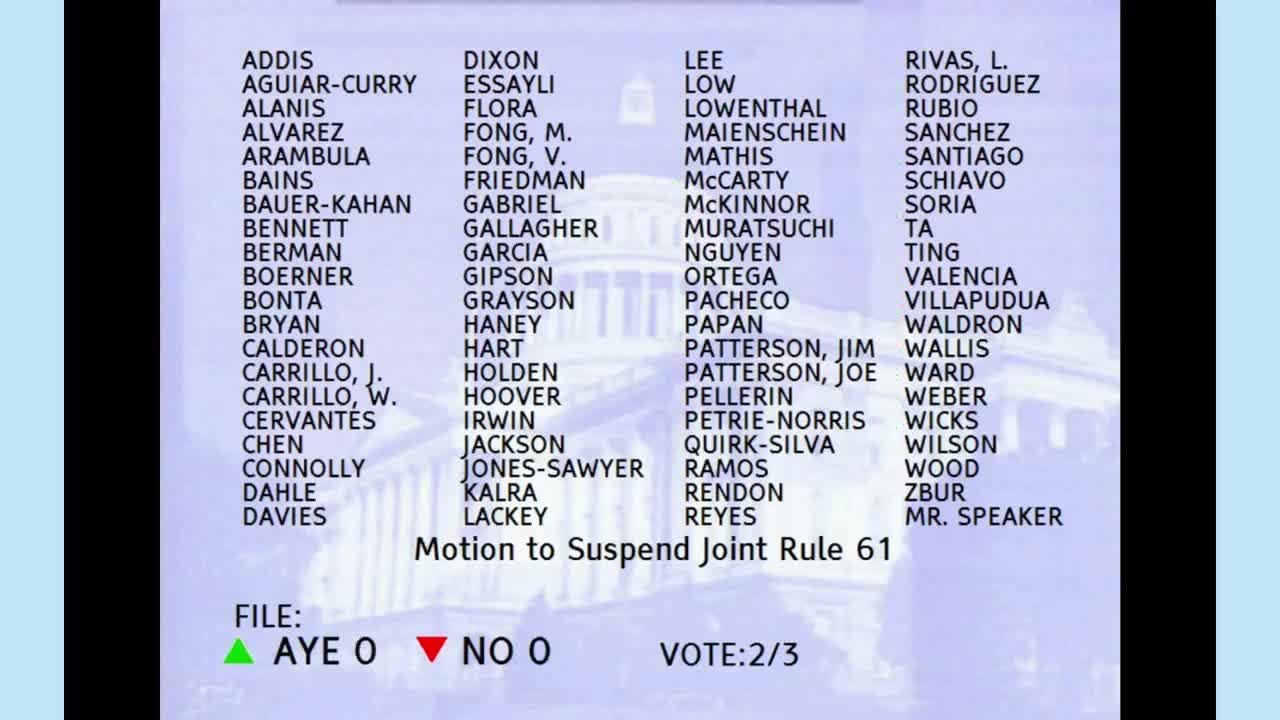
Bill Author