SB 83: Public utilities: electrical distribution grid: energization.
- Session Year: 2023-2024
- House: Senate
- Latest Version Date: 2023-05-03
Current Status:
Failed
(2024-02-01: Returned to Secretary of Senate pursuant to Joint Rule 56.)
Introduced
In Committee
First Chamber
In Committee
Second Chamber
Enacted
What does this bill do?
The bill requires the Public Utilities Commission to set maximum deadlines for when electric utilities must energize new or modified development projects, affecting utilities and project developers, including the 'energization-ready' phase. After a developer notifies a project is energization-ready (meaning inspections, permits, and site access are complete), the utility must energize it within the deadline or agree to an alternative if a site-specific safety issue prevents work, and utilities must report annually on applications and timing. If a utility misses the deadline and a developer files a claim, the utility must pay up to $0.25 per square foot per day of delay, and the commission will settle disputes.
The summary is provided by generative AI which can make mistakes. For original language, please view the details in the table below.
Existing law authorizes the Public Utilities Commission to establish an expedited distribution grid interconnection dispute resolution process with the goal of resolving disputes over interconnection applications within the jurisdiction of the commission in no more than 60 days from the time the dispute is formally brought to the commission.
This bill would require the commission, on or before September 30, 2024, to establish maximum energization time periods by when an electrical corporation would be required to energize a development project, including the maximum time period for the energization ready phase of a project. The bill would require an electrical corporation to interconnect energize a development project with the electrical corporations electrical distribution grid within 8 weeks of the maximum energization time period established by the commission, after receiving a notification from a development project applicant that the development project is interconnection energization ready, as defined. The bill would specify that this 8-week period the maximum energization time period established by the commission does not apply if an issue specific to the development project or the project site arises that would prevent the electrical corporation from safely completing the interconnection energization within the 8-week that time period and would require the electrical corporation to work with the development project applicant to establish an alternative time period. The bill would require each electrical corporation to annually report to the commission the number of applications for interconnection energization with the electrical corporations distribution grid and the time period in which the electrical corporation interconnects energizes the development project with its electrical distribution grid after the electrical corporation was notified that the development project was interconnection energization ready. The bill would require an electrical corporation to compensate a development project applicant for failing to meet the 8-week time period maximum energization time period described above or the alternative time period, as specified. The bill would require the commission to arbitrate any dispute related to the claim for compensation.
Under existing law, a violation of an order, decision, rule, direction, demand, or requirement of the commission is a crime.
Because a violation of an order or decision of the commission implementing the above-described requirement would be a crime, this bill would impose a state-mandated local program.
The California Constitution requires the state to reimburse local agencies and school districts for certain costs mandated by the state. Statutory provisions establish procedures for making that reimbursement.
This bill would provide that no reimbursement is required by this act for a specified reason.
Existing law authorizes the Public Utilities Commission to establish an expedited distribution grid interconnection dispute resolution process with the goal of resolving disputes over interconnection applications within the jurisdiction of the commission in no more than 60 days from the time the dispute is formally brought to the commission.
This bill would require an electrical corporation to interconnect a development project with the electrical corporations electrical distribution grid within 8 weeks of receiving a notification from a development project applicant that a green tag, as defined, has been received by the development project applicant. the development project is interconnection ready, as defined. The bill would specify that this 8-week period does not apply if an issue specific to the development project or the project site arises that would prevent the electrical corporation from safely completing the interconnection within the 8-week time period and would require the electrical corporation to work with the development project applicant to establish an alternative time period. The bill would require each electrical corporation to annually report to the commission the number of applications for interconnection with the electrical corporations distribution grid and the time period in which the electrical corporation interconnects the development project with its electrical distribution grid after the electrical corporation was notified that a green tag was received by the development project applicant. was interconnection ready. The bill would require the commission to require an electrical corporation to compensate a development project applicant for failing to meet the 8-week time period described above. above or the alternative time period, as specified. The bill would require the commission to arbitrate any dispute related to the claim for compensation.
Under existing law, a violation of an order, decision, rule, direction, demand, or requirement of the commission is a crime.
Because a violation of an order or decision of the commission implementing the above-described requirement would be a crime, this bill would impose a state-mandated local program.
The California Constitution requires the state to reimburse local agencies and school districts for certain costs mandated by the state. Statutory provisions establish procedures for making that reimbursement.
This bill would provide that no reimbursement is required by this act for a specified reason.
Existing law authorizes the Public Utilities Commission to establish an expedited distribution grid interconnection dispute resolution process with the goal of resolving disputes over interconnection applications within the jurisdiction of the commission in no more than 60 days from the time the dispute is formally brought to the commission.
This bill would require an electrical corporation to interconnect a development project with the electrical corporations electrical distribution grid within 8 weeks of receiving a notification from a development project applicant that a green tag, as defined, has been received by the development project applicant. The bill would require each electrical corporation to annually report to the commission the number of applications for interconnection with the electrical corporations distribution grid and the time period in which the electrical corporation interconnects the development project with its electrical distribution grid after the electrical corporation was notified that a green tag was received by the development project applicant. The bill would require the commission to require an electrical corporation to compensate a development project applicant for failing to meet the 8-week time period described above.
Under existing law, a violation of an order, decision, rule, direction, demand, or requirement of the commission is a crime.
Because a violation of an order or decision of the commission implementing the above-described requirement would be a crime, this bill would impose a state-mandated local program.
The California Constitution requires the state to reimburse local agencies and school districts for certain costs mandated by the state. Statutory provisions establish procedures for making that reimbursement.
This bill would provide that no reimbursement is required by this act for a specified reason.
Existing law requires the Public Utilities Commission to enforce the rules governing the extension of service by a gas or electrical corporation to new residential, commercial, agricultural, and industrial customers. Existing law requires an electrical or gas corporation to permit a new or existing customer who applies for an extension of service from that corporation to install the extension in accordance with commission regulations and any applicable specifications of the corporation.This bill would state the intent of the Legislature to enact subsequent legislation to require public utility companies to provide comments on postentitlement phase permit applications and connect new construction to the electrical grid within specified timeframes.Existing law requires the Public Utilities Commission to enforce the rules governing the extension of service by a gas or electrical corporation to new residential, commercial, agricultural, and industrial customers. Existing law requires an electrical or gas corporation to permit a new or existing customer who applies for an extension of service from that corporation to install the extension in accordance with commission regulations and any applicable specifications of the corporation.
This bill would state the intent of the Legislature to enact subsequent legislation to require public utility companies to provide comments on postentitlement phase permit applications and connect new construction to the electrical grid within specified timeframes.
For purposes of this chapter, the following definitions apply:
(a)Development project means a project for the construction of a new structure or the modification of an existing structure.
(b)Interconnect means to physically connect a development project to the electrical distribution grid of an electrical corporation, including providing all work necessary to make the interconnection effective. (c)Interconnection(b)Energization ready means the phase in a development project in which all critical dependencies, including all necessary inspections, certifications, and permits needed for an interconnection, energization, have been completed and the project site is accessible to an electrical corporations construction resources.
(c)Energize means to physically connect a development project to the electrical distribution grid of an electrical corporation, including providing all work necessary to make the energization effective.
2.Interconnection2846.(a)Within eight weeks of2.Energization2846.(a)(1)On or before September 30, 2024, the commission shall establish the maximum energization time periods by when an electrical corporation shall energize a development project, including the maximum time period for the energization ready phase of the project.
(2)In establishing the time periods specified in paragraph (1), the commission shall solicit input from interested parties.
(b)Within the maximum energization time period established by the commission, after receiving a notification from a development project applicant that the development project is interconnection energization ready, an electrical corporation shall interconnect energize the development project with the electrical corporations electrical distribution grid.
(b)(c)If, after a development project is interconnection energization ready, an issue specific to the project or project site arises that would prevent the electrical corporation from safely completing the interconnection energization as required by subdivision (a), (b), the electrical corporation is exempt from the requirements of subdivision (a) (b) and shall work with the development project applicant to establish an alternative time period.
3.Reporting and Enforcement2847.Each electrical corporation shall annually report to the commission the number of applications for interconnection energization with the electrical corporations electrical distribution grid received in the previous 12 months and the time period in which the electrical corporation interconnects energizes the development project with the electrical distribution grid after receiving the notification specified in Section 2846.
2847.5.An electrical corporation shall compensate a development project applicant for failing to meet the requirement of subdivision (a) (b) of Section 2846 or the alternative time period agreed to under subdivision (b) (c) of Section 2846 at a rate of as determined by the commission not to exceed twenty-five cents ($0.25) per square foot of the area covered by the development project per day of delay if the development project applicant files a claim for compensation with the electrical corporation. Compensation paid pursuant to this section shall not be recovered from ratepayers. The electrical corporation may dispute the claim for compensation with the commission and the commission shall arbitrate the dispute.
SEC. 2.No reimbursement is required by this act pursuant to Section 6 of Article XIIIB of the California Constitution because the only costs that may be incurred by a local agency or school district will be incurred because this act creates a new crime or infraction, eliminates a crime or infraction, or changes the penalty for a crime or infraction, within the meaning of Section 17556 of the Government Code, or changes the definition of a crime within the meaning of Section 6 of Article XIIIB of the California Constitution.
For purposes of this chapter, the following definitions apply:
(a)Development project means a project for the construction of a new structure or the modification of an existing structure.
(b)Green tag means a confirmation by a governmental agency that all work and approvals necessary to facilitate the interconnection of a development project to the electrical distribution grid have been completed and received by a development project applicant.(c)(b)Interconnect means to physically connect a development project to the electrical distribution grid of an electrical corporation, including providing all work necessary to make the interconnection effective.
(c)Interconnection ready means the phase in a development project in which all critical dependencies, including all necessary inspections, certifications, and permits needed for an interconnection, have been completed and the project site is accessible to an electrical corporations construction resources.
2.Interconnection2846.(a)Within eight weeks of receiving a notification from a development project applicant that a green tag is received, the development project is interconnection ready, an electrical corporation shall interconnect the development project with the electrical corporations electrical distribution grid.
(b)If, after a development project is interconnection ready, an issue specific to the project or project site arises that would prevent the electrical corporation from safely completing the interconnection as required by subdivision (a), the electrical corporation is exempt from the requirements of subdivision (a) and shall work with the development project applicant to establish an alternative time period.
3.Reporting and Enforcement2847.Each electrical corporation shall annually report to the commission the number of applications for interconnection with the electrical corporations electrical distribution grid received in the previous 12 months and the time period in which the electrical corporation interconnects the development project with the electrical distribution grid after receiving the notification specified in Section 2846.
2847.5.The commission shall require an An electrical corporation to shall compensate a development project applicant for failing to meet the requirement of Section 2846. of subdivision (a) of Section 2846 or the alternative time period agreed to under subdivision (b) of Section 2846 at a rate of twenty-five cents ($0.25) per square foot of the area covered by the development project per day of delay if the development project applicant files a claim for compensation with the electrical corporation. Compensation paid pursuant to this section shall not be recovered from ratepayers. The electrical corporation may dispute the claim for compensation with the commission and the commission shall arbitrate the dispute.
SEC. 2.No reimbursement is required by this act pursuant to Section 6 of Article XIIIB of the California Constitution because the only costs that may be incurred by a local agency or school district will be incurred because this act creates a new crime or infraction, eliminates a crime or infraction, or changes the penalty for a crime or infraction, within the meaning of Section 17556 of the Government Code, or changes the definition of a crime within the meaning of Section 6 of Article XIIIB of the California Constitution.
For purposes of this chapter, the following definitions apply:
(a)Development project means a project for the construction of a new structure or the modification of an existing structure.
(b)Green tag means a confirmation by a governmental agency that all work and approvals necessary to facilitate the interconnection of a development project to the electrical distribution grid have been completed and received by a development project applicant.
(c)Interconnect means to physically connect a development project to the electrical distribution grid of an electrical corporation, including providing all work necessary to make the interconnection effective.
2.Interconnection2846.Within eight weeks of receiving a notification from a development project applicant that a green tag is received, an electrical corporation shall interconnect the development project with the electrical corporations electrical distribution grid.
3.Reporting and Enforcement2847.Each electrical corporation shall annually report to the commission the number of applications for interconnection with the electrical corporations electrical distribution grid received in the previous 12 months and the time period in which the electrical corporation interconnects the development project with the electrical distribution grid after receiving the notification specified in Section 2846.
2847.5.The commission shall require an electrical corporation to compensate a development project applicant for failing to meet the requirement of Section 2846. Compensation paid pursuant to this section shall not be recovered from ratepayers.
SEC. 2.No reimbursement is required by this act pursuant to Section 6 of Article XIIIB of the California Constitution because the only costs that may be incurred by a local agency or school district will be incurred because this act creates a new crime or infraction, eliminates a crime or infraction, or changes the penalty for a crime or infraction, within the meaning of Section 17556 of the Government Code, or changes the definition of a crime within the meaning of Section 6 of Article XIIIB of the California Constitution.
SECTION 1.It is the intent of the Legislature to enact subsequent legislation to require public utility companies to provide comments on postentitlement phase permit applications and connect new construction to the electrical grid within specified timeframes.It is the intent of the Legislature to enact subsequent legislation to require public utility companies to provide comments on postentitlement phase permit applications and connect new construction to the electrical grid within specified timeframes.
|
Date
|
Status
|
|---|---|
| Feb 1, 2024 | Returned to Secretary of Senate pursuant to Joint Rule 56. |
| May 18, 2023 | May 18 hearing: Held in committee and under submission. |
| May 16, 2023 | Set for hearing May 18. |
| May 15, 2023 | May 15 hearing: Placed on APPR suspense file. |
| May 5, 2023 | Set for hearing May 15. |
| May 3, 2023 | Read second time and amended. Re-referred to Com. on APPR. |
| May 2, 2023 | From committee: Do pass as amended and re-refer to Com. on APPR. (Ayes 17. Noes 0. Page 870.) (April 24). |
| Apr 19, 2023 | Set for hearing April 24. |
| Apr 18, 2023 | April 18 set for first hearing canceled at the request of author. |
| Apr 3, 2023 | Set for hearing April 18. |
| Mar 30, 2023 | From committee with author's amendments. Read second time and amended. Re-referred to Com. on E., U. & C. |
| Mar 22, 2023 | Re-referred to Com. on E., U. & C. |
| Mar 9, 2023 | From committee with author's amendments. Read second time and amended. Re-referred to Com. on RLS. |
| Jan 25, 2023 | Referred to Com. on RLS. |
| Jan 17, 2023 | From printer. May be acted upon on or after February 13. |
| Jan 13, 2023 | Introduced. Read first time. To Com. on RLS. for assignment. To print. |
|
Date
|
Description
|
Location
|
Votes
|
|
|---|---|---|---|---|
| May 15, 2023 | Placed on suspense file | Senate Standing Committee on Appropriations |
Passed |
|
| Apr 24, 2023 | Do pass as amended, but first amend, and re-refer to the Committee on [Appropriations] | Senate Standing Committee on Energy, Utilities and Communications |
Passed |
This list shows positions taken on this bill by organizations on the date displayed, which is linked to the original source.
Positions by individuals are not included.
|
Organization
|
Position
|
Date
|
|---|---|---|
| American Planning Association, California Chapter | ** Support | |
| California Coalition of Utility Employees | * Support | Apr 24, 2023 |
| California Conference of Carpenters | * Support | Apr 24, 2023 |
| California Housing Consortium | * Support | Apr 24, 2023 |
| California Housing Partnership | * Support | Apr 24, 2023 |
| California State Association Of Electrical Workers | ** Against | |
| California State Council Of Laborers | * Support | Apr 24, 2023 |
| California Teamsters | * Support | Apr 24, 2023 |
| California YIMBY | * Support | May 15, 2023 |
| Carpenter's Local 152 | * Support | Apr 24, 2023 |
| Carpenter's Local 1599 | * Support | Apr 24, 2023 |
| Carpenter's Local 180 | * Support | Apr 24, 2023 |
| Carpenter's Local 22 | * Support | Apr 24, 2023 |
| Carpenter's Local 35 | * Support | Apr 24, 2023 |
| Carpenter's Local 713 | * Support | Apr 24, 2023 |
| Carpenter's Local 751 | * Support | Apr 24, 2023 |
| Carpenter's Local 9109 | * Support | Apr 24, 2023 |
| Carpenter's Union Local 9144 | * Support | Apr 24, 2023 |
| Carpenters Local 1109 | * Support | Apr 24, 2023 |
| Carpenters Local 152 | * Support | Apr 24, 2023 |
| Carpenters Local 1789 | * Support | Apr 24, 2023 |
| Carpenters Local 217 | * Support | Apr 24, 2023 |
| Carpenters Local 22 | * Support | Apr 24, 2023 |
| Carpenters Local 2236 | * Support | Apr 24, 2023 |
| Carpenters Local 405 | * Support | Apr 24, 2023 |
| Carpenters Local 46 | * Support | Apr 24, 2023 |
| Carpenters Local 605 | * Support | Apr 24, 2023 |
| Carpenters Local 701 | * Support | Apr 24, 2023 |
| Carpenters Local 713 | * Support | Apr 24, 2023 |
| Carpenters Local 751 | * Support | Apr 24, 2023 |
| Carpenters Union Local 217 | * Support | Apr 24, 2023 |
| City and County of San Francisco | * Support | May 15, 2023 |
| Civic Well | ** Support | |
| Construction Employers' Association | ** Support | |
| Dignitymoves | ** Support | |
| Drywall Lathers Local 68L | * Support | Apr 24, 2023 |
| Drywall Lathers Local 9068 | * Support | Apr 24, 2023 |
| Drywall Lathers Local 9068 | * Support | Apr 24, 2023 |
| Drywall Lathers Local 9068 | * Support | Apr 24, 2023 |
| Drywall Lathers Local 9109 | * Support | Apr 24, 2023 |
| Field Stud & Co | * Support | May 15, 2023 |
| Greenbelt Alliance | ** Support | |
| Grow the Richmond | ** Support | |
| Habitat For Humanity California | ** Support | |
| Housing Action Coalition | * Support | Apr 24, 2023 |
| How to ADU | ** Support | |
| Lajos Pacific Gas and Electric Company | * Against | Apr 24, 2023 |
| Local 34 | * Support | Apr 24, 2023 |
| Local 9109 | * Support | Apr 24, 2023 |
| local 919 | * Support | Apr 24, 2023 |
| Local 919 | * Support | Apr 24, 2023 |
| Local 968L | * Support | Apr 24, 2023 |
| Millwrights Local 102 | * Support | Apr 24, 2023 |
| Millwrights Local 102 | * Support | Apr 24, 2023 |
| Millwrights Local 102 | * Support | Apr 24, 2023 |
| Mission Housing San Francisco | * Support | May 15, 2023 |
| Napa-Solano for Everyone | ** Support | |
| Non-Profit Housing Association of Northern California | ** Support | |
| Nor Cal Carpenters Union | * Support | Apr 24, 2023 |
| NorCal Carpenters Union | * Support | Apr 24, 2023 |
| Northern Neighbors | ** Support | |
| Peninsula for Everyone | ** Support | |
| People For Housing Orange County | ** Support | |
| Pile Drivers Local 34 | * Support | Apr 24, 2023 |
| Progress Noe Valley | ** Support | |
| Rural County Representatives Of California | * Support | Apr 24, 2023 |
| Sacramento Resident | * Support | Apr 24, 2023 |
| San Diego Gas and Electric | * Against | Apr 24, 2023 |
| Sonoma Clean Power | * Support | Apr 24, 2023 |
| Southern California Edison | * Against | Apr 24, 2023 |
| Southside Forward | ** Support | |
| SPUR | * Support | Apr 24, 2023 |
| The Two Hundred for Homeownership | ** Support |
SENATE COMMITTEE ON
Senator Anthony Portantino, Chair
2023 - 2024 Regular Session
SB 83 (Wiener) - Public utilities: electrical distribution grid: energization
Version: | Policy Vote: |
Urgency: | Mandate: |
Hearing Date: | Consultant: |
Bill Summary:
This bill would require the California Public Utilities Commission (CPUC) to establish a maximum length of time by when an electrical corporation would need to energize a development project, and would provide that electrical corporations would be required to compensate development projects should they miss the deadline.
Fiscal Impact:
- The CPUC estimates ongoing costs of about $1.1 million annually (ratepayer funds) to open a rulemaking in order to determine the appropriate time period and the rate of compensation, as well as to develop the report template for electrical corporations, review annually submitted reports, and arbitrate any dispute related to the claim for compensation.
Background:
Connecting to the electric distribution grid. Rules governing the ability of new buildings and generation and storage resources to connect to the electric distribution grid are generally determined by statute, CPUC rules, and tariffs, (i.e., document that specify rates, charges, rules, and conditions under which an electrical corporation will provide services to the public) for each of the electrical corporations. These service connections include:
Interconnections, which generally refers to the interaction of physical connection of an energy generation or storage device to the electric distribution system that is either in front of the meter or behind-the-meter. Interconnection is a defined term in utility tariff rules that generally describes an electric utility’s physical connection to an external source of power. New service connections refers to extending an electricity line or expanding distribution infrastructure to service new or expanded customer load, known as “energization.”
The ability to connect to the larger electrical system can take months (if not, years, in some cases) as the process can entail the need for designs, assessments on costs allocations associated with improvements on the electric distribution system to allow for the connection, and other issues. In the case of new building developments, depending on the size of the development, the need for electric service extensions may be needed in phases over months, or years. The building developers may have been approved for particular requirements during the initial application but have later found they need to make changes as they are in the midst of a project development.
Growing backlog for utility energization projects. The demands for new service connections and/or upgrades to existing distribution lines have been increasing, especially as California advances policies to deploy more electric vehicles, shift natural gas usages to electricity in buildings, and increase housing supply, including affordable housing. These projects all rely on access to the electric utility grid and, often require upgrades to the electric distribution system. Additionally, the COVID-19 pandemic has created supply shortages and challenges affecting many sectors of the economy, including limiting access to electrical equipment needed to connect new customers or expand energy load, such as transformers.
The challenges have been especially acute within the Pacific Gas & Electric (PG&E) service territory as the backlog for energization projects has grown substantially and delays have increased. The utility company has acknowledged the growing backlog of identified capacity work that has delayed – sometimes by years – the in-service dates for new business customers. PG&E has shared that it is attempting to better manage their queue for projects.
Proposed Law:
This bill would require the CPUC to establish a maximum length of time by when an electrical corporation would need to energize a development project, and would provide that electrical corporations would be required to compensate development projects should they miss the deadline. Specifically, this bill would:
- Require the CPUC, on or before September 30, 2024, to establish a maximum length of time by when an electrical corporation would need to energize a development project.
- Specify that an electrical corporation is exempt if an issue specific to the development project or the project site arises that would prevent the electrical corporation from safely completing the energization within the time period, and would require the electrical corporation to work with the development project applicant to establish an alternative time period.
- Require each electrical corporation to annually report to the CPUC the number of applications for energization with the electrical corporation’s distribution grid and the time period in which the electrical corporation energizes the development project with its electrical distribution grid after the electrical corporation was notified that the development project was interconnection ready.
- Require an electrical corporation to compensate a development project applicant for failing to meet the time period described above or the alternative time period.
- Require CPUC to arbitrate any dispute related to the claim for compensation.
Related Legislation:
SB 410 (Becker, 2023) would require the CPUC to establish a working group to improve the ability of the electric IOUs to be informed of needed distribution capacity and requires the CPUC to establish timelines for interconnection projects.
AB 1026 (Wood, Chapter 446, Statutes of 2019) required an electrical or gas corporation to apply only those construction and design specifications, standards, terms, and conditions that are applicable to a new extension of service project for the 18 months following the date the application for a new extension of service project is approved. Authorizes an electrical or gas corporation to adopt modifications, as specified, of the construction and design specifications, standards, terms, and conditions of a new extension of service project.
AB 2861 (Ting, Chapter 672, Statutes of 2016) authorized the CPUC to establish an expedited dispute resolution process for generating facility interconnection disputes.
SB 48 (Vuich, Chapter 1229, Statutes of 1983) established rules governing the extension of service by gas and electrical corporations to new residential, commercial, agricultural, and industrial customers.
-- END --
SENATE COMMITTEE ON ENERGY, UTILITIES AND COMMUNICATIONS
Senator Steven Bradford, Chair
2023 - 2024 Regular
Bill No: Hearing Date: 4/24/2023
Author: | |||
Version: | Amended | ||
Urgency: | Fiscal: | ||
Consultant: | |||
SUBJECT:
DIGEST: This bill requires electrical corporations to interconnect development projects to the electrical distribution system within eight weeks for projects defined as interconnection ready. Additionally, this bill requires electrical corporations to compensate development projects for failing to meet the deadline.
ANALYSIS:
Existing law:
- Establishes and vests the California Public Utilities Commission (CPUC) with authority over public utilities, including electrical corporations. (California Constitution Article XII)
- Authorizes the CPUC to establish an expedited distribution grid interconnection dispute resolution process with the goal of resolving disputes over interconnection applications within the jurisdiction of the CPUC in no more than 60 days from the time the dispute is formally brought to the CPUC. (Public Utilities Code §769.5)
- Requires an electrical corporation to permit any new or existing customer who applies for an extension of service from that electrical corporation to install an electric extension in accordance with the regulations of the CPUC and any applicable specifications of that electrical corporation. (Public Utilities Code §783)
- Establishes guidelines for the design, cost allocation, and responsibilities of a project applicant and a utility for electric distribution line extensions necessary to furnish permanent electric service. (Electric Rule 15)
- Establishes guidelines for the design, cost allocation, and responsibilities of a project applicant and a utility for the extension of electric service from an investor-owned utility (IOU) distribution line. (Electric Rule 16)
This bill:
- Defines “interconnection ready” to mean the phase in a development project in which all critical dependencies, including all necessary inspections, certifications, and permits needed for an interconnection, have been completed and the project site is accessible to an electrical corporation’s construction resources.
- Requires an electrical corporation to interconnect a development project with the electrical corporation’s electrical distribution grid within eight weeks of receiving a notification from a development project applicant that the development project is interconnection ready.
- Specifies that this eight-week period does not apply if an issue specific to the development project or the project site arises that would prevent the electrical corporation from safely completing the interconnection within the eight-week time period and would require the electrical corporation to work with the development project applicant to establish an alternative time period.
- Requires each electrical corporation to annually report to the CPUC the number of applications for interconnection with the electrical corporation’s distribution grid and the time period in which the electrical corporation interconnects the development project with its electrical distribution grid after the electrical corporation was notified that the development project was interconnection ready.
- Requires an electrical corporation to compensate a development project applicant for failing to meet the eight-week time period described above or the alternative time period. Requires the CPUC to arbitrate any dispute related to the claim for compensation.
Background
Connecting to the electric distribution grid. Rules governing the ability of new buildings and generation and storage resources to connect to the electric distribution grid are generally determined by statute, CPUC rules, and tariffs, (i.e., document that specify rates, charges, rules, and conditions under which an electrical corporation will provide services to the public) for each of the electrical corporations. These service connections include:
Interconnections, which generally refers to the interaction of physical connection of an energy generation or storage device to the electric distribution system that is either in front of the meter or behind-the-meter. Interconnection is a defined term in utility tariff rules that generally describes an electric utility’s physical connection to an external source of power.
Electric Tariff Rule 21 is a tariff that describes the interconnection, operating and metering requirements for generation facilities to be connected to an electrical utility’s distribution system. The tariff provides customers who would like to install generating or storage facilities on their premises with access to the electric grid while protecting the safety and reliability of the distribution and transmission systems at the local and system levels. Each electrical corporation is responsible for administration of the rule in its service territory and maintains its own version of the tariff.
New service connections refers to extending an electricity line or expanding distribution infrastructure to service new or expanded customer load, known as “energization.”
Electric Tariff Rule 15 (Distribution Line Extensions) relates to distribution line extensions. Specifically, new distribution facilities that are a continuation of, or branch from, the nearest available existing permanent distribution line (including any facility rearrangements and relocations necessary to accommodate the extension) to the point of connection of the last service. Rule 15 generally pertains to electric distribution grid equipment used by multiple customers, for example, a transformer serving multiple homes.
Electric Tariff Rule 16 (Service Line Extensions) relates to service line extensions. The overhead and underground primary or secondary facilities (including but not limited to utility-owned service facilities and applicant owned service facilities) extending from the point of connection at the distribution line to the service delivery point. Rule 16 generally pertains to network equipment used by just one customer.
Electric Tariff Rules 15 and 16 establish the guidelines for design, cost allocation, and responsibilities of a project applicant and a utility for electric distribution line extensions. The ability to connect to the larger electrical system can take months (if not, years, in some cases) as the process can entail the need for designs, assessments on costs allocations associated with improvements on the electric distribution system to allow for the connection, and other issues. In the case of new building developments, depending on the size of the development, the need for electric service extensions may be needed in phases over months, or years. The building developers may have been approved for particular requirements during the initial application but have later found they need to make changes as they are in the midst of a project development.
Growing backlog for utility energization projects. The demands for new service connections and/or upgrades to existing distribution lines have been increasing, especially as California advances policies to deploy more electric vehicles, shift natural gas usages to electricity in buildings, and increase housing supply, including affordable housing. These projects all rely on access to the electric utility grid and, often require upgrades to the electric distribution system. Additionally, the COVID-19 pandemic has created supply shortages and challenges affecting many sectors of the economy, including limiting access to electrical equipment needed to connect new customers or expand energy load, such as transformers.
The challenges have been especially acute within the Pacific Gas & Electric (PG&E) service territory as the backlog for energization projects has grown substantially and delays have increased. The utility company has acknowledged the growing backlog of identified capacity work that has delayed – sometimes by years – the in-service dates for new business customers. This bill author’s office requested information from the CPUC regarding the backlogs for new multi-family and commercial construction projects from the state’s three largest electric IOUs – PG&E, Southern California Edison (SCE), and San Diego Gas & Electric (SDG&E). Among the three utilities, PG&E reported the most projects and the most delayed backlog of projects, with many falling over 90 days to construct. Whereas, the other two utilities took within 30-60 days to construct.
PG&E has shared that it is attempting to better manage their queue for projects. The utility recently formed a monthly Technical Committee work group led with representatives from their labor partners, California Building Industry Association, and regional building association staff and members to work on all technical and field issues. These monthly meetings are used to provide updates on the actions underway to improve the new service connection process, the impacts of those actions and next steps. Additionally, these meetings are used to collaborate and collect feedback on the improvement efforts and to address emerging areas of concern or interest. Nonetheless, the backlog is a growing frustration for the utility, project developers, customers, and others waiting to have their projects energized.
Need for legislation. New service connections are generally a routine and core electric utility function. Unfortunately, the growing backlog of projects has led to frustrated customers, including affordable housing developers, local governments, and other customers which has sparked the desire for legislation. As the process to energize projects entails many factors and stakeholders, it can be challenging to pinpoint the areas of delay. The backlog of projects at the state’s largest utility may be unique to their service territory, management of their queue and unique issues to their system. This bill prescribes an eight week deadline by when electric IOUs must energize “interconnection ready” projects. While the author has attempted to limit the scope of the process to the final portion of the new service or line extension project, the opposition has raised concerns that the timeline does not fully account for many of the variables that may be outside the control of the electric IOU. Moreover, the opposition expresses concerns that the proposed timeline and penalties do not attempt to resolve the underlying problems but may instead further contribute to increasing disputes between the electric IOU and project proponents.
Amendments needed. The author has attempted to limit the eight-week time period to the final segment of the energization process for these projects. However, concerns remain that the eight-week timeframe may not account for additional variables outside the control of the utility. Therefore, the author and committee may wish to amend this bill to propose the time period target is established via a collaborative process among stakeholders at the CPUC by a date certain.
Additionally, the penalties proposed in this bill may prove to be too high. Based on conversations with the author’s office, the proposed penalties are intended to reflect a $5,000 daily penalty for a half acre development project to be used as a deterrent to ensure the utilities meet the proposed time periods. While the author and sponsors are valid in their concerns about the need to address the growing backlog of projects at PG&E, the financial impacts of the proposed penalties could further jeopardize the ability to energize future projects. In this regard, the author and committee may wish to amend this bill require the CPUC to determine the penalty which shall be no more than twenty-five cents per square foot of the area covered by the development project.
Additional clarifying amendments to reference “energization projects” instead of “interconnection.”
Prior/Related Legislation
SB 410 (Becker, 2023) requires the CPUC to establish a working group to improve the ability of the electric IOUs to be informed of needed distribution capacity and requires the CPUC to establish timelines for interconnection projects. The bill is pending in the Senate.
AB 1026 (Wood, Chapter 446, Statutes of 2019) required an electrical or gas corporation to apply only those construction and design specifications, standards, terms, and conditions that are applicable to a new extension of service project for the 18 months following the date the application for a new extension of service project is approved. Authorizes an electrical or gas corporation to adopt modifications, as specified, of the construction and design specifications, standards, terms, and conditions of a new extension of service project.
AB 2861 (Ting, Chapter 672, Statutes of 2016) authorized the CPUC to establish an expedited dispute resolution process for generating facility interconnection disputes.
SB 48 (Vuich, Chapter 1229, Statutes of 1983) established rules governing the extension of service by gas and electrical corporations to new residential, commercial, agricultural, and industrial customers.
FISCAL EFFECT: Appropriation: Fiscal Com.: Local:
SUPPORT:
Construction Employers' Association, Co-sponsor
Housing Action Coalition, Co-sponsor
American Planning Association, California Chapter
California Conference of Carpenters
California Housing Consortium
California Housing Partnership
California State Council of Laborers
California Teamsters Public Affairs Council
California YIMBY
Civic Well
DignityMoves
East Bay YIMBY
Greenbelt Alliance
Grow the Richmond
Habitat for Humanity California
How to ADU
Mountain View YIMBY
Napa-Solano for Everyone
Non-Profit Housing Association of Northern California
Northern Neighbors
Peninsula for Everyone
People for Housing Orange County
Progress Noe Valley
Rural County Representatives of California
San Francisco YIMBY
San Luis Obispo YIMBY
Santa Cruz YIMBY
Santa Rosa YIMBY
South Bay YIMBY
Southside Forward
SPUR
The Two Hundred for Home Ownership
Ventura County YIMBY
YIMBY Action
OPPOSITION:
California State Association of Electrical Workers
Coalition of California Utility Employees
Pacific Gas & Electric
San Diego Gas & Electric Company
Southern California Edison
ARGUMENTS IN SUPPORT: According to the author:
Senate Bill 83 addresses utility-related delays in new and existing construction by requiring Investor-Owned Utility (IOU) Companies to complete interconnection work within 8 weeks of a project being completely ready for connection to the energy distribution grid. The legislation also specifically creates an off-ramp to exempt IOUs from those timelines in the event of an unforeseen circumstance after a project is ready for interconnection.
While project applicants have reported delays at several post entitlement phases, delays of new construction at the final energization stage are especially notable barriers to progress towards accelerated housing production and energy decarbonization. At the point that a project is ready for this step, there is little to nothing else standing in the way of the project’s completion, making such delays especially frustrating. Clear timelines and incentives for reliable interconnection must be in place for the state to better improve the reliability and rate of new housing construction and energy upgrades, helping the state meet its twin housing and climate goals.
In support of this bill, People for Housing states:
…delays of new construction at the final energization stage are especially salient. As of February 2023, there were 134 construction-ready projects awaiting final energization by the state’s largest IOU – Pacific Gas and Electric (PG&E) – for longer than 8 weeks. These projects are completely constructed and ready for occupancy – they are just awaiting final run-through of wiring to connect or reconnect the project with the energy distribution grid.
ARGUMENTS IN OPPOSITION: The Coalition of California Utility Employees and the California State Association of Electrical Workers oppose this bill contending that the eight-week timeline and corresponding financial penalties for failing to meet the timelines proposed in this bill are arbitrary. They argue “the bill does not attempt to address any of the underlying problems and instead would impose a uniform, ineffective solution.”
SDG&E, SCE, and PG&E oppose this bill stating: (1) this bill would penalize electric corporations for prioritizing emergency customer restoration over new business connections; (2) the one-size fits all approach will not work for the diverse needs of California’s customers and businesses; (3) this bill focuses on project-by-project arbitration instead of improving the processes for involved that actually eliminate waste and drive down project costs which can be accomplished without legislation.
-- END --
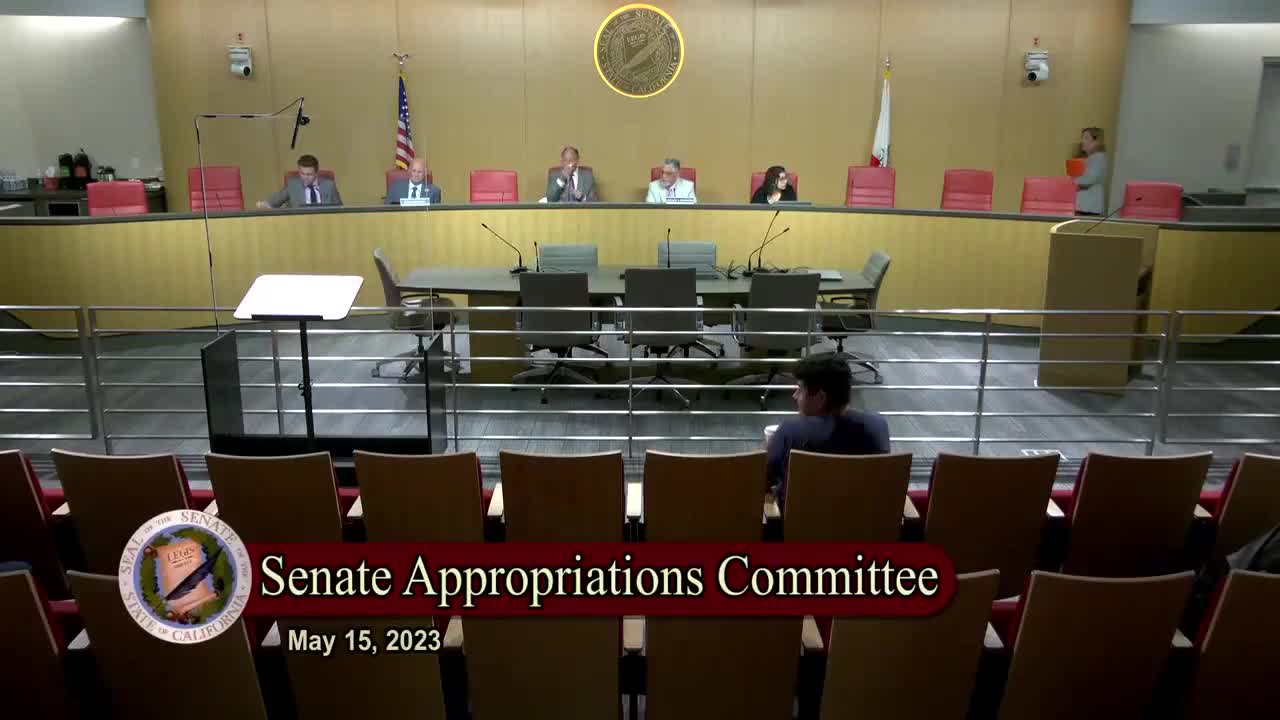
Discussed in Hearing
 2MIN
Senate Standing Committee on Appropriations
 41MIN
Senate Standing Committee on Energy, Utilities and Communications
Bill Author

Bill Co-Author(s):
