SB 943: Civil service: veterans’ preference.
- Session Year: 2023-2024
- House: Senate
- Latest Version Date: 2024-03-14
Current Status:
Failed
(2024-05-16: May 16 hearing: Held in committee and under submission.)
Introduced
In Committee
First Chamber
In Committee
Second Chamber
Enacted
What does this bill do?
The bill lets veterans who served at the enlisted rank E‑6 or higher for more than two years use that military service instead of a bachelor's degree when applying for certain California state civil service jobs. It requires the Department of Human Resources to review state job classes and identify which classes will allow that degree waiver.
The summary is provided by generative AI which can make mistakes. For original language, please view the details in the table below.
Existing law, the State Civil Service Act, requires the Department of Human Resources to administer the Personnel Classification Plan of the State of California, including allocating every position to the appropriate class. Existing law requires the allocation of a position to a class be derived from, and determined by, ascertaining the duties and responsibilities of the position, and be based on the principle that all positions are to be included in the same class if certain qualifications apply, including, but not limited to, that the positions are sufficiently similar in respect to duties and responsibilities that the same descriptive title may be used, and substantially the same requirements as to education, experience, knowledge, and ability are demanded of incumbents.
Existing law also prescribes a comprehensive civil service personnel system for the state and specifically provides certain preferences for veterans. Existing law grants to a person retired from the United States military, honorably discharged from active military duty with a service-connected disability, or honorably discharged from active duty eligibility for civil service examinations for which they meet the minimum qualifications for the classification. Existing law requires that, in evaluating minimum qualifications, related military experience be considered state civil service experience in a comparable class, based on the duties and responsibilities assigned.
This bill would require the department, by on or before January 1, 2026, to review the department Personnel Classification Plan of the State of California and identify which classes are compatible with creating a waiver for a bachelors degree requirement for a veteran, as defined, who has served at the level of E-6 or higher for more than 2 years. For a class identified by the department, where a bachelors degree is required as a minimum qualification for a civil service examination, the bill would require the department to, commencing July 1, 2026, waive the bachelors degree requirement for a veteran who has served at the level of E-6 or higher for more than 2 years.
Existing law, the State Civil Service Act, requires the Department of Human Resources to administer the Personnel Classification Plan of the State of California, including allocating every position to the appropriate class. Existing law requires the allocation of a position to a class be derived from, and determined by, ascertaining the duties and responsibilities of the position, and be based on the principle that all positions are to be included in the same class if certain qualifications apply, including, but not limited to, that the positions are sufficiently similar in respect to duties and responsibilities that the same descriptive title may be used, and substantially the same requirements as to education, experience, knowledge, and ability are demanded of incumbents.
Existing law also prescribes a comprehensive civil service personnel system for the state and specifically provides certain preferences for veterans. Existing law grants to a person retired from the United States military, honorably discharged from active military duty with a service-connected disability, or honorably discharged from active duty eligibility for civil service examinations for which they meet the minimum qualifications for the classification. Existing law requires that, in evaluating minimum qualifications, related military experience be considered state civil service experience in a comparable class, based on the duties and responsibilities assigned.
This bill would require the department, by January 1, 2026, to review the department Personnel Classification Plan of the State of California and identify which classes are compatible with creating a waiver for a bachelors degree requirement for a veteran, as defined, who has served at the level of E-6 or higher for more than 2 years. For a class identified by the department, where a bachelors degree is required as a minimum qualification for a civil service examination, the bill would require the department to, commencing July 1, 2026, waive the bachelors degree requirement for a veteran who has served at the level of E-6 or higher for more than 2 years.
(a)By On or before January 1, 2026, the department shall review the Personnel Classification Plan of the State of California, as described in Section 18800, and identify which classes are compatible with creating a waiver for a bachelors degree requirement for a veteran who served at the level of E-6 or higher for more than two years.
(b)Notwithstanding any law, commencing July 1, 2026, where a bachelors degree is required as a minimum qualification for a civil service examination for a class identified in subdivision (a), the department shall waive the bachelors degree requirement for a veteran who has served at the level of E-6 or higher for more than two years.
(a)By January 1, 2026, the department shall review the Personnel Classification Plan of the State of California, as described in Section 18800, and identify which classes are compatible with creating a waiver for a bachelors degree requirement for a veteran who served at the level of E-6 or higher for more than two years.
(b)Notwithstanding any law, commencing July 1, 2026, where a bachelors degree is required as a minimum qualification for a civil service examination for a class identified in subdivision (a), the department shall waive the bachelors degree requirement for a veteran who has served at the level of E-6 or higher for more than two years.
|
Date
|
Status
|
|---|---|
| May 16, 2024 | May 16 hearing: Held in committee and under submission. |
| May 10, 2024 | Set for hearing May 16. |
| May 6, 2024 | May 6 hearing: Placed on APPR suspense file. |
| Apr 26, 2024 | Set for hearing May 6. |
| Apr 23, 2024 | From committee: Do pass and re-refer to Com. on APPR. (Ayes 5. Noes 0. Page 3703.) (April 22). Re-referred to Com. on APPR. |
| Apr 12, 2024 | Set for hearing April 22. |
| Apr 10, 2024 | From committee: Do pass and re-refer to Com. on M. & V.A. with recommendation: To consent calendar. (Ayes 5. Noes 0. Page 3562.) (April 10). Re-referred to Com. on M. & V.A. |
| Mar 26, 2024 | Set for hearing April 10. |
| Mar 14, 2024 | From committee with author's amendments. Read second time and amended. Re-referred to Com. on L., P.E. & R. |
| Feb 14, 2024 | Referred to Coms. on L., P.E. & R. and M. & V.A. |
| Jan 19, 2024 | From printer. May be acted upon on or after February 18. |
| Jan 18, 2024 | Introduced. Read first time. To Com. on RLS. for assignment. To print. |
|
Date
|
Description
|
Location
|
Votes
|
|
|---|---|---|---|---|
| May 6, 2024 | Placed on suspense file | Senate Standing Committee on Appropriations |
Passed |
|
| Apr 22, 2024 | Do pass, but first be re-referred to the Committee on [Appropriations] | Senate Standing Committee on Military and Veterans Affairs |
Passed |
|
| Apr 10, 2024 | Do pass, but first be re-referred to the Committee on [Military and Veterans Affairs] with the recommendation: To Consent Calendar | Senate Standing Committee on Labor, Public Employment and Retirement |
Passed |
This list shows positions taken on this bill by organizations on the date displayed, which is linked to the original source.
Positions by individuals are not included.
|
Organization
|
Position
|
Date
|
|---|---|---|
| California Association Of County Veterans Service Officers | * Support | Apr 22, 2024 |
| California State Commanders Veterans Council | * Support | Apr 22, 2024 |
| Menifee VFW Post 1956 | ** Support | |
| Military Officers Association Of America, California Council Of Chapters | ** Support | |
| Reeb Government Relations | * Support | Apr 22, 2024 |
| Service Employees International Union, Local 1000 | ** Support |
SENATE COMMITTEE ON APPROPRIATIONS
Senator Anna Caballero, Chair
2023 - 2024 Regular Session
SB 943 (Ochoa Bogh) - Civil service: veterans’ preference
Version: March 14, 2024 | Policy Vote: L., P.E. & R. 5 - 0, M.&V.A. 5 - 0 |
Urgency: No | Mandate: No |
Hearing Date: May 6, 2024 | Consultant: Robert Ingenito |
Bill Summary:
SB 943 would require the California Department of Human Resources (CalHR), on or before January 1, 2026, to review the State Personnel Classification Plan to identify which state position classes are compatible with creating a waiver for a bachelor’s degree requirement for certain veterans. Additionally, the bill would require CalHR to waive the bachelor’s degree requirement beginning July 1, 2026, for identified position classifications for a veteran applicant who meets the waiver requirements.
Fiscal Impact:
CalHR indicates that it would incur costs of $3.5 million each year for two years to implement the provisions of the bill (General Fund).
Background:
Current law creates the state civil service that includes every officer and employee of the state except a limited number of specified, exempted officers and employees. Existing law also requires that the state make “permanent appointment and promotion in the civil service under a general system based on merit ascertained by competitive examination.” Case law and custom refer to this provision as the merit principle and it governs the administration of the state’s civil service system. CalHR operates the state civil service system pursuant to the California Constitution, the Government Code, the merit principle, and applicable rules duly adopted by the State Personnel Board.
Additionally, existing law:
- Requires that whenever any veteran, widow or widower of a veteran, or spouse of a 100 percent disabled veteran achieves a passing score on a civil service entrance examination, the department shall rank the candidate in the top rank of the resulting eligibility list. This section does not apply to any veteran who was dishonorably discharged or released.
- Provides that where experience is required as a minimum qualification for any civil service examination, a person, who is or has been on military leave from a state civil service or exempt position or from a position in any federal or other public agency the functions of which, as they relate to the position, have been transferred to the state shall be granted full credit for time spent on that military leave, as if he or she had remained in the position he held at the time he or she entered the military service.
- Requires appointments to positions performing the duties of disabled veterans’ outreach program representatives in the disabled veterans’ outreach program or successor program of the Employment Development Department, to be made in the following order of preference: (1) any disabled veteran, and (2) any veteran.
Proposed Law:
This bill would do the following:
- Require CalHR, on or before January 1, 2026, to review the State Personnel Classification Plan to identify which state position classes are compatible with creating a waiver for a bachelor’s degree requirement for a veteran who served at the level of E-6 or higher for more than two years.
- Require CalHR, where it identifies a position class compatible for the E-6 or higher waiver, to waive the bachelor’s degree requirement commencing July 1, 2026, for a veteran who meets the waiver requirements.
Related Legislation:
SB 73 (Seyarto, 2023) would establish the Voluntary Veterans’ Preference Employment Policy Act, which would authorize a private employer to establish and maintain a written veterans’ preference employment policy, to apply uniformly to hiring decisions. The bill is currently pending in the Assembly Judiciary Committee.
Staff Comments:
CalHR currently administers over 500 online exams. Each impacted examination would take an estimated 80 of work to resolve, depending on the size of the candidate pool needing to be notified. The Department indicates that it would require 22 positions for two years to perform the required workload.
-- END --
SENATE COMMITTEE ON MILITARY AND VETERANS AFFAIRS
Senator Bob Archuleta, Chair
2023 - 2024 Regular
Bill No: SB 943 Hearing Date: 4/22/24
Author: | Ochoa Bogh | ||
Version: | 3/14/24 Amended | ||
Urgency: | No | Fiscal: | Yes |
Consultant: | Jenny Callison | ||
Subject: Civil service: veterans’ preference
DESCRIPTION
Summary:
Requires the California Department of Human Resources (CalHR) to review the State Personnel Classification Plan to identify which state position classes are compatible with creating a waiver for a bachelor’s degree requirement for a veteran who served at the level of E-6 or higher for more than two years, and requires CalHR to waive the bachelor’s degree requirement for identified position classifications for a veteran applicant who meets the waiver requirements.
Existing law:
- Creates the state civil service that includes every officer and employee of the state except a limited number of specified, exempted officers and employees. Existing law also requires that the state make “permanent appointment and promotion in the civil service under a general system based on merit ascertained by competitive examination.” Case law and custom refer to this provision as the merit principle and it governs the administration of the state’s civil service system. (CA CONST. art. VII, §1 and §4)
- Creates the State Personnel Board (SPB) to enforce the civil service statutes and prescribe probationary periods and classifications, adopt other rules authorized by statute, and review disciplinary actions. (CA CONST. art. VII, § 2 and §3)
- Establishes the State Civil Service Act to facilitate the operation of the Constitution’s merit principle for the state civil service. (Government Code (GC) § 18500).
- Creates the California Department of Human Resources (CalHR) and vests it with the powers, duties, and authorities necessary to operate the state civil service system pursuant to Article VII of the California Constitution, the Government Code, the merit principle, and applicable rules duly adopted by the State Personnel Board. (GC § 18502)
- Requires SPB to establish minimum qualifications for determining the fitness and qualifications of employees for each class of position, including education, experience, knowledge, and abilities that each applicant is required to have to be considered eligible for a classification. The department may require applicants for examination or appointment to provide documentation as it deems necessary to establish the applicants’ qualifications. (GC § 18931)
- Defines “veteran” to mean any person who has served full time in the armed forces in time of national emergency or state military emergency or during any expedition of the armed forces and who has been discharged or released under conditions other than dishonorable. (Government Code §18540.4)
- Requires that whenever any veteran, widow or widower of a veteran, or spouse of a 100 percent disabled veteran achieves a passing score on an entrance examination, the department shall rank him in the top rank of the resulting eligibility list. This section does not apply to any veteran who was dishonorably discharged or released. (GC §18973.1)
- States that where experience is required as a minimum qualification for any civil service examination, a person, who is or has been on military leave from a state civil service or exempt position or from a position in any federal or other public agency the functions of which, as they relate to the position, have been transferred to the state shall be granted full credit for time spent on that military leave, as if he or she had remained in the position he held at the time he or she entered the military service. (GC §18977)
- Requires appointments to positions performing the duties of disabled veterans’ outreach program representatives in the disabled veterans’ outreach program or successor program of the Employment Development Department, to be made in the following order of preference:
- Any disabled veteran.
- Any veteran.
(GC §18979)
- Requires CalHR to update its existing policies, as well as training materials, to require, as part of the regular job classification review process for any position for which a bachelor's degree remains a job-related educational requirement, explicit analysis of whether a bachelor's degree is necessary for successful performance in the position and, if it is determined necessary, supporting data that demonstrates the necessity. (Governor’s Executive Order N-11-23, paragraph 5)
This bill:
- Requires CalHR, on or before January 1, 2026, to review the State Personnel Classification Plan to identify which state position classes are compatible with creating a waiver for a bachelor’s degree requirement for a veteran who served at the level of E-6 or higher for more than two years.
- Requires CalHR, where it identifies a position class compatible for the E-6 or higher waiver, to waive the bachelor’s degree requirement commencing July 1, 2026, for a veteran who meets the waiver requirements.
BACKGROUND
California is home to approximately ten percent of the total U.S. veteran population and anticipates receiving an additional 30,000 discharged members of the armed services each year for the next several years – more than any other state. Despite this, the number of veterans in California is steadily decreasing. Veterans per capita in California fell 48 percent between 2000 and 2016. During this time, about 800,000 California military veterans left California. The California civil service is losing a significant share of its veteran workforce, given both the aging veteran population and the exodus of veterans from California. According to CalHR, the number of veterans who retired from state civil service in 2021 was more than three times higher than the number of veterans hired the same year.
An E-6 paygrade classification is equivalent to a Staff Sergeant in the Army and Marine Corps, a Petty Officer First Class in the Navy and Coast Guard, and a Technical Sergeant in the Air Force and Space Force.
According to the California Association of County Veterans Service Officers, California State Commanders Veterans Council, and the Military Officers Association of America-California Council of Chapters:
“Non-Commissioned Officers (NCOs) are a crucial leadership tier in the military, recognized for their profound knowledge in specialized areas and their ability to effectively lead and manage soldiers, sailors, and airmen. An experienced paratrooper E-6, for instance, imparts essential skills to novice paratroopers. Similarly, NCOs are well-suited for military logistics roles, which require adept planning and communication skills to manage supply chains. These positions are excellent for those transitioning from military to civilian life, leveraging the unique skill sets developed during service.
California's veteran population is significant but decreasing, with a notable exodus of veterans from the state. This bill is essential to reverse this trend and leverage the skills and experience of our veterans. Similar initiatives in other states have shown positive results in attracting skilled veterans to civil service roles. The existing law already recognizes veterans' contributions by ranking them high in eligibility lists for state civil service positions. However, the educational requirement remains a barrier.”
COMMENT
In August 2023, Governor Newsom issued Executive Order N-11-23, which required CalHR, by October 1, 2023, to update its job classification review process to justify “whether a bachelor's degree is necessary for successful performance.” In an effort to recognize diverse experiences and skillsets, CalHR has adjusted some educational requirements for 170 classifications. However, few bachelor’s degree requirements were removed.
SB 943 will incentivize more veterans to remain in California and fill vacant civil service positions by requiring CalHR, by January 1, 2026, to identify which classifications are appropriate for waiving bachelor’s degree requirements for veterans who served at a level of E-6 or higher for more than two years. SB 943 will also require CalHR to create and implement the waiver by July 1, 2026.
According to the author:
“The California civil service is losing a significant share of its veteran workforce, given both the aging veteran population and the exodus of veterans from California. According to CalHR, the number of veterans who retired from state civil service in 2021 was more than three times higher than the number of veterans hired the same year.
In October 2023, the Michigan Civil Service Commission approved an initiative by the Michigan Veterans Affairs Agency to waive the bachelor’s degree requirement for many state jobs for a veteran who completed at least two years of service in any branch at the classification of E-6 or above. This initiative is intended to “attract top talent” to fill vacant roles… in an effort to recognize diverse experiences and skillsets, CalHR has adjusted some educational requirements for 170 classifications. However, few bachelor’s degree requirements were removed.
SB 943 will incentivize more veterans to remain in California and fill vacant civil service positions by requiring CalHR, by January 1, 2026, to identify which classifications are appropriate for waiving bachelor’s degree requirements for veterans who served at a level of E-6 or higher for more than two years. SB 943 will also require CalHR to create and implement the waiver by July 1, 2026.”
POSITIONS
Sponsor: Author.
Support: California Association of County Veterans Service Officers
California State Commanders Veterans Council
Menifee VFW Post 1956
Military Officers Association of America, California Council of Chapters
Service Employees International Union, Local 1000.
Oppose: None on File.
-- END --
SENATE COMMITTEE ON LABOR, PUBLIC EMPLOYMENT AND RETIREMENT
Senator Lola Smallwood-Cuevas, Chair
2023 - 2024 Regular
Bill No: SB 943 Hearing Date: April 10, 2024
Author: | Ochoa Bogh | ||
Version: | March 14, 2024 | ||
Urgency: | No | Fiscal: | Yes |
Consultant: | Glenn Miles | ||
SUBJECT: Civil service: veterans’ preference
KEY ISSUE
This bill would require the California Department of Human Resources (CalHR), on or before January 1, 2026, to review the State Personnel Classification Plan to identify which state position classes are compatible with creating a waiver for a bachelor’s degree requirement for a veteran who served at the level of E-6 or higher for more than two years. The bill also requires CalHR to waive the bachelor’s degree requirement beginning July 1, 2026, for identified position classifications for a veteran applicant who meets the waiver requirements.
ANALYSIS
Existing law:
- Creates the state civil service that includes every officer and employee of the state except a limited number of specified, exempted officers and employees. Existing law also requires that the state make “permanent appointment and promotion in the civil service under a general system based on merit ascertained by competitive examination.” Case law and custom refer to this provision as the merit principle and it governs the administration of the state’s civil service system. (CA CONST. art. VII, §1 and §4)
- Creates the State Personnel Board (SPB) to enforce the civil service statutes and prescribe probationary periods and classifications, adopt other rules authorized by statute, and review disciplinary actions. (CA CONST. art. VII, § 2 and §3)
- Establishes the State Civil Service Act to facilitate the operation of the Constitution’s merit principle for the state civil service. (Government Code (GC) § 18500).
- Creates the California Department of Human Resources (CalHR) and vests it with the powers, duties, and authorities necessary to operate the state civil service system pursuant to Article VII of the California Constitution, the Government Code, the merit principle, and applicable rules duly adopted by the State Personnel Board. (GC § 18502)
- Requires SPB to establish minimum qualifications for determining the fitness and qualifications of employees for each class of position, including education, experience, knowledge, and abilities that each applicant is required to have to be considered eligible for a classification. The department may require applicants for examination or appointment to provide documentation as it deems necessary to establish the applicants’ qualifications. (GC § 18931)
- Defines “veteran” to mean any person who has served full time in the armed forces in time of national emergency or state military emergency or during any expedition of the armed forces and who has been discharged or released under conditions other than dishonorable. (Government Code §18540.4)
- Requires that whenever any veteran, widow or widower of a veteran, or spouse of a 100 percent disabled veteran achieves a passing score on an entrance examination, the department shall rank him in the top rank of the resulting eligibility list. This section does not apply to any veteran who was dishonorably discharged or released. (GC §18973.1)
- States that where experience is required as a minimum qualification for any civil service examination, a person, who is or has been on military leave from a state civil service or exempt position or from a position in any federal or other public agency the functions of which, as they relate to the position, have been transferred to the state shall be granted full credit for time spent on that military leave, as if he or she had remained in the position he held at the time he or she entered the military service. (GC §18977)
- Requires appointments to positions performing the duties of disabled veterans’ outreach program representatives in the disabled veterans’ outreach program or successor program of the Employment Development Department, to be made in the following order of preference:
- Any disabled veteran.
- Any veteran.
(GC §18979)
- Requires CalHR to update its existing policies, as well as training materials, to require, as part of the regular job classification review process for any position for which a bachelor's degree remains a job-related educational requirement, explicit analysis of whether a bachelor's degree is necessary for successful performance in the position and, if it is determined necessary, supporting data that demonstrates the necessity. (Governor’s Executive Order N-11-23, paragraph 5)
This bill:
Requires CalHR, on or before January 1, 2026, to review the State Personnel Classification Plan to identify which state position classes are compatible with creating a waiver for a bachelor’s degree requirement for a veteran who served at the level of E-6 or higher for more than two years.
Requires CalHR, where it identifies a position class compatible for the E-6 or higher waiver, to waive the bachelor’s degree requirement commencing July 1, 2026, for a veteran who meets the waiver requirements.
COMMENTS
- Need for this bill?
According to the author:
“The California civil service is losing a significant share of its veteran workforce, given both the aging veteran population and the exodus of veterans from California. According to CalHR, the number of veterans who retired from state civil service in 2021 was more than three times higher than the number of veterans hired the same year.”
“SB 943 will incentivize more veterans to remain in California and fill vacant civil service positions.”
2. Proponent Arguments
According to a coalition of veterans associations, including the California Association of County Veterans Service Officers, California State Commanders Veterans Council, and the Military Officers Association of America-California Council of Chapters:
“The existing law already recognizes veterans' contributions by ranking them high in eligibility lists for state civil service positions. However, the educational requirement remains a barrier. By waiving these requirements for qualified veterans, SB 943 will open new opportunities for them and help fill the growing vacancies in our civil service sector.”
3. Opponent Arguments:
None received.
4. Dual Referral:
The Senate Rules Committee referred this bill to the Senate Labor, Public Employment and Retirement Committee and to the Senate Military and Veterans Affairs Committee.
5. Prior Legislation:
SB 73 (Seyarto, 2023) would establish the Voluntary Veterans’ Preference Employment Policy Act, which would authorize a private employer to establish and maintain a written veterans’ preference employment policy, to apply uniformly to hiring decisions. The bill is in the Assembly Judiciary Committee.
SUPPORT
California Association of County Veterans Service Officers
California State Commanders Veterans Council
Menifee VFW Post 1956
Military Officers Association of America, California Council of Chapters
OPPOSITION
None received.
-- END --
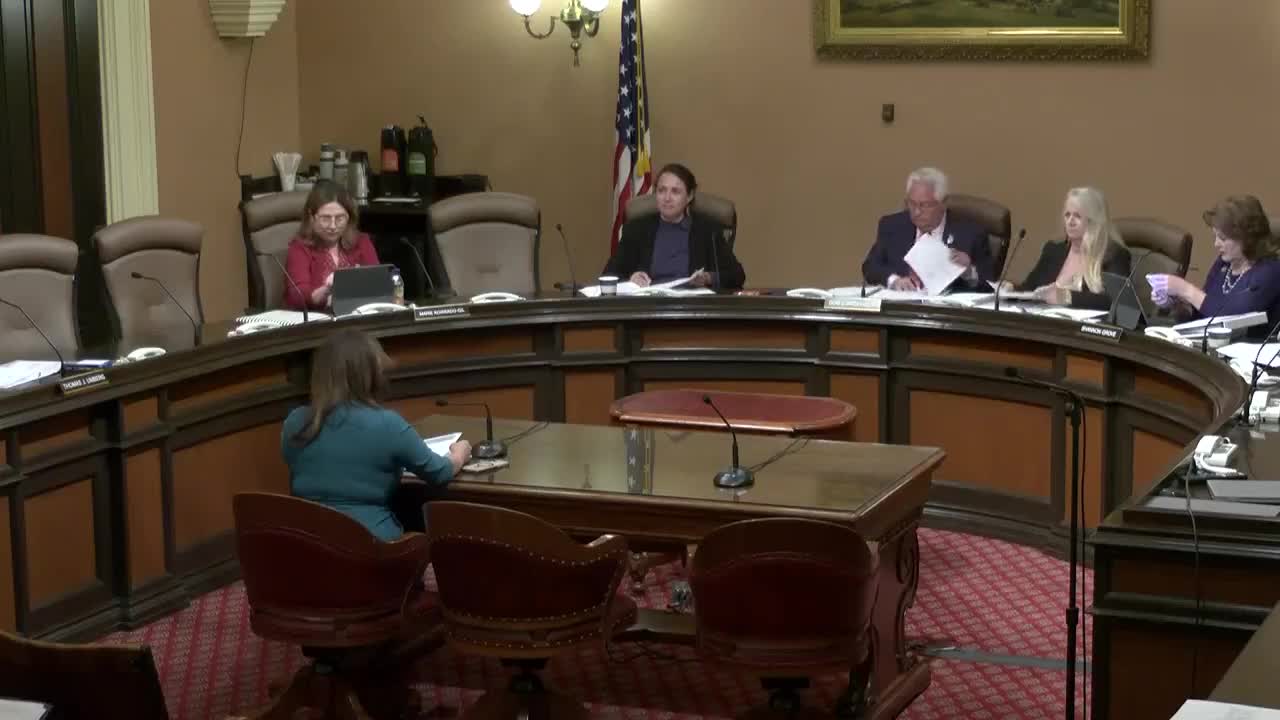
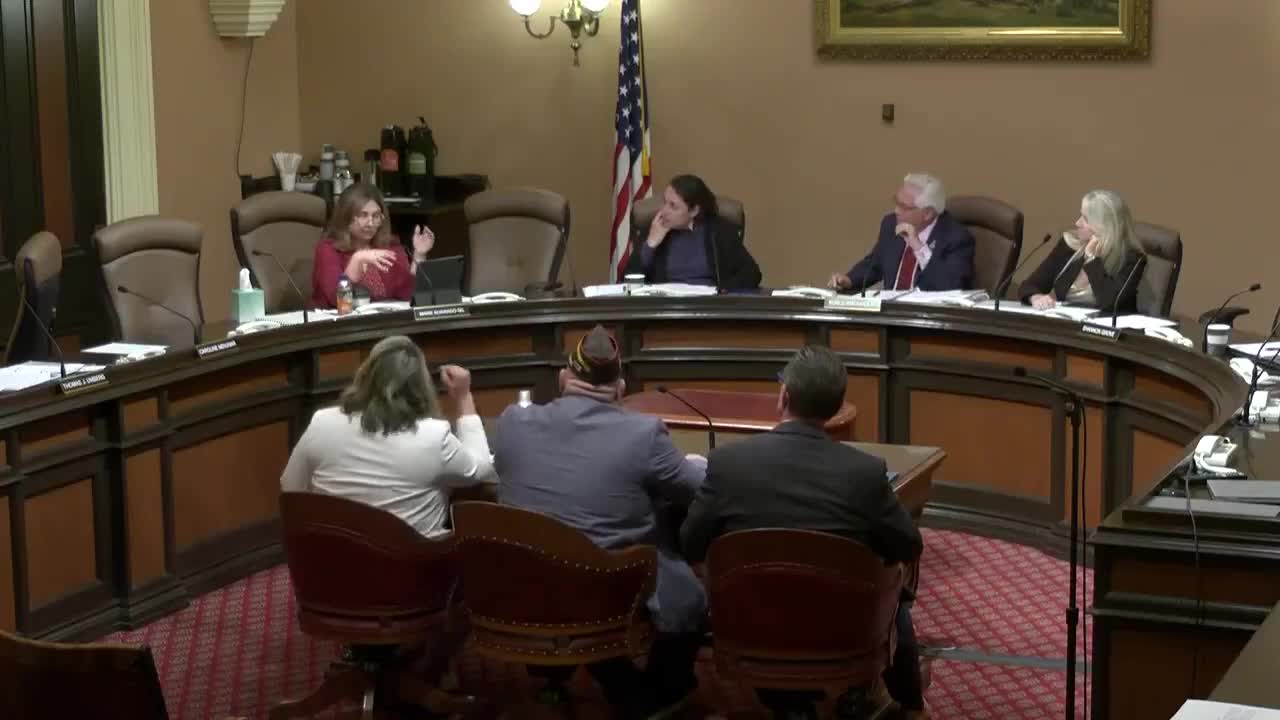
Discussed in Hearing
 5MIN
Senate Standing Committee on Military and Veterans Affairs
1MIN
Senate Standing Committee on Military and Veterans Affairs
 30SEC