SB 955: Office of Planning and Research: Infrastructure Gap-Fund Program.
- Session Year: 2023-2024
- House: Senate
- Latest Version Date: 2024-04-04
Current Status:
Failed
(2024-05-16: May 16 hearing: Held in committee and under submission.)
Introduced
In Committee
First Chamber
In Committee
Second Chamber
Enacted
Existing law establishes the Office of Planning and Research in the Governors office for the purpose of serving the Governor and the Governors cabinet as staff for long-range planning and research and constituting the comprehensive state planning agency. Existing law authorizes a local agency to finance infrastructure projects through various means, including by establishing an enhanced infrastructure financing district to finance public capital facilities or other specified projects of communitywide significance that provide significant benefits to the district or the surrounding community.
This bill would require the office, upon appropriation by the Legislature, to establish the Infrastructure Gap-Fund Program to provide grants to local agencies to develop and construct infrastructure projects, as defined. The bill would authorize the office to provide funding for up to 20% of a projects total cost, as specified. subject to specified requirements, including, among other things, that the office is prohibited from awarding a grant to a local agency unless the local agency provides funding that has been raised through local taxes for at least 10% of the infrastructure projects total cost. The bill would require the office to develop guidelines and criteria to implement the program. program that establish the criteria by which grant applications will be evaluated and funded. The bill would make these provisions operative January 1, 2027.
Existing law establishes the Office of Planning and Research in the Governors office for the purpose of serving the Governor and the Governors cabinet as staff for long-range planning and research and constituting the comprehensive state planning agency. Existing law authorizes a local agency to finance infrastructure projects through various means, including by establishing an enhanced infrastructure financing district to finance public capital facilities or other specified projects of communitywide significance that provide significant benefits to the district or the surrounding community.
This bill would require the office, upon appropriation by the Legislature, to establish the Infrastructure Gap-Fund Program to provide grants to assist local agencies in developing and constructing to develop and construct infrastructure projects. projects, as defined. The bill would authorize the office to provide funding for up to 20% of a projects total cost, as specified. The bill would require the office to develop guidelines and criteria to implement the program. The bill would make these provisions operative January 1, 2027.
Existing law establishes the Office of Planning and Research in the Governors office for the purpose of serving the Governor and the Governors cabinet as staff for long-range planning and research and constituting the comprehensive state planning agency. Existing law authorizes a local agency to finance infrastructure projects through various means, including by establishing an enhanced infrastructure financing district to finance public capital facilities or other specified projects of communitywide significance that provide significant benefits to the district or the surrounding community.
This bill would require the office, upon appropriation by the Legislature, to establish the Infrastructure Gap-Fund Program to provide grants to assist local agencies in developing and constructing infrastructure projects. The bill would require the office to develop guidelines and criteria to implement the program.
For the purposes of this article, the following definitions apply:
(a)Infrastructure project means a broadband, fire station, school, health and safety improvement, or road project.
(b)Local agency means a county, city, or a city and county.
(c)Program means the Infrastructure Gap-Fund Program established pursuant to Section 65059.6.
(d)Road project means a project that decreases vehicle miles traveled on roads and improves the public health, safety, and welfare.
65059.6.(a)Upon appropriation by the Legislature, the office shall establish the Infrastructure Gap-Fund Program to provide a grant to a local agency to develop and construct an infrastructure project.
(b)The office may award a grant that provides funding for up to 20 percent of an infrastructure projects total cost. In awarding a grant under the program, the office shall comply with all of the following:
(1)The office shall not award a grant to a local agency unless the local agency provides funding for at least 80 percent of the infrastructure projects total cost.
(2)The office shall not award a grant to a local agency unless the local agency provides funding that has been raised through local taxes for at least 10 percent of the infrastructure projects total cost.
(2)(3)The office shall award a grant only for an infrastructure project that has the necessary entitlements, permits and certifications that make the infrastructure project shovel-ready.
(3)The office shall prioritize lowest cost infrastructure projects.(c)The office shall develop guidelines and criteria to implement the program consistent with the requirements of this article. article that establish the criteria by which grant applications will be evaluated and funded.
(d)This section shall become operative on January 1, 2027.
For the purposes of this article, the following definitions apply:
(a)Infrastructure project means a broadband, fire station, school, health and safety improvement, or road project.
(a)(b)Local agency means a county, city, or a city and county.
(b)(c)Program means the Infrastructure Gap-Fund Program established pursuant to Section 65059.6.
(d)Road project means a project that decreases vehicle miles traveled on roads and improves the public health, safety, and welfare.
65059.6.(a)Upon appropriation by the Legislature, the office shall establish the Infrastructure Gap-Fund Program to provide grants a grant to assist a local agencies in developing and constructing agency to develop and construct an infrastructure projects, including, but not limited to, fire station, school, health and safety improvement, and road projects. project.
(b)The office may award a grant that provides funding for up to 20 percent of an infrastructure projects total cost. In awarding a grant under the program, the office shall comply with all of the following:
(1)The office shall not award a grant to a local agency unless the local agency provides funding for at least 80 percent of the infrastructure projects total cost.
(2)The office shall award a grant only for an infrastructure project that has the necessary entitlements, permits and certifications that make the infrastructure project shovel-ready.
(3)The office shall prioritize lowest cost infrastructure projects.
(b)(c)The office shall develop guidelines and criteria to implement the program. program consistent with the requirements of this article.
(d)This section shall become operative on January 1, 2027.
For the purposes of this article, the following definitions apply:
(a)Local agency means a county, city, or a city and county.
(b)Program means the Infrastructure Gap-Fund Program established pursuant to Section 65059.6.
65059.6.(a)Upon appropriation by the Legislature, the office shall establish the Infrastructure Gap-Fund Program to provide grants to assist local agencies in developing and constructing infrastructure projects, including, but not limited to, fire station, school, health and safety improvement, and road projects.
(b)The office shall develop guidelines and criteria to implement the program.
|
Date
|
Status
|
|---|---|
| May 16, 2024 | May 16 hearing: Held in committee and under submission. |
| May 10, 2024 | Set for hearing May 16. |
| Apr 15, 2024 | April 15 hearing: Placed on APPR suspense file. |
| Apr 9, 2024 | Set for hearing April 15. |
| Apr 4, 2024 | Read second time and amended. Re-referred to Com. on APPR. |
| Apr 3, 2024 | From committee: Do pass as amended and re-refer to Com. on APPR. (Ayes 6. Noes 0. Page 3469.) (April 3). |
| Mar 19, 2024 | From committee with author's amendments. Read second time and amended. Re-referred to Com. on L. GOV. |
| Mar 15, 2024 | Set for hearing April 3. |
| Mar 14, 2024 | March 20 set for first hearing canceled at the request of author. |
| Mar 6, 2024 | Set for hearing March 20. |
| Feb 21, 2024 | Referred to Com. on L. GOV. |
| Jan 23, 2024 | From printer. May be acted upon on or after February 22. |
| Jan 22, 2024 | Introduced. Read first time. To Com. on RLS. for assignment. To print. |
|
Date
|
Description
|
Location
|
Votes
|
|
|---|---|---|---|---|
| Apr 15, 2024 | Placed on suspense file | Senate Standing Committee on Appropriations |
Passed |
|
| Apr 3, 2024 | Do pass as amended, but first amend, and re-refer to the Committee on [Appropriations] | Senate Standing Committee on Local Government |
Passed |
This list shows positions taken on this bill by organizations on the date displayed, which is linked to the original source.
Positions by individuals are not included.
|
Organization
|
Position
|
Date
|
|---|---|---|
| California State Association Of Counties | ** Support | |
| Eastern Municipal Water District | * Support | Apr 3, 2024 |
| League Of California Cities | * Support | Apr 3, 2024 |
SENATE COMMITTEE ON
Senator Anna Caballero, Chair
2023 - 2024 Regular Session
SB 955 (Seyarto) - Office of Planning and Research: Infrastructure Gap-Fund Program
Version: | Policy Vote: |
Urgency: | Mandate: |
Hearing Date: | Consultant: |
Bill Summary:
SB 955 would require the Governor’s Office of Planning and Research (OPR) to establish the Infrastructure Gap-Fund (IGF) Program, upon appropriation by the Legislature after January 1, 2027, to provide grants to local agencies to develop and construct specified infrastructure projects.
Fiscal Impact:
- Unknown ongoing OPR costs, at least the high hundreds of thousands, and potentially in the low millions annually, for dedicated staff to develop and administer the IGF Program. Specific duties include coordination with local agency stakeholders, developing and adopting guidelines and regulations, issuing requests for funding proposals, providing technical assistance, reviewing applications, awarding funds, and conducting ongoing monitoring activities. Staff notes that these costs would only be incurred to the extent funding is appropriated for the program in the future, and the ultimate ongoing staffing needs would be partially dependent upon the amount of funding provided for the program. See Staff Comments. (General Fund)
- Ongoing General Fund cost pressures, at least in the tens of millions annually beginning on January 1, 2027, to provide funding for the IGF Program.
Background:
Existing law establishes OPR as the state’s chief planning agency and requires OPR to advise local governments in their planning responsibilities. Existing law establishes the position of federal grant administrator within the State Clearinghouse at OPR to serve as the state’s primary point of contact for information on federal grants. Among other things, the federal grant administrator is authorized to work with state and local government officials, nonprofits, foundations, higher education institutions, and other interested parties on applying for and managing federal grants, and to provide training to encourage and improve the ability to pursue and manage federal grants.
Existing law, as enacted by AB 2252 (Limón), Chap. 318/2018, requires the California State Library (CSL) to create a centralized location where entities seeking state grants could find information on all state-related grant programs. The law requires the CSL to create an interactive website identifying every grant administered by the state, and requires state agencies to register every grant they administer with the CSL before opening a solicitation or award process for distribution of the grant. The CSL subsequently established the California Grants Portal.
Proposed Law:
SB 955 would require OPR to establish the IGF Program, upon appropriation of funding by the Legislature, to provide grants to local agencies to develop and construct infrastructure projects. Specifically, this bill would:
- Specify that its provisions become operative on January 1, 2027.
- Define “infrastructure project” as a broadband, fire station, school, health and safety improvement, or road project. The bill further defines “road project” as a project that decreases vehicle miles traveled on roads and improves public health, safety, and welfare.
- Require OPR to develop guidelines and criteria to implement the program.
- Authorize OPR to award a grant that provides funding for up to 20% of a project’s total cost, and require OPR to comply with all of the following:
- OPR must not award a grant to a local agency unless the agency provides funding for at least 80% of the project’s total cost.
- OPR shall only award a grant for an infrastructure project that has necessary entitlements, permits, and certifications that make the project shovel-ready.
- OPR must prioritize lowest cost infrastructure projects.
Related Legislation:
ACA 1 (Aguiar-Curry), Chap. 173/2023, if approved by the voters, would allow a city, county, or special district to incur bonded indebtedness or impose specified special taxes to fund projects for affordable housing, permanent supportive housing, or public infrastructure with 55% voter approval, rather than the current requirement of 2/3 voter approval. ACA 1 will appear on the ballot for the November 5, 2024 general election.
AB 444 (Addis), which was held on this Committee’s Suspense File last year, would have required OPR, upon appropriation of funds by the Legislature, to develop and implement the California Defense Community Infrastructure Program to provide grants and technical assistance to local agencies for matching funds and other costs related to community improvements supportive of a military institution, as specified.
AB 972 (Maienschein), which was held on this Committee’s Suspense File last year, would have required OPR to convene a specified statewide, cross-agency Local Assistance and Grant Program Streamlining Workgroup by January 1, 2025 to centralize local assistance and develop a coordinated system to manage available state and federal funding, as specified.
Staff Comments:
The fiscal impacts of this bill would be largely dependent upon the amount of funding that would ultimately be appropriated by the Legislature for this program in the future. As an illustrative scenario, OPR estimates administrative costs of approximately $860,000 annually over seven years and the need for 4.5 PY of new staff, if the Legislature appropriated $20 million for the IGF Program. If the Legislature envisioned a much larger program and appropriated $200 million, OPR estimates administrative costs of approximately $1.3 million annually over seven years and the need for 7.0 PY of new staff. According to the Legislative Analyst’s Office, the General Fund faces a structural deficit in the tens of billions of dollars over the next several fiscal years. In light of the current budget challenges related to funding a new program, the author has included a delayed operative date of January 1, 2027.
-- END --
SENATE COMMITTEE ON LOCAL GOVERNMENT
Senator María Elena Durazo, Chair
2023 - 2024 Regular
Bill No: | SB 955 | Hearing Date: | 4/3/24 |
Author: | Seyarto | Fiscal: | Yes |
Version: | 3/19/24 | Consultant: | Goldberg |
Office of Planning and Research: Infrastructure Gap-Fund Program
Requires the Governor’s Office of Planning & Research to establish the Infrastructure Gap-Fund Program to provide grants to cities, counties, or a city and county.
Background
Ability of local governments to raise money locally. Funding and financing local government infrastructure is a core responsibility for local governments. How they have fulfilled this responsibility has changed over time in response to voter initiatives and state laws, as discussed as part of the Senate Governance & Finance Committee’s March 15, 2023, informational hearing titled “Bridging the Gap: Local Government Infrastructure” which examined the ability of local governments to build and maintain infrastructure. These changes include:
- Prior to the passage of Proposition 13 in 1978, cities, counties, and special districts could generally set property tax rates on property within their jurisdictions without an aggregate cap. Local governments could use that money to build infrastructure projects and meet other needs. If a local government wanted to pay to build infrastructure in an area it planned to develop, it could increase its property tax rates to pay for those projects. Local governments could also enact taxes by ordinance.
- Proposition 13 both limited the maximum amount of any ad valorem tax on real property at 1% of the property’s full cash value and imposed voter approval requirements for local taxes. The Legislature subsequently enacted the Mello-Roos Community Facilities Act of 1982, which allows counties, cities, special districts, and school districts to levy special taxes (parcel taxes) to finance a wide variety of public works, including parks, recreation centers, schools, libraries, child care facilities, and utility infrastructure. A Mello-Roos Community Facilities District (CFD) issues bonds against these special taxes to finance the projects for which it is formed.
- Many local governments also began requiring new developments to pay for the impacts they have on the community and the burden they impose on public services. When approving development projects, counties and cities can require the applicants to mitigate the project’s effects by paying mitigation fees, impact fees, or developer fees to fund sidewalks, parks, schools, fire stations, and much more.
- Some local governments used redevelopment agencies (RDAs) to finance infrastructure until RDAs were dissolved in 2011. RDAs used property tax increment financing (TIF) to pay for economic development projects in blighted areas. Generally, TIF involves a local government forming a district to issue bonds and uses the bond proceeds to pay project costs within the boundaries of a specified project area. To repay the bonds, the district captures the increased property tax revenues generated when the assessed property values increase within the project area.
- After RDAs were dissolved, the Legislature created other TIF tools in their place, including enhanced infrastructure financing districts (EIFDs). EIFDs can use TIF for projects of communitywide significance that provide significant benefits to the district or the surrounding community with an estimated useful life of 15 years or more. Once approved by the initiating city or county, an EIFD can receive funding from three revenue streams to fund its infrastructure financing plan. Similar to RDAs, EIFDs can use a portion of the property tax increment, if the local governments approve. They may also use money the infrastructure project generates, such as funds from user fees, public-private partnerships, loans, and grants. Finally, an EIFD may receive the local share of sales and use taxes (SUT) and transactions and use taxes (TUTs). Like an RDA, an EIFD may issue bonds backed by these taxes to pay for projects. Unlike RDAs, EIFDs do not have access to the school’s share of property tax revenue, and cannot require other taxing entities to participate, which means they do not have the same revenue-generating potential as RDAs.
As of March 2024, at least 26 local agencies have begun to form EIFDs and adopt their infrastructure-financing plans. While the Legislature has created other TIF tools, local agencies have rarely used them. Most recently, the Legislature authorized the creation of climate resilience districts, or CRDs (SB 852, Dodd, 2022). Like EIFDs, CRDs can use TIF, but they also have additional financing powers, such as levying assessments, to finance climate resilience projects.
ACA 1 (Aguiar-Curry). In addition to the tools noted above, the Legislature last year approved Assembly Constitutional Amendment (ACA) 1 (Aguiar-Curry) and placed it on the November 5, 2024, General Election ballot. If approved by voters, it will allow a city, county, or special district, to incur bonded indebtedness or impose specified special taxes to fund projects for affordable housing, permanent supportive housing, or public infrastructure with 55% voter approval, down from the current 66.67% requirement.
Finally, there are a number of state and federal programs (some of which are discussed below in the “Comments” section) to help local governments with infrastructure projects.
Proposed Law
Senate Bill 955 requires the Governor’s Office of Planning & Research (OPR) to, after receiving funding from the Legislature, create the Infrastructure Gap-Fund Program effective January 1, 2027. The bill requires OPR to develop guidelines and criteria to implement the program to provide grants to help local agencies complete broadband construction, fire stations, schools, health and safety improvements, and road projects that lead to a reduction in the vehicle miles traveled on roads and improve the public health, safety, and welfare. Under the bill:
Only cities, counties, or a city and county can receive a grant.
Grants are limited to a maximum of 20% of a project’s total cost.
Grants can only be awarded to projects that are shovel-ready.
- OPR must prioritize the lowest cost infrastructure projects.
Comments
1. Purpose of the bill. According to the author, “SB 955 is a long-overdue and strategic solution to California's infrastructure challenges. By establishing the ‘Gap Fund,’ we're not merely funding projects; we're paving the way for safer communities, opening doors to job opportunities, and steering our state towards economic progress. This bill is a robust step forward, a game-changer that will empower our cities to overcome their infrastructure hurdles and thrive.”
2. Should OPR fund the cheapest projects or the best projects? SB 955 grants broad discretion to OPR in setting up this fund and identifying projects. Other than directing OPR to fund the lowest cost projects first, the bill doesn’t provide the agency with any direction in terms of deciding which projects merit this type of state assistance and which do not.
Furthermore, funding – for example – three projects that cost $X instead of one project that may cost $3X may not be a good use of taxpayer dollars if the more expensive project has a significantly larger impact in terms of benefiting Californians than the cost of the three small projects combined. The Committee may wish to consider deleting the requirement for OPR to prioritize the lowest cost infrastructure projects and replacing it with one requiring OPR to adopt regulations to guide the Infrastructure Gap-Fund Program and establish the criteria by which applications will be evaluated and funded.
4. There are already numerous local assistance grant programs – is another one needed? There are also dozens of state and federal programs to provide additional funding, many of which can be found through the California Grants Portal. For example:
- The California Department of Transportation (Caltrans) has a specific Local Assistance Program that makes more than $1 billion dollars available to over 600 cities, counties and regional agencies every year. Caltrans estimates this program funds more than 1,200 new projects each year to help local governments improve their transportation infrastructure or provide transportation services.
- SB 156 (Budget & Fiscal Review Committee, 2021) created a $3.25 billion program to build state-owned open-access middle mile broadband infrastructure. The bill included an additional $2 billion grant funding for local communities – 50% reserved for rural areas and 50% for urban counties – to build the “last mile” of the broadband network to deliver service to Californians.
- The Governor’s Office of Emergency Services (OES) has more than $210 million in its Hazard Mitigation Grant Program to help local governments plan and build projects that can reduce the effects of future natural disasters.
- The State Transportation Commission will soon make more than $800 million available to local governments through the Trade Corridor Enhancement Program to pay for improvements on federally designated trade corridors
Given the number of grant funding options available to local entities, the Committee may wish to consider whether the program created by this bill is necessary.
5. Local participation & skin in the game. As described above, local governments have a variety of tools at their disposal to raise funds to pay for infrastructure projects, including TIF tools and potentially ACA 1. SB 955 provides funding to projects that don’t have enough funding from other sources to be completed. However, because the bill doesn’t require any local funding to be provided for a project – or even a demonstration that local voters were asked to approve funding – this bill may create an incentive for local governments to pursue projects that are underfunded and hope this program fills in the gap. The Committee may wish to consider whether it’s appropriate for the state’s taxpayers, via the “gap funding” envisioned by this bill, to be asked to fund local projects where the area’s voters have rejected, or may not have even been asked, to provide a local contribution.
Support and Opposition
(3/28/24)
Support: California State Association of Counties (CSAC)
League of California Cities
Opposition: None received.
-- END --
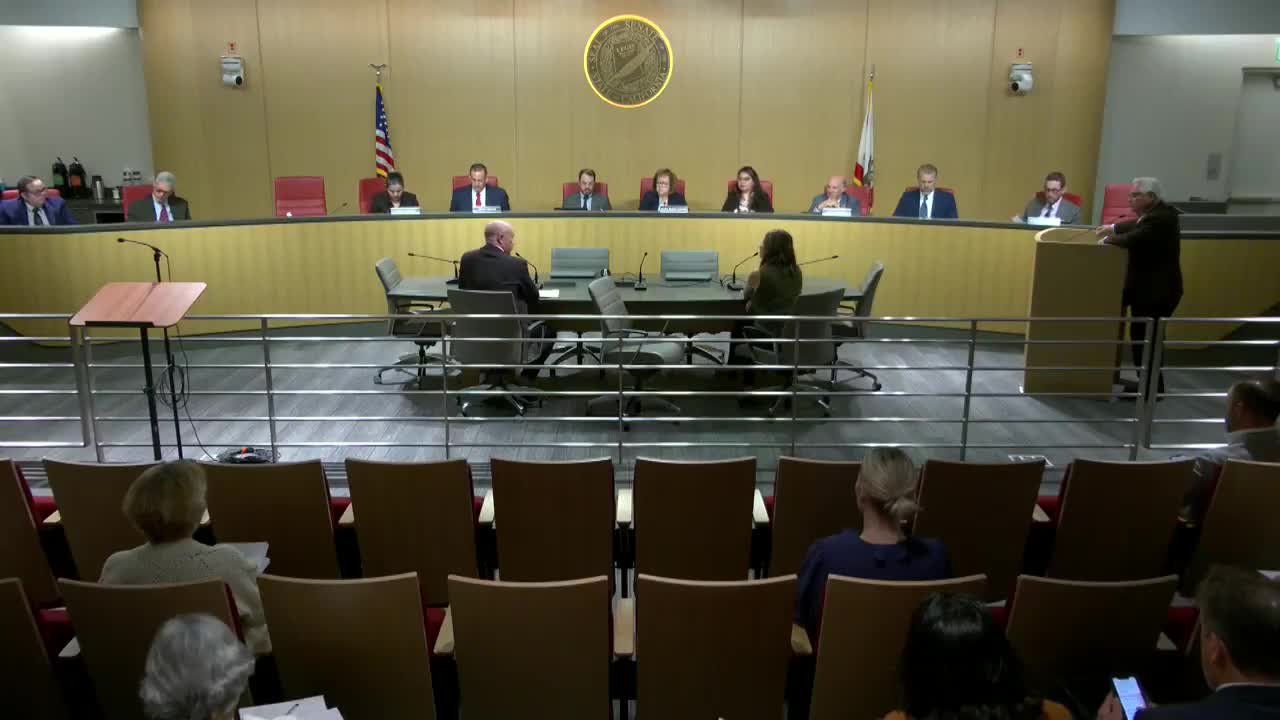
Discussed in Hearing
 6MIN
Senate Standing Committee on Local Government
Bill Author
Bill Co-Author(s):