SB 996: Comprehensive sexual health education and human immunodeficiency virus (HIV) prevention education.
- Session Year: 2023-2024
- House: Senate
- Latest Version Date: 2024-04-24
Current Status:
Failed
(2024-05-16: May 16 hearing: Held in committee and under submission.)
Introduced
In Committee
First Chamber
In Committee
Second Chamber
Enacted
The California Healthy Youth Act requires school districts, defined to include county boards of education, county superintendents of schools, the California School for the Deaf, the California School for the Blind, and charter schools, to ensure that all pupils in grades 7 to 12, inclusive, receive comprehensive sexual health education and human immunodeficiency virus (HIV) prevention education, as specified. The act authorizes a school district to provide that education earlier than grade 7 with age-appropriate and medically accurate information. The act requires each school district to notify parents and guardians of pupils about its plan to provide sexual health education and HIV prevention instruction for the upcoming school year and to inform them, among other things, that the written and audiovisual educational materials used in comprehensive sexual health education and HIV prevention education are available for inspection.
This bill would require the governing board of a school district to adopt a policy at a publicly noticed meeting specifying how parents and guardians of pupils may inspect the written and audiovisual educational materials used in comprehensive sexual health education and HIV prevention education, including that the materials, including updates or changes to the materials, are made available, within prescribed timeframes, at each schoolsite and, except as provided, publicly posted on the school districts internet website or, if applicable, on a school districts parent or guardian portal, as specified. By imposing additional duties on local educational agencies, the bill would impose a state-mandated local program.
The California Constitution requires the state to reimburse local agencies and school districts for certain costs mandated by the state. Statutory provisions establish procedures for making that reimbursement.
This bill would provide that, if the Commission on State Mandates determines that the bill contains costs mandated by the state, reimbursement for those costs shall be made pursuant to the statutory provisions noted above.
(a)Each school district shall ensure that all pupils in grades 7 to 12, inclusive, receive comprehensive sexual health education and HIV prevention education from instructors trained in the appropriate courses. Each pupil shall receive this instruction at least once in junior high or middle school and at least once in high school. This instruction shall include all of the following:
(1)Information on the nature of human immunodeficiency virus (HIV), as well as other sexually transmitted infections, and their effects on the human body.
(2)Information on the manner in which HIV and other sexually transmitted infections are and are not transmitted, including information on the relative risk of infection according to specific behaviors, including sexual activities and injection drug use.
(3)Information that abstinence from sexual activity and injection drug use is the only certain way to prevent HIV and other sexually transmitted infections and abstinence from sexual intercourse is the only certain way to prevent unintended pregnancy. This instruction shall provide information about the value of delaying sexual activity while also providing medically accurate information on other methods of preventing HIV and other sexually transmitted infections and pregnancy.
(4)Information about the effectiveness and safety of all federal Food and Drug Administration (FDA) approved methods that prevent or reduce the risk of contracting HIV and other sexually transmitted infections, including use of antiretroviral medication, consistent with the federal Centers for Disease Control and Prevention.
(5)Information about the effectiveness and safety of reducing the risk of HIV transmission as a result of injection drug use by decreasing needle use and needle sharing.
(6)Information about the treatment of HIV and other sexually transmitted infections, including how antiretroviral therapy can dramatically prolong the lives of many people living with HIV and reduce the likelihood of transmitting HIV to others.
(7)Discussion about social views on HIV and acquired immunodeficiency syndrome (AIDS), including addressing unfounded stereotypes and myths regarding HIV and AIDS and people living with HIV. This instruction shall emphasize that successfully treated HIV-positive individuals have a normal life expectancy, all people are at some risk of contracting HIV, and the only way to know if one is HIV-positive is to get tested.
(8)Information about local resources, how to access local resources, and pupils legal rights to access local resources for sexual and reproductive health care such as testing and medical care for HIV and other sexually transmitted infections and pregnancy prevention and care, as well as local resources for assistance with sexual assault and intimate partner violence.
(9)Information about the effectiveness and safety of all FDA-approved contraceptive methods in preventing pregnancy, including, but not limited to, emergency contraception. Instruction on pregnancy shall include an objective discussion of all legally available pregnancy outcomes, including, but not limited to, all of the following:
(A)Parenting, adoption, and abortion.
(B)Information on the law on surrendering physical custody of a minor child 72 hours of age or younger, pursuant to Section 1255.7 of the Health and Safety Code and Section 271.5 of the Penal Code.
(C)The importance of prenatal care.
(10)Information about sexual harassment, sexual assault, sexual abuse, and human trafficking. Information on human trafficking shall include both of the following:
(A) Information on the prevalence, nature, and strategies to reduce the risk of human trafficking, techniques to set healthy boundaries, and how to safely seek assistance.
(B)Information on how social media and mobile device applications are used for human trafficking.
(11)Information about adolescent relationship abuse and intimate partner violence, including the early warning signs thereof.
(b)A school district may provide optional instruction, as part of comprehensive sexual health education and HIV prevention education, regarding the potential risks and consequences of creating and sharing sexually suggestive or sexually explicit materials through cellular telephones, social networking internet websites, computer networks, or other digital media.
(c)A school district may provide comprehensive sexual health education or HIV prevention education consisting of age-appropriate instruction earlier than grade 7 using instructors trained in the appropriate courses. A school district that elects to offer comprehensive sexual health education or HIV prevention education earlier than grade 7 shall provide age-appropriate and medically accurate information on any of the general topics contained in paragraphs (1) to (11), inclusive, of subdivision (a) that it the school district chooses.
SEC. 2.Section 51938 of the Education Code is amended to read:51938.(a)(1)A parent or guardian of a pupil has the right to excuse their child from all or part of comprehensive sexual health education, HIV prevention education, and assessments related to that education through a passive consent (opt-out) process. A school district shall not require active parental consent (opt-in) for comprehensive sexual health education and HIV prevention education.
(2)The governing board of a school district shall adopt a policy at a publicly noticed meeting specifying how parents and guardians of pupils may inspect the written and audiovisual educational materials used in comprehensive sexual health education and HIV prevention education that is consistent with all of the following:
(A)The materials shall be made available at each schoolsite and publicly posted on the school districts internet website, if the school district maintains an internet website or upon establishing an internet website. If the school district is not authorized to post the materials on its publicly available internet website due to copyright protections, the material shall be made available through a parent or guardian portal if the school district already maintains a portal or upon establishing a portal.
(B)The materials shall be made available at each schoolsite and publicly posted on the school districts internet website, and, if applicable, through a parent or guardian portal, pursuant to subparagraph (A), within 30 days of adoption of the policy, but in no event later than 14 days before the instruction is given.
(C)Updates or changes to the materials shall be made available at each schoolsite and publicly posted on the school districts internet website, and, if applicable, through a parent or guardian portal pursuant to subparagraph (A), within 30 days of adoption of the updates or changes to the materials, but in no event later than 14 days before the instruction is given.
(D)(i)Except as provided in clause (ii), if a school contracts with outside consultants or guest speakers pursuant to Section 51936, materials to be used by the outside consultants or guest speakers shall be made available at each schoolsite and publicly posted on the school districts internet website, and, if applicable, through a parent or guardian portal, pursuant to subparagraph (A), within 30 days of contracting with the outside consultants or guest speakers, but in no event later than 14 days before the instruction is given.
(ii)Materials to be used by outside consultants or guest speakers that were contracted for before January 1, 2025, pursuant to Section 51936 shall be made available at each schoolsite and publicly posted on the school districts internet website, and, if applicable, through a parent or guardian portal, pursuant to subparagraph (A), within 30 days of adoption of the policy, but in no event later than 14 days before the instruction is given.
(E)The requirements of subparagraphs (A) to (C), inclusive, also apply to materials adopted by the governing board of the school district before January 1, 2025.
(b)At the beginning of each school year, or, for a pupil who enrolls in a school after the beginning of the school year, at the time of that pupils enrollment, each school district shall notify the parent or guardian of each pupil about instruction in comprehensive sexual health education and HIV prevention education and research on pupil health behaviors and risks planned for the coming year. The notice shall do all of the following:
(1)Advise the parent or guardian that written and audiovisual educational materials used in comprehensive sexual health education and HIV prevention education are available for inspection pursuant to the policy adopted by the school district pursuant to subdivision (a).
(2)Advise the parent or guardian whether the comprehensive sexual health education or HIV prevention education will be taught by school district personnel or by outside consultants. A school district may provide comprehensive sexual health education or HIV prevention education, to be taught by outside consultants, and may hold an assembly to deliver comprehensive sexual health education or HIV prevention education by guest speakers, but if the school district elects to provide comprehensive sexual health education or HIV prevention education in either of these manners, the notice shall include the date of the instruction, the name of the organization or affiliation of each guest speaker, and information stating the right of the parent or guardian to request a copy of this section, and Sections 51933 and 51934. If arrangements for this instruction are made after the beginning of the school year, notice shall be made by mail or another commonly used method of notification, no fewer than 14 days before the instruction is delivered.
(3)Include information explaining the parents or guardians right to request a copy of this chapter.
(4)Advise the parent or guardian that the parent or guardian has the right to excuse their child from comprehensive sexual health education and HIV prevention education and that in order to excuse their child they must state their request in writing to the school district.
(c)Notwithstanding Section 51513, anonymous, voluntary, and confidential research and evaluation tools to measure pupils health behaviors and risks, including tests, questionnaires, and surveys containing age-appropriate questions about the pupils attitudes concerning or practices relating to sex, may be administered to any pupil in grades 7 to 12, inclusive. A parent or guardian has the right to excuse their child from the test, questionnaire, or survey through a passive consent (opt-out) process. A school district shall not require active parental consent (opt-in) for these tests, questionnaires, or surveys in grades 7 to 12, inclusive. Parents or guardians shall be notified in writing that this test, questionnaire, or survey is to be administered, given the opportunity to review the test, questionnaire, or survey if they wish, notified of their right to excuse their child from the test, questionnaire, or survey, and informed that in order to excuse their child they must state their request in writing to the school district.
(d)The use of outside consultants or guest speakers as described in paragraph (2) of subdivision (b) is within the discretion of the school district.
SEC. 3.If the Commission on State Mandates determines that this act contains costs mandated by the state, reimbursement to local agencies and school districts for those costs shall be made pursuant to Part 7 (commencing with Section 17500) of Division 4 of Title 2 of the Government Code.
(a)Each school district shall ensure that all pupils in grades 7 to 12, inclusive, receive comprehensive sexual health education and HIV prevention education from instructors trained in the appropriate courses. Each pupil shall receive this instruction at least once in junior high or middle school and at least once in high school. This instruction shall include all of the following:
(1)Information on the nature of HIV, human immunodeficiency virus (HIV), as well as other sexually transmitted infections, and their effects on the human body.
(2)Information on the manner in which HIV and other sexually transmitted infections are and are not transmitted, including information on the relative risk of infection according to specific behaviors, including sexual activities and injection drug use.
(3)Information that abstinence from sexual activity and injection drug use is the only certain way to prevent HIV and other sexually transmitted infections and abstinence from sexual intercourse is the only certain way to prevent unintended pregnancy. This instruction shall provide information about the value of delaying sexual activity while also providing medically accurate information on other methods of preventing HIV and other sexually transmitted infections and pregnancy.
(4)Information about the effectiveness and safety of all federal Food and Drug Administration (FDA) approved methods that prevent or reduce the risk of contracting HIV and other sexually transmitted infections, including use of antiretroviral medication, consistent with the federal Centers for Disease Control and Prevention.
(5)Information about the effectiveness and safety of reducing the risk of HIV transmission as a result of injection drug use by decreasing needle use and needle sharing.
(6)Information about the treatment of HIV and other sexually transmitted infections, including how antiretroviral therapy can dramatically prolong the lives of many people living with HIV and reduce the likelihood of transmitting HIV to others.
(7)Discussion about social views on HIV and AIDS, acquired immunodeficiency syndrome (AIDS), including addressing unfounded stereotypes and myths regarding HIV and AIDS and people living with HIV. This instruction shall emphasize that successfully treated HIV-positive individuals have a normal life expectancy, all people are at some risk of contracting HIV, and the only way to know if one is HIV-positive is to get tested.
(8)Information about local resources, how to access local resources, and pupils legal rights to access local resources for sexual and reproductive health care such as testing and medical care for HIV and other sexually transmitted infections and pregnancy prevention and care, as well as local resources for assistance with sexual assault and intimate partner violence.
(9)Information about the effectiveness and safety of all FDA-approved contraceptive methods in preventing pregnancy, including, but not limited to, emergency contraception. Instruction on pregnancy shall include an objective discussion of all legally available pregnancy outcomes, including, but not limited to, all of the following:
(A)Parenting, adoption, and abortion.
(B)Information on the law on surrendering physical custody of a minor child 72 hours of age or younger, pursuant to Section 1255.7 of the Health and Safety Code and Section 271.5 of the Penal Code.
(C)The importance of prenatal care.
(10)Information about sexual harassment, sexual assault, sexual abuse, and human trafficking. Information on human trafficking shall include both of the following:
(A) Information on the prevalence, nature, and strategies to reduce the risk of human trafficking, techniques to set healthy boundaries, and how to safely seek assistance.
(B)Information on how social media and mobile device applications are used for human trafficking.
(11)Information about adolescent relationship abuse and intimate partner violence, including the early warning signs thereof.
(b)A school district may provide optional instruction, as part of comprehensive sexual health education and HIV prevention education, regarding the potential risks and consequences of creating and sharing sexually suggestive or sexually explicit materials through cellular telephones, social networking Internet Web sites, internet websites, computer networks, or other digital media.
(c)A school district may provide comprehensive sexual health education or HIV prevention education consisting of age-appropriate instruction earlier than grade 7 using instructors trained in the appropriate courses. A school district that elects to offer comprehensive sexual health education or HIV prevention education earlier than grade 7 may shall provide age appropriate age-appropriate and medically accurate information on any of the general topics contained in paragraphs (1) to (11), inclusive, of subdivision (a). (a) that it chooses.
SEC. 2.Section 51938 of the Education Code is amended to read:51938.(a)(1)A parent or guardian of a pupil has the right to excuse their child from all or part of comprehensive sexual health education, HIV prevention education, and assessments related to that education through a passive consent (opt-out) process. A school district shall not require active parental consent (opt-in) for comprehensive sexual health education and HIV prevention education.
(2)The governing board of a school district shall adopt a policy at a publicly noticed meeting specifying how parents and guardians of pupils may inspect the written and audiovisual educational materials used in comprehensive sexual health education and HIV prevention education that is consistent with all of the following:
(A)The materials shall be made available at each schoolsite and publicly posted on the school districts internet website, if the school district maintains an internet website or upon establishing an internet website. If the school district is not authorized to post the materials on its publicly available internet website due to copyright protections, the material shall be made available through a parent or guardian portal if the school district already maintains a portal or upon establishing a portal.
(B)The materials shall be made available at each schoolsite and publicly posted on the school districts internet website, and, if applicable, through a parent or guardian portal, pursuant to subparagraph (A), within 30 days of adoption of the policy, but in no event later than 14 days before the instruction is given.
(C)Updates or changes to the materials shall be made available at each schoolsite and publicly posted on the school districts internet website, and, if applicable, through a parent or guardian portal pursuant to subparagraph (A), within 30 days of adoption of the updates or changes to the materials, but in no event later than 14 days before the instruction is given.
(D)(i)Except as provided in clause (ii), if a school contracts with outside consultants or guest speakers pursuant to Section 51936, materials to be used by the outside consultants or guest speakers shall be made available at each schoolsite and publicly posted on the school districts internet website, and, if applicable, through a parent or guardian portal, pursuant to subparagraph (A), within 30 days of contracting with the outside consultants or guest speakers, but in no event later than 14 days before the instruction is given.
(ii)Materials to be used by outside consultants or guest speakers that were contracted for before January 1, 2025, pursuant to Section 51936 shall be made available at each schoolsite and publicly posted on the school districts internet website, and, if applicable, through a parent or guardian portal, pursuant to subparagraph (A), within 30 days of adoption of the policy, but in no event later than 14 days before the instruction is given.
(E)The requirements of subparagraphs (A) to (C), inclusive, also apply to materials adopted by the governing board of the school district before January 1, 2025.
(b)At the beginning of each school year, or, for a pupil who enrolls in a school after the beginning of the school year, at the time of that pupils enrollment, each school district shall notify the parent or guardian of each pupil about instruction in comprehensive sexual health education and HIV prevention education and research on pupil health behaviors and risks planned for the coming year. The notice shall do all of the following:
(1)Advise the parent or guardian that written and audiovisual educational materials used in comprehensive sexual health education and HIV prevention education are available for inspection. inspection pursuant to the policy adopted by the school district pursuant to subdivision (a).
(2)Advise the parent or guardian whether the comprehensive sexual health education or HIV prevention education will be taught by school district personnel or by outside consultants. A school district may provide comprehensive sexual health education or HIV prevention education, to be taught by outside consultants, and may hold an assembly to deliver comprehensive sexual health education or HIV prevention education by guest speakers, but if it the school district elects to provide comprehensive sexual health education or HIV prevention education in either of these manners, the notice shall include the date of the instruction, the name of the organization or affiliation of each guest speaker, and information stating the right of the parent or guardian to request a copy of this section, Section 51933, and Section Sections 51933 and 51934. If arrangements for this instruction are made after the beginning of the school year, notice shall be made by mail or another commonly used method of notification, no fewer than 14 days before the instruction is delivered.
(3)Include information explaining the parents or guardians right to request a copy of this chapter.
(4)Advise the parent or guardian that the parent or guardian has the right to excuse their child from comprehensive sexual health education and HIV prevention education and that in order to excuse their child they must state their request in writing to the school district.
(c)Notwithstanding Section 51513, anonymous, voluntary, and confidential research and evaluation tools to measure pupils health behaviors and risks, including tests, questionnaires, and surveys containing age-appropriate questions about the pupils attitudes concerning or practices relating to sex, may be administered to any pupil in grades 7 to 12, inclusive. A parent or guardian has the right to excuse their child from the test, questionnaire, or survey through a passive consent (opt-out) process. A school district shall not require active parental consent (opt-in) for these tests, questionnaires, or surveys in grades 7 to 12, inclusive. Parents or guardians shall be notified in writing that this test, questionnaire, or survey is to be administered, given the opportunity to review the test, questionnaire, or survey if they wish, notified of their right to excuse their child from the test, questionnaire, or survey, and informed that in order to excuse their child they must state their request in writing to the school district.
(d)The use of outside consultants or guest speakers as described in paragraph (2) of subdivision (b) is within the discretion of the school district.
SEC. 3.If the Commission on State Mandates determines that this act contains costs mandated by the state, reimbursement to local agencies and school districts for those costs shall be made pursuant to Part 7 (commencing with Section 17500) of Division 4 of Title 2 of the Government Code.
|
Date
|
Status
|
|---|---|
| May 16, 2024 | May 16 hearing: Held in committee and under submission. |
| May 10, 2024 | Set for hearing May 16. |
| Apr 29, 2024 | April 29 hearing: Placed on APPR suspense file. |
| Apr 24, 2024 | From committee with author's amendments. Read second time and amended. Re-referred to Com. on APPR. |
| Apr 22, 2024 | Set for hearing April 29. |
| Apr 17, 2024 | From committee: Do pass and re-refer to Com. on APPR. (Ayes 5. Noes 1. Page 3659.) (April 17). Re-referred to Com. on APPR. |
| Apr 4, 2024 | Set for hearing April 17. |
| Feb 14, 2024 | Referred to Com. on ED. |
| Feb 1, 2024 | From printer. May be acted upon on or after March 2. |
| Jan 31, 2024 | Introduced. Read first time. To Com. on RLS. for assignment. To print. |
|
Date
|
Description
|
Location
|
Votes
|
|
|---|---|---|---|---|
| Apr 29, 2024 | Placed on suspense file | Senate Standing Committee on Appropriations |
Passed |
|
| Apr 17, 2024 | Do pass, but first be re-referred to the Committee on [Appropriations] | Senate Standing Committee on Education |
Passed |
This list shows positions taken on this bill by organizations on the date displayed, which is linked to the original source.
Positions by individuals are not included.
|
Organization
|
Position
|
Date
|
|---|---|---|
| American College Of Obstetricians And Gynecologists District Ix | ** Against | |
| Association Of California School Administrators | * Against | Apr 17, 2024 |
| California Catholic Conference | ** Support | |
| Moms for Liberty, Yolo County | * Support | Apr 17, 2024 |
| Our Duty | * Support | Apr 17, 2024 |
| Planned Parent Affiliates of California | * Against | Apr 17, 2024 |
| Protection of the Educational Rights of Kids - Advocacy | ** Support | |
| The American Council | * Support | Apr 17, 2024 |
SENATE COMMITTEE ON
Senator Anna Caballero, Chair
2023 - 2024 Regular Session
SB 996 (Wilk) - Comprehensive sexual health education and human immunodeficiency virus (HIV) prevention education
Version: | Policy Vote: |
Urgency: | Mandate: |
Hearing Date: | Consultant: |
Bill Summary:
This bill requires school districts to adopt a policy at a publicly noticed meeting specifying how parents and guardians of pupils may inspect the written and audiovisual educational materials used in comprehensive sexual health education and HIV prevention education.
Fiscal Impact:
This bill could result in significant and ongoing reimbursable state mandated costs for school districts to adopt a policy and establish procedures for parents to inspect the educational materials. A precise estimate is unknown but it could potentially be in the low to mid hundreds of thousands of dollars each year (Proposition 98 General Fund).
Background:
Existing law establishes the California Healthy Youth Act (CHYA), which requires schools operated by school districts (defined as school districts, charter schools, county boards of education, county superintendents of schools, and the California Schools for the Deaf and for the Blind), to provide comprehensive sexual health and HIV prevention instruction to all students in grades 7 to 12, at least once in middle school and once in high school. The law provides that pupils in grades 7 to 12, inclusive, receive comprehensive sexual health education at least once in junior high or middle school and at least once in high school. Additionally, the CHYA affords parents the right to opt their child out of part, or all, of the instruction and requires school districts to notify parents and guardians of this right.
Comprehensive sexual health education in lower grades is optional. Under existing law, for grades 6 and below, a district must “opt-in” to offer that instruction to students. The school district is then required by law to notify parents and guardians of their right to “opt-out” their child, whether in part or completely. Existing law requires that all comprehensive sexual health education be age-appropriate, medically accurate, and objective – regardless of grade. According to the CDE, in elementary school it is permissible to teach knowledge and skills related to comprehensive sexual health and HIV prevention education in grades kindergarten through grade six (K–6), inclusive. All instruction and materials in grades K–6 must meet the instructional criteria or baseline requirements of the CHYA and the content that is required in grades 7–12 may be also be included in an age-appropriate way in earlier grades.
Proposed Law:
This bill requires school districts to adopt a policy at a publicly noticed meeting specifying how parents and guardians of pupils may inspect the written and audiovisual educational materials used in comprehensive sexual health education and HIV prevention education that is consistent with all of the following:
a) The materials shall be made available at each schoolsite and publicly posted on the district’s internet website, as specified.
b) If the district is not authorized to post the materials on its publicly available internet website due to copyright protections, the material shall be made available through a parent or guardian portal if the school district already maintains a portal or upon establishing a portal.
c) The materials and updates or changes to the materials shall be made available at each schoolsite and publicly posted on the district’s internet website, and, if applicable, through a parent or guardian portal, within 30 days of adoption of the policy, but in no event later than 14 days before the instruction is given.
d) Updates or changes to the materials shall be made available at each schoolsite and publicly posted on the district’s internet website, and, if applicable, through a parent or guardian portal, within 30 days of adoption of the updates or changes to the materials, but in no event later than 14 days before the instruction is given.
e) If a school district contracts with outside consultants or guest speakers, the materials to be used by the outside consultants or guest speakers shall be made available at each schoolsite and publicly posted on the district’s internet website, and, if applicable, through a parent or guardian portal, within 30 days of contracting with the outside consultants or guest speakers, but in no event later than 14 days before the instruction is given.
f) Specifically for outside consultants or guest speakers that were contracted for before January 1, 2025, the materials to be used by be made available at each schoolsite and publicly posted on the district’s internet website, and if applicable, through a parent or guardian portal, as specified.
This bill applies these requirements to materials adopted by the governing board of the school district before January 1, 2025.
Related Legislation:
SB 1222 (Dahle, 2022), similar to this bill, would have required school districts to adopt a policy specifying how parents and guardians may inspect the written and audiovisual educational materials used in comprehensive sexual health education and HIV prevention education. This bill failed passage in the Senate Education Committee.
SB 217 (Dahle, 2021) was also similar to this bill and held on the Suspense File in this Committee.
Staff Comments:
Existing law requires LEAs to notify parents and guardians of their right to inspect written and audiovisual materials. However, existing law does not prescribe how that inspection must be implemented. This bill requires school districts to adopt a policy at a publicly noticed meeting specifying how parents may inspect the written and audiovisual educational materials used in comprehensive sexual health education and HIV prevention education. It provides certain criteria for this policy, including the requirement that the materials be made available at each schoolsite and posted on the district’s website or a parent portal. These implementation requirements are likely to constitute a new reimbursable mandate. School districts will incur costs to establish procedures for the new policy, notify the appropriate parties, and provide guidance regarding the bill’s requirements, among other things. The extent of these costs will depend upon how the new mandate is implemented at the local level. Some districts will only have minor costs, and may not seek reimbursement for these changes. However, if there are districts that file a mandate claim, the activities are likely to be deemed reimbursable by the Commission on State Mandates.
-- END --
SENATE COMMITTEE ON EDUCATION
Senator Josh Newman, Chair
2023 - 2024 Regular
Bill No: SB 996 Hearing Date: April 17, 2024
Author: | |||
Version: | January 31, 2024 | ||
Urgency: | No | Fiscal: | Yes |
Consultant: | Kordell Hampton | ||
Subject: Comprehensive sexual health education and human immunodeficiency virus (HIV) prevention education.
SUMMARY
This bill amends the California Healthy Youth Act (CHYA) by requiring local educational agencies (LEAs) to adopt a policy at a publicly noticed meeting specifying how parents and guardians of pupils may inspect the written and audiovisual educational materials used in comprehensive sexual health education and HIV prevention education.
BACKGROUND
Existing law:
Education Code (EC)
- Provides that the parent or guardian of a pupil has the right to excuse their child from all or part of that education, including related assessments, through a passive consent (“opt-out”) process. (EC § 51938)
- Requires LEAs, at the beginning of each school year, or, for a pupil who enrolls in a school after the beginning of the school year, at the time of that pupil’s enrollment, to provide parents and guardians with a notice:
a) About instruction in comprehensive sexual health education and HIV prevention education and research on pupil health behaviors and risks planned for the coming year.
b) Advise the parent or guardian that the educational materials used in sexual health education are available for inspection.
c) Advise the parent or guardian whether the comprehensive sexual health education or HIV prevention education will be taught by school district personnel or by outside consultant, as provided.
d) Advise the parent or guardian that the parent or guardian has the right to excuse their child from comprehensive sexual health education and HIV prevention education and that in order to excuse their child they must state their request in writing to the LEA. (EC § 51938)
- Requires all notices, reports, statements, and records sent to the parent or guardian of any pupil by the public school or school district, if 15 percent or more of the pupils enrolled in a public school that provides instruction in kindergarten or any of grades 1 to 12, inclusive, speak a single primary language other than English, as determined from the census data submitted to the California Department of Education (CDE) in the preceding year, to be written in that primary language, in addition to English, and may be responded to either in English or the primary language. (EC § 48985)
- Requires that pupils in grades 7 to 12, inclusive, receive comprehensive sexual health education at least once in junior high or middle school and at least once in high school that includes the following
- Information on the nature of HIV, as well as other sexually transmitted infections, and their effects on the human body.
- Information on the manner in which HIV and other sexually transmitted infections are and are not transmitted, including information on the relative risk of infection according to specific behaviors, including sexual activities and injection drug use.
- Information that abstinence from sexual activity and injection drug use is the only certain way to prevent HIV and other sexually transmitted infections and abstinence from sexual intercourse is the only certain way to prevent unintended pregnancy. This instruction shall provide information about the value of delaying sexual activity while also providing medically accurate information on other methods of preventing HIV and other sexually transmitted infections and pregnancy.
- Information about the effectiveness and safety of all federal Food and Drug Administration (FDA) approved methods that prevent or reduce the risk of contracting HIV and other sexually transmitted infections, including use of antiretroviral medication, consistent with the federal Centers for Disease Control and Prevention.
- Information about the effectiveness and safety of reducing the risk of HIV transmission as a result of injection drug use by decreasing needle use and needle sharing.
- Information about the treatment of HIV and other sexually transmitted infections, including how antiretroviral therapy can dramatically prolong the lives of many people living with HIV and reduce the likelihood of transmitting HIV to others.
- Discussion about social views on HIV and AIDS, including addressing unfounded stereotypes and myths regarding HIV and AIDS and people living with HIV. This instruction shall emphasize that successfully treated HIV-positive individuals have a normal life expectancy, all people are at some risk of contracting HIV, and the only way to know if one is HIV-positive is to get tested.
- Information about local resources, how to access local resources, and pupils’ legal rights to access local resources for sexual and reproductive health care such as testing and medical care for HIV and other sexually transmitted infections and pregnancy prevention and care, as well as local resources for assistance with sexual assault and intimate partner violence.
- Information about the effectiveness and safety of all FDA-approved contraceptive methods in preventing pregnancy, including, but not limited to, emergency contraception. Instruction on pregnancy shall include an objective discussion of all legally available pregnancy outcomes, including, but not limited to, all of the following:
- Information about sexual harassment, sexual assault, sexual abuse, and human trafficking. Information on human trafficking shall include both of the following:
- Information about adolescent relationship abuse and intimate partner violence, including the early warning signs thereof. (EC § 51934)
- Authorizes an LEA to provide comprehensive sexual health education and HIV prevention education earlier than grade 7 using instructors trained in the appropriate courses and age-appropriate and medically-accurate information. (EC § 51933)
- Requires all primary supplemental instructional materials and assessments, including textbooks, teacher’s manuals, films, audio and video recordings, and software shall be compiled and stored by the classroom instructor and made available promptly for inspection by a parent or guardian in a reasonable timeframe or in accordance with procedures determined by the governing board of the school district. (EC § 49091.10)
ANALYSIS
This bill:
- Requires the governing board of an LEA to adopt, at a publicly noticed meeting, a policy specifying how parents and guardians of pupils may inspect the written and audiovisual educational materials used in comprehensive sexual health education and HIV prevention education consistent with the following requirements:
a) The materials shall be made available at each schoolsite and publicly posted on the LEA’s internet website, if the LEA maintains an internet website or upon establishing an internet website.
b) If the LEA is not authorized to post the materials on its publicly available internet website due to copyright protections, the material shall be made available through a parent or guardian portal if the school district already maintains a portal or upon establishing a portal.
c) The materials and updates or changes to the materials shall be made available at each schoolsite and publicly posted on the LEA’s internet website, and, if applicable, through a parent or guardian portal, within 30 days of adoption of the policy, but in no event later than 14 days before the instruction is given.
d) Updates or changes to the materials shall be made available at each schoolsite and publicly posted on the LEA’s internet website, and, if applicable, through a parent or guardian portal, within 30 days of adoption of the updates or changes to the materials, but in no event later than 14 days before the instruction is given.
e) If a school district contracts with outside consultants or guest speakers, the materials to be used by the outside consultants or guest speakers shall be made available at each schoolsite and publicly posted on the LEA’s internet website, and, if applicable, through a parent or guardian portal, within 30 days of contracting with the outside consultants or guest speakers, but in no event later than 14 days before the instruction is given.
f) Specifically for outside consultants or guest speakers that were contracted for before January 1, 2025, the materials to be used by be made available at each schoolsite and publicly posted on the LEA’s internet website, and if applicable, through a parent or guardian portal, pursuant to subparagraph (A), within 30 days of adoption of the policy, but in no event later than 14 days before the instruction is given.
- Applies these requirements to materials adopted by the governing board of the school district before January 1, 2025.
STAFF COMMENTS
- Need for the bill. According to the author, “Schools are required to teach sexual education, but it is a sensitive subject and parents are often in the dark about what their child is learning. This bill fosters collaboration and open dialogue between parents, their children, and schools to ensure the education they receive is appropriate and aligns with their values. Many parents feel like they don’t have a seat at the table. By having this information readily available online, they can easily stay informed and feel empowered to become more involved in their child’s education.”
- California Healthy Youth Act. The CHYA took effect in 2003 and was initially known as the Comprehensive Sexual Health and HIV/AIDS Prevention Education Act. Originally, the act LEAs to provide comprehensive sexual health education in any grade, including kindergarten, so long as it consisted of age-appropriate instruction and used instructors trained in the appropriate courses. Beginning in 2016 with AB 329 (Weber, 2015), the act was renamed the CHYA and, for the first time, required LEAs, excluding charter schools, to provide comprehensive sexual health education and HIV prevention education to all students at least once in middle school and at least once in high school. Charter schools must also provide that same instruction. From its inception in 2003 through today, the CHYA has always afforded parents the right to opt their child out of a portion, or all, of the instruction and required LEAs to notify parents and guardians of this right. Parents and guardians can exercise this right by informing the LEA in writing of their decision.
- Right to inspection. Existing law requires LEAs to notify parents and guardians of their right to inspect written and audiovisual materials. Statute requires all primary supplemental instructional materials and assessments, including textbooks, teacher’s manuals, films, audio and video recordings, and software shall be compiled and stored by the classroom instructor and be made available or inspection by a parent or guardian in a reasonable timeframe or in accordance with procedures determined by the governing board of the school district.
This bill proposes to prescribe, only for materials related to comprehensive sexual health and HIV prevention education, parameters for inspection, including that materials be translated, available online, and before the date of instruction. While this bill only applies to CHYA, should these parameters apply to other education subject areas?
- Comprehensive sexual health education in lower grades. Comprehensive sexual health education in lower grades has always been, and remains, optional. Under existing law, for grades 6 and below, an LEA must “opt-in” to offer that instruction to students. The LEA is then required by law to notify parents and guardians of their right to “opt-out” their child, whether in part or completely. All instruction and materials in grades K–6 must meet the instructional criteria or baseline requirements of the CHYA and the content that is required in grades 7–12 may be also be included in an age-appropriate way in earlier grades.
- Related Legislation.
SB 1222 (Dahle, 2022) would have This bill amends the CHYA by requiring LEA to adopt a policy at a publicly noticed meeting specifying how parents and guardians of pupils may inspect the written and audiovisual educational materials used in comprehensive sexual health education and HIV prevention education. SB 1222 died in Senate Education Committee.
SB 217 (Dahle, 2021) was a previous iteration of SB 1222 (Dahle; 2022). SB 217 was held on suspense in Senate Appropriations.
SB 1045 (Melendez, 2022) would have required a classroom instructor to provide a parent or guardian with a copy of the classroom instructor’s lesson plan, upon request. SB 1045 died in Senate Education Committee.
SB 673 (Morrell, 2019) was similar to this bill and would have amended the California Healthy Youth Act by: (1) requiring active parental consent (“opt–in”) with a signature for sexual health and HIV prevention education in grades lower than 7, (2) specifically requiring local educational agencies to make written and audio visual materials available for inspection before the date of instruction on the local educational agency’s Internet website, and (3) requiring those material to be translated. SB 673 died in Senate Education Committee.
SUPPORT
California Catholic Conference
Protection of the Educational Rights of Kids - Advocacy
OPPOSITION
American College of Obstetricians and Gynecologists District IX
-- END --
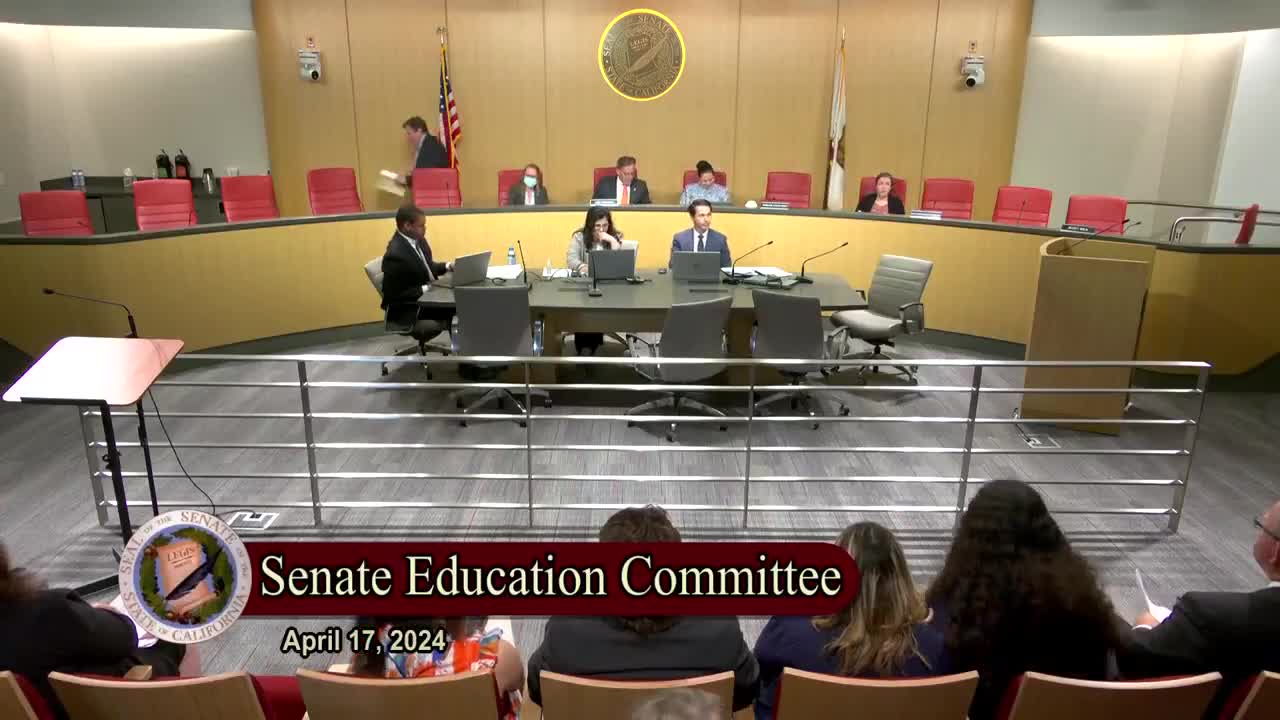
Discussed in Hearing
 1MIN
Senate Standing Committee on Appropriations
 22MIN
Senate Standing Committee on Education
Bill Author