AB 2213: California Healthy Food Financing Initiative.
- Session Year: 2025-2026
- House: Assembly
- Latest Version Date: 2026-04-16
Current Status:
In Progress
(2026-05-14: Joint Rule 62(a), file notice suspended. (Page 5030.))
Introduced
In Committee
Awaiting First Chamber Vote
Passed First Chamber
In Committee
Awaiting Second Chamber Vote
Passed Second Chamber
Enacted
What does this bill do?
This bill creates the California Healthy Food Financing Initiative by setting up a council in the state Treasurer’s office and a state fund to expand access to healthy food in underserved urban, suburban, tribal, and rural communities and to support programs that connect farm products to food assistance systems. The council must design eligibility rules and financing options (grants, loans, or other support) using public, private, and philanthropic money, prioritize small grocers, food co‑ops, farmers markets and food assistance programs, and the Secretary of Food and Agriculture (working with the Director of Social Services) must prepare recommendations and may form an advisory group to align financing with food assistance.
The summary is provided by generative AI which can make mistakes. For original language, please view the details in the table below.
Under existing law, it is the policy of the state that every human being has the right to access sufficient affordable and healthy food. Existing law requires all relevant state agencies to consider that state policy when revising, adopting, or establishing policies, regulations, and grant criteria when those policies, regulations, or criteria are pertinent to the distribution of sufficient affordable food.
Existing law requires the Department of Food and Agriculture, headed by the Secretary of Food and Agriculture, to promote and protect the agricultural industry of the state. Existing law creates the Office of Farm to Fork in the department and requires the office, to the extent resources are available, to work with the agricultural industry, direct marketing organizations, food policy councils, public health groups, nonprofit and philanthropic organizations, academic institutions, district agricultural associations, county, state, and federal agencies, and other organizations involved in promoting food access to increase the amount of agricultural products available to underserved communities and schools in this state.
Under existing law, the State Department of Social Services, headed by the Director of Social Services, implements the Supplemental Nutrition Benefit Program and the Transitional Nutrition Benefit Program.
This bill would create the California Healthy Food Financing Initiative Council within the office of the Treasurer, comprising specified members, and would require the council to implement the California Healthy Food Financing Initiative to expand access to nutritious foods in underserved, urban, suburban, tribal, and rural communities communities, to support programs that connect agricultural products to food assistance systems, and to eliminate food deserts and hunger in California. The bill would require the council to, among other things, define eligibility for the initiative and develop financing options, using public, philanthropic, or private moneys and other resources, to support access to healthy foods for all Californians. The bill would require the secretary, in coordination with the director, on or before July 1, 2027, to prepare recommendations, to be presented upon request to the Legislature, regarding actions that need to be taken to promote food access in the state, state and to develop strategies to align healthy food financing projects with food assistance programs to improve food affordability and food availability among underserved communities in the state, and would authorize the secretary secretary, in coordination with the director, to establish an advisory group to assist in complying with that requirement, as specified.
The bill would establish the California Healthy Food Financing Initiative Fund in the State Treasury, consisting of federal, state, philanthropic, and private funds, for the purpose of expanding access to healthy foods in underserved communities. The bill would require moneys in the fund to be expended, upon appropriation by the Legislature, to leverage other funding, as specified.
Under existing law, it is the policy of the state that every human being has the right to access sufficient affordable and healthy food. Existing law requires all relevant state agencies to consider that state policy when revising, adopting, or establishing policies, regulations, and grant criteria when those policies, regulations, or criteria are pertinent to the distribution of sufficient affordable food.
Existing law requires the Department of Food and Agriculture, headed by the Secretary of Food and Agriculture, to promote and protect the agricultural industry of the state. Existing law creates the Office of Farm to Fork in the department and requires the office, to the extent resources are available, to work with the agricultural industry, direct marketing organizations, food policy councils, public health groups, nonprofit and philanthropic organizations, academic institutions, district agricultural associations, county, state, and federal agencies, and other organizations involved in promoting food access to increase the amount of agricultural products available to underserved communities and schools in this state.
This bill would create the California Healthy Food Financing Initiative Council within the office of the Treasurer, comprising specified members, and would require the council to implement the California Healthy Food Financing Initiative to expand access to nutritious foods in underserved, urban, suburban, tribal, and rural communities and to eliminate food deserts and hunger in California. The bill would require the council to, among other things, develop financing options, using public, philanthropic, or private moneys and other resources, to support access to healthy foods for all Californians. The bill would require the secretary, on or before July 1, 2027, to prepare recommendations, to be presented upon request to the Legislature, regarding actions that need to be taken to promote food access in the state, and would authorize the secretary to establish an advisory group to assist in complying with that requirement, as specified.
The bill would establish the California Healthy Food Financing Initiative Fund in the State Treasury, consisting of federal, state, philanthropic, and private funds, for the purpose of expanding access to healthy foods in underserved communities. The bill would require moneys in the fund to be expended, upon appropriation by the Legislature, to leverage other funding, as specified.
This article shall be known, and may be cited, as the California Healthy Food Financing Initiative.
104671.For purposes of this article, all of the following definitions apply:
(a)Council means the California Healthy Food Financing Initiative Council created pursuant to Section 104672.
(b)Fund means the California Healthy Food Financing Initiative Fund established pursuant to Section 104674.
(c)Initiative means the California Healthy Food Financing Initiative.
104672.(a)There is hereby created in the office of the Treasurer the California Healthy Food Financing Initiative Council, within the office of the Treasurer, which shall comprise be composed of all of the following members:
(1)The Treasurer Treasurer, or their designee. designee, who shall chair the council.
(2)The Secretary of Food and Agriculture or their designee.
(3)The Secretary of California Health and Human Services Director of Social Services or their designee.
(4)The Secretary of Labor and Workforce Development or their designee.
(b)(1)The council shall be chaired by the Treasurer or their designee.(2)(b)The council shall implement the California Healthy Food Financing Initiative to expand access to nutritious foods in underserved, urban, suburban, tribal, and rural communities communities, to support programs that connect agricultural products to food assistance systems, and to eliminate food deserts and hunger in California.
(c)The To implement the initiative, the council shall do all of the following:
(1)Develop financing options, using public, philanthropic, or private moneys and other resources, to support access to healthy foods foods, and to support programs that connect agricultural products to food assistance systems, for all Californians.
(2)Develop parameters for the initiative, including, but not limited to, all of the following:
(A)Defining Define eligible entities for participation.
(B)Developing Develop minimum eligibility thresholds for participation.
(C)Establishing Establish minimum and maximum levels of financial assistance.
(D)Identifying Identify and prioritizing prioritize areas of the state for implementation of the initiative.
(E)Develop criteria for identifying and prioritizing communities with the greatest food access needs.
(F)Identify food assistance, nutrition incentive, and food access programs eligible for participation.
(G)Establish funding schedules and procedures for awarding grants from the fund to eligible entities and food assistance, nutrition incentive, and food access programs.
(3)Partner with federal, state, or local government agencies, nonprofit organizations, philanthropic entities, or other stakeholders to further the purposes of the initiative.
(4)Review the recommendations described in prepared and strategies developed pursuant to Section 104673.
(5)Provide updates to the Legislature as requested.
(6)Prioritize financing to food assistance, nutrition incentive, and food access programs.
(7)Prioritize financing to eligible entities, defined pursuant to paragraph (2), based on, but not limited to, all of the following:
(A)Projects located in underserved communities with limited access to full-service grocery stores or healthy food retailers.
(B)Small and independent grocers, food cooperatives, and community-owned food retail projects.
(C)Projects serving a population area currently not being served by a food assistance, nutrition incentive, or food access program.
(D)The degree of the existence of demographic conditions and the character of the communities in which sales of California-grown fresh fruits, nuts, and vegetables are made to the public by authorized vendors operating in conjunction with a qualified entity, including all of the following:
(i)The number of people who are eligible for, or are receiving, food assistance, nutrition incentive, and food access programs.
(ii)The prevalence of diabetes, obesity, and other diet-related illnesses.
(iii)The availability of access to fresh fruits, nuts, and vegetables.
(d)The council shall adopt any rules or regulations necessary to implement the initiative.
(e)The council shall establish, maintain, and periodically update an internet website. The councils internet website shall, on or before March 31, 2027, shall include, but not be limited to, all of the following information:
(1)On or before March 31, 2027, all of the following information:
(1)(A)Actions taken by the council.
(2)(B)Funding sources that are available to support access to healthy foods, foods and to support programs that connect agricultural products to food assistance systems, including loans and grants from public, private, or philanthropic sources, and how to obtain these sources of funding.
(3)(C)Interagency activities among the Treasurer, the Department of Food and Agriculture, the California Health and Human Services Agency, State Department of Social Services, and the Labor and Workforce Development Agency that focus on benefiting underserved communities and communities, increasing access to healthy foods. foods, and supporting programs that connect agricultural products to food assistance systems.
(4)(D)Resources and hyperlinks to other internet websites with information on food deserts and deserts, increasing access to healthy foods. foods, and programs that connect agricultural products to food assistance systems.
(2)On or before January 1, 2028, all of the following information:
(A)The total amount of funds in the fund, including the total amount of funds received from each funding source.
(B)The total amount of funds expended to leverage other funding pursuant to subdivision (b) of Section 104674, including the amount of funds expended from each funding source and the total amount of funds generated from those investments.
(C)The total amount of funds disbursed from the fund, including the entities and programs that received funding and the total amount of funds each eligible entity and program received.
(D)The geographic location of the projects that received funds from the fund.
104673.(a)On or before July 1, 2027, the Secretary of Food and Agriculture Agriculture, in coordination with the Director of Social Services, shall prepare recommendations, to be presented upon request of the Legislature, regarding actions that need to be taken to promote food access and develop strategies to align healthy food financing projects with food assistance programs to improve food affordability and food availability among underserved communities in the state.
(b)(1)The Secretary of Food and Agriculture Agriculture, in coordination with the Director of Social Services, may establish an advisory group, not to exceed 21 members, to assist the secretary in complying with the requirement of subdivision (a). If established, the advisory group
(2)An advisory group established pursuant to this subdivision shall consist of representatives from the Legislature, food policy advocates, representatives from the grocery industry, farmers farmers markets, food cooperatives, food hubs, and financial institutions, food systems researchers, representatives from the agricultural industry, representatives from underserved communities, representatives from nonprofit and philanthropic organizations with expertise in this area, representatives of health care providers, representatives from a human services agency with experience administering food assistance programs, representatives from a food and agricultural agency who have experience administering food assistance programs, and others.
104674.(a)There is hereby established in the State Treasury the California Healthy Food Financing Initiative Fund, which shall consist of federal, state, philanthropic, and private funds, for the purpose of expanding access to healthy foods in underserved communities. communities and to support programs that connect agricultural products to food assistance systems.
(b)Moneys in the fund shall be expended, upon appropriation by the Legislature, and to the extent practicable, to leverage other funding, including, but not limited to, new market tax credits, the California Organized Investment Network program established pursuant to Article 10.1 (commencing with Section 926) of Chapter 1 of Part 2 of Division 1 of the Insurance Code, federal and foundation grant programs, incentives available to federally designated opportunity zones, the federal Specialty Crop Block Grant Program, and funding from community development corporations and private sector financial institutions pursuant to the federal Community Reinvestment Act of 1977 (12 U.S.C. Sec. 2901 et seq.).
This article shall be known, and may be cited, as the California Healthy Food Financing Initiative.
104671.For purposes of this article, all of the following definitions apply:
(a)Council means the California Healthy Food Financing Initiative Council created pursuant to Section 104672.
(b)Fund means the California Healthy Food Financing Initiative Fund established pursuant to Section 104674.
(c)Initiative means the California Healthy Food Financing Initiative.
104672.(a)There is hereby created the California Healthy Food Financing Initiative Council, within the office of the Treasurer, which shall comprise all of the following members:
(1)The Treasurer or their designee.
(2)The Secretary of Food and Agriculture or their designee.
(3)The Secretary of California Health and Human Services or their designee.
(4)The Secretary of Labor and Workforce Development or their designee.
(b)(1)The council shall be chaired by the Treasurer or their designee.
(2)The council shall implement the California Healthy Food Financing Initiative to expand access to nutritious foods in underserved, urban, suburban, tribal, and rural communities and to eliminate food deserts and hunger in California.
(c)The council shall do all of the following:
(1)Develop financing options, using public, philanthropic, or private moneys and other resources, to support access to healthy foods for all Californians.
(2)Develop parameters for the initiative, including, but not limited to, all of the following:
(A)Defining eligible entities for participation.
(B)Developing minimum eligibility thresholds for participation.
(C)Establishing minimum and maximum levels of financial assistance.
(D)Identifying and prioritizing areas of the state for implementation of the initiative.
(3)Partner with federal, state, or local government agencies, nonprofit organizations, philanthropic entities, or other stakeholders to further the purposes of the initiative.
(4)Review the recommendations described in Section 104673.
(5)Provide updates to the Legislature as requested.
(d)The council shall adopt any rules or regulations necessary to implement the initiative.
(e)The council shall establish, maintain, and periodically update an internet website. The councils website shall, on or before March 31, 2027, include, but not be limited to, all of the following information:
(1)Actions taken by the council.
(2)Funding sources that are available to support access to healthy foods, including loans and grants from public, private, or philanthropic sources, and how to obtain these sources of funding.
(3)Interagency activities among the Treasurer, the Department of Food and Agriculture, the California Health and Human Services Agency, and the Labor and Workforce Development Agency that focus on benefiting underserved communities and increasing access to healthy foods.
(4)Resources and hyperlinks to other internet websites with information on food deserts and increasing access to healthy foods.
104673.(a)On or before July 1, 2027, the Secretary of Food and Agriculture shall prepare recommendations, to be presented upon request of the Legislature, regarding actions that need to be taken to promote food access in the state.
(b)The Secretary of Food and Agriculture may establish an advisory group, not to exceed 21 members, to assist the secretary in complying with the requirement of subdivision (a). If established, the advisory group shall consist of representatives from the Legislature, food policy advocates, representatives from the grocery industry, farmers markets, food cooperatives, food hubs, and financial institutions, food systems researchers, representatives from the agricultural industry, representatives from underserved communities, representatives from nonprofit and philanthropic organizations with expertise in this area, representatives of health care providers, and others.
104674.(a)There is hereby established in the State Treasury the California Healthy Food Financing Initiative Fund, which shall consist of federal, state, philanthropic, and private funds, for the purpose of expanding access to healthy foods in underserved communities.
(b)Moneys in the fund shall be expended, upon appropriation by the Legislature, and to the extent practicable, to leverage other funding, including, but not limited to, new market tax credits, the California Organized Investment Network program established pursuant to Article 10.1 (commencing with Section 926) of Chapter 1 of Part 2 of Division 1 of the Insurance Code, federal and foundation grant programs, incentives available to federally designated opportunity zones, the federal Specialty Crop Block Grant Program, and funding from community development corporations and private sector financial institutions pursuant to the federal Community Reinvestment Act of 1977 (12 U.S.C. Sec. 2901 et seq.).
|
Date
|
Status
|
|---|---|
| May 14, 2026 | In committee: Held under submission. |
| May 14, 2026 | Joint Rule 62(a), file notice suspended. |
| May 14, 2026 | Joint Rule 62(a), file notice suspended. (Page 5030.) |
| May 13, 2026 | In committee: Set, first hearing. Referred to APPR. suspense file. |
| Apr 20, 2026 | Re-referred to Com. on APPR. |
| Apr 16, 2026 | Read second time and amended. |
| Apr 15, 2026 | From committee: Amend, and do pass as amended and re-refer to Com. on APPR. (Ayes 7. Noes 0.) (April 14). |
| Mar 9, 2026 | Referred to Com. on HUM. S. |
| Feb 20, 2026 | From printer. May be heard in committee March 22. |
| Feb 19, 2026 | Read first time. To print. |
|
Date
|
Description
|
Location
|
Votes
|
|
|---|---|---|---|---|
| Apr 14, 2026 | Do pass as amended and be re-referred to the Committee on [Appropriations] | Assembly Standing Committee on Human Services |
Passed |
This list shows positions taken on this bill by organizations on the date displayed, which is linked to the original source.
Positions by individuals are not included.
|
Organization
|
Position
|
Date
|
|---|---|---|
| A Voice for Choice Advocacy | ** Support | |
| NextGen California | ** Support |
Date of Hearing: May 13, 2026
ASSEMBLY COMMITTEE ON APPROPRIATIONS
Buffy Wicks, Chair
ABPCA Bill Id:AB 2213
Author:(Lee) – As Amended Ver:April 16, 2026
Policy Committee: | Human Services | Vote: | 7 - 0 |
|
| ||
|
|
Urgency: No State Mandated Local Program: No Reimbursable: No
SUMMARY:
This bill creates the California Healthy Food Financing Initiative (CHFFI) Council (Council) and establishes the CHFFI Fund within the State Treasury to expand access to healthy food in underserved communities, support programs that connect agriculture products to food assistance systems and eliminate food deserts in California.
Specifically, this bill:
- Creates the Council in the State Treasurer’ Office (STO), chaired by the California State Treasurer and further composed of the Secretary of Food and Agriculture (CDFA), the Director of Social Services (CDSS), and the Secretary of the Labor and Workforce Development Agency, or their designees.
- Requires the Council to implement the CHFFI to expand access to nutritious foods in underserved, urban, suburban, tribal, and rural communities, to support programs that connect agricultural products to food assistance systems, and to eliminate food deserts and hunger in California, and specifies the duties of the Council in this regard.
- Requires the Council to establish, maintain, and periodically update an internet website, as prescribed, with information, including actions taken by the Council, available funding sources, interagency activities, and resources and hyperlinks to sites with information on food deserts.
- Requires CDFA, by July 1, 2027, and in coordination with CDSS to prepare recommendations to the Legislature regarding actions needed to promote food access and develop strategies to align healthy food financing projects with food assistance programs to improve food affordability and food availability among underserved communities.
- Authorizes CDFA, in coordination with CDSS, to establish an advisory group, not to exceed 21 members, to assist in developing recommendations, pursuant to item 4, above.
- Establishes the CHFFI Fund in the State Treasury to consist of federal, state, philanthropic, and private funds, for the purposes of the initiative, and requires moneys in the fund to be expended, upon appropriation by the Legislature, to leverage other funding, as specified.
FISCAL EFFECT:
- Ongoing General Fund (GF) costs to the STO, of an unknown amount, but likely in the low- to mid-hundreds of thousands of dollars annually to establish and chair the Council, establish and maintain a Council website, provide staff to participate in the duties of the Council, and manage the CHFFI Fund.
- CDFA estimates GF costs of $135,000 in year one and $128,000 in year two for one half-time position for two years to convene the expert committee, research, and write the final report by the July 1, 2027, deadline. CDFA indicates it would need funding beginning July 1, 2026.
- GF costs to CDSS of an unknown amount but likely in the mid-hundreds of thousands of dollars annually for additional staff to carry out the functions of the Council and prepare the final report by the July 1, 2027, deadline.
- Costs to the Labor and Workforce Development Department are unknown at this time.
The Legislative Analyst’s Office recently warned of General Fund structural deficits of around $35 billion per year in the 2027-28 fiscal year and ongoing.
COMMENTS:
- Purpose. According to the author:
As Washington abandons working families, California will step up to strengthen safety nets for families. California is the breadbasket of the nation, but thousands struggle to access nutritious and affordable food within view of vineyards and fields. In the face of direct federal assaults on our social services, the CHFFI will provide much-needed investments for food security, strengthening crucial safety nets for families and farmers statewide.
- Background. Healthy food financing initiatives (HFFIs) are public-private financing programs designed to increase access to healthy foods in underserved communities by supporting the development, expansion, and renovation of grocery stores, food cooperatives, farmers’ markets, and other healthy food retail outlets.
HFFIs typically leverage public funding to attract private investment through gap financing, credit enhancements, tax credits, or loan guarantees that reduce the risk to lenders and investors. Many programs also leverage philanthropic funding and private lending to multiply the impact of public funds.
California previously established the CHFFI through AB 581 (Pérez), Chapter 505, Statutes of 2011, modeled after the federal HFFI and successful programs in other states. AB 581 also created a CHFFI Fund within the State Treasury, to be comprised of federal, state, philanthropic, and private funds. The program was never funded and was scheduled to sunset on July 1, 2017. The sunset date was extended until July 1, 2023, to give CHFFI more time to achieve its goals, but the program was ultimately repealed on January 1, 2024.
This bill re-establishes the Council and CHFFI Fund within the STO and seeks to operationalize the original initiative, but with expanded goals and reporting and transparency requirements.
- Related Legislation. AB 2535 (Gallagher), of this legislative session, requires specified state agencies, among other things, to identify opportunities and strategies to improve farm-to-fork infrastructure, and to support increased access to and use of California locally grown and raised food in public programs, particularly school meals and other nutrition initiatives. AB 2535 is pending in this committee.
Analysis Prepared by: Jennifer Swenson / APPR. / (916) 319-2081
Date of Hearing: April 14, 2026
ASSEMBLY COMMITTEE ON HUMAN SERVICES
Alex Lee, Chair
ABPCA Bill Id:AB 2213 (
Author:Lee) – As Introduced Ver:February 19, 2026
SUBJECT: California Healthy Food Financing Initiative
SUMMARY: Creates the California Healthy Food Financing Initiative (CHFFI) Council (Council) and establishes the CHFFI Fund (Fund) within the State Treasury to expand access to healthy food and eliminate food deserts in underserved communities. Requires the Council to coordinate partnerships and develop financing options, program eligibility parameters, and financial assistance levels. Requires the Secretary of the California Department of Food and Agriculture (CDFA) to prepare recommendations on actions needed to promote food access in the state, with input from an optional advisory group. Specifically, this bill:
- Establishes the Council within the office of the Treasurer, which comprises all of the following members:
- The California State Treasurer or their designee;
- The Secretary of the CDFA or their designee;
- The Secretary of California Health and Human Services Agency (CalHHS) or their designee; and,
- The Secretary of the Labor and Workforce Development Agency or their designee.
- Requires the Council to be chaired by the Treasurer or their designee.
- Requires the Council to implement the CHFFI to expand access to nutritious foods in underserved, urban, suburban, tribal, and rural communities and to eliminate food deserts and hunger in California.
- Requires the Council to do all of the following:
- Develop financing options, using public, philanthropic, or private moneys and other resources, to support access to healthy foods for all Californians;
- Develop parameters for the initiative, including, but not limited to, all of the following:
- Defining eligible entities for participation;
- Developing minimum eligibility thresholds for participation;
- Establishing minimum and maximum levels of financial assistance; and,
- Identifying and prioritizing areas of the state for implementation of the initiative;
- Partner with federal, state, or local government agencies, nonprofit organizations, philanthropic entities, or other stakeholders to further the purposes of the initiative;
- Review the recommendations described in 7) and 8) below; and,
- Provide updates to the Legislature as requested.
- Requires the Council to adopt any rules or regulations necessary to implement the initiative.
- Requires the Council to establish, maintain, and periodically update an internet website and requires the website, on or before March 31, 2027, to include, but not be limited to, all of the following information:
- Actions taken by the Council;
- Funding sources that are available to support access to healthy foods, including loans and grants from public, private, or philanthropic sources, and how to obtain these sources of funding;
- Interagency activities among the Treasurer, CDFA, CalHHS, and the Labor and Workforce Development Agency that focus on benefiting underserved communities and increasing access to healthy foods; and,
- Resources and hyperlinks to other internet websites with information on food deserts and increasing access to healthy foods.
- Requires, on or before July 1, 2027, the CDFA Secretary to prepare recommendations, to be presented upon request of the Legislature, regarding actions that need to be taken to promote food access in the state.
- Authorizes the CDFA Secretary to establish an advisory group, not to exceed 21 members, to assist the Secretary in complying with the requirement of 7) above. Requires, if established, the advisory group to consist of representatives from the Legislature, food policy advocates, representatives from the grocery industry, farmer’s markets, food cooperatives, food hubs, and financial institutions, food systems researchers, representatives from the agricultural industry, representatives from underserved communities, representatives from nonprofit and philanthropic organizations with expertise in this area, representatives of health care providers, and others.
- Establishes the Fund in the State Treasury to consist of federal, state, philanthropic, and private funds, for the purpose of expanding access to healthy foods in underserved communities.
- Requires moneys in the Fund to be expended, upon appropriation by the Legislature, and to the extent practicable, to leverage other funding, including, but not limited to, new market tax credits, the California Organized Investment Network (COIN) program established pursuant to 3) below, federal and foundation grant programs, incentives available to federally designated opportunity zones, the federal Specialty Crop Block Grant Program, and funding from community development corporations and private sector financial institutions pursuant to 4) below.
- Defines the following terms:
- “Council” means the California Healthy Food Financing Initiative Council;
- “Fund” means the California Healthy Food Financing Initiative Fund; and
- “Initiative” means the California Healthy Food Financing Initiative.
EXISTING LAW:
State law:
- Acknowledges access to sufficient, affordable, and healthy food as a human right and requires state agencies and departments to consider this state policy. (Welfare and Institutions Code [WIC] § 18700(a)(1))
- Defines “food insecurity” as the occasional or constant lack of access to the food one needs to live a healthy life and the uncertainty of being able to acquire enough food to meet the needs of an individual or household due to insufficient money or other sources. (WIC § 18700(a)(2))
- Establishes COIN within the California Department of Insurance to encourage and facilitate investments by insurers in underserved communities and community development projects. (Insurance Code § 926 et seq.)
Federal law:
- Establishes the Community Reinvestment Act of 1977, requiring banks and financial institutions to help meet the credit needs of the communities they serve, including low- and moderate-income communities, consistent with safe and sound banking practices. (12 United States Code § 2901 et seq.)
FISCAL EFFECT: Unknown, this bill has not been analyzed by a fiscal committee.
COMMENTS:
Background: Food Insecurity. The United States Department of Agriculture (USDA), which monitors food insecurity and oversees the nation’s largest food assistance program, defines food security as “access by all people at all times to enough food for an active, healthy life.” The USDA categorizes food security into four levels: high, marginal, low, and very low food security, reflecting a range from consistent access to adequate food to disrupted eating patterns and reduced food intake due to lack of resources.
Although California declared food as a human right through SB 628 (Hurtado), Chapter 879, Statutes of 2023, and produces nearly half of the nation’s fruits and vegetables, food insecurity remains a significant issue. Food insecurity disproportionately affects low-income households, communities of color, rural communities, and households without reliable transportation. National research shows that low-income neighborhoods have significantly fewer supermarkets and more convenience stores than higher-income neighborhoods, contributing to disparities in food access and diet-related health outcomes.[1]
Data from the Food Security Supplement[2] to the U.S. Census’ Current Population Survey shows that 1.75 million California households, or 12.5%, experienced food insecurity at some point in 2024. Food insecurity is driven by factors including poverty, geographic isolation, rising grocery prices, inflation, housing costs, and transportation barriers. For many households, the choice is often between purchasing food and meeting other basic needs such as rent, utilities, transportation, or medications.
Closely related to food insecurity is food deserts, which are geographic areas where residents have limited access to affordable and nutritious food, particularly fresh fruit and vegetables. Food deserts are commonly found in low-income urban neighborhoods, rural areas, and tribal communities where full-service grocery stores are far from residential areas or inaccessible without reliable transportation. In many of these communities, residents rely on convenience stores, liquor stores, or fast-food restaurants that primarily sell processed foods high in sodium, sugar, and saturated fats and lower in nutritional value. A subset of food deserts are referred to as food swamps, where unhealthy food options significantly outnumber healthy food options.
Food access barriers are often driven by economic and structural factors rather than consumer demand. Independent grocery stores and healthy food retailers face higher operating costs and financial risk when locating in underserved communities, making it difficult to attract private investment without public financing assistance or incentives. Rural communities may lack sufficient population density to support traditional grocery stores, while urban food deserts may face higher security, insurance, and development costs. As a result, many communities remain underserved despite significant need.
Limited access to adequate and healthy food is associated with negative health, developmental, and economic outcomes across the lifespan, including poor birth outcomes, developmental delays, lower academic performance, mental health challenges, and increased risk of chronic diseases like obesity, diabetes, and heart disease. These health disparities disproportionately affect low-income communities and communities of color, contributing to broader health inequities and intergenerational cycles of poverty.
Healthy Food Financing Initiatives (HFFIs) are public-private financing programs designed to increase access to healthy foods in underserved communities by supporting the development, expansion, and renovation of grocery stores, food cooperatives, farmers’ markets, and other healthy food retail outlets. These initiatives were developed in response to the recognition that many underserved communities lack access to healthy food, not because of a lack of demand, but because food retail projects in these areas are often difficult to finance due to higher development costs, lower expected profit margins, and perceived investment risk.
The federal HFFI was first established in 2010 under the Obama Administration through a partnership between the federal Departments of Agriculture, Treasury, and Health and Human Services, with an initial investment of over $400 million to expand access to healthy foods in underserved communities. The program was later authorized in the 2014 Farm Bill and reauthorized in 2018, and has received additional funding through federal legislation, including approximately $155 through the American Rescue Plan of 2021. Since its creation, the federal HFFI has supported 958 grocery stores and healthy food retail projects across at least 35 states and tribal communities in underserved communities and leveraged about $1 billion in additional public and private investment.
The federal HFFI provides a range of financing tools, including grants, low-interest loans, loan guarantees, and technical assistance for activities such as site acquisition, construction and renovation, equipment purchases, refrigeration, distribution infrastructure, and working capital. These tools are intended to reduce the financial risk associated with developing grocery stores and healthy food retail projects in underserved communities where traditional private financing may not be available. HFFIs are typically structured to leverage public funding to attract private investment through gap financing, credit enhancements, tax credits, or loan guarantees that reduce the risk to lenders and investors. Many programs also leverage New Markets Tax Credits, Community Reinvestment Act investments, philanthropic funding, and private lending to multiply the impact of public funds.
The Pennsylvania Fresh Food Financing Initiative, which launched in 2004 and led to the creation of the national HFFI, leveraged approximately $30 million in state funding into $120 million in total investment to finance grocery stores and food retail projects in underserved communities and became the national model for similar programs across the country. Numerous other states established HFFIs, including California, New York, Illinois, Michigan, Ohio, Louisiana, New Jersey, Colorado, Maryland, Massachusetts, and Virginia.
HFFIs are often viewed not only as food access programs, but also as economic development tools because grocery stores and food retail projects can create jobs, generate local tax revenue, support local agricultural producers, and stimulate additional commercial development in underserved communities. For example, it is estimated that 24 new jobs are created for every 10,000 square feet of retail grocery store, so a large market can generate between 48 and 120 full and part-time jobs.[3]
California Healthy Food Fund Initiative. California previously established the CHFFI through AB 581 (Pérez), Chapter 505, Statutes of 2011, which was modeled after the Pennsylvania and the federal HFFI programs. AB 581 created the CHFFI Council within the Office of the State Treasurer and established a fund in the State Treasury to support financing for healthy food access projects.
The CHFFI Council consisted of the State Treasurer who chaired the Council, the CDFA Secretary, the CalHHS Secretary, and the Labor and Workforce Development Secretary, or their designees, and was responsible for developing financing options, establishing program parameters and eligibility criteria, setting minimum and maximum levels of financial assistance, partnering with public and private entities, reviewing recommendations from an advisory group, and providing updates to the Legislature. The fund was intended to receive federal, state, philanthropic, and private funds and leverage additional financing through tools such as New Market Tax Credits, federal and foundation grants, federal Specialty Crop Block Grant Program funding, and private sector financing.
AB 581 also required the CDFA Secretary to prepare recommendations regarding actions needed to promote food access in the state. The resulting CDFA report identified barriers to healthy food access, including a lack of grocery stores in underserved communities, limited access to capital for independent grocery retailers, transportation barriers, and higher operating costs in low-income and rural communities. The report emphasized that financing barriers were one of the primary reasons grocery stores and healthy food retailers do not locate in underserved communities and recommended expanding financing tools such as grants, low-interest loans, tax credits, and public-private partnerships, improving coordination among state agencies, supporting small and independent grocery stores, strengthening local and regional food systems, and improving distribution infrastructure. The report concluded that improving food access requires both increasing purchasing power through nutrition assistance programs and investing in food retail and distribution infrastructure in underserved communities.[4]
There is limited publicly available information indicating whether the CHFFI Council carried out its statutory responsibilities or whether the fund was appropriated, capitalized, or used to finance projects. The statute was originally scheduled to sunset on July 1, 2017, and repealed by January 1, 2018, but was later extended and ultimately repealed on January 1, 2024, through AB 2635 (Committee on Agriculture), Chapter 394, Statutes of 2016 to allow more time for financial support to be identified and for the program to have a significant impact in California.
This bill re-establishes the CHFFI Council and Fund within the State Treasurer’s Office to develop financing strategies, leverage public and private funding, and expand access to healthy food in underserved communities. While AB 581 previously established a similar framework, that initiative does not appear to have resulted in significant capitalization or financing of projects. This bill strengthens the prior framework by adding reporting and transparency requirements, including maintaining a public internet website with information on Council actions, funding sources, interagency activities, and food access and food desert resources. This bill seeks to operationalize and implement the goals of the original initiative.
State Programs Addressing Food Access. In addition to financing programs focused on eliminating food deserts, California operates several food assistance, nutrition incentive, and food access programs administered by the California Department of Social Services (CDSS) and CDFA that are intended to reduce food insecurity, increase access to healthy foods, and support local food systems. These programs primarily address food purchasing power, nutrition incentives, or food distribution and emergency food access.
- The CalFresh program, California’s implementation of the federal Supplemental Nutrition Assistance Program, also known as SNAP, is administered by CDSS and is the largest food safety-net program in the state and the nation, and provides monthly food benefits to approximately 5.5 million low-income Californians each year. Due to the passage of the federal H.R. 1 on July 1, 2025, CalFresh has significantly altered its eligibility criteria, including changes to work requirements for able-bodied adults without dependents, restrictions on utility deductions that reduce benefit amounts, and changes to immigrant eligibility that exclude certain lawfully present noncitizens, which are expected to reduce eligibility and benefits for hundreds of thousands of households and increase food insecurity.
- The CalFresh Fruit and Vegetable EBT Pilot, administered by CDSS, provides CalFresh households with up to $60 per month in additional benefits when purchasing fruits and vegetables at participating retailers. The pilot operated from February 2023 to April 2024, followed by a second phase from October 2024 to January 2025, and a third phase began in November 2025, following the federal government shutdown, which continues to operate. The CDSS 2025 evaluation found that the pilot distributed nearly $18 million in incentives to over 155,000 CalFresh households and that 98% of incentives were redeemed, demonstrating strong demand and program effectiveness.
- The CalFood Program provides funding to food banks to purchase California-grown foods and supports both food banks and California farmers while increasing the availability of fresh foods for low-income households. CalFood funding increased significantly during the COVID-19 pandemic, rising from a baseline of $8 million to an average of $62.7 million annually between July 2022 and June 2025, and has continued as an ongoing state food access and agricultural support program, particularly during federal government shutdowns, states of emergency, and when federal policy changes, such as the passage of H.R.1., reduce CalFresh eligibility. In 2024, 80 million pounds of food were purchased by food banks.
- The Farm to Community Food Hubs Grant Program, administered by CDFA, provides grants to support regional food hubs that aggregate, process, store, and distribute locally to schools, food banks, and community food access programs. In 2025, CDFA awarded approximately $13.75 million to 12 projects to support the planning, development, and expansion of food hubs, including funding for infrastructure, distribution equipment, and operations, with projects focused on increasing market access for California farmers and supplying locally produced food to schools, food banks, and tribal and community food programs.
- The California Nutrition Incentive Program provides matching incentives to CalFresh participants who purchase fruits and vegetables at participating farmers’ markets and is funded through a combination of state and federal funding. In 2026, CDFA awarded approximately $1.7 million to 11 organizations to support nutrition incentive programs at farmers' markets.
- The Healthy Refrigeration Grant Program provides grants to small food retailers and corner stores in underserved communities to purchase refrigeration equipment to stock and sell fresh and perishable foods and is considered a complementary strategy to HFFIs because it improves healthy food availability in existing stores, particularly in food deserts and low-income communities, but does not finance new grocery store development. This grant program has awarded about $9 million to more than 100 projects in 2023.
Generally, food assistance programs address the affordability side of food access, while HFFIs and food retail development programs address the availability and physical access side of food access. Improving food access typically requires addressing both affordability and availability, as noted by the 2012 CDFA report.
Author’s Statement: According to the Author, “As Washington abandons working families, California will step up to strengthen safety nets for families. California is the breadbasket of the nation, but thousands struggle to access nutritious and affordable food within view of vineyards and fields. In the face of direct federal assaults on our social services, the California Healthy Food Financing Initiative will provide much-needed investments for food security, strengthening crucial safety nets for families and farmers statewide.”
Equity Implications: Food insecurity and limited access to full-service grocery stores are strongly correlated with income, race, and geography, and many underserved communities are located in areas commonly referred to as food deserts or food swamps, where residents have limited access to fresh and healthy foods but greater access to convenience stores and fast food. As a result, residents in these communities experience higher rates of diet-related chronic diseases such as diabetes, obesity, and heart disease, as well as broader health and economic inequities.
HFFIs are intended to address structural barriers to food access by providing financing for grocery stores, food retail, food hubs, and distribution infrastructure in underserved communities where traditional financing may not be available. By directing investment to underserved urban, suburban, rural, and tribal communities, this bill may increase access to healthy foods, support small and independent food retailers, create jobs, and stimulate local economic development in communities that have historically experienced disinvestment.
Policy Considerations: This bill requires the Council to develop program parameters, including defining eligible entities, eligibility thresholds, and financial assistance levels, but does not specify which projects should be prioritized for financing, including food assistance, nutrition incentive, and food access programs, or small and independent retailers. Without clear prioritization criteria, financing may disproportionately benefit larger grocery chains or projects in areas that are easier to finance rather than the communities with the greatest food access barriers, such as rural communities, low-income urban communities, and tribal communities.
Should this bill move forward, the Author may wish to consider adding prioritization criteria for the Council.
Improving physical access to grocery stores alone may not fully address food insecurity if households cannot afford food. Food access includes both affordability and availability, and HFFIs are most effective when combined with food assistance, nutrition incentives, and food access programs that increase purchasing power and improve healthy food availability in existing retail locations. Without coordination between food retail financing and food assistance programs, new grocery stores may be built in underserved communities but remain financially unstable if residents do not have sufficient purchasing power.
Should this bill move forward, the Author may wish to consider specifying that the HFFI also supports programs that connect agricultural products to food assistance programs, require the coordination between CDFA and CDSS to develop strategies to align healthy food financing projects with food assistance programs to improve food affordability and food availability in underserved communities, and include representatives with food assistance program administration experience on the advisory group.
Proposed Amendments:
- 104672. (a) There is hereby created the California Healthy Food Financing Initiative council, within the office of the Treasurer, which shall comprise all of the following members:
(1) The Treasurer or their designee.
(2) The Secretary of Food and Agriculture or their designee.
(3) The Secretary of California Health and Human Services Director of the California Department of Social Services or their designee.
(4) The Secretary of Labor and Workforce Development or their designee.
(b) (1) The council shall be chaired by the Treasurer or their designee.
(2) The council shall implement the California Healthy Food Financing Initiative to expand access to nutritious foods in underserved, urban, suburban, tribal, and rural communities, and to support programs that connect agricultural products to food assistance systems and to eliminate food deserts and hunger in California.
(c) The council shall do all of the following:
(1) Develop financing options, using public, philanthropic, or private moneys and other resources, to support access to healthy foods and to support programs that connect agricultural products to food assistance systems for all Californians.
(2) Develop parameters for the initiative, including, but not limited to, all of the following:
(A) Defining Define eligible entities for participation.
(B) Developing minimum eligibility thresholds for participation.
(C) Establishing minimum and maximum levels of financial assistance.
(D) Identifying and prioritizing prioritize areas of the state for implementation of the initiative.
(E) Develop criteria for identifying and prioritizing communities with the greatest food access needs.
(F) Identify food assistance, nutrition incentive, and food access programs eligible for participation.
(G) Establish funding schedules and procedures for awarding grants to eligible entities and food assistance, nutrition incentive, and food access programs.
(3) Partner with federal, state, or local government agencies, nonprofit organizations, philanthropic entities, or other stakeholders to further the purposes of the initiative.
(4) Review the recommendations and strategies described in Section 104673.
(5) Provide updates to the Legislature as requested.
(6) Prioritize funding to food assistance, nutrition incentive, and food access programs.
(7) Prioritize financing to eligible entities, based on, but not limited to, the following:
(A) Projects located in underserved communities with limited access to full-service grocery stores or healthy food retailers.
(B) Small and independent grocers, food cooperatives, and community-owned food retail projects.
(C) The service of an area of population currently not being served by a food assistance, nutrition incentive, or food access program.
(D) The degree of the existence of the following demographic conditions and the character of the communities in which sales of California grown fresh fruits, nuts, and vegetables are made to the public by authorized vendors operating in conjunction with a qualified entity:
(i) The number of people who are eligible for, or receiving, food assistance, nutrition incentive, and food access programs.
(ii) The prevalence of diabetes, obesity, and other diet-related illnesses.
(iii) The availability of access to fresh fruits, nuts, and vegetables.
(d) The council shall adopt any rules or regulations necessary to implement the initiative.
(e) The council shall establish, maintain, and periodically update an internet website. The council’s website shall, on or before March 31, 2027, include, but not be limited to, all of the following information:
(1) Actions taken by the council.
(2) Funding sources that are available to support access to healthy foods and to support programs that connect agricultural products to food assistance systems, including loans and grants from public, private, or philanthropic sources, and how to obtain these sources of funding.
(3) Interagency activities among the Treasurer, the Department of Food and Agriculture, the California Health and Human Services Agency, the California Department of Social Services, and the Labor and Workforce Development Agency that focus on benefiting underserved communities, and increasing access to healthy foods and supporting programs that connect agricultural products to food assistance systems.
(4) Resources and hyperlinks to other internet websites with information on food deserts, increasing access to healthy foods, and programs that connect agricultural products to food assistance systems.
(f) The council’s website shall, on or before January 1, 2028, include, but not be limited to, all of the following information:
(1) The total amount of funds in the Fund, including the total amount of funds received from each funding source.
(2) The total amount of funds expended to leverage other funding pursuant to subdivision (b) of Section 104674, including amount of money expended from each funding source and the total amount of money generated from these investments.
(2) The total amount of money disbursed from the Fund, including the entities and programs that received funding and the total amount of funds each entity and program received.
(4) The geographic locations of the projects funded by the Fund.
- 104673. (a) On or before July 1, 2027, the Secretary of Food and Agriculture, in coordination with the Director of of Social Services shall prepare recommendations, to be presented upon request of the Legislature, regarding actions that need to be taken to promote food access in the state and develop strategies to align healthy food financing projects with food assistance programs to improve food affordability and food availability in underserved communities.
b) The Secretary of Food and Agriculture, in coordination with the Director of Social Services, may establish an advisory group, not to exceed 21 members, to assist the agencies in complying with the requirements of subdivision (a). If established, the advisory group shall consist of representatives from the Legislature, food policy advocates, representatives from the grocery industry and financial institutions, food systems researchers, representatives from the agricultural industry, representatives from underserved communities, representatives from nonprofit and philanthropic organizations with expertise in this area, representatives of health care providers, representatives from a human services agency with experience administering food assistance, nutrition incentive, or food access programs, representatives from a food and agriculture agency with experience administering food assistance, nutrition incentive, or food access programs, and others.
- 104674. (a) There is hereby established in the State Treasury the California Healthy Food Financing Initiative Fund, which shall consist of federal, state, philanthropic, and private funds, for the purpose of expanding access to healthy foods in underserved communities and to support programs that connect agricultural products to food assistance systems.
(b) Moneys in the fund shall be expended, upon appropriation by the Legislature, and to the extent practicable, to leverage other funding, including, but not limited to, new market tax credits, the California Organized Investment Network program established pursuant to Article 10.1 (commencing with Section 926) of Chapter 1 of Part 2 of Division 1 of the Insurance Code, federal and foundation grant programs, incentives available to federally designated opportunity zones, the federal Specialty Crop Block Grant Program, and funding from community development corporations and private sector financial institutions pursuant to the federal Community Reinvestment Act of 1977 (12 U.S.C. Sec. 2901 et seq.).
Arguments in Support: NextGen California writes, “Recent federal actions are poised to significantly worsen food insecurity across California and the nation. H.R. 1, the bill recently passed by the Republican majority in Congress, slashes funding for critical food assistance programs like CalFresh (federally known as SNAP), which currently serves 5.5 million Californians. These cuts will result in the loss of billions in federal support, putting hundreds of thousands of people at risk of losing benefits altogether. New and expanded eligibility restrictions are already taking effect, and by June, expanded work requirements could put an additional 303,000 Californians at risk of losing access to food assistance.
“[This bill] would reestablish the Healthy Food Financing Initiative and build much-needed state capacity to sustain and expand investments in food access. The bill creates a cross-agency council – bringing together the State Treasurer’s Office and the Departments of Food and Agriculture, Health and Human Services, and Labor and Workforce Development – to implement the initiative. These entities would develop innovative strategies to leverage a range of funding sources and policy options, including the New Markets Tax Credits, federal and philanthropic grants, and partnerships with private financial institutions to create a more coordinated and sustainable approach to increasing access to healthy, affordable food in underserved communities.
“While California has been a national leader in expanding access to free school meals, supporting urban agriculture, and investing in food banks and farmers’ markets, the state still lacks a unified, statewide strategy to eliminate food deserts and ensure equitable access to healthy food. [This bill] represents a critical step toward filling that gap.”
Arguments in Opposition: None on file.
RELATED AND PRIOR LEGISLATION:
SB 1025 (Hurtado) of the current legislative session, establishes the Office of Food Security and Affordability to coordinate statewide food insecurity outreach, partnerships, research, and emergency response efforts while administering related funding and programs. SB 1025 is set to be heard by the Senate Committee on Governmental Organization on April 14, 2026.
AB 2535 (Gallagher) of the current legislative session, requires specified state agencies within existing resources, identify opportunities and strategies to improve farm-to-fork infrastructure, including, but not limited to, aggregation, processing, distribution, storage, and procurement systems that support increased access to and use of California locally grown and raised food in public programs, particularly school meals and other nutrition initiatives, among other things.
AB 2535 is scheduled to be heard by the Assembly Committee on Human Services on April 23, 2026.
AB 1967 (Jackson) of 2024, would have established a Food Insecurity Officer within CDSS to coordinate and address food insecurity across state government operations. AB 1967 was held on the Senate Appropriations Committee suspense file.
AB 2635 (Committee on Agriculture), Chapter 394, Statutes of 2016, see comments above.
AB 581 (Pérez), Chapter 505, Statutes of 2011, see comments above.
AB 2750 (Pérez) of 2010, was substantially similar to AB 581. AB 2750 was vetoed by Governor Schwarzenegger.
REGISTERED SUPPORT / OPPOSITION:
Support
A Voice for Choice Advocacy
NextGen California
Opposition
None on file.
Analysis Prepared by: Bri-Ann Hernández-Mengual / HUM. S. / (916) 319-2089
https://ers.usda.gov/sites/default/files/_laserfiche/publications/113623/ERR-358.pdf?v=11687 ↑
https://www.ers.usda.gov/data-products/food-security-in-the-united-states ↑
https://healthyfoodaccess.org/wp-content/uploads/2024/03/Economic-and-Community-Development-Outcomes-of-Healthy-Food-Retail.pdf ↑
https://www.cdfa.ca.gov/exec/public_affairs/pdf/ImprovingFoodAccessInCalifornia.pdf ↑
Discussed in Hearing
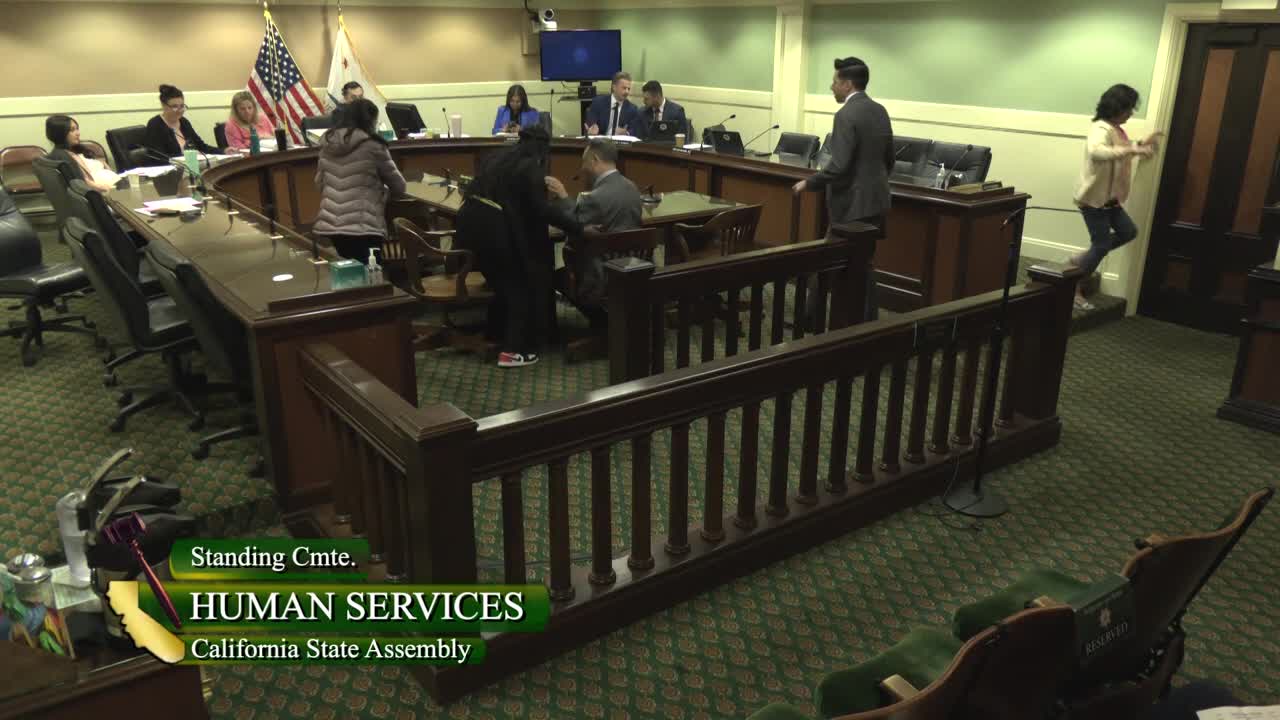 8MIN
Assembly Standing Committee on Human Services
Bill Author

Bill Co-Author(s):