ACA 3: University of California: home down payment loans for support staff.
- Session Year: 2025-2026
- House: Assembly
- Latest Version Date: 2025-01-16
Current Status:
In Progress
(2025-05-23: In committee: Hearing postponed by committee.)
Introduced
In Committee
Awaiting First Chamber Vote
Passed First Chamber
In Committee
Awaiting Second Chamber Vote
Passed Second Chamber
Enacted
The California Constitution provides that the University of California constitutes a public trust, and requires the university to be administered by the Regents of the University of California, a corporation in the form of a board, with full powers of organization and government, subject to legislative control only for specified purposes. These provisions grant the regents all the powers necessary or convenient for the effective administration of its trust.
This measure would require, on or before January 1, 2027, the regents to extend a portion of the homeownership assistance provided to senior executives and University of California faculty in the Academic Senate to eligible support staff, defined as career employees who have worked for the university for at least 5 years, are first-time homebuyers, and are not supervisors, managers, senior executives, or members of the University of California faculty in the Academic Senate, for the purpose of providing down payment loans, as specified. The measure would require, beginning in the 202728 fiscal year, the total number of down payment loans the regents provide to eligible support staff to equal the total number of all housing loans made to senior executives and University of California faculty in the Academic Senate during the 202324 fiscal year, and for each fiscal year thereafter, the total number of down payment loans for eligible support staff to equal the total number of housing loans made to senior executives and University of California faculty in the Academic Senate in the preceding fiscal year, except as provided. The measure would require 75% of the down payment loans provided to eligible support staff to be made available to staff whose household incomes are at or below the area median income, as defined. The measure would authorize the Legislature to enact laws or delegate to an appropriate body or agency the power to implement these provisions, as provided.
The measure would provide that its provisions are severable.
WHEREAS, The Regents of the University of California have a successful, long-established homeownership loan program that is available for University of California executives and faculty; and
WHEREAS, The program generates revenue for the University of California and does not require any state General Fund money nor have any impact on student tuition; now, therefore, be it
Resolved by the Assembly, the Senate concurring, That the Legislature of the State of California at its 202526 Regular Session commencing on the second day of December 2024, two-thirds of the membership of each house concurring, hereby proposes to the people of the State of California, that the Constitution of the State be amended as follows:
This measure shall be known, and may be cited, as the University of California First-Time Homebuyer Down Payment Loans for Support Staff.
(a)Notwithstanding any other provision of this Constitution, on or before January 1, 2027, the regents shall extend a portion of the homeownership assistance provided to University of California senior executives and faculty to eligible support staff for the purpose of providing down payment loans. This extension shall not increase student tuition or impact the states General Fund.
(b)Beginning in the 202728 fiscal year, the total number of down payment loans the regents provide to eligible support staff shall equal the total number of housing loans made to senior executives and faculty during the 202324 fiscal year. For each fiscal year thereafter, the total number of down payment loans for eligible support staff shall equal the total number of all housing loans made to senior executives and faculty in the preceding fiscal year, but no fewer than the total number of loans made to senior executives and faculty in the 202324 fiscal year.
(c)The regents shall ensure that all repayments and revenue generated by down payment loans provided pursuant to this section are only used for the purposes specified in this section.
(d)Seventy-five percent of the down payment loans provided pursuant to this section shall be made available to eligible support staff whose household incomes are at or below the area median income.
(e)The Legislature may enact laws or delegate to an appropriate body or agency the power to implement this section, including, but not limited to, the power to:
(1)Establish priorities and procedures consistent with the purposes of this section.
(2)Specify the type and condition of properties for which loans may be provided pursuant to this section.
(3)Specify the terms, underwriting, and additional eligibility criteria for loans provided pursuant to this section.
(4)Determine whether the regents shall also provide low-interest primary mortgages to eligible support staff, but only to the extent that providing low-interest primary mortgages is necessary for eligible support staff to qualify for down payment loans.
(f)For purposes of this section, the following definitions apply:
(1)Area median income means the median family income of a geographic area of the state.
(2)Down payment loan means a no-interest, deferred-payment, subordinate, shared-appreciation loan for 20 percent of a homes purchase price, and may be used only for a down payment on the purchase of the borrowers primary residence. When the home is sold or the primary mortgage is refinanced, the borrower shall repay the amount of the subordinate down payment loan plus 20 percent of the appreciated home value to the University of California.
(3)Eligible support staff means career employees who have worked for the University of California for at least five years and are first-time homebuyers. Eligible support staff does not include loan applicants who are University of California supervisors, managers, senior executives, or members of the University of California faculty in the Academic Senate.
(4)Faculty means University of California faculty in the Academic Senate.
(5)Low-interest means a rate comparable to the lowest rates the University of California offers on home loans it provides to senior executives and faculty, or 3.25 percent per annum, whichever is lower.
(6)Provide means to originate, loan, arrange or cause to be made available, directly or indirectly, including through the University of California Home Loan Program Corporation, or any other mortgage-originating entity.
(7)Senior executives means those executives and senior managers in the University of Californias senior management group.
(8)University of California or regents means the Regents of the University of California, and includes any affiliated mortgage originating entity such as the University of California Home Loan Program Corporation.
(a)The provisions of this measure are severable. If any portion, section, subdivision, paragraph, clause, sentence, phrase, word, or application of this measure is for any reason held to be invalid by a decision of any court of competent jurisdiction, that decision shall not affect the validity of the remaining portions of this measure. The Legislature hereby declares that it would have proposed, and the voters hereby declare that they would have adopted, this measure and every portion, section, subdivision, paragraph, clause, sentence, phrase, word, and application not declared invalid or unconstitutional without regard to whether any portion of this measure or application of this measure would be subsequently declared invalid.
(b)If this measure and another measure or measures relating to the provision of housing loans by the Regents of the University of California to University of California employees appear on the same statewide election ballot, the provisions of the other measure or measures shall not be deemed to be in conflict with this measure, and if approved by the voters, this measure shall take effect notwithstanding approval by the voters of another measure or measures relating to the provision of housing loans by the Regents of the University of California to University of California employees by a greater number of affirmative votes.
(c)If this measure is approved by the voters but superseded by law by any other conflicting ballot measure approved by the voters at the same election, and the conflicting measure is later held invalid, this measure shall be self-executing and given the full force of law.
(d)This measure shall be liberally construed, interpreted, and implemented in order to achieve the purposes set forth in this measure.
|
Date
|
Status
|
|---|---|
| May 23, 2025 | In committee: Hearing postponed by committee. |
| May 14, 2025 | In committee: Set, first hearing. Referred to APPR. suspense file. |
| Apr 30, 2025 | From committee: Be adopted, and re-refer to Com. on APPR. Re-referred. (Ayes 7. Noes 3.) (April 29). Re-referred to Com. on APPR. |
| Apr 28, 2025 | Coauthors revised. |
| Apr 28, 2025 | From committee: Be adopted, and re-refer to Com. on HIGHER ED. Re-referred. (Ayes 10. Noes 0.) (April 24). Re-referred to Com. on HIGHER ED. |
| Apr 24, 2025 | (Pending re-refer to Com. on HIGHER ED.) |
| Apr 24, 2025 | Assembly Rule 56 suspended. (Page 1265.) |
| Apr 7, 2025 | Referred to Coms. on H. & C.D. and HIGHER ED. |
| Jan 17, 2025 | From printer. May be heard in committee February 16. |
| Jan 17, 2025 | Introduced measure version corrected. |
| Jan 16, 2025 | Introduced. To print. |
|
Date
|
Description
|
Location
|
Votes
|
|
|---|---|---|---|---|
| Apr 29, 2025 | Be adopted and re-referred to the Committee on [Appropriations] | Assembly Standing Committee on Higher Education |
Passed |
|
| Apr 24, 2025 | Be adopted and re-referred to the Committee on [Higher Education] | Assembly Standing Committee on Housing and Community Development |
Passed |
This list shows positions taken on this bill by organizations on the date displayed, which is linked to the original source.
Positions by individuals are not included.
|
Organization
|
Position
|
Date
|
|---|---|---|
| AFSCME LOCAL 3299 | ** Support | |
| Alameda Labor Council | ** Support | |
| Alliance Of Californians For Community Empowerment | ** Support | |
| American Federation of State, County and Municipal Employees Local 57 | ** Support | |
| American Federation Of State, County And Municipal Employees, Afl-Cio | ** Support | |
| Bay Area Council | ** Against | |
| California Chamber Of Commerce | ** Against | |
| California Federation of Labor Unions, Afl-cio | ** Support | |
| California Lulac State Organization | ** Support | |
| California State Council of Service Employees International Union | ** Support | |
| California Teamsters Public Affairs Council | ** Support | |
| Central City Association Of Los Angeles | ** Against | |
| CFT- a Union of Educators & Classified Professionals, Aft, Afl-cio | ** Support | |
| Clergy and Laity United for Economic Justice | ** Support | |
| Contra Costa Central Labor Council | ** Support | |
| Council Of Uc Faculty Associations | ** Support | |
| Courage California | ** Support | |
| Housing and Economic Rights Advocates | ** Support | |
| Labor Council for Latin American Advancement- Sacramento Chapter | ** Support | |
| Los Angeles Alliance for a New Economy | ** Support | |
| Los Angeles Area Chamber Of Commerce | ** Against | |
| Los Angeles Business Council | ** Against | |
| Los Angeles County Federation of Labor, AFL-CIO | ** Support | |
| National Union Of Healthcare Workers | ** Support | |
| North Valley Labor Federation | ** Support | |
| Orange County Labor Federation, AFL-CIO | ** Support | |
| Sacramento Central Labor Council, AFL-CIO | ** Support | |
| SAN DIEGO & IMPERIAL COUNTIES LABOR COUNCIL | ** Support | |
| San Francisco Labor Council | ** Support | |
| UCLA, Undergraduate Student Association Council | ** Support | |
| Unite Here International Union, Afl-Cio | ** Support | |
| University of California | ** Against | |
| University Of California Student Association | ** Support | |
| UPTE-CWA 9119 | ** Support | |
| VALLEY INDUSTRY AND COMMERCE ASSOCIATION | ** Against | |
| West Los Angeles Chamber of Commerce | ** Against |
Date of Hearing: May 14, 2025
ASSEMBLY COMMITTEE ON APPROPRIATIONS
Buffy Wicks, Chair
ABPCA Bill Id:ACA 3
Author:(Haney) – As Introduced Ver:January 16, 2025
Policy Committee: | Housing and Community Development | Vote: | 10 - 0 |
Higher Education | 7 - 3 | ||
|
|
Urgency: State Mandated Local Program: No Reimbursable: No
SUMMARY:
This measure, if approved by the voters, amends the California Constitution to require the Regents of the University of California (UC) to extend portions of homeownership assistance currently provided to faculty and senior executives to eligible support staff.
Specifically, this measure:
- Requires the UC Regents, by January 1, 2027, to extend a portion of the homeownership assistance provided to UC faculty and senior executives to eligible support staff for down payment loans.
- Stipulates the extension of the homeownership assistance to eligible support staff must not increase student tuition or impact the state’s General Fund.
- Requires the UC Regents to provide the same number of down payment loans to eligible support staff as housing loans were provided to faculty and senior executives during the 2023-24 fiscal year.
- For each fiscal year thereafter, requires the total number of down payment loans for eligible support staff to equal the total number of all housing loans made to faculty and senior executives in the preceding fiscal year, but no fewer than the total number of loans made to faculty and senior management in the 2023–24 fiscal year.
- Requires the UC Regents to ensure all repayments and revenue generated by down payment loans are used for future down payment loans for support staff.
- Requires 75% of down payment loans be made available to eligible support staff whose household incomes are at or below the area median income (AMI).
- Authorizes the Legislature to enact laws or delegate to an appropriate body or agency the power to implement the down payment loan program created by this act, including, but not limited to, establishing priorities and procedures, specifying the type of properties, and specifying terms and eligibility criteria for loans, among other items, as specified.
- Defines “down payment loan” to mean a no-interest, deferred-payment, subordinate, shared-appreciation loan for 20% of a home’s purchase price that may be used only for a down payment on the purchase of the borrower’s primary residence. Provides that when the home is sold or the primary mortgage is refinanced, the borrower must repay the amount of the subordinate down payment loan plus 20% of the appreciated home value to the UC.
FISCAL EFFECT:
ACA 3 is likely to result in costs to the UC system in the low-hundreds of millions of dollars annually to provide down payment assistance to UC staff under the terms provided in the measure. Accumulated costs will likely reach over $1 billion before loan repayments begin in about 10 years. Because ACA 3 requires the loan repayments to be recycled back only into the program for more down payment assistance loans, and the measure prohibits state General Fund support, these costs will be entirely borne by the UC system under a constitutional obligation to provide the program. Estimated costs include:
- UC Costs. The UC estimates costs of at least $117 million in the first year of the program and at least $1.2 billion over the next decade for capitalization, loan servicing and staffing, and one-time startup costs likely in the low millions of dollars, as follows:
- Staffing. Ongoing costs of $4 million annually for 20 fulltime staff positions in its Offices of Loan Programs. This estimate assumes an annual cost of $200,000 (salary and benefits) per position.
- Capitalization. Ongoing costs of $112 million annually in loan capitalization funds. This estimate assumes a median home price of $800,000, and per the parameters of ACA 3, a 20% down payment loan of $160,000, 515 Mortgage Origination Program loans annually ($82.4 million), and 185 Supplemental Home Loan Program loans annually ($29.6 million).
Funding will replenish (but only for more loans) when borrowers sell or refinance, which is not likely for at least 10 to15 years. Until then, campuses will need to continuously identify capital to initiate loans. UC cannot use the Short Term Investment Pool (STIP) for capitalization of ACA 3 loans because there are no monthly payments to ensure STIP’s balance is maintained for its intended purpose (payroll, debt service, etc.). ACA 3 prohibits the use of state General Fund money or tuition funds for these loans.
- Loan Servicing. Ongoing costs for servicing loans of $280,000 to $560,000 in the first year, increasing in subsequent years based on the total balance outstanding. By year 10, this cost will likely be in the millions of dollars annually. This estimate assumes a typical servicing fee of 0.25% to 0.5% of the loan amount.
The shared appreciation program under ACA 3 does not allow for this fee to be collected regularly, since there are no monthly payments or fees. Further, ACA 3 does not allow the repayment or revenue generated by the loans to be used by UC for this purpose. UC will need to identify new funding to service loans.
- Startup Costs. One-time startup costs of an unknown amount, but likely in the low millions of dollars for legal services, IT, training, recruiting, contracts, and other items.
- Secretary of State Costs. Estimated one-time General Fund costs to the Secretary of State in the range of $740,000 to $987,000 for printing and mailing costs to place the measure on the ballot in a statewide election. This estimate assumes an average per-page cost of $123,000 and the addition of six to eight pages in the Voter Information Guide. Actual costs may be higher or lower, depending on the length of required elements and the overall size of the ballot.
The Governor’s proposed budget for fiscal year 2025-26 includes an 8% reduction of state funding for the UC system.
COMMENTS:
- Purpose. According to the author:
As a renter, I understand first-hand that saving for a down payment is one of the biggest hurdles Californians face when striving for homeownership. As housing prices and rents continue to rise, so does the challenge to save for a down payment. As UC continues to invest in its Executives, Faculty and Chancellors to ensure they are able to own a home near where they work, we must also invest in all UC employees so that they are not travelling hours or sleeping in their cars during the workweek to avoid their long-distance commutes. Once approved on the ballot, the people of California will see that this ACA is a modest but important step as it begins to assist hundreds of families each year. In time, the measure will help thousands of families without impacting taxpayers; guaranteeing that UC sees loans repaid as well as a return on their investment.
- Background. Down Payment Assistance. The state has several programs to encourage homeownership, the largest of which is the mortgage interest deduction for income tax purposes on up to $750,000 of qualified residence loans. This deduction costs the state General Fund approximately $5 billion each year. In addition the California Housing Financing Authority (CalHFA) offers two down payment assistance programs targeted at borrowers making 80% of AMI or less. Qualified UC support staff are eligible to participate in CalHFA’s programs.
Higher education institutions commonly use affordable home loans and other products to recruit and retain executives and faculty to their campuses. Through its Mortgage Origination Program and the Supplemental Home Loan Program, in fiscal year 2023-24 the UC provided 700 loans statewide, 687 to faculty and 13 to “senior management group” employees (executives). UC offers several types of mortgage products, including adjustable rate mortgages, second mortgages, and down payment assistance. The loans are funded by the UC Office of the President or by campus discretionary funds. UC support staff are not eligible to participate in UC’s housing assistance programs.
The down-payment loan program proposed in ACA 3, is modeled closely on CalHFA’s California Dream for All Program, a revolving, shared appreciation loan program that provides 20% in down payment assistance, up to $150,000. All borrowers must be first-time homebuyers and borrowers are required to share a portion of any equity increase in the home with the state when the home is sold. These funds are recycled back into the program to provide future down payments.
The 2022 Budget Act provided $500 million for the Dream for All program and the 2023 budget act added $20 million to the original allocation. CalHFA indicates all program funds have been allocated. Also similar to the program outlined in ACA 3, the Dream for All Program is not self-sustaining in the early years and requires a continuous General Fund investment to fund new loans. The Governor’s 2025 budget proposal does not propose to re-fund the program.
ACA 3 Alternative. The UC indicates it has been in discussions with CalHFA to provide funding to extend the state’s down payment assistance program to the University’s employees. Because funding will not likely be recouped for at least 10 years, the program would begin on a smaller scale than envisioned by ACA 3, likely as a pilot at UC Santa Cruz, and would provide greater funding flexibility. Leveraging the state’s existing program structure, UC would likely contract with CalHFA to administer the program and each campus would provide loan funding based on local interest. The initial investment would be in the low millions.
- Support and Opposition. This measure is sponsored by AFSCME Local 3299, and supported by numerous labor organizations. This measure is opposed by the University of California, the California Chamber of Commerce, and others.
Analysis Prepared by: Jennifer Swenson / APPR. / (916) 319-2081
Date of Hearing: Apri 29, 2025
ASSEMBLY COMMITTEE ON HIGHER EDUCATION
Mike Fong, Chair
ABPCA Bill Id:ACA 3 (
Author:Haney) – As Introduced Ver:January 16, 2025
SUBJECT: University of California: home down payment loans for support staff.
SUMMARY: Creates the University of California (UC) First-Time Homebuyer Down Payment Loans for Support Staff; which amends the California Constitution to require the UC Regents, on or before January 1, 2027, to extend portions of homeownership assistance, currently provided to senior executives and faculty, to eligible support staff. Specifically, this constitutional amendment:
- Requires the UC Regents by January 1, 2027, to extend a portion of the homeownership assistance provided to UC senior executives and faculty to eligible support staff to provide down payment loans.
- Stipulates that the extension of the homeownership assistance to eligible support staff, as enumerated in (1) above, must not increase student tuition or impact the State’s General Fund.
- Requires the UC Regents to provide the same number of down payment loans to eligible support staff as housing loans provided to senior executives and faculty during the 2023-24 fiscal year.
- Provides that for each fiscal year thereafter, the total number of down payment loans for eligible support staff must equal the total number of all housing loans made to senior executives and faculty in the preceding fiscal year, but no fewer than the total number of loans made to senior executives and faculty in the 2023–24 fiscal years.
- Requires the UC Regents to ensure that all repayments and revenue generated by down payment loans are used for future down payment loans for support staff.
- Requires that 75% of down payment loans be made available to eligible support staff whose household incomes that are at or below the area median income (AMI).
- Authorizes the Legislature to enact laws or delegate to an appropriate body or agency the power to implement the down payment loan program created by this constitutional amendment, including, but not limited to, the following:
- Establish priorities and procedures consistent with the purpose of this measure;
- Specify the type and condition of properties for which loans may be provided;
- Specify the terms, underwriting, and additional eligibility criteria for loans; and,
- Determine whether the Regents must also provide low-interest primary mortgages to eligible support staff, but only to the extent that providing low-interest primary mortgages is necessary for eligible support staff to qualify for down payment loans.
- Defines the following terms for purposes of this measure:
- “AMI” means the median family income of a geographic area of the state;
- “Down payment loan” means a no-interest, deferred-payment, subordinate, shared-appreciation loan for 20% of a home’s purchase price, that may be used only for a down payment on the purchase of the borrower’s primary residence. Provides that when the home is sold or the primary mortgage is refinanced, the borrower shall repay the amount of the subordinate down payment loan plus 20% of the appreciated home value to the UC;
- “Eligible support staff” means career employees who have worked for UC for at least five years and are first-time homebuyers. “Eligible support staff” does not include loan applicants who are UC supervisors, managers, senior executives, or members of the UC faculty in the Academic Senate;
- “Faculty” means UC faculty in the Academic Senate;
- “Low-interest” means a rate comparable to the lowest rates the UC offers on home loans it provides to senior executives and faculty, or 3.25% per annum, whichever is lower;
- “Provide” means to originate, loan, arrange or cause to be made available, directly or indirectly, including through the UC Home Loan Program Corporation, or any other mortgage-originating entity;
- “Senior executives” means those executives and senior managers in the UC’s senior management group; and,
- “UC” or “Regents” means the UC Regents, and includes any affiliated mortgage originating entity such as the UC Home Loan Program Corporation.
- Includes a severability clause.
- Provides that if this measure and another measure or measures relating to the provision of housing loans by the Regents or employees appear on the same statewide election ballot, the provisions of the other measure or measures must not be deemed to be in conflict with this measure, and if approved by the voters, this measure must take effect notwithstanding approval by the voters of another measure or measures relating to the provision of housing loans by the UC Regents employees by a greater number of affirmative votes.
- Provides that if this measure is approved by the voters but superseded by any other conflicting ballot measure approved by the voters at the same election, and the conflicting measure is later held invalid, this measure shall be self-executing and given the full force of law.
- Provides that this measure must be liberally construed, interpreted, and implemented in order to achieve the purposes set forth in this measure.
EXISTING LAW:
- Establishes the UC as a public trust to be administered by the Regents of the UC; and, grants the Regents full powers of organization and government, subject only to such legislative control as may be necessary to insure security of its funds, compliance with the terms of its endowments, statutory requirements around competitive bidding and contracts, sales of property and the purchase of materials, goods and services (Article IX, Section (9)(a) of the California Constitution).
- Establishes and authorizes the California Housing Finance Agency (CalHFA), in part, to make loans to housing sponsors for housing developments and to qualified mortgage lenders. Provides that the primary purpose of CalHFA is to meet the housing needs of persons and families of low- or moderate-income. Provides that CalHFA is administered by a board of directors and is supervised on a day-to-day basis by an executive director (Health and Safety Code (HSC) Section 50901, et seq.).
- Establishes a number of housing assistance programs for affordable housing at the Department of Housing and Community Development (HCD), including, but not limited to, CalHOME, which provides grants to individual homebuyers to purchase a home and loans to nonprofit developers to construct single-family homes (HSC Section 50650.3).
FISCAL EFFECT: Unknown
COMMENTS: Double referral. This measure was heard on April 24, 2025, by the Assembly Committee on Housing and Community Development, where it passed out of the Committee with a vote of 10-0.
Need for the measure. According to the author, “for over 40 years, the University of California has successfully made available approximately $4 billion to UC senior executives and faculty for low-interest home mortgages, down payment subsidies, moving costs, closing costs and an overall robust homeownership program. Many times, these home mortgage loans are for second/vacation homes, are forgivable loans, and moving and closings costs are waived. The home mortgage loans offered are typically 90-95% of the purchase price, a 30-year term at an interest rate no lower than 3.25%, and in recent years the average mortgage is $1,039,101.In 2024, this home mortgage loan program was extended to UC Chancellors despite the fact that each Chancellor already receives a house on campus.”
Further, the author states that, “a 2024 survey by Bankrate found that 81% of would-be buyers say that down payment and closing costs are obstacles toward owning a home. And, 78% of Americans say owning a home is part of the American Dream. As a renter, I understand first-hand that saving for a down payment is one of the biggest hurdles Californians face when striving for homeownership. As housing prices and rents continue to rise, so does the challenge to save for a down payment.”
The author contends that, “as UC continues to invest in its Executives, Faculty and Chancellors to ensure they are able to own a home near where they work, we must also invest in all UC employees so that they are not travelling hours or sleeping in their cars during the workweek to avoid their long-distance commutes. Once approved on the ballot, the people of California will see that this ACA [Assembly Constitutional Amendment] is a modest but important step as it begins to assist hundreds of families each year. In time, the measure will help thousands of families without impacting taxpayers; guaranteeing that UC sees loans repaid as well as a return on their investment.”
This measure, in part, creates the UC First-Time Homebuyer Down Payment Loans for Support Staff; which amends the California Constitution to require the UC Regents, by January 1, 2027, to extend portions of homeownership assistance, currently provided to senior executives and faculty, to eligible support staff.
The CalHFA. Established in 1975, CalHFA was chartered as the state's affordable housing lender to make below market-rate loans for single-family and multi-family housing through the sale of tax-exempt bonds. The CalHFA is a self-supporting entity and its debts, including those related to the compensation and retirement costs of its employees, are separate from the State; that is to say, CalHFA is a self-supported State agency that does not rely on taxpayers dollars for its operational costs, but regularly administers various State and federal resources on behalf of the State. Investor capital, through the sale of bonds, provides the agency's source of revenue. Existing statutes and bond indentures stipulate that the agency's debts are not a debt or liability of the State or any political subdivision thereof and are not backed by the faith and credit of the State.
The image below, from CalHFA, depicts the number of homebuyers assisted and dwelling units created/preserved in the 50 years of CalHFA’s existence:

Committee Staff understands that nothing currently precludes eligible UC classified staff from participating in CalHFA loan programs, however, the loan programs are oversubscribed.
Intended to have launched on March 27, 2023, a memorandum of understanding (MOU) between CalHFA and UC Santa Cruz would have allowed employees the ability to participate in the California Dream for All program. Used in conjunction with a Dream For All Conventional mortgage, the program is a shared appreciation product where the State provides the homebuyer a down payment loan consisting of a zero interest 20% down payment loan. When the homebuyer sells or transfers the home to a new lender, the homebuyer agrees to repay the loan plus 20% of the appreciation of the home value.[1]
Committee Staff understands that the aforementioned MOU has not been authorized, however in the UC’s letter of opposition dated April 14, 2025, it was noted that the UC desires to work with CalHFA in order for CalHFA to expand its down payment assistance program.
Moving forward, the author may wish to provide more time to the two entities in order to see if a solution can be reached on a down payment plan that appears to be substantially similar to the purposed plan in this measure.
Current homebuyers and homeowners lending programs at the UC. In July 1984, the UC Regents approved the Mortgage Origination Program (MOP), UC Regents Policy 5309, to provide primary mortgage financing to support the UC’s recruitment and retention needs for faculty and Senior/Executive Managers. From program inception in July 1984 through June 30, 2015, the Office of Loan Programs (OLP) funded 6,077 MOP loans with an aggregate amount of $2.7 billion.
In March 1993, the Supplemental Home Loan Program (SHLP) was approved by the UC Regents to provide flexibility to utilize campus funding sources to offer an additional source of financing. The SHLP is most often used as secondary financing in conjunction with a MOP loan. In some cases, a SHLP loan has been used as primary financing in order to provide loan terms that are not available under MOP.
The eligible campus population able to participate in the loan programs consists of full-time UC appointees with positions in the following categories:
- Academic Senate members;
- Academic titles equivalent to titles held by Academic Senate members, as defined in UC policy;
- Acting Assistant Professors;
- Senior Management Group employees;
- UC Law San Francisco (formerly UC Hastings) faculty members;
- UC or UC Law San Francisco employees who will be appointed to any of these eligible categories effective no more than 180 days after loan closing; and,
- Other appointees who have received required additional approvals to be eligible for participation.
Further, the UC Employee Housing Assistance Program is currently comprised of the following loan options:
- Mortgage Origination Program (MOP);
- Graduated Payment Mortgage Origination Program (GP-MOP);
- 5/1 Mortgage Origination Program (5/1-MOP);
- Supplemental Home Loan Program (SHLP);
- Centrally-Funded Supplemental Home Loan Program (CF-SHLP);
- Interest-Only Supplemental Home Loan Program (IO-SHLP); and,
- Zero Interest Supplemental Home Loan Program (ZIP-SHLP) [2]
According to the most recent annual report by the UC on SHLP (based on fiscal year 2023-24), the outstanding portfolio of all SHLP loans as of June 30, 2024, consists of 466 loans with a principal balance of $48.1 million. Of these loans, 457 remain as UC investments and have an aggregate principal balance of $47.2 million. The remainder of the portfolio has been sold to outside investors and consists of nine loans with an aggregate principal balance of $930,290. The chart below (from the aforementioned report), displays a comparison of the number and dollar amount of SHLP loans funded by location for the past two fiscal years.

Committee Staff notes that UC support staff are not included in the above population and therefore not able to take advantage of any of UC’s housing assistance programs.
Moving forward, the author may wish to reach out to the UC in order to ascertain the feasibility of the UC adding or modifying one or more of the loans above to include UC support staff.
Mission and vision of the UC. According to the UC, its core mission is teaching, research, and public service. The UC states the following as its vision:
“We will achieve a level of operational excellence equivalent to UC’s world-class teaching and research enterprise. We will achieve quality, innovation and service excellence. Our support of the UC mission will be rigorous and data-driven. Our services will create consistent, frictionless experiences and model best practices for campus leaders, the Board of Regents, the Office of the President, UC employees, retirees, patients and students. Continuously applying leading and innovative practices, our UC community will be safe and feel safe as they work, learn and live at our UC locations. We will lead the University’s highest priorities, accelerating progress by delivering strategic advice, building and utilizing leading technology, adopting best practices, and implementing effective, equitable policies. We will be recognized as an employer of choice. We will cultivate a culture where our employees will be engaged, find purpose in their work, feel that their contributions are valued and that they belong in UC Operations.”
Committee Staff notes that while the UC has its MOP and SHLP loan programs, the UC is not a loan agency. While this measure does not use State funds for the purposes of UC support staff to be able to have a down payment assistance program, is could require the UC to have to employ more staff in order to implement the provisions of this measure.
At a time where the UC is facing an 8% reduction of State funding, the author and this Committee may wish to examine if it is prudent to place an additional financial burden on the UC that is not aligned to the UC’s core mission.
The UC Employees. According the UC’s 2024 Accountability Report, the UC is California’s third largest employer. As reflected on the map below, over 266,000 UC employees and over 65,000 retirees live across the state:

Committee Staff understands that there are over 110,000 UC support staff.
Arguments in support. According to the sponsors, AFSCME Local 3299, “ACA 3 is limited to long-term UC support staff who are first-time homebuyers whose modest incomes will additionally limit the type of home they can afford and the size of the down payments needed.”
AFSCME Local 3299 contends that, “ACA 3 limits the number of loans offered and does not extend to support staff the more robust, longstanding UC home mortgage program available to executives and faculty. But by using the same UC Short-Term Investment Pool, these first-time homebuyer down payment loans will likewise have no impact on student tuition, no impact on the State’s General Fund, and no impact on California taxpayers. The shared-appreciation framework guarantees that UC will recoup money loaned, earn a fair return, and recirculate it for future UC support staff to purchase their starter-home. This is a modest proposal to address a portion of our growing housing problem.”
Arguments in opposition. According to the UC, “ACA 3 is unnecessary as it requires the University to duplicate an existing down payment loan program created and funded by the Legislature and Governor at the California Housing Finance Agency (CalHFA). Since its creation, CalHFA has helped more than 226,000 low- and moderate-income homebuyers.”
Further the UC contends that, “at a time when the state deficit and federal cuts are creating severe budgetary shortfalls, ACA 3 represents a needless and inefficient use of public resources. A better approach would be to work with the University and aid in accelerating our existing efforts on workforce housing that benefit all University employees. For example, the University has been in discussions with CalHFA for almost a year to extend the state’s down payment assistance program to the University’s employees, leveraging the state’s current resources to provide broad access to this program with less overhead and administrative cost. This can be accomplished without a constitutional amendment or bill, but it will require resources to maximize the reach and effectiveness of this partnership. The University is willing to provide funding for this endeavor and is hopeful that the Legislature sees the value in this responsible and efficient use of public funds.”
REGISTERED SUPPORT / OPPOSITION:
Support
AFSCME Local 3299 (Sponsor)
Alameda Labor Council
Alliance of Californians for Community Empowerment (acce Action)
American Federation of State, County and Municipal Employees (AFSCME) Local 57
American Federation of State, County and Municipal Employees, AFL-CIO
California LULAC State Organization
California State Council of Service Employees International Union (SEIU California)
California Teamsters Public Affairs Council
CFT – a Union of Educators & Classified Professionals, AFT, AFL-CIO
Clergy and Laity United for Economic Justice
Contra Costa Central Labor Council
Council of UC Faculty Associations
Courage California
Housing and Economic Rights Advocates
Los Angeles Alliance for a New Economy (LAANE)
Los Angeles County Federation of Labor, AFL-CIO
National Union of Healthcare Workers (NUHW)
North Valley Labor Federation
Orange County Labor Federation, AFL-CIO
Sacramento Central Labor Council, AFL-CIO
San Diego & Imperial Counties Labor Council
San Francisco Labor Council
UNITE HERE International Union, AFL-CIO
University of California Student Association
Opposition
Bay Area Council
California Chamber of Commerce
Central City Association of Los Angeles
Los Angeles Area Chamber of Commerce
Los Angeles Business Council
University of California
Valley Industry and Commerce Association (VICA)
West Los Angeles Chamber of Commerce
Analysis Prepared by: Jeanice Warden and Kiersten Wall / HIGHER ED. / (916) 319-3960
Date of Hearing: April 24, 2025
ASSEMBLY COMMITTEE ON HOUSING AND COMMUNITY DEVELOPMENT
Matt Haney, Chair
ABPCA Bill Id:ACA 3 (
Author:Haney) – As Introduced Ver:January 16, 2025
SUBJECT: University of California: home down payment loans for support staff
SUMMARY: Amends the California Constitution to require the Regents of the University of California (UC) to extend portions of homeownership assistance, currently provided to senior executives and faculty, to eligible support staff, on or before January 1, 2027. Specifically, this bill:
- Requires the UC Regents on or before January 1, 2027 to extend a portion of the homeownership assistance provided to UC senior executives and faculty to eligible support staff to provide down payment loans. Provides that this extension shall not increase student tuition or impact the state’s General Fund.
- Requires the UC Regents to provide the same number of down payment loans to eligible support staff as housing loans provided to senior executives and faculty during the 2023-24 fiscal year.
- Provides that for each fiscal year thereafter, the total number of down payment loans for eligible support staff shall equal the total number of all housing loans made to senior executives and faculty in the preceding fiscal year, but no fewer than the total number of loans made to senior executives and faculty in the 2023–24 fiscal years.
- Requires the UC Regents to ensure that all repayments and revenue generated by down payment loans are used for future down payment loans for support staff.
- Requires that 75% of down payment loans be made available to eligible support staff whose household incomes that are at or below the area median income (AMI).
- Allows the Legislature to enact laws or delegate to an appropriate body or agency the power to implement the down payment loan program created by this Act including the following:
- Establish priorities and procedures;
- Specify the type and condition of properties for which loans may be provided;
- Specify the terms, underwriting, and additional eligibility criteria for loans; and
- Determine whether the Regents shall also provide low-interest primary mortgages to eligible support staff, but only to the extent that providing low-interest primary mortgages is necessary for eligible support staff to qualify for down payment loans.
- Includes the following definitions:
- “Area median income” means the median family income of a geographic area of the state;
- “Down payment loan” means a no-interest, deferred-payment, subordinate, shared-appreciation loan for 20% of a home’s purchase price, that may be used only for a down payment on the purchase of the borrower’s primary residence. Provides that when the home is sold or the primary mortgage is refinanced, the borrower shall repay the amount of the subordinate down payment loan plus 20% of the appreciated home value to the UC;
- “Eligible support staff” means career employees who have worked for UC for at least five years and are first-time homebuyers. “Eligible support staff” does not include loan applicants who are UC supervisors, managers, senior executives, or members of the UC faculty in the Academic Senate;
- “Faculty” means UC faculty in the Academic Senate;
- “Low-interest” means a rate comparable to the lowest rates the UC offers on home loans it provides to senior executives and faculty, or 3.25% per annum, whichever is lower;
- “Provide” means to originate, loan, arrange or cause to be made available, directly or indirectly, including through the UC Home Loan Program Corporation, or any other mortgage-originating entity;
- “Senior executives” means those executives and senior managers in the UC’s senior management group; and
- “University of California” or “regents” means the Regents of the UC, and includes any affiliated mortgage originating entity such as the UC Home Loan Program Corporation;
- Includes a severability clause.
- Provides that if this measure and another measure or measures relating to the provision of housing loans by the Regents or employees appear on the same statewide election ballot, the provisions of the other measure or measures shall not be deemed to be in conflict with this measure, and if approved by the voters, this measure shall take effect notwithstanding approval by the voters of another measure or measures relating to the provision of housing loans by the Regents of the UC employees by a greater number of affirmative votes.
- Provides that if this measure is approved by the voters but superseded by any other conflicting ballot measure approved by the voters at the same election, and the conflicting measure is later held invalid, this measure shall be self-executing and given the full force of law.
- Provides that this measure shall be liberally construed, interpreted, and implemented in order to achieve the purposes set forth in this measure.
EXISTING LAW:
- Establishes the UC as a public trust to be administered by the Regents and grants the Regents full powers of organization and governance subject only to legislative control as necessary to ensure the security of funds, compliance with terms of its endowments, and the statutory requirements around competitive bidding and contracts, sales of property, and the purchase of materials, goods, and services. (Article IX, Section (9) (a) of the California Constitution)
- Establishes a number of housing assistance programs for affordable housing at the Department of Housing and Community Development (HCD), including CalHOME, which provides grants to individual homebuyers to purchase a home and loans to nonprofit developers to construct single-family homes. The program also provides grants to nonprofit organizations and local governments to make loans to individual homeowners to construct ADUs or JADUs. (Health and Safety Code (HSC) Section 50650.3)
- Establishes and authorizes the California Housing Finance Agency (CalHFA) to make loans to housing sponsors for housing developments and to qualified mortgage lenders, among others. Provides that the primary purpose of CalHFA is to meet the housing needs of persons and families of low- or moderate-income. Provides that CalHFA is administered by a board of directors and is supervised on a day-to-day basis by an executive director.
FISCAL EFFECT: Unknown.
COMMENTS:
Author’s Statement: According to the author, “As a renter, I understand first-hand that saving for a down payment is one of the biggest hurdles Californians face when striving for homeownership. As housing prices and rents continue to rise, so does the challenge to save for a down payment. As UC continues to invest in its Executives, Faculty and Chancellors to ensure they are able to own a home near where they work, we must also invest in all UC employees so that they are not travelling hours or sleeping in their cars during the workweek to avoid their long-distance commutes. Once approved on the ballot, the people of California will see that this ACA is a modest but important step as it begins to assist hundreds of families each year. In time, the measure will help thousands of families without impacting taxpayers; guaranteeing that UC sees loans repaid as well as a return on their investment.”
Disparities in Homeownership: Homeownership rates in California are the second lowest in the country, according to 2016-2020 estimates from the American Community Survey. Statewide, only 56% of households own the home they live in, compared to 65% in the rest of the country. Only New York has a lower rate (55%). Across the state (and nation), homeownership rates tend to be high in rural and suburban places, and low in large cities and metropolitan areas. California, like the nation as a whole, has lower homeownership rates among communities of color. According to Census data, 65% of white Californians are homeowners while Asian/Asian-Americans have a homeownership rate that is six percentage points lower at 59%. About one in two Californians of Native/Indigenous descent are homeowners (49%), while the rate of homeownership amongst the Latinx population is 44%. Black Californians have the lowest rate of homeownership across racial/ethnic groups California with only about 1 in 3 owning their home (35%).
For Black Californians who do own homes, racial disparities also exist in the valuation of their assets. Black-owned homes in majority-Black areas of both the San Francisco-Oakland-Hayward Metropolitan Statistical Area (MSA) and the Los Angeles-Long Beach-Anaheim MSA are worth substantially less than equivalent homes with the same structural characteristics and neighborhood amenities in non-majority-Black areas. In the Bay Area, the average devaluation of homes in majority-Black neighborhoods is 22.3%, and in the Los Angeles area it is 17.1%. Differences in credit scores also contribute to racial disparities in homeownership. About 54% of Black Americans report having no credit or a credit score of below 640. About 41% of Latinx Americans report falling into this category as well. In contrast, 37% of white Americans and 18% of Asian Americans report similar credit circumstances. Home Mortgage Disclosure Act (HMDA) data show that Black applicants are denied loans at twice the rate of white applicants, controlling for income and gender. Even when approved for home loans, HMDA data also show that Black and Latinx borrowers are more likely to be offered higher-cost mortgages.
State Support for Homeownership: The state has several programs to encourage homeownership in the state. The largest investment in homeownership the state makes is the mortgage interest deduction. Homeowners can deduct the mortgage interest on up to $750,000 of qualified residence loans ($375,000 for married individuals filing separately) on their primary home and a second home that they live in part of the year. The mortgage interest deduction costs the state General Fund approximately $5 billion each year. In addition to the mortgage interest deduction, CalHFA offers two down payment assistance programs targeted at borrowers making 80% of area median income or less.
CalHFA is the state’s affordable housing lender. In addition to multi-family loans and grant programs, CalHFA runs several programs to support first time homebuyers, including a 30 year fixed interest mortgage and down payment assistance. The fixed interest first mortgage is an FHA-insured loan that is secured on a property. CalHFA does not lend money directly to consumers. CalHFA-approved lenders qualify consumers and make all mortgage loans. CalHFA purchases closed loans that meet CalHFA's requirements.
CalHFA offers two down payment assistance programs. The MyHome program provides up to three percent in down payment assistance to low- and moderate-income households. Lenders identify borrowers who qualify for the program and refer them to CalHFA for assistance. MyHome offers a deferred-payment junior loan of an amount up to the lesser of 3.5% of the purchase price or appraised value to assist with down payment closing costs of a home that is capped at $15,000. There is no cap on the amount of down payment buyers can receive if they are a veteran, school employee, have an income of 80% of AMI or less, and are purchasing a new home, manufactured home, or a home with an ADU. Grants may be made to households making up to 120% of AMI. Buyers must be first time homeowners (have not owned a home in the last three years), complete homebuyer education, and meet the income qualifications (which extend to households up to 150% of AMI in high cost areas). CalHFA received $150 million for home purchase assistance from Proposition 1 (2018) bond funds to provide first and junior loan options for low- to moderate-income families, including low to zero interest rate down payment assistance loans. CalHFA issues bonds to fund the mortgages and uses the proceeds of mortgage repayments to repay the bonds. Down payment assistance is funded by voter-approved bonds and through repayment of assistance as buyers sell or refinance their homes. CalHFA provides first-mortgages to buyers who income qualify. CalHFA is not a direct lender but partners with qualified lenders that offer their products.
The Dream for All Program operates in the say way as the MyHOME program except for a few key differences. The 2022-23 budget included $300 million which was awarded to 2,500 homeowners with an average appreciation loan of $112,000. The 2023-24 budget includes an additional $200 million for the program with a requirement that the program be revamped to focus on providing down payment assistance to homebuyers who would not otherwise be able to purchase a home. The goal of the program is to create generational wealth for families who have not had a history of homeownership. Borrowers can receive 20% in down payment assistance up to $150,000 and are required to share a portion of any equity increase in the home with the state when the home is sold. These funds are then recycled back into the program to provide for future down payments. Borrowers must also be a first homebuyer and a first generation homebuyer. To qualify as a first generation homebuyer, borrowers must not have a living parent or deceased parent that owns/owned a home or an interest in a home in the Unites States or be an individual who has at any time been placed in foster care or institutional care.
According to CalHFA’s 2023-24 Annual Report, 6,037 homebuyers were helped through down-payment assistance with $157 million in down payment assistance and closing costs and $2.57 billion in first mortgage lending. Demographic data collected on homebuyers shows the following breakdown by race and ethnicity: 8% of borrowers were Asian, 5% of borrowers were Black, 47% Hispanic/Latino, 30% white, and 10% unknown.
UC Homeownership Program: Higher education institutions use affordable home loans and other products to recruit executives and faculty. UC provides several different types of mortgage products to senior executives and faculty, including adjustable rate mortgages, second mortgages, and down payment assistance. The loans are funded by the UC Office of the President’s central bank while others are funded by campus discretionary funds.
This ACA would create a constitutional requirement for UC to create a down payment loan program for eligible support staff that are not faculty or executives. A down payment loan is defined as a no-interest, deferred-payment, subordinate, shared-appreciation loan for 20% of a home’s purchase price. The loan may only be used for a down payment on the purchase of the borrower’s primary residence. When the home is sold or the primary mortgage is refinanced, the borrower is required to repay the amount of the subordinate down payment loan plus 20% of the appreciated home value to UC. Eligible staff would have to have worked for UC for at least five years and be first time homebuyers. Seventy-five percent of the loans would have to go to staff who are at or below AMI.
The Legislature would have discretion on how to set up the down payment assistance loans and could also require the UC Regents to set up additional mortgage products. This program would have no impact on the state General Fund, however it would impact the UC’s discretionary fund which it uses to pay the salaries of its employees. As currently structured, UC services the mortgages made to executives and faculty, the payments are enough to cover the cost of the mortgage and are funneled back into UC’s discretionary fund. This creates limited risk for UC.
Arguments in Support: According to the sponsors, AFSCME Local 3299, “ACA 3 is limited to long-term UC support staff who are first-time homebuyers whose modest incomes will
additionally limit the type of home they can afford and the size of the downpayments needed.
ACA 3 limits the number of loans offered and does not extend to support staff the more robust, longstanding UC home mortgage program available to executives and faculty. But by using the same UC Short-Term Investment Pool, these first-time homebuyer down payment loans will likewise have no impact on student tuition, no impact on the State’s General Fund, and no impact on California taxpayers. The shared-appreciation framework guarantees that UC will recoup money loaned, earn a fair return, and recirculate it for future UC support staff to purchase their starter-home. This is a modest proposal to address a portion of our growing housing problem.”
Arguments in Opposition: According to the University of California, “ACA 3 is unnecessary as it requires the University to duplicate an existing down payment loan program created and funded by the Legislature and Governor at the California Housing Finance Agency (CalHFA). Since its creation, CalHFA has helped more than 226,000 low- and moderate-income homebuyers. At a time when the state deficit and federal cuts are creating severe budgetary shortfalls, ACA 3 represents a needless and inefficient use of public resources. A better approach would be to work with the University and aid in accelerating our existing efforts on workforce housing that benefit all University employees. For example, the University has been in discussions with CalHFA for almost a year to extend the state’s down payment assistance program to the University’s employees, leveraging the state’s current resources to provide broad access to this program with less overhead and administrative cost. This can be accomplished without a constitutional amendment or bill, but it will require resources to maximize the reach and effectiveness of this partnership. The University is willing to provide funding for this endeavor and is hopeful that the Legislature sees the value in this responsible and efficient use of public funds.”
Double-referred: This bill was also referred to the Assembly Committee on Higher Education where it will be heard should it pass out of this committee.
REGISTERED SUPPORT / OPPOSITION:
Support
AFSCME Local 3299 (Sponsor)
Alameda Labor Council
Alliance of Californians for Community Empowerment (ACCE Action)
American Federation of State, County and Municipal Employees (AFSCME) Local 57
American Federation of State, County and Municipal Employees, AFL-CIO
California Federation of Labor Unions, AFL-CIO
California LULAC State Organization
California State Council of Service Employees International Union (SEIU California)
California Teamsters Public Affairs Council
CFT – a Union of Educators & Classified Professionals, AFT, AFL-CIO
Clergy and Laity United for Economic Justice
Contra Costa Central Labor Council
Courage California
Housing and Economic Rights Advocates
Labor Council for Latin American Advancement- Sacramento Chapter
Los Angeles Alliance for a New Economy
Los Angeles County Federation of Labor, AFL-CIO
National Union of Healthcare Workers
North Valley Labor Federation
Orange County Labor Federation, AFL-CIO
Sacramento Central Labor Council, AFL-CIO
San Diego & Imperial Counties Labor Council
San Francisco Labor Council
United Here International Union, AFL-CIO
UCLA Undergraduate Student Association Council
University of California Student Association
UPTE-CWA 9119
Opposition
Bay Area Council
California Chamber of Commerce
Central City Association of Los Angeles
Los Angeles Area Chamber of Commerce
University of California
Valley Industry and Commerce Association
West Los Angeles Chamber of Commerce
Analysis Prepared by: Lisa Engel / H. & C.D. / (916) 319-2085
Discussed in Hearing
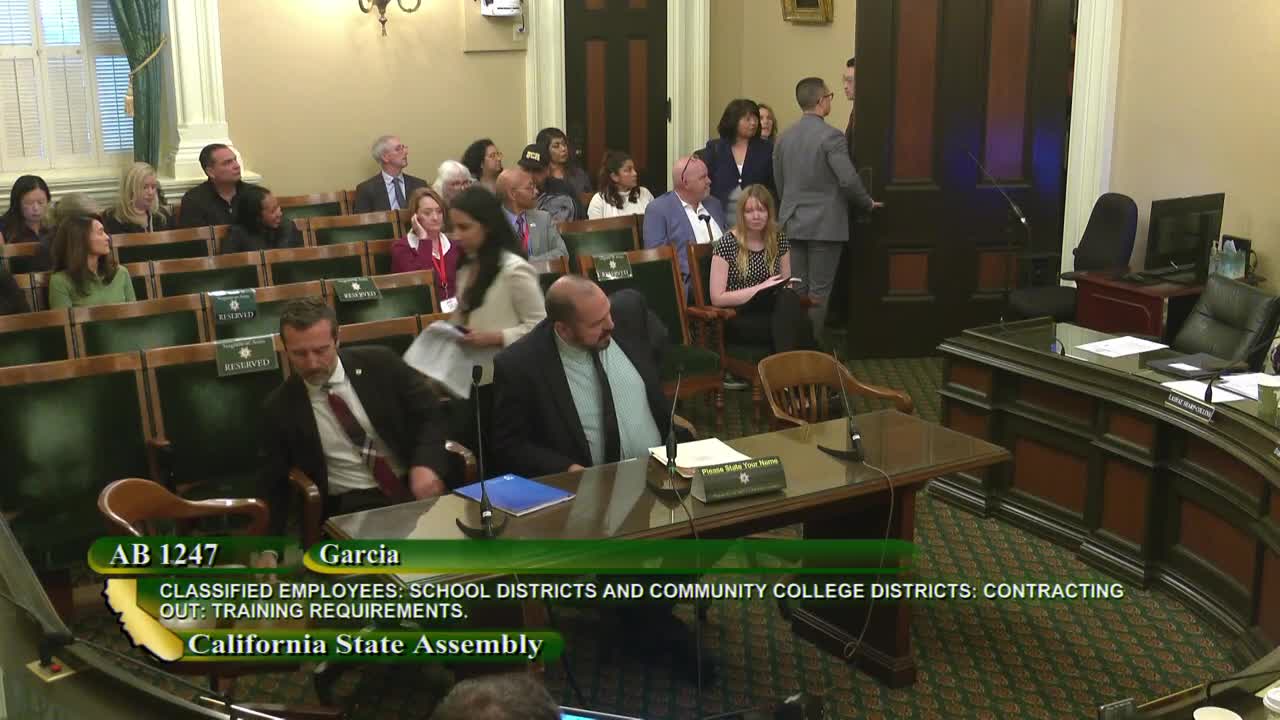 31MIN
Assembly Standing Committee on Higher Education
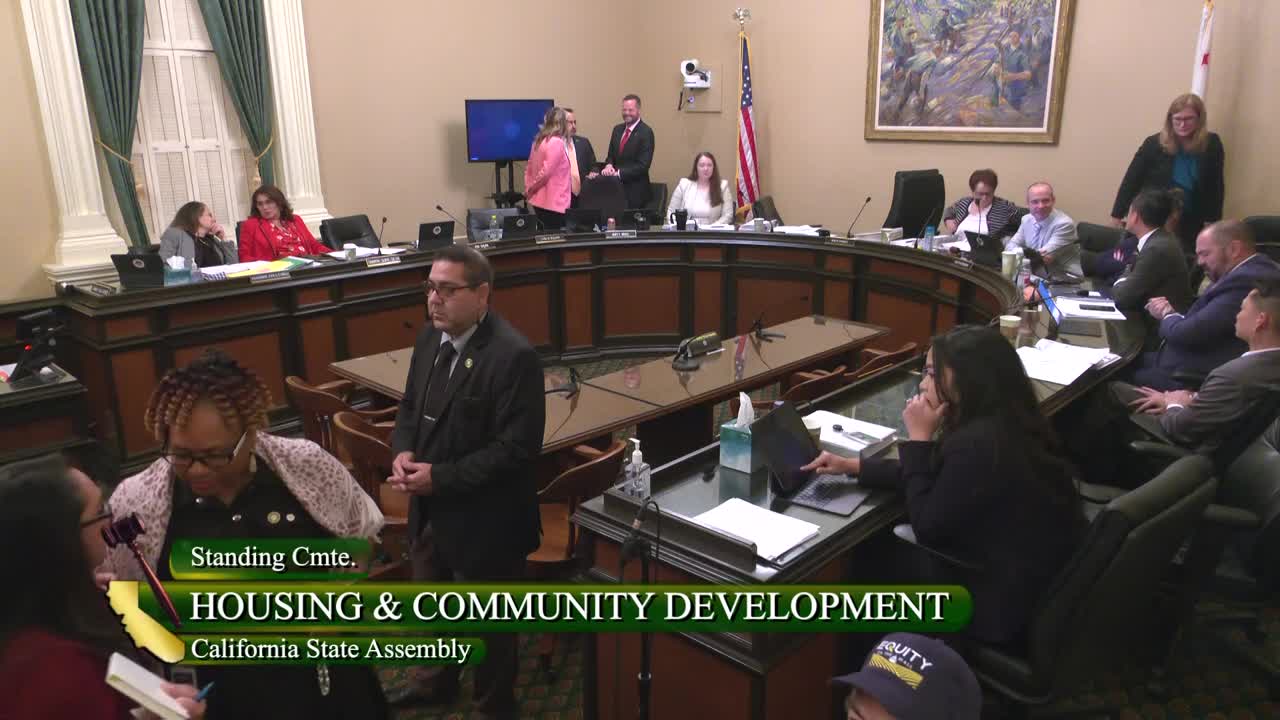 28MIN
Assembly Standing Committee on Housing and Community Development
Bill Author

Bill Co-Author(s):