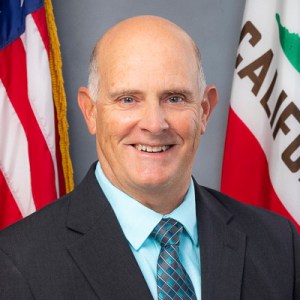
SB 232: California Environmental Quality Act: guidelines: study.
- Session Year: 2025-2026
- House: Senate
- Latest Version Date: 2025-03-20
Current Status:
Failed
(2026-02-02: Returned to Secretary of Senate pursuant to Joint Rule 56.)
Introduced
In Committee
Awaiting First Chamber Vote
Passed First Chamber
In Committee
Awaiting Second Chamber Vote
Passed Second Chamber
Enacted
The California Environmental Quality Act (CEQA) requires a lead agency, as defined, to prepare, or cause to be prepared, and certify the completion of an environmental impact report on a project that it proposes to carry out or approve that may have a significant effect on the environment or to adopt a negative declaration if it finds that the project will not have that effect. CEQA also requires a lead agency to prepare a mitigated negative declaration for a project that may have a significant effect on the environment if revisions in the project would avoid or mitigate that effect and there is no substantial evidence that the project, as revised, would have a significant effect on the environment.
CEQA requires the Office of Land Use and Climate Innovation, formerly named the Office of Planning and Research, to prepare and develop, and the Secretary of the Natural Resources Agency to certify and adopt, guidelines for the implementation of CEQA. The CEQA guidelines require a lead agency, immediately after deciding that an environmental impact report is required for a project, to send a notice of preparation stating that an environmental impact report will be prepared to the office and each responsible and trustee agency, as specified.
This bill would require the office to conduct a study to, among other things, evaluate how locked-in guidelines could impact regulatory certainty for future project proponents, lead agencies, and stakeholders and assess how locked-in guidelines could affect the speed and efficiency of the environmental review process pursuant to CEQA. The bill would define locked-in guidelines as CEQA guidelines, that are in effect at the time of the first issuance of the notice of preparation for a project, that apply to the project throughout the course of the environmental review process pursuant to CEQA, regardless of changes in the guidelines that occur after the first issuance of the notice of preparation. The bill would require, on or before January 1, 2027, the office to submit a report to the Governor and the Legislature on the study. The bill would repeal these provisions on January 1, 2028.
The California Environmental Quality Act (CEQA) requires a lead agency, as defined, to prepare, or cause to be prepared, and certify the completion of an environmental impact report on a project that it proposes to carry out or approve that may have a significant effect on the environment or to adopt a negative declaration if it finds that the project will not have that effect. CEQA also requires a lead agency to prepare a mitigated negative declaration for a project that may have a significant effect on the environment if revisions in the project would avoid or mitigate that effect and there is no substantial evidence that the project, as revised, would have a significant effect on the environment.
CEQA requires the Office of Land Use and Climate Innovation, formerly named the Office of Planning and Research, to prepare and develop, and the Secretary of the Natural Resources Agency to certify and adopt, guidelines for the implementation of CEQA. The CEQA guidelines require a lead agency, immediately after deciding that an environmental impact report is required for a project, to send a notice of preparation stating that an environmental impact report will be prepared to the office and each responsible and trustee agency, as specified.
This bill would require the office to conduct a study to, among other things, evaluate how locked-in guidelines could impact regulatory certainty for project proponents, lead agencies, and stakeholders and assess how locked-in guidelines could affect the speed and efficiency of the environmental review process pursuant to CEQA. The bill would define locked-in guidelines as CEQA guidelines, that are in effect at the time of the first issuance of the notice of preparation for a project, that apply to the project throughout the course of the environmental review process pursuant to CEQA, regardless of changes in the guidelines that occur after the first issuance of the notice of preparation. The bill would require, on or before January 1, 2027, the office to submit a report to the Governor and the Legislature on the study. The bill would repeal these provisions on January 1, 2028.
(a)The Legislature finds and declares that the California Environmental Quality Act (CEQA) (Division 13 (commencing with Section 21000) of the Public Resources Code) ensures that environmental impacts of proposed projects are considered before approvals are granted. However, the changing nature of the CEQA guidelines throughout the CEQA review process may lead to confusion, inefficiencies, and additional burdens for lead agencies and project proponents.
(b)It is the intent of the Legislature to study the implications of locking in the regulatory framework at the time that the notice of preparation is first issued, ensuring that the regulatory requirements in effect at that time are applied to the project, regardless of subsequent regulatory changes.
SEC. 2.Section 21083.15 is added to the Public Resources Code, to read:21083.15.(a)For purposes of this section, the following definitions apply:
(1)Locked-in guidelines means guidelines adopted pursuant to Section 21083, that are in effect at the time of the first issuance of the notice of preparation for a project, that apply to the project throughout the course of the environmental review process pursuant to this division, regardless of any changes in the guidelines that occur after the first issuance of the notice of preparation.
(2)Office means the Office of Land Use and Climate Innovation.
(b)The office shall conduct a study that accomplishes all of the following:
(1)Evaluates how locked-in guidelines could impact regulatory certainty for future project proponents, lead agencies, and stakeholders, including the financial implications of complying with changes in guidelines that occur up to five years after the first issuance of the notice of preparation.
(2)Assesses how locked-in guidelines could affect the speed and efficiency of the environmental review process pursuant to this division and consider whether locked-in guidelines could reduce delays associated with changes in guidelines during project reviews.
(3)Examines how locked-in guidelines could impact the quality and thoroughness of environmental reviews and determine whether locked-in guidelines would ensure consistent application of environmental protections or create unintended environmental risks.
(4)Identifies best practices for balancing the need for regulatory consistency with the flexibility to adapt to new and evolving environmental challenges and propose any legislative or regulatory changes needed to improve the environmental review process pursuant to this division.
(c)On or before January 1, 2027, the office shall submit a report to the Governor and the Legislature, in compliance with Section 9795 of the Government Code, on the study conducted pursuant to subdivision (b). The report shall include findings, recommendations, and proposed actions to improve the environmental review process pursuant to this division with respect to locked-in guidelines.
(d)This section shall remain in effect only until January 1, 2028, and as of that date is repealed.
(a)The Legislature finds and declares that the California Environmental Quality Act (CEQA) (Division 13 (commencing with Section 21000) of the Public Resources Code) ensures that environmental impacts of proposed projects are considered before approvals are granted. However, the changing nature of the CEQA guidelines throughout the CEQA review process may lead to confusion, inefficiencies, and additional burdens for lead agencies and project proponents.
(b)It is the intent of the Legislature to study the implications of locking in the regulatory framework at the time that the notice of preparation is first issued, ensuring that the regulatory requirements in effect at that time are applied to the project, regardless of subsequent regulatory changes.
SEC. 2.Section 21083.15 is added to the Public Resources Code, to read:21083.15.(a)For purposes of this section, the following definitions apply:
(1)Locked-in guidelines means guidelines adopted pursuant to Section 21083, that are in effect at the time of the first issuance of the notice of preparation for a project, that apply to the project throughout the course of the environmental review process pursuant to this division, regardless of any changes in the guidelines that occur after the first issuance of the notice of preparation.
(2)Office means the Office of Land Use and Climate Innovation.
(b)The office shall conduct a study that accomplishes all of the following:
(1)Evaluates how locked-in guidelines could impact regulatory certainty for project proponents, lead agencies, and stakeholders, including the financial implications of complying with changes in guidelines that occur after the first issuance of the notice of preparation.
(2)Assesses how locked-in guidelines could affect the speed and efficiency of the environmental review process pursuant to this division and consider whether locked-in guidelines could reduce delays associated with changes in guidelines during project reviews.
(3)Examines how locked-in guidelines could impact the quality and thoroughness of environmental reviews and determine whether locked-in guidelines would ensure consistent application of environmental protections or create unintended environmental risks.
(4)Identifies best practices for balancing the need for regulatory consistency with the flexibility to adapt to new and evolving environmental challenges and propose any legislative or regulatory changes needed to improve the environmental review process pursuant to this division.
(c)On or before January 1, 2027, the office shall submit a report to the Governor and the Legislature, in compliance with Section 9795 of the Government Code, on the study conducted pursuant to subdivision (b). The report shall include findings, recommendations, and proposed actions to improve the environmental review process pursuant to this division with respect to locked-in guidelines.
(d)This section shall remain in effect only until January 1, 2028, and as of that date is repealed.
|
Date
|
Status
|
|---|---|
| Feb 2, 2026 | Returned to Secretary of Senate pursuant to Joint Rule 56. |
| May 23, 2025 | May 23 hearing: Held in committee and under submission. |
| May 16, 2025 | Set for hearing May 23. |
| Apr 7, 2025 | April 7 hearing: Placed on APPR. suspense file. |
| Mar 28, 2025 | Set for hearing April 7. |
| Mar 20, 2025 | Read second time and amended. Re-referred to Com. on APPR. |
| Mar 19, 2025 | From committee: Do pass as amended and re-refer to Com. on APPR. (Ayes 8. Noes 0. Page 421.) (March 19). |
| Mar 3, 2025 | Set for hearing March 19. |
| Feb 27, 2025 | March 5 hearing postponed by committee. |
| Feb 25, 2025 | Set for hearing March 5. |
| Feb 5, 2025 | Referred to Com. on E.Q. |
| Jan 29, 2025 | From printer. May be acted upon on or after February 28. |
| Jan 28, 2025 | Introduced. Read first time. To Com. on RLS. for assignment. To print. |
|
Date
|
Description
|
Location
|
Votes
|
|
|---|---|---|---|---|
| Apr 7, 2025 | Placed on suspense file | Senate Standing Committee on Appropriations |
Passed |
|
| Mar 19, 2025 | Do pass as amended, but first amend, and re-refer to the Committee on [Appropriations] | Senate Standing Committee on Environmental Quality |
Passed |
This list shows positions taken on this bill by organizations on the date displayed, which is linked to the original source.
Positions by individuals are not included.
|
Organization
|
Position
|
Date
|
|---|---|---|
| Abundant Housing LA | ** Support | |
| California YIMBY | ** Support | |
| Circulate San Diego | ** Support | |
| Little Hoover Commission | ** Support | |
| State Building & Construction Trades Council Of California | ** Against |
SENATE COMMITTEE ON
Senator Anna Caballero, Chair
2025 - 2026 Regular Session
SB 232 (Seyarto) - California Environmental Quality Act: guidelines: study
Version: | Policy Vote: |
Urgency: | Mandate: |
Hearing Date: | Consultant: |
Bill Summary:
This bill would require the Office of Land Use and Climate Innovation (LCI) to submit a report to the Legislature evaluating how allowing future projects to move forward under the California Environmental Quality Act (CEQA) Guidelines in effect at the time a project’s notice of preparation was submitted could impact the speed, efficiency, and environmental considerations of the CEQA process.
Fiscal Impact:
- LCI estimates one-time costs of about $418,000 spread over two years (General Fund or special fund) to conduct research and draft a report on the potential benefits of “locked-in guidelines,” as specified.
Background:
CEQA is designed to (a) make government agencies and the public aware of the environmental impacts of a proposed project, (b) ensure the public can take part in the review process, and (c) identify and implement measures to mitigate or eliminate any negative impact the project may have on the environment. CEQA is enforced by civil lawsuits that can challenge any project’s environmental review.
Under CEQA, projects (unless they have a specific exemption) must undergo environmental analysis. This process starts with an initial study which determines what level of further environmental review is needed for a given project. If a project has no significant effects on the environment, or if those effects can be fully mitigated, the project can move forward with a negative declaration (ND) or mitigated negative declaration (MND). If the initial study finds the project has potential significant effects on the environment, then a full EIR is conducted. An EIR provides a thorough environmental review of a proposed project, analyzing the significant direct and indirect environmental impacts of a proposed project. The EIR also includes proposed mitigation measures for any significant effects that it identifies and considers alternatives to the proposed project.
CEQA Guidelines (Title 14, Division 6, Chapter 3 of the California Code of Regulations) are regulations governing implementation of CEQA, and they reflect the requirements set forth in the Public Resources Code as well as court decisions interpreting the statute. Among other things, the CEQA Guidelines explain how to determine whether an activity is subject to environmental review, what steps are involved in the environmental review process, and the required content of environmental documents.
LCI and CNRA are required to periodically update the CEQA Guidelines to reflect new legislation or court ruling. While LCI updates the guidelines to reflect new legislation and continually monitors whether the guidelines need updates, such as further clarification to implement CEQA, major updates that add interpretation are less frequent: the most recent major update (revising nearly 30 sections of the guidelines) happened seven years ago in 2018.
Proposed Law:
This bill would require LCI to submit a report to the Legislature, by January 1, 2027, evaluating how allowing projects to move forward under the CEQA Guidelines in place at the time the project submitted its notice of preparation could impact the speed, efficiency, and environmental considerations of the CEQA process. Specifically, this bill would:
- Require LCI to evaluate how locked-in guidelines could impact regulatory certainty for future project proponents, lead agencies, and stakeholders, and assess how locked-in guidelines could affect the speed, efficiency, and thoroughness of the environmental review process pursuant to CEQA and report this study to the Legislature and Governor by January 1, 2027.
- Define “locked-in guidelines” as CEQA guidelines that are in effect at the time of the first issuance of the notice of preparation for a project and applied to the duration of the CEQA process for that project.
Related Legislation:
SB 231(Seyarto, 2025) would require LCI to develop a technical advisory on thresholds of significance for GHG and noise pollution effects under CEQA, as specified.
SB 607 (Wiener, 2025) would require LCI to develop, by July 1, 2026, objective and measurable thresholds for an effect upon the environment to be considered significant, among other things.
SB 768 (Caballero, Chapter 773, Statutes of 2024) requires the Department of Housing and Community Development (HCD) to study how VMT is used as a metric for measuring transportation impacts of housing projects pursuant to CEQA.
-- END --
SENATE COMMITTEE ON ENVIRONMENTAL QUALITY
Senator Blakespear, Chair
2025 - 2026 Regular
Bill No: SB 232
Author: | Seyarto | ||
Version: | 01/28/2025 | Hearing Date: | 3/19/2025 |
Urgency: | No | Fiscal: | Yes |
Consultant: | Brynn Cook | ||
SUBJECT: California Environmental Quality Act: guidelines: study
DIGEST: This bill requires the Office of Land Use and Climate Innovation (LCI) to submit a report to the Legislature by January 1, 2027, to evaluate how allowing projects to move forward under the California Environmental Quality Act (CEQA) Guidelines in place at the time the project submitted its notice of preparation could impact the speed, efficiency, and environmental considerations of the CEQA process.
ANALYSIS:
Existing law:
- The California Environmental Quality Act (CEQA) requires a lead agency to spearhead an environmental impact report (EIR) for a project that may have a significant effect on the environment. CEQA also requires a lead agency to prepare a negative declaration (ND) for a project that will have no significant effects on the environment, or a mitigated negative declaration (MND) for projects that have no significant effects after mitigation. (Public Resources Code (PRC) §§ 21000 et seq.)
- Requires the Office of Land Use and Climate Innovation (LCI) (formerly the Office of Planning and Research) to prepare and develop proposed guidelines for the implementation of CEQA by public agencies, and to update the CEQA guidelines regularly. (PRC § 21083)
- Requires LCI to prepare proposed revisions to the CEQA Guidelines establishing criteria for determining the significance of transportation impacts within transit priority areas. (PRC § 21099)
This bill:
- Requires LCI to evaluate how locked-in guidelines could impact regulatory certainty for project proponents, lead agencies, and stakeholders, and assess how locked-in guidelines could affect the speed, efficiency, and thoroughness of the environmental review process pursuant to CEQA and report this study to the Legislature and Governor by January 1, 2027.
- Defines “locked-in guidelines” as CEQA guidelines that are in effect at the time of the first issuance of the notice of preparation for a project and applied to the duration of the CEQA process for that project.
Background
- The A, B, C’s of CEQA. CEQA is designed to (a) make government agencies and the public aware of the environmental impacts of a proposed project, (b) ensure the public can take part in the review process, and (c) identify and implement measures to mitigate or eliminate any negative impact the project may have on the environment. CEQA is enforced by civil lawsuits that can challenge any project’s environmental review.
Under CEQA, projects (unless they have a specific exemption) must undergo environmental analysis. This process starts with an initial study which determines what level of further environmental review is needed for a given project. If a project has no significant effects on the environment, or if those effects can be fully mitigated, the project can move forward with a negative declaration (ND) or mitigated negative declaration (MND). If the initial study finds that the project has potentially significant effects on the environment, then the lead agency submits a notice of preparation (NOP) that they are going to conduct an EIR. An EIR provides a thorough environmental review of a proposed project. Under the law, projects have one year to complete an EIR, although there are options to extend that timeline under extenuating circumstances.
- CEQA guidelines. The CEQA Guidelines (Title 14, Division 6, Chapter 3 of the California Code of Regulations) are the regulations that govern implementation of CEQA. The CEQA Guidelines reflect both the requirements developed in legislation, as well as court decisions interpreting the statute and practical planning considerations. Among other things, the CEQA Guidelines explain how to determine whether an activity is subject to environmental review, what steps are involved in the environmental review process, and the required content of environmental documents.
LCI and the Natural Resources Agency are required to periodically update the CEQA Guidelines to reflect new legislation or court ruling. While LCI updates the guidelines to reflect new legislation and continually monitors whether the guidelines need updates, such as further clarification to implement CEQA, major updates that add interpretation are less frequent: the most recent major update (revising nearly 30 sections of the guidelines) happened seven years ago in 2018.
Comments
- Purpose of Bill. According to the author “In 1970, California was at the forefront of environment protection in a largely industrialized and less regulated development climate. That year, California Governor Ronald Reagan signed the California Environmental Quality Act (CEQA) requiring the state government as well as county and local governments to perform an environmental impact review for all projects that they plan to carry out. The requirements of this law have since grown significantly through decades of case law.
“Today, California finds itself in the middle of an energy transition and a housing crisis. Ironically, the expansion of CEQA regulations intended to protect the environment have now oftentimes become a difficult obstacle to green infrastructure developments. Furthermore, it has become an even greater obstacle to housing production at a time when the state is grappling with sky-high home prices and increasing homelessness. SB 232 seeks to uphold California’s tradition of environmental consciousness. I look forward to the results from this study so critical projects can spend less time litigating and more time building to meet the needs of our state.”
- Who are the stakeholders? CEQA is a tool to provide public agencies and the public more insight and transparency around the environmental effects of proposed projects. SB 312 proposes a study asks what would happen if the project moves forward following the environmental review required by the CEQA guidelines at the time the NOP was filed, instead of adjusting the environmental review in response to any changes to CEQA and the guidelines. In considering this question, it is essential to ensure that the impacts of such a policy change on the communities that CEQA is intended to inform are put front and center.
- Scope of the Study. SB 232 describes a number of variables LCI will examine to determine the pros and cons of “locking in” guidelines to project proponents, opponents, and regulatory bodies. However, given that CEQA is constantly evolving in unpredictable ways, and the guidelines are being adjusted to account for those changes, it is challenging to consider how LCI could meaningfully accomplish this task. Consider, for instance, a scenario where a project has submitted an NOP, but then a new statutory exemption is created that applies to that project, and the project proponents decide to abandon the EIR process and move forward with a CEQA exemption. The outcomes of this change to the guidelines would be very different than if the change to the guidelines was to alter the metric used to evaluate greenhouse gases (GHGs), or if a court ruling impacted the interpretation of applicability to use offsets for mitigation of vehicle miles traveled (VMTs). There are a near-infinite number of possible changes to the CEQA guidelines, and LCI cannot predict the content of these future, hypothetical changes.
In setting this task to LCI, it is also important to consider the scope of the questions being asked. Currently, SB 232 does not specify if the evaluation of a “locked-in” guidelines policy would apply only to projects in the future, or be applied retroactively to projects currently in the CEQA process. Without that clarification, it is possible for LCI to also consider projects already in the works, including ones that had submitted NOP’s before the most recent major update to the CEQA guidelines, which would greatly expand the scope of the study. Furthermore, SB 232 does not specify if “locked-in” guidelines would apply for some time after the NOP went public, or if the guidelines would be eternally locked in for that project. Since there is no required timeline between submitting an NOP and deployment of a project, it would be possible for this timeline to cover timelines on the order of decades.
The author and committee may wish to narrow the scope of the study to specify that LCI should only consider the impacts of “locking in” project guidelines moving forward, not retroactively, and establish that the impacts of “locking in” guidelines should only apply for five years after the NOP was granted.
- CEQA: a rapidly evolving law. CEQA is constantly changing in response to new legislation and new judicial interpretations. In the 2023-2024 legislative cycle alone, the Legislature introduced over 40 bills related to CEQA. CEQA is also constantly changing in response to new court cases: because CEQA is enforced by civil lawsuits, the interpretation of the law and how it is applied to future CEQA cases is strongly shaped by court decisions. While only 2% of all projects subject to CEQA result in lawsuits, this still averages out to about 200 CEQA lawsuits being filed each year (a rate of lawsuits per year that has been fairly static over the past 20 years). 200 CEQA lawsuits per year provides the courts with 200 opportunities to shape the interpretation of the law, which is then reflected in regular updates to the CEQA guidelines. While SB 232 only requires LCI to study the potential for locked-in guidelines to provide certainty to project proponents, it is worth considering whether “locking-in” guidelines that reflect legislation is binding future Legislatures. In addition, even if the guidelines for a project are static, judicial precedent is ever-changing and having the guidelines and the judicial precedent out of step may introduce more legal confusion.
- LCI: CEQA experts yes, study experts…maybe? LCI has authored numerous technical assistance documents to help local agencies and others navigate the CEQA process. These include technical assistance documents such as: ‘NEPA and CEQA: Integrating Federal and State Environmental Reviews’; ‘CEQA Review of Housing Projects’; and ‘CEQA exemptions for potential application in disaster recovery efforts’, among others. However, while LCI are CEQA experts and can provide insight on how CEQA could be interpreted, and how it fits into a broader policy context, the agency does not typically publish reports or studies evaluating CEQA. It is worth considering if LCI has the technical expertise to conduct the type of study outlined in SB 232, or if another entity (such as the Department of Housing and Community Development) may be better suited to the task.
- Committee amendments. Staff recommends the committee adopt the bolded amendments contained in comment 2 above.
Related/Prior Legislation
SB 231(Seyarto, 2025) would require LCI to develop and the Natural Resources Agency to certify and adopt guidelines in appendix O to establish best practices for public agencies to determine whether a project has a significant effect on noise, greenhouse gas emissions, or air quality.
SB 768 (Caballero, Chapter 773, Statutes of 2024) requires the Department of Housing and Community Development (HCD) to study how vehicle miles traveled (VMT) is used as a metric for measuring transportation impacts of housing projects pursuant to the California Environmental Quality Act (CEQA).
SOURCE:
Author
SUPPORT:
Abundant Housing LA
California Yimby
Circulate San Diego
Little Hoover Commission
OPPOSITION:
State Building & Construction Trades Council of California
-- END --
Discussed in Hearing
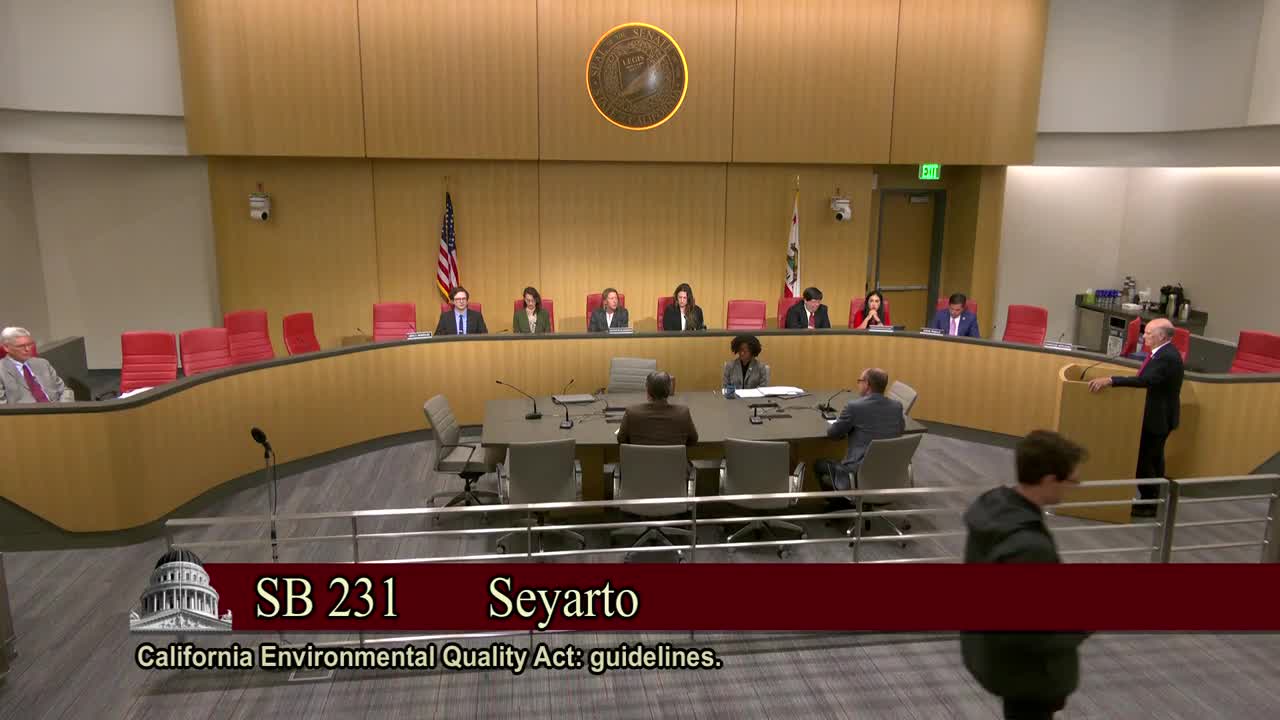 9MIN
Senate Standing Committee on Environmental Quality
Bill Author